Are Rhodesian Ridgebacks Good Family Dogs?
Are Rhodesian Ridgebacks good family dogs? Honest guide to temperament with kids, training needs, prey drive, and which families they suit.

Petful is reader supported. As an affiliate of platforms like Amazon and Chewy, we may earn a commission when you buy through links on this page. There is no extra cost to you.
- Good for families: yes, with conditions. Good with kids: yes (with socialization, careful around toddlers). Good with other dogs: usually (with early socialization). Good with cats: often not a good fit (high prey drive). Daily exercise required: 2+ hours. Training difficulty: medium-high. Best for: active families with older children, fenced yards, and dog experience. Bad fit: first-time owners and apartment-only households.
Are Rhodesian Ridgebacks good family dogs? Yes, with conditions. Rhodesian Ridgebacks are loyal, affectionate, and protective with their family while being reserved with strangers, which makes them excellent companions for active households. Their cat-like temperament, high prey drive, and stubborn intelligence, however, mean they are not the right fit for every family. This guide covers temperament with kids, exercise demands, training requirements, multi-pet compatibility, and which families should reconsider before bringing one home. For the broader breed picture, start with our complete Rhodesian Ridgeback breed profile.

Sign up for expert-backed reviews and safety alerts all in one place.
The Direct Answer: Yes, With Conditions
Rhodesian Ridgebacks can be excellent family dogs for the right household. They are devoted to their humans, surprisingly quiet (true bark-rare), protective without being aggressive, and tolerant of household routine. They lack the manic energy of working breeds like Border Collies while bringing more independence than retrievers. The "with conditions" part of the answer is non-trivial: an active lifestyle, secure yard, owner who understands positive-reinforcement training, and willingness to commit to early socialization are all baseline requirements. Households that can meet those conditions almost universally rate the breed as one of the best family dogs they have ever owned.
The Honest Family-Dog Verdict
Where Rhodesian Ridgebacks shine as family dogs: active households with school-aged or older children who can be taught to interact with a large strong dog correctly. Families who hike, run, camp, or spend significant time outdoors get a partner. The breed's natural protective instinct gives owners peace of mind without the constant alarm-barking of more reactive breeds. Households with a securely fenced yard and a willingness to dedicate two-plus hours per day to vigorous exercise see the breed flourish.
Where they struggle: households with toddlers who cannot yet read dog body language, families with multiple small pets (cats, rabbits, ferrets), apartment dwellers without serious commitment to long daily walks, first-time dog owners who underestimate the breed's stubborn intelligence, and families who travel often without a dog-savvy caregiver. None of these are unfixable, but each requires honest assessment before purchase rather than after problems develop.
Rhodesian Ridgeback Temperament With Family
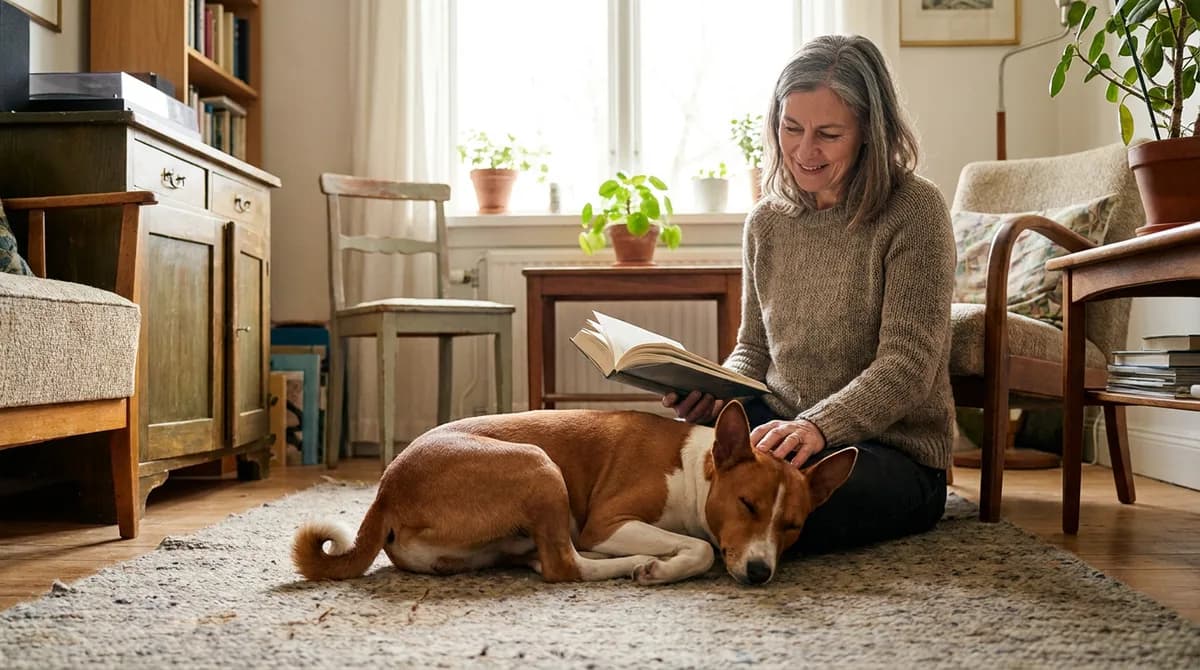
Rhodesian Ridgebacks are often described as "cat-like" by their owners (a description that has won the breed a snippet of SERP real estate for years). They are clean, conservative with affection on their own terms, and tend toward calm rather than constant motion indoors. With family they are velcro dogs: where you are, they want to be. They will follow you from room to room, settle near you on the couch, and reposition every time you move. They are not lap dogs in the small-breed sense, but they are persistent companions. See our full temperament guide for the deeper behavioral picture.
With strangers, Rhodesian Ridgebacks are reserved by default. They do not greet visitors with the enthusiastic wiggling of a Lab, and they will quietly position themselves between unfamiliar guests and their family until they read the situation as safe. This reserved-but-not-aggressive temperament is the breed's defining family trait: protective awareness without unprovoked reactivity. Owners describe it as having a quiet bodyguard who reads social cues and acts accordingly. Done well, it produces a confident family dog. Done poorly (without early socialization), it produces an avoidant or fear-reactive adult.
Rhodesian Ridgebacks With Children
Most Rhodesian Ridgebacks are gentle and patient with children in their family, particularly children old enough to handle a large dog correctly (typically 6 and up). The breed's natural protective instinct extends to kids; many owners report their Ridgeback adopts the household children as members of the pack. Properly socialized Ridgebacks tolerate the noise, sudden movements, and physical handling that comes with child-filled homes far better than many breeds. The breed standard's "dignified" temperament is built for this kind of household chaos.

Family dogs go to soccer games, beach trips, and grandma's house. An engraved ID tag with your phone number is the single cheapest insurance against a lost-dog scenario. Keep one on the daily collar at all times.
Petful may earn a commission when you click through to Chewy, at no extra cost to you.
The caveat is size plus energy plus exuberance. A 70-to-85-pound Ridgeback who enthusiastically greets a toddler will knock the toddler over without any aggression involved. A puppy playing chase will body-check a small child by accident. Households with children under 6 should supervise all interactions, train both the dog and the kids on calm interactions, and never leave young children unattended with any large dog regardless of breed.
- Most dog-bite incidents in family households involve children under 6 and dogs the family already owns. Breed alone is not a reliable predictor of bite risk, but a Rhodesian Ridgeback's size means an incident that would be a scratch with a Beagle could be a hospital visit. Teach children: do not approach a sleeping or eating dog, do not climb on the dog, do not hug the dog around the neck, and recognize warning body language (still posture, lip lifting, whale eye). Supervise constantly.
Best Ages for Kids When Bringing Home a Ridgeback Puppy
The optimal age for children when adding a Rhodesian Ridgeback puppy is 7 or older. By this age, most kids can be taught to recognize dog body language, respect the dog's space, and participate in basic training and care. Households with children under 4 can succeed but require more vigilance; both the puppy and the toddler are essentially babies, and the supervision load is heavier. An adult Ridgeback from rescue with confirmed kid-friendly history can be a safer pick for households with toddlers than a brand-new puppy. See our puppy guide for the full first-year picture.
- 1Best with children 7 and up; works with younger kids but requires more supervision
- 2Daily exercise floor: 2 hours of vigorous activity, every day
- 3Reliable recall is rarely safe off-leash in unfenced spaces (high prey drive)
- 4Reserved with strangers, requiring extensive socialization during 8-16 week puppy window
- 5Generally bonds with one family for life; rehoming an adult is hard on the dog
| Family Type | Best Activities | Key Caveats | Daily Time |
|---|---|---|---|
| Active outdoor family | Hiking, trail running, camping, beach trips | Off-leash safety in unfenced spaces + fenced yard at home | 2+ hours |
| Family with older kids (7+) | Backyard play, structured walks, dog sports | Teach kids dog body language and proper handling | 2 hours |
| Family with toddlers (under 6) | Stroller walks, leashed yard time, calm play | Constant supervision around small children, no rough play | 1.5 to 2 hours |
| Suburban with fenced yard | Yard play plus 2 leashed neighborhood walks | Watch for fence escape attempts; high prey drive | 2 hours |
| Urban without yard | Long leashed walks, vetted dog park, daycare | Apartment living is hard for this breed; rarely advisable | 2.5+ hours |
Exercise and Active-Lifestyle Requirements
Rhodesian Ridgebacks need at least two hours of vigorous daily exercise to be calm, well-mannered family members. This is not negotiable. Owners who try to scale back exercise to fit a sedentary household typically encounter destruction (chewed furniture, dug yard), reactivity (barrier frustration at the window), or weight gain that compounds joint problems. The breed was developed to track lions across the African savanna for days at a time; modern domestic life still has to honor that working drive.
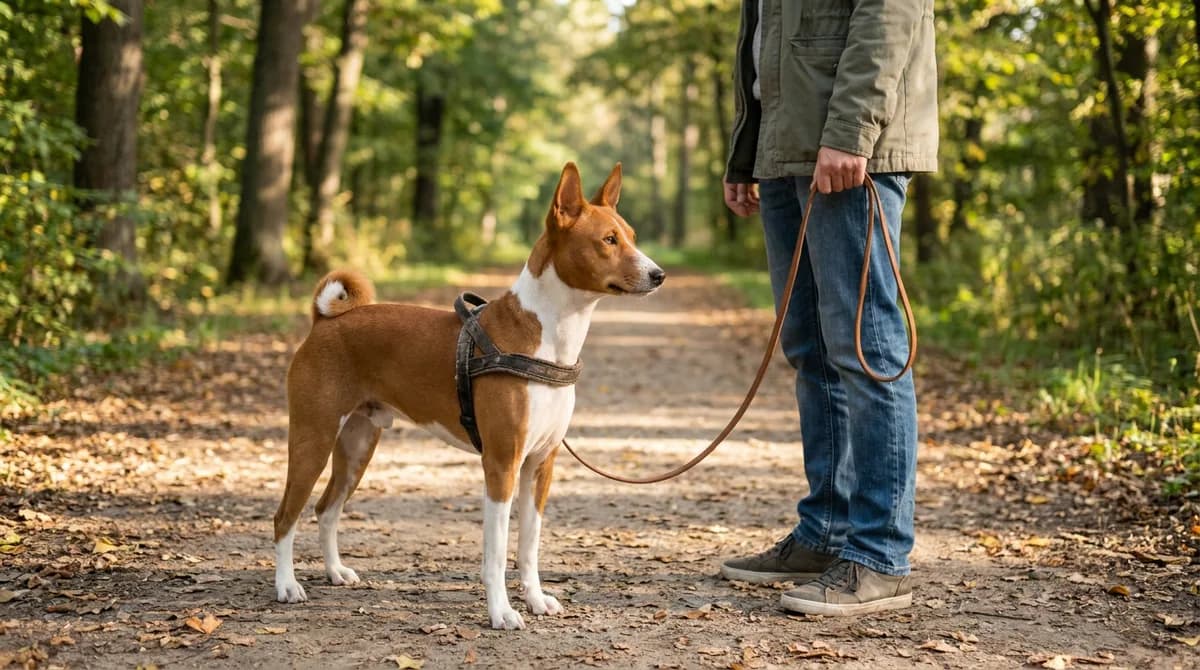
Exercise needs to be physical and mental. Two structured walks per day plus active play and occasional sprint opportunities (in a fenced area) hit the floor. Hiking, jogging, biking with a properly-trained dog, swimming, and dog sports (lure coursing, agility, scent work) all suit the breed. Off-leash freedom in unfenced spaces is rarely safe; the prey drive activates the second a deer or rabbit appears, and recall reliably loses to chase instinct. See our size guide for exercise scaling across growth phases.

A front-clip no-pull harness lets kids walk the family Ridgeback without being towed down the street. Redirects pulling without choking the throat. Critical kit when the dog outweighs the kid.
Petful may earn a commission when you click through to Chewy, at no extra cost to you.
Training and Socialization for Family Households
Rhodesian Ridgebacks respond to positive reinforcement and shut down under harsh correction. They are intelligent, capable of high-level obedience, and bring an independent streak to training that requires patience. Reward-based methods (clicker training, lure-reward, mark-and-feed) work; yelling, leash-popping, alpha-rolls, or e-collar correction in untrained hands breaks trust and produces avoidant or reactive adults. A force-free trainer for puppy class and consistent at-home practice is the single best investment a family makes in the first year.
Family households have a built-in socialization advantage and a built-in risk. The advantage: a Rhodesian Ridgeback puppy meets diverse humans (kids, kids' friends, neighbors, teachers, parents at pickup), diverse environments (school yards, parks, soccer games), and diverse handling without any special effort. The risk: kid-driven socialization can become overwhelming for a puppy and create fear associations. Adults need to manage exposures (positive, calm, end before the puppy is exhausted) rather than letting the kids run the show. The 8-to-16-week socialization window is the single most important period in the dog's life.
Daily Family Life With a Rhodesian Ridgeback
A well-exercised, well-socialized adult Rhodesian Ridgeback is calm and easy to live with. They sleep a substantial portion of the day, settle quietly during family activities, and prefer to be in the same room as you over having their own dedicated space. Mealtime is structured: two meals per day with a slow-feeder bowl to prevent fast eating and bloat risk. Lounging is a Ridgeback hobby; expect the dog to claim the warmest spot in the house and the softest surface available.
Separation tolerance varies. Most Ridgebacks accept moderate alone-time (school day, work day) without distress if they get sufficient exercise and have established routines. Households where every member leaves for 10-plus hours daily are not a good fit; the breed is too people-bonded to handle prolonged isolation well. Consider doggy daycare, midday dog walker, or work-from-home flexibility before committing to this breed if your household empties for full work days.
Rhodesian Ridgebacks in Multi-Pet Households
With other dogs: most Rhodesian Ridgebacks coexist well with family dogs they were raised with or properly introduced to. They can be selective with unfamiliar adult dogs and occasionally same-sex aggressive (intact males with other intact males is the most common friction). Spaying or neutering reduces conflict. Multi-dog households work best when the Ridgeback joins as a puppy with the established dog, or when both dogs are similar in size and play style.
With cats: often not a good fit. Rhodesian Ridgebacks have a high prey drive that activates on small running animals. Some individuals raised with cats from puppyhood will tolerate the household cat; many will chase and potentially injure or kill cats even after years of cohabitation. Small dogs that move quickly can trigger the same response. Households with cats, rabbits, or other small pets should consider a different breed; the few Ridgebacks that genuinely live peaceably with cats are exceptions, not the rule.
Mealtime in a multi-pet household needs structure. Feed each dog separately, supervise the first 5 to 10 minutes of meals, and prevent any dog from finishing first and approaching another's bowl. Slow-feeder bowls are a hidden multi-pet tool: they slow fast eaters so everyone finishes around the same time, which prevents the most common food-bowl confrontations. Resource guarding is harder to fix than to prevent.

A slow-feeder bowl is multi-purpose: prevents bloat (deep-chested breed risk), slows fast eaters, and in multi-pet households keeps eating times synchronized so the slow eater is not approached by the fast eater finishing first.
Petful may earn a commission when you click through to Chewy, at no extra cost to you.
Families Who Should NOT Get a Rhodesian Ridgeback
First-time dog owners often underestimate Rhodesian Ridgebacks. The breed is described in profiles as "easy keepers" because of low grooming needs and quiet temperament, which leads first-timers to assume the dog is generally easy. The training side of the equation is harder than retrievers, the prey drive demands experienced handling, and the exercise requirement is non-negotiable. First-time owners better suited to Labs, Goldens, or Cavalier King Charles Spaniels often regret buying a Ridgeback.
Apartment dwellers without commitment to daily structured exercise should pass on this breed. So should households where every adult is gone 10-plus hours daily, families that travel several weeks per year without a Ridgeback-savvy caregiver, and households with multiple cats or small pets. Consider also: budget-constrained households (lifetime cost is $20,000 to $35,000 minimum), households expecting a baby in the next year (puppy plus newborn is a hard combination), and families where one adult opposes adding a dog.
- Loyal, protective, and devoted family companion
- Quiet (true bark-rare), surprisingly easy household neighbor
- Tolerant of household chaos when properly socialized
- Athletic partner for active families who hike, run, or camp
- Low-maintenance grooming with a short single coat
- Two-hour daily exercise floor is non-negotiable
- High prey drive makes off-leash freedom rarely safe
- Independent and stubborn; harder to train than retrievers
- Size and energy require careful management around toddlers
- Rarely a good fit with cats or small pets
Cost Considerations for Families
Rhodesian Ridgebacks are firmly in the large-dog cost tier. Puppy purchase from a reputable breeder runs $1,500 to $3,500. First-year total (puppy plus setup) is $4,000 to $6,000. Annual costs during adult years run $1,500 to $2,500. Senior years add $500 to $1,200 per year. Total lifetime cost over a 10-to-12-year lifespan: $20,000 to $35,000 before any major emergencies. For families budgeting honestly, see our full Rhodesian Ridgeback cost guide.
For active families juggling school schedules, vet visits, vaccination records, and travel plans, a digital pet ID keeps everything (medical history, emergency contacts, microchip number) in one accessible place. Critical when grandparents or sitters need to know what your Ridgeback eats or which vet to call.
Start Your Pet's Profile- Get professional behavioral help immediately if you see any of these in the first 6 months: stiffness or growling around food bowls or toys (early resource guarding, hard to fix later), avoiding or hiding from one specific family member (fear association), sudden change from confident to fearful around new environments (regression, possible fear period or aversive event), or any bite or near-miss with a child regardless of provocation. Early intervention with a force-free trainer or veterinary behaviorist costs less than later remediation.
More Rhodesian Ridgeback Guides
- Pillar guide: Rhodesian Ridgeback Breed Profile
- Behavior: Rhodesian Ridgeback Temperament: The Cat-Like Hound
- Growth: Rhodesian Ridgeback Size Chart: Growth by Age & Weight
- Coat: Rhodesian Ridgeback Colors: All 6 Coat Variations + Ridge
- Puppy care: Rhodesian Ridgeback Puppies: First-Year Owner's Guide
- Lifespan + health: Rhodesian Ridgeback Lifespan: 10-12 Years (Vet-Reviewed)
- Cost: Rhodesian Ridgeback Price & Cost of Ownership (2026)
Are Rhodesian Ridgebacks good family dogs? For the right family (active, committed to training, comfortable with a large strong dog) absolutely yes. For families looking for a low-maintenance pet who fits a sedentary household, no. Honest assessment before purchase is the single best predictor of whether the dog becomes a great family companion or a difficult one. For the full breed picture, start with our complete Rhodesian Ridgeback breed profile covering size, temperament, lifespan, and care.
Yes, generally. Rhodesian Ridgebacks are patient and protective with family children, particularly older kids (7+) who can handle a large dog correctly. Their size and energy mean careful supervision around toddlers and small children is essential. Most owners report their Ridgeback adopts the household children as members of the pack.
Rhodesian Ridgebacks are not inherently aggressive. They are reserved with strangers and can be same-sex selective with other intact dogs, but properly socialized Ridgebacks are not unprovoked-aggressive. The "protective without being aggressive" balance is the breed standard and is what most well-bred Ridgebacks demonstrate.
Often not. Rhodesian Ridgebacks have a high prey drive that can activate on cats and other small running animals, even after years of cohabitation. Some individuals raised with cats from puppyhood will tolerate the household cat, but this is an exception rather than the rule. Households with cats should consider a different breed.
Generally no. Rhodesian Ridgebacks are intelligent and independent, with a stubborn streak that requires experienced handling and consistent positive-reinforcement training. The exercise requirement (2+ hours daily) and prey drive add to the difficulty. First-time owners are better suited to Labs, Goldens, or Cavalier King Charles Spaniels.
It is possible but rarely advisable. Rhodesian Ridgebacks need at least two hours of vigorous daily exercise plus secure off-leash decompression space (a fenced yard or daily long-line work). Apartment living without that commitment leads to destructive behavior, anxiety, and reactivity. A house with a securely fenced yard suits the breed far better.
At least two hours of vigorous daily exercise, every day, throughout adulthood. This is the floor, not the ceiling. Most Ridgebacks happily take more. Exercise should be a mix of leashed walks, off-leash play in a secure area, and mental enrichment. The breed was developed to track lions across the African savanna; modern domestic life still has to honor that working drive.

Coreen Saito is a pet writer and longtime shelter volunteer with more than a decade in animal rescue. She covers cat behavior, breed care, and the small, ordinary science of sharing a life with companion animals, with a particular focus on honest takes about the products and decisions that actually matter. At home in Arizona, she's outranked by Mac (a dog with the loudest opinion in the house), Rebel (a cat who governs by quiet authority), and Meri (an orange tabby who runs the late shift and the laundry basket). She writes about all three, plus the rescues that keep coming through her life, at LifeWithMinty.com.
Sign up for expert-backed reviews and safety alerts all in one place.