Rhodesian Ridgeback Temperament: The Cat-Like Hound
Rhodesian Ridgeback temperament is best described as cat-like: independent, dignified, calm indoors, and intense outdoors. Learn what it really means for families, kids, prey drive, and first-time dog owners before bringing one home.

Petful is reader supported. As an affiliate of platforms like Amazon and Chewy, we may earn a commission when you buy through links on this page. There is no extra cost to you.
- Energy level: High outdoors, calm indoors
- With family: Loyal, deeply bonded, often to one or two people
- With strangers: Reserved, aloof, watchful (not aggressive)
- With kids: Patient and gentle when raised together; supervise with very young children
- With other dogs: Generally fine; same-sex pairs can clash
- With small pets: High prey drive. Cats and small animals are a risk without early socialization
- Trainability: Intelligent but stubborn. Sensitive to harsh methods. Positive reinforcement only
- Barking: Low. Not nuisance barkers but will alert
- Best for: Active, experienced owners with consistent training time
Rhodesian Ridgeback temperament is best described as cat-like. They are independent, clean, somewhat aloof with strangers, and deeply bonded to one or two people in the household. At home, Ridgebacks are quiet, dignified, and content to lounge for hours. Outdoors, the hunting instinct flips on and they become high-drive athletes who need vigorous daily exercise. That contrast (calm indoors, intense outdoors) is the single most important thing to understand before bringing one home.

Sign up for expert-backed reviews and safety alerts all in one place.
The Cat-Like Rhodesian Ridgeback Temperament, Explained
Long-time Ridgeback owners use one word more than any other to describe the breed: dignified. They carry themselves with a quiet self-possession that is unusual in large hounds. They are not needy or fawning the way Labradors or Golden Retrievers can be. They will pick their human and bond deeply, but they expect to be treated as a partner, not a subordinate. This cat-like independence is what makes them rewarding for experienced owners and frustrating for those expecting a more conventional dog.
In daily life, the cat-like temperament shows up in specific ways. A Ridgeback will pick one favorite spot in the house (usually the sunniest one) and defend it as personal territory. They groom themselves more than most dogs, often licking paws and chest like a cat after meals. They are silent movers, padding through the house without the click-clack of nails or panting most large breeds bring with them. They often refuse to play fetch the way Labradors do, but will happily run flat-out beside a bicycle for miles. Most owners describe the experience of living with a Ridgeback as quieter than expected and harder than expected, in equal measure.
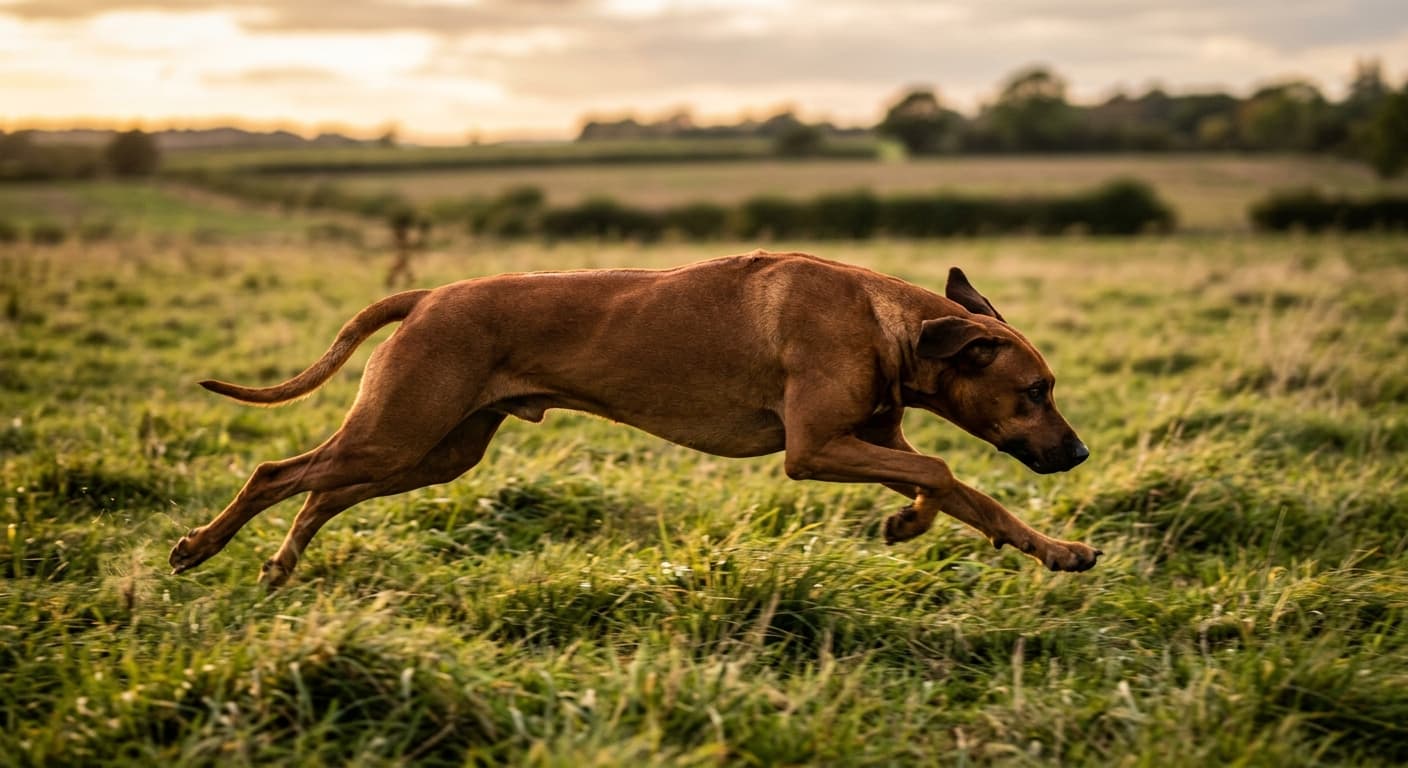
- 1Picks one favorite (usually sunniest) spot and defends it as personal territory
- 2Grooms paws and chest after meals, more like a cat than a dog
- 3Silent movers: no nail clicks, no panting, no general background noise
- 4Often refuses fetch but will run flat-out beside a bicycle for miles
- 5Quieter at home and harder outdoors than first-time owners expect

Petful may earn a commission when you click through to Chewy, at no extra cost to you.
Rhodesian Ridgeback Temperament With Kids and Family
With family members they grow up around, Rhodesian Ridgebacks are patient, gentle, and quietly affectionate. They bond strongly to the household and are calm enough indoors to make excellent companions for kids of school age and older. Very young children are a different question: a 90-pound Ridgeback who does not know its own strength can knock a toddler over by accident. Early socialization to children, supervised interactions, and teaching kids how to respect dog space are non-negotiable.
Age-specific recommendations matter with this breed. With infants and toddlers under three, supervise every interaction without exception. A relaxed Ridgeback wagging her tail can topple a toddler by accident. School-age kids (5 to 12) tend to be the breed favorite humans. Ridgebacks are patient with games, drawn to the noise and energy of kids that age, and rarely react badly even to clumsy handling. Teenagers often become the breed primary bonding target, especially during the dog adolescent phase (6 to 18 months) when both species are working through identity. Households with kids who already have allergy diagnoses should know Rhodesian Ridgebacks are not hypoallergenic; they shed moderately and produce normal dog dander.
With Other Dogs and Small Pets: The Prey Drive Question
Ridgebacks were bred to track and corner big game. That instinct does not disappear in modern household life. With other dogs, most Ridgebacks are fine, though same-sex pairs (especially two males or two intact females) can clash. With cats and small pets, the prey drive is the real concern. Some Ridgebacks raised with cats from puppyhood live happily alongside them. Others will chase, corner, and potentially injure small animals. Early socialization is critical and assume nothing without testing carefully.
Same-sex pair issues are worth knowing before adding a second Ridgeback. Two intact males can develop dominance conflicts after both pass puberty (around 14 to 18 months), with fights that escalate fast. Two females, especially intact ones, can develop similar conflicts that experienced breeders describe as worse than male-male disputes. The safest second Ridgeback is the opposite sex of your current dog, both spayed or neutered, with at least 18 months of age difference. When introducing the breed to existing cats or small pets, slow methodical exposure over weeks works far better than a single forced meeting. Test the prey drive carefully by walking the Ridgeback on leash past the pet enclosed space and watching the body language.
Trainability and the Sensitivity Trap
Rhodesian Ridgebacks are intelligent, which surprises owners coming from working breeds because Ridgebacks do not look intelligent. They look like quiet, lazy couch dogs. They are thinkers, and they can be stubborn. The sensitivity trap is this: despite their tough appearance and lion-hunting heritage, Ridgebacks do not respond to harsh training methods. Yelling, alpha rolls, or punitive corrections will shut a Ridgeback down or break trust. Positive reinforcement, consistency, and patience are the only methods that work. Puppy class plus daily practice are essential during the first year.
What works in training a Rhodesian Ridgeback: high-value food rewards (chicken, cheese, hot dog pieces, not kibble), short sessions of 5 to 10 minutes, clear release words, and immediate reinforcement timing. What does not work: repetition past the dog interest threshold, raised voices, leash corrections, prong collars, or e-collars. The breed shuts down or develops avoidance behaviors under harsh methods. The 8 to 16 week critical period is when most adult temperament is set, so puppy class enrollment by 10 weeks is non-negotiable. Owners who skip this window and try to fix issues at 6 or 12 months often need a professional trainer to undo the damage. Recall and leave-it are the two commands most worth perfecting before 12 months.

Petful may earn a commission when you click through to Chewy, at no extra cost to you.
- High-value food rewards (chicken, cheese, hot dog pieces) over kibble
- Short sessions of 5 to 10 minutes, multiple times daily
- Clear verbal release words and immediate timing on reinforcement
- Puppy class enrollment by 10 weeks of age (the 8-16 week critical window)
- Patience: Ridgebacks need 2 to 3 times the repetitions a Lab needs
- Raised voices, leash corrections, alpha rolls, or any punitive method
- Prong collars or e-collars (the breed shuts down or breaks trust)
- Repetition past the dog interest threshold (they tune out fast)
- Skipping the 8-16 week socialization window
- Expecting Lab-style eagerness to please
Are Rhodesian Ridgebacks Aggressive? The Myth vs the Reality
Rhodesian Ridgebacks are not aggressive to humans by default. They are watchful, reserved with strangers, and naturally protective of their family and territory. That protective instinct can be mistaken for aggression by visitors who are not used to a 90-pound hound silently assessing them from across the room. Properly socialized, a Ridgeback should not attack without genuine cause. Under-socialized or under-exercised Ridgebacks can develop guarding behaviors, which is why the breed is consistently recommended for experienced owners only.
On bite statistics: Rhodesian Ridgebacks are not in the top 20 of any major bite-incident database in the United States or the United Kingdom. Breed-specific legislation (BSL) targeting the Rhodesian Ridgeback exists only in a few isolated municipalities and is not based on evidence. The legitimate triggers for a Ridgeback bite are: cornering or surprising an isolated dog (especially one not socialized to strangers); reaching over the head of a dog in pain; pressing a young Ridgeback past its stress threshold during forced socialization. Outside those scenarios, well-socialized Ridgebacks rarely bite. Their default response to a stressor is to leave the situation, not to engage. That is the temperament that holds across the breed when raised correctly.
- Rhodesian Ridgebacks are NOT in any major bite-incident top 20 list in the US or UK. Breed-specific legislation targeting them exists only in a few isolated municipalities and is not evidence-based. Their default response to a stressor is to disengage, not bite. The breed protective instinct is often mistaken for aggression by guests unfamiliar with hounds.
When the Rhodesian Ridgeback Temperament Does Not Work
Some households are wrong for this breed. Apartments with no daily access to vigorous exercise. First-time dog owners looking for an easy companion. Families with cats, rabbits, or other small pets the Ridgeback was not raised with. Owners who travel constantly and cannot offer the consistency a Ridgeback needs. Anyone expecting an obedient, eager-to-please retriever in a hound's body. If any of those describe you, choose a different breed. If you can offer the time, exercise, and patience the breed needs, few dogs are as loyal, calm, or rewarding.
Specific red flags for a Rhodesian Ridgeback household: apartment-only living without daily off-leash access; full-time work schedules with no midday break for an under-12-month puppy; primary caregiver who works night shifts (the breed sleeps best with their person at night); recent move planned within the dog first year (the breed bonds to place as well as people); existing dog-reactive or anxious dog in the home; or expectations of a low-energy companion. Conversely, the breed thrives with: outdoorsy households, runners or hikers, multi-generational families, suburban or rural homes with secure yards, and owners who have raised at least one other medium or large dog before.

Petful may earn a commission when you click through to Chewy, at no extra cost to you.
- Outdoorsy families, runners, or hikers with daily exercise time
- Multi-generational households with school-age kids and older
- Suburban or rural homes with secure fenced yards
- Owners experienced with medium or large breeds
- Consistent daily routine with the dog as part of the family
- Apartment-only living without daily off-leash access
- Primary caregiver works night shifts (the breed sleeps best beside their person)
- First-time dog owners looking for an easy starter dog
- Existing cats, rabbits, or small pets the Ridgeback was not raised with
- Recent move planned in the dog first year (place-bonding is strong)
- Expectations of a low-energy companion or velcro dog who will follow commands easily
More Rhodesian Ridgeback Guides
- Rhodesian Ridgeback Breed Profile: Essential Facts
- Rhodesian Ridgeback Size: Growth Chart, Adult Height & Weight
- Rhodesian Ridgeback Colors: Every Coat Variation Explained
For the full picture on the breed including size, exercise needs, health, and history, read our complete Rhodesian Ridgeback breed profile.
Yes, Rhodesian Ridgebacks are deeply affectionate with their inner circle. They are not gushing or constantly demanding attention. Their love shows up as quiet proximity. They want to be in the same room as their person, often pressed against them on the couch. They are sometimes called Velcro dogs by owners.
No, Rhodesian Ridgebacks are not heavy barkers. They will alert you to something unusual at the door or a strange sound, but they are not nuisance barkers. Many owners describe them as quieter than most large breeds, which makes them surprisingly good neighbors.
Rhodesian Ridgebacks are generally not recommended for first-time dog owners. They are intelligent, strong-willed, and large, with high exercise needs and sensitivity to harsh training methods. An inexperienced owner can find them difficult to manage. They do best with owners who have raised dogs before, ideally another medium or large breed.

Coreen Saito is a pet writer and longtime shelter volunteer with more than a decade in animal rescue. She covers cat behavior, breed care, and the small, ordinary science of sharing a life with companion animals, with a particular focus on honest takes about the products and decisions that actually matter. At home in Arizona, she's outranked by Mac (a dog with the loudest opinion in the house), Rebel (a cat who governs by quiet authority), and Meri (an orange tabby who runs the late shift and the laundry basket). She writes about all three, plus the rescues that keep coming through her life, at LifeWithMinty.com.
Sign up for expert-backed reviews and safety alerts all in one place.