Rhodesian Ridgeback: Temperament, Size, Care, and Family Fit
Learn what living with a Rhodesian Ridgeback involves, from the distinctive ridge and large-dog care to training, household readiness, health screening and responsible sourcing.
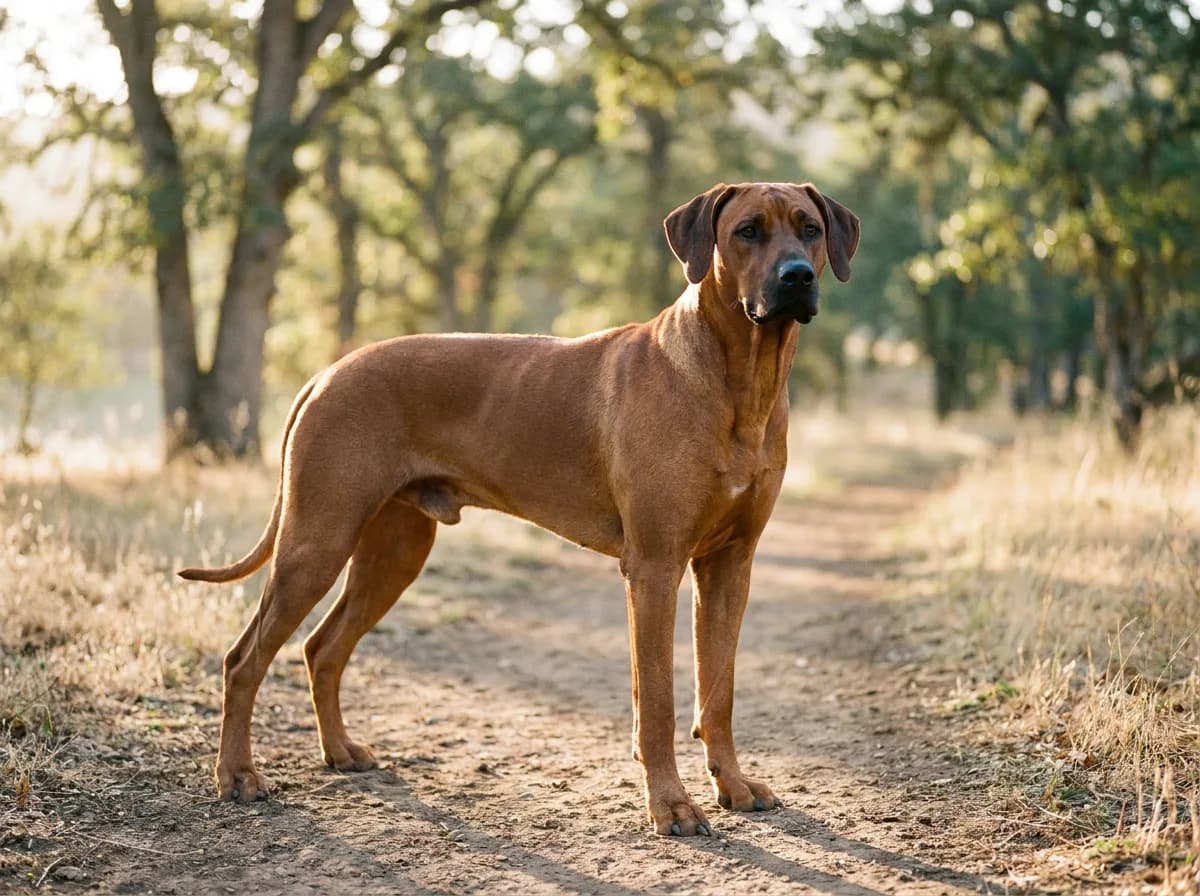
Wheaten Rhodesian Ridgeback standing on a woodland path.
Petful is reader supported. As an affiliate of platforms like Amazon and Chewy, we may earn a commission when you buy through links on this page. There is no extra cost to you.
The Rhodesian Ridgeback is a large, athletic hound with a short wheaten coat and a distinctive strip of backward-growing hair along its back. A good match offers regular activity, patient training, secure outdoor management, and room for a substantial dog to share family life.
The breed's lion-hunting history attracts attention, but everyday ownership is more practical: walking past wildlife, greeting visitors calmly, and teaching a strong young dog to settle. This guide explains the breed and helps you identify which part of that commitment deserves a closer look before you choose one.

Sign up for expert-backed reviews and safety alerts all in one place.
What is a Rhodesian Ridgeback?
The Rhodesian Ridgeback is a large hound from southern Africa, developed as a versatile hunting and farm companion. Its historical lion hunting work involved tracking and holding lions at bay until hunters arrived. That does not mean Ridgebacks were expected to kill lions; the American Kennel Club breed profile makes that distinction.
The breed combines power with an efficient, athletic outline. In the United States it belongs to the Hound Group. The name refers to the ridge of hair along the back, which grows in the opposite direction from the surrounding coat.
- 1A large southern African breed in the Hound Group, with a history that includes lion hunting by tracking and holding at bay.
- 2The ridge is a coat feature; it does not measure courage, health, or suitability as a pet.
- 3Daily priorities include exercise, reward-based training, secure containment, and management around wildlife.
- 4Expect a short shedding coat, large-dog equipment, and ordinary veterinary care plus breed-relevant screening.
A Ridgeback may be devoted to its household and reserved with unfamiliar people. It does not need to greet everyone to be a successful companion. The goal is a dog that can remain comfortable and manageable around ordinary life, with appropriate support when a situation is difficult.
Rhodesian Ridgeback characteristics and the ridge
The ridge is made of hair, not a raised bony structure. In the official breed standard, it runs from behind the shoulders toward the hips, tapering along the way and containing two opposing whorls. The rest of the coat is short and dense.

Petful may earn a commission when you click through to Chewy, at no extra cost to you.
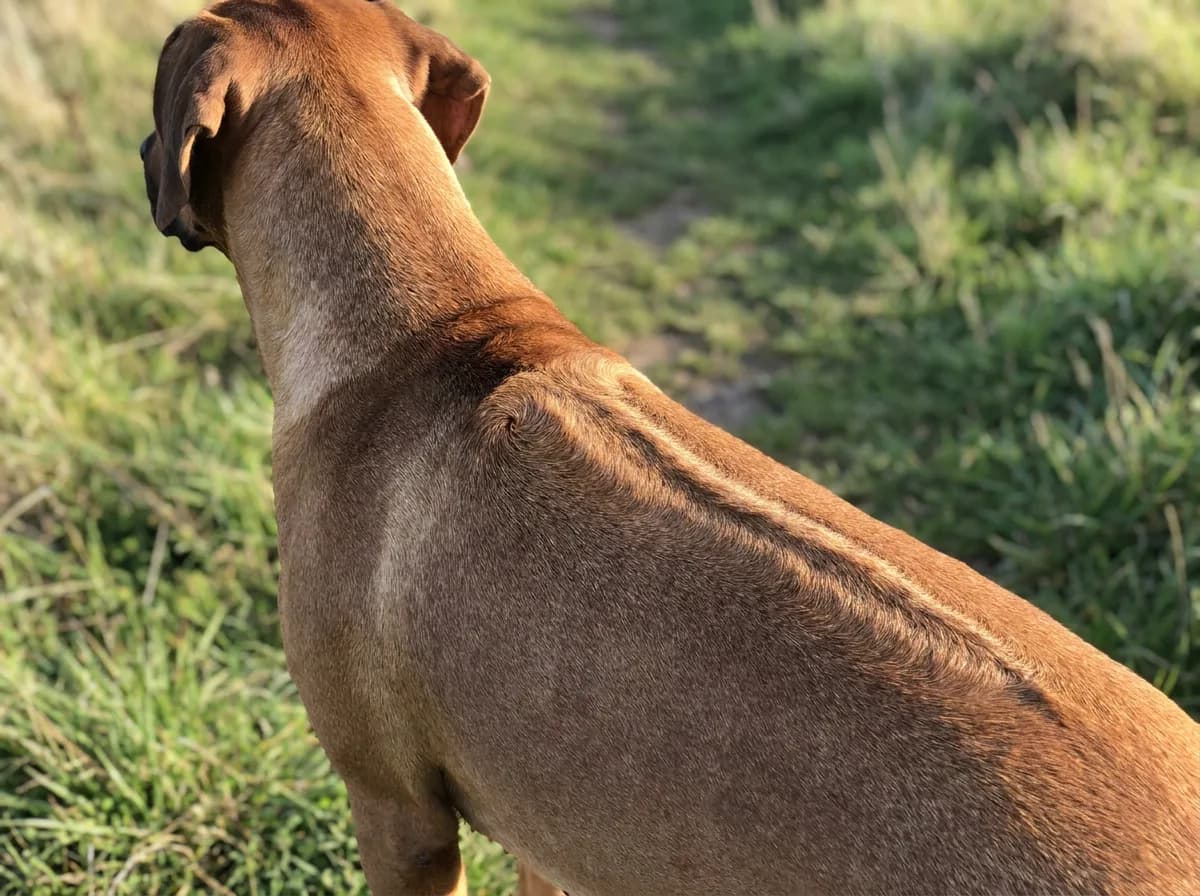
Some puppies are born without a ridge. Ridgeless puppies can still be Ridgebacks, although ridgelessness is a disqualification under the show standard. A pet home should distinguish show criteria from welfare: absence of the ridge does not make a puppy less deserving of a home or remove the need for normal health care.
| Feature | Breed reference | Ownership implication |
|---|---|---|
| Adult height | Males 25–27 inches; females 24–26 inches | Plan for a large dog in the car, home, and on a leash. |
| Adult weight | Desirable standard weights: males 85 pounds; females 70 pounds | Assess the individual's body condition rather than feeding toward a fixed number. |
| Life expectancy | AKC reference: 10–12 years | Plan for long-term care, including senior mobility needs. |
| Coat | Short, dense, light wheaten to red wheaten | Brushing is straightforward, but loose hair still accumulates. |
| Activity | Athletic hound with an interest in movement and scent | Provide secure outlets and practice calm handling. |
| Cost | Acquisition plus recurring large-dog care | Get local veterinary, food, boarding, and training quotes. |
The ridge also prompts an important breeder screening question about dermoid sinus, a congenital abnormal tract in the skin. The RRCUS dermoid sinus information notes that it can occur in ridgeless dogs too. Ask how each puppy was examined and what findings were recorded; a photograph of a tidy ridge cannot answer that question.
If a puppy has a suspicious opening, swelling, discharge, or a lump, arrange a veterinary assessment. Do not squeeze or probe it yourself. A veterinarian must determine what it is and discuss appropriate treatment; a coat feature alone cannot establish the diagnosis.
How big do Rhodesian Ridgebacks get?
Adult Ridgebacks fall in a large size class: standard height is 25–27 inches for males and 24–26 inches for females, with desirable adult weights of 85 and 70 pounds respectively. Individual dogs vary, so these are references rather than a healthy adult weight range for every dog. Frame, age, and body condition affect how an individual compares with a chart.
Our Rhodesian Ridgeback size guide covers adult measurements and growth in more detail. Before buying equipment, measure your dog and the space it will use. A large crate that fits in a room may still be too awkward to transport in your vehicle.
An adjustable PetSafe Easy Walk harness is one walking option, but the linked medium/large version must match your dog's actual measurements. Fit and comfortable movement matter more than selecting a size from the breed name, and a harness still needs to be paired with leash training.
Rhodesian Ridgeback coat colors and the liver nose
The standard coat range is light wheaten to red wheaten. A black nose or a brown, also called liver, nose is permitted. “Liver nose” describes pigmentation; it is not a separate breed or evidence that the dog needs a premium-priced care routine.
For the full comparison of pigmentation, markings, and listing terminology, see Rhodesian Ridgeback colors. Ask a seller to explain what any unusual color label means and keep the health records central to the decision.
Rhodesian Ridgeback temperament and personality
The breed standard describes a dignified dog that can be reserved with strangers. In a household, that may look like a dog that watches a new visitor before choosing to approach. It does not justify forcing greetings or accepting threatening behavior as inevitable.
Individual history matters. Ask how the dog behaves around handling, visitors, food, other dogs, and time alone. Our Rhodesian Ridgeback temperament guide explores those situations and the support an owner may need.
Are Rhodesian Ridgebacks aggressive or protective?
A Rhodesian Ridgeback is not automatically aggressive because of its breed. Reserved behavior, alertness, fear, resource guarding, and aggression are different things. Watch the individual dog's body language and the situation that triggers a response instead of treating every behavior as a “protective instinct.”
Early socialization should build comfort with ordinary sights, sounds, people, and handling at a pace the puppy can manage. It is not a requirement to be touched by every stranger or taken into overwhelming crowds. Continue that careful learning as the dog matures.
- A dog can be aloof with strangers without threatening them. Early socialization, predictable introductions, and room to retreat help. If the dog freezes, growls, lunges, or snaps, create distance and seek qualified help rather than forcing contact.
For visitors, use a gate or separate resting area while people enter. Once the initial excitement has passed, allow a calm introduction if the dog is comfortable. A household member should manage the dog; a guest should not have to prove that they are “confident enough” to enter safely.
Petful may earn a commission when you click through to Chewy, at no extra cost to you.
The American Veterinary Society of Animal Behavior recommends reward-based training and behavior modification. Punishing warnings or using physical confrontation can interfere with understanding why the dog is struggling. A veterinarian can assess pain or illness and help arrange suitable behavior support when needed.
Will a Rhodesian Ridgeback protect you?
You cannot rely on a Ridgeback to protect you in a dangerous situation. A large dog may alert to unfamiliar activity, but size, breed history, or barking does not guarantee a safe, predictable response to a threat.
For a family companion, prioritize recall, calm visitor routines, comfortable handling, and the ability to disengage. You cannot predict whether a Ridgeback will attack an intruder, flee, or react in another way. Encouraging a dog to threaten ordinary visitors can create a safety problem without providing dependable protection.
Consider what “protective” means when someone uses that word in a listing. Ask for a description of the behavior: barking once at the door is different from blocking people from leaving a room. If the history includes bites or serious threats, request the details and professional assessment needed to decide whether your home can manage the dog safely.
Is a Rhodesian Ridgeback a good family dog?
A Ridgeback can be a good family dog when its temperament, training, and care needs match the household. Its strength makes supervision and manners especially important around children, older adults, or anyone who may be knocked off balance.
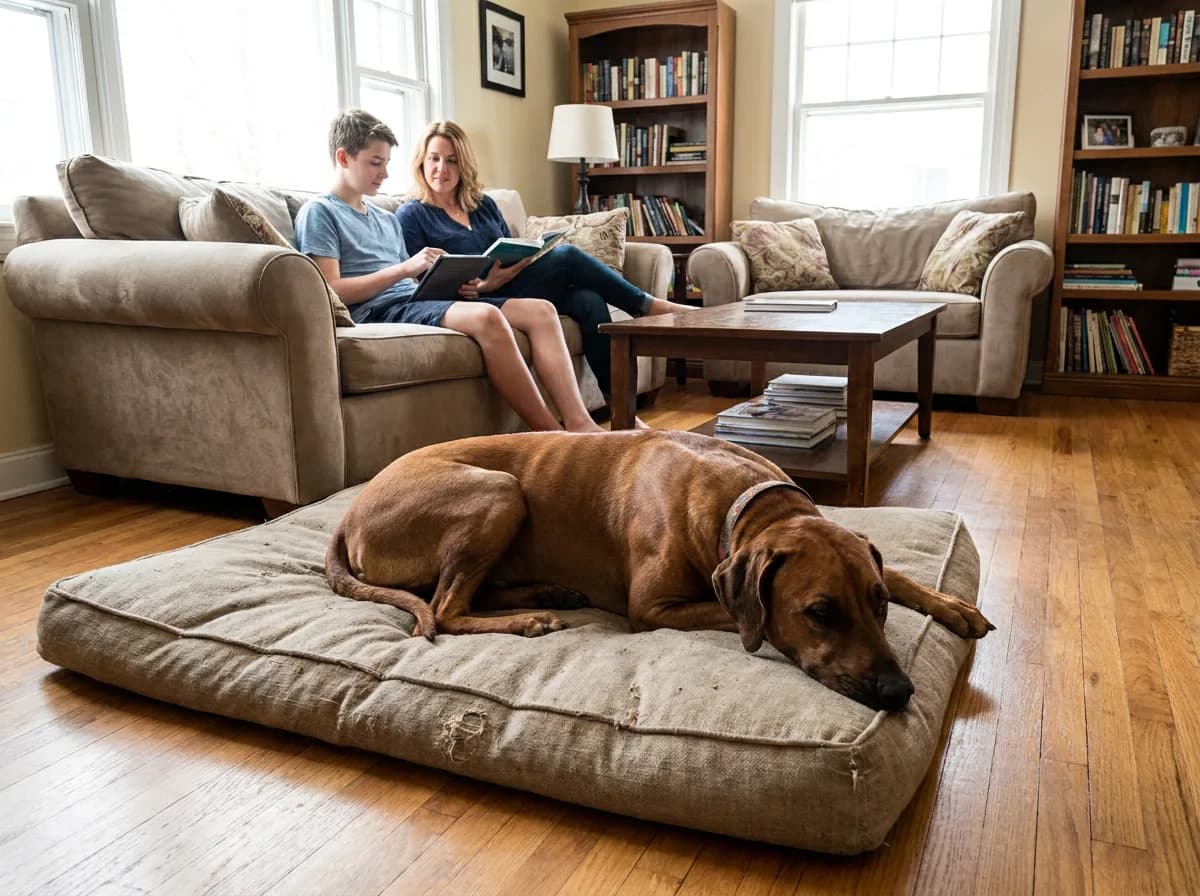
Give the dog a resting area that children leave alone and separate it from busy activity when necessary. For introductions, child safety, and other pets, the Rhodesian Ridgeback family-dog guide provides a closer household assessment.
Do Rhodesian Ridgebacks make good farm dogs?
A Ridgeback may live successfully on a farm, but it is not automatically a livestock guardian or a reliable dog to leave loose with poultry. Hunting ancestry and prey drive make moving animals a management consideration, even when the dog is affectionate with people.
For farm safety, start with secure fencing and physical separation from livestock and poultry, reliable gates, and supervised training at a distance where the dog can respond. Do not test compatibility by letting it chase animals “just once.” The behavior you permit can become the behavior the dog practices.
Acreage also introduces hazards that a suburban yard may not: vehicles, machinery, chemicals, open water, and visitors arriving through several gates. Decide where the dog will be during work, deliveries, and lambing or other vulnerable periods. Land area is not a substitute for a containment and supervision plan.
- If the actual job is unsupervised livestock protection, discuss that requirement with knowledgeable working-dog professionals. Choose for the job and individual rather than assuming any large dog with farm ancestry will perform it.
Exercise, speed, and training needs
Energy level is an important part of the match: plan for an active hound that needs daily movement and mental engagement, with the amount adjusted to age, health, and the individual. A quiet moment during a visit does not show how readily it settles after exercise.
Ridgebacks need regular opportunities to move, investigate, and learn. An adult's schedule may combine walks, sniffing, training, and controlled running in a secure area. The right amount depends on conditioning, health, weather, and how well the dog settles afterward.
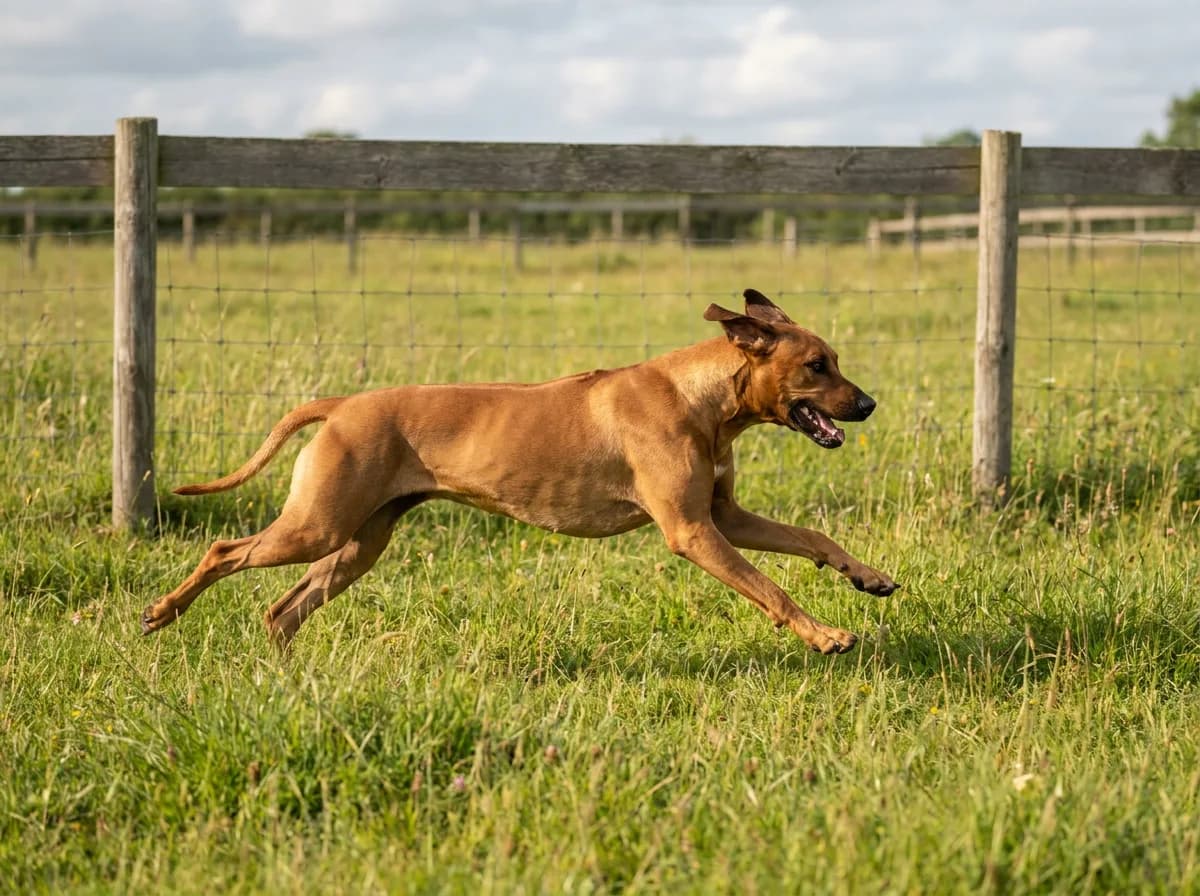
They are athletic hounds, but a claimed top speed does not tell you whether a dog will enjoy a particular outing or return when called. Do not turn an internet miles-per-hour figure into a daily exercise target. Timed sport results describe the dogs and conditions measured, not every Ridgeback.

A durable rubber dog toy that can be stuffed with treats and selected by the manufacturer's size guide; supervise use and retire it when damaged.
Petful may earn a commission when you click through to Chewy, at no extra cost to you.
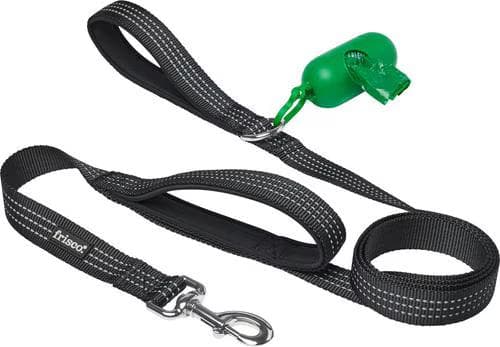
A fixed-length Frisco traffic leash gives an owner an additional short handle for close spaces. Use it to manage distance calmly, not to hold constant tension or drag the dog past something frightening. Practice loose-leash walking where distractions are manageable before expecting it beside wildlife.
Make recall rewarding and protect the dog while it is still learning. Secure fencing is valuable because a dog that responds indoors may still chase a fast-moving animal outside. WebVet's off-leash training guide explains why gradual practice and the environment matter before freedom increases.
Build a routine the dog can sustain
For a workable weekly routine, identify the time each part needs:
- Movement: walks or other activity that suit the dog's condition and the weather.
- Learning: brief practice with useful skills such as recall, settling, and handling.
- Recovery: quiet rest without children or other pets repeatedly interrupting.
- Backup care: a suitable person and safe activity plan for days when you cannot provide the usual routine.
If you want to explore a dog sport, contact a club that can explain beginner requirements, age restrictions, and safety procedures. An appropriate activity should give the dog a manageable challenge. It should not require exhausting it to obtain a quiet evening.
Grooming, shedding, and health issues
A Ridgeback's short coat is straightforward to brush, but the breed does shed. Regular gentle grooming removes loose hair and gives you a chance to notice new skin changes. Check nails, ears, teeth, and paws as part of normal care rather than treating the coat as the whole grooming workload.
Teach handling in small steps. Reward a brief paw touch before expecting a nail trim, and let the dog stand comfortably while you examine its coat. If a normally cooperative dog objects suddenly, investigate possible pain instead of insisting that it comply.
For daily dental care, introduce a Virbac C.E.T. dual-ended toothbrush gradually with pet toothpaste. Use the head that fits comfortably, start with a small amount of handling the dog accepts, and discuss painful gums or difficulty eating with your veterinarian.
Health screening and changes to report
The RRCUS health-screening overview discusses hip, elbow, eye, and thyroid assessment, among other concerns. Ask a breeder for the specific parents' results and the dates of tests that require follow-up. A puppy appearing active at a visit is not equivalent to documented screening of breeding dogs. Dermoid sinus screening is a separate puppy examination, discussed above; new skin bumps still need individual veterinary assessment.
Large, deep-chested dogs also warrant a conversation with a veterinarian about gastric dilatation-volvulus, commonly called bloat or GDV. Unproductive retching, a swollen abdomen, marked restlessness, or collapse requires urgent veterinary attention. A slow feeder or a particular bowl height does not provide a guarantee against GDV.
Keep a simple record of appetite, mobility, skin changes, and any treatment. It helps you explain a change at an appointment and avoids relying on memory when several people care for the dog. New lameness, persistent scratching, or unusual tiredness should not be written off as a normal breed trait.
Rhodesian Ridgeback lifespan
The AKC lists a life expectancy of 10–12 years. That reference range cannot predict an individual dog's life or tell you when it will need additional support.

A dual-ended toothbrush with a large and a small head to fit different mouth sizes and reach the back molars where plaque hides. Soft bristles angled for the gumline.
Petful may earn a commission when you click through to Chewy, at no extra cost to you.
Our Rhodesian Ridgeback lifespan guide covers general longevity and the health considerations behind everyday care. Population findings cannot identify what will happen to your dog. As the dog ages, discuss changes in comfort, activity, or appetite with your veterinarian instead of assuming every decline is unavoidable aging.
What do Rhodesian Ridgebacks usually die from?
Cancer was the largest reported cause-of-death category in the breed's 2004 Kennel Club/BSAVA survey: 56 of 183 reported deaths, or 30.6%. The original breed report provides historical evidence about the dogs in that survey. It does not establish the leading cause today or predict what will happen to an individual Ridgeback.
Read the figures with these limits:
- They came from owners' questionnaire responses, not a census of all Ridgebacks.
- The percentage describes a share of reported deaths, not the chance that a living dog will develop cancer.
- The Kennel Club cautions about response rates and breed-specific interpretation.
RRCUS's 2017 health survey separately collected owner reports of veterinary-diagnosed conditions. Its cancer case counts are not a cause-of-death ranking. For your dog, use current symptoms, examination findings, and veterinary advice to guide care rather than applying either survey as a personal risk score.
What is known about the oldest Rhodesian Ridgeback?
The cited sources do not establish a verified all-time oldest Rhodesian Ridgeback. The 2004 breed report lists a maximum age at death of 16 years and 2 months, alongside a median of 11 years among its 183 reported deaths. That maximum identifies the oldest reported death in that sample; it is not a world-record certification or a limit on how long another dog could live.
Treat an individual record claim as unverified unless it is supported by reliable birth and death records and independent confirmation. A dog's name, photograph, or reported birthday alone cannot establish an all-time breed record. Likewise, one unusually long life does not show that a particular food, supplement, or care routine caused the extra years. Use lifespan references for long-term planning while assessing an older dog's comfort and health as an individual.
Feeding a Rhodesian Ridgeback
Feed a complete and balanced diet appropriate to life stage and individual needs. A growing large-breed puppy needs a growth plan suited to its expected adult size; adding supplements to accelerate growth is not an appropriate shortcut.
For an adult, use measured meals and assess body condition with your veterinarian. A food bag's feeding chart is a starting point, not a permanent prescription. Account for training rewards, chews, and snacks from other family members when reviewing the day's intake.
Meals as supervised enrichment
If your dog eats too quickly, discuss comfortable ways to slow access to the meal with your veterinarian. Introduce any feeding puzzle under supervision and keep it easy enough to avoid frustration. Meal-pacing equipment is not a substitute for veterinary advice about bloat risk.
A large KONG Classic can also hold part of a suitable meal for supervised enrichment. Choose size and durability for the individual dog, start with an easy filling, and remove the toy if it becomes damaged. A dog that swallows pieces or becomes frustrated needs a different setup.
Keep fresh water accessible, wash bowls, and provide enough distance between pets to prevent competition. If the dog guards food, stop experimenting with taking its bowl away and get qualified help with a safe management plan.
How much does a Rhodesian Ridgeback cost?
Ridgebacks can be expensive to own because acquisition is followed by years of large-dog care. Food, equipment, boarding, training, and some veterinary expenses can cost more than the corresponding needs of a much smaller dog.
The Rhodesian Ridgeback price guide separates puppy price or adoption fees from ongoing ownership costs. Build a lifetime cost plan using local quotes and include an emergency reserve or suitable insurance planning. A low initial fee does not make the later care optional.
Rhodesian Ridgeback puppies
Plan puppy care before collection: a veterinary appointment, suitable food, frequent toilet opportunities, safe confinement, and time to learn household routines. Puppies need age-appropriate activity and rest; they are not ready-made endurance partners.
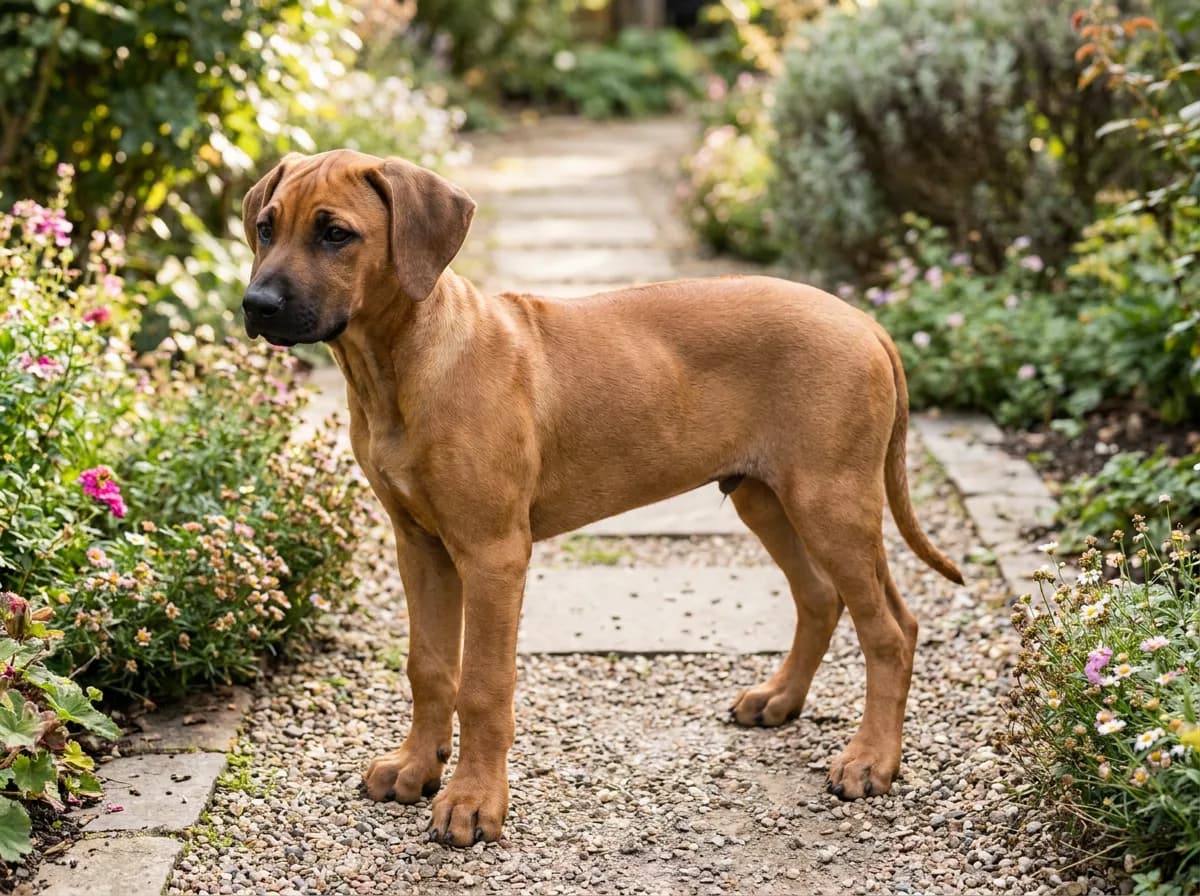
Our Rhodesian Ridgeback puppy guide covers the first-year decisions in detail. Ask about breeder screening and veterinary records, including examination for dermoid sinus, whether or not the puppy has a ridge.
Rhodesian Ridgeback mixes and similar breeds
A Rhodesian Ridgeback mix can vary widely in appearance and behavior. A ridge-like line, wheaten coat, or large athletic build does not prove parentage. If ancestry is uncertain, focus first on the dog's measured size, known history, behavior, and health needs.
The Thai Ridgeback is a separate breed, despite also having a ridge. Other large hounds may share an athletic outline without sharing the same background or care considerations. Similar appearance should prompt a closer look, not an assumption that the breeds are interchangeable.
For a stated cross, ask what is known about both parents and how the dog has behaved in a home. A mix does not reliably average its parents' traits or remove their possible health risks. You still need an individual fit assessment, a secure environment, and the resources to manage the adult dog.
Finding a Rhodesian Ridgeback: breeders, rescue, and the parent club
The Rhodesian Ridgeback Club of the United States is a starting point for breed education and connections to regional clubs. Its ownership-readiness page is useful to read before contacting breeders or rescues, because it asks you to consider living with the dog as well as obtaining one.
Responsible breeders and rescues should offer guidance and records you can review before choosing a dog. Ask a breeder to show which health results belong to which parent, explain puppy raising, and provide a written contract. Discuss how they match puppies to homes and what help they offer after placement. Be ready to describe your schedule, existing pets, and dog-handling experience honestly.
For rescue, request medical and behavior information in a form you can review with the people who will care for the dog. Ask what has actually been observed and what remains unknown. A dog tested briefly around a cat at a shelter has a different evidence base from one living peacefully with cats in a foster home.
Before the dog arrives
Plan the first days as a quiet transition. Set up resting and feeding areas, check gates, and limit unnecessary visitors. Keep the contact details for your veterinarian and the placing organization readily available so small problems can be discussed early.
Is a Rhodesian Ridgeback right for you?
Use these questions as a practical readiness check, not a scored test. One unresolved issue may matter more than several easy answers elsewhere. Identify what you need to arrange before making the commitment.
| Decision | A workable answer | If it is unresolved |
|---|---|---|
| Prey drive | Secure boundaries and a plan around wildlife or smaller animals | Review the temperament guide and discuss the individual dog with its current caregiver. |
| Exercise budget | Time for suitable daily movement, training, and rest | Write a realistic weekday routine and identify backup care. |
| Guarding instinct | Calm visitor procedures and willingness to obtain behavior help | Clarify what the dog's reported behavior actually looks like. |
| First-time owner support | Access to a reward-based trainer and knowledgeable breed contacts | Arrange support before a strong adolescent dog arrives. |
| Large-dog logistics | Enough vehicle and home space, plus a way to assist an injured dog | Check equipment dimensions and transport arrangements. |
- An athletic companion for owners who enjoy suitable daily activities.
- A short coat with relatively straightforward brushing needs.
- Potential for a close, affectionate relationship within a compatible household.
- Prey drive can require lifelong management around wildlife and small animals.
- A meaningful exercise budget includes training time and backup care.
- Strength and size make early manners and safe visitor routines important.
- Large-dog food, equipment, veterinary care, and transport need planning.
The best next step is the one that resolves your biggest uncertainty. Read the size guide if transport is the concern, the family guide if children or pets are the concern, and the cost guide if the long-term budget is unclear. A successful match comes from answering those practical questions before the dog arrives.
Rhodesian Ridgeback FAQs
It can be possible for a suitable individual when daily exercise, toilet access, training, and quiet rest are reliably provided. Floor space alone does not answer the question. Consider shared entrances, stairs or elevators, neighbors, and how you would help the dog outside if it were injured. Ask about the particular adult dog's ability to settle indoors.
Yes. A missing ridge changes show eligibility under the breed standard, not a dog's capacity to be a companion. Evaluate temperament, care needs, and health screening as you would for any puppy or adult. Ridgeless dogs still need examination for dermoid sinus; absence of the ridge does not establish that the condition is impossible.
Some can, but compatibility depends on the individual and its history. Ask for observed behavior around cats, introduce them with secure separation and supervision, and give the cat safe escape routes. Do not leave them together until a sound assessment supports it. A dog that persistently chases or fixates may be unsuitable for that household.
A healthy, physically mature Ridgeback may enjoy gradually conditioned running. Ask your veterinarian when and how to begin for that individual, then account for weather, terrain, paws, and recovery. Growing puppies should not be taken on repetitive forced runs, and an adult that falls behind or appears uncomfortable needs the activity stopped and assessed.
Ask the foster caregiver or rescue for medical history, observed behavior around visitors and pets, handling needs, time-alone behavior, and any bite or escape history. Clarify what remains unknown and what transition support is available. Specific examples help you prepare more effectively than a broad label such as friendly, protective, or energetic.

Sarah Blakemore has been researching and writing about pet care and pet behaviors since 2007. She has cared for many pets over the years and has volunteered with several animal shelters around the world.
Sign up for expert-backed reviews and safety alerts all in one place.