Rhodesian Ridgeback Colors: Every Coat Variation Explained
Rhodesian Ridgeback colors range from light wheaten to red wheaten by breed standard. Black, blue, and brindle Ridgebacks circulate online but are usually mixes or disqualified markings. Here is the honest, breed-standard explainer.

Petful is reader supported. As an affiliate of platforms like Amazon and Chewy, we may earn a commission when you buy through links on this page. There is no extra cost to you.
- Breed-standard colors: Light wheaten, wheaten, red wheaten
- Acceptable markings: Black mask (optional), small white on chest or toes
- Disqualified by breed standard: Excessive white, black-and-tan, large black markings
- Not recognized: Black, blue, silver, brindle (usually mixes or faulty coloring)
- Nose color: Brown or black (matches eye color)
- Eye color: Amber to brown (paired with nose color)
- Color genetics: Two main alleles control wheaten shade; ridge is a separate dominant trait
Rhodesian Ridgeback colors are simpler than most online photos suggest. The breed standard recognizes only three coat shades: light wheaten, wheaten, and red wheaten. Black, blue, silver, and brindle Ridgebacks circulate widely online and confuse prospective buyers, but in nearly every case these are either mixes with another breed, faulty markings, or marketing language used by less reputable breeders. Here is the honest, breed-standard guide to what Rhodesian Ridgeback colors actually look like and what to make of the rest.

Sign up for expert-backed reviews and safety alerts all in one place.
Rhodesian Ridgeback Colors: The Breed Standard
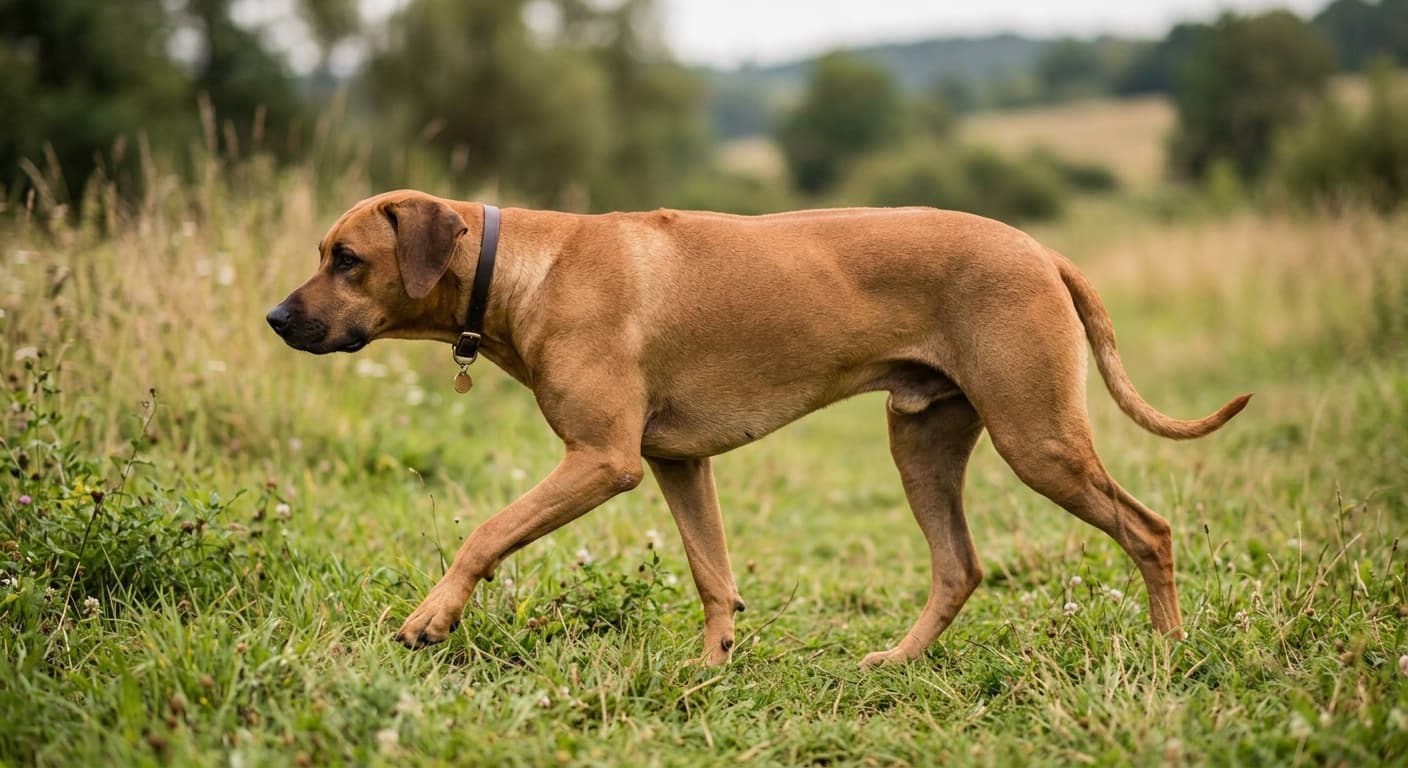
The American Kennel Club and the Rhodesian Ridgeback Club of the United States both recognize three coat shades. Light wheaten is the palest, often described as cream or pale tan. Wheaten is the classic mid-tone, the warm tan most people picture when they hear the breed name. Red wheaten is the deepest, a rich auburn or fox-red. All three share the same short, smooth, glossy coat. Small white markings on the chest or toes are acceptable. Excessive white, large patches of any color, or a black-and-tan pattern are disqualifications under the standard.
How to tell the wheaten shades apart in practice: light wheaten dogs look almost cream or pale gold, especially in sunlight. Standard wheaten is the classic warm tan most people picture, similar to a Vizsla coat color but slightly more muted. Red wheaten is the deepest, with a saturation similar to a Hungarian Vizsla or an Irish Setter (without the silky coat). All three shades are equally correct under the breed standard and equally common, though red wheaten with a black mask is the most photographed version on social media. A single litter can produce all three shades, and puppy color often darkens slightly during the first year before stabilizing.


- 1Light wheaten: cream or pale gold, palest of the three
- 2Wheaten: classic warm tan, the mid-tone most people picture
- 3Red wheaten: deepest, similar saturation to an Irish Setter
- 4Optional black mask paired with black nose; brown nose has no mask
- 5Small white markings on chest or toes are acceptable; large white patches disqualify

Petful may earn a commission when you click through to Chewy, at no extra cost to you.
Black Rhodesian Ridgebacks: Are They Real?
No, a purebred Rhodesian Ridgeback is not black. The breed standard only recognizes wheaten variants. Dogs marketed as black Rhodesian Ridgebacks are almost always mixes with another breed, most commonly Labradors, German Shepherds, or Black Mouth Curs. Some have a ridge, some do not. They can be wonderful dogs, but they are not purebred Ridgebacks. If you see a black puppy advertised as a Rhodesian Ridgeback, ask for the parents' AKC papers and DNA testing before assuming purebred status.
Real-world signs that a so-called black Rhodesian Ridgeback is a mix: the coat is fully black rather than a wheaten with a black mask; the muzzle is broader or shorter than the lean Ridgeback profile; the chest is broader and the build heavier (suggesting Labrador, Pit, or Mastiff cross); and the ridge, if present, is shorter or less defined than the breed standard. Reputable AKC-registered breeders will not market black Ridgebacks because they cannot register them. If you see one advertised at a premium for being rare, treat it as a red flag for breed authenticity, not a feature. Always request the parents AKC papers and a DNA breed verification before paying.
- A purebred Rhodesian Ridgeback is not black. Dogs marketed as black Ridgebacks are mixes (most commonly with Labradors, German Shepherds, or Black Mouth Curs). They can be wonderful pets but are not purebred. Always request AKC papers and a DNA breed verification before paying any premium for a rare-color claim.
Blue and Silver Rhodesian Ridgebacks (Mostly Mixes)
Blue and silver Rhodesian Ridgebacks are not recognized colors. They are not in the breed standard and are not produced by responsible breeders. Most blue or silver dogs marketed under the Ridgeback name are mixes, often with Weimaraners (the source of the blue-gray coat) or with rare-color designer breeds. Some unscrupulous breeders charge a premium for these colors specifically because buyers think rare is better. With Rhodesian Ridgebacks, rare almost always means not purebred.
The blue-gray color found in some so-called blue Ridgebacks comes from the dilute color gene (the d allele on the D locus). In breeds where the dilute is recognized (like Weimaraners), it can be a healthy color. In Rhodesian Ridgebacks, the dilute gene is associated with color dilution alopecia, a skin and coat disorder that can cause hair loss, dry skin, and chronic infections. Responsible Ridgeback breeders avoid stacking the dilute gene for this reason. If a breeder is producing blue or silver puppies, that breeder is either crossing in another breed or selecting for a trait the major kennel clubs and the breed clubs both consider unhealthy.
- The dilute color gene that produces blue or silver coats is linked to color dilution alopecia in Rhodesian Ridgebacks, causing hair loss, dry skin, and chronic infections as the dog ages. Reputable breeders avoid stacking this gene. Paying a premium for a rare blue or silver Ridgeback is paying for a future health problem.
Brindle and Other Rare Patterns
Brindle is not a breed-standard color for the Rhodesian Ridgeback. Brindle Ridgebacks are typically mixes with Boxers, Black Mouth Curs, or other brindle-carrying breeds. The pattern can be striking, but it disqualifies a dog from AKC conformation showing. If your priority is a companion rather than a show prospect, a brindle Ridgeback mix can be a great dog. If you want a purebred Ridgeback, brindle is a red flag.
Brindle is a striping pattern, not a color in itself, controlled by the K locus and the brindle-specific allele (kbr). Pure Rhodesian Ridgebacks lack this allele, which is why brindle does not appear in the breed standard. When you see a brindle Ridgeback, the brindle pattern is almost certainly inherited from a Boxer, Black Mouth Cur, Plott Hound, or American Staffordshire Terrier somewhere in the family tree. Brindle Ridgeback mixes can be wonderful pets and often inherit the ridge along with the brindle pattern (the ridge gene is dominant and prints through mixes). They are simply not eligible for AKC conformation showing or breeding programs.

Petful may earn a commission when you click through to Chewy, at no extra cost to you.
- Brindle Ridgebacks are typically Boxer, Black Mouth Cur, or Plott Hound mixes. They can be wonderful pets and often inherit the ridge along with the brindle pattern. They are simply not eligible for AKC conformation showing or registered breeding programs. If your priority is a companion rather than a show prospect, a brindle Ridgeback mix may suit your family well.
The Black Mask: What It Is and What It Means
Some Rhodesian Ridgebacks have a black mask, a dark patch of fur around the muzzle and sometimes extending up around the eyes. The black mask is acceptable under the breed standard and pairs with a black nose. Other Ridgebacks have a brown nose and no mask. Both patterns are correct, but they should not be mixed within a single dog: a brown-nosed Ridgeback should not have a black mask, and a black-nosed Ridgeback often does. The combination is genetically linked.
The genetic pairing of nose and mask color is worth understanding before choosing a puppy. A Rhodesian Ridgeback with a black nose may have a black mask around the muzzle or no mask at all (both are correct). A Ridgeback with a brown (liver) nose must not have a black mask; if you see a brown-nosed dog with what appears to be a dark mask, look closely (it is usually deep brown rather than true black). The brown nose and amber-to-light-brown eyes go together genetically. So-called Dudley noses (pink, lacking pigment) are a serious fault under the breed standard and often signal broader pigment loss as the dog ages.

Color Genetics in Rhodesian Ridgebacks
Coat color in Rhodesian Ridgebacks is controlled by a small number of genes. The shade of wheaten (light to red) is governed mainly by the intensity dilution locus. The black-versus-brown nose and mask combination is controlled by the B locus. The ridge itself is a separate dominant trait on chromosome 18; a puppy can inherit the ridge from one parent and color from the other. Responsible breeders avoid stacking dilute color genes (the cause of blue or silver coats) because of associated skin and coat health issues.

Multiple ridges and valleys slow eating, reduce gas and bloating, and turn mealtime into a fun puzzle. Non-skid base, dishwasher safe, 4-cup capacity.
Petful may earn a commission when you click through to Chewy, at no extra cost to you.
The Ridge Itself: The Breed Defining Feature
The ridge is the single feature that makes a Rhodesian Ridgeback a Ridgeback. It is a strip of hair growing in the reverse direction along the spine, starting just behind the shoulders and ending before the hips. The standard ridge is symmetrical, tapers cleanly at both ends, and includes two opposing whorls of hair called crowns near the front. A proper ridge is between 2 and 3 inches wide at its widest point. Ridges that are crooked, asymmetrical, or have more than two crowns are still valid Ridgebacks but are typically not shown in conformation. Approximately 5 to 10 percent of Ridgeback puppies are born ridgeless, which was historically considered a serious fault but is now embraced as a healthy variant by many breeders.
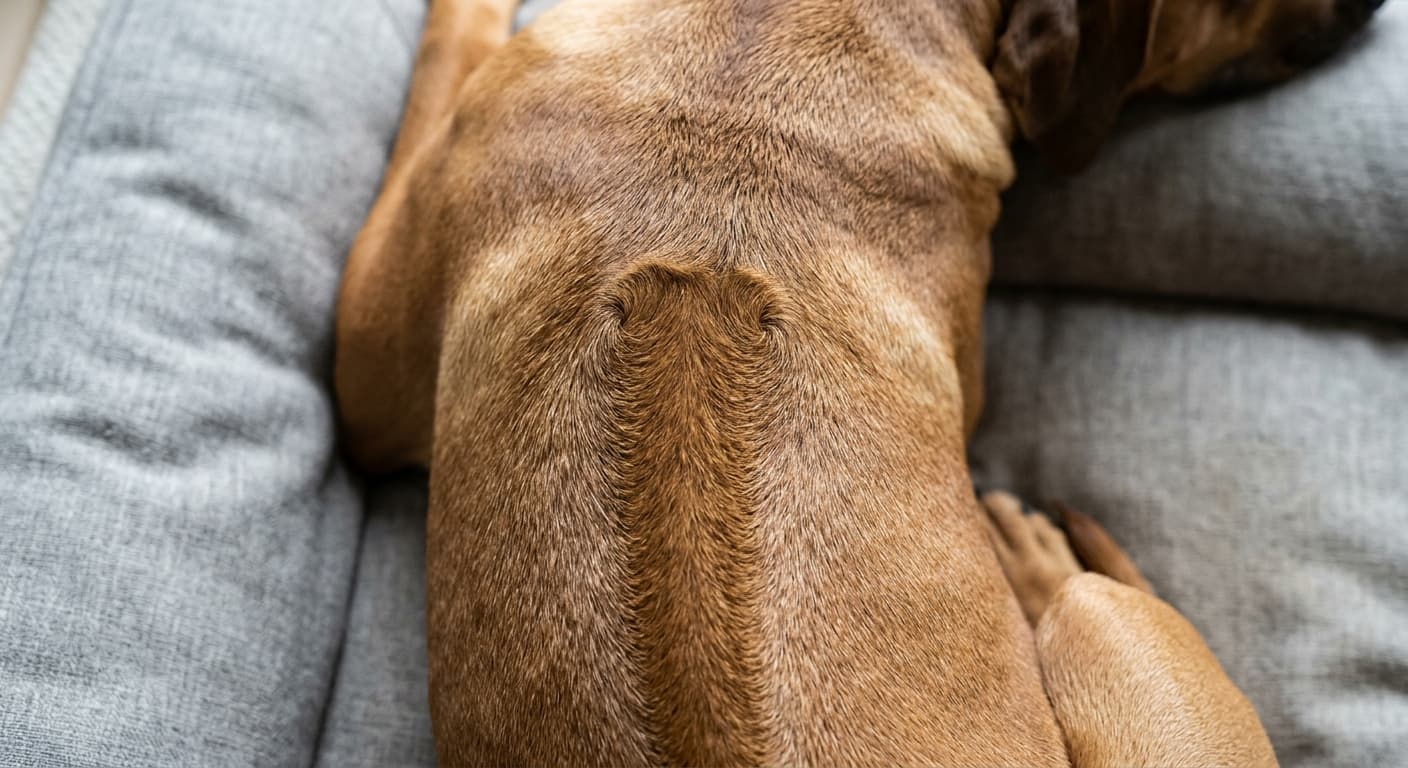
Ridgeless Ridgebacks are physically identical to ridged Ridgebacks in every other way: same temperament, same size, same coat color range, same lifespan. They cannot be shown in AKC conformation, but they can compete in agility, lure coursing, and obedience. Ridgeless puppies typically sell for significantly less than ridged littermates and make excellent companions. They also carry zero risk of dermoid sinus, the congenital spinal condition associated with the ridge gene. If you do not plan to show your Ridgeback, a ridgeless puppy can be a smart pick. The breed personality you fell in love with comes from the temperament and history, not from the strip of reverse-direction fur.
- 1Ridged Ridgebacks are eligible for AKC conformation showing and breeding programs
- 2Ridgeless Ridgebacks have identical temperament, size, lifespan, and coat color range
- 3Ridgeless dogs carry ZERO dermoid sinus risk (the spinal condition tied to the ridge gene)
- 4Ridgeless puppies typically sell for significantly less than ridged littermates
- 5Both can compete in agility, lure coursing, and obedience
DNA testing for Rhodesian Ridgeback color and ridge: commercial dog DNA panels can now identify the specific genes that control coat color and the ridge trait. The ridge itself is caused by a tandem duplication on chromosome 18 (called the RR allele). A puppy with two copies of RR will have a strong ridge but is at higher risk of dermoid sinus, a congenital condition where skin tissue forms a tube along the spine that can become infected. Responsible breeders use DNA testing to plan litters that produce ridge-carrying puppies without doubling up the RR allele. This is one reason informed buyers should ask whether parents have been genetically screened for ridge zygosity and dermoid sinus risk.
More Rhodesian Ridgeback Guides
- Rhodesian Ridgeback Breed Profile: Essential Facts
- Rhodesian Ridgeback Temperament: The Cat-Like Hound, Explained
- Rhodesian Ridgeback Size: Growth Chart, Adult Height & Weight
For the full picture on the breed including size, temperament, and health, read our complete Rhodesian Ridgeback breed profile.
Rhodesian Ridgebacks come in three breed-standard colors: light wheaten, wheaten, and red wheaten. Small white markings on the chest or toes are acceptable. A black mask is optional and is paired with a black nose.
No, a purebred Rhodesian Ridgeback is not black. The breed standard only recognizes wheaten variants. Dogs marketed as black Ridgebacks are almost always mixes with Labradors, German Shepherds, or other dark-coated breeds. Always ask for AKC papers and DNA testing to verify purebred status.
Among breed-standard colors, red wheaten is the deepest and least common shade. So-called rare colors like black, blue, silver, or brindle are not breed-standard and are typically mixes rather than rare purebred variants. Pay a premium for color at your own risk.

Coreen Saito is a pet writer and longtime shelter volunteer with more than a decade in animal rescue. She covers cat behavior, breed care, and the small, ordinary science of sharing a life with companion animals, with a particular focus on honest takes about the products and decisions that actually matter. At home in Arizona, she's outranked by Mac (a dog with the loudest opinion in the house), Rebel (a cat who governs by quiet authority), and Meri (an orange tabby who runs the late shift and the laundry basket). She writes about all three, plus the rescues that keep coming through her life, at LifeWithMinty.com.
Sign up for expert-backed reviews and safety alerts all in one place.