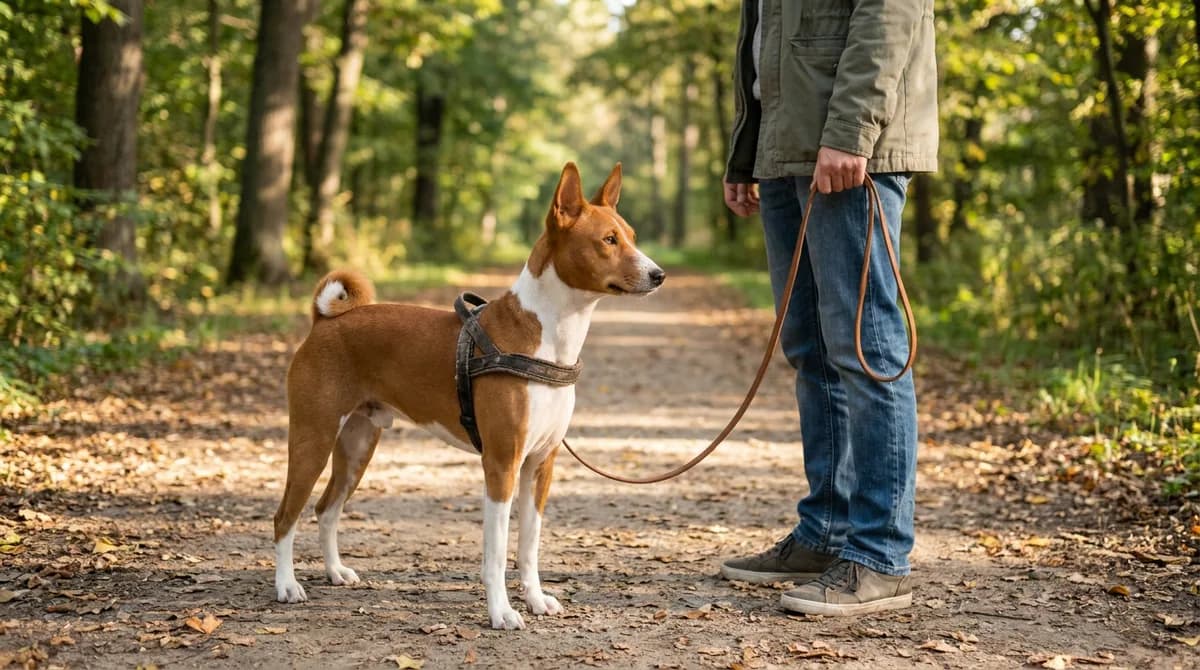
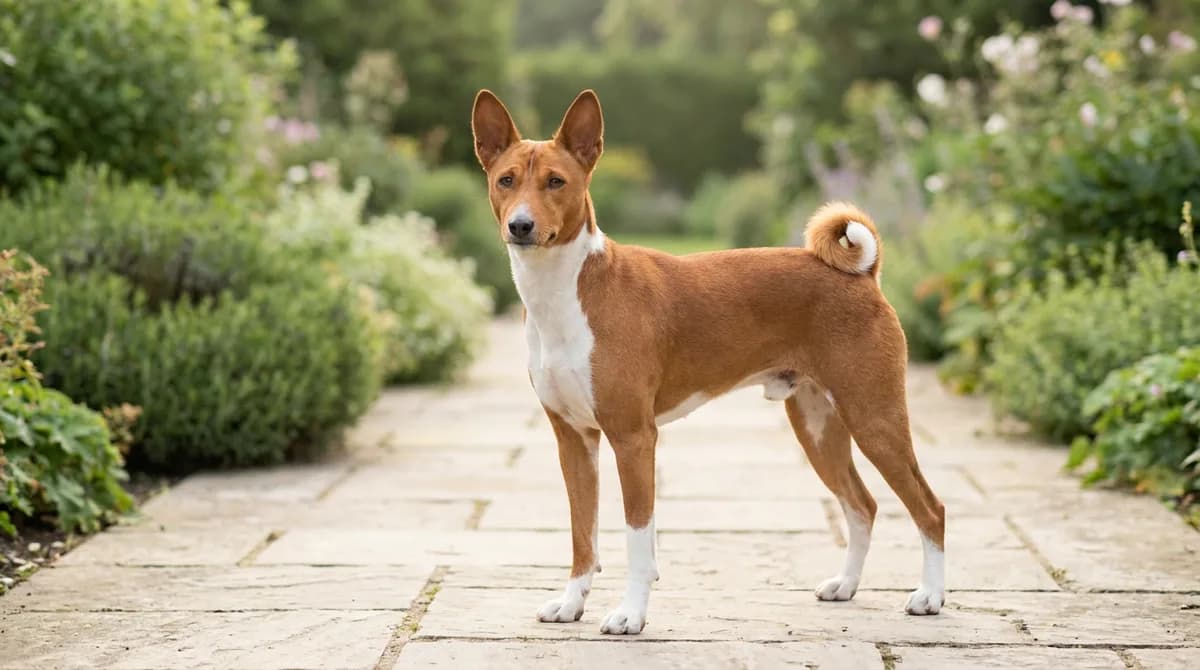
Rhodesian Ridgeback Size: Growth Chart & Adult Weight
Rhodesian Ridgebacks grow to 24 to 27 inches tall and 64 to 90 pounds at maturity. See our month-by-month growth chart, male vs female differences, and how Ridgebacks compare to similar large breeds.
Petful is reader supported. As an affiliate of platforms like Amazon and Chewy, we may earn a commission when you buy through links on this page. There is no extra cost to you.
- Adult height (female): 24 to 26 inches (61 to 66 cm)
- Adult height (male): 25 to 27 inches (63 to 69 cm)
- Adult weight (female): 64 to 75 pounds (29 to 34 kg)
- Adult weight (male): 79 to 90 pounds (36 to 41 kg)
- Fully grown by: 18 to 24 months
- Fastest growth period: 3 to 6 months
- Adult coat established: 10 to 14 months
- Final muscle fill: 18 to 30 months
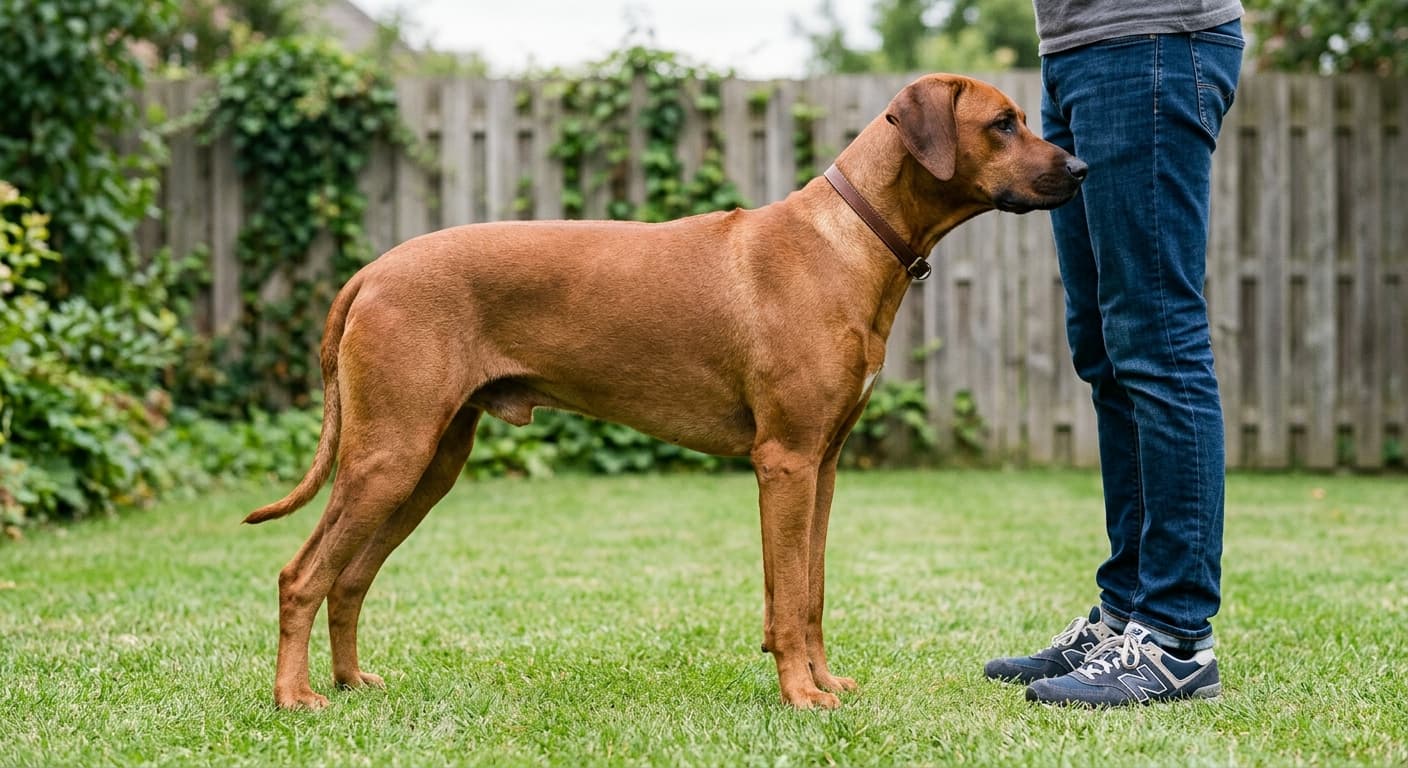
Rhodesian Ridgeback size puts the breed firmly in the large category. Adult females stand 24 to 26 inches at the shoulder and weigh 64 to 75 pounds. Adult males stand 25 to 27 inches and weigh 79 to 90 pounds. Most Ridgebacks reach full height by 12 to 14 months, but they continue to fill out in muscle and chest depth until 18 to 24 months, with some males not reaching their final adult frame until age 2.5. Knowing what to expect month by month helps owners feed, exercise, and train at the right pace.

Sign up for expert-backed reviews and safety alerts all in one place.
Rhodesian Ridgeback Puppy Growth Chart (Month-by-Month)
Rhodesian Ridgeback puppies grow fast. At 8 weeks, most weigh 12 to 18 pounds. By 4 months, they are usually 35 to 45 pounds. The biggest single jump happens between 3 and 6 months, when a Ridgeback puppy can add 4 to 6 pounds per month. By 6 months, expect 55 to 70 pounds. By 12 months they are typically at 90 percent of their adult weight, with 10 to 15 percent left to fill in chest and muscle through their second year.
| Age | Female weight | Male weight | Height (shoulder) |
|---|---|---|---|
| 8 weeks | 10 to 14 lb | 12 to 18 lb | 8 to 10 in |
| 12 weeks | 20 to 26 lb | 24 to 32 lb | 12 to 14 in |
| 4 months | 30 to 38 lb | 35 to 45 lb | 16 to 18 in |
| 6 months | 48 to 58 lb | 55 to 70 lb | 20 to 22 in |
| 9 months | 58 to 68 lb | 68 to 82 lb | 22 to 24 in |
| 12 months | 62 to 72 lb | 75 to 86 lb | 23 to 25 in |
| 18 months | 64 to 75 lb | 79 to 88 lb | 24 to 26 in |
| 24 months (adult) | 64 to 75 lb | 79 to 90 lb | 24 to 27 in |

Use the chart as a typical range, not a strict target. Healthy Ridgebacks vary by 10 to 15 percent above and below these numbers based on lineage, gender, and feeding. Track body condition rather than the scale: at every age, you should be able to feel ribs easily under a thin layer of fat and see a slight waist tuck when looking down at the dog from above. Puppies who plot above the chart but have soft, easily palpable ribs are simply larger-framed. Puppies who plot above the chart with a thick fat pad over the ribs are being overfed, and the long-term joint risk is meaningful.

Petful may earn a commission when you click through to Chewy, at no extra cost to you.
Male vs Female Rhodesian Ridgeback Size
Male Ridgebacks are noticeably bigger than females. Adult males average 85 pounds and 26 inches at the shoulder, while adult females average 70 pounds and 25 inches. The visual difference is even more pronounced in head and chest depth. Males have heavier, broader skulls and deeper chests; females are lighter-framed and often more refined-looking. Both sexes have the same energy level and exercise needs, so size alone should not drive the male versus female decision.
Beyond size, male and female Rhodesian Ridgebacks differ in subtle ways. Males have a slower emotional maturity, often not reaching full adult composure until age three, and tend to be more outwardly bonded to one person. Females mature faster and tend to be the household decision-makers. Spay or neuter timing affects final adult size for both sexes: dogs altered before 12 months tend to grow slightly taller (because the growth plates close later without sex hormones) but with less muscle mass. Current veterinary consensus for large breeds favors waiting until 18 to 24 months to spay or neuter, which preserves better final body proportions and reduces certain orthopedic risks.
Rhodesian Ridgeback Weight: Female and Male Detailed Breakdown
Rhodesian Ridgeback weight varies meaningfully by sex and individual lineage. Female Rhodesian Ridgebacks typically settle between 64 and 75 pounds at full maturity, with most dogs landing in the 68 to 72 pound range. Male Ridgebacks weigh 79 to 90 pounds at maturity, with most males in the 82 to 87 pound range. The lower end of these ranges represents lighter-framed, more refined dogs (often called 'showy' types), while the upper end represents heavier-boned working lines. Some champion-line males can reach 95 to 100 pounds, though that is unusually large for the breed and not preferred under the AKC standard, which calls for an athletic rather than bulky build.
Adult weight typically stabilizes between 18 and 24 months. Before that, Rhodesian Ridgeback puppy weight follows a predictable curve: about 1.5 to 2 pounds at birth, 12 to 18 pounds at 8 weeks, 35 to 45 pounds at 4 months, 55 to 70 pounds at 6 months, and roughly 90 percent of adult weight by 12 months. The remaining 10 to 15 percent fills in as muscle and chest depth through the second year. Genetics is the single biggest factor in final adult weight. Ask any reputable breeder for the height and weight of both parents and most full siblings of previous litters; that range is the best predictor of where your puppy will land.
- Males: Larger, more imposing presence (great for watchdog appeal)
- Males: Slower emotional maturity (often 3 years), more bonded to one person
- Males: Heavier bone and deeper chest, more 'classic hound' look
- Females: Faster to train and emotionally mature (often 18 to 24 months)
- Females: Slightly easier to manage on leash due to smaller size
- Females: Tend to be the household decision-makers (independent thinkers)
- Males: Higher exercise needs and stronger pull on leash
- Males: Same-sex household conflict more common with intact males
- Males: Larger crate, car, and gear costs
- Females: Heat cycles twice a year if intact (most owners spay)
- Females: Smaller deterrent factor if watchdog presence matters to you
- Both sexes: Equal energy levels and equal need for daily vigorous exercise
How Big Do Rhodesian Ridgebacks Get Compared to Similar Breeds?
Among the breeds Ridgebacks are most often compared to, they sit in the upper-middle range. A Vizsla is smaller (45 to 65 pounds) and a Weimaraner is similar in height but lighter (55 to 85 pounds). A Boerboel or English Mastiff is larger, often 100 to 200 pounds. Among large hounds, the Ridgeback is athletic and lean rather than bulky. Their lean muscle and athletic build are part of why they look smaller in photos than they actually are in person.
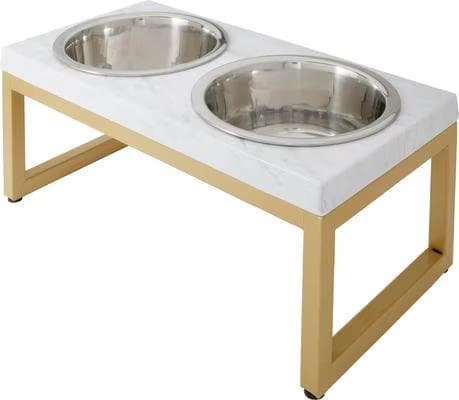
Raised stainless steel double bowl on a marble-look stand. Easier on the neck and joints and a clean, tip-resistant way to keep fresh water available all day.
Petful may earn a commission when you click through to Chewy, at no extra cost to you.
| Breed | Height (shoulder) | Weight |
|---|---|---|
| Rhodesian Ridgeback (male) | 25 to 27 in | 79 to 90 lb |
| Rhodesian Ridgeback (female) | 24 to 26 in | 64 to 75 lb |
| Vizsla | 21 to 24 in | 45 to 65 lb |
| Weimaraner | 23 to 27 in | 55 to 90 lb |
| Labrador Retriever | 21 to 25 in | 55 to 80 lb |
| Greyhound | 27 to 30 in | 60 to 70 lb |
| Boerboel | 22 to 27 in | 150 to 200 lb |
| German Shepherd | 22 to 26 in | 50 to 90 lb |
Two practical takeaways from the comparison: first, the Vizsla is the closest behavioral cousin to the Ridgeback at about three-quarters the size, which makes them a popular alternative for owners who want the personality but in a smaller frame. Second, the Boerboel is often confused with the Ridgeback because both are South African hunting breeds, but Boerboels are nearly double the Ridgeback weight and are bred as guardian-mastiffs rather than tracking hounds. If size is the deciding factor in your choice, the Ridgeback occupies a uniquely useful middle ground: athletic enough to keep up with active owners but not so large that household management becomes a daily challenge.
- The Rhodesian Ridgeback sits in a uniquely useful middle ground for large-dog owners: athletic enough to keep up with active lifestyles and big enough to feel like a real hound, but not so large that household management becomes a daily challenge. If size is your deciding factor, the Vizsla is smaller, the Boerboel is much larger, and the Weimaraner is closest in dimensions but with a more demanding temperament.
When Do Rhodesian Ridgebacks Stop Growing?
Most Rhodesian Ridgebacks reach their adult height between 12 and 14 months. They reach adult weight a bit later, usually between 18 and 24 months. The last thing to fill in is chest depth and shoulder muscle. Male Ridgebacks can continue gaining mass and depth until age 2.5 to 3. After that, expect very little physical change until senior years. Maintaining a lean body condition throughout life is important to reduce stress on the joints and reduce hip dysplasia risk.
Practical signs that a Rhodesian Ridgeback has reached full size: the chest depth equals the elbow height when standing; the muscle mass over the shoulders feels firm rather than developing; and the dog stops needing the higher-calorie large-breed puppy formula without losing condition. Final adult coat color is also usually fixed by 12 to 14 months, though red wheatens can continue to deepen for another year. If your Ridgeback seems to be still growing past age three, schedule a vet visit. Sustained late growth can indicate thyroid issues or, rarely, hormonal disorders that are easier to address when caught early.

Multiple ridges and valleys slow eating, reduce gas and bloating, and turn mealtime into a fun puzzle. Non-skid base, dishwasher safe, 4-cup capacity.
Petful may earn a commission when you click through to Chewy, at no extra cost to you.
- If your Rhodesian Ridgeback is still gaining height or weight past age three, schedule a vet visit. Sustained late growth can indicate thyroid issues or, rarely, hormonal disorders that are easier to address when caught early. Most Ridgebacks finish at 18 to 24 months, with males possibly filling out in chest depth until 2.5 to 3 years.
Feeding for Healthy Growth
Large-breed puppy food matters for Rhodesian Ridgebacks because growing too fast is a real risk. Standard puppy food is calorie-dense and can push a Ridgeback puppy to grow faster than its joints and skeleton can support, increasing the risk of hip and elbow dysplasia. A large-breed puppy formula with controlled calcium and a slower growth curve is recommended for the first 12 to 18 months. Switching to adult food is usually appropriate at 14 to 18 months, depending on growth and body condition.
Specific feeding guidance: most Ridgeback puppies need 3 meals per day from 8 weeks to 4 months, dropping to 2 meals per day from 4 months onward. Daily calorie needs vary by age and activity, but a useful baseline is 25 to 30 calories per pound of expected adult weight per day during the fastest growth phase (3 to 6 months), tapering to 20 calories per pound at maturity. Look for puppy formulas with calcium in the 1.0 to 1.5 percent range (above 1.5 percent is associated with skeletal issues in large breeds). Avoid free-feeding, which leads to overweight Ridgebacks and accelerates joint problems. Always have fresh water available, especially during the high-growth phase.
Body Condition Score: How to Check if Your Rhodesian Ridgeback Is the Right Size
Body Condition Score (BCS) is a more reliable indicator of healthy Rhodesian Ridgeback size than the number on the scale. A 75-pound female Ridgeback can be perfectly lean or noticeably overweight depending on how the weight is distributed. Veterinarians use a 9-point BCS scale, with 4 to 5 considered ideal for adult Ridgebacks. At ideal condition, you should be able to easily feel each rib under a thin layer of fat without pressing hard, see a visible waist tuck when looking down at the dog from above, and see a slight abdominal tuck from the side. The breed is built for endurance rather than bulk, so leanness is healthier than the heavier look some owners prefer.
- 1Rib check: feel ribs easily under thin fat with light pressure (not pressing hard)
- 2Waist tuck from above: visible narrowing behind the ribs
- 3Abdominal tuck from the side: belly rises toward the hip, not flat across
- 4Hip and spine: visible muscle tone but no protruding bones
- 5Recheck monthly and bring photos to the vet annually for an outside opinion

Petful may earn a commission when you click through to Chewy, at no extra cost to you.
- Two options: (1) Step on a bathroom scale alone, note your weight, then pick up the dog and step on again. The difference is the dog weight. Works only up to about 50 pounds for safety. (2) Use a baggage scale with a chest harness attachment, or visit your local vet office (most have a walk-in scale in the lobby and welcome quick check-ins). Track adult weight every 4 to 6 weeks. Sudden gains or losses of more than 5 percent in a month warrant a vet check.
- 13 meals per day from 8 weeks to 4 months
- 22 meals per day from 4 months onward
- 325 to 30 calories per pound of expected adult weight during the 3-6 month growth phase
- 4Calcium 1.0 to 1.5 percent in puppy formula (above 1.5 percent risks skeletal issues)
- 5Never free-feed. Track body condition by feel, not just the number on the scale
Is Your Rhodesian Ridgeback Bigger or Smaller Than Expected?
Some Rhodesian Ridgebacks land outside the breed-standard ranges. A 60-pound adult female or a 95-pound adult male is not automatically unhealthy. Variance comes from three main sources: genetics (parents' sizes are the strongest predictor), feeding during the 3-to-6 month growth phase, and spay or neuter timing (dogs altered before 12 months grow slightly taller but with less muscle mass). If your full-grown Rhodesian Ridgeback is significantly smaller than expected, ask your breeder for the parents' weights. If your dog is significantly larger, watch the body condition score carefully because large-frame Ridgebacks are at higher risk for joint stress.
- A sudden change in your Rhodesian Ridgeback size or weight is worth investigating. Rapid weight loss (more than 5 percent in a month without diet change) can indicate parasites, dental disease, or thyroid issues. Rapid weight gain in an adult dog can signal hypothyroidism (which is common in this breed). A puppy who plateaus in growth between 3 and 6 months may have a hidden infection or developmental issue. Schedule a vet visit if any size-related change feels off, especially for a Ridgeback over age 7 where conditions like degenerative myelopathy and Cushing's can present as size or muscle changes.
More Rhodesian Ridgeback Guides
- Rhodesian Ridgeback Breed Profile: Essential Facts
- Rhodesian Ridgeback Temperament: The Cat-Like Hound, Explained
- Rhodesian Ridgeback Colors: Every Coat Variation Explained
For the full picture on the breed including temperament, exercise needs, and health, read our complete Rhodesian Ridgeback breed profile.
A full-grown Rhodesian Ridgeback stands 24 to 27 inches at the shoulder and weighs 64 to 90 pounds, depending on sex. Males are typically 25 to 27 inches and 79 to 90 pounds. Females are typically 24 to 26 inches and 64 to 75 pounds.
The average weight of an adult Rhodesian Ridgeback is about 85 pounds for males and 70 pounds for females. Healthy Ridgebacks are lean and athletic, not bulky. Body condition is more important than the number on the scale.
Rhodesian Ridgebacks reach full adult height by 12 to 14 months and full adult weight by 18 to 24 months. Males may continue filling out in chest and muscle until age 2.5 or 3. After that, their size stays stable until senior years.
A 6-month-old Rhodesian Ridgeback typically weighs 55 to 70 pounds, with females at the lower end (48 to 58 pounds) and males at the upper end (55 to 70 pounds). At this age they have reached roughly 75 to 80 percent of adult weight, with most remaining growth coming through 12 to 18 months as chest depth and muscle mass fill in.
Yes, the Rhodesian Ridgeback is classified as a large dog breed by the AKC. Adults stand 24 to 27 inches at the shoulder and weigh 64 to 90 pounds. They are larger than Vizslas and Weimaraners, similar in height to Greyhounds (but heavier), and noticeably smaller than mastiff-class breeds like the Boerboel or English Mastiff.
A Rhodesian Ridgeback is overweight if you cannot easily feel the ribs under a thin layer of fat, if there is no visible waist tuck when looking down from above, or if the abdomen sags rather than tucks up toward the hip when viewed from the side. Overweight Ridgebacks face higher risk of hip dysplasia, joint pain, and shortened lifespan. Aim for a Body Condition Score of 4 or 5 on the 9-point scale.

Coreen Saito is a pet writer and longtime shelter volunteer with more than a decade in animal rescue. She covers cat behavior, breed care, and the small, ordinary science of sharing a life with companion animals, with a particular focus on honest takes about the products and decisions that actually matter. At home in Arizona, she's outranked by Mac (a dog with the loudest opinion in the house), Rebel (a cat who governs by quiet authority), and Meri (an orange tabby who runs the late shift and the laundry basket). She writes about all three, plus the rescues that keep coming through her life, at LifeWithMinty.com.
Sign up for expert-backed reviews and safety alerts all in one place.