Rhodesian Ridgeback Puppies: First-Year Owner's Guide
Bringing home a Rhodesian Ridgeback puppy? Honest first-year guide to feeding, training, socialization, health, and what most new owners get wrong.

Petful is reader supported. As an affiliate of platforms like Amazon and Chewy, we may earn a commission when you buy through links on this page. There is no extra cost to you.
- Adult weight: 70-85 lbs. Adult height: 24-27 inches. Energy level: very high. Training difficulty: medium-high (independent, intelligent). Critical socialization window: 8-16 weeks. Lifespan: 10-12 years. Bred to track lions in southern Africa, Ridgeback puppies grow fast and think for themselves from day one.
Rhodesian Ridgeback puppies are athletic, intelligent, and remarkably independent from the moment they come home. The breed was developed in southern Africa to hold lions at bay, and that fearless self-reliance shows up in eight-week-old puppies who already make their own decisions about what looks worth investigating. This guide walks first-year owners through the supplies, feeding, socialization, training, and health milestones that turn a willful Ridgeback puppy into a calm, well-mannered adult. For the broader breed picture (size, lifespan, temperament, health) start with our full Rhodesian Ridgeback breed profile.

Sign up for expert-backed reviews and safety alerts all in one place.
What to Expect From a Rhodesian Ridgeback Puppy
A Rhodesian Ridgeback puppy is not a Labrador in a wheaten coat. From the first week home, owners notice the breed's defining traits emerging: a cat-like independence that makes them seem detached from typical puppy neediness, a high prey drive that activates the second a squirrel crosses the yard, and a stubborn intelligence that figures out the rules and then decides whether to follow them. Most puppies hit roughly 20 pounds by 8 weeks, 40 pounds by 4 months, and reach full physical maturity between 12 and 24 months (females sooner, males later).
Owners often describe the experience as raising a small, fast-growing person rather than a puppy. The breed is quiet (true bark-rare), affectionate with family, and reserved with strangers. They are also escape artists, counter-surfers, and committed perfectionists when it comes to ignoring recalls in open spaces. Read more about the breed's adult temperament in our Rhodesian Ridgeback temperament guide to understand what your puppy is growing into.

Petful may earn a commission when you click through to Chewy, at no extra cost to you.
Exercise needs scale fast. An 8-week-old Ridgeback puppy needs short structured play and a lot of sleep (16 to 20 hours a day, broken up). By 6 months, the same puppy needs about an hour of varied activity. By 12 months, two hours of vigorous daily exercise is the floor, not the ceiling, and it stays that way for most of the dog's adult life. If you do not have a securely fenced yard, access to a dog-safe trail system, or the time and weather tolerance to take long daily walks in any conditions, this is not the right breed for your household. Honest assessment of lifestyle fit before you buy is the single best predictor of whether this puppy becomes a great adult dog.
- Loyal, affectionate, and devoted to their family for life
- Quiet and rarely bark, making them surprisingly easy neighbors
- Athletic partners for hiking, running, and outdoor adventure
- Low-maintenance grooming with a short single coat
- Generally healthy breed with no daily brushing required
- Strong-willed and stubborn, harder to train than retrievers or shepherds
- High prey drive means off-leash freedom in unfenced spaces is rarely safe
- Need two hours of daily exercise minimum, well into adulthood
- Reserved with strangers, requiring extensive early socialization
- Cost $1,500 to $3,500 from a reputable breeder, plus large-breed ongoing costs

A personalized ID tag on day one is the single cheapest insurance against your escape-artist puppy ending up at a shelter.
Petful may earn a commission when you click through to Chewy, at no extra cost to you.
- 1Birth to 8 weeks: with the breeder. Never accept a puppy before 8 weeks old.
- 28 to 16 weeks: critical socialization window. Every safe environment, person, surface, and sound counts.
- 34 to 6 months: puberty starts. Recall regression and selective hearing kick in.
- 46 to 9 months: discuss spay or neuter timing with your vet. Large-breed timing is not the same as small-breed.
- 512 to 18 months: physical maturity. Female growth plates close earlier than male.
First Days Home: Essential Supplies
Buy for the adult dog your puppy is going to be, not the 18-pound puppy in your kitchen. A 42-inch wire crate with a divider grows with the puppy and stays useful at adult size. Pick a sturdy collar with a quick-release buckle and order an engraved ID tag on day one (microchipping is the backup, not the primary). Add a 6-foot leash, a no-pull harness for early walking work, two stainless bowls (ceramic chips, plastic harbors bacteria), and a slow-feeder bowl or puzzle bowl to slow fast eating from the start. You will also need crate bedding (machine-washable, no stuffing if your puppy is a shredder), high-value training treats, puppy pads for the first few weeks of housetraining, and a basic grooming kit (slicker brush, nail clippers, dog toothbrush).
Skip the cute boutique items for now. A teething Ridgeback puppy will destroy anything plush or absorbent, and large-breed puppies grow out of size-small accessories in weeks. Quality basics from a few categories beat a Pinterest-perfect starter kit every time. Reserve the budget for vet care, a high-quality large-breed puppy food, and a professional puppy training class starting around 10 to 12 weeks.
Track your Rhodesian Ridgeback puppy's vaccinations, microchip details, breeder paperwork, and vet history in one place. Especially valuable as your puppy moves between vet practices, dog walkers, daycare, and emergency clinics across a 10-to-15-year lifespan.
Start Your Puppy's ProfileA few specific avoids: retractable leashes (teach pulling, snap under sudden lunges, common cause of hand and arm injuries), rawhide chews (choking and digestive blockage risk in fast eaters), prong or choke collars (wrong tool for a soft-tissue puppy), and any "elevated" food bowl unless your vet has specifically recommended one for your dog (recent research has called the long-standing elevated-bowl advice into question for deep-chested breeds). Budget roughly $1,500 to $2,500 for first-year non-purchase costs: vet visits, vaccinations, spay or neuter, food, training class, and the supplies above. The breed is not unusually expensive to maintain, but it is firmly in the large-dog cost tier, not the medium-dog tier.
Feeding Your Rhodesian Ridgeback Puppy
Rhodesian Ridgeback puppies need a large-breed puppy food specifically (not standard puppy formula). Large-breed puppy diets are calibrated to keep growth steady and controlled, which protects hip and elbow joints during the rapid skeletal development phase. Look for a food that meets AAFCO growth or all-life-stages requirements with the "large size" qualifier, contains 23 to 30 percent protein, and has a calcium-to-phosphorus ratio close to 1.2:1. Overfeeding or feeding regular puppy formula accelerates growth in ways that increase later joint problems.
Feed three meals a day from 8 weeks to 4 months, then drop to two meals a day for life (never one large meal, see Bloat Prevention below). Portion sizes follow the food manufacturer's chart for current weight and projected adult weight (60 to 90 pounds depending on sex). Switch to a large-breed adult formula between 12 and 18 months, slowly over 7 to 10 days to avoid digestive upset. Keep fresh water available constantly. Discourage gulping large volumes in one go (especially around meals or right after exercise) and discuss bloat-prevention practices with your vet.
Treats matter for training, but stay disciplined. Aim for treats to make up no more than 10 percent of daily calories, and pick small high-value rewards that disappear in one bite (a Ridgeback puppy will spend three minutes chewing a single crunchy treat, which kills training tempo). Prevent food-bowl resource guarding early by occasionally hand-feeding meals, dropping a high-value treat into the bowl while your puppy eats (so your approach predicts good things), and never grabbing a bowl or chew away mid-meal as a "training" exercise. Trade up with a better reward instead. Resource guarding in adult Ridgebacks is harder to fix than to prevent.
Bloat Prevention Starts in Puppyhood
Rhodesian Ridgebacks are deep-chested, which puts them at elevated lifetime risk for bloat (gastric dilatation-volvulus, or GDV). Bloat happens when the stomach fills with gas and twists on itself, cutting off circulation. Untreated bloat kills a dog in hours. Prevention is one of the most important things first-year owners can build into daily routine, and the habits start in puppyhood. GDV is more common in adult deep-chested dogs, but any puppy showing retching with a distended abdomen needs immediate veterinary care. The behaviors you let slide now (eating fast, exercising after meals, large single meals) set up the adult dog who eventually develops the condition.
- Daily habits to build now: feed two to three smaller meals instead of one large one, slow fast eaters with a puzzle or slow-feeder bowl, avoid vigorous exercise within 60 minutes before or after meals, and skip the elevated food bowl unless your vet specifically recommends one (recent research has called the long-standing elevated-bowl advice into question for deep-chested breeds). Know the emergency signs: a distended hard abdomen, unproductive retching, restlessness, drooling, and rapid breathing. Bloat is a true emergency, get to the vet immediately.

The maze pattern slows fast-eating puppies, building anti-bloat habits before the breed's deep-chested adult conformation locks in.
Petful may earn a commission when you click through to Chewy, at no extra cost to you.
Housetraining and Crate Training
Take an 8-week-old puppy outside every 60 to 90 minutes during the day, plus immediately after waking, eating, drinking, or playing. Pick one outside spot for elimination and reward heavily the moment business gets done. Inside the house, supervise constantly or confine to a crate or playpen. The crate works as a den, not a punishment: the puppy goes in for naps, meals, and short stretches alone, building positive associations from week one. Most Ridgeback puppies are reliably housetrained by 4 to 6 months with consistent effort.
Accidents are always the owner's fault, not the puppy's. If you find a wet spot after the fact, clean it with an enzymatic cleaner (regular cleaners leave scent markers the puppy will return to) and adjust your supervision. Never rub a puppy's nose in an accident or punish after the fact. The puppy has zero ability to connect a 5-minute-old action with a current consequence. Catching the moment, calmly carrying outside, and rewarding the right behavior is the entire training mechanism.
Socialization: The Critical 8-16 Week Window
The 8-to-16-week window is the most important training period in a Rhodesian Ridgeback's life, and it cannot be made up later. Expose your puppy in a positive, controlled way to as many people, dogs, sounds, surfaces, and environments as you can safely manage before 16 weeks. Men with hats, children at different ages, wheelchairs, umbrellas, vacuum cleaners, car rides, gravel, metal grates, vet offices, friendly cats, calm adult dogs (vaccinated, of course), and 30 different humans is the rough target many trainers use. Every positive exposure during this window helps prevent reactivity and fear-based behavior in the adult dog.
- Rhodesian Ridgebacks shut down or push back under harsh correction. They were bred to make independent decisions while hunting, and they bring that independence to training. Reward-based methods (clicker training, lure-reward, mark-and-feed) work. Yelling, leash-popping, alpha-rolls, or e-collar correction breaks trust in this breed and produces an avoidant, sometimes reactive adult dog. Find a force-free trainer for puppy class and stay consistent.
Fear periods (two short windows around 8-11 weeks and again around 6-14 months) require extra care. During a fear period, a scary experience leaves a much deeper impression than usual. Never force a frightened puppy to approach the scary thing; let them retreat, let them watch from a safe distance, and reward calm. Most fear-period blips pass within two weeks if handled gently.
Leash Training a High-Prey-Drive Puppy
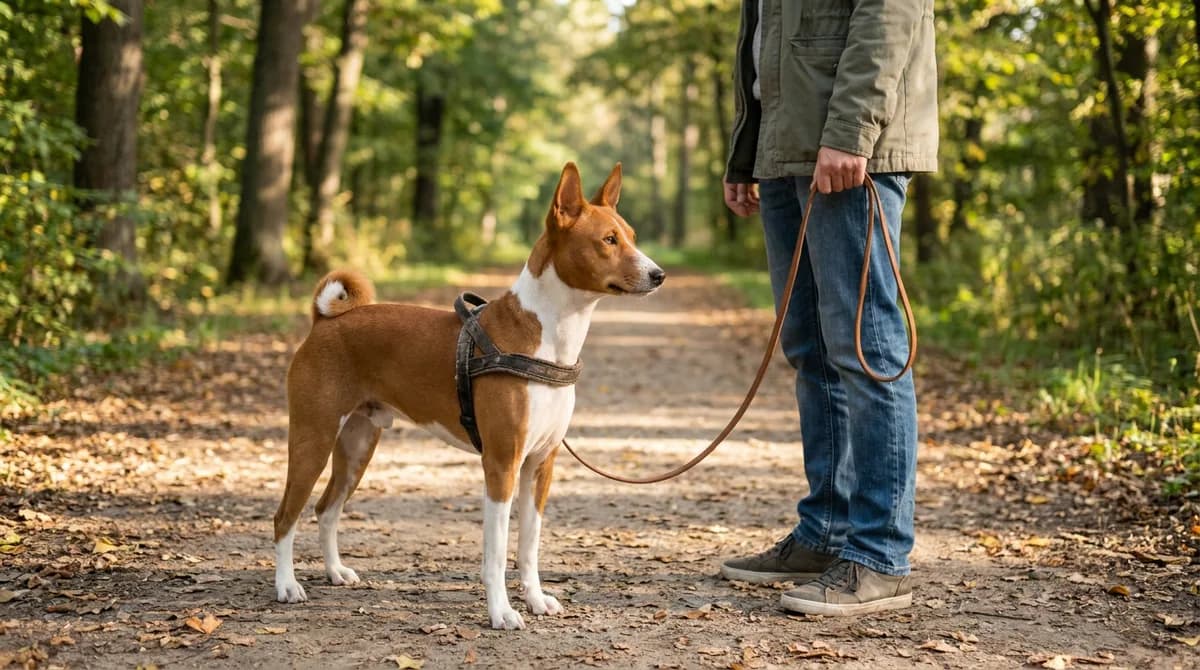
Start leash work in the house and yard before ever attempting a public walk. Reward the puppy for staying near you off-leash inside, then add the leash with no pressure, then walk small loops. A front-clip no-pull harness is the right tool for a strong, growing breed: it redirects pulling without choking the throat, and it is correct-fit-and-forget at growth-spurt phase. Avoid retractable leashes (they teach pulling and break under sudden lunges) and avoid prong or choke collars on a soft-tissue puppy.

A front-clip harness redirects pulling without choking the throat. Essential for a high-energy breed that will hit 70-plus pounds.
Petful may earn a commission when you click through to Chewy, at no extra cost to you.
Recall is the most important command for this breed and the one Ridgebacks are most likely to ignore. Practice recall daily indoors and in a fenced yard, with very high-value rewards (real chicken, freeze-dried liver, cheese, not kibble). Never recall the puppy and then end the fun activity; always recall, reward, release. Off-leash freedom in unfenced spaces is rarely a safe choice with this breed; the prey drive overrides recall the moment a deer or rabbit appears. See our size and growth chart for what to expect as your puppy matures into adult conformation.
First-Year Health Milestones
Core vaccinations follow the standard puppy series: distemper, parvovirus, adenovirus, and parainfluenza at 6 to 8 weeks, repeated every 3 to 4 weeks until 16 weeks. Rabies vaccination happens between 12 and 16 weeks depending on state law. AAHA's 2022 canine vaccination guidelines reclassified leptospirosis as a core vaccine for most US dogs (typically administered after 12 weeks), reflecting wider geographic risk. Bordetella and Lyme remain lifestyle vaccines based on local exposure and travel patterns. Start heartworm prevention and flea/tick prevention by 8 weeks. Your first vet visit should also confirm the puppy is microchipped and registered (this is the second layer behind the ID tag).
Large-breed neuter timing is its own conversation. Current research (including the 2024 UC Davis longitudinal neutering study) suggests waiting until growth plates close (often 18 to 24 months for males, 12 to 18 months for females) reduces some orthopedic and cancer risks. Talk through timing with your vet rather than defaulting to the older 6-month convention. Dermoid sinus screening should happen as early as possible: a reputable breeder screens at 24 to 48 hours after birth and again at puppy placement, and your own vet should check the spine carefully at the first comprehensive exam (typically right after pickup at 8 to 10 weeks) rather than waiting until later.
| Puppy Age | Core Vaccines | Other Preventive Care | Vet Visit Type |
|---|---|---|---|
| 6 to 8 weeks | DHPP #1 (distemper, hepatitis, parvo, parainfluenza) | First deworming, breeder microchip | Initial breeder or first vet visit |
| 10 to 12 weeks | DHPP #2, Bordetella optional | Begin monthly heartworm prevention | Second puppy visit |
| 14 to 16 weeks | DHPP #3, Rabies, Leptospirosis optional | Begin flea and tick prevention | Third visit + dermoid sinus follow-up |
| 6 months | Adult dental check baseline | Discuss spay or neuter timing (large-breed: 18-24mo for males) | Adolescent visit |
| 12 months | 1-year DHPP booster, Rabies booster | Transition to large-breed adult food | First adult annual exam |
- Get to the vet immediately if you notice a small palpable cyst or pinhole opening along the puppy's spine (possible dermoid sinus), a distended abdomen with unproductive retching (possible bloat, a true emergency), lameness or reluctance to walk before 12 months (possible panosteitis, the "growing pains" condition), or sudden lethargy with pale gums in an unvaccinated puppy (possible parvovirus). Bloat and parvo can kill in hours; do not wait.
More Rhodesian Ridgeback Guides
- Pillar guide: Rhodesian Ridgeback Breed Profile
- Behavior: Rhodesian Ridgeback Temperament: The Cat-Like Hound
- Growth: Rhodesian Ridgeback Size Chart: Growth by Age & Weight
- Coat: Rhodesian Ridgeback Colors: All 6 Coat Variations + Ridge
- Lifespan + health: Rhodesian Ridgeback Lifespan: 10-12 Years (Vet-Reviewed)
- Cost: Rhodesian Ridgeback Price & Cost of Ownership (2026)
- Family fit: Are Rhodesian Ridgebacks Good Family Dogs?
Raising a Rhodesian Ridgeback puppy is a 12-to-18-month project that shapes the next decade of your life with the dog. Get the basics right (large-breed food, slow feeding, early socialization, force-free training, anti-pull harness) and you set up a calm, confident adult. Want the bigger breed picture before you commit? Read our complete Rhodesian Ridgeback breed profile for size, temperament, lifespan, health, and care all in one place.
A Rhodesian Ridgeback puppy from a reputable breeder typically costs $1,500 to $3,500 in the United States, with show-quality or champion-line puppies running $3,500 to $5,000. Cheap listings under $800 to $1,000 usually come from backyard breeders skipping health screening; the long-term vet bills exceed any upfront savings. Adopting through a rescue is a lower-cost alternative.
Female Rhodesian Ridgebacks typically reach full physical maturity around 12 to 18 months, with growth plates closing earlier than males. Males often keep filling out until 18 to 24 months. Adult weight lands in the 64 to 75 pound range for females and 79 to 90 pounds for males, with height of 24 to 26 inches and 25 to 27 inches respectively.
Rhodesian Ridgeback puppies are intelligent and capable of high-level obedience, but they are not eager-to-please in the Labrador or Golden Retriever sense. They are independent, cat-like thinkers who learn the rules and then negotiate them. Training works with positive reinforcement, high-value rewards, and consistency. Harsh correction breaks trust in this breed and produces avoidant or reactive adults.
No. Rhodesian Ridgebacks are unusually quiet for a large hound, even as puppies. They were bred to track silently and only vocalize when alerting to genuine threat. Most owners describe adult Ridgebacks as bark-rare, which makes them surprisingly good neighbors in close quarters.
It is possible but rarely advisable. Rhodesian Ridgebacks need a minimum of two hours of vigorous daily exercise well into adulthood, plus secure off-leash decompression space (a fenced yard or daily long-line work). Apartment living without that exercise commitment leads to destructive behavior, anxiety, and reactivity. A house with a securely fenced yard suits the breed far better.

Coreen Saito is a pet writer and longtime shelter volunteer with more than a decade in animal rescue. She covers cat behavior, breed care, and the small, ordinary science of sharing a life with companion animals, with a particular focus on honest takes about the products and decisions that actually matter. At home in Arizona, she's outranked by Mac (a dog with the loudest opinion in the house), Rebel (a cat who governs by quiet authority), and Meri (an orange tabby who runs the late shift and the laundry basket). She writes about all three, plus the rescues that keep coming through her life, at LifeWithMinty.com.
Sign up for expert-backed reviews and safety alerts all in one place.