German Shepherd Size: Adult Ranges and Puppy Growth
Adult German Shepherd size by standard (AKC height, FCI weight), a WALTHAM weight-by-age reference table for puppies, and how to measure your dog for a harness, crate and bed.
Adult size includes both frame and body condition.
Petful is reader supported. As an affiliate of platforms like Amazon and Chewy, we may earn a commission when you buy through links on this page. There is no extra cost to you.
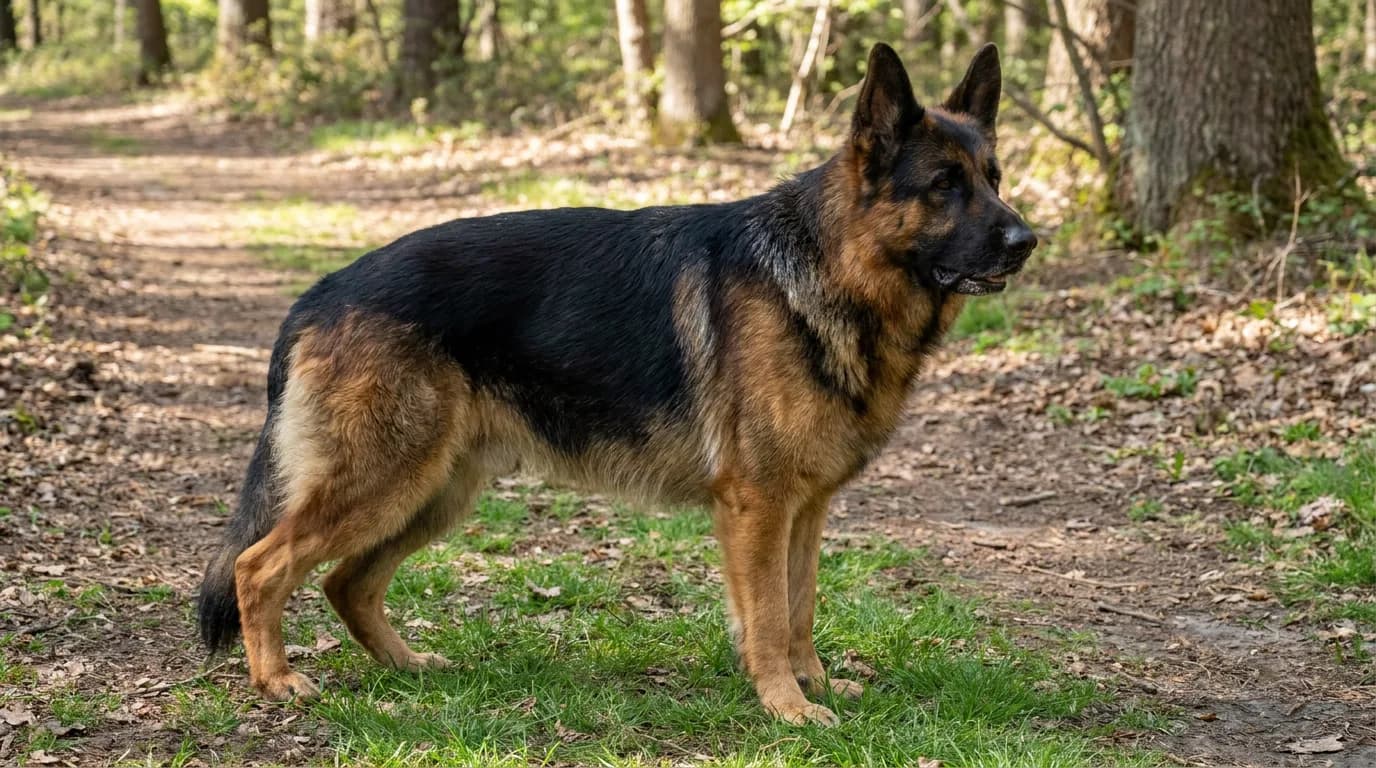
German Shepherd size is easiest to understand when you separate height, weight and body condition. The American Kennel Club lists adult males at 24–26 inches tall and females at 22–24 inches. The Fédération Cynologique Internationale provides separate weight ranges: about 66–88 pounds for males and 49–71 pounds for females.
Those figures describe adults, not monthly targets for puppies. For puppies, this guide adds an attributed WALTHAM weight-by-age reference table beside a dated-weight record, then shows how to use your dog's measurements for food, equipment and veterinary follow-up.

Sign up for expert-backed reviews and safety alerts all in one place.
How big is a full-grown German Shepherd?
A full-grown German Shepherd Dog is a substantial dog, but a breed name alone does not tell you how much space an individual needs. Height describes the frame. Weight includes muscle, fat, bone and everything else on the scale. Neither measurement can replace the other.
For a quick source check, the American Kennel Club breed standard gives adult male height as 24–26 inches and adult female height as 22–24 inches, measured at the top of the shoulder blade. That standard does not supply a weight range. The weights in this guide come from the Fédération Cynologique Internationale standard, often shortened to FCI.
Male and female German Shepherd size
Male German Shepherds have larger standard dimensions than females, although their weight ranges overlap. A female German Shepherd near the upper end of her range can weigh more than a male near the lower end of his. Sex is a useful starting point for planning, not a complete description of the dog you will bring home.
| Sex | AKC height at the withers | FCI height at the withers | FCI weight |
|---|---|---|---|
| Male | 24–26 inches | 60–65 centimeters | 30–40 kilograms, approximately 66–88 pounds |
| Female | 22–24 inches | 55–60 centimeters | 22–32 kilograms, approximately 49–71 pounds |
The FCI height figures are that organization's own standard, not rounded conversions of the AKC height figures. The pound values are rounded conversions of FCI weight in kilograms. Keeping those labels separate explains why reputable references may show slightly different numbers.
Use the comparison to answer three different questions:
- How big do German Shepherds get? The breed standards give the sex-specific adult height ranges above.
- How much do German Shepherds weigh? The FCI supplies a useful adult reference, but an individual's appropriate weight also depends on frame and condition.
- How much room should you allow? Measure the dog and the available space. A height or weight range cannot tell you the dog's comfortable resting length.
For German Shepherd adult dogs already living with you, an actual measurement is more useful than selecting the upper end of a range and assuming every purchase must fit that number. For a puppy, the parents' dimensions and veterinary growth assessment can help with planning, while adjustable equipment allows for uncertainty.
Why a standard is not your dog's target weight
A breed standard describes a breed. It is not a prescription to make every individual weigh the same amount. A lighter dog does not automatically need larger meals, and a heavier dog does not automatically need a weight-loss plan. First establish whether the dog has a smaller frame, carries excess fat, has lost condition or simply differs from the published reference.
Think of an adult weight as a description recorded alongside other observations:
- Shoulder height and overall frame.
- The ability to feel the ribs beneath the coat.
- Waist and abdominal outline.
- Previous weights and the direction of change.
- Appetite, activity and any health concerns.
For example, two dogs can have the same scale weight but different frames. Adding food to the smaller dog until it matches a larger relative would not make its skeleton larger. Equally, deciding that a tall, lean dog must be overweight because it exceeds a chart value skips the individual body condition assessment that matters.
Bring the record to your veterinarian when the numbers and the dog's appearance seem inconsistent. A useful outcome is an appropriate plan for this dog, with a reason for any change, rather than permission to chase a breed maximum.
Measure your German Shepherd before comparing sizes
- 1Record shoulder height, body weight and chest girth separately.
- 2Match each measurement to the decision you are making: adult comparison, growth tracking or equipment fit.
Keep a short measurement note on your phone or in your dog's health folder. Include the date, units and how you measured. This prevents a surprisingly common shopping problem: remembering one number while forgetting whether it referred to the chest, back or shoulder.
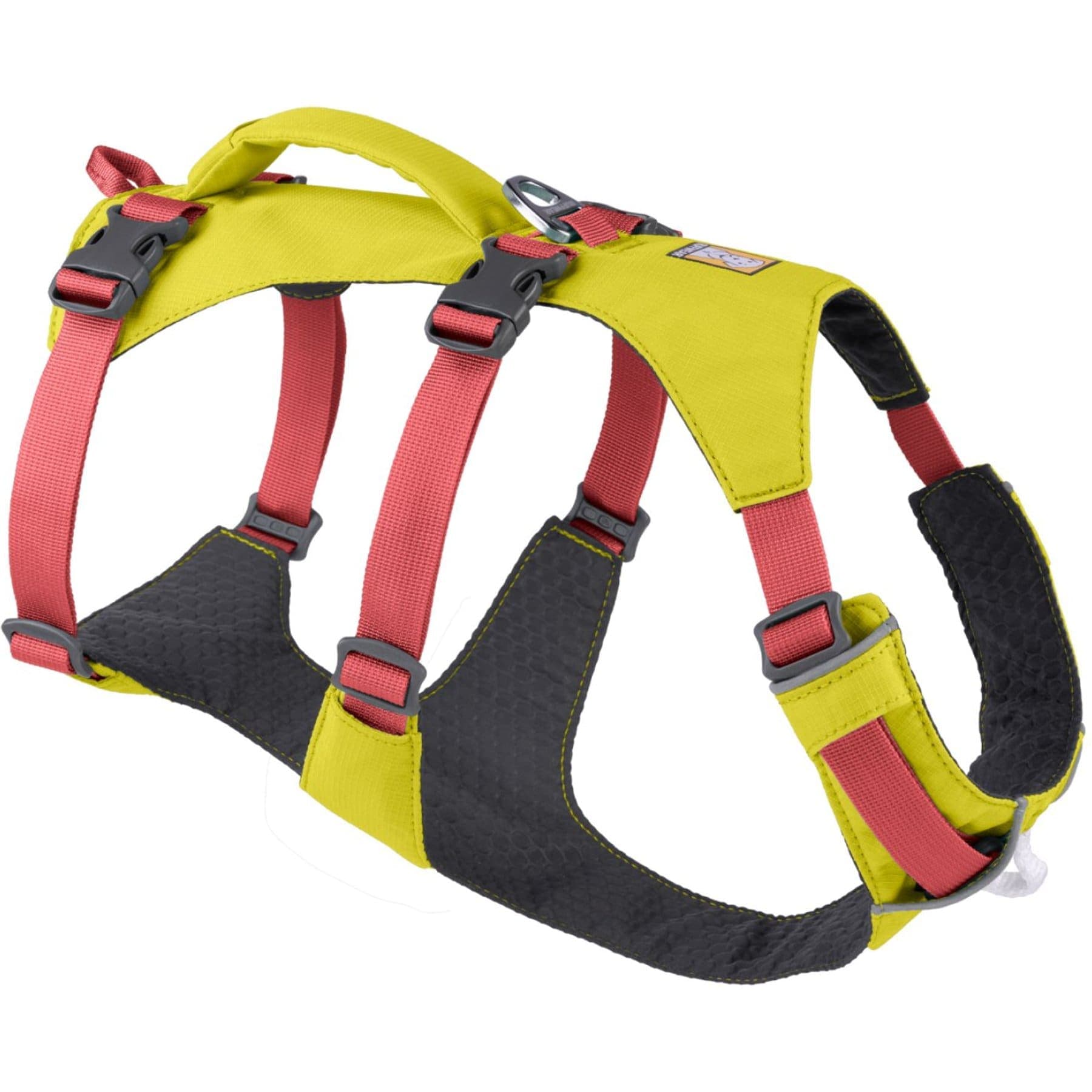
Lightweight body harness with a padded lift handle, load-dispersing chest and belly panel, debris-resistant liner and a front clip, per the listing.
Petful may earn a commission when you click through to Chewy, at no extra cost to you.
Choose a quiet moment and work with a dog that is comfortable being handled. If your dog moves away, becomes worried or cannot stand comfortably, stop and use a veterinary or trained professional's help. An approximate reading taken during a struggle is not worth the stress.
Measure height at the withers
The withers are the highest shoulder area, near the top of the shoulder blades. Measure height at the withers from a level floor, not from the tips of the ears or the top of the head. A German Shepherd can raise its head without becoming taller at the shoulder.
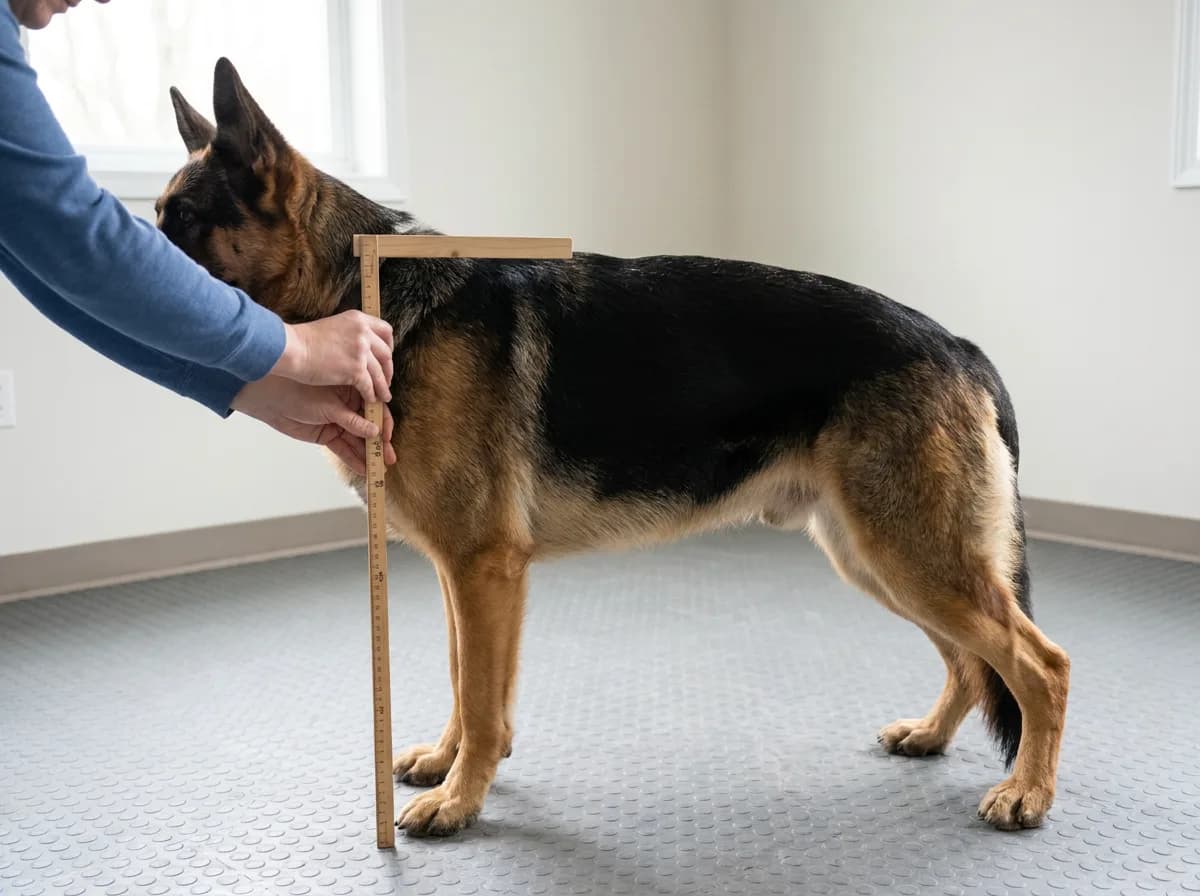
For a repeatable home measurement:
- Choose a flat, nonslip surface and let the dog stand naturally.
- Have a helper keep the dog comfortable without pulling its head upward or forcing its feet into position.
- Locate the shoulder reference with your hand beneath the coat.
- Use a level horizontal guide to transfer that height to a vertical measuring surface.
- Repeat once when the dog has settled, and record an approximate result if the readings differ.
A tape following the body's slope does not give vertical height. Neither does a photograph taken from an angle. If you need an official measurement for an event or a precise clinical comparison, ask the relevant professional rather than treating a home reading as certification.
Get a repeatable body weight
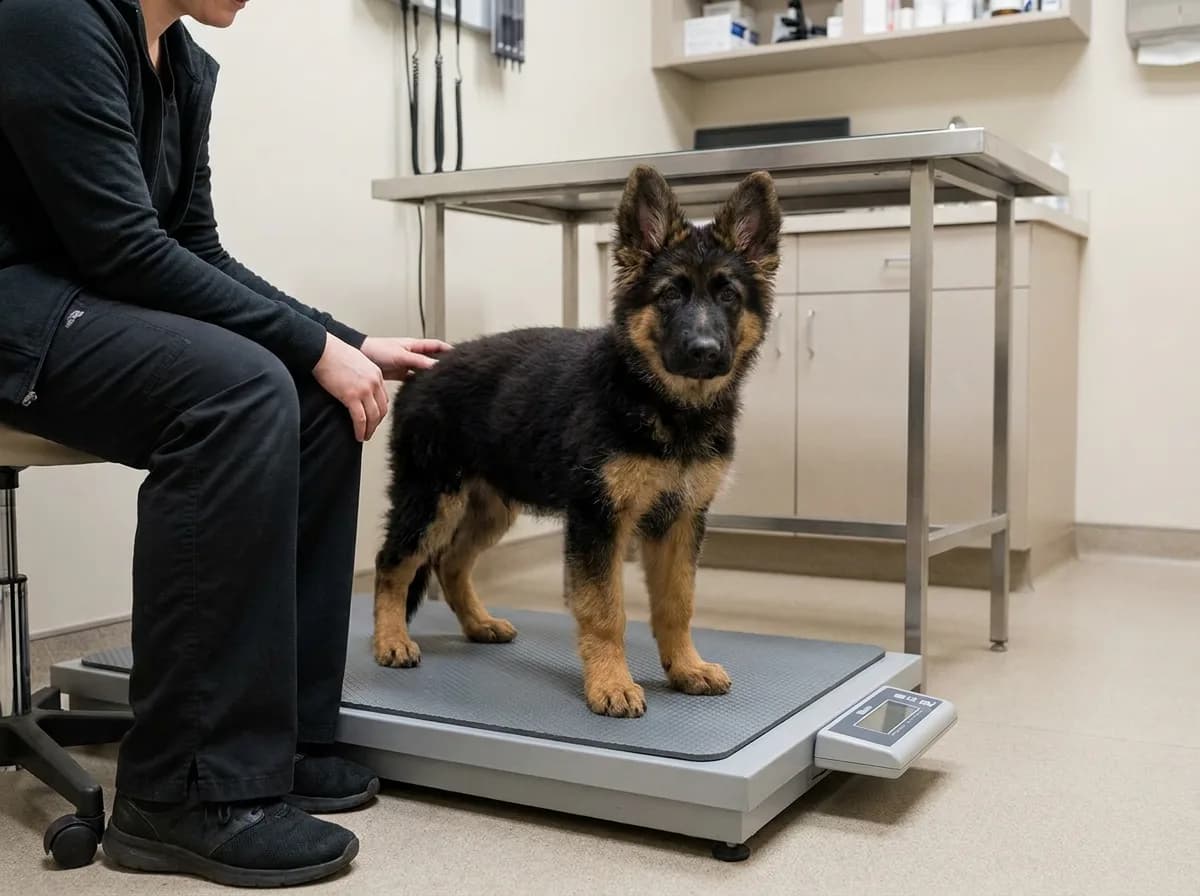
Use a scale that can safely accommodate the dog. A German Shepherd that has outgrown a household setup is a good candidate for a quick veterinary scale visit. Do not lift a large, wriggling puppy onto unsuitable furniture or balance it on a small platform to obtain a number.
Remove gear, use the same scale when practical, and note anything that makes a reading less comparable. Record the actual date and units immediately. Kilograms and pounds are easy to confuse when results come from different clinics or apps.
Useful notes include:
- Whether the reading came from the usual scale or a different one.
- Whether a harness or other equipment remained on the dog.
- Whether the dog stood still enough for a stable result.
- Any recent illness, appetite change or feeding adjustment.
If a result surprises you, check the entry and repeat the measurement calmly before interpreting it. A recording error should not trigger an immediate food change. A confirmed change, especially alongside signs that the dog is unwell, deserves a conversation with your veterinarian.
Measure chest girth and usable body length
Chest girth is the circumference around the body at the location specified by the equipment manufacturer, commonly around the deepest part of the chest behind the front legs. Use a flexible tape without compressing the coat tightly. Keep the tape flat and record the units.
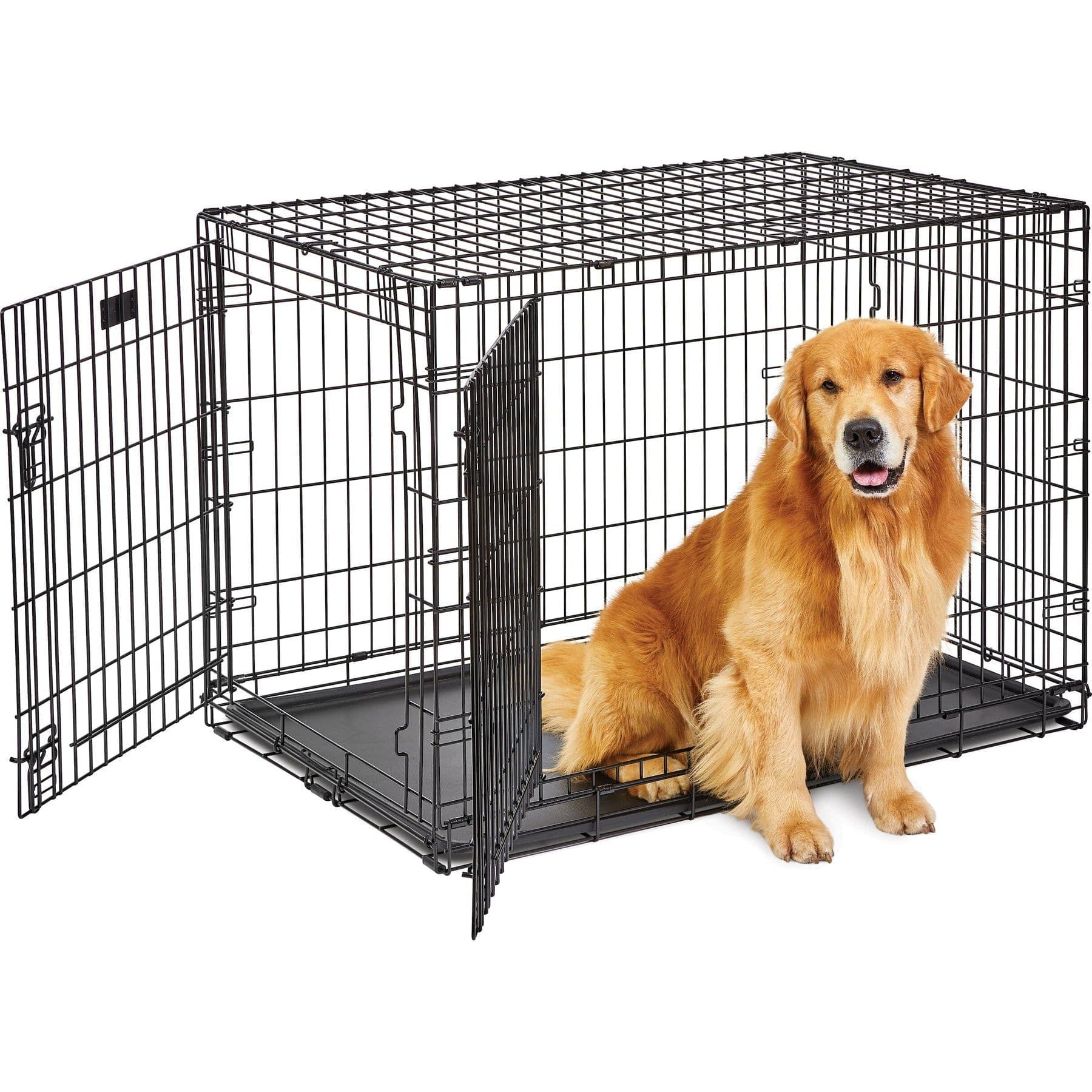
Chewy lists a divider panel for growing puppies, a leak-proof pan, a Paw Block latch guard and a fold-flat design with a carry handle, which makes it the standard house-training crate example.
Petful may earn a commission when you click through to Chewy, at no extra cost to you.
A harness size name is not a breed recommendation. For example, the listed Medium Ruffwear Flagline Front-Clip Dog Harness has a 27–32-inch chest range. That is a size to compare with a measured chest, not a default for German Shepherds.
For length, follow the instructions for the particular purchase. A coat, crate and bed may use different reference points. Write down what the number means, such as standing body length or the space occupied while resting on the side, instead of saving an unlabeled “length.”
- The manufacturer's measurement diagram and size range.
- The product's usable interior or resting dimensions.
- Adjustment limits and the fit of the actual item.
- Whether a growing puppy will need another measurement soon.
German Shepherd puppy growth: follow your dog's progress
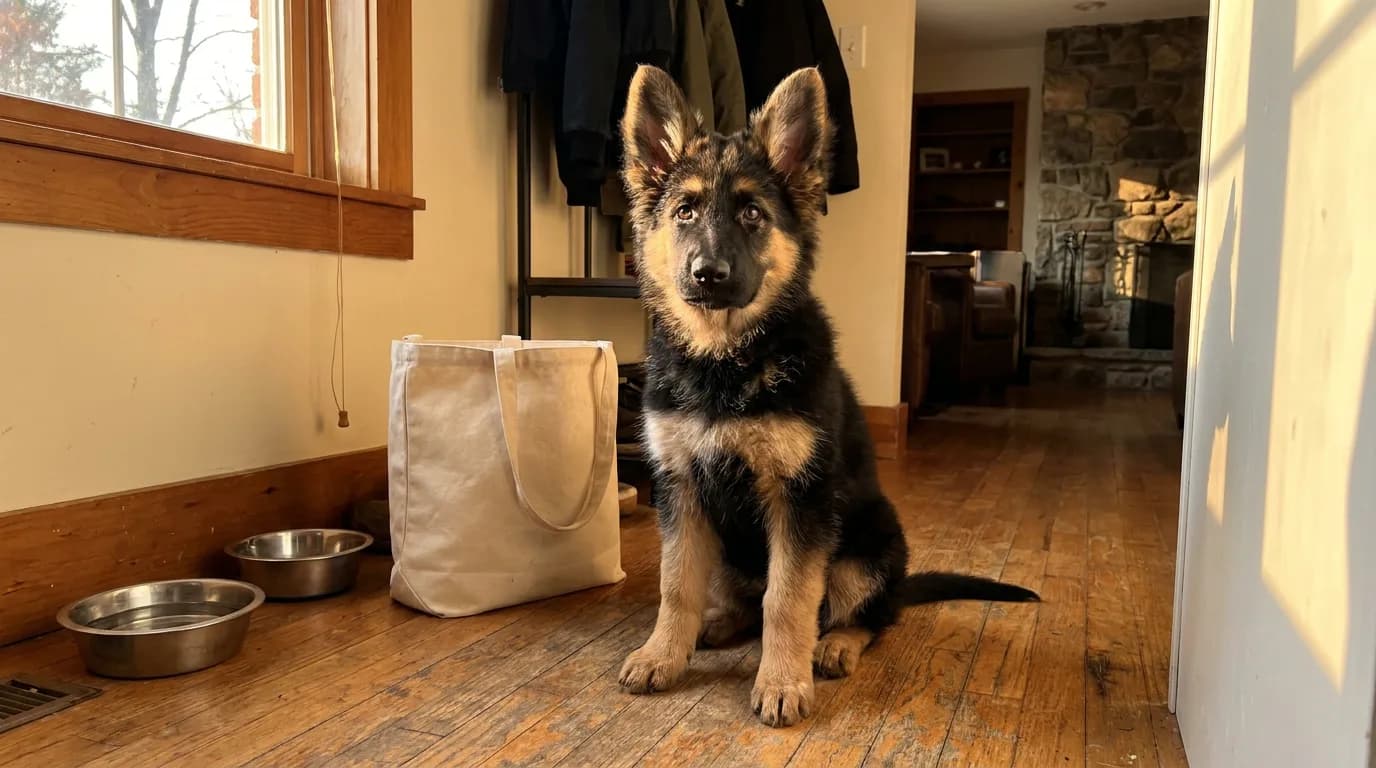
A useful German Shepherd growth chart pairs a reference band with an individual puppy's own dated weights. On the WALTHAM chart for dogs expected to reach 30–40 kg, the middle line for a male is about 24 kg at 6 months and 32 kg at 12 months, with growth largely complete around 18 months. The more useful question is whether your dog's progress tracks steadily along its own line.
A two-month-old German Shepherd puppy and a German Shepherd three months old are at different points in that record. Even at the same age, puppies differ in sex, ancestry, frame and growth trajectory. Comparing one puppy with an unrelated photograph gives you much less information than comparing several reliable measurements from the same dog.
From two months to the first useful growth records
At two months, start collecting information rather than trying to prove that your puppy matches a breed average. Ask for the birth date, previous weights, current food and feeding routine, and any veterinary records. Keep original dates attached to breeder, shelter or rescue measurements.
The WALTHAM Puppy Growth Charts are validated from 12 weeks. A weight recorded earlier can still be useful history, but it should not be presented as a plotted result from a chart validated for an older puppy.
At the first veterinary appointment, organize the basics:
- Confirm the puppy's recorded age and sex.
- Save the measured weight with its date and units.
- Bring the current food label and feeding information.
- Ask which adult-size chart is appropriate when tracking begins.
- Arrange the next opportunity for a consistent weigh-in.
This gives the veterinarian context for later decisions. If a two-month-old puppy arrives with several weights but no dates, do not distribute those numbers across assumed weeks. Keep them marked as undated historical information. A shorter accurate record is more useful than a complete-looking chart built from guesses.
Build a useful German Shepherd growth record
WALTHAM currently provides 14 charts covering males and females across seven adult-size groups, including giant dogs. These are size-group charts rather than German Shepherd-specific monthly weight tables. Choose the chart with veterinary guidance, using the expected adult size and the information available about the puppy.
For a numeric reference, the WALTHAM charts for puppies expected to weigh 30–40 kilograms as adults, the size group that covers the FCI male range and heavier females, give the bands below. They come from a veterinary growth study built from about 50,000 dogs (Salt and colleagues, PLoS One, 2017), which places German Shepherd Dogs in this group. We read the 25th, 50th and 75th centile lines from WALTHAM's male and female charts on October 29, 2026; they are reference ranges to discuss with your veterinarian, not targets or a German Shepherd breed average.
| Age | Male reference range | Female reference range |
|---|---|---|
| 12 weeks (about 3 months) | 7.9–10.8 kg (17–24 lb); middle line 9.4 kg (21 lb) | 7.3–9.8 kg (16–22 lb); middle line 8.5 kg (19 lb) |
| 17 weeks (about 4 months) | 13.1–17.2 kg (29–38 lb); middle line 15.2 kg (34 lb) | 11.7–15.3 kg (26–34 lb); middle line 13.5 kg (30 lb) |
| 26 weeks (6 months) | 21.1–26.4 kg (47–58 lb); middle line 23.7 kg (52 lb) | 18.3–22.9 kg (40–50 lb); middle line 20.6 kg (45 lb) |
| 39 weeks (9 months) | 27.6–33.4 kg (61–74 lb); middle line 30.6 kg (67 lb) | 23.1–28.1 kg (51–62 lb); middle line 25.6 kg (56 lb) |
| 52 weeks (12 months) | 29.5–35.2 kg (65–78 lb); middle line 32.4 kg (71 lb) | 24.9–29.9 kg (55–66 lb); middle line 27.4 kg (60 lb) |
| 75 weeks (about 17 months) | 30.5–35.8 kg (67–79 lb); middle line 33.1 kg (73 lb) | 26.2–31.0 kg (58–68 lb); middle line 28.5 kg (63 lb) |
Half of the puppies in the reference population sit outside each band, and a puppy that tracks steadily along a lower or higher centile can be growing normally. Many females are expected to weigh under 30 kilograms (the FCI female range is 22–32 kg), so your veterinarian may choose WALTHAM's 15–30 kg chart instead. The charts start at 12 weeks; a two-month weight is useful history but not a plotted point.
| Checkpoint | Dated body weight and supporting notes | Next growth check |
|---|---|---|
| Around two months | Record the birth date, measured weight, food and available veterinary history | Establish the baseline and plan a suitable weighing routine |
| From twelve weeks | Add consistent weights and the veterinarian-selected sex and adult-size chart | Begin following the individual growth trend |
| Three to five months | Continue dated weights with appetite, diet and health notes | Review the trend and check equipment fit |
| Later adolescence | Keep measured weights and note changes in dimensions or condition | Reassess growth, nutrition and fit with the veterinarian |
| Approaching adulthood | Review the complete record alongside frame and body condition | Agree on adult weight monitoring and feeding decisions |
Keep dated body weights in one place, even if more than one person handles appointments. A simple entry can include “date, age if known, weight, scale, food notes, health notes.” The record does not need a complicated app to be useful.
A growth centile is a reference line within a chart, not a score the puppy should maximize. Your veterinarian can help interpret the individual growth trend, including whether the selected adult-size group still makes sense. Do not increase meals just to move a puppy toward the center of the page.
Consider the difference between two records:
- One says the puppy “looks much bigger” and lists an unverified weight from last month.
- The other contains successive dates, measured weights and a note explaining a recent diet change.
Only the second lets someone examine what changed and when. It also makes veterinary growth assessment easier if different family members remember events differently. Keep observations factual: “left half of breakfast” is more informative than “probably growing slowly.”
Suppose two household members take turns visiting the clinic. One records a weight in kilograms and the other receives a printout in pounds. Preserve both original entries with their units, then convert consistently for comparison. Do not enter the two numbers into the same chart as if they share a unit. Likewise, keep a clinic measurement separate from an estimate made while holding the puppy on a home scale. Labeling the method lets the veterinarian decide whether an apparent jump reflects growth or a less comparable reading. Record the exact food as well, for example a bag of Purina Pro Plan Large Breed Dry Puppy Food, Chicken & Rice and the amount offered, so a diet change can be matched to the weight trend.
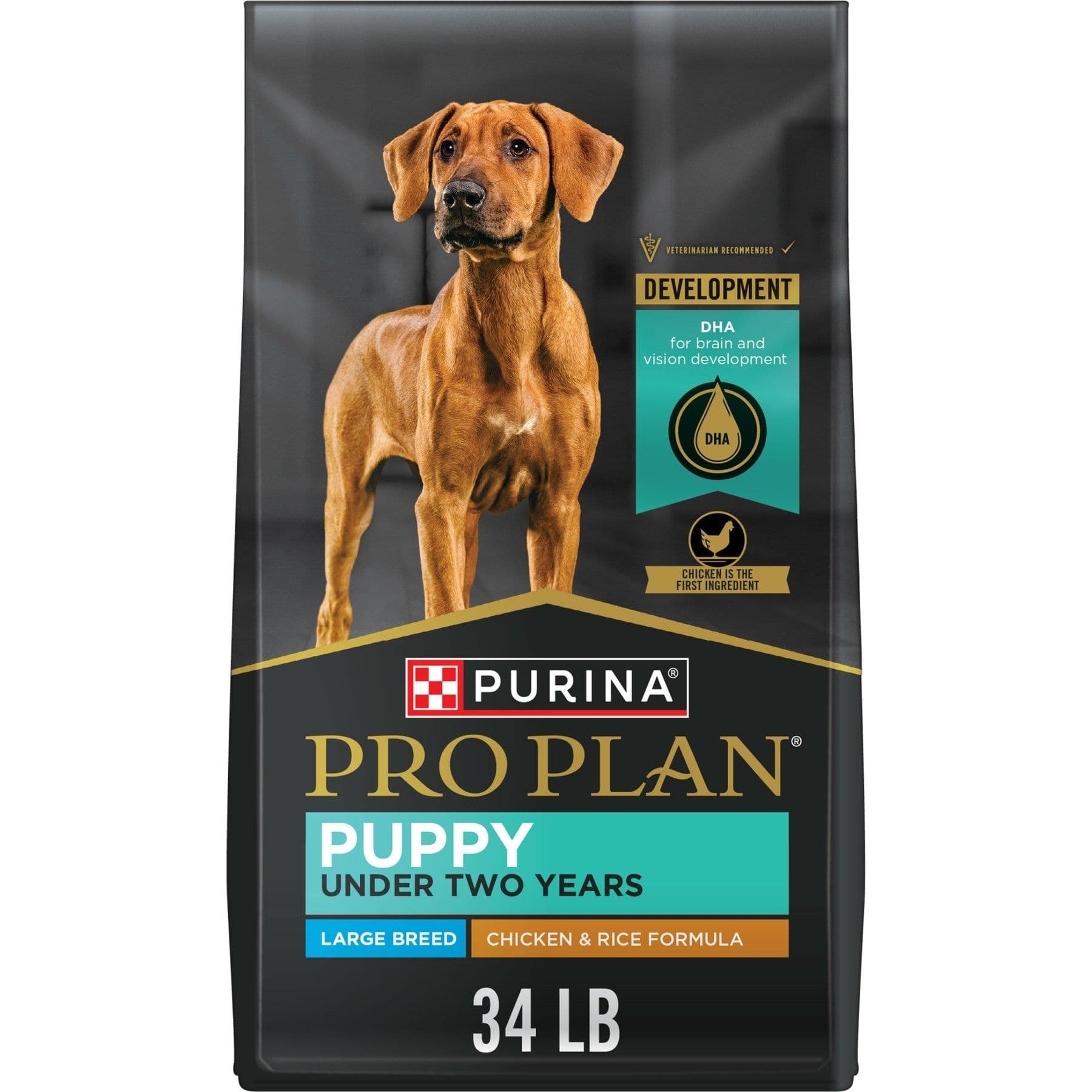
A large-breed puppy recipe to discuss with your veterinarian when planning growth-stage feeding. Adjust portions to the puppy's condition and growth.
Petful may earn a commission when you click through to Chewy, at no extra cost to you.
What to record at five months and through adolescence
For a five-month-old German Shepherd, continue the same record rather than switching to a new monthly target. Look at the sequence of measurements, not just the newest number. A puppy can need a different harness adjustment or more resting space before an owner notices a dramatic change in weight.
At a regular check-in, work through a short routine:
- Weigh the puppy using the established method.
- Add the result to the record before comparing it with previous entries.
- Note changes in food, treats, appetite, stool or activity.
- Check chest fit, resting space and any item the puppy may have outgrown.
- Save questions for the veterinarian, especially if the trend has changed.
Your veterinarian can recommend a weighing interval suitable for your puppy and access to a reliable scale. Put the next appointment or reminder in the calendar before leaving the current visit. Tracking is easier when it is part of an existing routine.
Avoid interpreting every adolescent change as a feeding problem. Changes in proportions, coat and posture can alter appearance. A side photograph may help you remember a stage, but it does not replace a measured weight or examination.
When several people feed the puppy, keep one shared feeding record. Include treats and food used in training. Otherwise, a portion adjustment made by one person may be canceled out by an extra meal from another, leaving the growth history difficult to interpret.
When is a German Shepherd physically grown?
Physical growth and behavioral maturity answer different questions. Skeletal maturity concerns development of the frame; adult behavior concerns how the dog responds, learns and manages everyday situations. An adult-looking dog can still need patient training, and an adolescent's enthusiasm does not tell you whether its skeleton has finished growing.
There is no single birthday that proves every German Shepherd has reached its final dimensions. WALTHAM's size-group guidance notes that dogs expected to reach roughly 30–40 kilograms may take around 18 months to finish growing. That is a general guide for a size group, not a promise about a particular German Shepherd.
Use the individual record to discuss adulthood with your veterinarian:
- Has height changed over successive measurements?
- Is weight continuing to change, and what does body condition show?
- Does the feeding plan still suit the dog's growth stage?
- Is there a specific activity or nutrition decision that requires professional guidance?
Do not treat a stable scale weight alone as proof of skeletal maturity. Equally, do not assume every later increase in weight represents healthy growth. Once height has settled, further weight changes still need context from condition and health.
For planning purposes, keep checking equipment until the dog is comfortably fitted and dimensions are stable. For medical, exercise or diet decisions, ask the veterinarian about the individual dog instead of using an internet growth deadline.
Feed for steady growth
Large-breed puppy nutrition should support appropriate development without encouraging a puppy to become as heavy as possible. The AAHA nutrition and weight management guidelines emphasize suitable growth nutrition, lean body condition and avoiding excessive calcium. They also distinguish growth needs from adult maintenance needs.
Bring the food label and an honest account of everything the puppy eats to the veterinary discussion. “One bowl” is difficult to interpret because bowls, measuring scoops and food energy content vary. Record the amount using the method your veterinarian recommends, along with treats and other additions.
Useful questions are specific:
- Is this food appropriate for my puppy's expected adult size and current growth stage?
- Does the current amount fit the measured growth trend?
- How should training treats fit within the daily plan?
- When should we review the portion or move to an adult feeding plan?
- Is any supplement actually indicated?
A named large-breed puppy formula, such as Purina Pro Plan Large Breed Dry Puppy Food, Chicken & Rice, can be one option to discuss. Its name does not establish the correct portion for your puppy or replace a review of the full feeding plan.
Avoid adding calcium or other supplements to “build a bigger frame” without veterinary direction. Also avoid changing food simply because a friend's puppy weighs more. Review an unexpected trend first, then make an informed adjustment and record when it began.
Choose equipment that fits the dog you have
Equipment decisions become easier when each measurement has a clear job. Chest girth helps with a harness. Standing dimensions help evaluate a crate. Resting length helps evaluate a bed. Weight may be relevant to a product's stated limits, but it does not describe all those dimensions.
| Measurement | Equipment decision | Check on the actual dog |
|---|---|---|
| Chest girth | Compare with the exact harness model's size guide | Recheck adjustment, movement and strap position |
| Standing height and body length | Evaluate usable crate dimensions and standing clearance | Confirm the dog can stand, turn and lie comfortably |
| Resting length and preferred posture | Compare with usable bed or mat space | Check that the whole body has support |
| Current body weight | Review any stated product weight limits | Use the measured weight rather than a breed estimate |
Check harness fit as the puppy grows
Compare the puppy's measured chest with the exact model's instructions each time you adjust or replace a harness. A size chart for one brand cannot establish the fit of another, and the word “large” is not a standardized measurement.
Try the harness in a calm setting before depending on it outdoors. Follow the manufacturer's adjustment guidance, then watch the dog stand and walk. Check whether the straps stay in their intended positions and whether the dog moves freely.
Keep the routine straightforward:
- Inspect fit after an adjustment, not only when buying.
- Check again as a growing puppy's dimensions change.
- Look for rubbing, trapped coat or obvious restriction.
- Confirm that the dog cannot simply back out of the fitted harness.
- Replace an outgrown item rather than leaving it overly loose.
If fit is uncertain, ask a qualified trainer, retailer or veterinary team to help assess the model on your dog. Buying extra room is not the same as providing a secure fit, especially when the puppy's shape is changing.
Check resting and crate space
Measure the space your dog actually uses while resting. Some dogs curl tightly at one moment and stretch on their side at another. Watch a relaxed position before comparing it with a product's usable surface, particularly when raised edges or pillows occupy part of the advertised dimensions.
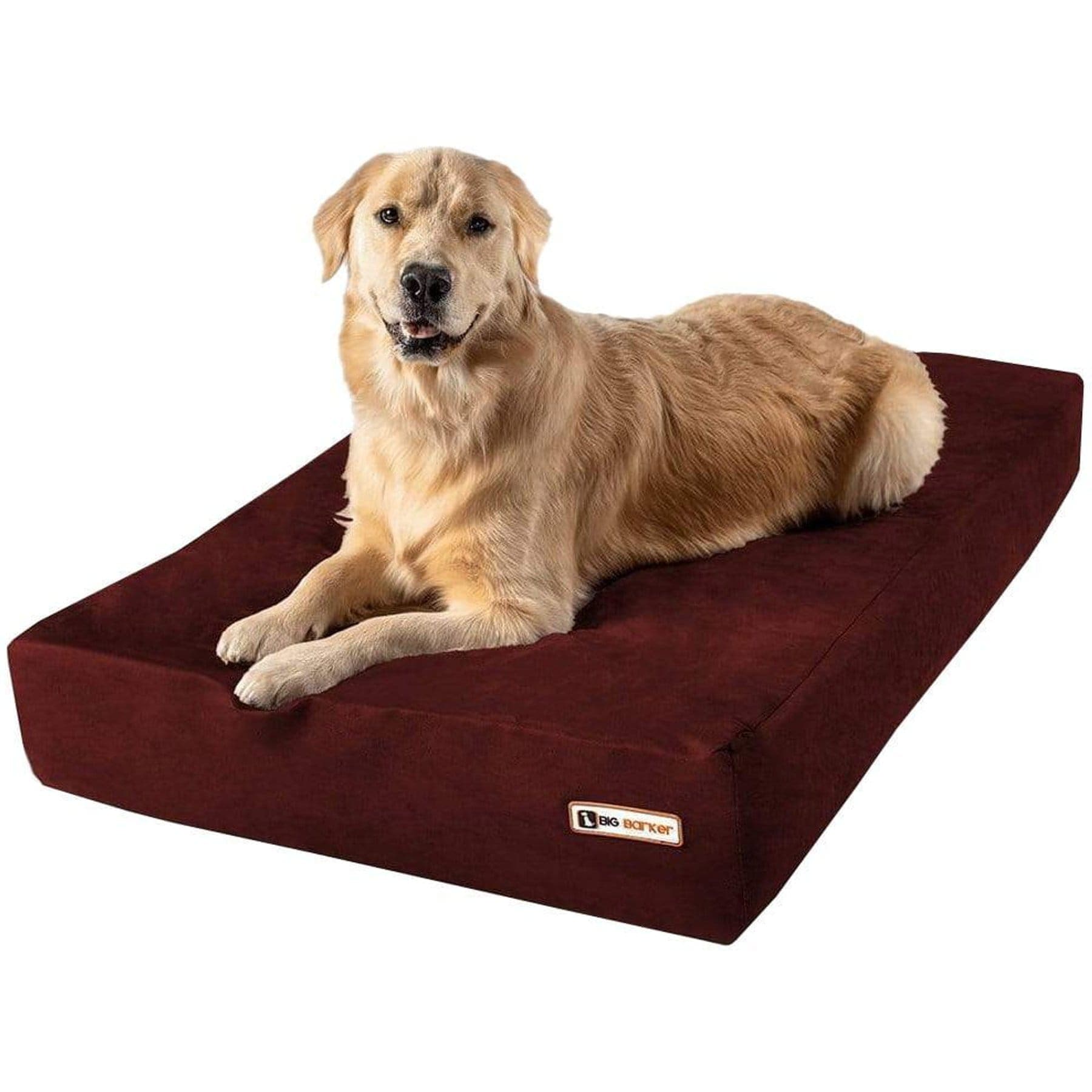
A flat, 7-inch foam bed for large dogs that prefer room to sprawl. Check the 48-by-30-inch footprint against your dog and floor space.
Petful may earn a commission when you click through to Chewy, at no extra cost to you.
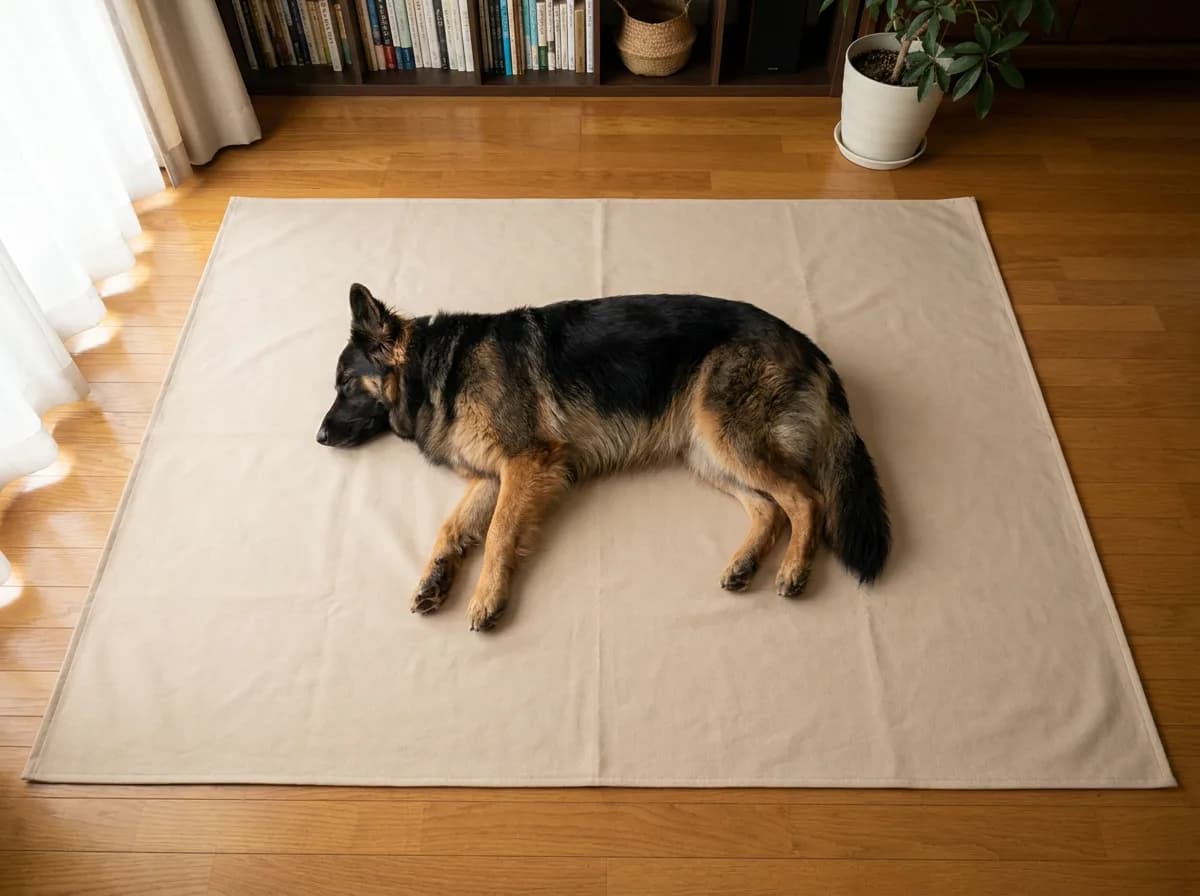
A Big Barker 7-inch Sleek Orthopedic Pillow Dog Bed is one option to compare with those measurements. Choose from the current dimensions and your dog's resting position, rather than assuming a size name guarantees enough room.
For a crate, check usable interior dimensions, entry clearance and the dog's ability to stand, turn and lie comfortably. A dog standing with raised ears and a dog lying fully on its side pose different space questions.
The listed 42-inch MidWest LifeStages Double Door Dog Crate is a size to evaluate, not a universal German Shepherd fit. Compare the exact model's interior measurements with your dog and reassess as a puppy grows. Where a crate will sit in the house matters too: leave practical access to the door rather than measuring only the footprint against a wall.
- Before discarding packaging, check the delivered item's measurements and let the dog investigate it calmly.
- Remember that a correct order can still be an unsuitable fit for the individual.
- If the dog avoids the space, investigate fit and comfort rather than confining it until it accepts the purchase.
- Introduce resting equipment gradually and reassess the practical dimensions.
Assess body condition, not just pounds
Before describing a German Shepherd dog as fat, check what you can actually establish beneath the coat. A broad outline may reflect coat, frame, posture or body fat, and several factors can be present together. A scale tells you how much the dog weighs, not why.
Body condition score adds context to that number. The WSAVA dog body condition chart combines hands-on rib assessment with the waist viewed from above and abdominal tuck viewed from the side. It is more informative than judging a thick-coated dog by a single photograph.
Feel beneath the coat
Ask your veterinarian to demonstrate a body condition check on your dog. Feeling the ribs with gentle hands gives information that the outer coat can hide. Work calmly, avoid pressing hard, and stop if the dog appears uncomfortable or unwilling to be handled.
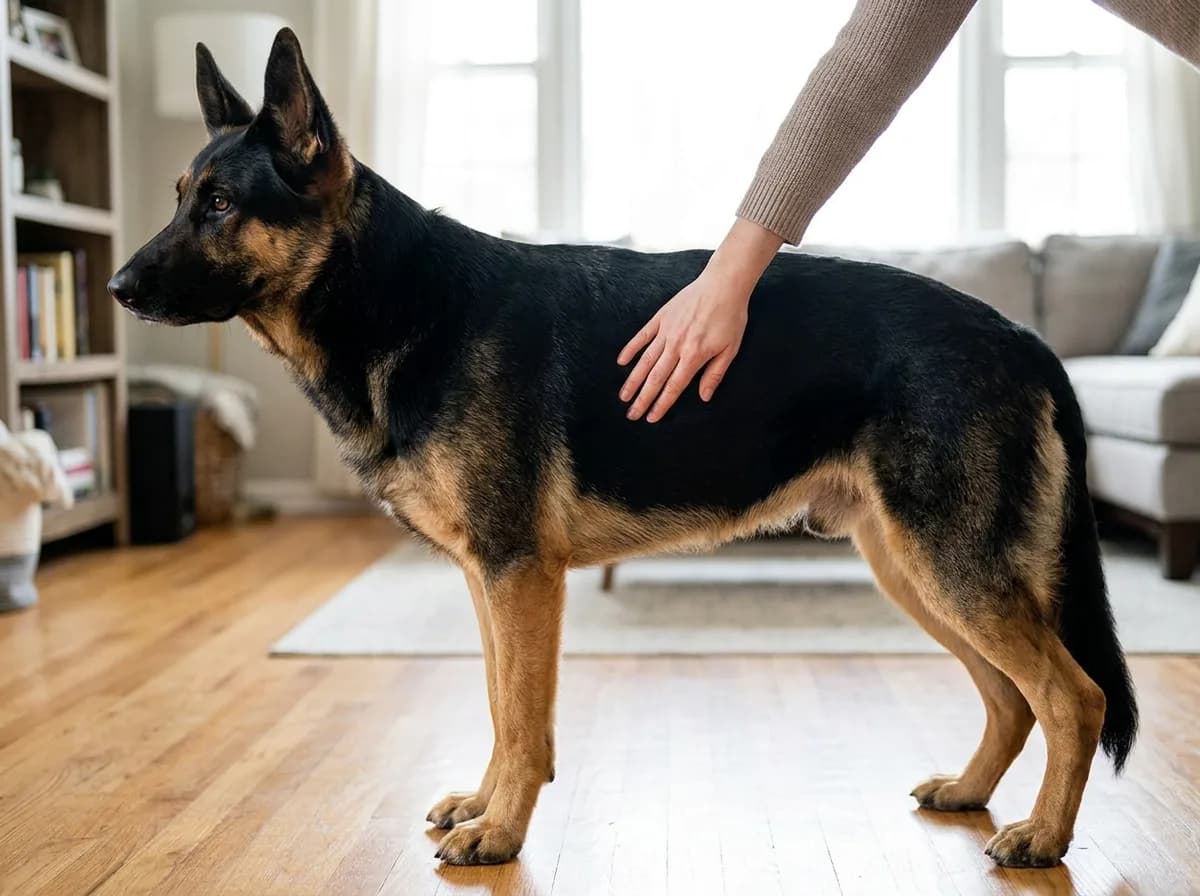
On the WSAVA nine-point chart, ideal adult scores include ribs that are readily felt without excess fat covering, a discernible waist and an abdominal tuck. Those features should be considered together. A deep chest or a fluffy outline alone is not a score.
At a veterinary visit, ask the team to show you:
- Where to place your hands to assess the ribs.
- How much pressure is appropriate.
- What the waist and tuck look like on your individual dog.
- How the recorded score relates to the current weight.
- What changes would justify another assessment.
Puppy assessment needs particular care. Ask for help interpreting condition during growth instead of using an adult chart to set a puppy's ideal pounds. If you are unsure what you feel, describe the uncertainty rather than recording a confident score.
When comparing changes over time, keep the scale record and condition observations together. A stable weight accompanied by a different clinical assessment may require a different discussion than an increase with otherwise appropriate growth. This is why pounds alone cannot settle the question.
When a growth change needs veterinary attention
Start by separating a questionable measurement from a confirmed trend. Check dates, units and scale conditions, and repeat a surprising result when the dog is comfortable. Then review the record with your veterinarian if the change persists, the chart trajectory shifts noticeably or anything about the dog's health concerns you.
A growth record is a communication tool, not a diagnosis. Unexplained weight loss, reduced appetite or signs of illness should not be dismissed because the puppy still falls within a broad breed range. Contact your veterinary team for advice about timing rather than waiting for the next planned weigh-in.
- A changing growth trend needs context. Share dated weights, feeding changes and any symptoms so your veterinarian can provide an appropriate veterinary assessment.
Before that conversation, gather:
- The most recent measurements and earlier comparable readings.
- The current food and amount offered.
- Recent feeding changes, including treats or supplements.
- Appetite and other health observations.
- Questions about the chart or body condition assessment.
Avoid trying several food changes at once to correct a number. Doing so can make it harder to explain what happened. Follow the agreed plan, record its start date and arrange the next check so you can judge progress from evidence rather than appearance alone.
What do giant and miniature German Shepherd labels mean?
“Giant German Shepherd,” “large German Shepherd” and “miniature German Shepherd” can appear in advertisements, but they are not separate size categories in the AKC and FCI standards cited above. Read the actual ancestry, dimensions and health information behind the label.
The biggest German Shepherd in a photograph is also not necessarily the heaviest or tallest. Camera distance, posture and the size of nearby objects can change the impression. Use measured information when size is central to your decision.
A large frame is not a reason to add weight
A dog with a large frame still needs an individual assessment of body condition. An owner hoping for an especially big dog should not treat the upper end of the FCI range as a minimum or feed extra simply to improve a headline number.
When someone describes a puppy as unusually large, ask what supports the claim:
- Are there dated measurements rather than an estimate?
- Are the parents' adult dimensions available?
- Is the comparison based on height, weight or appearance?
- What has the veterinarian said about growth and condition?
Those questions do not guarantee an adult size. They help distinguish useful information from a vague sales description. If your household has a firm physical constraint, such as limited space or difficulty handling a powerful dog, acknowledged uncertainty matters more than an optimistic prediction.
Check ancestry and the actual dog
A miniature label does not establish whether a dog is purebred, mixed or simply smaller than expected. Ask for the available history and discuss unexplained small size or growth concerns with a veterinarian. Do not infer the cause from a marketing name.
For an adult, you can measure the dimensions you need now. For a puppy, ancestry and parental size can inform expectations without eliminating variation. Decide whether your home can accommodate a range of possible outcomes rather than relying on one promised final weight.
Keep appearance separate from health claims. “Oversized,” “tiny” and “rare” do not provide a body condition assessment, explain a growth pattern or replace documented health information. Select the individual dog with its actual care needs in mind.
Related German Shepherd decisions
Size is one part of choosing and caring for a German Shepherd. The following guides cover decisions that deserve their own context rather than being folded into a weight chart.
Coat color and size are different questions
German Shepherd colors do not provide an adult-size measurement. When comparing different German Shepherd colors, keep appearance preferences separate from the dog's recorded height, weight and condition. A dramatic coat pattern may change how broad a dog looks in a photograph without answering a practical fit question. Our guide to German Shepherd coat colors covers that subject while you use individual measurements for equipment and space.
White German Shepherds
An all-white German Shepherd still needs the same basic measurement record: dated weight, shoulder height when useful, and dimensions relevant to equipment. Do not substitute color for ancestry or assume a white dog has a particular final weight. If that is the dog you are considering, read our White German Shepherd guide for the separate breed and appearance questions, then assess the individual dog's size.
The Belgian Malinois German Shepherd mix
A German Shepherd crossed with a Belgian Malinois, often called a Shepinois, should not be assigned a guaranteed adult size from the German Shepherd standard alone. The other parent and the individual dog's development also matter. Our Belgian Malinois German Shepherd mix guide covers that cross in more detail. For a puppy, collect the available parental information and let a veterinarian help interpret the measured growth record.
Other German Shepherd mixes
A German Shepherd mix puppy may have a wider range of possible adult dimensions than an owner expects from a single breed label. Ask what is known about both parents, keep uncertainty explicit and remeasure equipment as the puppy develops. Our guide to German Shepherd mixes covers those combinations. For an adult mix, actual measurements are immediately more useful than assigning it a purebred weight target.
Budgeting for a large dog
German Shepherd price includes more than the puppy price or adoption fee. When estimating how much a German Shepherd costs per month, use your dog's actual feeding plan and allow for equipment replacement as it grows. Veterinary needs and other ownership costs also deserve their own budget. Our German Shepherd price and ownership costs guide separates those decisions so an adult-size estimate does not become a misleading total-cost prediction.
German Shepherd size and growth questions
These questions address choosing an individual dog and keeping a useful record when real life does not follow a perfect schedule. WALTHAM's guidance covers growth-record limitations; the AKC German Shepherd puppy training timeline provides separate context for continuing training as the dog matures.
For size, males are larger by standard: the AKC lists 24–26 inches at the withers for males and 22–24 for females, and the FCI gives 30–40 kg for males and 22–32 kg for females. Neither sex is better in general, so match the individual adult dimensions and temperament to your handling needs, and judge an adult by its measurements rather than its sex.
Usually not before two to three years old: the AKC's German Shepherd training timeline says the breed may not reach adult behavioral maturity before two or three, with males often later than females. Physical growth is largely done around 18 months for dogs of this size, so a full-sized dog can still behave like an adolescent. Consistent training matters more than waiting for a birthday.
Yes, with an estimated birthday discussed with your veterinarian. Mark the estimate clearly, because uncertainty affects growth interpretation. Keep actual weighing dates separate from estimated ages. Bring any available adoption or early veterinary records so the team can understand the uncertainty instead of treating an assumed birthday as confirmed.
No. Starting a growth record after twenty weeks still works: take reliable, dated measurements now and look for earlier weight records that include dates. Choosing an adult weight estimate may be less straightforward without that history, so ask your veterinarian to select and interpret the chart, and do not fill missing weeks with guessed weights.
WALTHAM does not require a separate chart for neutered puppy growth. Keep the recorded neutering date alongside the measurements and continue discussing diet and growth with your veterinarian. Recording the event provides context for later reviews; it does not mean a weight change should automatically be attributed to neutering.
Resume with a dated weight record from the next actual measurement. Do not backdate it or invent the missing result. Tell your veterinarian about a long gap, especially if you also noticed changes in appetite, health or appearance. The available record can still support veterinary growth assessment, with its limits acknowledged.

Coreen Saito is a pet writer and longtime shelter volunteer with more than a decade in animal rescue. She covers cat behavior, breed care, and the small, ordinary science of sharing a life with companion animals, with a particular focus on honest takes about the products and decisions that actually matter. At home in Arizona, she's outranked by Mac (a dog with the loudest opinion in the house), Rebel (a cat who governs by quiet authority), and Meri (an orange tabby who runs the late shift and the laundry basket). She writes about all three, plus the rescues that keep coming through her life, at LifeWithMinty.com.
Sign up for expert-backed reviews and safety alerts all in one place.