Miniature Dachshund: Size, Temperament, and Care Guide
Learn the official Miniature Dachshund size, how minis compare with standards, what tweenie and teacup mean, and how temperament, training, coats, and home setup shape everyday care.
Petful is reader supported. As an affiliate of platforms like Amazon and Chewy, we may earn a commission when you buy through links on this page. There is no extra cost to you.
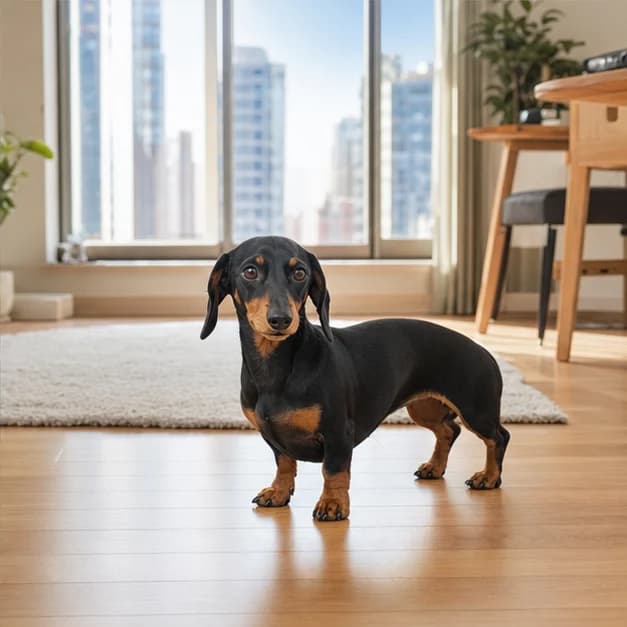
A miniature Dachshund is the smallest officially recognized size of Dachshund in the United States, defined by adult weight rather than height. This compact scent hound still brings the full Dachshund personality: alert, curious, determined, affectionate with family, and often ready to announce every sound in the hallway.
Small size can make a mini easier to carry and house, but it does not make the breed effortless. The right home is prepared for patient training, daily sniffing and play, careful gear fitting, good traction, and sensible management around stairs and furniture.

Sign up for expert-backed reviews and safety alerts all in one place.
Miniature Dachshund at a glance
- 1Under the AKC breed standard, a Miniature Dachshund weighs 11 pounds or less at 12 months and older
- 2The miniature and standard are the same breed, not different breeds with different personalities
- 3Smooth, longhaired, and wirehaired coats all occur in the miniature size
- 4A prepared home manages traction, jumping, barking, training, and alone time instead of assuming a small dog needs little work
- 5Choose carriers, harnesses, beds, and feeding gear from the individual dog's measurements, not the word mini
The American Kennel Club breed standard places Dachshunds in two size divisions for conformation: standard and miniature. The miniature threshold is 11 pounds or less at 12 months of age and older. The standard range is 16 to 32 pounds. That leaves a real-world middle where some healthy dogs do not fit neatly into either show division.
Miniature describes size, not a softer temperament. A mini still has the long body, short legs, keen nose, hunting history, and independent streak associated with the breed. For the broader history and breed overview, start with Petful's Dachshund breed guide.
Miniature Dachshund size and weight
For an adult dog, official US classification starts with weight. Height can help you picture scale, but it is not the AKC dividing line between a miniature and a standard. Body length also varies, which is why two dogs at the same weight may need different harness, carrier, and bed sizes.
Do not try to keep a growing puppy under an arbitrary number to preserve a mini label. Genetics, age, muscle, frame, and body condition all affect the scale. A veterinarian can tell you whether an individual dog is at an appropriate body condition and growth rate. The practical boundary is health first, label second.
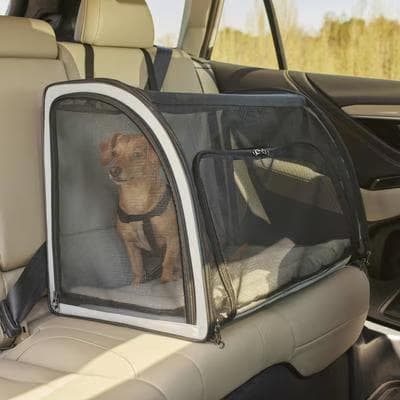
Soft-sided travel safety carrier that keeps a stressed cat secure and well-ventilated on the way to the vet, with mesh panels for airflow and a seat-belt loop.
Petful may earn a commission when you click through to Chewy, at no extra cost to you.
How to measure a Miniature Dachshund
Weigh small dogs on a pet or baby scale when possible. If you use a household scale, weigh yourself, then weigh yourself while holding the dog and subtract the first number. Repeat the check so a shifting puppy does not create a false result.
For gear, record at least four measurements:
- Chest girth: Wrap a soft tape around the widest part of the rib cage, usually just behind the front legs. Keep it snug enough to follow the body but not tight.
- Neck circumference: Measure where a collar or the front of a harness naturally sits.
- Back length: Measure from the base of the neck to the base of the tail while the dog stands normally.
- Standing height and full body length: Use these to check carrier clearance and turning room, not to decide the official size division.
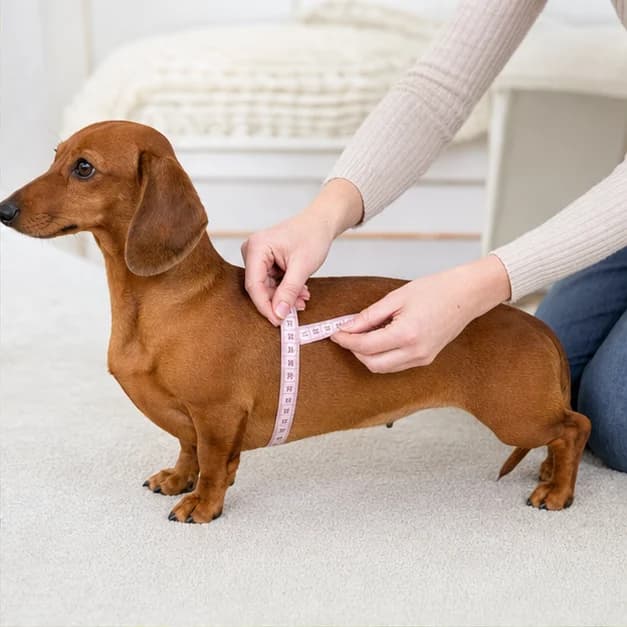
Compare those numbers with the manufacturer's size chart every time. A product labeled small is not automatically a Dachshund fit. The Frisco Travel Safety medium carrier, for example, is useful only if your dog's measured weight, length, and standing clearance fit its current limits. A dog should be able to stand, turn, and settle without being folded into the space.
When does a mini stop growing?
There is no single birthday when every Miniature Dachshund is finished growing. Puppies often reach much of their adult height before their chest, muscle, and overall frame finish developing. The AKC's use of 12 months for the official adult weight division is a classification point, not a promise that every dog develops on the same schedule.
Track change across time instead of judging one weigh-in. A simple monthly record of weight, chest girth, and harness setting can show whether growth is steady. Sudden gain, loss, or a growth concern belongs with your veterinarian, not an online size chart.
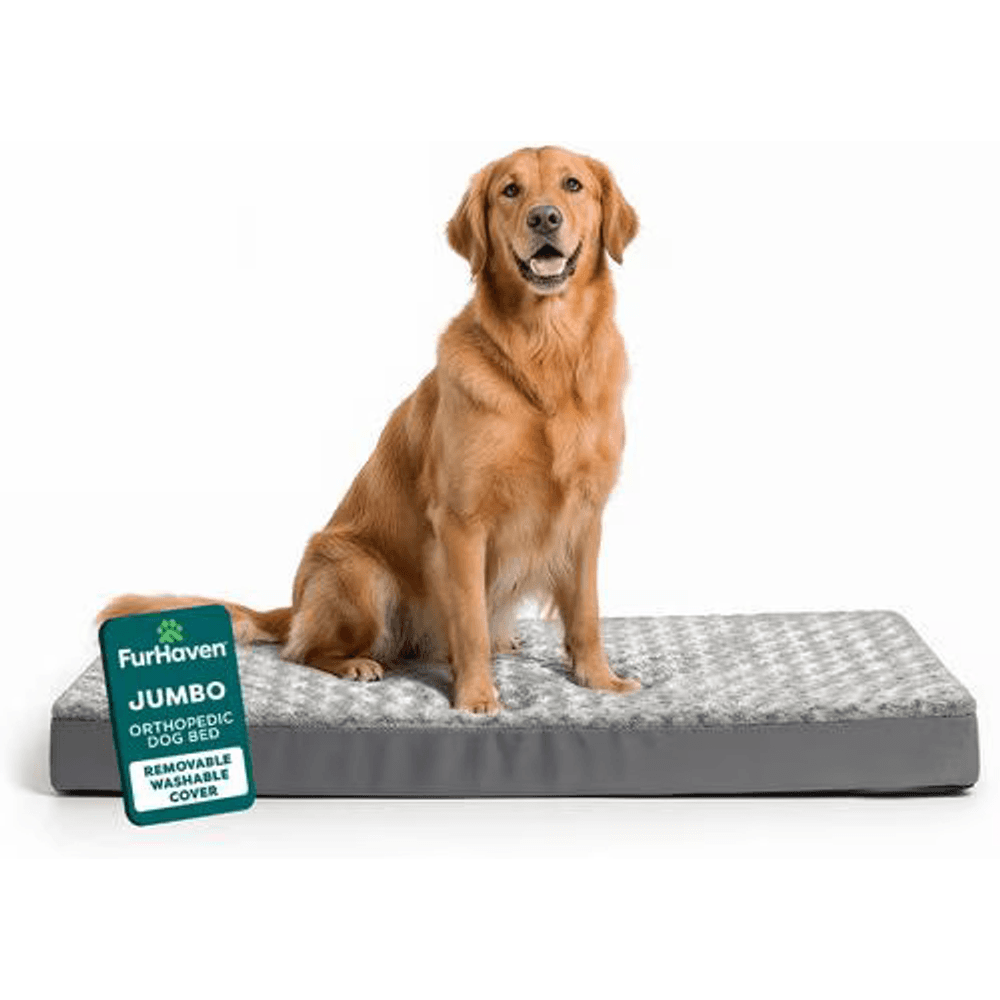
A plush orthopedic foam mattress that cushions aging joints and pressure points, giving a stiff or trembling senior dog warm, supportive rest.
Petful may earn a commission when you click through to Chewy, at no extra cost to you.
Miniature vs. standard Dachshund
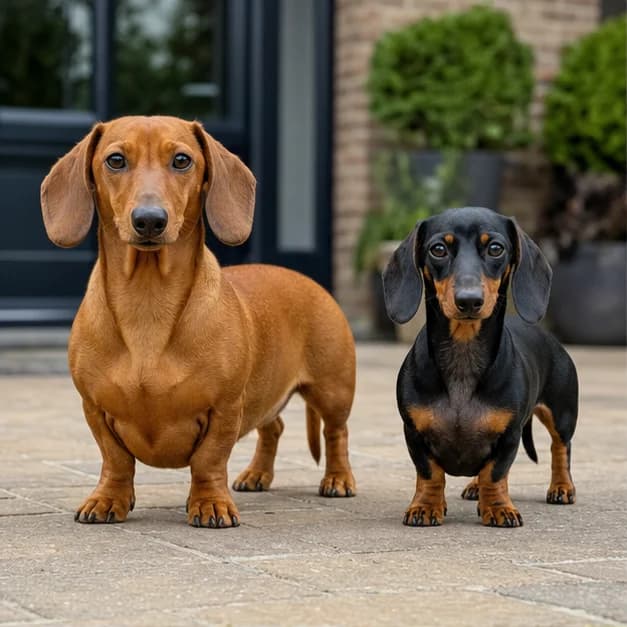
A miniature and a standard Dachshund share one breed standard. The most defensible difference is adult weight classification, while everyday differences in carrying, travel, food portions, and equipment come from the individual dog's actual size. Personality varies dog by dog, so a mini is not automatically calmer, quieter, or easier to train.
| Decision | Miniature | Standard |
|---|---|---|
| Official adult weight | 11 pounds or less at 12 months and older | 16 to 32 pounds at 12 months and older |
| Height rule | Not the official US dividing line | Not the official US dividing line |
| Carrier and travel | Often easier to lift, but must fit by length and girth | Needs more space and a higher weight-rated setup |
| Food and treats | Usually smaller measured portions | Usually larger measured portions |
| Harness choice | Fit chest, neck, and back length | Fit chest, neck, and back length |
| Temperament | Full Dachshund traits; individual variation matters | Full Dachshund traits; individual variation matters |
| Reader decision | Choose by actual measurements and household fit | Choose by actual measurements and household fit |
The comparison should guide practical decisions, not rank one size as better. A miniature may suit a person who can safely lift a lighter dog or needs a smaller travel setup. A standard may be the better match for someone who simply prefers a larger dog. Both need training, enrichment, secure handling, and a home designed for a low, long body.
What tweenie and teacup mean
Some Dachshunds grow above the miniature threshold but below the standard range. Owners and breeders often call these dogs tweenies. The word can be a convenient description in conversation, but it is an informal label, not a separate AKC variety or a guarantee of final size.
- Tweenie usually describes a Dachshund between the miniature and standard weight ranges. Teacup is a marketing term, not a recognized size. Neither label replaces an adult weight, current body measurements, health records, or a veterinarian's assessment of body condition.
Teacup deserves extra caution because it invites buyers to shop for the smallest possible puppy. Puppy weight cannot guarantee adult size, and responsible sourcing should never depend on promises that a dog will stay unusually tiny. Ask for the parents' adult weights, age-appropriate health records, and a clear return policy rather than paying more for a label.
A seller's wording also should not change your gear choice. A tweenie can outgrow a miniature harness, and a so-called teacup puppy may need a different size within weeks. A bed should accommodate the dog's full sleeping stretch, so check dimensions before considering a supportive option such as the FurHaven NAP orthopedic bed.
Temperament and daily routine
Miniature Dachshunds are often engaging, funny companions because they notice everything and commit fully to whatever interests them. That may be following a scent across the yard, burrowing under a blanket, carrying a toy from room to room, or supervising a person from the sofa. Many bond closely with their household and enjoy being involved in daily life.
Their hunting background also shows up in less convenient ways. A fascinating smell can outrank your recall cue. Movement from a squirrel, rabbit, or neighborhood cat can trigger pursuit. Some minis are sociable with other dogs, while others are selective or bold enough to challenge dogs many times their size.
A realistic daily routine includes:
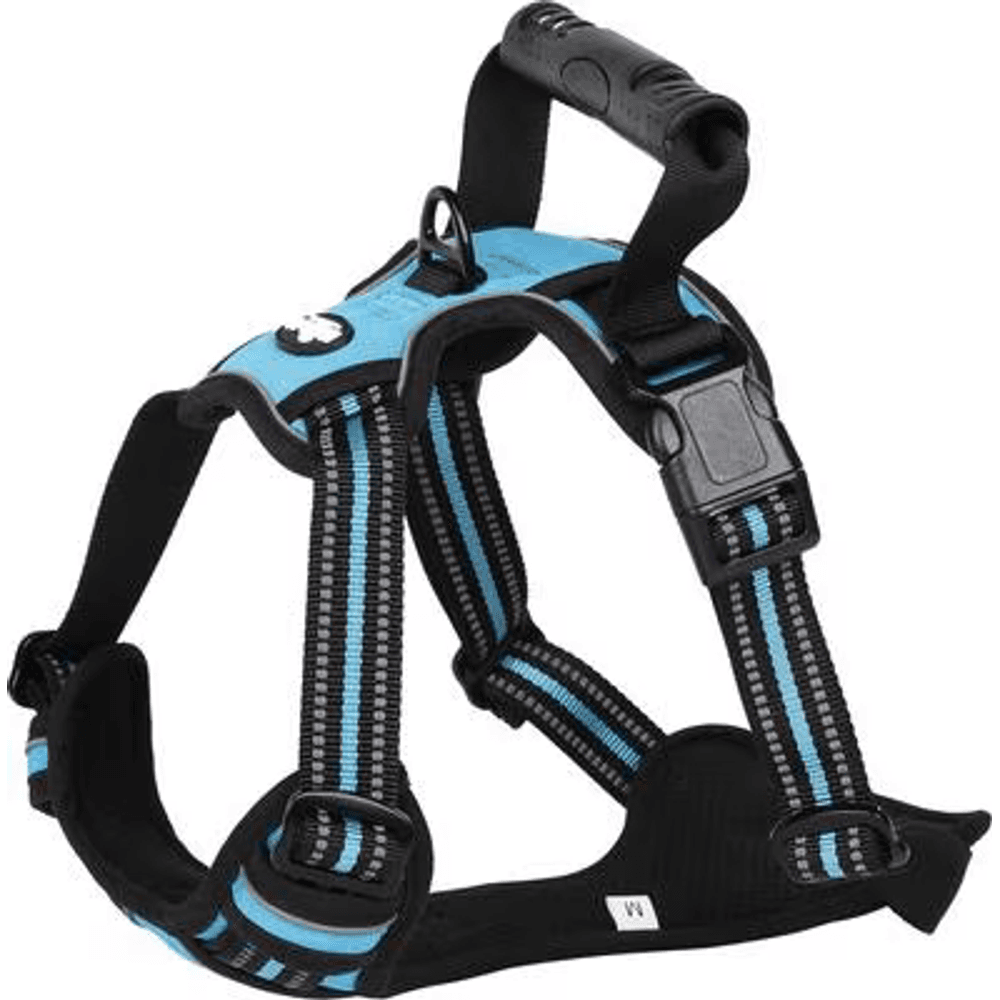
A padded, reflective no-pull harness that spreads leash pressure across the chest instead of the throat, the switch most vets recommend for a dog with a cough, a collapsing trachea, or any airway irritation so the leash never presses on
Petful may earn a commission when you click through to Chewy, at no extra cost to you.
- Two or more opportunities to walk and sniff at the dog's pace
- Short reward-based training sessions rather than one long drill
- Food puzzles, search games, and safe toys that use the nose and brain
- Calm rest away from constant handling
- Regular toilet breaks, especially for puppies
- Time with the household without expecting the dog to be carried everywhere
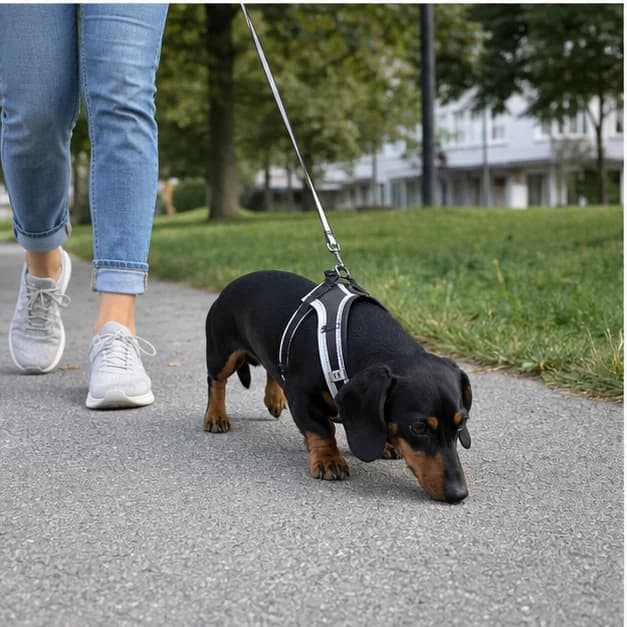
Fit a harness from chest and neck measurements, then check that it does not rub behind the front legs or restrict shoulder movement. The EliteField small reflective harness is one existing option to compare with your dog's numbers, but small in the product name is not proof of fit. Recheck the fit as a puppy grows or an adult's weight changes.
Training, barking, and alone time
A Miniature Dachshund can learn excellent household manners, but repetition must be worth the dog's effort. Harsh corrections often create avoidance without teaching the desired behavior. Use small rewards, clear cues, short sessions, and the same rules from every person in the home.
Potty training can feel slow because a small puppy has limited capacity and bad weather may make the outdoors unappealing. Success comes from management:

Multiple ridges and valleys slow eating, reduce gas and bloating, and turn mealtime into a fun puzzle. Non-skid base, dishwasher safe, 4-cup capacity.
Petful may earn a commission when you click through to Chewy, at no extra cost to you.
- Take the puppy out after waking, eating, drinking, play, and exciting activity.
- Use the same quiet toilet area and reward immediately after success.
- Supervise indoors or use a safe pen when you cannot watch.
- Clean accidents thoroughly without punishing the puppy.
- Increase freedom only after the current routine is reliable.
Barking is a normal communication tool for an alert hound. The goal is not silence but an off switch. Reward a pause, teach a go-to-mat routine, reduce window rehearsal, and provide enough sniffing and activity that every hallway sound is not the day's main event.
Can a Dachshund be left alone all day?
No dog should routinely be expected to spend an entire day alone without a toilet break, movement, and social contact. Individual tolerance varies, but building alone time must be gradual. Begin with seconds or minutes while the dog remains calm, then extend the interval in small steps.
A pet camera can show whether the dog settles or spends the absence pacing, barking, scratching exits, or refusing a favorite food toy. If work keeps everyone away for a long stretch, arrange a walker, sitter, trusted neighbor, or safe daycare match. Sudden distress or a dog that cannot settle deserves professional guidance rather than longer forced absences.
Coat types and grooming
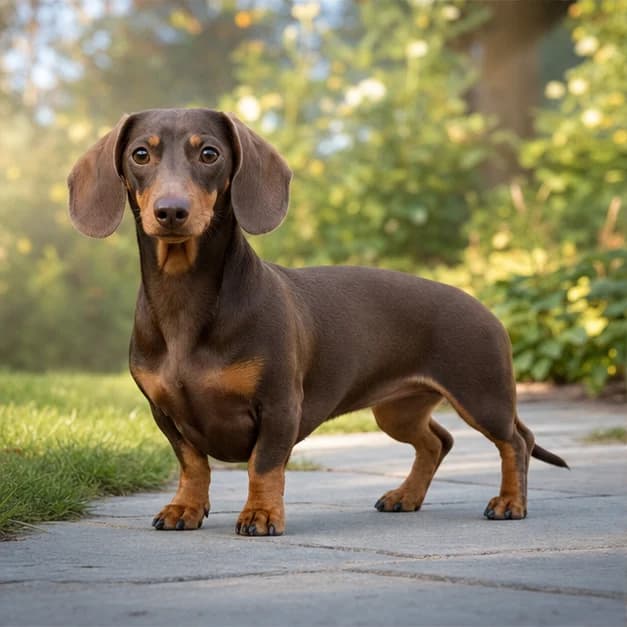
Miniature Dachshunds occur in the same three coat varieties as standards: smooth, longhaired, and wirehaired. Coat changes grooming frequency and technique, not the dog's official size division. All three shed, and none is reliably hypoallergenic. Petful's complete guide to Dachshund shedding explains the coat-specific pattern in more detail.
Smooth coat
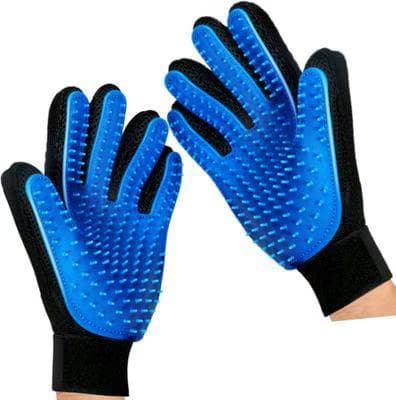
The smooth coat is short, sleek, and close to the body. A soft grooming mitt or brush can lift loose hair and dust, while routine nail, ear, and dental care still matters. Short hair does not mean no shedding. For gentle loose-hair pickup, Mr. Peanut's Hand Gloves Grooming and Deshedding Aid are one option for dogs comfortable with hand-style grooming.
Longhaired coat
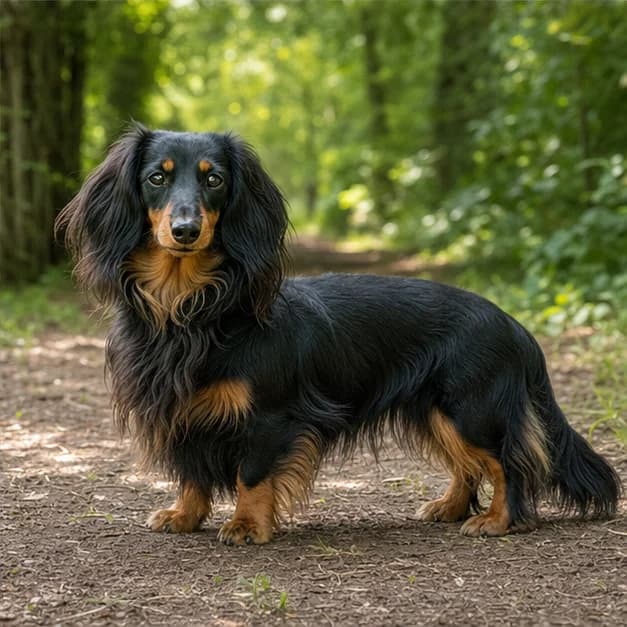
A mini longhaired Dachshund has longer feathering around the ears, chest, underside, legs, and tail. Gently comb the areas that rub or tangle, especially behind the ears and around the harness. Check the coat after walks for plant material rather than pulling through a knot.
Petful may earn a commission when you click through to Chewy, at no extra cost to you.
Wirehaired coat
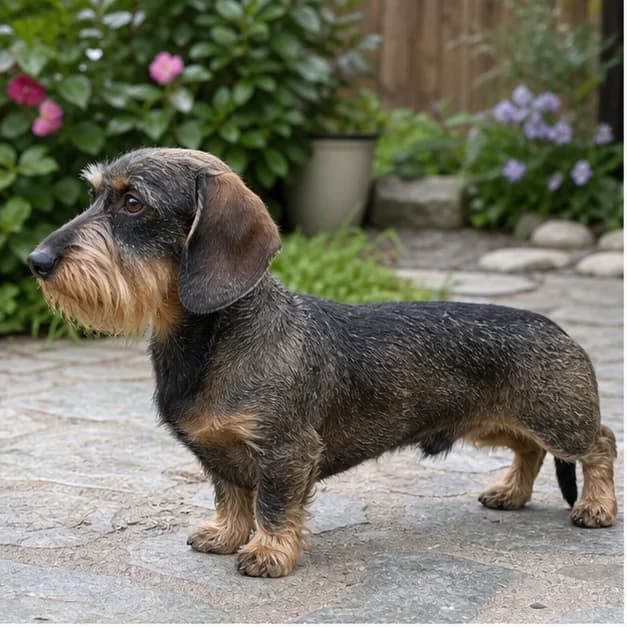
The wirehaired variety has a harsher outer coat, softer undercoat, and facial furnishings that create the familiar eyebrows and beard. Coat care may include brushing and professional hand stripping, depending on texture and the owner's goals. Ask an experienced groomer to demonstrate before trying a new technique.
Color does not change the basic coat-care plan, and a rare-sounding shade is not a grooming or quality grade. Petful's guide to Dachshund colors separates base colors, patterns, and marketing language.
Home setup, exercise, and owner fit
Miniature Dachshunds can be good pets for people who enjoy a close companion and accept a hound's opinions. They can live well in apartments because they take up little floor space, but apartment success depends more on noise tolerance, toilet access, training, and daily routine than on body size.
They can also be good companions for seniors when the match is based on ability rather than age. The person needs to manage regular walks, bend or lift safely when necessary, respond to barking, and arrange help when needed. A tiny puppy weaving around feet may be a fall risk, while a settled adult with a known temperament may be easier to evaluate.
| Household | Potential fit | Practical boundary |
|---|---|---|
| Apartment | Good with training and daily outings | Barking and toilet access matter more than square footage |
| Senior household | Possible for an active adult with support | Safe lifting, fall risk, and backup care need a plan |
| Children | Possible with calm, supervised handling | Never let a child carry, chase, or climb on the dog |
| Other dogs | Often possible after careful introductions | Size does not prevent bold or selective behavior |
| Cats and small pets | Individual and management dependent | Prey drive makes secure separation important |
| First-time owner | Possible for a patient learner | Consistent potty, recall, and barking work are essential |
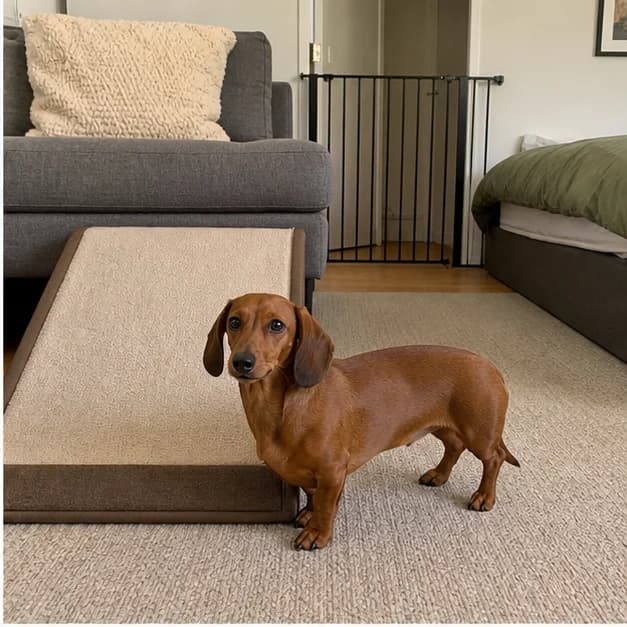
Build traction into the home with nonslip runners where the dog turns, launches, or lands. A stable low ramp can offer an alternative route to approved furniture, but it works only if the dog is trained to use it and cannot leap beside it. Block unsupervised stair access when appropriate and ask your veterinarian for individual guidance, especially after an injury or if movement changes.
Exercise should combine walking with sniffing and mental work. A mini does not need a marathon to have a satisfying day, but a lap around the block with no chance to investigate may not meet the dog's needs. Let safe walks include sniff breaks, and use food searches or simple scent games at home. On longer outings, a Frisco Silicone Collapsible Travel Bowl can be a practical measured-dog accessory, with water breaks adjusted for weather and activity.
For meals, use the amount recommended for the individual by your veterinarian and food label as a starting point, then adjust from actual body condition rather than the size word in the breed name. A non-skid slow feeder bowl can slow a dog that gulps, but it does not determine the correct portion. Measure the food before it goes into any bowl.
Health and lifespan
This is a non-clinical breed guide, so the useful boundary is prevention, observation, and knowing when to ask for help. A long-backed, short-legged dog benefits from a home that reduces uncontrolled jumping, improves traction, supports a healthy body condition, and uses gear that fits without pressure or restriction.
Watch the individual dog, not just the breed label. A new reluctance to move, a sudden change in gait, pain, weakness, or loss of normal function calls for prompt veterinary advice. Do not use a ramp, supplement, brace, or exercise plan as a substitute for an examination when a dog appears unwell.
The AKC lists an expected Dachshund life span of 12 to 16 years, but no range predicts an individual dog's future. Genetics, body condition, preventive care, injuries, and access to veterinary treatment all matter. Petful's dedicated guide to Dachshund lifespan owns the deeper discussion of longevity and senior care.
Finding a Miniature Dachshund
Start with the dog that fits your home, not the smallest or most expensive listing. Adoption fees and breeder prices vary widely by region, age, source, and included care. A high price, rare color, teacup claim, or promise of a tiny adult is not proof of health, temperament, or responsible breeding.
For a breeder, ask to meet the mother where the puppies are raised, review age-appropriate records, understand what health screening was completed, and see a written contract. A responsible seller asks you questions, does not rush payment, and explains what happens if you cannot keep the dog. Learn the warning signs in Petful's guide to how to spot a puppy mill.
Rescue and shelter listings may use miniature based on appearance or current weight rather than pedigree. Treat the label as a useful starting point, then rely on the dog's measured size, age estimate, foster notes, behavior history, and veterinary record. An adult can be especially helpful when final size and household manners are important decisions.
Frequently asked questions about Miniature Dachshunds
Under the official US breed standard, a Miniature Dachshund weighs 11 pounds or less at 12 months of age and older. That is an official threshold, not a target for restricting food. A veterinarian should judge healthy body condition for the individual dog.
There is no exact date for every dog. Many reach much of their adult height before their chest and frame finish developing. The AKC uses 12 months for adult size classification, but individual variation continues, so track weight and measurements over time.
Tweenie is an informal label for a Dachshund between the commonly cited miniature and standard classifications. It is not a separate recognized variety. Use the dog's actual adult weight and measurements for health, gear, and travel decisions.
No. Teacup is a marketing term, not an AKC-recognized Dachshund size. A puppy's small current weight cannot guarantee an unusually tiny adult, so prioritize health records, responsible sourcing, and an appropriate body condition over the label.
Yes, they can live well in apartments when their barking, toilet schedule, exercise, and enrichment are managed. Small floor space is not the main issue. Daily sniff walks, reward-based quiet training, and reliable outdoor access matter more.
Repeated uncontrolled stair use may not suit every dog. Improve traction, supervise access, and use gates or a trained ramp when appropriate. Because age, condition, and health history differ, ask your veterinarian for individual guidance rather than relying on one universal rule.
They can take patience, especially as puppies. A predictable schedule, close supervision, immediate rewards outside, thorough accident cleanup, and short intervals between trips work better than punishment. Bad weather and a small puppy's limited capacity can slow progress.
Yes. Miniature Dachshunds can have smooth, longhaired, or wirehaired coats. The coat types differ in texture and grooming needs, but all can shed and none is reliably hypoallergenic.
A Miniature Dachshund is a small dog with a full-sized need for thoughtful care. Measure the dog in front of you, prepare the home for a low and long body, train with patience, and choose the individual whose energy and temperament fit your real routine. That approach matters far more than chasing the smallest label.

Coreen Saito is a pet writer and longtime shelter volunteer with more than a decade in animal rescue. She covers cat behavior, breed care, and the small, ordinary science of sharing a life with companion animals, with a particular focus on honest takes about the products and decisions that actually matter. At home in Arizona, she's outranked by Mac (a dog with the loudest opinion in the house), Rebel (a cat who governs by quiet authority), and Meri (an orange tabby who runs the late shift and the laundry basket). She writes about all three, plus the rescues that keep coming through her life, at LifeWithMinty.com.
Sign up for expert-backed reviews and safety alerts all in one place.