Carolina Dog German Shepherd Mix: Size, Traits, and Care
Learn how to assess a Carolina Dog German Shepherd mix using parent history, growth records, and observed behavior, with practical questions about exercise, containment, grooming, and health screening.

BVMS, MRCVS
Petful is reader supported. As an affiliate of platforms like Amazon and Chewy, we may earn a commission when you buy through links on this page. There is no extra cost to you.
A Carolina Dog German Shepherd mix is a dog with reported ancestry from those two breeds, not a standardized breed with a dependable size or personality. Before choosing one, find out what supports that parentage and how the individual dog behaves in situations that matter in your home.
A parent-history worksheet is more useful than falsely precise promises about hybrid size or behavior. Collect parent measurements, dated growth records, health information, and observations from a breeder or foster caregiver. Those details can help you prepare for the dog you are meeting without treating a hybrid label as a guarantee.

Sign up for expert-backed reviews and safety alerts all in one place.
What is a Carolina Dog German Shepherd mix?
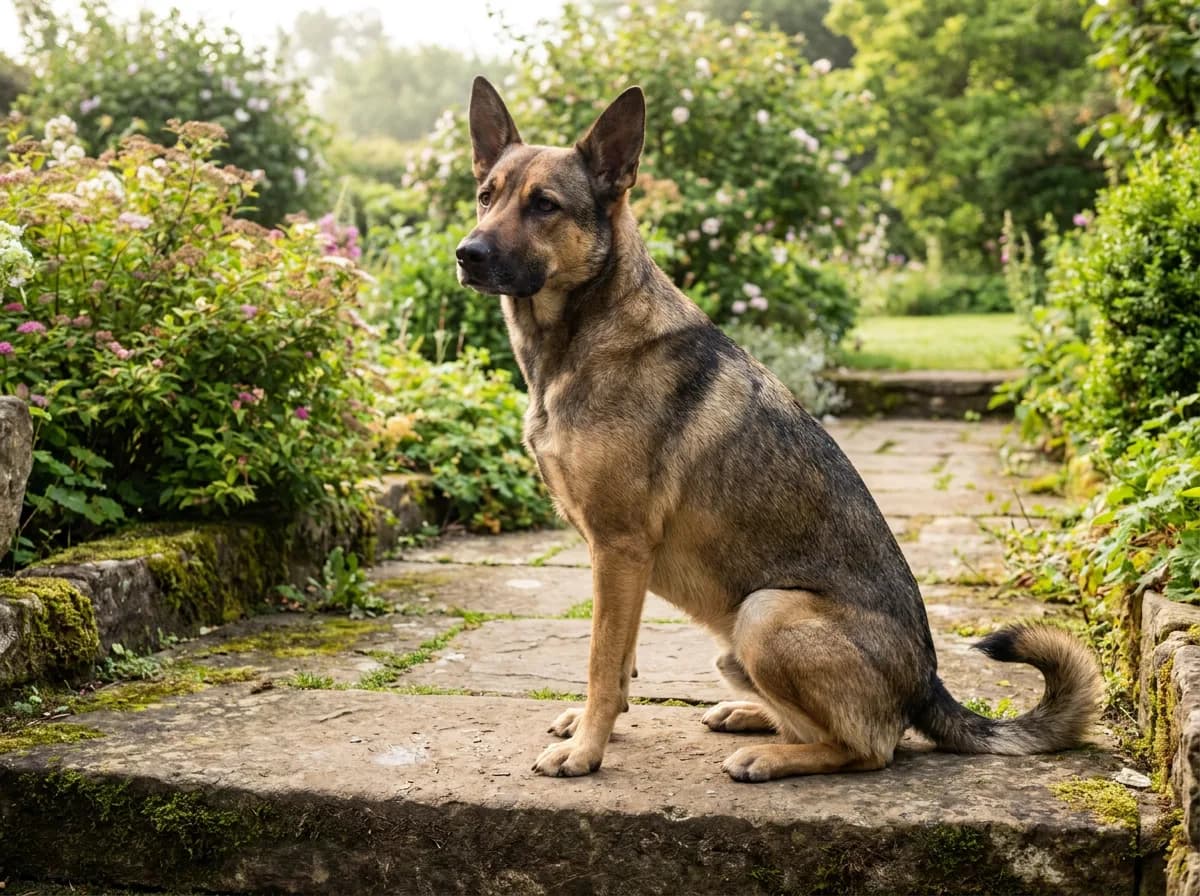
When parentage is documented, the name describes a cross between a Carolina Dog and a German Shepherd Dog. A listing that says “Carolina Dog shepherd mix” may be less specific. Ask whether the parents are known or whether the description is a visual estimate. Upright ears, a tan coat, or a hooked tail cannot establish the dog's family tree.
- 1Use parent measurements and growth records to plan for size, while leaving room for uncertainty.
- 2Give observed behavior more weight than promises about a hybrid's temperament.
- 3Ask what proves the stated parentage before treating a breed label as confirmed.
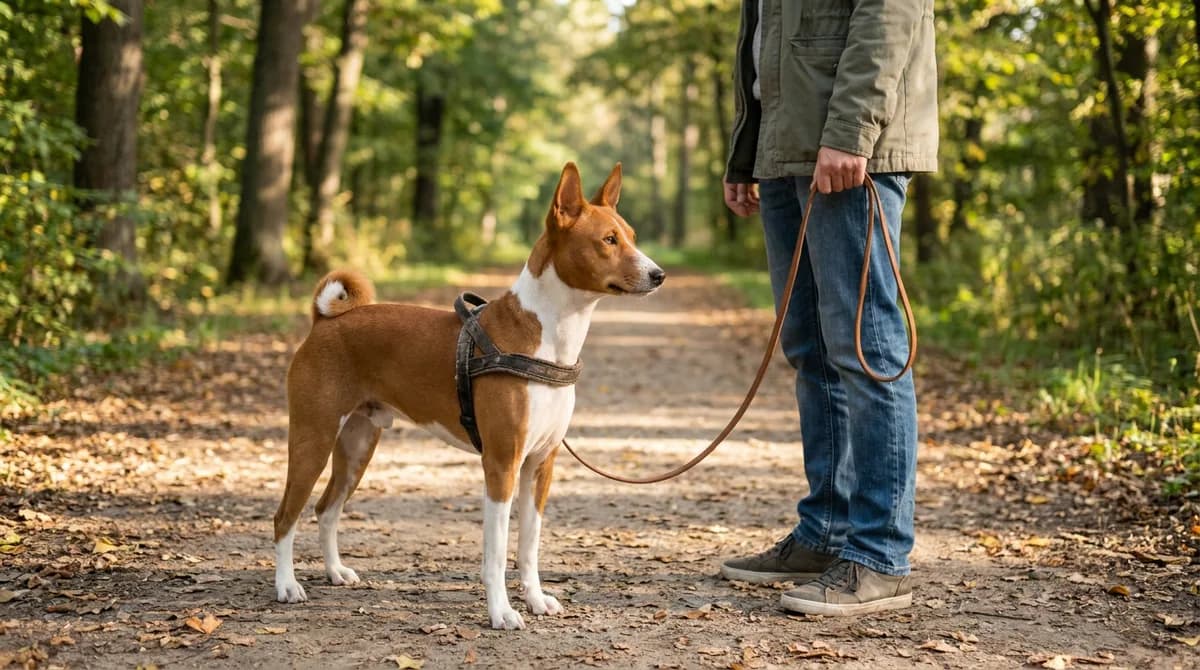
Measure the actual dog's chest before buying walking equipment. A harness such as the PetSafe Easy Walk needs to match the manufacturer's sizing instructions and the dog's movement, not a size assigned to this cross. No harness should be assumed escape-proof.

Petful may earn a commission when you click through to Chewy, at no extra cost to you.
The UKC Carolina Dog standard describes a lean, athletic dog that may be reserved with unfamiliar people. The AKC German Shepherd Dog profile describes a large working dog. Compare parental exercise and containment needs as preparation, without assigning an unmeasured hybrid temperament. Parent-breed descriptions do not establish where a particular puppy will fall in size, confidence, sociability, or interest in work.
- The UKC Carolina Dog standard gives approximately 18–24 inches at the shoulder and 35–50 pounds, varying with build and sex.
- The AKC German Shepherd standard gives desired shoulder heights of 24–26 inches for males and 22–24 inches for females.
- These parent references suggest preparing for a medium-to-large dog. They are not lower and upper boundaries for the mix. Known parent measurements and the puppy’s growth record provide more useful individual context than averaging the standards.
“American dingo” is a nickname used for the Carolina Dog. It does not turn a Carolina Dog German Shepherd cross into a wild-animal hybrid or provide additional evidence about its ancestry. Likewise, a shepherd-like face is a description of appearance, not proof that the other parent was a German Shepherd.
Petful may earn a commission when you click through to Chewy, at no extra cost to you.
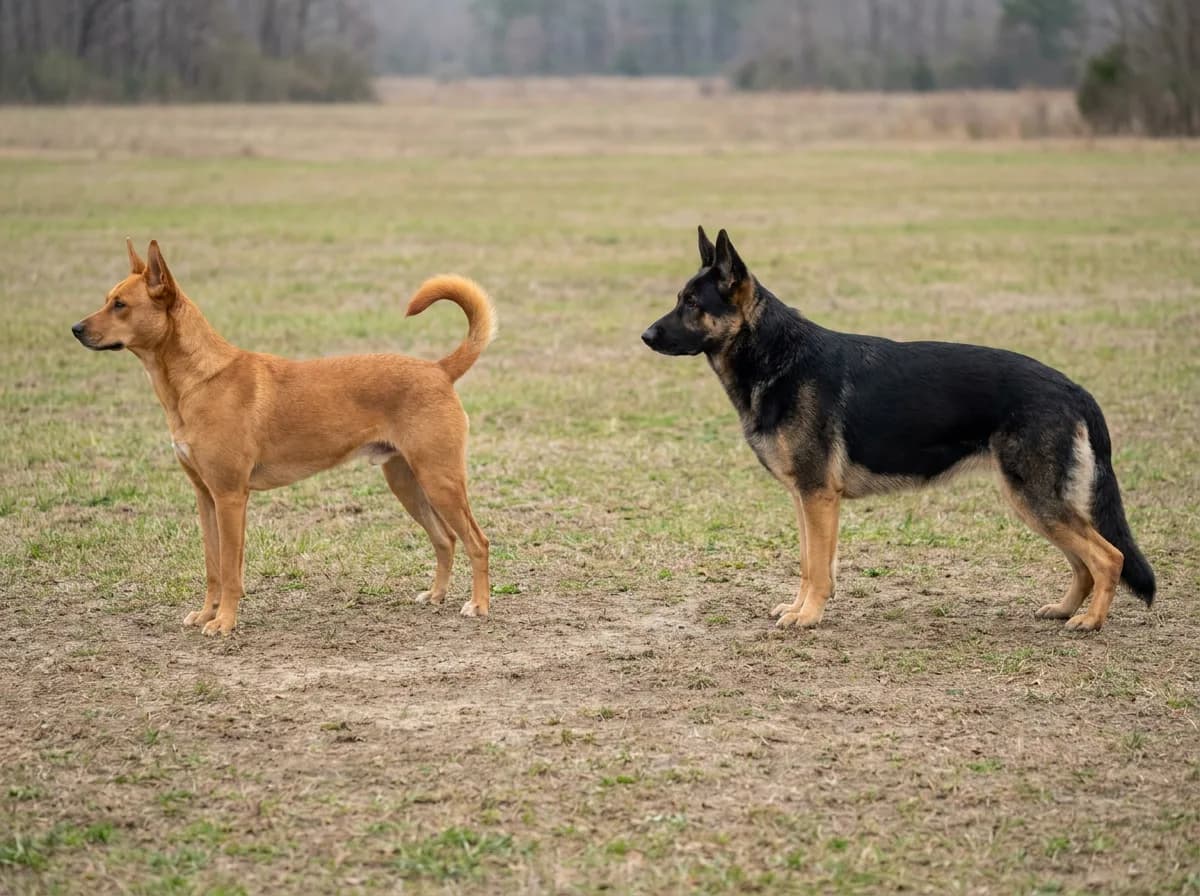
Finding a puppy or adult dog with known history
When looking at Carolina Dog German Shepherd mix puppies, ask for a conversation about the individual litter before discussing payment. With an adult rescue dog, ask for the most recent foster observations and the circumstances behind them. An honest “we don't know” is useful information; an unsupported promise that a puppy will be calm, small, or naturally protective is not.
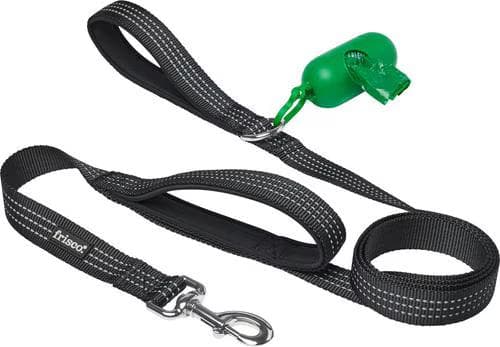
A six-foot Frisco Traffic Leash is one option for an ordinary supervised walk while you learn how a dog responds outdoors. It is not a long training line. The person handling the dog should be able to maintain comfortable control without testing recall near traffic or an open exit.
Build a parent-history worksheet
Copy these questions into a note you can share with the breeder, rescue, or veterinary team. Put the source and date beside each answer. Separating a measured fact from an estimate makes it much easier to see what still needs checking.
- Parent identity: Are both parents known? Record their names and the basis for the breed identification. Photos show the parents' appearance; they do not independently verify ancestry.
- Parent measurements: Request adult weight and shoulder height, when measured, and whether the dog was at an appropriate body condition. A single parent photograph cannot provide those measurements reliably.
- Puppy growth records: Ask for dated weights rather than an undated statement that the puppy is “the smallest.” Bring the record to your veterinarian for an individual growth discussion.
- Adult relatives: Ask whether the caregiver has reliable information about mature siblings or previous offspring. Treat that information as context, not an upper or lower size limit.
- Observed behavior: Record what happened around visitors, other dogs, handling, doors, and time alone. Include the setting and what the handler did to help.
- Parent health testing: Request the actual reports, the identity of the tested dog, and the dates. Keep these separate from a routine examination or vaccination record.
A useful observation might read, “On two quiet walks, the dog watched cyclists from across the street and could then return attention to the handler.” That is a hypothetical example of useful detail, not a claim about this cross. “Good on walks” leaves out the distance, surroundings, and support that made the walk successful.
Use the same distinction when someone says a dog is good with children or cats. Find out which children or cats, what supervision was present, and whether the animals lived together or only met briefly. History helps plan an introduction; it does not remove the need to supervise a new one.
Plan exercise around the dog in front of you
The parent descriptions suggest preparing for an athletic dog and making room for both activity and learning. They do not justify prescribing a fixed daily mileage to every cross. A young puppy, a fit adult, and a dog recovering from illness need different plans. Your veterinarian can advise on an appropriate starting point when age, growth, or health creates uncertainty.
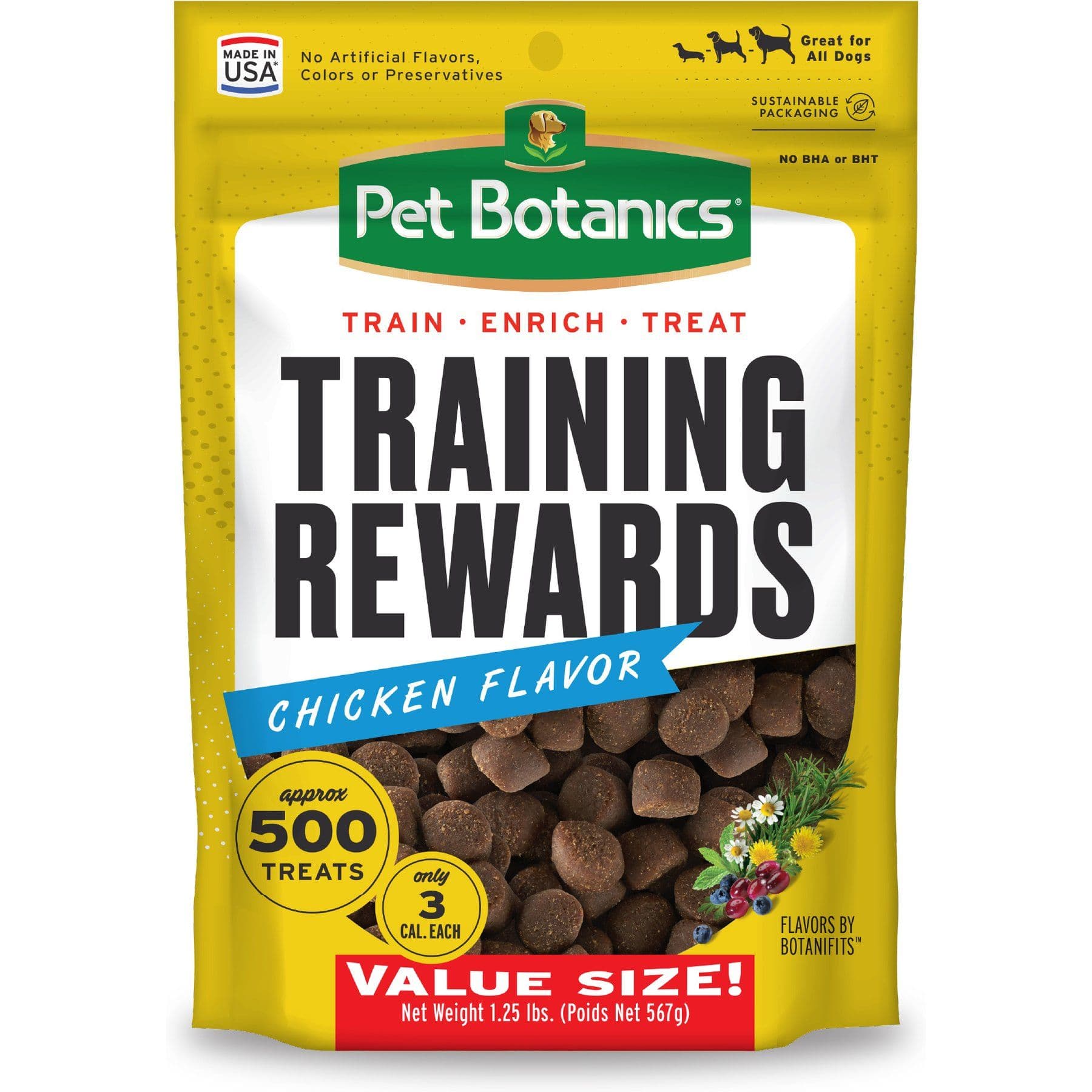
Soft chicken-flavor training rewards in a larger bag for frequent practice. Break rewards into appropriate pieces for your dog.
Petful may earn a commission when you click through to Chewy, at no extra cost to you.
- Offer sniffing walks in surroundings where the dog can remain comfortable.
- Use short training sessions to practice attention, a hand target, or moving with you on a loose leash.
- Provide suitable play and opportunities to investigate food puzzles or scents under supervision.
- Include uninterrupted rest and assess whether the dog settles after activity.
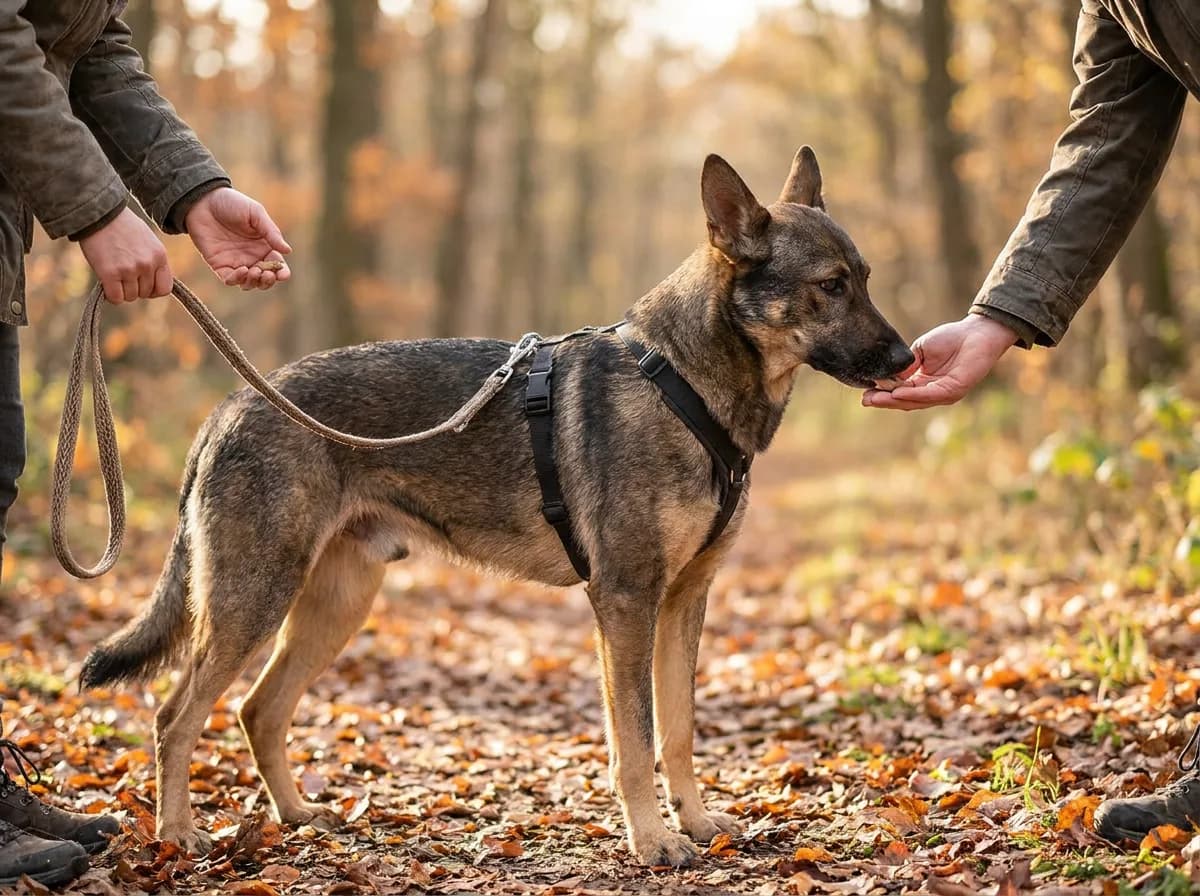
For a dog that enjoys food rewards, small pieces are easier to deliver repeatedly than a large biscuit. Choose treats the dog tolerates, and include them in the day's food allowance. The reward needs to help the dog learn; there is no reason to assume one flavor or brand suits every individual.
Make containment part of the routine
Do not turn parent-breed descriptions into a claim that this is either an escape artist or a dog that will naturally stay close. Check the setting and practice the skills. A secure physical boundary and a consistent door routine are useful whether the dog is bold, hesitant, distracted, or newly arrived.
- Inspect gates, latches, fence gaps, and access beneath the fence before letting the dog into the yard.
- Accompany the dog outside while learning its behavior around wildlife, neighbors, and passing dogs.
- Attach the leash before opening an exterior door or vehicle door.
- Arrange a second barrier when deliveries or visitors make an open doorway likely.
- Keep identification and microchip contact details current, and tell every caregiver how exits are managed.
An enclosed yard is a place for supervised activity, not a substitute for learning how the dog moves through the neighborhood. A dog may behave differently at the fence than on a walk. If the dog becomes intensely focused on a distraction, create space and simplify the situation instead of forcing a close encounter.
Match coat care to the actual coat
Feel the coat and observe loose hair before choosing grooming tools. The cross label cannot tell you precisely how dense the undercoat is or how much hair your home will collect. Start with gentle brushing that the dog accepts, then adjust the tool and frequency to what you find.

Petful may earn a commission when you click through to Chewy, at no extra cost to you.
- Introduce the brush briefly, reward comfortable participation, and stop before the dog struggles.
- Work lightly in the direction of the hair, checking that the tool is not pulling or scraping.
- Use a grooming glove for suitable short-coated areas; a dense coat may need a different tool.
- Ask a groomer or veterinarian for help with mats, painful handling, or skin changes.
Keep grooming sessions predictable. Handling the shoulders comfortably today does not mean the dog is ready for someone to restrain a paw or lift the tail tomorrow. Teach those movements in small steps, and use the dog's willingness to stay involved as a guide. Coat care should give you useful information about the dog, not become a struggle over compliance.
Ask for health evidence from both sides
A mixed-breed label does not establish that a dog is automatically healthier than either parent breed. Ask which screening recommendations applied to each parent and request the results themselves. A breeder's statement that the parents are “vet checked” does not tell you which inherited conditions were assessed or how.
- Parent health testing is useful only when you can interpret the actual results for the identified parents. Keep screening reports separate from routine examination records, and ask your veterinarian what uncertainty remains.
The OFA's CHIC program organizes breed-specific health screening information. A CHIC number means the required results were recorded publicly; it does not mean every result was normal. Have your veterinarian help interpret available records and explain what they do, and do not, say about the puppy.
- Match each report to the parent's registered identity or permanent identification.
- Check the test performed, the dog's age at testing, and the actual finding.
- Ask about relevant problems in close relatives as well as the parents.
- For a rescue with unknown family history, start with the dog's examination and available medical records rather than inventing a pedigree-based risk estimate.
No responsible estimate of this particular mix's lifespan can be calculated simply by averaging two breed profiles. The same applies to an exact adult weight range. For a puppy, plan equipment and living arrangements that can adapt as the dog grows; for an adult, use current measurements and an individual health assessment.
Evaluate temperament without staging a test
You do not need to startle a dog, take food away, or force contact to learn whether it could suit your household. Request a calm meeting with an experienced caregiver, allow space, and observe ordinary interactions. If the dog chooses distance, let it have distance. One quiet meeting also cannot reveal every behavior that may appear after settling into a new home.
The American Veterinary Society of Animal Behavior recommends reward-based training. Build desired behaviors through practice and rewards rather than expecting a working-breed mix to respond to harsher handling. If fear, guarding, or a bite history is reported, get qualified individual guidance before deciding how introductions should proceed.
Before committing, agree on practical details that affect the dog's care:
- Who handles walks, meals, training, and veterinary appointments?
- Can visitors enter without crowding the dog or leaving an exit unsecured?
- Is there a quiet space that children and other pets cannot intrude on?
- What support does the breeder or rescue provide if the transition is difficult?
- Which costs are included now, and which ongoing care costs remain yours?
For buying and adoption questions, including why a breed name alone cannot establish a fair price, see the guide to Carolina Dog puppies. Choose a dog on the strength of its history and your ability to meet its needs, rather than a promise that the cross combines only the easiest traits of both parents.
How this fits the Carolina Dog breed
- The Carolina parent is a medium-sized breed; the size references above are parent context, not a promised size for the cross.
- Barking has no reliable breed-wide count. Ask what triggers it, how long it lasts and whether the dog can settle.
- Carolina Dogs are uncommon, but a precise population estimate requires a defined registry or survey. A rare-sounding cross label cannot establish ancestry or value.
Our Carolina Dog guide explains recognition, the American dingo nickname and the full parent-breed context. None of those descriptions can confirm a pedigree from appearance.
Use the breed guide for context and the individual dog's records for decisions. Whether this dog is a good fit depends on the home you can offer, the behavior you have actually observed, and the uncertainties you can realistically accommodate. A clearly documented limitation is more useful than a confident guess.
It can be, but a first-time owner should choose on observed behavior and available support rather than the appeal of the cross. Ask a caregiver to demonstrate walks, greetings, and settling. If the dog’s strength, fear, or handling needs exceed what you can manage now, arrange qualified help before committing rather than counting on training to solve every mismatch.
A yard is useful only when its boundaries are secure and the dog is supervised appropriately. It does not replace walks, learning, or company. Without a yard, assess whether you can provide frequent outdoor access and suitable activity while managing doors and shared spaces. The dog’s actual routine matters more than the property’s size.
No. The OFA explains that a CHIC number records completion and public reporting of the required screening, not that every result was normal. Read each parent’s actual results with your veterinarian and confirm the tested dog’s identity. Screening also cannot guarantee that an individual mixed puppy will remain free of disease.
BVMS, MRCVS
Dr. Pippa Elliott, BVMS, MRCVS, is a veterinarian with nearly 30 years of experience in companion animal practice. Dr. Elliott earned her Bachelor of Veterinary Medicine and Surgery from the University of Glasgow. She was also designated a Member of the Royal College of Veterinary Surgeons. Married with 2 grown-up kids, Dr. Elliott has a naughty Puggle named Poggle, 3 cats and a bearded dragon.
Sign up for expert-backed reviews and safety alerts all in one place.