Border Collie Mixes: Traits, Sizes, and Care
Compare Border Collie mixes through plausible size, coat, behavior, work-drive, health, sourcing, and care ranges while using records and direct observation to evaluate the individual dog.
Petful is reader supported. As an affiliate of platforms like Amazon and Chewy, we may earn a commission when you buy through links on this page. There is no extra cost to you.
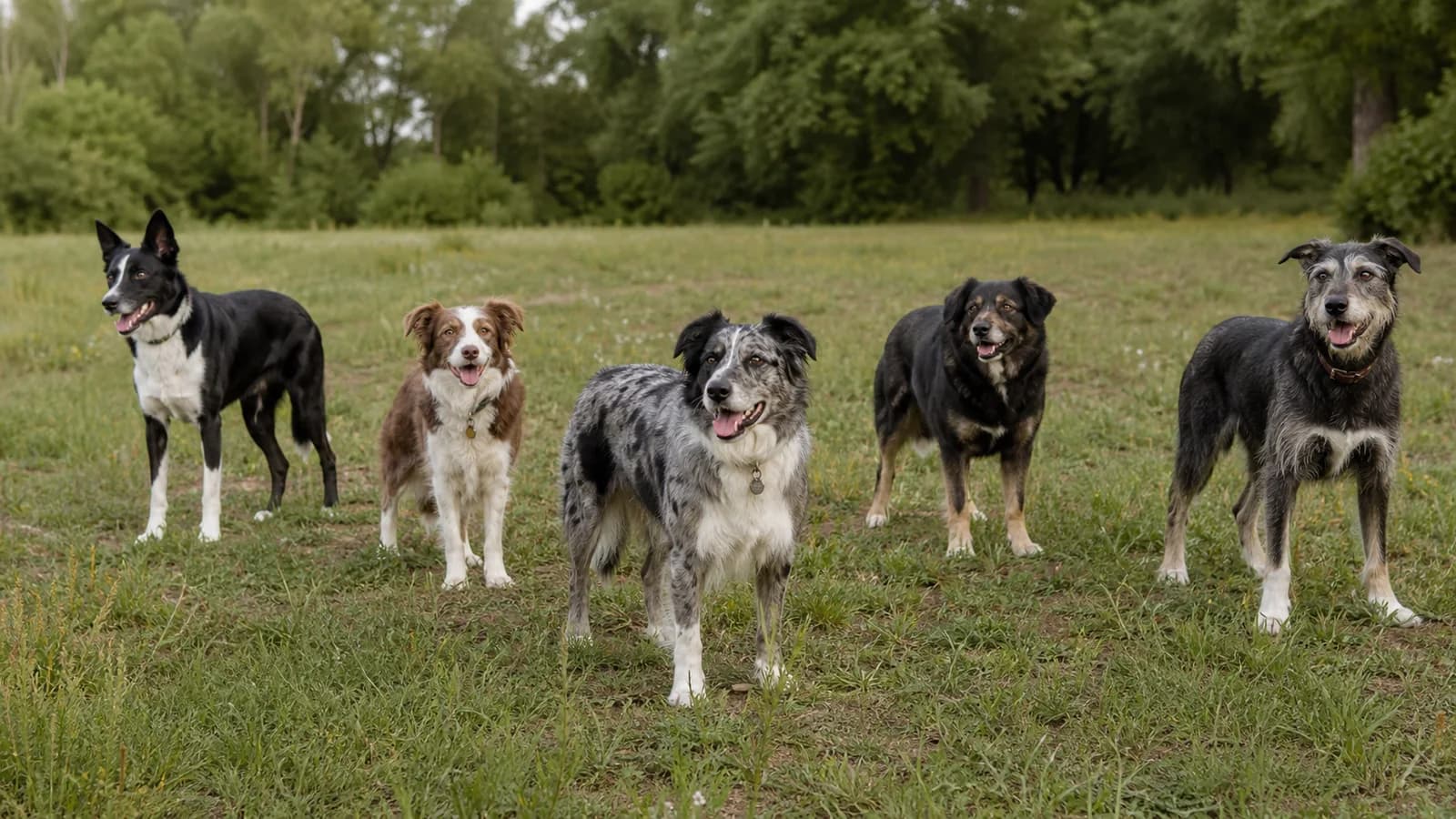
Border Collie mixes can combine herding intensity with almost any other set of physical and behavioral tendencies, but a mix name does not function like a recipe. Littermates can inherit different size, coat, drive, sociability, sensitivity, and health risks. Use known parents when available, direct observation of the individual dog, range-based planning, and health questions from both ancestry sides.
Mixed-breed planning works best when ancestry starts the questions and adult structure, behavior, coat workload, health evidence, source transparency, and direct observation determine the care plan. Health, nutrition, genetics, training, and breed claims are grounded in the named primary or authoritative sources below. The individual dog's records, behavior, and veterinary needs remain more important than a breed-wide expectation.
- 1No guaranteed designer outcome.
- 2Representative size and coat ranges.
- 3Individual temperament assessment.
- 4Parent-breed health questions.
- 5Exercise and settling needs.
- 6Adoption-first fit evaluation.
Start with the ranges a mix could plausibly inherit, then narrow the plan with measurements, records, foster notes, and direct observation. The variability scorecard below keeps adult size, coat, work drive, social behavior, and health evidence in separate lanes so one familiar trait does not become a promise about the whole dog.

Sign up for expert-backed reviews and safety alerts all in one place.
Popular Border Collie mixes and representative ranges
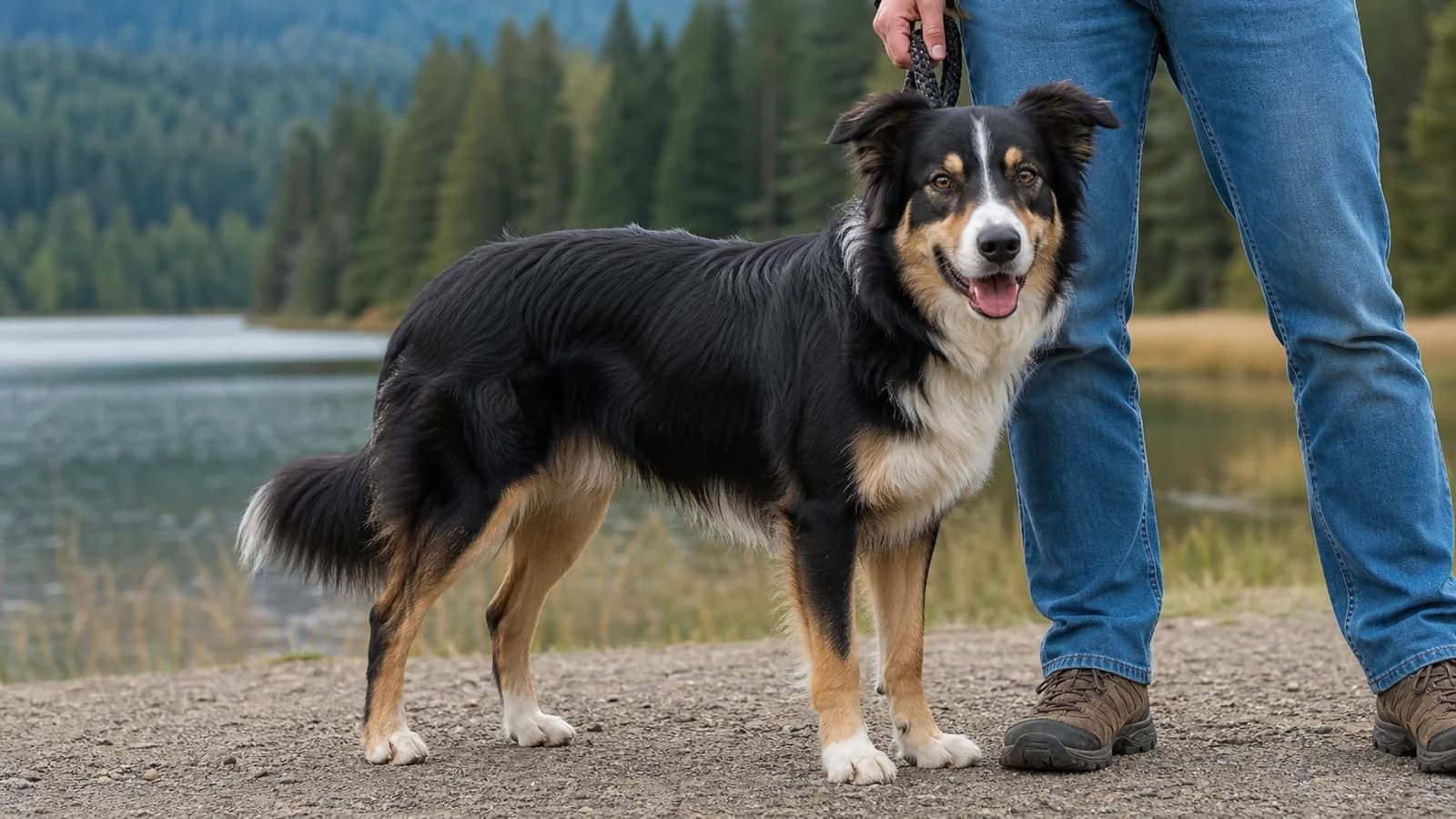
A mix name may describe a planned first-generation cross, a multi-generation line, a rescue's visual estimate, or one component of a complex ancestry result. Those evidence levels are not interchangeable. Use a five-axis scorecard to separate scale, work drive, social behavior, coat workload, and health evidence before turning an estimate into a care plan. Ask what is directly known about each parent and what remains uncertain.
Adult size can land near either parent, between them, or outside a casual expectation because frame and growth are influenced by many genes and environment. Coat can be smooth, rough, dense, feathered, short, curly, or an unexpected combination. Behavior is equally variable and is shaped by development, health, learning, and context.
The profiles below are planning prompts, not promises. Each one names the tension a household should evaluate, the behaviors and physical traits to observe, and the health records to discuss. Meet the individual dog and use foster observations whenever possible. Border Collie mixes with dedicated profiles here include the Border Collie Australian Shepherd mix, Border Collie Lab mix, German Shepherd Border Collie mix, and Border Collie Golden Retriever mix. Those names identify useful parent-side questions; they do not establish a fixed size, coat, temperament, or health outcome.
| Decision axis | What ancestry may suggest | What to observe in the dog | What to verify |
|---|---|---|---|
| Adult scale | A plausible range for frame, strength, and maturity | Measured height, weight, proportions, gait, and equipment fit | Parent identities when known, growth records, and repeated measurements |
| Motion and work drive | Possible herding, retrieving, scenting, guarding, roaming, or pursuit tendencies | Triggers, persistence, recovery, disengagement, and ability to settle | Foster examples, learning history, and safe observations in relevant settings |
| Social and guarding behavior | Questions about sociability, sensitivity, territorial behavior, or independence | Greeting distance, body language, handling comfort, resource behavior, and recovery | Context-rich caregiver notes and qualified behavior support when risk appears |
| Coat workload | A range that may include undercoat, feathering, curl, short hair, or mat risk | Density to the skin, shedding, friction areas, drying time, and skin condition | Parent coat information, groomer guidance, and the adult coat as it develops |
| Health evidence | Screening questions associated with both known ancestry sides | The individual's examination findings, symptoms, mobility, and clinical baseline | Named-parent results, dates, registries or laboratories, family history, and veterinary interpretation |
Apply a variability-first comparison
A variability-first comparison limits every profile to defensible parent-breed ranges and a real observation checklist instead of promising a blended personality. Polygenic traits create individual variation in body size, herding instinct, coat inheritance, sociability, and recovery even among littermates. Temperament observation therefore belongs with the individual dog in several settings, while ancestry remains a prompt for questions. Record what is known, what is directly observed, and what still needs verification before turning the mix name into a care decision.
- The Embark Breed and Health DNA test can add an ancestry clue when parentage is unknown. A consumer DNA panel does not replace a veterinary examination, breed-club screening, breeder records, or diagnosis, so interpret results with the appropriate professionals.
How to evaluate variability, care needs, and owner fit
Use a five-axis mix map: adult scale, motion and work drive, social and guarding tendencies, coat workload, and health evidence. For each axis, write a lower-demand and higher-demand scenario. Buy adjustable equipment and budget for the more demanding plausible outcome until the dog shows otherwise. Parent-breed information supplies a baseline for questions without turning that baseline into a prediction for the mix.
Commercial DNA tests can provide ancestry clues, especially when parentage is unknown, but they cannot predict exact percentages of behavior, adult size, coat care, or disease. Cornell notes that canine DNA testing can have benefits while interpretation still depends on the type of test and the question. Share results with the veterinarian when they affect health decisions.
Screening questions should follow both known parent breeds, current parent-club guidance, and the individual dog. A mixed-breed label does not automatically erase inherited risk, and it does not mean the dog will develop every condition discussed in either breed. Apply the variability scorecard so ancestry clues remain separate from individual observations. The sequence is to suggest, observe, and verify: let ancestry suggest questions, observe the individual, and verify records. Apply the same standard to any Border Collie mix, including a Border Collie Pitbull mix or Border Collie Corgi mix, without using appearance as proof of ancestry or behavior.
- Adult scale: record measured height, weight, body length, strength, and equipment fit.
- Motion and work drive: observe pursuit, persistence, arousal, recovery, and ability to disengage.
- Social and guarding behavior: record context, distance, body language, and recovery without unsafe tests.
- Coat workload: inspect density, shedding, feathering, curl, friction zones, and skin condition.
- Health evidence: separate verified parent results, veterinary findings, family history, and unknowns.
- Use breed-level evidence to prepare observations and questions. Use the individual dog, actual records, and qualified veterinary or behavior guidance for decisions that affect health or safety. Use an adoption-first fit evaluation when foster observations are available, and compare the individual dog's needs before relying on an ancestry label.
Adoption, sourcing, and the first observation window
For rescue adoption, ask for examples from a home when available: sleep, house training, separation, handling, food, toys, visitors, children, cats, dogs, motion triggers, walks, recovery, and medical care. A short shelter interaction may be affected by stress and should not become a permanent personality label.
For a planned cross, verify parent identities, health results, purpose, rearing, contract, and return support. A designer name, color, or low-shedding promise does not establish ethical breeding. Read actual public results and ask why this pairing is expected to improve welfare or function.
During the first weeks, protect routine and collect observations before making big claims. Use secure equipment, gradual introductions, reward-based training, rest, veterinary examination, and measured diet. Update the plan as the dog's behavior and body become better known.
Start by defining what the mix label is based on
A designer name may describe two documented purebred parents, a later-generation planned cross, a rescue estimate, or appearance alone. Those are different evidence levels. Ask which parent identities are known, whether pedigree or veterinary records exist, what a DNA service can and cannot establish, and which parts remain uncertain. Do not let a precise-looking percentage hide a weak source history.

Petful may earn a commission when you click through to Chewy, at no extra cost to you.
When parentage is unknown, use the label to generate questions rather than conclusions. Adult size, gait, coat, behavior, health, and daily care are observable even when ancestry is not. An honest unknown protects the dog from promises about shedding, temperament, or medical risk that cannot be supported.
Score adult scale separately from appearance
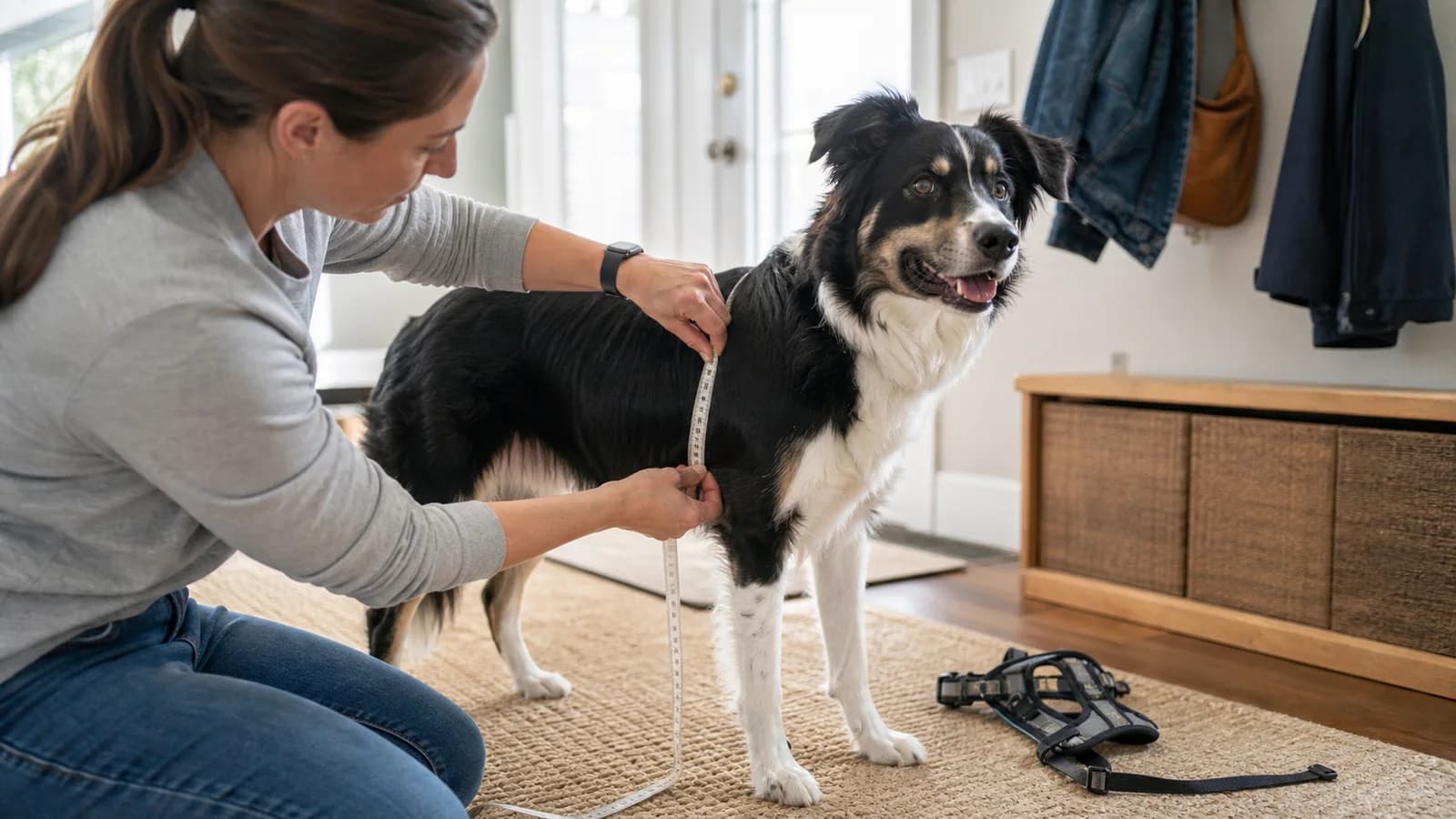
Height, weight, chest depth, body length, leg length, strength, and physical maturity can follow different paths in a mixed puppy. Plan crates, beds, barriers, vehicle access, restraint equipment, food storage, and caregiver lifting capacity for the larger plausible outcome, then remeasure during growth. A cute puppy photograph cannot establish safe adult equipment.
Body shape also changes health and handling decisions. A shorter-legged, long-backed dog faces different stair and jumping questions from a tall guardian cross, while a narrow sighthound-influenced dog may need different cold-weather protection and harness fit. Follow the actual structure and gait instead of forcing every mix into Border Collie-sized gear.
Map motion and work drive on their own axis
Border Collie ancestry may raise questions about orienting, stalking, circling, heel nipping, sensitivity to movement, rapid learning, and persistence. The other ancestry may add retrieving, scent pursuit, guarding, independent roaming, terrier predation, pulling, or endurance. Observe what the dog does around bicycles, runners, children, wildlife, vehicles, toys, food, and interruptions rather than assigning one generic energy score.
A workable plan combines secure management, lawful outlets, short reward-based teaching, decompression, and protected sleep. More exercise is not always the answer; repeated high-intensity chasing can build stamina and arousal without improving recovery. Record the dog's ability to disengage and settle after each type of activity, then adjust recall, leash, motion, and settling exercises to the individual.
Assess social and guarding behavior without breed blame
Watch greeting distance, body language, recovery after surprise, comfort with handling, resource behavior, response to visitors, dog play, separation, and behavior behind barriers. Ask foster caregivers for concrete examples that include trigger, distance, duration, consequence, and what helped. Words such as friendly, protective, dominant, or shy are too broad to design a safe household plan.
Children, unfamiliar dogs, and food removal should never be used as tests. Use barriers, leashes, gradual introductions, and qualified reward-based support when risk appears. Housing, insurance, and local rules may also depend on how a dog is labeled, so verify current requirements without treating a visual guess as proof of behavior.
Budget for the harder plausible coat
A Border Collie mix may inherit short shedding hair, dense undercoat, feathering, curl, a mat-prone combination, or a coat that changes substantially during maturity. Part the coat to the skin, inspect friction areas, and ask a groomer to demonstrate the tools and schedule for the individual. Low visible shedding can coexist with demanding brushing and clipping.
Price professional grooming, home equipment, drying time, laundry, and replacement textiles before adoption when Poodle, spaniel, northern, livestock-guardian, or other coat influences are possible. Patchy loss, redness, odor, pain, or intense itching needs veterinary assessment, not a harsher deshedding tool.
Build health questions from both known sides
For a planned cross, verify the exact sire and dam, then review current parent-club screening guidance for both breeds. Match every result to the named dog, test, date, and registry or laboratory. Orthopedic, eye, cardiac, neurologic, hearing, urinary, dental, and targeted genetic questions vary among the mixes in this guide; one broad panel cannot answer all of them. Combine guidance for both known parents with the individual veterinary exam.
Mixed ancestry neither guarantees hybrid vigor nor makes disease inevitable. Screening changes uncertainty at the population and family level, while the veterinarian evaluates the individual. For a rescue with missing records, document the gap, establish a clinical baseline, and update the plan as new evidence appears.
Use foster observations as decision evidence

A home can reveal sleep, toileting, confinement comfort, separation response, visitor recovery, noise sensitivity, handling, play, coat care, stairs, appetite, and interactions with other animals. Ask how long the dog was observed and whether the setting resembled the prospective home. One quiet day after transport may not predict behavior after decompression.
Useful notes describe what happened before, during, and after an event. A foster might report that the dog barked for three minutes when a visitor entered, accepted food behind a gate, and rested after ten minutes. That account is more actionable than calling the dog protective or perfect. Preserve uncertainty when the foster has not safely observed a situation.
Evaluate breeders, rescues, and private rehomes differently
A responsible planned-cross source should explain the purpose of the pairing, identify both parents, provide verifiable health results, describe rearing and temperament, use a clear contract, and accept return responsibility. A rescue should distinguish confirmed records from estimates and share known medical and foster information. A private rehome should provide veterinary history, routine, behavior examples, equipment, and the reason for placement without minimizing safety concerns.
Pressure, secrecy, always-available litters, cosmetic guarantees, no return support, or refusal to identify parents should slow the decision. Pay attention to how the source responds to difficult questions. Transparency does not eliminate risk, but it allows the household to plan from real information instead of a designer label.
Fit equipment to the body in front of you
Measure neck, chest, back length, standing height, weight, and sleeping sprawl for harnesses, crates, beds, gates, and vehicle setups. Recheck growing dogs and newly adopted adults as body condition changes. A product sized only from an ancestry estimate can restrict shoulders, leave an escape gap, or fail under the dog's actual strength.
Teach ramp use, cooperative handling, and calm restraint before injury or old age makes them urgent. Large mixes may require two-person transport planning; small or lightly built mixes may need protection from rough play and high falls. Safety equipment should be selected for the individual shape and context, not for the cleverness of the mix name.
Plan introductions around observed behavior
Use neutral space or carefully managed household zones, loose body language, distance, parallel movement when appropriate, and short sessions that end before either dog is overwhelmed. Separate feeding, chews, high-value toys, and rest areas until the household has enough evidence to make safer choices. Cats, livestock, and small animals require species-appropriate management rather than a casual meet-and-see test.
A history of sociability does not guarantee every pairing, and one difficult greeting does not define the dog's entire future. Record context, trigger, distance, recovery, and the management that worked. Seek qualified help early when there is aggression, predatory behavior, severe fear, guarding, or a large size and strength mismatch.
Use a 30-day observation window after placement
During the first month, keep a simple log of sleep, appetite, stool, elimination, alone-time response, visitors, handling, motion triggers, other animals, walking, play, coat care, and recovery. Change only what is necessary at first so patterns can emerge. Schedule veterinary care and share all records, current food, medications, preventives, and known history.
Review the log weekly and adjust barriers, routines, enrichment, training criteria, and equipment from the dog's response. A newly placed dog may become more active or expressive as stress changes, so early quiet behavior is not a lifetime guarantee. Escalate medical or safety concerns promptly instead of waiting for the observation month to end.
Let new evidence overrule the ancestry story
A dog estimated to be a Bordoodle may shed heavily; a Borador may dislike retrieving; a guardian cross may welcome visitors; a small-looking puppy may mature beyond the first equipment plan. These outcomes do not make the dog mislabeled in a moral sense. They show why household decisions must stay attached to observable needs.

Petful may earn a commission when you click through to Chewy, at no extra cost to you.
Update the description when verified parent records, a carefully interpreted ancestry result, veterinary findings, mature structure, or consistent behavior adds useful evidence. Keep the parts that remain unknown. The most responsible mix guide is one that helps the owner change course without treating an earlier prediction as a promise that the dog must fulfill.
Budget for the upper plausible care need
Build separate expected and high-use budgets for food, veterinary care, training, grooming, boarding or pet sitting, equipment replacement, transport, licensing, and housing constraints. A large Pyrenees-influenced adult, professionally groomed Bordoodle, medically monitored Boxer cross, and lightly built Whippet mix create very different cost patterns even when every dog is healthy.
Use local written estimates and current policy terms rather than a national monthly average. Revisit the budget when adult size, coat, behavior, health, or caregiver availability becomes clearer. Conservative planning does not predict that the most expensive outcome will occur; it confirms that the household can respond if the dog's actual needs land near that edge of the range.
Border Collie mix profiles
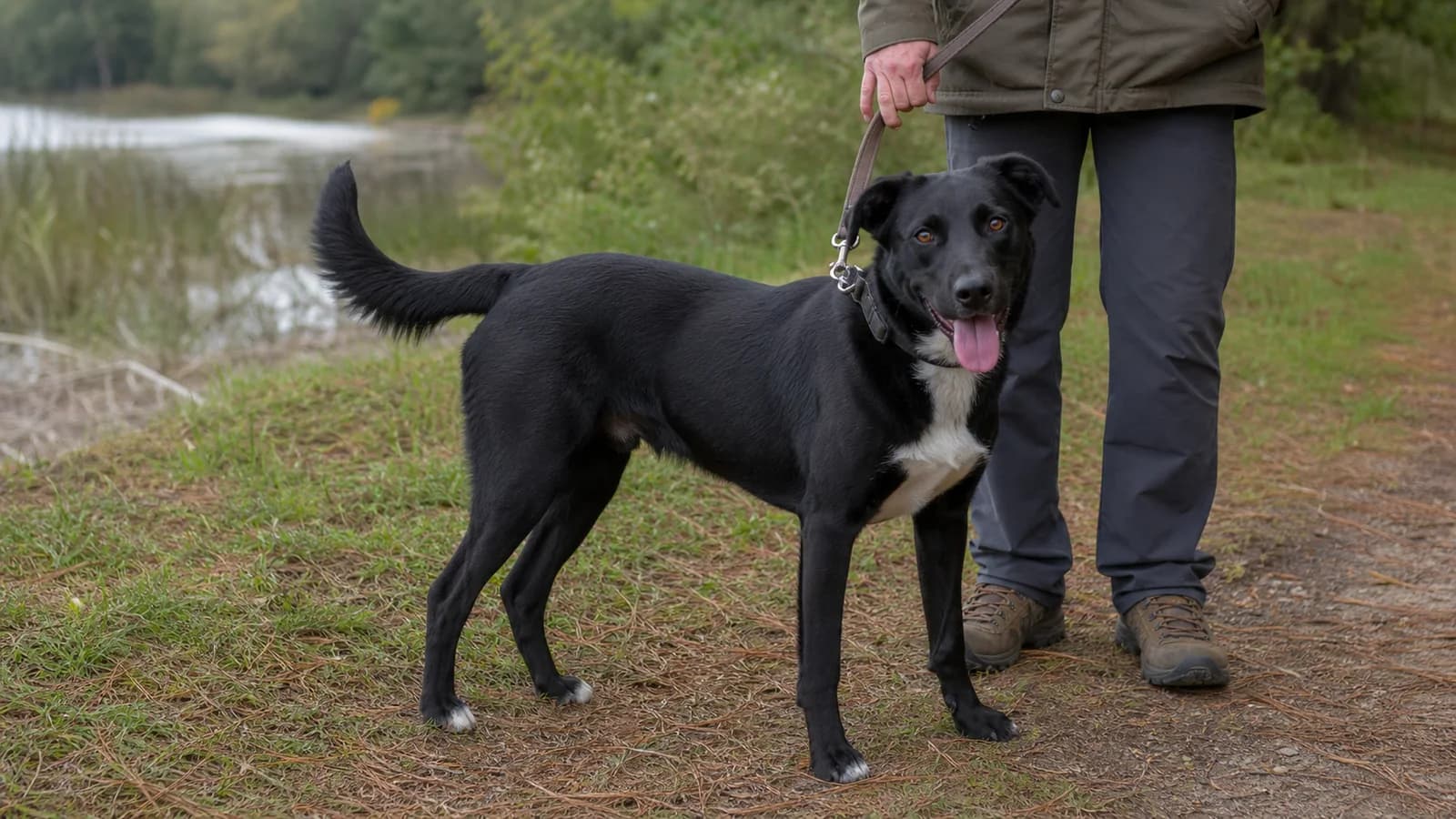
- Every individual Border Collie mix can inherit a different combination of size, coat, behavior, working drive, and health risk. Use each profile as a planning range, then follow the individual dog's records and direct observation.
1. Shollie
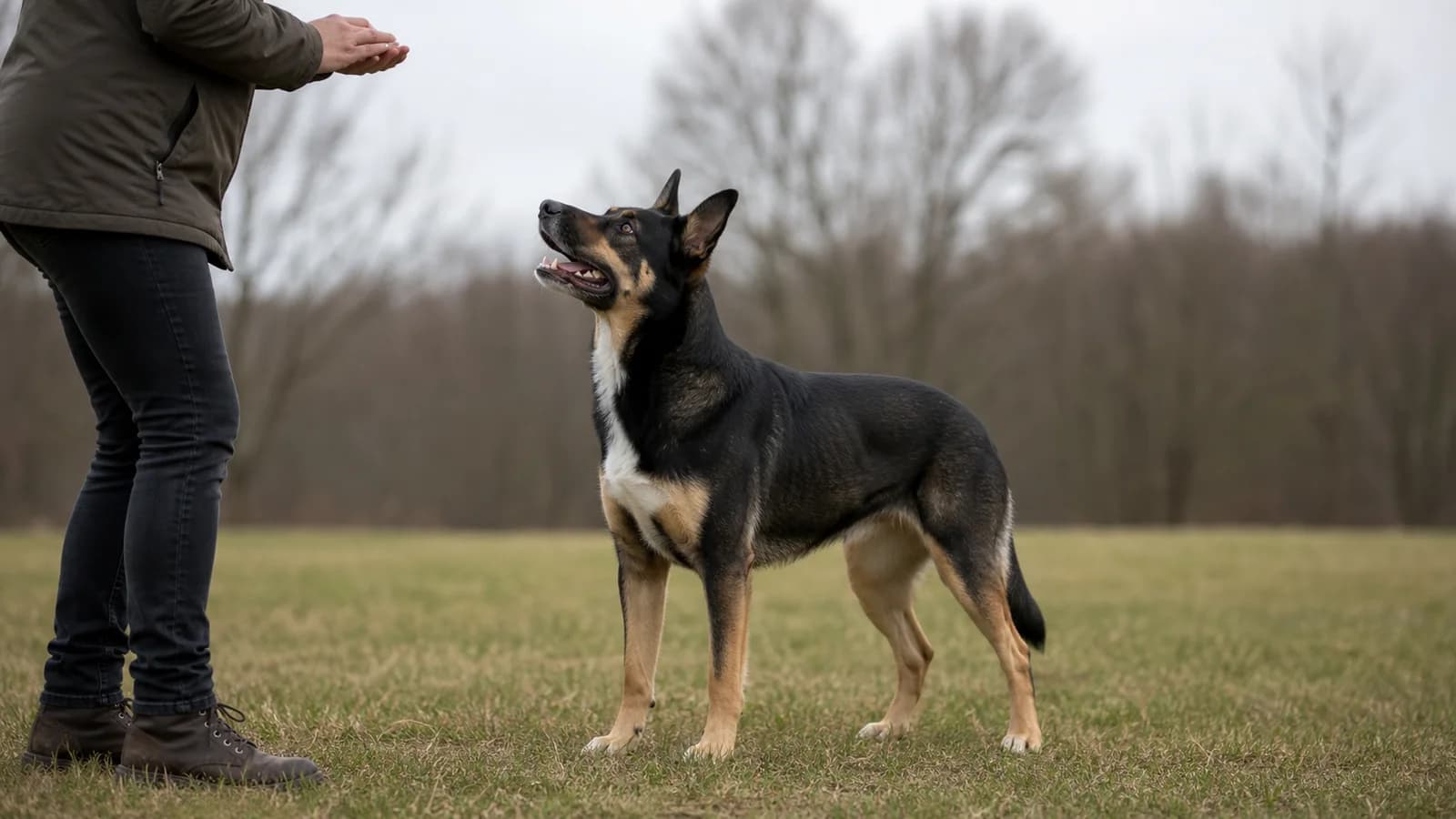
A Shollie asks a household to plan for scale and social judgment before admiring the familiar black-and-tan or collie-like outline. German Shepherd Dog and Border Collie ancestry both carry herding history, yet the adult may also develop a larger frame, territorial awareness, environmental vigilance, or sensitivity. Puppy appearance cannot establish future strength, guarding behavior, motion fixation, or comfort with unfamiliar people.
- Household evidence: Record adult growth, reactions to visitors and boundary activity, dog sociability, handling comfort, response to running or wheeled movement, and recovery after a startle. Use secure barriers and reward-based social learning while those observations accumulate; do not stage confrontations to see whether the dog will protect the home.
- Health file: Match hip, elbow, eye, neurologic, and other current parent-breed guidance to the named parents and their actual results. Add traction, cooperative care, and skilled behavior help when the individual needs them. A Shollie with missing records still needs an honest uncertainty column, because mixed ancestry is neither a health clearance nor a prediction of disease.
2. Border Aussie
- Weekday test: Give the Border Aussie a short training goal, an age-appropriate movement outlet, a finish cue, and protected quiet time. Then note whether wheels, running children, livestock, noise, or rapid transitions produce orienting, pursuit, barking, or difficulty disengaging. Two herding backgrounds can raise the workload, but they do not make every individual equally intense.
- Off-switch test: Watch recovery after excitement, sociability with unfamiliar people, frustration tolerance, coat-care comfort, and the ability to sleep when nothing is happening. Build the routine from those repeated observations rather than assuming that more exercise will solve arousal or that quick learning guarantees easy household behavior.
Border Collie and Australian Shepherd parent information should be reviewed separately, with registered identities, test types, dates, and results kept visible. Reward-based training, secure exercise, mental work with a defined end, and low-arousal routines are sensible preparations for the demanding outcome. The Border Aussie label narrows the questions, not the final temperament, coat, or health answer.
3. Borador
With a Borador, the useful uncertainty is not whether Labrador Retriever and Border Collie traits can appear, but which ones organize the dog's day. Retrieving, food motivation, social enthusiasm, herding behavior, water interest, and athleticism may occur in very different proportions. A dog that carries every object may still be cautious with strangers, while a socially eager dog may still chase movement.
Use ordinary routines to learn the combination. Track mouth use, object possession, greeting intensity, recall around water and wildlife, food guarding, body condition, dog play, and the time needed to settle after activity. Structured retrieves, measured rewards, loose-leash teaching, safe swimming decisions, and uninterrupted rest can then be adjusted to what the dog actually shows.
Ask for orthopedic, eye, exercise-related, and other current screening relevant to both parent breeds, and keep unknown family history marked as unknown. Appetite and willingness to work can mask excess calories or fatigue, so weigh the dog and assess body condition rather than estimating from enthusiasm. No Borador description can promise the Labrador social profile, the Border Collie work style, or a midpoint between them.
4. Border Collie Golden Retriever mix
A Border Collie Golden Retriever mix is often described as friendly and trainable, but that shortcut skips the decisions a family actually has to make. Retrieving interest and social approach may join herding focus, motion sensitivity, appetite, a dense or feathered coat, and high activity. Friendliness, child fit, dog sociability, and ease of settling still belong to the individual dog.
- Watch in context: Note object carrying, greeting force, motion fixation, response to dogs and visitors, coat density, food interest, body condition, and recovery after play. Combine retrieval outlets with recall, mat work, measured feeding, coat care, and supervised introductions instead of asking one good greeting to stand in for a household assessment.
- Verify before reassuring: Review orthopedic, eye, cardiac, cancer-family-history, and Border Collie screening questions with the source and veterinary team. The known parents and current results matter more than a designer name. If parent records are incomplete, preserve that limitation while the dog's own examination and history guide care.
5. Border Collie Husky mix
- Containment question: Can the property safely manage fence testing, roaming, pulling, vocal behavior, and a recall that may weaken when scent, wildlife, or distance becomes rewarding? Use secure barriers and conditioned recall in controlled settings. Off-leash freedom should never be used to prove that the Border Collie side is responsive enough to outweigh possible Siberian Husky independence.
- Climate and recovery question: Record heat tolerance, coat release, small-animal response, workload recovery, sleep, and whether activity produces calm or simply more endurance. Appropriate pulling work may suit some physically prepared adults, but it needs equipment, conditioning, temperature limits, and a clear stop rule for that dog.
This mix can combine herding responsiveness with stamina, prey interest, vocalization, and a substantial double coat, yet no puppy inherits a fixed package. Ask for eye, hip, neurologic, and other current information for the actual parents, then let veterinary findings and repeated behavior narrow the plan. Mixed ancestry does not erase inherited risk or guarantee that every northern-breed tendency will appear.
6. Border Collie Pit Bull mix
The phrase Border Collie Pit Bull mix may refer to documented parents, a complex ancestry result, or a visual shelter label. Clarify that evidence first, because pit bull-type ancestry is itself broad and appearance does not establish behavior. Athleticism and human engagement may be prominent, while adult size, dog sociability, chase interest, handling comfort, and confinement response remain individual.
Evaluate real interactions rather than breed stories. Record play style, recovery, resource behavior, response to visitors and other dogs, prey interest, strength on equipment, and comfort behind barriers. Use secure gear, gradual introductions, reward-based teaching, and active supervision. Check current housing, local, and insurance rules without treating a label as proof that the dog is dangerous or automatically suitable.
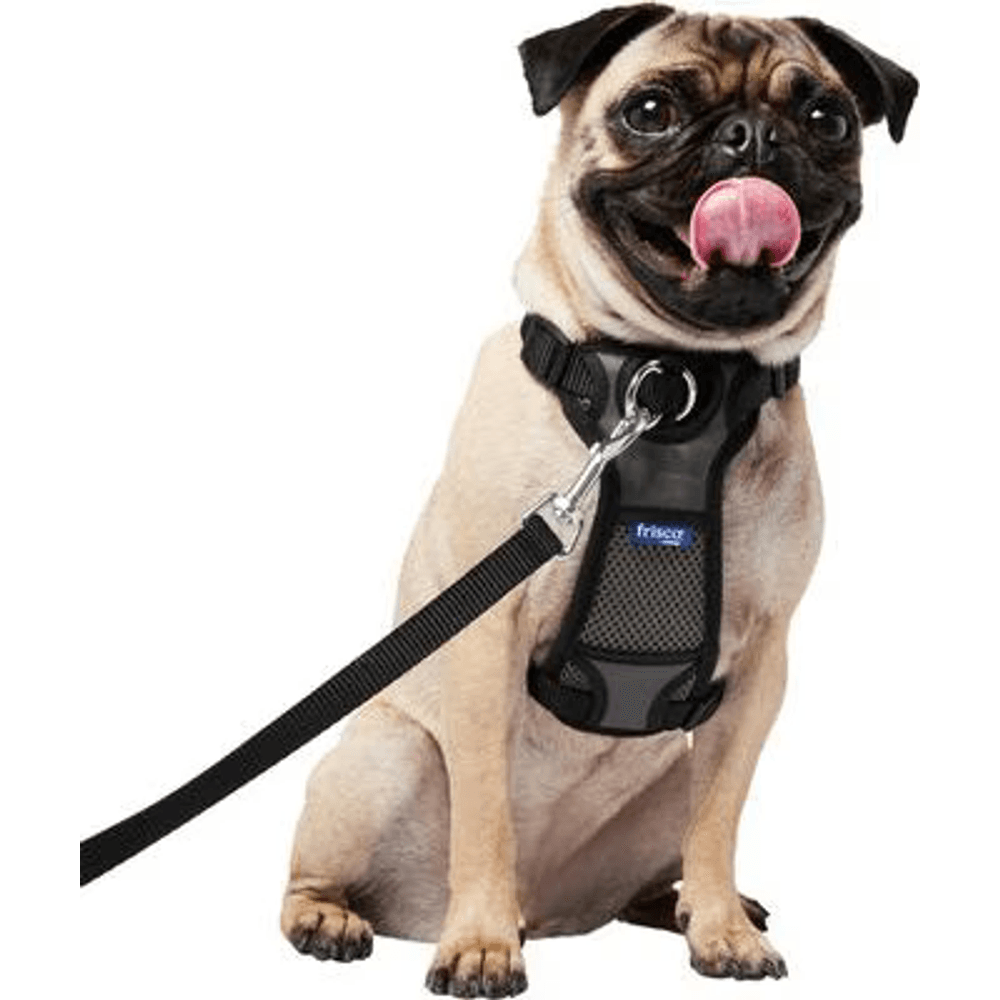
A budget-friendly padded no-pull harness that keeps leash pressure off a coughing dog's neck and windpipe by distributing it across the chest. A simple, affordable way to protect an irritated airway or a collapsing trachea on every walk.
Petful may earn a commission when you click through to Chewy, at no extra cost to you.
Health questions should come from any known parents, family records, and the dog's veterinary assessment, not from a claim that mixed dogs are healthier. When parentage is uncertain, keep the limitation visible and build a baseline for movement, skin, oral health, body condition, and recovery. The responsible plan protects both the dog and household without promising a predictable temperament from the cross.
- The Wisdom Panel Essential breed identification test is another ancestry option for a dog whose parentage is unknown. Its percentages cannot predict exact adult traits, behavior, or health, so keep the result secondary to records, measurements, and direct observation.
7. Border Heeler
A Border Heeler may bring together two working histories in a compact, persistent dog, but the important range runs from highly handler-oriented to more forceful, independent, or environmentally tough. Heel-directed herding, rapid arousal, motion chasing, and intense attachment can be manageable in one setting and unsafe in another. The name alone cannot tell a family where this individual lands.
- Rehearsal audit: Observe nipping around children or wheels, response to interruption, frustration, handling consent, dog sociability, heat and workload recovery, and indoor settling. Prevent repeated pursuit while teaching alternative patterns; do not ask children, cyclists, or livestock to serve as training tests.
- Work and records: Provide lawful searching, carrying, stock work, or other appropriate outlets with a finish cue and decompression. Verify joint, eye, hearing, genetic, and family-history information relevant to Australian Cattle Dogs and Border Collies. The more intense outcome deserves advance management, while actual observations decide how much of that plan the Border Heeler needs.
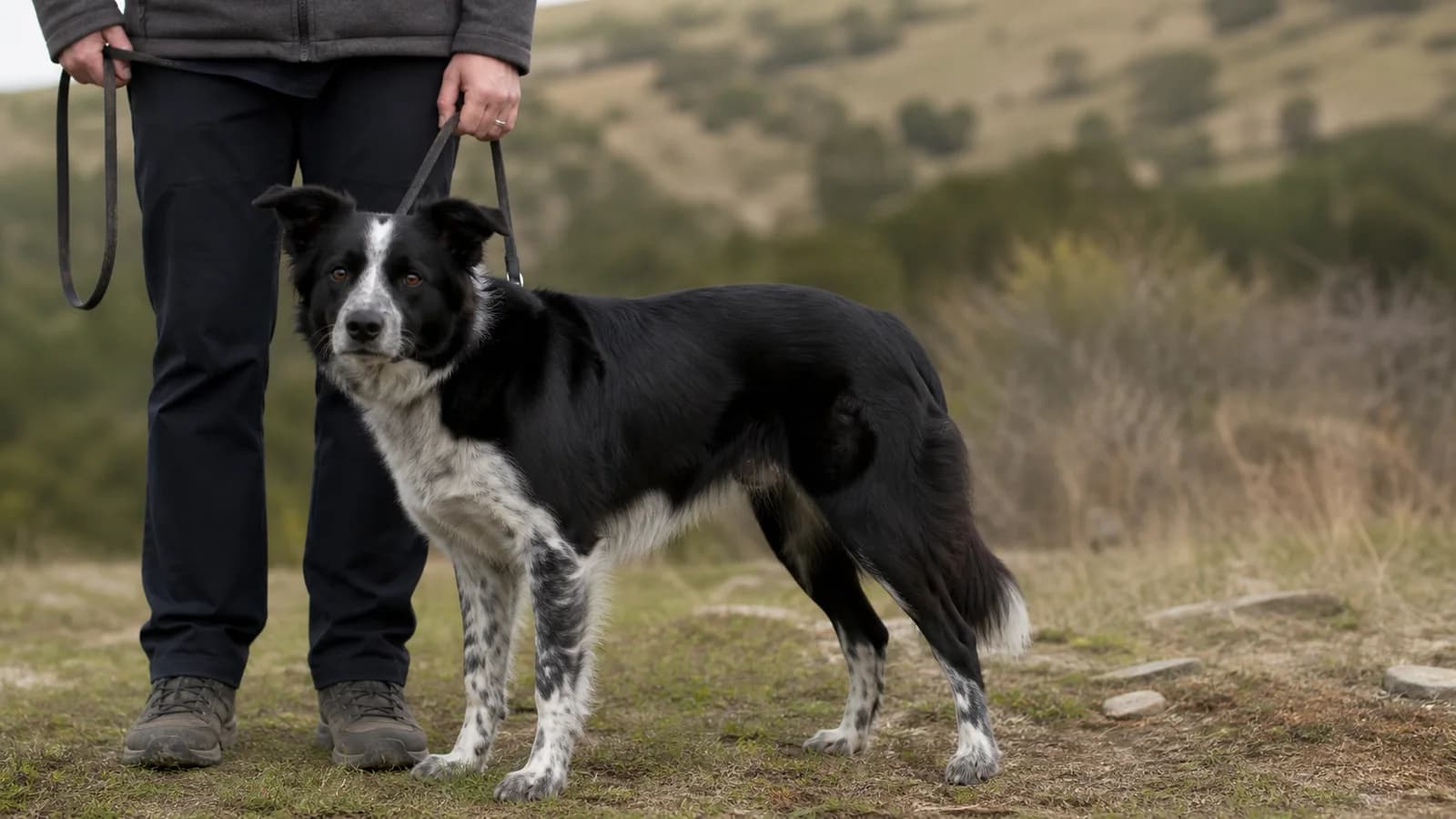
8. Border Collie Beagle mix
- Follow the nose: Note how long the dog tracks an odor, whether food or wildlife scent interrupts recall, where escape attempts occur, and how quickly attention returns. Long-line practice, secure scent games, quiet reinforcement, and food storage are more realistic safeguards than expecting Border Collie responsiveness to cancel Beagle persistence.
- Listen and look: Track baying or barking context, ear and skin comfort, food seeking, weight trend, visual chase, dog sociability, and rest after searching. A fenced yard still needs inspection at gates and ground level, and containment should not depend on a cue that has never been proved around the relevant odor.
Visual herding attention can coexist with scent pursuit, food motivation, and vocal behavior in this mix, but the proportions vary. Review eye, orthopedic, neurologic, and other current parent-breed guidance, then add the individual dog's ear, skin, dental, and weight findings. A Border Collie Beagle mix is best planned through competing reinforcers and observed recovery, not a single energy label.
9. Border Collie Chihuahua mix
Large contrast between the parent sizes makes the Border Collie Chihuahua mix especially unsuitable for confident puppy-size predictions. Adult frame, leg length, chest shape, coat, confidence, and safe handling needs may not move together. Ask which parent was which and how the mating and rearing were managed responsibly instead of treating a tiny collie-like puppy as proof of a planned outcome.
Fit every decision to the body in front of you. Recheck harness and carrier size, protect a small dog from high falls and mismatched play, and teach consent-based handling without excusing fear as cute behavior. Observe patella comfort, dental crowding, cold tolerance, stranger response, motion chasing, barking, and whether the dog can rest after excitement.
Request cardiac, eye, patella, dental, and Border Collie health information for the identified parents, with dates and actual results. An ancestry estimate may refine the question list but cannot explain pain, clear a dog for sport, or guarantee an adult weight. The cautious plan supports the smaller and more physically vulnerable plausible outcome until measurement and veterinary assessment narrow the range.
10. Border Jack
The Border Jack can put two different pursuit systems in one fast learner: Border Collie orienting and herding focus may meet terrier searching, digging, grabbing, vocal behavior, and persistence. That does not make every dog frantic, but it makes wildlife management and recovery more informative than a generic exercise estimate. A busy dog is not automatically a fulfilled dog.
- Predation and possession check: Record response to small animals, digging sites, toy guarding, fence behavior, motion fixation, frustration, and willingness to trade. Use secure, legal search and play outlets while preventing rehearsal around wildlife; never test prey response with a vulnerable animal.
- Off-switch and health check: Build brief reward-based lessons, decompression, sleep, and a clear end to games. Review patella, eye, hearing, neurologic, and Border Collie screening relevant to the known parents. The dog's response after work should determine intensity, because adding speed to unresolved arousal can strengthen the very pattern the household hoped to reduce.
11. Border Collie Boxer mix
- Movement profile: Watch greeting force, jumping, dog-play style, pulling strength, chase behavior, and whether the adult frame becomes deeper-chested or heavier than expected. Teach four paws down, loose-leash skills, and calm pauses early. Supervise play so a socially enthusiastic dog does not overwhelm a smaller, older, or less physical partner.
- Heat and breathing profile: Record breathing during and after activity, temperature, humidity, gait, recovery time, weakness, and any collapse. Condition gradually and stop for abnormal breathing, disorientation, or exercise intolerance rather than assuming eagerness means safety. The possible Boxer influence makes climate planning a distinct question from the Border Collie workload question.
Speed, handler focus, bouncy social behavior, strength, and heat sensitivity can appear in different combinations. Ask about cardiac, hip, thyroid, degenerative myelopathy, cancer-family-history, and Border Collie screening with veterinary interpretation. The mix label does not reveal muzzle length, cardiac status, sociability, or safe exercise capacity, so each must be evaluated directly.
12. Border Collie Dalmatian mix
A Border Collie Dalmatian mix may look built for endless motion, yet endurance is only one lane of the plan. Alertness, sensitivity, herding interest, social response, hearing, and the ability to rest may vary independently. Increase running or sport gradually from the individual dog's conditioning and gait instead of assigning a mileage target from ancestry.
Urinary health deserves its own observation record rather than being buried inside an athletic profile. Note water access, urination frequency, straining, discomfort, appetite, and any prior stone history, and seek prompt veterinary care for difficulty passing urine. Also track hearing responses, skin and coat condition, stranger recovery, chase behavior, and post-exercise recovery without provoking symptoms.
Ask for hearing, urinary stone-risk, hip, eye, and Border Collie information tied to the exact parents. Frequent water and toileting opportunities, reward-based teaching, and climate-aware conditioning are sensible supports, but they do not prevent every problem. The dog's records and examination must determine whether Dalmatian-specific questions apply and how they affect diet or medical care.
13. Bordoodle
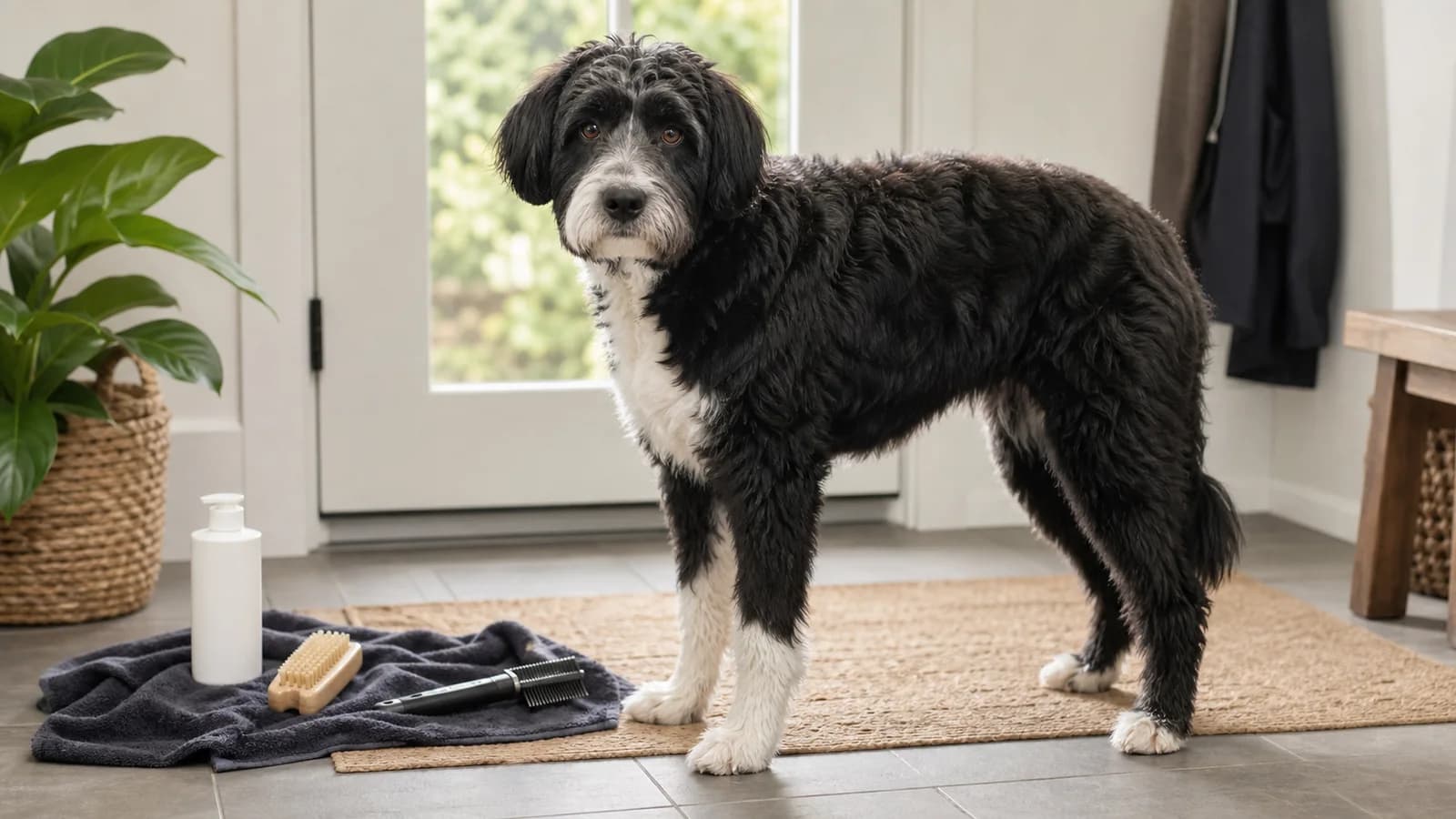
For a Bordoodle, coat uncertainty is as important as behavioral uncertainty. A curly or wavy puppy may mature into a dense, mat-prone coat, a shedding coat, or a combination that needs both brushing to the skin and scheduled clipping. High trainability is possible, but sound sensitivity, sociability, retrieving, frustration, chase behavior, and adult size cannot be read from curl.
- Grooming trial: Part the coat to the skin, inspect friction zones, introduce combing and drying cooperatively, and obtain an early professional assessment. Budget for the harder plausible coat rather than accepting a low-shedding or hypoallergenic promise. Stop and seek veterinary guidance for redness, pain, odor, lesions, or persistent itching.
- Behavior and health file: Observe response to sound, strangers, motion, handling, puzzles, and rest. Identify the exact Poodle variety, then review its eye, orthopedic, genetic, and other current guidance alongside Border Collie recommendations for the named parents. Verified results and individual findings carry more weight than the Bordoodle label.
14. Border Collie Doberman mix
- Social-safety lane: Record stranger recovery, territorial behavior, dog sociability, handling consent, motion fixation, and the ability to settle behind a barrier. Use skilled reward-based social learning and secure management before speed and strength increase. Guarding should never be tested by inviting a confrontation or withholding a safe exit.
- Cardiac lane: Note fainting, weakness, abnormal fatigue, cough, breathing change, gait, and recovery, then seek veterinary assessment for concerning signs. Controlled conditioning is not a substitute for current cardiac evaluation, and a visually athletic dog should not be cleared for intense work from appearance.
Responsiveness may combine with greater size, guarding tendencies, speed, and important Doberman Pinscher health questions, but each trait has its own evidence. Verify cardiac, clotting, orthopedic, eye, thyroid, and Border Collie screening for the actual parents. A generic health guarantee or ancestry percentage cannot replace named results, family history, and examination of the individual Border Collie Doberman mix.
15. Border Collie Rottweiler mix
The Border Collie Rottweiler mix can mature into a dog whose strength and social decisions matter more than how quickly cues are learned. Herding behavior may occur alongside heavier structure, guarding, resource concerns, or slower physical maturation. Plan barriers, transport, leash handling, and caregiver capacity for the larger plausible adult while growth is still uncertain.
Observe the dog around visitors, household boundaries, other dogs, valued items, handling, and ordinary frustration. Record body language and recovery instead of applying labels such as dominant or protective. Build calm greetings, trading skills, traction, lean body condition, and professional support early enough that the household is not improvising after risk escalates.
Hip, elbow, cardiac, eye, neurologic, and Border Collie screening should be matched to both named parents and interpreted with the veterinary team. Joint comfort, gait, and exercise recovery also need direct monitoring during growth. Mixed ancestry does not ensure lighter structure, easy sociability, or freedom from inherited disease, and it does not mean every Rottweiler tendency will emerge.
16. Border Collie Bernese Mountain Dog mix
This cross can span a meaningful equipment and climate range. A Border Collie-sized adolescent may continue toward a larger Bernese Mountain Dog frame, heavier coat, greater heat sensitivity, and a different longevity profile. Crates, beds, vehicle access, food budgets, grooming time, and caregiver lifting ability should accommodate the larger plausible outcome until growth becomes clearer.
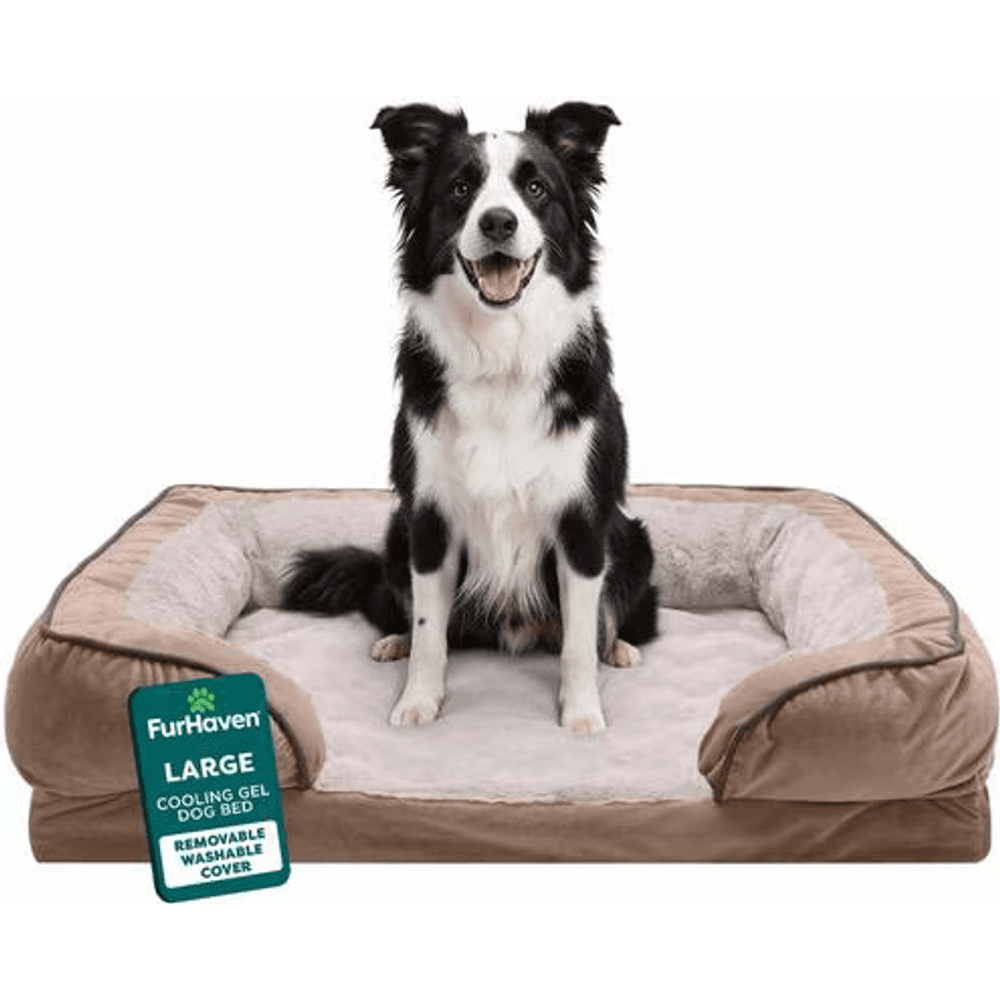
An orthopedic sofa bed with three bolstered sides for dogs who like to rest their head and joints against a cushion. The supportive foam base cradles hips and elbows, a comforting spot for an older or shaky dog to settle.
Petful may earn a commission when you click through to Chewy, at no extra cost to you.
- Growth record: Recheck weight, body condition, gait, stairs, heat recovery, coat density, appetite, and ease of transport. Teach ramp and cooperative handling skills before they are urgently needed, maintain lean condition, and avoid turning high motivation into forced exercise on a developing or uncomfortable body.
- Source record: Review orthopedic, cardiac, eye, degenerative, cancer-family-history, and Border Collie questions with qualified professionals. Current results for the actual parents narrow uncertainty but cannot predict one dog's lifespan. The useful plan responds to measured size, climate tolerance, and veterinary findings rather than promising a gentle giant or a medium athletic compromise.
17. Border Collie Springer Spaniel mix
- Field-interest check: Observe bird and wildlife response, nose use, object carrying, recall around scent, water behavior, and whether excitement can end cleanly. Secure search and retrieval games plus long-line practice can supply controlled outlets. Do not use wildlife encounters to test whether the Border Collie side will keep the dog close.
- Home-care check: Track ear comfort, feathering and mats, greeting intensity, food use, dog sociability, and recovery after activity. Pair measured rewards with mat training and regular ear and coat checks. A social approach on one day does not guarantee easy introductions or an uncomplicated household fit.
Herding focus may join flushing, retrieving, scent interest, sociability, and a feathered coat in this mix, with no fixed blend. Ask for hip, elbow, eye, DNA, family-history, and Border Collie screening relevant to the exact parents. The English Springer Spaniel and Border Collie question lists guide what to verify; the individual dog's behavior and examination decide the care plan.
18. Border Collie Cocker Spaniel mix
The first distinction for a Border Collie Cocker Spaniel mix is which Cocker Spaniel variety is involved and what is actually known about the parents. A smaller sporting influence may bring scent and retrieving interest, long ears, coat-care needs, and social sensitivity, while the Border Collie side raises separate motion and work questions. None of those traits is guaranteed.
Make handling and grooming part of the fit assessment. Observe ear and skin comfort, coat density, matting, object interest, motion chasing, stranger response, frustration tolerance, and the dog's ability to pause. Professional grooming, cooperative care, secure enrichment, and calm introductions can be scaled to the harder outcome without claiming that every dog needs the same schedule.
Review eye, hip, patella, hearing, genetic, and Border Collie information appropriate to the identified parents, and keep missing records explicit. Ear pain, skin disease, or handling avoidance needs its own veterinary and behavior response rather than a breed explanation. A Cocker-influenced appearance cannot establish adult size, temperament, or future coat workload.
- The Frisco padded no-pull harness offers an adjustable walking setup for a dog measured individually. Check shoulder movement and rubbing, recheck the fit during growth, and remember that no harness teaches leash skills by itself.
19. Border Collie Corgi mix
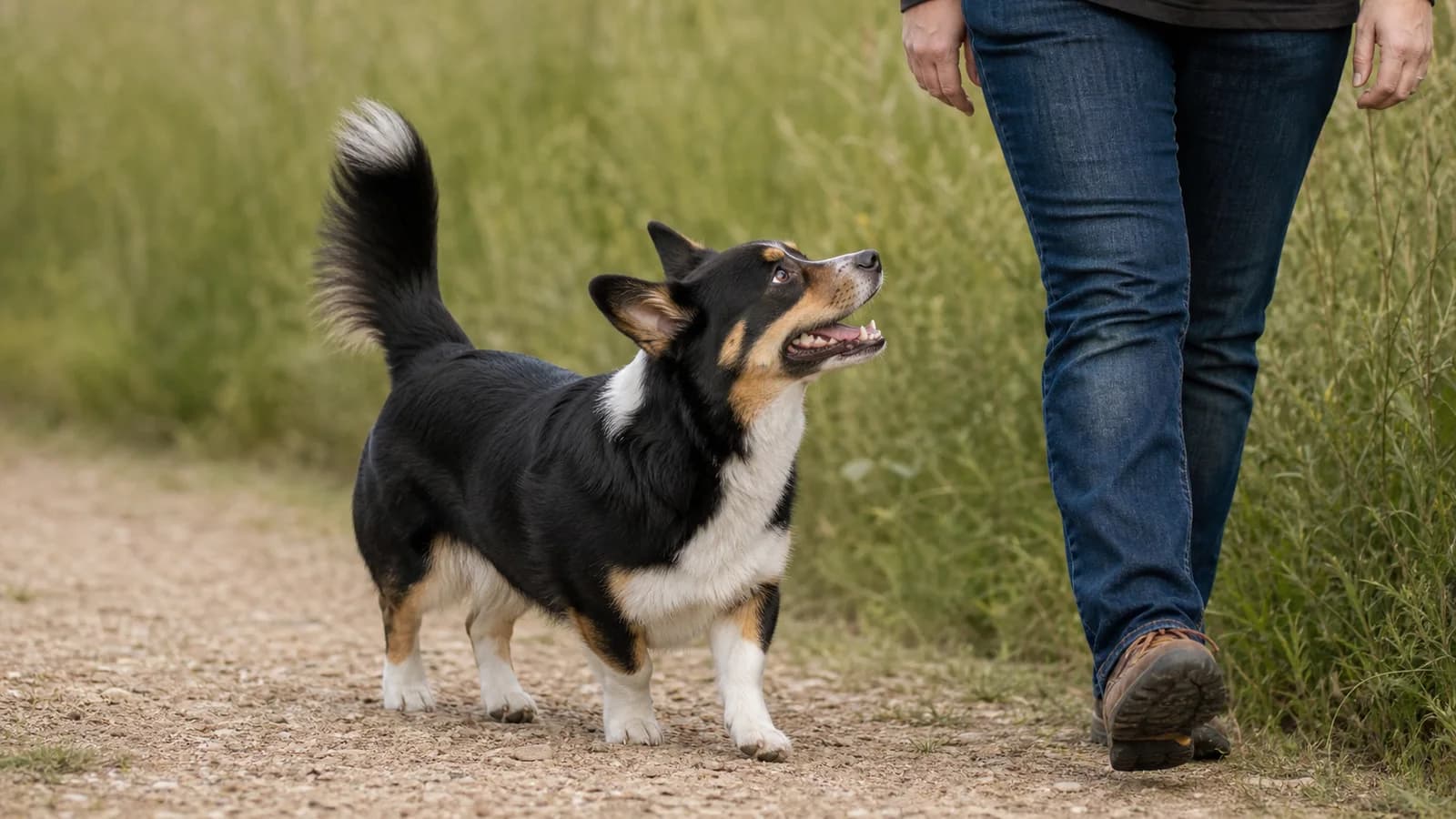
A Border Collie Corgi mix can place herding behavior in a shorter-legged body, but a puppy cannot reveal final back length, leg alignment, chest depth, or movement comfort. Identify whether Pembroke Welsh Corgi or Cardigan Welsh Corgi ancestry is involved. Those are separate breeds with their own records and health questions, not interchangeable ingredients.
- Structure diary: Photograph and record growth, gait, stairs, jumping, nail wear, weight trend, and any reluctance or pain. Fit harnesses and access aids to the actual body, maintain lean condition, and add traction where needed. Do not assume short legs make high-impact repetition harmless.
- Behavior and screening diary: Track heel nipping, barking, stranger response, motion fixation, recovery, and indoor rest. Review orthopedic, eye, genetic, spinal-health, and Border Collie guidance with professionals for the known parents. The mix label may prompt caution, but only examination and individual history can explain a movement problem.
20. Border Collie Pomeranian mix
- Size-safety plan: Measure the adult structure instead of assuming a miniature Border Collie. Recheck harness, carrier, barrier spacing, furniture access, dental handling, and play partners as the dog matures. Prevent high falls and rough mismatched play while preserving normal choice, movement, and confidence.
- Coat-and-voice plan: Record undercoat density, matting, heat recovery, barking context, stranger response, motion chasing, and the ability to settle. Use calm handling and professional grooming help when needed. Dense coat and vocal behavior may be present independently, so one should not be used to predict the other.
The large contrast between Border Collie and Pomeranian parents can produce uncertain frame, coat volume, patella comfort, dental needs, and confidence. Ask how the cross was produced responsibly and request patella, cardiac, eye, dental, and Border Collie health records for the named parents. Neither a small puppy nor an ancestry percentage can promise adult size or safe exercise capacity.
21. Border Collie Samoyed mix
Two double-coated backgrounds can make coat and climate management a defining part of a Border Collie Samoyed mix household. Undercoat density, seasonal release, feathering, and drying time may be substantial, but coat volume does not predict friendliness or work style. Herding, sociability, vocal behavior, pulling, chase interest, and endurance still need separate observations.
Use section-by-section grooming, complete drying, climate-aware exercise, secure containment, and a balance of purposeful activity with calm. Record heat recovery, fence behavior, barking context, stranger response, pulling, skin condition, and sleep. A white or plush coat should never become reassurance that the dog is a predictable Samoyed personality or a low-risk family fit.
Review hip, eye, cardiac, genetic, and Border Collie guidance using verified parent identities and current results. Painful mats, skin changes, exercise intolerance, or persistent distress need professional attention rather than harder grooming or more mileage. The demanding coat and workload scenarios are planning ranges, not forecasts that every dog will reach the upper end.
22. Border Collie Greyhound mix
A Border Collie Greyhound mix may alternate between explosive speed and long rest, or it may show a different balance entirely. Herding attention, visual chase, a lean frame, thin skin, temperature sensitivity, and equipment needs can vary independently. A narrow outline does not prove Greyhound ancestry, safe off-leash reliability, or readiness for sprinting.
- Sprint-safety observations: Track prey response, acceleration, recall, fence safety, feet and skin, gait, injury recovery, and dog-play matching. Use secure fenced running only when appropriate, condition gradually, and choose an escape-resistant setup fitted to the individual rather than a generic weight chart.
- Recovery evidence: Note cold tolerance, sleep, appetite, stiffness, and behavior several hours after activity. Ask about cardiac, eye, neuropathy, injury history, and Border Collie screening for known parents, then let veterinary assessment guide sport. Soft rest and careful introductions are useful supports, not treatment or proof of a predictable sighthound temperament.
23. Border Collie Whippet mix
- Environment check: Observe small-animal response, visual chase, fence safety, recall, startle recovery, and whether the dog can settle after a fast outing. Use secure spaces and reward-based recall without gambling beside traffic or wildlife. Careful play matching matters when a light, fast dog shares space with heavier partners.
- Body check: Monitor skin injury, feet, gait, cold tolerance, sleep, and recovery, then fit weather protection and equipment to the individual. Soft bedding may improve comfort, but it is not a medical treatment. Stop activity and seek veterinary guidance for pain, weakness, abnormal breathing, or collapse.
Whippet speed and sensitivity may join Border Collie herding patterns, yet the adult can fall anywhere within a broad behavioral and structural range. Review cardiac, eye, hearing, orthopedic, and Border Collie information for the actual parents. Consumer ancestry results can refine questions but cannot diagnose disease, clear sport participation, or guarantee a small, quiet household companion.
- The FurHaven orthopedic sofa dog bed is one resting option to compare after measuring the adult dog at full extension. Treat orthopedic as a product description, not a medical claim or treatment for pain.
24. Border Collie Flat-Coated Retriever mix
The Border Collie Flat-Coated Retriever mix may combine retrieving enthusiasm, social exuberance, a feathered coat, slower maturity, and herding sensitivity. That description is useful only as a set of possibilities. One dog may greet forcefully and carry objects all day, while another may be cautious, motion-sensitive, or uninterested in water.
Build the observation period around real activities: object carrying, greeting intensity, water behavior, coat mats, appetite, body condition, chase behavior, frustration, and recovery. Structured retrieval, safe water decisions, measured food, coat checks, settle practice, and calm social learning give the household information without requiring the dog to match a cheerful sporting stereotype.
Ask about hip, elbow, eye, patella, cancer-family-history, and Border Collie screening, and be honest about what the records cannot predict. Slower maturity or high sociability should not be used to excuse unsafe jumping, overwhelming play, or lack of rest. The individual dog's development and veterinary history determine whether the higher-demand scenario applies.
25. Border Collie Great Pyrenees mix
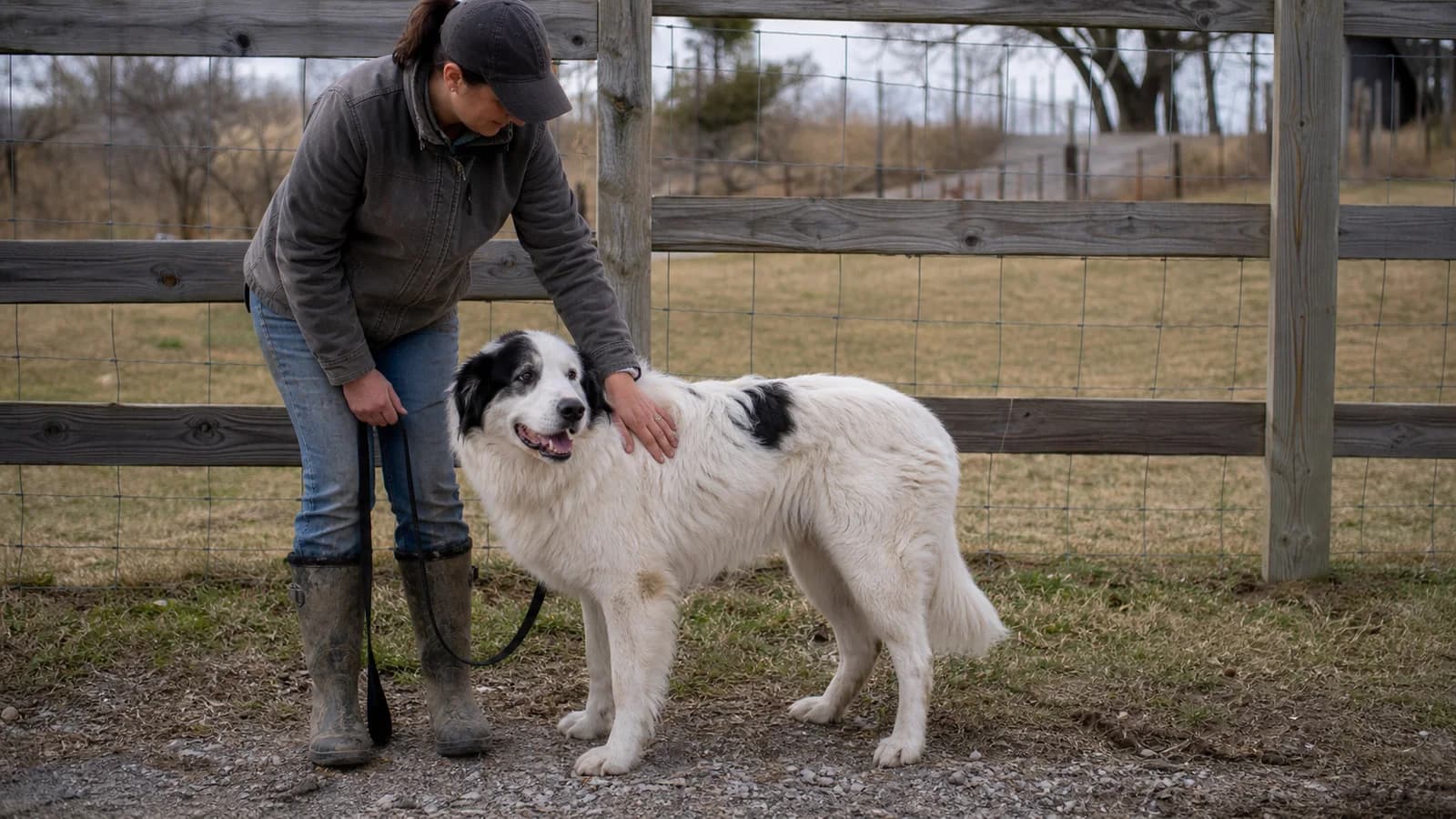
This mix can span from a responsive medium herding dog to a much larger animal with livestock-guardian independence, barking, roaming, and nocturnal vigilance. Those tendencies may not arrive together, and livestock conduct cannot be predicted from parent labels. Plan fencing, transport, coat care, and neighborhood noise for the more demanding plausible outcome while observations narrow the range.
- Boundary record: Track adult growth, fence inspection, barking time and trigger, stranger recovery, livestock behavior, heat tolerance, coat density, and handling comfort. Use gradual social learning and secure management. Do not test guardian behavior by creating a threat or placing the dog unsupervised with stock.
- Whole-dog record: Ask about orthopedic, eye, cardiac, neurologic, and other current guidance from Border Collie and Great Pyrenees sources, tied to the named parents. Large size changes medication, transport, and caregiver logistics, but ancestry does not guarantee that size. Individualized work and rest should follow the dog's body, behavior, and climate response.
26. Border Collie Pointer mix
- Range-and-recall test: Observe how far the dog ranges, response to bird scent and wildlife, fence behavior, recall on a secure line, and frustration when access ends. Long-line and fenced work, scent outlets, and careful wildlife management are safer than assuming Border Collie handler focus will override possible Pointer independence.
- Conditioning-and-finish test: Record heat recovery, gait, feet, dog sociability, arousal after field-style activity, and indoor rest. Increase endurance gradually and end each session with a practiced transition to calm. A dog that keeps searching is not necessarily physically prepared to continue.
Pointer may mean Pointer or German Shorthaired Pointer in casual descriptions, so identify the ancestry before choosing a health checklist. Review current orthopedic, eye, cardiac, genetic, and Border Collie recommendations for the actual parents. Wide-ranging scent interest, speed, and herding responsiveness can combine in many ways; the label cannot predict off-leash safety, adult workload, or sport clearance.
Turn mix uncertainty into an owner plan
- Use the five-axis mix map for adult scale, motion and work drive, social and guarding tendencies, coat workload, and health evidence. A mix label starts the question; direct observation and verified records guide the decision.
Confirm what the label actually means
The same designer name can refer to known first-generation parents, later generations, or a visual guess.
Record parent identities, pedigree or rescue evidence, DNA limits, and which statements remain estimates.
A confident label cannot substitute for transparent origin and individual observation.
- Start with known parent identities and records, add carefully interpreted ancestry results when available, and use direct observation to update the care plan. A label starts the questions; it does not finish the evaluation.
Plan the larger adult outcome
Mixed puppies can change frame, strength, reach, and equipment needs unevenly during growth.
Recheck harness, crate, bed, barrier, vehicle, and caregiver handling capacity at regular intervals.
Do not restrict normal posture or keep unsafe equipment because an early prediction was smaller.
Plan the harder coat outcome
Mixed texture can combine undercoat, feathering, curl, or mat-prone friction zones in unexpected ways.
Comb to the skin, obtain an early grooming assessment, and budget professional care before mats form.
Low visible shedding can still require intensive brushing and clipping.
Use foster observations
Sleep, elimination, separation, visitors, handling, animals, noise, and recovery are easier to understand in a home.
Ask for concrete examples, duration, trigger, and what helped rather than accepting one adjective.
A short foster history still leaves uncertainty and should be described honestly.
- Record setting, trigger, distance, duration, recovery, and what helped during the first 30 days. Change one variable at a time so the next observation can clarify fit instead of adding noise.
Treat DNA as one clue
Ancestry estimates may frame questions but do not forecast personality, exact adult size, or every health outcome.
Combine the report with examination, records, known parents, behavior, and current care needs.
Do not turn breed percentages into a behavioral score.
Screen both known ancestry sides
Each parent breed can contribute different orthopedic, cardiac, eye, neurologic, or genetic questions.
Use current parent-club guidance and share all actual results with the veterinarian.
A panel result does not replace clinical examination or every recommended screen.
Choose adjustable equipment
An uncertain or growing dog can outgrow fixed gear quickly or develop a body shape the first purchase did not fit.
Measure neck, chest, length, height, sleeping sprawl, and vehicle clearance repeatedly.
Never size restraint or safety equipment from weight alone.
Design transport before injury
A tall, heavy, painful, or frightened adult may be difficult to lift even if the young dog jumps into a vehicle.
Teach ramp use early and plan restraint, helpers, clinic access, and an emergency movement aid.
Do not improvise lifting during breathing distress or severe pain without clinic instructions.
Escalate behavior from observation
Fear, guarding, predatory behavior, separation distress, and reactivity cannot be solved by blaming one parent breed.
Record trigger, distance, body language, intensity, recovery, and consequence, then seek qualified reward-based help.
Do not test concerning behavior with children, unfamiliar dogs, food removal, or force.
Budget the upper plausible need
Food, grooming, training, care, and transport may land near the more demanding parent outcome.
Build expected and high-use scenarios before adoption and revisit them as the dog matures.
Conservative planning is not a prediction that every cost will occur.
Respect rescue uncertainty
Some dogs arrive without reliable parentage, age, medical, or early-history records.
Use ranges, update the plan as evidence accumulates, and avoid definitive marketing language.
Uncertainty is honest information, not a defect in the dog.
Write the five-axis mix map
Scale, work drive, social or guarding behavior, coat workload, and health evidence can vary independently.
Score each axis from direct observations and records, then assign one next step and review date.
Do not let one easy trait erase a serious risk in another lane.
Border Collie temperament and household fit
A Border Collie dog breed baseline can suggest questions about motion sensitivity, work interest, coat care, and recovery, but the other ancestry and the individual dog can change every practical outcome. A Border Collie sheepdog label also does not guarantee an off-switch or a particular family fit. Use the Border Collie breed guide for the parent-breed workload and temperament framework, then replace its broad ranges with observations from the actual mix.
Health screening, lifespan, and warning signs
A Border Collie lifespan estimate and any Border Collie average lifespan figure apply to a breed population, not to a mixed dog's personal forecast. Health planning should instead combine named-parent screening, the other ancestry's current guidance, family history, and the individual's examination. The Border Collie health and lifespan guide supplies the Border Collie-side questions, while the veterinarian decides which records, tests, symptoms, and follow-up matter for this dog.
Reward-based training foundations
Border Collie training principles can help a mix learn recall, leash skills, disengagement, and a calm finish cue, but reward choice and difficulty must follow the individual. Border Collies herding movement may orient, stalk, circle, or nip, while the other ancestry can add retrieving, scent pursuit, guarding, roaming, or different persistence. Use the step-by-step training guide as a humane foundation, then adjust trigger distance, repetition, and management from direct observation.
Border Collie FAQs
There is no universally best Border Collie mix. The responsible choice is the individual dog whose observed behavior, adult care range, health evidence, source, and needs fit the household. A planned cross should have a welfare-based purpose, verified parent identities, current health results from both sides, appropriate rearing, and return support. A designer label or low-shedding promise is not enough.
A Border Collie mix can be a good dog for a prepared home, but ancestry does not guarantee temperament, size, coat, energy, sociability, or health. Meet the individual, use foster observations when available, plan for the more demanding plausible outcome, and ask health questions from both known ancestry sides. Reward-based training, secure management, rest, and veterinary care remain more useful than stereotypes.
A good cross for a Border Collie is not one universal pairing. A responsible cross starts with a welfare-based purpose and two specifically identified parents whose temperaments, structure, and current health results support that purpose. It also requires appropriate rearing, a clear contract, realistic care ranges, and lifetime return support. No pairing becomes good merely because the designer name is popular, the coat is fashionable, or the seller promises a predictable blend.
Sources
- Cornell canine DNA testing overview: Trait expression can involve modifiers, and ancestry estimates do not predict every visible or behavioral trait.
- OFA mixed-breed testing FAQ: Mixed-breed dogs can receive OFA evaluations and health records.
- AKC mixed-breed health review: Research-based limits on the claim that mixed breeds are automatically healthier.
- AVSAB humane dog training position: Reward-based methods and individual behavior assessment.
Prices, product labels, policy terms, test recommendations, availability, and medical guidance can change. Verify time-sensitive details with the current source, product label, breeder or rescue records, and the dog's veterinary team before making a decision.

Coreen Saito is a pet writer and longtime shelter volunteer with more than a decade in animal rescue. She covers cat behavior, breed care, and the small, ordinary science of sharing a life with companion animals, with a particular focus on honest takes about the products and decisions that actually matter. At home in Arizona, she's outranked by Mac (a dog with the loudest opinion in the house), Rebel (a cat who governs by quiet authority), and Meri (an orange tabby who runs the late shift and the laundry basket). She writes about all three, plus the rescues that keep coming through her life, at LifeWithMinty.com.
Sign up for expert-backed reviews and safety alerts all in one place.