How to Train a Border Collie: Step-by-Step Guide
Train a Border Collie with reward-based foundations for focus, recall, leash skills, motion triggers, herding behavior, calm settling, cooperative care, mental work, and safe progression.
Petful is reader supported. As an affiliate of platforms like Amazon and Chewy, we may earn a commission when you buy through links on this page. There is no extra cost to you.
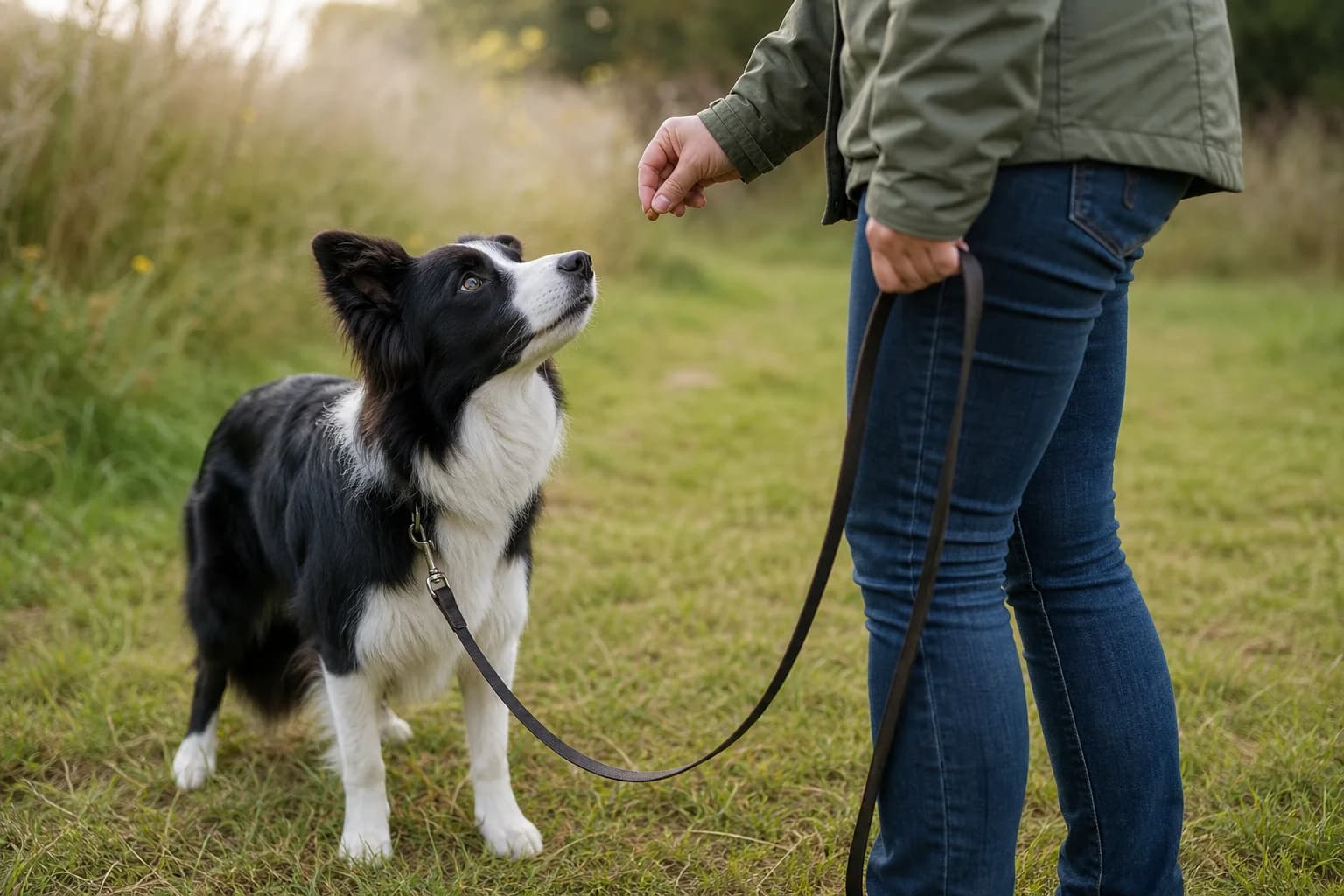
How to train a Border Collie starts with humane reinforcement, careful management, and a definition of success broader than fast obedience. These dogs often notice movement, patterns, and tiny handler changes. That sensitivity can accelerate learning, but it can also create frantic guessing or environmental fixation if cues are unclear and arousal never comes down. There is more on this in Petful’s guide to Border Collie mixes.
Training should make daily life safer and calmer through prevention, reward-based teaching, carefully raised difficulty, recovery, and skills that still work outside the easiest practice setting. This guide focuses on teaching and management, while the broader household workload and temperament questions are addressed separately.
- 1Step-by-step foundation plan.
- 2Short training sessions.
- 3Herding children or vehicles.
- 4Settle training.
- 5Recall and leash safety.
- 6When to seek qualified behavior help.
The progressive four-week household curriculum is a step-by-step foundation plan with observable pass criteria and a reset rule for each week, plus a separate plan for herding-sensitive triggers. Raise one kind of difficulty at a time, and reset when the dog loses fluency, becomes frantic, or cannot disengage. The calendar is flexible; observable behavior and recovery determine the pace.

Sign up for expert-backed reviews and safety alerts all in one place.
Reward-based training foundations
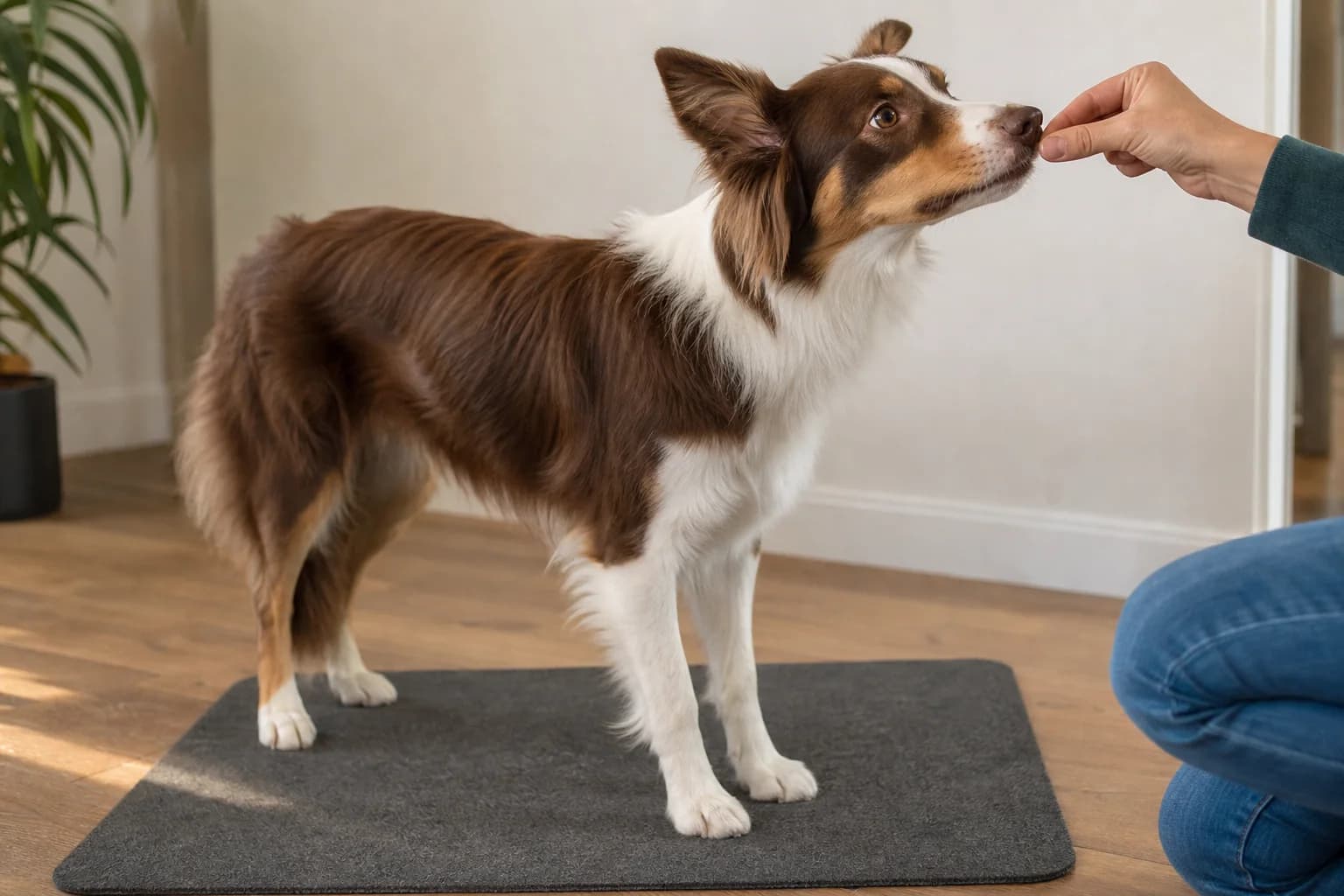
AVSAB supports reward-based methods for dog training and advises against aversive methods. Positive reinforcement works best when the reward matters to the individual and arrives after a clearly marked behavior. The dog's reinforcement history also matters: behaviors that repeatedly gained access, distance, play, or pursuit can persist even when no food was involved. Arrange the environment so unsafe behavior is not rehearsed, then make the next successful repetition achievable.
- A supervised food puzzle such as the Outward Hound Lickin' Layers puzzle and slow feeder can add quiet problem solving without relying on nonstop high-arousal exercise. Choose an achievable difficulty, use part of the measured ration, and remove damaged pieces. Enrichment supports a plan but does not replace movement, rest, or training.
Teach one criterion at a time. A recall can begin at two steps in a quiet room before distance, duration, and distraction are added separately. A dog that fails is giving information about setup, reinforcement, health, or understanding. Repeating the cue louder does not repair that gap.

Petful may earn a commission when you click through to Chewy, at no extra cost to you.
Short sessions protect accuracy. Finish with an easy success, then allow decompression and sleep. Border Collies can appear willing to work long after learning quality has declined, so stop based on body language and performance rather than waiting for refusal. Learning how to train a Border Collie starts with management, a clear reinforcer, achievable criteria, and enough rest to learn. Border Collie agility training can be a useful later outlet for a physically suitable dog, but obstacles and speed should not replace foundation skills, conditioning, or veterinary clearance when health is uncertain.
| Week | Primary goal | Observable pass criteria | Reset rule |
|---|---|---|---|
| Week 1 | Build a reinforcement menu, name response, management, calm mat value, and protected rest | The dog can orient, take the chosen reward, complete several easy repetitions, and settle afterward in a quiet setting | Shorten the session, improve the reward, lower arousal, or simplify the environment |
| Week 2 | Add recall and leash foundations in low distraction | The dog responds on a secure line, returns without repeated cues, and can resume calm activity | Reduce distance or distraction and prevent off-leash rehearsal |
| Week 3 | Practice around controlled motion from a safe distance | The dog can notice the trigger, eat, turn away, and recover without stalking or lunging | Increase distance immediately and return to an easier pattern |
| Week 4 | Generalize only fluent skills to a second safe setting | The dog meets the earlier criteria despite one carefully added change | Remove the new variable and rebuild success before trying again |
- The Pet Parents Forager snuffle mat can be compared with other supervised scent-search options for a dog that searches calmly. Count food from the daily ration, watch for chewing or fabric ingestion, and stop if the setup increases frustration rather than calm engagement.

Petful may earn a commission when you click through to Chewy, at no extra cost to you.
Herding behaviors, calm settling, and progressive mental work
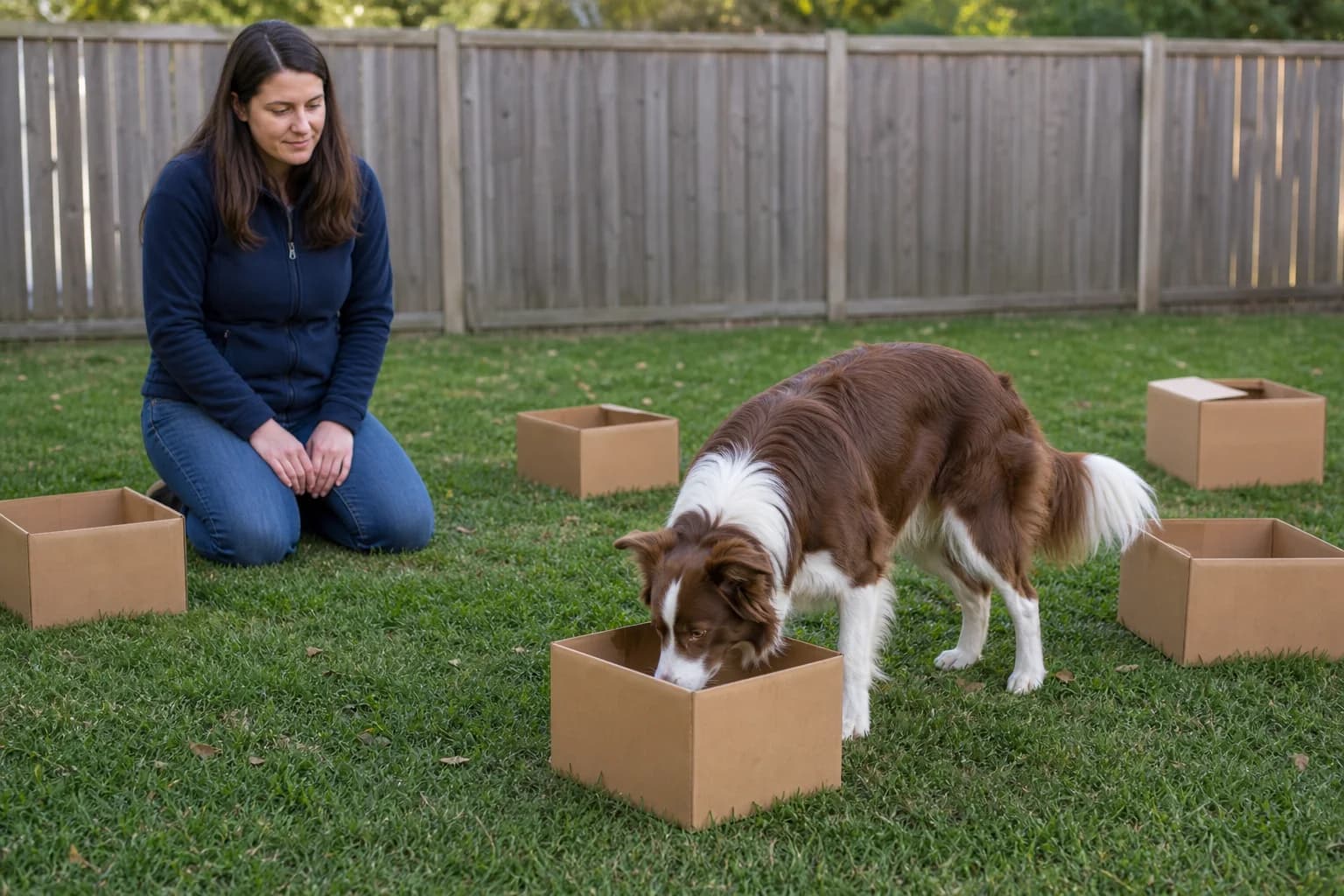
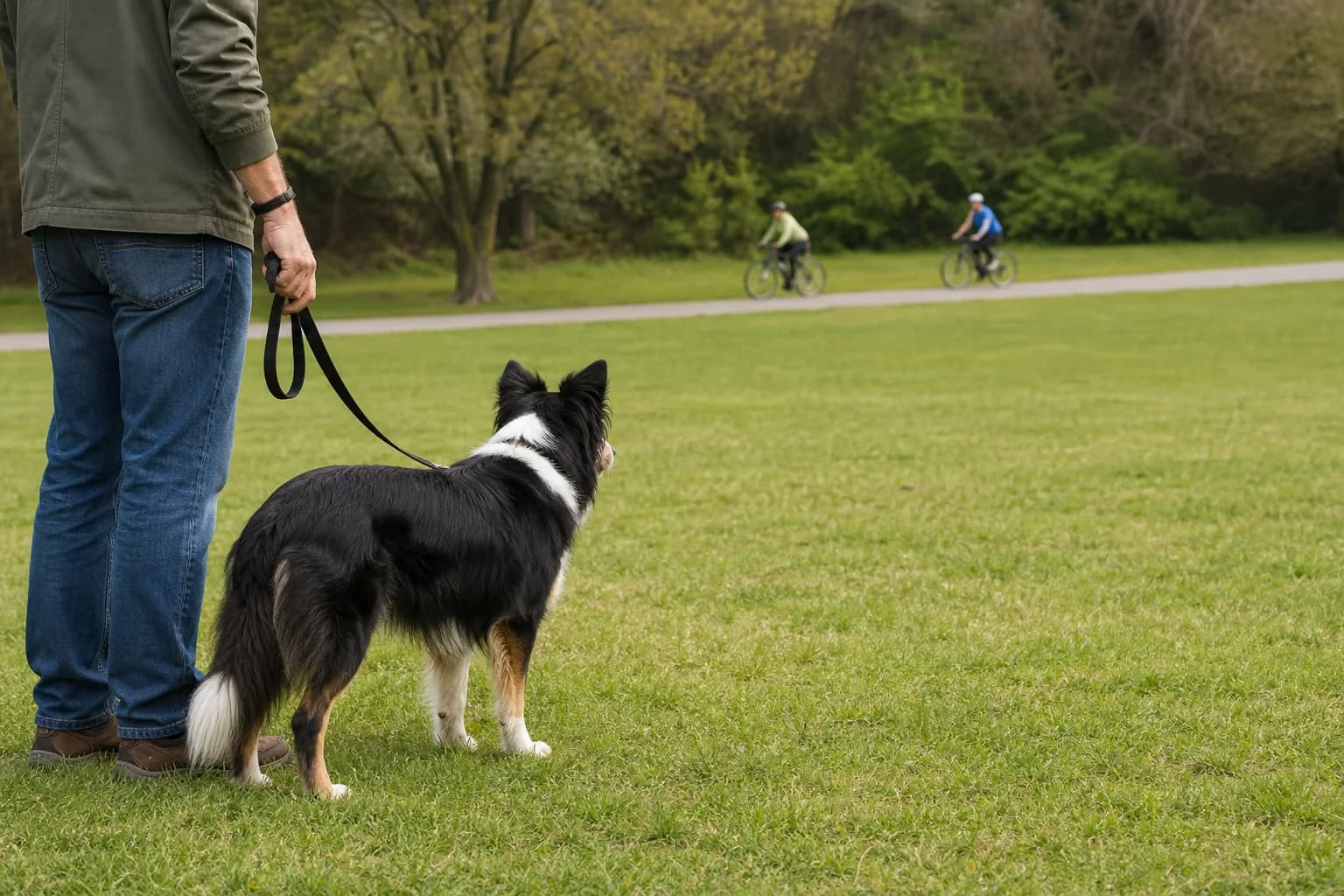
Stalking, eyeing, circling, and chasing are parts of a herding repertoire, not evidence of spite. A fixed herding eye can precede movement, so note the trigger distance at which the dog can still notice, eat, orient to the handler, and move away. Herding children or vehicles is a safety problem, not a task to let the dog finish. Prevent access with distance and barriers while reinforcing compatible choices.
An off switch is trained in context. Settle training begins by rewarding spontaneous calm and building a mat settle in an easy place before duration or distraction rises. Schedule lower-arousal activities after demanding work and protect sleep. Do not wait until the dog is frantic and then ask for a long down-stay in the center of the trigger.
Mental work should solve a purpose rather than merely make tasks harder. Scent searches, shaping, object discrimination, tracking, cooperative care, and sport foundations can all fit. Use start and finish cues, monitor frustration, and rotate intensity so problem solving does not become compulsive repetition. Videos of Border Collies herding sheep can make the sequence look automatic, but safe Border Collie herding sheep work depends on livestock, handler skill, training, environment, and the individual dog. A Border Collie sheep herding dog and other working Border Collies still need an off-switch, humane criteria, physical conditioning, and recovery away from work.
- Use breed-level evidence to prepare observations and questions. Use the individual dog, actual records, and qualified veterinary or behavior guidance for decisions that affect health or safety. Seek qualified behavior help when fear, aggression, predatory behavior, guarding, escape attempts, or separation distress creates a safety risk.
A four-week training map
Week one builds reinforcement, name response, management, and rest. Week two adds recall and leash foundations in low distraction. Week three practices around controlled motion at safe distance. Week four generalizes only the skills that remain fluent. Recall and leash safety improve by proving each skill in secure settings before freedom rises; the calendar is a framework, not a deadline.
Petful may earn a commission when you click through to Chewy, at no extra cost to you.
Track trigger, distance, behavior, reinforcement, recovery, and the next easier step. If fear, aggression, guarding, predatory behavior, separation distress, or handling sensitivity creates risk, work with a qualified reward-based professional. Sudden behavior change also deserves a veterinary check. One product-specific enrichment option to compare is Nina Ottosson Lickin' Layers puzzle feeder; supervise every session and remove it if damaged or frustrating.
Build skills into ordinary life
Build a reinforcement menu
The dog may value food in one setting and distance, sniffing, play, or access more in another.
List several safe rewards and test them in low-distraction conditions before depending on them near a trigger.
A reward is defined by its effect on behavior, not by what the handler assumes should be valuable.
Use management before cues
Every chase, door rush, or livestock fixation can become more practiced while a new skill is still fragile.
Add secure barriers, distance, leash handling, and predictable routines before setting up teaching repetitions.
Management prevents rehearsal but must not become isolation or punishment.
Teach recall without gambling
A fast dog can reach a hazard before the handler discovers that a cue is not ready.
Practice on a long line or in secure areas, reward generously, release the dog back to safe activity at times, and increase difficulty gradually.
Never test recall beside roads, cliffs, livestock, or wildlife.
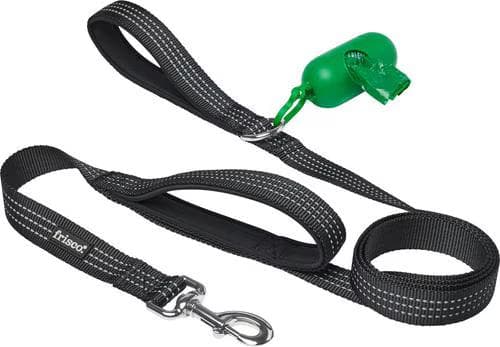
- For secure practice at a safe trigger distance, compare the Frisco dual-handle traffic leash with the dog's size and the handler's control needs. A leash is management equipment, not a correction tool or a substitute for reward-based loose-leash training. Inspect stitching and hardware before each use.
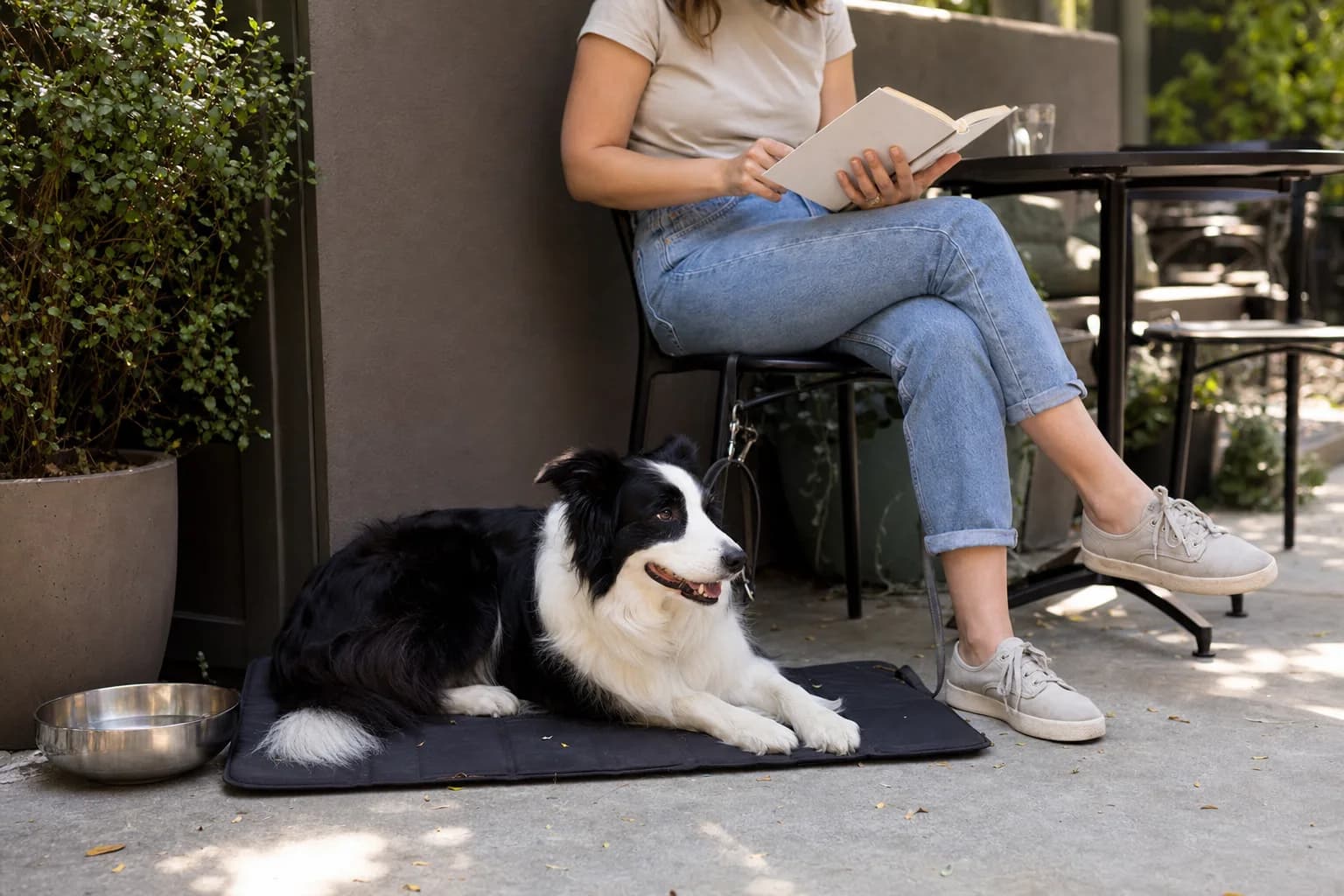
Train the mat as a safe place
A mat can predict calm reinforcement and rest rather than social exclusion.
Reward voluntary approach, lying down, relaxed posture, and brief duration before adding household movement.
Release before strain and never use the mat to trap a fearful dog near a trigger.
Interrupt motion fixation early
A soft orienting glance is easier to redirect than a full crouch, stalk, or lunge.
Work at a distance where the dog can notice motion and still eat, turn, or follow a simple pattern.
If the dog cannot disengage, increase distance rather than applying pain or force.
Measure recovery after sport
Performance may look excellent while sleep, gait, appetite, or reactivity worsens later.
Log the hour and day after intense work, schedule easier days, and adjust with coaches and the veterinary team. Gait, collapse, sensory change, and other observations belong in a broader health baseline rather than being treated as training resistance.
Collapse, disorientation, heat illness, or persistent lameness is not a training issue.
Generalize handling skills
A paw touch in the kitchen does not automatically transfer to a clinic, grooming table, or injured body part.
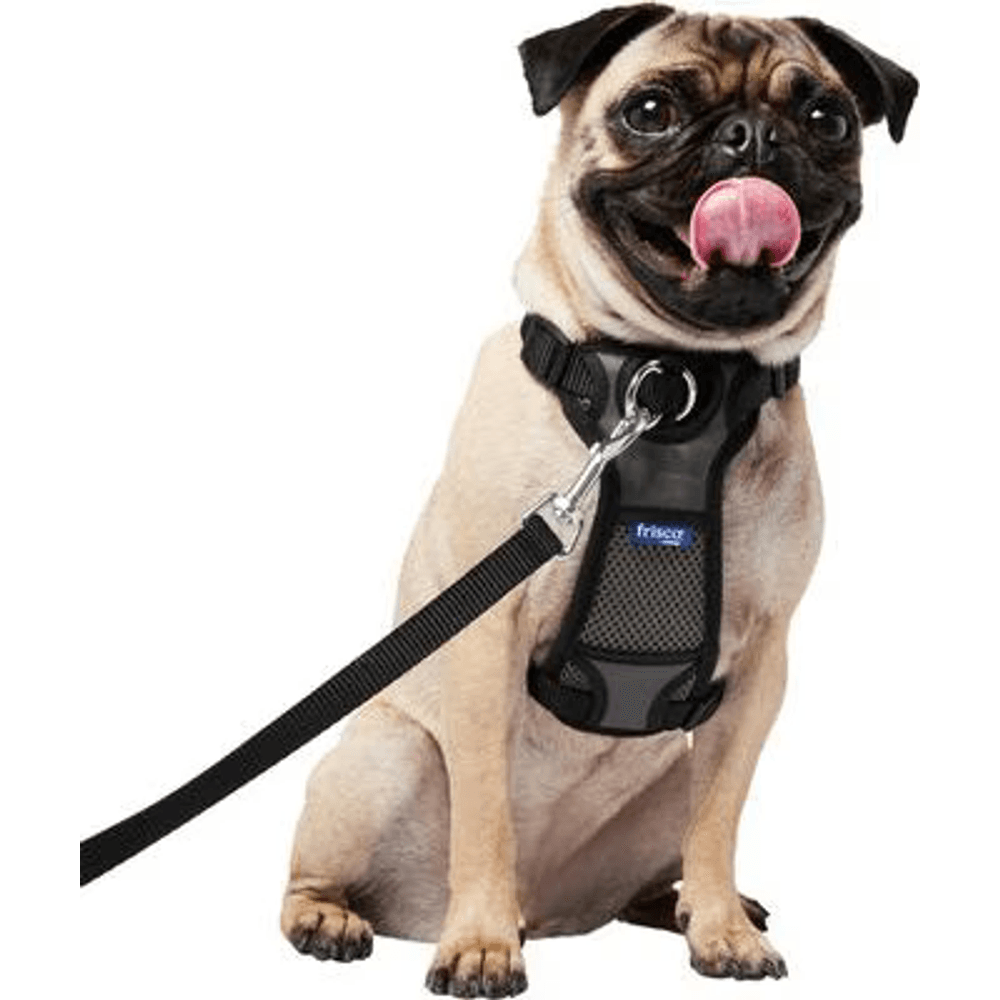
A budget-friendly padded no-pull harness that keeps leash pressure off a coughing dog's neck and windpipe by distributing it across the chest. A simple, affordable way to protect an irritated airway or a collapsing trachea on every walk.
Petful may earn a commission when you click through to Chewy, at no extra cost to you.
Practice cooperative positions, brief touch, and consent signals in several safe places while keeping criteria easy.
Pain or fear changes the plan and may require veterinary or behavior support.
Protect adolescents from excess freedom
Speed and environmental interest often grow before judgment and recall reliability.
Return to long lines, fenced practice, shorter repetitions, and richer reinforcement while skills are rebuilt in each context.
Regression is information, not a reason for harsher corrections. Acquisition, early social learning, and first-year preparation can change which management and teaching steps are realistic.
- For individually fitted management while skills generalize outside quiet practice, compare the Frisco padded no-pull harness with other suitable options. Measure the individual dog, check shoulder movement and rubbing, and recheck fit during growth. No harness teaches leash skills by itself.
Border Collie temperament and household fit
A Border Collie dog breed reputation for intelligence cannot tell a household how one dog handles visitors, children, conflict, noise, rest, or time alone. A Border Collie sheepdog may learn cues quickly and still need substantial management around motion and a protected off-switch. Use the Border Collie breed guide to test the ordinary weekday, workload, and family fit; this page then supplies the training mechanics for the individual dog.
Border Collie puppy price and responsible sourcing
People comparing Border Collie puppies for sale or interviewing Border Collie breeders should ask how the puppies are raised, what calm behavior is reinforced, and whether the source will take a dog back if placement fails. Early environment affects the starting point, but no source can sell a fully trained puppy. The Border Collie puppy guide covers parent records, contracts, social learning, cost, and first-month management before this curriculum begins.
Health screening, lifespan, and warning signs
A Border Collie lifespan estimate or Border Collie average lifespan figure cannot explain sudden reluctance, irritability, lost skills, gait change, collapse, or sensory change during training. Stop treating a new physical or behavioral change as disobedience and involve the veterinary team. The Border Collie health and lifespan guide covers screening, baselines, and urgent signs, while the training plan resumes only at a difficulty the individual can perform safely.
Border Collie FAQs
Border Collies are often quick to learn, but that does not make every Border Collie easy to train. Fast pattern recognition can strengthen calm skills or unwanted rehearsal, so use reward-based foundations, short successful sessions, careful management, rest, and gradual changes in distance, duration, and distraction. Progress should be measured by reliable behavior in the real setting, not by how many tricks the dog can perform in a quiet room.
What not to do with Border Collies includes relying on punishment, force, endless ball chasing, unsafe off-leash tests, or flooding around motion and fear. Do not ask children, traffic, livestock, or unfamiliar dogs to serve as training experiments. Instead use secure management, distance, reward-based teaching, short sessions, decompression, and enough sleep. Seek qualified help early for aggression, predatory behavior, guarding, severe fear, or separation distress.
The most difficult age for a Border Collie is not one fixed birthday, although adolescence is often challenging because speed, range, environmental interest, and independence can increase before skills generalize reliably. Return to long lines and fenced practice, shorten successful repetitions, reinforce check-ins, protect sleep, and add freedom only where the current skill is demonstrated. Pain, fear, or an abrupt change should not be dismissed as a phase.
To discipline a Border Collie safely, treat discipline as clear teaching and consistent management, not pain, fear, intimidation, or physical correction. Prevent rehearsal, set up an achievable behavior, mark and reward success, and lower difficulty when the dog cannot respond. AVSAB recommends reward-based methods and advises against aversive training. A sudden loss of skill or new irritability can be medical, so include the veterinarian when behavior changes unexpectedly.
Some adult Border Collies can be left alone for five hours after careful preparation, while puppies and individuals with separation distress, medical needs, or inadequate preparation cannot. Build duration gradually, meet toileting and activity needs, provide a safe resting area, and use a camera only as an observation aid. Panic, escape attempts, persistent vocalization, or self-injury need an individualized behavior and veterinary plan.
Sources
- AVSAB humane dog training position: Reward-based methods, management, and why aversive tools are not recommended.
- AVSAB puppy socialization position: Safe early exposure, confinement skills, and positive training.
- BCSA official Border Collie standard: Working purpose, intelligence, alertness, and movement context.
Prices, product labels, policy terms, test recommendations, availability, and medical guidance can change. Verify time-sensitive details with the current source, product label, breeder or rescue records, and the dog's veterinary team before making a decision.

Coreen Saito is a pet writer and longtime shelter volunteer with more than a decade in animal rescue. She covers cat behavior, breed care, and the small, ordinary science of sharing a life with companion animals, with a particular focus on honest takes about the products and decisions that actually matter. At home in Arizona, she's outranked by Mac (a dog with the loudest opinion in the house), Rebel (a cat who governs by quiet authority), and Meri (an orange tabby who runs the late shift and the laundry basket). She writes about all three, plus the rescues that keep coming through her life, at LifeWithMinty.com.
Sign up for expert-backed reviews and safety alerts all in one place.