Border Collie Puppies: Price, Training, and Responsible Sourcing
Compare Border Collie puppy prices, breeder and rescue pathways, verified parent health records, contracts, first-year costs, early socialization, sleep, training, and safe first-month setup.

Petful is reader supported. As an affiliate of platforms like Amazon and Chewy, we may earn a commission when you buy through links on this page. There is no extra cost to you.
Border Collie puppies attract buyers with bright eyes and fast learning, but a responsible decision begins before the puppy comes home. Price is only one line in a first-year budget. Parent health results, source transparency, working drive, early environment, return support, veterinary care, training time, and the household's ability to manage motion-sensitive behavior all affect the real outcome.
A responsible puppy decision combines the acquisition pathway, verified parent information, first-year cost, early learning, sleep, safe management, and a return plan before any deposit or adoption commitment. This page stays focused on acquisition and the first year, while the broader adult household-fit question is addressed separately. Health, nutrition, genetics, training, and breed claims are grounded in the named primary or authoritative sources below.
- 1Current breeder-price snapshot with date and limits.
- 2Adoption and breeder pathways.
- 3Parent health-test verification.
- 4First 30 days.
- 5First-year cost categories.
The dated snapshot below makes the sample limits visible instead of presenting two breeder websites as a national average. Use it alongside parent records, contract terms, the first 30 days, and a complete first-year budget. A low sticker price cannot compensate for missing health information, poor source support, or a household that is unprepared for the puppy's needs.

Sign up for expert-backed reviews and safety alerts all in one place.
Border Collie puppy price and first-year budget
A July 2026 price snapshot found two public Border Collie breeder listings: Contact Point states a starting price of $2,300, while 2J 2K lists prices of $3,550 and $4,050 for described options. This is a tiny, self-selected sample, not a national average, recommendation, or fair-price rule. Location, purpose, health work, support, and what is included differ.
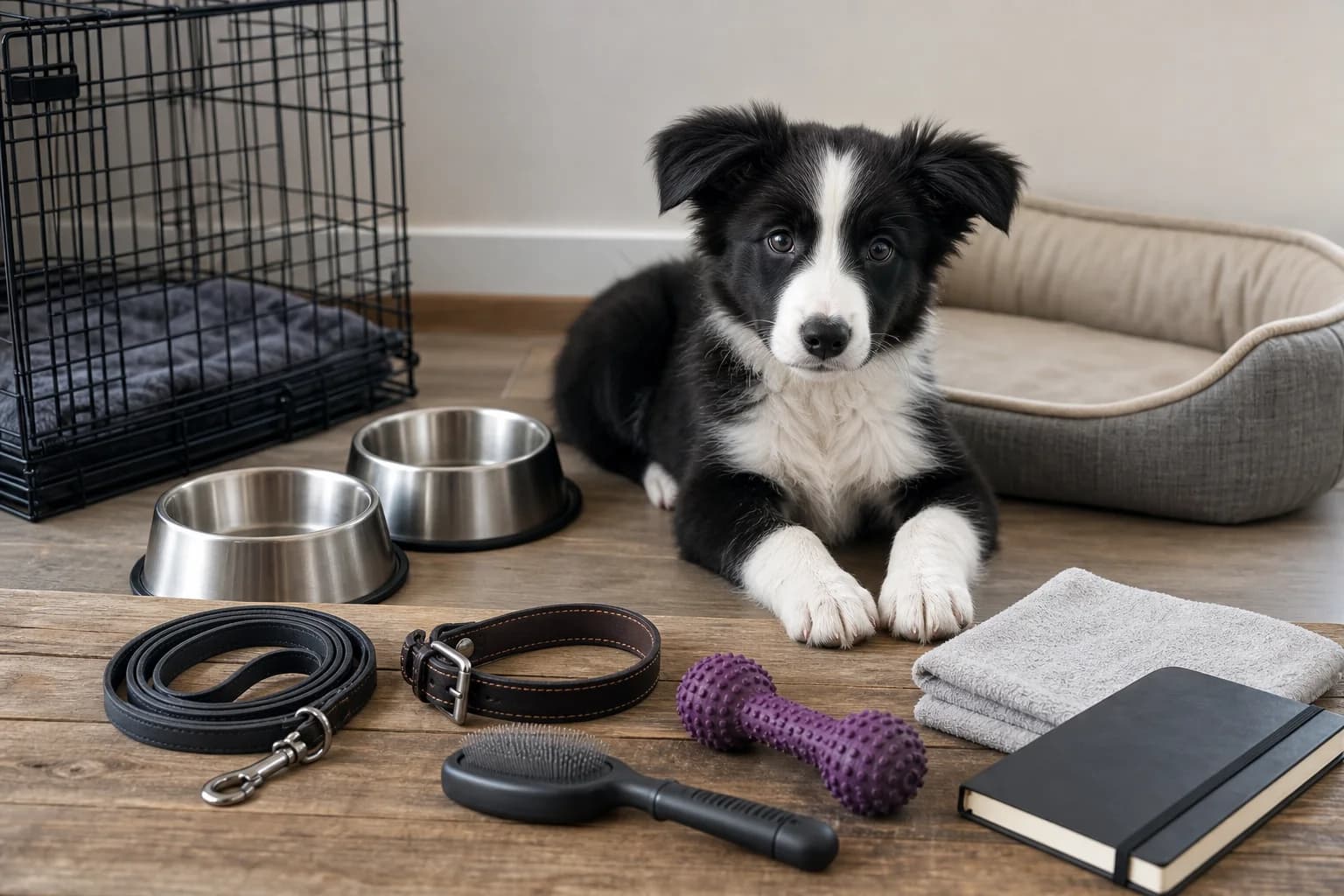
Separate acquisition from setup, recurring care, and contingency money. Setup may include barriers, a crate or pen, bed, harness, leash, bowls, grooming tools, toys, and vehicle protection. Recurring lines include complete food, preventive veterinary care, training, replacement equipment, grooming, licensing, and care during travel. A reserve or current insurance quote belongs outside the routine monthly average.
- The Frisco configurable dog gate and playpen is one tool to compare for creating a supervised puppy management zone during the first-month setup. Confirm panel spacing, height, stability, and anchoring for the puppy. Use barriers for supervised management, never as a substitute for social contact and training.
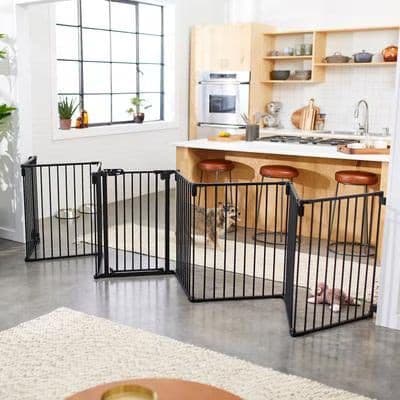
Petful may earn a commission when you click through to Chewy, at no extra cost to you.
Rescue and adoption use a different fee model and may include veterinary work already completed. Ask what is known about age, parentage, health, foster behavior, handling, sleep, elimination, food, and interactions. An uncertain history is not a defect, but it should be described honestly so the first-month plan can stay flexible. Listings for Border Collie puppies for sale can show an acquisition price, but they do not establish quality or the first-year total. Compare the dated listing with verified parent records, contract terms, travel, setup, preventive care, training, food, insurance or emergency savings, and the cost of replacing equipment during growth.
| Sample or budget lane | What the current evidence shows | What to verify before committing |
|---|---|---|
| Contact Point public listing | Starting price of $2,300 in the dated July 2026 sample | Confirm the current price, what is included, parent records, contract, support, and travel costs |
| 2J 2K public listing | Listed options of $3,550 and $4,050 in the dated July 2026 sample | Confirm which option applies, current terms, parent records, contract, support, and travel costs |
| Rescue or rehome pathway | Fees and included veterinary work vary by organization and dog | Ask what is known about health, behavior, handling, food, return support, and completed care |
| First-year total | Acquisition price is only one part of ownership cost | Add setup, food, veterinary care, training, insurance or emergency savings, travel care, and replacement equipment |
| Sample limitation | Two public breeder listings cannot establish a national average or fair-price rule | Use dated local quotes and verified records rather than treating this snapshot as a market standard |
Use the snapshot as a bounded comparison
This dated price snapshot uses two public breeder listings and a transparent evidence checklist rather than presenting one market average. The first-year budget separates acquisition price from predictable setup and veterinary costs, then leaves room for training, food, travel, and contingency care. Those lanes make a low advertised figure easier to evaluate because the household can see which records, services, and future expenses are still missing.
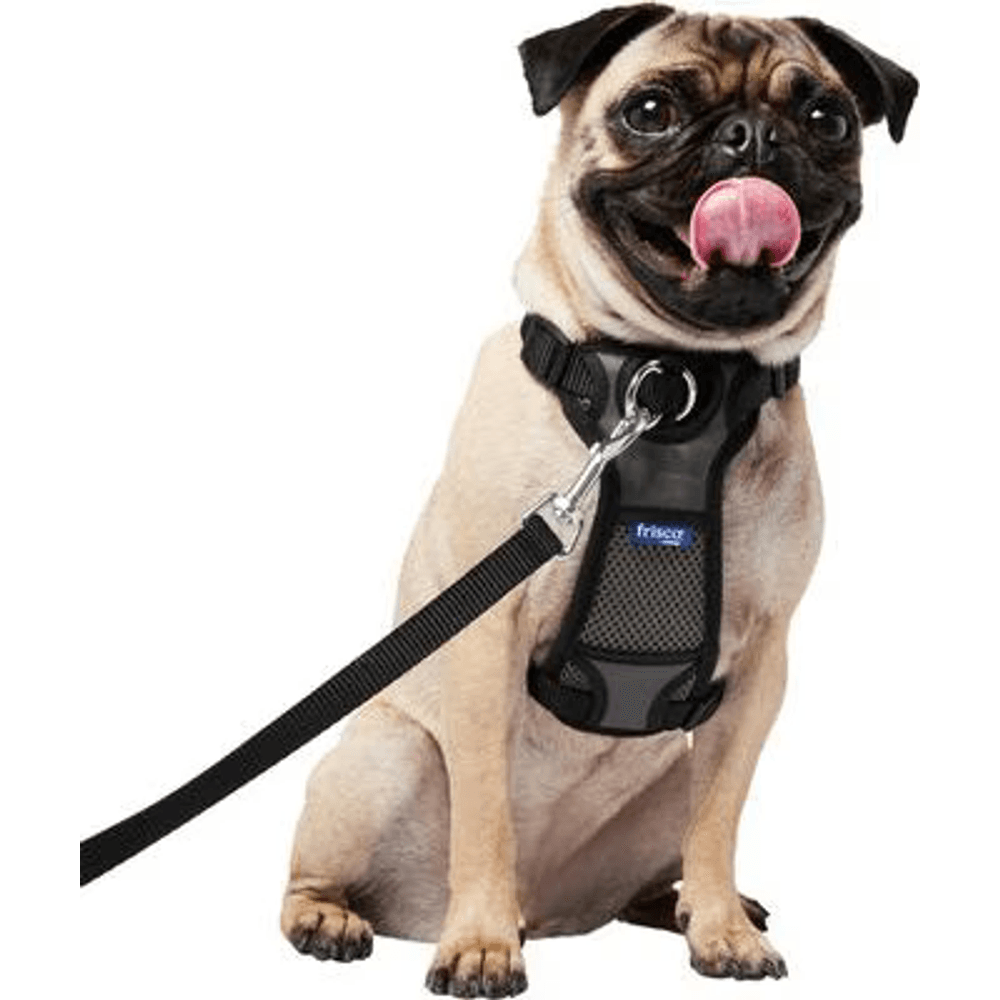
A budget-friendly padded no-pull harness that keeps leash pressure off a coughing dog's neck and windpipe by distributing it across the chest. A simple, affordable way to protect an irritated airway or a collapsing trachea on every walk.
Petful may earn a commission when you click through to Chewy, at no extra cost to you.
- For individually fitted management while leash skills generalize, compare the Frisco padded no-pull harness with other suitable options. Measure the puppy, check shoulder movement and rubbing, and recheck fit throughout growth. No harness teaches leash skills by itself.
Responsible sourcing, socialization, and first-year training
The Border Collie Society of America recommends finding a dog whose temperament and working traits suit the buyer, then verifying health information. Search the OFA database and read actual results. A CHIC number means required tests were completed and made public for that program; it does not mean every result was normal or guarantee the puppy's future health.
Meet the dam when possible, ask why the pairing was made, see where puppies are raised, and read the contract before payment. Useful records include individual identification, veterinary care, parent test results, feeding details, social experience, and a return clause. Pressure, secrecy, multiple always-available litters, or color-first sales language should slow the decision.
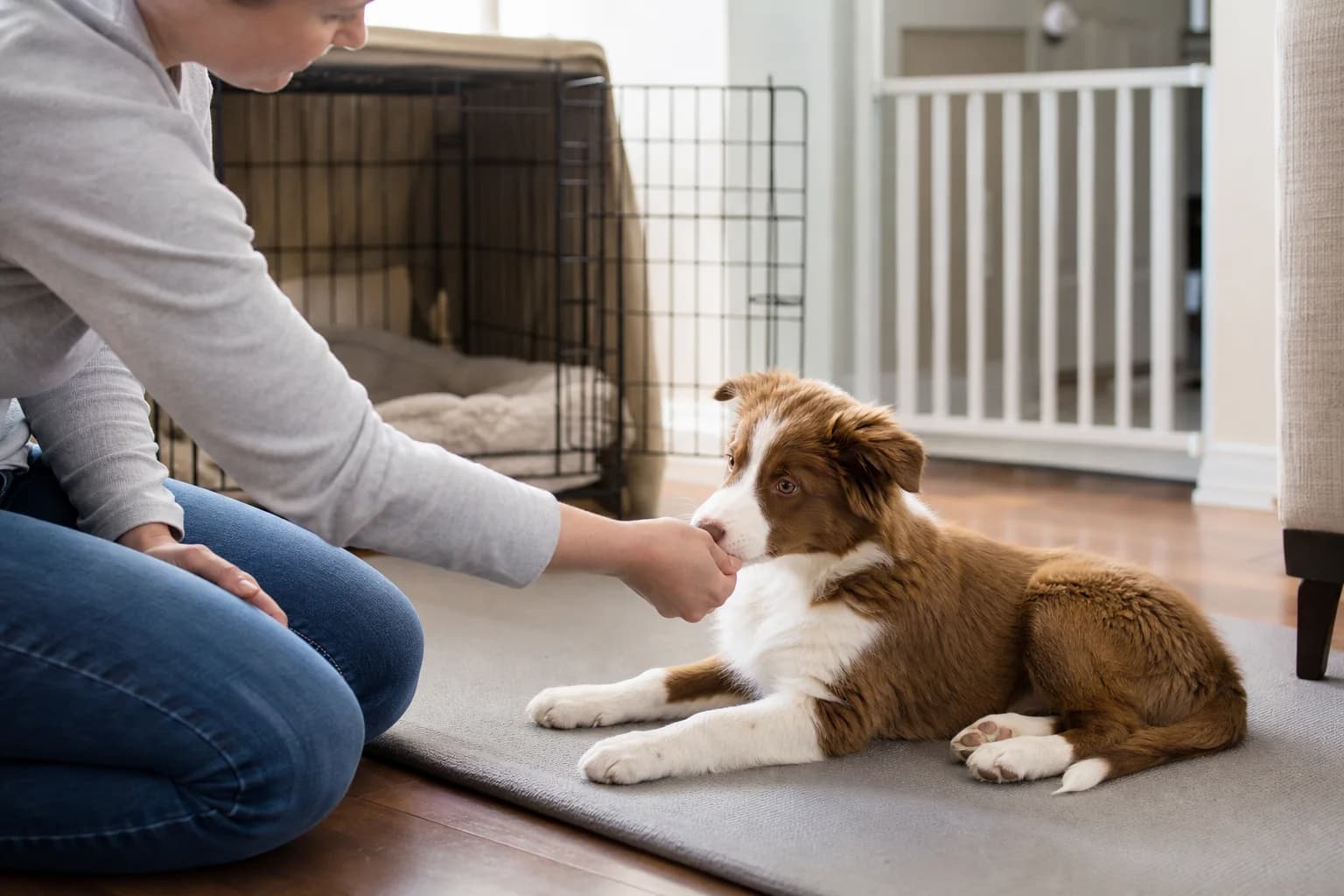
Socialization is safe, positive learning with choice, not forced contact. Introduce surfaces, sounds, people, handling, vehicles, veterinary environments, and calm animals at a distance the puppy can process. Pair novelty with food, play, or retreat. Continue appropriate disease precautions with the veterinary team without isolating the puppy during a sensitive learning period. A Border Collie rescue pathway and a breeder pathway require different evidence, but both should support honest history, safe placement, and a return plan. Border Collie puppies also need protected sleep, gradual social learning, reward-based training, and management that prevents unsafe rehearsal while their adult needs remain uncertain.
- Use breed-level evidence to prepare observations and questions. Use the individual dog, actual records, and qualified veterinary or behavior guidance for decisions that affect health or safety. Price the first-year cost categories before committing, including setup, routine veterinary care, training, insurance or emergency savings, food, and replacement equipment.
Verify each pathway to the same welfare standard
Adoption and breeder pathways should lead to different questions but the same welfare standard. For a planned litter, parent health-test verification means matching each sire and dam to named, dated health testing records rather than accepting a kennel-level claim. For rescue or rehome puppies, document what is known, what is unknown, which veterinary care has been completed, and whether the source offers honest behavior notes and return support.
Petful may earn a commission when you click through to Chewy, at no extra cost to you.
Your first 30 days with a Border Collie puppy
Priorities are sleep, toileting, name response, recall foundations, comfortable confinement, gentle handling, trading objects, a mat settle, and calm observation of motion. Keep lessons brief and use part of the measured ration. A four-week reward-based progression can then build recall, settling, motion-trigger skills, and adolescent management without raising every criterion at once.
Track appetite, stool, weight trend, body condition, gait, sleep, fear, and recovery from new experiences. Contact the veterinarian for repeated vomiting or diarrhea, poor appetite, marked lethargy, breathing difficulty, collapse, pain, or any rapid change. Training cannot fix a medical problem.
Build the first-year puppy plan
Verify each parent, not the kennel name
A polished brand or registration alone does not show the specific sire's and dam's health information.
Match registered names and identification to public records, save the result pages, and ask about any missing or non-normal result. Connect those screening results to buyer questions and later owner observations without treating a clear panel as a lifetime guarantee.
Screening lowers uncertainty but cannot guarantee a disease-free puppy.

Read the contract before a deposit
Return, breeding, registration, support, and health clauses can materially change the buyer's obligations.
Request the complete contract, read it without time pressure, and ask for written clarification before money changes hands.
A verbal reassurance does not override the signed terms.
Budget the high-use month
Veterinary visits, training, replacement equipment, food, care, and an unexpected problem can arrive together.
Model expected and higher-use first-year scenarios with dated local quotes instead of one optimistic monthly number.
A national average cannot represent every region or individual puppy.
Create a quiet first night
Travel, separation, new smells, and changed elimination cues can overwhelm a young puppy.
Prepare one washable sleep area, schedule calm toilet trips, and keep overnight interaction low-key and predictable.
Confinement must fit safely and should never become punishment.
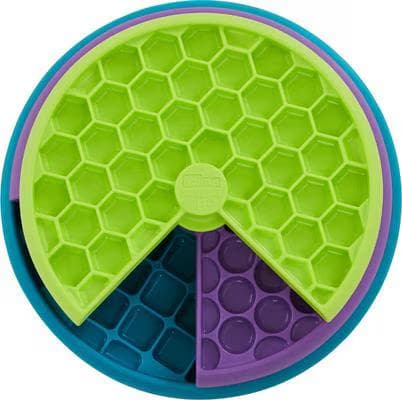
- For a brief, supervised settling activity, the Outward Hound Lickin' Layers puzzle and slow feeder can hold part of the puppy's measured ration. Choose an easy starting setup, remove damaged pieces, and stop if the activity creates frustration instead of calm engagement.
Use food from the ration
Many short lessons can quietly add a large number of calories during growth. One product-specific enrichment option to compare is Nina Ottosson Lickin' Layers puzzle feeder; supervise every session and remove it if damaged or frustrating.
Reserve part of each measured meal for recall, handling, settling, and leash practice, then track body condition with the veterinarian.
Do not restrict growth or add supplements from an internet chart.
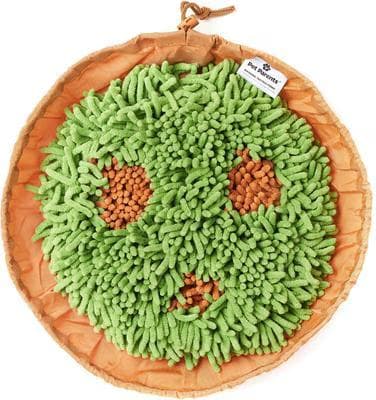
- A supervised food-search option such as the Pet Parents Forager snuffle mat can use part of that measured ration. Watch for chewing or fabric ingestion and stop if searching increases frustration rather than calm engagement.
Pair novelty with agency
A puppy learns from whether it can look, approach, pause, or retreat without being dragged into contact.
Petful may earn a commission when you click through to Chewy, at no extra cost to you.
Start farther away, reward voluntary investigation, and end while the puppy is still coping well.
Flooding can create fear even when the puppy appears physically still.
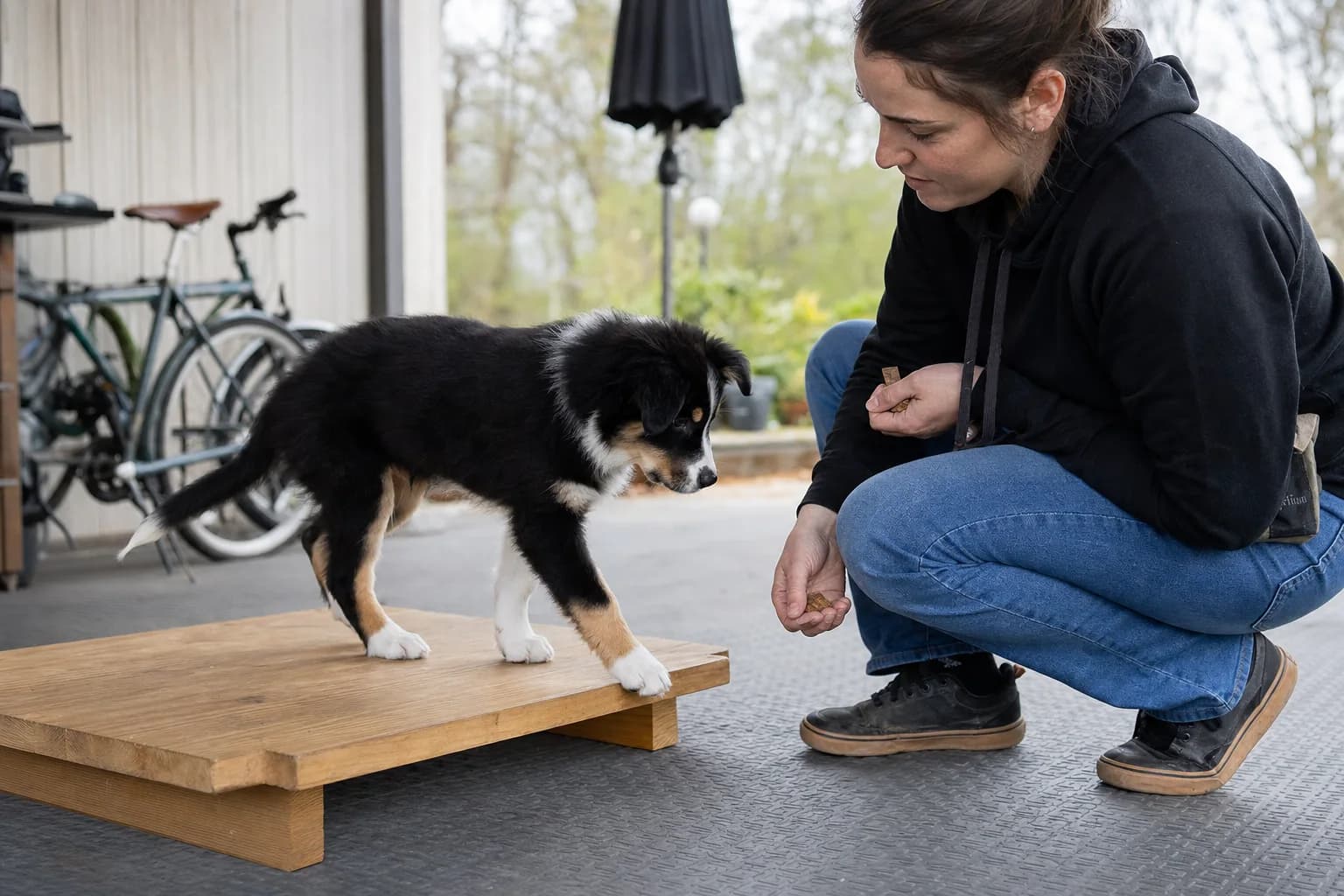
Plan for adult speed early
A small puppy that follows naturally may become an adolescent capable of covering distance in seconds.
Condition recall, door pauses, leash skills, and handler orientation in fenced or secured settings before adding distraction.
Do not test recall beside roads, livestock, or unfenced wildlife habitat.
Border Collie temperament and household fit
A Border Collie dog breed reputation cannot tell a buyer whether one puppy will settle around children, visitors, household noise, or ordinary motion. A Border Collie sheepdog may inherit strong work interest, but early observations still need to cover recovery, handling comfort, sleep, frustration, and the family's real weekday capacity. Use the Border Collie breed guide for that adult household-fit test before letting puppy appeal decide the placement.
Reward-based training foundations
Border Collie training starts with sleep, management, reinforcement, and very short successes rather than trying to tire a puppy into compliance. Border Collies herding movement can later appear as orienting, stalking, circling, or nipping, so build name response, recall, mat settling, leash skills, and calm observation before speed increases. The step-by-step training guide provides the four-week progression while this page keeps the focus on first-year preparation. One product-specific equipment option to compare is Frisco padded no-pull harness; measure the individual dog and confirm size, condition, and intended use before purchase.
Health screening, lifespan, and warning signs
A Border Collie lifespan range and any published Border Collie average lifespan figure describe populations, not one puppy's future. The buyer's immediate job is to verify named parent records, establish an individual veterinary baseline, and retain the results for later comparison. The Border Collie health and lifespan guide explains screening, monitoring, and urgent signs in depth without turning parent results into a guarantee or using breed risk as a diagnosis.
Border Collie FAQs
A Border Collie can be a good house dog when the individual temperament fits and the household can provide reward-based training, secure management, varied activity, decompression, sleep, coat care, preventive health care, and supervision around children and motion triggers. A yard alone does not meet those needs. Meet the dog and test the ordinary weekday routine instead of relying on a breed reputation.
The disadvantages of living with some Border Collies include motion sensitivity, pursuit, high training and management needs, difficulty settling, noise or environmental sensitivity, shedding, and fast rehearsal of unsafe behavior. For a Border Collie, these are not automatic defects, but they are real planning questions. A good match provides work and rest, secure management, humane teaching, preventive care, and backup support.
Border Collies end up in shelters for many reasons, including mismatch between working drive and household routine, chasing or nipping motion, insufficient management, housing change, cost, health, or ordinary life events. No single explanation applies to every dog. Better prevention comes from honest fit assessment, reward-based training, secure management, source return support, and early qualified help when behavior or health changes.
For most households deciding whether to get one or two Border Collies at once, one well-supported puppy is easier to train, socialize, observe, and bond with than two same-age puppies. Two dogs also multiply cost, management, veterinary care, separate training, and the possibility that their needs conflict. Add another dog only when the household can meet each individual separately and provide separate rest, feeding, training, and medical attention.
The downsides of living with some Border Collies can include a demanding weekday schedule, fast rehearsal of chasing or door behavior, difficulty resting, sensitivity to noise or conflict, training and care costs, shedding, and the need for capable backup care. These pressures become most visible during adolescence, household changes, injury, or busy work periods. Planning for those ordinary disruptions is more useful than assuming intelligence will make ownership easy.
Some adult Border Collies can be left alone for five hours after careful preparation, while puppies and individuals with separation distress, medical needs, or inadequate preparation cannot. Build duration gradually, meet toileting and activity needs, provide a safe resting area, and use a camera only as an observation aid. Panic, escape attempts, persistent vocalization, or self-injury need an individualized behavior and veterinary plan.
Sources
- BCSA buyer guidance: Responsible sourcing, buyer screening, and verifying parent health records.
- BCSA breed health overview: Current genetic and physical health-testing considerations.
- OFA CHIC program: How CHIC numbers work and why buyers must read the actual public results.
- AVSAB puppy socialization position: Early, safe socialization and reward-based puppy training.
- Contact Point Border Collies public puppy price: One current public breeder-price observation in the July 2026 sample.
- 2J 2K Border Collies public puppy price: One current public breeder-price observation in the July 2026 sample.
Prices, product labels, policy terms, test recommendations, availability, and medical guidance can change. Verify time-sensitive details with the current source, product label, breeder or rescue records, and the dog's veterinary team before making a decision.

Kristine Lacoste has been researching dog and cat breeds for nearly a decade and has observed the animals up close at dog shows in both the United States and the United Kingdom. She is the author of the book One Unforgettable Journey, which was named as a finalist for a Maxwell Award from the Dog Writers Association of America, and was host of a weekly pet news segment on the National K-9 Academy Radio Show. In addition, she was the New Orleans coordinator for Dogs on Deployment, a nonprofit that helps military members and their pets, for 3 years. Kristine has researched and written about pet behaviors and care for many years. She holds a bachelor’s degree in psychology, another bachelor’s degree in English and a Master of Business Administration degree.
Sign up for expert-backed reviews and safety alerts all in one place.