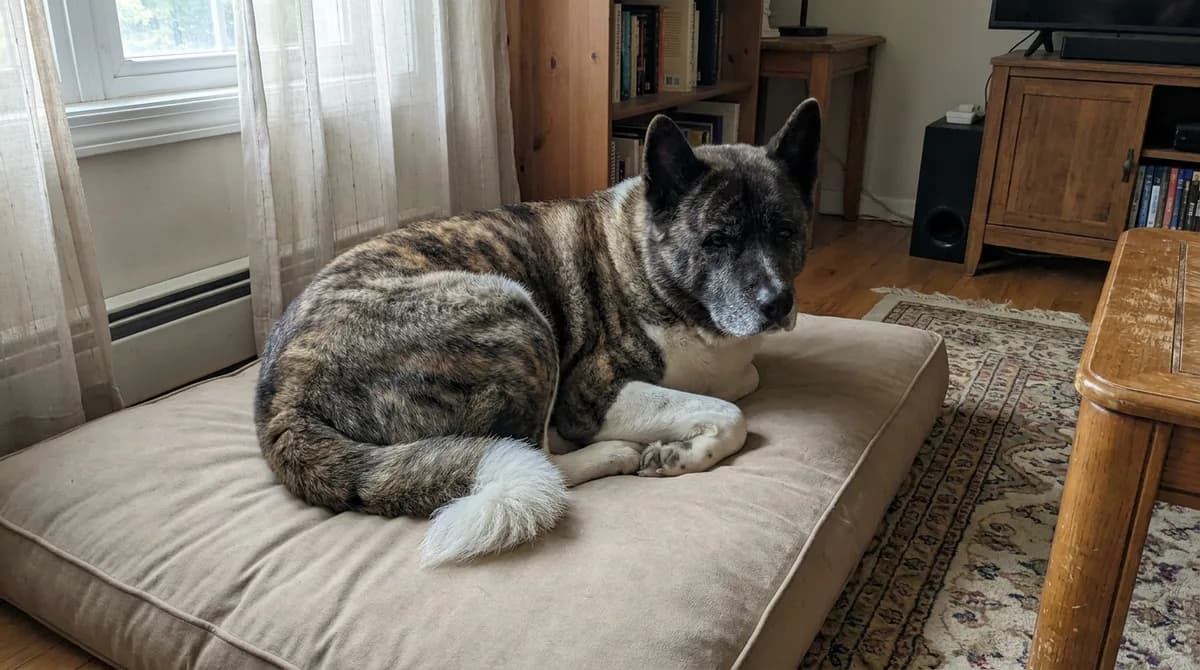
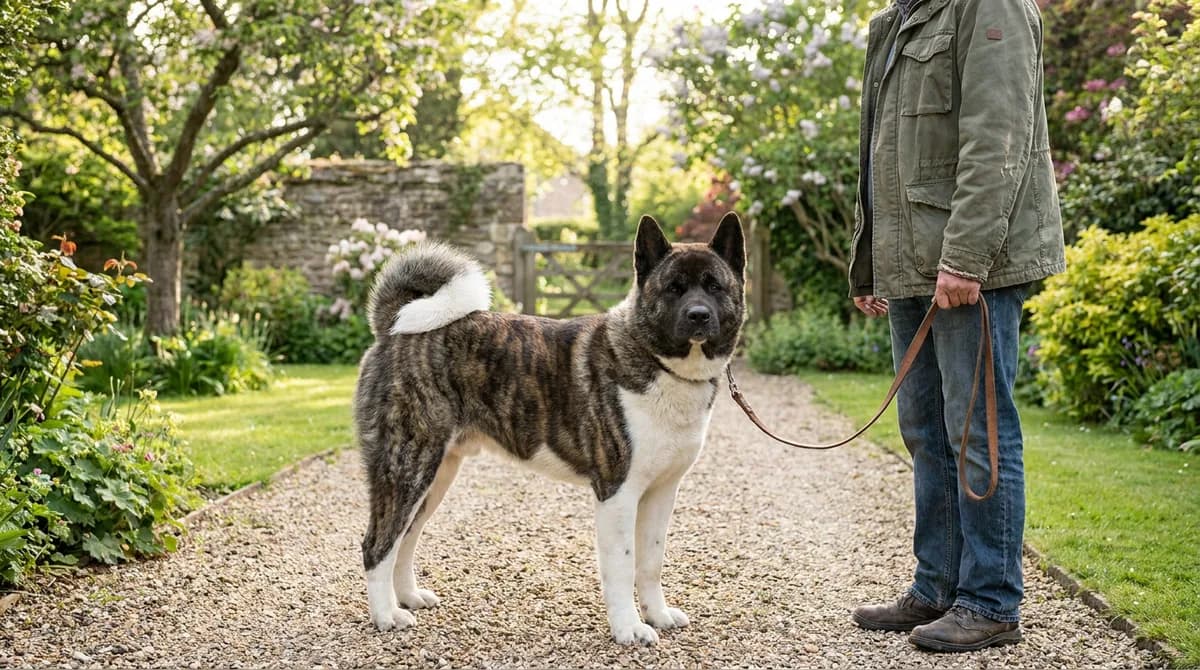
Akita Mixes: Common Crosses, Traits and Adoption Questions
Learn what reported Akita ancestry can and cannot tell you. Explore common crosses, compare the records behind a mix label, and assess an individual dog's size, behavior, health and adoption needs.

Appearance alone cannot establish a dog’s parentage.
Petful is reader supported. As an affiliate of platforms like Amazon and Chewy, we may earn a commission when you buy through links on this page. There is no extra cost to you.
An Akita mix is a dog reported or documented to have Akita ancestry alongside another breed or breeds. The label can describe anything from a puppy with known parents to an adult whose background was guessed from appearance. Establishing which situation applies is the first useful step.
A mix name does not supply a breed standard, guaranteed temperament or reliable adult weight. Use ancestry information to form questions, then evaluate the actual dog's measurements, health records and observed behavior in a home.

Sign up for expert-backed reviews and safety alerts all in one place.
What does an Akita mix mean?
An Akita is a domestic dog; references to Akita wolves do not establish recent wolf ancestry.
What is an Akita mixed with? The label alone cannot tell you. Common descriptions include German Shepherd, Siberian Husky, Labrador Retriever and other reported parents, but a dog may have more than two breeds in its background. Ask whoever supplied the description what supports it: known parents, an ancestry test, previous-owner information or visual assessment.
A documented mating between identified parents is different from a shelter guess. A DNA ancestry report is another kind of evidence, giving an estimate based on the company's testing and reference data. An observed adult height or a foster home's account of daily behavior describes the dog directly, regardless of whether every ancestor is known.
| Evidence category | Useful information | Remaining limit |
|---|---|---|
| Documented ancestry | Identified parents and records supporting the reported mating | Parent identity does not guarantee the puppy's adult behavior or dimensions |
| Estimated ancestry | Results from DNA ancestry testing | The estimate does not establish pedigree registration or behavioral safety |
| Observed traits | Measured adult size, actual coat and behavior in recorded situations | One situation may not represent every household or encounter |
| Unknown predictions | Unverified size, lifespan or personality claims | Keep these uncertain rather than turning them into a designer-breed standard |
For a black Akita mix, a curled tail or a thick coat may prompt an ancestry suggestion, but appearance does not confirm ancestry. A photograph cannot prove the other parent, an exact percentage or a recent wolf ancestor. Treat an unfamiliar nickname as a description to investigate rather than a substitute for records.
An advertisement for a wolf Akita hybrid makes a different claim from an ordinary domestic-dog cross. Ask what supports the alleged wolf ancestry; a wolf-like face is insufficient. If recent wolf ancestry is credibly documented, obtain advice from appropriately qualified professionals and check the requirements applicable to that animal before proceeding. Do not assume ordinary Akita ownership guidance resolves that placement.
An Embark Breed Identification kit is one option for exploring estimated ancestry when records are incomplete. Read the current product's reporting scope and sample instructions. An ancestry result can add context, but it cannot certify that the dog is suitable with children, predict a final weight or replace veterinary screening.
American and Japanese Akita differences
If the Akita parent is known, establish whether the records identify an American Akita or Japanese Akitainu. Their standards contain different measurements and appearance descriptions, as our American and Japanese Akita comparison explains. Those differences provide context for a cross, not a formula for its offspring. A Japanese name, white coat or broad head alone does not identify the parent or settle which traits a puppy will inherit.
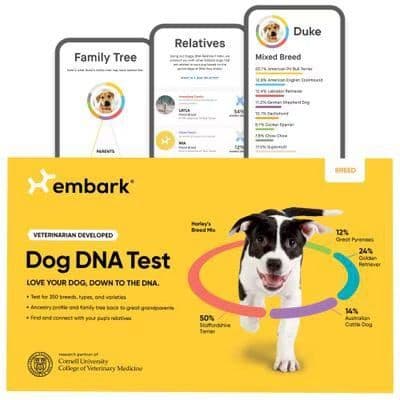
Explore estimated breed ancestry while keeping behavior, health screening and household suitability separate.
Petful may earn a commission when you click through to Chewy, at no extra cost to you.
What can you predict about adult size and coat?
Adult size is not a parental average. Adding two breed weights and dividing by two produces arithmetic, not a validated prediction for a puppy. For a full-grown Akita Pit Bull mix, measure the actual dog. For a puppy, follow individual growth and body condition with a veterinarian, using documented parent information as context rather than a target.
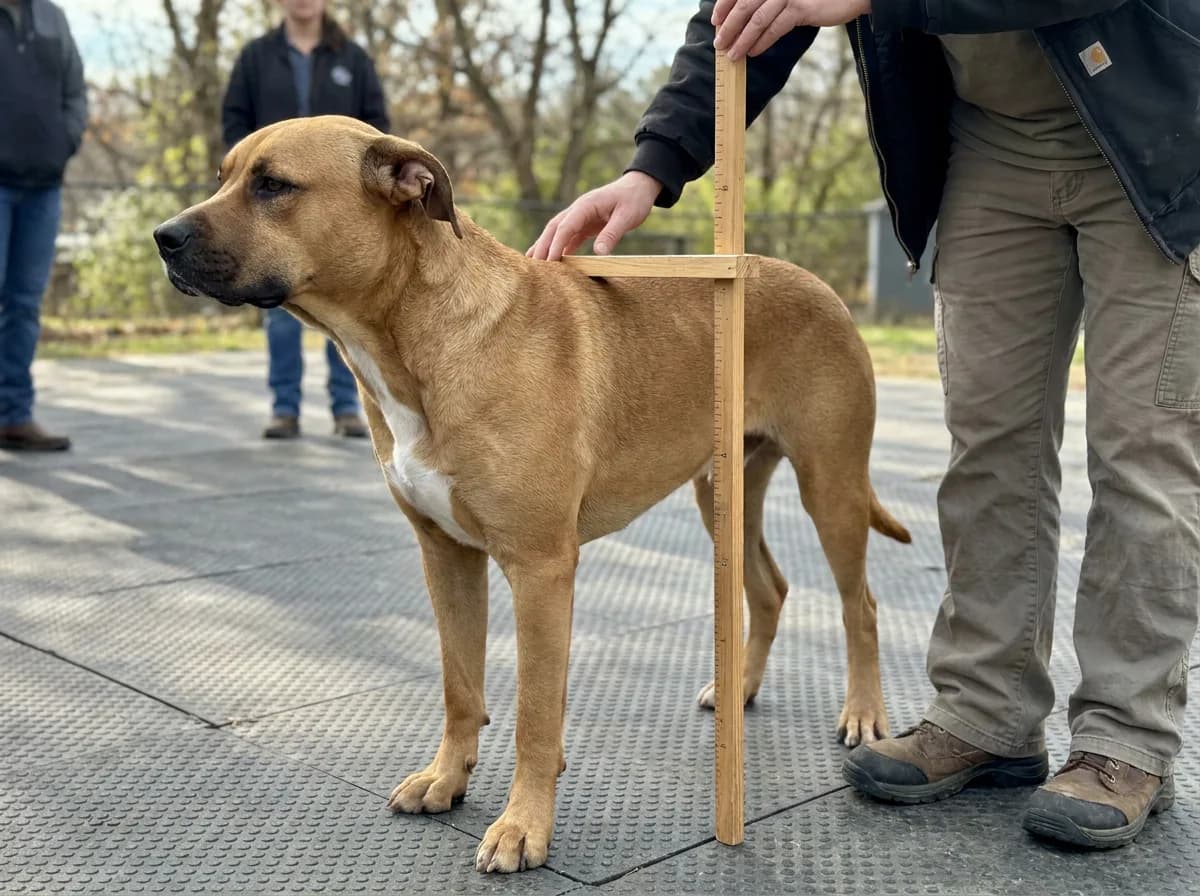
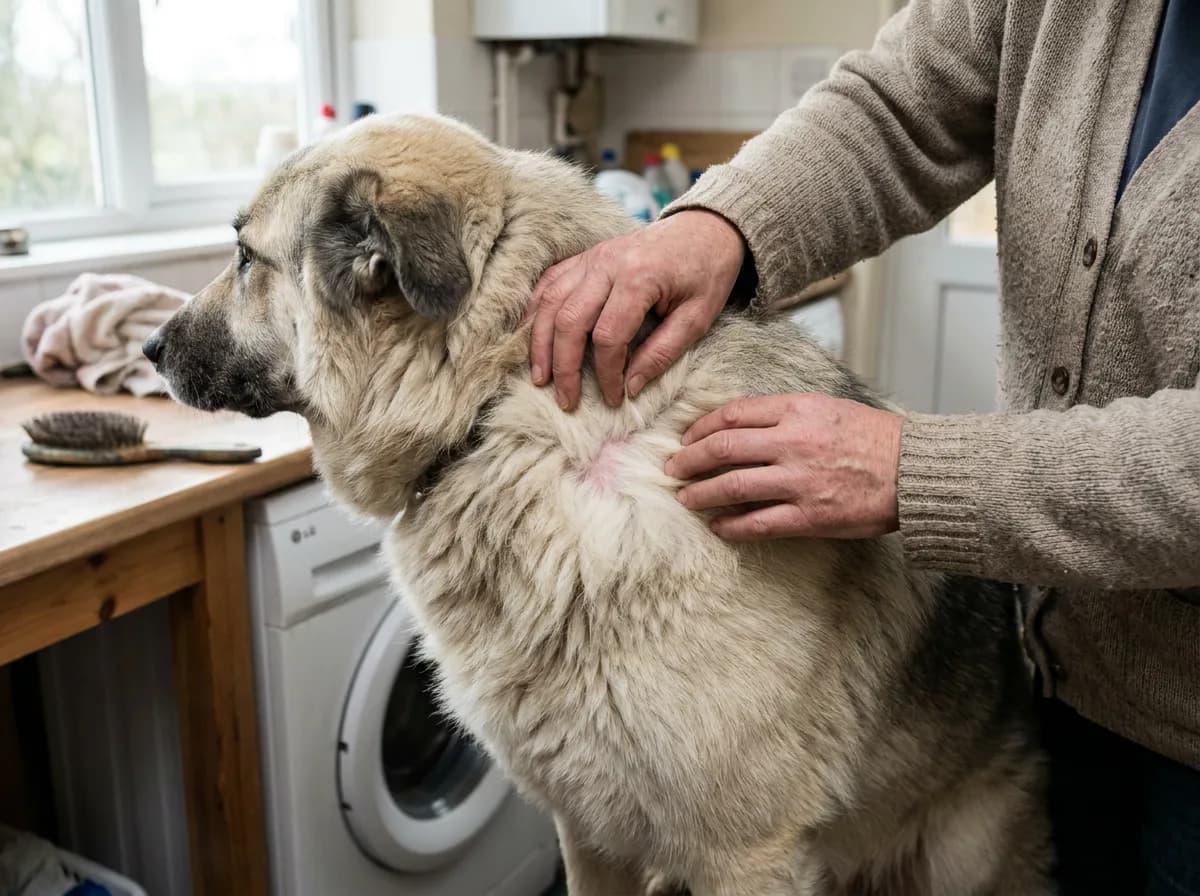
Measure shoulder height at the withers while the dog stands naturally on level ground. Record actual weight on a suitable scale and note the date and unit. Body length and resting posture matter when choosing equipment, too. A dog can share another's weight yet need a different harness or bed because its proportions differ.
Coat texture, length, markings and shedding also vary. Look at and gently examine the coat you have, including the undercoat where present. Ask how grooming has been managed and whether the dog accepts brushing. Parent traits are possibilities; the current coat and observed behavior in a home are more useful when planning immediate care.
Equipment decisions need more than a single weight. Follow the maker's measuring instructions for the particular item and note what the dog needs to do while wearing or using it:
- A harness must fit the relevant chest and neck measurements without restricting ordinary movement.
- A resting surface needs usable length for the dog's preferred sleeping position.
- A crate must allow appropriate standing, turning and lying space.
- A transport arrangement must fit both the dog and the vehicle opening.
Recheck fit as a puppy grows or an adult's condition changes. A mix label cannot substitute for these observations.
Akita size and measurements
The Akita size guide explains the parent breed's adult standards and measurement method. Those standards apply to the breeds they describe, not automatically to a mixed dog. Use them to understand a documented parent, then size equipment for the individual. If a young dog's age or parentage is uncertain, keep that uncertainty in the growth record and reassess fit rather than buying everything around one promised adult number.
A Wisdom Panel Essential ancestry kit provides another option for investigating reported breed background. Compare what each product currently reports and choose according to your question; you do not need both kits to begin caring for the dog. Neither ancestry option can turn a puppy photograph into a precise growth forecast.
Akita and German Shepherd mixes
A German Shepherd and Akita mix may be described as an Akita Shepherd or an Akita GSD mix. GSD is shorthand for German Shepherd Dog. The name does not establish whether the Akita parent was American or Japanese, whether both parents are documented, or whether additional breeds occur in the background.

An alternative ancestry-testing option for exploring breed background, without predicting adult size or temperament.
Petful may earn a commission when you click through to Chewy, at no extra cost to you.
The German Shepherd standard describes a muscular, agile dog with a medium-length double coat and a confident manner that can be reserved with unfamiliar people. The Akita standard describes a substantial, double-coated dog and notes possible intolerance of other dogs, particularly the same sex. These are parent-breed descriptions, not a forecast for every Akita Shepherd. Coat, build, sociability and response to training can vary in the offspring. Ask about current lead handling, settling after activity, reactions to visitors and observed behavior around other animals. An “obedient Shepherd plus independent Akita” description cannot predict a halfway personality.
For a puppy, obtain information about how it has been raised. Ordinary exposure to household sounds, comfortable handling and age-appropriate experiences is more useful than a seller's claim that every puppy will become a natural protector. Ask what happens when a puppy is briefly separated from littermates and how the caregiver responds to uncertainty or excitement. Useful questions for a breeder or foster caregiver include:
- What are the parents' actual identities, and which records support them?
- What does the dog do when a walk ends and the household becomes quiet?
- How does it respond when someone touches its feet, coat or collar?
- What behavior has been observed around unfamiliar dogs?
- What support is available if handling or settling becomes difficult?
A full-grown Akita Shepherd can be assessed more directly for current size than a young puppy. Measure it and watch ordinary movement instead of adopting a size range from a generic crossbreed page. For a black Akita German Shepherd mix, coat color adds an appearance description; it cannot establish the proportion of either breed.
More complicated descriptions need the same clarity. An Akita German Shepherd Husky mix or a German Shepherd, Akita and Corgi mix may describe several generations of ancestry rather than three known parents. Ask whether the label comes from records or an estimate. A list of breeds does not tell you which physical or behavioral characteristics are expressed.
When comparing two available dogs, write down their actual differences: one may settle readily after a walk while the other's home behavior is unknown; one may have comfortable handling history while another needs gradual preparation. Those are actionable distinctions. Choosing solely from the more appealing combination of breed names leaves the most important household questions unanswered.
Turn a description into an observation
If a caregiver says the dog is easy to train, ask to see a familiar, low-pressure task such as following a lead for a few steps or settling after a short activity. Notice what instructions and rewards are used and how much help the dog receives. Do not test the claim by suddenly adding restraint, confronting it over a toy or putting it beside an unfamiliar animal.
If you are considering a puppy, ask how those foundations are being introduced rather than expecting adult reliability. A puppy that follows food across a quiet room has learned something useful, but it has not demonstrated reliable behavior in every environment. Arrange a realistic plan for continuing the same humane teaching after placement.
Akita and Husky mixes
Husky crosses can show coat variation that the mix name alone cannot predict. An Akita and Siberian Husky mix is sometimes advertised simply as an Akita Husky. The description can involve an American Akita or a Japanese Akitainu, and the exact background still needs evidence. A dense coat, erect ears or striking eyes may fit someone's expectations of the cross without proving either parent.
The Siberian Husky standard describes a medium-sized endurance sled dog with a double coat and a generally outgoing temperament. The Akita standard describes a heavier-built, double-coated dog and cautions about possible intolerance of other dogs. An Akita Husky mix is not guaranteed to inherit either parent’s build or social tendencies. Treat activity level, coat care and compatibility as questions to investigate. Ask how the dog behaves at gates, during lead walks and when another animal moves nearby, and whether it has lived behind fencing like yours. Do not assume every Husky cross escapes or every Akita cross stays close.
Coat care deserves its own conversation. Find out how much loose hair the caregiver manages, what tools are used and whether grooming is comfortable. A puppy's present coat does not establish the final adult texture. Likewise, the amount of hair visible in one photograph does not tell you how much work the dog creates during seasonal coat changes. For this reported cross, useful observations include:
- The activity that currently produces a comfortable, settled routine.
- Responses to doors, fences and opportunities to follow movement.
- Barking or other vocal behavior in specific situations.
- The ability to rest when familiar people are present.
- Previous experience with cats, dogs and handling.
A full-grown Akita Husky mix offers observable information about adult build, but an adult label does not mean behavior is fully known. Ask whether the account comes from a foster home, a kennel or a short visit. A dog quiet during an unfamiliar meeting may reveal different needs after becoming comfortable.
If an Akita Husky mix puppy is for sale, request the same health, parentage and contract information you would for another planned litter. A designer name does not create a standard testing package. Ask what the fee includes, what support follows placement and which claims are based on records rather than predictions about the cross.
Temperament, household fit and safe introductions
Are Akita mixes good dogs? They can be suitable companions when the individual and household fit each other. Mixed ancestry alone does not establish whether a dog will be comfortable with children, visiting adults, resident animals or long periods alone. Evaluate what has actually been observed and whether you can provide the management and care the dog needs.
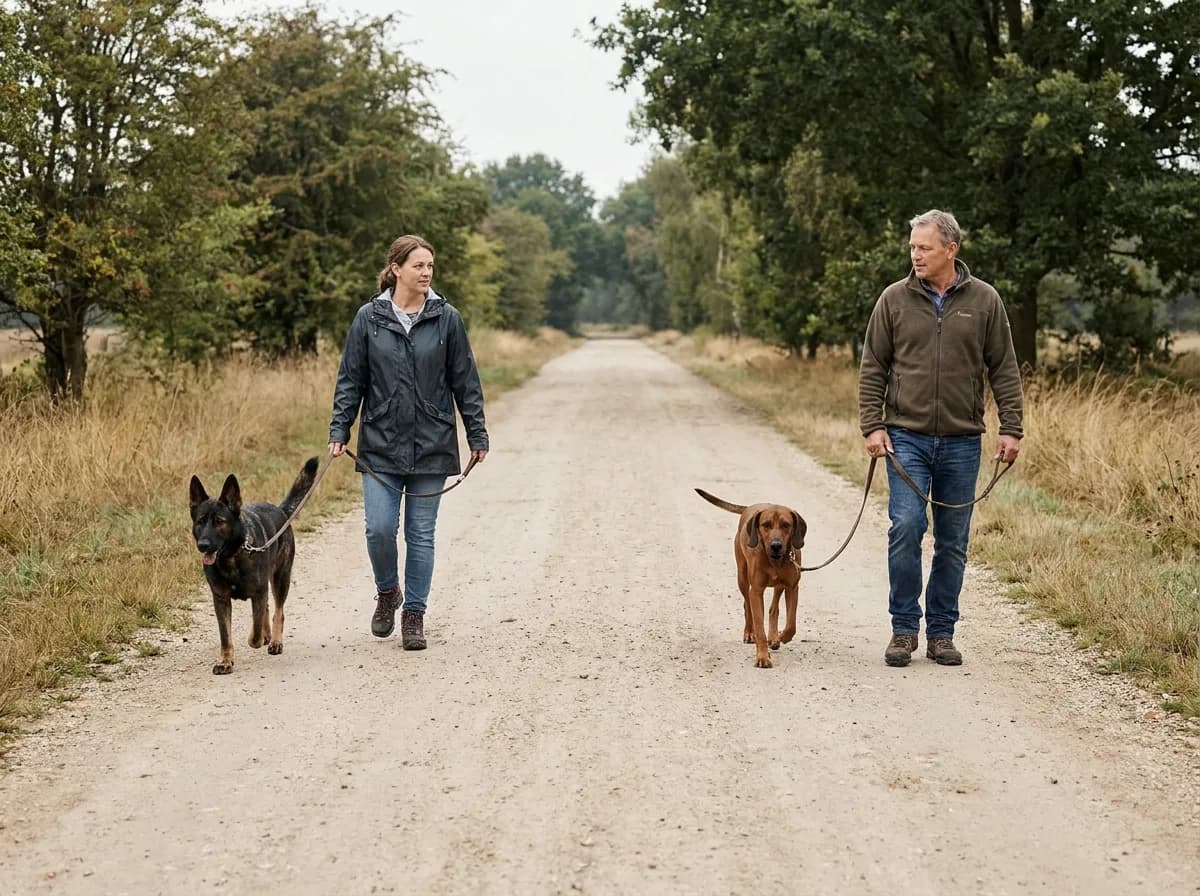
A useful behavior history describes context. “Good with dogs” may mean living with one familiar companion under supervision. “Friendly” may describe affection toward a foster caregiver rather than comfortable greetings with strangers. Ask who was present, what happened and what arrangements helped, so you can judge how closely the situation resembles your home.
For introductions, arrange a process suited to the individuals with the rescue's or a qualified professional's help. Separate adult handlers and comfortable distances can allow observation without forcing contact. Do not interpret a first quiet meeting as proof that the dogs can immediately share food, resting areas or unsupervised time.
A fixed-length Frisco Traffic Leash is one option for supervised walking and practice. Fit the dog's collar or harness appropriately and keep each handler responsible for one dog. Extra handles do not make an interaction safe if the dogs are already too close or the people cannot manage them comfortably.
Prepare shared living spaces
Prepare the home before trying to merge routines:
- Provide separate feeding and resting spaces for pets.
- Check that barriers and door latches work reliably.
- Give children clear rules about sleeping, eating and retreating dogs.
- Arrange adult supervision for interactions.
- Identify a quiet place the new dog can use without being followed.
- Agree on the same handling instructions across caregivers.
Use reward-based teaching rather than physical confrontation, consistent with American Veterinary Society of Animal Behavior guidance. Practice manageable skills in an easy environment before expecting them beside a major distraction. WebVet's dog training treat guide can help account for food rewards within the daily allowance; food is a teaching tool, not a guarantee of compatibility.
Akita temperament and behavior
The Akita temperament guide addresses barking, reserve, affection, learning and guarding in the parent breed. None supplies a fixed result for a mix. A dog that rests nearby may prefer that to cuddling, and guarding tendencies do not guarantee protection. Claims about intelligence rankings or dogs suddenly “turning” on owners overlook context. Seek assessment for concerning or changing behavior rather than treating ancestry as the complete explanation.
Akita and Labrador or Golden Retriever mixes
An Akita Labrador Retriever mix may be called an Akita Lab. A black Lab or yellow Lab description identifies the reported Labrador parent's color, not a reliable personality package for the offspring. Ask whether that parent is actually documented and what is known about the individual puppy or adult.

A fixed-length lead for supervised handling and gradual introductions with separate adult handlers.
Petful may earn a commission when you click through to Chewy, at no extra cost to you.
The Labrador standard describes an athletic retrieving dog with a short, dense coat and an outgoing, cooperative disposition. That gives useful context for the reported Labrador parent, but it does not promise that an Akita Lab will welcome every person or dog. The Akita parent also matters, and the offspring’s coat, build and sociability need individual assessment. Ask the caregiver what happens when visitors arrive, animals pass on walks, food is prepared and activity ends. A demonstration of familiar routines is more useful than a claim that Labrador ancestry guarantees an easy family companion.
The Golden Retriever standard describes an active hunting dog with a friendly disposition, a dense undercoat and feathering on areas including the legs and tail. An Akita Golden Retriever mix may differ in coat length, texture, build and sociability; a Golden parent does not guarantee those standard traits in its offspring. Examine the actual coat and ask how grooming is managed. Has the dog been comfortable with brushing, bathing and feet being touched? A caregiver’s demonstration helps distinguish the coat care needed today from predictions about a puppy’s adult appearance. Before choosing either reported cross, discuss:
- The dog's usual activity and rest schedule.
- Its response to unfamiliar people and household bustle.
- Any history around food, toys and valued resting places.
- Comfortable handling and the grooming routine.
- What has been observed with children or resident pets.
- Which parts of the background remain unknown.
Keep retriever activities optional and individual. A dog may enjoy carrying a toy or a food-search game without needing to match a parent-breed stereotype. Introduce activities gradually, supervise chewing and stop if the dog becomes uncomfortable or overexcited. The aim is to discover useful outlets for this dog, not to test whether a label is correct.
Pit Bull, Chow, Rottweiler and other Akita crosses
Whether an advertisement says Akita Pit Bull or Pitbull Akita, ask what supports the parentage claim.
For the named cross, the Malinois and Akita mix section in our Belgian Malinois mix guide covers activity, settling, introductions and containment. Use that overview alongside the individual dog's documented behavior and history.
Less common cross descriptions deserve the same attention to evidence. A named cross is not a breed standard, and a catchy name does not validate precise adult weights or a guaranteed temperament. The table below organizes reported parentage by the records and observations that would help you assess an individual dog.
| Reported other parent | Records or observations to request |
|---|---|
| Pit Bull or American Pit Bull Terrier | Clarify the exact parent description, ancestry evidence and observed behavior with people and animals |
| Chow Chow | Actual coat-care routine, comfortable handling and visitor history |
| Rottweiler | Identified parents, health records and current size and lead-handling observations |
| Cane Corso | Adult measurements where available, household behavior and physical handling needs |
| Belgian Malinois | Observed activity, settling routine and the caregiver's training methods |
| Border Collie | Responses to movement, opportunities to settle and actual activity needs |
| Great Pyrenees | Parentage evidence, current coat, barking context and property experience |
| Poodle | Actual coat texture and maintenance; no automatic allergy or shedding promise |
| Shiba Inu | Documented identity, adult measurements and individual behavior rather than miniature-Akita assumptions |
| Boxer | Parent records and the individual puppy's or adult's veterinary and handling history |
| Saint Bernard or St. Bernard | Current measurements, comfortable movement and transport needs |
| Australian Cattle Dog or Blue Heeler | Clarify the reported parent name and describe behavior around movement and household activity |
| Doberman | Parent identification, available screening and the individual's visitor and handling history |
| Chihuahua | Evidence supporting the ancestry claim and the individual dog's current proportions |
| Samoyed | Actual coat maintenance and comfortable grooming history |
| Great Dane | Measured adult dimensions where available, resting space and mobility observations |
| Pomeranian | Ancestry evidence and actual size rather than a small-size promise |
| English Bulldog or another Bulldog | Exact parent identity and the dog's own veterinary and functional assessment |
| Mastiff | Clarify which Mastiff breed is claimed and request relevant parent and individual records |
| Beagle | Observed walking, recall practice and responses to interesting scents |
| Jack Russell Terrier | Documented ancestry and actual activity and settling needs |
| Shar-Pei | The individual dog's veterinary history and comfortable skin and coat care |
| Pug | Veterinary history and observations of comfortable daily activity |
| Newfoundland | Adult measurements, coat-care requirements and transport arrangements |
| Boston Terrier | Evidence for parentage and the individual dog's veterinary and handling history |
Strong build does not settle behavior
For an Akita Pit Bull mix, clarify what the person means by Pit Bull. It may be a broad label rather than documented American Pit Bull Terrier parentage. Ask the same direct questions about people, other animals, food and handling that you would for another substantial dog. Do not use head shape or jaw appearance as a behavioral assessment.
An Akita Rottweiler cross, whether the Akita parent is American or Japanese, also needs individual records. A seller advertising Rottweiler cross Akita puppies should explain the mating and health history rather than promising automatic guarding ability. For an adult, current lead skills and the household situations it has experienced are immediately useful information.
Cane Corso, Doberman and Mastiff descriptions do not remove the need for that assessment. With an Akita Mastiff puppy, ask which Mastiff breed is actually claimed. For any of these names, establish how much adult size is known, who can safely handle the dog and what support is available if everyday care becomes difficult.
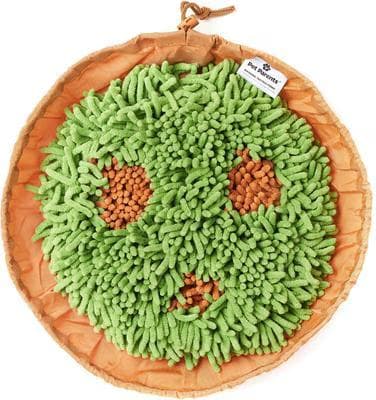
Offer part of a meal as supervised individual food-search enrichment, keeping resources separate where needed.
Petful may earn a commission when you click through to Chewy, at no extra cost to you.
A quiet activity while you learn the dog
A quiet individual activity can be useful while you learn the dog's preferences. A Pet Parents Forager Snuffle Mat can hold part of its measured meal during supervised use. Offer it separately from other pets where needed, and remove it if the dog chews or swallows the material.
Coat, skin and size questions
For an Akita Chow Chow or Akita Samoyed mix, inspect the actual coat and ask for a comfortable grooming demonstration. With an Akita Poodle mix, obtain the same information without accepting a guaranteed low-shedding or hypoallergenic outcome. A Poodle parent does not make an individual allergy response predictable.
A reported Akita Great Pyrenees, Saint Bernard, Great Dane or Newfoundland mix makes adult space and transport especially relevant questions. Those names cannot produce a reliable weight range by averaging parents. Measure an adult and assess normal movement. For a puppy, discuss growth and equipment changes with the veterinary team rather than buying around a promised giant size.
A Pomeranian or Chihuahua ancestry claim needs evidence too. It should not be used to sell a guaranteed miniature Akita. For a Shiba Inu and Akita mix, distinguish a cross from confusion between two separate Japanese breeds. Smaller parentage on a list does not settle the size or handling needs of the dog in front of you.
Activity and veterinary history
For reported Belgian Malinois, Border Collie, Australian Cattle Dog or Blue Heeler crosses, ask how the dog responds to moving people and animals, how it settles and what activities its caregiver actually provides. Blue Heeler is commonly used for the blue-coated Australian Cattle Dog; clarify the parent's identity rather than treating those labels as two necessarily different ancestors.
An Akita Beagle or Jack Russell Terrier mix deserves specific questions about walking, following interesting distractions and resting after activity. For an Akita Boxer puppy, ask about the puppy's own development and examination records. Avoid assigning a training difficulty score from the names alone.
With English Bulldog, Pug, Boston Terrier or Shar-Pei ancestry reported, start with the dog's own veterinary findings and comfortable daily function. Ask about any existing treatment, skin-care needs or exercise limitations that have actually been identified. A breed list can suggest questions to discuss with a clinician; it cannot diagnose the individual or establish that every possible parent-associated problem is present.
Questions to ask before adopting an Akita mix
What is the best Akita mix? The most useful answer is the individual whose known needs fit the home you can provide. A cross with a fashionable name can still be a poor match, while a dog with uncertain ancestry may have well-documented foster history that answers your main concerns.
Ask about observed behavior in a home, not just the intake label. How does the dog spend an ordinary day? What happens when the caregiver leaves, visitors arrive or another pet approaches? Distinguish behavior witnessed repeatedly from assumptions based on breed appearance or one quiet meeting.
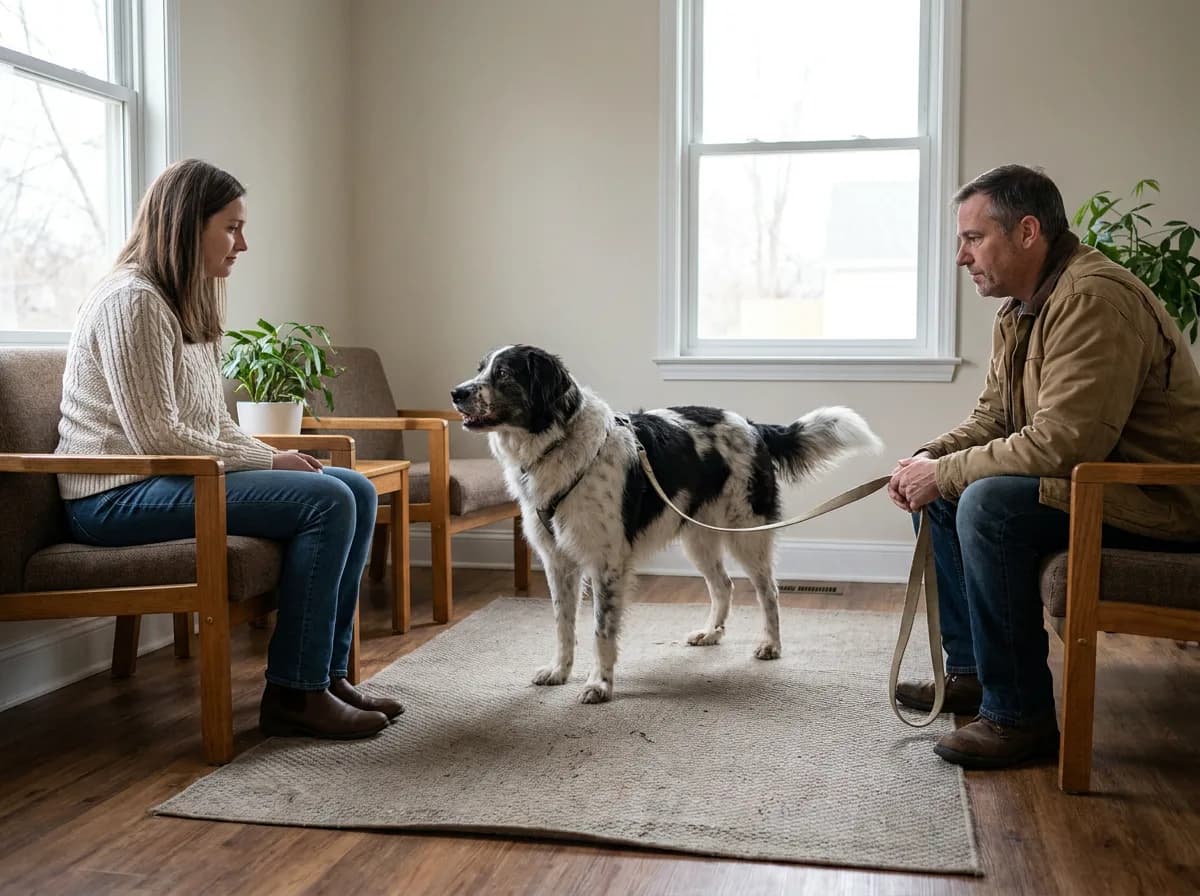
Are Akitas high risk dogs? The phrase can refer to a particular dog's behavior, a housing rule or an insurer's classification, and those are different questions. Ask what risk is actually being discussed and what evidence supports it. For a mix, a claimed percentage does not establish safety or tell you how a provider will apply its terms.
Where are Akitas banned? Requirements depend on the actual jurisdiction, housing arrangement and relevant private policies. Check the current rules for your address and the provider involved before committing, including how a reported mixed dog would be treated. Do not assume a mix label creates an exemption or that a general online list applies to your situation. Build a placement checklist around practical answers:
- What is known about ancestry, age and previous homes?
- What has been observed with the people and animals relevant to your household?
- Which medical records and current treatment instructions are available?
- Can the responsible adults manage walks, transport and daily care?
- What separate spaces and supervision arrangements are needed?
- What support and return arrangements does the organization provide?
- What does the acquisition fee include, and which expenses remain yours?
Arrange the first days around a predictable routine rather than a series of social tests. Keep introductions manageable, provide undisturbed rest and avoid overwhelming the dog with visitors. WebVet's dog training schedule can help organize short practice sessions and everyday care while you learn what the individual finds comfortable.
What to establish at the meeting
Let the dog have space to observe rather than treating immediate affection as an audition. Ask the familiar caregiver to describe its usual routine while you watch the interaction. A dog choosing to remain nearby without contact can still be gathering information comfortably. Avoid making a child, visitor or resident pet responsible for discovering the dog's limits.
Ask to review equipment and handling that are already familiar. Find out which collar or harness has been used, how the dog enters transport and what happens at doorways. If the caregiver mentions a difficulty, ask what management is working and who can help you continue it. You need an achievable care arrangement, not a demonstration that ignores known problems.
Clarify the organization's follow-up process before taking the dog home. Ask whom to contact, what information they want if a concern develops, and how an unsuccessful placement is handled. Keep that information with the veterinary records. A clear support arrangement is useful even when everyone expects the adoption to go well.
Make the transition observable
During the first days, record a few practical facts: eating, toilet habits, sleep, comfortable interactions and situations that seemed difficult. Describe what happened without immediately assigning a cause. A note that the dog stopped eating when another pet entered the room is more useful than a conclusion that it is stubborn or dislikes the family.
Share the same instructions with everyone caring for the dog:
- Use the agreed feeding location and keep other animals out when needed.
- Preserve the dog's quiet resting place.
- Follow the same door and gate routine.
- Keep early outings within what the handler can comfortably manage.
- Record changes and contact the organization or clinician when appropriate.
Do not try to expose the dog to every household situation in a single weekend. Familiarity develops over time, and observations from one setting need not transfer immediately to another. Build from manageable activities and keep a way to create distance or separation. If the plan is proving difficult, contact the supporting organization before repeatedly rehearsing the same conflict.
Akita costs and budgeting
The Akita costs and budgeting guide separates acquisition fees from equipment and continuing care. A mix does not automatically cost less to keep than a purebred dog. Obtain the actual fee, medical history and service quotes, including any training support already recommended. Use the individual's current size and needs to plan food, transport and care rather than converting a breed name into a monthly spending estimate.
Health history and parent screening
Ask for the individual dog's available veterinary history: examinations, preventive care, identified conditions, treatment and follow-up instructions. For a planned litter with known parents, request the relevant screening records for both parents. The Akita Club of America identifies hips, eyes and thyroid as minimum screening areas for Akita breeders; the other parent's recommendations need separate consideration.
Mixed ancestry does not establish that health problems have been removed. Nor does a breed identification test replace veterinary examination or parent screening. Keep the test's purpose clear: ancestry information, a particular genetic health result and a clinical assessment answer different questions.
- 1Request the individual dog's available veterinary history and current treatment instructions.
- 2Review documented parent screening where parents are known, including applicable hip, eye and thyroid records.
- 3Record known gaps in the history and agree on veterinary follow-up rather than treating missing information as a normal result.
For a rescue with unknown parents, begin with what is available and a veterinary assessment. Missing parent records do not diagnose a disease, but they also should not be represented as completed screening. Ask the organization to distinguish confirmed findings, previous-owner reports and information it has not been able to verify.
Connect each record to the correct dog
Check identification and dates when reviewing a folder. A parent's screening report, a puppy vaccination record and an adult's medication instructions describe different animals or different stages of care. Ask for clarification if names or identifying details do not agree. Keep a copy of the original report instead of relying entirely on a summary that says everything was normal.
For current treatment, establish the medicine, schedule, prescribing clinic and next review date from the actual instructions. Tell the new veterinarian about supplements as well as prescriptions. If the organization reports a previous problem but has no documentation, record it as reported history so the clinician can decide what follow-up is useful.
The Akita lifespan guide explains the parent breed's reference estimates and their limits. Do not average that range with another breed's range to promise a mixed dog's lifespan. Age, current health and the veterinary findings for the individual are more useful when planning ongoing care and discussing an adult adoption.
Akita types, comparisons and background
A little breed context can help you ask better questions, provided it stays separate from predictions about the mix. Written standards describe particular breeds. They do not automatically apply to a dog with mixed ancestry, and a familiar appearance is not a substitute for documented parentage.
Akita breed overview
The Akita breed overview covers Japanese origins, history and everyday care. The name Akita refers to Akita Prefecture in Japan; it does not translate to a promise of loyalty or protection. Use the parent-breed background to understand why certain questions arise, then return to the actual mixed dog's coat, behavior and care history. That distinction is particularly useful when an adoption description contains more enthusiastic adjectives than concrete observations.
Comparing Akitas and Shiba Inus
An Akita is not simply a big Shiba Inu. They are separate breeds, and neither size nor a shared Japanese origin establishes an aggression ranking. Our Akita versus Shiba Inu comparison explains the distinctions. For a dog said to include both, ask what supports that description rather than inferring it from a curled tail. The important household assessment remains individual, even when the reported parent breeds are familiar.
Akita mix questions
Parent traits are possibilities, while observed behavior in a home gives practical information about a particular dog. Photo identification, individual temperament, hypoallergenic claims and health records each require different evidence. These questions help keep one type of information from standing in for another.
A photograph may suggest questions, but appearance is not proof of ancestry. History and DNA ancestry testing can provide additional information, with limitations of their own. Record which parts of the description are documented, estimated or unknown, and avoid presenting a visual guess as an authenticated cross.
No. Mixed parentage provides no temperament guarantee. Individual assessment should consider handling, household experience, responses to other animals and the support available. A dog may be easier for one household and a poor match for another because their routines, expectations and available supervision differ.
There is no reliable guarantee from a mix name or proposed coat type. An individual allergy response can differ, and low visible shedding does not establish that symptoms will be absent. If allergies affect the decision, discuss them with the person's clinician and arrange realistic exposure before committing.
Ask for the available veterinary history, current medications, preventive-care dates and known limitations in the records. An organization may not have parent information or every previous report. It should explain those gaps honestly so your veterinarian can plan appropriate assessment and follow-up without assuming unknown findings were normal.

Coreen Saito is a pet writer and longtime shelter volunteer with more than a decade in animal rescue. She covers cat behavior, breed care, and the small, ordinary science of sharing a life with companion animals, with a particular focus on honest takes about the products and decisions that actually matter. At home in Arizona, she's outranked by Mac (a dog with the loudest opinion in the house), Rebel (a cat who governs by quiet authority), and Meri (an orange tabby who runs the late shift and the laundry basket). She writes about all three, plus the rescues that keep coming through her life, at LifeWithMinty.com.
Sign up for expert-backed reviews and safety alerts all in one place.