Akita Lifespan: Life Expectancy, Health and Senior Care
The Akita Club of America gives a 10–14-year lifespan range. Learn how to interpret that estimate, understand health screening, and support your dog's comfort through adulthood and the senior years.

BVMS, MRCVS
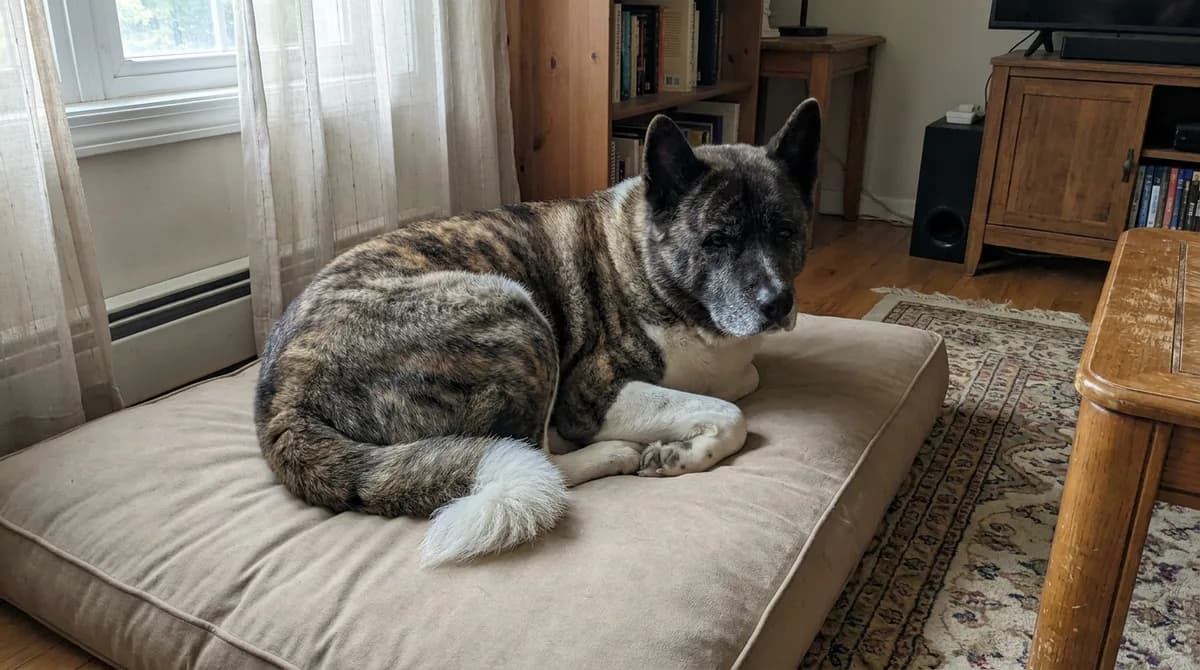
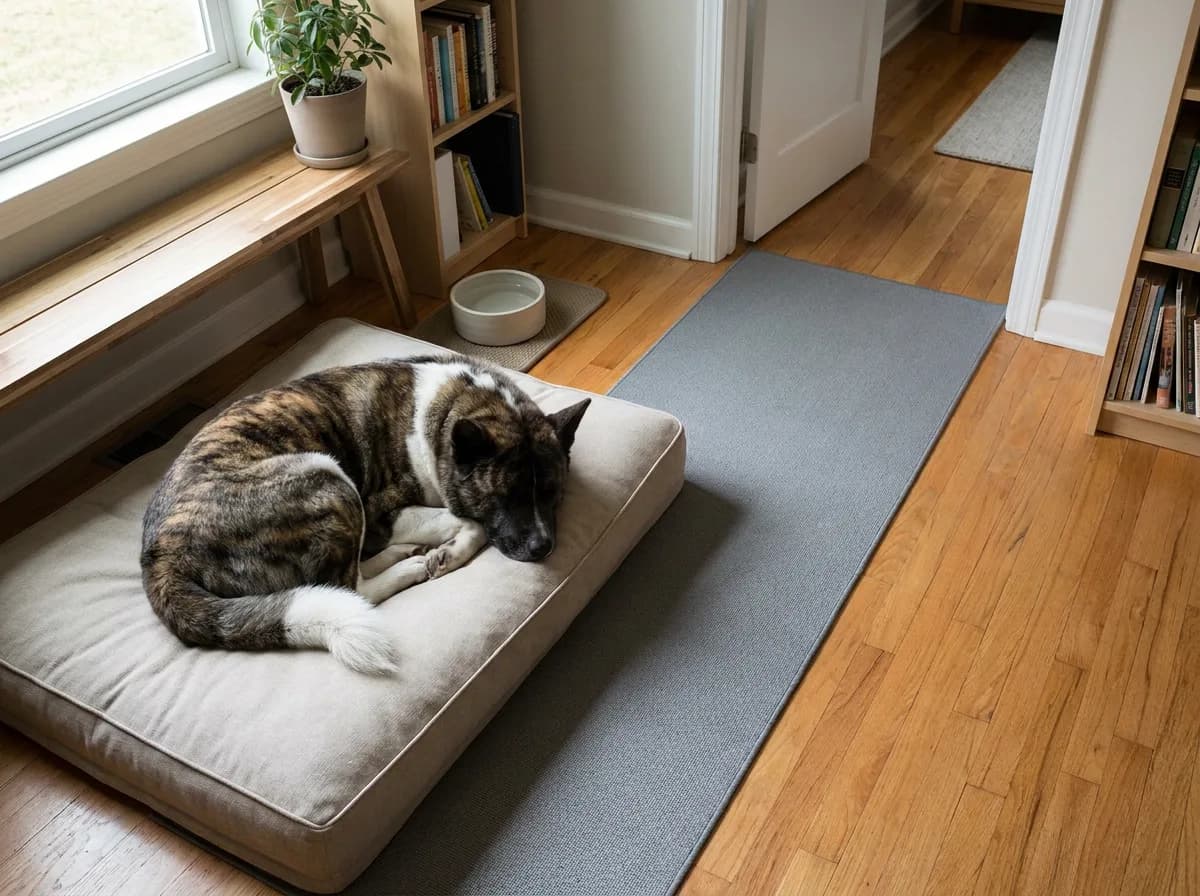
A mature Akita rests comfortably at home; appearance alone does not establish age-related disease.
Petful is reader supported. As an affiliate of platforms like Amazon and Chewy, we may earn a commission when you buy through links on this page. There is no extra cost to you.
Akita lifespan is commonly described as around 10–14 years in Akita Club of America material. That is a useful planning range, not a promise about how long an individual dog will live. Health history, daily care, and new changes in an aging dog deserve more attention than trying to predict a precise birthday.
The most useful steps are practical: understand the available health screening, maintain an appropriate body condition, make routine care manageable, and notice changes from your Akita's normal behavior and abilities.

Sign up for expert-backed reviews and safety alerts all in one place.
How long do Akitas live?
The Akita Club of America's breed information gives a lifespan range of 10–14 years. Treat it as an estimate rather than a deadline. Reaching the lower end does not mean a healthy dog has run out of time, and being younger than the range does not make a concerning symptom less important.
You may encounter other ranges, including 10–12 years, in breed summaries. These figures can reflect different sources, populations, or ways of describing typical longevity. Combining them into a new, more precise average would not improve the evidence. For this guide, the club range is clearly attributed and kept separate from an individual prognosis.
Plan for care throughout adulthood rather than saving all senior preparation for a particular age. A dog with a known condition may need additional support earlier, while another remains active later. The veterinarian's assessment and the dog's actual comfort should guide those decisions.
Akita breed overview
The Akita's substantial frame, dense coat, and independent disposition all affect how you organize care. Comfortable handling, suitable transport, and a workable grooming routine are useful long before the senior years. Our Akita breed overview explains the wider ownership picture. Longevity planning builds on those everyday needs rather than replacing them with a special routine at an arbitrary birthday.
Daily care that supports health
Daily care cannot guarantee additional years, but it gives you useful ways to support comfort and identify problems. A manageable activity routine, an appropriate diet, oral care, and veterinary follow-up matter more than a product marketed as a longevity shortcut.
Choose routines you can maintain. Short, consistent observations of appetite, movement, and comfort are easier to use than an elaborate system abandoned after a week. Keep the plan clear enough that everyone who feeds or walks the dog understands it.
Match walks to the dog you have today
Use a route and pace your Akita can manage comfortably. An even surface and opportunities to pause may suit a dog that struggles with steep ground or long outings. Do not turn a familiar walking distance into a test that the dog has to finish regardless of its response.
A Frisco Traffic Leash with Dual Padded Handles is one option for controlled outings. Check its hardware, fit with the dog's walking equipment, and your own grip. It does not replace an assessment of new stiffness or difficulty walking.
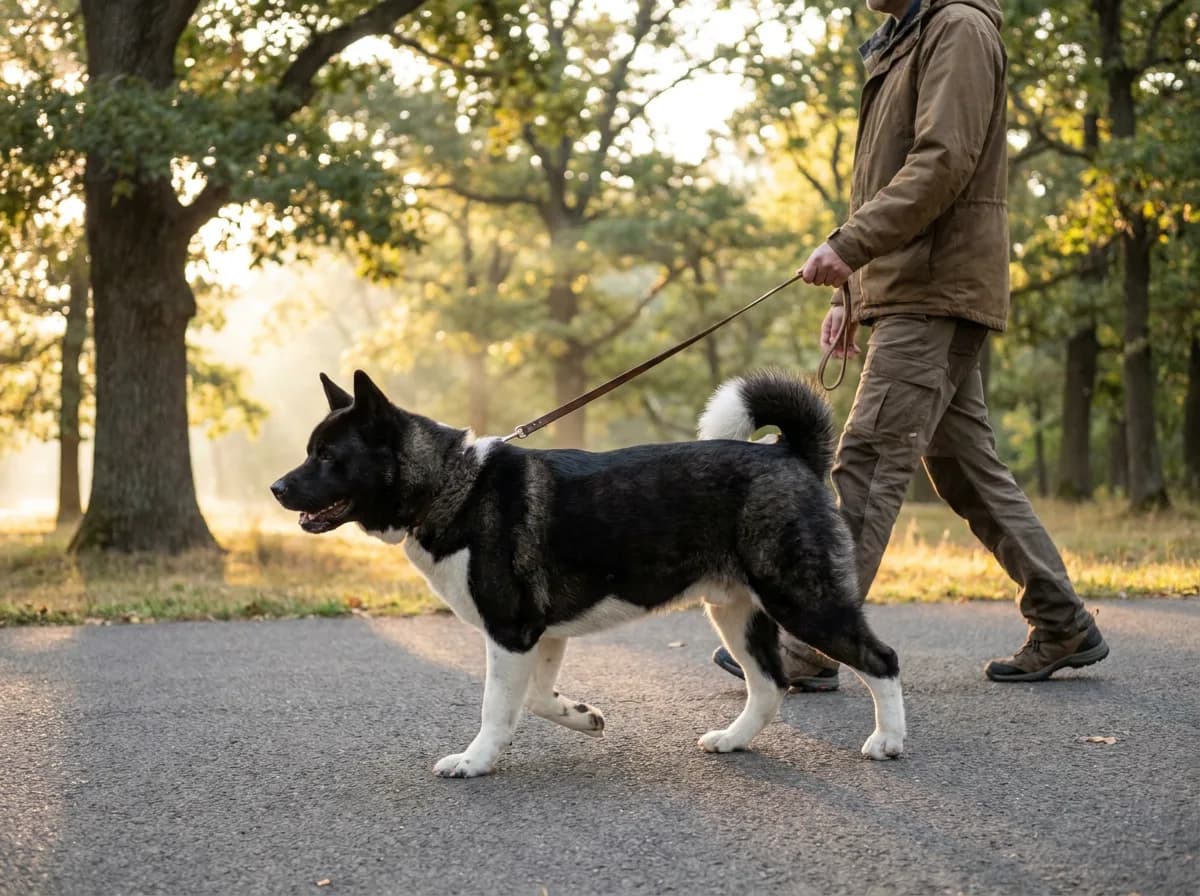
Notice the beginning and end of an outing. Does the dog rise comfortably to leave, move as usual, and settle afterward? A change may be easier to see during those transitions than while the dog is engaged in sniffing. Tell the veterinarian if ordinary activity becomes difficult rather than assuming the dog simply needs more exercise.
When a veterinarian has recommended activity restrictions or rehabilitation, follow that plan. Another Akita's routine, a generic distance target, or enthusiasm for the first few minutes does not determine what is appropriate for your dog.

Support controlled outings with a fixed-length lead. Check equipment fit and choose a route and pace comfortable for your Akita.
Petful may earn a commission when you click through to Chewy, at no extra cost to you.
Use body condition alongside the scale
Weight is useful, but it does not describe the whole dog. Ask the veterinary team to assess body condition and show you what to monitor beneath the coat. An Akita's fur can make gradual changes in body outline harder to notice.
Record weight measurements in a consistent way where possible and look at the trend with the veterinary team. Avoid trying to make a pet reach the top of a breed weight range. A dog can fit a numerical range while still needing a different feeding or activity plan.
Bring the actual food information to an appointment:
- The main food's name, life-stage statement, and calorie information.
- The measured daily amount, including how you measure it.
- Treats, chews, toppings, and food used to give medication.
- Any recent change in appetite, portions, or weight.
- Supplements and other products the dog receives.
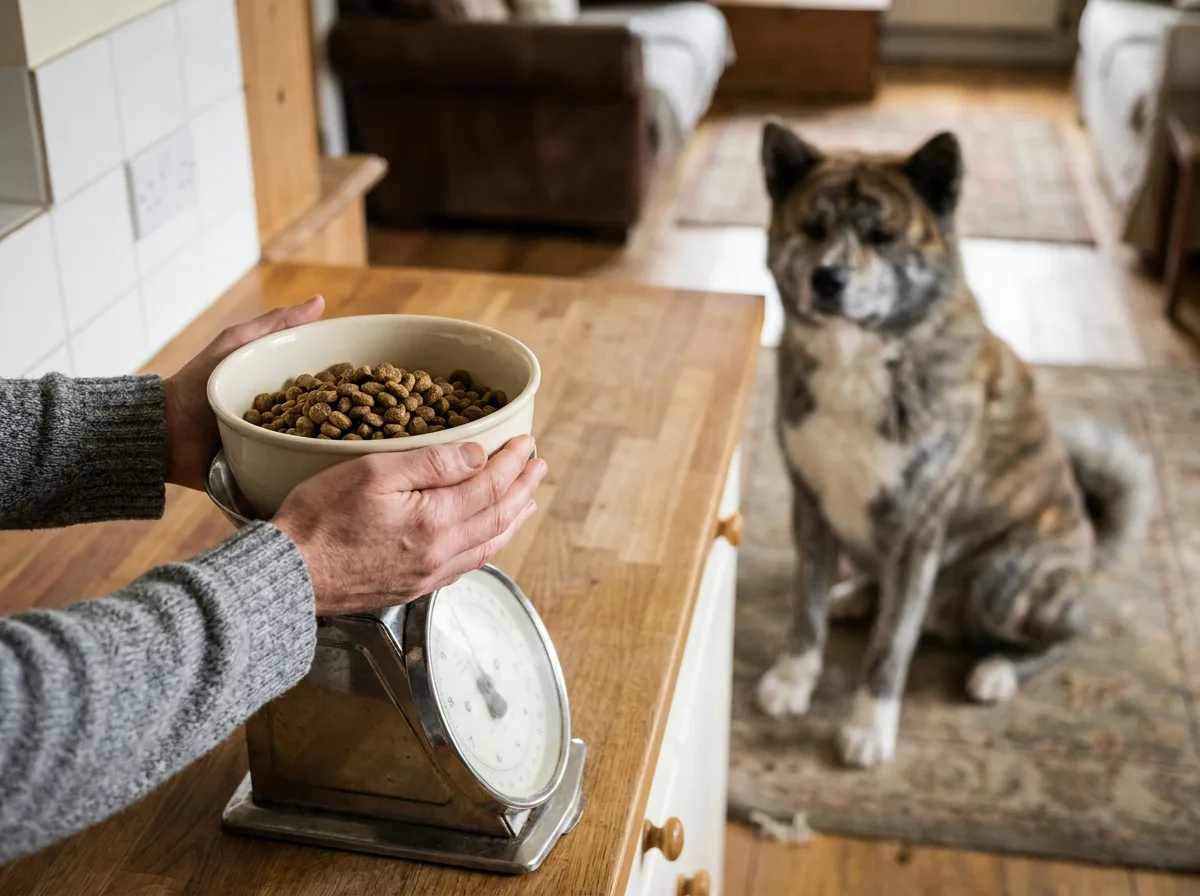
A kitchen scale can make portions easier to reproduce when the feeding plan uses grams. Its display is a measurement of food, not a prescription. The appropriate amount depends on the food and the dog's needs, so changing products may also require reviewing portions.
Include rewards without losing track of food
Training rewards and small extras can accumulate when several people feed the dog. Use one agreed daily allocation rather than letting every caregiver independently add “just a few.” If part of the main meal works as a reward, move it into the training portion instead of adding a second amount.
WebVet's guide to daily training treats explains calorie accounting and portioning. A standard treat allowance is a starting framework for a healthy dog, not a substitute for restrictions that apply to a medical diet. The veterinary team's instructions take priority when the dog's needs differ.
Do not interpret appetite loss as a cue to keep adding richer foods indefinitely. Record what the dog is willing to eat and contact the clinic when appetite changes or the dog seems unwell. The response should address the cause rather than merely conceal a change in the amount eaten.
Adjust a feeding plan without guessing
A portion can remain unchanged while the dog's needs change. Reduced activity, a new food with a different calorie density, or extra food used for medication may alter the overall intake. Review the whole day before deciding that the main meal is the only problem.
Compare the calorie information on the exact formulas, not just the size of the scoop. Two foods can provide different amounts of energy in the same apparent volume. If you switch foods, ask how to translate the feeding plan rather than assuming the previous scoop count still applies.
Apply the same accounting to rewards:
- Check the calorie information rather than judging by physical size.
- Remember that breaking a treat into pieces changes the number of rewards, not the total calories.
- Set aside the planned amount and include food given by visitors or a dog walker.
If the dog is losing weight unexpectedly, do not assume that adding more food is the complete answer. If weight is increasing, do not begin a severe restriction without guidance. The veterinary team can assess whether the change reflects intake, activity, illness, or a combination and set a realistic plan for follow-up.
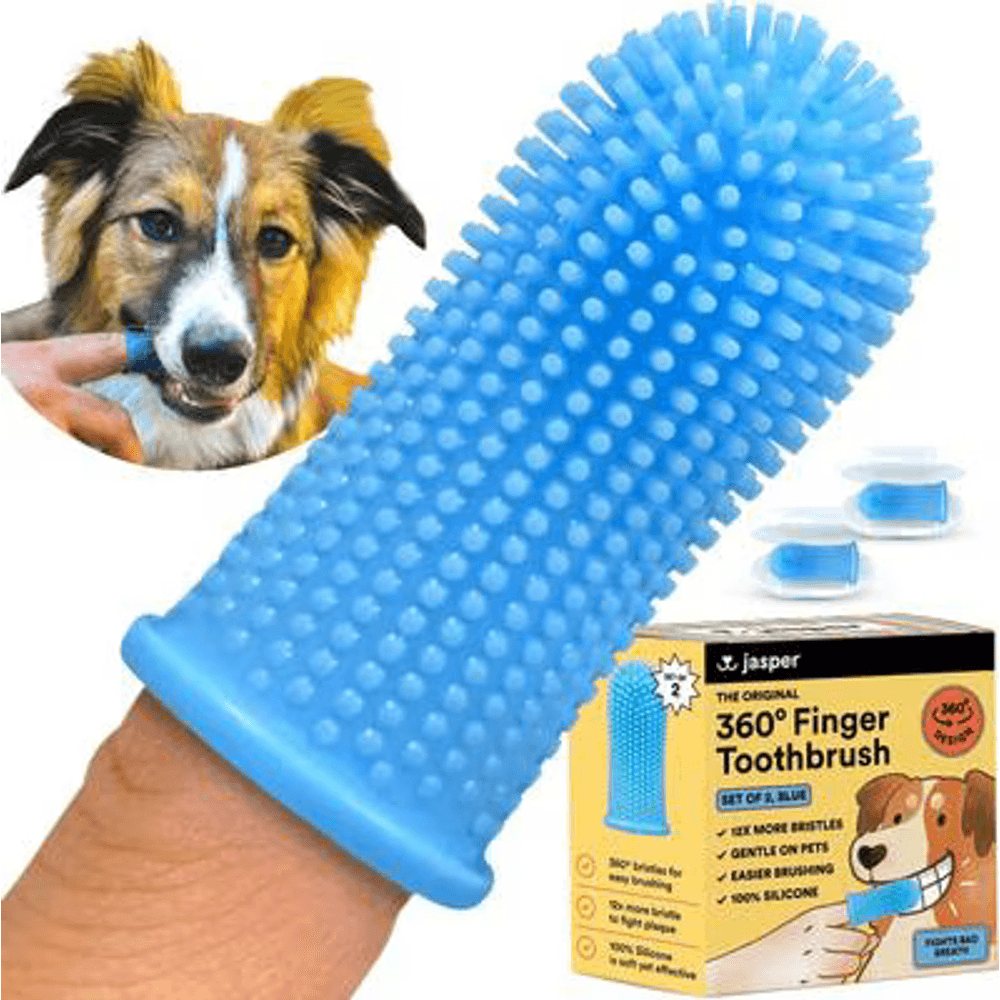
Consider a finger toothbrush for an Akita comfortable with mouth handling. Ask your veterinarian about suitable toothpaste and the dog's dental needs.
Petful may earn a commission when you click through to Chewy, at no extra cost to you.
Make oral care a comfortable routine
Ask your veterinarian about the dog's mouth, appropriate home care, and whether professional dental treatment is needed. Brushing is easiest to organize when the dog is already comfortable with gentle contact around the face. Introduce brief steps and stop if handling causes resistance or apparent pain.
For an Akita that accepts mouth handling, the Jasper 360 Dog Finger Toothbrush is one option to discuss. Use suitable dog toothpaste and the technique your veterinary team recommends. Do not force your fingers into a reluctant dog's mouth or try to brush through a painful area.
Watch eating as well as the visible teeth. A change in chewing, dropping food, or avoiding mouth contact is worth reporting. Home care does not establish that the entire mouth is healthy, and a dog continuing to eat does not make every dental concern harmless.
Keep brushing comfortable. If needed care cannot be completed safely at home, ask the clinic for a plan. A product cannot replace assessment or necessary dental care.
What can Akitas not eat?
Akitas need the same attention to unsafe ingredients as other dogs; there is no special breed exemption. Xylitol, which may be present in some sugar-free foods and other products, can be dangerous to dogs. Check the exact ingredients before offering a human food, and keep unsuitable foods, medications, and supplements securely out of reach.
If your dog may have eaten something toxic, contact a veterinarian or animal poison service immediately. Keep the packaging and note what was eaten, roughly how much, and when. Do not wait for symptoms or induce vomiting unless a professional specifically instructs you to do so.
A food can also be unsuitable because it conflicts with the dog's prescribed diet or digestive history. Ask before using new chews, rich treats, or supplements as part of a care routine. “Natural” does not tell you whether an ingredient is safe, whether the portion is appropriate, or whether it fits your dog's treatment.
Akita size and measurements
Do Akitas get big? Yes, and their adult dimensions affect transport, handling, equipment, and access around the home. Size does not provide a calorie prescription or a personal lifespan prediction. Our Akita size and measurement guide explains the separate standards and practical measurements. Use the actual dog's build and body condition when planning care rather than treating a large adult weight as a goal.
Why lifespan estimates vary
Understanding the limits of estimates starts with the source. A breed-club range, a study's median survival estimate, and a veterinarian's prognosis answer different questions. A range gives broad planning context. A research result describes dogs included under particular methods. A prognosis considers the individual dog's condition and the information available about it.
What is the average life expectancy of a dog? The 2024 UK study estimated overall median survival at 12.5 years across 584,734 dogs, including purebreds and crossbreeds. That figure is a median, not an arithmetic mean or an estimate of an older dog’s remaining years. It describes the study population; breed, size, health and the population sampled matter when applying it to an individual Akita.
| Evidence | Useful interpretation | Limit |
|---|---|---|
| Attributed club range | The Akita Club of America gives 10–14 years as broad breed guidance | It is not an individual prediction or a deadline |
| Study population | A research estimate describes dogs included under defined methods | It may not represent another country, breed definition, or individual dog |
| Individual health assessment | Current findings and health history help guide care and prognosis | Uncertainty remains and the assessment can change |
| Owner reports | A dog's history can illustrate an experience | One long-lived or short-lived dog does not establish a breed average |
Ask what a number represents
“Average” is often used loosely. A median, a mean, and a typical range are not interchangeable. Likewise, an estimate beginning at birth is not automatically the number of years remaining for a dog that has already reached an older age.
That distinction helps prevent unhelpful calculations. Do not subtract your dog's age from the upper end of 10–14 and treat the answer as a countdown. Instead, ask what care decisions are relevant now and which observations should prompt a reassessment.
A mean is calculated from the ages included in the dataset; a median marks the midpoint of the distribution. Either can be useful when the study explains its methods. Neither says that most individual dogs will die on the same birthday or that a dog reaching that age has a particular amount of life remaining.
Read the study population
The dogs included also matter. A dataset assembled from veterinary records may answer a different question from reports submitted by owners or breed-club guidance. Check whether the analysis separates breeds and types, how ages were recorded, and whether the published number concerns deaths or survival over time. A precise decimal does not remove those limits.
For a care decision, move from the population question to the clinical one: what is known about this dog's current health, and what could reasonably improve its comfort or function? That keeps a lifespan statistic in its useful role as context.
American and Japanese Akita differences
American Akita and Japanese Akitainu have distinct standards, but the sources used here do not establish separate survival estimates for them. Physical differences alone cannot supply the missing longevity figures. Our American Akita vs Japanese Akita comparison explains their identities and measurements. Keep those distinctions clear without converting them into an unsupported claim that one type lives longer.
Male, female and mixed-breed life expectancy
Sex and type uncertainty matter: the available breed-club estimate does not give a verified female-specific average or separate American and Japanese estimates. It also does not establish a separate male figure that can be used to predict a particular dog's life. A female Akita's smaller typical measurements are not a calculation for additional years.
For a male or female dog, the actionable information is its health history, examination findings, current body condition, and changes over time. Sex is part of the clinical history, but it is not enough to supply an individual prognosis. Ask your veterinarian which findings matter for the dog in front of you.
Mixed ancestry does not provide an arithmetic shortcut
Do not average two parent-breed lifespan ranges to predict a mixed dog's lifespan. That calculation would look precise without being validated for the individual. Mixed ancestry does not automatically erase inherited risks or guarantee better health.
Ask about available parent health information when it exists, then plan care around the mixed dog's actual size, condition, and medical needs. For an adult rescue with an estimated age, discuss how that uncertainty affects planning instead of presenting the estimated birthday as exact.
Akita mixes and ancestry
Is an Akita Husky mix a good dog? Suitability depends on the individual's behavior and whether the household can meet its needs; it does not answer how long the dog will live. The same applies to a shepherd and Akita mix. Our Akita mixes and ancestry guide separates ancestry labels from dependable predictions and explains the questions to ask before choosing a mixed dog.
Planning for your Akita's senior years
Senior planning starts with knowing what is usual for your dog. A senior baseline gives you a point of comparison for appetite, drinking, movement, sleep, and behavior. It is a practical record, not a home diagnostic test.
Begin with ordinary observations you can repeat: how the dog gets up from its usual bed, completes a familiar short walk, approaches meals, and settles at night. Describe what happens rather than deciding the cause. “Paused before the back step” is more useful than “arthritis is worse” if no assessment has established why the step is difficult.
Make the route through the home easier
Look at the path between the resting place, water, and the outside door. Slippery flooring, awkward turns, and unnecessary steps may make that route harder. Secure non-slip surfaces and clear clutter so that the dog can move without weaving around obstacles.
A low bed with sufficient usable room can make resting easier to arrange. The FurHaven NAP Ultra Plush Orthopedic Deluxe bed is one option when its dimensions and support suit the dog. Check the actual sleeping area, ease of access, and care instructions; “Jumbo” is a product size label, not proof that it fits every Akita.
Bedding supports comfort but does not diagnose or treat the cause of stiffness. If getting onto the bed or rising from it remains difficult, report that problem rather than repeatedly changing bedding and postponing an examination.
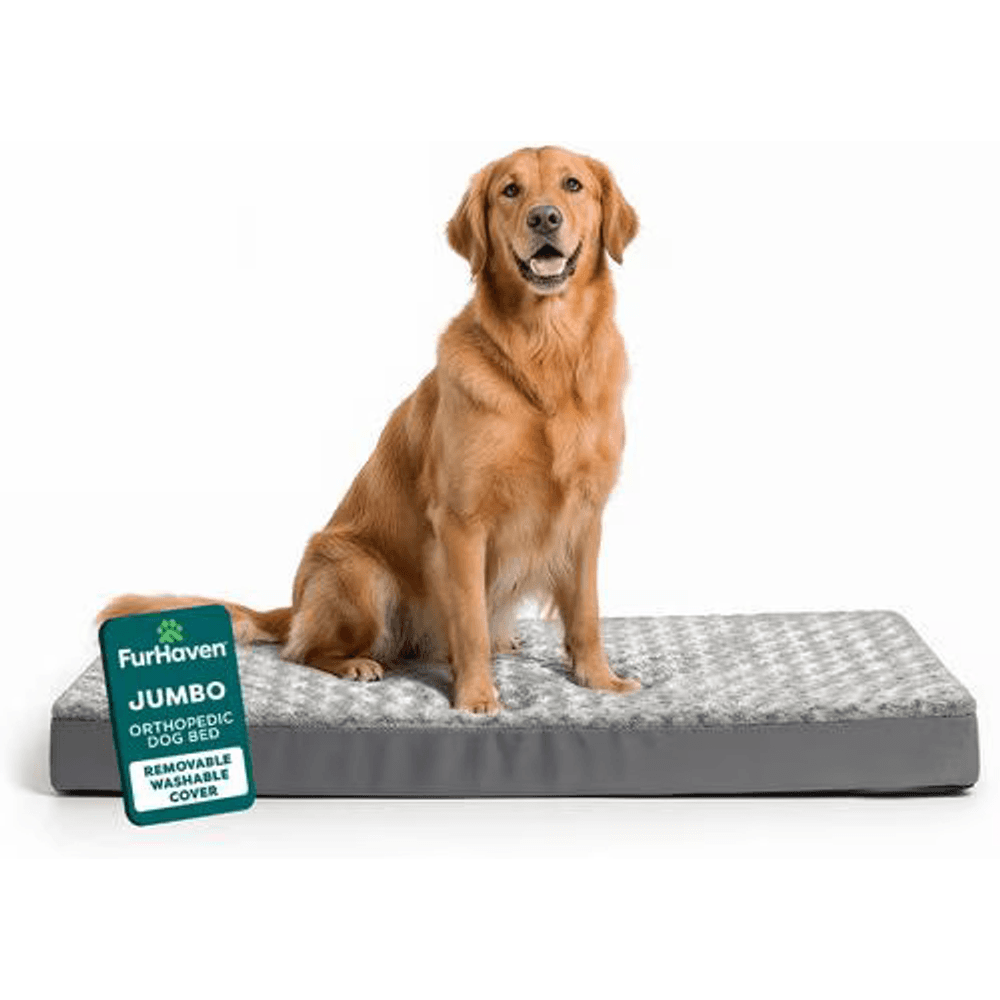
Consider a low resting surface with room for your Akita to stretch. Check the bed's dimensions, support, and access against your dog's needs.
Petful may earn a commission when you click through to Chewy, at no extra cost to you.
Check the small transitions that strain mobility
A senior dog may manage straight walking yet struggle when turning in a narrow hallway, stepping over a threshold, or getting into position to rest. Watch these ordinary transitions without asking the dog to repeat them. They help identify where a change to the home might be useful.
Try to keep essential destinations on an accessible route. Moving the water or resting area may be easier than repeatedly helping the dog through an awkward section of the house. Secure rugs so they do not slide or create curled edges, and leave enough space to turn.
If help with movement is needed, ask the veterinary team to demonstrate an appropriate approach. An Akita's weight and your own balance both matter. Pulling on a collar or improvising a lift can make an uncomfortable situation harder to manage. The right assistance depends on what the dog can do and why it is having difficulty.
Keep a baseline that shows useful changes
Choose a short format that caregivers can share. Record the observation, date, and relevant circumstances. A difference after an unusually active day may mean something different from a pattern that appears during the same ordinary task every morning.
| Area | Usual pattern to record | New changes to report |
|---|---|---|
| Appetite | Typical meal amount and interest | Appetite changes, difficulty eating, or repeated unfinished meals |
| Thirst and urination | Usual drinking and toileting routine | Noticeable changes in drinking or urination |
| Mobility | Rising, walking, turning, and using familiar steps | Mobility changes, limping, slipping, or reluctance |
| Sleep and rest | Comfortable resting positions and usual sleep pattern | Restlessness, difficulty settling, or a changed sleep pattern |
| Weight and body condition | Dated measurements and the veterinary team's assessment | Unexplained gain, loss, or change in body condition |
| Behavior | Usual interaction and tolerance of familiar handling | Withdrawal, irritability, avoidance, or other new changes |
WebVet's senior dog health guide provides a broader observation checklist. Bring the most relevant changes to appointments rather than trying to record every movement. A concise pattern is easier to interpret than pages of unrelated details.
Review comfort through activities the dog values
List a few ordinary activities that matter to your Akita: a familiar sniffing route, resting near family, eating comfortably, or going outside without difficulty. These give you meaningful reference points when discussing treatment or adjustments with the veterinarian.
A change in one activity may suggest an accommodation. A shorter route, an easier resting location, or a different time of day could make a routine more manageable. Ask the veterinarian which modifications suit the cause of the difficulty rather than assuming all slowing down needs the same response.
If several valued activities are becoming difficult, arrange a broader conversation about comfort and quality of life. Describe both good periods and difficult ones. This helps the veterinarian understand the dog's day rather than relying only on how it behaves during a brief visit.
Discuss treatment goals in everyday terms
When a condition is diagnosed, ask what the proposed plan is intended to improve. The goal may involve comfort when rising, the ability to complete a manageable walk, easier eating, or better rest. Knowing the goal helps you report whether treatment is making a meaningful difference.
Ask how quickly a response is expected, what adverse effects to watch for, and which change should prompt a call. Those details depend on the condition and treatment, so they should come from the treating veterinarian rather than another dog's schedule.
Discuss the practical requirements as well:
- Can the dog comfortably accept the handling involved?
- Can you safely provide the necessary transport?
- Can every caregiver follow the dosing or care instructions?
- What should you do if one part of the plan becomes difficult?
Explain limitations early so the team can consider suitable options. This is part of making care workable, not a reason to abandon care altogether.
For chronic problems, review both benefits and difficulties over time. More activity is not the only measure of success: comfortable sleep, willingness to move around the home, and participation in familiar routines may also matter. Bring examples that reflect the goals you agreed on.
Organize follow-up so the plan is usable
After an appointment, confirm what to do, what improvement to look for, and when to call if that improvement does not occur. Ask which changes require an earlier review. A treatment plan is easier to follow when those decisions are clear before you leave the clinic.
Keep medication names, instructions, and recheck information in one accessible place. Tell the veterinarian about every supplement and over-the-counter product. Do not use another dog's prescription or alter a dose because your Akita is larger or seems more uncomfortable.
A shared record is particularly useful when more than one person gives medication or meals. It should show what was actually given, not just what was planned. If a dose is missed or you are unsure whether it was administered, ask the clinic how to proceed rather than improvising.

Compare coverage choices for your pet, then request a quote directly on Lemonade.
- Check a price for your pet
- Review available coverage choices
- See the terms before you decide
Eligibility, waiting periods, limits and exclusions apply.
Petful may earn a commission when you click through to Lemonade, at no extra cost to you.
Akita costs and budgeting
The price of an Akita does not capture the cost of long-term care. Include routine examinations, prescribed treatment, follow-up testing, suitable transport, and help during travel or illness in your planning. Our Akita price and budgeting guide explains how to separate purchase or adoption examples from ongoing expenses. Obtain local estimates for the care your dog actually needs.
A personalized Lemonade pet insurance quote can be one part of that budget. Compare coverage, exclusions, waiting periods, deductibles, and reimbursement terms. Check how the policy handles the dog's existing history rather than assuming a new policy will cover a condition already present.
Plan transport and backup care before they are urgent
An Akita that normally enters the vehicle independently may need a different arrangement when uncomfortable. Discuss safe assistance with the veterinary team and consider whether your vehicle, equipment, and available helpers can accommodate the dog.
Introduce suitable equipment gradually while the dog is comfortable. Do not make an emergency the first attempt to use an unfamiliar aid. Ensure any ramp or support is appropriate for the actual dog and setting, and follow the manufacturer's instructions.
Choose a backup caregiver who can manage the routine and physical needs. Show them the walking route, resting area, food plan, and medication record. Make sure they know which veterinary practice to contact and how to describe the dog's usual condition.
Protect rest without removing companionship
Place a comfortable resting area where the dog can choose quiet without being continually isolated from ordinary family life. Keep children and other animals from interrupting rest. An older dog should not have to repeatedly move away to obtain personal space.
Offer familiar interaction in forms the dog enjoys. A shorter outing, gentle grooming that remains comfortable, or a quiet food-search activity may be more manageable than a former routine. Stop or adapt the activity if the dog appears uncomfortable; the aim is participation without pressure.
Revisit the arrangement as needs change. A setup that worked several months ago may no longer offer easy access to water or the outside door. Small practical adjustments can be useful even when the medical plan remains the same.
Talk about quality of life before a crisis
Quality of life is broader than reaching a particular age. Ask whether your dog can eat and drink comfortably, rest, move to essential places, and participate in activities it still values. If these become difficult, discuss what can be treated, accommodated, or relieved.
A record of good and difficult days can help identify a trend, but it should support a conversation rather than become a rigid score that makes the decision for you. Describe what a difficult day looks like and whether the dog recovers its usual comfort. Also tell the veterinarian about changes that are becoming more frequent.
When illness is advanced, ask about:
- The likely course of the condition.
- Realistic treatment and comfort goals.
- Signs that the current plan is no longer enough.
- Comfort-focused care and end-of-life options before an emergency occurs.
These conversations can be emotionally difficult. Bringing a trusted person or writing down your main questions beforehand may help you understand the choices. The purpose is to make decisions around the dog's welfare and your veterinarian's assessment, not to feel obliged to reach the upper end of a breed lifespan range.
Health problems to discuss with your veterinarian
A breed's screening recommendations identify important areas to discuss, but they are not a list of conditions every Akita will develop. Separate inherited-risk assessment, the dog's current symptoms, and treatment decisions. They answer different questions.
Bring concerns about movement, eyes, skin, coat, weight, or energy to the veterinarian with a description of when they began. Avoid using a breed label to decide the diagnosis before the examination.
Mobility and discomfort
Stiffness, limping, difficulty rising, or reluctance to use steps deserve assessment. Pain can alter activity and tolerance of handling, but observation alone does not establish which joint or other structure is responsible.
WebVet's guide to senior dog joint pain and comfort explains observations and home adaptations to discuss. Non-slip routes and comfortable rest can support daily life while a veterinarian evaluates the cause. They do not replace that assessment.
Ask what comfortable activity looks like for your dog and how to judge the response. If a walk repeatedly leaves the dog struggling afterward, report it. A plan should account for recovery and ordinary function, not only the amount of activity completed.
Thyroid concerns need clinical context
Weight gain, reduced energy, and coat changes can occur with hypothyroidism, but none proves the diagnosis. A low thyroid measurement alone is also not the whole answer; other illness, medications, and the rest of the clinical picture can affect interpretation.
WebVet's hypothyroidism in dogs guide explains the distinction between signs, testing, and confirmed disease. Tell the veterinarian about food intake, weight trends, changes in activity, and all medications or supplements.
Do not add a thyroid supplement or iodine product as a general longevity measure. If a condition is diagnosed, follow the prescribed plan and monitoring instructions. Looking better on treatment does not establish that medication can be stopped without veterinary guidance.
Eye and coat changes are observations, not diagnoses
An eye examination used for breeding screening is different from assessing a new eye problem in a pet. Tell the clinic about changes in eye comfort or appearance and ask how promptly the dog should be seen. Do not assume a past screening result explains a current problem.
Similarly, a thick coat can make skin changes harder to notice. During comfortable grooming, look for changes from the dog's usual coat and skin. Report persistent thinning, irritation, or discomfort rather than assigning a cause from a photograph or a breed description.
The same principle applies when several changes occur together. A dog may have more than one issue, and a single appealing explanation can overlook part of the problem. Give the veterinarian the sequence and let the examination guide the workup.
Health screening before bringing an Akita home
The Akita Club of America's current health-clearance guidance identifies hips, eyes and thyroid among the minimum screening areas for breeding dogs. Request the actual results for the parents of a puppy, rather than treating a statement that the parents are “healthy” as equivalent evidence.
A routine examination, inherited-risk screening, and a consumer DNA test are different kinds of information. None should be represented as a guarantee of lifespan. Their value is in making better-informed breeding and care decisions and identifying questions that still need an answer.
Know which records you are requesting
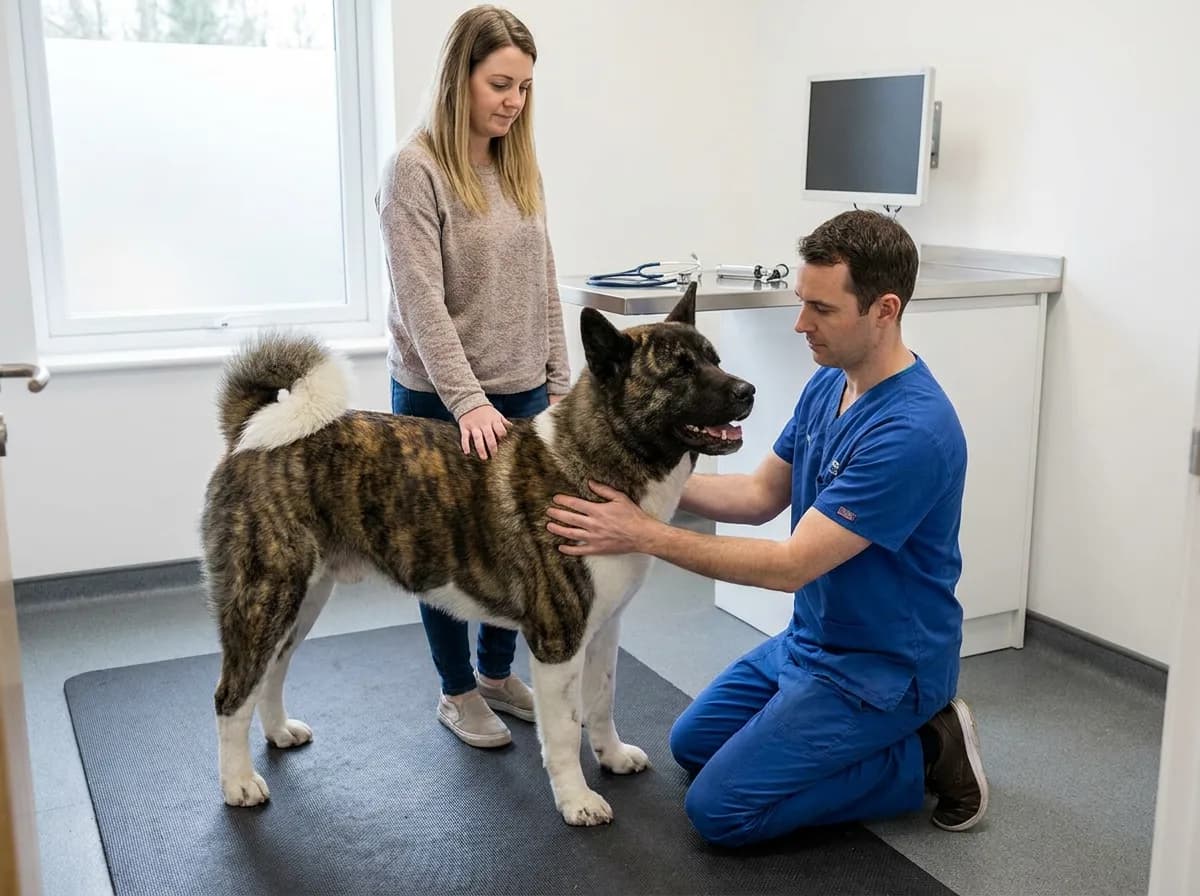
The club lists OFA hip evaluation or PennHIP, an OFA eye registry examination, and a thyroid panel that includes TgAA. Ask the breeder to identify the results for each parent and explain any missing or unclear item. The documentation should identify the dog, not merely the kennel.
| Record | What to request | What it does not replace |
|---|---|---|
| Hip evaluation | The parent's OFA hip or PennHIP documentation | Examination of a pet with new mobility problems |
| Eye examination | The parent's OFA eye registry record | Assessment of a new eye concern |
| Thyroid screening | The recommended thyroid panel, including TgAA, for the identified parent | Clinical interpretation of a pet's symptoms and testing |
| Routine veterinary history | Available examinations, vaccines, treatments, and follow-up recommendations | The separate breed-recommended parent screening records |
| DNA testing | The exact test, variants assessed, and interpretation | Hip imaging, an eye examination, thyroid screening, or an individual lifespan prediction |
The club also lists additional evaluations, including elbows, patellar luxation, and amelogenesis imperfecta testing, as optional. Keep that distinction clear when reviewing a breeder's claims. An optional test may contribute information, but it should not be substituted for the minimum clearances.
Read the result rather than counting certificates
Check that each document belongs to the relevant dog and note when it was obtained. Ask what the result means and whether any follow-up is recommended. Several pages of paperwork are not necessarily several different kinds of health screening.
A normal result addresses the condition or examination assessed under that test's limits. It does not prove that the dog has no inherited risk, will never develop another problem, or will live to a specific age. Responsible interpretation preserves the useful information without overstating it.
For an adopted adult, the available records may be different. Request examinations, treatments, medications, and known concerns from the organization. Give those records to your veterinarian so the first care plan builds on what has already been done.
Separate puppy screening from lifelong care
Parent screening informs a decision before a puppy is bred or chosen. The puppy's first examination addresses its own current health. Later examinations respond to growth, routine preventive needs, and any new concerns. These stages complement one another; none makes the others unnecessary.
Ask the veterinarian which preventive measures fit your dog's age, health, location, and activities. That can include discussion of vaccination and parasite prevention, but the schedule should be individualized rather than borrowed from an old breed brochure.
For an older adopted Akita, start with the available history and current examination rather than assuming every missing puppy record must be recreated. The question is which information will change care now. A targeted plan can be more useful than collecting tests without a clear reason.
Use the first appointment to establish continuity
Bring the dog's records, current food details, medications, and the questions that affect daily care. Ask which preventive measures, screening, and follow-up are appropriate for that dog. Avoid repeating tests merely because a document was overlooked or assuming that a previous record eliminates the need for an examination.
Clarify how to contact the practice between appointments and what to do after hours. Keep copies accessible to the people who may care for the dog. A record is most useful when it can guide a real decision, especially if an unfamiliar clinic must see the dog unexpectedly.
Changes that need prompt veterinary attention
New changes from normal deserve attention at any age. Do not dismiss difficulty moving, altered appetite, unusual withdrawal, or new handling sensitivity simply because the dog falls within a typical senior age range. Contact your veterinarian for advice about timing based on the change and how the dog is doing.
Urgent changes need emergency attention rather than a routine appointment. Suspected poisoning, collapse, serious breathing difficulty, or repeated unsuccessful attempts to vomit should prompt an immediate call to an emergency veterinary service.
Recognize possible GDV without trying to diagnose it at home
Gastric dilatation and volvulus, or GDV, is an emergency involving the stomach. Repeated unproductive retching, salivation, and restlessness are among the signs described by the Merck Veterinary Manual. These signs do not tell an owner the exact cause, but they are not a reason to wait and see whether the dog settles.
Contact an emergency veterinarian immediately if GDV is suspected. Do not delay transport to try a home remedy, offer a large meal, or wait for a visible change in abdominal size. Follow the emergency team's instructions.
Keep the practical response simple:
- Call the veterinary service and describe the signs and when they started.
- Ask where to take the dog and begin arranging transport.
- Bring medication information and relevant records if readily available.
- Avoid delaying care while searching for a complete history or another online explanation.
Akita temperament and behavior
A sudden change in Akita Inu temperament can be relevant to health, especially if it appears during movement or handling. Breed reputation does not explain every new response. Our Akita temperament and behavior guide covers everyday management, affection, and training. Protection expectations or intelligence rankings cannot tell you why a previously comfortable dog is now avoiding contact; report the change and its circumstances.
Describe what changed and what the dog can still do
When you call the clinic, explain the main concern first. State whether the dog can stand, move, eat, drink, and rest as usual, along with any obvious distress. Give the onset and whether the problem is worsening. The veterinary team can use those details to advise the next step.
A short video of naturally occurring movement may help when the clinic requests it, but do not make the dog repeat a painful action. Do not postpone urgent care to obtain a recording. The priority is getting the dog appropriate help, not creating a perfect account of the event.
Akita lifespan questions
There is no verified sex-specific figure in the evidence cited here. Female measurements and smaller typical size cannot be converted into a personal lifespan estimate. Use the attributed club range for broad planning and discuss the dog's individual health history with your veterinarian.
No. DNA testing has screening limitations and cannot predict lifespan. A test may provide information about the specific variants it assesses, but it does not replace hip evaluation, eye examination, thyroid screening, or ongoing clinical care. Ask what the exact result can and cannot establish.
Mixed ancestry is not a longevity guarantee. Parent health and individual care remain relevant, and averaging parent-breed lifespan ranges does not produce a validated prediction. Plan around the dog's actual medical history and needs rather than assuming a cross automatically adds years.
Slowing down deserves observation and, when new or persistent, veterinary assessment. Pain can change activity, but it is not the only possible explanation. Describe the tasks that have become difficult and when the change began instead of assuming age alone accounts for it.
BVMS, MRCVS
Dr. Pippa Elliott, BVMS, MRCVS, is a veterinarian with nearly 30 years of experience in companion animal practice. Dr. Elliott earned her Bachelor of Veterinary Medicine and Surgery from the University of Glasgow. She was also designated a Member of the Royal College of Veterinary Surgeons. Married with 2 grown-up kids, Dr. Elliott has a naughty Puggle named Poggle, 3 cats and a bearded dragon.
Sign up for expert-backed reviews and safety alerts all in one place.