Akita Dog Breed: Temperament, Size, Care and Family Fit
The Akita is a powerful Japanese breed with a distinctive curled tail and a substantial coat. Learn how American and Japanese standards differ, what daily care involves, and how to assess household fit.

Petful is reader supported. As an affiliate of platforms like Amazon and Chewy, we may earn a commission when you buy through links on this page. There is no extra cost to you.
The Akita is a large, powerful dog of Japanese origin, known for its erect ears, curled tail and close attachment to familiar people. Its striking appearance comes with practical responsibilities: thoughtful introductions, consistent training, substantial grooming and an adult handler prepared for a strong dog.
Before choosing an Akita puppy or adopting an adult, establish which breed standard the dog belongs to and what you know about that individual. American Akita and Japanese Akitainu measurements differ. Neither a photograph nor a reputation for loyalty can tell you whether a particular dog will fit your household.

Sign up for expert-backed reviews and safety alerts all in one place.
What is an Akita?
The Akita is a Japanese working breed with a substantial body, dense coat and alert expression. In the United States, the American Kennel Club standard titled Akita describes the dog commonly called the American Akita. The Japanese Akitainu has its own standard. Knowing which one a breeder or rescue means helps you interpret size, appearance and registration records accurately.
The name comes from Akita Prefecture in Japan. In this context, Akita identifies the breed's geographic origin; it is not a promise that every dog will behave like a famous loyal companion. You may also encounter the names Akita Inu, Akita Ken and Japanese Akita. The informal description bear Akita refers to appearance, not a separate standard or a guaranteed temperament. Ask which registry and standard accompany those descriptions, especially when comparing listings from different countries.
| Feature | What it means for an owner |
|---|---|
| Japanese origin | The breed takes its name from Akita Prefecture in Japan |
| Large working dog | Plan for adult strength, secure access, transport and consistent handling |
| American Akita standard | Males measure 26–28 inches and females 24–26 inches at the withers |
| Japanese Akitainu standard | Males measure 25–27.5 inches and females 22.5–25 inches at the withers |
| Substantial coat | Allow time for brushing and managing loose undercoat |
| Individual household fit | Evaluate behavior history, children, resident pets and the daily care routine |
Akita mixes and ancestry
A dog described as an Akita mix needs an individual assessment. For a German Shepherd and Akita mix, for example, ask whether the parents are documented or whether the description is a visual guess. A curled tail or broad head cannot settle ancestry. Nor can you average two breed descriptions to predict adult size, shedding or temperament. Observed behavior and reliable records are more useful when deciding where the dog can live comfortably.
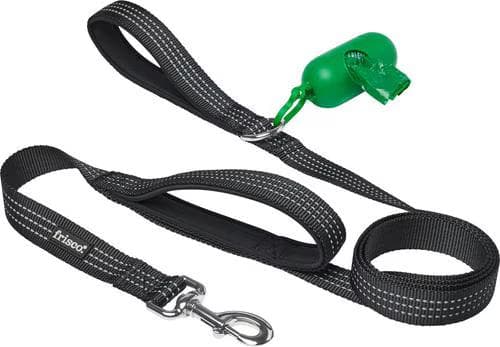
A six-foot traffic leash with two padded handles for supervised walks and everyday handling practice.
Petful may earn a commission when you click through to Chewy, at no extra cost to you.
Everyday equipment should suit the actual dog. A fixed-length Frisco Traffic Leash offers a six-foot lead and an additional handle for supervised walks. Check the fit and condition of the collar or harness as well; a second handle does not replace teaching the dog to walk without pulling.
American Akita and Japanese Akitainu
The most useful starting point is the written standard, supported by the dog's records. The American Akita standard describes a powerful, heavily boned dog with a broad head and double coat. Its permitted appearance includes a wider range of colors and markings than the Japanese standard.
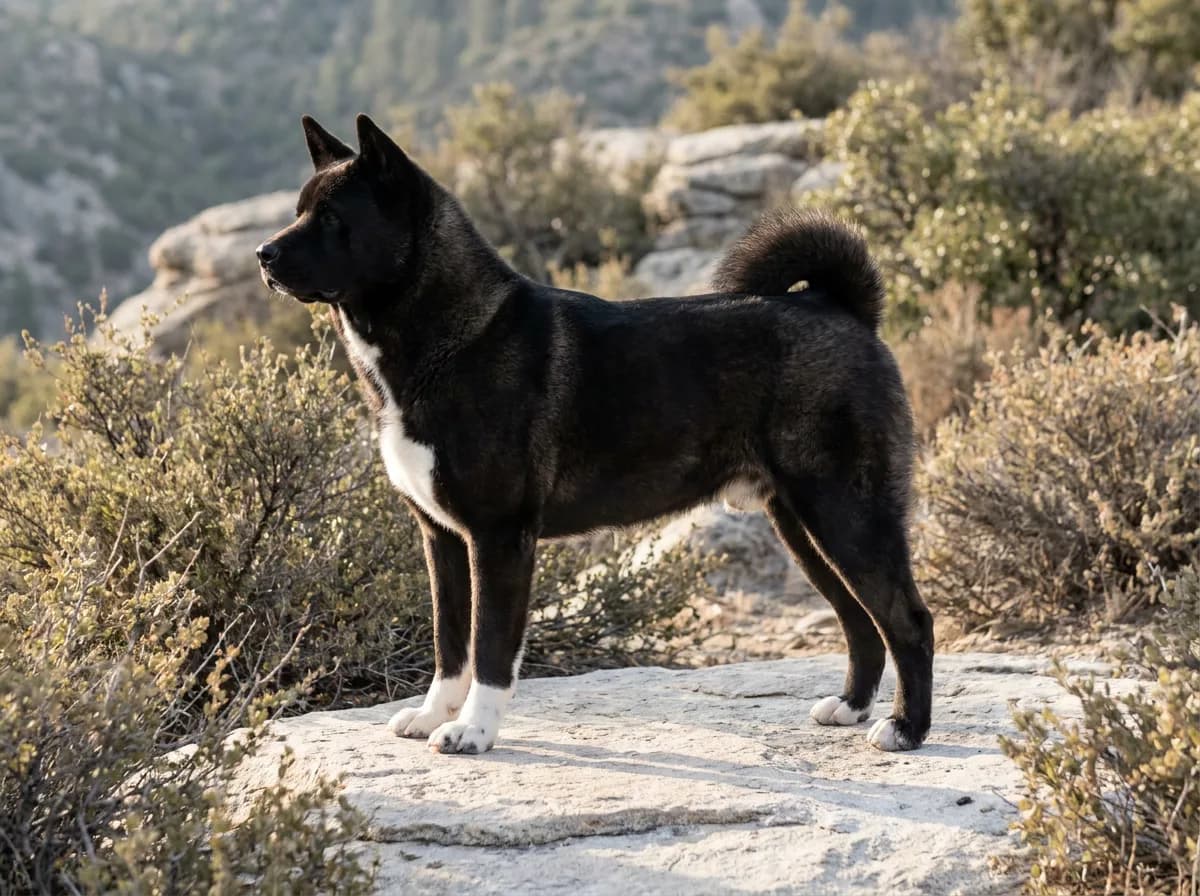
The Japanese Akitainu standard, provided by the Japanese Akitainu Club of America, describes red, brindle and white color categories. It calls the coat a triple coat and gives approximate preferred-size weights of 65–75 pounds for males and 55–65 pounds for females. Those figures should not be applied to an American Akita.
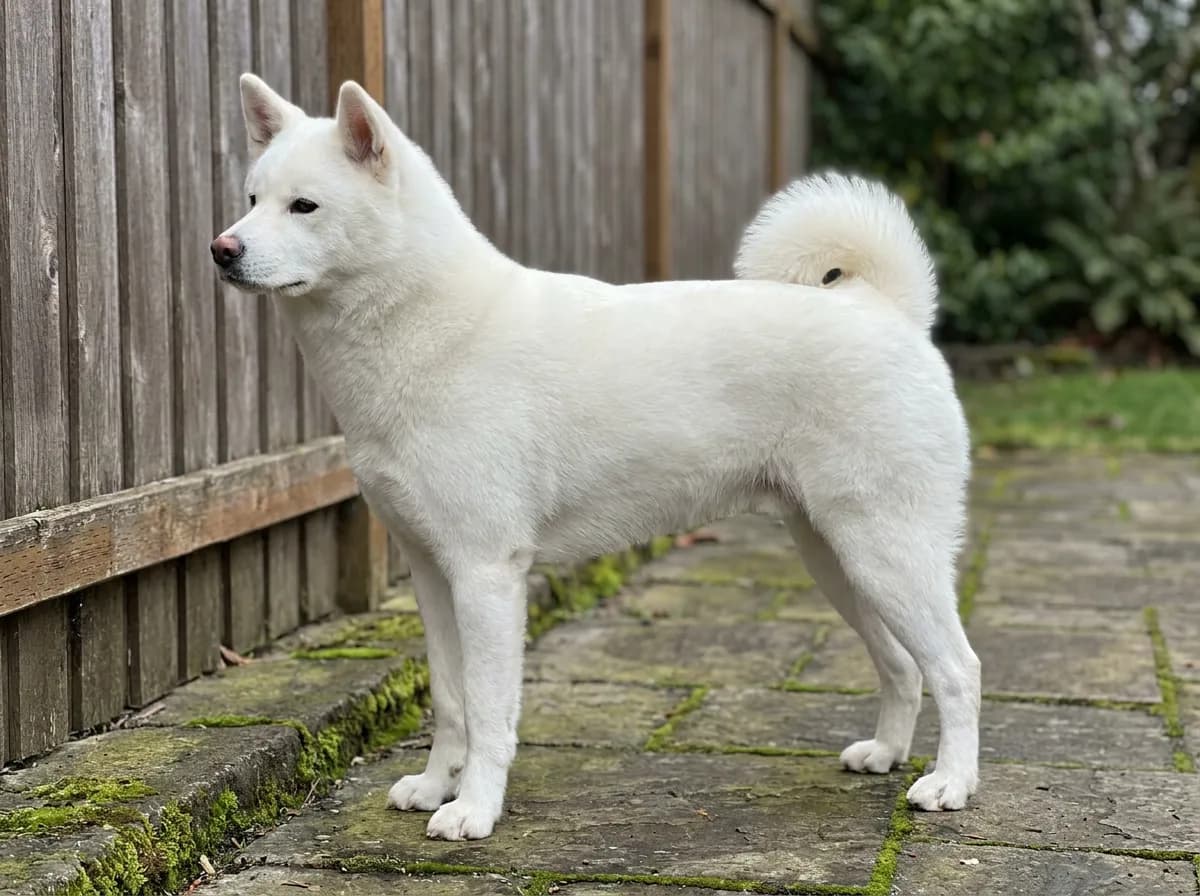
American and Japanese Akita differences
Our American Akita versus Japanese Akita comparison explains the physical distinctions and registration questions in greater detail. A white coat alone does not establish Japanese identity, and a heavier build does not establish personality. Both standards describe characteristics that call for considered handling. There is no sound basis here for promising that one type will automatically be friendlier, easier to train or safer with another dog. Meet the individual and ask about behavior in ordinary situations.
For either type, quiet food-search activities can complement walks and training. A Pet Parents Forager Snuffle Mat can hold part of the dog's usual food allowance during supervised use. Start with food easy to find and put the mat away if the dog begins chewing or swallowing its material.

A supervised food-search mat for using part of a meal as indoor enrichment; remove it if the dog chews the material.
Petful may earn a commission when you click through to Chewy, at no extra cost to you.
Akita history and original work
Akitas originated in Japan, where their history includes hunting and guarding. Their strength and substantial build belong to that working background. Today, that history is most useful as a reason to take secure exercise, movement around wildlife and careful introductions seriously. It is not a reason to test a companion dog's protective or hunting abilities.
Hachiko is the Akita behind the famous story of a dog continuing to return to a Tokyo railway station after his owner's death. The Richard Gere movie Hachi: A Dog's Tale brought an adaptation of that story to another audience. The dog associated with Hachi is an Akita, but a moving story about one animal does not describe the behavior of every puppy bearing the same breed name.
The Akita Club of America's breed history also describes Helen Keller bringing an Akita to the United States in 1937. Later imports contributed to the breed's American development. When exploring that history, keep three things separate:
- The Japanese origins shared by these dogs.
- The standards that now describe American Akita and Japanese Akitainu appearance.
- The individual behavior and care needs of the dog living with you.
History can explain why a breed attracts admiration. Choosing a companion still depends on the less glamorous details of an ordinary week: walks, visitors, grooming, meals and veterinary appointments.
Akita size, coat colors and appearance
An adult Akita should look substantial and balanced, with upright ears and a tail carried over the back. A thick coat can make the body appear larger than it is. When assessing condition, use hands-on veterinary guidance rather than judging weight from a fluffy outline or trying to match a particularly impressive photograph.
Black, white and brindle searches can lead to pictures of different types of Akita. A black American Akita may have additional markings; a white dog may belong to either standard. Japanese Akitainu brindle has visible striping. Red is another recognized Japanese color category. Descriptions such as silver, fawn or orange do not independently establish registration, ancestry, rarity or value. Check them against the applicable standard: the Japanese categories listed here are red, brindle and white, so a sesame sales label needs clarification rather than being assumed a separate recognized variety.
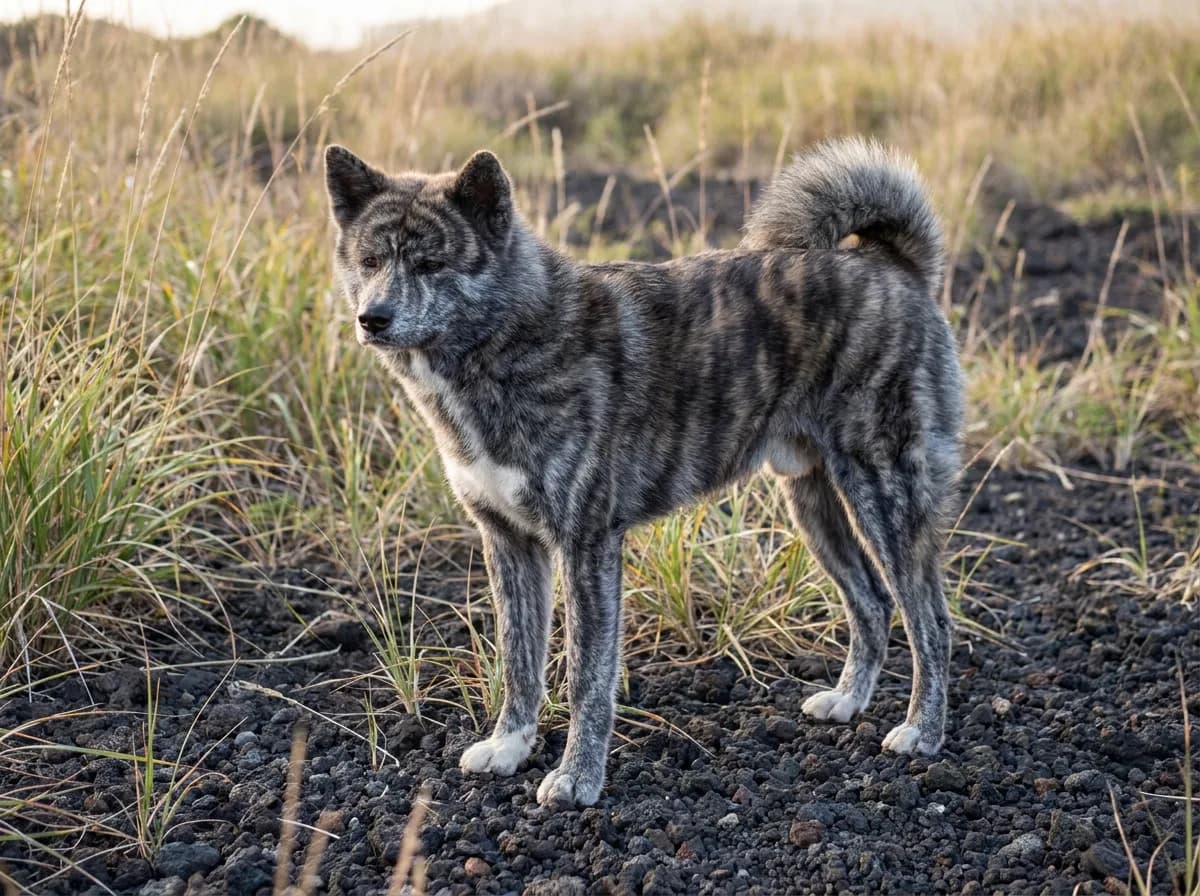
When comparing photographs with a dog you are considering, look beyond the coat:
- Ask whether the image shows the actual puppy, its parents or an unrelated dog.
- Check the dog's age and whether the picture shows a relaxed, unobstructed standing position.
- Request records supporting the claimed American or Japanese identity.
- Consider comfortable movement and body condition, not just bulk or a dramatic head shot.
Puppy ears, coat and proportions also change during development. A photograph at eight weeks cannot promise the adult outline. Long-haired or wooly Akitas can appear especially large, but coat length is not a separate temperament category, and a fuller coat does not establish greater strength or better health.
Akita size and measurements
The Akita size guide separates adult standards from individual growth. Height is measured at the withers, the top of the shoulders, rather than at the ears or head. The American ranges are 26–28 inches for males and 24–26 for females; the Japanese ranges are 25–27.5 and 22.5–25 inches respectively. These are standard descriptions, not targets to reach by overfeeding. A veterinarian can assess a puppy's growth and body condition without relying on an invented month-by-month breed chart.
Exercise, training and everyday care
Build a repeatable routine of walks, sniffing, short training sessions and undisturbed rest. An Akita's needs depend on age, health, fitness and the surrounding environment. A developing puppy should not inherit an adult dog's running program, and a quiet afternoon indoors does not show that a dog has no need for activity or company.
Begin useful skills while they are manageable: following a loose lead, turning away from a distraction, waiting at a doorway and settling behind a barrier. Practice first where the dog can succeed. Gradually increase difficulty instead of expecting a new skill to work immediately beside an unfamiliar dog or an exciting gate.
Reward-based teaching
The American Veterinary Society of Animal Behavior recommends reward-based training. Scruff shaking, physical confrontations and attempts to establish dominance are not appropriate substitutes for teaching. If handling is becoming frightening or difficult, seek qualified help before rehearsing the same conflict again.
A workable daily plan includes:
- Predictable toilet opportunities and walks appropriate to the dog's condition.
- Short lessons with rewards the dog values.
- Separate feeding arrangements when other pets are present.
- Quiet time without children or visitors disturbing the resting dog.
- Gradual practice with grooming, feet and mouth handling.
Dental care belongs in that routine. Introduce a brief lip lift or touch only while the dog remains comfortable, then build toward brushing with dog toothpaste. A Jasper 360 finger toothbrush is one option for a dog that comfortably accepts this handling. Do not put your fingers in the mouth of a dog showing resistance or distress; ask the veterinary team for another approach.
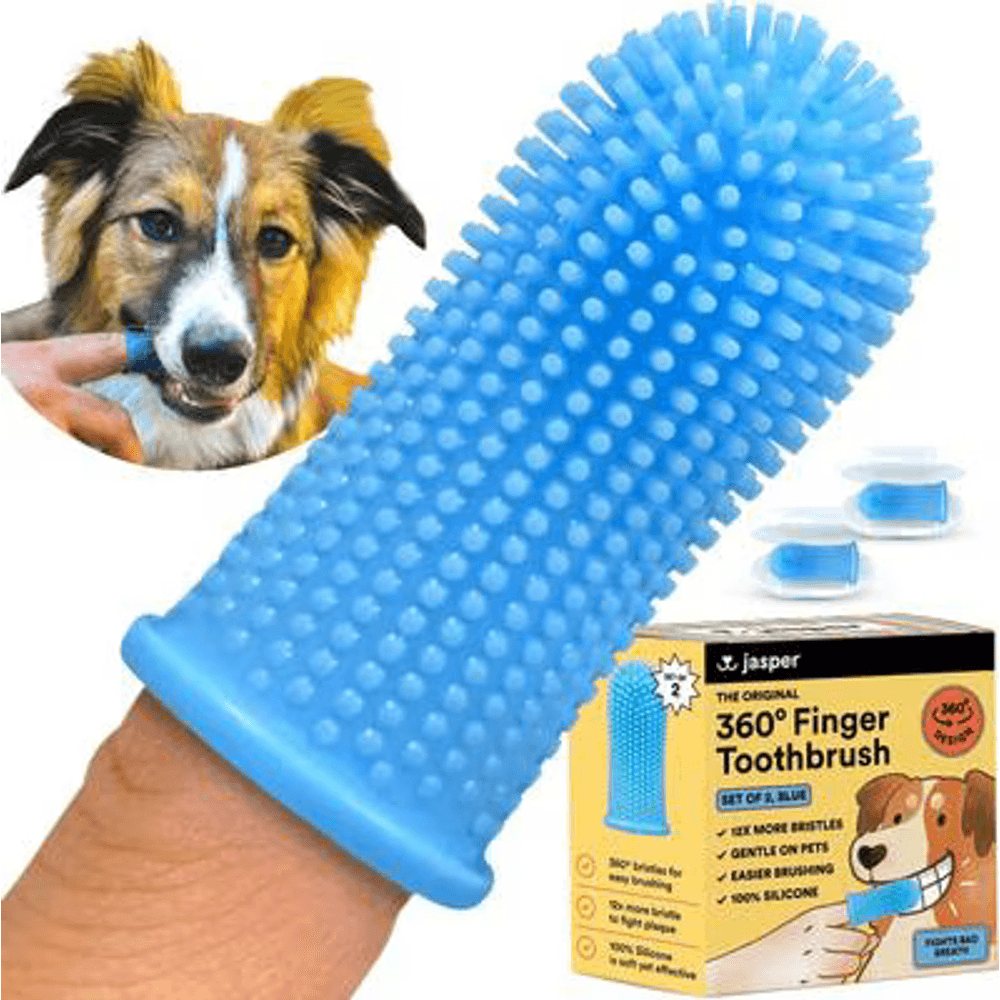
A finger toothbrush and storage case for gradual, comfortable tooth-brushing practice with dog-appropriate toothpaste.
Petful may earn a commission when you click through to Chewy, at no extra cost to you.
There is no single best food for every American Akita or Japanese Akitainu. Choose a complete diet appropriate to life stage, and discuss large-breed growth needs when choosing food for an Akita puppy. Measure the daily allowance, including food used in training and enrichment, and adjust with veterinary guidance as body condition changes. Adding supplements or extra meals simply to make the dog bigger can undermine that plan.
Intelligence rankings offer little help with everyday training. A dog can learn quickly while finding a particular distraction more rewarding than your request. For the distinction between learning, independence and cooperation, see the Akita temperament guide. WebVet's dog training schedule can help organize regular practice into a realistic week.
Finding an Akita breeder or rescue
Start by deciding whether you are seeking an American Akita, a Japanese Akitainu or an adult whose individual suitability matters more than registration. The Akita Club of America and Japanese Akitainu Club of America provide useful points of reference for breed standards and breeder questions. Club membership is a starting point for a conversation, not a substitute for examining records.
When discussing Akita breeding or looking at puppies for sale, ask how the litter is being raised, what the puppies encounter and what support continues after placement. Meet the mother when possible, and ask about both parents without assuming that a single meeting predicts the puppy's adult behavior. Request the contract before paying a deposit so you can understand the health terms, return arrangements and any restrictions.
Bring a short list of specific requests:
- The parents' identifying details and actual hip, eye and thyroid screening reports.
- The puppy's dated vaccination, parasite-care and veterinary records.
- An explanation of the current food and transition routine.
- Information about handling, household exposure and observed behavior.
- A written plan for questions or difficulties after the dog comes home.
For rescue dogs, ask what has been observed in a foster home and what remains unknown. Behavior with one resident dog does not establish compatibility with yours. Arrange introductions with the organization's guidance and discuss how it supports an unsuccessful match. A thoughtful match may take longer than choosing the nearest available listing, but it gives you more useful information about daily life together.
Akita costs and budgeting
The initial purchase or adoption fee is only one part of Akita costs. Obtain a written quote from the actual breeder or rescue and ask what it includes. Then budget separately for routine veterinary care, food, training, equipment, grooming and unexpected illness. A high price, unusual color description or impressive pedigree does not replace health records. Likewise, one breeder's quote cannot establish a national average or tell you what a particular adult rescue will cost to care for.
If insurance is part of that budget, compare terms before assuming two policies offer equivalent protection. A personalized Lemonade pet insurance quote provides one option to examine alongside the deductible, reimbursement terms, limits and exclusions. Keep money available for expenses the policy does not cover.

Compare coverage choices for your pet, then request a quote directly on Lemonade.
- Check a price for your pet
- Review available coverage choices
- See the terms before you decide
Eligibility, waiting periods, limits and exclusions apply.
Petful may earn a commission when you click through to Lemonade, at no extra cost to you.
Grooming and seasonal shedding
Akitas shed, and periods of heavier coat release can produce a considerable amount of loose undercoat. Brushing needs to reach through the outer hair without scraping the skin. A quick pass over the surface may make the coat look tidy while leaving loose hair underneath, especially in thicker areas around the neck, hindquarters and tail.
Work in small sections and keep sessions comfortable. Part the coat gently, remove loose hair without pulling, and pause when the dog needs a break. A groomer can demonstrate suitable tools and technique for your dog's coat. More force is not the answer when a brush catches or the skin looks irritated.
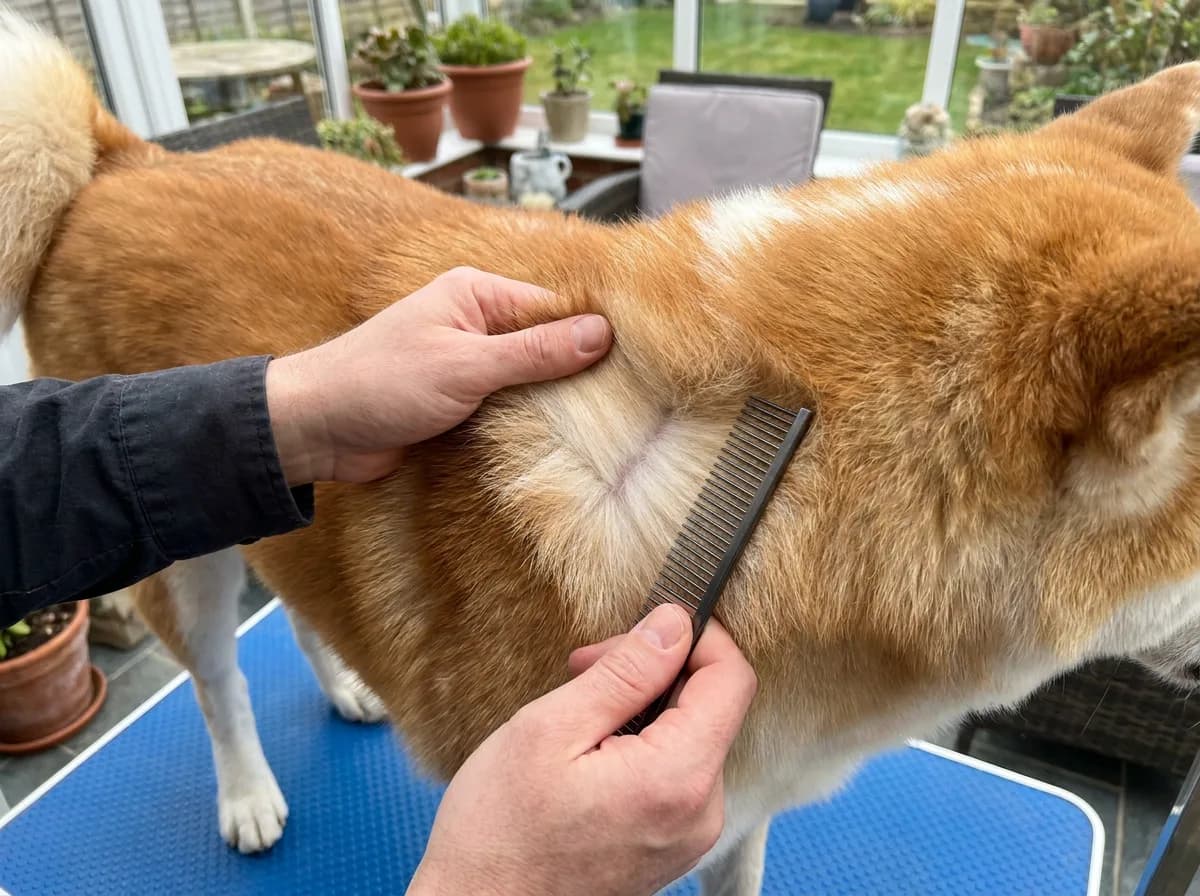
Use grooming time to notice changes:
- Check behind the ears and other dense areas for tangles.
- Look for redness, sores or persistent itching rather than assuming every change is seasonal shedding.
- Check nails, paw pads and the spaces between toes.
- Clean bedding and collect loose household hair regularly.
The coat is substantial even outside heavy shedding periods. Discuss significant matting or skin problems with a groomer or veterinarian before deciding how to remove the coat. An Akita Inu is not hypoallergenic. Neither routine brushing nor a particular coat color can make an Akita an allergy-free dog.
Is an Akita a good fit for your home?
An Akita can be a good family dog in a household that suits the individual and provides consistent adult supervision. Family attachment does not guarantee tolerance of every visitor, child or resident pet. The important question is whether your routines, physical handling and available space support this dog's needs, including occasions when everyone cannot share the same room.
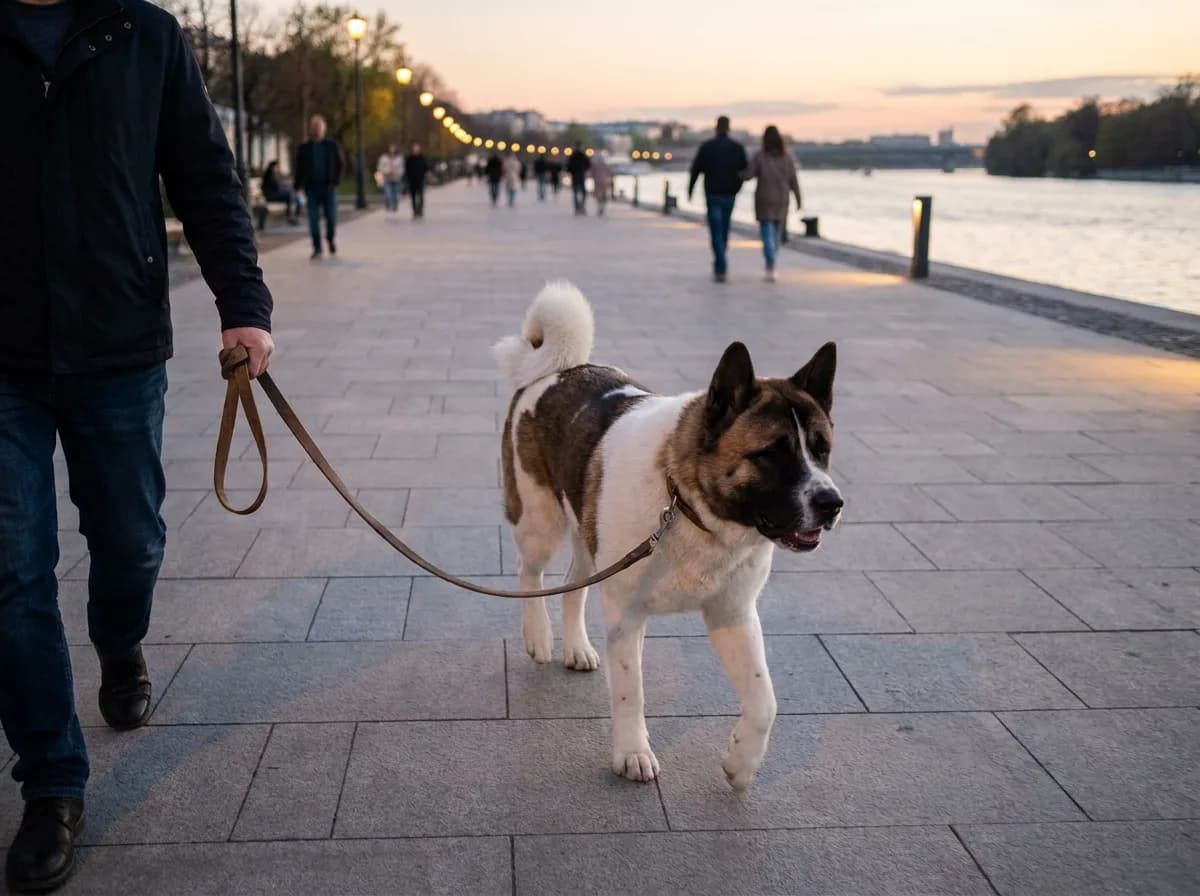
Walk through the arrangements before committing:
- Visitors: Use planned visitor introductions, with a comfortable place for the dog to rest separately when introductions are unnecessary or too demanding.
- Children: Assign adult supervision and teach children to leave sleeping, eating and retreating dogs alone.
- Other animals: Provide separate spaces for pets, including feeding and resting areas, and agree on how gates and doors will be managed.
- Containment: Check fences, latches and entryways rather than assuming attachment to the family will keep the dog home.
- Care: Agree who handles walks, training, brushing and veterinary appointments when the usual caregiver is unavailable.
Consider your social life as well as your floor plan. A home with frequent visiting dogs, open doors and unsupervised arrivals presents different challenges from a predictable household. If your ideal companion accompanies every dog-park outing and welcomes every unfamiliar dog, discuss that expectation frankly with the breeder or rescue.
Then consider practical handling. Can the responsible adults safely manage the dog's current strength, including on stairs, near traffic and during transport? A secure yard helps with access but does not provide teaching or companionship by itself. A smaller, well-managed home may offer a better daily routine than a larger property where the dog spends long periods isolated.
Temperament, children and other pets
Akitas are often described as dignified, alert and attached to their families. They may be reserved with unfamiliar people, and the standards recognize potential intolerance of other dogs, particularly dogs of the same sex. Those tendencies deserve planning without turning them into a certainty about every individual.
With children, manage the situation rather than relying on the word loyal. An adult should supervise interactions, interrupt rough play and give the dog a place to retreat. Children should not climb on a dog, crowd its face or interfere with food. A dog that previously lived with children still needs time and supervision with a different family.
For other pets, obtain concrete observations:
- Which dogs has this Akita lived with, and under what management?
- Were meals, toys or resting spaces associated with conflict?
- What has actually been observed around cats or small animals?
- What support is available for introductions and continuing separation?
Akita temperament and behavior
Is an Akita an aggressive dog, and would one protect you? Neither question has a reliable yes-or-no answer based solely on the breed label. Guarding tendencies do not guarantee a predictable response to danger, and reservation is not an instruction to encourage confrontation. The Akita temperament guide explains how behavior history, context, introductions and humane training inform these decisions. Seek help promptly for worrying behavior, especially if it changes suddenly, rather than treating conflict as an inevitable breed characteristic.
Health checks and life expectancy
The Akita Club of America's current health-clearance recommendations identify three minimum areas for breeder screening: an OFA hip or PennHIP evaluation, an eye examination recorded through the OFA eye registry, and a thyroid panel including TgAA. Ask to see the actual reports and confirm that the identification belongs to the parents being discussed.
A consumer ancestry test is not a replacement for those examinations. Even a DNA health panel addresses only the conditions and variants included in that product. It does not show how a dog's hips were evaluated or replace an ophthalmic examination. Screening reduces uncertainty but cannot guarantee lifelong health.
- 1Request each parent's hip evaluation, eye examination and thyroid screening records.
- 2Check the dog's identity, examination date and actual result on each report.
- 3An ancestry test or DNA panel alone does not replace these health clearances.
For your own dog, keep track of changes in movement, appetite, energy and coat condition. Slowing down, gaining weight or developing a thinning coat warrants assessment rather than an automatic thyroid diagnosis. WebVet's guide to hypothyroidism in dogs explains why symptoms and blood-test results must be interpreted together.
The Akita Club of America's general breed material gives a lifespan range of about 10–14 years. Treat that as a club reference range, not a measured promise for an individual or evidence that American and Japanese dogs have identical outcomes. Our Akita lifespan guide puts the estimate in context. For an adopted adult with incomplete records, begin with a veterinary examination and the history you have, then build a documented care plan from there.
Akita questions
The American Akita standard and Japanese Akitainu standard help establish physical identity, but neither settles apartment suitability, hypoallergenic claims or the right home for an adult dog. Those decisions depend on the household and individual. These questions address situations that a size or color description cannot resolve.
No. Akitas have a substantial coat, commonly described as a double coat, and shed hair and dander. The Japanese standard further describes its coat as triple. Neither description supports hypoallergenic claims. If someone in your household has dog allergies, discuss the decision with their clinician and arrange realistic exposure before committing; grooming cannot guarantee that symptoms will be avoided.
Sometimes, if the daily routine and individual dog suit the setting. Evaluate building restrictions and safe handling before choosing one. Shared lifts, narrow corridors, visiting dogs and frequent noise may matter more than the number of rooms. Plan toilet access, exercise, quiet rest and how you will pass neighbors without forcing close introductions.
The breed name refers to Akita Prefecture in Japan and reflects its Japanese origin. In breed discussions, it identifies a place rather than translating to a personality trait such as loyalty or courage. The additional word inu means dog. Names used in advertisements can vary, so establish the dog's documented breed identity separately from the seller's wording.
It can be possible with an appropriate individual, realistic preparation and continuing help. A known behavior history is especially useful: ask what has been observed around visitors, other animals and handling. Rescue matching and support matter more than assuming every adult dog is already easy. Be candid about your experience, physical handling ability and household routines.
Comparing Akitas and Shiba Inus
Neither breed is universally better. A Shiba Inu is substantially smaller, but choosing one does not automatically remove the need for secure management, patient training or careful introductions. An Akita's greater size creates different transport and handling considerations. Our Akita versus Shiba Inu comparison helps you weigh those differences against your home and routines. Meet adult examples when possible, and choose on the basis of the life you can provide rather than which puppy looks most appealing.

Kristine Lacoste has been researching dog and cat breeds for nearly a decade and has observed the animals up close at dog shows in both the United States and the United Kingdom. She is the author of the book One Unforgettable Journey, which was named as a finalist for a Maxwell Award from the Dog Writers Association of America, and was host of a weekly pet news segment on the National K-9 Academy Radio Show. In addition, she was the New Orleans coordinator for Dogs on Deployment, a nonprofit that helps military members and their pets, for 3 years. Kristine has researched and written about pet behaviors and care for many years. She holds a bachelor’s degree in psychology, another bachelor’s degree in English and a Master of Business Administration degree.
Sign up for expert-backed reviews and safety alerts all in one place.