American Akita vs Japanese Akita: Key Differences
Compare American Akitas and Japanese Akitainu using their separate standards. See how size, head shape, colors and coats differ, then assess the health records and household needs of an individual dog.
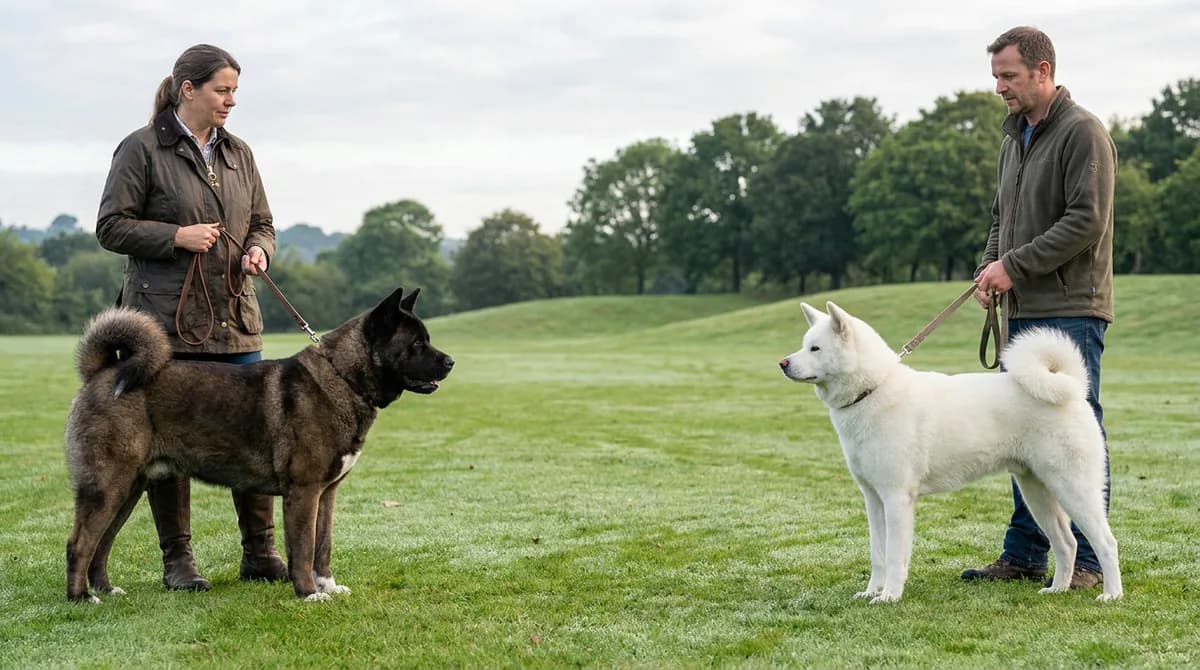
Separate standards describe the physical differences; individual histories guide household matching.
Petful is reader supported. As an affiliate of platforms like Amazon and Chewy, we may earn a commission when you buy through links on this page. There is no extra cost to you.
An American Akita vs Japanese Akita comparison starts with two different breed standards, not two reliably different personalities. The American Akita is generally more substantial, with a broader head and a wider range of colors and markings. The Japanese Akitainu has its own height ranges, preferred-size weights and more restricted color categories.
Those distinctions help you understand a breeder's description and prepare for adult size. They cannot tell you which individual will enjoy visitors, accept another dog or settle comfortably in your home. Use the standards for physical differences and the dog's actual history for decisions about living together.

Sign up for expert-backed reviews and safety alerts all in one place.
American Akita and Japanese Akitainu: which name means what?
Start with naming and registry context: ask which registered breed and standard describe the dog. In the United States, the American Kennel Club's standard titled Akita describes the dog commonly called the American Akita. The Japanese Akitainu Club of America, or JACA, provides the Japanese Akitainu standard. This article uses those names to keep the measurements and appearance descriptions separate.
What are the differences between an Akita Inu and an Akita? The answer depends partly on how the speaker uses the names. Akita Inu often refers to the Japanese dog, while Akita in an American context may refer to the American type. Both names appear casually in advertisements and conversations. The words alone do not establish the dog's registration or which written standard the seller is applying.
Ask for the full registered breed name, registry and parentage rather than trying to settle identity from an advertisement's wording. A listing that combines “Japanese American Akita” could be describing ancestry, using loose terminology or making an unclear claim. Ask the seller to explain it in writing before treating it as a recognized category. Useful records include:
- The dog's registered name and identifying information, when available.
- The registry named on the documents.
- The parents' names and records supporting the claimed ancestry.
- The standard the breeder uses to describe adult size and appearance.
- A clear explanation of anything unknown, especially for an adopted dog.
A rescue may not have all of those records. That does not prevent a good match, but it changes what can confidently be said about identity. A dog can receive appropriate care while its precise ancestry remains uncertain. Avoid paying a premium for a label that nobody can document or dismissing a suitable adult because its paperwork is incomplete.
Akita breed overview
The Akita breed profile covers the shared Japanese origins, working history and everyday ownership considerations. Both dogs trace their background to Japan, but subsequent breeding and separate standards matter when interpreting a modern description. A shared name does not make every height or weight figure interchangeable. Establish which dog a source means before using its advice to choose equipment, assess a puppy's expected build or compare a breeder's claims.
Practical preparation begins with handling rather than labels. A fixed-length Frisco Traffic Leash provides a six-foot lead and an additional handle for supervised walking. Choose appropriately fitted equipment for the actual dog and practice using it calmly. Neither a breed name nor a second handle replaces loose-leash training.
The differences at a glance
The clearest comparison separates measurements in a formal standard from broader breed-club guidance. The AKC Akita standard supplies sex-specific heights. The Japanese Akitainu standard provided by JACA supplies height ranges and approximate weights at preferred size.

A six-foot traffic leash with two padded handles for supervised walks and everyday handling practice.
Petful may earn a commission when you click through to Chewy, at no extra cost to you.
| Comparison | American Akita | Japanese Akitainu |
|---|---|---|
| Name used here | Akita in the AKC standard; commonly called American Akita | Japanese Akitainu in the JACA-provided standard |
| Male measurements: shoulder height | 26–28 inches at the withers | 25–27.5 inches at the withers |
| Female measurements: shoulder height | 24–26 inches at the withers | 22.5–25 inches at the withers |
| Male weight | About 100–130 pounds in Akita Club of America general guidance, not a weight range in the cited AKC standard | Approximately 65–75 pounds at preferred size in the Japanese standard |
| Female weight | About 70–100 pounds in Akita Club of America general guidance, not a weight range in the cited AKC standard | Approximately 55–65 pounds at preferred size in the Japanese standard |
| Head and build | Broad, substantial head and heavy bone | A distinct head profile and less substantial preferred-size weight |
| Coat wording | Double coat | Triple coat |
| Colors and markings | Wider color range, including pinto and permitted masks | Red, brindle and white categories with their specified markings |
| Household suitability | Assess the individual dog and household | Assess the individual dog and household |
The American weight figures above come from the Akita Club of America's general breed material, rather than a numerical weight requirement in the cited AKC standard. They describe a broad expectation. They are not a measured national average, a healthy-weight prescription or a reason to increase food until a dog reaches the upper number.
The Japanese figures likewise need their qualification: approximate weight at preferred size. They do not mean that every dog outside the range is incorrectly identified. A veterinarian assesses condition on the individual dog, while registration and parentage address identity. Keep those questions separate when a dog appears heavier, lighter, taller or shorter than expected.
Head shape, coat colors and markings
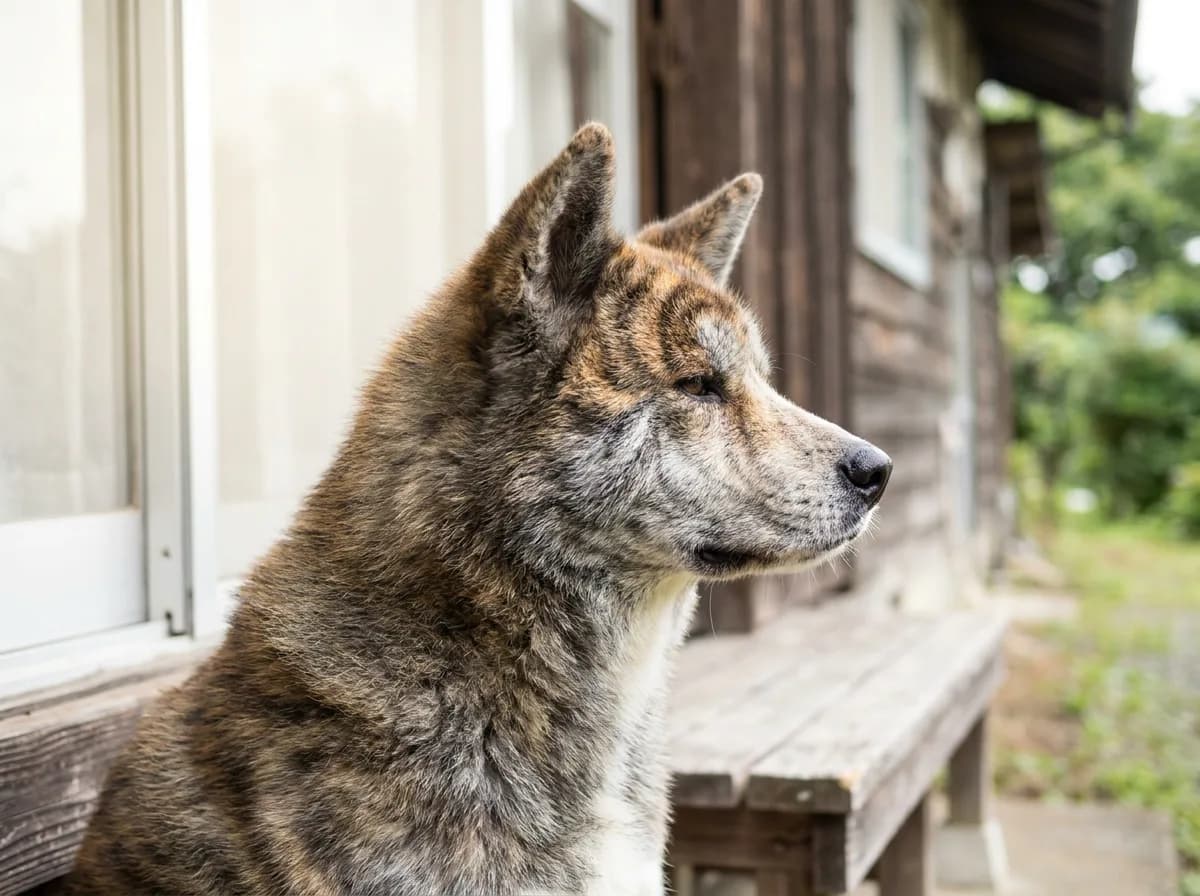
Head proportions are often the first visible difference people notice. An American Akita has a substantial, broad head with a strong muzzle. The Japanese Akitainu has its own facial proportions, including the balance between skull, muzzle, ears and expression. Compare the whole head in a relaxed position rather than choosing one feature and treating it as conclusive.
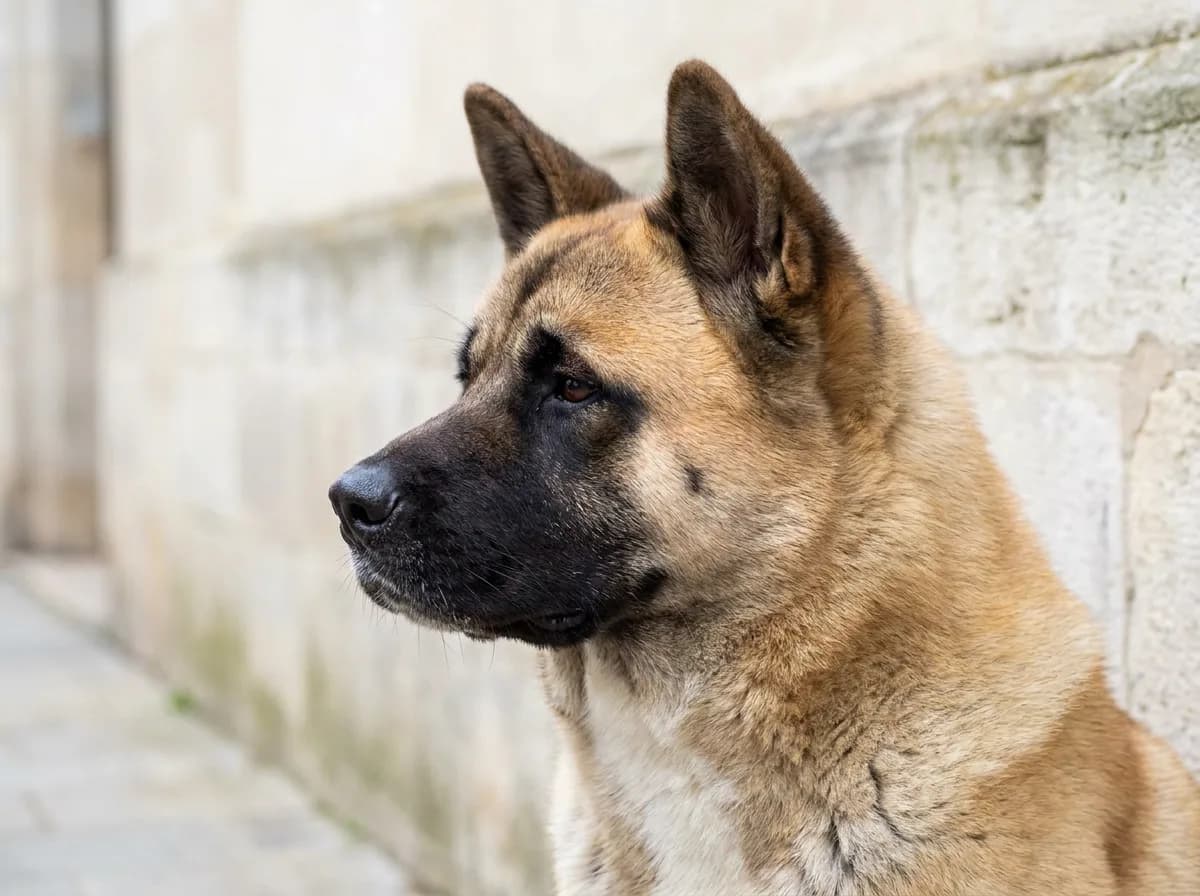
Reading a head photograph
An unobstructed side profile is useful because it shows the muzzle and forehead without the distortion of a close, front-facing phone photograph. Camera position matters: a nose near the lens can look disproportionately large, while a head turned slightly away may appear narrower. Thick neck hair and the position of the ears can further change the impression.
Both dogs have erect ears and a tail carried over the back. Those shared features help explain why people confuse them, but they are not unique identifiers. A curled tail cannot establish Japanese Akitainu registration, and a broad head cannot establish that a dog is purebred American Akita. Documentation supplies information a photograph cannot.
When comparing pictures, check a few basics:
- Is each photograph of an adult or are you comparing an adult with a puppy?
- Is the head shown from a similar angle and at a sensible camera distance?
- Can you see the muzzle rather than a hand, lead or heavy shadow?
- Are the ears in a relaxed, natural position?
- Does the source identify the actual dog rather than reuse a generic breed image?
A pleasant expression is not a temperament assessment. A dog photographed quietly may be comfortable with that handler in that setting and behave differently around a stranger. Use photographs to understand visible features, then ask separately about handling, visitors and other animals. A breeder or rescue should be able to discuss those questions without relying on the dog's attractive appearance.
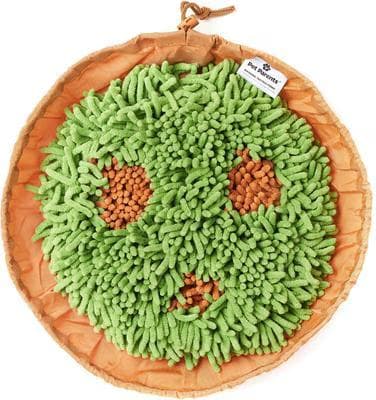
A supervised food-search mat for using part of a meal as enrichment; remove it if the dog chews the material.
Petful may earn a commission when you click through to Chewy, at no extra cost to you.
For either dog, supervised food-search activities can provide an enjoyable pause between more active tasks. A Pet Parents Forager Snuffle Mat is one way to offer part of a meal as enrichment. Begin with easily found food, supervise closely and remove the mat if the dog chews the fabric.
American colors and pinto markings
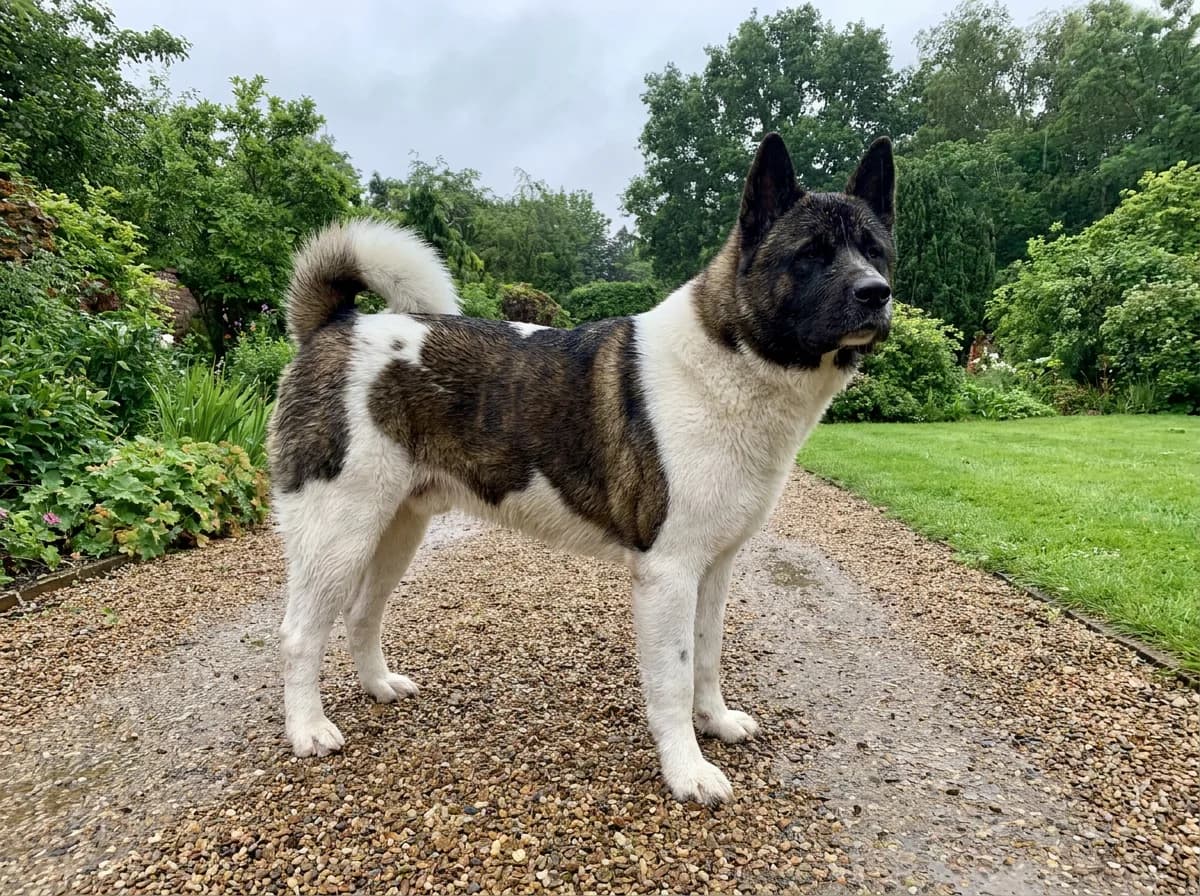
The American standard permits a wider variety of colors and markings. Pinto describes a white background with substantial colored patches. A face mask can also be part of an American Akita's permitted appearance, depending on the coat. These features explain why two American Akitas may look quite different without representing separate breeds.
Look at the distribution of color across the actual dog. A white chest or toes alone do not describe the same pattern as large pinto patches. The contrast between colored coat and white areas should be visible in a clear photograph, but the exact pattern is not a guide to friendliness, trainability or suitability for children.
A breeder may have a preference for a particular look. Your priorities can differ, especially when choosing a companion. Put health records, the puppy's upbringing, adult family characteristics and continuing support ahead of an especially dramatic pattern. A color description is useful for identifying the dog on paperwork; it should not become a substitute for the paperwork.
Appearance is not a measurement
A photograph can make a Japanese male look taller than an American female because of perspective, stance or the individuals involved. To compare height properly, measure at the withers. The Japanese male standard is 25 to 27.5 inches, a range that overlaps the American male range; the labels do not put every dog into two nonoverlapping size groups.
The same caution applies to body bulk. A thick seasonal coat can conceal the waist and exaggerate the chest. A broad head can make a dog seem larger even when shoulder heights are similar. Use the pictures to understand head proportions and markings, and use actual measurements and an assessment of body condition for decisions involving space, transport or equipment.
Measuring the dog you have
For a useful height measurement, have the dog stand naturally on a level, nonslip surface. Avoid pulling the head upward or pressing on the back to make the dog match a picture. A second person can help keep the experience calm, but stop if positioning is becoming a struggle. Your veterinary team can help when home measurement is difficult.
Record the circumstances as well as the number:
- The dog's age and the date of measurement.
- Whether the surface was level and the dog stood normally.
- The shoulder-height measurement rather than head height.
- The current weight, if taken on a suitable scale.
- Any reason the measurement may be approximate.
For household planning, measure spaces and products too. A dog's shoulder height alone does not tell you whether it can turn comfortably in a crate, stretch on a bed or enter a vehicle safely. Follow the equipment manufacturer's sizing guidance and consider the dog's length and resting posture. Where possible, check the fit with the actual adult rather than buying everything from a breed range.
Japanese red, brindle and white
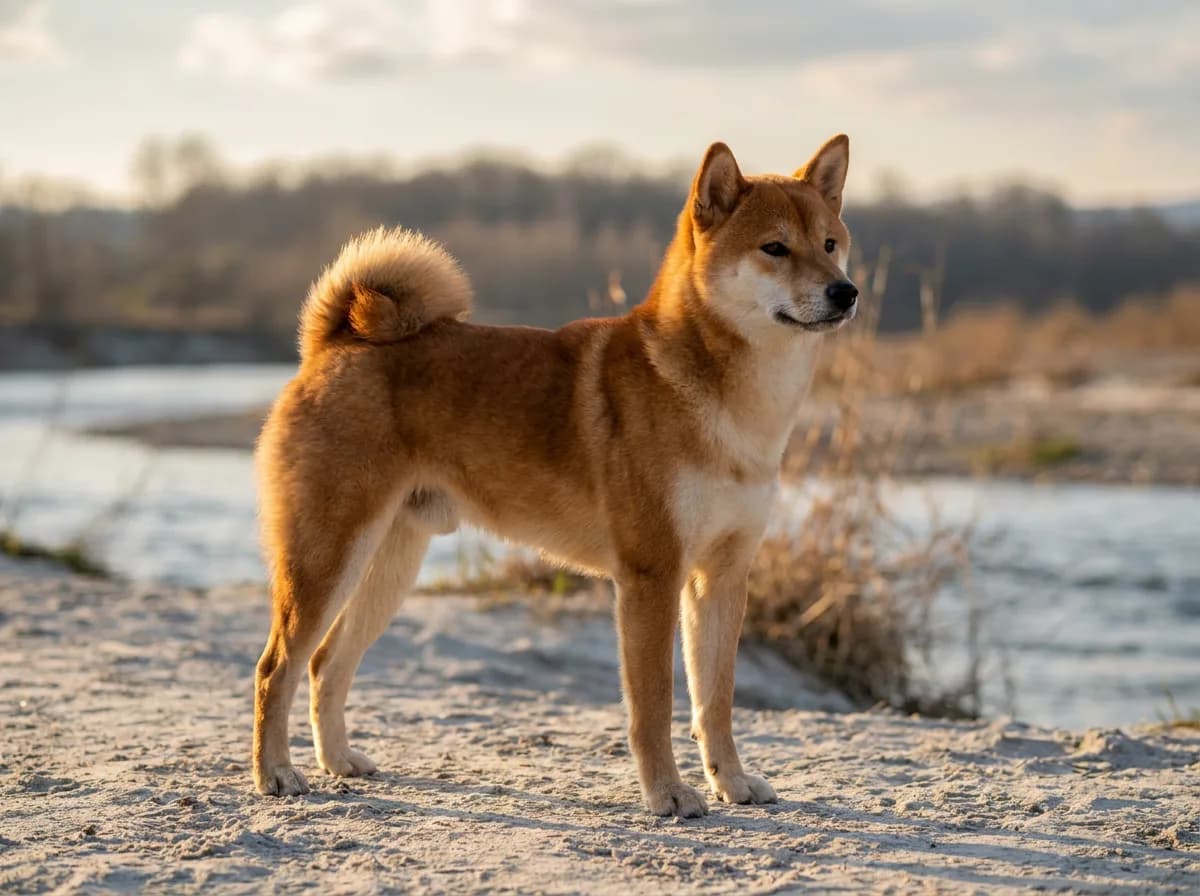
The Japanese standard describes red, brindle and white categories. In a red Japanese Akitainu, pale underside markings contrast with the red coat. Brindle has visible striping. These are distinct appearance descriptions, not interchangeable marketing terms for any brown, black or white dog advertised as Japanese.
A white dog presents an important limit to visual identification because white occurs in both comparisons. You cannot conclude that an Akita is Japanese simply because the coat is entirely white. Likewise, a red coat and curled tail do not, by themselves, distinguish every dog that might appear in a search result.
For a puppy whose identity matters to your decision, ask how the breeder connects the puppy to the parents and registration documents. For an adult rescue, record what the organization actually knows. An uncertainty can remain an uncertainty without needing a confident visual guess. The dog's observed behavior and care requirements still deserve a complete assessment. Useful appearance questions go beyond choosing a favorite color:
- Is the coat clean and comfortable, with any skin concerns already assessed?
- Can the dog move freely in ordinary walking footage?
- Are the photos recent enough to show the animal you would meet?
- Has the seller explained a long coat or unusual marking without promising a special personality?
- Does the claimed identity agree with the records offered?
Seasonal coat changes, grooming and lighting can alter how full or bright a coat appears. Avoid comparing an extensively groomed show photograph with an everyday picture and attributing every difference to breed. Ask for normal, current views of the dog standing and moving, along with whatever documented background is available.
Height and weight by breed and sex
For American Akitas, the AKC standard gives males a height of 26–28 inches and females 24–26 inches at the withers. For Japanese Akitainu, the male range is 25 to 27.5 inches and the female range is 22.5 to 25 inches. The withers are the highest area over the shoulders, not the top of the head or ears.
Those ranges answer a narrower question than “How big will my dog get?” They describe the standard. A puppy's eventual height, weight and proportions still vary, and a mixed or undocumented dog cannot be assigned a precise adult size from its label. Even within a documented litter, the largest puppy at one visit is not a reliable promise of the largest adult.
Interpreting weight without a target to chase
The difference in typical bulk can be meaningful for lifting, transport and handling. It does not justify judging a dog as better because it weighs more. The American club's broad weight guidance and the Japanese standard's preferred-size weights were not produced as one matched study, so they should not be used to calculate a precise average difference between all American and Japanese dogs.
Ask a veterinarian to assess body condition under the coat. A dog can have heavy bone and still carry excess body fat. Conversely, a lighter dog is not automatically underweight. Feeding more to produce an impressive number confuses conformation, condition and health, three related but different questions.
Akita size and measurements
Our Akita size guide explains adult measurements and how to approach puppy growth without treating a monthly chart as a promise. If you are considering a puppy, obtain the parents' actual sizes and discuss the individual puppy's growth with your veterinarian. If you are adopting an adult, current measurements often answer the practical question more directly. In both situations, plan around comfortable movement and healthy condition rather than trying to reach the largest advertised size.
Temperament and family fit
There is no reliable basis in these standards for declaring American Akitas universally more sociable or Japanese Akitainu universally easier. Both descriptions include independence and reserve, and potential difficulties with other dogs deserve attention. The correct comparison is between the particular dogs available to you, their histories and the environment you can provide.
A Japanese Akita can be a good family dog when the individual and household are well matched. That does not mean every dog will tolerate every child's activity, every visitor or another household pet. The same qualification applies to an American Akita. Responsible adult supervision, predictable routines and the ability to separate animals matter more than selecting the apparently gentler type from an online ranking.
Ask for examples rather than adjectives:
- What does the dog do when an unfamiliar adult enters the home?
- How has it responded to children of different ages?
- What happens when another dog approaches on a walk?
- Can the handler comfortably interrupt play or call the dog away?
- What happens during grooming, veterinary handling and ordinary restraint?
- Which situations have never been observed?
“Friendly” might mean affectionate with one familiar person. “Good with dogs” might mean living peacefully with a single long-term companion under careful management. Ask what those descriptions cover before transferring them to your household. A useful answer includes the situation, the people or animals present and the management that made it work.
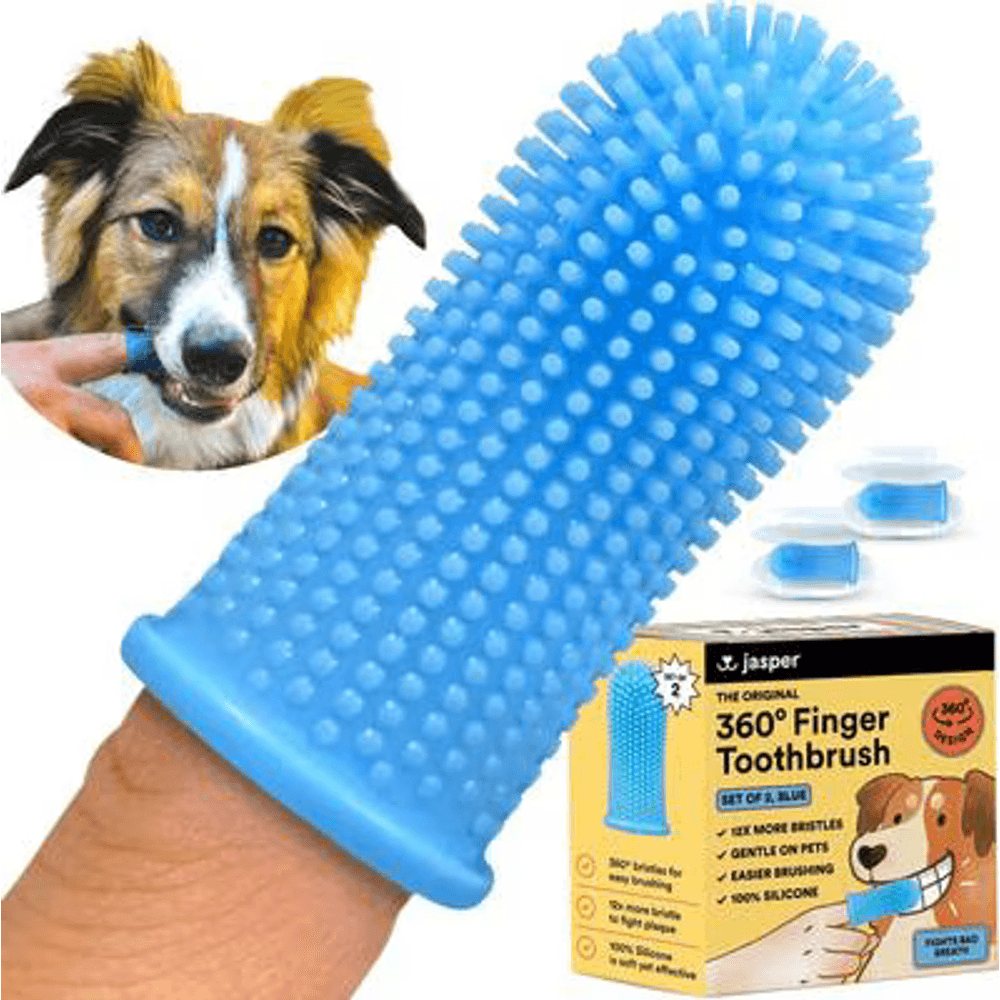
A finger toothbrush and storage case for gradual, comfortable dental-care practice with dog-appropriate toothpaste.
Petful may earn a commission when you click through to Chewy, at no extra cost to you.
Handling history is especially relevant when establishing care routines. A dog that accepts shoulder brushing may not yet accept a mouth examination. A Jasper 360 finger toothbrush can be used for gradual toothbrushing only when the dog is comfortable with mouth handling. Keep fingers out of the mouth if the dog resists or appears distressed, and ask your veterinary team for an alternative plan.
Children, visitors and resident animals
With children, adults need to manage both sides of the interaction. Give the dog a quiet resting place and teach children not to climb on it, crowd its face or approach while it is eating. A previous home with children supplies useful history but does not guarantee an immediate match with a different family.
Visitors require a plan too. It is reasonable for a dog to rest in a separate comfortable space rather than participate in every gathering. If introductions are appropriate, follow a calm, controlled process with the breeder's, rescue's or qualified behavior professional's guidance. Do not force an unfamiliar person to prove friendship by touching or feeding a worried dog.
For resident pets, think beyond the first meeting. Meals, toys, doorways, excitement and unsupervised time create different situations. Discuss separate feeding, secure barriers and what happens when nobody is available to supervise. A successful introduction is one observation, not a promise of permanent compatibility.
Akita temperament and behavior
Questions such as “Why are Akitas not cuddly?” and “Would an Akita protect you?” need individual context. Some dogs seek close contact; others prefer resting nearby. Respecting that preference is more useful than forcing affection. Guarding tendencies likewise cannot guarantee a predictable response during danger. Our Akita temperament guide explains these distinctions and how to assess behavior. Do not choose a type expecting automatic protection or try to create protective behavior by encouraging confrontation.
Which Akita fits your household?
Your household choice should depend on the individual dog and the care you can provide, rather than a type-based personality ranking.
The disadvantages of owning either Akita can include substantial shedding, strong physical handling demands, management around unfamiliar dogs and the time needed for teaching and veterinary care. Those commitments do not disappear if you choose the smaller or lighter dog. Your tolerance for hair, visitor arrangements and daily supervision matters more than which appearance you prefer.
Start with the situations that would be difficult to change. If your home has frequent visiting dogs, shared entrances or young children moving between rooms, be explicit about that during matching. If an adult cannot safely manage the dog on a lead, an attractive pedigree does not resolve the practical problem. Choose a dog whose known needs fit what you can reliably provide.
| Decision | Information to obtain | What to plan |
|---|---|---|
| Individual history | Actual observations around people, handling and everyday activity | A routine suited to this dog rather than its type label |
| Other dogs | Prior companions, conflicts and introduction experience | Supervision, separate feeding and usable barriers |
| Visitors and children | What has been observed and what remains unknown | Adult supervision and a quiet separate resting area |
| Coat grooming | Present coat condition and handling tolerance | Comfortable regular brushing and professional help when needed |
| Health records | Identified dogs, test dates and actual results | Veterinary follow-up and a realistic care budget |
| Adult strength | Current size, lead skills and transport needs | Suitable equipment and a capable responsible handler |
An honest household comparison also includes what happens when the usual plan fails. Someone may be ill, travel may change the routine, or a familiar pet may need rest after treatment. Identify another caregiver who can follow the same handling and separation arrangements. A plan that depends entirely on one person's constant presence is difficult to sustain.
Insurance can be one part of that preparation. Request a personalized Lemonade pet insurance quote for the actual dog and location, then compare coverage terms, deductibles, limits and exclusions. Do not assume that American and Japanese labels produce a fixed difference in premiums. Keep funds available for expenses that insurance does not cover.
Choosing a puppy or an adult
For a puppy, read the proposed contract before paying a deposit. Establish which dog is being offered, what happens if a health concern appears during the initial examination period, and who should be contacted if you cannot keep the dog. A promise made in conversation may be less clear once a problem arises. Ask for ambiguous terms to be explained in writing while there is still time to decide.
If the breeder is far away, clarify what information you can review before traveling and how a meeting will work. Recent video of normal movement can help you prepare questions, but it does not replace veterinary records or an appropriate assessment. If transport is involved, include its arrangements and cost in the decision instead of comparing only the advertised puppy price.

Compare coverage choices for your pet, then request a quote directly on Lemonade.
- Check a price for your pet
- Review available coverage choices
- See the terms before you decide
Eligibility, waiting periods, limits and exclusions apply.
Petful may earn a commission when you click through to Lemonade, at no extra cost to you.
Before the meeting, distinguish three questions:
- What can the records establish about identity and health screening?
- What can the breeder or rescue describe from repeated observation?
- What will you need to learn gradually after the dog comes home?
With a puppy, you are evaluating both the individual and the breeder's decisions. Ask how the litter is raised, what everyday experiences the puppies have and what support continues after placement. Meet the mother when possible and request information about the father. A relaxed meeting supplies useful context, but it cannot predict every aspect of the puppy's mature behavior.
An adult may offer more observable information about current size, handling and household habits. Ask a rescue which observations come from a foster home and which come from a kennel or brief meeting. The surroundings affect what can be learned. Clarify unknowns rather than treating a confident description as evidence that every relevant situation has been tested.
Before committing, arrange the essentials:
- A safe resting area that visitors and children can leave undisturbed.
- Secure doors, gates and fencing appropriate to the property.
- Separate spaces for pets when supervision is unavailable.
- A feeding, exercise and grooming routine shared by caregivers.
- Transport arrangements and access to veterinary care.
- A support plan if behavior or handling becomes difficult.
Akita costs and budgeting
The Akita price guide separates purchase or adoption fees from continuing care. Obtain a written quote from the actual breeder or rescue and ask exactly what it includes. Neither a Japanese label nor an American label establishes a national price, and a higher fee does not substitute for health screening. Compare the complete commitment, including food, training, veterinary care, transport and equipment, before deciding that one available dog is the more affordable choice.
Training, grooming and everyday care
The daily foundations are similar even when the dogs differ in build or appearance. Both need appropriate activity, clear teaching, comfortable rest and patient handling. There is no evidence here for assigning a harsher method to the American Akita or a completely different training system to the Japanese Akitainu. Adjust the difficulty and pace to the individual.
The American Veterinary Society of Animal Behavior's guidance supports reward-based training. Begin where the dog can pay attention and where the desired behavior is achievable. Reinforce a small success, then increase difficulty gradually. Physical domination, scruff shaking and repeated confrontations do not become appropriate because a dog is large, independent or described as strong-willed.
Making training useful at home
Prioritize skills that reduce daily friction: walking with a loose lead, waiting while a door opens, turning away from a distraction and settling on a designated resting spot. Practice before those skills are urgently needed. A quiet hallway is an easier place to introduce a turn than a crowded pavement beside an unfamiliar dog.
Rewards should fit the dog and the task. Food can be useful, but it belongs in the daily calorie allowance. WebVet's guide to dog training treats can help you consider reward selection and portions. Keep practice brief enough that both of you can finish successfully, and use ordinary opportunities throughout the day rather than relying on one exhausting session.
- 1Begin handling practice in a quiet setting with a touch the dog already accepts.
- 2Reward calm participation and release before the dog becomes uncomfortable.
- 3Increase difficulty gradually, and stop rather than forcing contact when the dog resists.
- 4Ask a qualified reward-based professional for help when safe handling is difficult.
For grooming practice, the first step may be showing the brush and rewarding relaxed interest. The next may be one brief stroke on an easy area. Feet, tail and mouth handling can require separate preparation. Progress depends on the dog's response, not on finishing a checklist by a particular age or proving that the handler is in charge.
Understanding double and triple coat descriptions
The American standard describes a double coat. The Japanese standard uses triple-coat wording. That difference is worth preserving when describing the breeds, but it does not translate into a simple promise that one will shed a fixed amount more than the other. Seasonal change, the individual coat and regular care affect what owners experience.
Both require attention to loose undercoat. Brush in small sections, working gently through the coat rather than skimming the surface. Thick hair can conceal tangles or irritated skin, particularly where friction occurs. If a brush catches, stop and check what is happening instead of pulling harder. A groomer can demonstrate a technique that suits the actual coat.
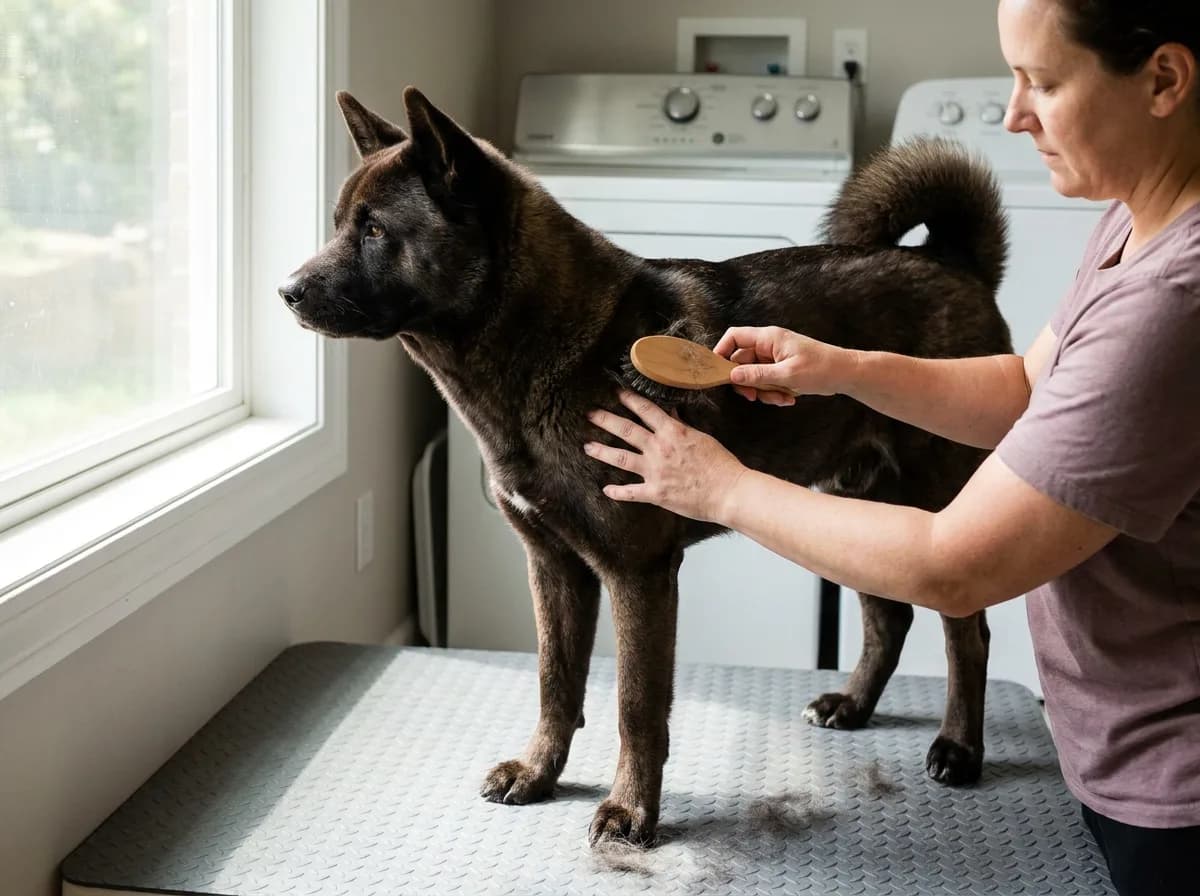
A practical grooming routine includes:
- Checking dense areas for loose undercoat and tangles.
- Keeping sessions short enough to remain comfortable.
- Looking at skin condition while parting the coat.
- Checking nails, paws and the spaces between toes.
- Noticing persistent itching, odor, sores or unusual hair loss.
- Seeking veterinary assessment for changes that are not ordinary shedding.
Longer hair can make a dog look especially large and can add grooming work. It does not establish a different temperament or justify assuming that a dog needs a different training philosophy. Ask about the actual coat and handling history rather than allowing a “long coat” or “woolly” description to carry extra claims about personality.
Food, activity and rest
Choose food for life stage, body condition and any medical needs, not simply for the American or Japanese name. For a puppy, discuss large-breed growth nutrition with the veterinary team. For an adult, monitor condition under the coat and account for treats, chews and enrichment food. A standard's preferred weight is not a feeding instruction.
Activity should also be individual. A young puppy, a fit adult and an older dog with reduced mobility should not share a compulsory exercise schedule. Combine suitable walks and sniffing with opportunities to learn and rest. Secure exercise space is useful, but access to a yard does not replace interaction or observation of how the dog is coping.
For a change in routine, prepare the person who will care for the dog. Arrange a familiarization visit when possible and provide specific instructions:
- Demonstrate the equipment used for walks and transport.
- Explain meal portions and separate feeding arrangements.
- Show how doors, gates and pet barriers work.
- Identify the dog's resting space and situations to avoid.
- Leave contact details for veterinary or handling concerns.
Rest deserves deliberate protection in a busy household. Give the dog a place where it can sleep without being handled, followed or repeatedly awakened. That arrangement supports children and visitors as well as the dog, because everyone knows where quiet time happens. A consistent routine is easier to maintain than expecting the dog to tolerate constant changes without preparation.
Health checks to ask about
A comparison of appearance is incomplete without comparing the records behind an available puppy or adult. Ask about the actual parents and dog, not just whether a breeder says the line is healthy. For American Akitas, the Akita Club of America's current recommendations identify hip evaluation, an eye examination and a thyroid panel including TgAA as minimum breeder screening.
The club lists an OFA hip evaluation or PennHIP evaluation, the OFA eye registry and thyroid testing. These are different assessments, so one report cannot stand in for all three. Ask a Japanese Akitainu breeder to explain the applicable club screening recommendations and provide the corresponding records, rather than assuming a different type makes documentation unnecessary.
| Record to request | Details to verify | What the information contributes |
|---|---|---|
| Hip evaluation | Dog identification, evaluation method, examination date and individual results | Evidence about the hips of the dog examined |
| Eye examination | Identified dog, examiner, examination date and findings | Evidence from the eye examination performed |
| Thyroid screening | Identified dog, panel components, date and individual results | Information that requires appropriate interpretation rather than a generic healthy label |
| Puppy or adult veterinary history | Dates, findings, treatment and preventive-care records | A starting point for the new veterinarian's assessment |
| Verification | Match identification across health records and clarify discrepancies with the provider | Confidence that the reports belong to the dogs being discussed |
Reading the result rather than the label
A folder marked “health tested” can contain very different information. It might include a general examination, vaccination records, an ancestry report and one screening result. Ask which tests were performed and on which dogs. Check names or permanent identification, examination dates and the actual findings instead of accepting the folder title as a complete answer.
Registration and health screening also answer separate questions. Registration documents describe recorded identity and ancestry. A screening report describes an assessment or test. Neither guarantees that a puppy will never become ill, and a consumer ancestry panel does not replace a hip evaluation or an eye examination.
Organize what you receive into separate groups:
- Parent identification and screening reports.
- The puppy's or adult dog's own examination and preventive-care records.
- Current treatment instructions and the details of the prescribing clinic.
Before a veterinary appointment, organize the records by dog and date. Keep the parents' screening reports separate from the puppy's vaccination and examination history so the clinic can see which findings apply to which animal. Include copies of any treatment instructions rather than relying on memory. This is particularly helpful when a dog has moved between a breeder, foster home and adopter, with records coming from more than one source.
If a result is unclear, use the issuing organization or veterinary professional to interpret it. Do not try to infer normality from the fact that a document exists. Similarly, ask what a missing record means: it may be unavailable, never performed or still pending. Those are different situations and should be described accurately before you make a decision.
What to do with incomplete adult records
An adopted adult may arrive with only a limited history. Begin with the records available and a veterinary examination, then document subsequent findings. Missing information does not diagnose a disease; it identifies questions that remain open. Bring a list of current food, medicines, supplements and any observed changes so the veterinarian has more than a breed label to work with.
Thyroid concerns illustrate why context matters. Changes in energy, weight or coat can have several explanations, and a single low thyroid result does not settle the diagnosis. WebVet's hypothyroidism in dogs guide explains how clinical signs and testing fit together. Do not assume a tired dog has thyroid disease or change prescribed treatment based on a comparison article.
Lifespan is not a type-based promise
The Akita Club of America's general material gives a lifespan reference range of about 10–14 years. That is not a modern matched comparison proving that one type outlives the other. There is no supported basis here for assigning a longer life to a Japanese Akitainu merely because it is usually lighter, or to an American Akita because of its build.
Our Akita lifespan guide explains the estimate and the care questions behind it. For an individual dog, age, current health, veterinary findings and ongoing care are more useful than an unsupported type-specific average. Keep attention on changes you can observe and the follow-up the treating veterinarian recommends.
American and Japanese Akita questions
Measurements are easiest to compare when you measure at the withers and label the correct standard. A Japanese male's 25 to 27.5 inches describes shoulder height, not head height and not every Akita. The remaining questions concern identity and everyday decisions that a measurement cannot answer.
No. Akitas and the Siberian Husky are separate breeds. Erect ears, a substantial coat and other shared spitz features can make unrelated photographs look superficially similar. A separate Husky breed does not become an Akita variety because of those features. Use the dog's documented identity where available, rather than treating a general northern-dog appearance as a breed designation.
An Akita is a domestic dog. Dogs share evolutionary ancestry with wolves, but that broad relationship is different from claiming that an individual has a recent wolf ancestor. A curled tail, reserved manner or striking face cannot establish such a claim: appearance does not establish recent wolf ancestry. Ask what verifiable evidence supports a specific ancestry assertion.
No. There are overlapping colors, and appearance cannot replace registration and parentage when establishing documented identity. Coat color can help you understand how a dog compares with a written standard, but it does not prove which dogs were its parents. For a rescue with incomplete records, describe the uncertainty honestly and assess care and household fit individually.
Both should receive reward-based training adapted to individual needs. Size, prior learning, comfort with handling and the current environment affect the practical plan. Neither type requires physical intimidation because of its name or appearance. Make the next step achievable, reinforce success and obtain qualified help when the dog's behavior makes ordinary care or handling difficult.
Comparing Akitas and Shiba Inus
The Shiba Inu is a separate, substantially smaller Japanese breed, not a miniature Japanese Akitainu. If you are drawn to erect ears and a curled tail but unsure about Akita size, compare the full ownership requirements rather than choosing on appearance alone. Our Akita versus Shiba Inu guide considers handling, household routines and the differences the standards can actually establish. A smaller dog may change transport and space requirements without removing the need for training or secure management.

Coreen Saito is a pet writer and longtime shelter volunteer with more than a decade in animal rescue. She covers cat behavior, breed care, and the small, ordinary science of sharing a life with companion animals, with a particular focus on honest takes about the products and decisions that actually matter. At home in Arizona, she's outranked by Mac (a dog with the loudest opinion in the house), Rebel (a cat who governs by quiet authority), and Meri (an orange tabby who runs the late shift and the laundry basket). She writes about all three, plus the rescues that keep coming through her life, at LifeWithMinty.com.
Sign up for expert-backed reviews and safety alerts all in one place.