Akita vs Shiba Inu: Size, Temperament and Which Fits You
Akitas and Shiba Inus share recognizable Japanese spitz features, but their size and handling needs differ. Compare their standards, daily care, training, and household fit before choosing.

Separate handlers allow space between individual dogs.
Petful is reader supported. As an affiliate of platforms like Amazon and Chewy, we may earn a commission when you buy through links on this page. There is no extra cost to you.
An Akita vs Shiba Inu comparison starts with a substantial size difference, but your decision should go beyond pounds and inches. A Shiba is a separate breed, not a small Akita, and a smaller dog can still require patient training, secure exercise space, and thoughtful introductions.
The useful question is which dog's physical handling needs, personality, and daily care fit your household. First establish which Akita standard a breeder or rescue means, then evaluate the individual dog.

Sign up for expert-backed reviews and safety alerts all in one place.
Akita and Shiba Inu are different breeds
Is an Akita a Shiba? No. They are distinct breeds with recognizable Japanese spitz features, including upright ears and curled tails, but they have separate breed standards. The Shiba Inu is the smallest native Japanese breed and has a hunting background. An Akita has a much larger frame.
The name Akita also needs context. American Akitas and Japanese Akitainu have different standards, so one generic Akita weight range can obscure the dog you are considering. Neither type is a larger version of a Shiba.
Akita breed overview
The Akita combines a substantial build with an independent disposition. Its appeal often includes close family attachment and a dignified manner, but those qualities do not remove the need for training or careful management around unfamiliar animals. Read our Akita breed overview for the broader history, care requirements, and ownership questions before deciding that the breed suits your home.
Akita vs Shiba Inu at a glance
Use the sex-specific size comparison below, with separate male measurements and female measurements instead of combining all adults into one range. Heights measure at withers, the top of the shoulders, rather than the ears. These are breed-standard descriptions, not targets that every pet must reach.

Practice calm walking with a fixed-length lead. Check the hardware and your dog's equipment before choosing this six-foot option.
Petful may earn a commission when you click through to Chewy, at no extra cost to you.
| Measurement or feature | American Akita | Japanese Akitainu | Shiba Inu |
|---|---|---|---|
| Male measurements, height at withers | 26–28 inches | 25–27.5 inches | 14.5–16.5 inches |
| Female measurements, height at withers | 24–26 inches | 22.5–25 inches | 13.5–15.5 inches |
| Male weight stated in the cited standard | No numerical weight specified | Approximately 65–75 pounds at preferred size | Approximately 23 pounds at preferred size |
| Female weight stated in the cited standard | No numerical weight specified | Approximately 55–65 pounds at preferred size | Approximately 17 pounds at preferred size |
| Coat description | Double coat | Triple coat | Double coat |
| How to compare height | Measure at withers | Measure at withers | Measure at withers |
The figures come from the AKC Akita standard, Japanese Akitainu standard, and AKC Shiba Inu standard. The Japanese Akitainu figures belong in their own column; they should not be presented as American Akita measurements.
Training, exercise and recall
Either dog needs skills that work in your actual surroundings: passing a doorway without rushing, checking in when called, settling while you talk, and walking without dragging the handler. Begin in a quiet place where the dog can succeed before adding busy sidewalks or nearby dogs. Smaller equipment and a lighter body do not replace this practice.
A fixed-length lead can support supervised work. The Frisco Traffic Leash with Dual Padded Handles is one option to consider after checking the hardware, fit with your dog's walking equipment, and your ability to hold it comfortably.
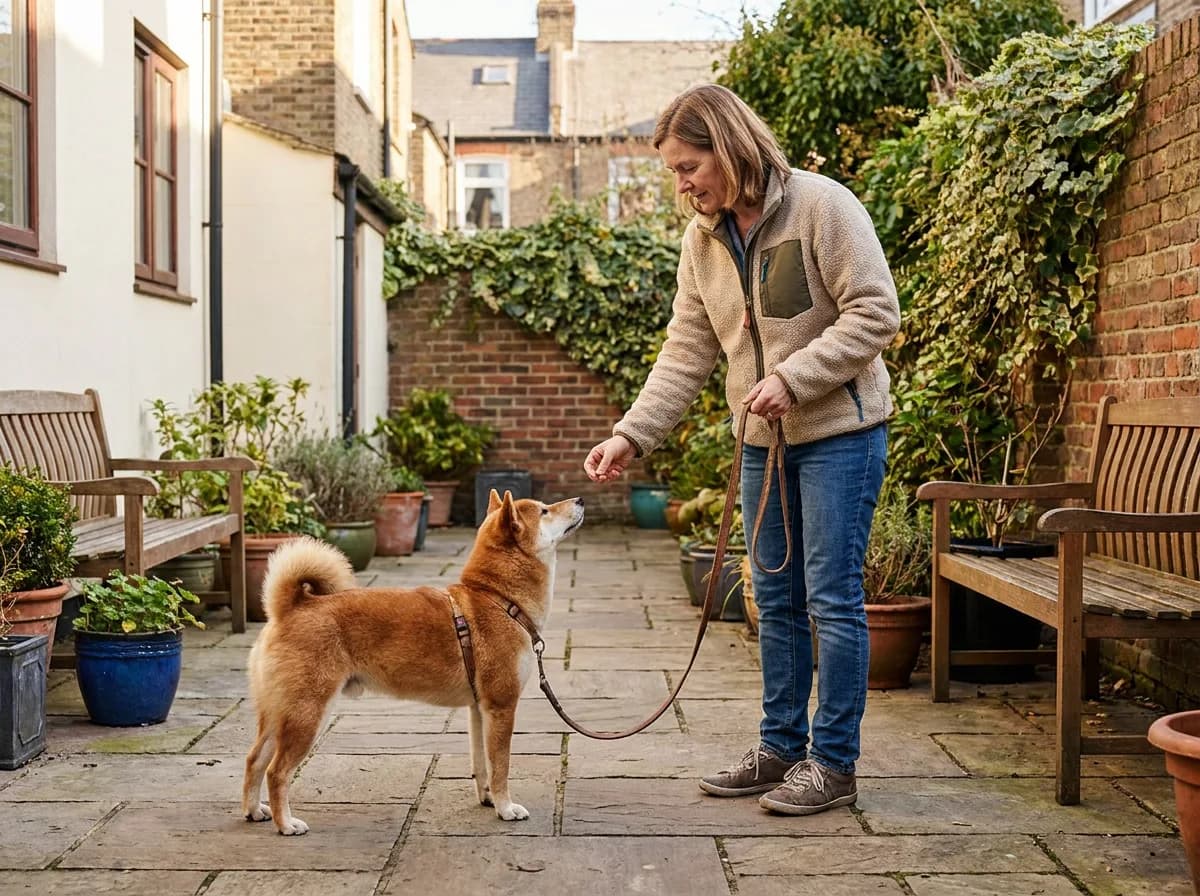
Reward voluntary attention, loose-lead movement, and returning to you. If the dog cannot respond around a distraction, increase distance and simplify the task. Forcing closer contact can make a difficult situation harder. The AVSAB humane training statement recommends reward-based methods rather than aversive techniques.
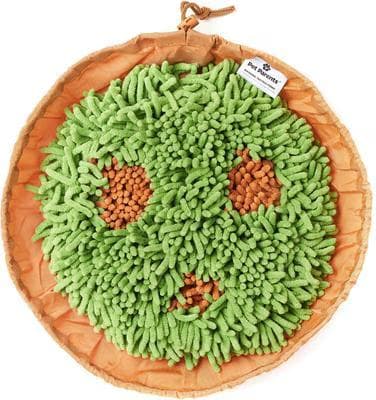
Add a supervised food-search activity with this snuffle mat. Use part of the daily food allowance and remove it if your dog chews the fabric.
Petful may earn a commission when you click through to Chewy, at no extra cost to you.
Build a routine you can repeat
A useful daily plan combines movement, opportunities to sniff, short learning sessions, and rest. Adapt the activity to age, health, weather, and the dog's response instead of assigning both breeds an unsupported fixed number of exercise minutes.
- Practice one simple skill during an ordinary transition, such as putting on walking equipment.
- Reward check-ins during a manageable walk rather than waiting until the lead is tight.
- Offer a supervised food-search activity when outdoor exercise is limited.
- Give the dog a quiet place to rest without children or other pets interrupting.
A Pet Parents Forager Snuffle Mat can provide a supervised search activity using a portion of the dog's usual food. Introduce it individually, watch how the dog uses it, and put it away if fabric chewing replaces searching.
WebVet's dog training schedule can help organize brief practice around everyday life. Its guide to daily training treats helps you account for rewards when planning food portions.
Recall is a safety skill, not an intelligence test
Where do Akitas rank in intelligence? A ranking does not tell you whether a particular dog will return when distracted. Learning a cue, wanting its reward, and performing it near wildlife are different questions. Our Akita temperament guide explains the behavior context in more detail.
Practice recall in enclosed areas and use appropriate restraint elsewhere. Do not make an unfamiliar open space the test of whether an Akita or Shiba has learned enough. A successful session in the kitchen is a starting point for practice, not proof of reliable off-lead behavior.
Size, strength and handling differences
An adult Akita's size changes the practical demands of a walk, a car journey, and a veterinary visit. Consider who will handle the dog if it suddenly moves toward another animal. Also think about transport if the dog cannot climb into the car or use stairs comfortably.
A Shiba's smaller frame may make carrying or accommodating the dog physically easier, but lifting is not a substitute for comfortable handling. A dog that dislikes being picked up still needs gradual practice and an approach that respects its response.
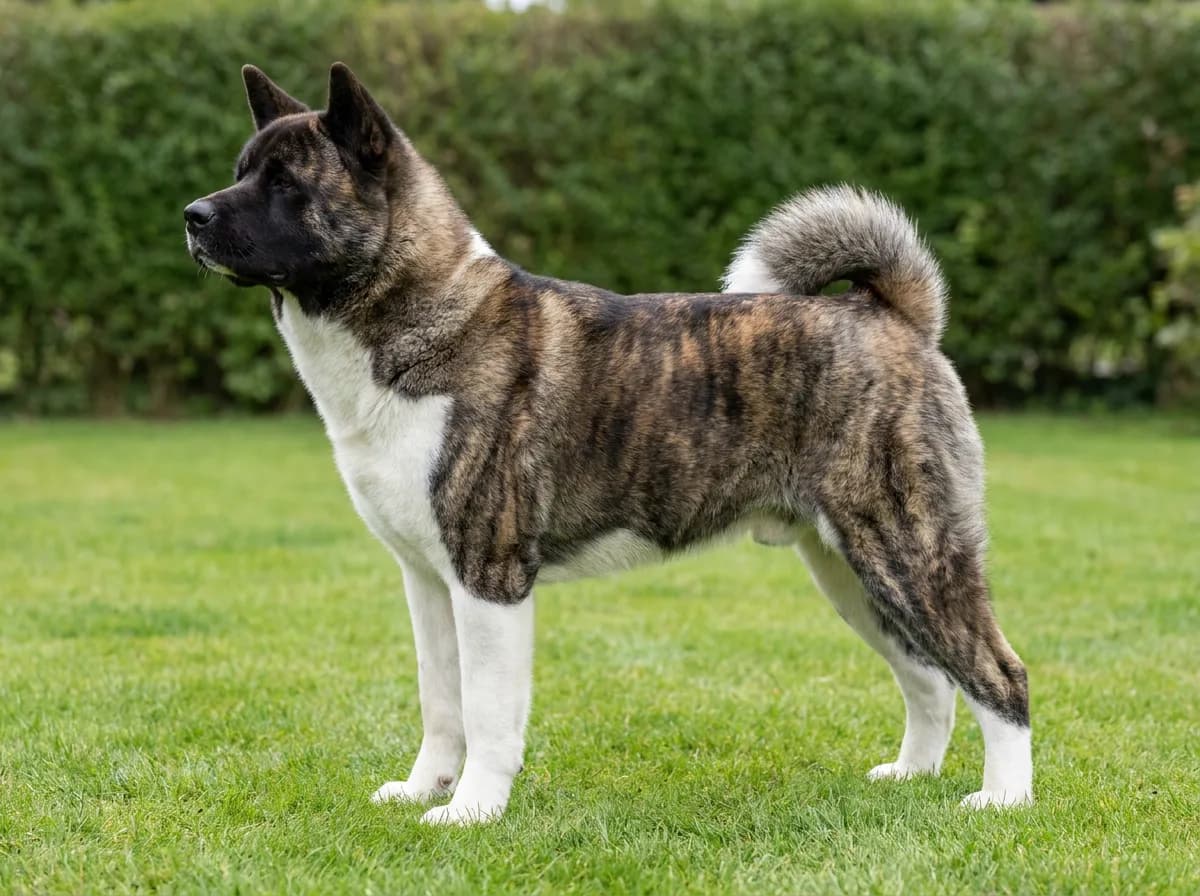
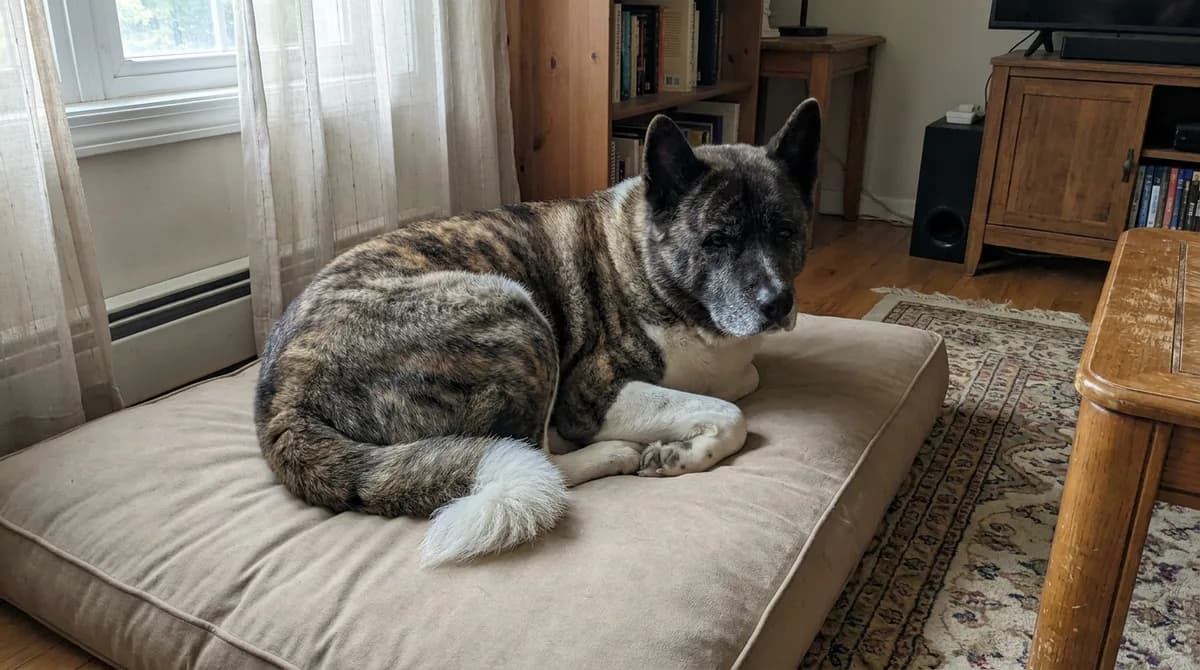
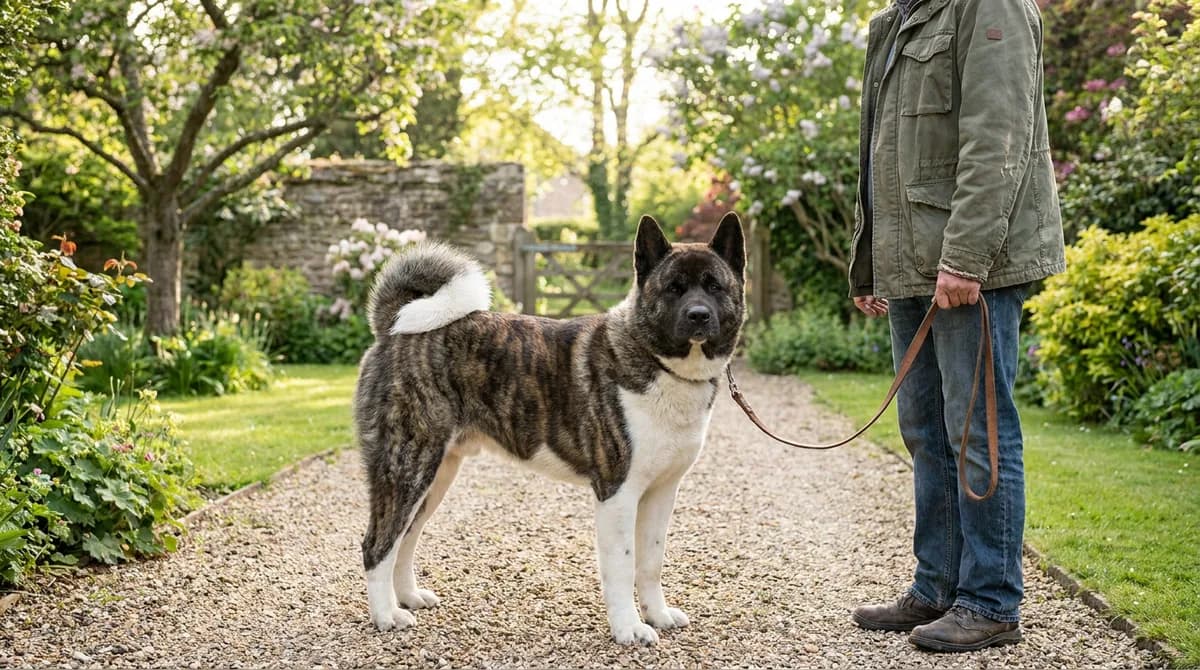
The adult Akita profile shows overall build without using a nearby person or another dog to imply an exact measurement.
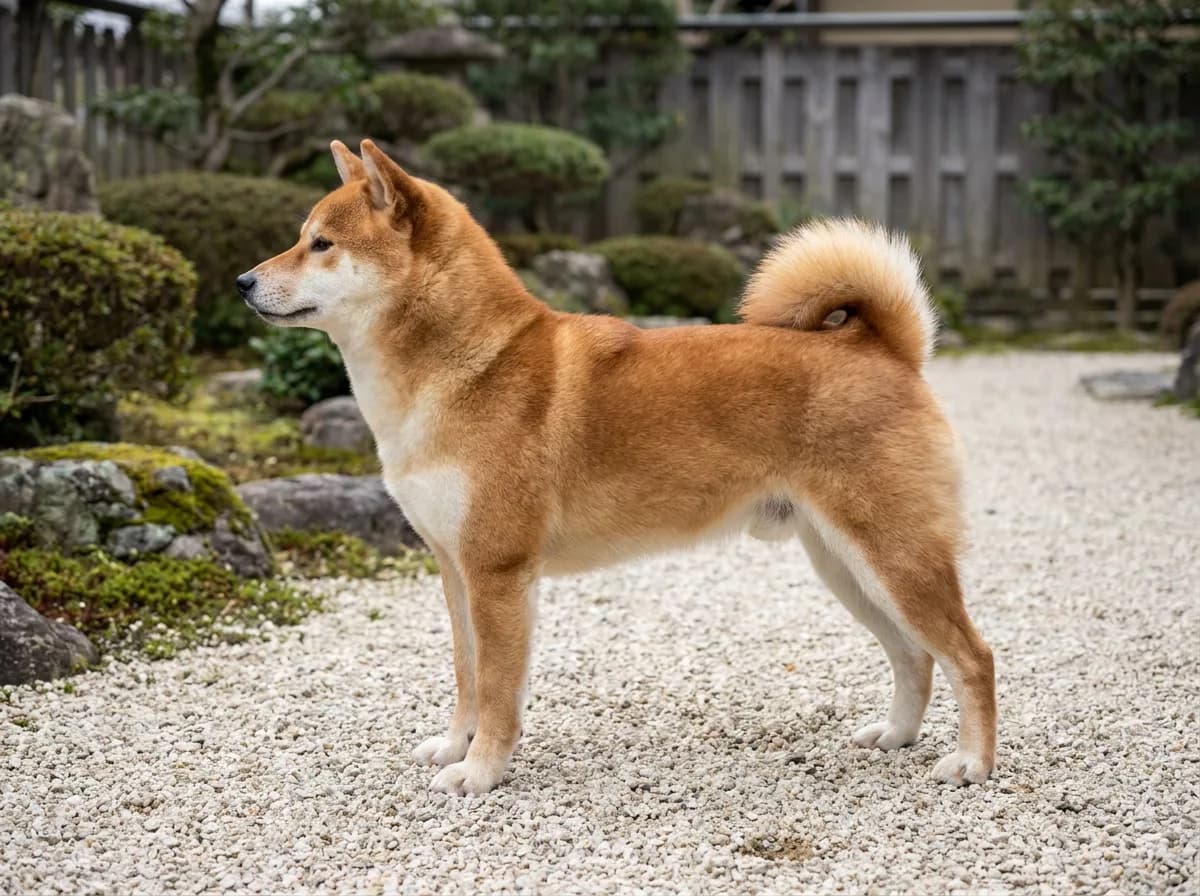
The separate Shiba profile illustrates proportions. Compare exact heights in the standard table, since camera distance and perspective can change how large a dog appears.
Before deciding that either dog is physically manageable, check the places where size matters:
- In the vehicle, allow room for appropriate restraint and comfortable positioning rather than judging space from the rear seat alone.
- At home, consider narrow turns, stairs, gates, and the route between a resting area and the outside door.
- During a veterinary visit, plan how to move the dog if assistance is needed. Discuss practical support before an urgent situation.
- For walks, assess the handler's balance and grip, not only whether the dog is lighter than the handler.
Akita size and measurements
For equipment, measure the individual dog and consult the manufacturer's instructions. A crate needs usable room, a harness needs the correct body measurements, and a vehicle arrangement needs to accommodate the dog's actual build. Our Akita size and measurement guide explains adult size expectations and why puppy growth cannot be reduced to a guaranteed monthly weight chart.
American and Japanese Akita differences
A Japanese Akita vs Shiba Inu comparison still involves a large difference in adult dimensions. However, the Japanese Akitainu's preferred-size weights should not be borrowed for an American Akita. Our American Akita vs Japanese Akita comparison separates their standards and appearance. Those distinctions help identify the dog accurately without assuming one type will have a friendlier personality.
Coats, colors and appearance
Both Akitas and Shibas have upright ears, curled tails, and substantial coats, which explains why photographs can make them look related. Look beyond those shared features to the overall frame, head proportions, and adult dimensions. A close-up of a face alone is a poor way to judge body size.
The American Akita standard describes a broad head and powerful, heavy-boned build. The Shiba's standard describes a much smaller dog. Japanese Akitainu have their own proportions and red, brindle, and white color categories. Color alone does not establish temperament or make a puppy a better household match.
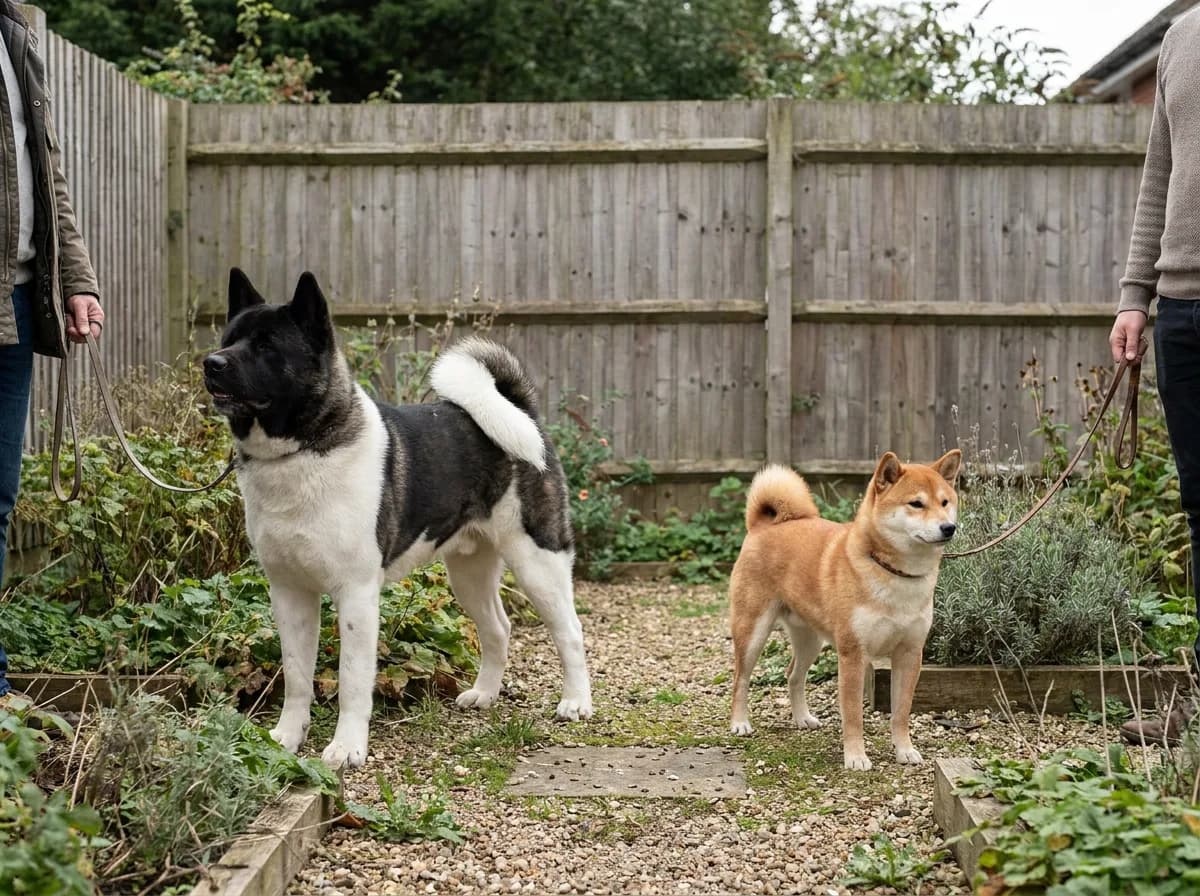
Ask to see the actual dog's photographs from different angles or, preferably, meet the dog. A thick coat can hide the body outline, and puppy proportions will change. Choose equipment by measurements rather than by how substantial the coat looks. For coat care, learn how the individual dog responds to brushing before assuming that a smaller coat means an effortless grooming session.
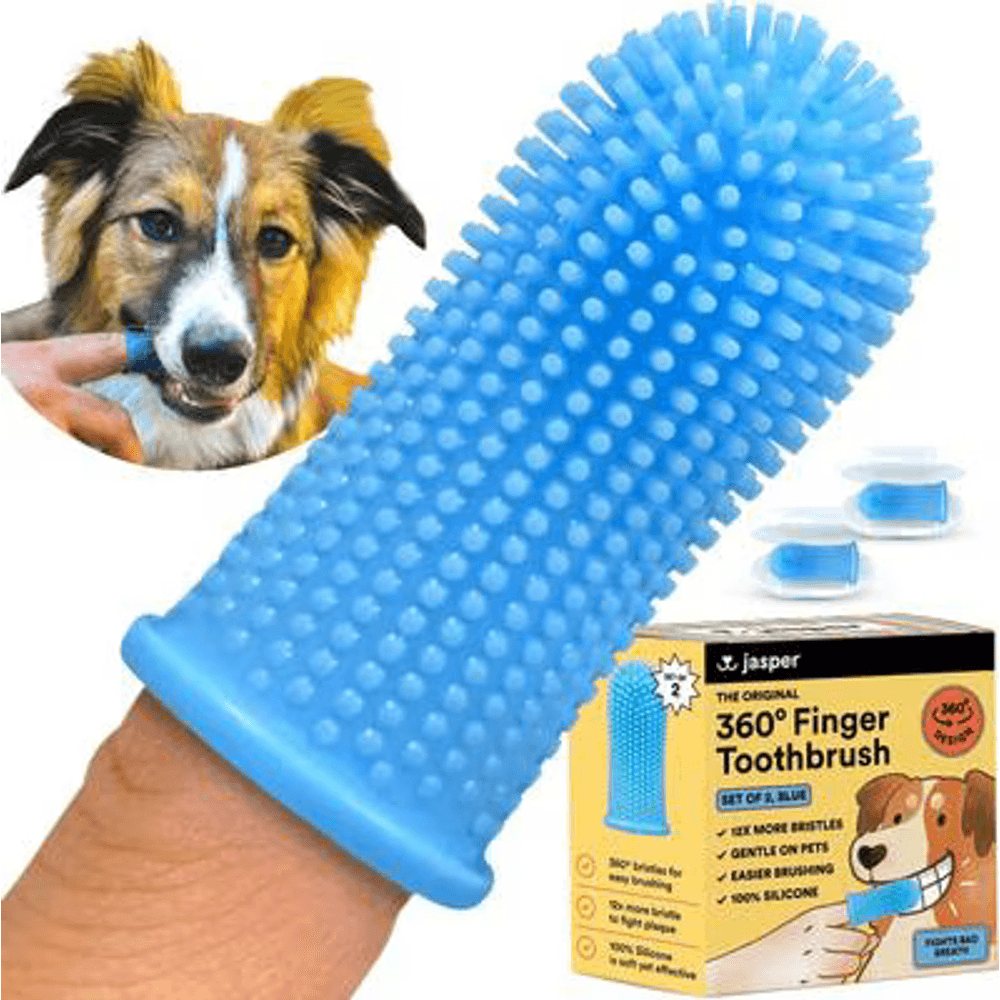
Consider this finger toothbrush for a dog comfortable with mouth handling. Introduce brushing gradually and ask your veterinarian about suitable dental care.
Petful may earn a commission when you click through to Chewy, at no extra cost to you.
Grooming, health and ownership costs
Coat care is only one part of the comparison. Both dogs also need comfortable mouth handling, nail care, routine veterinary attention, and equipment that fits. Start with brief, rewarded contact, then increase the task in small steps. Wrestling a dog through a routine makes the next attempt harder to plan.
For a dog already comfortable with gentle mouth handling, the Jasper 360 Dog Finger Toothbrush is one brushing option. Ask your veterinarian about suitable dental care and dog toothpaste. Do not put your fingers into the mouth of a dog that resists, snaps, or appears painful.
Compare records before comparing promises
For an Akita puppy, request the parents' actual health-screening results. The Akita Club of America's current guidance identifies hip evaluation, eye examination, and a thyroid panel among its minimum clearances. A general DNA panel does not replace those evaluations.
For either breed, ask which current parent-club recommendations apply and inspect the corresponding records. For an adult rescue, request the available veterinary history and an explanation of what is unknown. Missing records are a reason to plan appropriate follow-up, not proof that the dog has a particular disease.
Useful questions include:
- Which results belong to each parent, and can I verify the dog's identity on them?
- What veterinary care has this puppy or adult already received?
- Does the dog currently need medication, follow-up, or changes to activity?
- What parts of the medical or family history are unavailable?
Akita costs and budgeting
The price of an Akita is only the first line of the budget. Food, suitable equipment, training support, veterinary care, boarding, and help during travel can all matter. Our Akita price and budgeting guide separates documented purchase or adoption examples from the ongoing costs you need to quote locally. Use that same approach when comparing a Shiba rather than treating small size as a complete cost estimate.
Get insurance quotes for the actual dog and your location. Compare deductibles, reimbursement terms, exclusions, waiting periods, and the expenses you would still pay yourself. A personalized Lemonade quote can be one input in that comparison; the premium alone does not describe the policy's value.
Ask local groomers, trainers, and boarding providers about availability as well as price. A service is not part of a workable ownership plan until the provider can accommodate your individual dog. If a dog cannot comfortably use group boarding or daycare, identify a suitable alternative before you need it.

Compare coverage choices for your pet, then request a quote directly on Lemonade.
- Check a price for your pet
- Review available coverage choices
- See the terms before you decide
Eligibility, waiting periods, limits and exclusions apply.
Petful may earn a commission when you click through to Lemonade, at no extra cost to you.
Keep a simple comparison budget with the same headings for both dogs. Record an actual food plan, the equipment that fits, routine veterinary estimates, training support, and a separate allowance for unexpected needs. If one quote includes a service the other omits, add that service before deciding which total is lower. Avoid filling unknown lines with a reassuring guess.
Care also needs a backup person. Confirm that someone suitable can walk, feed, transport, and safely handle the dog if you are unavailable. Introduce that person while you can explain the routine. The smaller Shiba may be physically accessible to more helpers, but the dog's comfort with each helper still needs consideration. For an Akita, the helper must be capable of managing the adult dog's size as well as following its routine.
Temperament with family, strangers and other pets
Is an Akita more aggressive than a Shiba? The breed standards do not provide a reliable aggression ranking. Both describe independence and the possibility of reservation with strangers or intolerance of other dogs. An Akita's greater size can make a handling mistake more consequential, but that is different from predicting that every Akita will behave more aggressively.
Assess the actual dog's history and responses. Ask what happens when visitors arrive, another dog passes at close range, someone approaches a resting place, or a handler touches sensitive areas. A broad label such as “friendly” is less useful than a description of the circumstances.
Plan introductions around the individual
Individual dog tolerance matters more than a photograph of two breeds standing together. A dog that lives peacefully with one familiar companion may not welcome every unfamiliar dog. Likewise, living with children in one home does not establish comfort with every child's actions.
- Give visitors clear instructions and allow the dog space rather than requiring immediate greetings.
- Arrange introductions where distance can be increased easily.
- Provide separate resting and feeding areas when needed.
- Supervise interactions with children and prevent grabbing, climbing, or interruption of sleep.
Would an Akita protect you? A breed description cannot guarantee a particular response during an emergency, and a pet should not be selected as a promise of personal protection. Calm handling, secure management, and the ability to disengage are more useful everyday priorities than encouraging suspicion of strangers.
Akita temperament and behavior
Akita Inu temperament also varies in how affection is expressed. Why are some Akitas not cuddly? An individual may prefer resting nearby to being hugged or held, and a sudden change in tolerance deserves attention rather than an assumption about breed character. Read our Akita temperament and behavior guide for the fuller discussion of affection, independence, protective behavior, and introductions. Let the dog's voluntary response guide contact.
Which breed fits your home?
Which is better, Shiba Inu or Akita Inu? The better match is the individual dog whose needs you can meet consistently. A Shiba may be more practical if the Akita's physical handling requirements exceed your capacity. An Akita may suit someone prepared for its size and management needs, but wanting a large, impressive dog is not enough on its own.
Whether you are comparing an American Akita or Japanese Akita with a Shiba Inu, evaluate the same everyday situations. Who will walk the dog, how will visitors enter, where can animals be separated, and what happens when your usual routine is interrupted?
| Decision | Akita consideration | Shiba Inu consideration |
|---|---|---|
| Physical handling | Plan for a large dog during walks, transport, and illness | Smaller size may simplify lifting and transport, but handling comfort still matters |
| Daily routine | Provide training, activity, enrichment, rest, and dependable management | Provide the same categories of care; small size does not remove them |
| Visitors | Allow distance and assess the individual dog's response | Allow distance and assess the individual dog's response |
| Other pets | Check individual history and plan controlled introductions and separation | Check individual history and plan controlled introductions and separation |
| Coat grooming | Plan for a substantial coat and comfortable grooming practice | Plan for coat care and comfortable grooming practice despite the smaller body |
| Exercise space | Secure containment and manageable outings matter | Secure containment and manageable outings matter |
Test the ordinary week
Picture a rainy workday, a busy entrance, a veterinary appointment, and an unexpected overnight trip. These situations reveal more than imagining a pleasant weekend walk. Check housing rules before committing, including any restrictions that apply to the breed or the individual dog's size.
Meet adult dogs as well as puppies when possible. Ask breeders or rescue staff to describe ordinary behavior with concrete examples. A dog that looks quiet during one meeting may behave differently once settled, so request information from the people who know its routine.
If you read an Akita vs Shiba discussion on Reddit or another owner forum, use the experiences to develop questions rather than as a breed-wide verdict. One household's successful pairing does not establish that your pets will be compatible. A difficult training story does not prove that every dog of that breed learns the same way.
- Can every regular handler manage the adult dog's physical size safely?
- Can the household provide secure exercise space and dependable daily care?
- Is there a realistic plan for visitors, children, and other pets?
- Do the individual dog's known needs fit the time, services, and money available?
Discuss disagreements before the dog arrives. If one family member wants frequent social outings with other dogs while another expects quiet walks and careful separation, clarify what the individual dog can reasonably accommodate. Decide who handles feeding, grooming, training, and introductions. Shared expectations matter because inconsistent arrangements can leave necessary care undone even when everyone likes the dog.
If either choice depends on a dog being unusually easy, reconsider the match. A realistic plan should work with the needs described by the breeder or rescue, not require the dog to become a different individual.
Akita and Shiba Inu questions
Small size does not mean easy training. A Shiba may be easier to lift or transport, but those advantages do not teach recall, comfortable handling, or calm greetings. Reward-based practice should progress from manageable situations to harder ones. Measure success by useful skills rather than the dog's size.
Both have double coats when comparing the American Akita and Shiba Inu; the Japanese Akitainu standard specifically describes a triple coat. Dog size and seasonal shedding affect how much loose hair you notice, but an exact breed-by-breed quantity is not established here. Expect regular coat care with either choice.
Compatibility with cats and other pets depends on individual history and controlled introductions, not simply breed or puppy age. Ask whether the dog has actually lived with cats, what supervision was involved, and whether chasing occurred. Arrange secure separation so the cat does not have to participate in every interaction.
Apartment suitability depends on routine and restrictions as well as safe handling and exercise. Consider entrances, elevators, nearby animals, and opportunities for quiet rest. A smaller dog may fit the space more easily, but choose based on how you will meet the individual dog's needs throughout the day.

Coreen Saito is a pet writer and longtime shelter volunteer with more than a decade in animal rescue. She covers cat behavior, breed care, and the small, ordinary science of sharing a life with companion animals, with a particular focus on honest takes about the products and decisions that actually matter. At home in Arizona, she's outranked by Mac (a dog with the loudest opinion in the house), Rebel (a cat who governs by quiet authority), and Meri (an orange tabby who runs the late shift and the laundry basket). She writes about all three, plus the rescues that keep coming through her life, at LifeWithMinty.com.
Sign up for expert-backed reviews and safety alerts all in one place.