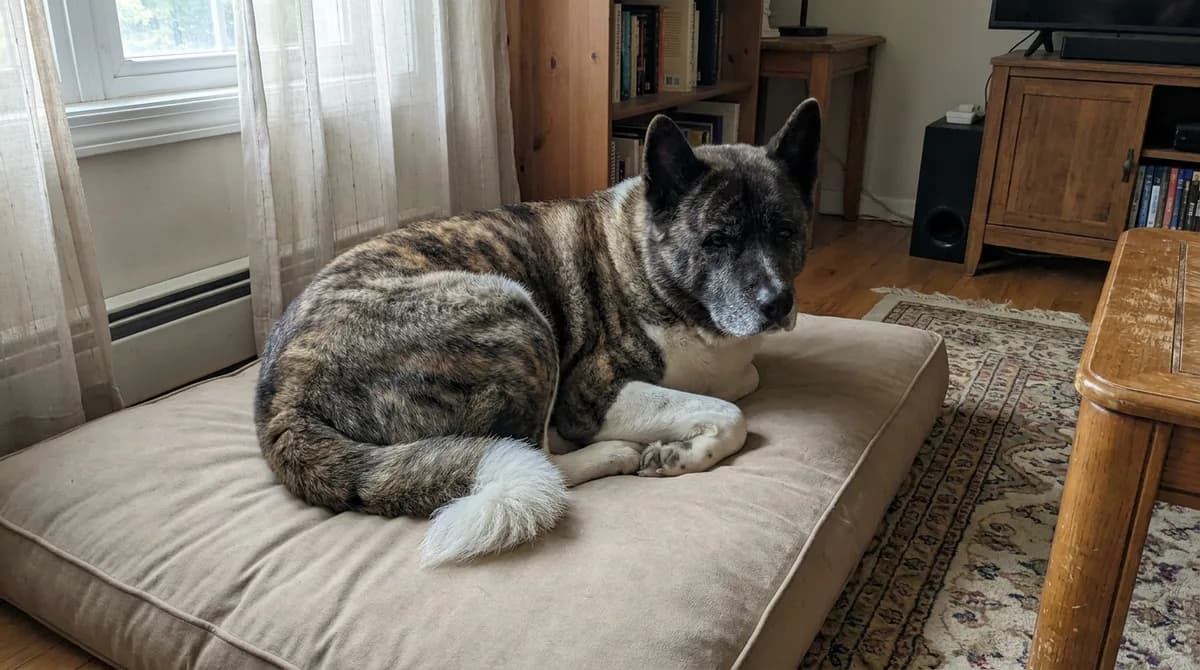
Akita Size: Adult Height, Weight and Growth Expectations
Find separately attributed American and Japanese Akita measurements, learn how to measure shoulder height, and use an individual growth record to plan comfortable equipment and appropriate care.

Use actual measurements rather than a photograph when choosing equipment.
Petful is reader supported. As an affiliate of platforms like Amazon and Chewy, we may earn a commission when you buy through links on this page. There is no extra cost to you.
Akita size depends on the breed standard, sex and individual dog. The AKC standard for the dog commonly called the American Akita gives adult males a height of 26–28 inches and females 24–26 inches at the shoulder. Japanese Akitainu have separate height ranges and approximate preferred-size weights.
Keep three questions separate: how the adult breed standard describes the dog, what your dog actually measures, and whether its body condition is healthy. A thick coat, a large pair of puppy paws or an impressive photograph cannot answer all three.

Sign up for expert-backed reviews and safety alerts all in one place.
How big does an Akita get?
A full-grown Akita is a large, substantial dog. Males generally have larger standard measurements than females, but the American and Japanese ranges overlap. An adult American female and Japanese male can therefore be closer in shoulder height than a simple “big type versus small type” description suggests.
Adult size is also more than height. Body length, bone, muscle, coat and body condition affect how much space the dog needs and how it looks beside a person. A heavy coat can create a much larger outline than the frame underneath. Use the dog's actual measurements when planning a bed, transport arrangement or resting area.
Unusual size labels need closer examination:
- Neither standard establishes a miniature Akita variety. A seller's “mini Akita” or “miniature Akita” label might describe a small individual, a mixed-breed dog or an unsupported marketing category. Ask what records support the identity rather than assuming the name promises a particular adult size.
- A claim to have the biggest Akita or largest American Akita should not determine your feeding plan. A maximum-weight claim without verified measurements says little about condition. Comfortable movement, appropriate body condition and manageable everyday care are more useful priorities than maximum size.
Akita breed overview
The Akita breed overview explains how size fits with the breed's history, coat and household needs. Akitas shed hair, and their substantial coats require care even when the dog appears tidy. Grooming changes the visible outline but does not change the underlying frame. If you are choosing a companion, consider adult handling and regular brushing alongside the measurements rather than treating size as the whole decision.

A six-foot lead with two padded handles for supervised walks and everyday handling practice.
Petful may earn a commission when you click through to Chewy, at no extra cost to you.
For supervised walks with a large adult, a Frisco Traffic Leash provides a six-foot lead and an additional handle. Match the collar or harness to the individual, check the attachment and teach loose-lead walking. Equipment should support comfortable handling rather than substitute for it.
Adult Akita height and weight by sex
When comparing Akita mass, keep weight attribution clear: a breed-club weight guide and a numerical requirement in a breed standard are different kinds of evidence.
The AKC Akita standard and the Japanese Akitainu standard provided by JACA should be read separately. AKC height measurements describe the American-type Akita. The Japanese Akitainu Club of America, or JACA, provides the Japanese standard with its own height ranges and approximate weights at preferred size.
| Source and dog | Shoulder height | Weight and its meaning |
|---|---|---|
| AKC standard: male measurements | 26–28 inches; measure at withers | The cited standard does not set a numerical weight range |
| AKC standard: female measurements | 24–26 inches; measure at withers | The cited standard does not set a numerical weight range |
| Akita Club of America general guidance: American males | Use the AKC height range above | About 100–130 pounds; general guidance rather than a standard weight requirement |
| Akita Club of America general guidance: American females | Use the AKC height range above | About 70–100 pounds; general guidance rather than a standard weight requirement |
| JACA standard: male measurements | 25–27.5 inches; measure at withers | Approximately 65–75 pounds at preferred size |
| JACA standard: female measurements | 22.5–25 inches; measure at withers | Approximately 55–65 pounds at preferred size |
The American weight ranges come from the Akita Club of America's general breed material. They are not numerical requirements in the cited AKC standard, a national average or ideal weights for every dog. Similarly, the Japanese figures are approximate weights at preferred size, not instructions to feed an individual until it reaches one end of the range.
An American Akita's height and weight should therefore remain labeled together with sex and source. Combining an American male's upper weight with a Japanese female's lower height produces a broad range that is difficult to use. It also obscures the practical difference between a measurement standard and a guide to expected bulk.
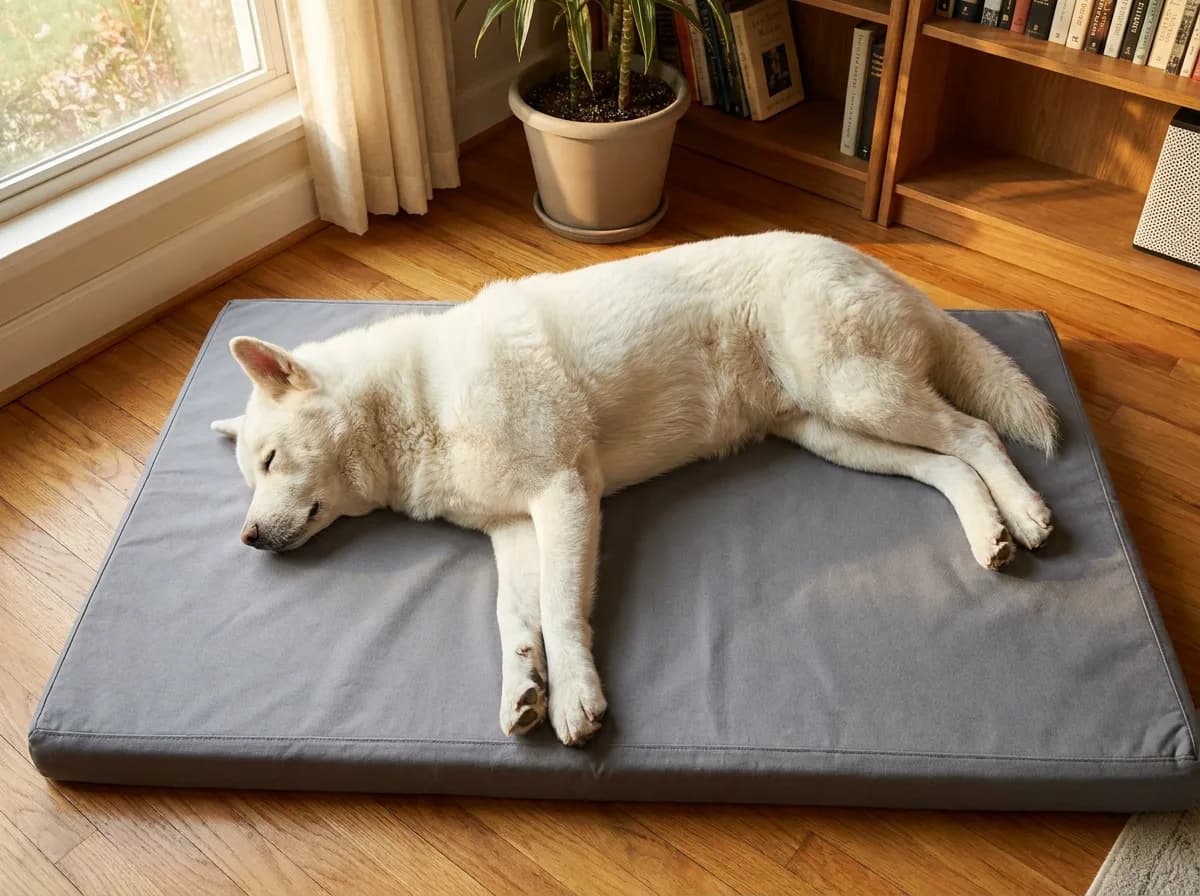
A product size name offers no stronger guarantee. For a FurHaven NAP Ultra Plush bed in Jumbo, compare the current usable dimensions and support guidance with your dog's resting measurements. “Jumbo” identifies a product option; it does not establish that the bed fits every full-grown Akita.
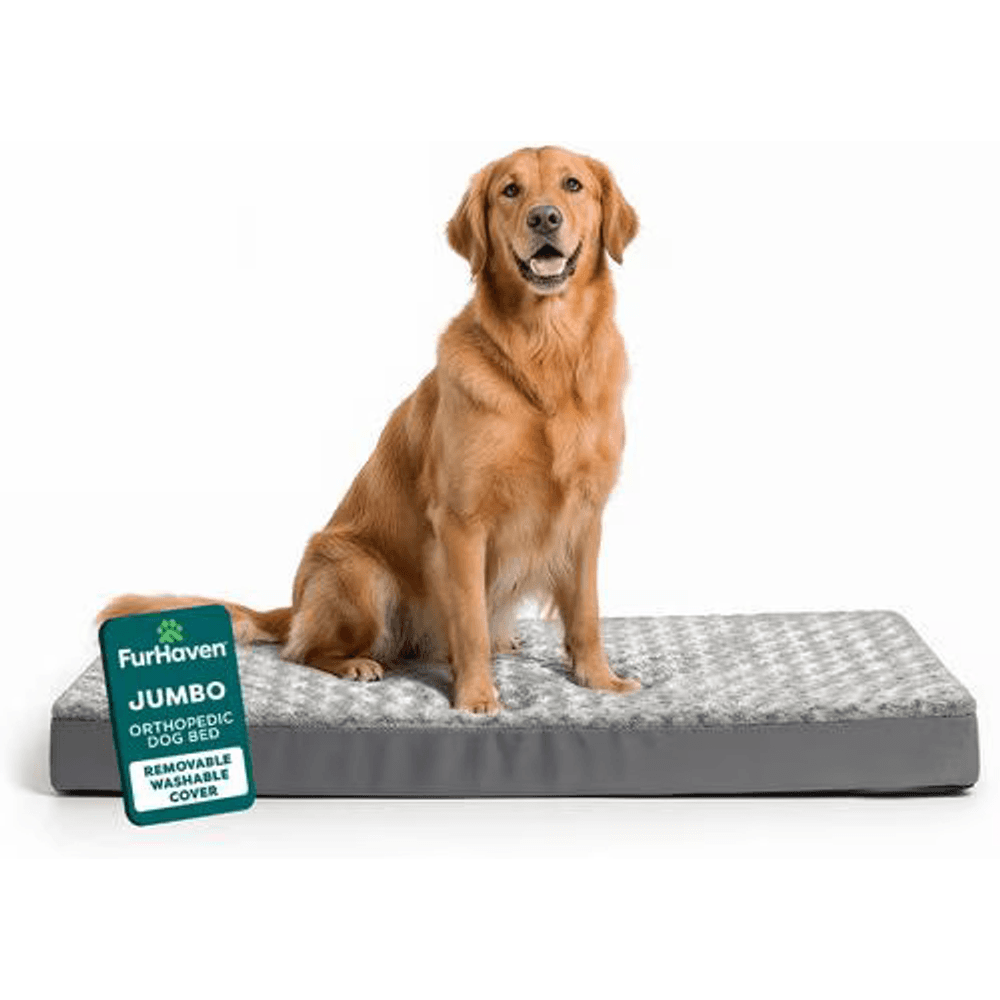
A removable-cover resting bed to consider after checking its usable dimensions and support guidance against your dog's size.
Petful may earn a commission when you click through to Chewy, at no extra cost to you.
How to measure an Akita at the shoulder
The withers are the area at the top of the shoulder blades. To measure shoulder height, the dog needs to stand naturally on level ground. Measuring to the ears, forehead or highest point of the coat gives a different number.
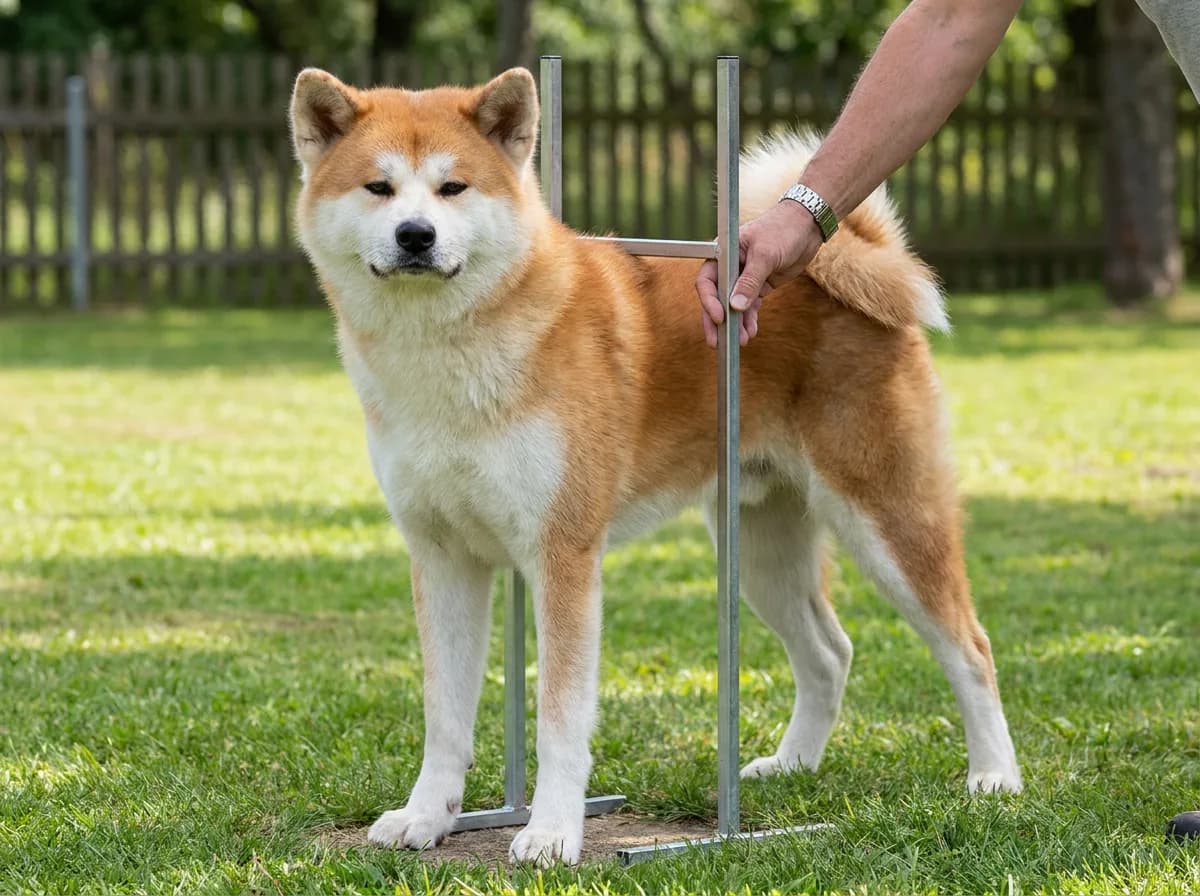
Use a calm, comfortable setup:
- Choose a level, nonslip surface with room for the dog to stand normally.
- Let the dog place all four feet naturally, without stretching forward or crouching.
- Identify the withers by the shoulder structure beneath the coat.
- Position an upright measuring stick beside the dog and bring its horizontal arm gently to the withers.
- Keep the upright perpendicular to the ground and the crosspiece level.
- Record the result, date and anything that made the reading approximate.
The crosspiece should establish the height of the shoulder, not press the dog downward. A familiar helper can reward standing calmly, but stop if the dog becomes worried about the equipment. Practicing briefly with the stick nearby before attempting a measurement may be more useful than trying to finish in one session.
If you do not have suitable equipment or cannot obtain a relaxed standing position, ask the veterinary team for help. A tape curved over the coat does not measure straight vertical shoulder height. Neither does estimating the distance from a person's knee in a photograph.
Consistency matters when recording change. Use the same method and similar standing conditions so a difference is less likely to reflect the floor, posture or equipment. If two readings disagree noticeably, note the uncertainty and repeat the measurement calmly on another occasion rather than reporting a false level of precision.
American Akita and Japanese Akitainu size differences
The American and Japanese distinction matters because each standard describes a different set of preferred proportions.
The standards show why “How tall is an Akita?” needs a follow-up question. Japanese males measure 25–27.5 inches and females 22.5–25 inches, compared with 26–28 and 24–26 inches in the American standard. The intervals overlap, so height alone cannot identify which standard a dog belongs to.
Weight can create a more noticeable difference in overall bulk, but the source descriptions are not a single matched study of both populations. Avoid calculating an exact average size gap from a club's broad American guidance and the Japanese standard's preferred-size figures. Use the dog's documented identity and actual measurements for decisions that depend on fit.
American and Japanese Akita differences
Our American Akita versus Japanese Akita comparison explains head shape, coat wording, colors and registration context alongside size. Both are domestic dogs; appearance does not establish recent wolf ancestry. A broad head, erect ears or thick coat cannot resolve a specific ancestry claim. Check records where available, and keep physical identity separate from assumptions about which dog will be friendlier, easier to train or better suited to a family.
Akita size beside people and other dogs
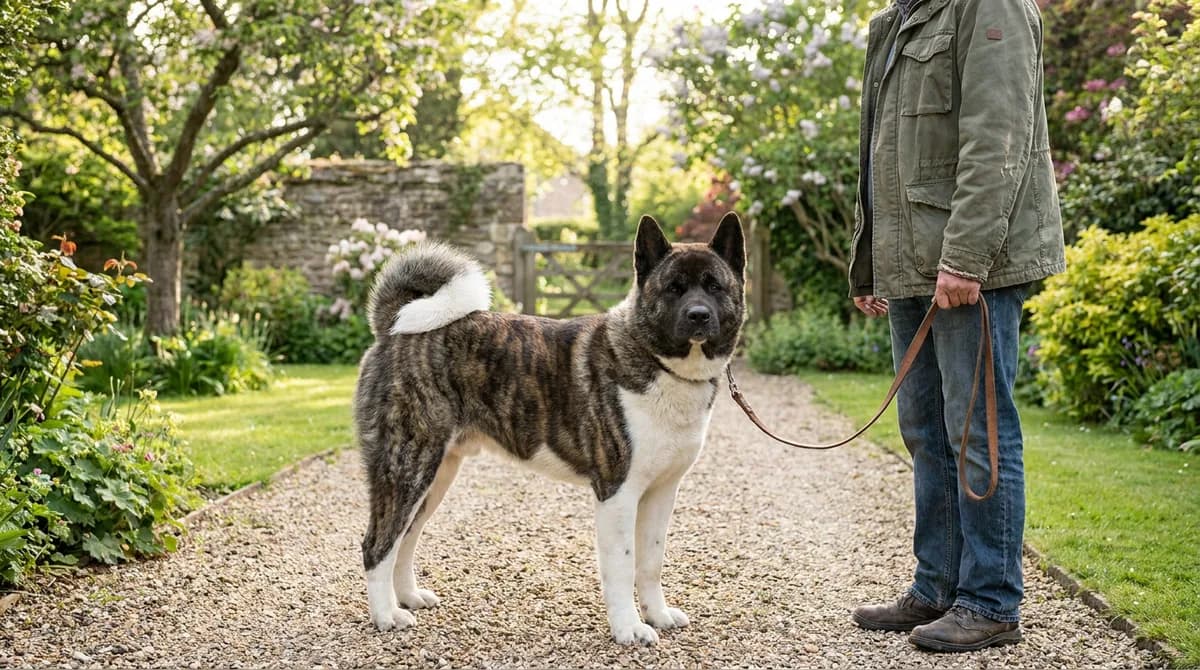
An Akita standing next to a human gives useful everyday context: this is a dog whose strength, reach and resting space deserve planning. It does not create a universal proportion. Adults differ in height, Akitas differ in size, and a dog closer to the camera can look much larger than the person beside it.
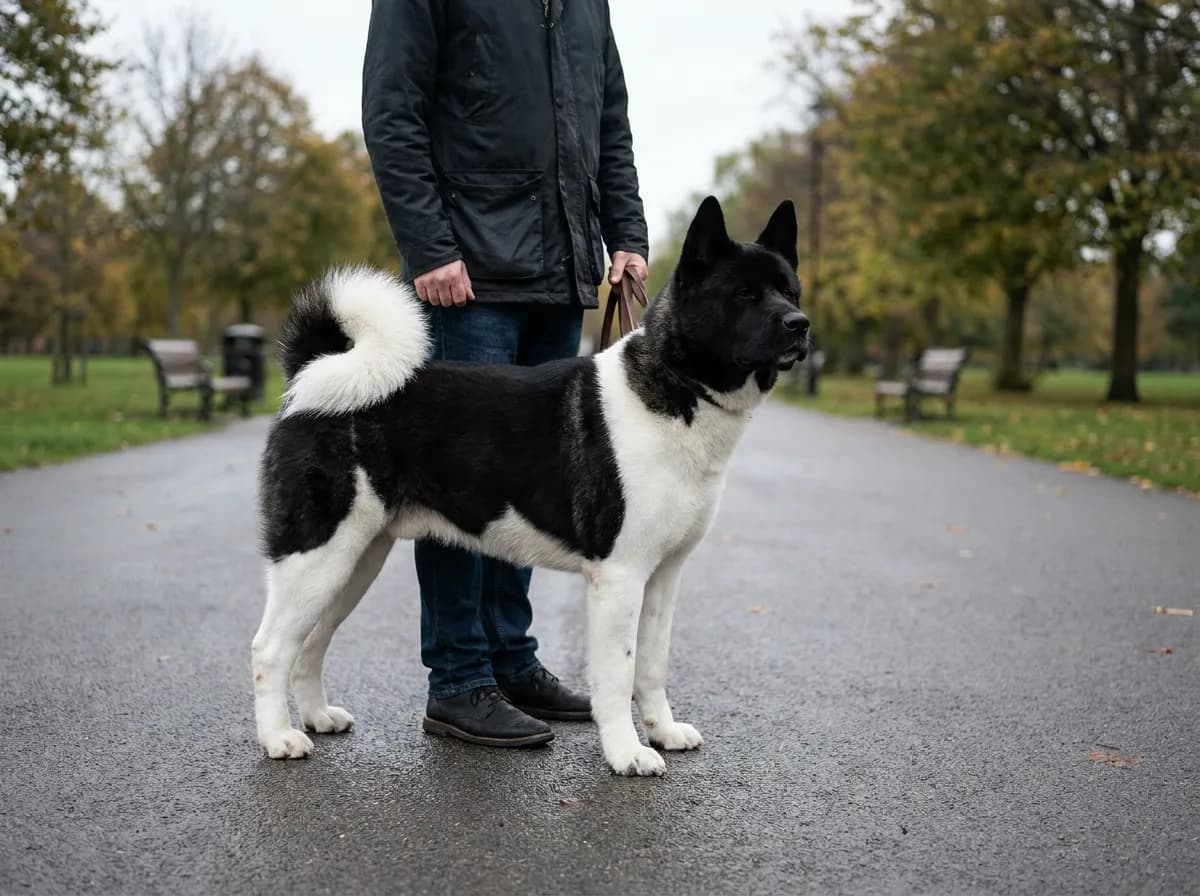
For a fair visual comparison, dog and handler should stand on the same ground plane, with the full dog visible. A low camera angle, wide lens or person positioned farther back can exaggerate the impression. A seated dog is also a poor substitute for shoulder-height measurement because head position and posture change the outline.
Comparisons with another dog have similar limits. Two animals called large can differ in body length, chest depth, weight and leg length. Even dogs of similar shoulder height may require different beds, harnesses or vehicle arrangements. Compare actual measurements and needs rather than assuming one breed label translates directly into another's equipment size.
When assessing practical handling, consider situations beyond standing together for a photo:
- Passing another dog on a narrow pavement.
- Entering and leaving the vehicle.
- Turning through doorways without pulling.
- Getting comfortable in the planned resting area.
- Receiving assistance if mobility becomes limited.
- Being handled by the backup caregiver as well as the usual owner.
A person does not have to be a particular height to care for an Akita. The more useful question is whether the responsible adults can safely manage the individual with suitable equipment, training and realistic support. A dramatic dog-and-person photograph cannot answer that question.
Healthy body condition matters more than maximum weight
Height describes part of the frame. Weight combines that frame with muscle, fat and other tissues. Body condition asks a different question: whether the dog carries an appropriate amount of body fat for its individual build. A large male does not become healthier simply by moving toward the heaviest quoted Akita weight.
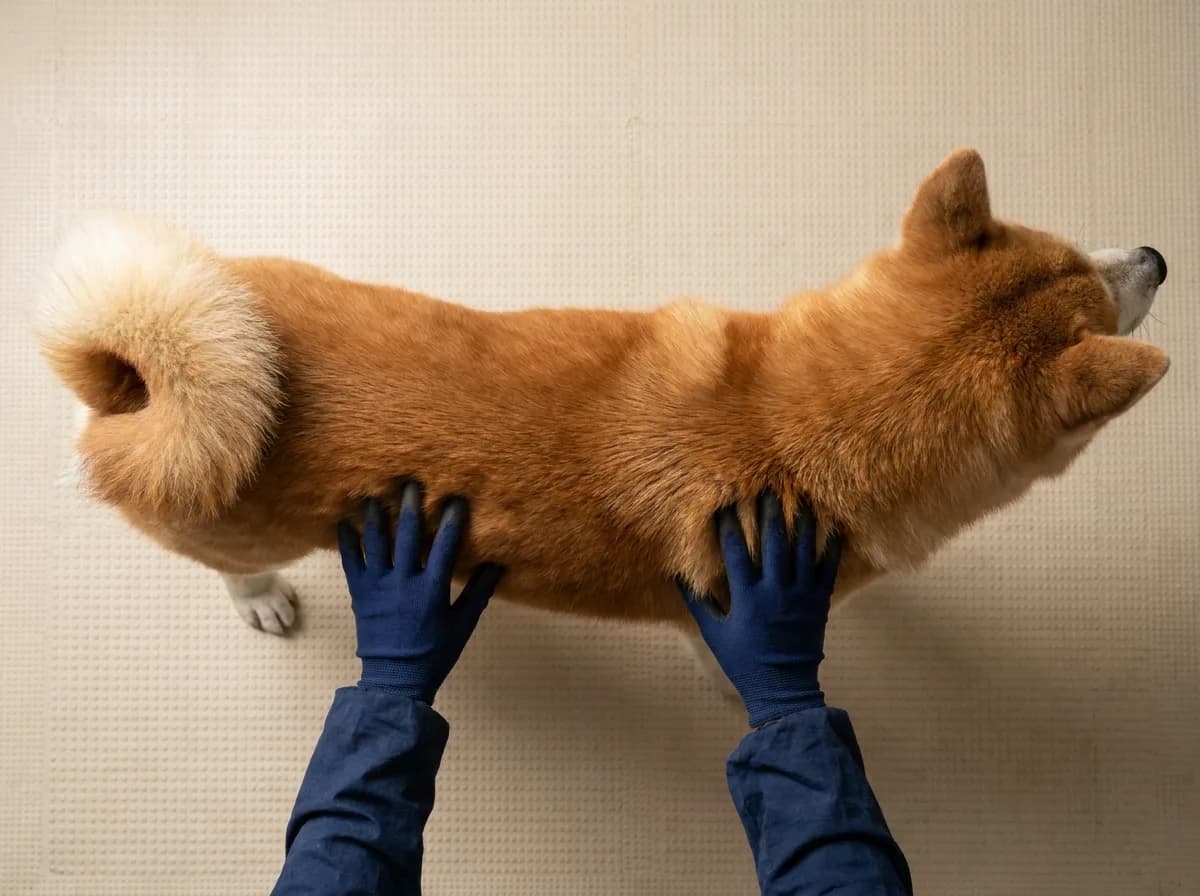
A heavy coat makes visual estimates less reliable. From above, you may be able to see a waist, but hair can conceal its outline. From the side, coat over the chest and abdomen can obscure the body underneath. Ask your veterinarian to demonstrate the hands-on assessment rather than assigning a clinical score to a photograph.
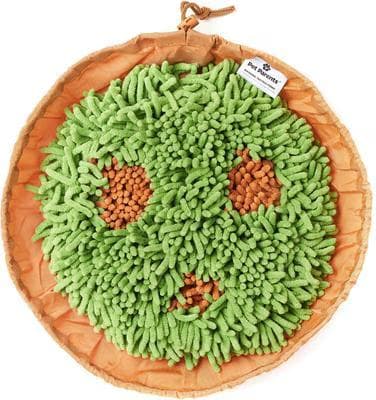
Use part of a measured meal for supervised food-search enrichment, removing the mat if the dog chews it.
Petful may earn a commission when you click through to Chewy, at no extra cost to you.
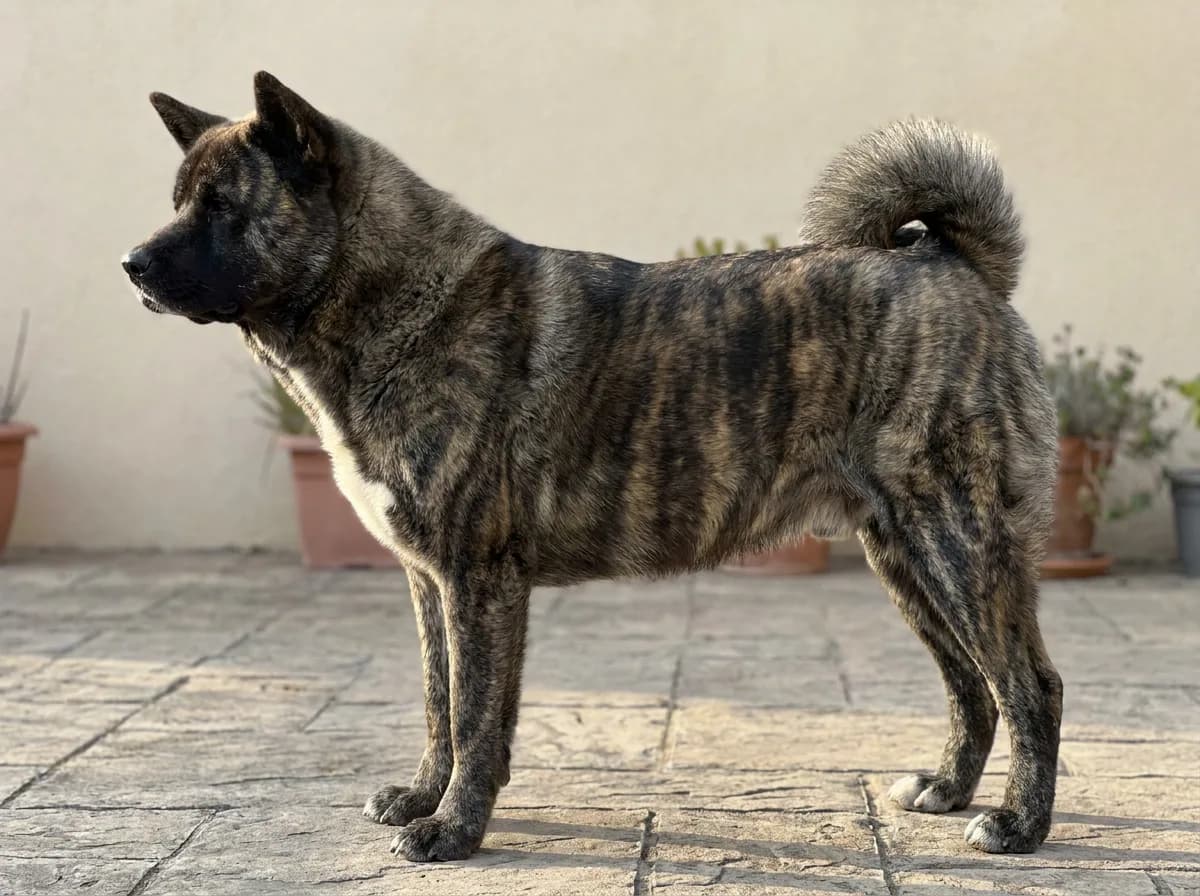
Useful observations to bring to an appointment include:
- Recent weights and the dates they were taken.
- The exact food and daily amount offered.
- Treats, chews and food used for training.
- Changes in normal activity or ease of movement.
- Changes in appetite or the way clothing and harnesses fit.
- Any medication or supplement changes.
Enrichment can use food already counted in the daily allowance. A Pet Parents Forager Snuffle Mat offers one way to provide supervised food-search activity with part of a meal. Put it away if the dog chews the material. The aim is an enjoyable activity, not extra calories added to pursue a maximum weight.
WebVet's dog training treat guide explains how rewards fit the daily calorie allowance. Ask your veterinary team how to adjust the whole feeding plan if condition changes, rather than removing meals while leaving a large uncounted treat allowance. A new weight concern may also need assessment of health and activity.
Body condition can change after growth has largely finished. Keep paying attention to comfortable movement, appetite and the fit of everyday equipment instead of treating the adult weight recorded once as a permanent ideal. A useful care record follows the dog through changes rather than requiring the dog to remain at one number.
Choosing equipment and space for a full-grown Akita
Choose equipment for the measurements and abilities of the individual dog. Bed length, crate space, harness fit and transport arrangements answer different questions, so a single weight limit cannot settle all of them. Start with the manufacturer's measuring instructions and compare the usable dimensions with the dog, including its normal sleeping posture.
For a bed, consider whether the dog curls tightly, lies on its side or stretches out. The usable sleeping surface can be smaller than the outer dimensions when raised edges or bolsters occupy space. A surface large enough for the body but not the extended legs may suit one resting position and constrain another.
Check practical details before purchasing:
- Can the dog reach the resting surface comfortably?
- Is there enough clear floor space around it?
- Will the bed stay stable when the dog gets up?
- Can the cover be cleaned as needed?
- Do the stated support recommendations suit the actual dog?
- Can the dog rest away from doorways and constant foot traffic?
For an older dog, easy access and a nonslip approach can matter alongside size. WebVet's guide to senior dog joint pain and comfort explains why difficulty getting up or changes in movement deserve attention. Bedding may support comfort, but a new reluctance to move should not be dismissed as the inevitable result of having a large dog.
Akita costs and budgeting
Why are Akitas expensive, and how much does a full-blooded Akita cost? A size guide cannot establish a purchase price from height or weight. Our Akita costs and budgeting guide separates source-specific acquisition fees from equipment and continuing care. Ask for records supporting a seller's breed claim, then price the actual arrangement. A larger puppy, a heavier parent or the word purebred does not establish a fixed financial premium or guarantee quality.
If insurance is part of the ownership budget, a personalized Lemonade pet insurance quote gives you specific terms to compare. Examine deductibles, reimbursement, limits and exclusions as well as the premium. Do not infer coverage or cost from the dog's size alone.
Akita temperament and behavior
Adult strength makes everyday teaching valuable, but weight does not predict temperament. The Akita temperament guide explains individual behavior, introductions and humane training. Practice calm lead handling and comfortable care before assuming a second handle or heavier equipment will solve a difficulty. If the person responsible cannot safely manage the dog in ordinary situations, seek qualified help and adjust the setup rather than relying on physical strength alone.

Compare coverage choices for your pet, then request a quote directly on Lemonade.
- Check a price for your pet
- Review available coverage choices
- See the terms before you decide
Eligibility, waiting periods, limits and exclusions apply.
Petful may earn a commission when you click through to Lemonade, at no extra cost to you.
Plan for movement as well as a resting spot
A bed can fit the dog and still be poorly placed. Watch the route from the resting area to the door, water bowl and usual family space. Tight furniture gaps, slippery turns or a surface that shifts underfoot may make everyday movement awkward. Leave room for the dog to change position without bumping into a table or being stepped over.
Transport needs a separate check. Confirm that the dog can enter, turn where appropriate and travel using a suitable restraint or carrier arrangement. Measure the vehicle opening as well as the interior space. A crate that fits inside may not pass through the door, and a dog that comfortably enters one vehicle may find another's access difficult.
Before a planned journey, check:
- The carrier's or restraint manufacturer's instructions and limits.
- The available opening and usable space in the actual vehicle.
- Whether the dog can enter without being pulled or pushed.
- How you would provide assistance if mobility changed.
- Whether the responsible person can manage loading calmly.
For a growing puppy, revisit harness fit rather than waiting until an item visibly pinches. Follow the maker's instructions for where to measure and check the fit with the dog standing normally. Coat thickness can change the feel of an adjustment, so examine the body underneath and the dog's movement instead of choosing the loosest setting simply because the coat looks bulky.
Observe an adult's relaxed sleeping position before taking resting measurements. Include the room its legs and head occupy when stretched out, then compare that with the usable sleeping area. The practical test is whether the individual can use the space comfortably, not whether the product category says large or giant.
Puppy growth without a misleading monthly chart
An adult breed standard describes adults. It is not a month-by-month growth schedule, and it cannot tell you what every Akita puppy should weigh at a particular age. No breed-specific monthly growth curve is established by the sources used here, so a table of precise monthly targets would offer certainty the evidence does not support.
Instead, keep an individual growth record and review it with your veterinarian. Weight taken over time, body condition, food intake and general health tell a more useful story than one comparison with an online puppy. If the parents are documented, their size supplies context, but it does not guarantee that every puppy will reach the same dimensions.
| Record date | Age on that date | Measured weight | Body condition | Food and activity changes | Veterinary notes |
|---|---|---|---|---|---|
| First observation | Enter age or best estimate | Enter scale reading and unit | Record veterinary assessment when available | Note the current routine | Record advice and follow-up |
| Next observation | Enter age or best estimate | Use the same unit and a suitable scale | Note changes assessed with the veterinary team | Record changes since the previous entry | Record the next planned check |
| Following observation | Enter age or best estimate | Record the measured result, not a target | Keep observations separate from a guessed score | Note new food, portions or activity | Add relevant findings |
Keep the record simple enough to maintain. A single notebook or shared document can hold the dates, readings and care changes. If a rescue puppy's age is estimated, record it as estimated rather than turning it into an exact birth date. If different scales were used, note that too, especially when interpreting a small apparent change.
Food should support appropriate growth, not force the puppy toward the largest adult in a photograph. Discuss a complete diet suited to large-breed growth and follow the clinic's advice about portions and reassessment. Adding extra food or supplements solely to create a bigger frame is not a reliable route to healthy development.
Watch how the puppy functions as well as what the scale says. Changes in appetite, activity, movement or comfort are useful information for the veterinary team. A sudden or unexplained change in the growth record deserves discussion rather than an attempt to correct the number independently. Bring the actual food label, amounts offered and any supplements so the clinician can assess the whole routine.
Making the growth record useful
Agree with the veterinary team on a sensible checking schedule. Repeated weighing without a reason can create a long list of numbers without clarifying whether growth is appropriate. At each planned entry, use a suitable scale and record the unit explicitly. Pounds and kilograms should never share an unlabeled column; one kilogram is approximately 2.2 pounds, so an unnoticed unit change can look like a dramatic weight change.
Keep feeding notes specific enough to interpret. “Same food” is less useful than the product name, amount offered and whether anyone added treats or table food. If the clinic recommends a change, record the date it began. That allows the next discussion to connect the trend with what actually happened rather than trying to reconstruct several weeks from memory.
Separate observation from conclusion. “Walks more slowly after resting” describes something you saw; “too heavy for the joints” is an interpretation requiring assessment. Likewise, record reduced appetite or a change in stool rather than assuming a low weight reading means the puppy needs more food. The log should help the clinician understand the animal, not diagnose it by spreadsheet.
Full-grown does not mean the scale stops changing
An adult description concerns mature size, while weight and condition can still change with muscle, body fat, activity and health. A stable height reading does not establish that every part of development is complete or that an adult exercise routine is suitable. Ask the treating veterinarian how your dog's stage of development should affect activity and feeding.
When adopting a young dog with uncertain age, preserve that uncertainty in the record. Current measurements help you plan current needs; they do not require pretending you know an exact birth date or final adult weight. Choose adjustable equipment where appropriate and reassess fit as the dog develops.
Price, grooming and mixed-breed size
A full coat can change what you see; a mixed-breed label can change what you can predict. Neither supports guessing exact adult dimensions from a picture. Keep photographs, measured size, documented ancestry and observed care needs as different sources of information. They can inform one decision together without becoming interchangeable evidence.
Routine grooming also makes hands-on assessment easier. Work comfortably and check beneath the coat instead of judging condition from the outer silhouette. If the dog cannot yet tolerate that handling, introduce it gradually and ask for help. A tidy haircut or heavy seasonal coat does not establish how much body fat or muscle the dog carries.
Akita mixes and ancestry
For an Akita mix, including a German Shepherd and Akita mix or an Akita Husky mix, adult size and household suitability require individual assessment. Do not average the parent breeds' measurements and present the result as a prediction. There is no universal best Akita mix or a guarantee that one cross is a good dog for every home. Documented parents, current growth, observed behavior and foster history provide more useful information than a mix name alone.
Akita size questions
A useful height reading starts at the top of the shoulder blades with the dog standing on level ground. For decisions about health and equipment, combine that measurement with body condition and the way the individual moves and rests. These questions address common shortcuts that can lead you away from those observations.
No. Body condition and comfortable function matter more than reaching the top of a published range. A breed weight description is not a target maximum. Ask your veterinarian to assess the dog's frame, muscle and body fat before deciding that it needs to gain or lose weight.
Puppy paws are an unreliable shortcut to a precise adult height or weight. Consider growth history and parents where they are documented, while recognizing that neither supplies a guaranteed final measurement. Regular observations and veterinary assessment are more useful than comparing one puppy's feet with another's in photographs.
No. Follow the manufacturer's sizing guidance and measure the individual dog. It should have appropriate room to stand, turn and lie comfortably, accounting for its length and normal posture. Two dogs with the same weight can have different proportions, so a weight-based product label cannot establish fit by itself.
No. Evaluate body condition and frame together. A small adult can carry an appropriate amount of body fat, while a larger dog may still be too lean or too heavy. A veterinary assessment is more useful than comparing the dog with the largest example of the breed or adding food because of a label.

Coreen Saito is a pet writer and longtime shelter volunteer with more than a decade in animal rescue. She covers cat behavior, breed care, and the small, ordinary science of sharing a life with companion animals, with a particular focus on honest takes about the products and decisions that actually matter. At home in Arizona, she's outranked by Mac (a dog with the loudest opinion in the house), Rebel (a cat who governs by quiet authority), and Meri (an orange tabby who runs the late shift and the laundry basket). She writes about all three, plus the rescues that keep coming through her life, at LifeWithMinty.com.
Sign up for expert-backed reviews and safety alerts all in one place.