Belgian Malinois Mix: 13 Crosses and Who They Fit
Compare 13 Belgian Malinois mixes through honest trait ranges, owner-fit guidance, training needs, identification tips, and responsible adoption questions.
Petful is reader supported. As an affiliate of platforms like Amazon and Chewy, we may earn a commission when you buy through links on this page. There is no extra cost to you.
A Belgian Malinois mix can combine the Malinois's speed, vigilance, trainability, and intense working drive with almost any trait carried by the other parent. That makes these dogs fascinating, but it does not make them predictable. Two puppies from the same litter can differ in size, coat, sociability, prey drive, and willingness to settle. A breed label describes ancestry, not a guaranteed personality.
This guide compares 13 crosses without turning them into designer-dog formulas. You will see the plausible trait range, the questions that matter more than a cute mix name, and the kind of home most likely to succeed. Before considering any cross, get familiar with the baseline in Petful's Belgian Malinois breed guide. The Malinois side may contribute high arousal, environmental sensitivity, mouthy play, strong movement interest, and a need for thoughtful daily work.
The practical rule is simple: plan for the more demanding possibility, then evaluate the individual dog in front of you. A mixed-breed dog may inherit the easiest qualities from both parents, the hardest qualities from both, or a combination no short profile can forecast. Foster notes, veterinary records, observed behavior, and a responsible DNA test are more useful than appearance alone.
- Build your decision around the more demanding plausible combination of size, drive, coat care, prey interest, and ability to settle. If the actual dog proves easier, that margin helps. If the dog matures toward the harder end of the range, your housing, time, training support, and management plan are already realistic.

Sign up for expert-backed reviews and safety alerts all in one place.
What a Belgian Malinois mix is really like
A Belgian Malinois mix is a dog with Malinois ancestry and at least one other breed or genetically mixed parent. The concise summary is that most are athletic, observant dogs whose needs can be substantial, while their exact size, coat, sociability, and working style remain variable. The source boundary matters: breed histories suggest possibilities, but only direct knowledge of the parents and the individual dog provides usable evidence.
- 1Treat every Belgian Malinois mix as a trait range, not a preset package
- 2Plan around the individual dog's current behavior and the more demanding plausible adult outcome
- 3A calmer second parent does not automatically cancel Malinois arousal, prey drive, or training needs
- 4Foster notes, parent records, and a DNA test carry more weight than looks alone
- 5Choose for owner fit and daily routine before choosing for color, size, or a mix name
The Belgian Malinois was developed as a responsive working dog. A mix may show rapid learning, close handler awareness, persistent interest in movement, and an ability to go from rest to action quickly. Those qualities can be rewarding in dog sports, scent games, structured hiking, and advanced obedience. They can also become chasing, frantic greetings, destructive boredom, barrier frustration, or nipping when the household offers too little structure.
The second parent changes the range rather than supplying an on-off switch. A Labrador parent can add food motivation and social ease, yet a Belgian Malinois Lab mix may still be more intense than the average Lab. A Mastiff parent may add mass and a slower movement style, yet the resulting dog can remain vigilant and powerful. A Husky parent may add independence and vocal behavior without reducing exercise demand at all.
Three variables matter more than the label:
- The parents: Their adult size, health testing, sociability, recovery after excitement, and behavior around dogs, people, and small animals offer the best inherited clues.
- Early experience: Thoughtful socialization, sleep, handling, and gradual exposure can support resilience. Chaotic exposure or forced greetings can make a sensitive dog less secure.
- Current behavior: For an adolescent or adult rescue, what the dog does in several settings is more useful than a guess based on ear shape or coloring.
Do not assume that a Malinois-looking dog has Malinois ancestry or that a dog without a black mask does not. Many unrelated breeds can produce upright ears, sable coats, lean frames, and dark facial shading. The label should begin an investigation, not end it. Petful’s separate guide to black Belgian Malinois explains whether the color really exists and what you are buying.

Petful may earn a commission when you click through to Chewy, at no extra cost to you.
The trait-range framework: how to read every cross
Each profile below uses a range because mixed inheritance is not an average. Imagine one parent at each end of several sliding scales: size, coat care, social openness, chase interest, persistence, vocal behavior, and ability to settle. A puppy can land almost anywhere on each scale, and the scales do not have to move together. A dog can inherit a retriever's broad body, a Malinois coat, the guarding tendency of one line, and the social style of neither parent.
Use this practical method before falling for a prediction:
- List the harder plausible trait from each parent. If one breed has high prey drive and the other is prone to roaming, prepare for both.
- Check what is already observable. Recovery after a surprise, comfort with handling, engagement around distractions, and the ability to rest are more informative than a single exciting play session.
- Match needs to a normal week. Judge your schedule on a busy Tuesday, not on the vacation week when everyone can hike for hours.
- Build a management margin. Secure fencing, gates, supervised introductions, leashes, and separate rest areas are normal tools, not evidence of failure.
- Reassess as the dog matures. Adolescence can amplify movement chasing, guarding, frustration, and independence.
Size predictions also deserve caution. The midpoint between two breed standards is not a growth chart. Sex, family line, litter variation, nutrition, and many genes influence adult height and weight. If space, landlord rules, travel crates, or handling ability create a hard size limit, choose a known adult rather than gambling on a puppy.
Coat forecasts are similarly loose. Most Malinois crosses shed, even when the other parent has a different coat. Double coats, feathering, short dense hair, and seasonal undercoat can appear in different combinations. Allergies are triggered by proteins in skin flakes, saliva, and urine rather than one visible coat type, so no cross here should be promised as hypoallergenic.
Temperament deserves the widest boundary. Socialization helps a dog interpret the world, but it cannot guarantee sociability or erase inherited tendencies. A responsible choice respects the dog that develops instead of forcing it into a role selected before birth.
Puppy, adolescent, or adult: which gives you the clearest fit?
A puppy offers the least certainty at the moment when people are most tempted to make confident predictions. You can meet the parents, review early handling, and observe the litter, but a young puppy has not yet passed through adolescence or shown its adult response to dogs, visitors, wildlife, pressure, and frustration. Color, boldness during a short visit, and which puppy runs over first do not provide a complete temperament test.
A responsible breeder should match puppies by sustained observations rather than allowing buyers to choose by markings. Ask how each puppy recovers after a new sound, handles brief separation, responds to gentle restraint, engages with people, and settles after play. Even good observations reveal tendencies, not destiny. Your home, health events, adolescence, and ongoing learning continue to shape behavior.
An adolescent Belgian Malinois mix, roughly in the broad stage between puppyhood and social maturity, often reveals more of the traits an owner will manage. This is also the stage when jumping, grabbing, chasing, barking, leash frustration, and selective listening can become especially noticeable. Those behaviors do not make the dog bad. They show where reinforcement history, arousal, and developing adult tendencies meet.
- Ask an adolescent dog's current caregiver for specific examples:
- How long can the dog rest after a walk or training session?
- What happens when play stops?
- Can the dog pass another dog at a useful distance without fixating?
- Does the dog redirect from squirrels, bicycles, or running children?
- How does the dog behave when a visitor enters?
- What handling has the dog accepted for nails, ears, and veterinary care?
- Has the dog guarded food, toys, resting places, doors, or people?
An adult in a foster home usually offers the clearest owner context. Adult size and coat are visible, and a foster can describe real household behavior across days or weeks. That does not eliminate surprises. Behavior changes with stress, environment, pain, and learning, and a newly adopted dog may need time before its full pattern appears. Still, a detailed foster assessment narrows uncertainty far more than a visual label.
Choosing an adult is especially wise when a household has hard limits. If the dog must live safely with a cat, fit under a landlord's weight cap, tolerate urban foot traffic, or settle during remote work, select an individual already showing those capabilities. Do not ask a puppy's breed mix to guarantee them.
What a workable weekday looks like
Owner fit becomes clearer when you turn "active home" into a real schedule. A workable day does not require hours of nonstop running, but it does require repeated chances to move, think, decompress, and rest. The balance matters. A dog kept in high gear from dawn to bedtime can become physically conditioned while remaining unable to settle.
A sample adult routine might include a sniff-focused walk in the morning, two or three minutes of engagement or leash practice before breakfast, a protected rest period, a short midday toilet and search game, and a longer evening outing with training woven into it. Quiet chewing, food puzzles, and mat work can support transitions. The exact duration changes with the individual, weather, health, and age.
Quality also matters more than spectacle:
- Sniffing lets the dog gather information at its own pace and can make an ordinary walk meaningful.
- Scent searches turn a room, yard, or handful of boxes into mental work without constant impact.
- Structured tug can teach starts, stops, exchanges, and recovery when rules are introduced gradually.
- Body-awareness exercises such as stepping onto a low stable platform build coordination without demanding speed.
- Place practice teaches the dog to remain on a bed while ordinary life continues.
- Choice-based handling prepares the dog for grooming and veterinary care.
Puppies need shorter activity, more sleep, and protection from forced repetitive exercise. Adolescents need consistency and management while their bodies and social behavior mature. Older dogs may still love training while benefiting from lower-impact movement and more recovery. A veterinarian can help adjust activity when there is pain, illness, rapid growth, or an abrupt change in stamina.
The household must also budget human attention. A yard does not train a dog, and another dog is not a substitute for engagement. At the same time, constant entertainment creates dependence. Good routines include safe periods when the dog rests away from the owner and learns that nothing exciting is happening.
Before adoption, run this schedule against your least flexible day. Identify who handles the morning, what happens during work hours, where the dog rests when guests arrive, and how exercise changes during heat, rain, illness, or travel. If the plan only works when every day goes perfectly, the margin is too thin.
Which Belgian Malinois mix is the best fit?
There is no single best breed to mix with a Belgian Malinois. The best fit is the individual dog whose demonstrated needs, likely adult range, and daily management requirements match a capable household. That is the direct answer. The practical context is that a Labrador or Golden Retriever cross may offer more training motivation and social flexibility for some experienced homes, while a Dutch Shepherd, Doberman, Akita, Mastiff, or guardian-type cross can demand more specialized judgment.
Start with owner experience and exercise demand, then consider size, coat care, sociability, and the household's other animals. The matrix is a screening tool, not a promise. "Manageable" still means a substantial dog, and "specialist" means the plausible downside is too consequential to dismiss.
| Cross | Likely drive range | Likely size range | Coat care | Best starting fit |
|---|---|---|---|---|
| Husky mix | High to very high | Medium to large | Heavy seasonal shedding | Experienced active home with secure containment |
| Labrador mix | Moderate-high to very high | Medium to large | Moderate to heavy shedding | Experienced home that enjoys training and outdoor activity |
| Golden Retriever mix | Moderate-high to very high | Medium to large | Moderate to high brushing | Experienced social home ready for adolescent intensity |
| Greyhound mix | Moderate to very high | Medium to large, often lean | Low to moderate | Experienced home with secure running and prey-drive management |
| Pitbull-type mix | Moderate-high to very high | Medium to large, muscular | Low to moderate | Experienced handler able to manage strength and dog introductions |
| Rottweiler mix | High to very high | Large | Moderate | Specialist-minded home ready for power and guarding potential |
| Great Dane mix | Moderate-high to very high | Large to giant | Low to moderate | Experienced large-dog home with space and handling capacity |
| Akita mix | High to very high | Large | Heavy seasonal shedding | Specialist home prepared for independence and careful social management |
| Mastiff mix | Moderate-high to very high | Large to giant | Low to moderate | Experienced guardian-breed home with physical control |
| Rhodesian Ridgeback mix | High to very high | Large and athletic | Low to moderate | Experienced active home with secure containment |
| Australian Shepherd mix | High to very high | Medium | Moderate to high | Training-focused home with daily mental work |
| Dutch Shepherd mix | Very high | Medium to large | Moderate | Working-dog or sport-experienced handler |
| Doberman mix | High to very high | Large and athletic | Low to moderate | Experienced home wanting a close, vigilant working companion |
A reader decision should survive three tests. First, can every adult in the home safely handle a strong dog during an unexpected trigger? Second, can the household provide training and decompression every day without depending on exhaustive running? Third, can it keep children, visitors, cats, livestock, and unfamiliar dogs safe if the mix develops the harder end of its trait range?
If any answer is uncertain, an adult in a foster home offers more reliable information than a puppy. Ask for videos of ordinary life, not only polished obedience clips. Watch the dog settle after play, encounter a stranger at a distance, trade an object, walk past another dog, and recover from a mild surprise. Those quiet moments predict household fit better than a dramatic jump or fast recall.

Petful may earn a commission when you click through to Chewy, at no extra cost to you.
Husky, Labrador, and athletic Belgian Malinois mixes
Athletic crosses can look like obvious adventure partners, but their greatest shared need is not mileage. They need an off-switch, safe outlets for movement, and a handler who can keep thinking when the dog is excited. A Belgian Malinois Husky mix may combine endurance with independence. A Belgian Malinois Labrador mix may combine retrieval and food interest with faster arousal. Greyhound and Golden crosses can look softer while still carrying meaningful prey drive or training demand.
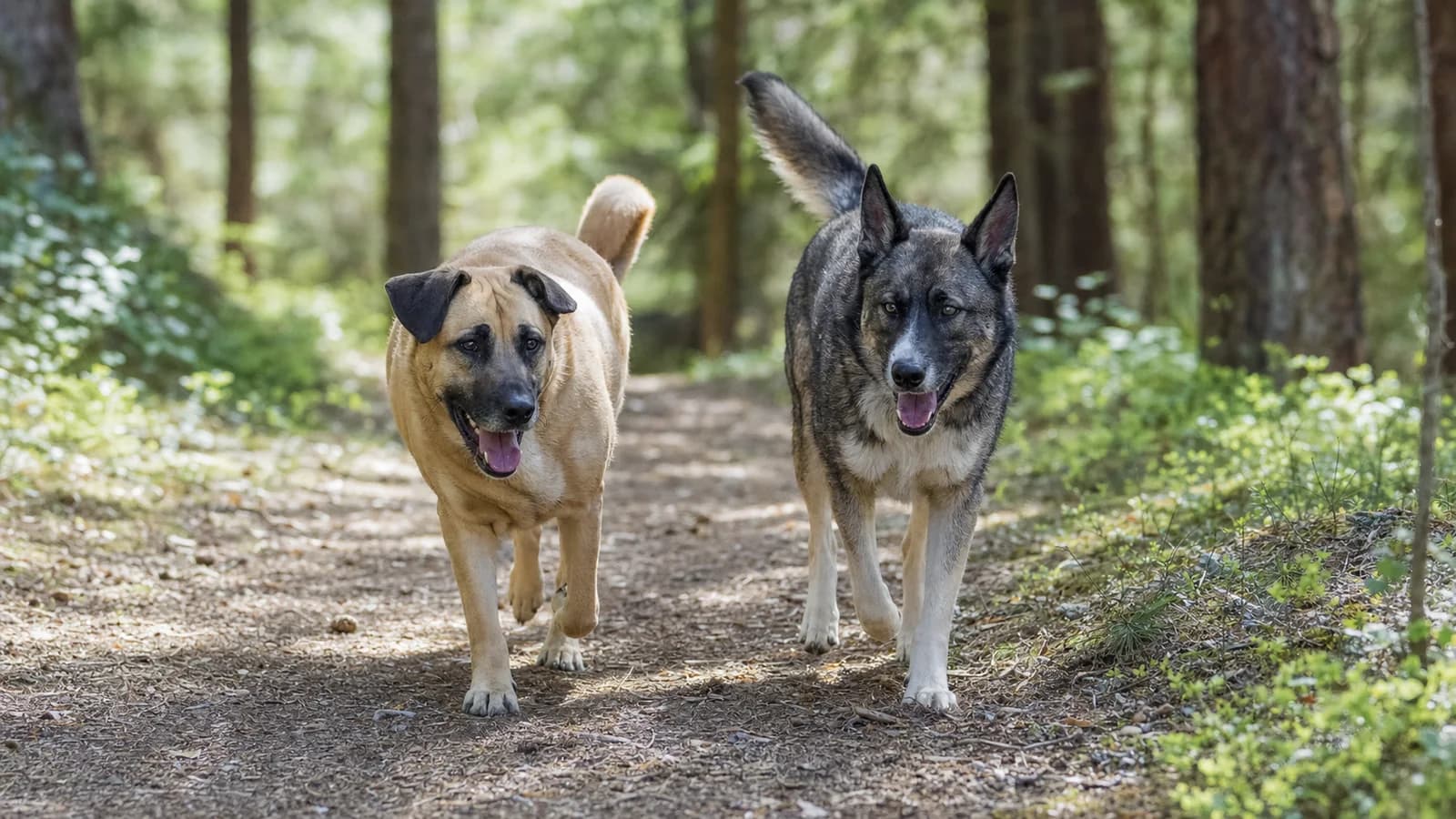
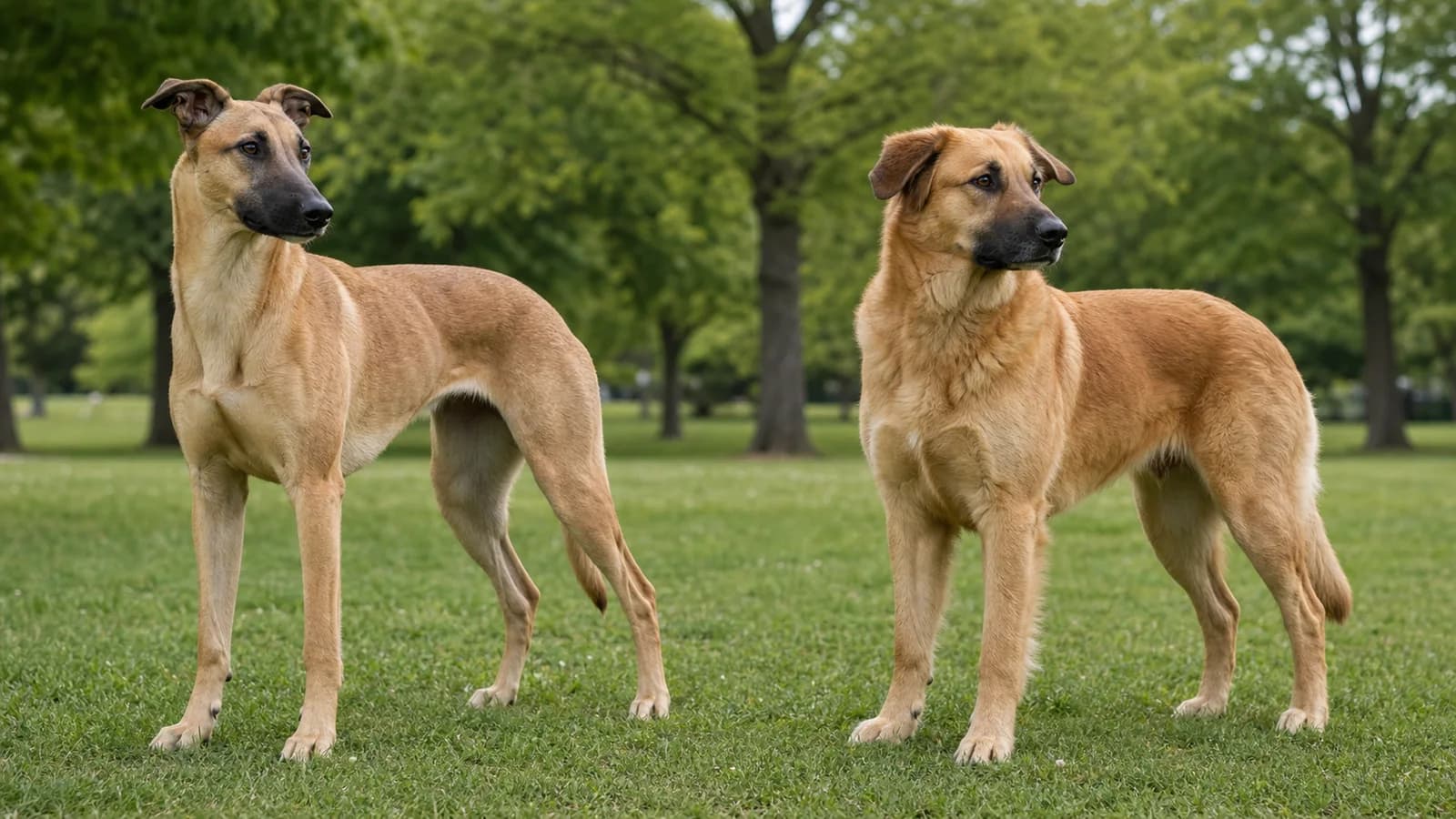
1. Belgian Malinois Husky mix
A Belgian Malinois Husky mix can inherit formidable endurance from both sides. Plausible traits include vocal communication, environmental curiosity, pulling, digging, chase interest, fast learning, and selective cooperation. The Malinois side may want tight interaction with a handler, while the Husky side may be perfectly willing to make an independent decision. That tension is not a flaw, but it makes training more strategic than simply repeating commands.
This cross fits an experienced, active household with secure fencing, strong leash habits, and realistic expectations about off-leash freedom. Exercise should combine aerobic activity with sniffing, problem solving, and calm place work. More running alone can create a fitter dog without improving regulation. Recall needs a long line and careful proofing around wildlife.
Plan for substantial shedding and for heat management during warm-weather activity. Some individuals may be social with dogs; others may become selective with maturity. Ask specifically about escape behavior, resource guarding, recovery after excitement, and behavior around cats.
2. Belgian Malinois Labrador mix
The Belgian Malinois Lab mix often appeals to owners who hope the Labrador will make the cross easier. It might contribute sociability, retrieval, food motivation, and a more forgiving training style. It may also contribute exuberant greetings, adolescent chewing, water obsession, and a strong desire to carry objects. Layer Malinois speed and sensitivity on top, and the result can be an energetic, mouthy dog that learns both good and bad habits exceptionally quickly.
For the right home, this can be a highly versatile companion for scent work, hiking, dock activities, retrieval games, and structured obedience. The handler should reward calm behavior as deliberately as exciting work. Use food strategically rather than feeding endless treats, and teach a clean release cue for toys before tug becomes a conflict.
The likely size is medium to large, but parent size is more useful than a breed-average calculation. Coat length is usually manageable, though seasonal shedding can be heavy. Families should evaluate actual behavior around children because enthusiasm, speed, and grabbing can matter even when a dog is friendly.
- Identification option: If you want an ancestry-only test without bundled health screening, an Embark Breed Identification Dog DNA Test Kit can give a breed estimate. Treat the result as context for care and questions, not a personality forecast.
3. Malinois Golden Retriever mix
A Malinois Golden Retriever mix may inherit social interest, retrieval, softness, persistence, a fuller coat, or any combination of those qualities. The Golden side does not guarantee an easy family dog. Working and field-bred Goldens can be intense athletes, while a Malinois may add environmental vigilance and quick reactions. A dog that loves everyone can still knock over a child, guard a found object, or chase a running pet.
This cross can suit an experienced household that enjoys cooperative training and has time for brushing, drying after wet outings, and teaching impulse control. Retrieval games are useful when they include starts, stops, exchanges, and rest. Endless ball throwing encourages repetitive arousal and can stress the body.
Ask about both parents' health testing, not just a generic clean bill of health. For a rescue, ask how the dog behaves when visitors enter, when food is handled, and when play ends. The owner fit is often better where people welcome a close, active dog and can maintain boundaries without harshness.
4. Greyhound Belgian Malinois mix
A Greyhound Belgian Malinois mix may have a deep chest, lean build, explosive acceleration, and a strong visual response to movement. It might also inherit the Greyhound's love of long rest periods, but that cannot be assumed. The dog could combine a sighthound's chase sequence with a Malinois's persistence and handler focus, making wildlife and small-animal management a central issue.
Secure fencing and a long line are sensible starting points. A fenced sprint can be valuable, yet joints and soft tissue need gradual conditioning. Avoid asking an unconditioned dog for repeated sharp turns at full speed. At home, teach mat relaxation, cooperative handling, and calm movement through doors.
This cross is a poor gamble for a home that requires guaranteed cat compatibility. Some individuals can live safely with cats after careful assessment; others cannot. A foster-based rescue that has observed the dog indoors provides much better evidence than a visual label in a shelter kennel.
Applying the athletic-mix boundary
The clear boundary across these athletic mixes is that breed ancestry cannot replace direct assessment. A responsible choice accounts for prey drive, containment, recovery, and real weekday time. It does not rely on the belief that one parent's friendliness will neutralize the other parent's intensity.

Petful may earn a commission when you click through to Chewy, at no extra cost to you.
Guardian and large-breed Belgian Malinois mixes
When Malinois ancestry is combined with a powerful guardian or very large breed, uncertainty carries extra weight. Even a sociable dog can be difficult to physically control if it matures larger than expected. A cautious dog can become harder to manage when vigilance, territorial behavior, independence, and strength overlap. These crosses deserve calm handling, early management, and professional help before problems become rehearsed.
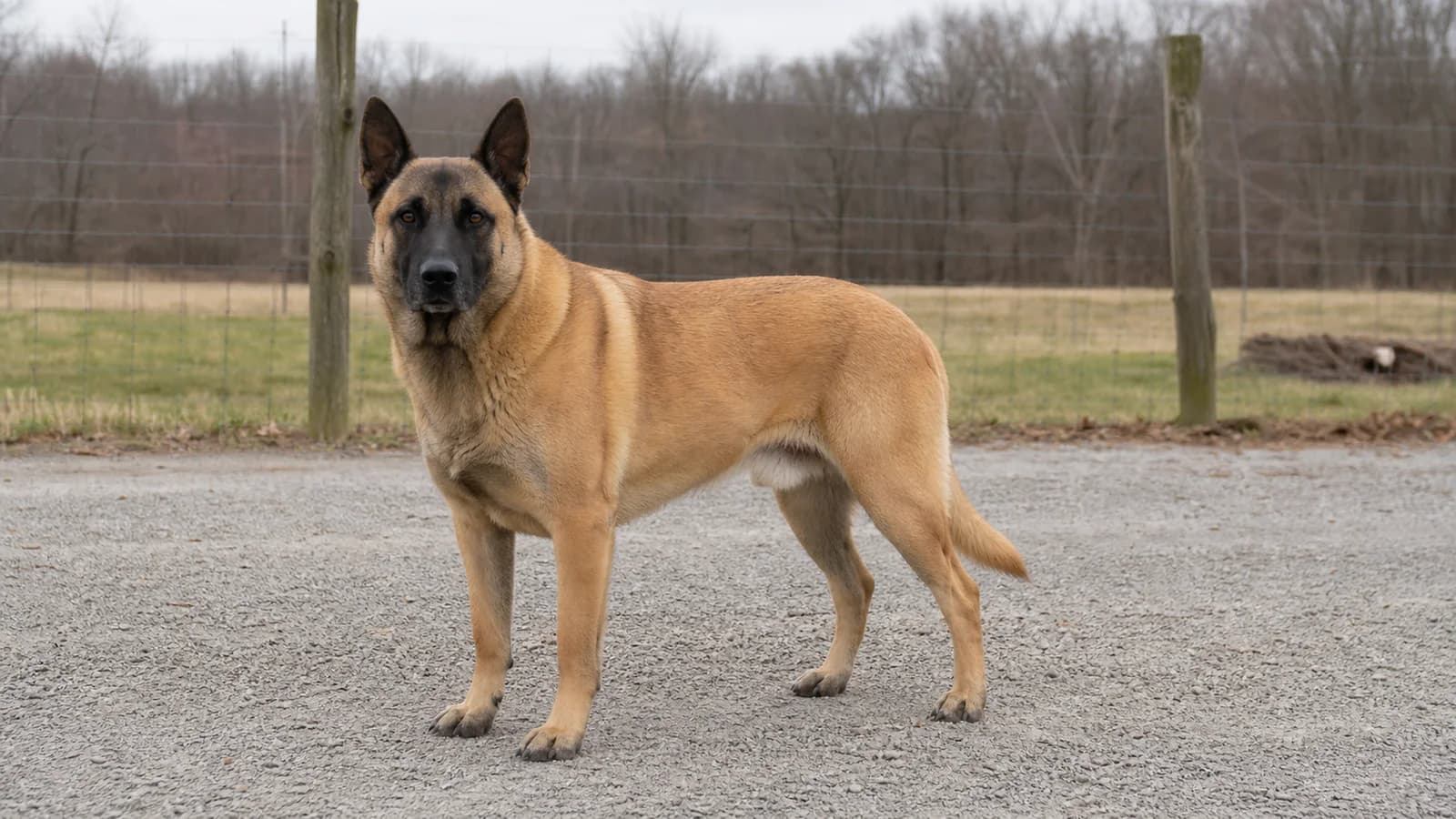
5. Belgian Malinois Pitbull mix
"Pitbull" is an umbrella label rather than one precise pedigree, so this cross begins with extra uncertainty. A Belgian Malinois Pitbull mix may be muscular, people-oriented, athletic, persistent in play, and intensely interested in toys. It can also inherit dog selectivity, chase interest, barrier frustration, or a low tolerance for rude canine greetings.
The best fit is an experienced owner who can separate sociability from safety. A dog does not need dog-park play to have a good life. Parallel walks, known companions, sniffing, tug with rules, and one-on-one training can be more appropriate. Introductions should be planned rather than improvised, and children should never manage the leash.
Avoid stereotypes in both directions. An ancestry label neither proves aggression nor guarantees harmlessness. Evaluate the individual dog's behavior, use secure equipment, and build management around observed responses. If the dog becomes tense, still, fixated, or difficult to interrupt, create distance and seek qualified behavior help.
6. Belgian Malinois Rottweiler mix
A Belgian Malinois Rottweiler mix can combine fast reactions with considerable mass and guarding potential. The Rottweiler side may contribute steadiness, confidence, physical power, and a more deliberate working style. It may also contribute territorial behavior or dog selectivity. The Malinois side can add speed, sensitivity, and a tendency to notice every environmental change.
This is a specialist-minded cross, especially in a busy home. Priorities include neutral exposure rather than forced friendliness, cooperative veterinary handling, muzzle conditioning as a normal safety skill, door and gate routines, and reliable disengagement from triggers. Training should be clear and reward-based, without confrontational methods that increase conflict.
Ask breeders for breed-relevant health records on both parents and proof of stable adult behavior in normal settings. For rescues, prioritize foster observations around visitors and handling. Large-dog ownership also means budgeting for food, equipment, boarding, and veterinary care at a scale that can surprise first-time owners.
7. Malinois Great Dane mix
A Malinois Great Dane mix may range from a tall, relatively lean athlete to a heavily built giant dog. It can inherit the Dane's social softness and indoor calm, but it can also remain highly active and vigilant. Rapid growth, long limbs, and Malinois enthusiasm require careful exercise choices while the dog is young.
This cross fits a household with physical space, a vehicle that can transport a large dog, and adults capable of safe leash handling. Teach four paws on the floor before jumping becomes dangerous. Use gates and a mat station during visitors, and make calm husbandry part of daily life. Giant size can turn ordinary adolescent clumsiness into toppled furniture or accidental injury.
Do not estimate adult size from paws. Parent sizes and growth records are more informative, and even those provide a range. Discuss puppy growth, feeding, and exercise with a veterinarian rather than trying to accelerate or restrict growth based on internet charts.
8. Malinois Akita mix
A Malinois Akita mix may combine close family loyalty with independence, environmental awareness, and significant dog selectivity. The Akita side can be quiet and dignified rather than demonstrative, while the Malinois side may seek constant activity and handler engagement. An individual could show either style at different times.
This is not a mix to choose because the puppy looks impressive. The best fit is a skilled, low-chaos home prepared to manage introductions, visitors, grooming, and other animals carefully. Secure fencing matters, and off-leash reliability around wildlife should never be assumed. Many Akita-type dogs mature into less interest in unfamiliar dogs, so puppy sociability is not a lifetime guarantee.
Coat care can be substantial during seasonal shedding. Handling practice should start early and remain voluntary and well rewarded, especially for feet, ears, brushing, and veterinary restraint. A trainer experienced with independent guardian breeds and working shepherds can help the household interpret behavior without escalating it.
9. Belgian Malinois Mastiff mix
A Belgian Malinois Mastiff mix may inherit size and guarding presence from the Mastiff side alongside speed and responsiveness from the Malinois. Some individuals may be calmer indoors than a typical Malinois; others may be large, active dogs that need both structured work and significant recovery time. Neither outcome can be ordered in advance.
The owner must be comfortable managing a dog that could outweigh some family members. Loose-leash walking, stationing, consent-based handling, and a dependable barrier system are foundational. Socialization should build neutrality and confidence, not pressure the dog to accept touch from every stranger.
Large size raises practical questions about stairs, flooring, crates, travel, and veterinary lifting. It also magnifies the cost of food and medication. The right home values calm competence over a tough image and has a plan for separation from guests, contractors, and other pets when needed.
10. Rhodesian Ridgeback Belgian Malinois mix
A Rhodesian Ridgeback Belgian Malinois mix can be a large, fast endurance athlete with substantial prey drive. The Ridgeback side may add independence and reserve with strangers; the Malinois side may add rapid response to movement and close environmental monitoring. The dog may enjoy running with an owner while still making independent decisions around wildlife.
This cross fits a secure, active home that trains with a long line and accepts that off-leash freedom may be limited. Physical exercise should be paired with scent work, calm observation, and recovery. A dog that scans constantly or lunges at moving animals needs distance and skill-building, not more exposure at close range.
Families should ask specifically about behavior around cats, small dogs, and children who run. A calm greeting in one controlled setting does not establish safety in every context. Management can be lifelong and still support an excellent quality of life.
Testing ancestry claims against behavior
A Wisdom Panel Essential Breed Identification DNA Test for Dogs is another existing option when ancestry is genuinely unknown. Use any breed estimate alongside foster notes, records, and current behavior. Appearance alone is not a sound reason to assign a guardian label or make a safety prediction.
Petful may earn a commission when you click through to Chewy, at no extra cost to you.
Herding and working Belgian Malinois mixes
Herding and working crosses often concentrate rather than dilute intensity. These dogs may notice subtle movement, offer behaviors rapidly, and become frustrated when direction is inconsistent. They can excel with a skilled handler, but "smart" does not mean self-training. It means the dog learns patterns quickly, including lunging, fence running, grabbing sleeves, or barking until a person reacts.
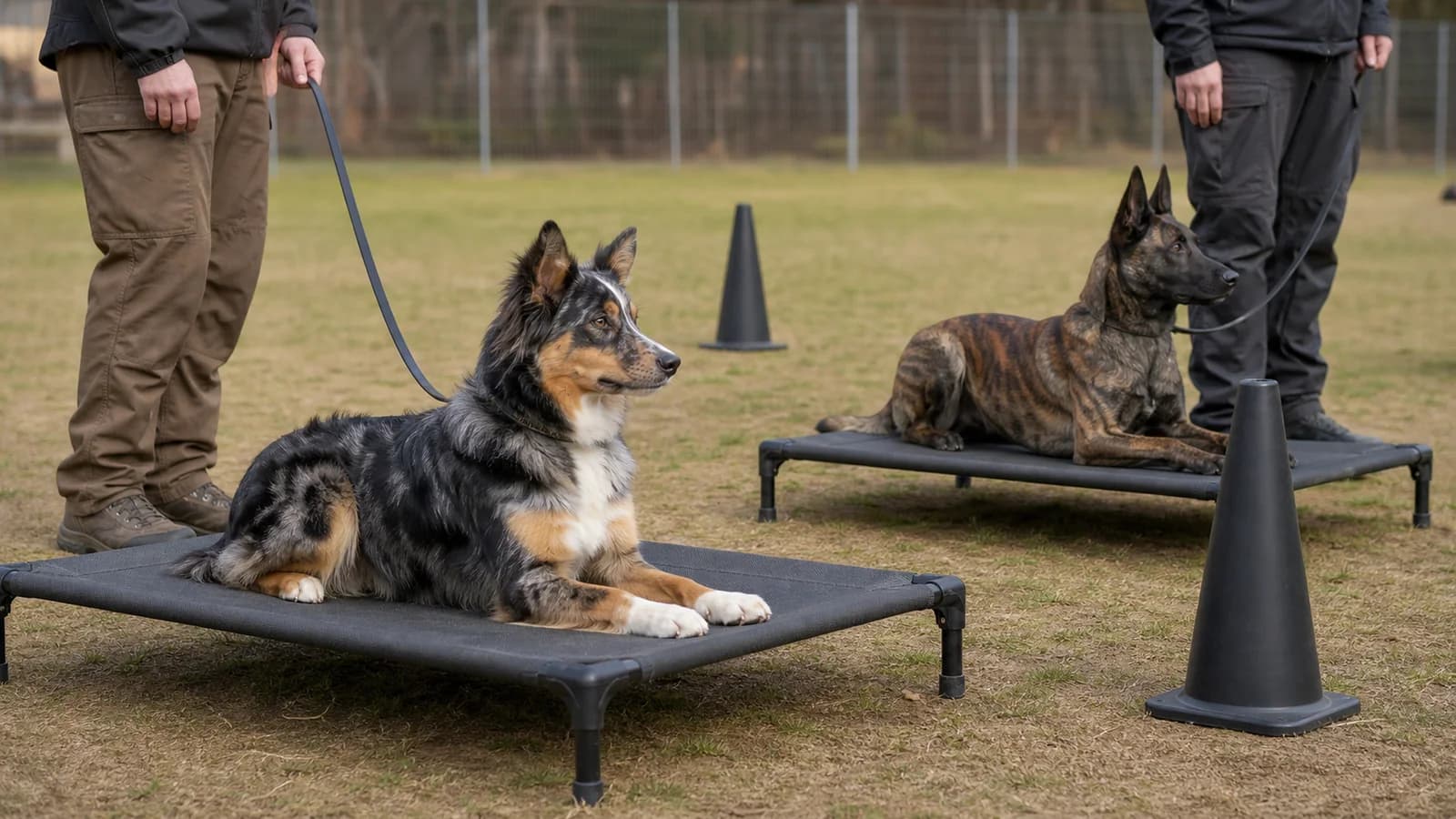
11. Australian Shepherd Belgian Malinois mix
An Australian Shepherd Belgian Malinois mix may combine herding eye, movement sensitivity, close handler attention, vocal behavior, and rapid learning. Coat length and color vary widely. Some have a Malinois-like short coat; others carry more feathering and need regular brushing. Merle coloring, if present, comes from the Australian Shepherd side and does not prove anything about temperament.
This cross suits a training-focused home that enjoys shaping calm skills as much as fast tricks. Useful outlets include scent searches, rally-style exercises, controlled herding with a qualified instructor, body awareness, and pattern games. Chasing children, bicycles, or other pets should be interrupted through management before it becomes a practiced habit.
Households should protect rest. High-drive dogs can look as if they always want more, but chronic overarousal can produce frantic behavior and poor sleep. Scheduled quiet time, chewing, sniffing, and predictable low-stimulation walks help the dog regulate.
12. Dutch Shepherd Malinois mix
A Dutch Shepherd Malinois mix combines two closely related working types with overlapping histories and capabilities. This pairing is often selected for sport or operational work, so the parents' lines and purpose matter enormously. A dog from intense working parents can require far more skill than an ordinary pet home expects.
Expect a plausible range that includes very high engagement, fast reactions, toy obsession, environmental sensitivity, guarding, and mouthy behavior. Some individuals settle beautifully after work; others need patient teaching to disengage. The best fit is usually a working-dog or sport-experienced handler with access to a qualified trainer.
Do not confuse a Dutch Shepherd cross with the question of how the two pure breeds compare. Petful's same-release Dutch Shepherd vs Belgian Malinois guide owns that decision in detail. For the mixed dog, direct information about the parents and the individual remains more valuable than the breed names.
13. Doberman Malinois mix
A Doberman Malinois mix may be a close, vigilant dog that responds strongly to its people and environment. The Doberman side can add size, smooth coat, social sensitivity, and guarding behavior. The Malinois side can add speed, persistence, and an intense interest in movement. The combination can be deeply rewarding for an experienced owner and overwhelming in a casual household.
Prioritize confident neutrality, not suspicion. Reward the dog for observing and disengaging from people, dogs, vehicles, and household activity. Build alone-time gradually because both parent types can form close bonds. Cooperative care is essential, and parent health records matter when buying from a breeder.
This cross is best for a household that wants training to be part of daily life. It is a poor fit for someone seeking an intimidating dog or expecting protection behavior without professional oversight. Stability, safe public behavior, and an off-switch are more valuable than dramatic displays.
Belgian Malinois German Shepherd mix
The Belgian Malinois German Shepherd mix is common enough, and the search intent specific enough, that it has its own Petful owner page. In brief, this cross may combine two large, trainable shepherd breeds with substantial exercise, socialization, and handling needs. Size, coat, nerves, sociability, and working drive still vary by individual and family line.
Read Petful's full Belgian Malinois German Shepherd mix guide for that cross's training, health, size, and owner-fit detail. This article deliberately does not duplicate it. If a rescue label says "Malinois shepherd," ask whether the label reflects known parentage, a DNA estimate, or visual guesswork before treating it as fact.
How to tell if a dog is a Malinois mix
You cannot reliably tell that a dog is a Malinois mix from appearance alone. A dark mask, upright ears, fawn or sable coat, lean body, and athletic movement are clues shared by many breeds. The strongest evidence is documented parentage, followed by a reputable DNA breed estimate. Foster observations and behavior records help with care, but behavior cannot prove ancestry either.
Use this measured guidance:
- Collect records. Ask the rescue, shelter, breeder, or former owner for intake notes, veterinary documents, microchip history, and photographs of known parents or littermates.
- Separate fact from labels. "Shepherd mix" on a kennel card often reflects a visual guess. Ask who assigned it and why.
- Observe over time. Note size, coat, movement, recovery from novelty, toy interest, chase behavior, sociability, and ability to settle. These observations guide management even if they never reveal ancestry.
- Consider a DNA test. Results are breed estimates based on the company's reference database. They can add context but should not be used to guarantee behavior or health.
- Ask a veterinarian about health questions. A breed estimate may suggest topics to discuss, but it does not diagnose a condition or replace examination and family history.
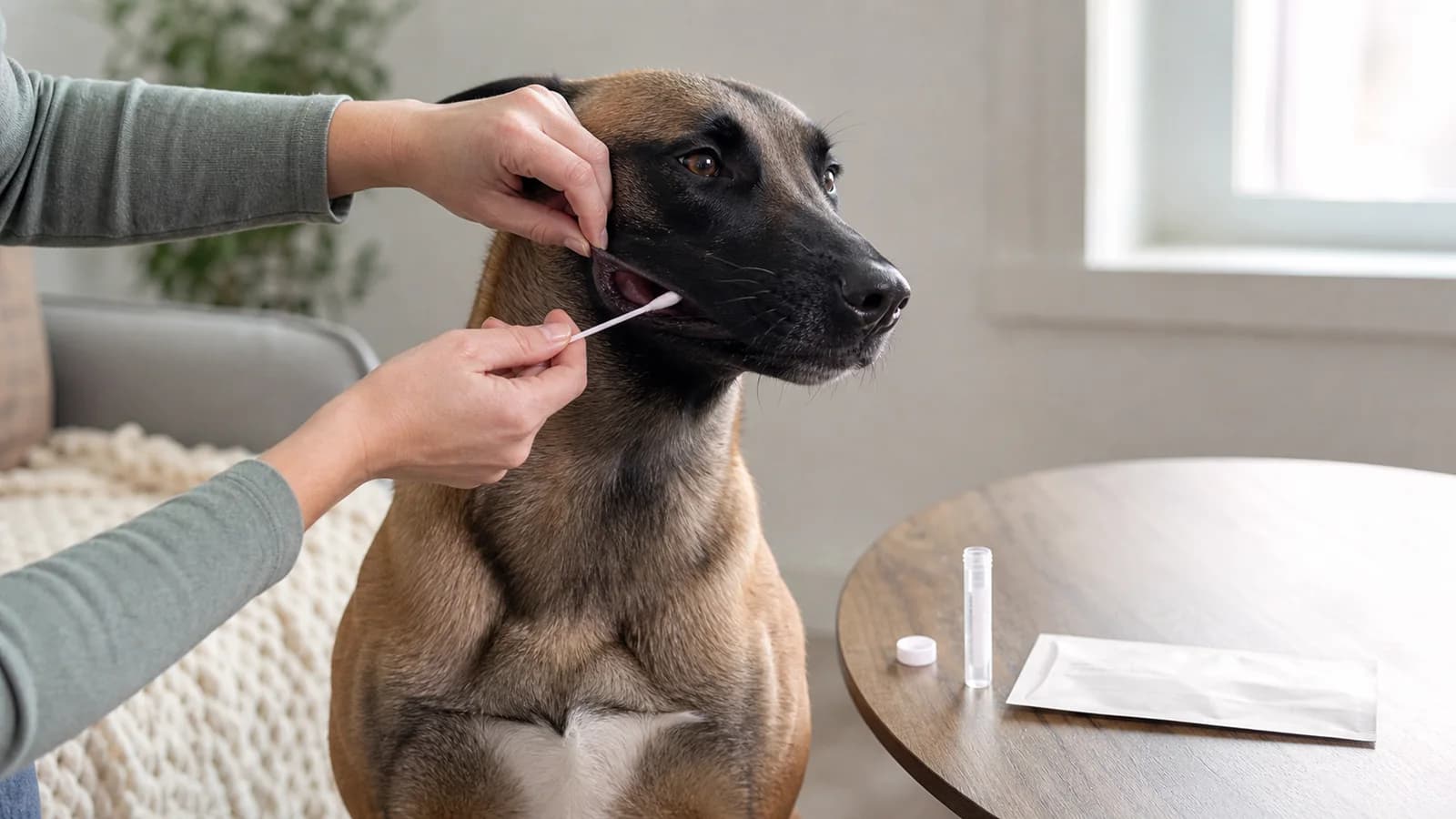
- Upright ears, a black mask, a sable coat, and a lean frame appear in many unrelated dogs. A DNA test and documented records provide better ancestry evidence than appearance alone, while repeated observation provides better owner context for training and safety.
An Embark Breed & Health Dog DNA Test Kit combines an ancestry estimate with the company's included health-screening report. That can create useful questions for a veterinarian, but it is not a diagnosis and it cannot tell you which personality traits a dog will express. If you only want a breed estimate, choose the simpler test rather than paying for features you do not plan to use.
The most important result may be unrelated to the breed percentage. Identification work encourages a household to replace assumptions with records, measured guidance, and observation. If the dog is calm around cats, that observed history matters more than a label saying a parent breed has prey drive. If the dog fixates and chases, the management need is real even if a DNA result shows little or no Malinois.
Training, exercise, and family fit
Belgian Malinois mixes usually benefit from a balanced day: purposeful movement, short training sessions, sniffing, play with rules, and protected rest. The exact amount depends on age, health, body condition, weather, and the individual. A young dog should not be pushed through repetitive impact to meet an arbitrary mileage target, and an adult should not be expected to stay calm after spending every day without engagement. An Outward Hound Lickin' Layers puzzle and slow feeder can turn part of a measured meal into supervised problem-solving, but stop if the dog tries to chew the plastic.
Start with foundation behaviors that make ordinary life safer:
- Responding to a name and turning away from distractions
- Walking on a loose leash and checking in voluntarily
- Going to a bed or mat while household activity continues; a FurHaven orthopedic bed with a removable cover can provide a consistent settle station when its dimensions fit the individual
- Trading toys and found items without conflict
- Entering a crate or gated rest area comfortably; the Frisco X-Large wire crate is one existing option only when the measured dog can stand, turn, and lie naturally inside
- Accepting brushing, foot handling, and veterinary-style touch
- Wearing a basket muzzle after gradual positive conditioning
- Settling after play instead of demanding another round
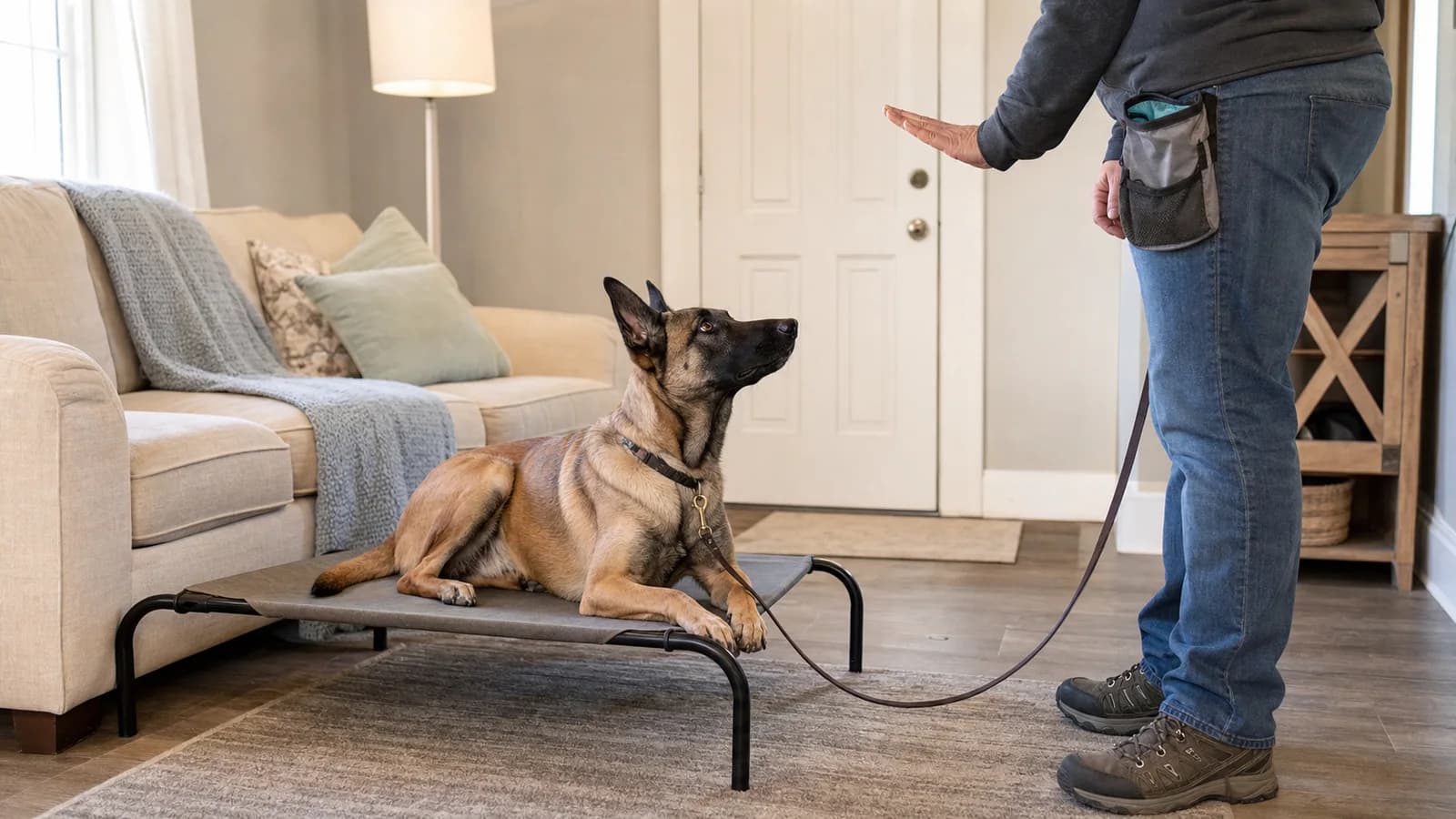
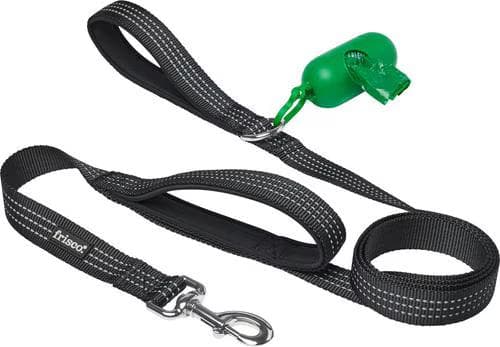
A Frisco Traffic Leash with Dual Padded Handles gives a handler a normal six-foot walking length plus a closer handle for planned transitions. It does not replace training, and a strong dog still needs well-fitted equipment, but concrete control points can help during early skill building. A measured dog who fits the medium/large model may also use a PetSafe Easy Walk harness during skill building. Check for rubbing and shoulder freedom, pair it with reinforcement-based leash practice, and do not assume any front-clip harness makes a powerful dog safe without capable handling.
Family fit depends on the dog's actual behavior and the adults' management capacity. The detailed question of who should not own a Malinois belongs to Petful's Belgian Malinois family-fit guide. For a mix, assume children will need active adult supervision, quiet separation during high-energy play, and rules that prevent hugging, climbing, cornering, or taking objects.
Small pets require an honest assessment. A puppy raised with a cat is not guaranteed lifelong safety, and adolescence can change chase behavior. Use barriers, leashes, elevated escape routes, and separate feeding areas. If an adult rescue has a verified foster history living calmly with cats, that evidence is valuable, but introductions should still be gradual.
- Plan dog-to-dog contact: Dog sociability can change with maturity. Skip crowded dog parks as a socialization strategy. Calm parallel walks, distance from triggers, and a few compatible companions offer better information and lower risk. If the dog shows escalating reactivity, guarding, or inability to recover, work with a qualified reward-based professional rather than waiting for a crisis.
- Train recovery: The goal is not to tire the dog into compliance. It is to create a dog that can move, think, engage, and rest. A two-minute mat session after tug may improve household life more than another mile of running. A large KONG Wubba Classic can support supervised toss-and-tug sessions with clear start, release, and finish cues, but it should be put away if the fabric or seams become damaged. This mix-specific training plan is a practical method for converting drive into useful habits.
The first 30 days with a Belgian Malinois mix
The first month should gather information and build safety, not prove how much the dog can do. A newly adopted dog may be inhibited, restless, exhausted, overstimulated, or unusually clingy. Behavior during the first weekend is not a reliable permanent baseline. Keep the world small enough that you can notice patterns without repeatedly pushing the dog past its coping ability.
Begin with predictable essentials. Use a secure leash and well-fitted walking equipment, confirm tags and microchip details, establish a quiet sleeping area, and keep doors and gates managed. Feed separately from other animals. Introduce household members calmly and delay crowded outings. If the dog needs to meet another resident dog, use a thoughtful plan with space and more than one capable adult rather than bringing them together over food or toys.
During the first week, record simple observations:
- Appetite, stool, sleep, and water intake
- Comfort entering and leaving the home
- Response to handling and equipment
- Distance at which people, dogs, and moving objects become difficult
- Toy and food interest
- Ability to disengage and rest
- Behavior when briefly separated from people
Arrange a veterinary visit and bring every available record. Ask about preventive care, body condition, any movement concern, and a sensible exercise progression. If the dog shows sudden behavior change, pain, digestive trouble, appetite loss, urinary changes, or unusual fatigue, do not assume it is merely decompression.
In the second and third weeks, add experiences gradually. One calm route repeated several times can teach you more than a different busy destination every day. Keep training sessions short, reward voluntary attention, and end while the dog can still think. Increase freedom inside the home in response to demonstrated reliability, not a fixed calendar.
By the fourth week, patterns may be emerging, but avoid the myth that every dog follows a three-day, three-week, three-month script. Adjustment is individual. Instead of expecting a deadline, review the observation log. Look for triggers, recovery time, sleep quality, and which activities produce calm satisfaction rather than frantic demand.
- Get help early: Professional support is most useful before an emergency. A qualified reward-based trainer can help with equipment, household routines, leash skills, and reading body language. More serious fear, guarding, aggression, or separation distress may warrant a credentialed behavior consultant or veterinary behavior professional. Early support protects choices and prevents a difficult behavior from becoming a well-rehearsed habit.
Health, grooming, and everyday care
A Belgian Malinois mix can inherit health risks from either parent, and mixed ancestry does not automatically create better health. Ask for documented, breed-relevant screening on both parents when working with a breeder. For a rescue, gather veterinary records and schedule an examination soon after adoption. A DNA health screen may flag variants to discuss, but it cannot certify a dog as healthy.
Body condition is more useful than a universal target weight. You should be able to feel the ribs under a light covering without seeing every bone sharply, and the dog should have a visible waist from above. Because body shape varies across these 13 crosses, ask a veterinarian to demonstrate an appropriate body condition score for the individual.
Most Malinois crosses shed. Brush according to coat type, check ears and skin, trim nails often enough to maintain comfortable movement, and bathe when dirty with a dog-safe product. A Golden, Australian Shepherd, Husky, Akita, or heavily coated mix may need more work during seasonal undercoat release. A short-coated Pitbull-type, Ridgeback, Doberman, or Greyhound cross may need less brushing but can still shed noticeably.
- Protect recovery: Provide a quiet sleeping area away from traffic, make water available, and schedule low-key days after unusually demanding activity. Sudden changes in appetite, movement, breathing, skin, digestion, or behavior deserve veterinary attention. Do not attribute every issue to a breed trait.
Finding a Belgian Malinois mix responsibly
Rescue is a practical place to look because adult behavior and size may already be visible, especially in a foster home. Ask for ordinary-life evidence: how the dog rests, reacts to visitors, walks past dogs, rides in a car, handles grooming, and behaves when left alone. A good rescue will discuss difficulties as clearly as strengths and will support a careful match.
- Ask for foster notes, health records, bite and escape history, handling observations, behavior around children and animals, and a realistic return policy. A responsible breeder also provides breed-relevant health testing for both parents, explains the purpose of the pairing, and never guarantees a puppy's final temperament, size, or appearance.
If buying from a breeder, avoid anyone selling certainty. Red flags include marketing a cross as automatically protective, hypoallergenic, healthier than either parent, perfect with children, or suitable for every home. A deliberate pairing should have a defensible purpose beyond novelty, stable adult parents you can evaluate, health records you can verify, a plan for puppy socialization, and lifetime take-back support.
Ask these questions:
- What are the registered names, ages, adult sizes, and working or household histories of both parents?
- Which breed-relevant health tests were completed, and can you verify the results independently?
- How do the parents recover after surprise or excitement?
- Have either parent or close relatives shown serious dog conflict, human-directed aggression, or debilitating anxiety?
- How are puppies raised, handled, rested, and exposed to household life?
- How does the breeder match puppies to homes?
- What support exists if the placement fails?
A rescue label and breeder label should both be treated as starting information. The ethical priority is the welfare and fit of the individual dog, not defending a marketable name.
What are the four types of Belgian Malinois?
This common question mixes up a breed name with a broader breed family. The four related Belgian Shepherd varieties are the Malinois, Tervuren, Groenendael, and Laekenois, with recognition and naming varying by registry and country. They are not four types of Malinois and they are not mixed-breed categories.
Petful's Belgian Shepherd varieties guide owns that history, coat, and classification question. If someone describes a dog as a "long-haired Malinois mix," verify whether they mean a mixed dog, a Tervuren-type dog, or simply an uncertain shelter label.
Frequently asked questions about Belgian Malinois mixes
No mixed-breed dog's adult traits are fully predictable. A Belgian Malinois mix can inherit any combination across the trait range carried by both parent breeds, and littermates may differ. Known parent history, foster observations, records, and current behavior are more useful than a mix name. Plan for the more demanding plausible outcome and choose the individual dog for fit.
There is no guaranteed easiest cross. A Labrador or Golden Retriever mix may combine food or toy interest with cooperative training motivation, but handler skill and the individual dog's arousal, sensitivity, and ability to recover matter more than the label. Easy to teach is also not the same as easy to live with; a fast learner can acquire unwanted patterns quickly.
A DNA test can provide a breed estimate when parentage is unknown and may supply health-screening information, depending on the product. It cannot diagnose disease or predict temperament. Use the result to create better questions for your veterinarian and trainer, while giving documented history and observed behavior more weight in daily decisions.
A mixed breed lifespan depends on adult size, inherited health, preventive care, nutrition, activity, and chance. Smaller and medium crosses may have a different range from giant-breed mixes, so one lifespan number would be misleading. Ask about the health history of both parent families and keep the individual dog at an appropriate body condition with regular veterinary care.
Most Belgian Malinois mixes shed because the Malinois has a short double coat, though the amount and grooming pattern depend on the other parent and the coat inherited by the individual. Husky, Akita, Golden Retriever, and Australian Shepherd crosses may release substantial undercoat seasonally. Short-coated crosses can still leave hair year-round and are not automatically low-allergen.
Appearance can suggest a possibility, but upright ears, a black mask, sable color, and a lean outline also occur in unrelated dogs. Start with records and known parentage, then consider a consumer DNA estimate if ancestry is genuinely unknown. Use observed behavior to guide training and safety because a breed percentage cannot predict the traits the dog will express.
The best mix is the individual whose real behavior, size, health needs, and daily workload fit the home. There is no universally best parent breed. A Labrador cross may still be intense, and a shepherd cross may vary widely. Compare known parent traits, foster observations, recovery after excitement, handling tolerance, and the household's management capacity before choosing.
Some live successfully in families, but the label does not guarantee a safe or easy household dog. Evaluate the individual's arousal, mouthiness, chase behavior, guarding, sociability, and ability to settle. Children need active adult supervision, the dog needs protected rest, and small pets may require barriers or separation even when early introductions appear calm.
Adult size depends on both parents and can vary even within one litter. A Labrador, Great Dane, Greyhound, or smaller herding parent changes the plausible range, while sex and frame add more variation. Known parent measurements and the dog's own growth trend are more useful than a generic mix chart. Buy adjustable gear and size permanent equipment to the measured dog.
Some do and some do not. The other parent may change endurance, arousal, joint load, and preferred activities, but a mix can still inherit substantial working drive. Build a balanced routine around purposeful movement, sniffing, brief training, play with rules, and recovery. Adjust to age, health, weather, body condition, and the individual response rather than chasing a breed-based minute target.
The honest bottom line
A Belgian Malinois mix is best approached as an individual with a wide inherited possibility set. The most successful match is not the most dramatic-looking cross. It is the dog whose current behavior, likely adult range, and management needs align with an owner who enjoys daily training and can provide safe structure.
Choose records over labels, foster evidence over fantasy, and measured guidance over guarantees. Plan for prey drive, shedding, strength, and high exercise demand when they are plausible. Then stay curious about the dog that actually develops. That combination of clear boundaries and flexible observation gives both the household and the dog the best chance to thrive.

Coreen Saito is a pet writer and longtime shelter volunteer with more than a decade in animal rescue. She covers cat behavior, breed care, and the small, ordinary science of sharing a life with companion animals, with a particular focus on honest takes about the products and decisions that actually matter. At home in Arizona, she's outranked by Mac (a dog with the loudest opinion in the house), Rebel (a cat who governs by quiet authority), and Meri (an orange tabby who runs the late shift and the laundry basket). She writes about all three, plus the rescues that keep coming through her life, at LifeWithMinty.com.
Sign up for expert-backed reviews and safety alerts all in one place.