Belgian Malinois: The Complete Breed Guide (2026)
The Belgian Malinois is the world's most intense working dog, beloved by Navy SEALs and demanding for everyone else. Here is the complete Belgian Malinois breed guide: temperament, size, lifespan, training, exercise, health, and how to bring one home the right way.

Veterinarian · BVMS, MRCVS
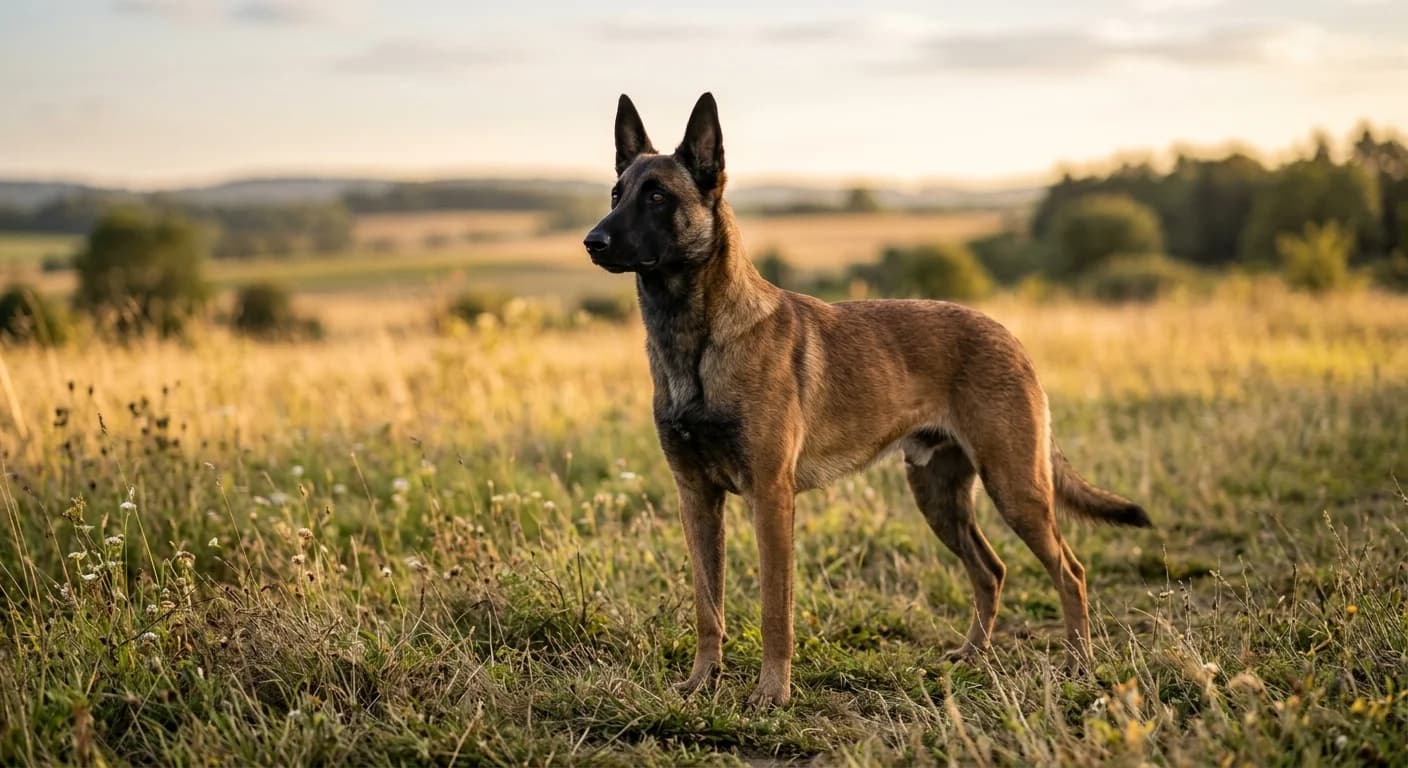
The Belgian Malinois is one of the most intense and athletic working breeds in the world.
Petful is reader supported. As an affiliate of platforms like Amazon and Chewy, we may earn a commission when you buy through links on this page. There is no extra cost to you.
- AKC Group: Herding
- Weight: 60 to 80 lbs (males), 40 to 60 lbs (females)
- Height: 24 to 26 in (males), 22 to 24 in (females)
- Life Span: 12 to 14 years
- Coat: Short, straight, weather-resistant double coat
- Colors: Mahogany, fawn, or red with a black mask and black-tipped guard hairs
- Temperament: Intense, intelligent, driven, protective, devoted to one handler
- Origin: Malines, Belgium (1880s), recognized by AKC in 1959
The Belgian Malinois is the dog the United States military picks when failure is not an option. Lean, fast, and frighteningly intelligent, the Belgian Malinois is the breed the Navy SEAL who killed Osama bin Laden parachuted in with, the breed that scaled the wall during the Bin Laden raid, and the breed that detection units deploy when no other dog will do. The Belgian Malinois is also completely wrong for most American households. Choosing a Belgian Malinois without understanding what you are signing up for is one of the most common ways a beautiful dog ends up surrendered.
This Belgian Malinois breed guide is the no-flinch version of the story. It covers temperament, size, lifespan, training, exercise, health, history, and how to bring a Belgian Malinois home the right way. Each section links out to a deeper guide on the topic so you can go as deep as your research takes you before you commit.

Sign up for expert-backed reviews and safety alerts all in one place.
What is a Belgian Malinois?
The Belgian Malinois is one of four varieties of the Belgian Shepherd, a herding-and-guardian breed developed in the late 1800s in and around Malines, Belgium. The Malinois is the short-coated variety, and the only one with the iconic mahogany coat and pronounced black face mask. The breed was first registered as a working dog by the Royal Society Saint-Hubert in 1898, came to the United States in the early 1900s, and was officially recognized by the American Kennel Club in 1959 under the Herding Group.
Originally bred to herd sheep and cattle and to protect farms, the Belgian Malinois transitioned into police, military, and protection work in the second half of the 20th century. By the 2000s, the breed had largely displaced the German Shepherd in elite military programs because the Malinois is faster, lighter, more agile, and significantly less prone to the orthopedic issues that shorten German Shepherd working careers. Today the Malinois is the dominant patrol, detection, and tactical K9 in the world.
If you have only ever seen the breed in news stories about Navy SEAL deployments, you may not realize how many of these dogs live in regular American homes. Approximately 8,000 Malinois puppies are registered with the AKC every year. Most of them go to working homes, sport homes (Schutzhund, French Ring, IPO), or experienced large-breed owners. A small but growing number end up in unprepared family homes, and that is where the heartbreak starts.
Belgian Malinois appearance and size
A full-grown Belgian Malinois is a study in lean working-dog efficiency. The build is square, athletic, and elegant rather than bulky. Males stand 24 to 26 inches at the shoulder and weigh 60 to 80 pounds. Females typically run 22 to 24 inches and 40 to 60 pounds. The breed is significantly lighter than the German Shepherd, which is part of why the Malinois is faster and more agile.
The coat is short, straight, and weather-resistant, with a soft undercoat that thickens in winter. Coat colors range from rich mahogany to fawn to red, always with a defined black mask covering the muzzle and black-tipped guard hairs concentrated on the ears, shoulders, and tail. The black mask is a non-negotiable trait under the AKC breed standard.
Other physical traits to know:
- Triangular pricked ears, fully erect by 16 weeks of age. Floppy ears in an adult Belgian Malinois indicate either a mix or a structural defect.
- Dark brown almond-shaped eyes with an alert intelligent expression.
- Black nose, lips, and eye rims that contrast sharply against the lighter coat.
- A tail carried with a slight curve at rest, slightly higher when alert. Never tightly curled over the back.
- Athletic muscular hindquarters built for explosive sprinting and jumping.
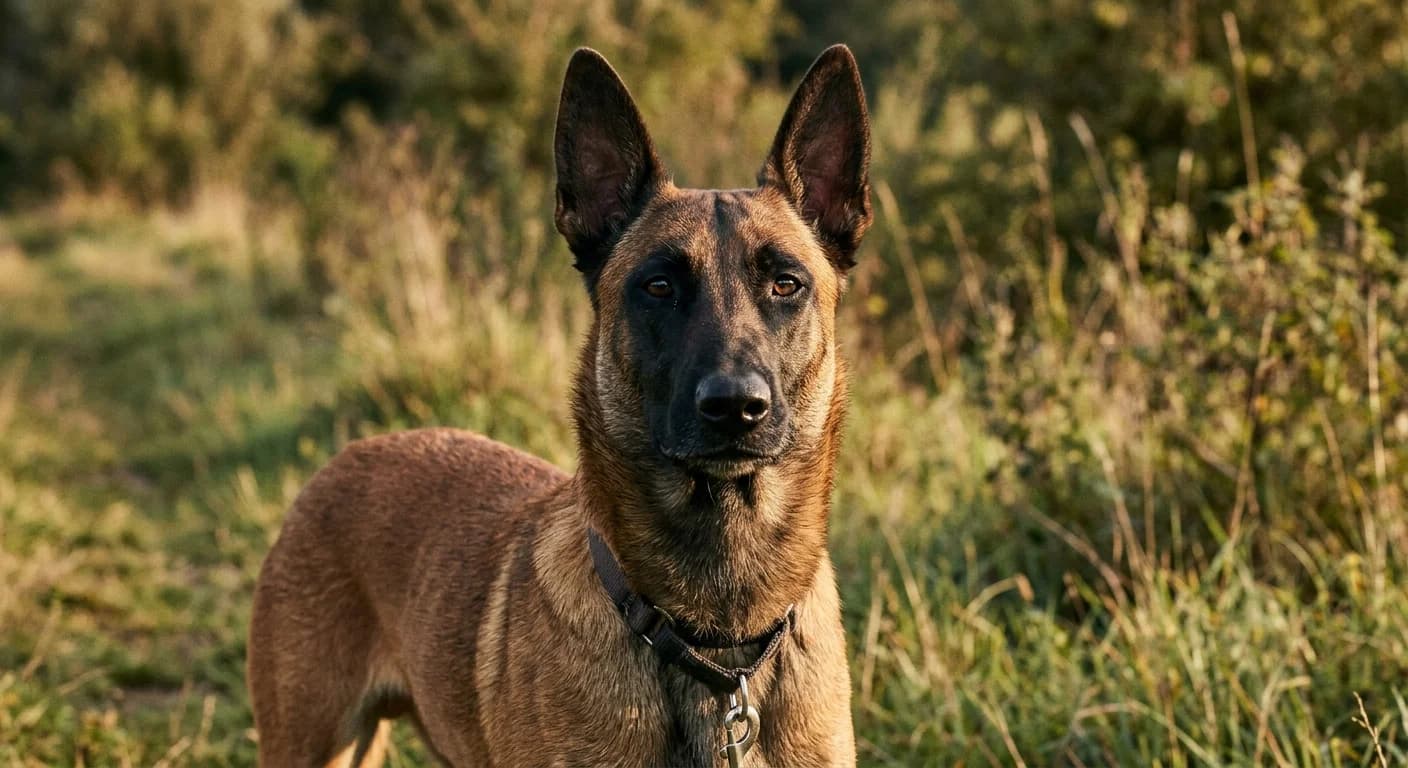
True black Belgian Malinois are not recognized under the breed standard. A dog described as a black Belgian Malinois is almost always a mix, a heavily sabled Malinois, a Dutch Shepherd (a closely related breed), or a Belgian Groenendael (one of the long-coated Belgian Shepherd varieties). We unpack the genetics and the most common confused breeds in our guide to black Belgian Malinois. Petful’s guide to Dutch Shepherd vs Belgian Malinois has the full breakdown.
Belgian Malinois temperament and personality
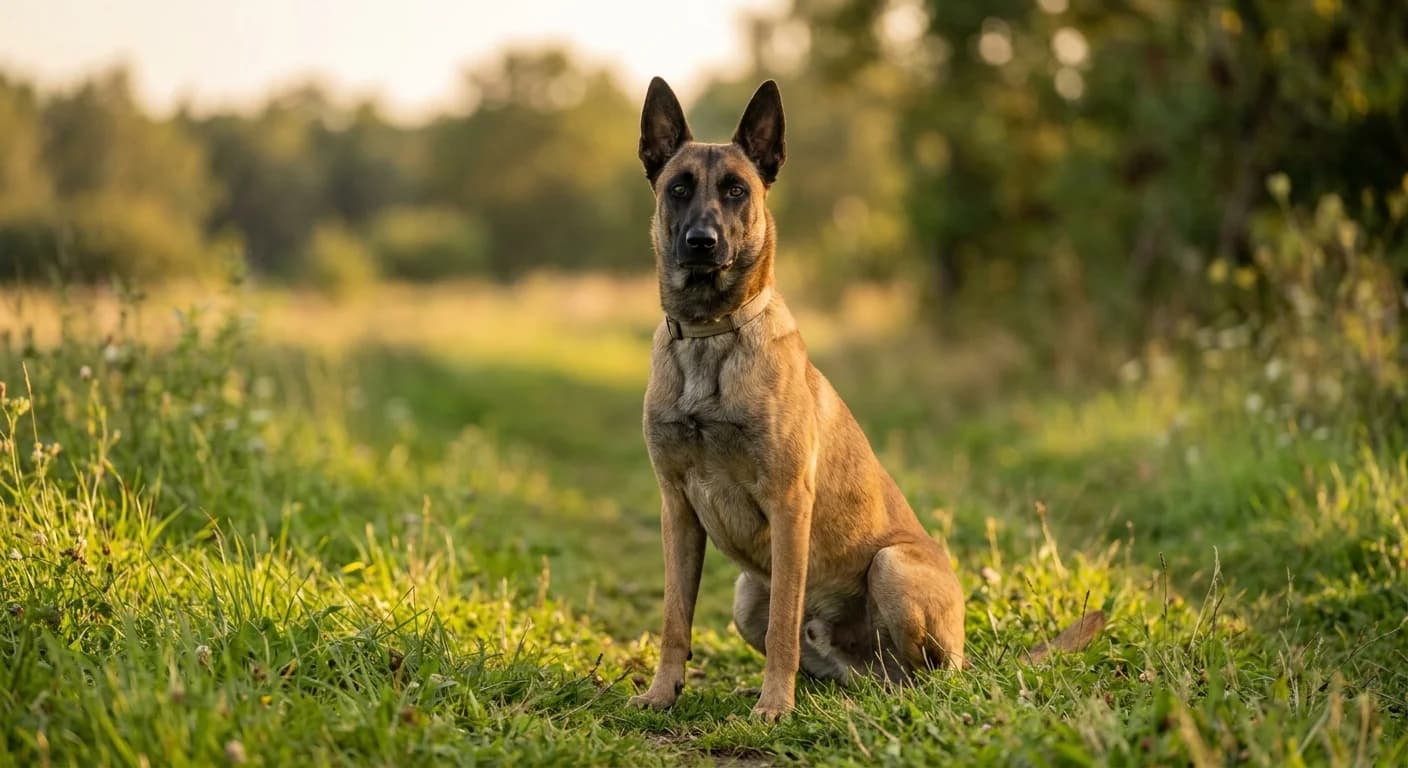
Words owners use most often: intense, driven, intelligent, focused, watchful, loyal, demanding. The Belgian Malinois temperament is single-minded. These are not laid-back dogs. They are dogs with a job-finding switch that is permanently on, and if you do not give them a job, they will create one. A bored Malinois will bark at every car that passes, redesign your couch, and dig holes deep enough to bury small furniture.
Around the family, a properly raised Belgian Malinois is affectionate and devoted, often to the point of being velcro. They tend to bond especially closely with one primary handler while accepting the rest of the household as part of the pack. That single-handler bond is part of what makes them such effective police and military partners.
Around strangers, the Malinois is naturally wary. They are not aggressive without cause, but they are alert, suspicious, and quick to size up new people and situations. Without proper socialization in the first six months, that wariness can tip into reactivity. With proper socialization, it becomes the calm vigilance you want from a guardian breed.
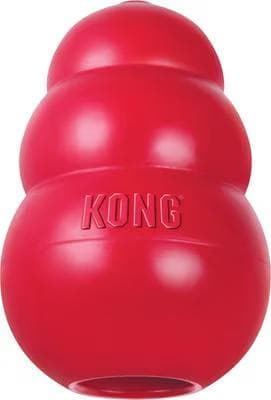
A durable rubber dog toy that can be stuffed with treats and selected by the manufacturer's size guide; supervise use and retire it when damaged.
Petful may earn a commission when you click through to Chewy, at no extra cost to you.
Is a Belgian Malinois a good family dog?
- Experienced large-breed owner.
- 90+ minutes daily exercise plus structured training.
- Securely fenced yard, 6-foot minimum.
- Older children (10+) or no children.
- Lifelong commitment to formal training or working sport.
- Budget for $25,000 to $45,000 lifetime cost.
- If two of these are uncertain, choose a different breed. There is no shame in walking away from the breed at the research stage.
It depends entirely on the family. A Belgian Malinois can be a phenomenal family dog for the right household, and a complete disaster for the wrong one. The right household typically looks like this:
- At least one adult who has previously trained a high-drive working breed.
- 90+ minutes of dedicated exercise and training time every day, every day, regardless of weather, mood, or schedule.
- A securely fenced yard. Not optional. A Malinois will scale a four-foot fence without a running start.
- Older children (10 and up) or no children at all. Toddlers and a Mal puppy in the same house is a setup for accidental injury, not because the dog is mean but because the dog is large and explosive.
- A commitment to formal training (group obedience, then Schutzhund or French Ring or nosework or agility) for the dog's lifetime.
- A budget that can absorb the breed's training and equipment costs.
If those line up, a Belgian Malinois will be one of the most loyal, capable, and rewarding family dogs you will ever own. If they do not, choose a different breed. We have a much more thorough breakdown in are Belgian Malinois good family dogs, including the specific lifestyle and household traits that predict success or failure.
Training a Belgian Malinois
The good news is that the Belgian Malinois is one of the most trainable breeds on the planet. They learn fast, retain commands for life, and find genuine joy in working alongside their handler. The bad news is that this trainability cuts both ways. A Malinois will learn bad habits just as fast as good ones, and an inconsistent owner will end up with a dog that is brilliantly trained to misbehave.
What works:
- Start formal training the day the puppy comes home. Crate training, leash manners, and basic obedience all start at 8 weeks.
- Use positive reinforcement with high-value rewards (food, toys, prey-drive games). Malinois shut down under harsh correction.
- Be relentlessly consistent on house rules. They remember everything.
- Build a reliable recall and a calm leash walk. Both are non-negotiable for a 70-pound dog with prey drive.
- Move into structured working sport (Schutzhund, IPO, French Ring, nosework, agility, dock diving) by age 12 to 18 months. The breed needs a job, period.
- Plan for ongoing training for the dog's entire life. There is no graduation.
For the full first-year roadmap including socialization windows, vet milestones, feeding, and the right balance of physical and mental work, see our Belgian Malinois puppy guide.
Belgian Malinois exercise requirements
- Destructive chewing of furniture, baseboards, drywall.
- Excessive barking at every minor stimulus.
- Reactivity to strangers and other dogs.
- Escape attempts (digging, climbing, gate-running).
- Self-soothing behaviors (paw chewing, tail chasing).
- The 90-minute daily standard is not aspirational. It is the floor below which the breed decompensates.
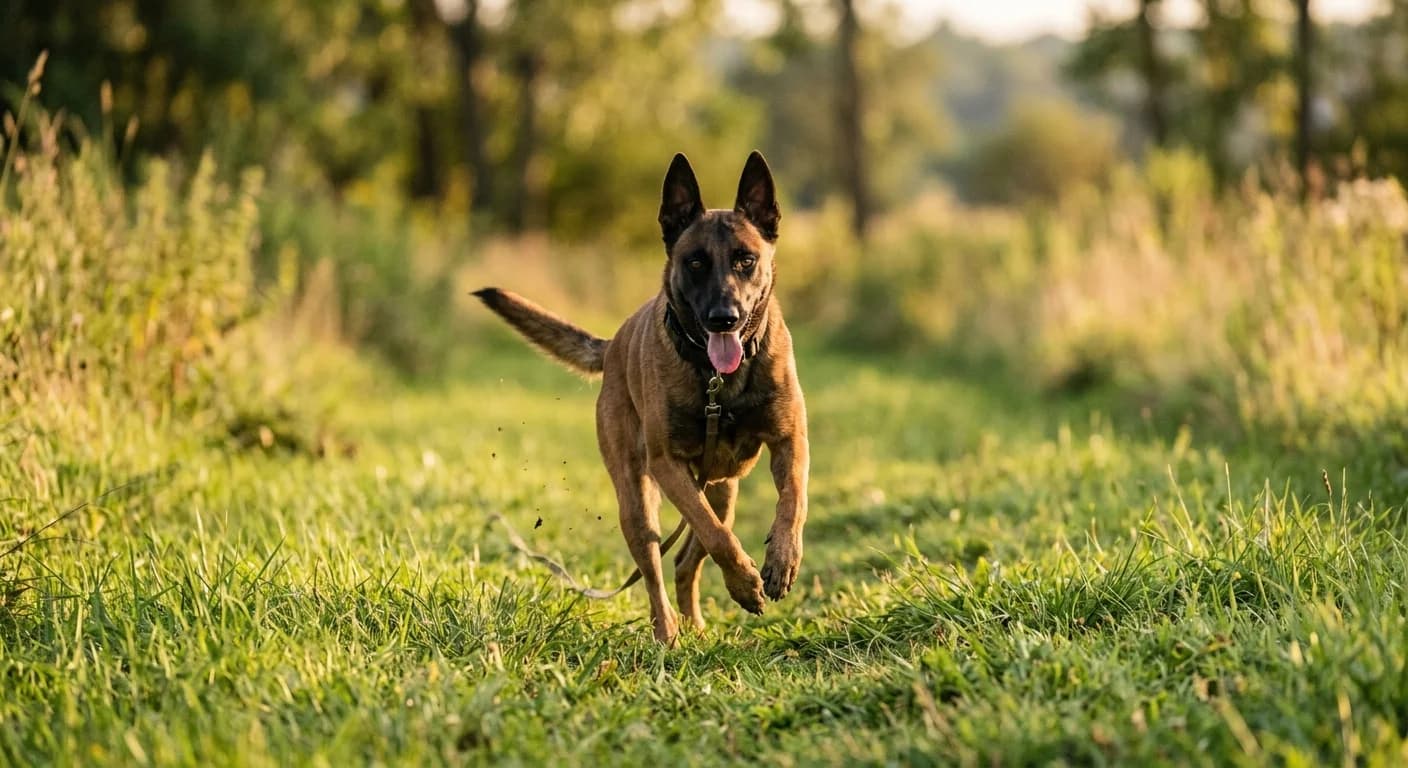
Plan for 90 minutes minimum of real exercise every single day, plus a separate 30 to 60 minutes of mental work. A Malinois who only gets a 30-minute walk is a Malinois who will rebuild your house from the inside. This is the most under-prepared-for aspect of the breed. The energy is not negotiable, and you cannot tire a Belgian Malinois with leash walks alone.
What sufficient exercise looks like:
- 60 to 90 minutes of high-intensity aerobic work (running, biking with the dog, fetch, flirt pole, dock diving).
- 30 to 60 minutes of mental work (obedience drills, scent games, puzzle feeders, nosework training).
- Daily socialization opportunities where the dog meets new people and experiences new environments under handler control.
- Ideally, a structured working sport (Schutzhund, IPO, French Ring, agility, herding, nosework) once or twice a week.
Mental stimulation is as important as physical exercise. A Malinois that gets a five-mile run but no mental work is still a Malinois with bored-genius energy looking for a target. For the full plan including specific exercises, sport options, and how to structure mental enrichment, see Belgian Malinois exercise needs.
Belgian Malinois health and lifespan
- OFA hip evaluation on both parents.
- OFA elbow evaluation on both parents.
- PRA (Progressive Retinal Atrophy) DNA test.
- CAER annual eye exam.
- Thyroid panel.
- Verify all 5 with documentation before puppy deposit. Reputable breeders volunteer these; sellers who resist any of them are red flags.
The Belgian Malinois is one of the healthier large breeds. Average lifespan is 12 to 14 years, several years longer than the German Shepherd, and the breed's lighter build spares the joints that plague many larger working dogs. That said, no breed is bulletproof. The Malinois has a handful of conditions that responsible breeders test for and that owners should watch for:
- Hip dysplasia. A malformation of the hip joint. OFA or PennHIP testing on parents reduces but does not eliminate risk. See our guide to hip dysplasia in dogs for prevention.
- Elbow dysplasia. Less common than hip but worth screening for.
- Progressive retinal atrophy (PRA). A genetic eye disease leading to blindness. DNA test available.
- Pannus. A chronic eye inflammation more common in Malinois than other breeds.
- Epilepsy. Idiopathic seizures occur in a small percentage of the breed.
- Hemangiosarcoma. A cancer of the blood-vessel lining, more common in middle-aged and senior Malinois.
- Cataracts. Late-onset, usually manageable.
- Anesthesia sensitivity. Some lines react badly to standard anesthetic protocols. Flag this with your vet.
Most Belgian Malinois live a full 13-year life with regular vet care, weight management, and joint-friendly conditioning. For a full breakdown of each condition with prevention steps, see our Belgian Malinois lifespan and health guide.
Grooming the Belgian Malinois
Grooming is one area where the Malinois is delightfully easy. The short, weather-resistant double coat needs minimal maintenance most of the year:

A large fabric-covered dog toy for supervised tug and fetch; choose the size for your dog and retire it if seams or material begin to fail.
Petful may earn a commission when you click through to Chewy, at no extra cost to you.
- Brush once a week with a rubber curry brush or short-bristle brush to manage shedding.
- Bathe only as needed, usually every 2 to 3 months. Frequent bathing strips the coat oils.
- Trim nails every 3 to 4 weeks. Active Malinois often wear their nails down naturally on hard surfaces.
- Clean ears weekly and check for redness or odor.
- Brush teeth several times a week to prevent dental disease.
Twice a year, in spring and fall, the Belgian Malinois blows coat and sheds noticeably for two to three weeks. During those windows, daily brushing keeps the loose undercoat from going everywhere. Petful’s shedding guide covers tools and techniques that work well on short double coats. Outside the seasonal blow, a Malinois sheds far less than a German Shepherd or Great Pyrenees.
Belgian Malinois vs German Shepherd
The most common breed comparison for prospective Malinois owners is the German Shepherd. On paper they look similar, both are working herding breeds, both serve in police and military roles, both reach 50 to 90 pounds. In practice they are very different dogs. The Malinois is significantly lighter, faster, and more agile, with a much higher drive ceiling. The German Shepherd is calmer, easier on a first-time large-breed owner, and significantly more prone to hip and elbow problems.
In short: the Belgian Malinois has a higher performance ceiling and a much higher demand floor. Most first-time owners are better served by a German Shepherd. We have a full side-by-side breakdown across size, temperament, training, exercise, health, and family fit in Belgian Malinois vs German Shepherd, and a deep dive into the popular hybrid in our Shepinois mix guide.
The four Belgian Shepherd varieties
The Belgian Malinois is one of four varieties of the Belgian Shepherd. The varieties share a common base structure but differ in coat:
- Belgian Malinois. Short coat, mahogany or fawn with black mask. The most common variety in the United States and the dominant working dog of the four.
- Belgian Tervuren. Long coat, mahogany with black overlay. Stunningly beautiful and slightly less driven than the Malinois.
- Belgian Groenendael. Long coat, solid black. The variety most often confused with a black Malinois.
- Belgian Laekenois. Rough wirehaired tan coat. The rarest of the four, with fewer than 200 in the United States.
All four are recognized as the Belgian Shepherd in their country of origin, but the AKC recognizes them as separate breeds. For the full breakdown including how to tell them apart and which one fits which kind of owner, see our Belgian Shepherd varieties guide.
How to pronounce Belgian Malinois
- Belgian Malinois is the formal AKC and FCI breed name. In everyday conversation, owners and breeders use shorter forms.
- Belgian Malinois: the formal name, used in registration papers and breed standards.
- Malinois: the most common short form, used in working-dog circles and sport clubs.
- Malinois dog: a casual descriptor often used by people searching the breed for the first time who do not yet know the formal name.
- Mal: the shortest nickname, used by experienced owners and on breed-club forums.
- All four refer to the same breed. The Malinois dog you read about online, the Mal in the Schutzhund club, and the Belgian Malinois at the AKC show are the same animal under different names.
- United States standard: mal-in-WAH (s silent, French pronunciation).
- British / continental: mal-in-WAA.
- Plural: also Malinois (same pronunciation).
- Common mispronunciation to avoid: MAL-in-oys.
The standard American pronunciation is mal-in-WAH (with the s silent, French style). British and continental European pronunciation is closer to mal-in-WAA. Both are accepted. The plural is Malinois (also pronounced mal-in-WAH). You will occasionally hear MAL-in-oys from people who have only read the breed name, but mal-in-WAH is correct.
Why Navy SEALs and police use the Belgian Malinois
Three reasons. First, drive. The Malinois has the highest sustained working drive of any breed. They will work through pain, fatigue, and fear in a way that few other dogs can match. Second, agility. At 60 to 80 pounds they are light enough to parachute with a handler, ride in a Zodiac inflatable, and execute the kinds of vertical scrambles that kill heavier dogs' careers. Third, joint health. Standard German Shepherd lines have such pronounced hip problems that working German Shepherds often wash out by age six. Malinois reliably work into their late nines.
The Belgian Malinois that accompanied SEAL Team Six on the Bin Laden raid (a Mal named Cairo) became the public face of the breed in 2011, and demand for Malinois puppies spiked sharply afterward. Most of those buyers were not equipped for the breed. We unpack the full story of the Malinois's rise in tactical K9 work, and what it actually means for civilian owners, in our deep dive on why Navy SEALs use the Belgian Malinois.
Watch this Belgian Malinois breed overview
Want to see a Belgian Malinois in action? This short breed profile from Dogumentary TV covers the highlights with footage of working Malinois at home and on the training field:
Who should NOT get a Belgian Malinois

High-value training treats matter for a Belgian Malinois: the breed's drive demands a reward that genuinely earns the work. These triple-flavor kabobs (chicken, duck, chicken liver) hit the high-value tier without going to raw meat. 18-count bag carries a week of training sessions for a working-line Mal.
Petful may earn a commission when you click through to Chewy, at no extra cost to you.
- Approximately 12 percent of Belgian Malinois purchased post-2011 were surrendered to rescue within their first 3 years. Almost every surrender traced to mismatched lifestyle expectations, not bad dogs.
- If you ticked even one box on the list above, walk away. The kindest thing you can do for a Belgian Malinois is make sure they end up in the right home, even if it is not yours.
This is the section most breed profiles bury or skip. The Belgian Malinois is wrong for the following kinds of owners:
- First-time dog owners. The Malinois is not a starter dog. Train a Lab or a Golden first, then revisit the Malinois in five to seven years.
- Apartment dwellers. There are exceptions, but the breed's exercise and stimulation needs are nearly impossible to meet without yard access and time at sport.
- Households with children under 10. The combination of size, intensity, and prey drive creates real risk for small kids, even with a well-trained dog.
- Owners with limited time. If your work and family schedule does not leave 90+ minutes of uninterrupted exercise and training time daily, choose a different breed.
- Owners who want a relaxed couch dog. The Malinois has an off switch, but it has to be earned daily through real work.
- Owners drawn to the breed because of news stories. Cairo and the SEAL Team Six raid sold a lot of unprepared homes a Malinois puppy. Do not be that person.
Roughly 12 percent of Belgian Malinois are surrendered to rescues by their first owners, one of the highest rates of any AKC-recognized breed. Almost all of those surrenders trace back to mismatched lifestyle expectations, not bad dogs.
Adopting vs buying a Belgian Malinois
Two routes, both legitimate when done right.
Adopt from a Malinois rescue
Belgian Malinois rescues exist in most US regions, with the American Belgian Malinois Rescue and Malinois & Dutch Shepherd Rescue of Texas being two of the largest. Adoption fees typically run $300 to $600. You get a dog whose temperament is already known and who genuinely needs a home. The downside is that puppies are rare in rescue, and many surrendered Malinois come with behavioral baggage from their original mismatched homes. Adoption is the right call if you are an experienced handler who can work through that baggage. Petful’s adoptable pet search can help you find local listings.
Buy from a reputable breeder
A well-bred Belgian Malinois puppy from a reputable working-dog breeder typically costs $1,000 to $3,500. Show or working-line puppies from titled parents can run $4,000 to $8,000. The breeder should:
- Health-test parents for hips, elbows, eyes (PRA), and elbows through OFA or PennHIP.
- Title their parents in a working sport (IPO, French Ring, KNPV, agility) so you can verify drive and stability.
- Let you visit the home and meet both parents.
- Stay in your life as a resource for the dog's lifetime.
Avoid backyard breeders, classified-ad sellers, and anyone shipping puppies sight unseen. Those are almost always low-quality lines with no health testing, and puppy mill pipelines have crept into the Malinois market hard since 2011. For the full cost picture and what to budget for the dog's lifetime, see Belgian Malinois price and total cost.
Belgian Malinois vs other guardian and working breeds
If you are considering a Belgian Malinois, you may also be looking at other working or guardian breeds. The most common comparisons:
- German Shepherd. Calmer, easier first-time-owner choice, more health issues.
- Dutch Shepherd. Closely related, often confused with a black Malinois, slightly less drive on average.
- Doberman Pinscher. Sharper guardian instincts, less herding/prey drive, shorter lifespan on average.
- Border Collie. Similar drive and intelligence, much smaller, herding rather than guardian focus.
- Newfoundland. A calm gentle giant rather than a tactical athlete. Great option if you want a large devoted family dog without the Belgian Malinois drive ceiling. See our Newfoundland breed guide.
Frequently Asked Questions
The average Belgian Malinois lifespan is 12 to 14 years, which is several years longer than the German Shepherd. Lifespan is influenced by weight, joint health, conditioning, and breeding lineage.
Adult males stand 24 to 26 inches at the shoulder and weigh 60 to 80 pounds. Females are slightly smaller at 22 to 24 inches and 40 to 60 pounds. The breed is significantly lighter than the German Shepherd.
They can be, for the right family. A Belgian Malinois needs an experienced owner, 90+ minutes of daily exercise, structured training for life, and ideally a household with older children rather than toddlers. First-time owners are usually better served by a different breed.
The Belgian Malinois has the highest sustained working drive of any breed, the agility to handle parachute insertions and vertical scrambles, and joint health that holds up to extreme work into the dog's late nine years. The German Shepherd does not match the Malinois on any of those axes.
Yes, Belgian Malinois typically form their strongest bond with one primary handler while accepting the rest of the household as part of the pack. This single-handler bond is one of the traits that makes them effective police and military partners.
First-time dog owners, apartment dwellers, households with toddlers, and owners who do not have 90+ minutes of daily exercise time should choose a different breed. Mismatched lifestyle is the leading reason Malinois are surrendered to rescues.
Properly raised and socialized, no. The Belgian Malinois is wary of strangers but not unprovoked aggressive. Without proper socialization in the first six months, the natural wariness can tip into reactivity, which is one of the breed's most common training failures.
The standard American pronunciation is mal-in-WAH, with the s silent (French style). The plural is also Malinois, pronounced mal-in-WAH.
Sources and further reading
These authoritative external sources informed this Belgian Malinois guide and are the right next stops for primary-source research.
Belgian Malinois in the broader working-dog tradition
The Belgian Malinois sits in a long line of European working dogs developed for specific jobs on specific terrain. Saint Bernards rescued Alpine travelers, Newfoundlands hauled fishing nets, Pyrenean dogs guarded mountain flocks. The Belgian Malinois represents the Belgian end of that tradition, where the practical-everyday-work focus produced a dog that transitioned from herding into police, military, and protection work as the world changed. If working-dog history interests you, Petful's Saint Bernard barrel guide covers another iconic working breed and the myths around its most famous accessory.
Bringing it all together
The Belgian Malinois is not a casual pick. They are intense, demanding, and absolutely unsuitable for the majority of households. They are also one of the most capable, loyal, and athletic dogs in the world, and for the right owner, they are unmatched. If your home and lifestyle line up with the breed, a Belgian Malinois will reward you with a decade-plus of laser-focused devotion.
Read through the linked guides above to go deep on the topics that matter most before you commit, and start your search through a working-line reputable breeder or a vetted Belgian Malinois rescue. If the honest assessment puts you on the fence, that is itself useful information. Better to walk away from a Belgian Malinois at the research stage than to surrender one at month eighteen.

Coreen Saito is a pet writer and longtime shelter volunteer with more than a decade in animal rescue. She covers cat behavior, breed care, and the small, ordinary science of sharing a life with companion animals, with a particular focus on honest takes about the products and decisions that actually matter. At home in Arizona, she's outranked by Mac (a dog with the loudest opinion in the house), Rebel (a cat who governs by quiet authority), and Meri (an orange tabby who runs the late shift and the laundry basket). She writes about all three, plus the rescues that keep coming through her life, at LifeWithMinty.com.
Veterinarian · BVMS, MRCVS
Dr. Pippa Elliott, BVMS, MRCVS, is a veterinarian with nearly 30 years of experience in companion animal practice. Dr. Elliott earned her Bachelor of Veterinary Medicine and Surgery from the University of Glasgow. She was also designated a Member of the Royal College of Veterinary Surgeons. Married with 2 grown-up kids, Dr. Elliott has a naughty Puggle named Poggle, 3 cats and a bearded dragon.
Sign up for expert-backed reviews and safety alerts all in one place.