Newfoundland Puppies: Growth, Training, and First-Year Care
Prepare for a Newfoundland puppy with verifiable source records, measured growth and nutrition, cooperative handling, age-appropriate exercise, thoughtful socialization, and an adult-size first-year plan.

Petful is reader supported. As an affiliate of platforms like Amazon and Chewy, we may earn a commission when you buy through links on this page. There is no extra cost to you.
Newfoundland puppies need a first-year plan built for steady giant-breed growth and an adult that may outweigh the person holding the leash. Source records, measured meals, safe movement, sleep, reward-based training, socialization with choice, grooming practice, and early transport skills all belong in that plan.
The first year begins with a transparent source and continues through steady growth, measured nutrition, safe movement, socialization with choice, reward-based training, and cooperative grooming. Planning for adult size from the beginning makes the transition easier without turning a growth chart or breed reputation into a guarantee.
- 1Responsible breeder and rescue checks.
- 2Giant-breed growth without rigid age-by-age number promises.
- 3Large-breed puppy nutrition and lean body condition.
- 4House training handling and cooperative grooming.
- 5Age-appropriate exercise and joint protection.
- 6Socialization without forced exposure.

Sign up for expert-backed reviews and safety alerts all in one place.
Choose a Newfoundland puppy responsibly
Newfoundland puppies grow into very large dogs, so responsible sourcing is inseparable from first-year care. Ask a breeder for verifiable public results for the breed-club clearances, meet the dam when possible, review the contract before paying, and be cautious when color, extreme size, urgency, or a shipping story replaces health and temperament questions.
Rescue can also be a responsible route. Ask what is known about the puppy's medical care, behavior in a home, handling comfort, food, sleep, and elimination. No source can promise perfect health or temperament, but transparent records and thoughtful matching give a family much more useful information than a sales page.
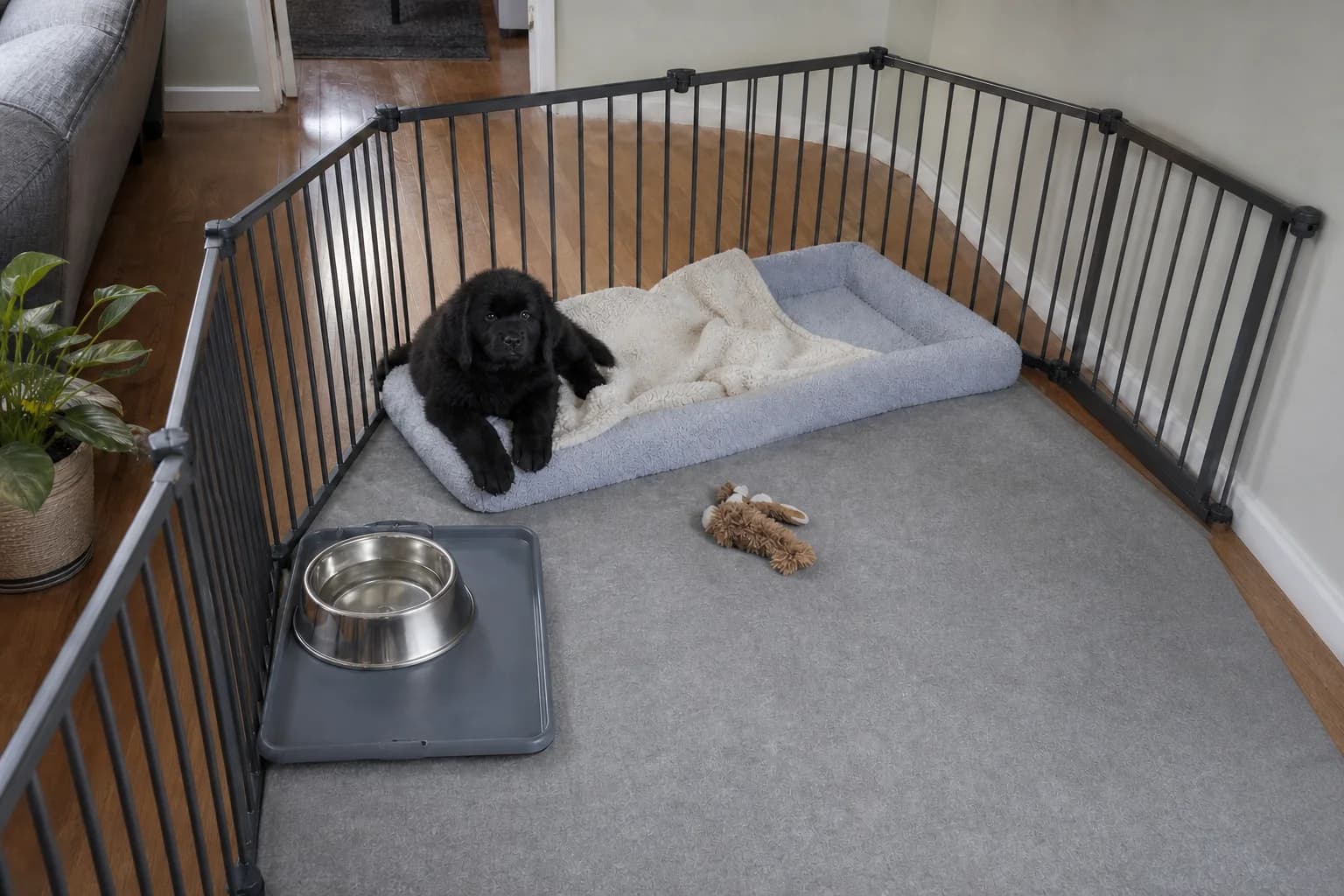
Searches for Newfoundland puppies for sale or Newfoundland puppies Michigan are listing leads, not evidence of a responsible source. Replace puppy-listing intent with a buyer-protection sequence and first-week setup: match registered parent names to Newfoundland Club of America recommendations, open OFA results, read every underlying test rather than relying on a CHIC number alone, review the contract and return support, and confirm where the puppy was raised before discussing payment or transport. Treat color-first marketing as a prompt to verify claims with the Newfoundland color and markings guide, not as a reason to skip health or temperament questions.
- A configurable barrier such as Frisco Steel 8-Panel Configurable Dog Gate and Playpen, 30-in can create a supervised puppy zone while the family teaches settling and protects sleep. Use only for supervised management and confirm height, stability, spacing, and anchoring for the individual dog.
Plan for giant-breed puppy growth
Growth is not a race. AAHA nutrition guidance notes that some large and giant breed dogs may not reach skeletal maturity until roughly 15 to 16 months. The goal is steady development and a lean body condition, not pushing a puppy toward the largest possible number. Use veterinary weight and body-condition trends rather than a rigid internet chart.
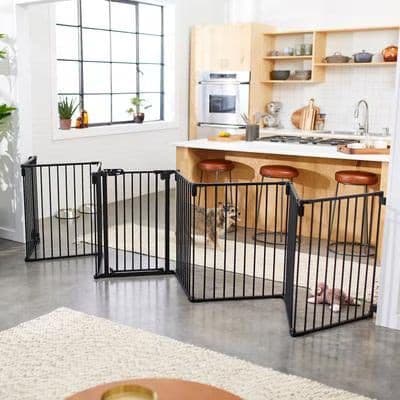
Petful may earn a commission when you click through to Chewy, at no extra cost to you.
Feed a diet appropriate for growth and the puppy's size category, measure meals, count training food, and review changes with the veterinary team. The Newfoundland food guide explains life-stage adequacy, calorie review, and transition records in more detail. Slippery floors, repeated high-impact jumping, forced distance exercise, and extra body weight all add avoidable stress while coordination and tissues are developing.
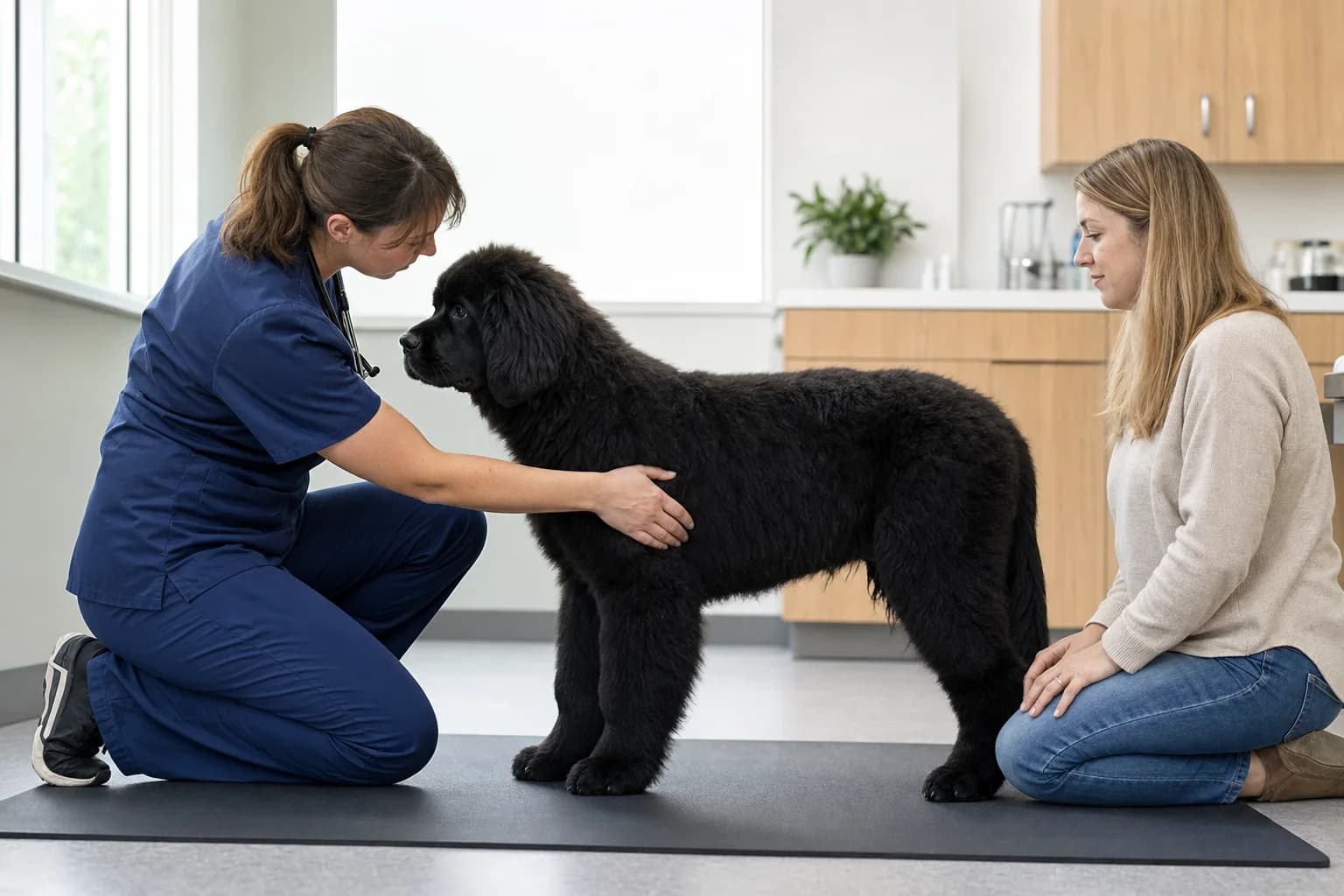
The AAHA canine life stage guidelines provide a broad preventive-care framework, while the puppy's veterinarian chooses the timing and priorities for the individual. Keep weight, body condition score, muscle condition, diet amount, movement, and examination findings together. Those trends explain giant-breed growth more honestly than a rigid age-by-age chart and should never become a race toward the upper end of a breed range.
How big will a Newfoundland puppy get? Adult size cannot be guaranteed from one early weight. Use the breed range only for equipment and space planning, then follow the individual puppy's weight, body condition, muscle condition, gait, appetite, and veterinary findings over time rather than pushing toward the top of an online chart.
| Month | Skills to practice | Care and fit check |
|---|---|---|
| 2 | Name response, toilet routine, settling, gentle trade, one-step recall | Confirm sleep area, meal measure, collar fit, and veterinary record |
| 3 | Following on leash, four paws down, brief alone-time practice, calm car entry | Add paw, ear, mouth, and one-brush-stroke handling with choice |
| 4 | Recall with mild distraction, mat settle, wait at doors | Recheck traction, crate or pen dimensions, body condition, and meal amount |
| 5 | Loose-leash turns, release cue, calm visitor routine | Add comb checks and quiet dryer sound only while the puppy stays comfortable |
| 6 | Longer settle, ramp approach, cooperative stand for examination | Review growth trend, equipment fit, and exercise surfaces with the veterinary team |
| 7 | Recall around moderate distractions, calm greetings, object drop | Practice loading without jumping and record recovery after new experiences |
| 8 | Passing people or dogs at a workable distance, grooming on a mat | Recheck handler strength, vehicle access, and adolescent sleep needs |
| 9 | Doorway pause, place cue during meals or visitors, short handling sequence | Inspect coat to the skin and review body condition rather than scale weight alone |
| 10 | Loose-leash route with planned breaks, reliable trade, ramp entry and exit | Confirm every regular caregiver can use the same cues and safety routine |
| 11 | Settle in a new low-pressure place, recall away from play, examination posture | Recheck grooming support, emergency transport, and adult-size equipment plans |
| 12 | Combine recall, leash, settle, greeting, vehicle, and handling skills in ordinary routines | Review the full record with the veterinary and training teams; repeat weak skills without forcing a calendar deadline |
- Use the interior dimensions and divider setup of Frisco Heavy Duty Fold & Carry Single Door Collapsible Wire Dog Crate, X-Large to judge whether it can provide a comfortable, temporary sleep or travel space as the puppy grows. Verify the interior dimensions against the individual dog. An X-Large label alone does not prove adult Newfoundland fit.
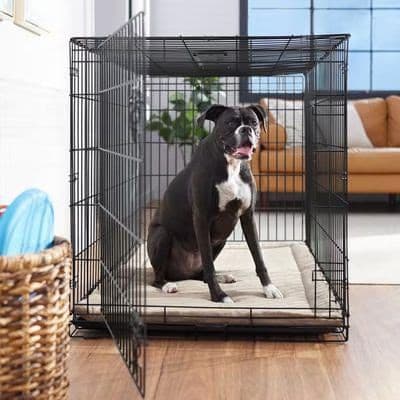
Petful may earn a commission when you click through to Chewy, at no extra cost to you.
Build first-year training and care routines
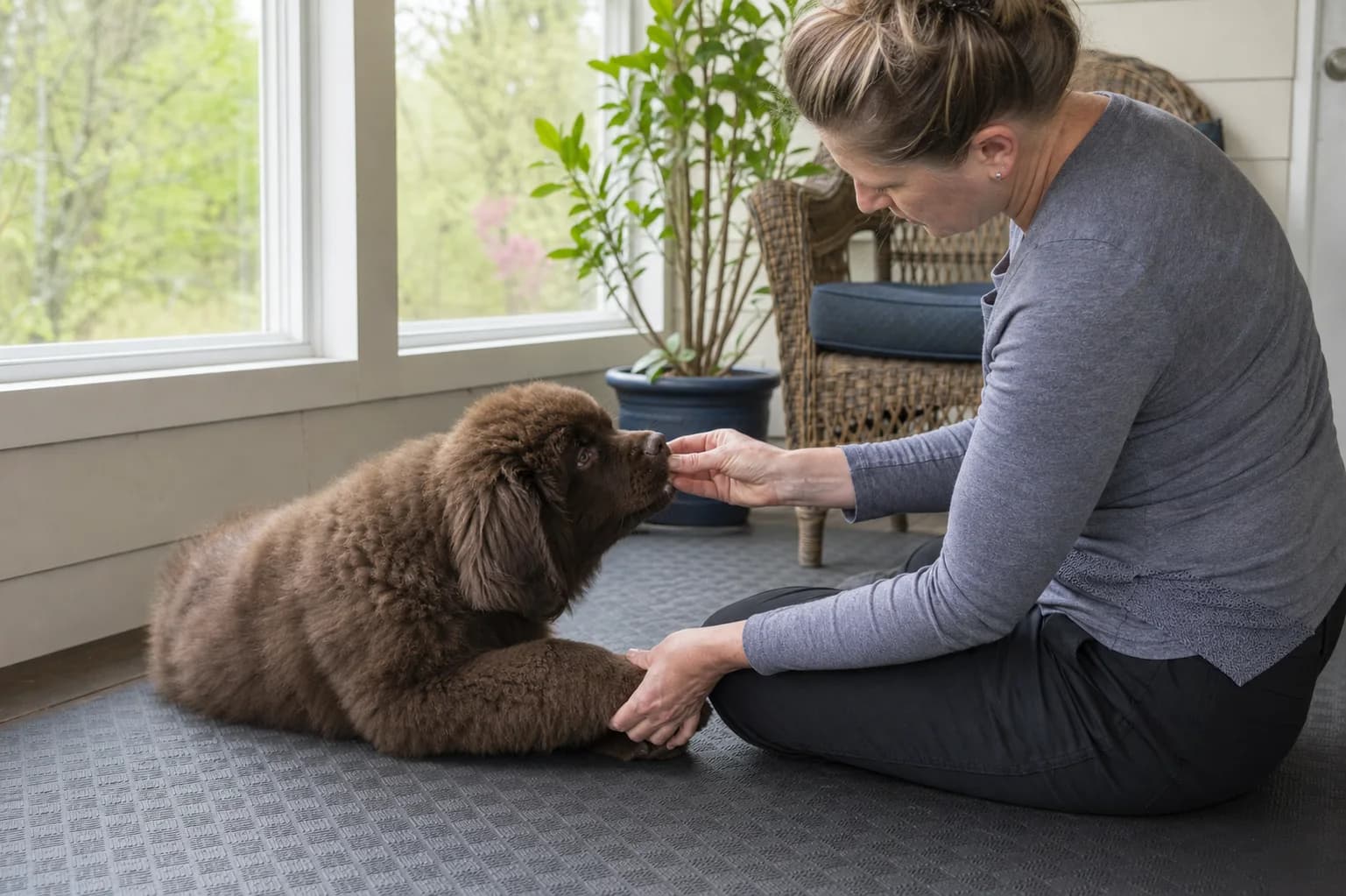
First-year training should make future care easy: name response, recall foundations, loose-leash skills, four paws on the floor, settle, trading objects, calm car entry, nail handling, brushing, and standing for an examination. Keep sessions short, reward success, and stop while the puppy still wants to participate.
Socialization means safe, positive exposure with choice. It does not mean passing the puppy from stranger to stranger or forcing contact with every dog. Pair new surfaces, sounds, people, handling, vehicles, and veterinary environments with distance and rewards, and protect the puppy from frightening or chaotic encounters.
Is a Newfoundland a good family dog? A breed reputation cannot answer for the individual puppy. Look for recovery after excitement, comfort with handling, ability to rest, and age-appropriate behavior in the actual home. Use active adult supervision around children, prevent rough or crowded interactions, and provide a quiet retreat instead of expecting size and sweetness to manage themselves. The main Newfoundland breed guide helps test adult household fit; families considering a cross should instead plan from both parent ranges in the Newfoundland mixes guide.
Adjust the sequence for climate and the individual
Can I have a Newfoundland in Texas? Family fit depends on current local rules, housing and insurance limits, climate-controlled indoor space, safe travel, and a heat-safe routine. Use the month-by-month skills sequence as an adjustable practice order, not a promise of identical maturation. Training, grooming, handling, and rest goals should move at the individual puppy's comfort and health rather than at a rigid calendar pace.
- Use breed-level evidence to prepare observations and questions. Base health, behavior, nutrition, insurance, and safety decisions on the individual dog, current records, and the appropriate qualified professional.
Build care habits before adult size
Verify health information, not logos
A kennel-club registration or attractive website does not show hips, elbows, cardiac evaluation, or cystinuria status. Search public health databases and ask the source to explain each result for both parents. The Newfoundland health and lifespan guide puts those screens in context. Screening reduces uncertainty but cannot guarantee that a puppy will never develop disease.
Petful may earn a commission when you click through to Chewy, at no extra cost to you.
Make the first night boring and safe
Travel, separation, new sounds, and a changed toileting routine can overwhelm a young puppy. In practice, prepare one washable sleep area, schedule calm toilet trips, and keep interaction quiet instead of turning the night into playtime. Crates and pens must fit safely and should never become punishment.
Track body condition with weight
A scale number alone cannot distinguish appropriate frame, excess fat, or changing muscle. Record weight at veterinary visits and ask the team to teach a body-condition check over the ribs and waist. Do not restrict a growing puppy or add supplements without veterinary nutrition guidance.
Use food from the ration for training
Frequent giant-breed puppy lessons can quietly add a large calorie load. Set aside part of each measured meal for handling, recall, settling, and leash practice. If appetite, stool, growth, or body condition changes, review the entire diet with the veterinarian.
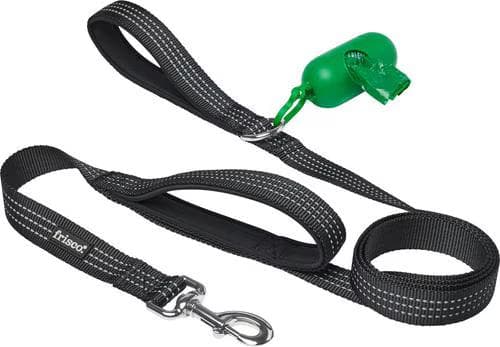
- After the puppy is comfortable wearing equipment, Frisco Traffic Leash with Dual Padded Handles can support brief loose-leash practice and a closer handhold at carefully managed crossings. A leash is handling equipment, not a substitute for training. Confirm hardware condition and handler comfort.
Protect sleep
Overtired puppies often become mouthier, noisier, and less able to learn. Build predictable rest periods in a quiet area and teach family members not to disturb a sleeping puppy. Sudden lethargy, weakness, or a puppy that cannot be roused normally is not ordinary sleepiness.
Introduce grooming one layer at a time
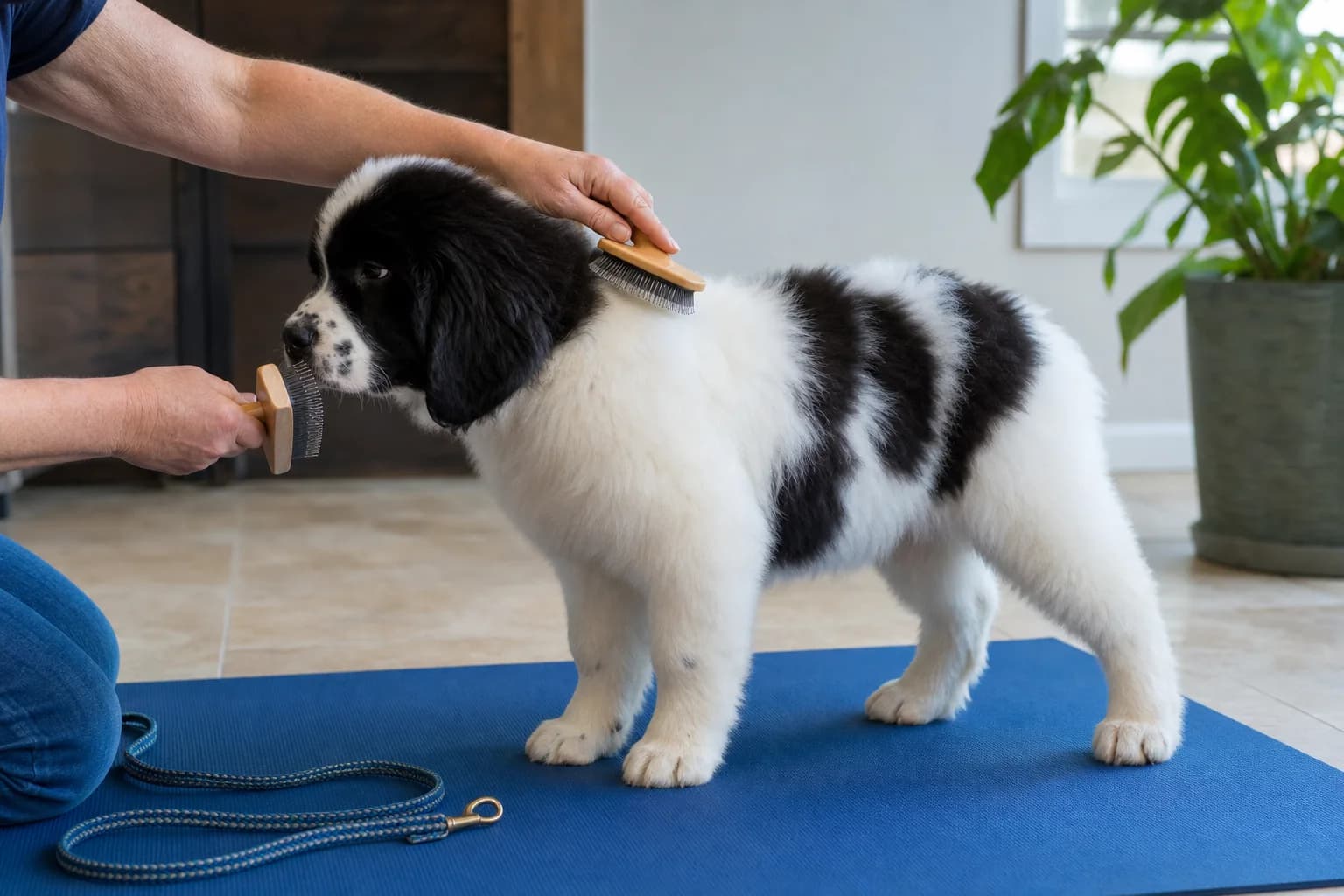
The adult coat will require patient skin-level care, so early cooperative handling has long-term value. In practice, pair a few brush strokes, comb checks, paw touches, and dryer sounds with rewards on a nonslip mat. Stop before the puppy struggles and obtain professional help for mats rather than pulling through them.
Practice vehicle access before growth
A puppy that is carried into a car can become an adult that refuses a ramp or step. Teach slow approach, pause, entry, and exit with a secured vehicle and low-pressure rewards. Do not let the puppy jump from a high cargo floor onto hard ground.
Create a first-year readiness board
Supplies, veterinary milestones, training goals, growth observations, and household rules are easier to manage when visible. Use columns for source records, this month's skill focus, food and weight notes, appointments, and questions. The board supports observation but does not replace individualized veterinary advice.
Keep one puppy records folder
Source records, vaccine history, weight trends, diet details, training notes, and emergency contacts become harder to reconstruct after a problem appears. Store dated copies in one place and bring the relevant pages to veterinary, grooming, training, and boarding appointments. A well-organized file improves communication but does not make an unverified seller claim reliable.
First-year decisions that cannot run on autopilot
Responsible breeder and rescue checks
For a breeder, match registered names to public hip, elbow, cardiac, and cystinuria results and read the contract before paying. For a rescue, ask what is directly known about medical care, handling, sleep, elimination, food, and behavior in a home. Transparent uncertainty is more useful than a confident promise without records.
Petful may earn a commission when you click through to Chewy, at no extra cost to you.
Giant-breed growth without rigid age-by-age number promises
Follow growth as a trend instead of comparing the puppy with an internet target. Record weight, body and muscle condition, appetite, stool, movement, and veterinary findings over time. Fast growth, maximum size, and a round puppy appearance are not goals; steady development and an appropriate lean condition are the useful measures.
Large-breed puppy nutrition and lean body condition
Use a food labeled for the puppy's life stage and appropriate size category, measure every meal, and count training rewards. Ask the veterinary team to demonstrate body condition and review the full ration before adding toppers or supplements. A front-label large-breed phrase does not settle every nutrition or growth question.
House training handling and cooperative grooming
Combine house training with cooperative care from the first week. Schedule frequent toilet opportunities, reward success, clean accidents without punishment, and pair brief touches of paws, ears, mouth, and coat with food. The objective is a puppy that can participate in lifelong care, not one held still until a task is finished.
Age-appropriate exercise and joint protection
Protect developing joints with good traction, controlled play, gradual conditioning, and safe vehicle access. Avoid forced distance work, repeated jumping from height, and exercise chosen to tire the puppy at any cost. A limp, pain, weakness, or sudden reluctance needs assessment rather than a tougher exercise schedule.
Socialization without forced exposure
Plan socialization around safety, choice, and recovery. Offer varied people, sounds, surfaces, vehicles, grooming equipment, and veterinary environments at a distance the puppy can handle. Forced greetings, chaotic dog groups, or flooding a worried puppy can teach fear instead of confidence, even when the exposure checklist looks complete.
First-year supplies veterinary care and emergency planning
Map the first year before the puppy arrives: primary care, emergency clinic, food, barriers, crate or sleep area, grooming support, training, transport, identification, and a savings or insurance plan. Put real local amounts into the Newfoundland price and lifetime-cost worksheet and recheck fit as the puppy grows. Adult-size needs arrive gradually, but waiting until equipment fails makes each transition harder.
Use a first-year readiness board
Create one board with columns for source records, veterinary milestones, weight and body condition, food, handling skills, socialization experiences, equipment fit, and current questions. Add dates instead of relying on memory. A single view makes it easier to notice when the harness is tight, the puppy is avoiding the brush, or a promised record has never arrived.
Review the board weekly with one modest goal in each active lane. The next step might be three calm ramp repetitions, a food measurement check, or a short visit to the clinic lobby for rewards. Pause goals when the puppy shows pain, illness, or fear. Progress means building confidence and reliable care, not finishing a checklist on schedule.
Add a source-verification lane before responding to a listing. Searches such as Newfoundland puppies for sale or Newfoundland puppies Michigan can identify possible contacts, but a location phrase does not establish responsible practices. Record the registered parent names, public health results, contract, return support, living conditions, veterinary history, and what the source can honestly say about the individual puppy. Compare the evidence before discussing a deposit or transport.
A family asking whether it can have a Newfoundland in Texas needs more than a yes or no. Check current local rules, landlord or insurer restrictions, secure fencing, access to climate-controlled indoor space, safe travel, and a heat-safe routine that avoids hot pavement and strenuous activity in dangerous conditions. The board should name who handles midday toilet trips, power outages, evacuation, and emergency transport as the puppy grows into a giant adult.
The first-year readiness board separates source verification, home setup, month-by-month skills, growth checks, and veterinary milestones. Within each month's goal, use a weekly handling ladder that begins with one comfortable brush stroke, paw touch, vehicle step, or examination posture, then add difficulty only while the puppy remains relaxed. The sequence is adjustable evidence of cooperation, not a promise that every Newfoundland puppy will mature on the same schedule.
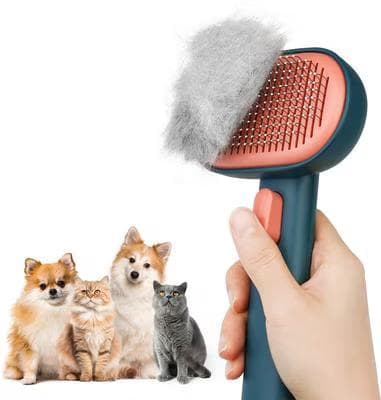
- For cooperative grooming practice, introduce aumuca Self Cleaning Slicker Brush with one or two light strokes and a reward before gradually adding coat sections. Use light pressure and confirm progress with a metal comb. A slicker alone does not prove the undercoat is mat-free.
For coat practice beyond the first strokes, use the Newfoundland shedding and grooming guide to learn skin-level comb checks, complete drying, and when a mat needs professional help.
Newfoundland FAQs
Is a Newfoundland a good family dog? Many can be, because the breed is known for a sweet, patient temperament, but family-dog fit depends on the individual and the household's ability to manage giant size, training, grooming, drool, heat, and supervision. Children and dogs still need active adult supervision. Meet the dog, observe recovery from excitement, and provide a quiet retreat before deciding that a breed reputation guarantees a match.
Can I have a Newfoundland in Texas? Only when the particular household can meet current local rules and provide a reliable heat-safe routine. Check housing, landlord or insurer restrictions, secure fencing, climate-controlled indoor space, cool travel, pavement temperature, water, power-outage plans, and emergency transport. Avoid dangerous heat and humidity rather than expecting the coat to adapt, and ask a veterinarian about the individual dog's health and activity limits.
Sources and evidence boundaries
- Newfoundland Club of America breed standard: Breed temperament, structure, working identity, coat, and recognized-color context.
- American Kennel Club breed page: Registry size, lifespan, breed history, coat, and breeder-screening overview.
- AKC official Newfoundland standard: Exact breed-standard language for size, coat, colors, markings, and temperament.
- AAHA Canine Life Stage Guidelines: Puppy preventive care, behavior, targeted nutrition, and veterinary planning.
- Newfoundland Club of America health position statements: Breed-club health clearances expected for breeding stock.
Prices, product availability, labels, insurance terms, veterinary guidance, and individual needs can change. Check the current source, product information, policy, and appropriate professional guidance before making a decision.

Kristine Lacoste has been researching dog and cat breeds for nearly a decade and has observed the animals up close at dog shows in both the United States and the United Kingdom. She is the author of the book One Unforgettable Journey, which was named as a finalist for a Maxwell Award from the Dog Writers Association of America, and was host of a weekly pet news segment on the National K-9 Academy Radio Show. In addition, she was the New Orleans coordinator for Dogs on Deployment, a nonprofit that helps military members and their pets, for 3 years. Kristine has researched and written about pet behaviors and care for many years. She holds a bachelor’s degree in psychology, another bachelor’s degree in English and a Master of Business Administration degree.
Sign up for expert-backed reviews and safety alerts all in one place.