Black Belgian Malinois: Myth vs Reality
Is a black Belgian Malinois a real thing? The short answer: no, not under the AKC breed standard. Here is what a black Belgian Malinois usually really is, with photos, plus how to spot the breeds most often confused with it.

The 'black' on a true Belgian Malinois is the mask and tipped guard hairs, not a solid coat color.
Petful is reader supported. As an affiliate of platforms like Amazon and Chewy, we may earn a commission when you buy through links on this page. There is no extra cost to you.
- True solid black Belgian Malinois: Not recognized under AKC breed standard
- Black mask + mahogany coat: STANDARD (every Belgian Malinois)
- Heavily sabled mahogany (looks dark): Yes, this is a real Malinois
- What 'black Malinois' usually really is: Dutch Shepherd, Belgian Groenendael, or a Mal mix
- Reputable breeders selling solid-black Malinois: Red flag
- Black Belgian Shepherd that IS recognized: The Groenendael (long coat) variety
Search 'black Belgian Malinois' and you will find dramatic photos of solid black athletic dogs marketed as rare, exclusive, and worth premium prices. The reality: a true black Belgian Malinois does not exist within the AKC breed standard. The black Belgian Malinois you are seeing in those photos is almost always one of three things: a heavily sabled (dark mahogany) Malinois, a Dutch Shepherd, or a Malinois cross with another dark breed.
This guide unpacks the genetics, the breed standard, and how to spot the dogs most often confused with a black Belgian Malinois. It pairs with our full Belgian Malinois breed guide and our 4 Belgian Shepherd varieties guide, which covers the actual long-coated black variety (the Groenendael) recognized as a separate breed by the AKC. For the complete coat range and identification details, see Belgian Malinois colors.

Sign up for expert-backed reviews and safety alerts all in one place.
The Belgian Malinois color standard
Sellers advertising 'rare solid-black Belgian Malinois' puppies are almost always:
- Selling a Belgian Malinois mix (with German Shepherd, Groenendael, or other black breed).
- Misidentifying a Dutch Shepherd (legitimate breed, just not a Malinois).
- Selling a heavily sabled Mal at premium pricing.
- Walk away from any seller charging $4,000+ for a 'rare black Belgian Malinois.' The dog may be fine; the marketing is not. Look at the Belgian Groenendael instead for a legitimate solid-black Belgian Shepherd.
Under the AKC and FCI Belgian Malinois breed standard, acceptable coat colors are:
- Rich fawn to mahogany base coat.
- Black mask covering the muzzle, around the eyes, and on the ears.
- Black-tipped guard hairs distributed across the body, especially over the back, shoulders, and tail.
- Small white markings on the chest and toes are permitted.
Solid black is NOT in the standard. A solid black coat in a dog otherwise built like a Malinois indicates one of:
- A Malinois mix with a black-coated breed (most commonly black German Shepherd or Belgian Groenendael).
- A Dutch Shepherd misidentified as a Malinois.
- A heavily sabled Malinois where the black-tipped guard hairs visually dominate the lighter base coat.

A durable rubber dog toy that can be stuffed with treats and selected by the manufacturer's size guide; supervise use and retire it when damaged.
Petful may earn a commission when you click through to Chewy, at no extra cost to you.
What a 'black Belgian Malinois' usually actually is
Three common sources of the 'black Malinois' marketing:
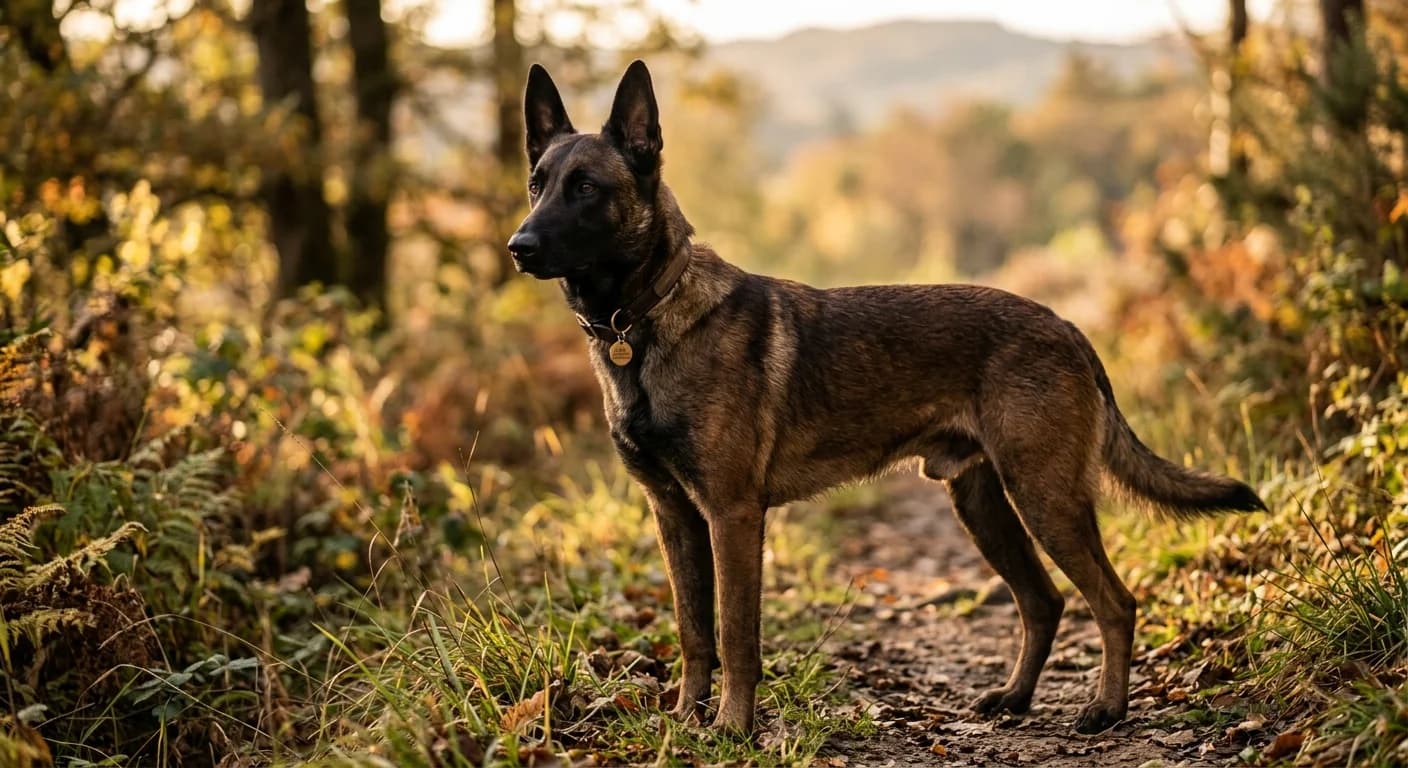
1. Heavily sabled mahogany Malinois
Some Malinois have unusually dense black-tipped guard hairs that visually overwhelm the lighter fawn or mahogany base coat. From a distance these dogs can look almost black, but careful inspection at the roots reveals the underlying mahogany. This is a true purebred Malinois with an extreme presentation of the standard color genetics.
2. Dutch Shepherd
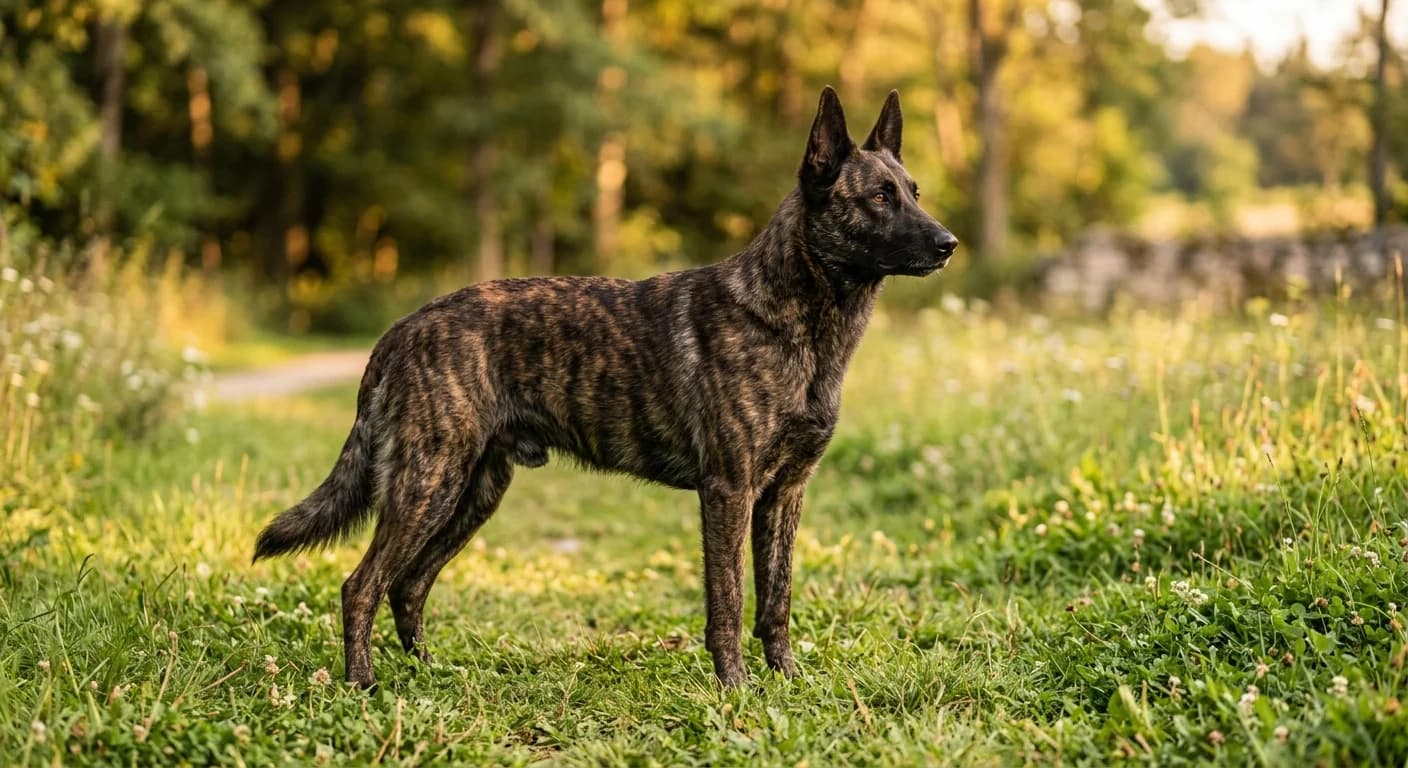
The Dutch Shepherd is a closely related Belgian breed that shares the Malinois's body type, ears, drive, and working roles. Dutch Shepherds come in three coat varieties (short, long, and rough) and the standard color is brindle (a striped pattern of dark on lighter base). Dark brindle Dutch Shepherds can appear nearly solid black at a glance and are routinely sold as 'black Belgian Malinois' by sellers either confused or actively misleading buyers.
3. Belgian Malinois mix
True solid-black dogs marketed as Belgian Malinois are usually mixes between a Malinois and a solid-black breed. The most common parent crosses:
Petful may earn a commission when you click through to Chewy, at no extra cost to you.
- Malinois x black German Shepherd. Produces a solid black athletic dog with Malinois body type.
- Malinois x Belgian Groenendael. Produces a solid black dog with Malinois drive but possibly intermediate coat length.
- Malinois x Black Russian Terrier or other large black working breeds. Less common but documented.
The Belgian Groenendael: the black Belgian Shepherd that IS recognized
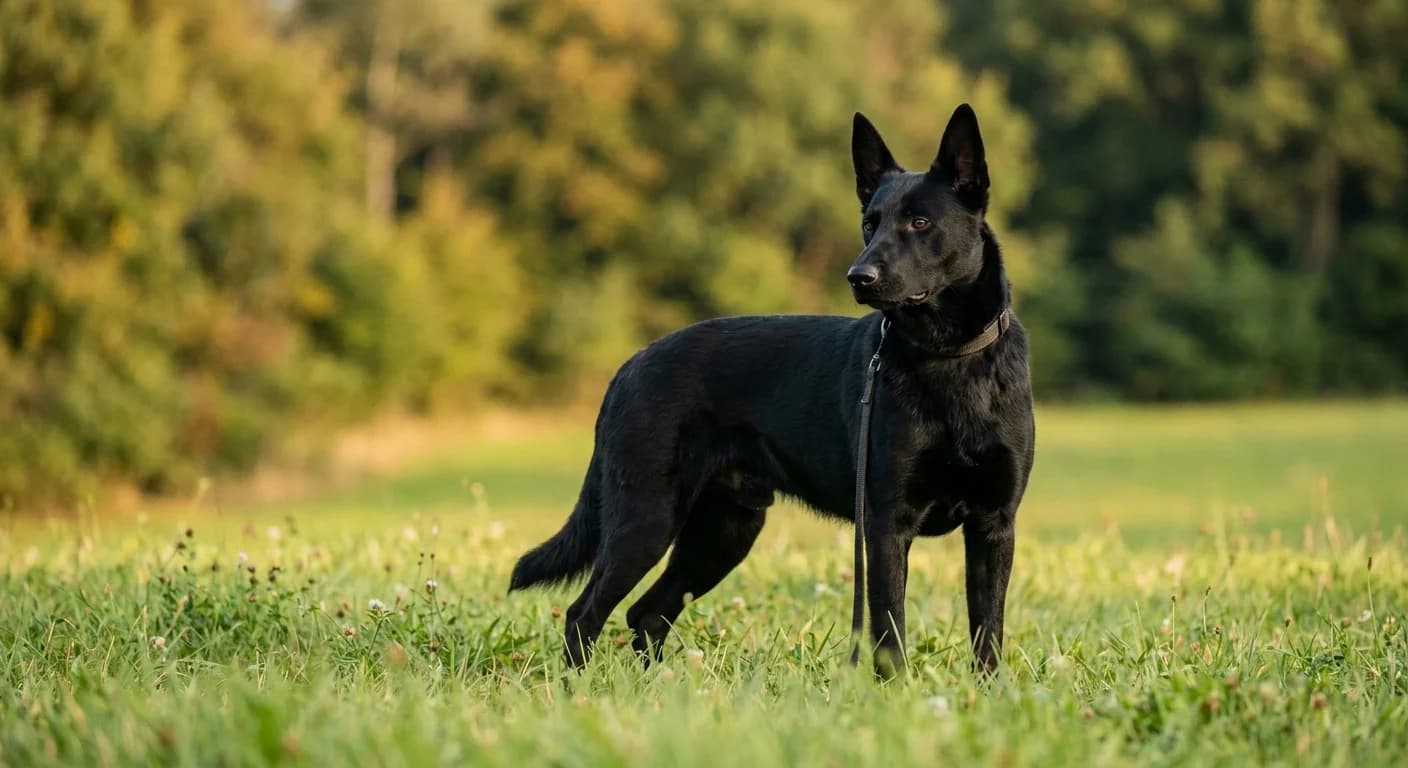
If you are drawn to a solid-black Belgian Shepherd, the variety you actually want is the Belgian Groenendael. The Groenendael is one of four Belgian Shepherd varieties (along with the Malinois, Tervuren, and Laekenois) and is the long-coated solid black variety. The Groenendael is recognized as a separate breed by the AKC under the name 'Belgian Sheepdog.'
Groenendael characteristics:
- Long, straight, solid black double coat.
- Same body structure and size as the Belgian Malinois.
- Same alert intelligent temperament with similar drive (often slightly lower than the Mal).
- Recognized by AKC, FCI, and all major kennel clubs.
If 'black Belgian Malinois' is your goal because you love the body type and want a black coat, the Groenendael is the legitimate breed to pursue. See our Belgian Shepherd varieties guide for the full breakdown of all four varieties and how to choose between them.
Why 'rare black Belgian Malinois' marketing is a red flag
Sellers advertising 'rare black Belgian Malinois' puppies for premium prices are almost always one of:
- Malinois mixed-breed sellers misrepresenting the dog. The puppies are usually crosses with black GSDs or Groenendaels.
- Dutch Shepherd breeders mislabeling their puppies. Dutch Shepherds are great dogs but a different breed.
- Designer-puppy operations exploiting the 'rare color' angle to charge $4,000 to $6,000 for what is genetically a mixed-breed dog.

A large fabric-covered dog toy for supervised tug and fetch; choose the size for your dog and retire it if seams or material begin to fail.
Petful may earn a commission when you click through to Chewy, at no extra cost to you.
Reputable Belgian Malinois breeders never advertise 'rare black' puppies. They will, however, mention if a puppy is unusually dark sabled. If a seller is explicitly marketing solid black Malinois puppies, walk away. The dog may still be a great dog, but you are not buying what is on the label, and the seller's willingness to mislabel is itself the red flag.
Watch this Belgian Malinois color genetics breakdown
A working-dog breeder explains the actual color genetics behind the 'black Malinois' confusion:
How to tell if your dog is a true Belgian Malinois
If you already own a dog described to you as a black Belgian Malinois, here is how to evaluate what the dog actually is:
- Check the AKC paperwork. A true purebred Malinois will have AKC registration listing both parents and the breed. No paperwork or unclear paperwork = not a verified purebred.
- Inspect the coat at the roots. Sabled mahogany Malinois show lighter color at the base of the hair shaft. Solid black to the root indicates not a Malinois.
- Look at the muzzle and ear edges. A true Malinois has a sharp transition from black mask to lighter coat at the cheeks. Solid black dogs do not show this transition.
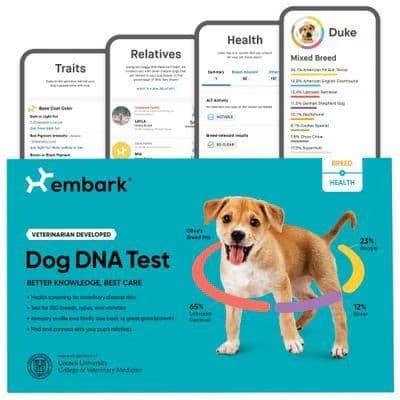
- Get a DNA breed test. Embark and Wisdom Panel are the two most reliable. A true Belgian Malinois will return ~95-100% Belgian Malinois. A 'black Mal' that is actually a mix will return 50% Malinois plus 30-50% German Shepherd, Groenendael, or other black breeds. For more, see Petful’s guide to Embark vs Wisdom Panel.
Whatever the dog turns out to be, the dog is still your dog and still deserves the best you can give. The breed identification matters for setting expectations on temperament, exercise needs, health screening, and lifespan, but it does not change your relationship with the animal.
Black Belgian Malinois pricing reality
If you are shopping for what the seller calls a black Belgian Malinois:
- 'Rare black Malinois' from designer-puppy sellers: $4,000 to $8,000. Almost always mixed breed dogs sold as purebreds.
- Dutch Shepherd from a reputable breeder: $1,500 to $3,500. A legitimate breed; just not a Malinois.
- Belgian Groenendael from a reputable breeder: $1,500 to $3,000. The legitimate solid-black Belgian Shepherd variety.
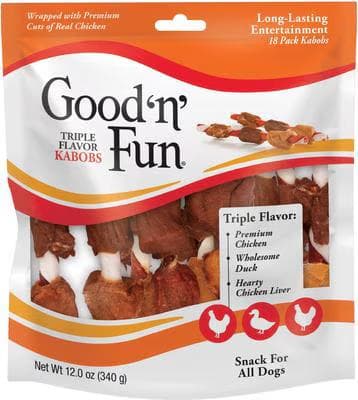
High-value training treats matter for a Belgian Malinois: the breed's drive demands a reward that genuinely earns the work. These triple-flavor kabobs (chicken, duck, chicken liver) hit the high-value tier without going to raw meat. 18-count bag carries a week of training sessions for a working-line Mal.
Petful may earn a commission when you click through to Chewy, at no extra cost to you.
- Malinois mix from a rescue: $200 to $500. Often the best option if you love the look but do not need a verified pedigree. Check Belgian Malinois rescue websites and Petful’s adoptable pet search.
For pricing on a true purebred Belgian Malinois (in the standard mahogany with black mask coloring), see our Belgian Malinois price and cost guide.
Frequently Asked Questions
True solid black Belgian Malinois are not recognized under the AKC breed standard. A 'black Belgian Malinois' is almost always a Dutch Shepherd, a Belgian Groenendael, a heavily sabled purebred Malinois, or a Malinois mix.
Not within the breed standard. Belgian Malinois are mahogany or fawn with a black mask and black-tipped guard hairs. Heavily sabled examples can appear nearly black at a distance, but the underlying base color is mahogany.
The Dutch Shepherd is the breed most often confused with a black Belgian Malinois. Dutch Shepherds have similar body type, drive, and ears, but their standard coat is brindle, which can appear nearly black.
There is no such thing as a true purebred solid-black Belgian Malinois. The 'rare' marketing is a red flag for either misidentification (Dutch Shepherd, Groenendael) or a Malinois mix sold at premium pricing.
The Belgian Groenendael is the long-coated solid black variety of the Belgian Shepherd. It is recognized by the AKC as the 'Belgian Sheepdog' and shares body structure, size, and temperament characteristics with the Belgian Malinois.
Sellers marketing solid-black puppies as 'rare Belgian Malinois' charge $4,000 to $8,000 in many cases. Almost all of these are mixed breed dogs. A legitimate Dutch Shepherd or Belgian Groenendael from a reputable breeder costs $1,500 to $3,500.
Be cautious. If the seller is explicitly marketing solid-black puppies as Belgian Malinois, they are misrepresenting the dog. Consider a Belgian Groenendael or Dutch Shepherd instead, or look for a Malinois mix in rescue.
Continue your Belgian Malinois research
These deeper guides cover specific Belgian Malinois topics in detail. Each is a standalone read but they reinforce each other if you are seriously evaluating the breed.
- Belgian Malinois: The Complete Breed Guide
- The Shepinois: Belgian Malinois German Shepherd Mix Guide
- Are Belgian Malinois Good Family Dogs? An Honest Assessment
- Belgian Malinois Puppy Guide: Your First 12 Months
Sources and further reading
These authoritative external sources informed this Belgian Malinois guide and are the right next stops for primary-source research.
Black Belgian Malinois genetics: why solid black is impossible under the breed standard
The black Belgian Malinois myth persists partly because coat color genetics in dogs are genuinely confusing. The AKC Belgian Malinois standard permits only the mahogany-fawn base coat with black mask and black-tipped guard hairs. The genetic base is an agouti pattern (A-locus) that requires the A^y or a^w allele for the standard mahogany-fawn expression. A solid black coat requires the K^B allele (dominant black) or the a allele (recessive black), neither of which exists in the registered Belgian Malinois gene pool.
When a puppy appears solid black with Malinois body type, one of four things is happening. First, a true mixed breed: the K^B or a allele came from a non-Malinois parent. Second, a misidentified breed: the dog is actually a Dutch Shepherd (brindle that looks black) or Belgian Groenendael (solid black Belgian Shepherd variety, legitimate). Third, a heavily sabled Mal where black-tipped guard hairs visually dominate. Fourth, deliberate misrepresentation by the seller.
Black Belgian Malinois: what DNA testing actually reveals
If you already own a dog marketed as a black Belgian Malinois, a DNA test from Embark or Wisdom Panel gives you a definitive answer. A true purebred Malinois returns approximately 95 to 100 percent Belgian Malinois ancestry. A heavily sabled Malinois returns the same percentage but with notes on coat-color genetics confirming the agouti pattern.
A dog with 50 percent Belgian Malinois and 50 percent German Shepherd, Belgian Groenendael, Black Russian Terrier, or other black-coated breed is a mixed breed, not a rare color variant of the Malinois. Embark also reports predicted coat color, which confirms the mismatch with the Malinois standard. The DNA report does not change whether you love the dog, but it changes what you should expect around health screening, breeding decisions, and resale value.
Bringing it all together
A true black Belgian Malinois does not exist within the breed standard. What people call a black Belgian Malinois is almost always a heavily sabled mahogany Malinois, a Dutch Shepherd, or a Malinois cross with another dark breed. If your heart is set on a solid black Belgian-Shepherd-type dog, the legitimate option is the Belgian Groenendael (long-coated black Belgian Sheepdog).
Whatever the dog actually is, it is still a dog worth loving. The labeling matters mostly because it sets your expectations on care, training, and health screening. Choose a transparent breeder, verify pedigree with paperwork or DNA testing, and avoid sellers exploiting 'rare color' marketing to charge premium prices for misrepresented puppies.

Coreen Saito is a pet writer and longtime shelter volunteer with more than a decade in animal rescue. She covers cat behavior, breed care, and the small, ordinary science of sharing a life with companion animals, with a particular focus on honest takes about the products and decisions that actually matter. At home in Arizona, she's outranked by Mac (a dog with the loudest opinion in the house), Rebel (a cat who governs by quiet authority), and Meri (an orange tabby who runs the late shift and the laundry basket). She writes about all three, plus the rescues that keep coming through her life, at LifeWithMinty.com.
Sign up for expert-backed reviews and safety alerts all in one place.