The 4 Belgian Shepherd Varieties: Malinois, Tervuren, Groenendael & Laekenois
The four Belgian Shepherd varieties (Malinois, Tervuren, Groenendael, and Laekenois) share a common base structure but differ in coat, color, and temperament. Here is the full guide to all four Belgian Shepherd varieties and how to choose between them.
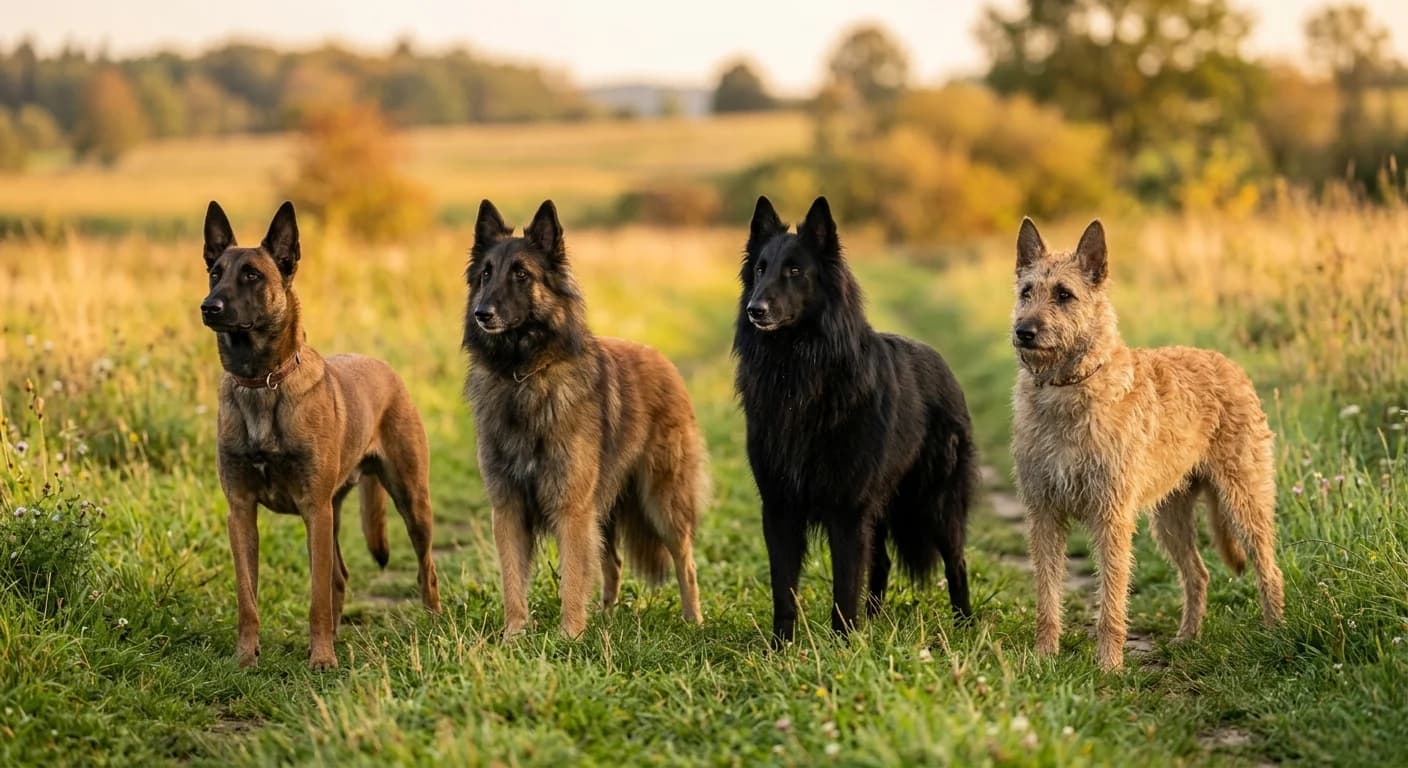
The four Belgian Shepherd varieties: Malinois, Tervuren, Groenendael, and Laekenois.
Petful is reader supported. As an affiliate of platforms like Amazon and Chewy, we may earn a commission when you buy through links on this page. There is no extra cost to you.
- Belgian Malinois: Short coat, mahogany with black mask. Most common in the US.
- Belgian Tervuren: Long coat, mahogany with black overlay.
- Belgian Groenendael (Belgian Sheepdog): Long coat, solid black.
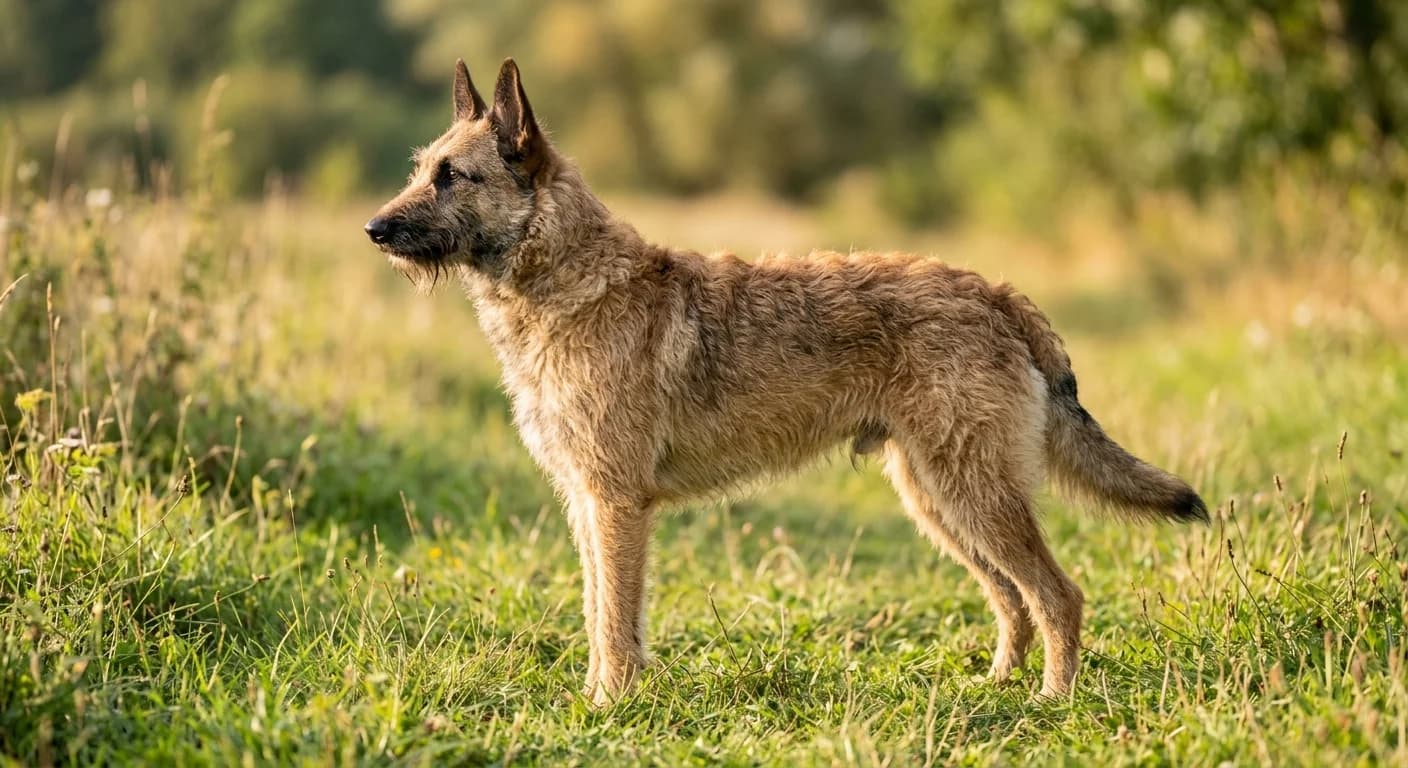
- Belgian Laekenois: Rough wirehaired tan coat. Rarest variety.
- All four: Same body structure, similar temperament, AKC-recognized as separate breeds in the US.
- Country of origin: Belgium, late 1800s
- AKC Group: Herding
The Belgian Shepherd is one of the most flexibly bred herding dogs in the world. Late-1800s breeders in Belgium developed four distinct coat varieties from the same foundational stock, each suited to the working conditions of a different region of the country. Today, the four Belgian Shepherd varieties are recognized as separate breeds by the AKC in the United States, while most of the rest of the world (including the FCI) classifies them as one breed with four varieties.
This guide covers all four Belgian Shepherd varieties: how to tell them apart, how their temperaments differ, and how to choose between them. Pair this with our full Belgian Malinois breed guide for the deep dive on the most popular variety, and our black Belgian Malinois guide for the genetics behind the often-confused dark Belgian Shepherds.

Sign up for expert-backed reviews and safety alerts all in one place.
Belgian Shepherd varieties: shared traits
All four Belgian Shepherd varieties share:
- Same height (22 to 26 in) and weight (40 to 80 lbs) range, with males larger than females.
- Same square, athletic, herding-dog body structure.
- Same triangular pricked ears, dark almond eyes, black nose and lips.
- Same broad temperament: alert, intelligent, trainable, protective, with strong working drive.
- Same lifespan range: 12 to 14 years.
- Same general health profile, with some variety-specific tendencies.
- Same country of origin: Belgium, late 1800s.
The differences are concentrated in coat type, color, and (to a lesser extent) drive intensity.
1. Belgian Malinois (short coat, fawn-mahogany with black mask)
The Belgian Malinois is the short-coated variety, named after the city of Malines (Mechelen) where the breed was first standardized. The Mal is the dominant variety in working-dog circles, accounting for the vast majority of police, military, and protection K9 deployments worldwide.
Distinctive Malinois traits:
- Short, straight, weather-resistant double coat.

A durable rubber dog toy that can be stuffed with treats and selected by the manufacturer's size guide; supervise use and retire it when damaged.
Petful may earn a commission when you click through to Chewy, at no extra cost to you.
- Mahogany or fawn base coat with a defined black mask covering the muzzle and around the eyes.
- Black-tipped guard hairs concentrated on the back, shoulders, and tail.
- The most driven and demanding of the four varieties.
- By far the most numerous in the United States: roughly 8,000 puppies registered with the AKC each year.
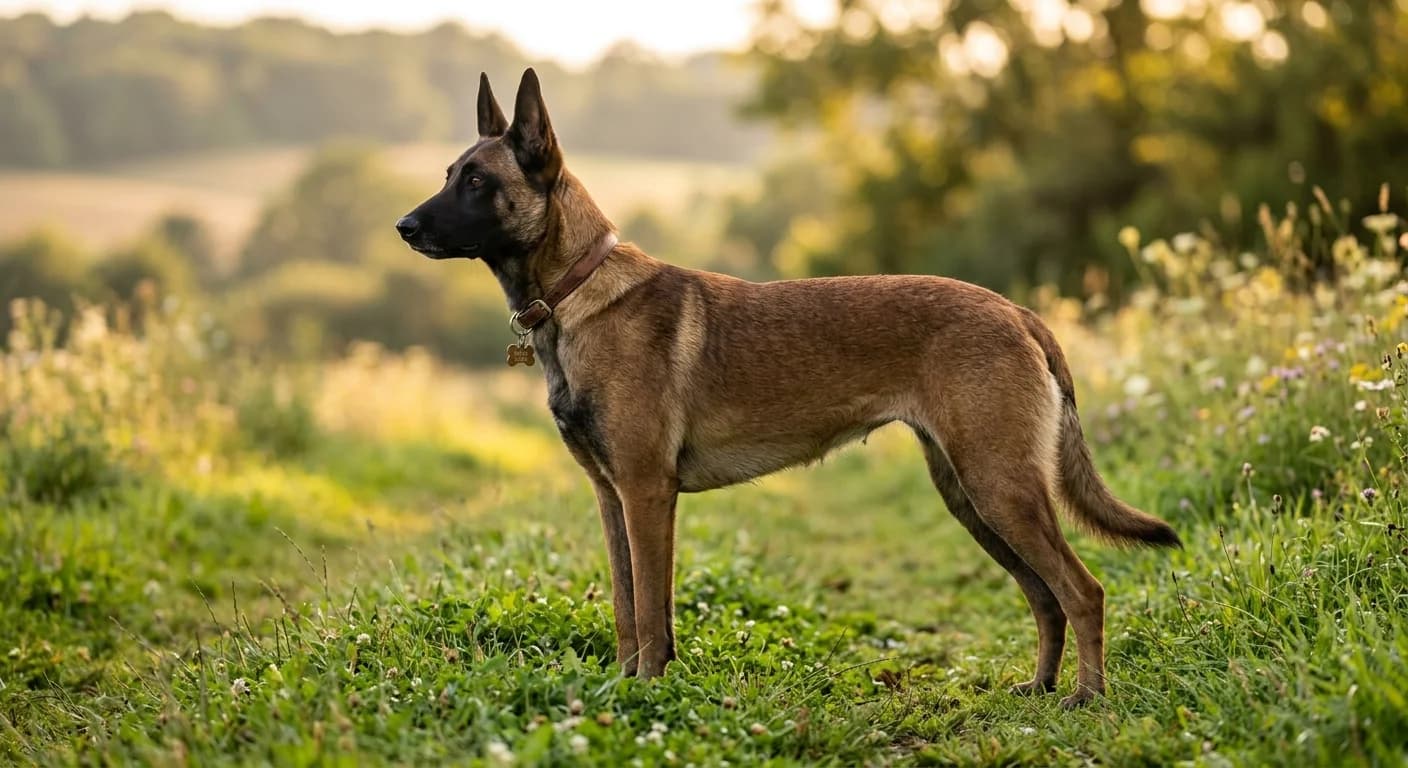
Best for: experienced working-dog owners, sport homes (Schutzhund, IPO, French Ring), military and police K9 programs, and families with the time and structure to meet the breed's daily demands. Least forgiving of the four varieties for first-time owners.
2. Belgian Tervuren (long coat, mahogany with black overlay)
The Belgian Tervuren is the long-coated mahogany variety, named after the village of Tervuren near Brussels. The Tervuren shares the Malinois's body type and structure but adds a long, thick double coat with elegant feathering on the legs and tail.
Distinctive Tervuren traits:
- Long, straight, double coat with abundant guard-hair length.
- Mahogany base coat with black overlay (black-tipped guard hairs across the body).
- Black mask on the muzzle, similar to the Malinois.
- Heavy feathering on the chest, legs, and tail.
- Slightly less driven than the Malinois (still a high-drive working breed by general dog standards).
- More commonly seen in conformation, agility, herding, and obedience trials than in police K9 work.
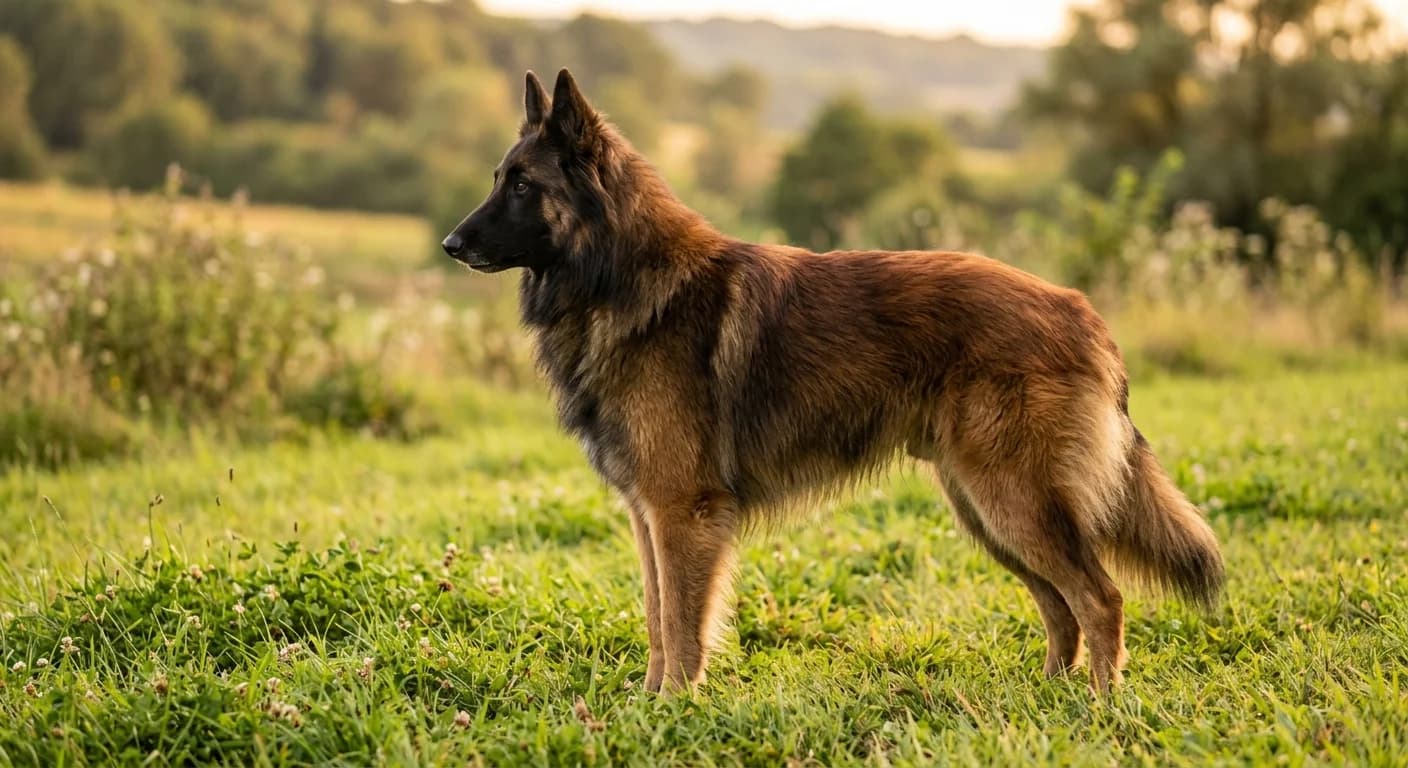
Best for: experienced large-breed owners with time for daily exercise and weekly grooming. The Tervuren is a good 'middle-ground' Belgian Shepherd: high drive without the Malinois's extreme edge, beautiful conformation, and strong sport-dog versatility. Coat maintenance is significant; see our shedding management guide for the right tools.

Petful may earn a commission when you click through to Chewy, at no extra cost to you.
3. Belgian Groenendael / Belgian Sheepdog (long coat, solid black)
The Belgian Groenendael is the long-coated solid black variety. In the US, the AKC registers this variety under the name 'Belgian Sheepdog,' which is the legacy AKC name from when only the Groenendael was recognized. In Europe and the FCI, it is one of the four Belgian Shepherd varieties. Petful’s guide to Groenendael has the full breakdown.
Distinctive Groenendael traits:
- Long, straight, solid black double coat.
- Heavy feathering on the chest, legs, and tail.
- Same square athletic body as the other varieties.
- Often slightly calmer than the Malinois with comparable trainability.
- The variety most commonly confused with a 'black Belgian Malinois' (which does not exist as a recognized purebred).
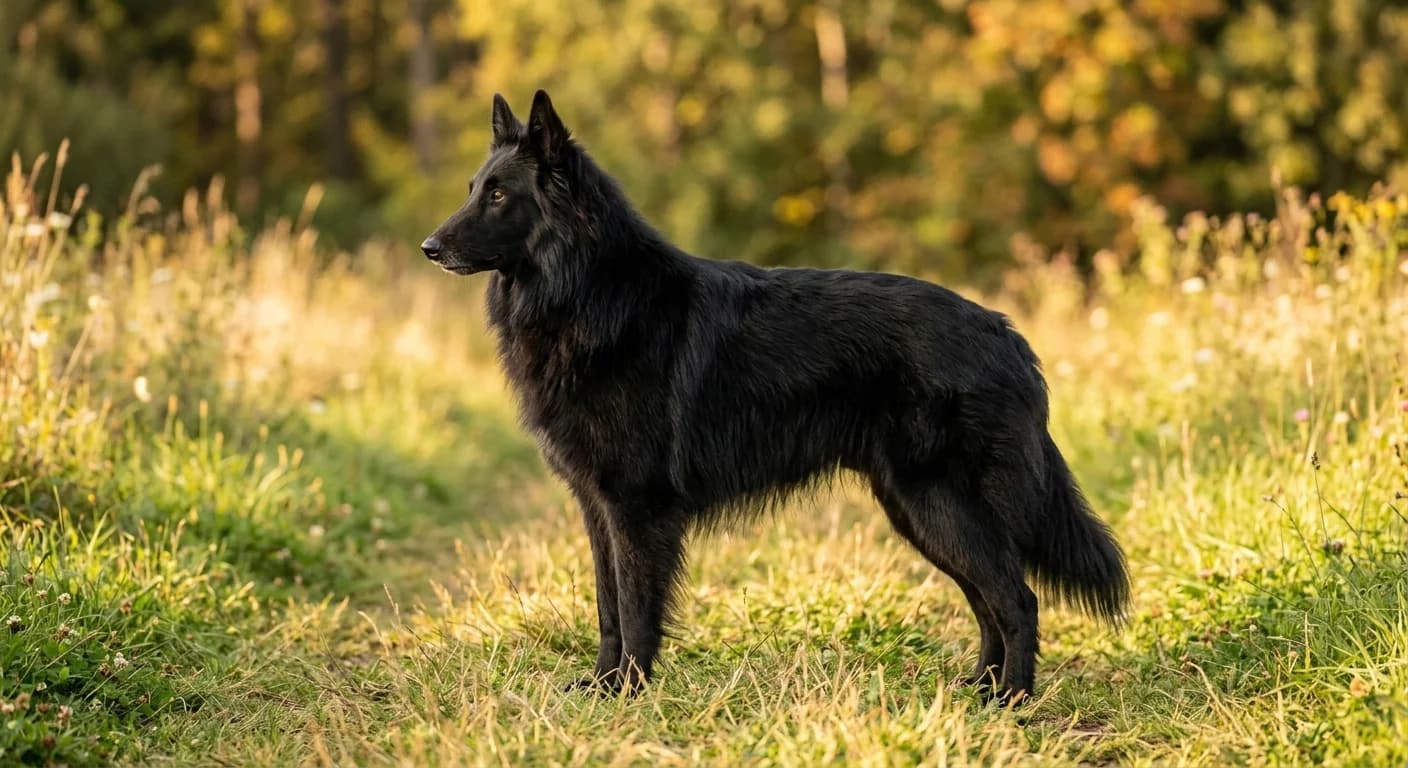
Best for: owners who love the Belgian Shepherd structure but want a solid-black coat. Less demanding than the Malinois but still a high-drive working breed requiring serious daily exercise and training. If you are shopping for a 'black Belgian Malinois,' the Groenendael is the legitimate breed to pursue.
4. Belgian Laekenois (rough wirehaired tan coat)
The Belgian Laekenois is the rarest of the four Belgian Shepherd varieties, with fewer than 200 dogs in the United States as of recent estimates. Named after the Royal Castle of Laeken in Brussels, the Laekenois is the rough wirehaired variety, distinct from the other three by coat texture rather than color.
Distinctive Laekenois traits:
- Rough, wirehaired, double coat with characteristic untidy beard and eyebrows.
- Tan to reddish-fawn base coat with traces of black overlay on the muzzle and tail.
- Same square body type as the other varieties.
- Calmer than the Malinois on average but still a high-drive working breed.
- Recognized by the AKC in 2020, last of the four varieties to gain US recognition.
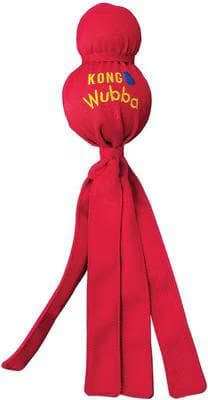
A large fabric-covered dog toy for supervised tug and fetch; choose the size for your dog and retire it if seams or material begin to fail.
Petful may earn a commission when you click through to Chewy, at no extra cost to you.
Best for: dedicated breed enthusiasts willing to source a puppy from outside the US. Most Laekenois in North America come from European imports. Coat maintenance requires hand-stripping rather than standard brushing; if you have not maintained a wirehaired breed before, the Laekenois has a steeper grooming learning curve.
Watch the four Belgian Shepherd varieties side by side
Visual comparison of all four Belgian Shepherd varieties in motion:
Belgian Shepherd varieties: temperament differences
All four Belgian Shepherd varieties are intelligent, trainable, protective, and high-drive. The differences are matters of degree rather than category.
- Belgian Malinois: highest drive, sharpest reactions, most demanding daily work. Best in working homes.
- Belgian Tervuren: high drive with slightly more 'off-switch' tolerance. Excellent versatility breed for sport homes.
- Belgian Groenendael: high drive, often slightly calmer than the Mal. Strong companion-dog qualities for the right owner.
- Belgian Laekenois: high drive, slightly more independent. Less commonly used in protection sport, more often herding and conformation.
None of the four are first-time-owner dogs. All four require an experienced large-breed owner with time for daily structured work and a real commitment to training.
Belgian Shepherd varieties: health
All four varieties share a similar health profile:
- Hip and elbow dysplasia (lower than German Shepherd; higher than smaller breeds). See hip dysplasia in dogs for prevention.
- Progressive retinal atrophy (PRA), a genetic eye disease.
- Pannus, a chronic eye inflammation.
- Epilepsy, in a small percentage of all four varieties.
- Hemangiosarcoma in middle and senior age.
- Anesthesia sensitivity in some lines (more documented in Malinois and Tervuren).

High-value training treats matter for a Belgian Malinois: the breed's drive demands a reward that genuinely earns the work. These triple-flavor kabobs (chicken, duck, chicken liver) hit the high-value tier without going to raw meat. 18-count bag carries a week of training sessions for a working-line Mal.
Petful may earn a commission when you click through to Chewy, at no extra cost to you.
All four varieties average 12 to 14 years lifespan. Reputable breeders in any of the four varieties test parents for hips, elbows, eyes, and the breed-specific genetic conditions.
How to choose between the Belgian Shepherd varieties
Five questions to clarify which Belgian Shepherd variety fits your household:
- Do you want to do serious police-dog-style protection work? Belgian Malinois.
- Do you want versatility across agility, herding, obedience, and conformation, with a beautiful long coat? Belgian Tervuren.
- Do you want a solid-black long-coated companion with high but slightly more manageable drive? Belgian Groenendael.
- Are you a serious breed enthusiast willing to pursue a rare variety from European imports? Belgian Laekenois.
- Are you a first-time large-breed owner? None of the four are right; choose a different breed.
If your answer to the last question is yes, see our Are Belgian Malinois Good Family Dogs guide for the broader honest assessment that applies to all four Belgian Shepherd varieties.
Frequently Asked Questions
There are four Belgian Shepherd varieties: Belgian Malinois (short coat, mahogany with black mask), Belgian Tervuren (long coat, mahogany with black overlay), Belgian Groenendael (long coat, solid black), and Belgian Laekenois (rough wirehaired tan).
It depends on the kennel club. The American Kennel Club (AKC) recognizes the four Belgian Shepherd varieties as separate breeds. The FCI and most other international kennel clubs treat them as one breed with four varieties.
The Belgian Malinois by a wide margin, with about 8,000 puppies registered annually in the US. The other three varieties combined are far rarer.
All four are demanding working breeds. The Belgian Tervuren and Belgian Groenendael are slightly more forgiving for active experienced families than the Malinois. None are first-time-owner dogs.
The Belgian Laekenois, with fewer than 200 dogs in the United States. Most Laekenois in North America are imported from Europe.
All four can be good with older children (10+) when properly socialized and trained. None are recommended for households with toddlers due to size, drive, and herding-nip instinct.
In some countries the varieties can be interbred and the resulting puppies registered as the appropriate variety based on coat. In the US, the AKC treats them as separate breeds and does not permit cross-variety registration.
Continue your Belgian Malinois research
These deeper guides cover specific Belgian Malinois topics in detail. Each is a standalone read but they reinforce each other if you are seriously evaluating the breed.
- Belgian Malinois: The Complete Breed Guide
- Black Belgian Malinois: Myth vs Reality
- The Shepinois: Belgian Malinois German Shepherd Mix Guide
- Are Belgian Malinois Good Family Dogs? An Honest Assessment
Sources and further reading
These authoritative external sources informed this Belgian Malinois guide and are the right next stops for primary-source research.
- AKC Belgian Malinois breed standard
- AKC Belgian Tervuren breed standard
- AKC Belgian Sheepdog (Groenendael) standard
Belgian Shepherd varieties: origin and regional breeding history
The four Belgian Shepherd varieties emerged from regional breeding programs in different parts of late-1800s Belgium, with each variety associated with a specific locale. The Belgian Malinois came from the region around Malines (now Mechelen), where short-coated herding dogs were favored for visibility and easy maintenance on working farms. The Belgian Tervuren came from the village of Tervuren outside Brussels, where longer coats were preferred for harsh-weather livestock work.
The Belgian Groenendael traces to Chateau de Groenendael and breeder Nicolas Rose, who standardized the solid-black long-coated variety in the 1890s. The Belgian Laekenois developed around the Royal Castle of Laeken in Brussels and was traditionally used to guard linen fields from thieves, which is why the rough wirehaired coat became the variety's distinguishing feature. The four Belgian Shepherd varieties were formally recognized as one breed with four varieties by Belgian cynologist Professor Adolphe Reul in 1891.
Belgian Shepherd varieties: how they differ in modern working roles
Over the 20th century, each of the four Belgian Shepherd varieties developed specialized modern working roles. The Belgian Malinois dominates police, military, and protection sport. The Belgian Tervuren is most visible in conformation, herding trials, and agility. The Belgian Groenendael appears in obedience competition and search-and-rescue. The Belgian Laekenois remains primarily a conservation-breeding effort with small working populations in Belgium and the Netherlands.
For prospective owners evaluating Belgian Shepherd varieties, the modern role specialization matters more than the historical locale. A working-home buyer should pick based on which variety the local sport or work community uses. A companion-home buyer should pick based on coat maintenance, drive profile, and which variety's working ethos fits their life.
Bringing it all together
The four Belgian Shepherd varieties (Malinois, Tervuren, Groenendael, and Laekenois) share a common Belgian working-dog heritage and differ primarily in coat type and color. All four are intelligent, high-drive, demanding dogs requiring experienced owners and serious daily work. There is more on this in Petful’s guide to Belgian Malinois colors.
Pick the variety based on the coat and temperament profile that fits your life: the Malinois for tactical and sport homes, the Tervuren for versatile beauty, the Groenendael for solid-black elegance, the Laekenois for rare-breed enthusiasts. Whichever Belgian Shepherd variety you choose, the underlying daily-work commitment is the same: this is a working breed first and a companion second.

Coreen Saito is a pet writer and longtime shelter volunteer with more than a decade in animal rescue. She covers cat behavior, breed care, and the small, ordinary science of sharing a life with companion animals, with a particular focus on honest takes about the products and decisions that actually matter. At home in Arizona, she's outranked by Mac (a dog with the loudest opinion in the house), Rebel (a cat who governs by quiet authority), and Meri (an orange tabby who runs the late shift and the laundry basket). She writes about all three, plus the rescues that keep coming through her life, at LifeWithMinty.com.
Sign up for expert-backed reviews and safety alerts all in one place.