Pomeranian Mixes: Crosses, Traits, and Care
Pomeranian Mixes: Crosses, Traits, and Care with evidence-based guidance on daily fit, care, costs, training, grooming, health, and the individual decisions that matter most.
Petful is reader supported. As an affiliate of platforms like Amazon and Chewy, we may earn a commission when you buy through links on this page. There is no extra cost to you.
A Pomeranian mix can inherit any blend of size, coat, structure, energy, behavior, and health tendencies from the dogs in its ancestry. A nickname such as Pomsky or Pomchi describes reported parentage. It does not promise a precise adult weight, a particular face, a low-shedding coat, or half of each parent's personality.
This guide compares useful planning ranges without pretending that appearance proves ancestry. Start with the individual dog's measured body, health records, observed behavior, and current care needs. Then use verified parent information to widen the plan where uncertainty remains.

Sign up for expert-backed reviews and safety alerts all in one place.
Pomeranian mixes: what can vary
- 1Avoid the fifty-fifty assumption.
- 2Plan for the wider plausible range.
- 3Use direct observation as the dog matures.
- 4Reported Pomeranian ancestry can add a dense coat, small size, voice, alertness, and close engagement with people, while the other parent may produce a much larger or structurally different adult.
There is no universally best Pomeranian mix. The best fit is the individual dog whose current needs and plausible adult range match the household's space, handling skill, activity, grooming capacity, budget, and tolerance for uncertainty. A quiet adult in foster care may be more predictable than a young puppy selected from an appealing composite image.
Pomeranians are mixed with many companion, toy, Spitz, sporting, and working breeds. Common search names include Pomchi, Pomsky, Maltipom, Pomapoo, Yorkie Pom, Shiranian, Corgipom, and Dameranian. Popularity does not make outcomes standardized. Even littermates can differ in coat, muzzle, legs, adult size, motivation, and health.
Pomeranian mixes can be good dogs when their actual traits fit the home and their needs are met. The mix label alone cannot answer that. Evaluate:
- Current age, weight, body condition, and structure.
- Comfort with handling, separation, visitors, children, and other animals.
- Activity, recovery, frustration, barking, chasing, and ability to settle.
- Coat layers, skin condition, grooming tolerance, and shedding.
- Medical records, screening information, and known relatives.
- The larger, more active, more vocal, and higher-maintenance plausible outcome.
How to assess a mixed-breed dog
Begin with facts that do not depend on ancestry: measured weight and height, body condition, gait, mouth and airway, current coat, veterinary findings, and observed behavior in ordinary settings. Mark seller, rescue, or prior-owner statements as reported until records support them. Appearance can suggest questions, but it cannot confirm parent breeds by itself.
- Assess the dog before the label | Build the care plan from direct measurements, veterinary findings, repeated behavior observations, and the larger or more demanding plausible outcome. Treat a reported mix name or visual resemblance as a question to investigate, not proof of ancestry or a promise about adult traits.
For behavior, record what happened before, during, and after an event. “Barked for 20 seconds when a visitor entered, took food at 10 feet, and settled behind a gate in three minutes” is more useful than “acts like a Pomeranian.” Repeat observations across days before calling a response a stable trait. A configurable option such as the Frisco Steel 8-Panel Configurable Dog Gate and Playpen should be assessed for the adult dog's height, strength, climbing, squeezing, and pushing behavior.
A DNA test can estimate ancestry within its database and stated methods, but it does not predict exact adult behavior or diagnose disease. A Wisdom Panel Essential Breed Identification DNA Test is one option to compare if ancestry information would change a care decision. A Frisco Padded No Pull Dog Harness still requires direct measurements and a movement check, whatever breeds a report lists.

Petful may earn a commission when you click through to Chewy, at no extra cost to you.
Evidence ladder
- Direct measurement: body size, coat, movement, appetite, recovery, and behavior.
- Original records: microchip, veterinary history, pedigree or registration where applicable.
- Professional findings: examinations, imaging, named screening, and interpreted tests.
- Reported history: useful context that remains uncertain until supported.
- Appearance-based guess: a prompt for questions, not a conclusion.
Observe across a normal week
One shelter meeting, breeder visit, or photograph cannot show the full range. If the dog is in foster care, ask for observations from waking, feeding, toileting, walks, visitors, grooming, short departures, quiet evenings, and recovery after excitement. If meeting a puppy, ask how the litter behaves at several times of day rather than requesting a staged reaction test.
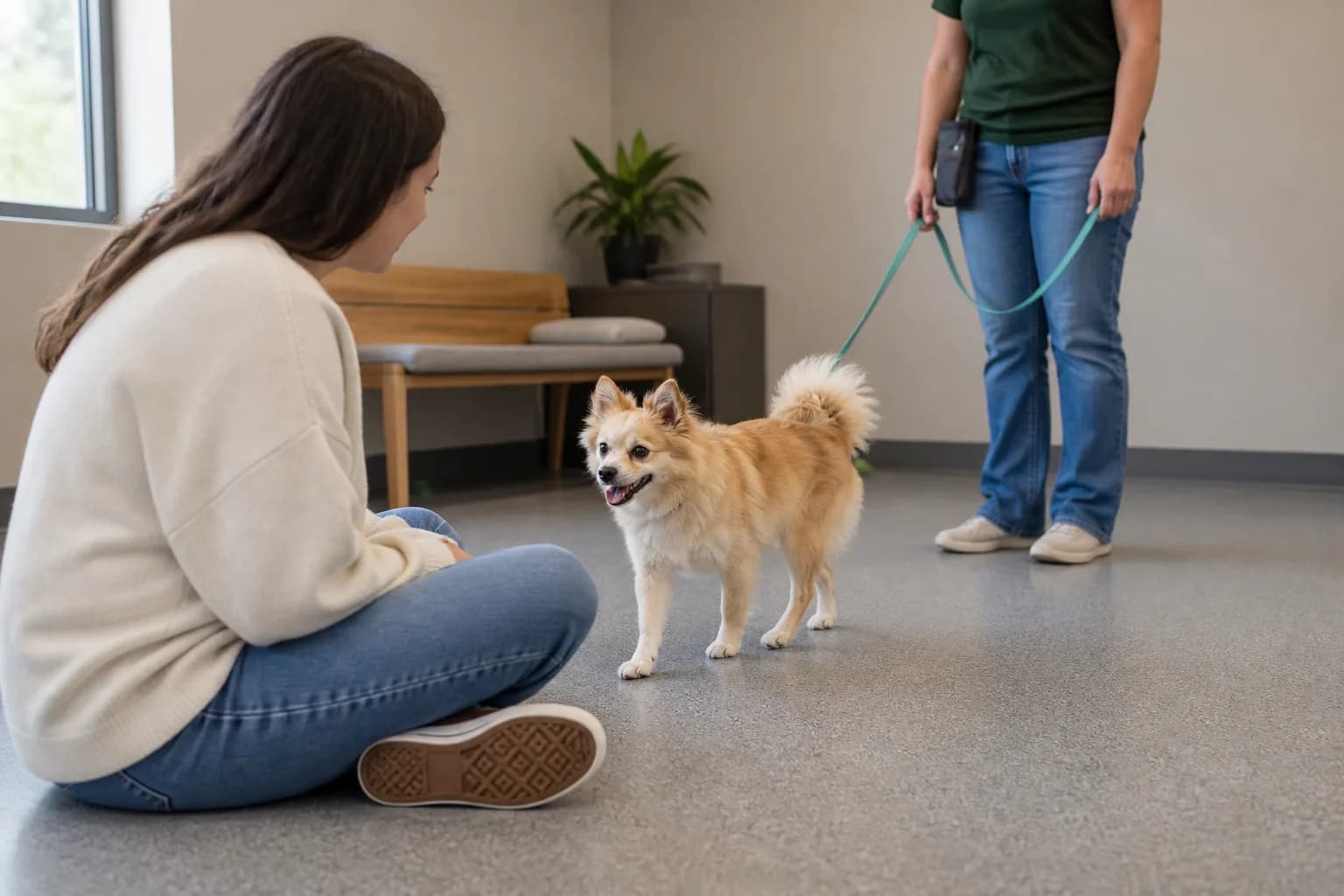
Age changes what can be known. An adult's size and current coat are directly observable, though behavior may still change after placement. A young puppy leaves wider uncertainty about adult body, finished coat, activity, and social behavior. Adolescents can show temporary changes in focus and arousal. Label every conclusion with the dog's age and time in the current environment.
Photographs create selection bias. The most Pomeranian-looking angle may be used to support a marketable nickname, while legs, muzzle, body length, or size cues are cropped away. Request unfiltered standing and movement videos from the front, side, and rear on a safe surface. These help a veterinarian or groomer ask better questions, but still do not certify ancestry.
One-page baseline after placement
- Measured weight, height where useful, body condition, and equipment size.
- Food amount, elimination, sleep, and recovery after activity.
- Comfortable handling areas and areas that cause avoidance. For low-pressure introductions, compare the Four Paws Magic Coat All-In-One Wet & Dry Dog Glove & Curry Brush for coat contact and the Jasper 360 Dog Finger Toothbrush for mouth handling only after the dog accepts the preceding easier step.
- Coat layers, tangle zones, shedding, skin, ears, and nails.
- Response to people, dogs, household motion, sounds, and separation.
- Known records, reported history, and unresolved questions kept in separate columns.
Update the page at 30, 60, and 90 days. A stable trend should carry more weight than a memorable first-day behavior during transport and decompression.
- Plan for the wider plausible outcome, not a fifty-fifty midpoint. Size, coat, activity, handling, and transport decisions should remain workable if the dog matures closer to the larger or more demanding parent pattern.
Popular Pomeranian mixes
| Evidence for this toy-spitz mixed-dog guide | What to record for mixes | What changes the mixes plan |
|---|---|---|
| Current Pomeranian observation | Date, setting, and exact behavior or measurement | A repeatable trend rather than one event |
| Professional mixes evidence | Named test, examination, record, or qualification | A revised risk assessment |
| Household capacity | Time, cost, supervision, and skill | A plan that works on ordinary weekdays |
Mix nicknames usually combine parts of two breed names, but there is no single naming authority. The same cross may appear under several names, and the same nickname may be applied to dogs with different or unknown ancestry. Search the reported parent breeds as well as the nickname when reviewing care and health questions.
Small companion crosses attract owners seeking a portable affectionate dog. Spitz crosses attract people who like the fluffy outline and alert expression. Poodle crosses are often marketed as low shedding, while Husky crosses are often marketed for dramatic appearance. Neither promise is safe. Coat and behavior are complex, and a puppy can inherit an outcome the advertisement barely mentions.
When comparing popular mixes:
- Read the official information for both reported parent breeds.
- Plan for the larger parent range unless adult measurements are known.
- Assume the denser or more demanding plausible coat.
- Ask which health evaluations apply to each side.
- Meet adult relatives when possible without treating one relative as a guarantee.
- Reject digitally composited “expected adult” images as evidence.
Search the parent needs, not just the nickname
Nickname pages often repeat each other and emphasize appearance. Build a better research packet from the current official standard or parent club information for each reported breed, current health-screening resources, and the individual dog's records. List original function, adult-size range, coat structure, common handling needs, and relevant screening questions. Then mark which items have actually appeared in the dog.
Keep incompatible possibilities visible. A Pomeranian and Siberian Husky cross could remain relatively compact or mature into a dog that exceeds a landlord, airline carrier, or caregiver's lifting limit. A Pomeranian and Poodle cross could shed visibly, mat with little loose hair, or carry mixed areas requiring different grooming. Planning for only the preferred outcome turns genetic uncertainty into a welfare problem later.
Popularity can also increase poor sourcing. When buyers search a nickname rather than a responsible program, sellers can produce litters for a trend and rely on cute photographs instead of health and placement evidence. Apply the same verification to a fashionable cross that you would to any puppy. A waiting list and high fee do not prove a thoughtful match.
Small companion crosses
Crosses with Chihuahua, Yorkshire Terrier, Maltese, Pekingese, Shih Tzu, Papillon, Cavalier King Charles Spaniel, Pug, Boston Terrier, or Bichon Frise may remain small, but “small” does not mean simple. Dental crowding, fragile joints, airway shape, eye exposure, coat maintenance, house training, and safe handling may all need attention.
Plan for a dog who can fit through narrow gaps, be injured by a fall, and become difficult to locate under furniture or in a busy doorway. Use secure barriers, supervise children, match play partners by physical safety, and avoid relying on size alone to prevent pulling or escape. Small dogs still need training and normal opportunities to walk, sniff, choose, and rest.
Companion-breed mixes can be strongly people-oriented, but attachment does not guarantee comfort when alone. Practice brief separations before the household needs a full workday. Barking, guarding a lap, handling sensitivity, and reluctance to toilet outdoors in poor weather are training and management questions, not evidence that the dog is spoiled.

Petful may earn a commission when you click through to Chewy, at no extra cost to you.
Spitz and northern crosses
Pomsky, Pom-Shi, Pomspitz, and Pomimo labels suggest ancestry from Siberian Husky, Shiba Inu, Japanese Spitz, or American Eskimo Dog. These pairings can produce a much wider adult-size, exercise, coat, independence, prey-interest, and vocal range than a toy-breed label suggests.
Do not assume a Pomsky will be a miniature Husky or that every Spitz cross will be easy in cold weather. Adult weight can exceed a buyer's plan, a dense coat can make heat management important, and an athletic dog may need more secure fencing and daily activity than expected. Recall should be built carefully without testing it near traffic or wildlife.
Spitz-type behavior can include alert barking, environmental awareness, fast movement, problem solving, and selective cooperation. Train with reinforcement, manage doors and gates, provide sniffing and food-search work, and teach settling. A dramatic mask, curled tail, or blue eye does not reveal trainability.
Sporting and working crosses
Crosses reported with Cocker Spaniel, Beagle, Shetland Sheepdog, Miniature Schnauzer, Australian Shepherd, Corgi, or larger working breeds can carry more stamina, scent interest, herding behavior, chasing, body size, or task persistence than expected from the Pomeranian side. The household should plan for the function of the other parent, not only its appearance.
Exercise should match structure and recovery. A long-backed dog may need different jumping and weight-management decisions. A shorter-muzzled cross may handle heat and exertion differently. A dog with herding ancestry may chase motion, while a scent-oriented dog may become absorbed outdoors. Observe the individual and ask the veterinary team about physical limits.
An Embark Breed and Health Dog DNA Test Kit can be compared for the specific ancestry and health information in its current documentation, but results need appropriate interpretation. An Embark Breed Identification Dog DNA Test Kit addresses ancestry within its stated scope and cannot certify temperament, adult size, or fitness for a sport.
Work-style enrichment
- Scent searches and food trails for dogs who use their nose.
- Short shaping games for problem solvers.
- Controlled retrieve or tug with rules for starting and stopping.
- Low-impact body-awareness exercises under appropriate guidance.
- Settle practice after activity so arousal has an off switch.
- Secure long-line exploration instead of risky off-leash tests.
Likely grooming differences
Mixed coats are not reliably “the best of both.” A dog can have dense undercoat plus a softer outer texture that mats, furnishings that trap debris, or uneven areas that need different tools. A Poodle cross may shed less visibly yet mat close to the skin. A smooth-looking puppy may develop more undercoat as the adult coat arrives.
Part the coat and inspect the skin. Identify whether there is undercoat, how quickly friction zones tangle, whether guard hairs release dirt, and how the dog tolerates brushing, bathing, drying, nails, ears, and mouth care. Ask a skilled groomer to demonstrate the routine for that coat rather than selecting a schedule from the mix name. A tool such as the aumuca Self Cleaning Slicker Brush can be compared by pin length, pressure, coat reach, and skin response before deciding it belongs in the routine.
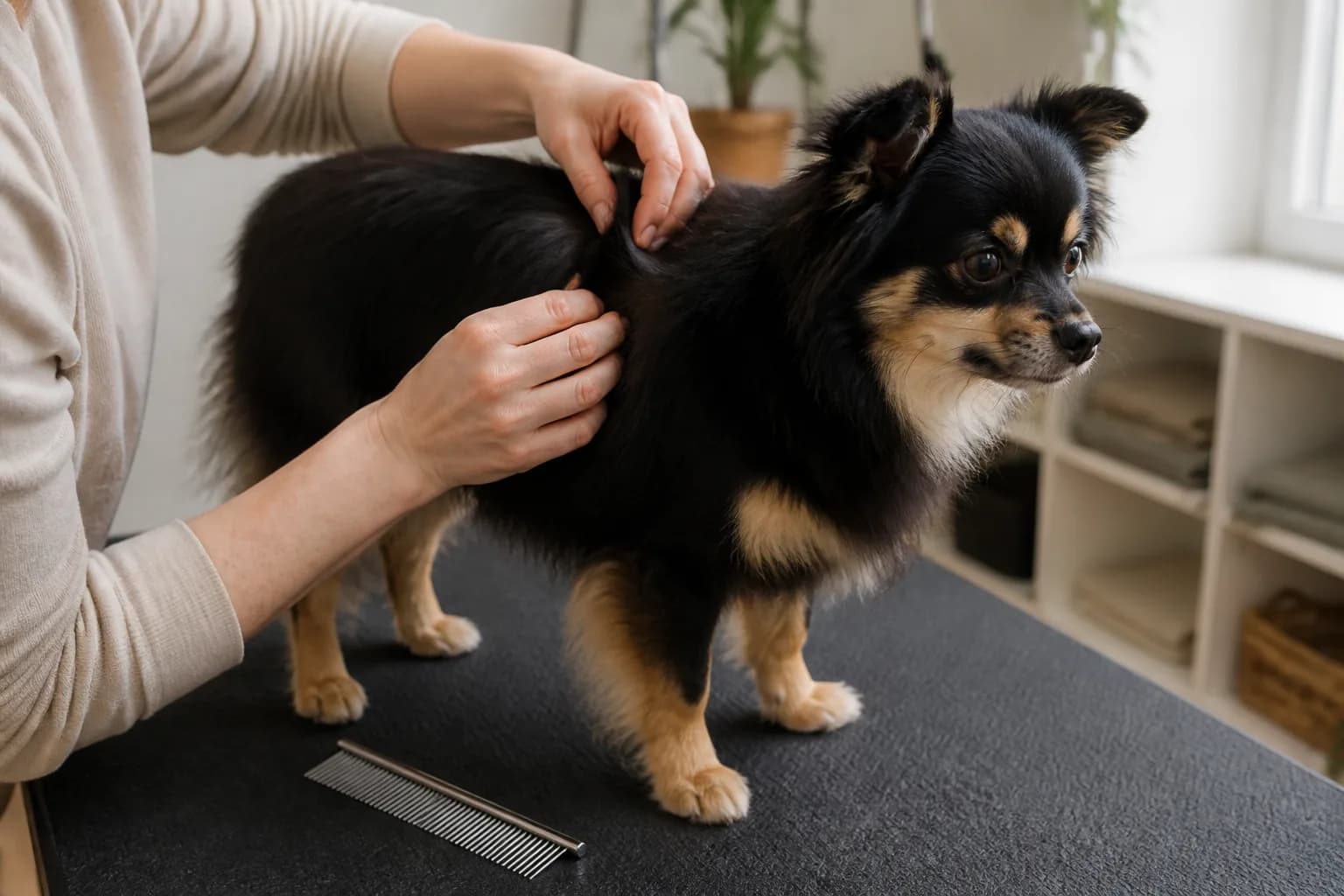
Budget for the demanding plausible coat until adult maintenance is known. Keep early sessions short and positive. Do not shave a healthy double coat merely to control shedding, and do not let a low-shedding claim justify weeks between skin-level checks. Petful's Pomeranian shedding guide explains the double-coat side of the plan.
Grooming record
- Days until a comb first meets resistance.
- Exact locations of tangles or compacted undercoat.
- Hair collected versus hair trapped in the coat.
- Drying time and skin comfort after bathing.
- Seasonal, hormonal, age, or health-related changes.
- Professional intervals and required home maintenance.
Exercise and training range
Start with several moderate daily opportunities for walking, sniffing, play, and training, then adjust from the dog's behavior and physical recovery. More activity is not always the answer to barking or restlessness. A dog who never practices calm may become fitter at staying aroused. For supervised food or object play, a correctly sized KONG Classic Dog Toy is one option to compare and remove if it becomes damaged.
Separate physical exercise, mental work, social contact, and rest. A scent walk does a different job from fetch. A food puzzle does not replace toileting or movement. A training class does not guarantee the dog can settle at home. Sleep and low-demand time are part of a sustainable plan. One supervised puzzle format to compare by difficulty, cleaning, frustration, and chewing behavior is the Outward Hound Lick N' Flip Treat Puzzle & Slow Feeder.
Train the skills every mixed household needs:
- Name response and check-in around distractions.
- Comfortable harnessing and leash movement.
- Recall on a secure long line.
- Leave it, drop, trade, and cooperative handling.
- Door, gate, visitor, and vehicle routines. For close control around doors and transitions, compare the Frisco Traffic Leash with Dual Padded Handles by hardware, handle comfort, and the individual dog's strength.
- Brief separation and independent rest. For a defined resting place, compare a removable-cover option such as the FurHaven Velvet Waves Perfect Comfort Orthopedic Sofa Cat & Dog Bed by usable dimensions, edge height, wash instructions, and the individual dog's preferred sleeping position.
- A mat or station behavior for settling.
Avoid attributing every problem to one parent breed. Pain, fear, inadequate sleep, inconsistent reinforcement, an unsafe environment, and unmet needs can look like stubbornness. Sudden behavior change requires a medical check before the household escalates training pressure.
Run a two-week activity calibration
Start below the dog's apparent maximum, especially after adoption, illness, or a long period of inactivity. Record the duration and type of walking, sniffing, play, training, and rest. Note gait, panting, willingness to continue, sleep quality, evening arousal, and stiffness the next morning. Increase one variable at a time so the response can be interpreted.
A dog who becomes wild in the evening may be under-stimulated, overtired, physically uncomfortable, or missing practice at settling. Test the explanation safely. Add a short sniffing opportunity and structured rest before adding another high-intensity game. Reduce duration if recovery worsens. Ask the veterinarian about coughing, breathing change, limping, collapse, heat intolerance, or persistent reluctance.

Petful may earn a commission when you click through to Chewy, at no extra cost to you.
Training rewards should fit the dog and the diet. Tiny food pieces often work well, but play, access to sniffing, distance from a worry, and greeting a person can also reinforce behavior. Keep sessions short enough that motivation stays high. A dog that stops responding may be tired, stressed, full, confused, or distracted rather than defiant. Use management while skills develop: gates can prevent door rushing, covered windows can reduce rehearsal of visual barking, a long line protects recall practice, and a quiet mat gives visitors a predictable routine.
Size and handling range
Adult size can fall near either parent, between them, or outside the range suggested by a small sample of relatives. Do not average parent weights and promise that number. Track growth on the same scale, pair it with body condition and structure, and update equipment before it becomes tight or unsafe.
A Wisdom Panel Essential Breed Identification DNA Test does not replace direct growth measurement. Fit a Frisco Padded No Pull Dog Harness to current neck and chest dimensions, check free shoulder movement and strap clearance, and refit after growth or coat change.
Plan transport, housing, and lifting for the larger plausible adult. An airline carrier bought for a puppy may not meet the adult dog's dimensions or the carrier's current rules. A fence safe for a larger dog may still have gaps a small puppy can pass through. Stairs, furniture, children, and large play partners create different risks at different sizes. Use whole-body support when lifting is necessary, and teach the dog a cue before pickup. Build ramp, carrier, and cooperative handling skills before they are medically necessary. For transport planning, compare the Frisco Travel Safety Dog & Cat Carrier, Medium only when the individual dog can stand, turn, and lie comfortably within the current dimensions and limits.
Health questions for both parent breeds
Mixed ancestry does not automatically erase inherited or structural risk. A puppy can inherit risk variants or physical features from either side, and some risks arise from combinations, body shape, environment, or chance. “Hybrid vigor” is not a health guarantee for one planned cross or one rescue dog.
Research the recommended screening and common clinical concerns for both reported parent breeds. The OFA breed health resources provide a starting point for named screening programs. Ask for the parents' permanent identities and original results. A generic DNA panel, normal puppy examination, or health warranty does not replace every relevant evaluation.
For a dog with unknown ancestry, the veterinarian can still build a useful plan from age, body, examination, history, and symptoms. Record:
- Kneecap, hip, spine, and gait observations appropriate to structure.
- Heart, airway, eye, dental, skin, coat, and neurologic findings.
- Weight, body condition, exercise recovery, and heat tolerance.
- Medication reactions and family history when known.
- New symptoms with date, trigger, duration, and recovery.
There is no single Pomeranian-mix lifespan. Expected longevity depends on the ancestry, adult size, structure, health, care, and individual disease. Do not average two website ranges and treat the result as a forecast. Petful's Pomeranian lifespan and health guide explains how to use breed-level context without predicting one dog.
Build a two-parent health worksheet
Create one column for the Pomeranian side and one for the other reported breed. Under each, list the current recommended screening, common structural questions, and family-history information a responsible source should track. Add a third column for the individual dog. Mark results as verified, reported, normal on one examination, abnormal, or unknown. Those categories should not be collapsed into “healthy.”
For a rescue, unknown parent results do not make the dog unadoptable. They change the planning method. Establish clinical baselines, keep weight and dental care current, protect the body structure that is present, and respond to symptoms early. Consumer ancestry results may suggest additional questions, but the veterinarian decides which findings warrant clinical follow-up.
For a breeder, screening should be tied to permanent parent identities and performed at appropriate ages by qualified evaluators. Ask how results affected the pairing and what appeared in close relatives. A test panel that reports many clear variants may still omit clinical eye, heart, joint, or other examinations relevant to one parent breed. Keep emergency preparation independent of ancestry certainty. Every dog needs an after-hours clinic, secure transport, current medication list, identification, and funding route.
Choosing a responsible source
Responsible breeders of crosses should explain why the pairing was chosen beyond novelty, verify the identities and relevant health screening of both parents, raise puppies in appropriate conditions, provide individual records, match homes thoughtfully, and accept responsibility if placement fails. A designer name and high fee do not establish any of those practices.
Ask to meet the dam when practical and to see where puppies are raised. Request the sire's records even when he lives elsewhere. Review the contract before a deposit, confirm the puppy's identity at pickup, and arrange an independent veterinary examination. Avoid pressure, untraceable payment, staged delivery with no location, and guarantees of exact size, coat, or temperament.
Rescue and shelter dogs may have uncertain ancestry, and that uncertainty is not a defect. Ask for current medical records, foster observations, known history, and the organization's return or support policy. Adult foster behavior can provide better household-fit evidence than a guessed mix label.
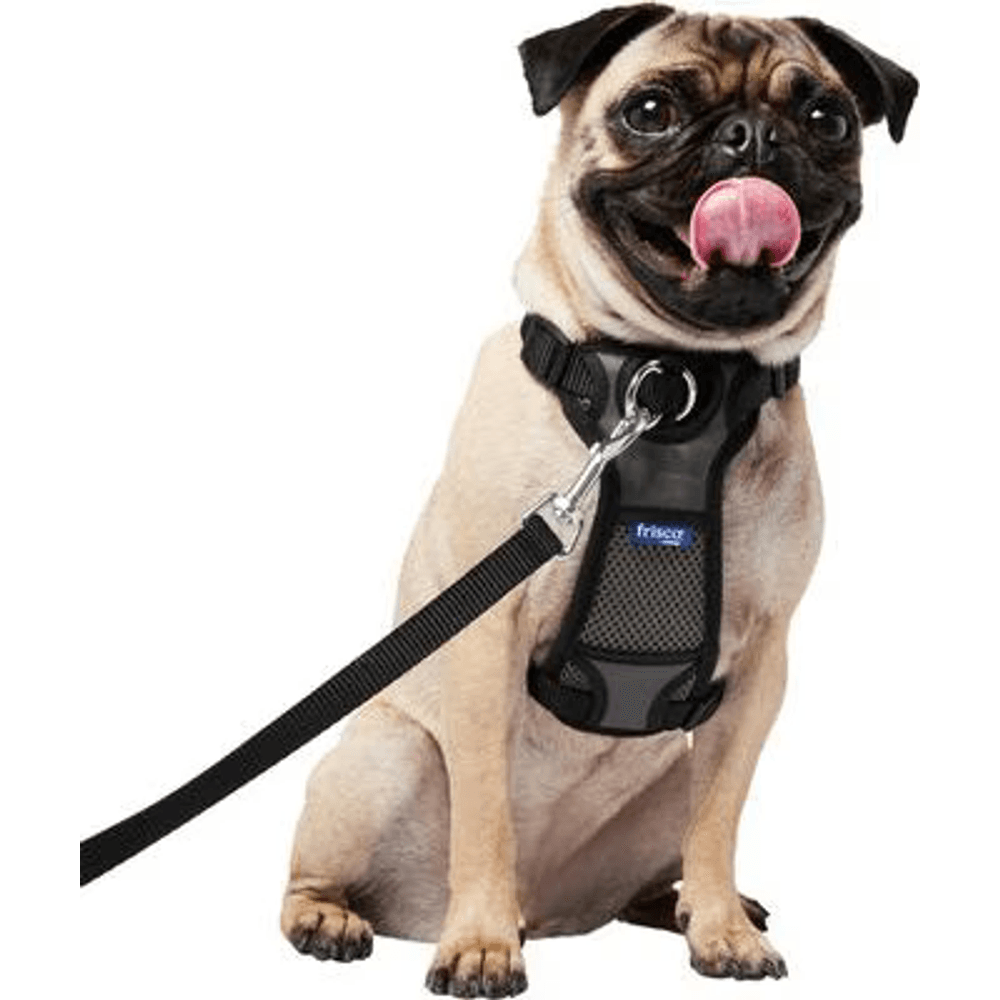
A budget-friendly padded no-pull harness that keeps leash pressure off a coughing dog's neck and windpipe by distributing it across the chest. A simple, affordable way to protect an irritated airway or a collapsing trachea on every walk.
Petful may earn a commission when you click through to Chewy, at no extra cost to you.
Compare source evidence consistently
Use the same worksheet for a breeder, rescue, shelter, or private rehome. Record legal identity and contact information, the dog's permanent identification, original veterinary records, known parent information, behavior observations, acquisition terms, and what support is available after placement. Keep unknowns visible. A responsible source can say “we do not know” without inventing certainty.
For puppies, ask about age at separation, litter and dam health, feeding, sleep, toilet setup, handling, exposure, and veterinary milestones. For adults, ask why the dog needs a new home, how behavior differs across settings, what happens when alone, grooming tolerance, bite or incident history, medications, and restrictions. Verify what can be verified, then decide whether the remaining uncertainty fits the household.
Avoid irreversible payment before identity and terms are clear. Read the return requirement, health provisions, spay or neuter terms, and any restrictions on care. A contract should protect the dog as well as the seller. If a source refuses questions because the dog is “just a mix,” leave. Mixed-breed status does not lower the standard for humane conditions, records, truthful marketing, or placement responsibility.
Which Pomeranian mix fits your home?
Choose from the dog's needs outward, not from a list of cute names inward. First define the household's nonnegotiable limits for adult size, daily activity, grooming, noise, separation, children, other animals, transport, and medical budget. Then compare the individual dog with those limits and include the less convenient plausible outcome.
A strong match can answer yes to ordinary-week questions:
- Can this home safely contain and transport the dog at the larger plausible size?
- Can the household provide the more demanding plausible coat care?
- Is there time for daily movement, training, sleep, and gradual separation?
- Can children and other animals be supervised consistently?
- Is professional grooming, training, and veterinary care affordable?
- Does the dog recover in this environment rather than merely endure it?
If predictability is critical, consider an adult whose size, coat, and behavior are already observable. If the household chooses a puppy, accept a wider range and revisit the plan as the dog develops. A mix is not a custom order assembled from preferred halves.
Stress-test the match before saying yes
Imagine the dog at the top of the plausible size range, with the denser coat, louder voice, stronger chase interest, and greater exercise need. Price the professional grooming, training, safe transport, equipment replacement, routine veterinary care, and emergency reserve for that version. If the home works only for the smallest, quietest, lowest-shedding outcome, the match depends on luck.
Then test the ordinary schedule. Identify who provides the morning walk, midday care, grooming, training, and evening settlement on a busy workday. Decide where the dog stays during visitors, deliveries, home repairs, travel, or caregiver illness. A plan that works only on weekends is not yet a household fit.
For homes with children or other animals, specify supervision rather than writing “good with.” Which child behaviors has the dog experienced? Can the dog disengage? Are size and play style compatible? Is there a barrier and a separate resting area? A trial or foster-to-adopt period can be valuable when an organization offers one, provided expectations and return terms are clear. Use it to observe normal routines, not to provoke the dog's limits.
Individual Pomeranian mix profiles
These profiles identify planning questions, not promised outcomes. The other parent name should lead to official breed information and a wider possible range. Every dog still needs individual observation and records.
Pomsky: Pomeranian and Siberian Husky
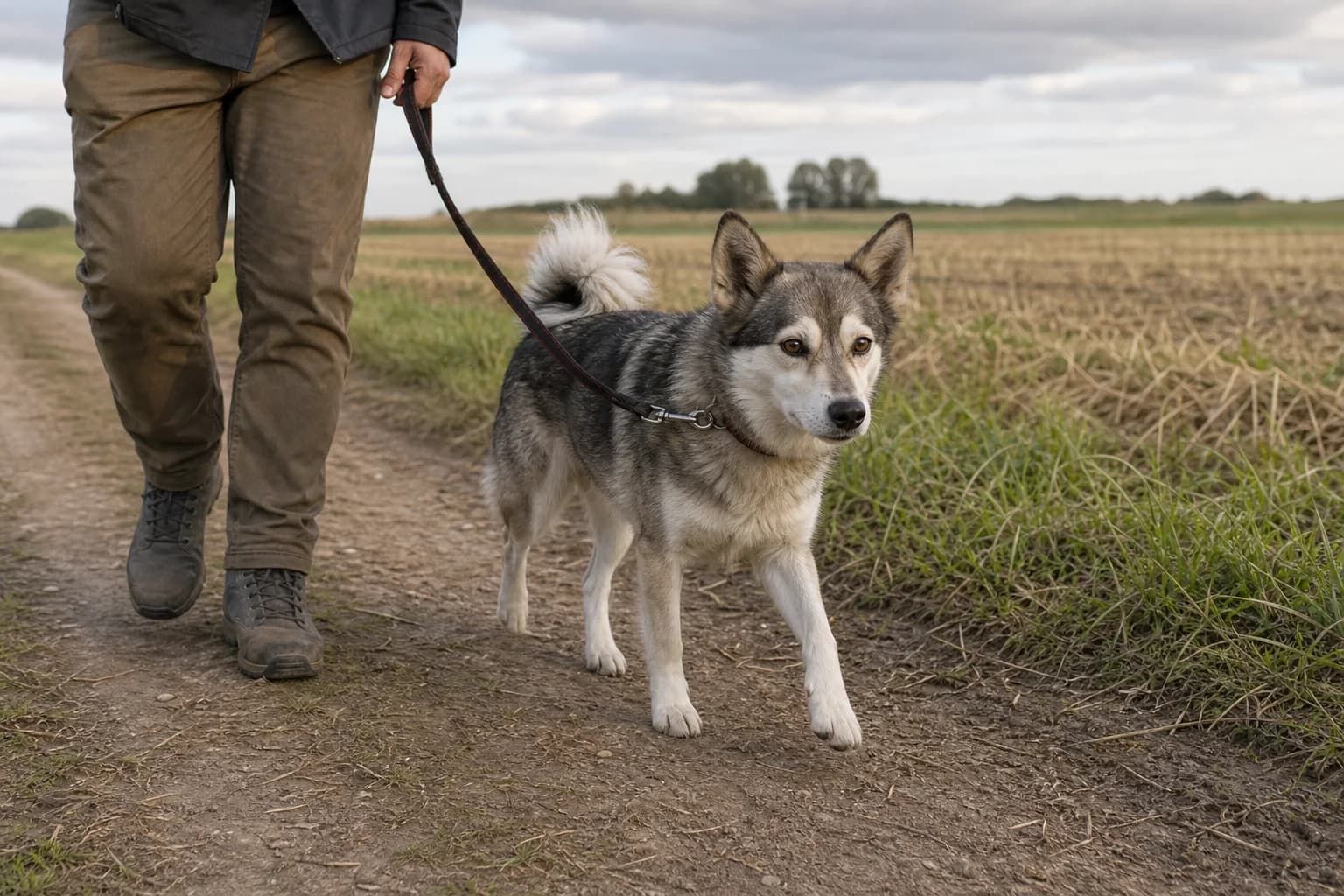
A Pomsky may mature far larger and more athletic than a Pomeranian, with dense seasonal coat, vocal behavior, digging, chasing, and a need for secure containment. Some remain compact; others do not. Plan transport and exercise for the Husky side until adult measurements prove otherwise. Blue eyes or a mask do not predict size or temperament.
Pomchi: Pomeranian and Chihuahua
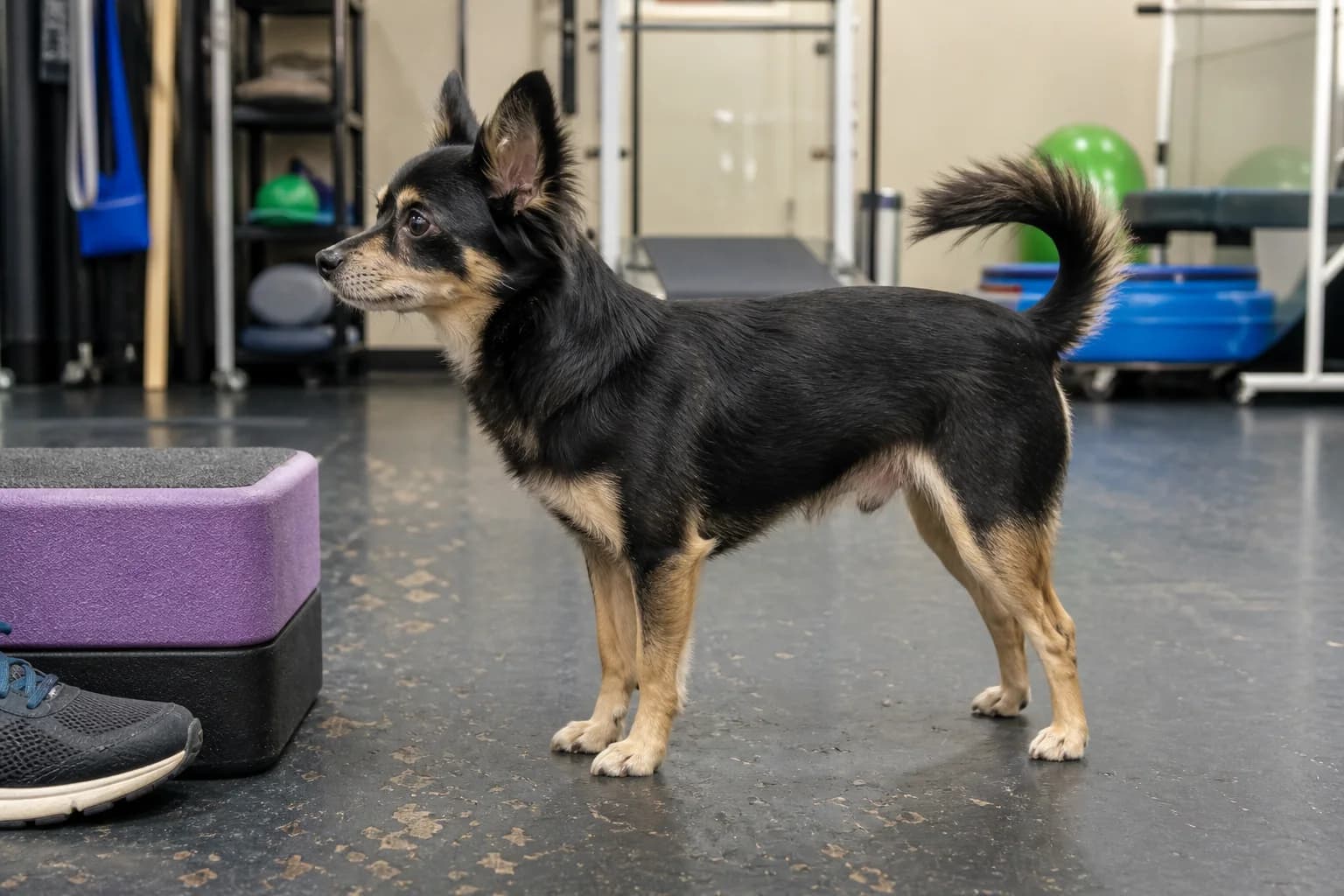
A Pomchi may be very small, alert, quick, and closely attached to familiar people. Protect against falls and rough handling, build dental care, and teach calm visitor and separation routines. Coat may be short, long, sparse, or double. Do not assume a short coat means no shedding or that tiny size removes exercise needs.
Our Pomchi guide explains the cross in more detail, with focused guides to adult size, puppies, grooming, coat colors, and lifespan and health.
Yorkie Pom: Pomeranian and Yorkshire Terrier
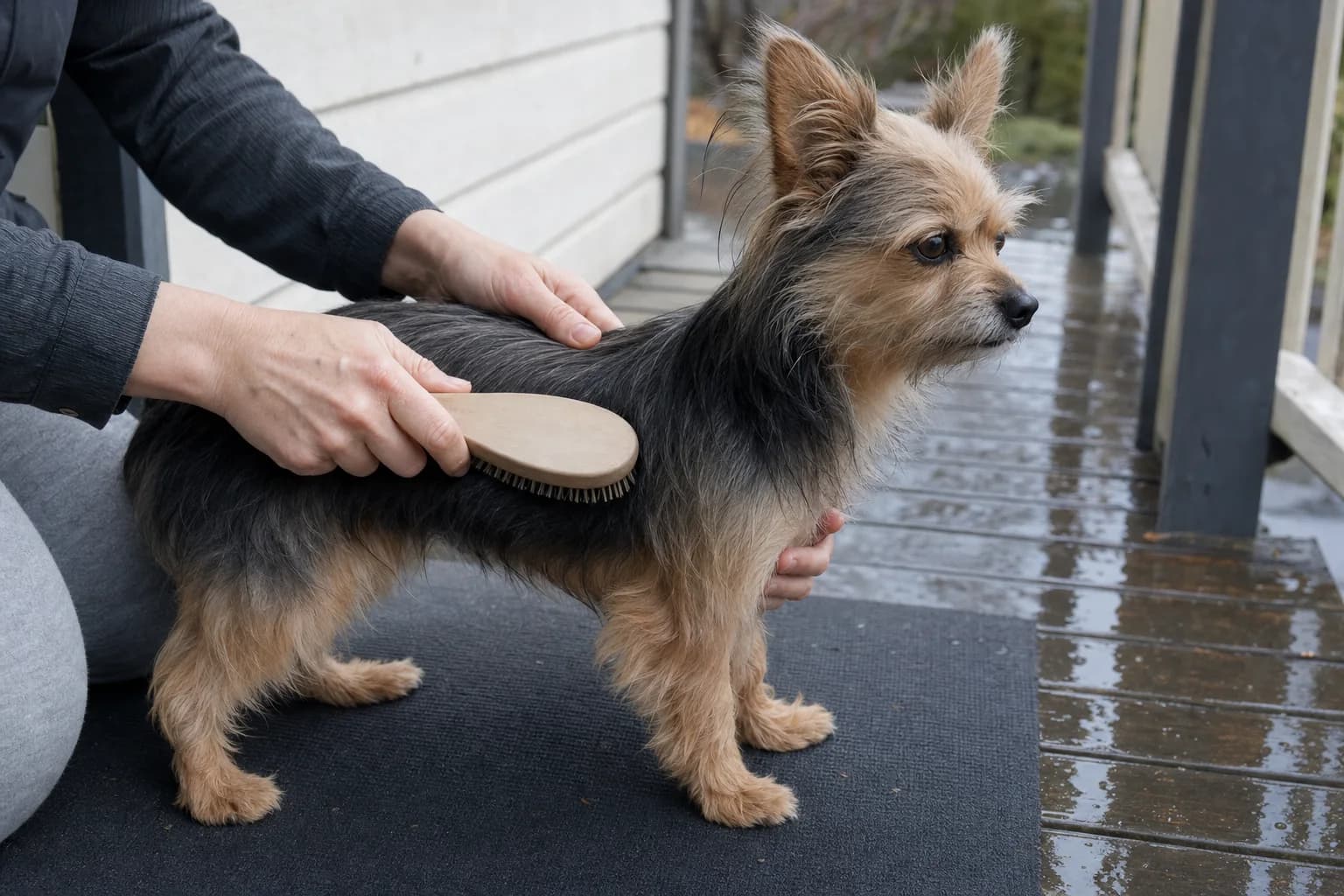
Yorkie Pom coats can combine undercoat, silky hair, furnishings, or a texture that tangles readily. Groom the coat that develops rather than following either parent schedule by default. Alert barking, terrier persistence, dental care, kneecap concerns, and safe toy-breed handling deserve attention. Adult color may change as the coat matures.
Maltipom: Pomeranian and Maltese
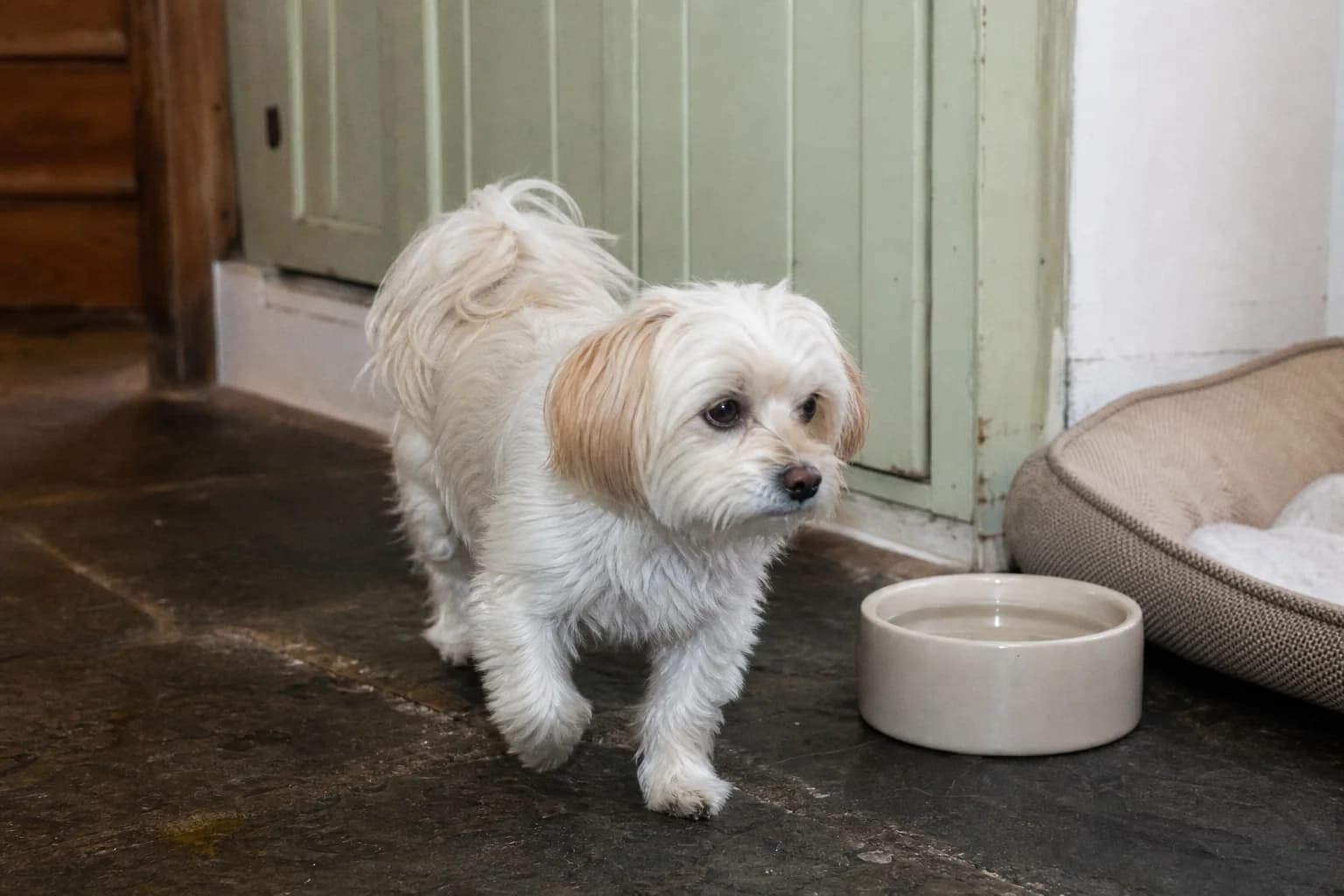
A Maltipom may have a pale, soft coat that mats close to the skin even when little hair appears on furniture. Tear and saliva staining are care observations, not a breed identity test. Build brushing, drying, dental handling, and alone-time skills early. Social affection does not guarantee comfort with every person or a full day alone.
Pomapoo: Pomeranian and Poodle

Pomapoo coats can be curly, wavy, straight, double, mixed-texture, shedding, or low in visible shedding. No puppy coat guarantees an allergy-friendly adult. Plan for regular skin-level combing and professional grooming until maintenance is clear. Enrichment, training, and settling should match the individual rather than an assumption that every Poodle cross is easy to train.
Peek-A-Pom: Pomeranian and Pekingese
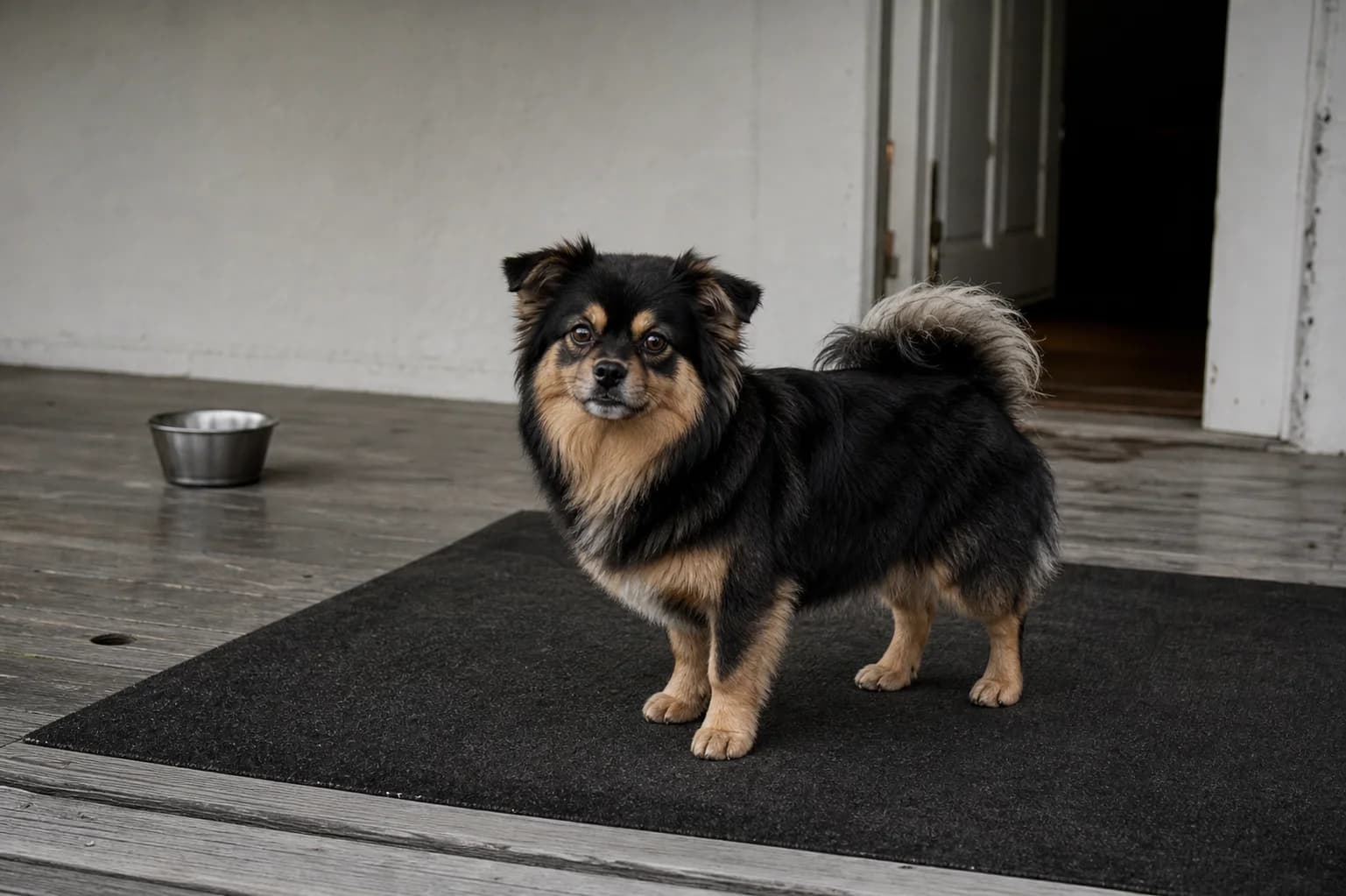
A Peek-A-Pom may have abundant coat, a compact body, prominent eyes, or a shorter muzzle. Heat, breathing noise, eye comfort, skin folds where present, dental care, and jumping safety may need attention. Use a harness without treating it as airway treatment. Seek veterinary advice for noisy or difficult breathing rather than calling it normal for the mix.
Pom-Shi: Pomeranian and Shiba Inu
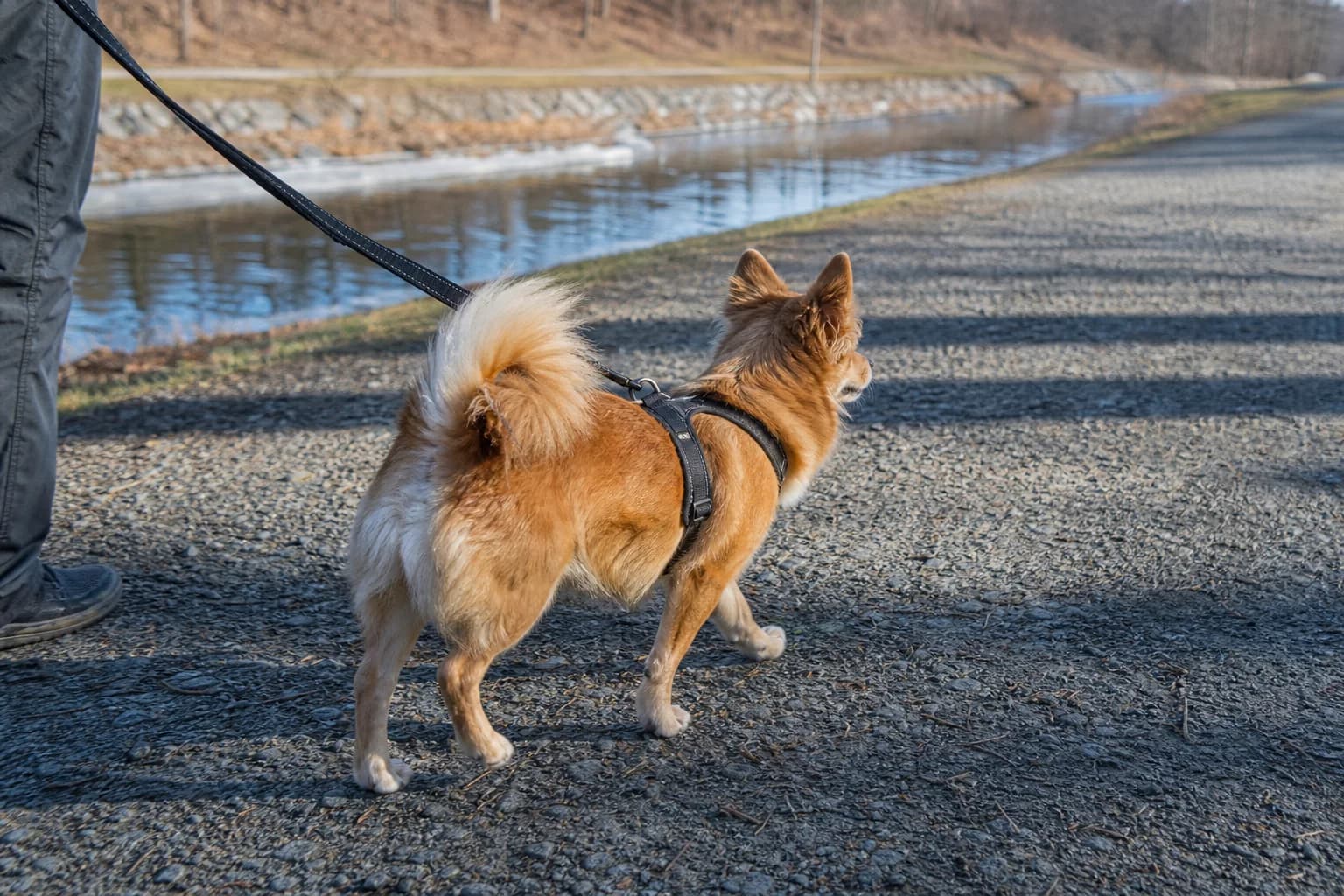
Pom-Shi dogs may combine dense shedding coat, fast movement, alertness, independence, and interest in chasing. Size can exceed a toy-breed plan. Secure doors, fences, and leash equipment, and build recall on a long line without unsafe tests. Training should reward cooperation while preserving choice and calm recovery.
Corgipom: Pomeranian and Pembroke Welsh Corgi
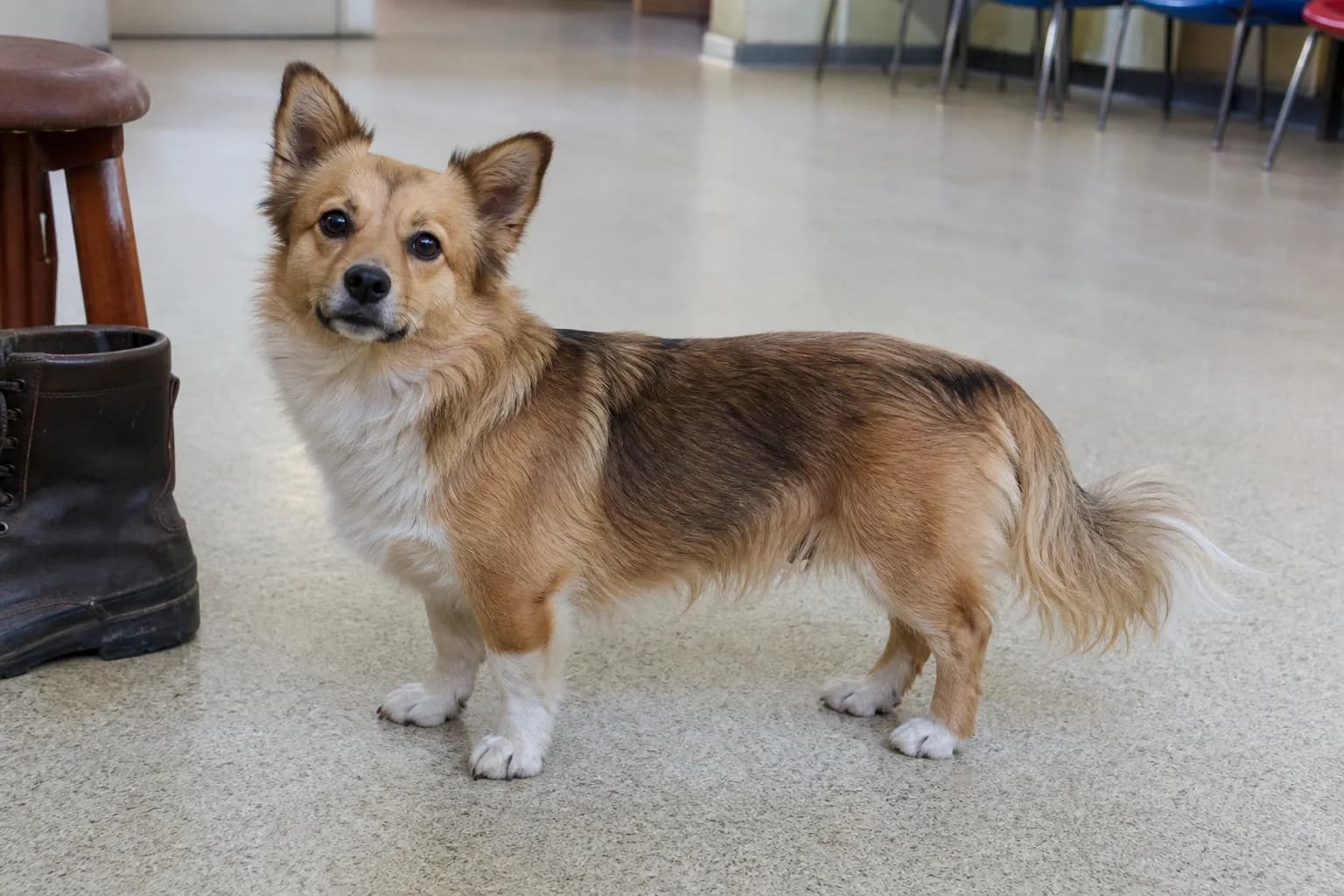
A Corgipom may inherit a longer body, shorter legs, dense coat, herding interest, or a larger adult size. Manage body condition, slippery floors, repeated high jumps, and exercise to the dog's structure. Chasing heels or motion needs redirection and supervision around children, not punishment. Coat release can be substantial from either parent side.
Pomspitz: Pomeranian and Japanese Spitz
Pomspitz dogs may look like a larger pale Pomeranian, but adult size, coat volume, activity, and confidence can vary. White appearance does not prove the cross. Plan for regular undercoat care, alert barking, socialization without forced greetings, and enough mental work to support settling.
Pomimo: Pomeranian and American Eskimo Dog
A Pomimo may be bright, agile, vocal, and heavily coated, with a broader size range than expected. Secure containment and structured training can be important. Dense pale coat needs complete drying and skin checks. Do not assume trainability means the dog will thrive on constant drilling; include sniffing, choice, and rest.
Pomston: Pomeranian and Boston Terrier
A Pomston may have a shorter coat or muzzle, a compact muscular body, or a more abundant Pomeranian-like coat. Watch breathing, heat tolerance, eye comfort, kneecaps, skin, and exercise recovery. A dog who wants to continue playing can still need a pause. Use current structure, not the nickname, to set physical activity.
Pom-A-Pug: Pomeranian and Pug
A Pom-A-Pug may inherit a shorter muzzle, prominent eyes, skin folds, a curled tail, dense coat, or strong food motivation. Keep body condition lean and take breathing or heat difficulty seriously. Clean skin folds only when present and with veterinary guidance. A fluffy outline does not rule out airway concerns.
Dameranian: Pomeranian and Dachshund
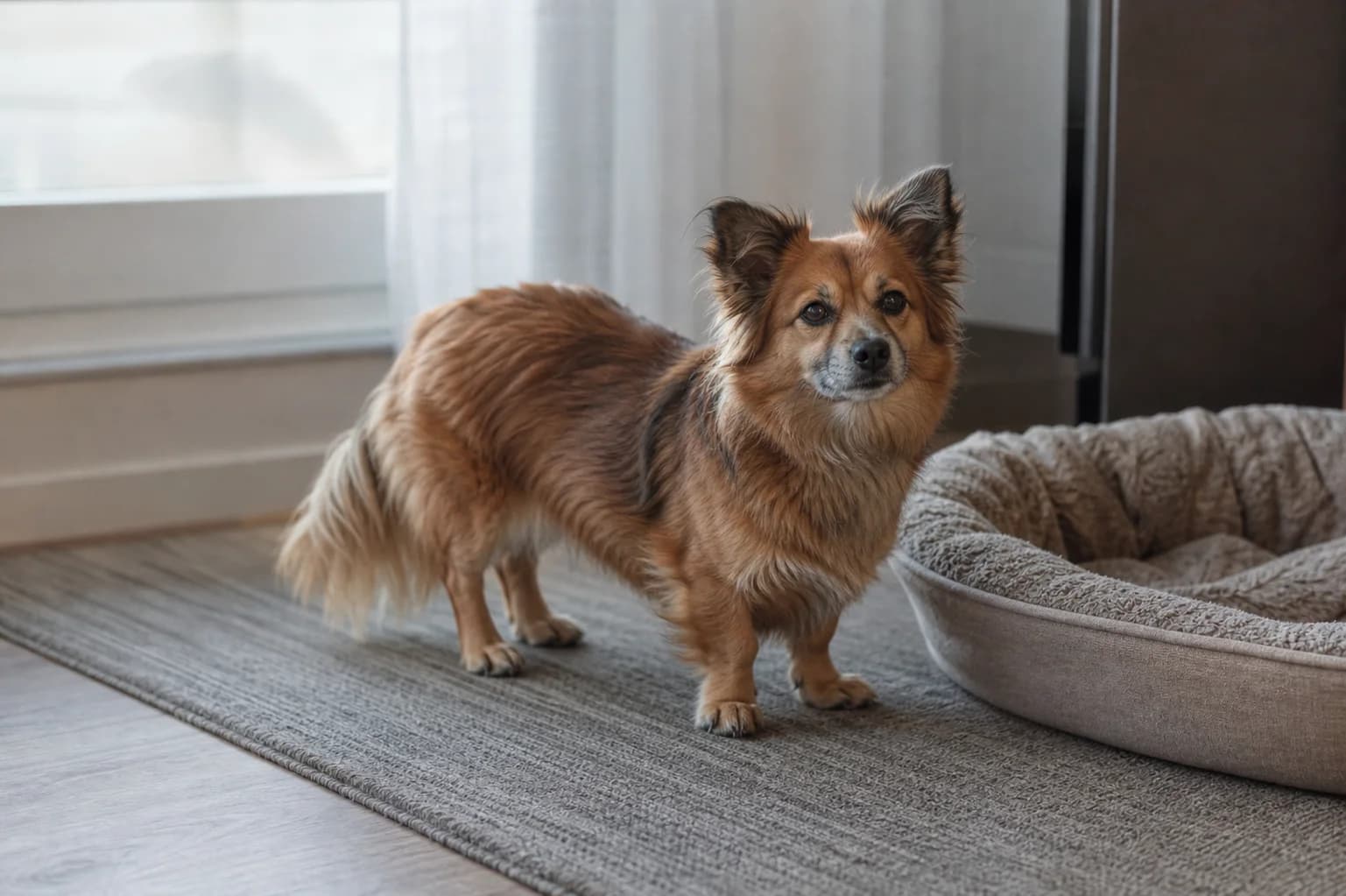
A Dameranian may combine a longer back with small legs, varied coat, alert barking, scent interest, and toy-breed fragility. Prevent repeated furniture jumps, maintain traction and body condition, and ask the veterinarian about structure-specific activity. Do not assume the Pomeranian side cancels spinal risk or the Dachshund side determines every behavior.
Bichon-A-Ranian: Pomeranian and Bichon Frise
A Bichon-A-Ranian may have a soft high-maintenance coat that sheds little visibly but mats quickly. Regular professional grooming can be necessary. Build alone-time, dental, and cooperative-care skills instead of relying on a cheerful companion label. White or cream coat can show staining without explaining the underlying cause.
Pom Terrier mix: Pomeranian and terrier-type dog
“Terrier mix” is too broad to predict a useful range without identifying the terrier. Some are tiny companions; others are stronger, faster, more persistent, and highly interested in prey. Ask which breed is reported, then plan for digging, chasing, arousal, size, coat, and handling from that specific side.
Pom Sheltie mix: Pomeranian and Shetland Sheepdog
A Pom Sheltie mix may be vocal, sensitive to motion or sound, quick to learn, and heavily coated. Herding behavior can appear as circling or chasing. Use controlled outlets and teach settling around household movement. Coat care may require line brushing through a dense undercoat, and adult size may exceed a toy plan.
Pom Cavalier mix: Pomeranian and Cavalier King Charles Spaniel
This cross may be affectionate and socially interested, but individual confidence and separation comfort vary. Coat can feather and mat around ears and friction zones. Ask about heart, eye, kneecap, and other parent-breed health evaluation rather than assuming a companion cross is low risk.
Pom Papillon mix: Pomeranian and Papillon
A Pom Papillon mix may be very small, quick, athletic, and responsive, with fringed ears or a mixed double coat. Protect against falls while still providing normal movement and training. Dental care, kneecaps, handling, barking, and safe play partners may be important. Ear fringe needs gentle tangle checks.
Pom Schnauzer mix: Pomeranian and Miniature Schnauzer
Coat may combine furnishings with undercoat and need clipping, stripping, brushing, or a mixed routine determined by texture. Alert barking and strong food motivation can be useful in training but need boundaries. Ask the veterinarian about risks relevant to both parents and avoid feeding assumptions based on one side alone.
Pom Beagle mix: Pomeranian and Beagle
A Pom Beagle mix may be larger, scent-driven, food-motivated, vocal, and less interested in staying close outdoors than a buyer expects. Use secure fencing and long-line exploration. Maintain body condition and prevent access to unsafe food. Shorter coat can still shed heavily.
Pom Cocker mix: Pomeranian and Cocker Spaniel
This mix may have a longer, softer coat with ear and foot furnishings that mat, plus a wider adult-size range. Ear comfort, skin, eyes, grooming tolerance, and handling need routine attention. Social enthusiasm does not eliminate the need for calm greetings and independent rest.
Pom Frenchie mix: Pomeranian and French Bulldog
A Pom Frenchie mix may combine dense coat with a shorter muzzle, compact body, prominent eyes, or skin folds. Breathing, heat, spine, skin, and movement deserve careful veterinary assessment. Do not select the mix for an imagined fluffy French Bulldog look while treating structural health as secondary.
Pom Shih Tzu mix: Pomeranian and Shih Tzu
Often called a Shiranian, this cross may have a long or dense coat, short muzzle, prominent eyes, and strong companion behavior. Grooming, dental care, heat and airway observations, eye comfort, and gradual time alone may all matter. Appearance cannot establish which traits will dominate.
Pom Golden mix: Pomeranian and Golden Retriever
Reported Pomeranian and Golden Retriever ancestry creates an exceptionally wide size and structure question, and natural mating claims may deserve additional scrutiny. Plan for a much larger adult, substantial shedding coat, exercise, transport, and costs. Verify ancestry and source carefully rather than trusting an extreme composite image.
Related Pomeranian guides
- Pomeranians Breed Profile: Essential Facts
- Pomeranian Puppies Breed Profile: Essential Facts
- Pomeranian Price and Cost: Puppy and Lifetime Expenses
- Do Pomeranians Shed? Coat Care and Grooming Guide
- Pomeranian Colors: Coat Shades, Markings, and Changes
- Pomeranian Lifespan and Health: What Owners Should Know
- Pomeranian Temperament: Personality, Barking, Training, and Family Fit
Frequently asked questions about pomeranian mix
There is no universally best Pomeranian mix. The strongest match is an individual whose adult size, health, coat care, activity, recovery, noise, sociability, handling tolerance, and prey interest fit the household's real routine. Cross labels do not guarantee a midpoint or cancel risks from either lineage. Compare records when available, observe the dog in relevant settings, and choose from demonstrated needs rather than appearance, popularity, or a promise that one cross is automatically healthier.
Pomeranians are usually mixed with breeds such as Chihuahua, Husky, Poodle, Yorkshire Terrier, Maltese, Dachshund, Corgi, or Pug, although frequency varies by location and source. No list proves one dog's ancestry. Parent records or DNA may add context, but visual resemblance is not confirmation. Measure the individual dog and assess coat, structure, health, behavior, and recovery directly because those findings determine care more reliably than the informal mix name.

Coreen Saito is a pet writer and longtime shelter volunteer with more than a decade in animal rescue. She covers cat behavior, breed care, and the small, ordinary science of sharing a life with companion animals, with a particular focus on honest takes about the products and decisions that actually matter. At home in Arizona, she's outranked by Mac (a dog with the loudest opinion in the house), Rebel (a cat who governs by quiet authority), and Meri (an orange tabby who runs the late shift and the laundry basket). She writes about all three, plus the rescues that keep coming through her life, at LifeWithMinty.com.
Sign up for expert-backed reviews and safety alerts all in one place.