Pomeranian Temperament: Personality, Barking, Training, and Family Fit
Pomeranian Temperament: Personality, Barking, Training, and Family Fit with evidence-based guidance on daily fit, care, costs, training, grooming, health, and the individual decisions that matter most.
Petful is reader supported. As an affiliate of platforms like Amazon and Chewy, we may earn a commission when you buy through links on this page. There is no extra cost to you.
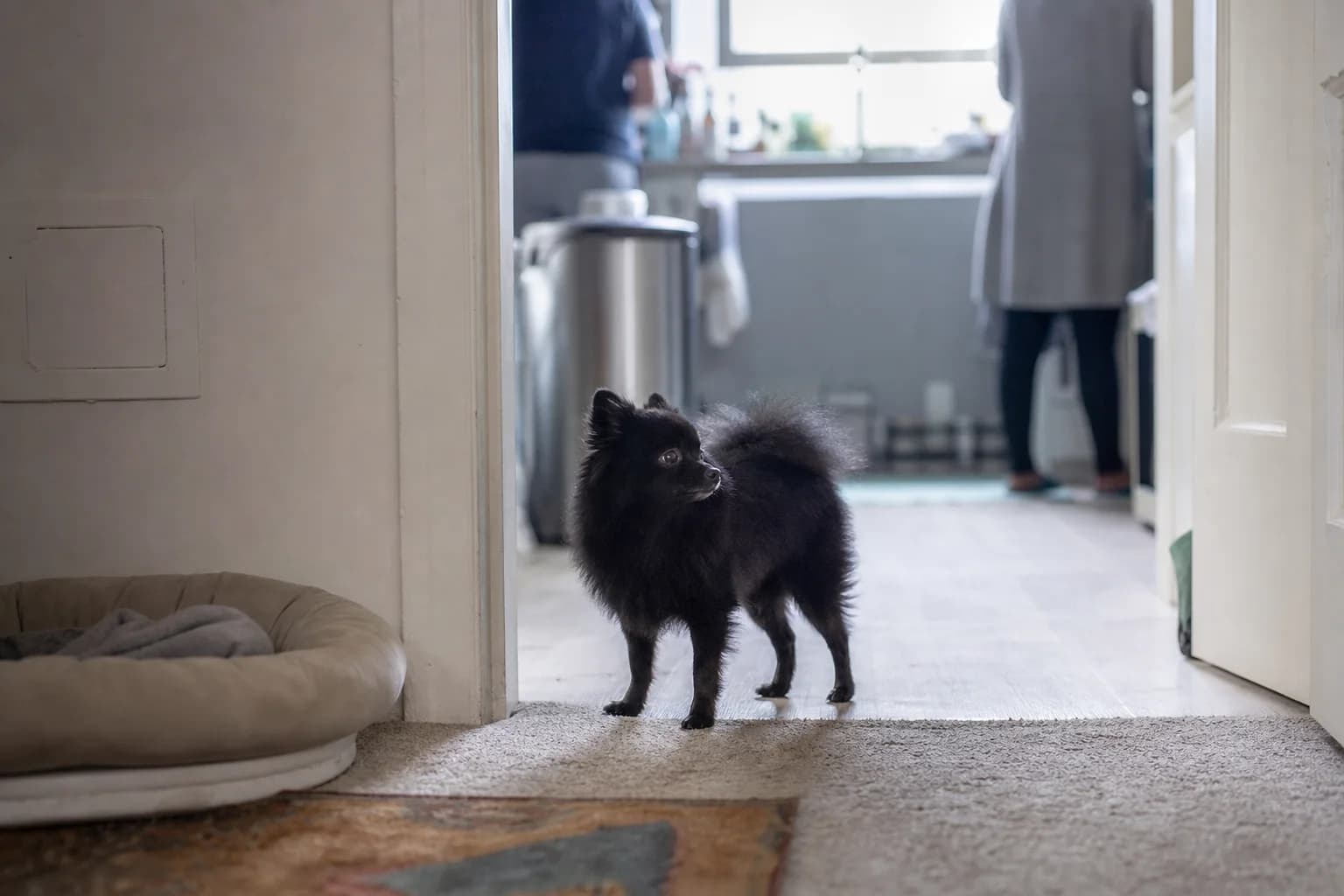
Pomeranian temperament is often described with a string of big words for a tiny dog: lively, intelligent, confident, affectionate, curious, and bold. Those tendencies can make a Pom entertaining and deeply connected to the household. They can also appear as persistent barking, frustration, clinginess, guarding, or an urge to confront something much larger when the dog lacks safe outlets and clear guidance.
This guide looks beyond personality labels. It shows how to assess affection, confidence, activity, trainability, barking, prey drive, handling, and family compatibility in the individual dog. The central question is not whether every Pomeranian behaves the same way. It is whether this dog's observable behavior and your household's management capacity fit each other.

Sign up for expert-backed reviews and safety alerts all in one place.
Pomeranian temperament: the short answer
- 1Separate arousal from confidence.
- 2Watch recovery after surprise.
- 3Ask about behavior at home and outside.
- 4Pomeranian liveliness and attachment can coexist with settling skills, while barking, handling, fragile-body safety, and comfort when briefly alone need deliberate practice.
The short answer is that many Pomeranians are alert, sociable, animated companion dogs who notice everything and learn quickly. The official AKC breed standard describes the breed as extroverted, intelligent, and vivacious. A standard describes an ideal for the breed, not a guarantee about one puppy, rescue dog, or adult.
Common strengths include close engagement with people, enthusiasm for short training sessions, adaptability to a smaller home, and a playful attitude that can last well into adulthood. Common challenges include alert barking, difficulty settling, sensitivity to rough handling, overdependence on one person, and conflict created when a tiny dog is allowed to rehearse behavior that would be addressed promptly in a larger breed.
Pomeranian pros and cons in daily life
| Likely strength | What makes it work | Possible downside when unsupported |
|---|---|---|
| Alert and observant | Teach a notice-and-return routine | Repeated barking at every sound or movement |
| Affectionate and involved | Protect rest and practice brief independence | Shadowing, distress, or demanding contact |
| Bright and responsive | Use short, rewarding sessions | Inventing unwanted ways to get a response |
| Compact | Manage doors, falls, furniture, and larger animals | Injury when small size is mistaken for toughness |
| Lively | Balance movement, sniffing, learning, and sleep | Chronic overarousal or inability to settle |
| Confident presentation | Reinforce calm choices and safe distance | Rushing toward dogs, guests, or hazards |
What behavior issues occur in Pomeranians?
The issues owners most often need to manage are not mysterious breed flaws. They are observable patterns with triggers and consequences:
- Barking at hallway sounds, visitors, animals, or window activity
- Door dashing or chasing because access has been repeatedly available
- Growling, snapping, or avoiding when picked up, groomed, restrained, or awakened
- Guarding food, resting places, toys, or a favorite person
- Difficulty being alone after constant access to one caregiver
- Frustration when a desired activity, object, or social interaction is delayed
- House-training setbacks caused by long intervals, weather, health changes, or inconsistent surfaces
None of these behaviors is inevitable, and none should be dismissed because the dog is small. Early management prevents practice. Reward-based training builds a safer alternative. Veterinary assessment matters when behavior changes suddenly, appears with touch sensitivity, or is severe enough to suggest pain, illness, sensory loss, or panic.
Are Pomeranians aggressive?
Pomeranians are not automatically aggressive. Any dog can growl, lunge, snap, or bite when frightened, in pain, guarding something, trapped, highly aroused, or pushed beyond coping. Breed and size do not remove that possibility. The useful response is to describe what happened and reduce risk, not to debate a permanent label.
Petful may earn a commission when you click through to Chewy, at no extra cost to you.
Record the trigger, distance, body language, intensity, duration, and recovery. Note whether the dog could eat, turn away, respond to a familiar cue, or resume normal behavior. A single bark with quick recovery is different from a dog who remains rigid and unreachable after the trigger is gone. Repeated or escalating aggression calls for a veterinary exam and help from a qualified behavior professional who uses humane methods.
What an "angry Pomeranian" may actually be communicating
People often search for an angry Pomeranian after seeing teeth, hearing a growl, or watching a small dog rush forward. Anger is a human interpretation. The behavior may reflect fear, pain, frustration, guarding, surprise, lack of escape, or a learned pattern that has successfully created distance before.
Start with what can be observed. A dog who turns away, stiffens, and growls when a hand reaches over the head is giving a different sequence from a dog who barks and spins when play stops. A dog who suddenly snaps during lifting needs a medical and handling assessment. A dog who guards a lap needs managed access and a plan for moving people and dog without confrontation.
Do not punish a growl. Removing the warning can leave the underlying discomfort intact while making the next escalation harder to predict. Instead, stop the immediate pressure, create safe distance, and prevent the situation from repeating while veterinary or behavior help is arranged. Children should be taught to get an adult, never to correct the dog themselves.
For a useful incident record
- The exact event before the response
- Who or what was approaching, moving, touching, or leaving
- The dog's posture, movement, face, and sounds
- Whether escape or retreat was available
- What ended the episode
- How long recovery took
- Whether pain, illness, fatigue, hunger, or a recent change may have affected coping
This record does not diagnose motivation, but it replaces a dramatic label with details a qualified professional can use.
Do Pomeranians like to cuddle?
Many do, but affection has several forms. One Pomeranian may curl into a lap. Another may follow a person between rooms, bring toys, lean briefly against a leg, or sleep nearby without wanting prolonged restraint. Watch what the individual dog chooses when leaving is easy.
Cuddling should remain voluntary. Invite the dog to approach, pause after a few seconds of touch, and continue only if the dog re-engages. Turning the head away, lip licking, freezing, lowering the body, or trying to leave are reasons to stop. A dog can love a person and still dislike being hugged or picked up.
Measure recovery, not just reaction
Temperament becomes clearer when you watch the entire sequence:
- What happened immediately before the behavior?
- What did the dog's face, body, tail, and movement look like?
- How intense was the response, and did it increase or decrease with distance?
- How long did it take the dog to resume sniffing, eating, resting, or responding normally?
- Did the same pattern occur in another setting or on another day?
Recovery is one of the most useful details. A dog who startles and quickly returns to normal needs a different plan from one who remains vigilant for an hour. Track patterns, and update your conclusion when age, health, household, or environment changes.
Independence, confidence, and affection
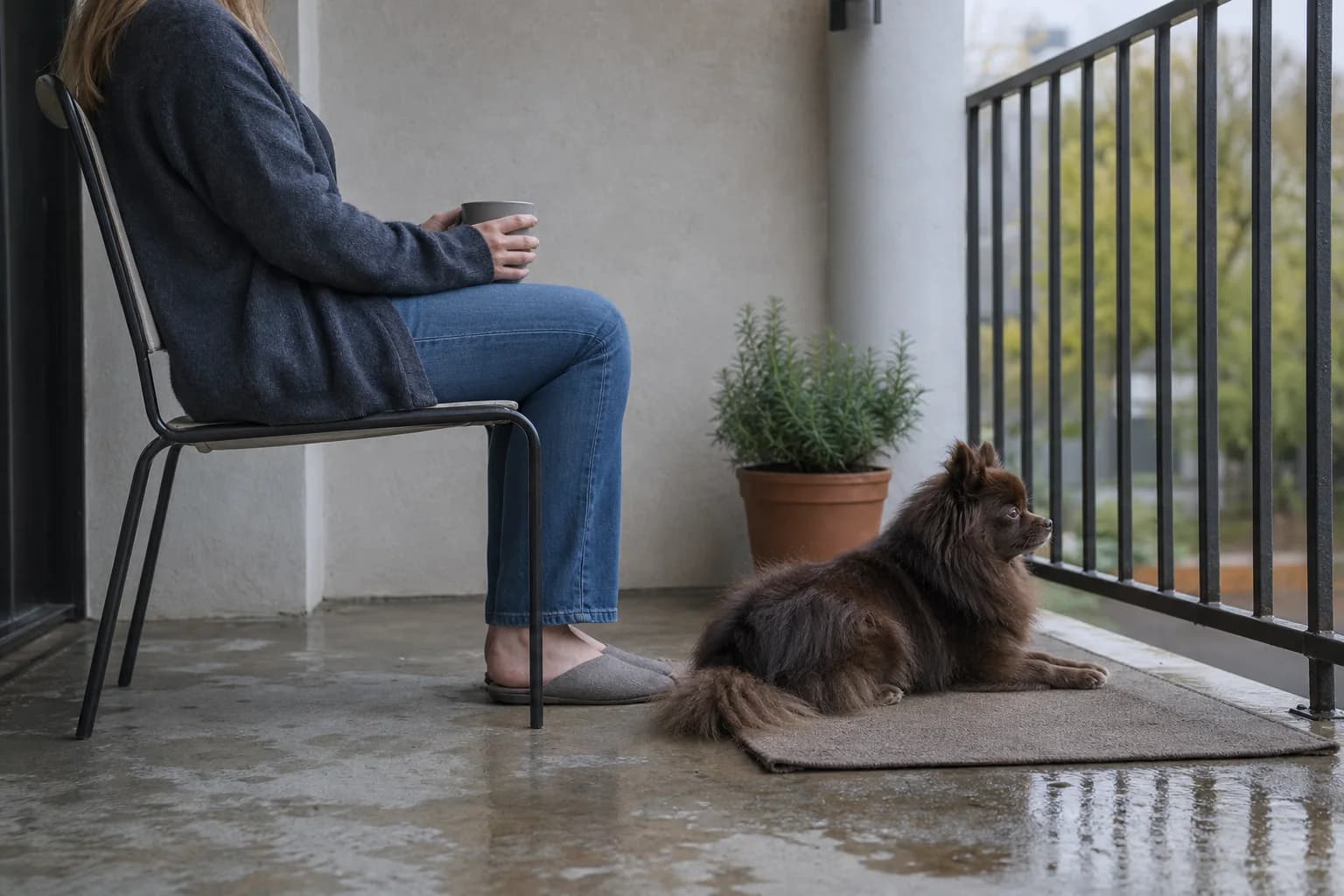
Pomeranians are companion dogs, and many are happiest when included in daily life. Inclusion is healthy. Requiring physical contact or following one person every waking minute is less healthy, especially if the dog becomes distressed whenever access ends. The goal is connection plus the ability to rest, explore, and cope independently for realistic periods.
Confidence is also easy to misread. Moving toward a trigger, barking loudly, or refusing to retreat may look bold, but highly aroused behavior can be driven by uncertainty or frustration. A confident dog generally retains options. The dog can gather information, disengage, take food, and recover without needing to control the entire scene.
Build secure independence
Start while a caregiver is still nearby. Give the dog a comfortable bed or mat and reward brief periods of settling there. Move around the room, then step out of sight for one or two seconds and return before worry begins. Increase only one part of the challenge at a time, such as duration, distance, closed doors, or departure cues.
A camera can show behavior that stops before a person enters the home. Watch for pacing, panting unrelated to temperature, repeated vocalization, scratching exits, refusing food, drooling, destructive escape attempts, or elimination associated with distress. These signs need a slower plan and may require professional guidance. Leaving a dog to panic does not teach independence.
Practice separation below the distress threshold
Begin with departures so short that the dog remains comfortable. A first repetition may be closing a gate for one second while the dog eats, or stepping behind an interior door and returning immediately. Repeat at an easy level until the cue predicts calm rather than concern. Then add a few seconds, not a leap from seconds to an hour.
Separate the variables that make departures hard. Picking up keys, putting on shoes, opening an exterior door, hearing a lock, and losing sight of a caregiver can each become a cue. Practice some of those actions without leaving. When you do leave, use a camera and return before mild concern develops into sustained distress.
Food is useful only when the dog can eat. A Pomeranian who ignores a normally valued activity, freezes at the exit, or starts pacing may already be over threshold. Shorten the exercise and seek help rather than withholding food or waiting for the dog to give up.
When separation practice needs professional support
Professional support is especially important when the dog injures the mouth or paws trying to escape, vocalizes continuously, cannot tolerate even very brief absence, or becomes more distressed with each attempt. A veterinarian can assess medical contributors and discuss whether a coordinated behavior plan is needed. The training goal is calm safety, not silent suffering.
Useful independence habits include:
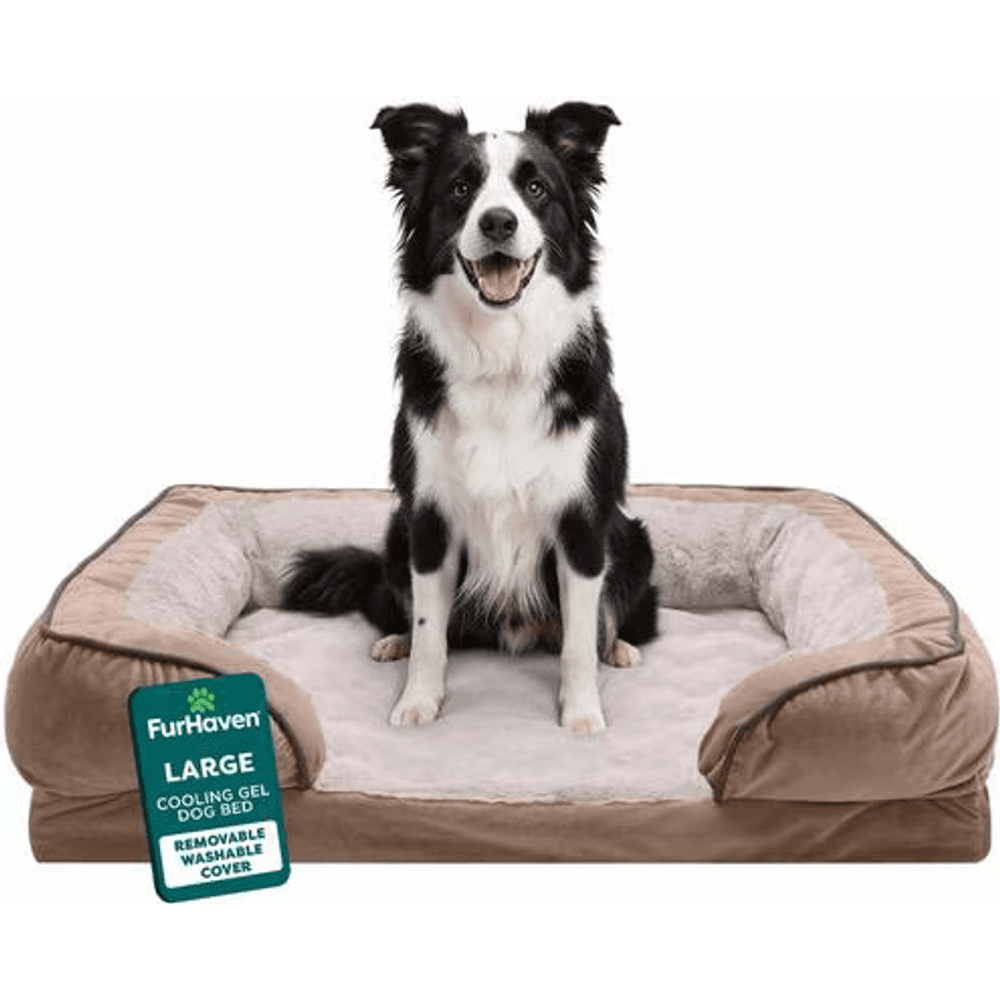
An orthopedic sofa bed with three bolstered sides for dogs who like to rest their head and joints against a cushion. The supportive foam base cradles hips and elbows, a comforting spot for an older or shaky dog to settle.
Petful may earn a commission when you click through to Chewy, at no extra cost to you.
- Resting in more than one safe location
- Receiving care and rewards from more than one trusted person
- Working on a safe food activity without constant social input
- Remaining behind a gate briefly while ordinary home life continues
- Taking predictable naps after walks or training
- Experiencing departure cues that do not always lead to a long absence
Handle a tiny dog with consent and support
Being small does not mean a Pomeranian wants to be carried. When lifting is necessary, use a cue, support the chest and hindquarters, keep the dog close to the body, and place the dog down on secure footing before struggling begins. Do not lift by the front legs, harness, scruff, or loose skin.
Cooperative care makes required handling more predictable. Teach a chin rest for brushing, a paw presentation for nail care, and a station behavior for harnessing. Work for seconds, not until the dog is exhausted. If touch suddenly becomes unwelcome, consider pain or illness before assuming stubbornness.
For walks, the Frisco Padded No Pull Dog Harness is one option to compare by exact measurements, shoulder clearance, security, and coat friction. For calm food enrichment, the Outward Hound Lickin Layers Puzzle and Slow Feeder should be introduced at an easy setting and supervised until you know how the individual dog uses it.
Activity and enrichment needs
| Evidence for this toy-spitz behavior guide | What to record for temperament | What changes the temperament plan |
|---|---|---|
| Current Pomeranian observation | Date, setting, and exact behavior or measurement | A repeatable trend rather than one event |
| Professional temperament evidence | Named test, examination, record, or qualification | A revised risk assessment |
| Household capacity | Time, cost, supervision, and skill | A plan that works on ordinary weekdays |
Pomeranians often bring more activity to the home than people expect from a toy breed. Activity does not have to mean punishing mileage. A balanced day includes comfortable movement, sniffing, problem-solving, social contact, skill practice, and protected sleep. Several short periods usually fit a small dog better than one overwhelming outing.
A practical daily rhythm
A healthy adult's routine might include a sniff-focused morning walk, breakfast delivered partly through a search game, a brief handling or door-safety session, quiet rest, another bathroom and exploration break, and a short evening play or training period. The exact amount should follow the dog's age, health, body condition, weather tolerance, and recovery.
Puppies need frequent breaks and much more sleep than their enthusiasm suggests. Older dogs may prefer shorter routes with more time to investigate. Any dog who becomes stiff, lame, weak, unusually reluctant, or slow to recover needs a revised plan and possibly a veterinary check.
Choose enrichment by purpose
- For sniffing: Scatter part of a meal in a safe area or hide a few pieces in easy locations.
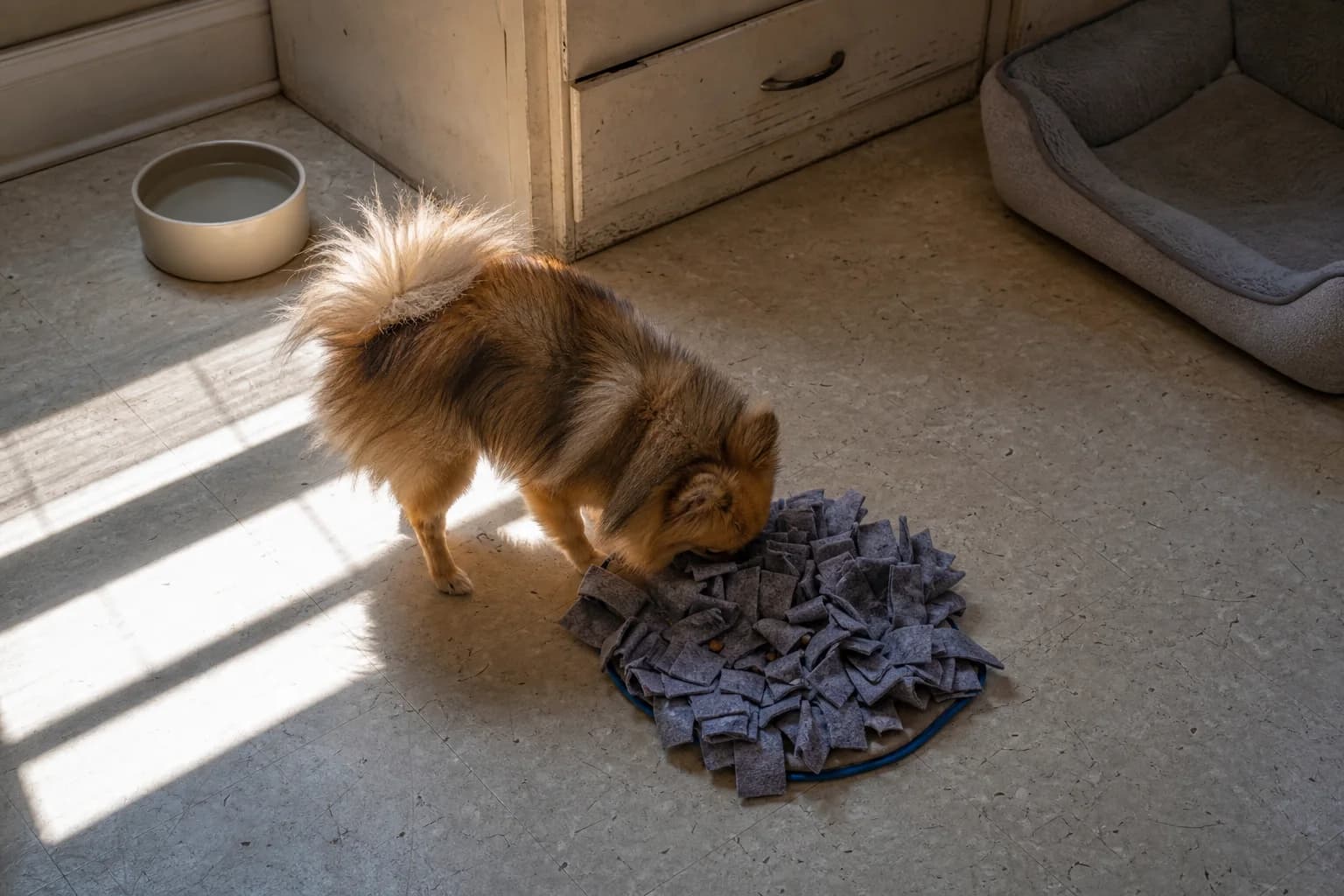
- For problem-solving: Use a puzzle simple enough that the dog can stay thoughtful rather than frantic. For dogs that choose object play, a properly sized KONG Classic Dog Toy is one toy to compare under supervision and retire if damaged.
- For calm: Offer licking, chewing, or a familiar mat routine when supervision and the item make that safe.
- For movement: Use low-impact play on secure footing and stop before the dog becomes wild or careless.
- For confidence: Let the dog investigate a stable new surface or object with choice and distance.
- For connection: Practice a small skill together, then release the dog to rest.
Enrichment should not create constant demand. If every moment is filled with entertainment, the dog never learns that ordinary quiet is safe. Alternate activity with deliberate recovery. Close curtains, use a sound buffer, limit window patrol, and provide an undisturbed resting place when the environment keeps the dog on alert.
Watch arousal rise and fall
High arousal can look like speed, barking, grabbing, jumping, frantic sniffing, or an inability to take a familiar treat gently. Do not wait for a full outburst before ending a game. Pause while the dog can still respond, scatter a few pieces of food if safe, guide the dog to a lower-stimulation area, and allow genuine rest.
Keep a simple log for one week:
| Activity | Behavior during it | Recovery afterward | Next-day effect |
|---|---|---|---|
| Walk or sniff outing | Loose, focused, frantic, worried, pulling | Minutes until resting normally | Comfortable, stiff, overexcited, unchanged |
| Training | Engaged, distracted, avoiding, grabbing | Could disengage and settle | Skill improved, no change, frustration increased |
| Social event | Approached, watched, avoided, barked | Returned to normal or stayed vigilant | More comfortable or more sensitive next time |
| Food enrichment | Thoughtful, guarded, destructive, gave up | Calm, demanding, restless | Safe to repeat, simplify, or replace |
The log prevents a common mistake: adding more activity to a dog whose real need is lower stimulation, better sleep, pain assessment, or clearer training.
Training and motivation
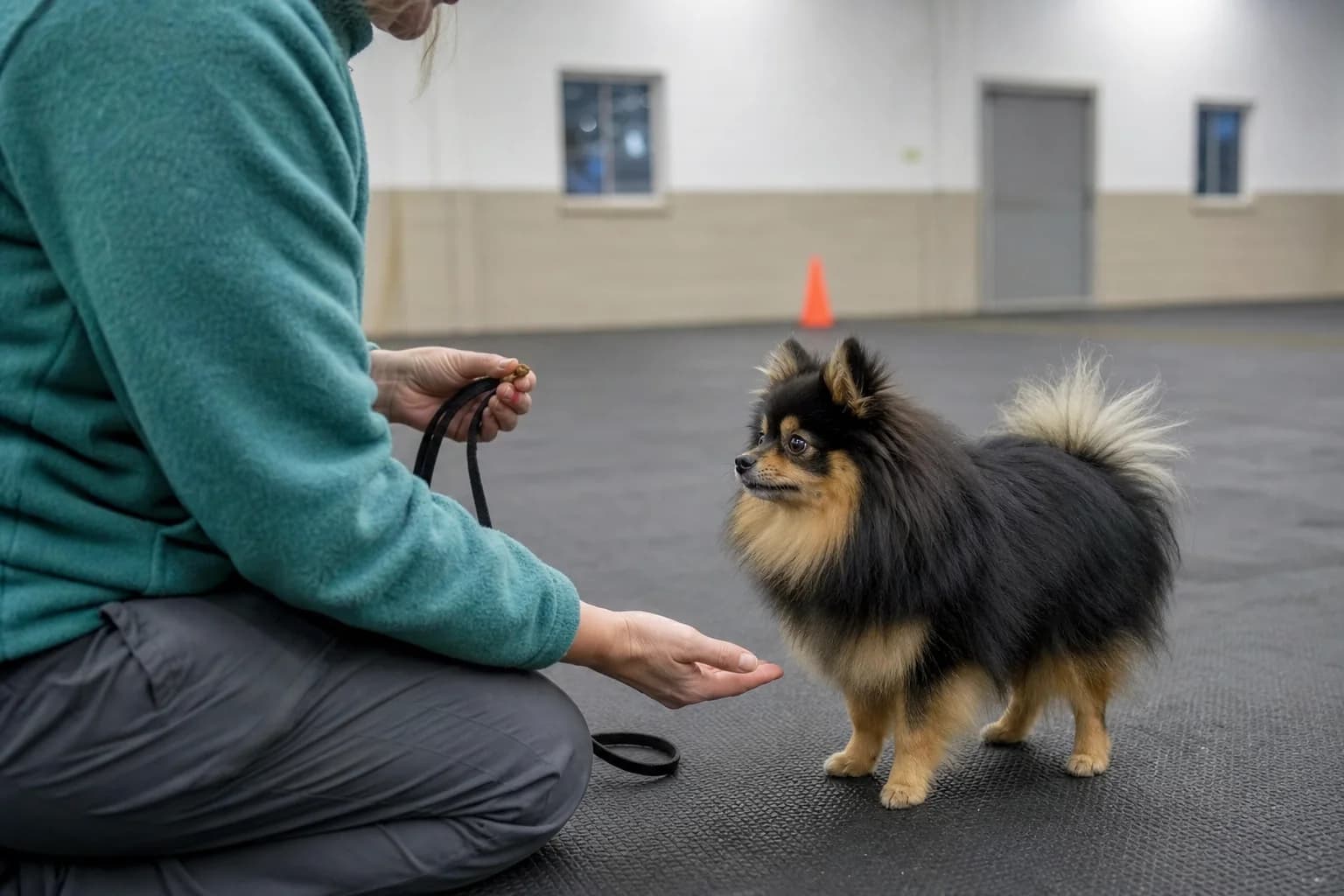
Pomeranians can be quick learners because they notice patterns and often enjoy interaction. That same pattern sensitivity teaches unwanted behavior efficiently. If barking opens the door, pawing produces food, or running away starts a chase game, the dog is learning even when nobody planned a lesson.
Good training identifies what the dog values and uses it to reinforce a clear action. Food is convenient, but rewards can also include sniffing, access to a person, movement, play, distance from something uncomfortable, or permission to go through a door. Motivation is individual and can change with setting and arousal.
Start with household safety skills
- Turn toward the handler when the name is said once
- Wait away from an opening door
- Come when called in progressively more distracting enclosed spaces
- Move to a mat when visitors arrive or food is prepared
- Trade an object without conflict
- Step into a harness or carrier voluntarily
- Accept brief mouth, paw, ear, and coat care Once brief mouth touch is comfortable, the Jasper 360 Dog Finger Toothbrush is one finger-brush format to compare without turning the session into restraint.
- Settle while a caregiver works, cooks, or talks with a guest
- Remain comfortable behind a barrier for gradually increasing periods
Management belongs beside training. Use gates while teaching door behavior, window film while working on visual barking, separate feeding while building safe routines, and a leash or long line in appropriate secure settings while recall develops. Preventing rehearsal is not giving up. It preserves safety and makes the correct behavior easier to reinforce.
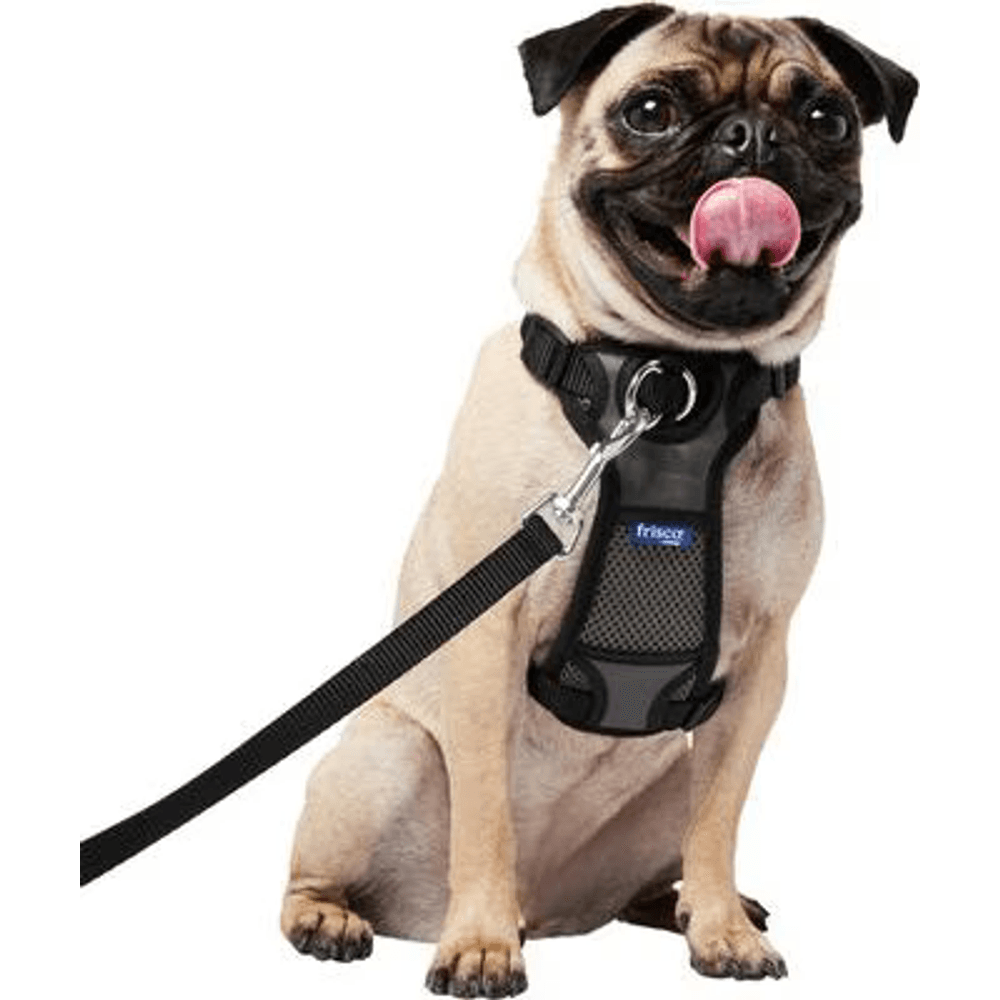
A budget-friendly padded no-pull harness that keeps leash pressure off a coughing dog's neck and windpipe by distributing it across the chest. A simple, affordable way to protect an irritated airway or a collapsing trachea on every walk.
Petful may earn a commission when you click through to Chewy, at no extra cost to you.
Keep sessions small and specific
One to three minutes can be enough for a focused session. Choose one criterion, such as remaining on a mat while a person takes one step toward the door. When that is easy, change only one variable. Increasing duration, distance, distraction, and handler movement at the same time creates failure that looks like stubbornness.
Use tiny rewards and account for them in the daily food total. Deliver rewards where you want the dog to be. Food placed on the mat reinforces staying low and settled more clearly than food held above the head. After several repetitions, release the dog so the end of training is also predictable. When food rewards fit the diet, the Blue Buffalo Nudges Grillers Steak Dog Treats are one option to compare by ingredients, piece size, and calories before using tiny training portions.
Socialization without forced greetings
Socialization is not a quota of people and dogs to touch. It is a process of learning that sights, sounds, surfaces, handling, travel, and social situations are safe and manageable. A Pomeranian can benefit from watching a calm dog at a distance without greeting, hearing a vacuum briefly from another room, walking on a stable new surface, or receiving one gentle touch followed by a treat.
Protect choice and recovery. Do not pass a puppy through a crowd, hold a worried dog in place, or let unfamiliar dogs rush into the Pomeranian's space. If the dog cannot eat, look away, or return to normal behavior, add distance or end the exposure.
When behavior is not a do-it-yourself project
Seek qualified help for a bite, escalating aggression, severe resource guarding, panic during separation, sustained fear, repeated fights, or behavior that makes grooming and veterinary care unsafe. A veterinarian should assess new irritability, sensitivity to touch, house-training change, sleep disruption, or a sudden drop in tolerance. Pain and illness can reduce coping capacity.
Choose professionals who explain their methods, protect welfare, and avoid pain, fear, intimidation, or dominance-based confrontation. The goal is not to suppress warning signals. It is to change the conditions and emotional response that make those signals necessary.
Barking, prey drive, and impulse control
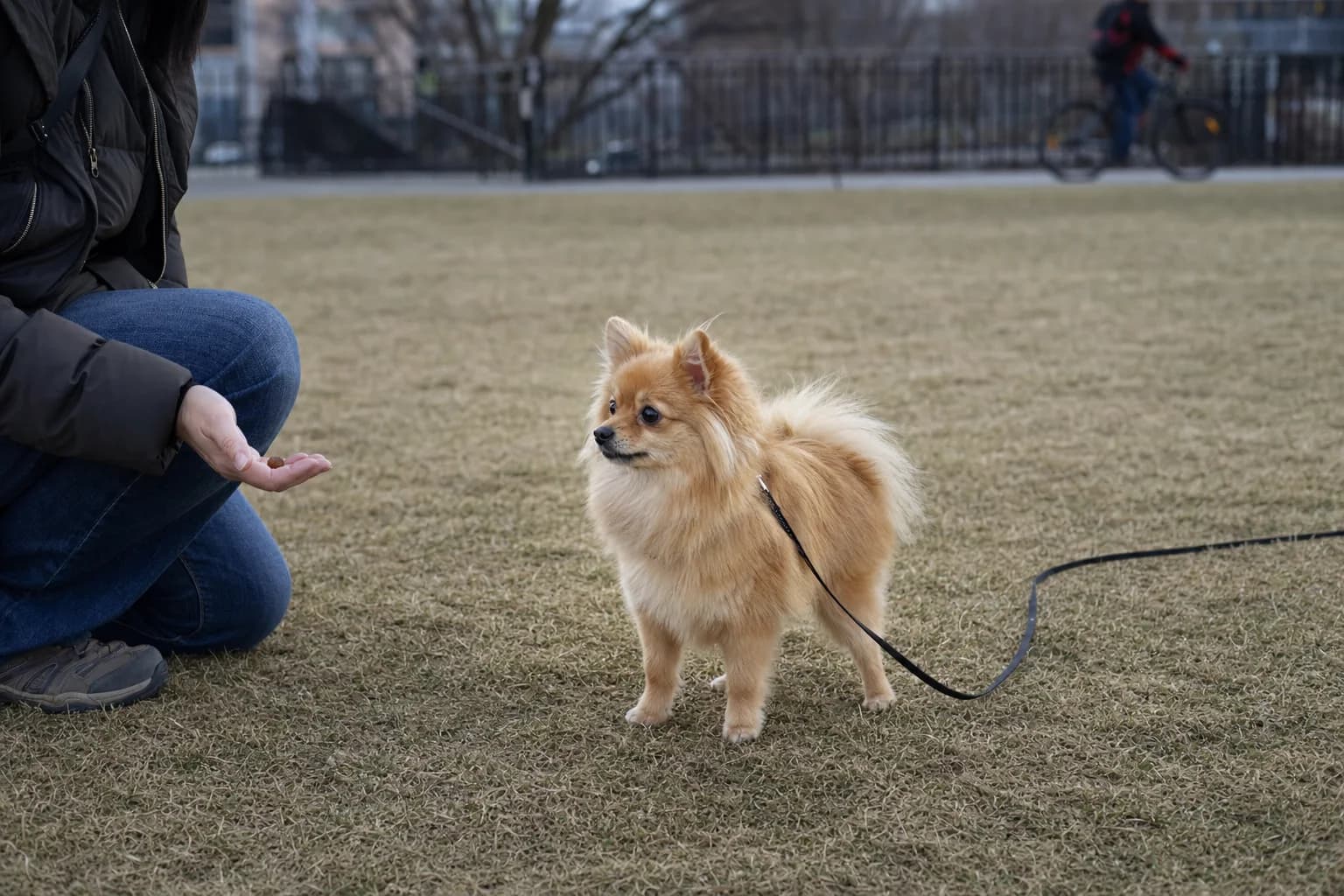
Pomeranian barking is often alert-driven, but one word does not describe every episode. A Pom may bark because someone entered the hallway, because another dog appeared, because access is blocked, because play is exciting, or because being alone feels unsafe. The plan changes with the function.
Prey drive and impulse control also deserve separate observation. A dog may chase a squirrel yet remain quiet at the window. Another may bark at birds without pursuing them outside. Impulse control is not a fixed amount stored inside the dog. It improves when the environment prevents overwhelming rehearsal and training gives the dog an easier action to perform.
Trigger-and-management matrix
| Observable trigger | What to record | Immediate management | Skill to teach |
|---|---|---|---|
| Hallway or door sound | Time, duration, distance from door, recovery | Sound buffer, gate, greater distance | Orient to handler, then settle on a mat |
| Window activity | Person, dog, vehicle, wildlife, intensity | Block the lower view, move resting place | Notice quietly, then find food away from window |
| Visitor entry | Body posture, approach or retreat, ability to eat | Leash or barrier, no forced greeting | Station behind a gate, gradual optional approach |
| Dog on a walk | Starting distance, leash tension, recovery | Create distance, avoid head-on approach | Check in, turn away, move past at a safe distance |
| Wildlife chase | Species, location, ability to disengage | Secure leash, inspect yard, block escape routes | Recall and orientation in easier enclosed setups |
| Caregiver departure | Vocalization, pacing, food response, duration | Shorten absence, camera, professional help if panic | Gradual calm separation below distress threshold |
This framework replaces labels such as yappy, angry, or dominant with decisions. It also makes progress measurable. The first improvement may be fewer repetitions, a shorter episode, greater starting distance, or faster recovery, not immediate silence.
A humane barking plan
- Identify the most common trigger and reduce access where practical.
- Prepare high-value rewards before the trigger is likely.
- At a safe intensity, mark the dog's quiet notice and reward away from the trigger.
- Practice an alternative such as returning to a mat or following a turn-away cue.
- End before the dog becomes unable to eat or respond.
- Compare frequency, duration, and recovery over several days.
Do not rely on yelling, startling, or pain. Those methods may interrupt sound without changing fear, frustration, or vigilance. They can also make a dog associate visitors, children, or other dogs with discomfort. If barking is associated with panic when alone, ordinary alert-barking exercises are not enough.
Reinforce quiet moments that already occur
Owners often respond only after barking begins, which means quiet behavior receives little feedback. Notice the Pomeranian watching a hallway sound without vocalizing, choosing to leave the window, or resting while a neighbor passes. Calmly deliver a reward where you want the dog to remain. These ordinary repetitions build a history before the most difficult trigger appears.
Keep the setup realistic. A dog cannot practice calm window behavior while left on unrestricted patrol for eight hours. Close the view during work calls, move furniture away from the glass, and schedule short controlled sessions. Management reduces the total number of rehearsals, while training improves the dog's response during the rehearsals you choose.
Progress may be uneven. Track the weekly pattern rather than expecting every event to improve in a straight line. A louder day can follow poor sleep, construction noise, pain, a visitor, or several triggers stacked close together. If the baseline keeps worsening, pause the plan and reassess health and environment.
Prey drive and small-dog safety
Pomeranians are small enough to be prey for some wildlife and fast enough to pursue through a gap. Supervise outdoor time, inspect fencing at ground level, and use a secure leash where escape is possible. Recall should be practiced as a rewarding habit, but no recall is a guarantee around traffic or a highly arousing chase. For ordinary close-control walks, compare the Frisco Traffic Leash with Dual Padded Handles by hardware and handle comfort; it does not replace a secure long line or fenced setup.

Petful may earn a commission when you click through to Chewy, at no extra cost to you.
Indoors, manage access to pet birds, rodents, and other small animals. A history of calm behavior through a cage does not prove safety during direct contact. Use secure housing, closed doors, and adult responsibility rather than asking animals to negotiate risk themselves.
When barking signals something else
Contact a veterinarian when vocal behavior begins suddenly, intensifies without an obvious environmental change, occurs with coughing or breathing difficulty, appears during touch or movement, or accompanies disorientation and altered sleep. Medical treatment and environmental support may be necessary before training can succeed.
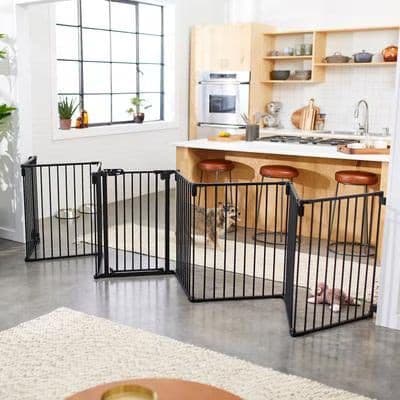
For controlling access during introductions or busy door routines, compare the available dimensions and spacing of the Frisco Steel Configurable Dog Gate and Playpen with the actual room and the dog's ability to climb or squeeze through. A defined resting area can include the FurHaven Velvet Waves Orthopedic Sofa Cat and Dog Bed when its usable sleep surface, edge height, stability, and cleaning needs fit the individual dog.
Children, visitors, and other pets
- Keep the decision evidence-based | this toy-spitz behavior guide becomes useful when a household converts temperament information into a specific Pomeranian observation, measurement, budget, or care action.
Pomeranians can share a home with children, visitors, dogs, or cats, but breed name alone does not establish compatibility. The individual dog's history, body language, resource use, handling comfort, and recovery matter. So do the other people and animals. Small size increases the chance of accidental injury when a child drops the dog or a large playmate collides with it.
Adults must own the safety plan. Children should not be responsible for preventing escapes, interrupting conflict, taking away food, or deciding when a stressed dog has had enough. Other animals also need protected resources and ways to leave.
Children and handling rules
- Invite the Pomeranian to approach rather than reaching into a bed or crate.
- Keep the dog on the floor for interaction and discourage carrying.
- Pet briefly, pause, and continue only if the dog clearly seeks more.
- Leave the dog alone while eating, sleeping, chewing, or trying to retreat.
- Use a gate during running, shouting, parties, and high-energy play.
- Teach children to get an adult when the dog growls, freezes, hides, or guards something.
Compatibility is not determined by the child's age alone. A younger child who follows calm rules may be safer than an older child who insists on hugging or dressing up the dog. Likewise, an adult dog with no child history should not be assumed to enjoy children because the dog is affectionate with adults.
Visitors without a doorway explosion
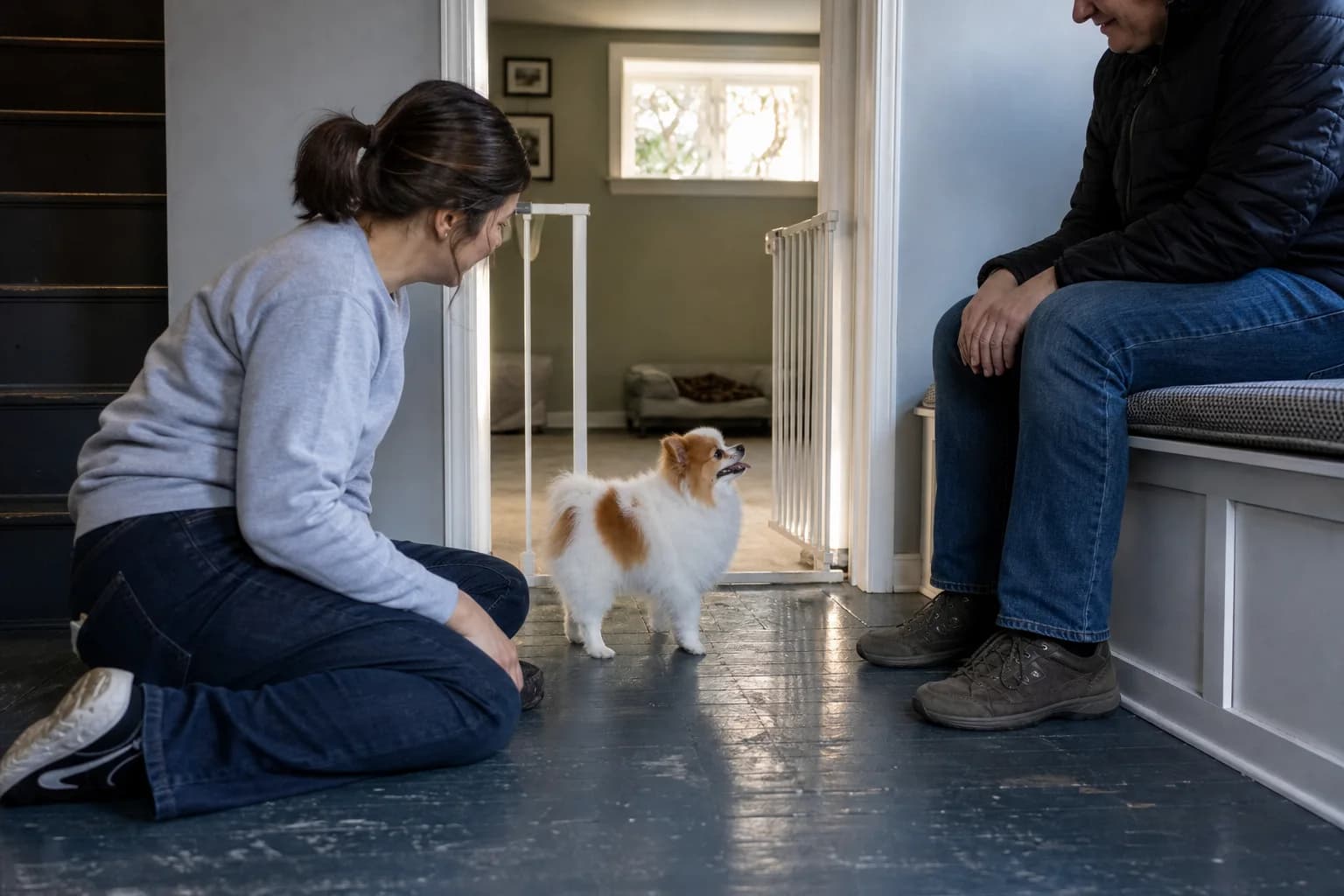
Prepare before the bell rings. Place the dog behind a secure barrier with a trained activity, or keep the dog on leash at a comfortable distance. Ask visitors to ignore the dog at first. No leaning over, reaching, staring, or forced greeting is necessary.
If the dog relaxes, the visitor can toss food away from their body so the dog can approach and retreat. Some Pomeranians are happier remaining behind a gate for the entire visit. That is a valid management choice, not a social failure. The measure is safety and emotional comfort, not whether every guest touches the dog.
Dogs, cats, and other animals
Introduce dogs with space and separate handlers, often beginning with parallel movement rather than face-to-face pressure. At home, use gates and remove food, chews, and contested toys. Keep sessions short and end while both dogs can disengage. A large, friendly dog still needs supervision because play style and size can create injury without aggression.
Cats need high escape routes, dog-free food and litter areas, and control over distance. Prevent chase from the first day. For birds, rodents, reptiles, and other small pets, use physical separation and secure enclosures. Do not treat one calm observation as proof that direct contact is safe.
Read early stress signals
Intervene before a snap. Stress can appear as turning away, repeated lip licking, yawning outside a tired context, lowered posture, sudden stillness, hard staring, retreating, shaking, panting, or refusing food. None proves one emotional state by itself, so read the whole situation. The practical rule is simple: when comfort is declining, add distance and reduce pressure.
How puppies become stable adults
Adult temperament develops from inherited tendencies, prenatal and early conditions, health, maternal care, breeder or rescue practices, socialization, learning, adolescence, and the current home. A bold eight-week-old puppy is not a finished personality. A quiet puppy is not necessarily calm; the puppy may be tired, inhibited, ill, or overwhelmed.
The dedicated Pomeranian puppy guide covers setup, growth, house training, grooming, feeding, and first-year care. Temperament work begins with careful sourcing and continues through ordinary daily experiences.
What useful early socialization looks like
Provide small, positive experiences with:
- People of different appearances and movement styles at a safe distance
- Household sounds introduced gradually
- Stable surfaces, steps appropriate to the puppy, and gentle travel
- Veterinary-style handling broken into seconds
- Calm observation of suitable dogs without requiring greetings
- Brief separation, confinement, and independent rest
- Grooming tools paired with choice and rewards
- Recovery and sleep after novelty
Quality matters more than a checklist count. One frightening forced interaction can be more influential than several neutral observations. Let the puppy retreat, avoid restraining the puppy for strangers, and stop while curiosity is still present.
How to observe a puppy without overinterpreting one test
Meet a puppy when possible in a familiar area and allow time for normal movement, play, exploration, and rest. Watch the puppy with littermates, with a familiar caregiver, and during a gentle new experience. A puppy who rushes forward first is not automatically the best family dog, and the puppy who pauses is not automatically fearful. Look for the ability to gather information and recover.
Ask the breeder or foster caregiver for examples from ordinary days:
- Which puppy settles most readily after play?
- How does this puppy respond to brief separation from littermates or people?
- What happens during nail handling, brushing, feeding, and confinement?
- Does the puppy persist calmly with a small problem or become frantic?
- Which sounds, people, animals, surfaces, and travel experiences have been introduced?
- Has any behavior changed after illness, injury, medication, or a stressful event?
A formal temperament snapshot can add information, but it cannot forecast an adult with certainty. The testing environment, the puppy's sleep, hunger, health, previous experience, and the evaluator's method all influence the result. Place more weight on repeated observations and the caregiver's transparent records than on a sales-friendly label such as perfect, fearless, or extra cuddly.
Adolescence can change the picture
As puppies mature, sensitivity, independence, territorial behavior, and responses to other dogs may shift. Skills that looked finished can weaken when the environment becomes more interesting. Return to easier setups instead of adding pressure. Reinforce orientation, door safety, recall, handling, and calm observation again in the new developmental stage.
Neutering or spaying does not guarantee a particular personality and should not be presented as a complete behavior treatment. Discuss timing and health considerations with the veterinarian who knows the dog. Training and management still address the learned and environmental parts of behavior.
Protect sleep and prevent rehearsal
Overtired puppies often bite, bark, race, and lose the ability to respond. Schedule quiet periods in a comfortable pen, crate, or puppy-safe room after activity. Rest should not be used as punishment. It is part of development and emotional regulation.
At the same time, prevent daily practice of door rushing, window patrol, rough chasing, guarding, and screaming for attention. Every repetition strengthens a pattern. Use barriers and routines while teaching the skill you want instead.
Sudden change needs a health check
A puppy or adolescent who becomes markedly less social, more irritable, reluctant to move, unusually sleepy, or sensitive to handling may be unwell or painful. Contact a veterinarian rather than assuming the dog is entering a difficult phase. Behavior and health are not separate systems.
The household fit scorecard
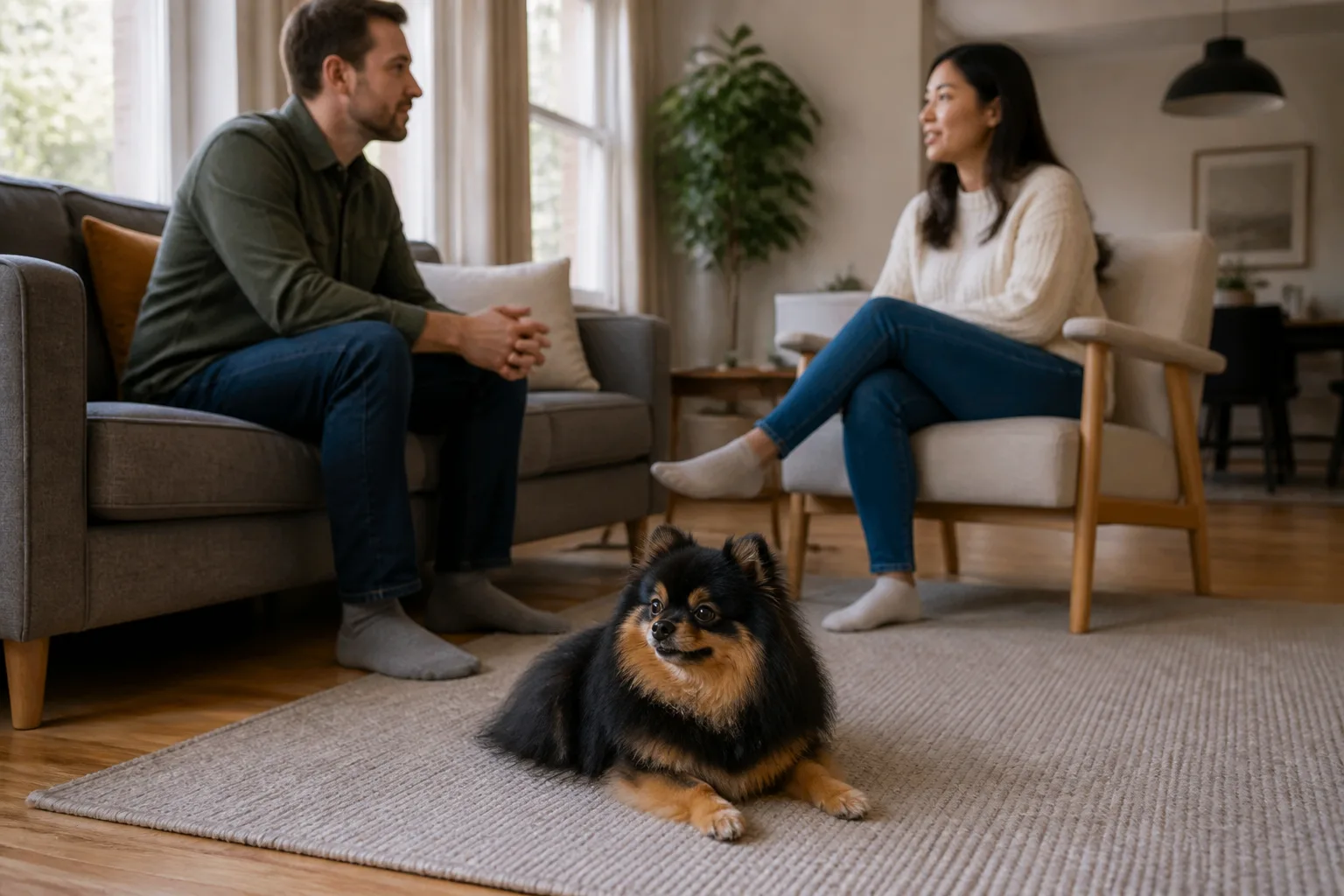
Pomeranian temperament is a good match when the household genuinely wants an involved, alert companion and can teach the dog how to live safely. It is a weaker match when the appeal rests entirely on small size or appearance. The coat, barking, fragile-body management, social needs, and training still take time.
Score the household using actual evidence. Green means the capacity already exists. Yellow means there is a specific, achievable preparation step. Red means the current situation creates a serious welfare, safety, or housing conflict.
Temperament and lifestyle scorecard
| Area | Green | Yellow | Red |
|---|---|---|---|
| Companionship | Predictable contact plus gradual independent rest | Schedule needs backup help | Long absences with no support and no ability to train gradually |
| Noise | Household can manage alerting while training develops | Shared walls require environmental changes and practice | Barking would put housing or a vulnerable person at risk |
| Training | Adults enjoy short reward-based practice | Interest exists but skills or time need arranging | Household expects punishment or no training because the dog is small |
| Handling | Supported lifts and cooperative care are accepted | Some family habits must change | Children or adults insist on carrying, hugging, or forced contact |
| Activity | Daily movement, sniffing, learning, and rest fit the schedule | One category needs paid or family support | Dog would receive only occasional activity or constant overstimulation |
| Other animals | Barriers, separate resources, and supervised introductions are available | Compatibility is unknown and needs a controlled plan | Unmanaged chase, rough size mismatch, or unsafe direct access |
| Professional care | Veterinary, grooming, and behavior support are accessible | Budget or transport needs a concrete backup | Necessary care would predictably be delayed or unavailable |
Questions to answer before bringing a dog home
- Who handles morning and evening bathroom trips on workdays?
- What happens when the dog barks at neighbors, doors, or wildlife?
- Where can the dog sleep without being disturbed?
- How will children and visitors be prevented from lifting the dog?
- Which barriers protect exterior doors and introductions?
- How will the dog practice being alone without panic?
- Who provides grooming, dental care, and cooperative handling practice?
- What local veterinary, grooming, training, and emergency resources are available?
- Which behavior would make the placement unsafe, and who decides when to seek help?
A yellow answer is useful because it identifies preparation. Install the gate, book the groomer, arrange the midday visit, or practice the household rule before the dog arrives. A red answer involving injury, housing, or essential care deserves a pause. A different individual or breed may be a kinder fit.
Assessing an adult Pomeranian
An adult may offer more direct temperament evidence than a young puppy. Current size, coat, handling preferences, response to visitors, house-training habits, and ability to settle can all be observed. However, shelter and foster settings affect behavior. A quiet dog in a kennel may be shut down, while a noisy dog may become calmer once sleep and distance improve.
Ask what happened, where, and how often rather than accepting broad descriptions. "Good with dogs" should lead to questions about dog size, play style, shared resources, leash behavior, and recovery. "Separation anxiety" should lead to questions about duration, video evidence, confinement, vocalization, escape behavior, and whether medical causes were evaluated.
If the placement allows, use several meetings and include the adults who will provide care. Discuss a decompression plan for the first days: a quiet area, predictable bathroom trips, limited visitors, separate resources, and no pressure to prove sociability. Keep management in place while the dog learns the new environment. A honeymoon period is not evidence that every future situation will be easy.
Plan for the dog's less convenient days
Fit should not depend on the Pomeranian being cheerful, quiet, and cooperative every day. Illness, adolescence, aging, construction noise, visitors, travel, or a schedule change can reduce coping. Decide in advance who can handle a veterinary appointment, who can provide a quiet room, and how the household will respond if barking or handling becomes difficult.
The strongest fit is a home that can adapt without blaming the dog. That means using barriers before conflict, seeking medical care for sudden change, returning to easier training steps, and protecting sleep. A realistic plan leaves room for the individual Pomeranian to change over a lifetime.
Do sex and appearance predict the better pet?
Male versus female does not identify the universally better Pomeranian. Individual temperament, early experience, health, training, and household fit are more useful than sex stereotypes. The same applies to color, face shape, and haircut. None guarantees affection, quiet behavior, trainability, or compatibility.
Use the complete Pomeranian breed profile for broader ownership planning. The Pomeranian price guide helps with acquisition and lifetime costs, while the Pomeranian shedding guide covers the coat workload that belongs in a realistic fit decision.
If ancestry, appearance, or health planning is still part of the decision, use the dedicated guides to Pomeranian mixes, Pomeranian colors, and Pomeranian lifespan and health. Those topics deserve their own evidence rather than being inferred from temperament.
Match equipment to the behavior plan
For walking practice, the Frisco Padded No Pull Dog Harness should be evaluated for the individual dog's measurements, coat friction, security, and movement. For supervised food enrichment, the Outward Hound Lickin Layers Puzzle and Slow Feeder should begin at an easy level so problem-solving does not become frustration.
Related Pomeranian guides
- Pomeranians Breed Profile: Essential Facts
- Pomeranian Puppies Breed Profile: Essential Facts
- Pomeranian Price and Cost: Puppy and Lifetime Expenses
- Do Pomeranians Shed? Coat Care and Grooming Guide
- Pomeranian Mixes: Crosses, Traits, and Care
- Pomeranian Colors: Coat Shades, Markings, and Changes
- Pomeranian Lifespan and Health: What Owners Should Know
Frequently asked questions about pomeranian temperament
Potential issues include alert barking, separation distress, guarding, fear, reactivity, house-soiling, handling avoidance, and unsafe confidence around larger dogs. None occurs in every Pomeranian, and a label does not explain the cause. Record triggers, body language, recovery, health changes, and what prevents rehearsal. Use management first, involve a veterinarian when behavior changes suddenly or pain is possible, and seek qualified reward-based behavior help before fear or aggression escalates.
A Pomeranian is not automatically aggressive or harmless because of breed or size. Behavior varies with genetics, health, pain, early experience, learning, environment, and the immediate trigger. Barking, growling, freezing, snapping, and biting require context rather than a moral label. Create distance, prevent unsafe contact, and assess the pattern. Any bite, escalating threat, sudden behavior change, or risk involving children or other animals deserves professional veterinary and behavior guidance.

Coreen Saito is a pet writer and longtime shelter volunteer with more than a decade in animal rescue. She covers cat behavior, breed care, and the small, ordinary science of sharing a life with companion animals, with a particular focus on honest takes about the products and decisions that actually matter. At home in Arizona, she's outranked by Mac (a dog with the loudest opinion in the house), Rebel (a cat who governs by quiet authority), and Meri (an orange tabby who runs the late shift and the laundry basket). She writes about all three, plus the rescues that keep coming through her life, at LifeWithMinty.com.
Sign up for expert-backed reviews and safety alerts all in one place.