Pomeranian Colors: Coat Shades, Markings, and Changes
Pomeranian Colors: Coat Shades, Markings, and Changes with evidence-based guidance on daily fit, care, costs, training, grooming, health, and the individual decisions that matter most.
Petful is reader supported. As an affiliate of platforms like Amazon and Chewy, we may earn a commission when you buy through links on this page. There is no extra cost to you.
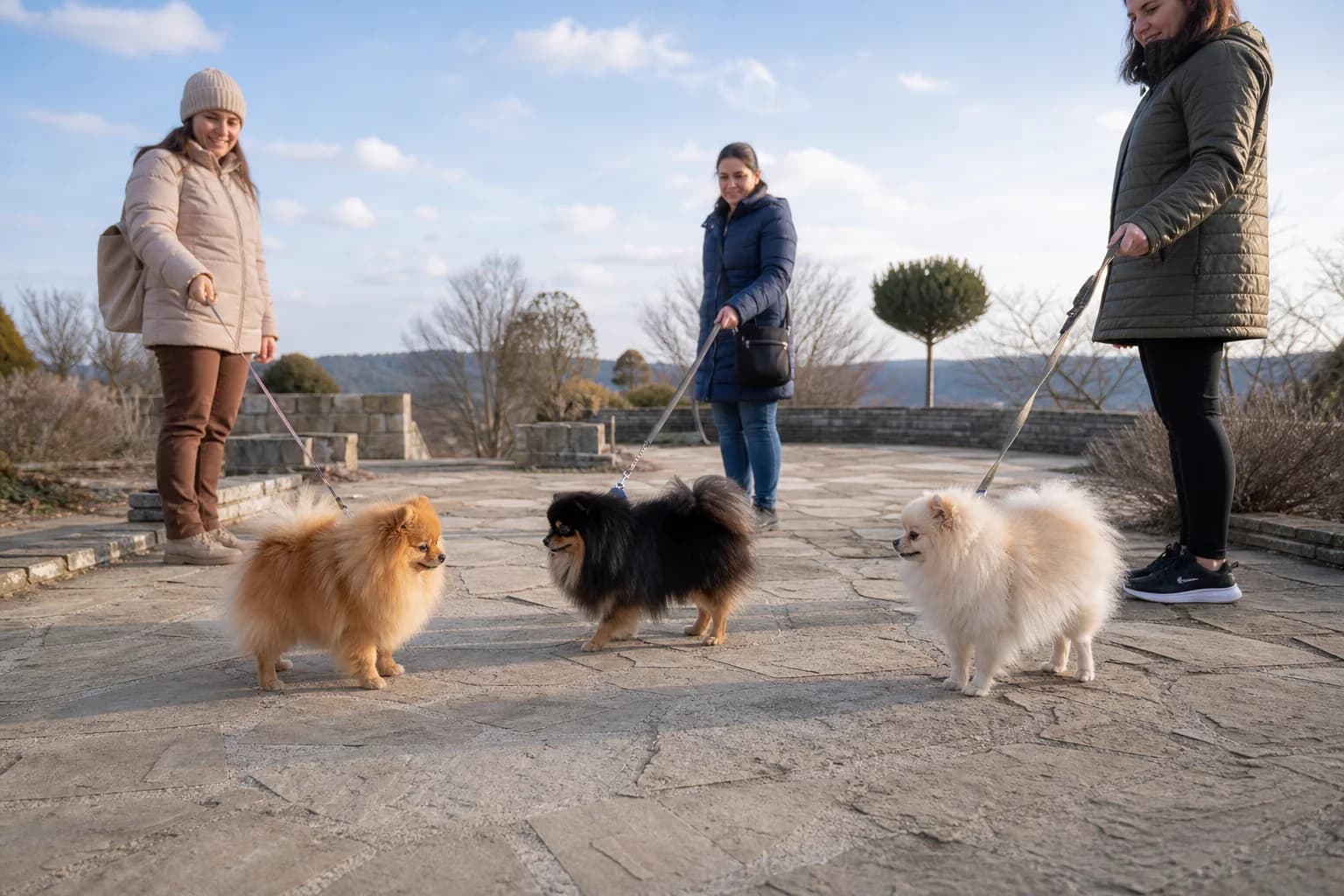
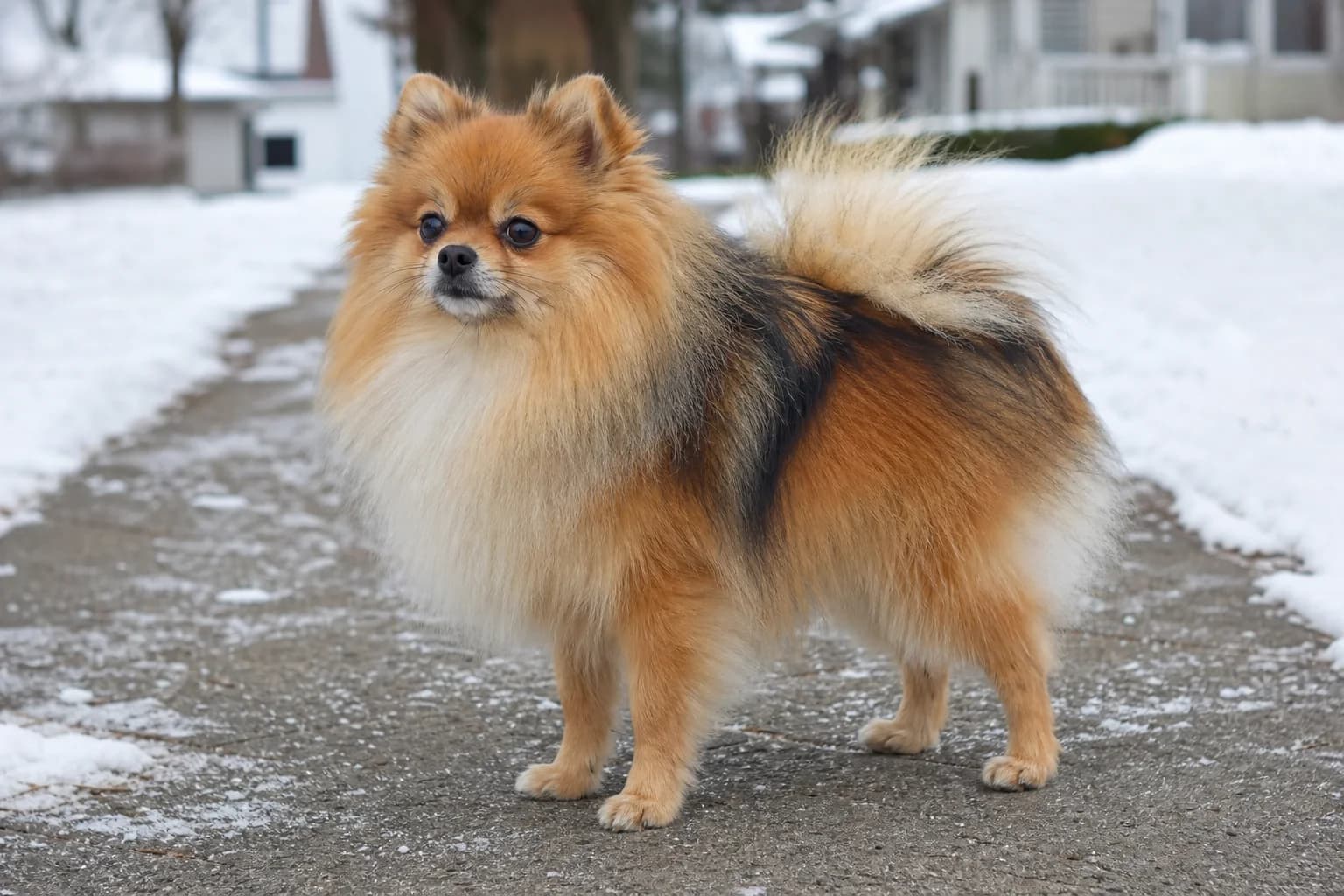
Pomeranian colors range from familiar orange and cream coats to black, chocolate, white, sable, parti-color, brindle, merle, and combinations with tan markings. Identifying one accurately requires more than choosing the closest word from a photo. Base color, pattern, markings, pigment, puppy development, lighting, and the registry vocabulary all affect the description.
This guide explains how to read those layers without turning color into a claim about health, temperament, ancestry, or value. Use the current standard and registration instructions for official paperwork. Use neutral-light photographs and dated records when following a puppy's changing coat.

Sign up for expert-backed reviews and safety alerts all in one place.
Pomeranian colors at a glance
- 1Use the exact registry vocabulary when discussing registration.
- 2Separate base color from markings and pattern.
- 3Expect puppy coat and seasonal coat to change the view.
- 4The Pomeranian standard allows a broad palette and multiple patterns, so the location and distribution of color matter alongside the base shade.
The fastest useful description has three parts: the underlying color, any pattern through the coat, and any markings placed in defined areas. “Orange sable with a small white chest marking” communicates more than “brown,” while “black and tan” identifies a point pattern rather than two random colors.
Orange is the color most closely associated with the breed in popular culture, but a current “most popular” color would require dated registry or population data. A breeder's waiting list or a search trend cannot establish breed-wide prevalence. The same caution applies to claims about the rarest Pomeranian color. Some combinations are encountered less often, but rarity depends on the population, terminology, and verified registrations being counted.
“Lulu Pomeranian” is not a separate variety in the AKC Pomeranian standard. Lulu or Loulou may be used regionally or colloquially for small Spitz-type dogs. When a seller uses the phrase, ask for the actual registry, registered breed, parent identities, and records instead of assuming the name guarantees a particular size, face, or coat.
Questions color cannot answer
- Is the dog's identity and source verifiable?
- Are relevant health records and screening claims documented?
- Does the coat and skin look comfortable and healthy?
- Is the description based on the complete dog in neutral light?
- Could age, staining, clipping, products, or image processing change the view?
- Does the official form use the same term as the advertisement?
Diet does not create a registry color. Feed for life stage, body condition, and medical need rather than trying to intensify coat color with supplements. For feeding and health planning, use Petful's Pomeranian puppy guide or Pomeranian health guide, depending on the dog's age.
A practical identification sequence
Begin with the whole dry coat. Name the broad base color without trying to solve every marking. Next, part the hair at the shoulder, back, ruff, and hindquarters to compare undercoat with guard hairs. Then map white, tan, or other defined markings by location. Finally, look for a pattern such as dark tipping, stripes, patches, or mottling. Write uncertainty into the record when two terms remain plausible.
Do not start with price, rarity, or a social-media caption. Those cues encourage the observer to see the seller's label instead of the dog. Cover the listing description, assess the coat independently, and then compare the two. A mismatch may come from age, poor photography, casual vocabulary, or an exaggerated claim. Each explanation requires different follow-up.
Petful may earn a commission when you click through to Chewy, at no extra cost to you.
Pigment outside the coat can support an observation but should not be used alone. Nose, eye rims, lips, and pads may help distinguish some diluted or brown-pigment descriptions, yet injury, depigmentation, age, and lighting can complicate the view. If pigment change is new, irregular, inflamed, or accompanied by other symptoms, treat it as a veterinary question.
What the breed standard recognizes
The current AKC Pomeranian breed standard allows all colors, patterns, and variations and says they should be judged on an equal basis. That broad statement does not mean every casual nickname is an official registration term. The standard and registration system can use classification language that differs from social posts or seller descriptions.
Read the exact document for the exact task. A conformation standard describes the ideal presented in the show ring. A registration form records the dog using an available vocabulary. A genetic result describes selected variants. A breeder's label may describe what the coat looks like at a particular age. Those sources can overlap without being interchangeable.
When a term matters for registration or a contract:
- Identify the registry and country.
- Open its current standard and color instructions.
- Record the term exactly as supplied.
- Compare the complete coat, points, and markings in neutral light.
- Ask how uncertain puppy color should be recorded.
- Keep the dated photographs and original paperwork together.
Coat terminology also should not be used as proof of purity. Appearance can support a description, but pedigree, registration where applicable, permanent identification, and source records address identity. A dog can resemble a registered color and still have unknown ancestry.
Standard, registration, and genetics answer different questions
The standard asks how a Pomeranian is described and evaluated within a conformation system. Registration records an identity and selected traits using the registry's categories. Genetics can help explain pigment variants included in the specific test. None of those sources by itself proves that an advertisement is accurate in every respect.
For example, a genetic result may identify variants associated with pigment while leaving coat appearance influenced by other variants not covered by that report. A registration entry may reflect the best description available when the dog was young. A standard may allow broad variation without giving the buyer a frequency estimate. Keep the evidence tied to its original question.
When paperwork and appearance differ, do not edit records casually or accuse a source based on one image. Gather the original registration, puppy photographs, current neutral-light photographs, microchip or permanent identity, pedigree where applicable, and test documentation. Ask the registry what correction process exists and what evidence it accepts.
Classification is not a quality hierarchy
Color classes used for competition or recordkeeping should not be turned into a hierarchy of quality. Judging groups can organize entries without declaring one shade healthier or more valuable. Likewise, a registry's willingness to record a color does not certify the breeding decision that produced it.
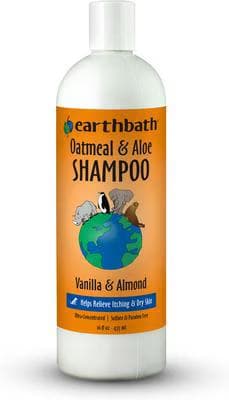
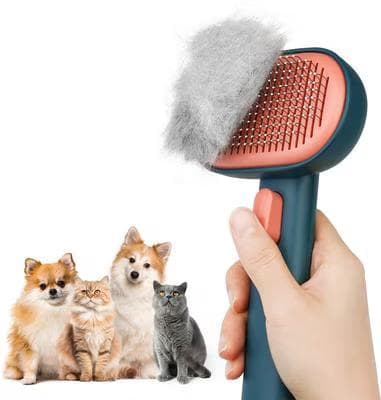
An Earthbath Oatmeal and Aloe Dog and Cat Shampoo is one cleansing product to assess for the individual dog's skin, not a way to change genetic color. An aumuca Self Cleaning Slicker Brush may be one grooming option, but brush pressure, pin length, coat depth, and skin response matter more than whether the tool makes a coat look brighter immediately.
How markings change the picture
| Evidence for this toy-spitz coat-color guide | What to record for colors | What changes the colors plan |
|---|---|---|
| Current Pomeranian observation | Date, setting, and exact behavior or measurement | A repeatable trend rather than one event |
| Professional colors evidence | Named test, examination, record, or qualification | A revised risk assessment |
| Household capacity | Time, cost, supervision, and skill | A plan that works on ordinary weekdays |
Markings describe where additional color appears. Tan points, white spotting, a blaze, chest patch, collar, socks, mask, or other distribution can make two dogs with the same base pigment look unrelated at first glance. Pattern describes how color is arranged through the coat, as with sable tipping, brindle striping, merle mottling, or parti-color patches.
Start at the skin and move outward. Undercoat may be lighter than the guard hairs. Tipped guard hairs can darken the outline without changing the underlying base. Long hair can carry a marking away from its origin, especially around the ruff, pants, and tail. Part the coat and inspect several areas instead of naming the dog from the face alone.
Record location as well as color:
- Muzzle, eyebrows, cheeks, chest, lower legs, and beneath the tail for point markings.
- Face blaze, neck, chest, belly, feet, and tail tip for white distribution.
- Stripe direction and visibility for brindle.
- Mottled versus solid areas for merle.
- Dark tipping across individual guard hairs for sable.
- Patch borders and the proportion of white for parti descriptions.
Terms such as “tri-color” or “Irish marked” can be used differently in casual speech. Ask which formal definition a source means. A three-color appearance does not automatically identify the genetic mechanism, and a photograph cannot prove genotype.
Separate four layers in the description
- Base pigment: the underlying dark, brown, red-yellow, diluted, or white appearance being described.
- Guard-hair overlay: dark tipping or another effect carried by the longer outer hairs.
- Pattern: repeated distribution such as sable, brindle, merle, or parti-color.
- Markings: localized areas such as tan points, blaze, collar, chest, socks, or tail tip.
These layers prevent common naming errors. A dog with a black base and tan points is not simply “black with some brown.” A cream dog with dark-tipped guard hairs may be cream sable rather than a dirty cream. A white-based dog with orange patches is more informative as an orange parti than as “orange and white,” when that vocabulary matches the registry.
Hair length can relocate what the eye sees. A white patch beginning at the chest may fan outward through the ruff. Tan under the tail may be hidden by long pants. Dark tips can form a stripe-like shadow when the coat lies in one direction. Confirm the origin of the colored hair at the skin rather than naming only the surface silhouette.
Petful may earn a commission when you click through to Chewy, at no extra cost to you.
Symmetry is not required for a marking to be real. One sock may extend higher, a blaze may be offset, and patch borders may be irregular. Record the actual distribution instead of mentally completing a balanced pattern from a carefully posed front photograph.
Common coat colors
Orange, orange sable, cream, and black are familiar Pomeranian descriptions, but even these are not single paint-chip shades. Orange can range in intensity, sable tipping can be heavy or sparse, cream can look nearly white under cool light, and black coats can show sun fading or a lighter undercoat. Color depth may also look different before and after seasonal shedding.
Use the nose, eye rims, lips, footpads, and visible hair roots as supporting observations, not as a home genetic test. Staining around the mouth or eyes, saliva, sun exposure, wet hair, grooming products, and camera processing can create false color cues.
For an accurate everyday record:
- Photograph the standing dog from both sides, front, and rear.
- Add close views of the face, chest, and any distinct markings.
- Use open shade or indirect daylight with no beauty filter.
- Include a neutral gray or white object for color balance.
- Keep the original file and date rather than only a social-media copy.
- Repeat at major coat stages instead of comparing unrelated lighting.
Common does not mean lower quality, and unusual does not mean superior. Health screening, structure, stable behavior, transparent placement, and the household's ability to provide care remain the meaningful selection criteria.
Common sources of color confusion
Orange and red exist on a warm continuum in casual photography, so the dividing line can be subjective outside a formal system. Cream and white can be confused when exposure is bright or the coat is clipped short. Black may appear brown from sun bleaching or dead undercoat, while chocolate may appear nearly black in dim light. Sable tipping can be missed after grooming changes how the guard hairs lie.
Compare several body areas because staining and fading are not uniform. Muzzle and feet may be affected by saliva or environmental contact. The back may fade more in sunlight. The undercoat can be much lighter than the outer surface. A clean section beneath the ruff or body coat may be more representative than the most visible hair on the face.
Grooming condition also changes contrast. A fully dried, separated coat reflects light differently from a damp or compacted one. Matting can trap darker debris, and heavy product can make guard hairs clump. Identification photographs should document normal clean condition, not a freshly chalked show finish or a coat soaked to reveal roots.
Resolve differing labels
If two knowledgeable sources use different words, ask each to point to the feature that drove the label. The disagreement may reveal a genuine terminology difference rather than deception. Record both descriptions and use the official organization's answer for official paperwork.
Less common and nonstandard colors
Blue, beaver, merle, brindle, chocolate combinations, and some marking patterns may be encountered less often in a local population. “Less common” should describe an observed frequency, not act as a health certificate or price formula. A registry may recognize a term, classify it differently, require an additional notation, or change available registration choices over time.
Blue is a dilution description, not a bright blue coat. It generally appears slate or gray where black pigment would otherwise be expected. Beaver is also a specific pigment description, not a generic word for any tan or pale brown dog. Merle creates areas of mottled pigment and deserves careful breeding-history questions because certain merle combinations can increase risks to hearing and vision.
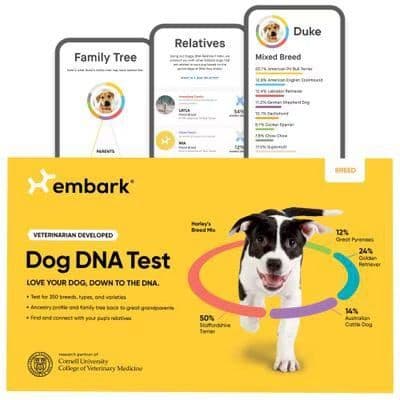
Do not infer genetics from color alone. Similar-looking coats can result from different combinations, and a consumer DNA panel covers only what its current documentation lists. The Embark Breed Identification Dog DNA Test Kit may provide breed ancestry information within its stated limits, but it does not replace registration records, a veterinary diagnosis, or a complete breeding program.
Product and paperwork limits
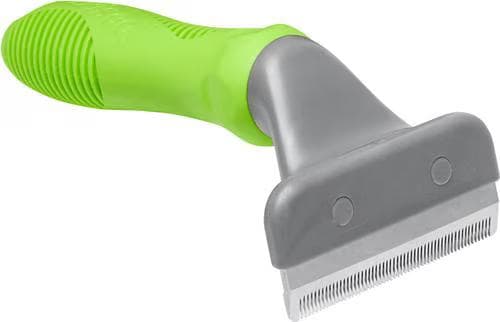
Seasonal undercoat release can temporarily change how a Pomeranian's color looks in photographs and different light. A Frisco Deshedding Cat and Dog Brush, Medium, Medium to Long Hair can help lift loose coat when used gently and according to its directions, but shaving healthy double coat does not reveal a more authentic color and may create uneven regrowth.
Questions to ask about an unusual description:
- Which registry term is being used, and can the paperwork be reviewed?
- What colors and patterns are documented in the parents and close relatives?
- Is the claim based on appearance, pedigree, testing, or all three?
- Which health screening was completed independently of color?
- Is a higher fee being justified by evidence or only scarcity language?
Evaluate the breeding claim independently
Color genetics can make some matings more consequential than others, but a buyer should not try to reconstruct an entire breeding decision from coat appearance. Ask the breeder to identify the parents' colors, relevant test results, health screening, and the rationale for the match. A responsible explanation should address welfare and the whole dog, not only the probability of producing a saleable shade.
Merle deserves particular clarity. A dog can carry a merle-related variant without showing an obvious classic pattern, and casual labels such as “hidden merle” are often used without documentation. Request the exact laboratory, dog identity, variant result, and interpretation. Avoid relying on eye color as proof. Blue eyes can attract marketing attention but do not explain the complete genotype or health status.
Dilute and brown-toned terms also require precision. Sellers sometimes apply “blue,” “lilac,” “lavender,” or “isabella” across breeds without showing which term the relevant Pomeranian registry recognizes. An attractive nickname may describe a visual impression, but it should not be presented as a formal variety unless the documentation supports it.
Petful may earn a commission when you click through to Chewy, at no extra cost to you.
Color never excuses a clinical sign
Any dog with itching, broken hair, poor regrowth, inflamed skin, vision concerns, or hearing concerns needs appropriate evaluation regardless of color. Do not normalize a clinical sign as the expected cost of owning a rare shade.
How puppy coats change
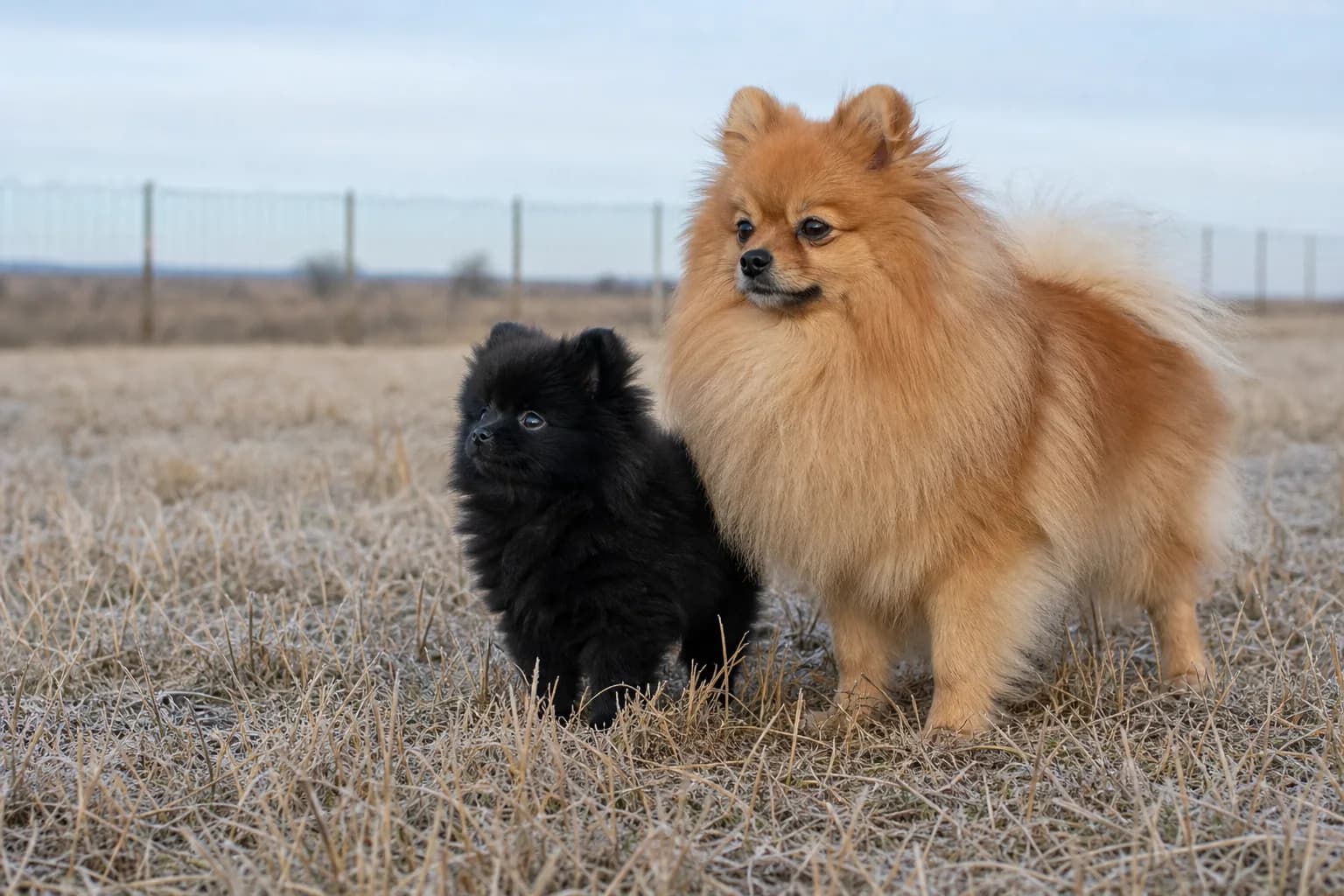
Pomeranian puppies replace their early fluffy coat as guard hairs and adult undercoat develop. During that transition, the coat may look sparse, uneven, darker at the tips, lighter at the roots, or less dramatic than either the baby coat or finished adult coat. This normal developmental phase is sometimes called the “puppy uglies,” but the nickname should not be used to dismiss itching, inflamed skin, or true hair loss.
Sable puppies can change particularly noticeably as the amount and placement of dark tipping evolves. Cream and orange may separate more clearly with age. White areas can look larger or smaller as surrounding hair length changes. Merle, tan points, and patches may also appear different when a long adult coat changes their visual boundaries.
No responsible source can guarantee the exact adult shade from a newborn photograph. Parent coats and family history provide context, not certainty. Keep photographs at consistent intervals and avoid judging change from two images taken in different rooms, seasons, grooming conditions, or camera settings.
Puppy coat record
- Age and date.
- Whether the coat is clean, dry, clipped, or between seasonal changes.
- Natural-light photographs from repeated angles.
- Base color at the roots and color at the guard-hair tips.
- Marking locations and borders.
- Skin comfort, broken hairs, and any sharply thin area.
The adult coat is only one part of development. Do not alter nutrition, add unneeded supplements, or shave the dog to accelerate a visual result. Feed a complete growth diet and ask the veterinarian about abnormal skin or coat signs.
Read coat change by life stage
In the early puppy coat, soft texture and short guard hairs can hide the future distribution of tipping. During transition, longer hairs may emerge unevenly around the back, ruff, and tail, making the dog look temporarily patchy. As adult density develops, markings can appear to expand because longer hair carries color beyond the skin-level border.
Seasonal shedding can then change contrast without changing identity. When pale undercoat is released, darker guard hairs may dominate the surface. After coat renewal, a dense lighter undercoat can soften the outline again. Hormonal change, illness, clipping, and age can also alter density and texture, which changes perception even when pigment remains the same.
Use a sequence of photographs rather than searching for a single “final color” date. Label each image with exact age and grooming condition. Compare roots, tips, face markings, body patches, and point locations separately. A dated sequence is also useful if a registry asks why the adult description differs from puppy paperwork.
When coat change is not cosmetic
Color change should remain visually even and skin should remain comfortable. A bald saddle, sharply defined thinning, intense itching, darkened skin, or coat that fails to regrow is not explained by ordinary puppy transition alone. Pause cosmetic interpretation and seek veterinary care.
Rare-color marketing claims
A rarity claim is meaningful only when it defines the registry, country, time period, and verified population being counted. Online listing totals are especially weak evidence because one dog may be advertised repeatedly, labels are inconsistent, and unusual terms attract clicks. Treat “one of a kind,” “exotic,” “platinum,” or “exclusive bloodline color” as marketing until a recognized definition and records are supplied.
- A color premium is not a health credential | Require the same verifiable parent screening, individual veterinary records, contract, early care, and return support at every coat color and price. A rare-sounding label should never replace those records or pressure a buyer into a faster decision.
- Photograph color in repeatable conditions | Use indirect daylight, a clean dry coat, and front, side, and rear views. Record the dog's age and date because puppy coat, undercoat, guard hair, sun exposure, and seasonal shedding can change the visible balance. Compare registration terminology with the applicable standard instead of inventing a rare category from one image.
A rare-color premium pays for demand and scarcity as described by the seller. It does not buy better health, a predictable personality, or a more valid Pomeranian. The same parent screening, puppy records, contract, early care, and return commitment should be required at every price.
Beware of claims that combine color with guaranteed tiny size, a permanent puppy face, hypoallergenic coat, or special temperament. Those are separate traits and may not be predictable. “Teacup” and “mini” are not separate AKC Pomeranian varieties. A very small puppy may carry additional feeding, injury, dental, and veterinary concerns.
Before paying a rare-color premium
- Ask for the formal name of the color or pattern.
- Verify the dog's identity and original paperwork.
- Compare the claim with the current standard and registration vocabulary.
- Review parent screening and individual veterinary records.
- Read refund, health, and return terms without pressure.
- Price the lifetime care plan separately from the acquisition fee.
Walk away if the seller blocks verification or makes health contingent on keeping the dog on a proprietary supplement. Petful's Pomeranian price guide explains why acquisition price and lifetime value are different questions.
Decode the wording of an advertisement
Separate statements that can be verified now from predictions. “The puppy has a microchip matching these records” can be checked. “The coat appears orange sable at 10 weeks” can be documented. “This is the rarest shade,” “the color will never fade,” “the puppy will stay under four pounds,” and “this line never has health problems” are much broader claims that require evidence the seller is unlikely to possess.
Ask the seller to rewrite vague claims in precise terms. What population makes the color rare? Which adult relatives kept the same shade? Which named screening supports the health statement? What happens under the contract if the prediction is wrong? A seller who becomes hostile when asked for definitions is supplying useful risk information.
Petful may earn a commission when you click through to Chewy, at no extra cost to you.
Do not let a countdown, competing-buyer story, delivery deadline, or limited-time discount shorten the verification process. Rare-color pressure works because buyers fear losing an appearance they may not see again. There will be other dogs. The household needs enough time to verify identity, source, health records, contract, and lifetime fit.
Preserve the original claim
Keep the original advertisement and messages. If the final paperwork uses different terminology, ask for an explanation before payment. Differences can be innocent, especially with developing puppy coats, but they should not be silently replaced after the buyer has committed.
Photographing and identifying coat color
Photograph in open shade or near a large window with indirect daylight. Turn off filters, portrait effects, flash, and automatic enhancement when possible. Include a neutral reference card or plain gray object, and avoid colored walls, grass reflections, or warm indoor bulbs that cast a tint across the coat.
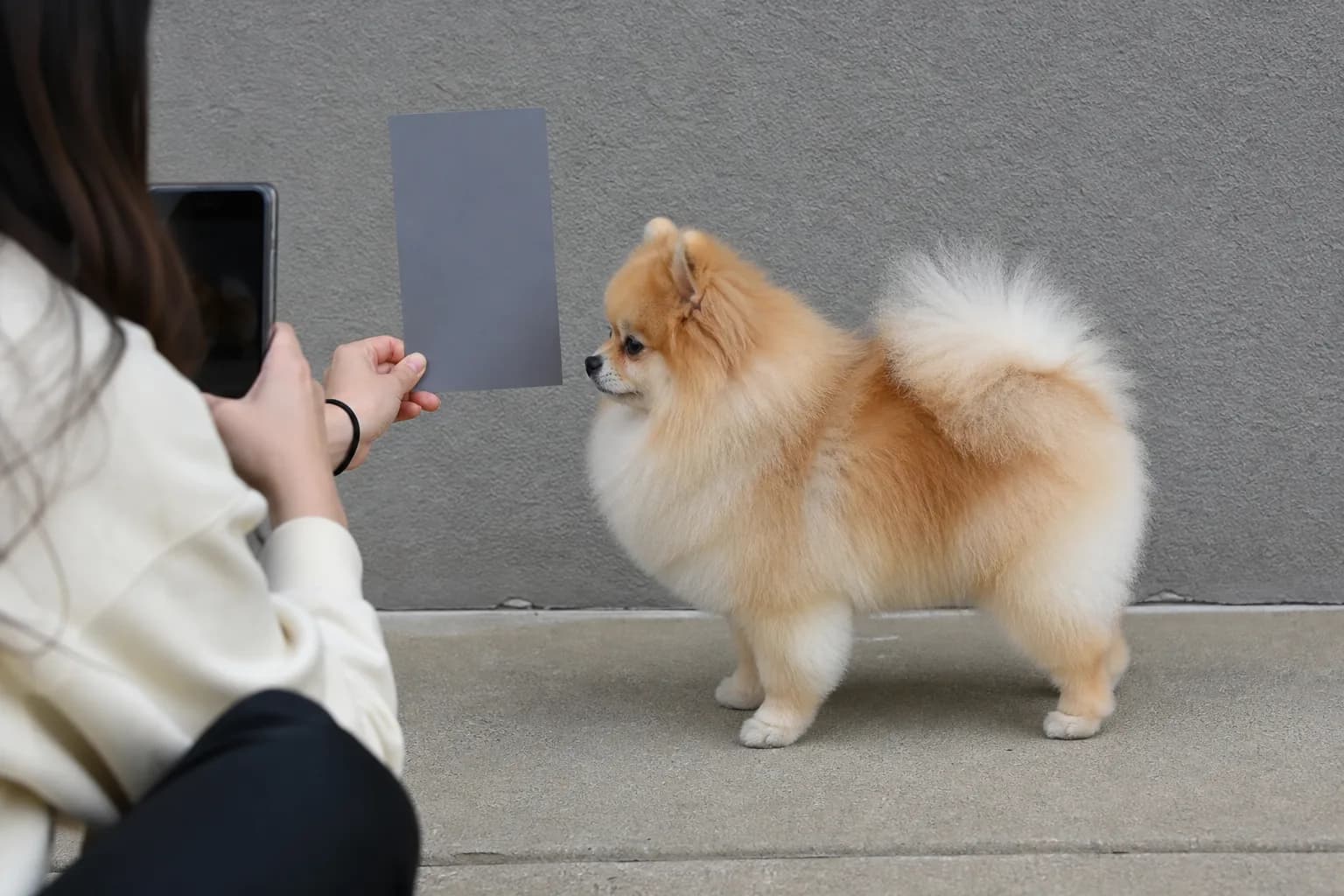
Capture the whole dog before close details. Then photograph hair roots, guard-hair tips, nose pigment, eye rims, tan points, white patches, and any mottling. Do not wet, oil, chalk, dye, or heavily groom the coat to make an identification photograph more dramatic. Keep the original image metadata and note the age, season, and grooming status.
When two labels seem possible, describe what is visible and preserve uncertainty. “Pale warm coat with sparse dark tipping at 7 months” is more honest than forcing a final adult registration term from one image. Ask the registry, breeder, or qualified genetic professional which evidence is needed for the formal decision.
Repeatable photo protocol
For repeat photography, place the dog on the same neutral surface at roughly the same time of day and keep camera exposure consistent. Capture one unposed standing frame and one close view before brushing changes the direction of the guard hairs. Avoid direct midday sun, which creates deep shadows, and avoid green grass beneath pale coats because reflected color can contaminate the image.
Never place a puppy on a high table or restrain the head for a color photograph. Safety and comfort outrank perfect alignment. If the dog will not stand calmly, record a comfortable side view on the floor and try again another day. A slightly imperfect honest image is more valuable than a staged photograph that hides markings or risks a fall.
Archive the files with descriptive names that include the dog identity, age, date, and view. Keep originals separately from cropped copies. When sharing for an opinion, include the unedited whole-dog frame plus the close details so the reviewer can see how the areas relate. State whether the dog was recently bathed, clipped, or shedding heavily.
Account for screen differences
Screen images can shift color again. Two calibrated displays may still differ, and social platforms may compress or enhance uploads. Do not settle a contract, registry, or genetic dispute from a screenshot alone. Supply original files and ask what other evidence the decision-maker accepts.
For very dark coats, expose enough to show hair texture without turning black into gray. For pale coats, protect highlights so cream tone and white areas are not erased. The goal is accurate evidence, not the most dramatic portrait.
Coat care that protects color and skin
Healthy coat care preserves the double coat and makes color easier to observe. Brush in layers to the skin with light pressure, remove tangles before bathing, rinse thoroughly, and dry the undercoat completely with comfortable moving air. Sun, saliva, tears, urine, dirt, product residue, and broken hair can all alter the visible shade without changing genetic color. For lighter hand-contact coat work, compare the Four Paws Magic Coat All-In-One Wet & Dry Dog Glove & Curry Brush and the Mr. Peanut's Hand Gloves Dog & Cat Grooming & Deshedding Aid by fit, seams, friction, coat reach, and the dog's comfort rather than by color-enhancement claims.
An Earthbath Oatmeal and Aloe Dog and Cat Shampoo is one product to compare with the dog's current skin and the label directions. Stop if irritation appears. An aumuca Self Cleaning Slicker Brush should be used only when pin length and pressure suit the coat, followed by a comb check near the skin.
Sudden symmetrical thinning, bald patches, odor, redness, scale, intense itching, or failed regrowth is a health question rather than a color feature. Photograph the change, list recent products and medications, and seek veterinary advice. Petful's Pomeranian shedding guide covers the normal grooming rhythm and warning signs.
Staining, products, and sun
White and cream coats may show tear, saliva, food, urine, or environmental staining more visibly, while dark coats can hide redness and debris. Do not assume the lighter dog has worse hygiene or the darker dog has healthier skin. Part every coat and inspect the skin. Address the source of persistent staining instead of repeatedly bleaching the hair.
Color-enhancing shampoos, chalks, dyes, and optical brighteners can distort identification and may irritate sensitive skin. If a product is used for an appropriate grooming purpose, follow its label and disclose it when photographs are intended as color records. Never use human hair dye or household whitening chemicals on a dog.
Sun protection should focus on safe shade, timing, and veterinary advice, not on preserving a marketable shade. A coat that lightens at the surface from sun exposure may grow back differently after renewal. That cosmetic change is less important than preventing heat stress and protecting exposed or sparsely coated skin.
Pomeranian color-by-color reference
The descriptions below are visual starting points, not genetic tests. Registry vocabulary can change, and a puppy's coat can develop. Confirm formal labels against the current organization and complete records.
Read each entry as a description of visible features. It does not state how common the color is, what price is reasonable, or whether a mating was responsible. Those questions require population data, a complete acquisition comparison, and health and breeding evidence. The same coat term can appear in a healthy, well-sourced dog and in a listing that provides no meaningful records.
When documenting a dog, combine the most specific supported base color with the pattern or markings that the registry accepts. Keep an observation note if the formal menu cannot capture every visible detail. Do not invent a compound name simply to sound rare. A clear ordinary description is more useful than a fashionable label no organization defines.
Apply the same verification to every color
- Compare clean, dry coat in neutral daylight.
- Inspect roots, undercoat, guard-hair tips, and pigment.
- Map markings by location instead of impression.
- Record age, season, clipping, and recent product use.
- Preserve uncertainty when the puppy coat is changing.
- Evaluate health, identity, and source independently.
Some dogs legitimately fit more than one layer below. For example, a parti-color dog still has a color in the nonwhite patches, and a tan-point dog still has a base color. The goal is not to select one winning word. It is to describe the coat accurately enough that another person can understand what was observed and what remains unverified.
If the description will affect registration, sale terms, or a breeding decision, ask the responsible organization to review the evidence before treating this guide as the final authority. Save its written answer with the dog's permanent identification. An informal opinion can help frame a question, but only the relevant registry controls its records and only qualified professionals can interpret health or genetic findings for the decision at hand.
Orange
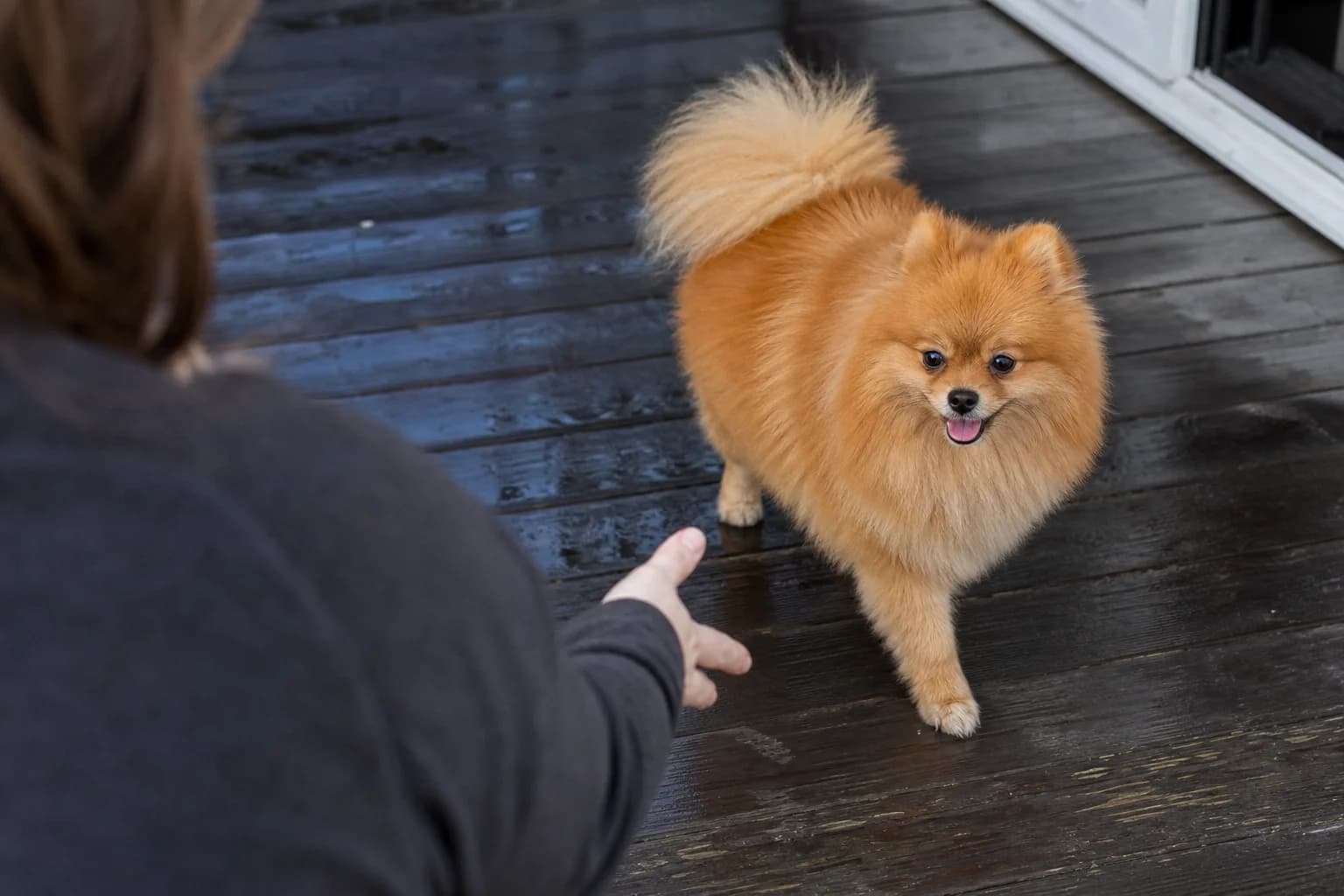
Orange ranges from lighter warm apricot tones to a richer, deeper orange. The finished impression comes from both undercoat and guard hairs, so coat density and lighting matter. It is the color many people picture first when they hear “Pomeranian,” but that familiarity does not establish current population frequency.
Orange Sable
Orange sable combines an orange base with darker tipping on at least some guard hairs. The tipping may be most obvious along the back, ruff, or tail and may change in prominence as the puppy coat develops. Inspect individual hairs rather than treating every shadow as sable.
Red
Red is a deeper, more saturated warm description than ordinary orange. Cameras often push warm coats toward red, especially near sunset or under warm bulbs. Compare roots and tips in neutral daylight and keep the registry's terminology separate from a photographer's color edit.
Red Sable
Red sable adds dark guard-hair tipping over a red base. Heavy tipping can make the dog appear much darker from a distance, while movement or parted hair reveals the warmer color beneath. Age and seasonal coat can change the balance.
Cream
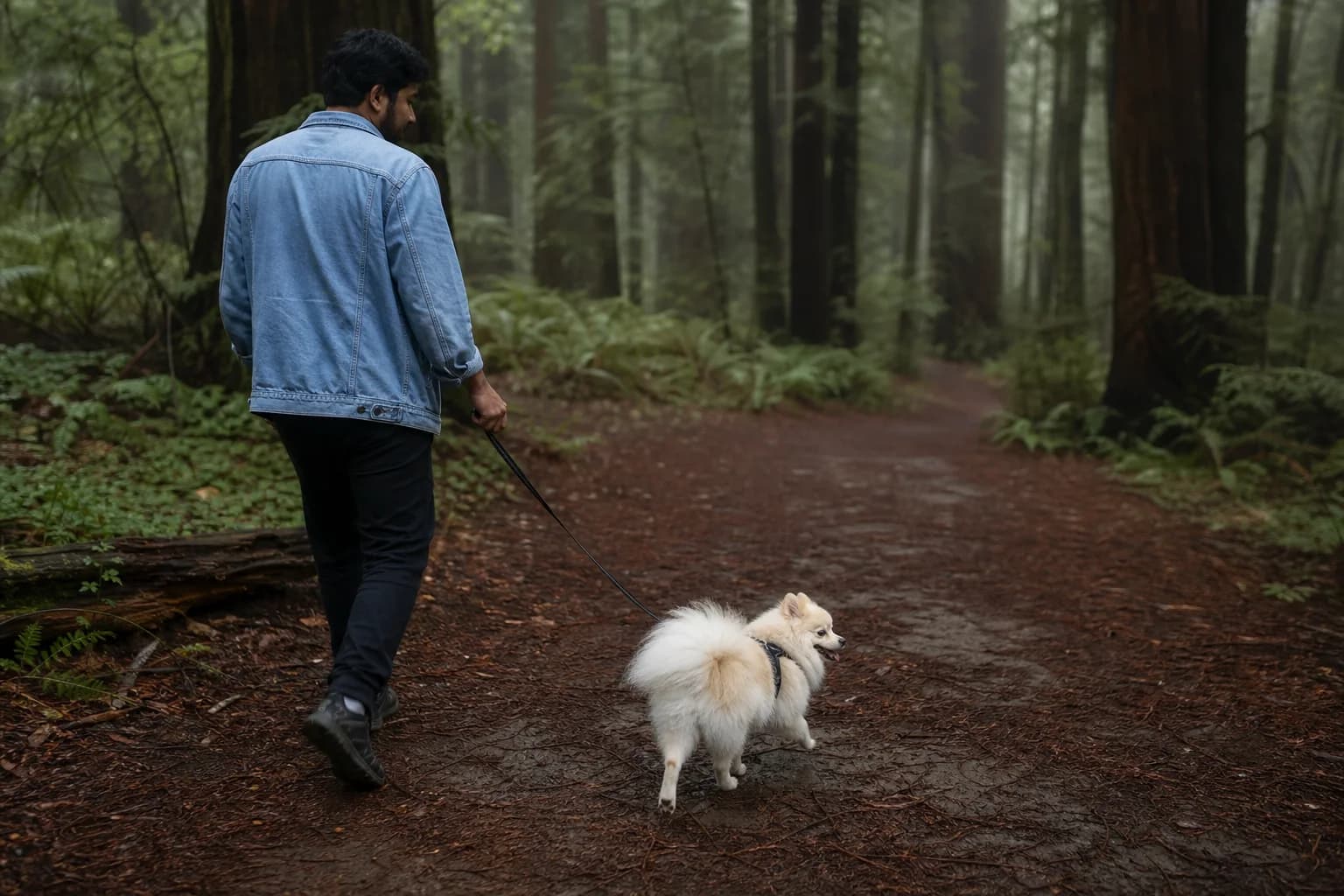
Cream is a pale warm coat that can look nearly white in cool light. Examine the ears, back, and roots for warm tone and compare with a neutral reference. Tear or saliva staining should not be mistaken for the natural base color.
Cream Sable
Cream sable has a pale cream base with darker tipping. A puppy may show more visible tipping than the eventual adult or vice versa. Record the age and avoid guarantees about how much dark overlay will remain.
Black
A black Pomeranian presents predominantly black coat rather than tan-point, parti, or sable patterning. Sun exposure, dead coat, dust, or warm photography can create a rusty cast. Part the clean dry coat and inspect the roots before deciding the base is brown.
Black And Tan
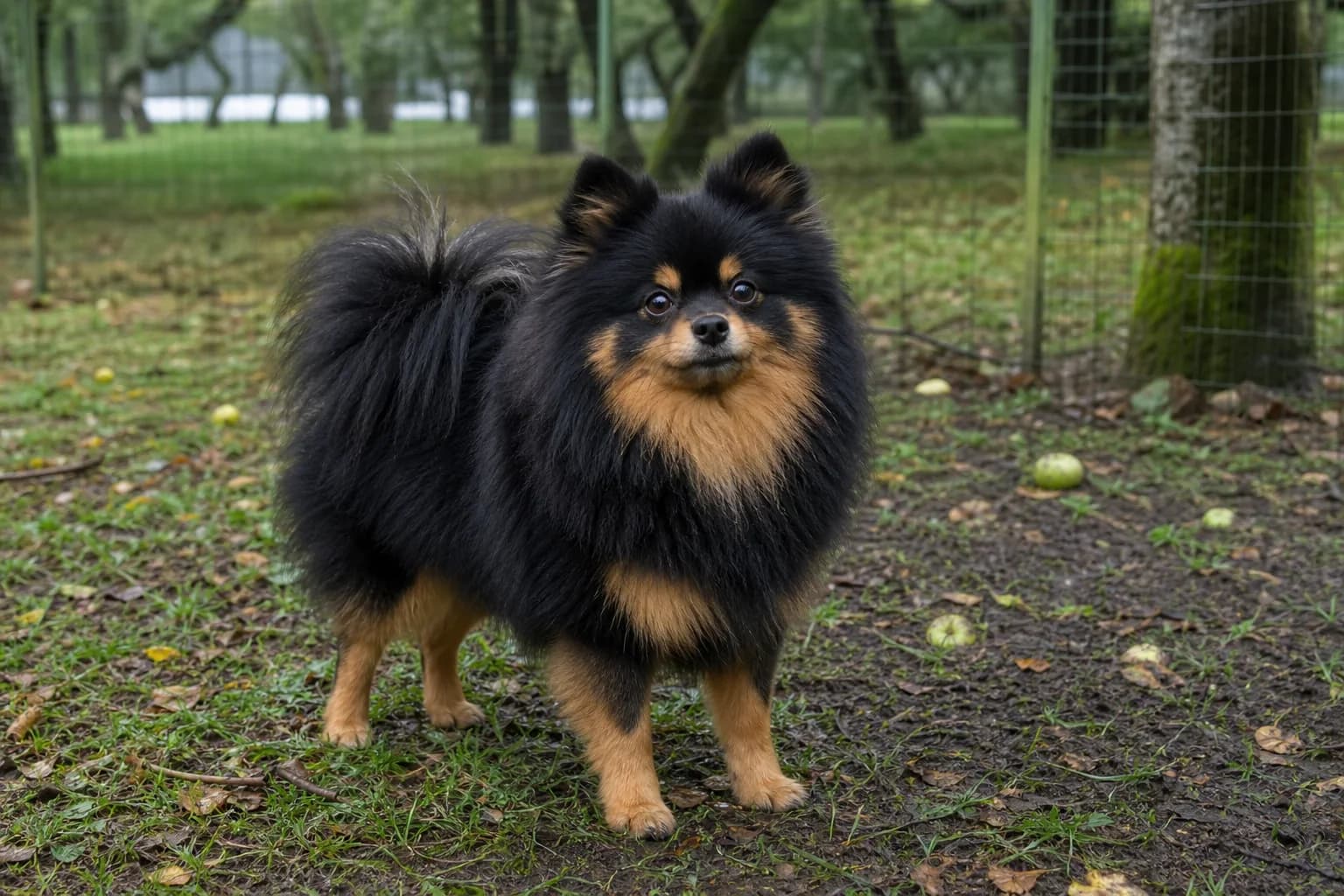
Black and tan describes a black base with tan point markings in characteristic areas such as the brows, muzzle, chest, lower legs, and beneath the tail. Long hair can blur borders, so note placement rather than merely counting two colors.
Chocolate
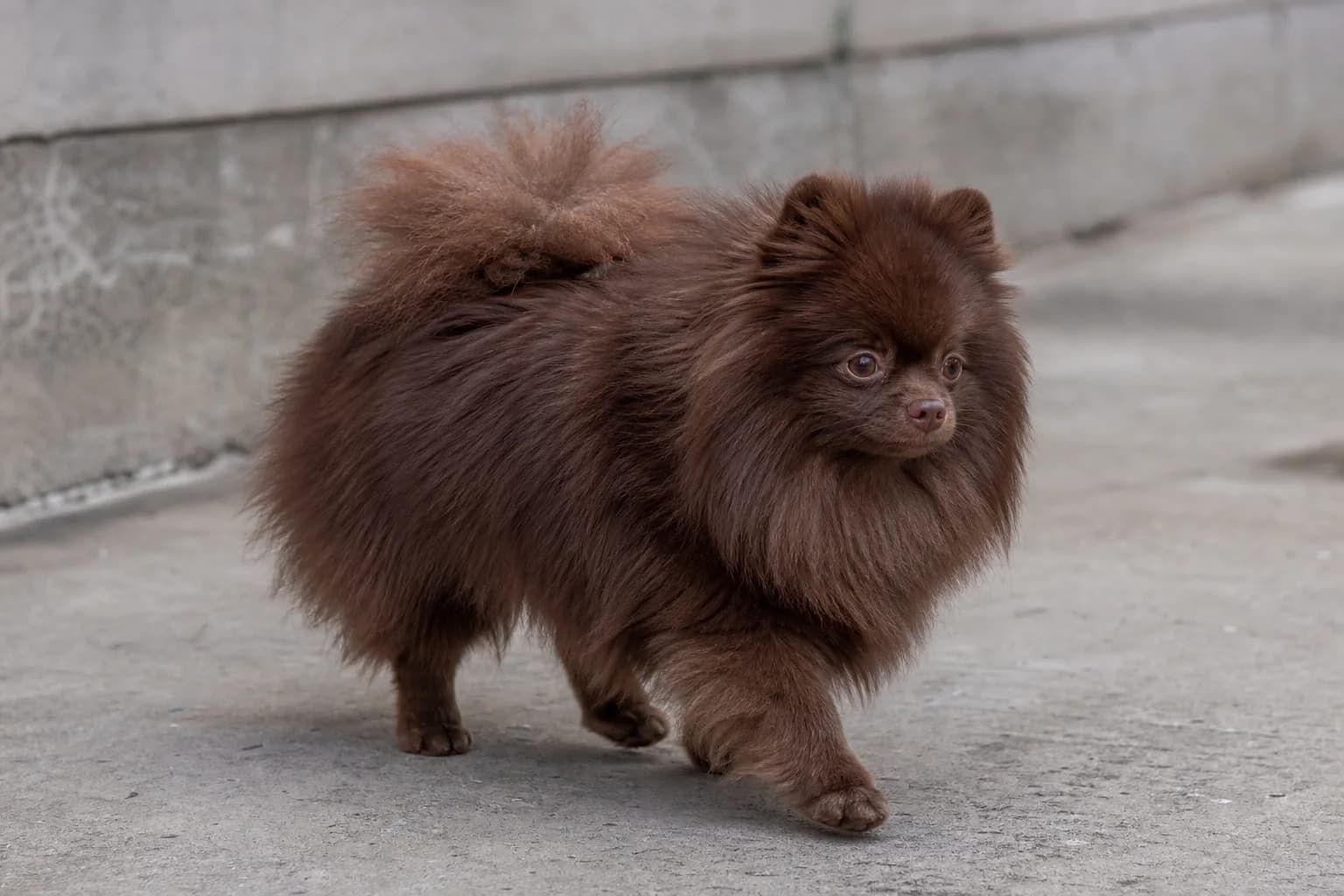
Chocolate describes brown pigment rather than a black coat warmed by sunlight. Nose, lip, eye-rim, and pad pigment can provide supporting context, but appearance is not a complete genetic test. Use the registry's current distinction between chocolate, beaver, and other brown-toned terms.
Chocolate And Tan
Chocolate and tan combines a chocolate base with tan point markings. The contrast can be subtle when both colors are warm. Photograph the face, chest, legs, and beneath the tail so the distribution is documented.
Blue
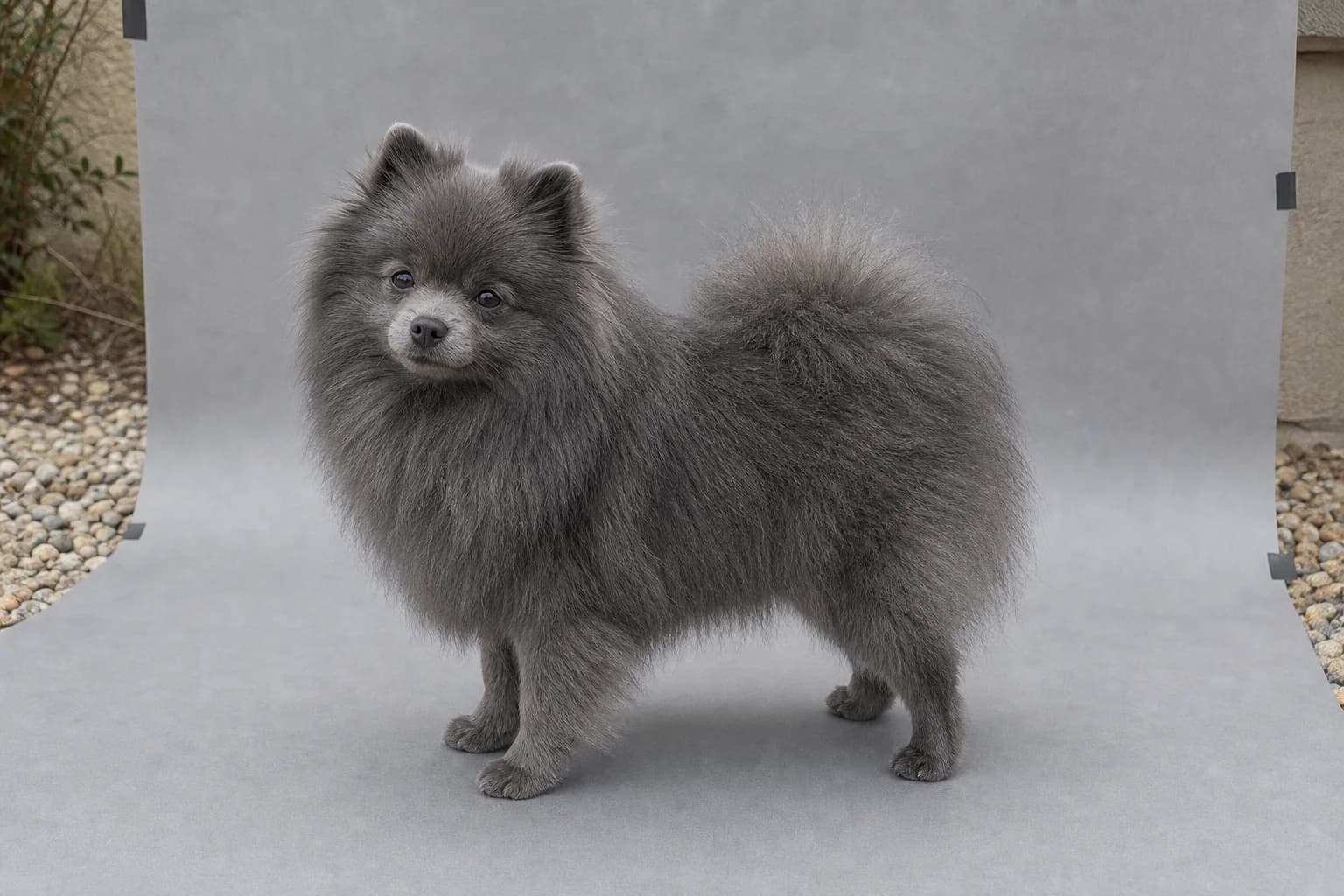
Blue is diluted black pigment and usually appears slate, charcoal-gray, or steel rather than vivid blue. Lighting and camera white balance can make a normal black coat seem blue, so confirm the complete pigment pattern and records before using a rare-color label.
Blue And Tan
Blue and tan combines the diluted dark base with tan points. As with black and tan, location defines the point pattern. The lower contrast can make markings hard to see in a young or heavily coated dog.
Beaver
Beaver is a specific dilute-brown description in Pomeranian vocabulary, not a catch-all for cream, orange, or light chocolate. Because casual listings use the term loosely, compare pigment, coat, pedigree information, and the registry's current definition.
White
White should be evaluated on a clean, dry coat in neutral light. Cream shading, staining, and environmental discoloration can confuse the description. Do not use whitening products to force a label, and investigate persistent tear or saliva staining as a care issue.
Wolf Sable
Wolf sable generally describes a gray or silvery base with darker tipped guard hairs that create a wolf-like overlay. The face and body distribution help distinguish it from a simply gray-looking coat. Confirm the registry's exact wording because “gray sable” may be used casually.
Brindle
Brindle produces darker striping over a base color. Long Pomeranian hair can soften or separate the stripes, making them less obvious than on a short-coated dog. Photograph the pattern before and after normal coat changes without clipping to expose it.
Parti-Color
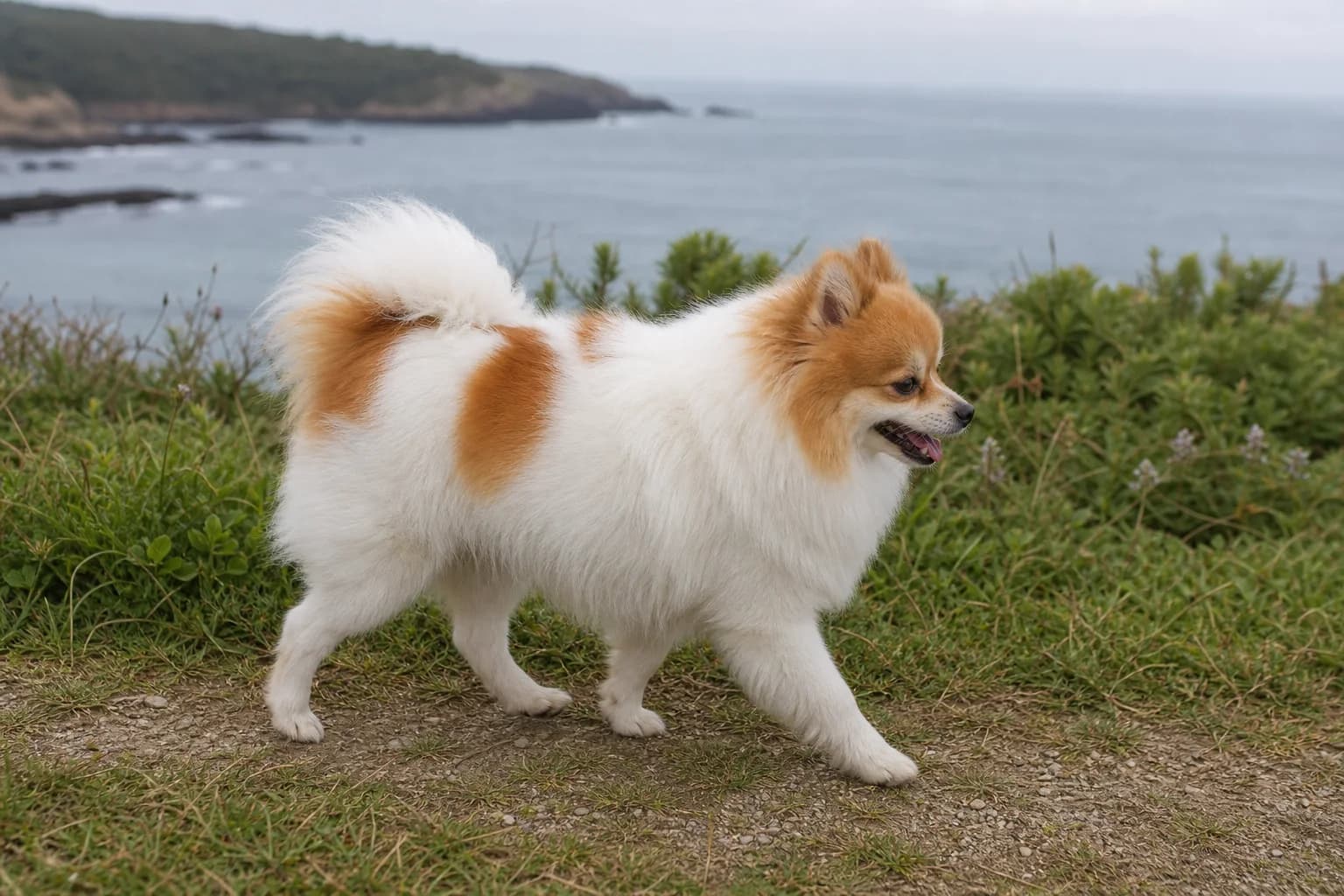
Parti-color describes a white base with patches of another color. Patch size, placement, and symmetry vary. Record both the white distribution and the color of the patches rather than stopping at the word “parti.”
Merle
Merle creates mottled areas of lighter and darker pigment and may occur with other colors or markings. Because certain merle-to-merle breeding combinations can increase hearing and vision risks, ask for parent color, pedigree, testing, and breeding rationale rather than treating the pattern as a cosmetic upgrade.
Tri-Color
Tri-color is a visual description for three colors, often involving a white pattern plus a base color and tan points. It does not identify one universal genetic combination. Name the underlying base and markings when the registry allows a more precise description.
Irish Markings
Irish markings commonly refers to a defined white distribution that may include the face, neck, chest, lower legs, and tail tip while much of the body remains colored. Usage varies, so describe the visible locations and verify whether the registry uses the term.
Sable
Sable refers to dark tipping on guard hairs over a lighter base. The base may be described separately, as in orange sable or cream sable. Tipping can be uneven across the body and can change noticeably as a puppy matures.
Tan Markings
Tan markings describe the lighter point areas layered over a darker base. They are a placement pattern, not a complete base-color name. Photograph the eyebrows, muzzle, chest, legs, and underside of the tail to preserve the evidence.
Related Pomeranian guides
- Pomeranians Breed Profile: Essential Facts
- Pomeranian Puppies Breed Profile: Essential Facts
- Pomeranian Price and Cost: Puppy and Lifetime Expenses
- Do Pomeranians Shed? Coat Care and Grooming Guide
- Pomeranian Mixes: Crosses, Traits, and Care
- Pomeranian Lifespan and Health: What Owners Should Know
- Pomeranian Temperament: Personality, Barking, Training, and Family Fit
Frequently asked questions about pomeranian colors
The rarest color for a Pomeranian cannot be ranked dependably without a defined registry population and time period, and labels such as lavender, blue, or merle may be used inconsistently in advertising. Less common does not mean healthier, better bred, or more suitable. Ask how the color was identified, compare it with the applicable standard in neutral daylight, and verify registration, parent health screening, veterinary records, contract terms, and return support before considering any premium.
Orange is often treated as the most popular color of Pomeranians and is strongly associated with the breed, but popularity changes by place, registry, and fashion. A universal ranking would be misleading without current population data. Choose color only after health, temperament, structure, source quality, and household fit meet the same standard. Remember that puppy coat and adult guard hair can change the visible shade, so an early photograph cannot guarantee the final appearance.

Coreen Saito is a pet writer and longtime shelter volunteer with more than a decade in animal rescue. She covers cat behavior, breed care, and the small, ordinary science of sharing a life with companion animals, with a particular focus on honest takes about the products and decisions that actually matter. At home in Arizona, she's outranked by Mac (a dog with the loudest opinion in the house), Rebel (a cat who governs by quiet authority), and Meri (an orange tabby who runs the late shift and the laundry basket). She writes about all three, plus the rescues that keep coming through her life, at LifeWithMinty.com.
Sign up for expert-backed reviews and safety alerts all in one place.