Pomchi Puppies: Price, Adoption, and First-Year Care
Compare Pomchi puppy adoption and breeder options, check records before paying a deposit, and build a practical first-year budget for food, equipment, training, and veterinary care.

BVMS, MRCVS
Petful is reader supported. As an affiliate of platforms like Amazon and Chewy, we may earn a commission when you buy through links on this page. There is no extra cost to you.
Pomchi puppies are Pomeranian and Chihuahua mixes whose adult size, coat, and personality can vary. Before choosing one, look beyond the photograph and purchase price. A useful comparison includes the puppy’s history, the care already provided, the adults behind the litter, and what happens if the placement does not work out.
Start with records and a realistic daily routine. A small puppy still needs meals, toilet trips, training, veterinary care, and someone available to supervise them. A low acquisition price does not reduce those responsibilities.

Sign up for expert-backed reviews and safety alerts all in one place.
Finding Pomchi Puppies Through Breeders or Adoption
Whether you want to buy a Pomchi puppy or adopt a Pomchi through rescue, ask who has cared for the dog and how the organization knows their history. A breeder should be able to document the Pomeranian and Chihuahua ancestry and explain the actual parent pairing. A kennel name or a cute newborn photograph does not establish those records. A shelter may have an estimated breed label and incomplete parent information; that uncertainty should be stated plainly.
Ask to meet the puppy in conditions that let you observe normal movement, interaction, and recovery after something unfamiliar. A still picture cannot show those things. For an adoption, a foster carer’s observations can add useful detail about sleeping, toileting, handling, and living with other pets.
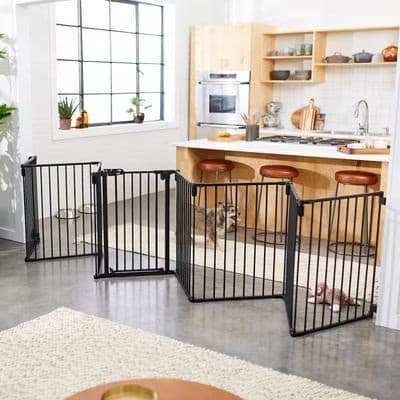
Supervised space management if the gaps, height and stability suit your dog. Climbing or jumping dogs need a different setup.
Petful may earn a commission when you click through to Chewy, at no extra cost to you.
| Ask for | What to check |
|---|---|
| Parent health records | Names or identification match the actual parents and results identify the test performed |
| Puppy veterinary records | Examination, vaccination and parasite-care dates identify this puppy |
| Written return policy | Who accepts the dog back, under what conditions, and what financial terms apply |
| Meeting and handover arrangements | You can discuss care with the responsible person and see the puppy appropriately |
| Feeding and daily routine | Exact food, portions, meal times, sleep and toilet arrangements are documented |
Do not treat “vet checked,” a registration certificate, or a photograph of a healthy-looking parent as interchangeable with parent health records. Ask which results exist, who performed the examinations, and whether your own veterinarian can review them before a deposit becomes nonrefundable.
Ask what barriers the puppy already knows before choosing a home setup. The Frisco 30-inch configurable pen can organize a supervised resting area if its gaps, stability and height suit this puppy. A tiny puppy must not fit through the openings, and a climber needs another arrangement.
Black, white, brown, chocolate, black-and-tan, and black-and-white puppies may all appear in listings. Short-haired and long-haired Pomchi puppies can also look very different from one another. Merle or blue-merle marketing, a fluffy face, or a “rare” color does not establish responsible breeding or justify bypassing the records. Ask for recent, ordinary photos that show the entire puppy, then verify the puppy’s identity during the meeting.
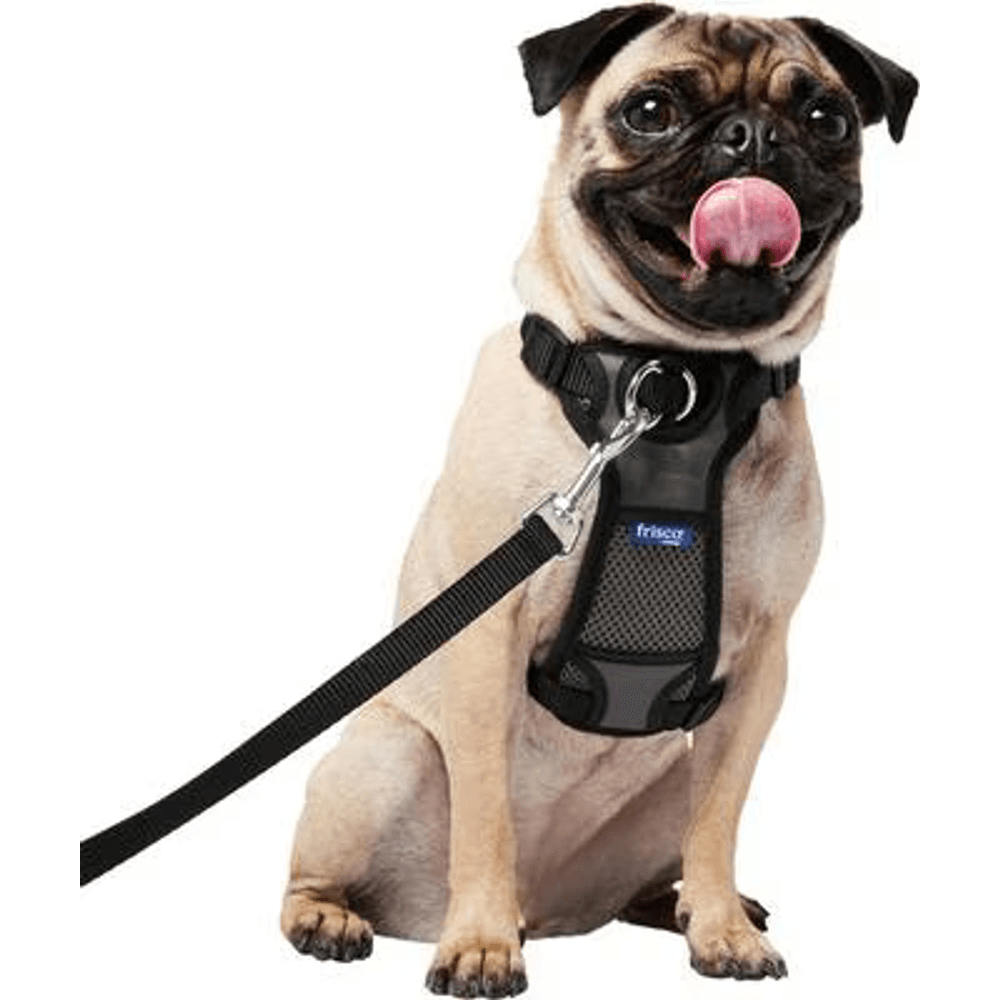
Check this Small harness against actual measurements and the current size chart. Adjust and test indoors; no-pull wording is not an escape-prevention guarantee.
Petful may earn a commission when you click through to Chewy, at no extra cost to you.
Size labels and equipment fit
Miniature, mini, micro, and teacup are sales descriptions rather than dependable adult-size guarantees for this cross. A newborn photograph cannot establish full-grown size. An eight-week-old puppy is still developing, and a seller’s estimate needs context from the parents and the puppy’s actual growth history.
The same uncertainty applies to equipment. Compare the Frisco padded harness in Small with current chest and neck measurements before buying. Some Pomchi puppies will be too small for the linked size; a future adult-size estimate cannot make a loose harness safe today.
Before handover, get answers to the practical questions that will matter that evening:
- What exact puppy food is being fed, and when was the last meal?
- Which toilet surface and schedule does the puppy know?
- What gentle handling and reward-based training have been introduced?
- How does the puppy respond when briefly separated from littermates or carers?
- Who should you contact with a concern after taking the puppy home?
A free Pomchi puppy still needs a documented transfer and veterinary assessment. Likewise, an adoption fee is not proof that all future care is included. Read the written return policy, keep copies of communications and receipts, and pause if the person pressures you to pay before basic questions are answered.
Pomchi Puppy Price and First-Year Costs
There is no single price that tells you how much a Pomchi is worth. A breeder’s asking price, a rescue adoption fee, and a completed sale are different figures. Without a current, attributable quote for the actual puppy and location, a precise range can give a false sense of certainty.
Compare what you will pay and what that payment includes. A higher price does not automatically mean better health screening or a better match. A lower price can still leave substantial costs for examinations, preventive care, equipment, and time away from work. Ask for an itemized quote before comparing two options. A black-and-tan coat or a “rare” color label does not explain a higher price; compare the documented care and terms included.

Build your first-year budget from local written quotes, keeping these categories separate:
- Acquisition: adoption fee or purchase price, deposit, and any agreed transport charge.
- Initial setup: secure pen, bed, carrier, measured harness, bowls, and cleaning supplies.
- Recurring care: complete puppy food, parasite prevention, grooming, and training support.
- Planned veterinary visits: examinations, vaccinations, and other care recommended for this puppy.
- Variable medical spending: illness, injury, diagnostic testing, and any insurance deductible or exclusions.
- Daily supervision: a sitter, walker, or other arrangement when your schedule cannot meet the puppy’s needs.
Write down whether each amount is one-time, monthly, or an estimate for a specific appointment. This prevents an attractive purchase price from obscuring the ongoing commitment. If considering insurance, read the waiting periods and coverage terms before assuming a problem will be reimbursed.
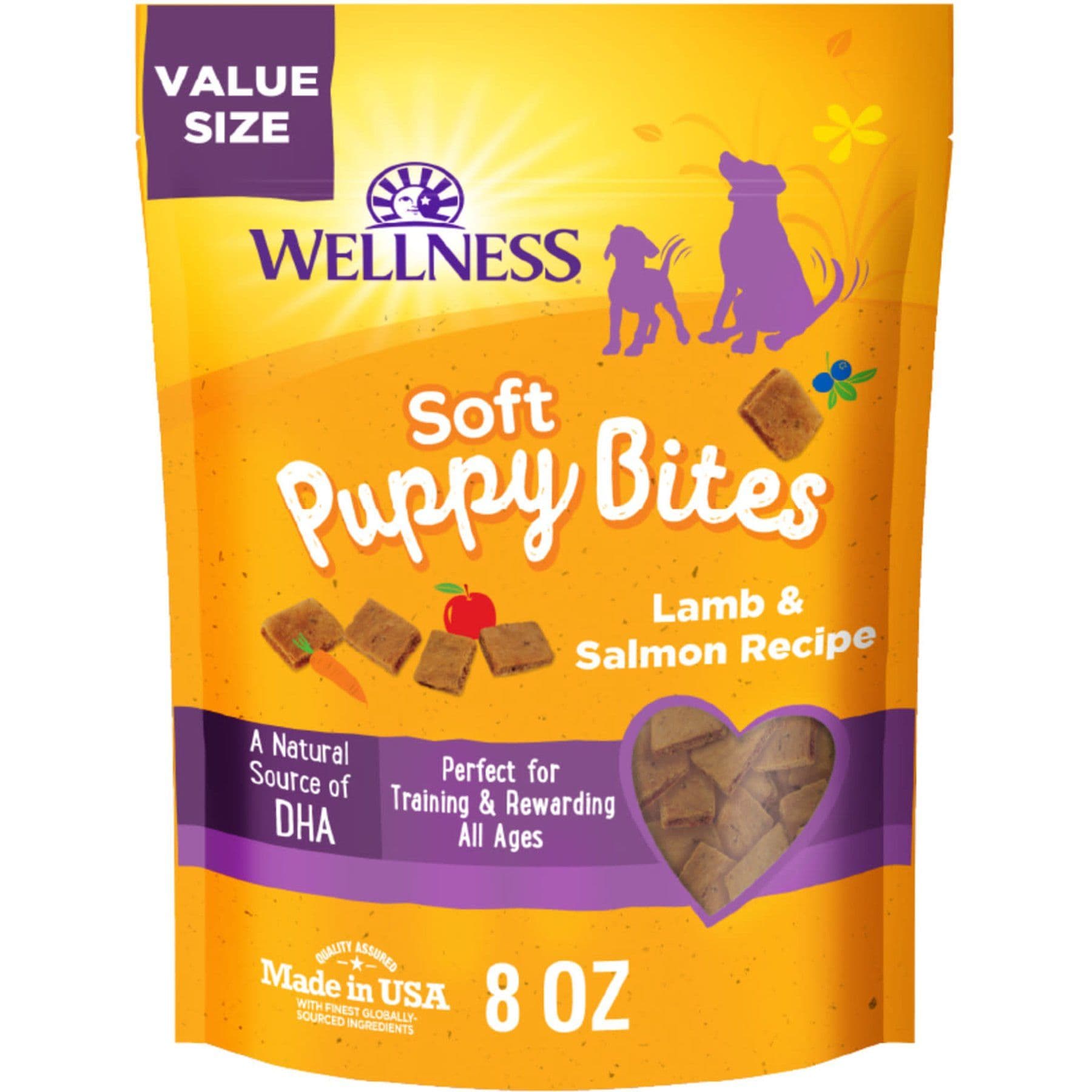
Soft puppy rewards for brief handling and learning sessions. Divide into suitable pieces and count them in daily food intake.
Petful may earn a commission when you click through to Chewy, at no extra cost to you.
For short training sessions, Wellness Soft Puppy Bites are a reward option to assess against the puppy’s needs. Divide them into suitable pieces and include them in the food budget and daily intake; buying treats does not replace arranging time for practice.
- 1Compare the actual written quote, not a color or teacup label.
- 2Check parent health records and the written return policy before paying a deposit.
- 3Separate acquisition costs, recurring care, and variable veterinary spending.
What Parent Records Can Tell You
Parent records help you ask better questions about inherited risk; they cannot promise a disease-free puppy or a particular lifespan. Ask for the registered names or other identification of both parents, the date and result of each examination, and any relevant family history. A DNA panel also has limits: it only addresses the variants included in that panel.
Have your veterinarian review the records alongside an examination of the puppy. Unknown parentage in an adopted dog calls for an individual care plan, rather than assumptions that the dog is either unusually healthy or destined to develop a problem. Our guide to Pomchi lifespan and health concerns explains how to interpret longevity estimates and discuss preventive care.
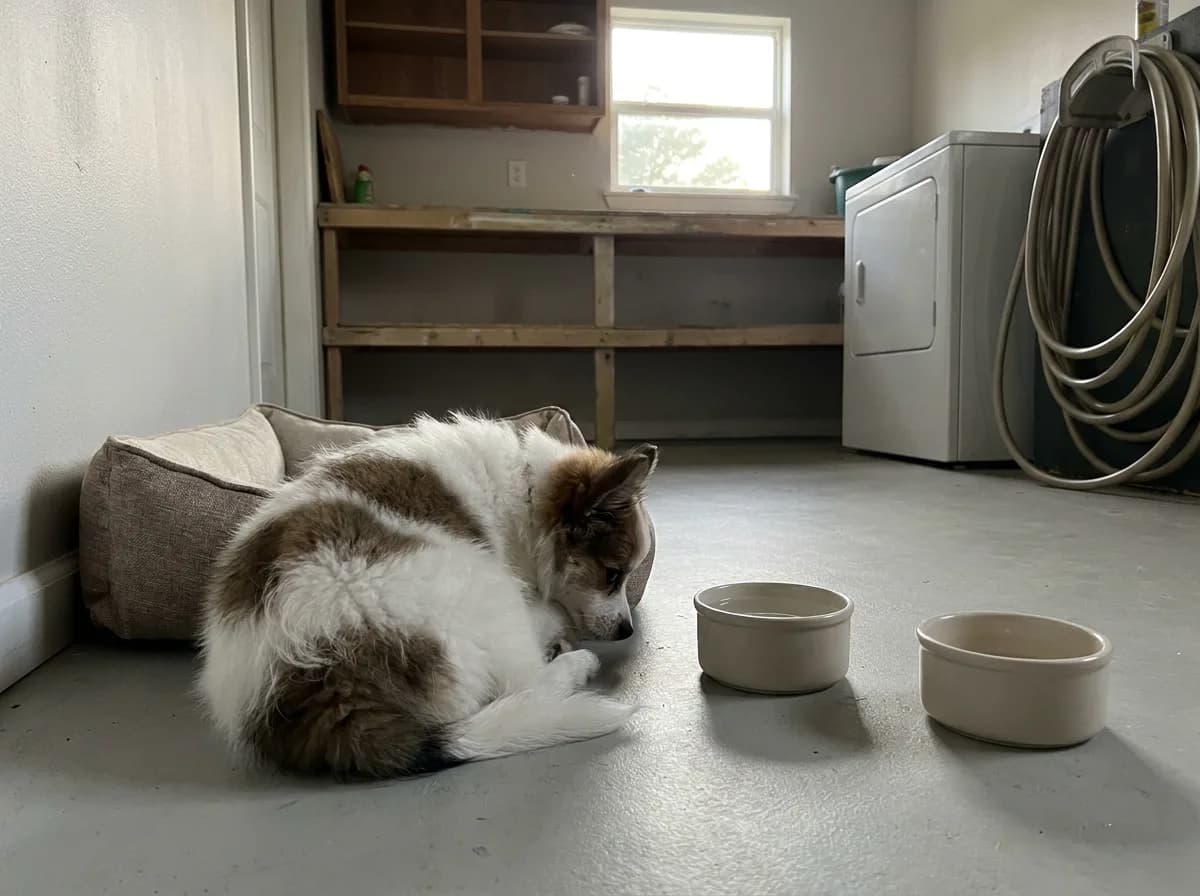
Keep the puppy’s own records in one place and bring them to the first visit. WebVet’s puppy vaccine schedule can help you prepare questions; your veterinarian should set the next steps from those records. Record the food and feeding routine too, so the veterinary team can assess growth with useful context. Health screening of the parents and routine puppy care serve different purposes; one does not replace the other.

Routine puppy bathing only within the current label and minimum-age directions. Not a treatment for unexplained skin problems.
Petful may earn a commission when you click through to Chewy, at no extra cost to you.
Preparing a Safe Home for a Tiny Puppy
A Pomchi’s small body makes gaps and floor-level hazards easy to overlook. Get down to puppy height before bringing the dog home. Check beneath furniture, around appliance cables, and along doors or barriers. A pen should provide a secure resting space with appropriate access to water, without loose items the puppy can swallow.
- Block stairs and unsafe drops rather than expecting the puppy to judge them.
- Put medicines, cleaning products, cords, and small objects out of reach.
- Give children a seated, supervised way to interact with the puppy.
- Provide a quiet retreat that other pets cannot crowd.
- Plan safe car transport before the first journey home.
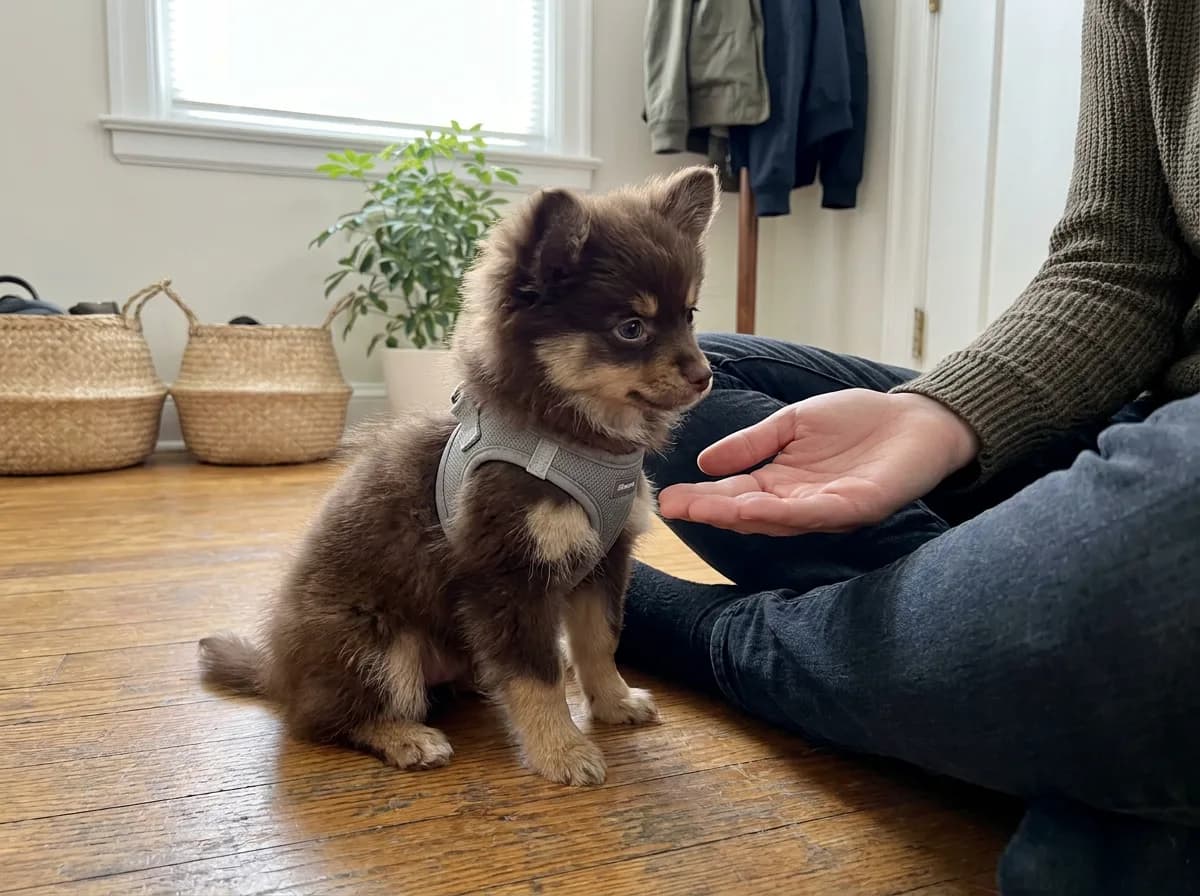
For a puppy old enough for its label, TropiClean’s Gentle Coconut Puppy and Kitten Shampoo is an option for routine washing; the listed product is for pets 12 weeks and older. Follow its directions and avoid the eyes. The “hypoallergenic” product wording does not mean that the puppy is allergy-free or that the shampoo treats a skin condition.
Choose a harness by the puppy’s current chest measurement and the product’s adjustment range. Do not buy solely by the word “toy” or by expected adult weight. Check that the puppy can move comfortably and cannot back out, then reassess fit as they grow. See what to expect from a full-grown Pomchi for measuring and growth-tracking guidance.
Arrange the first veterinary appointment before handover if possible. Ask the practice what records to bring and how to manage contact with other dogs while the puppy’s preventive-care plan is being established.
The First Weeks: Food, Sleep, Toileting, and Socialization
Consistency makes the transition easier to manage. Start with the documented food and schedule, then discuss any change with your veterinary team. AAHA’s puppy-care guidance recommends an individualized discussion of nutrition, feeding schedules, growth, behavior, and household safety. Avoid selecting a diet solely because the puppy is described as teacup or because a package pictures a similar dog.
Make a simple household routine that everyone can follow:
- Offer meals on the agreed schedule and note changes in appetite.
- Take the puppy to the chosen toilet area after waking and at regular opportunities.
- Reward successful toileting promptly and clean accidents without punishment.
- Alternate brief play and training with undisturbed rest.
- Introduce handling, sounds, people, and suitable environments gradually, allowing the puppy to retreat.
Socialization means building comfortable experiences, not arranging constant greetings. Discuss appropriate settings with your veterinarian, and use the AVSAB’s reward-based training guidance when choosing a trainer. A frightened puppy should not be forced into an interaction to “get used to it.”
Whether Pomchis are good family dogs depends on the individual dog and the home’s expectations. Neither a male nor female puppy comes with a guaranteed temperament. Barking, growling, or snapping needs context, including fear, handling, and possible discomfort. Our Pomchi breed guide covers personality and the differences from their Pomeranian and Chihuahua parents, including why a Pomchi is not automatically larger than every Chihuahua.
Handling and Grooming
Introduce grooming in short, comfortable sessions before knots or dirty fur make it urgent. Let the puppy investigate a brush, reward calm handling, and stop before the session becomes a struggle. A short coat and a fluffy coat need different tools; use our Pomchi coat and grooming guide to match care to the fur in front of you.
Pomchi Puppies Questions
Request a current adoption fee or itemized breeder quote for the actual puppy. Neither a national price estimate nor a rare-color label tells you what veterinary care, transport, or support is included. Compare the written inclusions and add your own first-year care budget before deciding what you can afford.
An itemized quote should identify the puppy, total price, deposit, included care, additional charges, and handover arrangements. The written terms should also explain cancellation, refunds, and the return policy. Clarify any promise about health or adult size before payment, and keep a copy of the agreement.
Begin with the toilet surface and schedule the puppy already knows, then offer frequent trips after waking, meals and play. Stay nearby so you can reward successful toileting immediately. Supervise between trips or use a suitable puppy-safe resting area; a pen does not replace toilet breaks. If accidents keep happening, shorten the interval and review supervision instead of punishing the puppy. Record successes to find a workable routine.
Yes, incomplete ancestry does not automatically make an adopted puppy a poor choice. Ask the rescue what is known, what is estimated and what the foster carer has observed. Obtain the puppy’s own examination, vaccination and parasite-care records and arrange an individual veterinary plan. Compare the written return policy and available support. Be prepared for uncertainty about adult size and coat rather than treating a guessed breed label as proof.
BVMS, MRCVS
Dr. Pippa Elliott, BVMS, MRCVS, is a veterinarian with nearly 30 years of experience in companion animal practice. Dr. Elliott earned her Bachelor of Veterinary Medicine and Surgery from the University of Glasgow. She was also designated a Member of the Royal College of Veterinary Surgeons. Married with 2 grown-up kids, Dr. Elliott has a naughty Puggle named Poggle, 3 cats and a bearded dragon.
Sign up for expert-backed reviews and safety alerts all in one place.