Pomchi: A Guide to the Pomeranian Chihuahua Mix
Learn what to expect from a Pomeranian Chihuahua mix, with practical Pomchi routines for safe handling, visitors, training, food and coat care, plus links to focused size, puppy and health guides.

BVMS, MRCVS
Petful is reader supported. As an affiliate of platforms like Amazon and Chewy, we may earn a commission when you buy through links on this page. There is no extra cost to you.
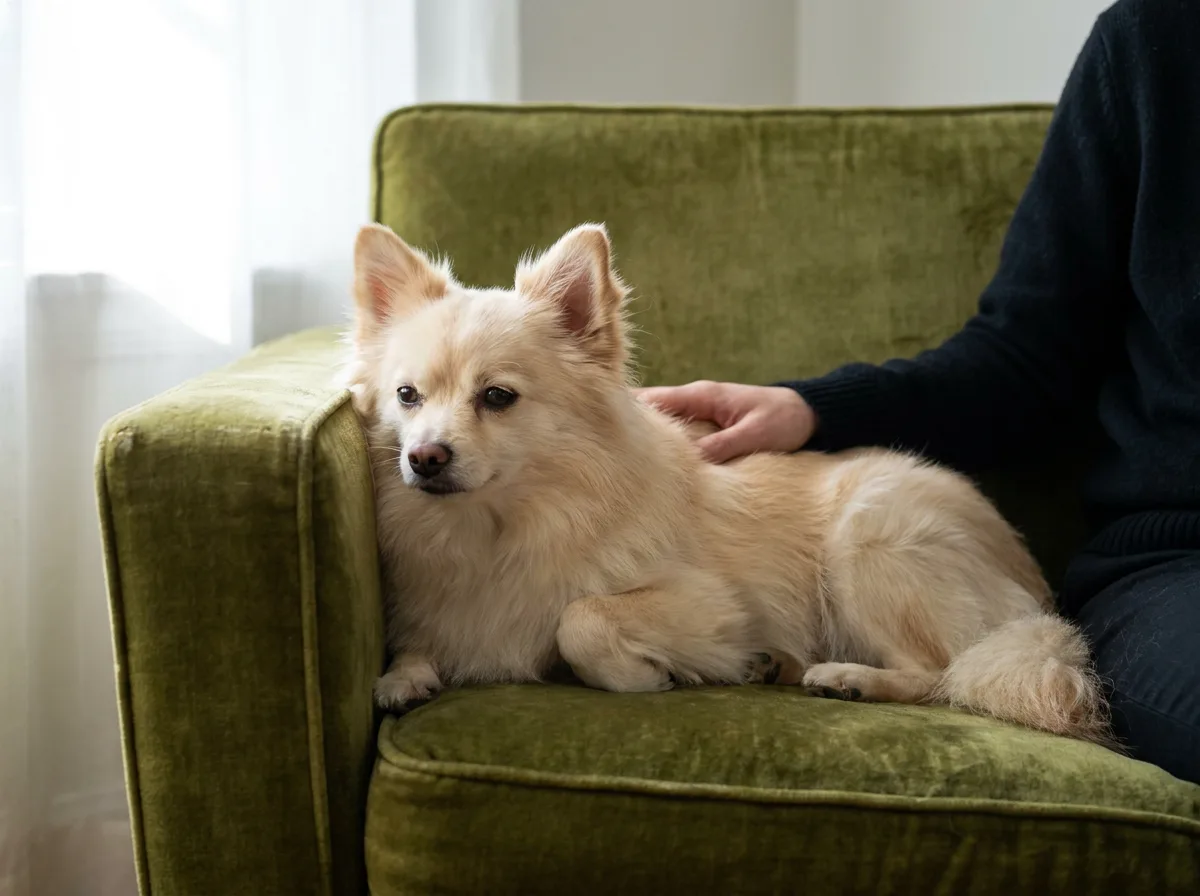
A Pomchi is a Pomeranian–Chihuahua mix. The name identifies the parent breeds, but it does not promise one adult size, coat or personality. Some dogs look strongly like one parent, while others show a blend of features. The useful question is how the individual dog fits your household and the care you can provide.
Small size can make living space and transport easier to arrange. It also makes safe handling, comfortable walking equipment and a protected resting area especially practical considerations. Add a realistic plan for barking, training and companionship before deciding that a Pomchi will be an effortless apartment pet.

Sign up for expert-backed reviews and safety alerts all in one place.
What Is a Pomchi?
The Pomchi combines two established toy breeds: the Pomeranian and the Chihuahua. The AKC describes the Pomeranian as a lively small companion with a substantial coat, and the Chihuahua as an alert small dog. Those parent descriptions provide context, not a formula that fixes every trait in their offspring.
A cross does not inherit half of every visible characteristic in a predictable way. The Pomchi label therefore cannot supply a single breed-standard appearance or temperament to judge all individuals against. Ask what is known about the actual parents and the dog’s background, especially when a rescue identification is based mainly on appearance.
| Household consideration | Arrangement to plan | What to establish about the dog |
|---|---|---|
| Safe handling | Calm floor-level interaction and adult supervision | Comfort with touch and being lifted |
| Visitor routine | Space away from the doorway and gradual greetings | Triggers for barking or retreating |
| Daily companionship | A workable care plan during absences | Current experience of being alone |
| Walking | Equipment fitted to actual measurements | Leash skills and response to distractions |
| Children or other pets | Separate rest areas and supervised introductions | Individual play style and comfort |
| Coat and dental care | Time for routine handling and an appropriate budget | Actual coat needs and veterinary advice |
A Frisco padded harness is one option only if the linked size matches the dog’s chest, neck and the manufacturer’s fit guidance. Check it indoors before using it outside. “Small” on a package does not guarantee a suitable fit for a tiny Pomchi, and an oversized harness can create problems even if the product is well made.
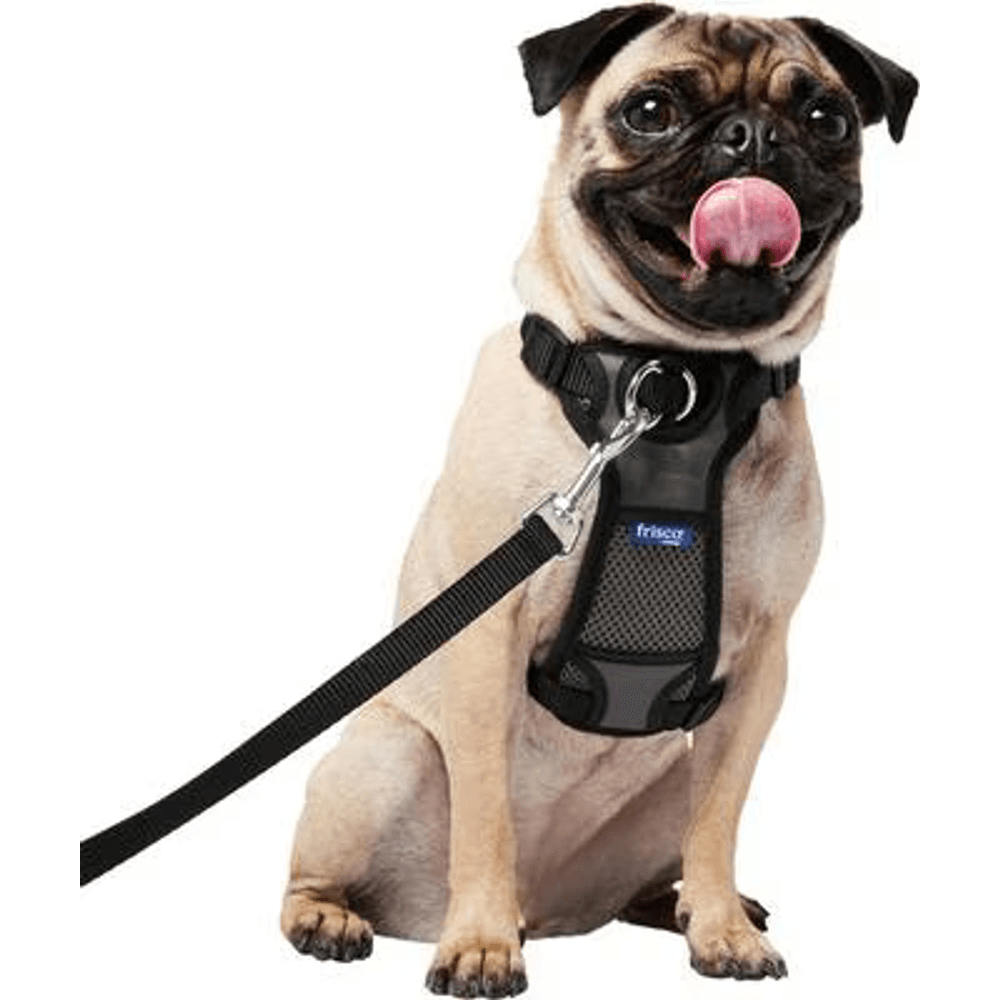
Check this Small harness against actual measurements and the current size chart. Adjust and test indoors; no-pull wording is not an escape-prevention guarantee.
Petful may earn a commission when you click through to Chewy, at no extra cost to you.
What a Pomchi can look like
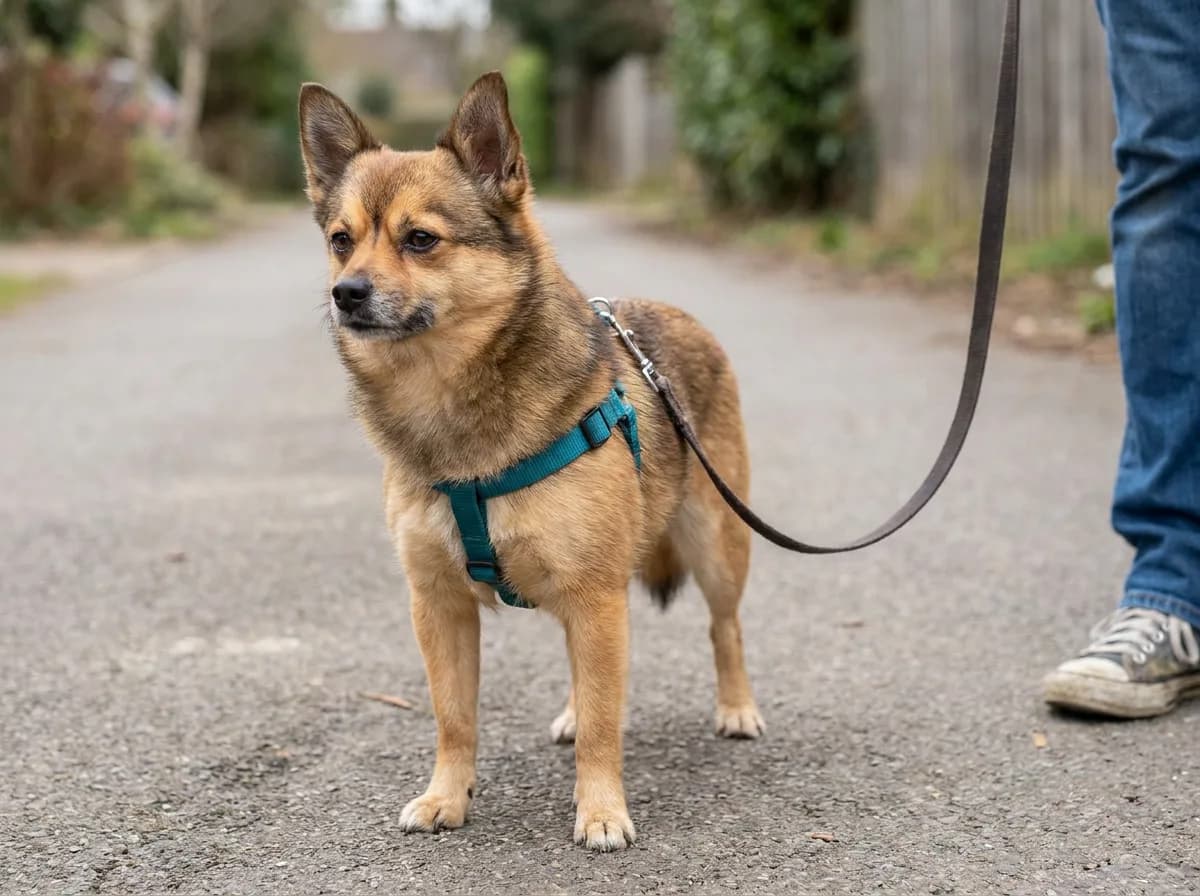
Pomchi pictures can show markedly different dogs. Coat length and fullness, ear carriage, muzzle proportions and the appearance of the tail can vary. A fluffy dog may resemble the Pomeranian parent more strongly, while another may look closer to a Chihuahua. Neither impression establishes a precise ancestry percentage.
A Pomchi with floppy ears is not something you can identify or exclude from the mix using the ears alone. Photographs provide visible descriptions, not a pedigree test. Likewise, a mask, tricolor markings or a curled-looking tail should be described as features rather than used to invent a particular parent combination.
For broader context, Petful’s Pomeranian mixes guide covers other crosses involving that parent breed. This guide stays with the Pomeranian–Chihuahua combination. A dog described as a Pomchi crossed again with a Pomeranian or Chihuahua needs its actual background explained rather than being assigned the same expected proportions as every other dog carrying the name.
Compare the individual, not just the label
Ask a breeder, rescue or current caregiver what they mean by “Pomchi” and which records support the description. If the parents are known, learn about their adult size, coat and behavior. If they are unknown, acknowledge the uncertainty and focus on the adult dog’s observable needs instead of filling the gaps with guesses.
- Meet the dog in a setting where its normal behavior can be discussed.
- Ask for examples of how it responds to handling, visitors and other animals.
- Distinguish a measured adult size from a puppy prediction.
- Request the available health and care records.
- Clarify any registry or club claim directly with the organization named.
Male or female sex is also not a dependable shortcut to a preferred Pomchi personality. Compare the individual’s behavior and history. A claim that every female is calmer or every male is more affectionate does not tell you how that dog will respond to your children, working hours or visiting friends.

Finger toothbrush only if it fits comfortably. Ask your veterinary team to demonstrate; stop for pain or use a smaller tool.
Petful may earn a commission when you click through to Chewy, at no extra cost to you.
Living With a Pomchi: Barking, Training, and Family Fit
Assess Pomchi temperament through ordinary situations: how the dog responds to a visitor, recovers after a noise, accepts handling, and settles when attention ends. Those individual personality traits matter more than assuming every small dog is an easy lap companion. Ask the current carer what helps this dog succeed and which situations still need support.
- 1Plan safe handling and a protected place to rest.
- 2Use a predictable visitor routine rather than forcing greetings.
- 3Reward useful behavior and build alone-time skills gradually around the individual dog.
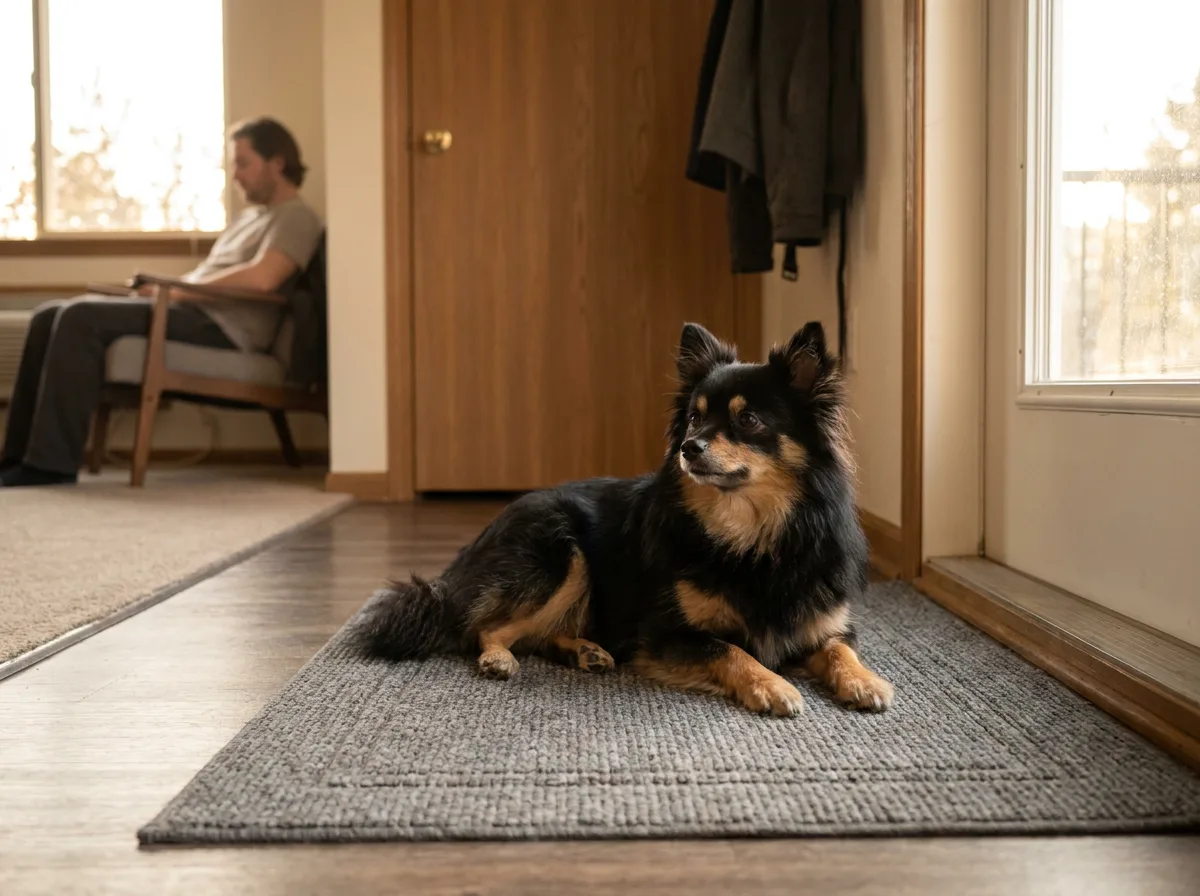
Build safe handling into everyday life
Arrange interactions so the dog does not have to tolerate being scooped up unexpectedly whenever someone wants attention. Invite the dog close, handle it calmly and support its body when lifting is necessary. If you are unsure how to lift a particular dog comfortably, ask your veterinarian to demonstrate, especially if it has pain or mobility concerns.
Children need adult supervision and a clear rule that a resting dog can be left alone. Floor-level interaction reduces the need to carry a small dog around. Provide a protected bed where the Pomchi can withdraw from play, and keep energetic games away from that space. Small size should increase your attention to boundaries rather than make the dog’s objections seem unimportant.
A Jasper finger toothbrush is one option to discuss if it fits the dog’s mouth and can be used comfortably. A finger brush is not automatically the best fit for a very small mouth, and the purchase does not replace professional advice about dental disease. Stop if the dog shows pain or the task cannot be done comfortably.
Introduce other pets carefully
The same principle applies to larger pets. A friendly dog can still be too boisterous for a much smaller companion. Start introductions with control over distance and give each animal a way to disengage. Evaluate the actual interaction instead of treating a Pomchi as automatically compatible with every dog or cat because it is small.
Give alert barking a practical response
A dog that notices sounds in a shared hallway may need a different plan from one that barks when visitors reach for it. Observe what happens immediately before the barking and what the dog does afterward. That information helps you change the situation, rather than applying the same response to every sound.
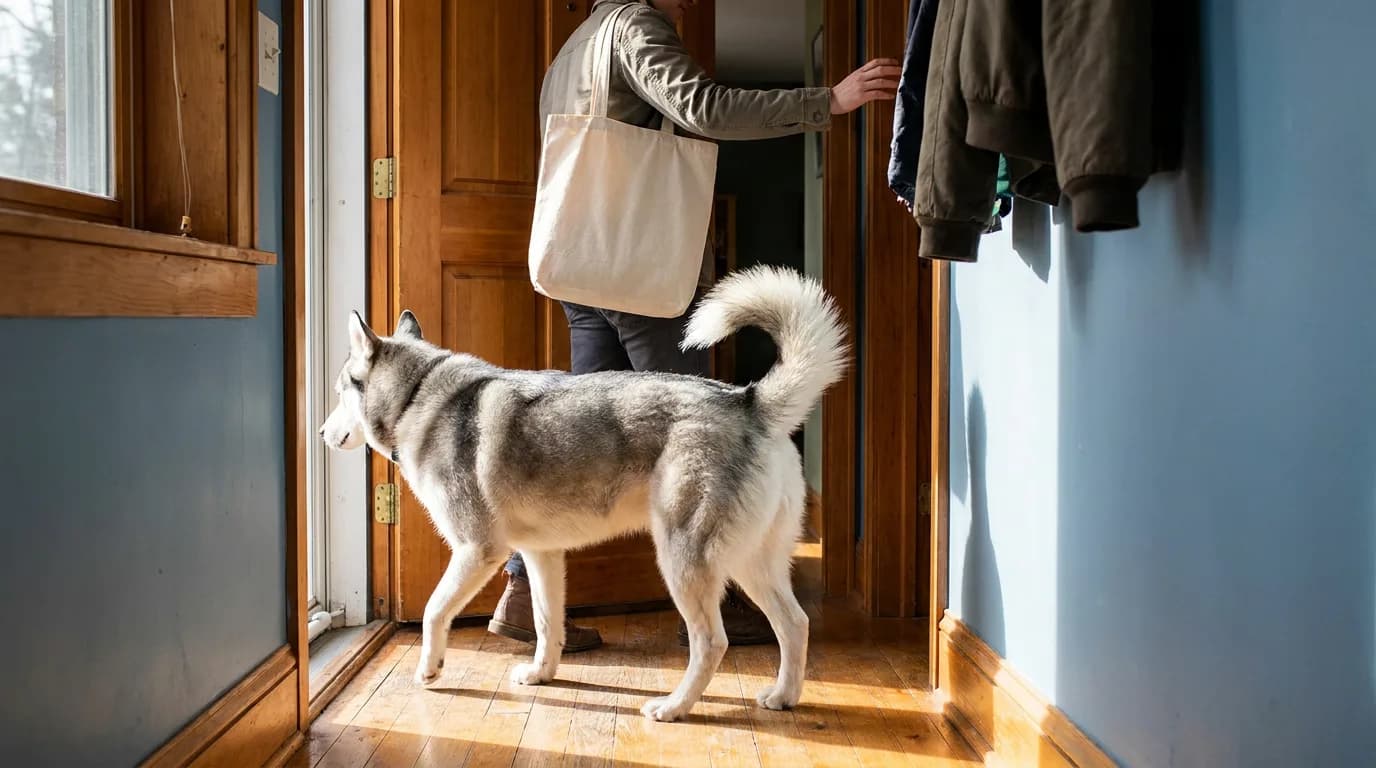
For visitors, start with a predictable arrival routine. The dog can wait away from the doorway while someone admits the guest, then approach when the situation is calmer. Visitors should allow space instead of crowding the dog or insisting on contact. If the dog remains uncomfortable, a quiet separation is a reasonable arrangement while you work on the problem.
Petful’s guide to excessive dog barking explains why identifying the trigger matters. Do not use a promise that all Pomchis are “good watchdogs” as a substitute for deciding how much noise your household can accommodate. A small dog can still create a significant problem in a noise-sensitive building.
Teach useful skills with rewards
The American Veterinary Society of Animal Behavior recommends reward-based training. For a Pomchi, begin with useful everyday skills in a setting where the dog can concentrate. Reward coming when called indoors, calmly accepting equipment and settling on a mat before expecting the same behavior around exciting visitors or outdoor distractions.
- Keep practice short enough for the dog to stay engaged.
- Reward the behavior you want as it happens.
- Increase distractions gradually rather than changing everything at once.
- Use a comfortable distance from things the dog finds worrying.
- Ask a qualified reward-based trainer for help when progress stalls.
Wellness Soft Puppy Bites are one reward option for an appropriate puppy. Use small pieces suited to the dog and count treats within its daily intake. Play or access to something the dog enjoys can also be useful rewards. A product cannot replace timing, consistency or a task the dog understands.

Soft puppy rewards for brief handling and learning sessions. Divide into suitable pieces and count them in daily food intake.
Petful may earn a commission when you click through to Chewy, at no extra cost to you.
Make toilet training predictable
For Pomchi potty training, choose a consistent toilet area and provide frequent opportunities appropriate to the dog’s age and routine. Go with the dog so you can reward the desired result promptly. Pay attention after waking, meals and active play, and adjust the schedule using what you observe rather than expecting a small puppy to follow an adult timetable.
Supervision helps prevent a pattern of unnoticed accidents. If an accident happens, clean it and review the timing or access arrangement rather than punishing the dog afterward. A sudden change in a previously reliable dog deserves a veterinary conversation, especially if there are other signs of discomfort or illness.
Practice being apart without assuming independence
Daily companionship does not mean a dog must be held constantly. Teach comfortable resting and brief separations gradually, starting within what the dog can manage. A bed or gated resting area can help organize the space, but it is not a substitute for learning whether the dog feels comfortable there.
If your household is away for much of the day, establish a dependable care arrangement before bringing the dog home. Do not rely on a new dog to tolerate long absences simply because its previous caregiver described it as independent. Persistent distress during absences needs a tailored plan with qualified help, rather than a longer period of being left to cope.
A Practical Daily Routine for a Pomchi
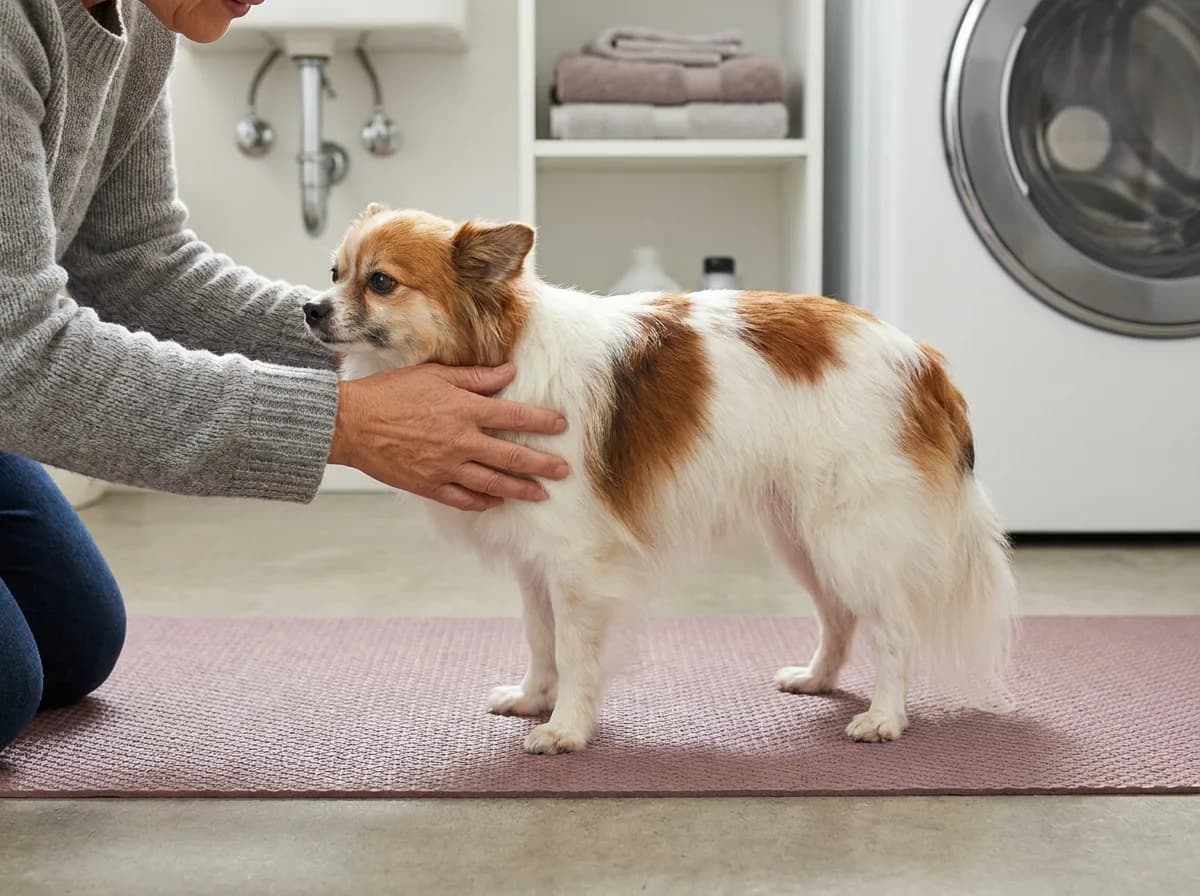
Feed the individual dog
Pomchi dog food should be chosen for the dog’s life stage, nutritional needs and ability to eat it comfortably. There is no single portion or special Pomchi diet that follows from the crossbreed name. Use the food label as a starting point and ask your veterinarian to help adjust the plan to the dog’s body condition, activity and health.
The World Small Animal Veterinary Association’s nutrition guidance emphasizes an individual nutrition assessment. Measure what you feed and include treats and other extras in that discussion. A scoop without a known size makes it difficult to compare amounts, while different foods can provide different calories in the same volume.
- Record the exact food and the amount offered.
- Keep all caregivers aware of meals and treats already given.
- Use a complete diet appropriate to the life stage.
- Ask about an appropriate meal schedule for a puppy or a dog with medical needs.
- Review the plan when activity, body condition or health changes.
A small bowl is not a portion guide. Neither is the amount another Pomchi eats. If a dog repeatedly leaves food, gains weight or seems uncomfortable eating, discuss the change rather than automatically changing brands or adding increasingly rich extras. The useful information is what changed, when it began and what the dog is actually consuming.
Keep caregivers on the same page
If several people share care, make the handover clear. Record who fed the dog, which training rewards were used and when it last had an opportunity to toilet. A simple note can prevent a second meal being given because someone mistakes attention-seeking for a missed feeding. It also makes a change in appetite or routine easier to describe accurately.

Nonmedicated shampoo for ordinary cleaning of a healthy coat. Follow the label; ask a veterinarian about unexplained irritation.
Petful may earn a commission when you click through to Chewy, at no extra cost to you.
Agree on the same words and arrangements for everyday tasks. If one person rewards waiting at the door while another encourages rushing through it, the dog receives an inconsistent lesson. A shared routine does not need to be elaborate: identify the behavior you want, the reward and the practical setup. Show a visiting caregiver how the harness fastens and where the dog rests before leaving them to improvise.
Include walks, play and rest
Plan daily opportunities for movement, sniffing and interaction. Match the activity to the individual and introduce new demands gradually. Small size does not mean the dog can spend every day being carried, but it also does not justify assuming that a puppy should keep pace with a much larger adult dog on a long outing.
Use a secure leash and check outdoor spaces for gaps the individual dog can pass through. During play, choose objects suited to its mouth and play style, inspect them for damage and supervise. Rest is part of the routine too: give the dog an undisturbed place to settle when household activity continues around it.
Check the coat during ordinary handling
Use calm handling to notice tangles, debris and changes in the skin or coat. Work with the actual hair length and density rather than assuming every Pomchi needs the same brush or haircut. A dog with fuller hair may need more attention in areas where equipment rubs, while a shorter coat still needs routine observation.
For ordinary cleaning of a healthy coat, Burt’s Bees Oatmeal Dog Shampoo is a nonmedicated option to assess against the label and your dog’s needs. It is not a treatment recommendation for unexplained itching or hair loss. Ask a veterinarian about skin concerns and a suitable groomer about difficult tangles rather than forcing a tool through the coat.
Keep health planning broader than the appearance of the coat. The Pomchi lifespan and health guide covers long-term questions and the limits of predicting a mixed dog’s lifespan. A cheerful appearance or mixed ancestry does not remove the need for routine veterinary care and individual assessment.
Pomchi Size and Coat at a Glance
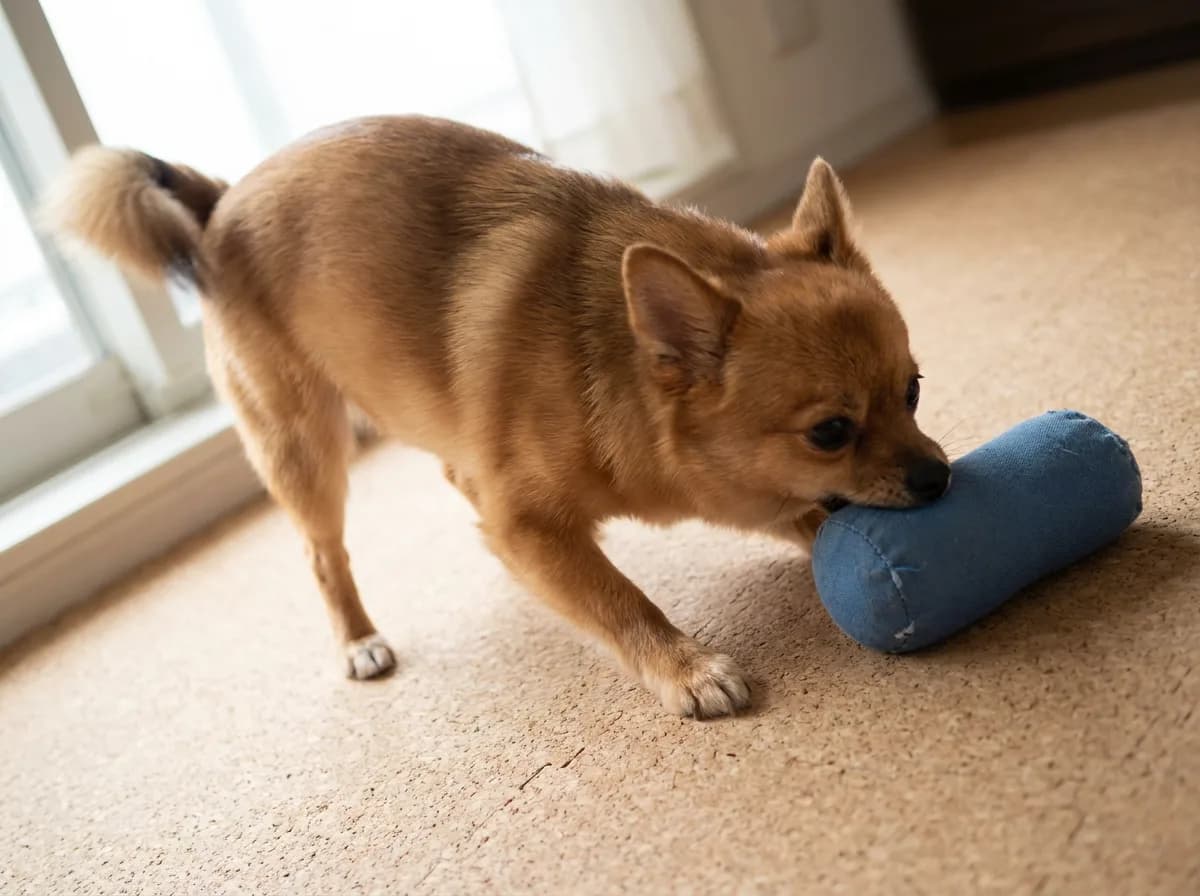
An adult dog’s measurements are more useful than a “toy,” “miniature” or “teacup” sales label. For a puppy, parent information can provide context but cannot guarantee a precise adult result. The full-grown Pomchi guide explains how to think about growth and choose equipment without relying on an invented standard size.
Coat length and density also vary. The Pomchi coats and grooming guide covers brushing, shedding and haircut decisions separately. Avoid selecting a puppy on an assurance that the mix will never shed or that one photograph proves how its adult coat will behave.
For color descriptions, use the Pomchi colors guide. A black, cream, brown or patterned coat can be visually appealing, but color does not establish temperament, exact parentage or health. Keep those questions separate when discussing the dog with its source.
Choosing a Pomchi and Planning Long-Term Care
Begin with the source and the individual dog rather than an attractive listing. Ask who raised the puppy, which parents are known, what screening and routine care records are available, and how support works after placement. For an adult, discuss its current routine, handling preferences and known experience with children or other animals.
Our Pomchi puppies guide covers source evaluation, purchase or adoption and the early care questions in more detail. A fee should be understood through the specific agreement, not a universal Pomchi price claim. Ask what is included and which costs begin after the dog comes home.
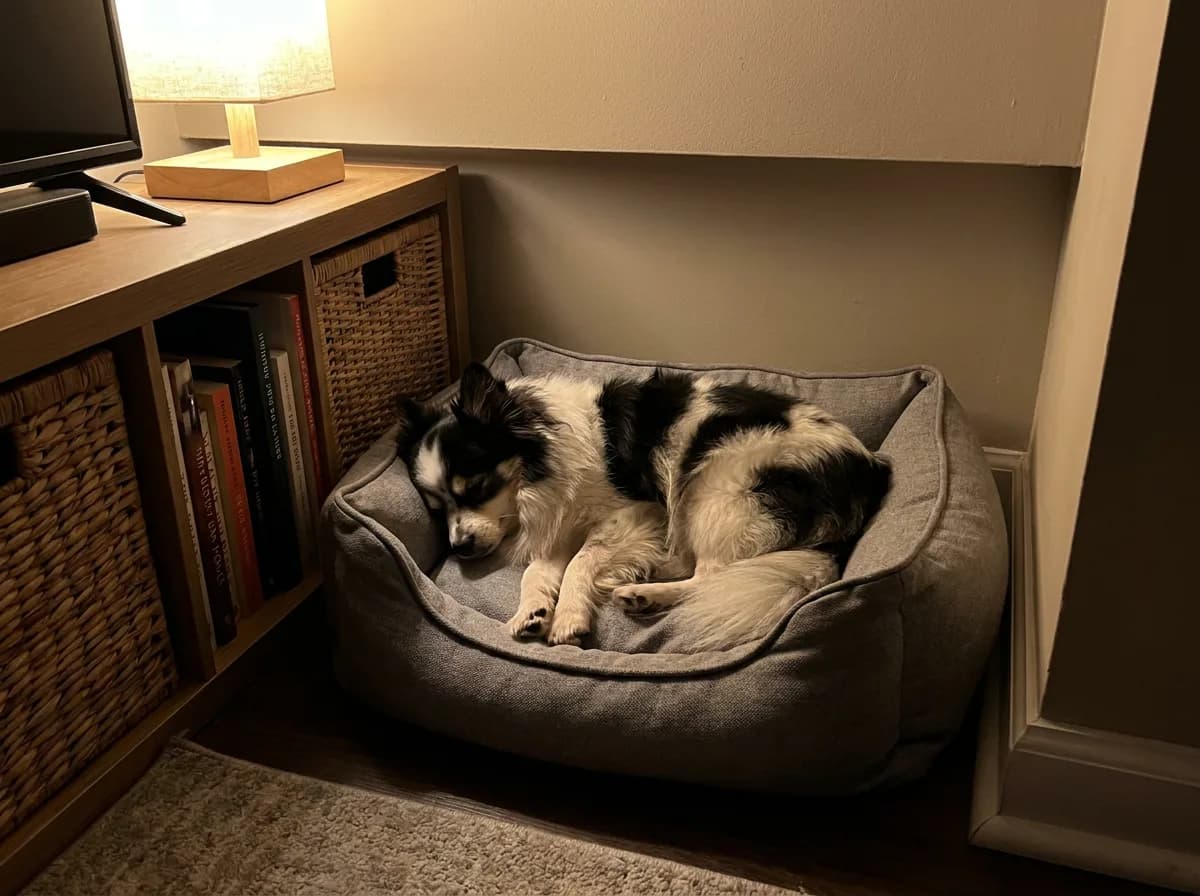
Budget for dental and coat care
Include home dental care and professional assessment in the budget. The AVMA’s dental-care guidance encourages discussing suitable home brushing and dental products with your veterinarian. Build the toothbrushing routine gradually rather than waiting until the dog is uncomfortable and trying to introduce everything at once.
Coat expenses depend on the actual hair and how much maintenance you can do at home. Ask a groomer what a proposed appointment includes and how the dog will be introduced to handling. Keeping the coat comfortable can be more important than maintaining a fashionable silhouette, particularly when the dog is still learning to accept grooming.
Prepare the first week around familiar routines
- Obtain the current feeding and toilet routine before pickup.
- Set up a quiet bed and a manageable area of the home.
- Confirm that walking equipment fits the dog you are bringing home.
- Introduce household members calmly and keep early visits manageable.
- Arrange the first veterinary appointment and bring the available records.
- Decide who covers care if the usual person is delayed or unavailable.
Keep the early days understandable rather than filling them with every visitor and activity at once. Observe where the dog settles, which sounds attract attention and how it responds to brief handling. Use those observations to adjust the home arrangement. A good transition gives you information about the individual instead of testing how much novelty it can tolerate.
Test the match against your busiest day
Before committing, work through a day when nobody has spare time. Establish who takes the dog outside, who provides company, where it rests during household activity and how a visitor is admitted. If the plan depends on the dog always staying quiet, accepting every person or never needing help with grooming, the arrangement needs more work.
An adult Pomchi with a well-described foster history may offer more observable information than a young puppy whose mature traits remain uncertain. That does not make every adult easier or every puppy difficult. It gives you a different kind of evidence to assess. Ask the source to explain both the dog's strengths and the situations that need support, then decide whether those needs fit the routine you can sustain.
Keep the source's contact details and agreed support arrangements with the care records. Knowing whom to contact makes the first questions easier to resolve after the dog arrives.
Pomchi Questions
A Pomchi can be a good companion for a household able to provide gentle handling, daily companionship and consistent training. Small size does not guarantee easy apartment living or compatibility with every child and pet. Meet the individual dog, discuss its routine and make sure your home can accommodate its actual behavior and care needs.
The crossbreed name does not make every Pomchi aggressive or guarantee that none will show aggression. Take fear signals, growling and discomfort seriously, avoid forced handling, and use reward-based training. Sudden behavior changes or concerning incidents warrant veterinary advice and qualified behavior support rather than dismissing the problem because the dog is small.
A Pomeranian is an established breed with its own standard. A Pomchi has a Chihuahua parent or Chihuahua ancestry as well as Pomeranian ancestry, with variable inheritance of appearance and behavior. A fluffy Pomchi may resemble a Pomeranian closely, but resemblance alone does not establish pedigree, exact proportions or a predictable temperament.
Some Pomchis are quick to alert to hallway sounds, visitors or activity outside, but the cross does not have one predictable noise level. Ask what triggers the individual dog and whether it can settle afterward. Manage the view or distance from the trigger and reward a useful alternative, such as resting away from the door. Barking during absences needs an alone-time assessment, not simply more practice with visitors.
A small dog still needs a clear toilet routine and prompt rewards. Take the puppy to the same area after waking, meals and play, and stay close enough to reward the result. Frequent accidents mean the schedule or supervision needs adjusting; they do not prove stubbornness. Keep a simple record of successful trips so you can learn the individual pattern. A sudden loss of reliability in a previously trained dog warrants a veterinary check.
BVMS, MRCVS
Dr. Pippa Elliott, BVMS, MRCVS, is a veterinarian with nearly 30 years of experience in companion animal practice. Dr. Elliott earned her Bachelor of Veterinary Medicine and Surgery from the University of Glasgow. She was also designated a Member of the Royal College of Veterinary Surgeons. Married with 2 grown-up kids, Dr. Elliott has a naughty Puggle named Poggle, 3 cats and a bearded dragon.
Sign up for expert-backed reviews and safety alerts all in one place.