10 Popular Great Pyrenees Mixes (With Pictures)
Compare 10 Great Pyrenees mixes by possible size, coat, guardian behavior and care needs while understanding why mixed-breed traits remain unpredictable.
Petful is reader supported. As an affiliate of platforms like Amazon and Chewy, we may earn a commission when you buy through links on this page. There is no extra cost to you.
Great Pyrenees mixes can combine a livestock guardian's size, independence, coat, and alert behavior with traits from another breed. The result is not a predictable midpoint. Littermates can differ in height, coat, sociability, prey interest, trainability, barking, and health even when their parents are known.
This guide compares ten commonly discussed Great Pyrenees mixes without promising a designer outcome. Use the profiles to prepare questions, then evaluate the individual dog in front of you. A shelter label based on appearance is useful shorthand, not documentary proof of ancestry.

Sign up for expert-backed reviews and safety alerts all in one place.
Before comparing Great Pyrenees mixes
Mix identity and predictability includes great pyrenees mix and What can and cannot be predicted in a Great Pyrenees mix. These are related but distinct reader decisions, best resolved by connecting the label to the individual dog's records, condition, behavior and daily care needs. Use the measurements, records and observable conditions in this section to identify what is known, what still needs confirmation and which next action the evidence supports. Before acting, record the source, date and individual-dog evidence behind the conclusion. That prevents a broad breed tendency, seller label or isolated number from becoming a promise about one dog and keeps the decision practical, traceable and useful.
- 1Mixed-breed traits are ranges, not guarantees
- 2A Great Pyrenees parent can contribute guardian behavior, barking, roaming and a dense coat
- 3The other parent may change energy, size and trainability without erasing guardian instincts
- 4Adult rescue observations often predict household fit better than a puppy photograph
- 5DNA ancestry results and veterinary screening answer different questions
Before comparing Great Pyrenees mixes, define the household decision first: adult size, barking tolerance, fencing, other animals, coat care and handling capacity. A mix name describes ancestry, not a guaranteed package of traits. Use records and observed behavior to test whether the individual dog fits those limits.
For each candidate, record confirmed ancestry separately from shelter estimates, then note observed noise, recovery, leash behavior, handling and animal compatibility. That evidence makes comparisons useful without implying that one cross is universally best or that mixed breeding removes Great Pyrenees guardian traits.
What to verify for every Great Pyrenees mix
- Known adult measurements and current body condition
- Observed behavior around the actual household, visitors and other animals
- Connected veterinary, age, identity and history records
The American Kennel Club Great Pyrenees profile provides a reference for the purebred side of the mix. Petful's Great Pyrenees breed profile covers the guardian traits a mix may inherit.
| Question | Useful evidence | What not to assume |
|---|---|---|
| What breeds are present? | Pedigree, known parents or ancestry test | Appearance alone proves ancestry |
| How large will the dog become? | Adult parents, current age, growth trend and veterinary assessment | One average predicts final weight |
| Will the dog guard or bark? | Foster history and observations across settings | The other breed cancels guardian behavior |
| How much will the dog shed? | Current coat, undercoat and seasonal history | A curly coat is automatically low-shedding |
| Is the dog healthy? | Examination, records and appropriate testing | An ancestry result is a diagnosis |
What is the best Great Pyrenees mix?
The short answer is that there is no best Great Pyrenees mix for every home. A cross name cannot predict which parent's size, coat, guardian behavior, prey drive or trainability will appear. The best match is the individual dog whose documented behavior, health and daily needs fit the household, with adult foster observations often providing more useful evidence than a puppy photograph.
Are Pyrenees mixes good dogs?
The short answer is yes: Pyrenees mixes can be good dogs when their actual traits fit the home. They may inherit giant size, barking, guarding and a dense coat from the Pyr side, plus herding, retrieving or chase behavior from the other ancestry. Review observed behavior and known history instead of assuming that mixing breeds cancels difficult guardian traits.
Why do so many Great Pyrenees end up in shelters?
The short answer is that many Great Pyrenees and mixes are surrendered when size, barking, roaming, shedding, fencing needs or housing restrictions exceed expectations. Mixed ancestry can add uncertainty about adult coat, body and behavior. Adoption decisions should use foster observations, veterinary records and realistic management capacity rather than a promise that one cross will eliminate demanding Pyr traits.
What dogs do Great Pyrenees not get along with?
There is no reliable breed blacklist for Great Pyrenees or their mixes. Compatibility depends on the individual dogs' sex, maturity, social history, guarding, chase behavior, play style and ability to share space. A mix label cannot tell you whether two dogs will remain safe together after social maturity.
Use neutral, gradual introductions and preserve separate food, rest and decompression areas. Watch for freezing, hard staring, blocking, pinning, resource guarding and failure to disengage. If tension escalates, create distance and obtain qualified help rather than repeating introductions until a fight occurs.
Do Great Pyrenees need another dog?
Great Pyrenees do not automatically need another dog, and adding one is not a treatment for barking, boredom or separation distress. Some individuals enjoy canine company; others prefer more space or become selective as they mature. The existing dog's behavior and the candidate dog's documented history matter more than a general statement about the breed.
Before adopting a second dog, test compatibility carefully and budget for separate feeding, training, veterinary care and safe zones. Choose another dog only when the household wants and can support two individuals even if they never become close companions.
Use DNA results as one evidence source
If ancestry is unknown, the Embark Breed Identification DNA test is one tracked option that may estimate breed ancestry. Results should be interpreted within the company's reference database and cannot guarantee adult behavior, size, or health.
The Embark Breed and Health DNA test adds selected genetic health information, but it is not a complete veterinary examination or a diagnosis. Discuss meaningful findings with a veterinarian and confirm what the test can and cannot detect.
- For consumer genetic context, compare the Embark Breed Identification DNA test with the exact question the household wants to answer and read the current test limitations before purchase. Confirm identity and sample handling, then keep ancestry estimates separate from verified parentage or breed registration.

Petful may earn a commission when you click through to Chewy, at no extra cost to you.
- If using the Embark Breed Identification DNA test, save the report and ask a veterinarian to interpret any health-related result beside the dog's history and clinical findings. A consumer DNA result cannot diagnose disease, predict lifespan or guarantee one dog's behavior.
1. Pyrador: Great Pyrenees and Labrador Retriever mix
Retriever and companion crosses includes Pyrador and great pyrenees golden retriever mix. These are related but distinct reader decisions, best resolved by connecting the label to the individual dog's records, condition, behavior and daily care needs. Use the measurements, records and observable conditions in this section to identify what is known, what still needs confirmation and which next action the evidence supports. Before acting, record the source, date and individual-dog evidence behind the conclusion. That prevents a broad breed tendency, seller label or isolated number from becoming a promise about one dog and keeps the decision practical, traceable and useful.
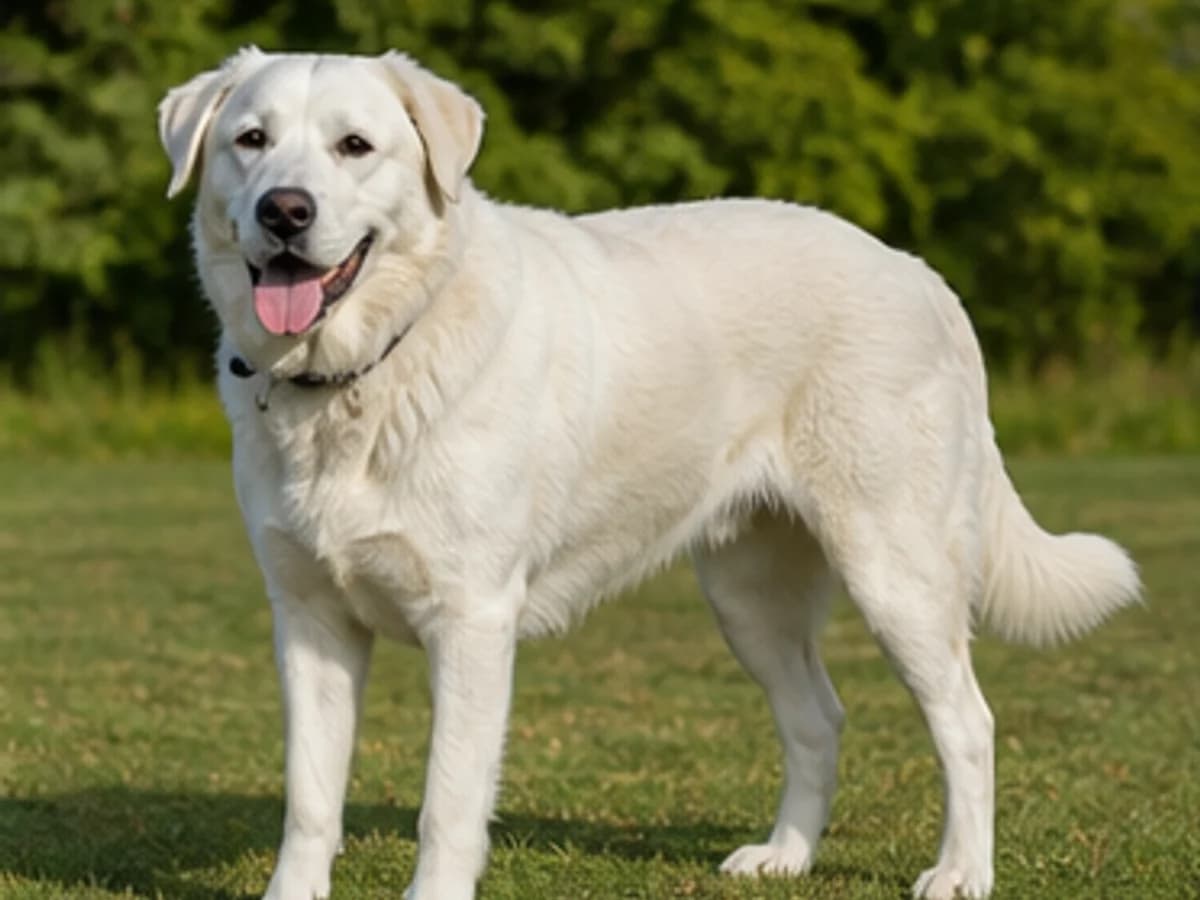
A Pyrador may combine Labrador sociability and retrieving interest with Great Pyrenees watchfulness and independence. Some are easier to motivate with food and play than a typical guardian; others still prefer to survey the yard and decide whether recall is worthwhile.
Size is usually large, but coat can range from a shorter dense double coat to a longer feathered coat. Expect shedding. Ask whether the dog enjoys strangers, tolerates handling, guards food, chases wildlife, swims, settles indoors, and remains comfortable alone.
Pyrador household-fit checks
A Pyrador candidate should be observed during both activity and quiet time. A dog who retrieves enthusiastically may still patrol, alert bark or resist returning indoors when something outside captures attention. Test whether food, toys and social praise remain useful around gates, wildlife and unfamiliar people rather than assuming Labrador ancestry guarantees handler focus.
Ask the caregiver for specific examples:
- Does the dog settle after exercise, or stay restless and scan doors and windows?
- Is retrieving relaxed, possessive or absent?
- How does the dog respond when another animal approaches food, toys or water?
- Can the dog leave a fence, scent or moving animal and reorient to a person?
For coat and body planning, measure the individual and inspect the undercoat. A shorter outer coat can still shed heavily, and a water-loving dog may need more drying and ear monitoring than the white coat suggests. The useful prediction is a range of possible needs, not a promise that the retriever side makes the dog easy.
2. Great Pyrenees Golden Retriever mix
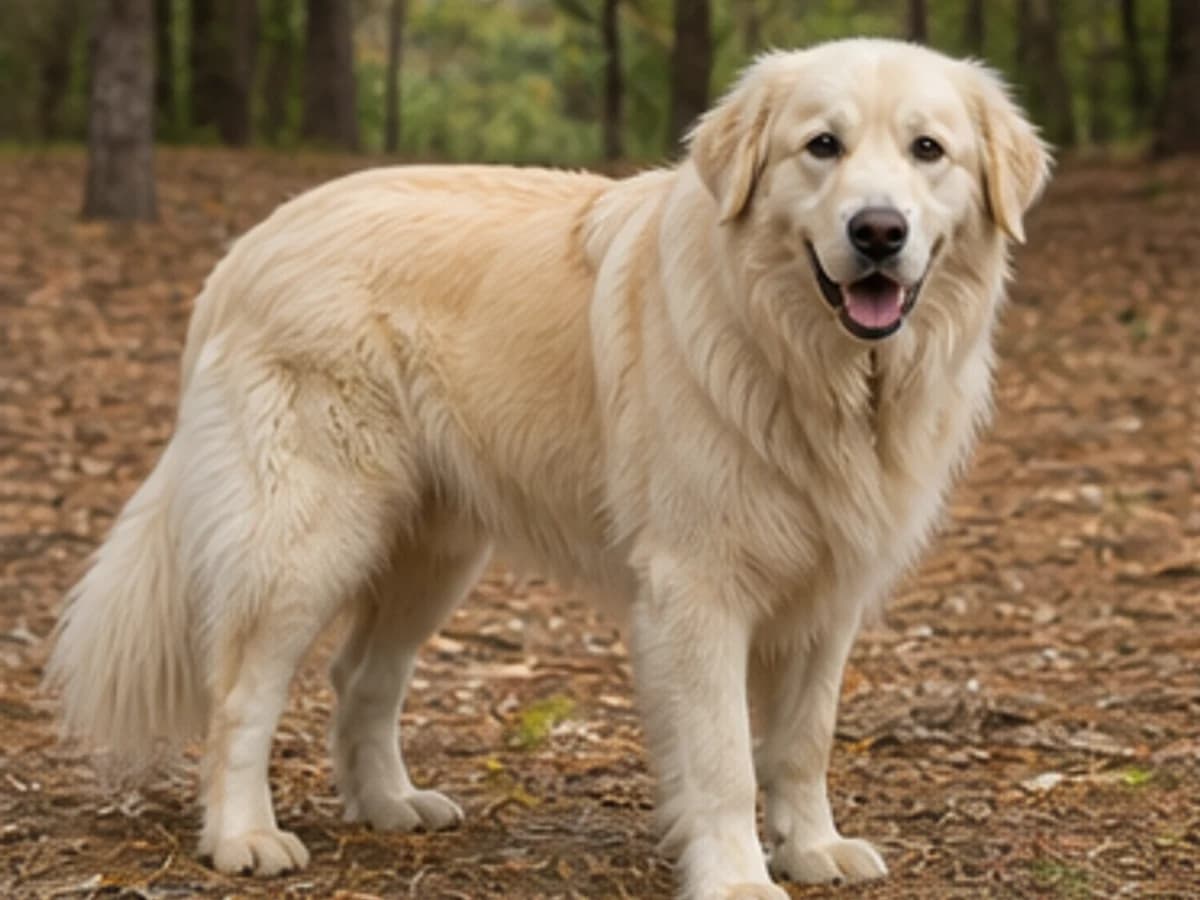
This mix may be social and responsive, but a Golden Retriever parent does not guarantee effortless friendliness. Guardian caution, nighttime alerting, and boundary patrol can remain strong. A dense feathered coat may collect mud, burrs, and moisture and usually sheds significantly.
Consider the source carefully because both parent breeds have health-screening priorities. Request actual results tied to the parents' identities rather than accepting "health tested" as a complete answer. For a rescue adult, current gait, body condition, veterinary records, and foster observations are more useful than guessing which parent contributed each trait.
Golden-Pyr household-fit checks
Golden Retriever ancestry can add social interest and retrieving behavior, but it does not erase a Pyr's watchfulness. Observe the dog with visitors who enter, move around and leave. A greeting that looks friendly at the door does not prove the dog will tolerate crowding, rough handling or someone approaching food or a resting place.
Coat care deserves a realistic trial. Part the feathering behind the ears, under the collar, in the armpits and around the tail. Ask how long brushing and drying take, whether the dog accepts a comb to the skin, and what happens after rain or swimming. A cream or gold coat can hide redness and mats just as a white one can.
For a puppy, review both parents' identities, screening records and adult behavior. For an adult rescue, give more weight to current gait, body condition and foster observations. The source should be able to describe ordinary days, not just say that the dog combines the best traits of both breeds.
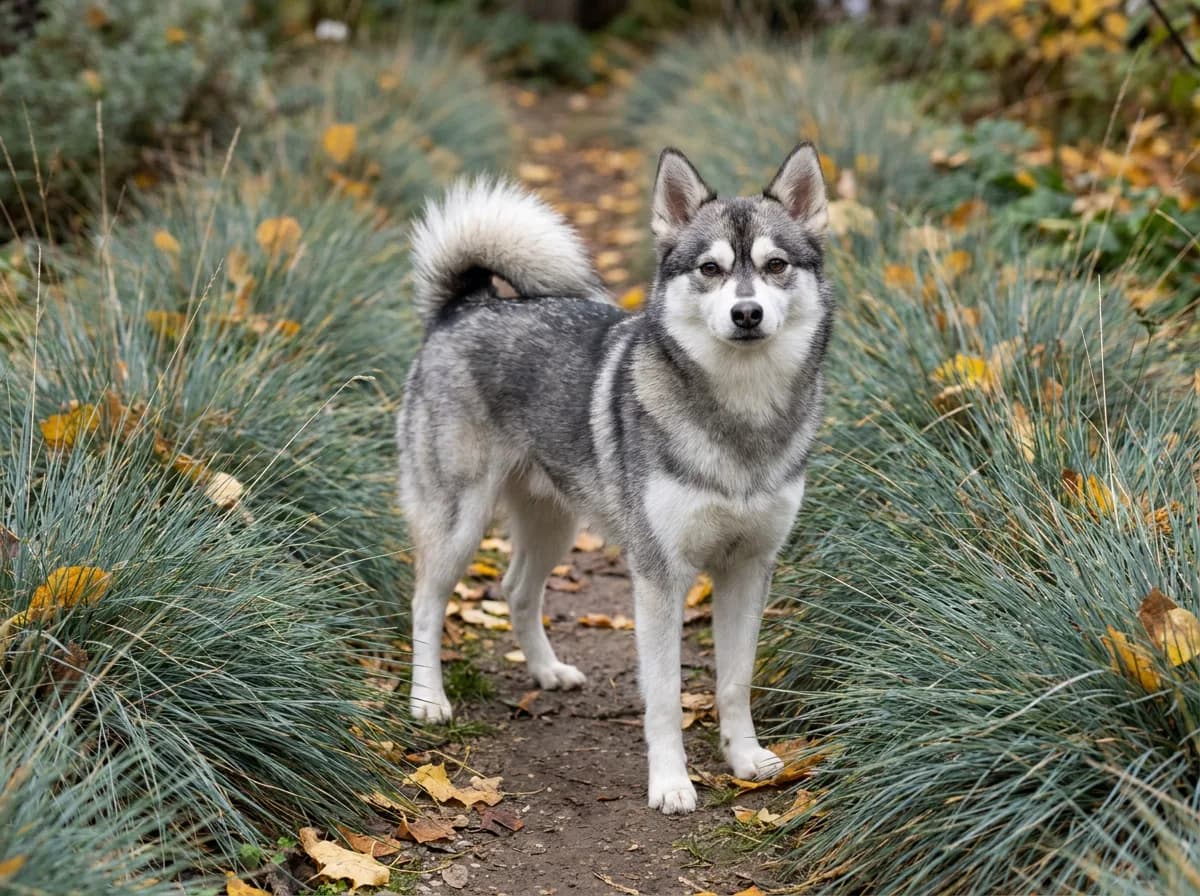
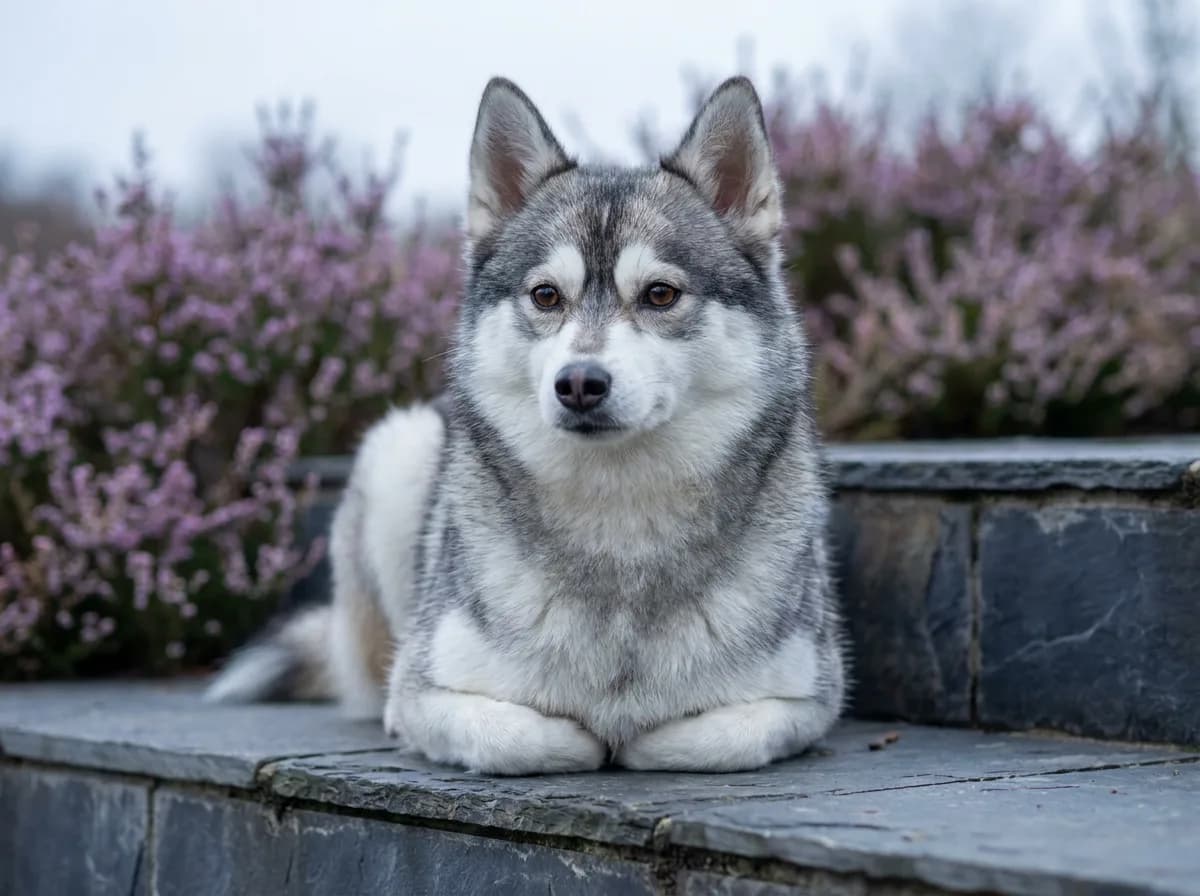
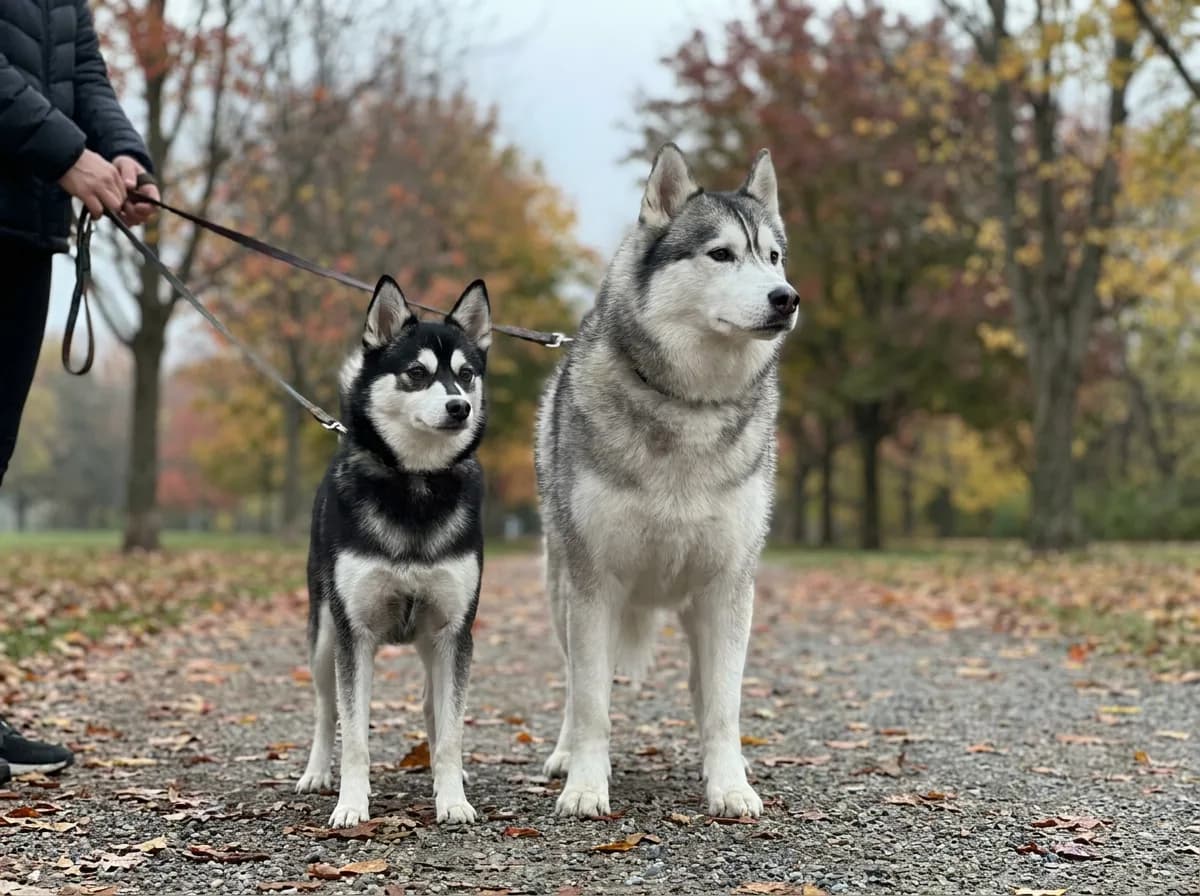
3. Great Pyrenees Husky mix
Questions involving great pyrenees husky mix and Great Bernese are best resolved by connecting the label to the individual dog's records, condition, behavior and daily care needs.
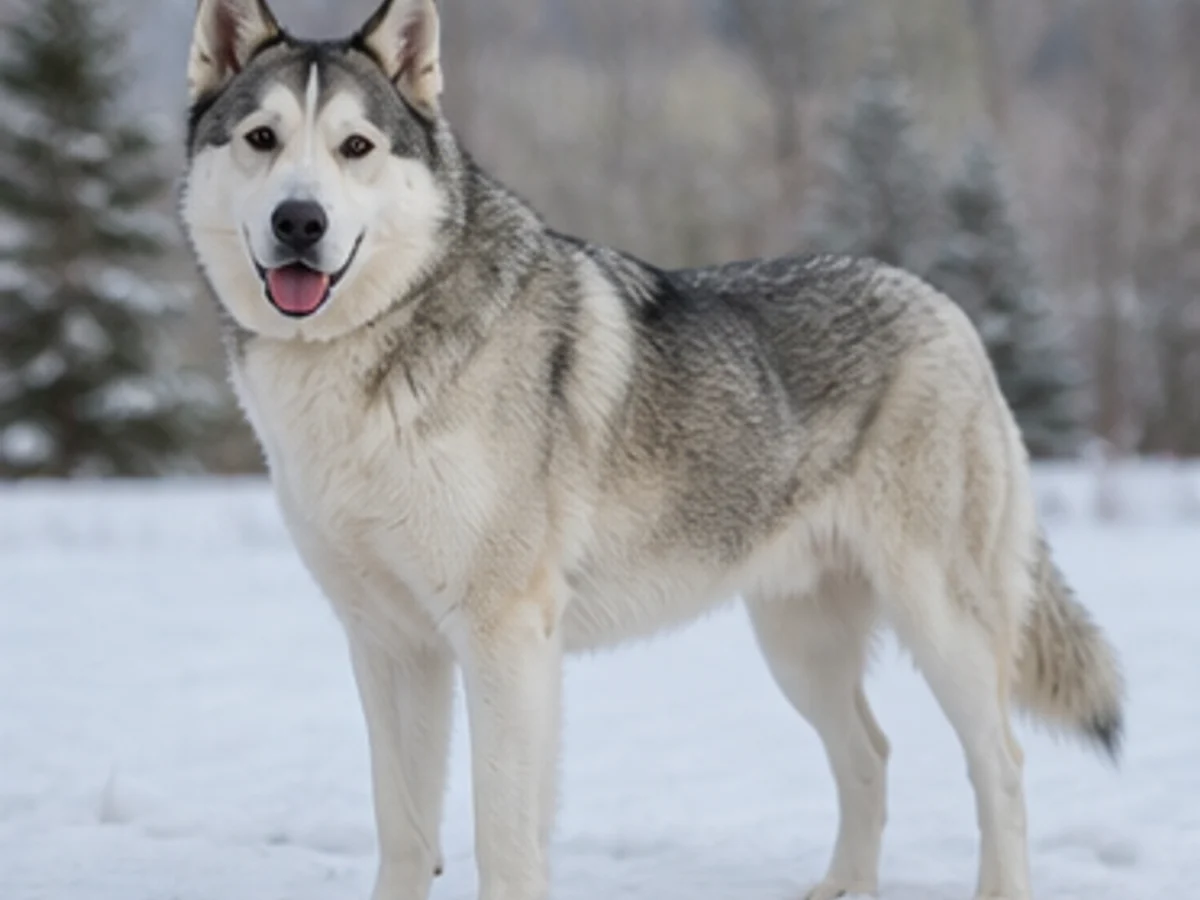
A Pyrenees Husky may combine two independent, weather-tolerant dogs with strong reasons to roam. Secure physical fencing, identification, leash management, and a realistic recall plan are essential. Some individuals are vocal in more than one style, adding husky-like sounds to guardian alert barking.
Coat density can be formidable. Heat management means shade, water, climate-appropriate activity, and attention to the individual dog rather than shaving the double coat by default. Prey interest and escape behavior deserve direct questions before the dog meets cats, poultry, or small animals.
Pyrenees-Husky household-fit checks
This cross can make containment the first decision rather than an afterthought. Walk the fence line, test gates and identify places where snow, furniture or landscaping reduces effective height. Ask whether the known dog digs, climbs, squeezes, opens latches or bolts through doors. Identification and a leash plan remain necessary even with a secure yard.
Exercise should combine movement with decompression and choice. A young, athletic individual may need more activity than a typical Pyr, while heat, body size and coat density can limit safe intensity. Note how quickly the dog recovers after exercise and whether arousal turns into pacing, vocalizing or escape behavior.
Before introducing cats, poultry or small animals, request direct observations rather than breed-based assurances. Use barriers and a leash, reward disengagement and stop if stalking or fixation increases. A dog who is sociable with people may still have strong chase behavior, and one calm meeting is not long-term proof.
4. Great Bernese: Great Pyrenees and Bernese Mountain Dog mix
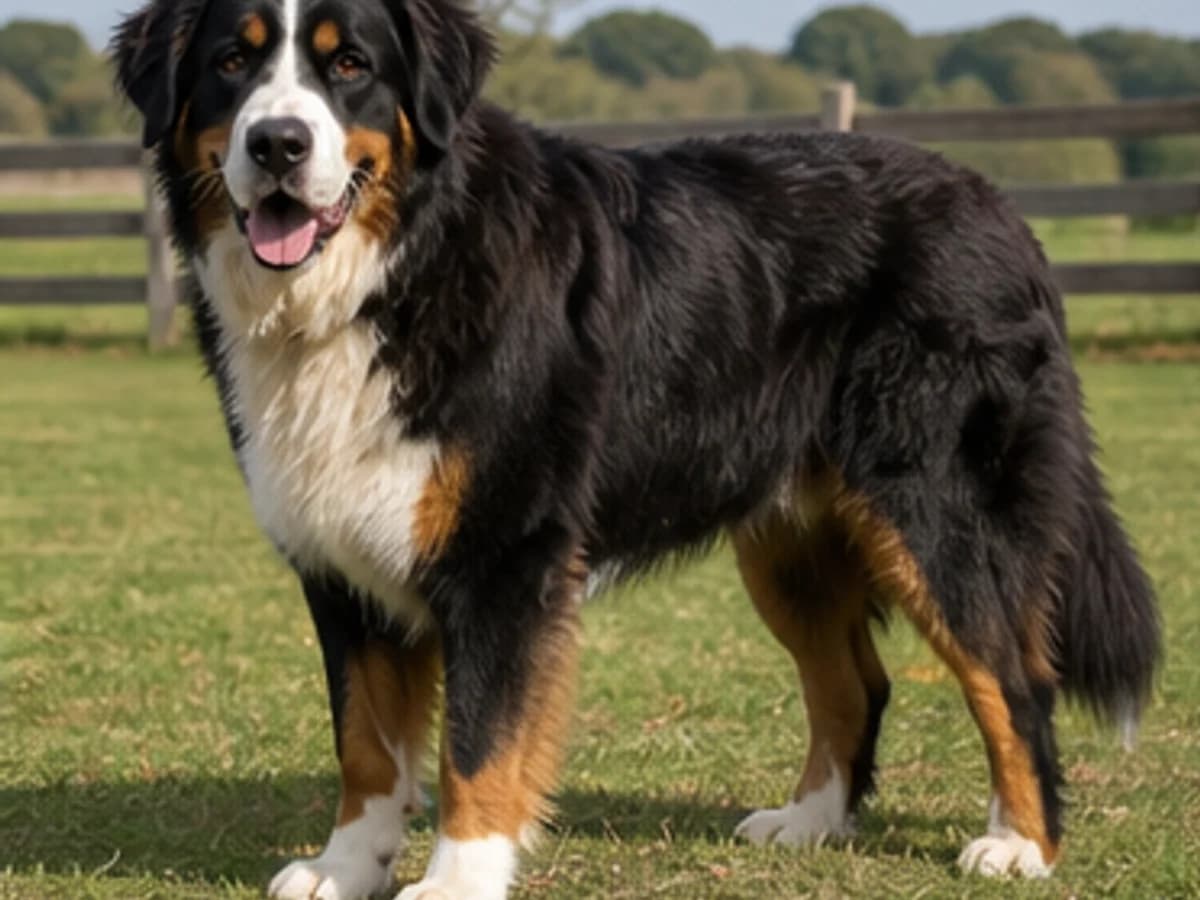
A Great Bernese is likely to be large and heavily coated, but weight and appearance vary. Both parental backgrounds can contribute calm family behavior, yet that should not be confused with universal tolerance. Giant size magnifies pulling, jumping, and mobility challenges.
Ask about orthopedic history, stamina, heat tolerance, skin, and lifespan in the known family. Keep the dog lean, build age-appropriate conditioning, and use non-slip surfaces. Petful's Great Pyrenees health and lifespan guide explains why a mixed-breed label does not eliminate inherited or giant-dog risks.
- Use the Embark Breed and Health DNA test only for the ancestry and variant questions its current panel addresses. Match the sample to the right dog, save the report and keep a mixed-breed estimate separate from known parents, registration and observed behavior.

Petful may earn a commission when you click through to Chewy, at no extra cost to you.
- Discuss an actionable Embark Breed and Health DNA test result with the veterinarian who knows the dog's examination and history. A panel can guide a follow-up question, but it cannot certify health, forecast lifespan or decide household compatibility.
Great Bernese household-fit checks
The practical question is whether the household can support a very large, heavily coated dog through both active and less mobile years. Measure vehicle access, stair width, sleeping space and the route to the yard. Teach ramp use and cooperative handling while the dog is comfortable instead of waiting for an injury.
Ask for a dated history of movement, appetite, weight and veterinary findings. Watch the dog rise after rest, turn on smooth floors and recover after a moderate walk. These observations do not diagnose a condition, but they help the veterinarian identify changes and help the household avoid activity plans based only on a calm appearance.
Family fit also requires boundaries. A relaxed giant can accidentally knock over a child, crowd a doorway or block another animal. Reinforce a station, keep resting areas protected and separate high-value resources. The other parent's reputation for friendliness is not a substitute for supervising the individual dog.
5. Great Pyrenees German Shepherd mix
Questions involving Anatolian Pyrenees are best resolved by connecting the label to the individual dog's records, condition, behavior and daily care needs.
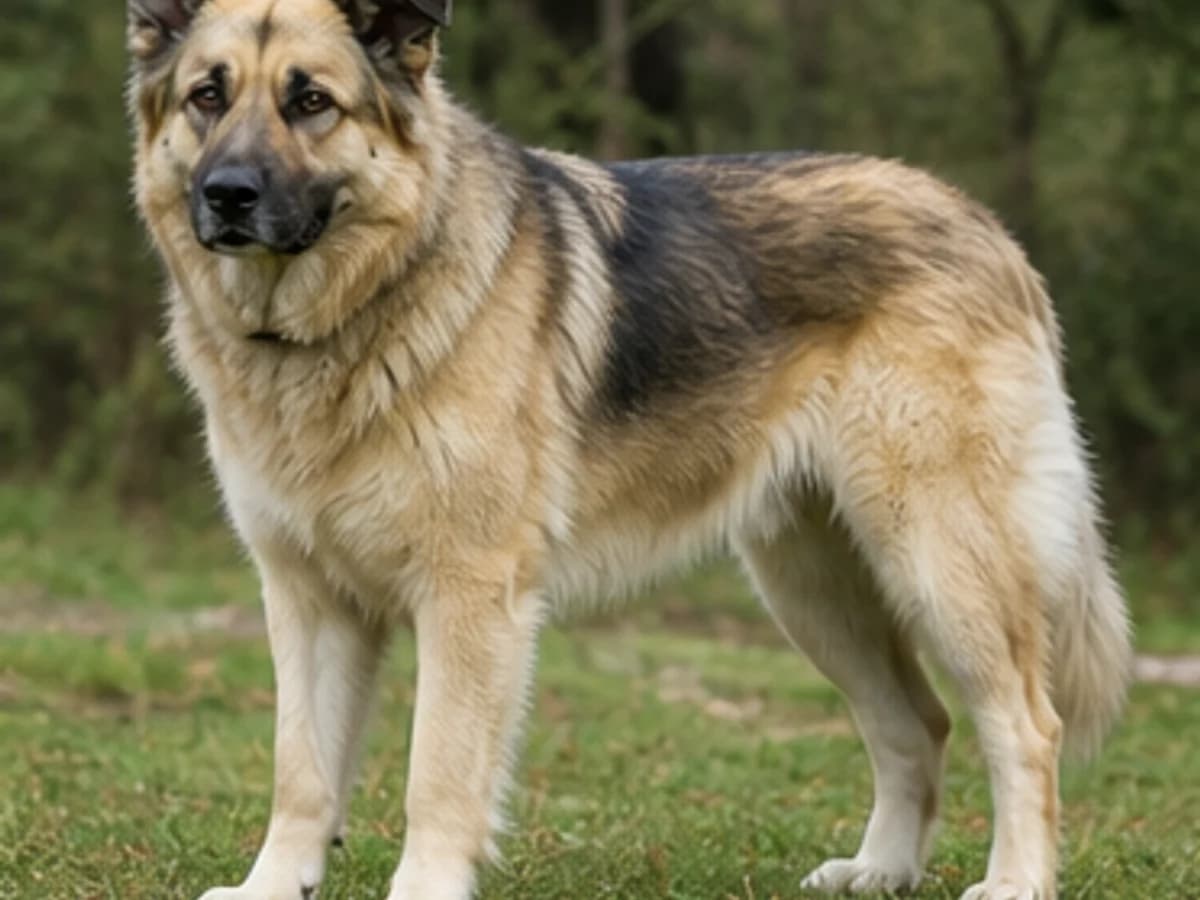
This combination may produce a watchful, athletic, highly observant dog. Guardian independence can coexist with shepherd responsiveness, creating a dog who learns quickly but still makes strong decisions about strangers, territory, or movement.
Prioritize controlled social learning, visitor routines, leash skills, and an off-switch. Avoid encouraging suspicion or protection displays. A dog who is fearful, hypervigilant, or reactive needs distance and qualified reward-based support, not pressure to confront triggers.
Shepherd-Pyr household-fit checks
A Great Pyrenees German Shepherd mix may notice motion, strangers and environmental changes quickly. Evaluate recovery, not just alertness. After a person passes the property or a delivery ends, can the dog return to eating, resting or following a familiar cue? Persistent scanning and inability to recover can make ordinary household events exhausting.
Build training around observable jobs:
- Move to a station before the exterior door opens.
- Turn away from the fence and walk inside on cue.
- Accept a leash and brief body check without conflict.
- Settle while visitors move at a planned distance.
Avoid games or training that deliberately intensify suspicion. A dog does not need protection practice to become safe, and rehearsed confrontation can amplify fear or territorial responses. If the dog lunges, bites, guards family movement or remains distressed after triggers disappear, involve the veterinarian and a qualified reward-based behavior professional.
Equipment fit for mixed-breed proportions
For a large dog with unknown adult proportions, the FurHaven NAP jumbo orthopedic bed is one tracked rest option to compare with measured sleeping length and mobility. A bed supports a comfortable station but does not treat joint disease.
If the dog sprawls or sleeps warm, verify that the usable flat area of the FurHaven jumbo bed is large enough and that the cover can be cleaned. Stiffness, limping, reluctance to rise, or sudden sleep changes warrant veterinary assessment.
6. Anatolian Pyrenees
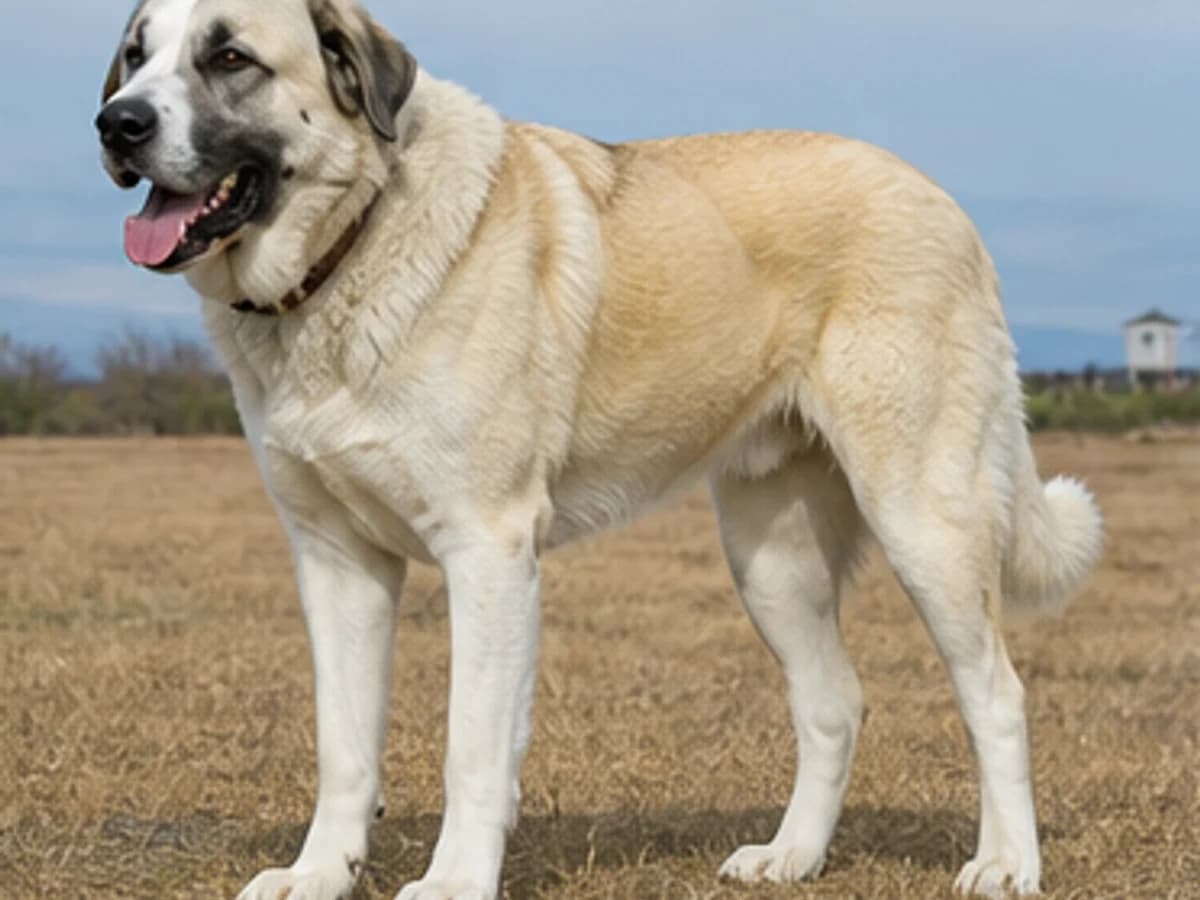
An Anatolian Shepherd and Great Pyrenees mix can concentrate livestock-guardian traits rather than soften them. Expect substantial size, territorial awareness, independent decision-making, barking, and a need for secure management. This is not automatically a beginner dog simply because both parent breeds can appear calm.
Working homes should evaluate the individual with the livestock species and husbandry system involved. Companion homes need structured introductions and safe separation. Do not assume a puppy will protect poultry appropriately without development, supervision, and management.
Anatolian-Pyr household-fit checks
Two livestock-guardian backgrounds can produce a dog whose calm exterior hides constant environmental monitoring. The dog may rest for long periods and then respond decisively to wildlife, unfamiliar animals or people near a boundary. A large property does not replace secure fencing, daily observation or controlled introductions.
Working-placement questions should be concrete: which livestock species, what age and behavior, what fencing, what predator pressure, and how the dog behaves during feeding, births and human handling. Companion-placement questions should cover nighttime noise, visitors, delivery access, veterinary restraint and safe separation from household animals.
Do not use livestock unsupervised as a test for an adolescent dog. Protect vulnerable animals and create a progression with experienced guidance. In a companion home, teach coming indoors, moving away from gates and accepting routine care. A dog can retain guardian instincts while learning safer household patterns.
7. Pyredoodle: Great Pyrenees and Poodle mix
Questions involving Boxer, Chow Chow and Pit Bull mixes are best resolved by connecting the label to the individual dog's records, condition, behavior and daily care needs.
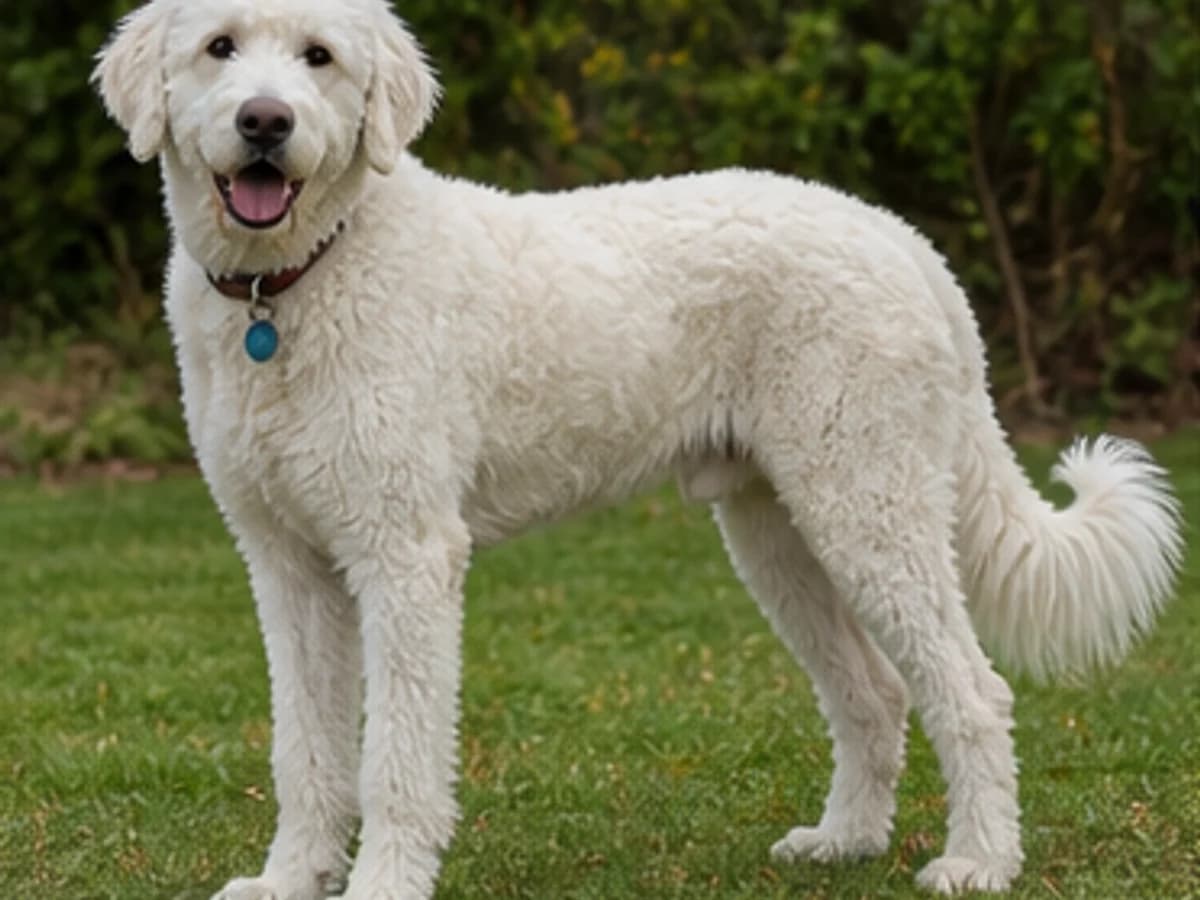
The Pyredoodle is often marketed around coat and trainability, but coat genetics do not produce a guaranteed low-shedding or allergy-safe dog. The coat may be wavy, curly, dense, mat-prone, or mixed in texture. Grooming requirements can exceed those of either imagined parent stereotype.
Poodle ancestry may contribute athleticism, problem-solving, and sensitivity. Great Pyrenees ancestry may contribute guarding and selective responses. Ask to see adult relatives where possible, and budget for professional grooming before assuming a puppy coat will remain manageable.
Pyredoodle household-fit checks
Coat maintenance is the most frequently oversold prediction. Ask to see the adult coat wet and dry, part it to the skin and find out how often it mats. A wavy or curly surface can trap loose undercoat, so apparent low shedding may translate into more brushing, combing, clipping and professional appointments rather than less work.
Before choosing a puppy, budget for an adult grooming schedule that cannot be known from the puppy coat alone. Ask how both parents tolerate brushing, dryers, feet handling and restraint. For an adult, request the last grooming interval and inspect friction areas, nails, ears and skin.
Behavior is equally variable. Problem-solving and social sensitivity may appear beside guardian barking, independence and stranger reserve. Use short reward-based sessions, avoid repetitive drilling and provide safe outlets for movement and sniffing. A designer label cannot guarantee allergy safety, easy training or a specific coat.
8. Great Pyrenees Boxer mix
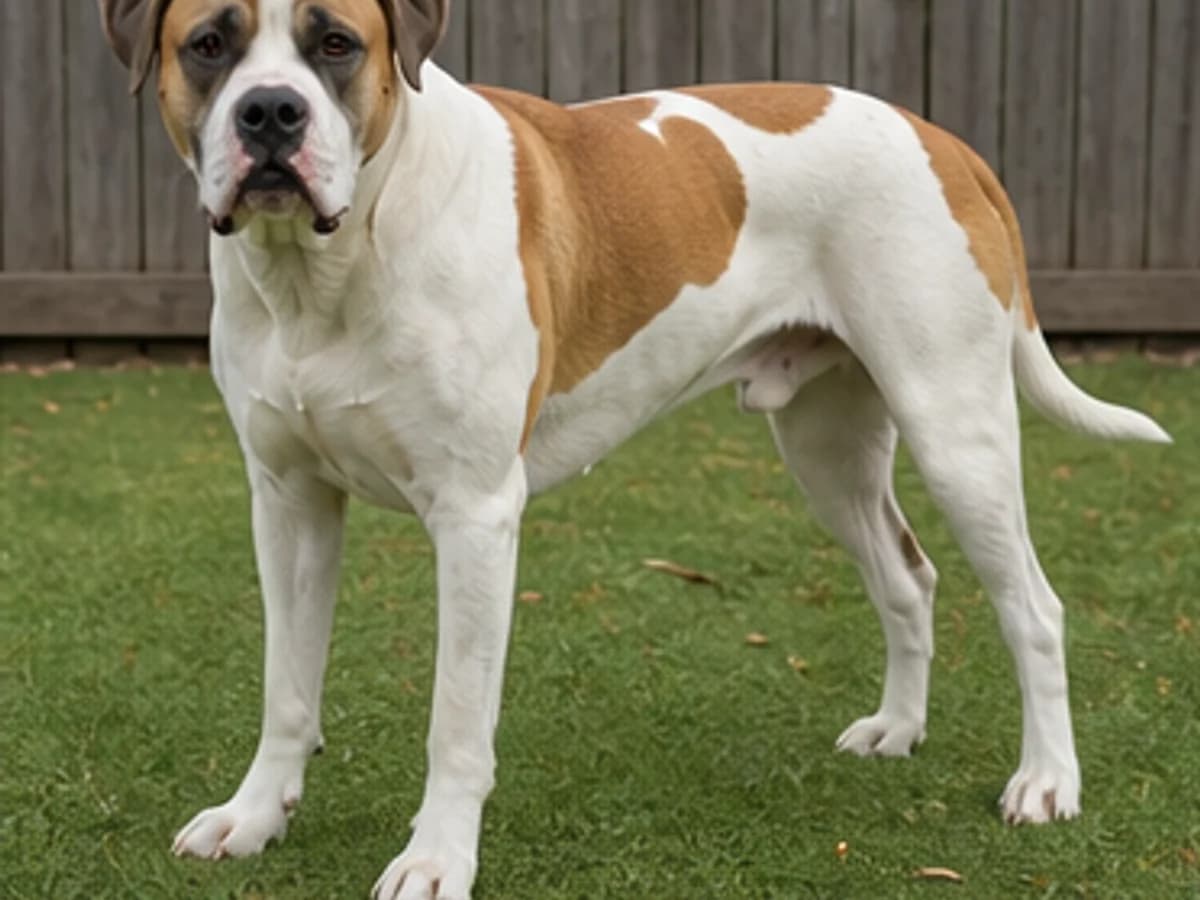
A Boxer mix may be more exuberant, physical, and people-focused than a typical Pyr. That can create a powerful dog who alternates between playful motion and watchful rest. Teach four paws on the floor, mat settling, leash skills, and calm greetings early.
Shorter coat areas may not provide the same weather protection as a full Pyrenees coat, while dense areas can still shed. Evaluate breathing, heat tolerance, cardiac history, joints, and skin with the veterinarian rather than assigning every feature to one parent.
Boxer-Pyr household-fit checks
Evaluate whether the dog can transition from energetic play to controlled rest. A powerful, bouncy adolescent may greet with its whole body, while Pyr ancestry can add door and property awareness. Teach a station, four paws on the floor and leash movement before practicing with visitors.
Ask how the individual handles warm weather, sustained activity and excitement. Coat length, muzzle shape, body condition and health all influence tolerance, so use the dog's breathing and recovery rather than a fixed exercise quota. Stop activity for distress and seek veterinary guidance for concerning breathing or collapse.
For households with children or smaller animals, observe play intensity and interruption skills. Separate when arousal rises, prevent chasing and protect rest areas. Playfulness is not automatic gentleness, and guardian watchfulness is not automatic aggression. The daily management plan should fit the behavior that is actually present.
9. Great Pyrenees Chow Chow mix
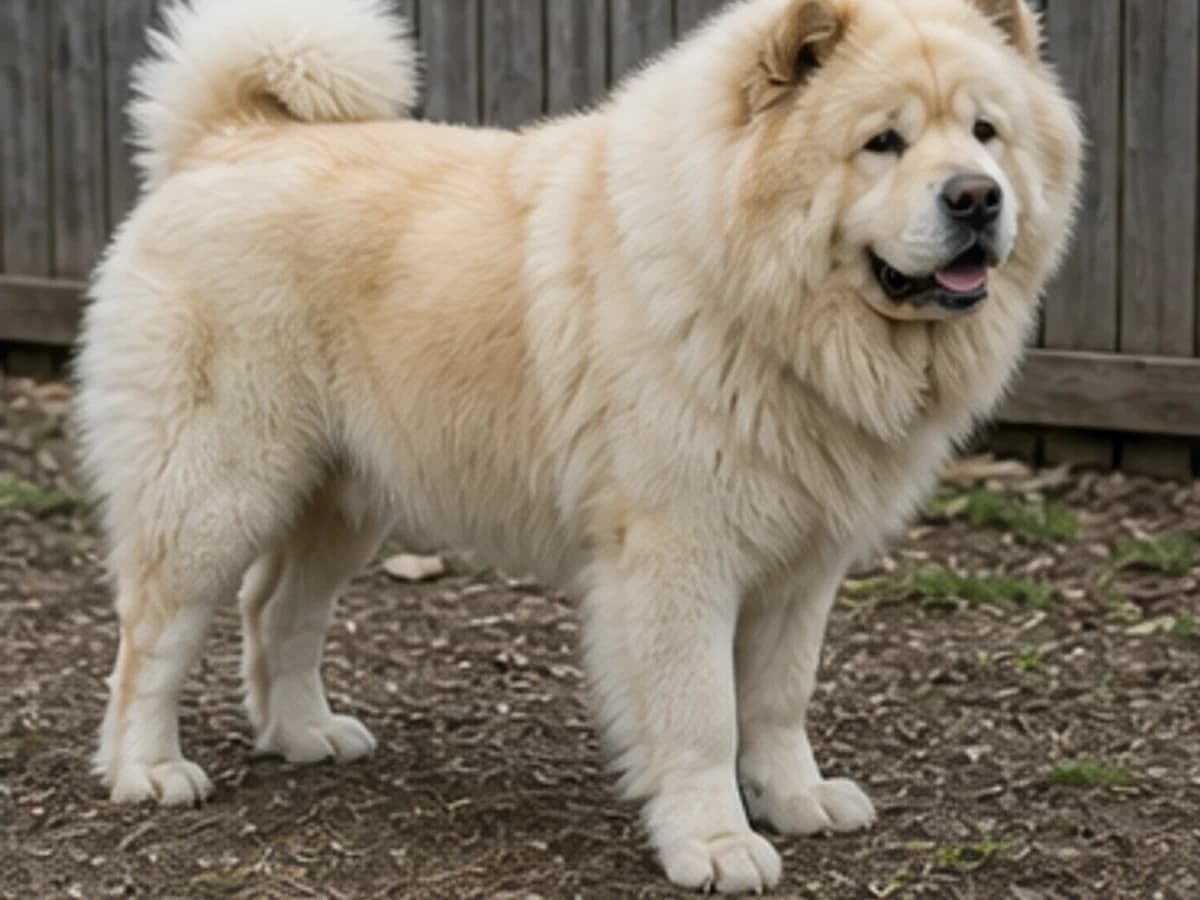
Both parental backgrounds can include reserve with strangers, independence, and a substantial coat. An individual may be deeply attached to family without welcoming casual handling. Consent-based grooming and visitor management are particularly important.
Do not force greetings or punish warning signals. Observe how the dog responds when people approach food, a bed, a doorway, the yard, or a family member. Early qualified help is appropriate if the dog freezes, guards, lunges, or cannot recover after a trigger.
Chow-Pyr household-fit checks
This mix may value space and predictable handling. Test grooming with brief, consent-based steps before committing to a dense coat that could require substantial care. A dog who tolerates touch from a familiar caregiver may not accept a stranger reaching over the head or pulling at a mat.
Visitor observations should include arrival, movement through the home and departure. Note whether the dog can disengage, use a station and recover after the person is gone. Do not punish growling or stillness, since removing warning signals does not remove discomfort.
Resource and doorway management should be established early. Feed separately, protect resting areas and prevent crowding at gates. If the dog blocks access, guards a person or object, or escalates around handling, create distance and seek qualified support. Family loyalty is not evidence that every social situation will be safe.
10. Great Pyrenees Pit Bull-type mix
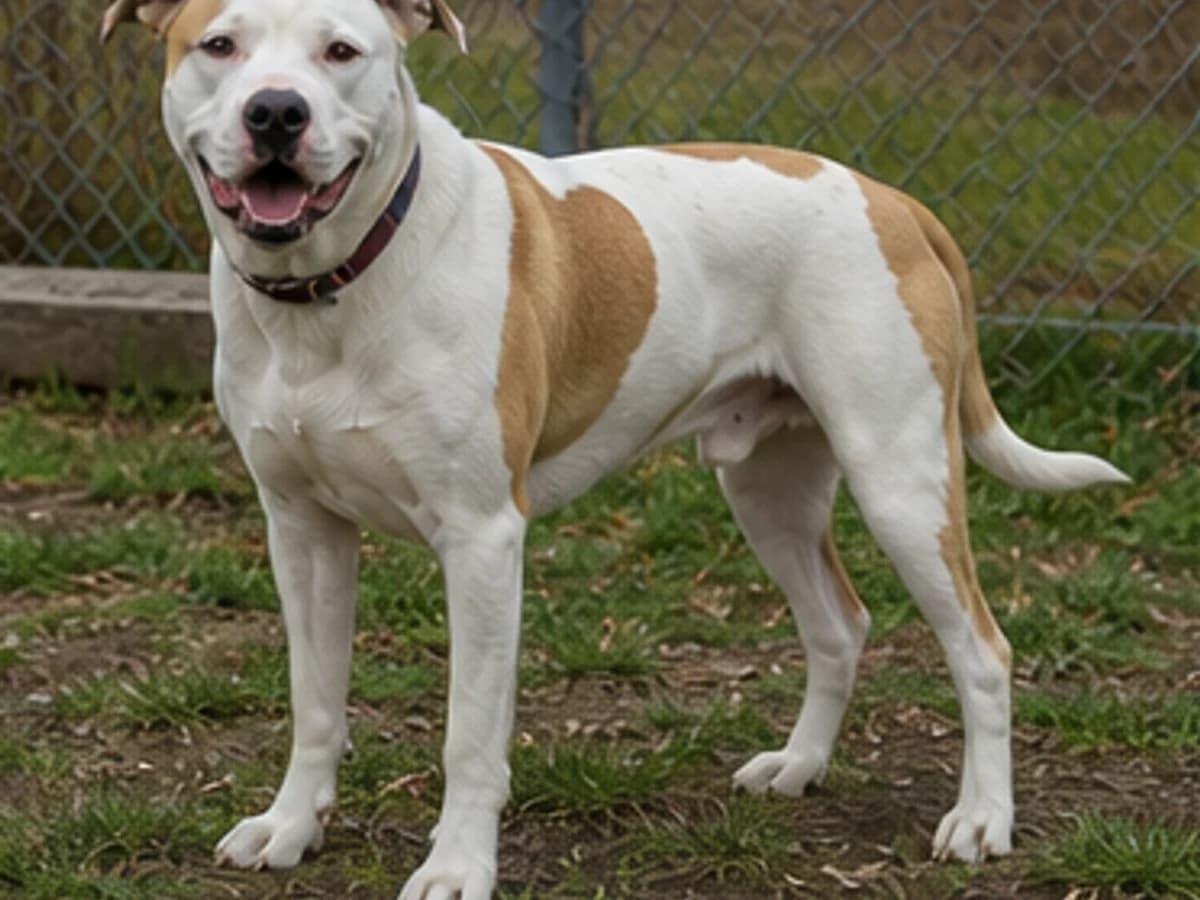
"Pit bull" is a broad visual and breed-type label, so this category contains wide variation. A dog may combine Pyr size and coat with a shorter-haired, muscular build, or look unlike either expectation. Evaluate the known dog rather than relying on stigma or a flattering rescue description.
Ask about dog-dog behavior, resource guarding, prey interest, handling, exercise, and housing restrictions. Insurance, rental, or local rules may apply based on labels rather than genetics, so verify them before adoption. No breed mix should be evaluated through fighting comparisons or claims about bite force.
Pit bull-type-Pyr household-fit checks
Begin by separating evidence from labels. Ask whether the pit bull-type description comes from known parents, a DNA estimate or visual identification, then record the dog's measured size, coat, movement and behavior independently. Housing and insurance rules may still respond to the label, so obtain written requirements before adoption.
Compatibility deserves direct, controlled observation. Ask for history around dogs of different sizes, household animals, food, toys, visitors and handling. Use gradual introductions and separate resources. A dog who has one successful greeting has not demonstrated long-term compatibility, while a dog who needs distance is not defined by a fighting stereotype.
Plan for a strong, large dog regardless of which ancestry produced the body. Reinforce leash orientation, gate routines, cooperative care and calm recovery. Reject bite-force contests and breed-fight comparisons: they do not predict the individual and encourage unsafe decision-making.
- For a mix with uncertain adult proportions, compare the FurHaven NAP jumbo orthopedic bed with the measured dog's sleeping length, leg height and preferred curl or sprawl. Bolsters and borders reduce the flat area available to a giant body.
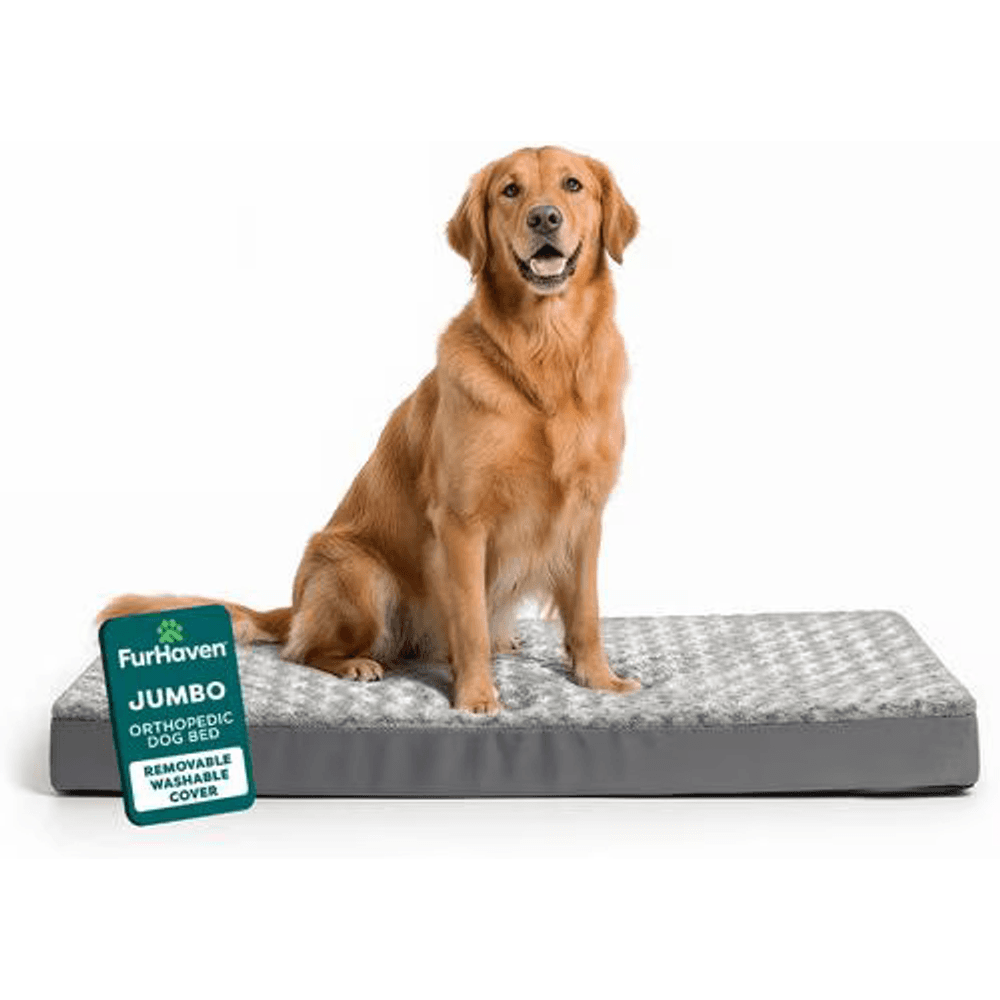
A plush orthopedic foam mattress that cushions aging joints and pressure points, giving a stiff or trembling senior dog warm, supportive rest.
Petful may earn a commission when you click through to Chewy, at no extra cost to you.
- Trial the FurHaven NAP jumbo orthopedic bed where the mix already chooses to rest, then observe turning, rising and heat comfort. A well-used station supports management, but it does not explain limping or treat joint disease.
Traits many Great Pyrenees mixes share
Shared size, coat and temperament decisions includes great pyrenees mixes, best great pyrenees mixes, types of great pyrenees mixes, and Shared size, shedding, training and guardian considerations. These are related but distinct reader decisions, best resolved by using repeated measurements, body condition and functional fit rather than one chart or seller label. Use the measurements, records and observable conditions in this section to identify what is known, what still needs confirmation and which next action the evidence supports. Before acting, record the source, date and individual-dog evidence behind the conclusion. That prevents a broad breed tendency, seller label or isolated number from becoming a promise about one dog and keeps the decision practical, traceable and useful.
Size and growth
Many mixes become large or giant, but an exact adult weight cannot be promised from appearance. Measure the dog, track body condition, and choose equipment from dimensions rather than a breed label. Petful's Great Pyrenees size and growth guide provides a framework for interpreting growth without forcing a mixed dog into a purebred chart.
Guardian behavior and barking
The Pyr contribution may appear as alert barking, yard patrol, nighttime wakefulness, stranger reserve, or a desire to position between family and novelty. These behaviors can be managed, but they should not be marketed as effortless protection. Petful's Great Pyrenees temperament and training guide covers humane containment, barking, and visitor routines.
Coat and shedding
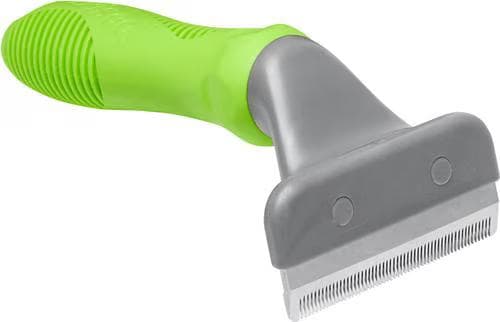
If the dog has a dense medium or long coat, the Frisco medium-to-long-hair deshedding brush is one tracked tool to compare with coat depth and handling tolerance. Use it gently and never work repeatedly over irritated skin or a tight mat.
The Frisco deshedding brush may suit seasonal loose undercoat but is not the only tool a mixed texture needs. Curly or combination coats can mat close to the skin and may require a slicker, comb, clipping plan, or professional groomer. Petful's Great Pyrenees grooming and shedding guide explains the purebred double-coat baseline.
Training and social fit
Use rewards, management, and short sessions. Teach coming indoors, moving away from gates, trading objects, leash walking, settling, and cooperative care. A mix that seems more eager than a purebred Pyr can still become less responsive around wildlife, territory, or nighttime sounds.
WebVet's dog harness vs collar guide helps frame equipment choices for variable builds. Check fit frequently through growth and coat changes, and remember that equipment supports training rather than replacing it.
How to choose among types of Great Pyrenees mixes
Types of Great Pyrenees mixes are most useful as a question index. They are not a ranking from easiest to hardest. Start with household limits that cannot be negotiated, then compare the known dog against them. A fenced rural home, a city rental and a working-livestock placement are different assignments even when all three owners admire the same cross.
Use five decision questions for every candidate:
- Body: What are the current measurements, body condition, movement and likely adult range?
- Coat: Is there undercoat, feathering, curl or a combination texture, and how is it maintained now?
- Guardian behavior: What triggers barking, boundary patrol, stranger reserve or blocking?
- Training: Which rewards work, how quickly does the dog recover and what happens around real distractions?
- Household fit: What is known about children, dogs, cats, livestock, visitors, time alone and handling?
Score nothing from a photograph. Instead, mark each answer as documented, directly observed, reported by a caregiver or unknown. Unknown is not automatically bad, but it requires a safer transition plan and more management. A fostered adult may have more documented answers than an eight-week-old puppy with known parents.
| Decision | Stronger evidence | Red flag |
|---|---|---|
| Adult body | Dated measurements, parent records and current condition | Guaranteed final weight from a puppy photo |
| Coat workload | Comb-to-skin check and real grooming history | Hypoallergenic or no-shed promise from a mix name |
| Guardian behavior | Examples across home, yard, visitors and night | Protective used without describing control or recovery |
| Training | Observable response to rewards, leash and gates | Intelligent used as a promise of obedience |
| Household fit | Foster history and controlled introductions | Good with everyone without setting or duration |
This framework gives all ten named mixes the same fair comparison while preserving real parent-breed differences. It also prevents search volume or a catchy name from becoming a recommendation. The best great pyrenees mixes for organic search are not automatically the best matches for a household; the useful page answers both the popular query and the limits of prediction.
Build a parent-pair evidence file for a planned mix
A purpose-bred cross should be evaluated with the same record discipline expected from any responsible source. The pairing creates more possible combinations, not a guarantee that desirable traits will average neatly. Ask for the documented identity of both parents, their ages, current health, veterinary history and the health screening appropriate to each breed background. A generic statement that both parents are healthy is not the same as dated results that can be verified.
Separate health screening from a consumer DNA panel
Health screening may include physical examinations, imaging, laboratory tests or specialist evaluations chosen for the conditions relevant to each parent. A breed-identification or consumer health test can add information, but it does not replace orthopedic evaluation, eye examination, cardiac assessment or another clinically indicated screen. Ask which organization recorded each result, how the identity of the tested dog was confirmed and what the result means for the proposed pairing.
If a seller says mixed dogs avoid purebred disease, ask for evidence specific to both parents. A puppy can inherit risk variants, body structure or disease susceptibility from either side. Genetic diversity can change probabilities in some pairings, but it does not cancel acquired illness, injury, developmental problems or every condition that lacks a simple DNA test.
Observe adult behavior in ordinary settings
Meet both parents when safely possible, while recognizing that the sire may live elsewhere. Watch recovery after a door opens, a stranger appears, another dog passes or the environment becomes quiet again. Ask for examples of nighttime barking, confinement, handling, food, livestock, cats, children and time alone. A staged greeting lasting five minutes cannot establish the behavior a puppy may develop at social maturity.
Record whether each claim was observed by you, reported by the breeder or supported by a third party. Terms such as loyal, protective, friendly and smart are too broad unless the source describes what the dog actually did, in which setting and how quickly it returned to baseline.
Examine the litter environment and transition plan
Puppies should have a clean, temperature-appropriate living area, regular human handling and age-suitable exposure to ordinary surfaces, sounds and routines without being flooded. Ask how the puppies are identified, weighed and monitored; what they eat; which vaccines, parasite care and veterinary examinations are documented; and how illness in the litter is handled. The pickup record should match the individual puppy, not a generic handout.
The transition plan matters because a guardian-background puppy may react strongly to sudden isolation, unfamiliar boundaries or a noisy neighborhood. Obtain the current feeding schedule, sleep routine, known handling responses and a realistic socialization plan. The goal is not to expose the puppy to everything immediately. It is to create calm, controlled experiences while protecting health and allowing recovery.
Read the contract for lifetime responsibility
A clear contract should identify the puppy and both parties, describe health records and guarantees in plain language, explain return or rehoming expectations and avoid promising an exact adult coat, size or temperament. Ask what support is available when adolescence brings barking, roaming, dog conflict or handling difficulty. A source that will take responsibility for the dog later has a different incentive from one whose involvement ends at payment.
| Record | Useful evidence | Weak substitute |
|---|---|---|
| Parent identity | Verifiable records tied to each adult | Photos and first names only |
| Health | Dated, condition-specific results for both backgrounds | Healthy according to the seller |
| Behavior | Ordinary-setting examples and recovery | Protective, smart or family-friendly labels |
| Litter care | Individual weights, veterinary records and current routine | Generic puppy packet |
| Contract | Identity, health terms, return plan and support | Guaranteed best of both breeds |
Do not score a pairing by how many documents are handed over. Verify that the documents belong to the parents and puppy in front of you, that the tests address relevant risks and that the source answers reasonable questions without pressure. Missing evidence does not prove a bad outcome, but it increases uncertainty and should change the decision, the price and the support plan.
Adoption and ancestry questions
Great Pyrenees mixes are common in rescue, especially in regions with livestock and unplanned litters. An adult foster placement may offer valuable information about house training, barking, dogs, cats, children, handling, food, and separation. Ask for examples from ordinary days, not only adjectives such as sweet or protective.
If ancestry matters, use the Embark Breed Identification test as one piece of evidence, alongside known history and veterinary findings. A surprising result does not make the dog's observed behavior disappear.
If choosing the Embark Breed and Health test, review the current conditions and variants screened and discuss actionable findings with a veterinarian. A negative panel does not mean the dog is free from every inherited or acquired disease.
A two-week evaluation plan for a newly adopted mix
Keep the first days quiet and collect observations before assigning traits to ancestry. Record appetite, stool, sleep, toileting, barking, handling, movement, time alone, and responses to household sounds. Use secure separation from resident animals and arrange introductions gradually. Stress can suppress or exaggerate behavior, so one silent first night does not prove the dog is naturally quiet.
During the second week, add controlled samples: a calm leash walk at a low-traffic time, a visitor observed behind a barrier, brief grooming, and a short absence within the dog's tolerance. Ask the foster or shelter whether the new behavior resembles what they saw. Sudden pain, vomiting, diarrhea, breathing change, collapse, or marked lethargy needs veterinary attention rather than an adjustment label.
| Area | What to record | Why it matters |
|---|---|---|
| Rest | Location, duration, startle and nighttime activity | Separates decompression from persistent sleep difficulty |
| Boundaries | Door interest, fence checks, climbing and digging | Shapes containment plan |
| Social response | Distance, body language and recovery | Guides introductions without forcing contact |
| Resources | Eating speed, guarding and ability to trade | Determines feeding and household management |
| Coat and handling | Tangles, skin, nails and touch tolerance | Establishes safe grooming and medical priorities |
Questions for the veterinary visit
Bring every record and the ancestry result only if one exists. Ask about body condition, estimated age, joints, teeth, skin, ears, parasite risk, vaccines, microchip, current medication, and reproductive status. A clinician may use breed ancestry as background, but examination findings should direct care.
If the dog is still growing, discuss an appropriate growth diet and exercise. If the dog is an adult, ask whether weight or muscle suggests previous underfeeding, excess calories, pain, or illness. Avoid adding supplements simply because one possible parent breed appears on a test.
This quiet evidence-gathering period does not reveal everything, but it prevents a common error: treating every behavior as proof of one breed and overlooking stress, learning history, pain, or the individual dog's preferences.
- For the grooming task in this section, compare the Frisco medium-to-long-hair deshedding brush with coat depth, skin condition, nail thickness or the exact cleaning need. Use light pressure, good visibility and short sessions, and stop if the dog shows pain, panic or skin irritation.
Petful may earn a commission when you click through to Chewy, at no extra cost to you.
- If the Frisco medium-to-long-hair deshedding brush remains appropriate, inspect the result with your hands rather than assuming one pass completed the job. A grooming product cannot treat infection, persistent itching, painful mats or an injured nail; those signs need professional care.
Predictability changes with life stage
A young puppy offers the least behavioral certainty. Parent information can narrow expectations, but adolescence, social maturity, health, and learning still shape the outcome. An adult foster dog may provide clearer evidence about barking, dogs, cats, children, handling, house manners, coat, and time alone.
Senior mixes can be highly suitable for quieter homes, yet they deserve a mobility, dental, sensory, medication, and transport plan. Do not assume lower activity means low cost or no training. Seniors still need secure boundaries, comfortable handling, and gradual adjustment.
Housing and insurance checks
Verify landlord, homeowners insurance, local licensing, fence, and weight rules before committing. A visual label such as shepherd mix or pit bull mix may affect housing even when a DNA result differs. Obtain requirements in writing and ask the rescue what documentation it can provide.
Measure doorways, stairs, elevators, vehicle openings, and sleeping space for the actual dog. A large mix who cannot use stairs or fit safely in the vehicle can create a welfare problem during illness. Plan for pet care and boarding providers willing and equipped to handle the dog's size and behavior.
Avoid designer-dog promises
A seller who intentionally crosses breeds should still document parent identity, health screening relevant to both backgrounds, veterinary care, early environment, contract, and lifetime responsibility. The word hybrid does not guarantee better health, and a catchy mix name does not prove ancestry.
Ask what outcome the pairing was intended to produce and what evidence supports that claim. If the answer is only a coat color, lower shedding, or the “best of both breeds,” uncertainty is being marketed as certainty. Evaluate the same records, source practices, and support that you would require for any puppy.
More Great Pyrenees guides from Petful
Use Petful's complete Great Pyrenees breed profile to identify which guardian traits come from the Pyr baseline, then use the individual mix evidence above to test what is actually present.
- Great Pyrenees Puppies: What to Expect in Year One
- Great Pyrenees Price: Puppy Cost and Lifetime Budget
- Great Pyrenees Lifespan and Health Problems
- Great Pyrenees Size, Weight and Growth Guide
- Great Pyrenees Temperament, Guardian Behavior and Training
- Great Pyrenees Grooming and Shedding: Double-Coat Care
Frequently asked questions
The short answer is that there is no best Great Pyrenees mix for every home. A cross name cannot predict which parent's size, coat, guardian behavior, prey drive or trainability will appear. The best match is the individual dog whose documented behavior, health and daily needs fit the household, with adult foster observations often providing more useful evidence than a puppy photograph.
The short answer is yes: Pyrenees mixes can be good dogs when their actual traits fit the home. They may inherit giant size, barking, guarding and a dense coat from the Pyr side, plus herding, retrieving or chase behavior from the other ancestry. Review observed behavior and known history instead of assuming that mixing breeds cancels difficult guardian traits.
The short answer is that many Great Pyrenees and mixes are surrendered when size, barking, roaming, shedding, fencing needs or housing restrictions exceed expectations. Mixed ancestry can add uncertainty about adult coat, body and behavior. Adoption decisions should use foster observations, veterinary records and realistic management capacity rather than a promise that one cross will eliminate demanding Pyr traits.
There is no reliable national registry showing which Great Pyrenees cross is most common. Pyradors, or Great Pyrenees and Labrador Retriever mixes, are frequently discussed, while shelters in rural areas may see crosses with other livestock guardians, herding dogs or farm dogs. Local intake patterns vary, and visual breed labels are sometimes wrong. The individual dog's known history is more useful than a popularity claim.
Not reliably. Many mixes inherit the Great Pyrenees undercoat and shed heavily year-round with larger seasonal coat releases. A curly or wavy coat from the other parent may hold loose hair rather than dropping it, which can increase matting and professional grooming needs. Inspect the actual coat down to the skin, ask how often it tangles and choose grooming tools for texture and density rather than the mix name.
Many Great Pyrenees mixes can live successfully with families, but size, guarding, handling tolerance, chase behavior and prior experience matter more than the label. Adults should supervise children, protect the dog's rest and feeding spaces, and manage visitor introductions. If adopting, ask for specific observations from a foster home or shelter rather than accepting broad claims such as kid-friendly without context about ages, setting and duration.
Great Pyrenees mixes vary widely, but many become large or giant dogs because a purebred Pyr parent is already substantial. The other parent's size, sex, health and nutrition influence the outcome, and an unknown-parentage puppy is especially difficult to predict. Use parent measurements when verified, track the individual growth curve and purchase adjustable equipment rather than relying on an estimated adult weight from appearance alone.
No Great Pyrenees cross is reliably easiest for every first-time owner. Mixing breeds does not guarantee less barking, shedding, guarding or independence. A calm adult with a documented foster history, manageable leash behavior, predictable visitor responses and established house skills is often easier to evaluate than a puppy of any cross. Match the known dog to the household's fencing, experience, schedule and access to professional support.
Yes. Great Pyrenees mixes are available through municipal shelters, all-breed rescues and breed-focused rescue groups. Ask for medical records, microchip status, observed behavior, handling tolerance, known history with children or animals and the organization's return policy. Spend time with the dog more than once when possible. Adoption is not risk-free, but transparent records and foster observations can make the decision more informed.
There is no single lifespan for every Great Pyrenees mix. Adult size, inherited disease risks, body condition, preventive care and the other ancestry all matter, and mixed breeding does not automatically produce a longer-lived dog. A veterinarian can interpret the known family history and current health. For an unknown-background dog, use regular exams and age-appropriate screening instead of treating a cross label as a lifespan promise.
Revisit the mix description after six months of shared life. Replace guesses with observed facts about noise, exercise, coat, handling, animals, visitors, and recovery. This record helps future veterinarians, trainers, sitters, landlords, and adopters support the actual dog instead of relying on an uncertain label.
The bottom line
A Great Pyrenees mix is an individual dog, not a custom blend of the most appealing traits from two breed descriptions. Prepare for guardian behavior, substantial size and coat care unless the known dog demonstrates otherwise. Verify records, observe the dog in relevant settings, and choose a match based on daily life.
The strongest adoption decision is often the least glamorous: a dog whose foster or caregiver can describe ordinary behavior, whose health needs are understood, and whose size, noise, coat and management requirements fit the home. Use ancestry as context, not destiny.

Melissa Smith has been researching and writing about pet behaviors for several years. Her work has been recognized with Certificates of Excellence from both the Dog Writers Association of America and the Cat Writers’ Association. A longtime animal lover, Melissa is a professional pet sitter on Cape Cod through her company, Fresh Start Services.
Sign up for expert-backed reviews and safety alerts all in one place.