Great Pyrenees Temperament, Guardian Behavior and Training
Great Pyrenees temperament combines calm affection with independent guardian behavior. Learn humane training for barking, roaming, visitors and other animals.
Petful is reader supported. As an affiliate of platforms like Amazon and Chewy, we may earn a commission when you buy through links on this page. There is no extra cost to you.
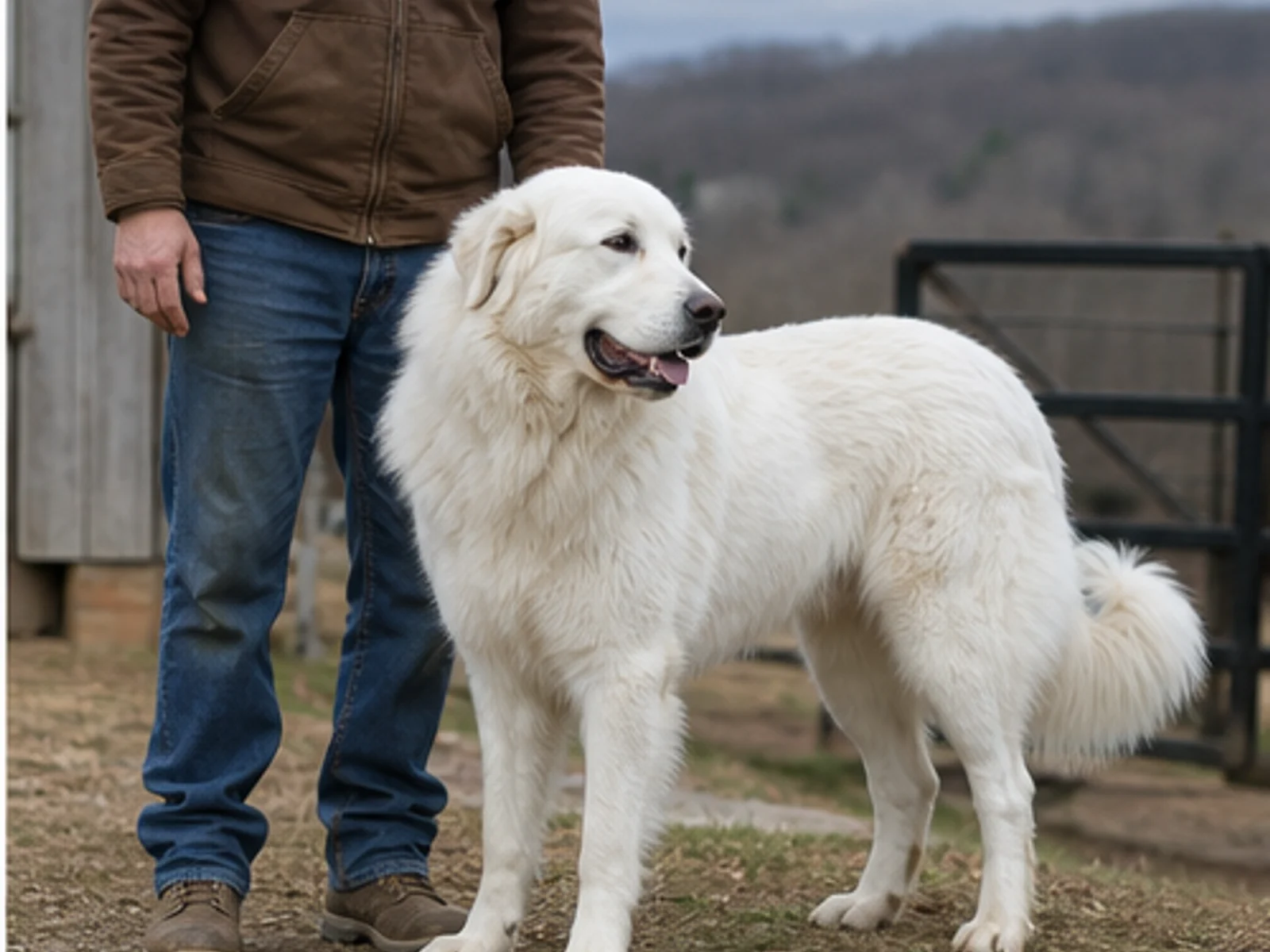
Great Pyrenees temperament reflects centuries of livestock-guardian work. The breed is often calm, patient, affectionate with family, reserved with strangers, and willing to make decisions independently. Those traits can create an excellent companion in the right home, but they can also appear as nighttime barking, roaming, selective recall, doorway watching, or reluctance to repeat an exercise that seems pointless.
This guide translates guardian behavior into a humane training and management plan. It does not teach protection work or promise that every Pyr is safe with children, dogs, livestock, or visitors. Evaluate the individual dog's genetics, early experience, health, learning history, and behavior in the settings that matter.

Sign up for expert-backed reviews and safety alerts all in one place.
Great Pyrenees temperament at a glance
- 1Great Pyrenees are independent guardians rather than oversized obedience dogs
- 2Calm and protective do not mean automatically tolerant or aggressive
- 3Barking, boundary patrol and stranger reserve are predictable traits to manage
- 4Secure physical fencing and controlled introductions are central safety tools
- 5Reward-based training should prioritize useful household behavior and recovery rather than perfect performance
The American Kennel Club Great Pyrenees profile describes a confident, patient breed. National Great Pyrenees Rescue's fit guide gives practical context about barking, fencing, independence, and life in a companion home.
Great Pyrenees temperament combines guardian tendencies with individual learning, health, history and environment. A calm dog may still bark, patrol or reserve judgment around strangers, while a social dog still needs secure boundaries and supervision. Evaluate Great Pyrenees personality through observable recovery, handling, motivation and household behavior, then train the skills that protect daily life. Breed tendencies help anticipate needs, but they cannot certify one dog as safe or suitable.
| Behavior | Functional background | Safe household response |
|---|---|---|
| Alert barking | Warn flock and deter threats | Manage triggers, bring indoors, reinforce checking in and settling |
| Boundary patrol | Monitor territory | Secure fence, gate routine, identification and supervised yard time |
| Stranger reserve | Evaluate unfamiliar approach | Controlled distance, barrier, choice and gradual introductions |
| Independent response | Work without constant direction | Short sessions, valuable rewards and realistic distraction levels |
| Nocturnal alertness | Predators often move after dark | Evening routine, indoor sleep and sound management |
Is Great Pyrenees a good house dog?
The short answer is yes when a Great Pyrenees receives indoor companionship, secure boundaries, daily activity and a plan for alert barking. The dog needs calm routines around doors, visitors and nighttime triggers, plus enough room for a giant body. The breed is a poor fit for a home expecting silence, automatic off-leash reliability or obedience produced through repeated pressure.
Is the Great Pyrenees a good family dog?
House, family and children includes Family and child interactions, great pyrenees temperament affectionate, and great pyrenees temperament patient. These are related but distinct reader decisions, best resolved by observing the individual dog, documenting recovery and matching training to the real household. Use the measurements, records and observable conditions in this section to identify what is known, what still needs confirmation and which next action the evidence supports. Before acting, record the source, date and individual-dog evidence behind the conclusion. That prevents a broad breed tendency, seller label or isolated number from becoming a promise about one dog and keeps the decision practical, traceable and useful. Revisit the conclusion when the dog's age, health, environment or household capacity changes, because the same label can lead to a different decision as the evidence changes.
- For confinement or access management, compare the Frisco Heavy Duty Fold & Carry Single Door Collapsible Wire Dog Crate, X-Large with the measured dog, opening and available floor space. Check height, usable interior dimensions, latch security, stability, chewing and climbing risk before relying on it in the home.
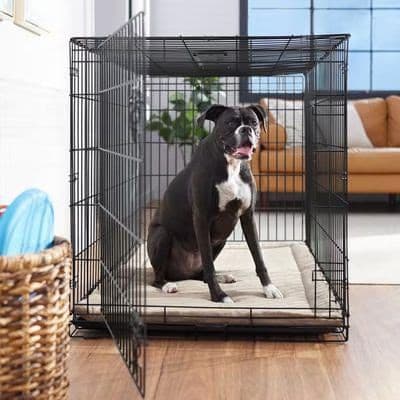
Petful may earn a commission when you click through to Chewy, at no extra cost to you.
- If the Frisco Heavy Duty Fold & Carry Single Door Collapsible Wire Dog Crate, X-Large suits the setup, supervise initial use and pair it with gradual, reward-based practice. A barrier can prevent rehearsal and protect rest, but it does not teach comfort alone or replace a secure exterior boundary.
Why guardian instincts matter
Questions involving great pyrenees temperament, great pyrenees dog temperament, great pyrenees temperament confident, great pyrenees temperament gentle, and great pyrenees temperament strong willed are best resolved by observing the individual dog, documenting recovery and matching training to the real household. A livestock guardian works near animals it protects and notices change across a territory. Unlike a herding dog, it does not control flock movement through stalking and eye. Unlike a sporting dog, it was not selected primarily for repeated cooperative retrieves. That distinction explains why a Pyr may understand a cue and still prioritize a sound at the fence. Training should not try to erase the breed's history. It should create safe outlets and predictable alternatives. Reward the dog for orienting to the handler, coming indoors, moving away from a gate, settling after one alert, accepting visitor management, and participating in care. Do not deliberately provoke territorial displays. Encouraging barking at strangers, fence charging, or "protection" can make ordinary veterinary visits, deliveries, and neighborhood life more dangerous. A stable dog does not need to rehearse threats to prove loyalty.
Are Great Pyrenees stubborn?
Questions involving Independence, motivation and realistic obedience and Reward-based training plan by life stage are best resolved by observing the individual dog, documenting recovery and matching training to the real household. "Stubborn" describes the handler's frustration more than the dog's process. A missed response may mean the cue was never learned under that distraction, the reward is weak, the dog is tired or uncomfortable, or the environment is more relevant. It may also reflect a long history of reinforcement for ignoring repeated cues. Change one variable at a time. Practice indoors, reduce distance, use a long line, improve the reward, and stop after a few successful repetitions. Say the cue once. If the dog cannot respond, help rather than testing again.
- “Obedient” is vague. “Moves three feet back from the gate when cued while a delivery is placed outside” can be practiced, measured and reinforced. Define household skills in observable terms.
Barking and nighttime alerting
Questions involving Roaming, fencing and recall limits are best resolved by connecting the label to the individual dog's records, condition, behavior and daily care needs.
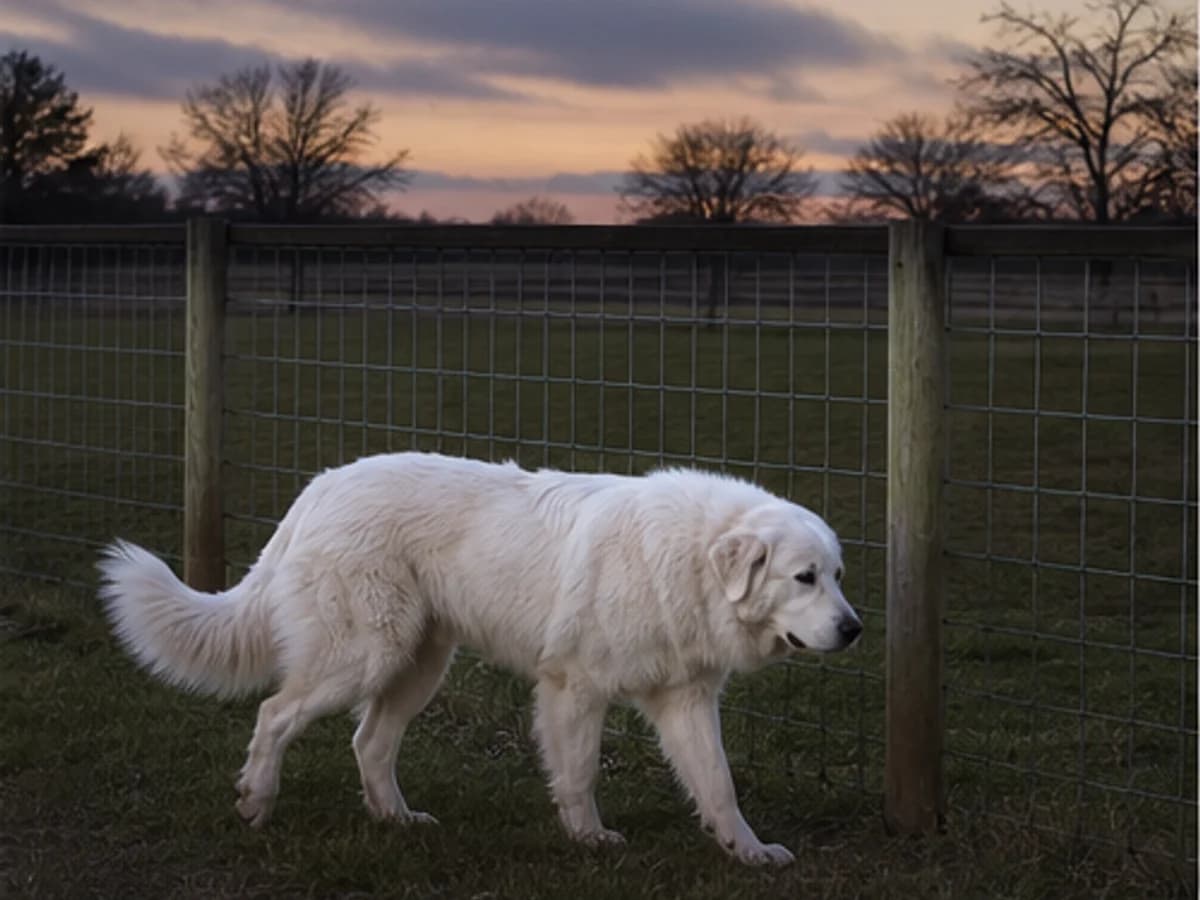
Many Pyrs become more vigilant after dark. The trigger may be a distant dog, wildlife, car door, neighbor, moving branch, or unfamiliar scent. Because alerting is internally rewarding, leaving the dog outside to bark for hours strengthens the routine.
Build a layered plan:
- Schedule a calm evening walk or sniff period.
- Bring the dog indoors before predictable nighttime triggers.
- Block visual access to busy windows and fence lines.
- Use white noise where appropriate.
- Reward an orientation to the handler and return to a bed.
- Avoid shouting, which can sound like participation.
- Investigate pain, anxiety or cognitive change when barking changes suddenly.
Neighbors experience duration and intensity, not breed history. Track when barking occurs and what ended it. Data can reveal a delivery pattern, outdoor animal, household noise, or inadequate rest.
Roaming, fencing and recall
A Great Pyrenees may consider territory larger than the owner's property. Recall should be trained, but it should not be the only barrier between a guardian and a road, neighbor, loose dog, or livestock. Use secure physical fencing, supervised transitions, identification, and a gate protocol.
The SpotOn GPS Fence is one tracked boundary product to evaluate as a backup layer. It does not prevent people, wildlife, or dogs from entering, and no electronic system should replace a suitable physical fence where crossing would create serious risk.
Before considering SpotOn GPS Fence, verify current coverage, battery, signal limitations, training requirements, fit, subscription terms, and the property. Do not use discomfort to suppress fear or chase behavior, and never assume technology makes unsupervised roaming safe.
Train a gate routine
Place a mat or station several feet inside the gate. Practice approaching the closed gate, moving to the station, rewarding, touching the latch, opening it a crack, closing it, and releasing only when safe. Add a helper and real deliveries gradually.
The Frisco eight-panel configurable gate and playpen is one tracked interior-management option for visitor or doorway practice. At 30 inches, it may not contain an athletic adult Pyr; supervise and assess jumping, climbing and pushing.
Use the Frisco gate/playpen as distance, not punishment. Pair it with food, rest, and a predictable visitor routine. A barrier that tips, slides, or traps paws is not safe.
- Configure the Frisco eight-panel gate and playpen for the specific visitor, doorway or decompression routine being trained. Check that the giant dog cannot tip, climb or push the panels into a person before using the barrier during a real arrival.
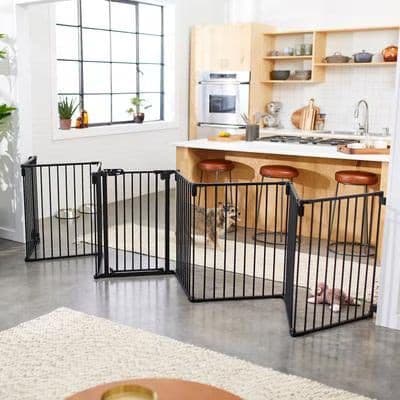
Petful may earn a commission when you click through to Chewy, at no extra cost to you.
- Pair the Frisco eight-panel gate and playpen with a reinforced station, distance and a practiced release cue. The barrier creates a safer learning window, but calm visitor behavior must be taught and rehearsed.
Leash skills for a giant dog
Questions involving When to involve a qualified trainer or behaviorist are best resolved by connecting the label to the individual dog's records, condition, behavior and daily care needs. Begin where the dog can succeed. Reward standing near the handler, then one step, then several. Change direction before the leash becomes tight. Sniffing can be a reward: walk together to a safe point, cue release, and allow exploration.
Compare walking equipment to the dog
The PetSafe Easy Walk medium/large harness is one tracked option to compare with chest girth, shoulder movement, and thick coat. Some Great Pyrenees will not fit this size, and front-attachment equipment does not teach the skill automatically.
Recheck the PetSafe Easy Walk harness through growth and coat changes. Stop for rubbing, altered gait, coughing, panic, or escape risk. WebVet's guide to dog trainers versus behaviorists helps select professional support when pulling is part of a broader fear or reactivity problem.
Leash handling for controlled transitions
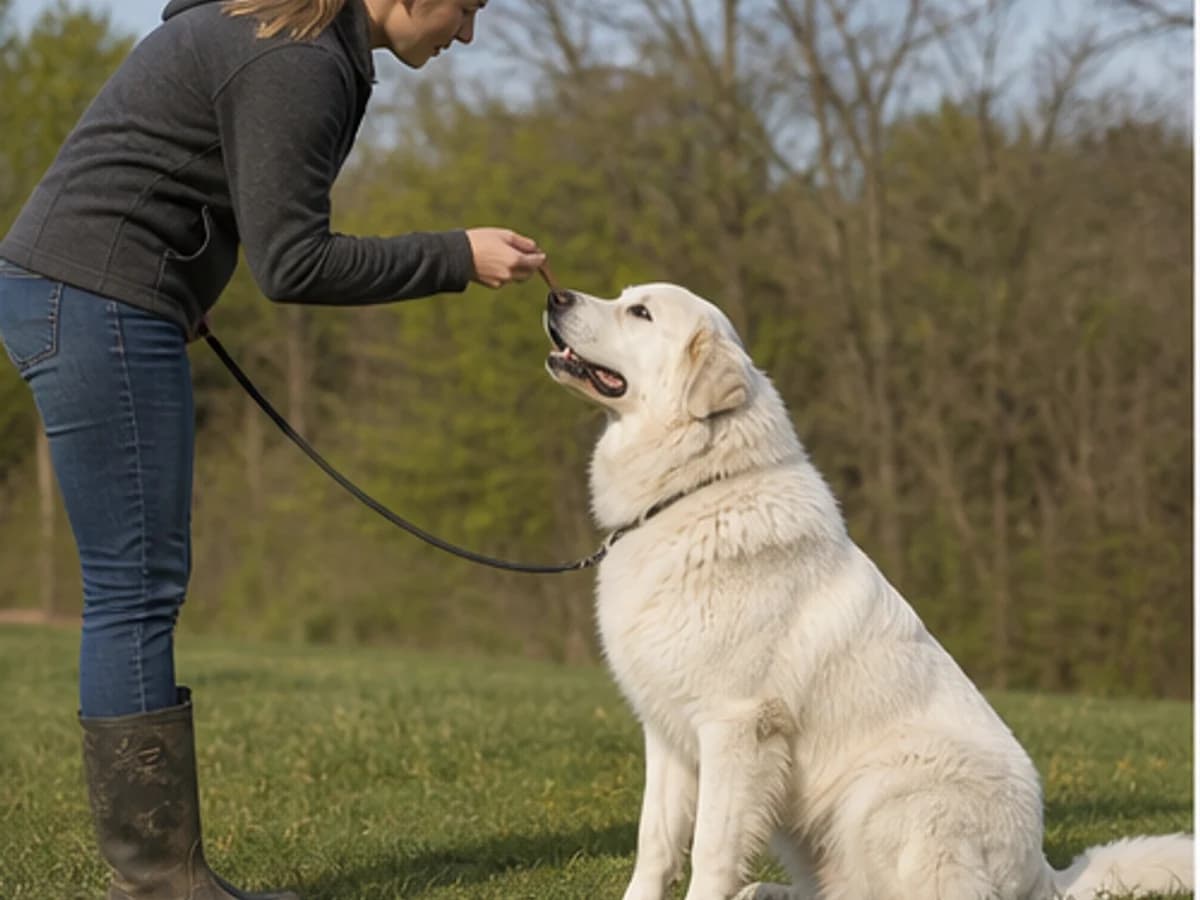
The Frisco six-foot traffic leash with dual padded handles is one tracked option for close control during controlled transitions. The second handle can shorten distance temporarily, but holding a powerful dog close around a trigger may increase tension if no escape route exists.
Compare the Frisco dual-handle traffic leash with the handler's grip, clip strength, dog size, and intended setting. Inspect hardware before every use. A leash is a safety connection, not a correction device.
Socialization and stranger introductions
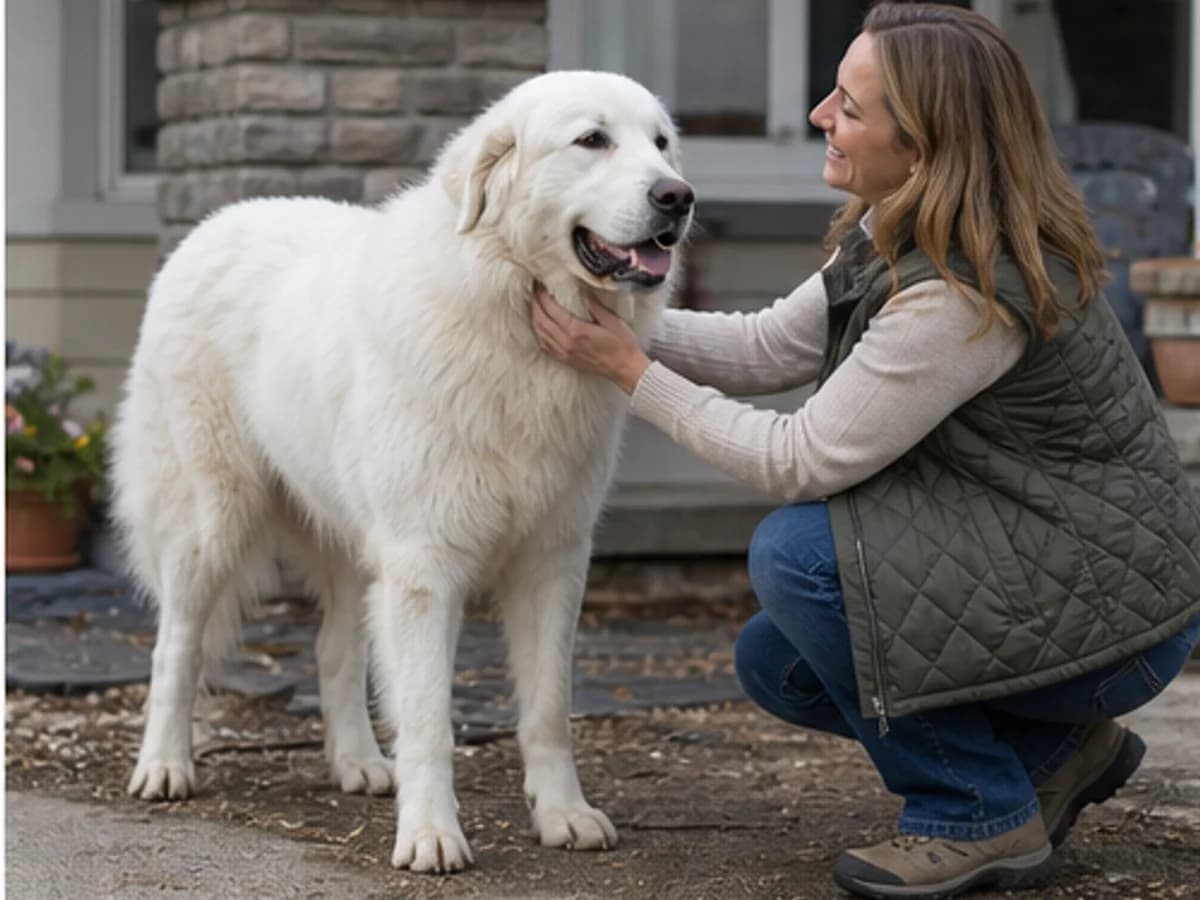
Socialization is not maximum contact. A guardian puppy should learn that unfamiliar people and environments can be observed without threat and that the handler creates space. Let the dog approach when appropriate; do not allow strangers to loom, hug, corner, or reach over the head.
For visitors:
- Exercise and toilet the dog before arrival.
- Begin behind a secure barrier with a retreat option.
- Ask visitors to ignore the dog initially.
- Reward calm observation and disengagement.
- Keep food, chews and narrow doorways managed.
- End before either dog or visitor is tired.
A growl is information. Punishing it may remove warning without changing discomfort. Increase distance and obtain qualified help when the dog freezes, hard-stares, lunges, snaps, guards access, or cannot recover.
Great Pyrenees with children
Many are patient with familiar children, but size and guardian behavior require adult supervision. Children should not sit on the dog, grab coat, climb into a crate, approach food, remove chews, or disturb sleep. Create dog-only rest zones and teach the dog to leave busy activity.
Adults must be close enough to intervene. A camera in another room is not supervision. Changes during adolescence, illness, pain, or household stress can alter tolerance, so previous friendliness is not a permanent guarantee.
Great Pyrenees with dogs, cats and livestock
Socialization with dogs, cats and livestock includes great pyrenees temperament with other dogs, great pyrenees temperament with cats, and Socialization with people, dogs and livestock. These are related but distinct reader decisions, best resolved by connecting the label to the individual dog's records, condition, behavior and daily care needs. Use the measurements, records and observable conditions in this section to identify what is known, what still needs confirmation and which next action the evidence supports. Before acting, record the source, date and individual-dog evidence behind the conclusion. That prevents a broad breed tendency, seller label or isolated number from becoming a promise about one dog and keeps the decision practical, traceable and useful. Revisit the conclusion when the dog's age, health, environment or household capacity changes, because the same label can lead to a different decision as the evidence changes.
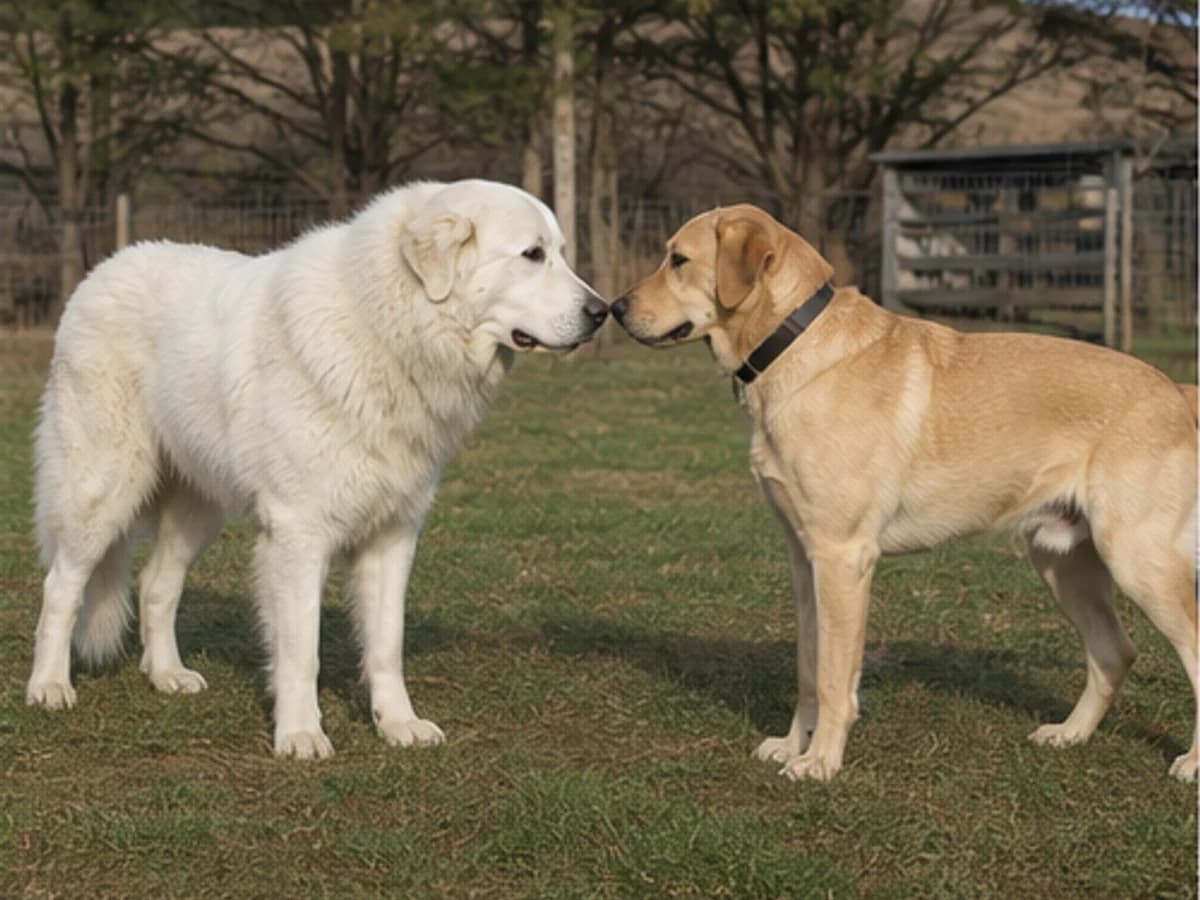
What dogs do Great Pyrenees not get along with?
The short answer is that there is no breed list identifying dogs Great Pyrenees will not tolerate. Compatibility depends on sex, maturity, history, play style, guarding and chase behavior. Use neutral, gradual introductions and maintain separate food and rest areas. Stop if either dog freezes, hard-stares, guards access or escalates, then seek qualified behavior guidance before another interaction.
Compatibility depends on the individuals and introduction. Use parallel walks or barrier observation for dogs, separate resources, and give both animals escape space. Avoid crowded dog parks as a test.
Cats need vertical refuge and dog-free zones. A dog who fixates, stalks, chases, or cannot disengage should remain managed. Livestock introduction is a specialized process; a puppy is not automatically trustworthy because of breed. Supervision, age, stock species, mentorship, and husbandry all matter.
- Check the PetSafe Easy Walk medium/large harness on the individual dog during the same turns, stops and gate approaches used in training. Coat compression, shoulder motion and escape risk matter more than a breed-based size guess.

Petful may earn a commission when you click through to Chewy, at no extra cost to you.
- Introduce the PetSafe Easy Walk medium/large harness with food and low-distraction movement before relying on it near triggers. Reinforce orientation and loose-leash choices so the equipment does not become the only control strategy.
Why do so many Great Pyrenees end up in shelters?
Many Great Pyrenees are surrendered after adult barking, roaming, size, shedding, fencing needs or guardian independence exceed what the household expected. Punishment does not remove the history behind those traits and can worsen fear or conflict. Earlier management, realistic housing decisions and useful household training reduce preventable mismatches.
Adopting an adult can provide direct observations about noise, doors, visitors, animals and time alone. Ask for specific situations and recovery, not only labels such as protective or stubborn. A return policy and post-placement support are responsible safeguards, not signs that a dog is disposable.
Do Great Pyrenees need another dog?
No, a Great Pyrenees does not automatically need another dog. Some enjoy canine companionship, while others prefer distance, become selective with maturity or guard resources. A second dog will not reliably cure barking, boredom or separation-related distress and can add conflict if the match is poor.
Choose another dog only after controlled introductions and a realistic plan for separate feeding, rest, training and veterinary care. The household should be able to support both dogs even if they coexist politely rather than becoming playmates.
Reward-based training plan by life stage
A reward-based Great Pyrenees training plan should change with the dog’s development while keeping the same core rules: prevent unsafe rehearsal, reinforce useful choices, keep sessions short enough for success, and practice in the settings where the skill matters. Life stage affects attention, strength, recovery and health, so progress should follow the individual dog rather than a fixed calendar.
Puppy
Teach name response, handling, toileting, confinement, coming indoors, moving from gates, trading, leash foundations, and short alone time. Protect sleep and use safe positive exposure rather than forced greeting.
Adolescent
Reduce rehearsal of barking, escape, pulling, and resource guarding. Practice around realistic distractions at a distance. Expect strength and independence to increase before social maturity.
Adult
Maintain useful skills. Vary rewards, rehearse visitor routines, keep confinement positive, and provide sniffing, observation, and calm work. Do not stop training because the dog knows a cue indoors.
Senior
Adapt for hearing, vision, pain, mobility, and cognitive change. Use non-slip surfaces and closer signals. Sudden behavior change deserves veterinary assessment before a training label.
Petful's Great Pyrenees puppy guide handles first-year detail, while the Great Pyrenees health guide covers medical changes that can alter behavior.
When to get professional help
Choose help early for bites, escalating growling, resource guarding, separation panic, predatory behavior, severe noise fear, inability to handle the dog, or reactions that make daily life unsafe. A trainer can teach skills; a qualified behavior consultant can address more complex plans; a veterinary behaviorist can diagnose and treat behavioral disorders medically.
Ask about methods, credentials, experience, observation, safety plan, and coordination with the veterinarian. Avoid guarantees, dominance-based explanations, flooding, or tools used to suppress warnings without addressing emotion.
A four-week foundation plan
Week 1: reduce rehearsal
Secure gates, block busy windows, bring the dog indoors at predictable barking times, separate high-value resources, and stop uncontrolled greetings. Observe triggers, distance and recovery. Management is not giving up; it prevents the behavior from becoming more practiced while teaching begins.
Week 2: build orientation and movement
Reward the dog for looking toward the handler, moving one step away from a boundary, following a hand target, and resting on a mat. Practice when nothing urgent is happening. Five successful repetitions are more valuable than a long session that ends in frustration.
Week 3: add realistic but mild distractions
Ask a helper to walk past at a distance, touch the gate latch, or enter after the dog is comfortably behind a barrier. Reinforce calm observation and disengagement. If the dog cannot eat or look away, increase distance. Do not use the helper to test how much the dog will tolerate.
Week 4: rehearse household events
Practice a delivery, visitor arrival, veterinary-style handling, vehicle entry, evening settle, and coming indoors from the yard. Write the exact setup and outcome. Continue easier versions between rehearsals so success remains frequent.
| Skill | Starting definition | Progress signal |
|---|---|---|
| Gate station | Moves to mat with gate closed | Holds position as latch moves |
| Visitor routine | Eats behind barrier at distance | Can disengage and settle |
| Leash walking | Three loose steps indoors | Longer stretches in quiet outdoor area |
| Coming inside | Responds from doorway | Responds from secure yard with mild distraction |
| Grooming | One brush stroke calmly | Short section with voluntary pauses |
- For the handling decision in this section, compare the Frisco six-foot traffic leash with dual padded handles with the dog's current measurements, movement, coat and behavior. Recheck fit while the dog is standing and moving, inspect the hardware before use, and confirm that the equipment cannot tighten, rub or permit escape.
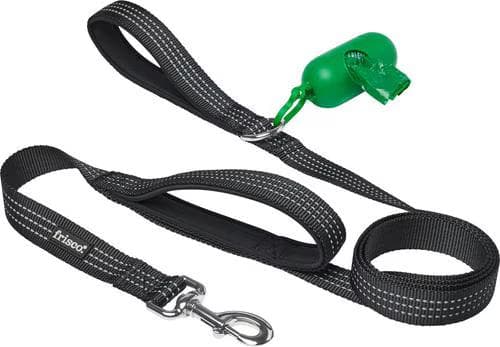
Petful may earn a commission when you click through to Chewy, at no extra cost to you.
- If the Frisco six-foot traffic leash with dual padded handles still fits the documented need, introduce it with rewards and supervise early use. Walking equipment can support a management plan, but it does not teach loose-leash behavior or make a powerful dog safe around triggers by itself.
Behavior changes that may be medical
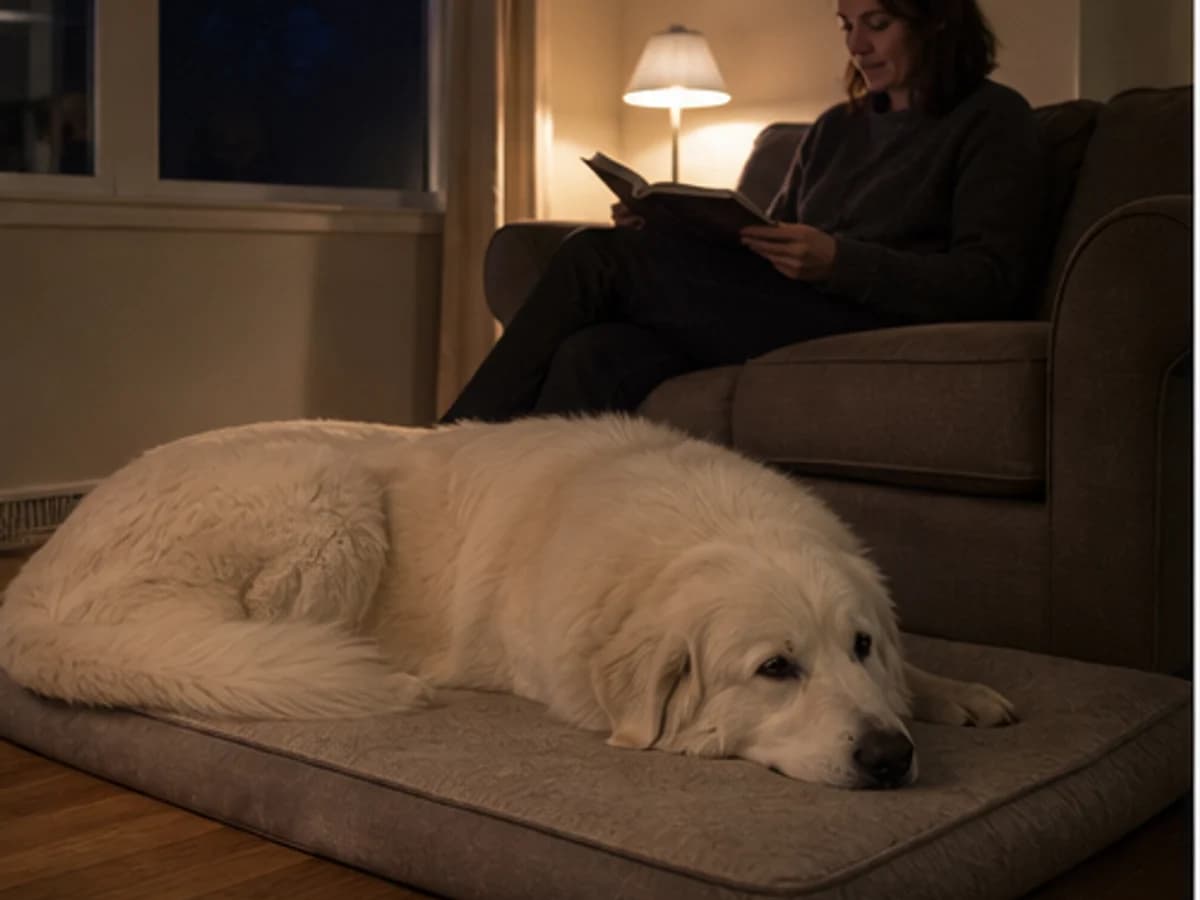
Pain, sensory loss, digestive discomfort, endocrine disease, neurologic change, medication effects, and cognitive decline can alter behavior. A dog who suddenly resists brushing, growls when rising, wakes and barks differently, withdraws, or becomes house-soiling needs veterinary assessment.
Training and medical care can proceed together. Record when the change began, where it occurs, body posture, appetite, sleep, movement, elimination, medication, and a video if safe. Avoid provoking the behavior for footage. A clear history helps the veterinarian decide what to examine and whether behavior support should join the plan.
Keep management in place while the cause is investigated. Give the dog more space, avoid painful handling, separate from children during uncertain periods, and use barriers for visitors. Improvement after pain treatment does not prove that every future incident is medical, but it does show why behavior and physical health should not be evaluated in isolation.
Resource guarding and household space
Do not repeatedly take food or chews to prove authority. Feed in a quiet area, keep children away, trade for items when necessary, and return safe objects when practical. If the dog stiffens, hovers, growls, snaps, or guards a person or doorway, increase management and seek qualified help.
Teach useful movement away from resources. Toss a reward several feet from an empty bowl, reinforce leaving a doorway, and make bed stations valuable without cornering the dog. Separate animals for meals and high-value chews even when they usually coexist well.
Teaching calm time alone
Guardian attachment and independent decision-making do not guarantee comfort in isolation. Begin with brief departures after exercise and toileting, use a camera, and return before distress becomes intense. Increase duration gradually while the dog can rest, eat, and recover.
Pacing, continuous barking, drooling, destruction at exits, elimination, self-injury, or refusal of food can indicate separation-related distress. Do not solve it by placing the dog outside to bark or by using punishment. Coordinate veterinary assessment and a structured behavior plan.
Working guardians and companion guardians
A livestock setting is not automatically enrichment. Working dogs need suitable fencing, stock introductions, shelter, veterinary care, nutrition, human handling, and protection from roads, conflict, poisoning, theft, and extreme weather. Puppies require supervision and cannot be declared trustworthy by breed alone.
Companion homes should not manufacture guarding jobs by encouraging suspicion. Observation from a secure yard, scent work, calm patrol walks, stationing, and predictable household responsibilities provide outlets without rehearsing aggression. In both settings, the measure of success is safe stable function, not how intimidating the dog appears.
Keep a trigger-and-recovery log for four weeks
Guardian-behavior translation becomes practical when the household records what happens before, during and after an alert. For four weeks, write down the trigger, distance, time of day, dog's body language, response to the practiced cue and minutes needed to return to baseline.
Use observable descriptions:
- Heard a delivery vehicle, barked six times, moved to station after the second cue and settled in two minutes.
- Saw a dog at the fence, stiffened and could not take food until distance increased.
- Visitor entered behind a barrier, dog watched, ate and lay down after five minutes.
- Woke at night, barked toward wildlife sounds and returned indoors when called.
Avoid vague scores such as good, stubborn or aggressive. Those words hide the behavior that training must change. The log may show that window access, fatigue, pain, distance or a particular routine affects recovery more than the trigger category itself.
Review the record weekly. The four-week foundation is working when recovery becomes faster, cues succeed at realistic distances and the dog can return to ordinary activity. Escalating intensity, inability to recover, sudden sensitivity or behavior that threatens people or animals needs veterinary and qualified behavior support. The goal is not to suppress every alert; it is to create observable criteria for safe household behavior.
Mixed-breed temperament needs individual evidence
Mixed-breed temperament includes great pyrenees mix temperament, great pyrenees lab mix temperament, and great pyrenees husky mix temperament. These are related but distinct reader decisions, best resolved by observing the individual dog, documenting recovery and matching training to the real household. The dedicated Petful guide owns the full analysis; this section supplies the context needed to choose the right next step without duplicating the owner page. Before acting, record the source, date and individual-dog evidence behind the conclusion. That prevents a broad breed tendency, seller label or isolated number from becoming a promise about one dog and keeps the decision practical, traceable and useful. Revisit the conclusion when the dog's age, health, environment or household capacity changes, because the same label can lead to a different decision as the evidence changes.
More Great Pyrenees guides from Petful
Use Petful's complete Great Pyrenees breed profile for the full ownership picture, while this page turns guardian behavior into observable training and recovery decisions.
Frequently asked questions
The short answer is yes when a Great Pyrenees receives indoor companionship, secure boundaries, daily activity and a plan for alert barking. The dog needs calm routines around doors, visitors and nighttime triggers, plus enough room for a giant body. The breed is a poor fit for a home expecting silence, automatic off-leash reliability or obedience produced through repeated pressure.
The short answer is yes for many households, but the individual Great Pyrenees dog's history and behavior determine fit. Adults should supervise children, protect feeding and resting spaces and manage visitors as guardian behavior develops. A fostered adult with specific home observations can be easier to assess than a puppy. Breed reputation never replaces direct evaluation, barriers and active supervision.
The short answer is that there is no breed list identifying dogs Great Pyrenees will not tolerate. Compatibility depends on sex, maturity, history, play style, guarding and chase behavior. Use neutral, gradual introductions and maintain separate food and rest areas. Stop if either dog freezes, hard-stares, guards access or escalates, then seek qualified behavior guidance before another interaction.
The typical Great Pyrenees is calm, patient, confident, independent and watchful, with strong loyalty to familiar people or animals. Livestock-guardian heritage can also appear as nighttime barking, territorial awareness, selective recall and reserve with strangers. Individuals vary with genetics, early experience, health and environment. A sound companion should be manageable and able to recover from ordinary events, not kept in a constant state of suspicion.
Great Pyrenees are intelligent, but their guardian independence can make repetitive obedience less motivating than it is for handler-focused breeds. Training is most effective when sessions are short, rewards are meaningful and the skill has a clear purpose. Management still matters: use fences, leashes and barriers while behavior develops. Harsh pressure can damage trust and does not remove the dog's instinct to assess situations independently.
Great Pyrenees often bark at night because livestock guardians were selected to notice and deter threats when predators were active. Wildlife, neighbors, vehicles and distant sounds can trigger the same response in a companion home. Bring the dog indoors, limit visual access, use background sound when helpful and reward settling after an alert. Punishment may increase arousal without teaching what to do instead.
Many Great Pyrenees are poor candidates for off-leash freedom outside a securely fenced area because roaming and guardian priorities can override recall. Train recall and emergency check-ins, but do not treat successful practice as a guarantee around wildlife, livestock or a perceived threat. Use a leash or long line where required and choose enclosed spaces for free movement. Physical management protects both the dog and the community.
Yes, watchful and protective behavior is common in Great Pyrenees, but it should not be deliberately intensified. A safe companion needs controlled exposure, predictable visitor routines, barriers and reinforcement for calm observation and disengagement. Protectiveness is not permission for uncontrolled threatening behavior. If the dog blocks family movement, cannot recover after visitors leave, lunges or bites, obtain veterinary and qualified behavior support.
Many Great Pyrenees live successfully with other dogs, especially when introductions are gradual and resources are managed. Compatibility can change with social maturity, and sex, age, history and individual temperament all matter. Feed separately, supervise high-value items and provide independent rest areas. Do not force proximity after tension; create distance and reassess before allowing another interaction.
Socialize a Great Pyrenees through controlled, positive exposure at a distance where the dog can eat, explore and recover. Include people of different appearances, calm dogs, surfaces, vehicles, handling and ordinary household sounds without forcing greetings. Reward checking in and disengaging. The goal is stable neutrality and recovery, not contact with everyone. Continue practice through adolescence as guardian behavior and environmental awareness develop.
Review the plan after major changes such as adolescence, a move, a new baby, another pet, illness, or caregiver injury. Skills learned in one environment may need rebuilding in another. Returning to easier practice is not failure; it keeps the dog successful while the household creates a new predictable routine.
Document what works so every caregiver responds consistently and safely.
The bottom line
Great Pyrenees training succeeds when the household respects what a guardian is and defines concrete safety skills. Secure the boundary, manage barking, reinforce coming indoors, create visitor distance, teach leash behavior, and make grooming and veterinary handling cooperative.
The goal is not a silent dog who obeys under every circumstance. It is a dog whose predictable needs are met, whose choices are managed safely, and whose family recognizes when independence, fear, pain, or territorial behavior requires a different plan.

Coreen Saito is a pet writer and longtime shelter volunteer with more than a decade in animal rescue. She covers cat behavior, breed care, and the small, ordinary science of sharing a life with companion animals, with a particular focus on honest takes about the products and decisions that actually matter. At home in Arizona, she's outranked by Mac (a dog with the loudest opinion in the house), Rebel (a cat who governs by quiet authority), and Meri (an orange tabby who runs the late shift and the laundry basket). She writes about all three, plus the rescues that keep coming through her life, at LifeWithMinty.com.
Sign up for expert-backed reviews and safety alerts all in one place.