Great Pyrenees Size, Weight and Growth Guide
Great Pyrenees size often reaches at least 100 pounds for males and 85 for females. Learn height, puppy growth, body condition and equipment sizing.
Petful is reader supported. As an affiliate of platforms like Amazon and Chewy, we may earn a commission when you buy through links on this page. There is no extra cost to you.
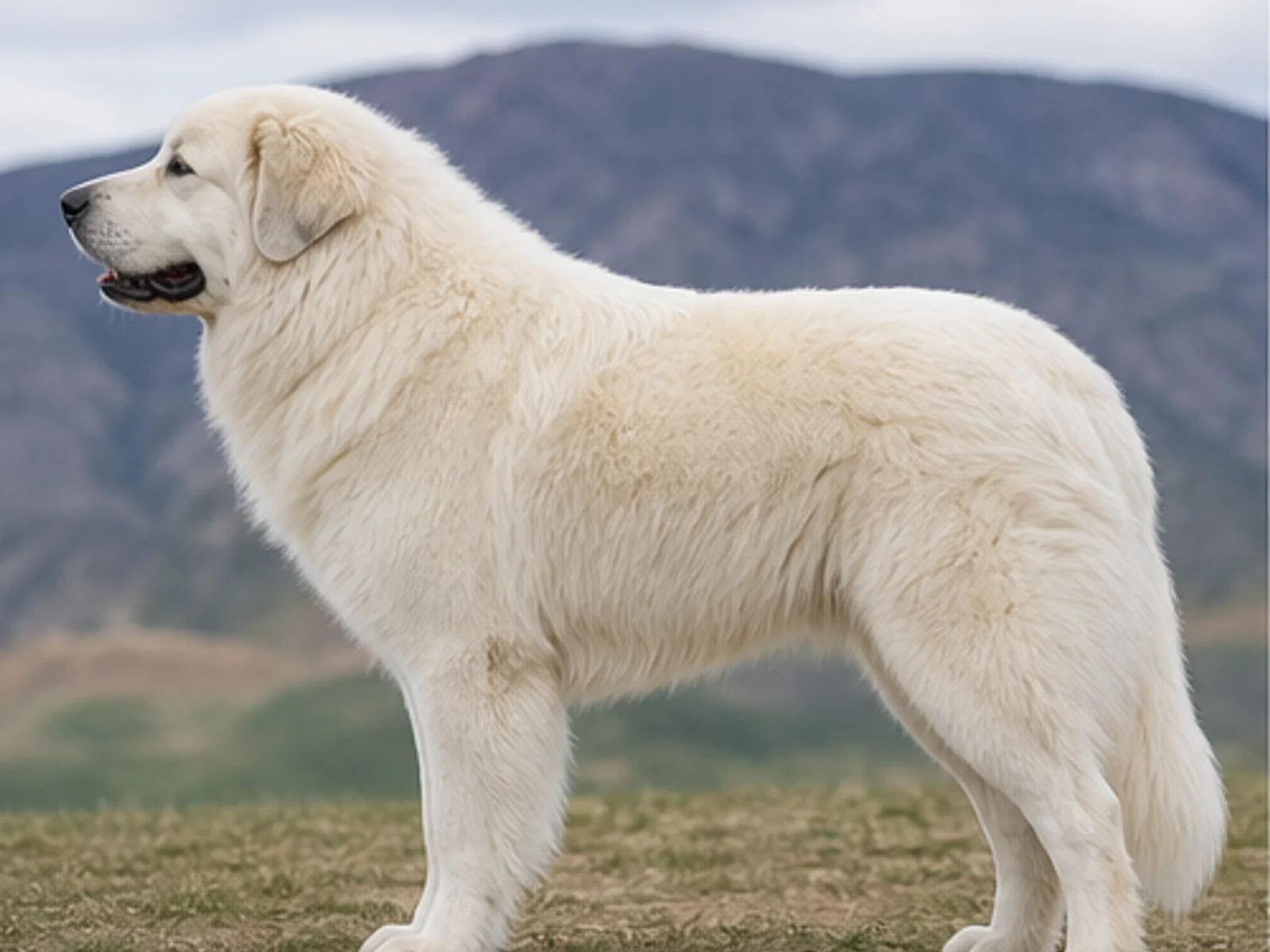
An adult Great Pyrenees is a giant dog. The American Kennel Club standard describes males at 27 to 32 inches at the shoulder and females at 25 to 29 inches. Weight begins at 100 pounds for males and 85 pounds for females in the standard, with healthy individuals varying according to frame, muscle, age, and body condition.
This guide explains Great Pyrenees size, puppy growth ranges, measurement, body condition, and equipment fit. A chart is a reference, not a diagnosis or a target to force. The veterinary team should evaluate unexpected growth, weight change, abnormal gait, pain, or loss of condition.

Sign up for expert-backed reviews and safety alerts all in one place.
Great Pyrenees size at a glance
- 1Adult males are generally 27-32 inches and at least 100 pounds in the AKC standard; females are generally 25-29 inches and at least 85 pounds
- 2Height is measured at the withers, not the top of the head
- 3A thick coat can hide excess or inadequate body condition
- 4Giant puppies grow unevenly and should not be pushed toward the largest possible number
- 5Choose crates, beds, bowls and harnesses from the individual dog's measurements
The AKC Great Pyrenees profile and Great Pyrenees Club of America standard are the primary references for purebred adult proportions. They describe an ideal breed standard, not a guarantee for a mixed dog or a medical weight chart.
Great Pyrenees size should be interpreted from repeated measurements, body condition and function, not from one photograph or a goal to produce the heaviest dog possible. Record height consistently at the withers, weigh under similar conditions and note coat, muscle, movement and recovery. A Great Pyrenees size chart can organize trends, but the veterinarian should interpret unexpected growth, weight change, pain or exercise intolerance for the individual dog. For more, see Petful’s guide to Great Dane growth chart.
| Measurement | How to take it | What it helps decide |
|---|---|---|
| Shoulder height | Level surface, floor to highest point of shoulder blades | Breed context, vehicle and barrier planning |
| Body weight | Calibrated scale under consistent conditions | Trend monitoring, dosing and nutrition discussion |
| Nose-to-rump length | Natural standing posture, exclude tail | Crate and bed usable length |
| Chest girth | Widest ribcage behind front legs | Harness sizing |
| Body condition | Feel ribs, waist and abdominal tuck | Whether weight suits the individual frame |
Is a Great Pyrenees a large or extra large dog?
The short answer is that a Great Pyrenees is an extra-large or giant dog for practical housing, transport and equipment decisions. Retail size labels vary, so an XL crate or harness may still be too small. Use the dog's measured height, chest, neck and body length plus the product dimensions rather than assuming that a generic large label guarantees safe fit.
Why do so many Great Pyrenees end up in shelters?
The short answer is that many Great Pyrenees are surrendered after owners underestimate adult size and the costs or handling demands that follow. A puppy can become a dog over 85 or 100 pounds, affecting food, fencing, grooming, transport and leash safety. Confirm housing rules and price the adult setup before adoption, not after the dog outgrows temporary plans.
Is a Great Pyrenees a good house dog?
The short answer is yes: a Great Pyrenees can be a good house dog when the home has enough room for safe movement, durable boundaries and a quiet indoor resting area. Size affects narrow halls, stairs, slippery floors, vehicle access and emergency handling. The dog also needs daily activity and barking management, so physical space alone does not determine household fit.
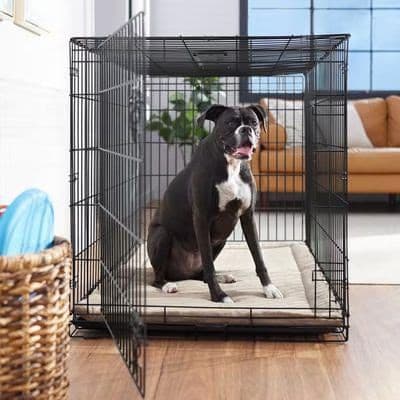
- Choose the Frisco XL collapsible wire crate from current standing height and nose-to-rump length plus normal turning space. Record the crate's usable interior dimensions beside the dog's dated measurements so growth does not silently erase safe clearance.
Petful may earn a commission when you click through to Chewy, at no extra cost to you.
- Recheck the Frisco XL collapsible wire crate whenever the puppy's height, length or coat changes noticeably. If the adult cannot stand, turn and lie on its side normally, transition to a secure room or properly sized enclosure.
Adult male and female Great Pyrenees size
Questions involving full grown great pyrenees size are best resolved by using repeated measurements, body condition and functional fit rather than one chart or seller label.
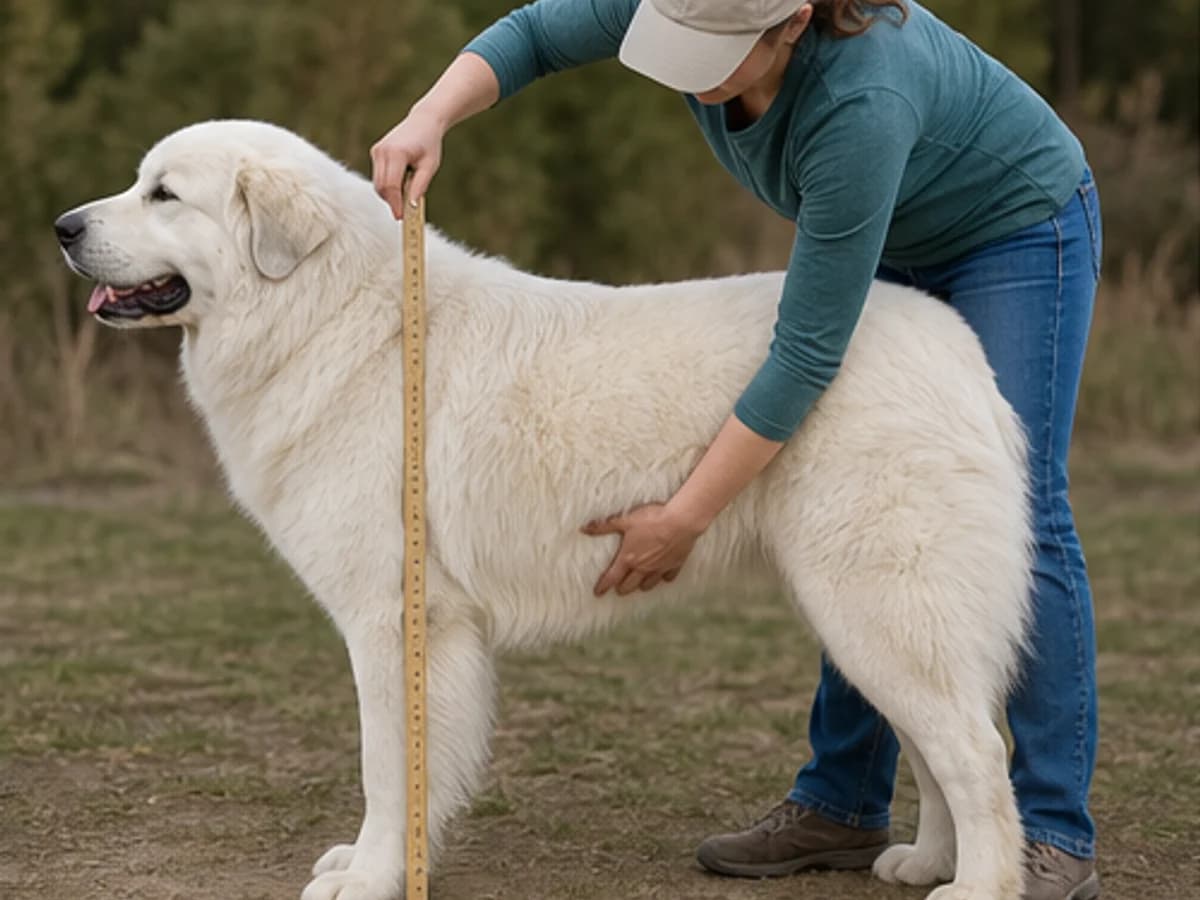
Male Great Pyrenees are typically taller and heavier than females, but sex does not create two separate breeds. A large female can exceed a small male, and coat makes visual comparison unreliable. The standard's lower weight descriptions should not be treated as a reason to make every dog heavier.
Height is taken at the withers, the highest point of the shoulder blades. The dog should stand naturally on a level, non-slip surface. Measuring to the head, ears, or coat creates an inflated number. Repeat the measurement and record the method so future comparisons are meaningful.
Weight should be interpreted with body condition. Two dogs at 100 pounds may have different frames and fat cover. WebVet's guide to dog weight loss or gain explains why trends and clinical context matter more than a single reading.
Are boy or girl Great Pyrenees better?
Male and female size includes male great pyrenees size, female great pyrenees size, and great pyrenees male vs female size. These are related but distinct reader decisions, best resolved by using repeated measurements, body condition and functional fit rather than one chart or seller label. Use the measurements, records and observable conditions in this section to identify what is known, what still needs confirmation and which next action the evidence supports. Before acting, record the source, date and individual-dog evidence behind the conclusion. That prevents a broad breed tendency, seller label or isolated number from becoming a promise about one dog and keeps the decision practical, traceable and useful. Neither sex is automatically better. Males are generally larger, but household fit depends on the individual dog's behavior, health, history and compatibility with other animals. Sex should not be used as a shortcut for predicting affection, trainability or guarding. For size planning, compare the actual parents or adult dog, measure equipment and confirm housing limits. For behavior and multi-dog decisions, evaluate the individuals and use controlled introductions. A smaller female can still require giant-dog equipment, and a larger male is not automatically harder or easier to live with.
Are Great Pyrenees very smart?
Yes, Great Pyrenees can learn quickly and notice subtle changes, but their livestock-guardian history favors independent decisions rather than constant direction from a handler. Intelligence does not predict adult height, healthy weight or the date growth will finish. It also does not make a puppy physically mature sooner.
Use the growth record to separate learning from development. A young dog may understand a cue before having the impulse control, balance or joint maturity to perform it safely around distractions. Keep sessions brief, reward voluntary cooperation with weighing and measuring, and use Petful's Great Pyrenees temperament and training guide for the deeper behavior plan.
Great Pyrenees puppy growth chart
Published growth charts vary because they use different populations and methods. A Great Pyrenees size by age reference, Great Pyrenees size chart or Great Pyrenees puppy size chart should organize repeated observations, not promise one puppy's adult measurements. The following broad planning bands are not a prescription. Use the puppy's parent sizes, sex, repeated measurements, body condition and veterinary assessment.
| Age | Common planning band | What matters more than the number |
|---|---|---|
| 8 weeks | Roughly 15-25 pounds | Appetite, stool, hydration, veterinary record and steady trend |
| 3 months | Roughly 25-40 pounds | Body condition, gait and appropriate growth diet |
| 6 months | Roughly 50-80 pounds | Lean condition, coordinated movement and controlled activity |
| 9 months | Roughly 70-100 pounds | Individual curve, sex and parent size |
| 12 months | Roughly 80-115 pounds | Height may approach adult range while body continues maturing |
| 18-24 months | Adult size consolidates gradually | Function and healthy condition rather than maximum mass |
These ranges are deliberately wide. A puppy outside one band is not automatically sick, and a puppy inside it is not automatically healthy. Contact the veterinarian for a falling growth trend, persistent digestive signs, poor appetite, pot belly, dull coat, marked limb deviation, pain, or rapid body-fat gain.
Why giant puppies should grow steadily
The goal is controlled development on a complete food formulated for growth, including large-size dogs when indicated. Adding calcium or supplements to make bones grow faster can disrupt nutritional balance. Measure food, account for treats, and keep the puppy lean enough for ribs to be felt easily without being sharply visible.
Avoid repetitive high-impact exercise, forced distance running, and frequent jumps from vehicles while the puppy is developing. Free movement on safe footing, sniffing, short play, and age-appropriate training are usually more useful. The veterinary team can adjust activity when gait or joints are a concern.
When does a Great Pyrenees stop growing?
When growth stops includes when do great pyrenees reach full size and When Great Pyrenees stop growing. These are related but distinct reader decisions, best resolved by using repeated measurements, body condition and functional fit rather than one chart or seller label. Use the measurements, records and observable conditions in this section to identify what is known, what still needs confirmation and which next action the evidence supports. Before acting, record the source, date and individual-dog evidence behind the conclusion. That prevents a broad breed tendency, seller label or isolated number from becoming a promise about one dog and keeps the decision practical, traceable and useful.
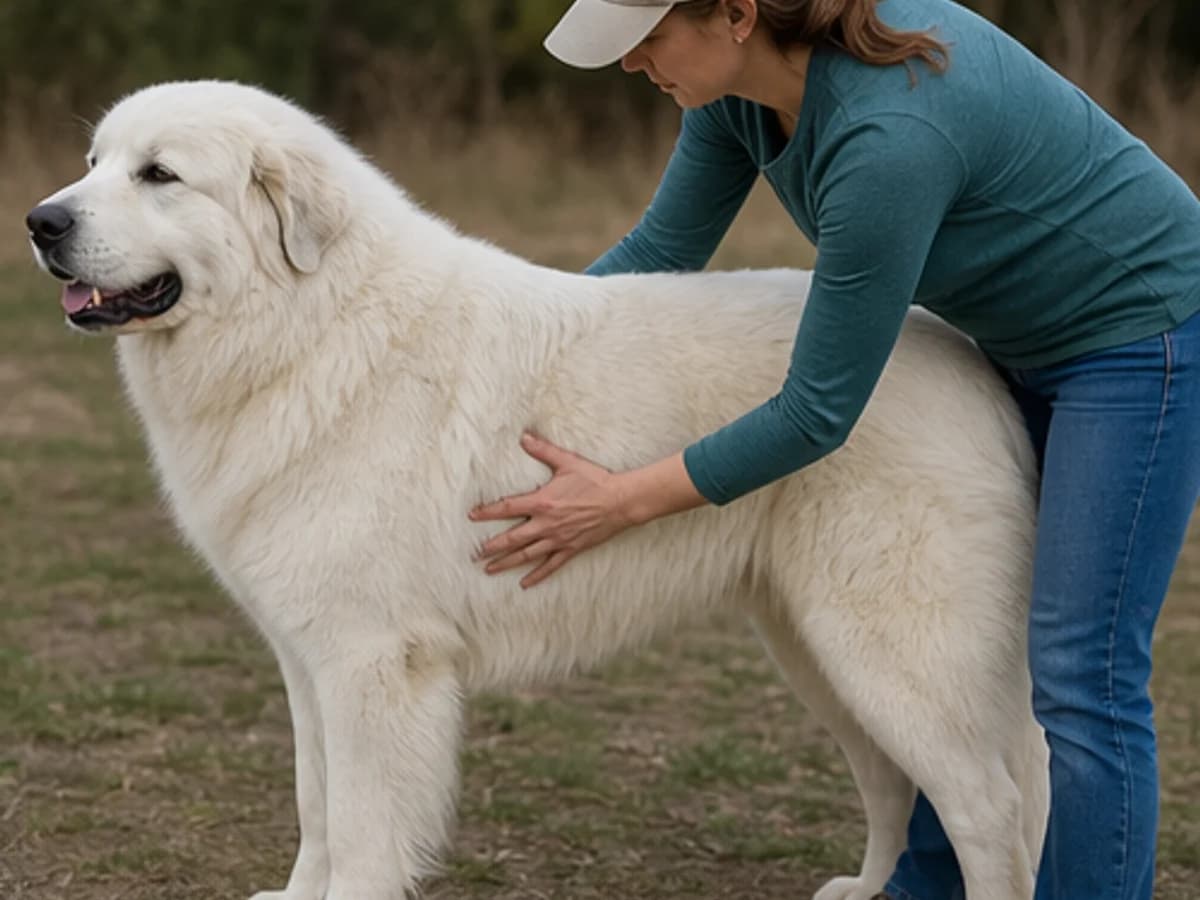
Height growth slows before the dog finishes filling out. Many Pyrs are near adult height around 18 months, while chest, muscle, coat, and overall maturity continue into the second or even third year. Mental maturity also arrives gradually and is not measured by the scale.
Growth is not linear. A puppy may look leggy, then broad, then lean again. Judge a trend over weeks rather than reacting to one photograph. Sudden change in weight or function is different and deserves assessment.
How to assess body condition under the coat
Body condition and healthy growth includes Healthy growth and large-breed nutrition principles, How to measure height, weight and body condition, and When to ask a veterinarian about growth. These are related but distinct reader decisions, best resolved by using veterinary findings, connected records and the individual dog's current signs instead of treating a population range as a promise. Use the measurements, records and observable conditions in this section to identify what is known, what still needs confirmation and which next action the evidence supports. Before acting, record the source, date and individual-dog evidence behind the conclusion. That prevents a broad breed tendency, seller label or isolated number from becoming a promise about one dog and keeps the decision practical, traceable and useful. Revisit the conclusion when the dog's age, health, environment or household capacity changes, because the same label can lead to a different decision as the evidence changes.
- Match the FurHaven NAP jumbo orthopedic bed to measured sleeping length and preferred posture, not predicted adult weight. Note how much of the listed footprint is flat sleeping surface after bolsters and edges are excluded.
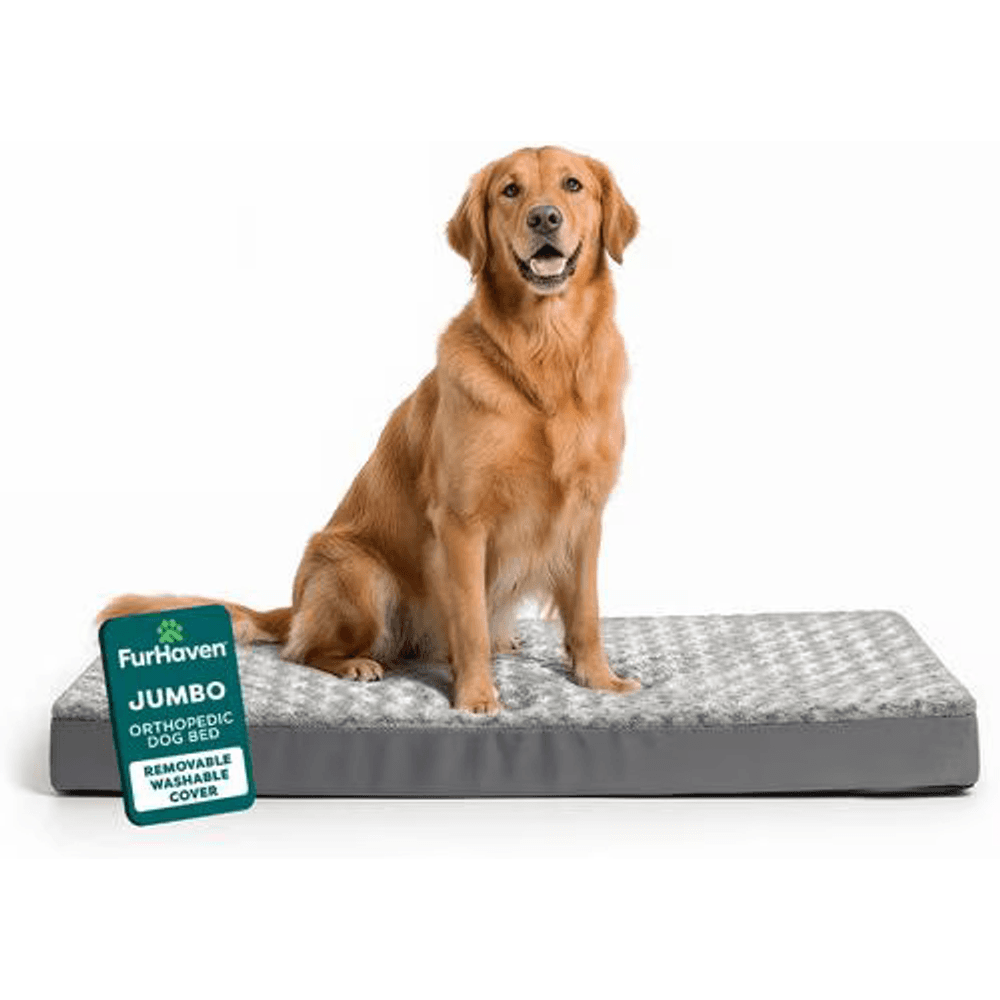
A plush orthopedic foam mattress that cushions aging joints and pressure points, giving a stiff or trembling senior dog warm, supportive rest.
Petful may earn a commission when you click through to Chewy, at no extra cost to you.
- Use the FurHaven NAP jumbo orthopedic bed as one checkpoint in the growth record: the dog should turn, stretch and rise without crowding. Outgrowing the bed is an equipment signal, not a target weight milestone.
Choosing the right crate size
Questions involving Crate, bed, harness and bowl sizing are best resolved by connecting the label to the individual dog's records, condition, behavior and daily care needs.
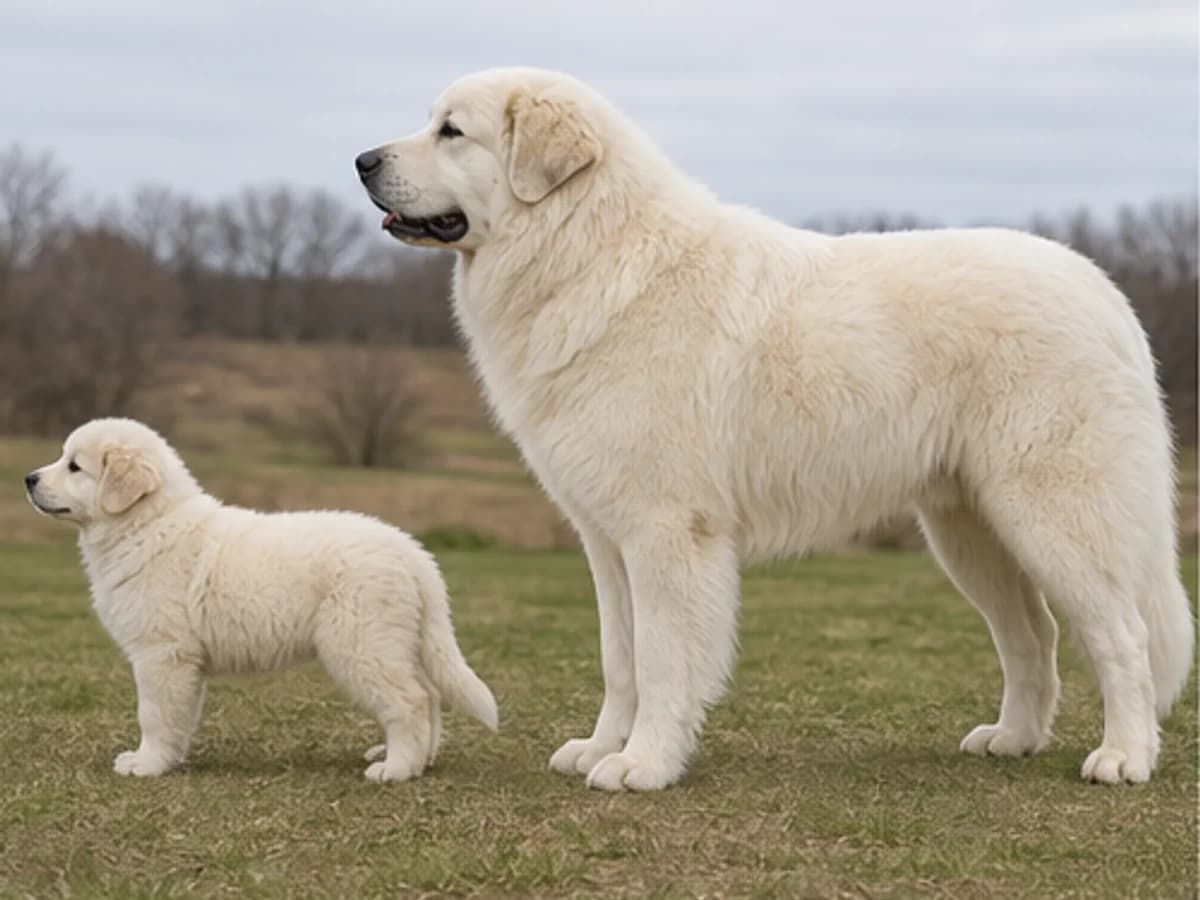
A crate should allow natural standing without a hunched neck, easy turning, side lying, and comfortable stretching. Measure the dog rather than assuming every Great Pyrenees fits one retail size.
The Frisco XL collapsible wire crate is one tracked option to compare with standing height and nose-to-rump length. Check internal dimensions, not just the label, and account for bedding that reduces height or floor space.
Before choosing the Frisco XL crate, evaluate the dog's confinement history. A powerful dog with panic, escape behavior, or wire-chewing needs a behavior and safety plan rather than stronger forced confinement. Some adults do better in a dog-proofed room.
Recheck crate fit through growth
Puppies can use a divider while they grow, provided the area remains comfortable and crate training stays positive. Recheck fit monthly during rapid growth.
Bed size and mobility
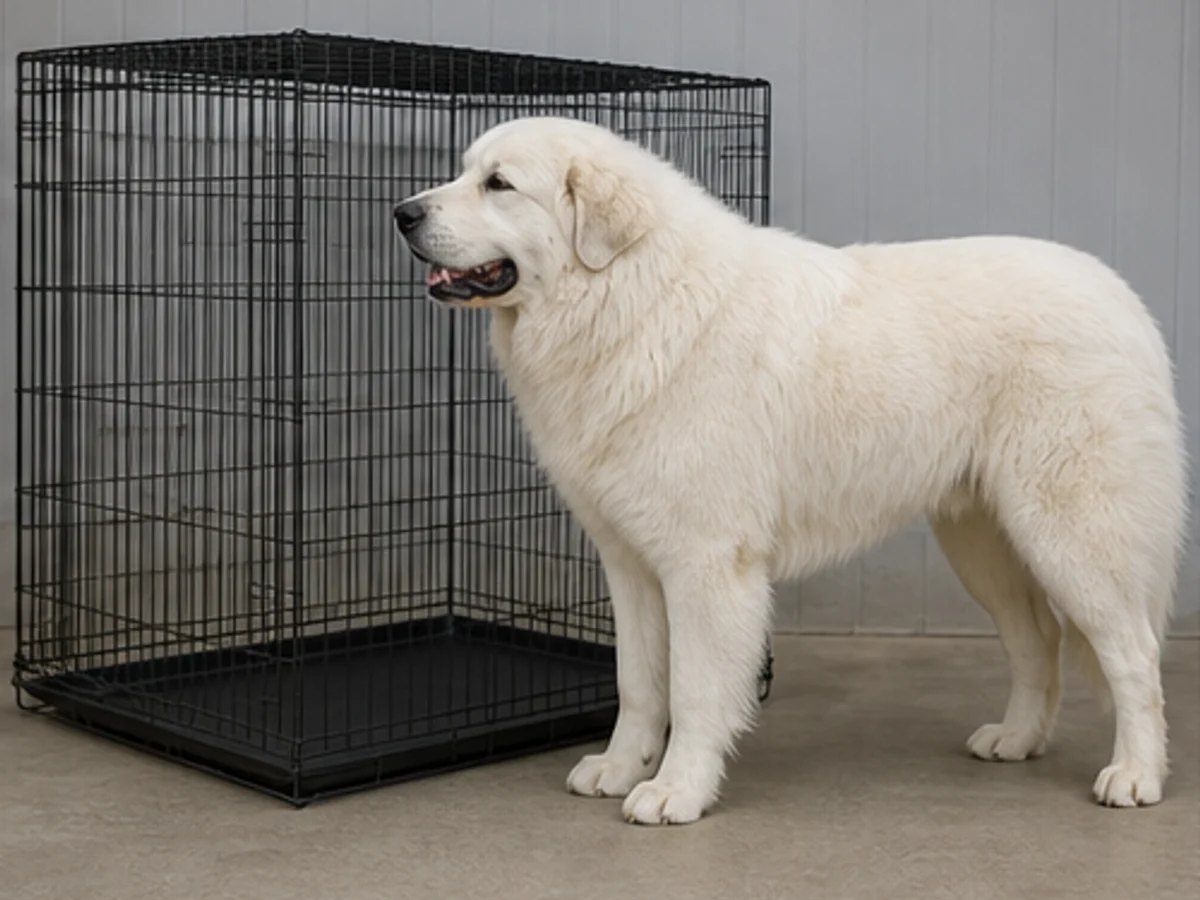
Measure the dog's usual sleeping posture. A curled dog needs less length than a sprawler, but it should still be able to reposition without falling off. Bolsters reduce usable flat area even when outside dimensions sound large.
The FurHaven NAP jumbo orthopedic bed is one tracked option to compare with the dog's measured sleeping length, step-on height, warmth, cover care, and chewing. “Jumbo” is not an anatomical standard.
Use the FurHaven jumbo bed only if the dog can enter and rise comfortably. A bed can create a predictable rest station, but limping, stiffness, circling, or difficulty lying down needs veterinary attention.
Harness and collar sizing
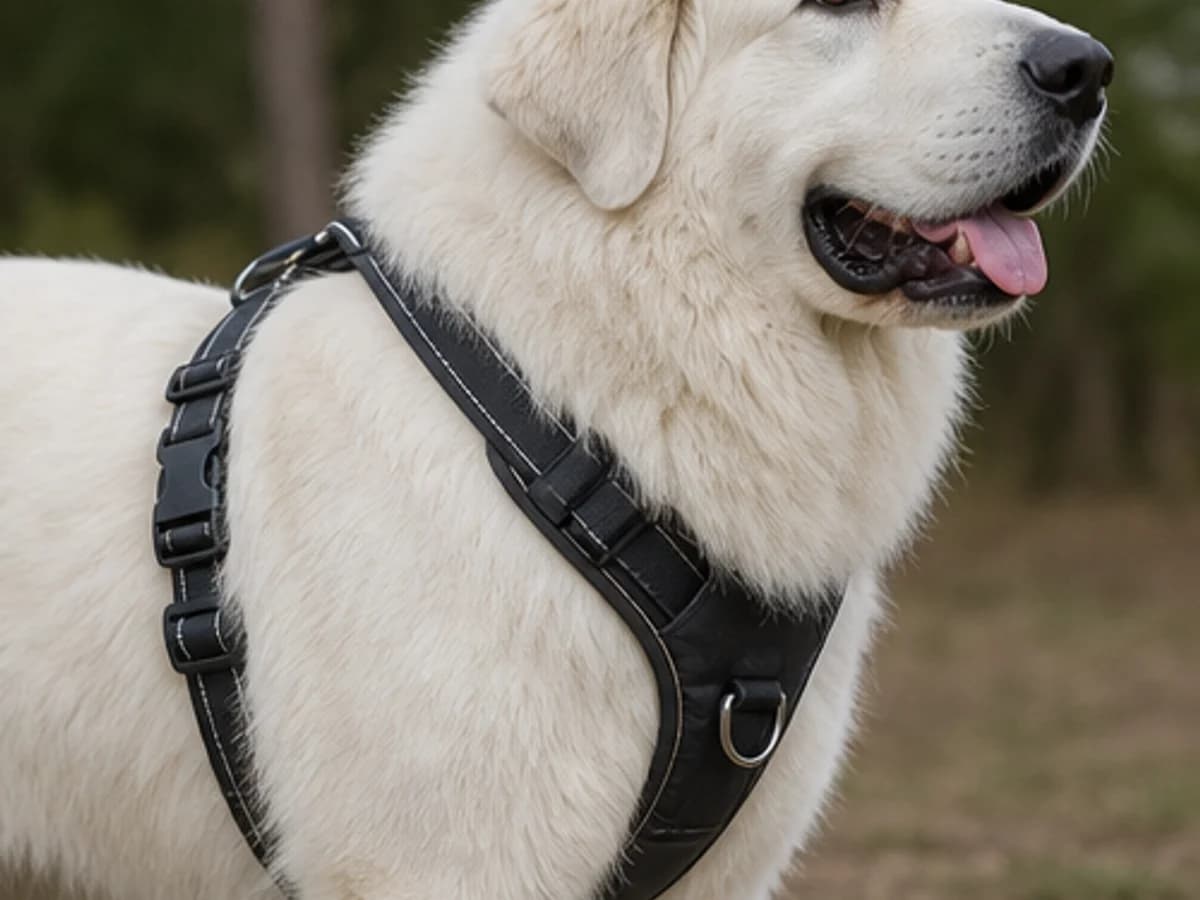
Measure chest girth around the widest ribcage just behind the front legs. Measure the lower neck where equipment sits and note coat compression. Compare those numbers with the manufacturer's current chart; breed recommendations are secondary.
The PetSafe Easy Walk medium/large harness is one tracked option to evaluate for chest fit and shoulder movement. A Great Pyrenees may fall outside this product's range, so confirm rather than assuming the size name is sufficient.
Recheck the PetSafe Easy Walk harness after growth, weight change, and seasonal coat changes. Watch for rubbing behind the elbows, shifted straps, altered gait, coughing, panic, or escape risk. Equipment supports loose-leash training; it does not teach it.
Bowl height and feeding setup
Food and water bowls should be stable, clean, accessible, and comfortable. The evidence around raised feeders and GDV risk is not simple, so do not buy an elevated bowl as a bloat-prevention device without veterinary guidance.
The Frisco medium elevated double bowl is one tracked option to compare by actual rim height, bowl volume, stability, and the dog's posture. A “large dog” product can still be too short, too narrow, or too easy to tip for a Pyr.
If using the Frisco elevated bowl, wash it frequently and observe the dog's neck, forelimb and eating posture. Dogs with swallowing, mobility, or postoperative needs may require an individualized setup planned with the veterinarian.
- Size the PetSafe Easy Walk medium/large harness from the current chest and neck measurements after compressing the coat gently, then watch shoulder movement. Breed averages and a medium/large label cannot predict fit on one growing Pyr.

Petful may earn a commission when you click through to Chewy, at no extra cost to you.
- Photograph and record the fit of the PetSafe Easy Walk medium/large harness while the dog stands and walks. Recheck after growth or weight change, and retire it if straps rub, restrict reach or allow backing out.
Growth, nutrition and exercise
The amount a Great Pyrenees eats depends on calories per unit, body condition, age, activity, environment, and health. Cup amounts cannot be transferred safely between foods. Calculate calories and monitor the result.
Growing puppies need a complete appropriate diet. Adults need enough protein and calories to maintain muscle without excess fat. Seniors may need changes based on activity, dental health, kidney function, gastrointestinal health, or other clinical findings; age alone does not dictate one formula.
Exercise should support function. Build duration gradually, choose stable footing, provide recovery, and adapt to heat. A yard is useful but does not guarantee movement. Sniff walks and short training can be more sustainable than repetitive ball chasing.
When growth or weight needs veterinary attention
Call the clinic for:
- Persistent limping, pain, swelling, or reluctance to rise.
- Rapid weight loss or gain without a clear plan.
- A puppy who falls off its established growth trend.
- Repeated vomiting, diarrhea, poor appetite, or pot belly.
- Marked thirst or urination change.
- Muscle loss despite stable scale weight.
- Breathing difficulty, exercise collapse, or severe fatigue.
- A swollen abdomen or repeated unproductive retching, which may be an emergency.
Petful's Great Pyrenees health and lifespan guide provides the clinical context. A chart should never delay examination of a painful or ill dog.
- Every measurement should answer a question: Is the growth trend steady? Does the crate fit? Has body condition changed? Will the harness sit safely? Collecting numbers without a consistent method or action threshold creates false precision.
- For feeding or hydration management, compare the Frisco medium elevated double bowl with the dog's measured portion, food or water needs, muzzle size and the household cleaning routine. Verify capacity, materials, power needs where applicable and whether another animal can interfere.
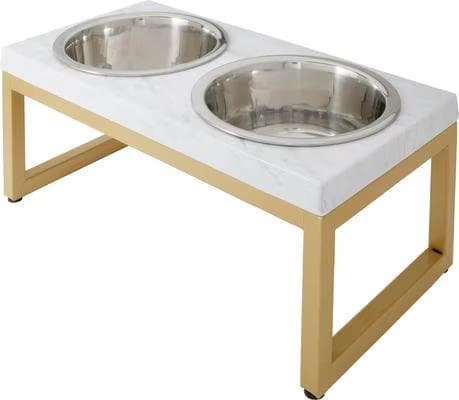
Raised stainless steel double bowl on a marble-look stand. Easier on the neck and joints and a clean, tip-resistant way to keep fresh water available all day.
Petful may earn a commission when you click through to Chewy, at no extra cost to you.
- If the Frisco medium elevated double bowl fits the care plan, test it while a caregiver is present and continue tracking appetite, water intake, stool, weight and body condition. Feeding equipment cannot set a medical diet, prevent bloat or replace direct observation.
Keeping a useful growth record
Use the same scale when possible and weigh at a similar time relative to meals. Record date, weight, body-condition score, food and daily amount, major treats, medication, illness, activity changes, and whether the dog was weighed at home or a clinic. Add a side and overhead photograph on level ground every month during rapid growth.
A useful record explains context. “Gained eight pounds” means little without the puppy's age, interval, frame, and body condition. “Lost three pounds after measured calorie reduction while muscle and energy remained stable” is more informative, but the veterinary team should still confirm the plan.
| Pattern | Questions to ask | Next step |
|---|---|---|
| Scale rises and waist disappears | Did food, treats or activity change? | Measure intake and arrange body-condition review |
| Scale stable but muscle falls | Is pain or illness reducing use? | Veterinary examination |
| Puppy crosses a chart line once | Was method or timing different? | Repeat consistently and review the trend |
| Harness suddenly rubs | Did chest girth or coat change? | Stop use and remeasure |
| Crate fit becomes tight | Can the dog stand, turn and stretch? | Resize or change confinement plan |
Mixed dogs and dogs without a known birthday
Mixed-breed and comparison sizes includes great pyrenees mix size, great pyrenees lab mix size, and great pyrenees husky mix size. These are related but distinct reader decisions, best resolved by using repeated measurements, body condition and functional fit rather than one chart or seller label. The dedicated Petful guide owns the full analysis; this section supplies the context needed to choose the right next step without duplicating the owner page. Before acting, record the source, date and individual-dog evidence behind the conclusion. That prevents a broad breed tendency, seller label or isolated number from becoming a promise about one dog and keeps the decision practical, traceable and useful. Revisit the conclusion when the dog's age, health, environment or household capacity changes, because the same label can lead to a different decision as the evidence changes.
A shelter estimate and visual breed label carry uncertainty. Teeth, coat, behavior, and body development can support an age estimate but do not create an exact birth date. Track the dog's function from the day it enters care. For a Great Pyrenees mix, use known parent size and the individual curve rather than forcing it into the purebred table. Petful's Great Pyrenees mixes guide explains why ancestry labels cannot guarantee adult dimensions.
The purpose of a record is to support decisions, not competition. A heavier dog is not a better Great Pyrenees, and the largest puppy in a group is not automatically healthiest. Steady development, comfortable movement, appropriate condition, and veterinary findings are the meaningful outcomes.
Planning the home and vehicle around adult dimensions
A puppy who fits beneath a table can become a dog whose turning radius blocks a narrow hallway. Measure the route from sleeping area to exterior door, stair width, gate openings, vehicle cargo height, and the space around food and water. Add nonslip runners where the dog must turn or rise.
For vehicles, usable height and entry angle matter as much as floor length. Teach a wide stable ramp or low step while the dog is healthy, and secure the dog with an appropriate travel setup. Never allow a giant dog to ride loose in an open truck bed. If the dog cannot enter without jumping, plan assistance before orthopedic or senior limitations develop.
Size comparisons are visual tools, not care instructions
People often compare Great Pyrenees with Great Danes, Saint Bernards, or Bernese Mountain Dogs. Those comparisons can illustrate height or bulk, but they do not determine food, exercise, or equipment. Dogs of similar weight may have different chest girth, leg length, coat, body condition, and sleeping posture.
Use a comparison photograph only when the dogs stand on the same level surface and perspective is not distorted. Wide-angle lenses, foreground placement, coat volume, and head height can make one dog look much larger. The official standard and direct measurements are stronger evidence.
Medication and dosing depend on current weight
Veterinary medication, anesthesia and parasite-control products may use weight ranges, but owners should not calculate or divide products without guidance. Weigh the dog close to the treatment date, especially during puppy growth or weight loss. Never use another animal's dose or assume livestock formulations are interchangeable.
If a home scale cannot accommodate the dog safely, ask the clinic about walk-on scale visits. A calm voluntary scale behavior is worth teaching with rewards because it improves monitoring throughout life.
Use one repeatable measurement protocol
A measurement-first growth chart is only useful when the method stays consistent. Pick a level, non-slip surface and record the date, age, weight, height at the withers, chest girth, neck circumference and nose-to-rump length. Note the scale and whether the dog had eaten or exercised so a future comparison is interpretable.
For puppies, add body condition and a short movement note. Do not use online percentiles as feeding targets. The important questions are whether the individual trend is smooth, whether ribs and waist can be assessed beneath the coat, and whether appetite, stool, energy or gait changed with the curve.
For equipment, keep a second table:
- Crate interior height, length and turning clearance.
- Bed's usable flat surface after bolsters are excluded.
- Harness and collar adjustment range at the current coat depth.
- Vehicle opening, cargo height and ramp angle.
- Door, stair and resting-space dimensions in the home.
Recheck after a noticeable growth spurt, weight change or seasonal coat change. A product can remain intact while becoming unsafe or uncomfortable. This equipment recheck plan turns current measurements and usable dimensions into decisions rather than letting a breed label or XL tag stand in for fit.
Contact the veterinarian for a sudden curve change, persistent digestive signs, pain, abnormal gait, poor appetite or rapid gain or loss. A record supports the examination; it does not decide what is healthy without clinical context.
More Great Pyrenees guides from Petful
Return to Petful's complete Great Pyrenees breed profile for household fit, then use the dated measurements here for growth, equipment and transport decisions.
- Great Pyrenees Puppies: What to Expect in Year One
- 10 Popular Great Pyrenees Mixes (With Pictures)
- Great Pyrenees Price: Puppy Cost and Lifetime Budget
- Great Pyrenees Lifespan and Health Problems
- Great Pyrenees Temperament, Guardian Behavior and Training
- Great Pyrenees Grooming and Shedding: Double-Coat Care
Frequently asked questions
The short answer is that a Great Pyrenees is an extra-large or giant dog for practical housing, transport and equipment decisions. Retail size labels vary, so an XL crate or harness may still be too small. Use the dog's measured height, chest, neck and body length plus the product dimensions rather than assuming that a generic large label guarantees safe fit.
The short answer is that many Great Pyrenees are surrendered after owners underestimate adult size and the costs or handling demands that follow. A puppy can become a dog over 85 or 100 pounds, affecting food, fencing, grooming, transport and leash safety. Confirm housing rules and price the adult setup before adoption, not after the dog outgrows temporary plans.
The short answer is yes: a Great Pyrenees can be a good house dog when the home has enough room for safe movement, durable boundaries and a quiet indoor resting area. Size affects narrow halls, stairs, slippery floors, vehicle access and emergency handling. The dog also needs daily activity and barking management, so physical space alone does not determine household fit.
The breed standard lists males at 27 to 32 inches at the shoulder and females at 25 to 29 inches. It gives minimum adult weights of 100 pounds for males and 85 pounds for females, with healthy individuals varying above those minimums according to frame and body condition. These figures describe population context, not a target to force through extra feeding. Measure the individual dog and assess condition beneath the coat.
There is no single ideal weight for every Great Pyrenees. The standard gives minimums of 100 pounds for adult males and 85 pounds for adult females, but height, frame, muscle, age and body condition determine what is healthy for an individual. A veterinarian should assess ribs, waist, abdominal tuck, mobility and trend over time. The dense coat makes appearance alone especially unreliable.
Males are generally taller and heavier than females. The breed standard lists males at 27 to 32 inches and females at 25 to 29 inches at the shoulder, with minimum weights of 100 and 85 pounds respectively. Individual ranges still overlap, so sex should not determine equipment or feeding by itself. Measure the actual dog and use body condition rather than trying to reach a sex-based number.
Puppy weights vary widely with sex, parent size, litter history, nutrition and health, and online charts often use different populations. Track the puppy's own dated weights, body condition, appetite and gait with the veterinarian. A smooth individual trend is more informative than matching one percentile. Rapid gain or loss, poor appetite, persistent diarrhea, pain or a sudden curve change warrants clinical review.
Many Great Pyrenees approach adult height around 18 months and continue adding muscle and body mass through the second year or later. Growth does not end on one guaranteed date, and physical size can mature before judgment and social behavior. Continue adjusting food and equipment to the individual trend. Do not push a young dog toward a predicted adult weight because faster growth is not healthier growth.
Stand the dog squarely on a level, non-slip surface with the head in a natural position. Measure vertically from the floor to the highest point of the shoulder blades, called the withers. A rigid measuring stick is more accurate than following the coat with a flexible tape. Repeat the measurement and record the date and method so future comparisons use the same reference point.
Choose a crate from the dog's current standing height and nose-to-rump length, not a breed label. The dog must be able to stand without crouching, turn normally, lie on its side and stretch comfortably. Recheck fit throughout puppy growth and coat changes. Some adults exceed practical retail crate sizes and are safer and more comfortable in a dog-proofed room or secure gated area.
Share the measurement record when changing clinics, food, exercise, or medication. A dated trend is more useful than recalling that the dog was “about 100 pounds.” Keep methods consistent, note uncertainty, and let professional findings determine whether an apparent deviation represents normal variation, inaccurate measurement, or a health concern.
The bottom line
Great Pyrenees size is impressive, but the useful question is whether the dog is growing and functioning well. Measure consistently, feel beneath the coat, track the individual trend, and use the breed standard as context rather than a target weight.
The same approach improves purchases. A crate, bed, harness or bowl should fit the measured dog and the intended use, not merely carry an XL label. Recheck throughout growth, coat changes, illness and aging so equipment and care continue to match the dog in front of you.

Coreen Saito is a pet writer and longtime shelter volunteer with more than a decade in animal rescue. She covers cat behavior, breed care, and the small, ordinary science of sharing a life with companion animals, with a particular focus on honest takes about the products and decisions that actually matter. At home in Arizona, she's outranked by Mac (a dog with the loudest opinion in the house), Rebel (a cat who governs by quiet authority), and Meri (an orange tabby who runs the late shift and the laundry basket). She writes about all three, plus the rescues that keep coming through her life, at LifeWithMinty.com.
Sign up for expert-backed reviews and safety alerts all in one place.