Great Pyrenees Lifespan and Health Problems
Great Pyrenees lifespan is often 10-12 years. Learn health risks, breeder screening, bloat warning signs, preventive care and senior quality of life.

BVMS, MRCVS
Petful is reader supported. As an affiliate of platforms like Amazon and Chewy, we may earn a commission when you buy through links on this page. There is no extra cost to you.
The Great Pyrenees lifespan is commonly about 10 to 12 years, although some dogs live shorter or longer lives. Size, inherited risk, body condition, injuries, preventive care, and access to timely veterinary treatment all influence the individual outcome. No diet, supplement, DNA panel, or lifestyle routine can guarantee a certain age.
This veterinarian-authored guide covers Great Pyrenees health problems, screening, emergency warning signs, mobility, preventive care, and senior quality of life. It is educational rather than diagnostic. Contact a veterinarian for concerns about a specific dog, and seek emergency care for collapse, breathing difficulty, repeated unproductive retching, a swollen abdomen, uncontrolled bleeding, or sudden severe weakness.

Sign up for expert-backed reviews and safety alerts all in one place.
Great Pyrenees lifespan at a glance
Lifespan and longevity includes great pyrenees lifespan, great pyrenees dog lifespan, great pyrenees lifespan female, and great pyrenees lifespan male. These are related but distinct reader decisions, best resolved by using veterinary findings, connected records and the individual dog's current signs instead of treating a population range as a promise. Use the measurements, records and observable conditions in this section to identify what is known, what still needs confirmation and which next action the evidence supports. Before acting, record the source, date and individual-dog evidence behind the conclusion. That prevents a broad breed tendency, seller label or isolated number from becoming a promise about one dog and keeps the decision practical, traceable and useful.
- 1Many Great Pyrenees live roughly 10-12 years, but an individual cannot be assigned an expiration date
- 2Healthy body condition and routine veterinary care support health without guaranteeing longevity
- 3Breed-aware screening helps buyers ask better questions but does not eliminate risk
- 4Giant-dog emergencies such as gastric dilatation-volvulus require immediate action
- 5Sudden changes in gait, appetite, breathing, behavior or abdominal shape deserve veterinary attention
What to track between veterinary visits
- Appetite, thirst, weight and body-condition changes
- Mobility, breathing, stamina and recovery after ordinary activity
- New pain, swelling, collapse, retching, neurologic signs or abrupt behavior change
The American Kennel Club Great Pyrenees profile provides a general lifespan range and breed description. The Orthopedic Foundation for Animals Great Pyrenees recommendations identify screening considerations used by the Canine Health Information Center program. The Great Pyrenees Club of America health information should also be checked for current parent-club priorities.
| Stage | Routine focus | Escalation examples |
|---|---|---|
| Puppy | Growth diet, vaccines, parasites, gait and cooperative handling | Poor growth, persistent vomiting or diarrhea, pain, abnormal gait |
| Adult | Weight, dental care, mobility, skin, ears and breed-aware screening | New lameness, exercise intolerance, abdominal swelling, behavior change |
| Senior | More frequent assessment as advised, comfort, senses and quality of life | Falls, confusion, appetite change, breathing change, inability to rise |
| Any age | Emergency plan and complete medication list | Collapse, repeated unproductive retching, severe breathing difficulty |
What is the leading cause of death in Great Pyrenees?
The short answer is that no authoritative U.S. registry establishes one universal leading cause of death in Great Pyrenees. Cancer and age-related disease are important concerns, but available studies and owner reports do not support promising that one diagnosis determines every outcome. Age-appropriate veterinary care and an individual medical record are more useful than treating an online mortality claim as a forecast.
What is the longest a Great Pyrenees has lived?
The short answer is that there is no centralized, independently verified record for the longest Great Pyrenees lifespan. Online anecdotes about exceptional ages rarely include complete identity and medical documentation. The commonly cited 10-to-12-year range is more useful for planning, while genetics, disease, body condition, care and chance determine how long an individual dog lives.
 Sponsored
Have a health question about your pet?
Talk to a licensed vet at Dutch over video or message, including nights and weekends.
Use code Pets60
Plans start at $12/month · covers up to 5 pets
- Licensed vets in most states
- Rx for 150+ conditions
- 4.7 on Trustpilot
Can Great Pyrenees live longer than 12 years?
Yes, some Great Pyrenees live longer than 12 years, but no article can promise that outcome for an individual dog. Longevity reflects genetics, adult size, body condition, disease, preventive care, environment and chance. A long-lived anecdote is encouraging, not a benchmark that every dog should reach.
Focus on modifiable care: maintain an appropriate body condition, keep preventive and dental care current, monitor mobility and appetite, and investigate changes early. Quality of life matters alongside the number of years.
At what age do Great Pyrenees slow down?
The short answer is that no single age applies to every Great Pyrenees. Many show gradual changes in stamina, sleep and recovery during the middle-to-late adult years, but health and conditioning alter the timeline. A sudden activity drop, difficulty rising, altered gait or withdrawal should not be dismissed as aging because pain, heart disease and other treatable problems can look like slowing down.
- For a dog with mobility change, compare the FurHaven NAP jumbo orthopedic bed by entry height, traction, usable support and the dog's ability to reposition without help. Record the same rise-and-settle observations before and after changing the sleep surface.
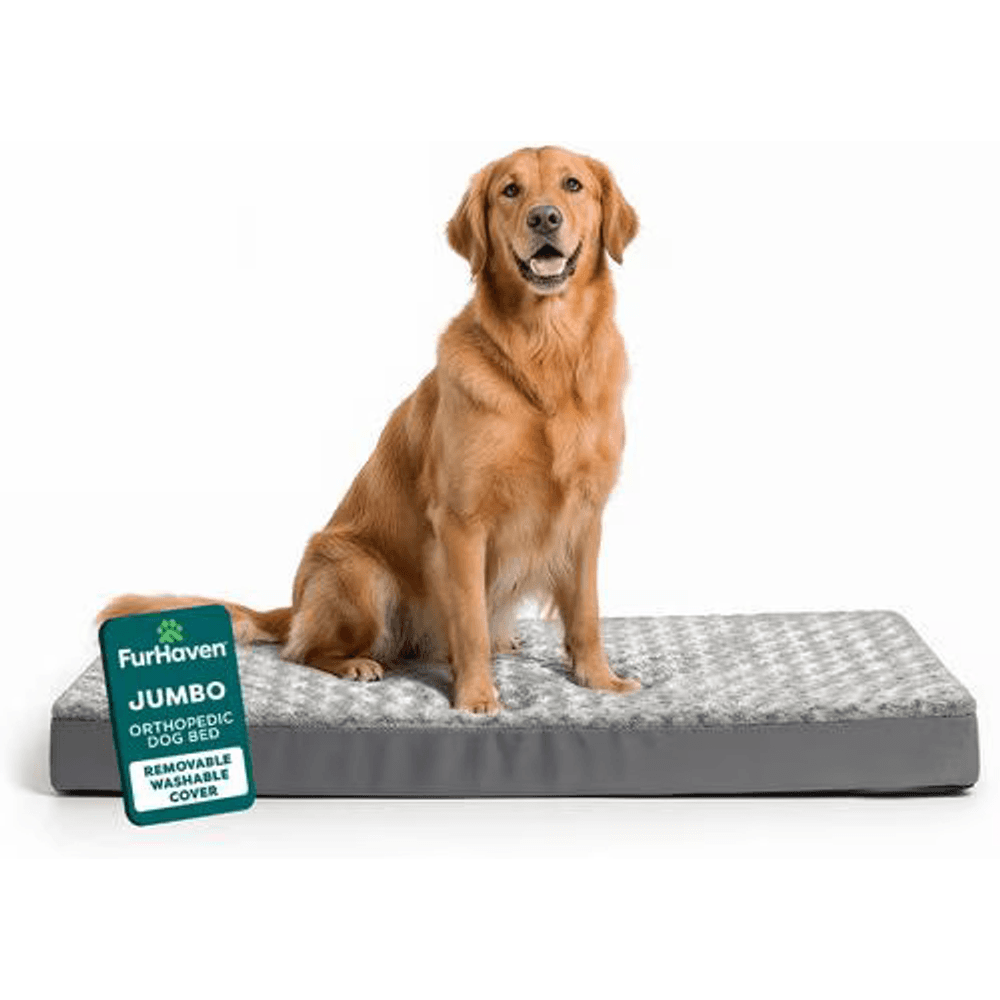
A plush orthopedic foam mattress that cushions aging joints and pressure points, giving a stiff or trembling senior dog warm, supportive rest.
Petful may earn a commission when you click through to Chewy, at no extra cost to you.
- Monitor whether the FurHaven NAP jumbo orthopedic bed makes rest easier without hiding progression. Increasing stiffness, night waking, falls or reluctance to rise belongs in the veterinary record even when the dog appears comfortable once settled.
Why do so many Great Pyrenees end up in shelters?
Health needs can contribute to surrender when giant-dog transport, mobility care, medication, grooming or veterinary costs exceed what a household expected. Behavior, barking, fencing and housing restrictions are also common pressures, so no single cause explains every placement.
Before buying or adopting, plan how the dog will reach a clinic if it cannot walk, who can assist, and how routine and unexpected care will be funded. For an adult rescue, request current medications, mobility observations, veterinary records and support terms. Transparent health information improves preparation; it does not make adoption a lesser option.
What influences Great Pyrenees life expectancy?
Mixed-breed lifespan context includes great pyrenees mix lifespan, great pyrenees lab mix lifespan, and great pyrenees golden retriever mix lifespan. These are related but distinct reader decisions, best resolved by using veterinary findings, connected records and the individual dog's current signs instead of treating a population range as a promise. The dedicated Petful guide owns the full analysis; this section supplies the context needed to choose the right next step without duplicating the owner page. Before acting, record the source, date and individual-dog evidence behind the conclusion. That prevents a broad breed tendency, seller label or isolated number from becoming a promise about one dog and keeps the decision practical, traceable and useful. Revisit the conclusion when the dog's age, health, environment or household capacity changes, because the same label can lead to a different decision as the evidence changes.
Weight and preventive care
Body condition is one modifiable factor. The coat can hide weight gain, so use hands to assess ribs and ask the veterinary team to demonstrate a body-condition score. An appropriate weight reduces unnecessary load on joints and can make examinations, anesthesia planning, transport, and mobility easier.
Preventive care should be tailored. Vaccination, parasite prevention, dental care, laboratory screening, reproductive decisions, and visit frequency depend on age, location, lifestyle, and health. A farm guardian and a suburban companion may face different exposures even though they share a breed.
Hip and elbow dysplasia
Hip and elbow dysplasia are developmental orthopedic conditions in which joint formation is abnormal. Genetics contribute, while growth, body condition, and environment can influence how signs appear. A dog may have radiographic change without obvious lameness, or significant pain that requires treatment.
Watch for stiffness after rest, reluctance to jump or use stairs, shortened stride, bunny-hopping, limping, reduced play, difficulty rising, or irritability with handling. These signs are not specific to dysplasia. Injury, arthritis, neurologic disease, paw problems, and other conditions can look similar.
Breeding screening and diagnosis are different. OFA or other recognized evaluation results on adult parents help characterize breeding stock; they do not guarantee every puppy's hips or elbows. A painful dog needs a veterinary examination and imaging plan based on its symptoms.
Fitting supportive rest equipment
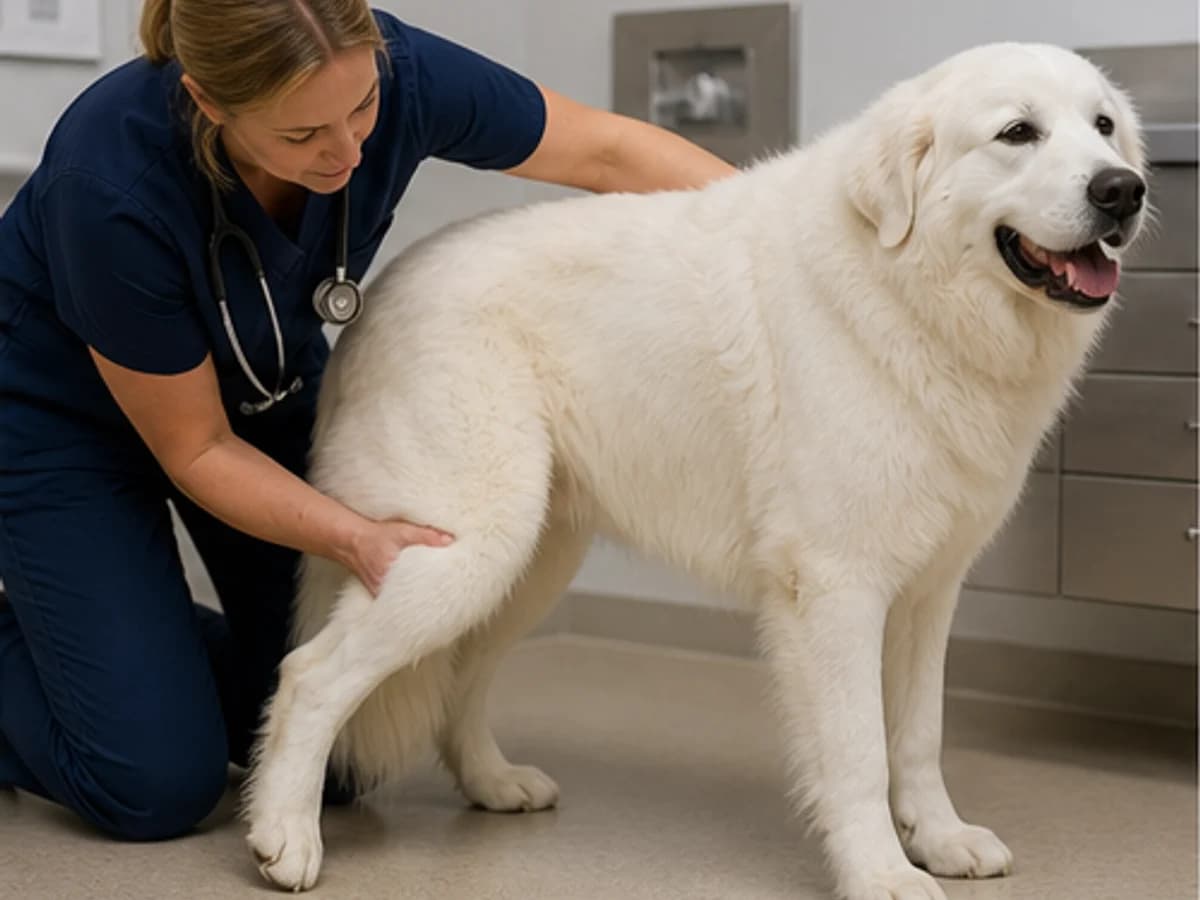
The FurHaven NAP jumbo orthopedic bed is one tracked comfort option to compare with the dog's full sleeping length, step-on height, temperature preference, and ability to turn. It does not treat dysplasia or replace pain assessment.
When evaluating the FurHaven jumbo bed, prioritize usable flat space and stable footing around the bed. If a dog still hesitates to lie down, pants at rest, or struggles to rise, contact the veterinarian rather than adding more bedding.
Osteoarthritis and mobility
Osteoarthritis and mobility changes in a Great Pyrenees require attention to both veterinary findings and the practical demands of moving a giant dog. Watch rising, turning, stairs, vehicle access, footing, stamina and recovery rather than waiting for obvious limping. Early documentation helps the veterinarian distinguish pain, injury, neurologic change and normal variation, then tailor weight, activity, rehabilitation, medication and environmental support to the individual.
Arthritis can develop after joint dysplasia, injury, age-related change, or other disease. Management may include weight control, activity modification, rehabilitation, environmental changes, and veterinary-prescribed medication. Human pain relievers can be toxic to dogs; never improvise treatment.
Connecting mobility changes to daily access
WebVet's guide to arthritis and dog size explains why the same mobility loss can create larger handling and access problems in a giant dog. Add non-slip paths, supportive ramps where appropriate, and a vehicle plan before the dog becomes unable to jump.
The Nutramax Cosequin dog joint supplement is one tracked product to discuss with the veterinarian. Supplements vary in evidence, formulation, quality control, interactions, and suitability. A retail label does not establish that one dog needs it.
If the veterinarian agrees that the Cosequin joint supplement fits the plan, confirm dose, other medications, expected evaluation period, and what change would count as meaningful. Stop and seek advice for vomiting, diarrhea, rash, swelling, or other unexpected signs.
- Before considering the Nutramax Cosequin dog joint supplement, ask the veterinarian whether the formulation, dose and ingredients fit the individual dog's diagnosis, diet and medications. Compare quality controls and define what measurable change would justify continuing it.
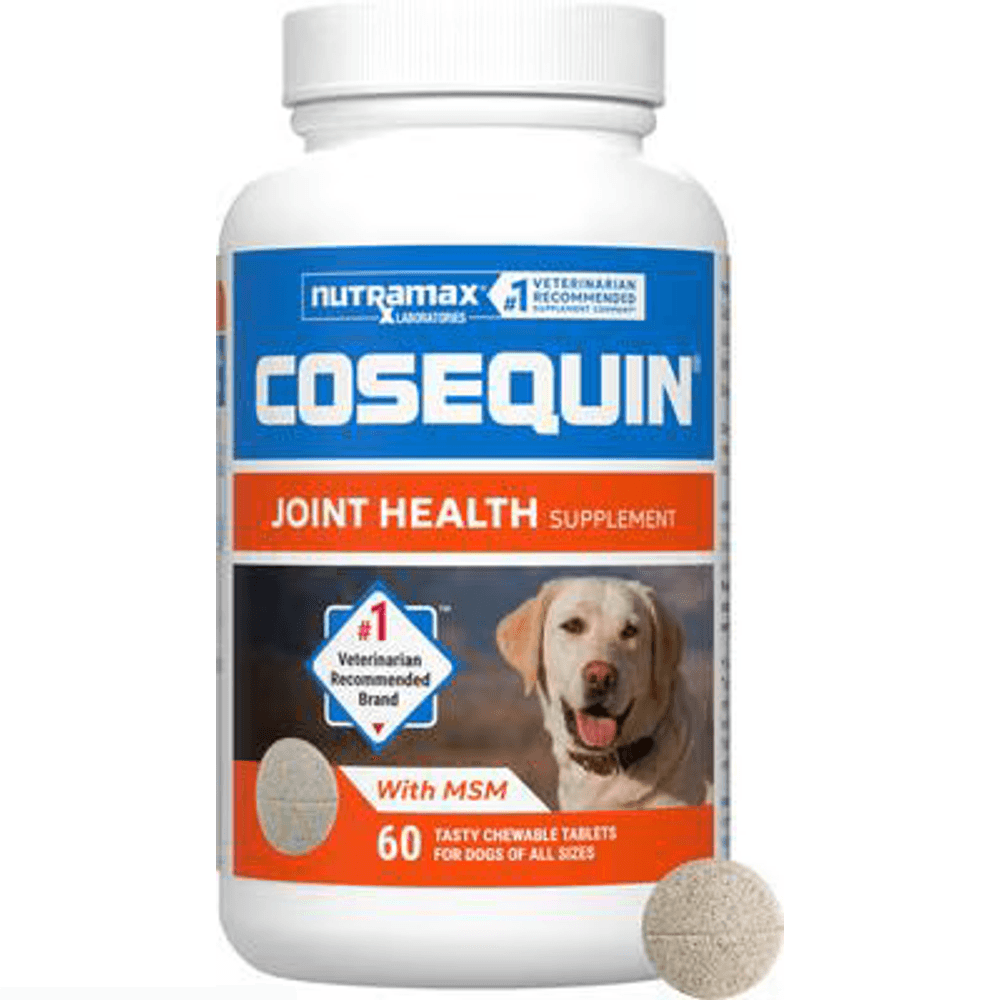
The number-one veterinarian-recommended joint supplement brand. Glucosamine, chondroitin, and MSM support cartilage and cushion the joints, easing the stiffness and hind-end weakness that can leave an older or arthritic dog trembling.
Petful may earn a commission when you click through to Chewy, at no extra cost to you.
- If the veterinarian agrees that the Nutramax Cosequin dog joint supplement belongs in the plan, monitor tolerance and follow the agreed evaluation period. A supplement does not replace diagnosis, weight management, rehabilitation or prescribed treatment, and unexpected signs should prompt veterinary advice.
Gastric dilatation-volvulus and bloat
Gastric dilatation-volvulus, or GDV, occurs when the stomach expands and can twist, compromising blood flow and becoming rapidly fatal. Large, deep-chested dogs deserve an emergency plan. The Merck Veterinary Manual GDV overview describes the condition and emergency nature.
Warning signs may include repeated unproductive retching, a distended or painful abdomen, drooling, restlessness, rapid breathing, weakness, pale gums, or collapse. Signs can vary. Call an emergency clinic while leaving; do not wait for the abdomen to look dramatic and do not attempt home treatment.
Ask the veterinarian about the individual dog's risk and whether preventive gastropexy should be considered, including when another anesthetic procedure is planned. Feeding practices should be discussed as risk management rather than guarantees.
Feeding equipment does not prevent GDV
The Outward Hound four-cup slow feeder is one tracked bowl for a dog who eats rapidly. It may slow access to kibble, but it is not proven protection from GDV and does not replace a veterinarian's risk discussion.
Observe the dog with the Outward Hound slow feeder. Stop if the dog becomes frantic, chews the bowl, injures the mouth, or guards it. Meal size, frequency, environment, medical history, and surgical prevention are separate decisions.
Bone disease and cancer concerns
Large and giant dogs can develop primary bone tumors, including osteosarcoma. Persistent or worsening lameness, focal swelling, bone pain, or a pathologic fracture needs prompt assessment. Most limping is not cancer, but waiting because a dog is still eating can delay diagnosis of serious disease.
Treatment and prognosis depend on diagnosis, location, spread, overall health, and caregiver goals. Online survival numbers describe groups and should not be used to predict one dog. A veterinarian or oncology team can explain staging and options with the dog's actual results.
Eye, neurologic and cardiac screening
Breed screening priorities can include eyes and selected neurologic or cardiac considerations. Ask breeders which current CHIC tests apply, who performed them, when they were completed, and where results can be verified. "Clear by parentage" has a specific meaning only for particular inherited variants and generations; it does not mean clear of every disease.
Seek care for sudden vision loss, eye pain, persistent redness, unequal pupils, seizures, fainting, unusual weakness, loss of coordination, head tilt, or marked exercise intolerance. These signs span many possible causes and cannot be sorted safely from a breed list.
Interpreting genetic screening
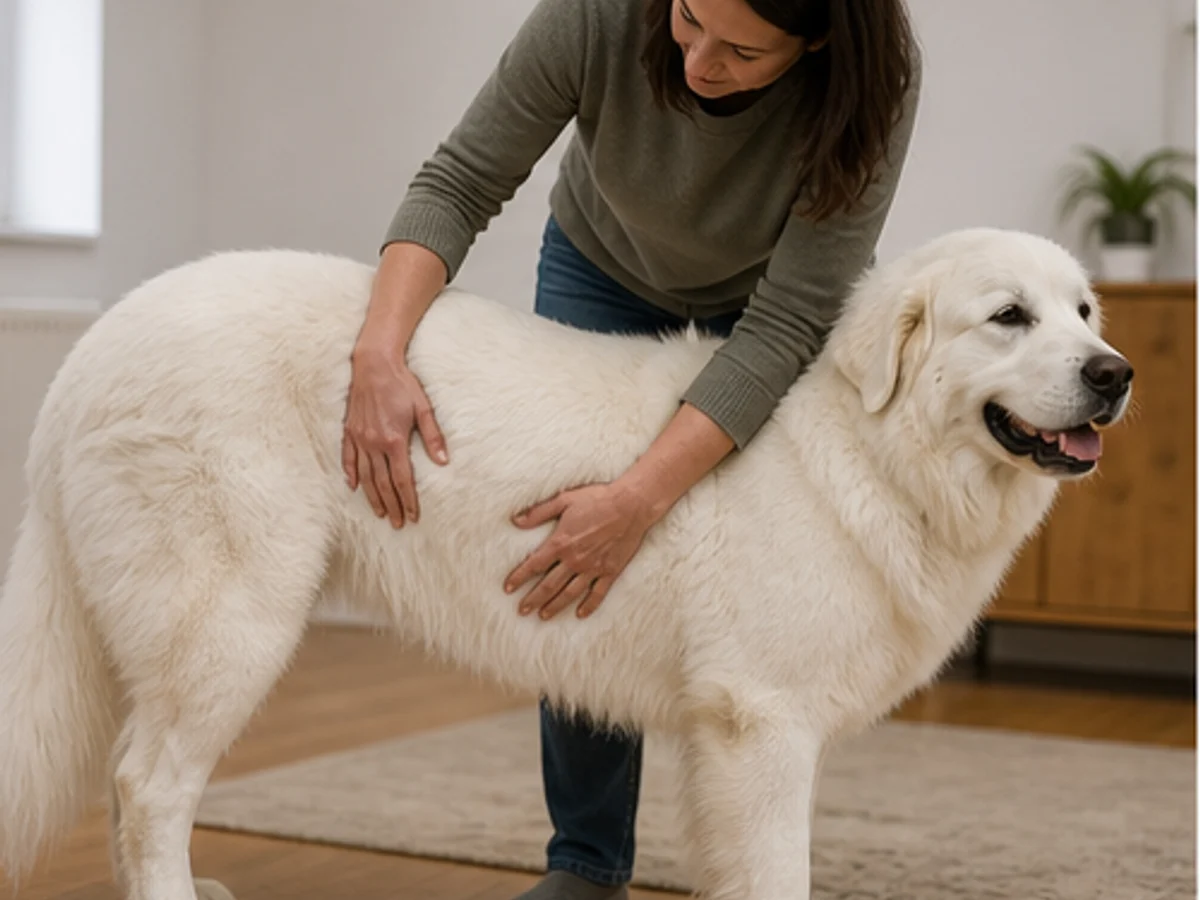
The Embark Breed and Health DNA test is one tracked panel that reports selected variants. It may add information for a dog with unknown ancestry, but it cannot assess every Great Pyrenees condition, joint structure, heart function, or current illness.
Before using the Embark Breed and Health test, read the current variant list and arrange veterinary interpretation for actionable results. Do not change medication, breeding, surgery, or diet solely from a consumer result.
- Compare the Outward Hound four-cup slow feeder with the veterinarian-approved meal amount, muzzle reach and the dog's response to obstacles. Bowl design may change eating pace, but capacity and marketing do not establish a medical feeding plan.

Multiple ridges and valleys slow eating, reduce gas and bloating, and turn mealtime into a fun puzzle. Non-skid base, dishwasher safe, 4-cup capacity.
Petful may earn a commission when you click through to Chewy, at no extra cost to you.
- Observe the dog while trialing the Outward Hound four-cup slow feeder and stop if it causes frantic gulping, pawing or chewing. Continue tracking appetite, stool, weight and body condition, and never treat a slow feeder as GDV prevention.
Skin, ears and coat-related problems
The dense coat can conceal hot spots, wounds, parasites, mats, and moisture. Part the coat during routine grooming and check friction areas, feet, ears, and the skin beneath tangles. Sudden odor, discharge, redness, hair loss, sores, severe itching, or pain deserves evaluation.
Do not repeatedly shampoo irritated skin or apply essential oils, human creams, livestock treatments, or leftover medication. Skin disease can reflect parasites, infection, allergy, endocrine disease, pain, grooming trauma, or other causes. Diagnosis determines treatment.
Petful's Great Pyrenees grooming and shedding guide explains coat maintenance and when to involve a groomer. A groomer can identify a concern but should not be expected to diagnose disease.
Dental and preventive health
Dental disease can cause pain without obvious refusal to eat. Teach gradual toothbrushing with dog-safe toothpaste, and ask the veterinarian to examine the mouth. Broken teeth, facial swelling, bleeding, drooling, dropping food, or sudden mouth sensitivity needs attention.
Maintain a current medication and supplement list, including dose and frequency. Review it at every appointment. Preventive decisions should consider travel, wildlife, ticks, mosquitoes, heartworm, intestinal parasites, and contact with other animals.
 Sponsored
Vet care that's always there
Unlimited video calls and messaging with licensed vets for less than a typical vet visit. One membership covers up to five pets.
Use code Pets60
Plans start at $12/month · covers up to 5 pets
- Licensed vets in most states
- Rx for 150+ conditions
- 4.7 on Trustpilot
Health screening before buying or adopting
Questions involving Preventive-care timeline are best resolved by using veterinary findings, connected records and the individual dog's current signs instead of treating a population range as a promise.
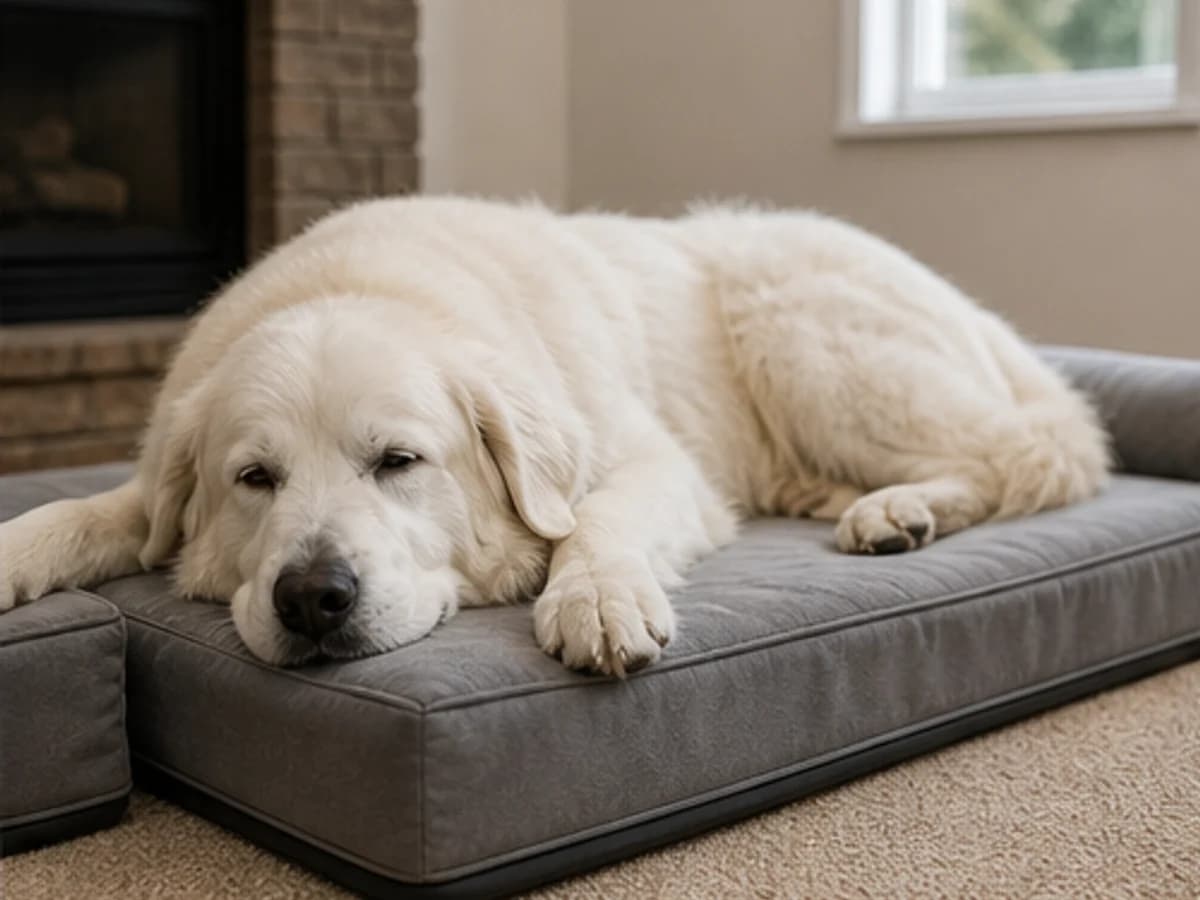
For a breeder puppy, verify records against the parents' registered names or numbers. A complete conversation covers hips, elbows, eyes, and any current parent-club or CHIC priorities, plus age of testing and limitations. A normal result reduces uncertainty for that test; it does not create a health guarantee.
For adoption, gather the shelter or foster record, microchip, vaccination history, parasite treatment, medications, diet, surgery history, and behavior observations. Schedule a baseline examination and ask which findings require immediate work versus monitoring.
- Breeding screening estimates risk in apparently healthy breeding dogs. Diagnostic testing investigates a current patient. A consumer DNA panel, OFA record, veterinary exam and family history each answer different questions and should not be treated as interchangeable.
Senior Great Pyrenees care
Questions involving Factors that influence longevity are best resolved by connecting the label to the individual dog's records, condition, behavior and daily care needs.

A dog becomes senior gradually. Changes in sleep, appetite, weight, thirst, toileting, hearing, vision, mobility, social interest, and recovery may be subtle. Record trends so the veterinarian can distinguish a pattern from one unusual day.
Support includes non-slip flooring, shorter routes, ramps where safe, easy access to water, comfortable temperature, predictable routines, and protected rest. Modify exercise rather than ending it automatically. Muscle loss can worsen mobility, while pain or heart disease may require limits.
Quality of life is broader than appetite. Consider pain, breathing, hydration, hygiene, mobility, engagement, rest, anxiety, and whether good experiences still outnumber difficult ones. Your veterinary team can help turn observations into a palliative or treatment plan.
- Compare the Embark Breed and Health DNA test with the exact variant or ancestry question being investigated, then review current test limitations. Breed screening records, a consumer panel and a veterinary examination provide different kinds of evidence.

Petful may earn a commission when you click through to Chewy, at no extra cost to you.
- Bring a potentially relevant Embark Breed and Health DNA test result to the veterinarian with the dog's family history and symptoms. Do not change medication, exercise or breeding decisions from a consumer report alone.
A practical health-monitoring routine
Home monitoring should be simple enough to continue. Once a month, record weight when practical, body condition, muscle over the hips and shoulders, appetite, water intake, stool, urination, sleep, mobility, breathing at rest, skin, ears, teeth, and medication. Short videos of rising, walking, and using steps can help the veterinarian see change over time.
Do not turn monitoring into constant anxiety. Establish thresholds with the clinic: which changes can wait for a routine appointment, which deserve a same-day call, and which require emergency care. Keep the nearest emergency clinic, poison-control contact, medication list, and transport help where every caregiver can find them.
| Observation | Useful detail | Escalation example |
|---|---|---|
| Mobility | Surface, time of day, duration and affected limb | Cannot bear weight, severe pain or sudden paralysis |
| Appetite | Portion offered, amount eaten and treats | Repeated refusal with lethargy or vomiting |
| Breathing | Resting pattern, cough and recovery | Labored breathing, blue or pale gums, collapse |
| Abdomen | Shape, comfort, retching and restlessness | Distension with unproductive retching is an emergency |
| Behavior | Trigger, duration and recovery | Sudden confusion, severe agitation or uncharacteristic aggression |
Preparing for anesthesia or surgery
Giant size can influence transport, positioning, recovery space, and medication calculation, but age alone does not determine anesthetic safety. Give the clinic a complete list of drugs, supplements, previous reactions, current illness, and last food or water. Follow fasting instructions exactly rather than using a generic internet rule.
Plan the trip home before the procedure. Ask how many people are needed, whether a ramp or support sling is appropriate, what flooring prevents slipping, and which signs require return. Keep other animals and children away during early recovery. Never change prescribed pain medication because the dog seems sleepy or because a human drug is available.
Schedule the first follow-up before leaving when possible, and ask who to call overnight. Photograph the incision only if the clinic wants monitoring, prevent licking with the recommended device, and record food, water, urination, stool, medication, pain and mobility. A written recovery plan prevents caregivers from giving duplicate doses or allowing activity too early.
Reproductive health decisions
Timing of spay or neuter in a giant breed should be discussed with the veterinarian using the dog's sex, age, health, behavior, pregnancy risk, household management, and current evidence. There is no universal internet date that accounts for every tradeoff. Avoid accidental breeding through secure separation; a fence is not reliable supervision when an intact dog is motivated.
Intact females need monitoring during heat cycles, and any dog with vaginal discharge, fever, vomiting, marked thirst, abdominal enlargement, testicular pain, difficulty urinating, or sudden illness needs prompt care. Breeding should not be used as a treatment for behavior or as a way to recover the purchase price.
Build a baseline before the senior years
Keep copies of examinations, laboratory results, imaging, dental charts, pathology, medication reactions, body-condition scores, and screening. A result from a healthy adult can help the veterinarian interpret later change, although normal history does not rule out new disease.
Photograph stable skin markings, lumps identified by the clinic, and the dog's normal standing posture only when useful. Date the images and do not diagnose from them. Measure known lumps as directed and report changes in size, firmness, skin surface, pain, or fixation.
Create a one-page summary for emergency use: identity, age, weight, diagnoses, medication and dose, allergies or reactions, regular clinic, emergency contact, insurance, and handling concerns. Update it after every meaningful change. In urgent care, a concise accurate list is more valuable than searching through years of unsorted messages.
Build a dated health baseline before something changes
A monitoring baseline helps an owner and veterinarian compare the dog with itself instead of relying on a generic age expectation. Record ordinary function on a good week, then repeat the same observations monthly and before routine examinations.
Include:
- Weight and body-condition assessment using the same scale or clinic when practical.
- Time and effort needed to rise, use stairs, enter the vehicle and complete a familiar walk.
- Appetite, water intake, stool, urination and any repeated digestive pattern.
- Resting posture, nighttime waking, panting and willingness to change positions.
- Skin, ears, mouth, nails, coat and any new lump or painful area.
- Medication, supplement and prevention names, doses, start dates and observed effects.
Do not turn the log into a home diagnosis. A small day-to-day difference may be normal, while collapse, breathing difficulty, repeated unproductive retching, a rapidly enlarging abdomen or severe weakness needs urgent veterinary contact. The value is a dated baseline and clear warning signs that make a clinical history more precise.
Screening-to-action also requires separating evidence types. Breeder screening estimates inherited risk in breeding dogs. Consumer DNA may identify selected variants. Routine prevention reduces some acquired risks. Examination and diagnostic testing investigate the patient in front of the veterinarian. None of those surfaces replaces the others.
More Great Pyrenees guides from Petful
Use Petful's complete Great Pyrenees breed profile for high-level household fit, while this guide keeps lifespan, screening, warning signs and senior monitoring in the clinical lane.
- Great Pyrenees Puppies: What to Expect in Year One
- 10 Popular Great Pyrenees Mixes (With Pictures)
- Great Pyrenees Price: Puppy Cost and Lifetime Budget
- Great Pyrenees Size, Weight and Growth Guide
- Great Pyrenees Temperament, Guardian Behavior and Training
- Great Pyrenees Grooming and Shedding: Double-Coat Care
Frequently asked questions
The short answer is that no authoritative U.S. registry establishes one universal leading cause of death in Great Pyrenees. Cancer and age-related disease are important concerns, but available studies and owner reports do not support promising that one diagnosis determines every outcome. Age-appropriate veterinary care and an individual medical record are more useful than treating an online mortality claim as a forecast.
The short answer is that there is no centralized, independently verified record for the longest Great Pyrenees lifespan. Online anecdotes about exceptional ages rarely include complete identity and medical documentation. The commonly cited 10-to-12-year range is more useful for planning, while genetics, disease, body condition, care and chance determine how long an individual dog lives.
The short answer is that no single age applies to every Great Pyrenees. Many show gradual changes in stamina, sleep and recovery during the middle-to-late adult years, but health and conditioning alter the timeline. A sudden activity drop, difficulty rising, altered gait or withdrawal should not be dismissed as aging because pain, heart disease and other treatable problems can look like slowing down.
Great Pyrenees commonly live about 10 to 12 years, although some die younger and some live longer. A range is not a promise for one dog. Genetics, cancer, orthopedic disease, emergency conditions, body condition and access to veterinary care all influence the outcome. Keeping the dog lean, maintaining preventive care and investigating changes early can support health, but no routine can guarantee a particular lifespan.
Important concerns include hip dysplasia and arthritis, gastric dilatation-volvulus or bloat, eye disease, neurologic or cardiac problems and some cancers. This list does not mean every Pyr will develop them, and signs can overlap with unrelated conditions. Review family and screening records when available, keep a dated medical history and ask the veterinarian which examinations or tests fit the dog's age, symptoms and risk factors.
Hip dysplasia is a recognized concern in Great Pyrenees and can contribute to pain and arthritis, but not every dog is affected. When choosing a puppy, verify the parents' hip results in the relevant public database rather than accepting a verbal claim. For an adult, maintain a lean body condition and seek veterinary care for stiffness, bunny-hopping, difficulty rising, reduced activity or a changing gait.
Warning signs can include repeated unproductive retching, a swollen or tight abdomen, drooling, pacing, restlessness, weakness, pale gums, rapid breathing or collapse. Gastric dilatation-volvulus is an emergency and cannot be confirmed or treated at home. If bloat is suspected, call the nearest emergency veterinary hospital while leaving and transport the dog immediately rather than waiting to see whether the signs resolve.
Use the current Great Pyrenees Club of America recommendations and OFA CHIC requirements as the checklist because breed-club testing guidance can change. Ask for each parent's registered name or number and verify results in the public database. A statement that parents were vet checked is not equivalent to the specified screening. Also review the pedigree, contract and breeder's plan for dogs that develop inherited disease.
Keep the dog lean, provide regular low-impact activity, maintain traction on slick floors, trim nails and address pain or gait changes early. Puppies need controlled growth and an appropriate large-breed growth diet rather than supplements intended to maximize size. Beds, ramps and vehicle assistance can reduce difficult movement. Ask a veterinarian before using joint supplements or pain medication because product quality, dosing and medical suitability vary.
There is no universal senior birthday, but many veterinarians begin more focused senior discussions for giant dogs around seven to eight years of age. The label should prompt an individualized plan, not an assumption that decline is inevitable. Review weight, mobility, teeth, vision, hearing, laboratory screening and medication at regular visits, and investigate new behavior or activity changes rather than attributing them automatically to age.
At every appointment, ask what changed, what remains uncertain, what should be monitored at home, and when the next decision point occurs. Request written discharge instructions and clarify medication names, dose, timing, food requirements, and missed-dose rules. With several caregivers, use a signed medication log rather than memory.
Health information also ages. Screening recommendations, parasite risk, vaccine guidance, and available treatments can change during a Great Pyrenees' life. Revisit the plan with the veterinary team instead of assuming that a puppy-era checklist still covers a senior dog. Current clinical findings should always outrank a generic breed article.
Bring questions in writing so important concerns are not lost during a busy appointment.
The bottom line
Great Pyrenees health planning works best when it is specific: verify current screening, know the dog's baseline, keep body condition appropriate, maintain preventive care, and act quickly when emergency signs appear. Breed risks guide questions; they do not predict that one dog will develop every condition.
Build a relationship with a clinic that can safely handle a giant dog, prepare transport before mobility declines, and keep complete records. Those steps cannot promise 12 years, but they make it more likely that changes are recognized and the dog receives appropriate care at every stage.
BVMS, MRCVS
Dr. Pippa Elliott, BVMS, MRCVS, is a veterinarian with nearly 30 years of experience in companion animal practice. Dr. Elliott earned her Bachelor of Veterinary Medicine and Surgery from the University of Glasgow. She was also designated a Member of the Royal College of Veterinary Surgeons. Married with 2 grown-up kids, Dr. Elliott has a naughty Puggle named Poggle, 3 cats and a bearded dragon.
Sign up for expert-backed reviews and safety alerts all in one place.