Great Pyrenees Puppies: What to Expect in Year One
Great Pyrenees puppies grow into giant, independent guardians. Learn safe sourcing, feeding, socialization, health care, boundaries and first-year training.
Petful is reader supported. As an affiliate of platforms like Amazon and Chewy, we may earn a commission when you buy through links on this page. There is no extra cost to you.
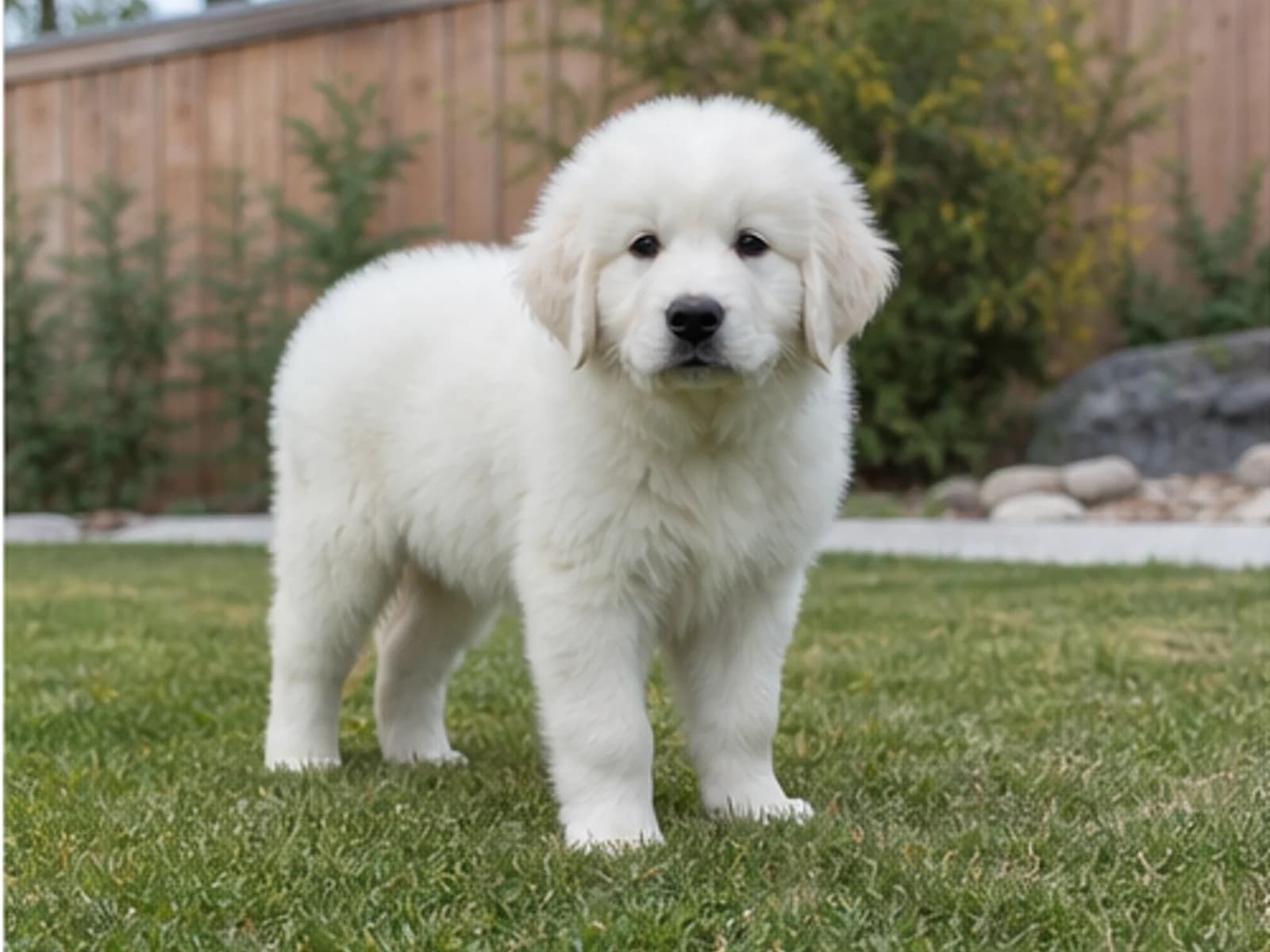
Great Pyrenees puppies become giant, independent livestock guardians, and the first year should prepare them for that adult job. The goal is not to make a young Pyr meet every person or obey through pressure. It is to build safe routines, positive handling, calm social learning, secure boundaries, and useful skills before the puppy is large enough to pull an adult across a yard.
Families find Great Pyrenees puppies through breeders, rescues, shelters and local listings, and each route requires careful verification. This guide does not endorse a seller. It explains how to compare adoption and breeder sources, avoid scams, prepare the home, and manage growth, feeding, veterinary care, house training, barking, biting, and socialization through year one.

Sign up for expert-backed reviews and safety alerts all in one place.
Great Pyrenees puppy planning at a glance
- 1Verify the source, parents or known history, veterinary records and contract before paying
- 2Prepare for an adult giant dog rather than buying temporary small-puppy equipment
- 3Use a complete large-breed growth diet and let the veterinary team monitor body condition
- 4Socialization means safe, positive exposure with choice, not forced contact
- 5Teach handling, gates, recall indoors, leash skills and settling while the puppy is still physically manageable
The American Kennel Club Great Pyrenees profile provides official breed context. The Great Pyrenees Club of America is a useful starting point for breed-specific education, while National Great Pyrenees Rescue shows why adoption deserves serious consideration.
Great Pyrenees puppy planning works best as a documented sequence rather than a shopping rush. Before pickup, connect the puppy’s identity to veterinary and source records, measure the home and equipment, assign supervision, and write the first-week schedule. After arrival, record appetite, stool, sleep, weight trend, recovery after novelty and questions for the veterinarian. That evidence makes Great Pyrenees puppies easier to support without assuming every puppy develops on the same timetable.
| Stage | Priority | Proof or observation to keep |
|---|---|---|
| Before pickup | Source verification and home setup | Parent or rescue records, contract, current veterinary record, supply dimensions |
| First week | Safety, sleep, toileting and trust | Meal log, bathroom schedule, stress signs, emergency contacts |
| 8-16 weeks | Gentle social learning and preventive care | Veterinary plan, exposure log, recovery after novelty |
| 4-8 months | Teeth, adolescence and boundary habits | Chewing plan, leash progress, gate behavior, body-condition trend |
| 8-12 months | Strength, independence and adult routines | Secure confinement, visitor plan, grooming tolerance, training under distraction |
- Compare the Frisco XL collapsible wire crate with the puppy's current measurements and the divider range, then plan how often fit will be rechecked during rapid growth. The sleeping area must remain large enough for a normal stand, turn and stretch.
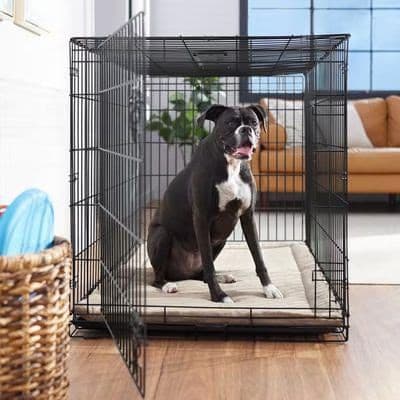
Petful may earn a commission when you click through to Chewy, at no extra cost to you.
- Build comfort with the Frisco XL collapsible wire crate through meals, naps and brief calm practice while the caregiver is nearby. Extend time gradually and move to a puppy-proofed room or gated zone if retail crate dimensions stop fitting the growing dog.
Where to find Great Pyrenees puppies
Start with accountable sources that can connect each puppy to a real location, current veterinary record and responsible return policy. Breed-specific rescues, municipal shelters and careful breeders can all place Great Pyrenees puppies, but the evidence available will differ. Ask what is known, what remains uncertain and who will help if the placement struggles after pickup. Do not treat a polished listing, registration logo, low fee or high price as proof by itself.
Search locally enough to verify people and records, but do not let a location phrase replace due diligence. Someone searching “Great Pyrenees puppies NC,” for example, still needs to confirm the North Carolina seller or rescue, match health documents to the correct dog and parents, understand transport terms and review the written contract before paying. Compare sources on transparency, adult-behavior guidance, veterinary documentation and lifetime return support rather than convenience alone. Great Pyrenees puppies grow into powerful guardians, so the source should discuss adult size, barking, fencing and handling as plainly as puppy care.
Why do so many Great Pyrenees end up in shelters?
The short answer is that many Great Pyrenees are surrendered when an owner is unprepared for the adult dog's size, barking, roaming, shedding and need for secure fencing. Puppy buyers should plan for adolescent strength and guardian independence before pickup. A source with honest adult-behavior guidance and lifetime return support reduces the chance that a placement fails when the puppy matures.
Begin with the type of placement, not a photograph. Breed-specific rescues may have puppies, adolescents, and adults whose foster homes can describe barking, house manners, animals, children, and handling. Municipal shelters may list a dog as a Great Pyrenees or mix based on appearance; treat that as a working description unless records establish ancestry.
A responsible breeder should be able to explain why a pairing was made, identify the parents, show breed-relevant health results tied to those identities, describe how puppies are raised, provide veterinary and registration records where applicable, use a written contract, and remain responsible if the buyer cannot keep the dog. The breeder should ask you difficult questions too.
Seller and scam red flags
Pause when a seller will not meet live by video or in person, refuses to show the puppy's environment, uses payment methods with little protection, offers implausible immediate shipping, has many breeds always available, treats color or size as proof of quality, or pressures you to pay before records can be checked. Reverse-search photographs and verify the physical address and veterinarian independently.
- A polished website, copied health logo or registration claim does not prove that the puppy exists or that screening was completed. Match every record to the puppy or parent identity, verify the issuer independently, and do not let urgency replace due diligence.
Questions that reveal how a puppy was raised
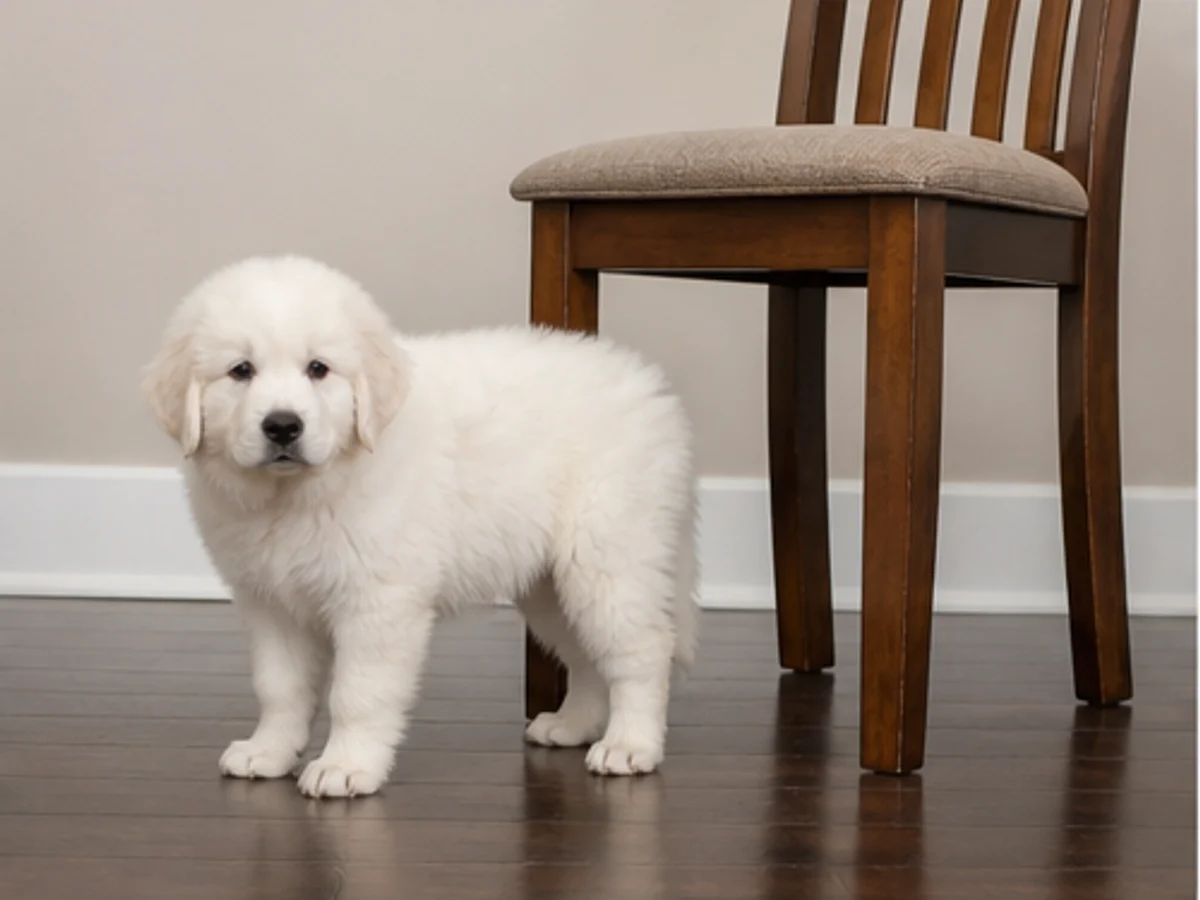
Ask the caregiver to describe yesterday from wake-up to bedtime. Specific answers about surfaces, household sounds, confinement, people, animals, grooming, meals, toileting, and recovery after novelty are more useful than saying the litter was socialized. Ask which puppy seeks distance, which recovers quickly, and how placement decisions are made.
Request a live demonstration of the puppy moving naturally, eating, resting, and interacting with familiar people. A short staged cuddle does not show gait, frustration, startle recovery, or the environment. If pickup is delayed, agree in writing on who provides vaccines, parasite care, training, and veterinary treatment during the extra period.
Price belongs in a complete budget. Petful's Great Pyrenees price and lifetime cost guide separates breeder or adoption fees from fencing, food, equipment, training, grooming, and veterinary care.
Preparing before pickup
Puppy price and lifetime cost includes cost of great pyrenees puppies, great pyrenees puppies price, and how much do great pyrenees puppies cost. These are related but distinct reader decisions, best resolved by separating the advertised amount from lifetime costs and verifying what each quote includes. The dedicated Petful guide owns the full analysis; this section supplies the context needed to choose the right next step without duplicating the owner page. Before acting, record the source, date and individual-dog evidence behind the conclusion. That prevents a broad breed tendency, seller label or isolated number from becoming a promise about one dog and keeps the decision practical, traceable and useful. Revisit the conclusion when the dog's age, health, environment or household capacity changes, because the same label can lead to a different decision as the evidence changes.
Is Great Pyrenees a good house dog?
The short answer is yes when a Great Pyrenees is raised as an indoor companion with consistent toilet, settling and boundary routines. Secure outdoor access still matters, but isolation in a yard does not teach house behavior. Prepare gates, a safe resting area, visitor management and calm door practice before the puppy becomes large enough to overpower temporary equipment or rehearse unsafe habits.
What dog is mistaken for a Great Pyrenees?
The short answer is that another white livestock guardian is the dog mistaken for a Great Pyrenees most often. The Kuvasz, Maremma Sheepdog, Akbash and Polish Tatra Sheepdog can look similar, and large white mixed-breed dogs may also resemble a Pyr. Appearance alone cannot confirm ancestry, temperament or health risk, so use verified registration or known parentage when identity matters.
Preparing before pickup means making the first week predictable before a Great Pyrenees puppy enters the home. Confirm the collection plan and records, choose measured confinement and barrier options, remove reachable hazards, establish toilet and sleep routines, and decide who supervises each transition. The setup should manage a rapidly growing guardian-breed puppy safely without assuming that equipment will teach comfort or behavior by itself.
Puppy-proof at floor and counter level. Remove cords, medications, cleaners, toxic plants, small objects, food packaging, and anything a large puppy can drag down. Decide where the puppy eats, sleeps, toilets, rests during visitors, and stays when no one can supervise.
Confinement and safe zones
A crate should allow the puppy to stand naturally, turn, lie down, and stretch, while a divider can reduce unused space during house training. The Frisco XL collapsible wire crate is one tracked option to compare with measured dimensions and the projected adult dog. Wire is not appropriate for every chewer or panicked dog.
Introduce confinement with the door open, food nearby, and short voluntary entries. Before using the Frisco XL crate, check that the divider, tray, latches, and surrounding space are safe. If the puppy screams, drools heavily, injures itself, or cannot eat, reduce difficulty and seek qualified help rather than forcing longer confinement.
Choosing between a crate and an open zone
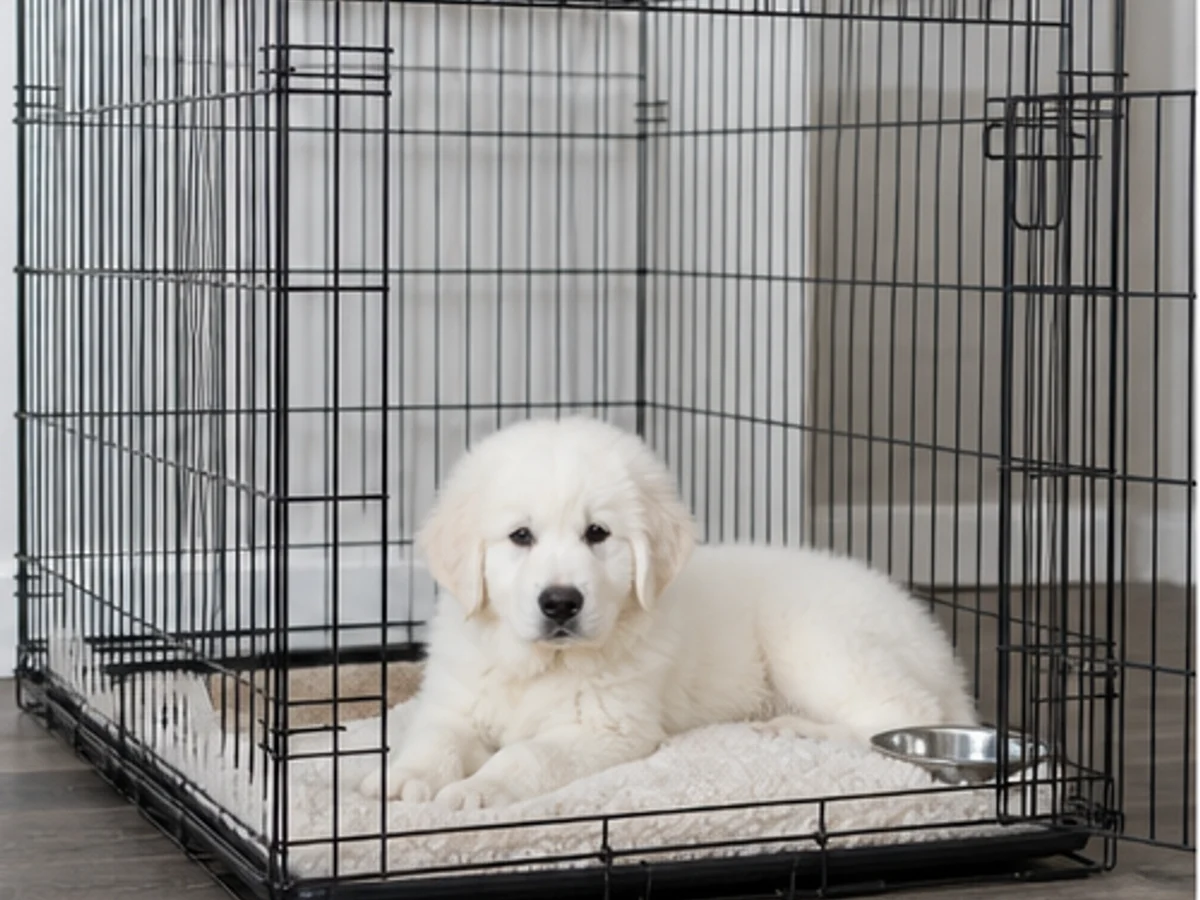
For an open safe zone, the Frisco eight-panel configurable gate and playpen can be compared with the puppy's climbing, pushing, chewing, and jumping behavior. A 30-inch barrier may not contain an athletic adolescent Pyr. Supervise early use and anchor the layout appropriately.
Use the Frisco gate/playpen to protect doorways, separate visitors, or create a calm feeding area only if the puppy cannot topple or climb it. Gates manage access; they do not teach comfort alone or replace a secure exterior fence.
What is the 3-3-3 rule for puppies?
The 3-3-3 rule is a rough adoption reminder, not a developmental law: a puppy or newly adopted dog may need about three days to decompress, three weeks to learn a routine and three months to feel established. Some settle faster and others need much longer. Age, previous housing, illness, travel and the new environment all change the timeline.
Use behavior rather than the calendar. Keep the first days quiet, protect sleep and introduce rooms, people and animals gradually. Increase freedom only when toileting, eating, rest and recovery are stable. A puppy who will not eat, has persistent vomiting or diarrhea, seems painful or remains profoundly shut down needs veterinary or qualified behavioral support rather than another deadline.
The first week at home
Questions involving First-week setup and safety and great pyrenees dog puppies are best resolved by connecting the label to the individual dog's records, condition, behavior and daily care needs. Keep the first days quiet. Travel, separation from the litter or foster home, new surfaces, unfamiliar voices, and a changed feeding schedule are already significant. Provide predictable meals, bathroom trips, sleep, short play, and gentle connection. Do not schedule a parade of visitors. Take the puppy to the chosen toilet area after waking, eating, drinking, playing, and before confinement. Reward immediately after elimination. Accidents are information about timing, access, or supervision; punishment can teach the puppy to hide. Record appetite, water intake, stool, urination, sleep, coughing, vomiting, medication, and unusual behavior. Contact the veterinarian promptly for repeated vomiting or diarrhea, refusal of food with lethargy, breathing difficulty, collapse, a swollen abdomen, suspected toxin exposure, or any rapid decline.
Great Pyrenees puppy growth
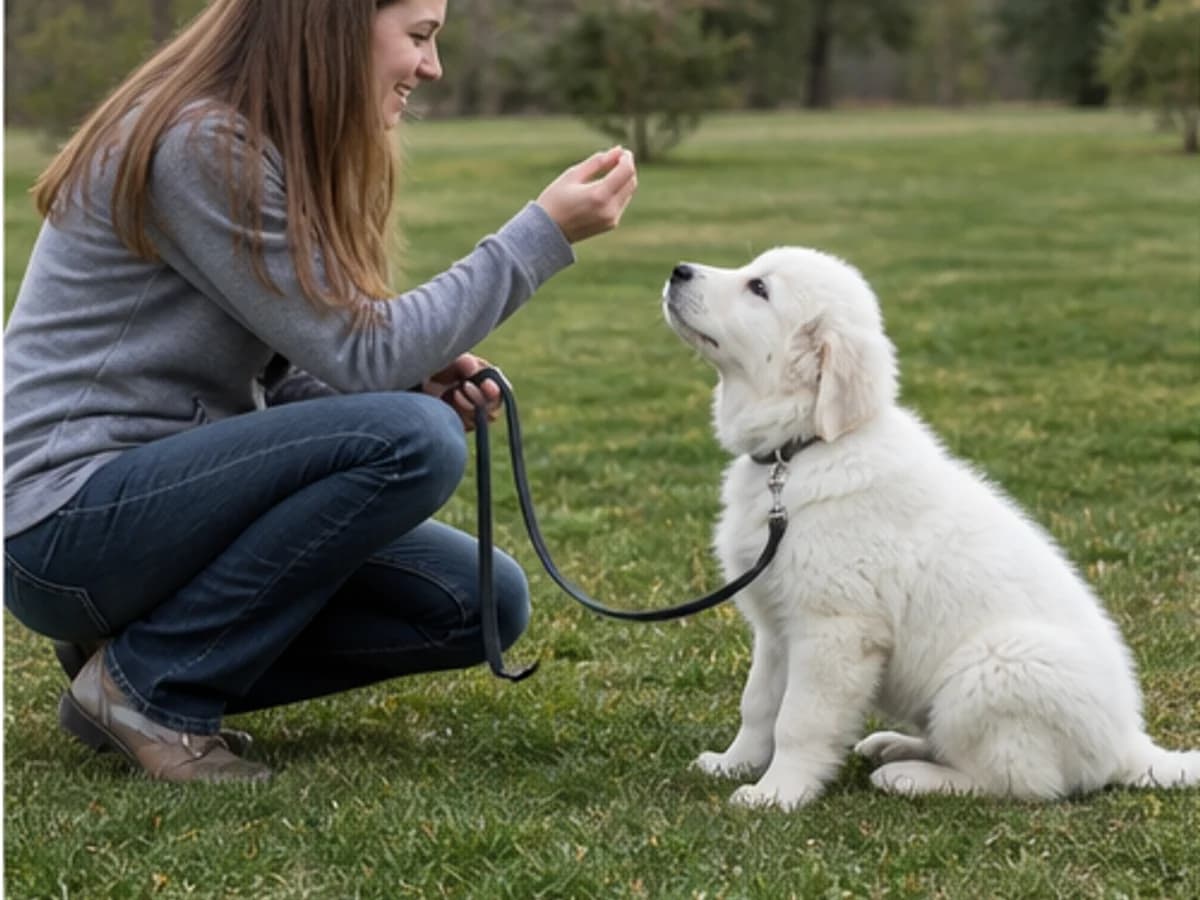
Growth is uneven, and one online chart cannot determine whether an individual puppy is healthy. Sex, parents, nutrition, illness, neuter timing, and measurement method affect the curve. Petful's Great Pyrenees size, weight and growth guide provides age-based ranges and measurement steps.
Weigh at consistent intervals and conditions, but track body condition and function too. A rapidly growing puppy should not be encouraged to become heavy. Slipping on smooth floors, repeated jumping from vehicles, forced distance running, and endless stair repetitions can add avoidable strain. Ask the veterinarian about activity when gait, growth, or joints are a concern.
Feeding a Great Pyrenees puppy
Puppy feeding and growth includes dog food for great pyrenees puppies, best dog food for great pyrenees puppies, Large-breed puppy feeding, and When Great Pyrenees puppies stop growing. These are related but distinct reader decisions, best resolved by separating the advertised amount from lifetime costs and verifying what each quote includes. Use the measurements, records and observable conditions in this section to identify what is known, what still needs confirmation and which next action the evidence supports. Before acting, record the source, date and individual-dog evidence behind the conclusion. That prevents a broad breed tendency, seller label or isolated number from becoming a promise about one dog and keeps the decision practical, traceable and useful. Revisit the conclusion when the dog's age, health, environment or household capacity changes, because the same label can lead to a different decision as the evidence changes.
- Before using the Frisco eight-panel configurable gate and playpen, test every panel, connector and floor contact against a puppy that may lean, chew or climb. Place the zone where family life is visible without giving the puppy access to unsafe household traffic.
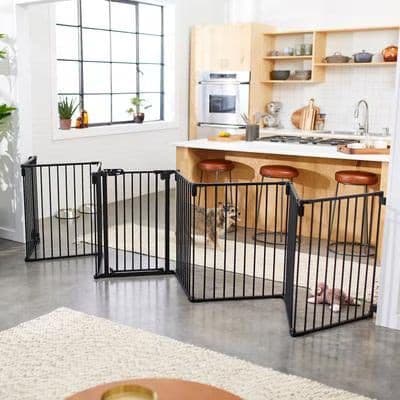
Petful may earn a commission when you click through to Chewy, at no extra cost to you.
- Use the Frisco eight-panel configurable gate and playpen to support naps, house training and short safe separations while skills develop. Reconfigure or retire it as the puppy gains height and strength instead of assuming the original setup remains secure.
Veterinary care, vaccines and parasites
Questions involving Vaccines, deworming and vet milestones and Month-by-month first-year milestones are best resolved by using veterinary findings, connected records and the individual dog's current signs instead of treating a population range as a promise. Arrange an examination soon after arrival, following the source contract and your veterinarian's advice. Bring every record, the food label, medication, microchip information, and a fresh stool sample if requested. The veterinarian can create a vaccine, parasite, nutrition, dental, and sterilization plan based on age, region, lifestyle, and health. The American Animal Hospital Association canine vaccination guidance distinguishes core and risk-based decisions. The Companion Animal Parasite Council provides current parasite-control guidance. WebVet's overview of heartworm prevention for puppies explains questions to take to the clinic.
Dewormers require the right diagnosis
The PetArmor 7 Way dewormer for medium and large dogs is a tracked retail option, not a substitute for a fecal test or veterinary plan. Parasites differ, dosing depends on the current weight and label, and sick, very young, pregnant, or medicated animals may require different care.
Only use the PetArmor dewormer when the product label and veterinarian indicate it fits the puppy's age, weight, health, and parasite target. Never assume that one over-the-counter product covers heartworm, Giardia, coccidia, fleas, ticks, and intestinal worms.
- Match the Outward Hound four-cup slow feeder to the puppy's measured meal, muzzle reach and current chewing behavior. A four-cup capacity does not mean the bowl should be filled, and young dogs should be observed until the material and pattern prove suitable.

Multiple ridges and valleys slow eating, reduce gas and bloating, and turn mealtime into a fun puzzle. Non-skid base, dishwasher safe, 4-cup capacity.
Petful may earn a commission when you click through to Chewy, at no extra cost to you.
- If the Outward Hound four-cup slow feeder slows eating without frustration, keep weighing meals and tracking the puppy's body condition and stool. The bowl cannot select a large-breed growth diet or determine calories for a changing growth curve.
Socializing a guardian puppy
Questions involving training great pyrenees puppies, how to train great pyrenees puppies, Crate training, house training and socialization, and Barking, biting, guarding and independence are best resolved by observing the individual dog, documenting recovery and matching training to the real household.
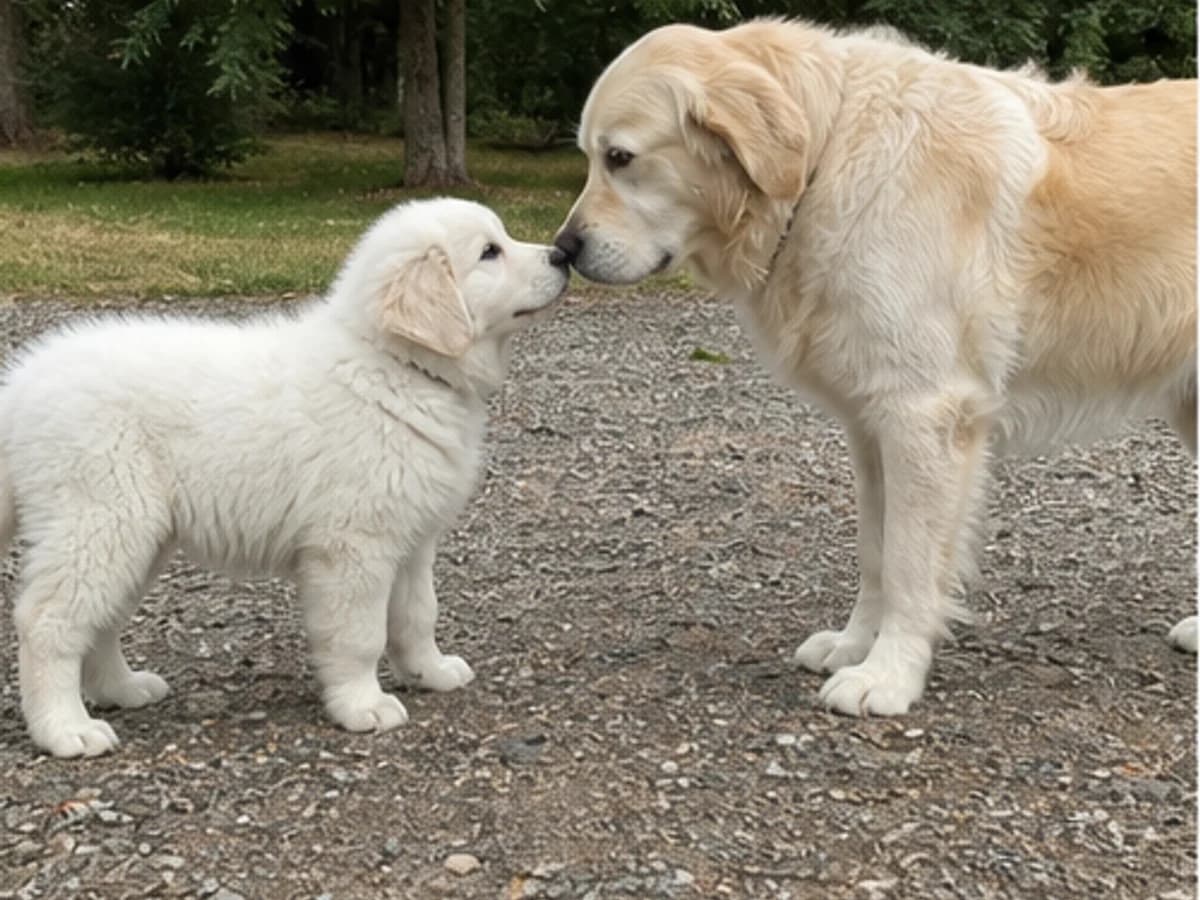
Socialization means helping the puppy experience the world safely and recover well. It does not mean being touched by everyone. Pair new surfaces, sounds, people, animals, vehicles, grooming tools, and environments with distance, food, play, and choice. End while the puppy remains able to eat, explore, and disengage.
Avoid dog parks and uncontrolled greetings. Select known healthy dogs with appropriate social skills. Protect the puppy from being chased, rolled, cornered, or overwhelmed. Ask the veterinarian about local disease risk and safer public exposure before the vaccine series is complete.
Teach handling as a cooperative skill. Briefly touch a paw, look at an ear, lift a lip, brush one section, or hold the collar, then reward and release. The goal is not to restrain until surrender. Small successful repetitions create a dog who can participate in care when it weighs 100 pounds.
- Before considering the PetArmor 7 Way dewormer for medium and large dogs, confirm with a veterinarian that the labeled species, minimum age, current weight range and listed intestinal parasites match the puppy's situation. Follow the exact package directions and discuss other medications, health conditions, pregnancy or nursing status and prior reactions before use.
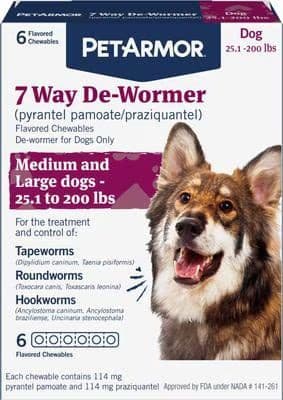
A broad-spectrum 7-way chewable dewormer that treats hookworms, roundworms, and tapeworms in medium and large dogs.
Petful may earn a commission when you click through to Chewy, at no extra cost to you.
- Use the PetArmor 7 Way dewormer for medium and large dogs only as the current package label and veterinarian direct. Do not change or repeat a dose based on guesswork, and contact the veterinarian about unexpected signs. This retail dewormer does not diagnose infection, cover every parasite, replace fecal testing or substitute for veterinary examination and treatment.
Where do you touch a dog to calm down?
There is no universal calming spot. Many puppies prefer slow contact on the chest or shoulder when they approach and remain loose, while some do not want touch during stress. Avoid reaching over the head, restraining the body or continuing when the puppy turns away, freezes, mouths harder or stops taking food.
Offer a hand low, let the puppy choose contact and pause after a few seconds. Pair cooperative touch with food and release, especially for paws, ears and coat. Calming comes from safety, distance, sleep and predictable handling, not from forcing petting onto an overwhelmed puppy.
Training priorities for the first year
Focus on skills that protect safety and daily life:
- Responding to a name and checking in.
- Coming indoors from a secure area.
- Moving away from gates and doors.
- Walking without dragging the handler.
- Trading objects and releasing food packaging.
- Resting on a mat behind a barrier.
- Accepting brushing, nail handling, and veterinary positioning.
- Remaining briefly alone without panic.
Keep sessions short and reinforce behavior you want repeated. Practice indoors before adding the yard, then use a long line in a secure setting. Guardian independence often becomes more obvious during adolescence. That is a reason to lower distraction and improve reinforcement, not to use intimidation.
Petful's Great Pyrenees temperament and training guide covers barking, roaming, visitor introductions, and adult guardian behavior in depth.
House training
Supervise, confine safely when you cannot supervise, and take the puppy out more often than you think necessary. Clean accidents with an enzymatic product and review the schedule. Sudden regression, straining, frequent small urinations, excessive thirst, or diarrhea may have a medical cause.
Biting and chewing
Puppy mouthing is normal, but giant-puppy teeth still hurt. Provide legal chews, interrupt before arousal becomes frantic, and redirect to a toy or scatter of food. Ensure adequate sleep. Do not hold the muzzle closed, alpha-roll, or provoke conflict over stolen objects.
Barking and boundaries
Reward quiet observation before barking begins. Bring the puppy indoors before long nighttime alert sessions, block repeated visual triggers, and teach a return-to-mat routine. Every successful gate rush or fence escape teaches the behavior, so management must begin before adolescence.
The adolescent phase
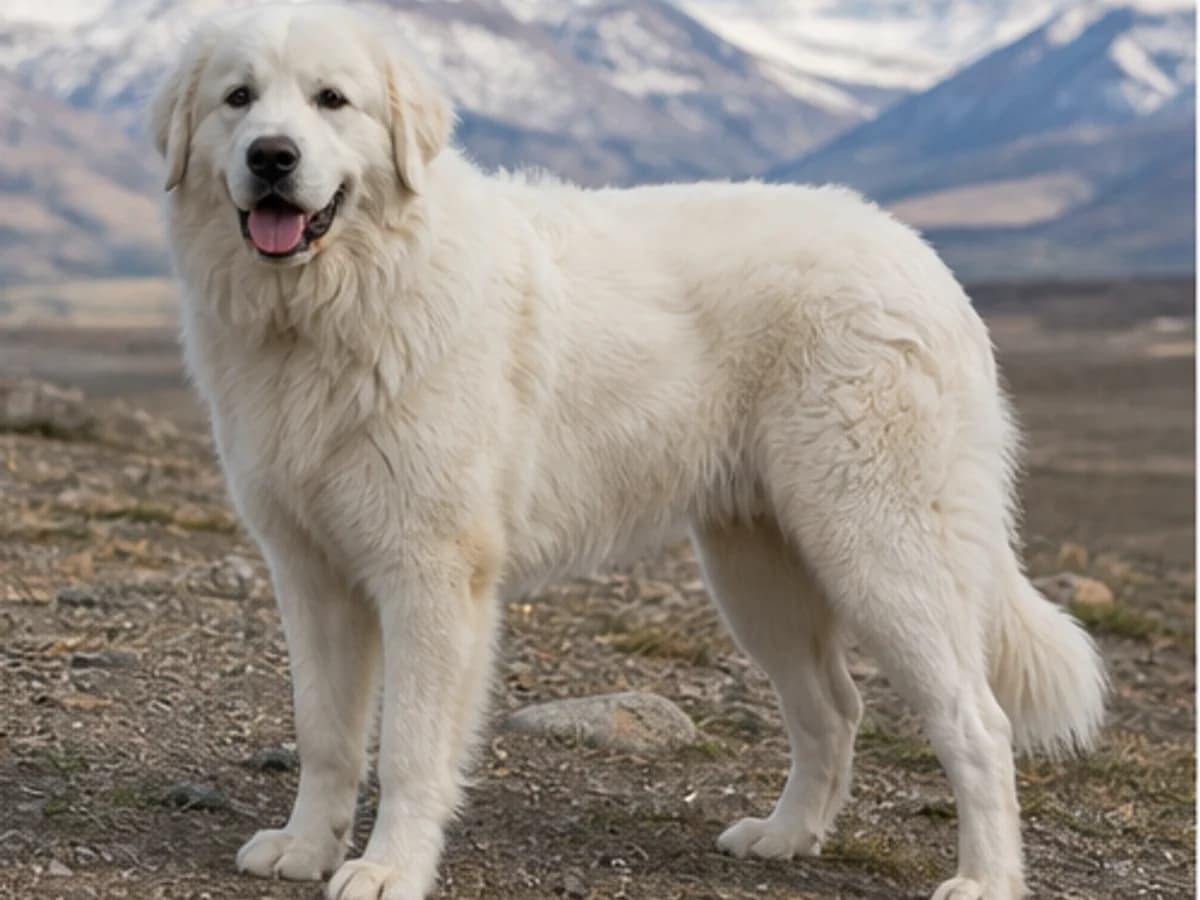
Between puppyhood and social maturity, the dog becomes strong while judgment and training remain unfinished. Expect renewed chewing, selective listening, boundary testing, and stronger reactions to unfamiliar events. Continue positive exposure, sleep, and controlled practice. Do not interpret fear periods or hesitation as a challenge that must be confronted.
Review equipment monthly. A crate, collar, harness, gate opening, vehicle space, or food portion can become unsuitable quickly. Photograph body condition from consistent angles and record measurements, but use veterinary findings rather than social-media comparisons to judge growth.
A realistic weekday routine
A workable routine alternates activity and sleep instead of keeping the puppy entertained continuously. Begin with a toilet trip, measured meal, another toilet opportunity, a few minutes of training, and protected rest. Repeat short cycles through the day. Add one carefully chosen social experience rather than several chaotic outings.
Write down who handles early mornings, midday bathroom breaks, meals, grooming practice, evening settling, and nighttime trips. If the household will rely on a walker or sitter, introduce that person gradually and explain gate security in writing. The plan should still work during rain, work deadlines, illness, and adolescence. A routine that only succeeds when one person is home all day is not yet a durable care plan.
Teaching comfortable alone time
Begin while the puppy is safe, recently toileted, and ready to rest. Step away for seconds, return before distress escalates, and vary whether the puppy uses a crate, pen, or puppy-proofed room. A chew or food toy can support calm behavior, but it should not be the only sign that departure is coming.
Use a camera to observe rather than waiting for neighbors to report barking. Note pacing, panting, drooling, escape attempts, vocal duration, and whether the puppy can eat and sleep. Increase time slowly only when the current step is comfortable. Repeated panic does not teach independence.
Practice departures with different household members and ordinary cues such as shoes, keys, and closing doors. If the puppy becomes distressed within minutes, injures itself, or cannot recover after return, consult the veterinarian and a qualified reward-based professional. Guardian behavior and attachment can coexist; neither means the puppy should be expected to tolerate a full workday without preparation and appropriate care arrangements.
Keep a first-year decision record
A first-year operating plan works best when growth, health and behavior are recorded in the same place. Start with the puppy's identity, microchip, source, parent or rescue information, contract, veterinary records and current food. Add dated notes rather than relying on memory after a problem appears.
Track these items at least monthly:
- Weight, body condition and the food's measured daily amount.
- Vaccines, parasite prevention, stool changes and medications.
- Crate or safe-zone dimensions and the date equipment fit was checked.
- Comfortable handling of paws, ears, mouth, coat and restraint alternatives.
- Barking triggers, recovery time, leash behavior and response to visitors.
- Known exposure to dogs, livestock, vehicles, surfaces, sounds and time alone.
The record should show trends, not create a competition. A puppy who grows differently from an online chart may still be healthy, while a sudden curve change deserves attention. A single friendly meeting does not prove universal dog compatibility, and one quiet night does not establish adult barking behavior.
Bring the log to veterinary and training appointments. It helps the professionals distinguish a new change from a long-standing pattern and keeps first-week setup, first-year decisions and seller records connected to the same individual puppy.
More Great Pyrenees guides from Petful
The puppy guide handles the first year; Petful's complete Great Pyrenees breed profile shows which adult guardian traits and household limits that preparation is meant to support.
Frequently asked questions
The short answer is that many Great Pyrenees are surrendered when an owner is unprepared for the adult dog's size, barking, roaming, shedding and need for secure fencing. Puppy buyers should plan for adolescent strength and guardian independence before pickup. A source with honest adult-behavior guidance and lifetime return support reduces the chance that a placement fails when the puppy matures.
The short answer is yes when a Great Pyrenees is raised as an indoor companion with consistent toilet, settling and boundary routines. Secure outdoor access still matters, but isolation in a yard does not teach house behavior. Prepare gates, a safe resting area, visitor management and calm door practice before the puppy becomes large enough to overpower temporary equipment or rehearse unsafe habits.
The short answer is that another white livestock guardian is the dog mistaken for a Great Pyrenees most often. The Kuvasz, Maremma Sheepdog, Akbash and Polish Tatra Sheepdog can look similar, and large white mixed-breed dogs may also resemble a Pyr. Appearance alone cannot confirm ancestry, temperament or health risk, so use verified registration or known parentage when identity matters.
A Great Pyrenees puppy from a breeder commonly costs about $800 to $2,500, although region, documented health testing, included care and transport can change the quote. Compare what is actually included: parent identities, verifiable screening results, veterinary records, microchip, contract and return terms. A high price does not prove quality, and the purchase price is only a fraction of first-year fencing, food, equipment, training and medical costs.
There is no single correct weight for every eight-week-old Great Pyrenees. Sex, parent size, litter history, nutrition, illness and measurement timing all affect the number, and a future giant dog may not look exceptionally large on pickup day. Ask for dated weights and veterinary records, then track the puppy's own trend and body condition with the clinic instead of trying to force growth toward an online chart.
A puppy can usually use a clean, controlled private toilet area from the start, but contact with public dog areas depends on vaccination status, local disease risk and veterinary advice. Safe social learning should not stop while vaccines are completed. The puppy can observe people, surfaces, sounds and traffic from a clean blanket, stroller, car or other controlled setting and meet known healthy, behaviorally appropriate dogs.
Feed a complete diet formulated for growth of large-size dogs and calculate portions from that food's calorie content, the puppy's age, current weight and body condition. Divide the daily amount into measured meals and reassess as growth changes. Cup recommendations are only a starting point because calorie density varies widely. Rapid weight gain is not the goal; review growth and feeding with the puppy's veterinarian.
Puppy mouthing often improves as teething ends around six to seven months, but it does not disappear on a guaranteed date. Adequate sleep, safe chew items, short play sessions and calm redirection help the puppy practice better choices. Avoid rough games that repeatedly rehearse grabbing people. Biting that is intense, fearful, guarding-related, skin-breaking or worsening deserves early help from a qualified reward-based professional.
Some Great Pyrenees puppies are relatively quiet at first, then develop more alert barking as guardian behavior emerges during adolescence. Bring the puppy indoors at night, limit access to fence-line triggers, reward checking in and settling, and avoid letting repeated barking become the default response. Because adult Pyrs are naturally vocal guardians, a household that requires a nearly silent dog should choose a different breed.
Positive crate training can support house training, travel and short periods of safe confinement, provided the crate fits and the puppy is introduced gradually. It should never be used for prolonged isolation or as punishment. Recheck fit throughout growth: the dog must stand, turn and stretch comfortably. Some adult Great Pyrenees outgrow practical retail crates and do better in a dog-proofed room or secure gated area.
Keep the puppy's source records, microchip, vaccine history, weight trend, food changes, training notes, and emergency contacts in one shared location. Update the file after appointments and give every caregiver access. Good documentation prevents missed doses, duplicate treatments, and conflicting routines as the puppy moves from a fluffy eight-week-old into a powerful adolescent.
The bottom line
The best Great Pyrenees puppy plan begins with source verification and ends with an adult-dog routine. Choose records over promises, steady growth over maximum size, controlled social learning over forced greetings, and useful household skills over spectacle. Secure the property before the puppy learns to roam, and build cooperative grooming and veterinary handling before strength becomes a barrier.
A puppy may be irresistibly fluffy, but the decision is about a decade with a giant guardian. If your home can support secure boundaries, barking management, patient training, heavy coat care, and long-term medical and financial responsibility, the first year can build an excellent foundation.

Melissa Smith has been researching and writing about pet behaviors for several years. Her work has been recognized with Certificates of Excellence from both the Dog Writers Association of America and the Cat Writers’ Association. A longtime animal lover, Melissa is a professional pet sitter on Cape Cod through her company, Fresh Start Services.
Sign up for expert-backed reviews and safety alerts all in one place.