Great Dane Growth Chart: Weight by Age
How big will your Great Dane get? This month-by-month growth chart maps weight and height from 8 weeks to adult, plus growth stages, feeding to control growth rate, and when Danes stop growing.
Petful is reader supported. As an affiliate of platforms like Amazon and Chewy, we may earn a commission when you buy through links on this page. There is no extra cost to you.
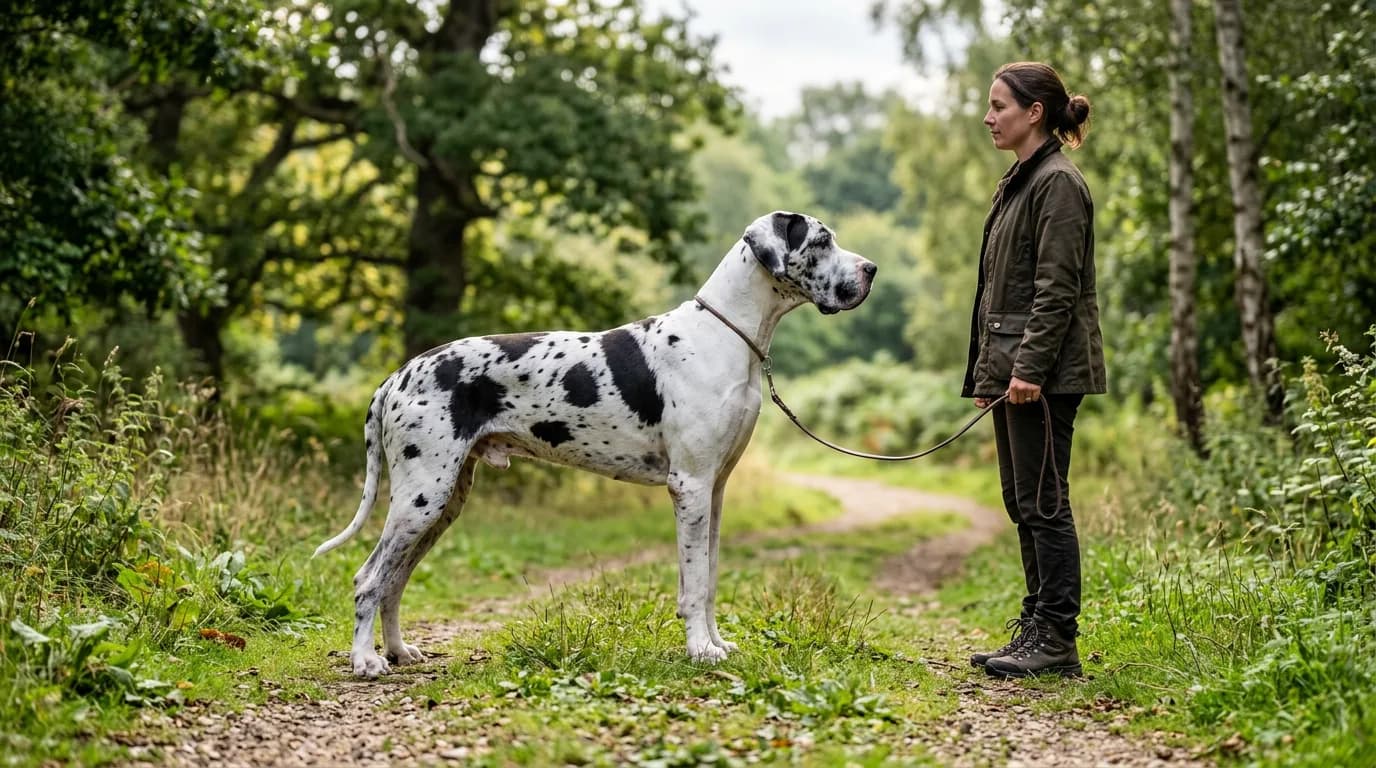
This Great Dane growth chart maps what a healthy puppy should weigh and measure from eight weeks all the way to a fully mature adult, so you can tell at a glance whether your giant is tracking on pace. Great Danes are one of the fastest-growing breeds on the planet: a two-pound newborn can balloon to well over 100 pounds inside a single year, which is exactly why owners obsess over the numbers. Below you will find month-by-month weight and height ranges for males and females, the growth stages every Dane passes through, how to feed a giant-breed puppy so its skeleton keeps up with its body, and the answer to the question everyone asks: when do Great Danes finally stop growing?
- 1A male Great Dane typically grows from 15-25 pounds at 8 weeks to 140-175 pounds by age two; females run 14-22 pounds up to 110-140 pounds.
- 2The fastest growth happens between 3 and 6 months, when a Dane can pack on 15-20 pounds in a single month.
- 3Danes reach most of their adult height by 12 months but keep filling out in bone and muscle until 18-24 months, so feed a large-breed puppy diet to slow, steady the growth rate and protect the joints.

Sign up for expert-backed reviews and safety alerts all in one place.
How to Read This Great Dane Growth Chart
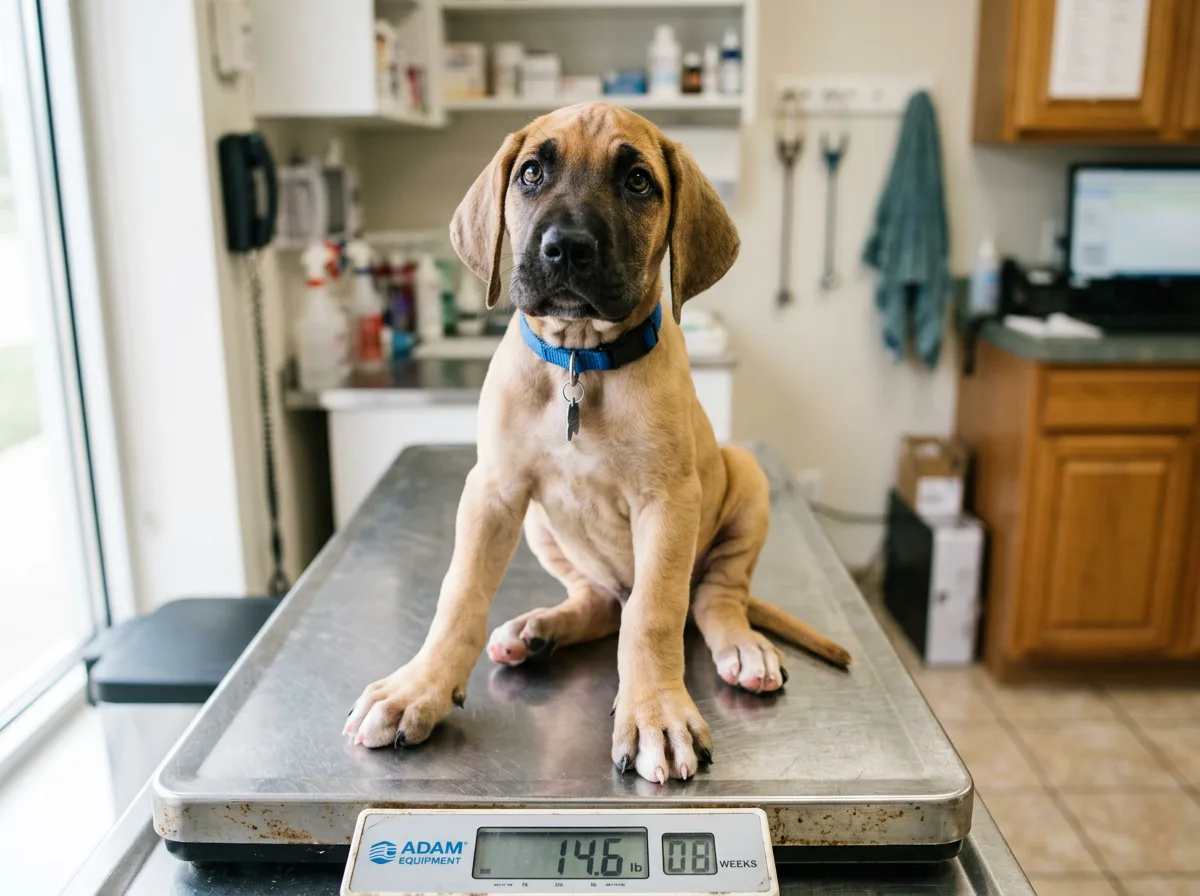
Before you compare your puppy to any chart, understand what the numbers really are. Every published Great Dane growth chart, including this one, shows a healthy *range*, not a single correct weight. Two littermates can differ by 20 pounds at six months and both be perfectly normal. Genetics (how big the parents are), gender, spay or neuter timing, diet, and even the individual pup's appetite all shift where a dog lands inside the range.
Use the chart as a trend line, not a scoreboard. What matters far more than hitting an exact number is that your puppy is climbing steadily, staying lean enough that you can feel the ribs under a thin layer of fat, and showing a normal energy level. A Dane that suddenly stalls for weeks, or one that rockets past the top of the range, is the one worth a call to the vet. According to the American Kennel Club breed standard, the finished adult should look balanced and square, tall but never spindly, powerful but never fat.
One more thing to know up front: unlike a small designer crossbreed such as the Cavapoo, which reaches its adult weight in well under a year, a Great Dane's growth is a marathon that stretches across two full years. That long runway is the whole reason giant-breed nutrition matters so much, and we will come back to it.
Great Dane Growth Chart by Month: Weight and Height
Here is the core Great Dane growth chart. Weights are in pounds, height is measured at the shoulder (the withers) in inches. These are typical ranges compiled from breeder growth data and the AKC breed standard. Your dog may sit anywhere inside a band and still be healthy.
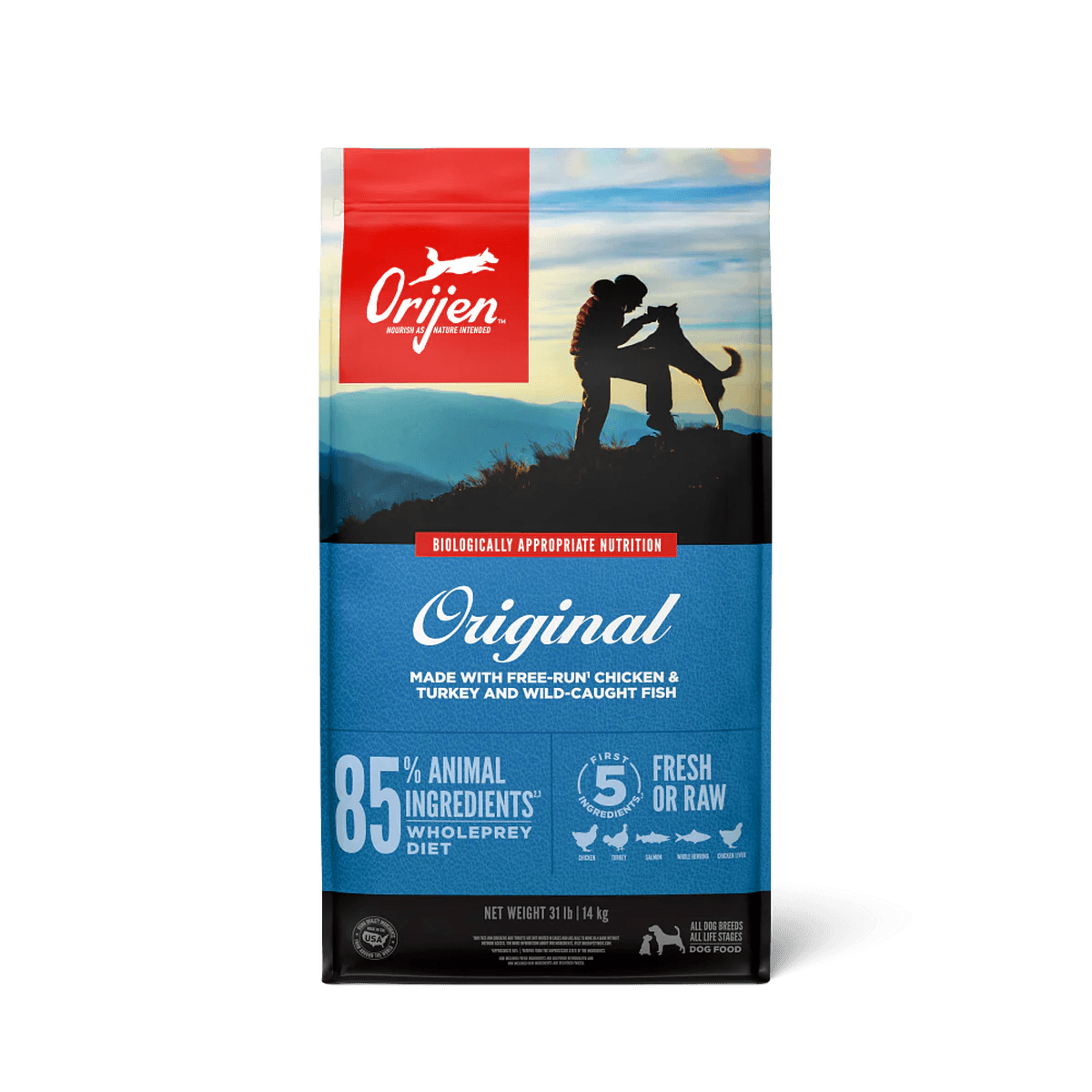
A grain-free kibble built around named whole-protein sources. Best for active adult dogs; the high fat content is more than many sedentary pets need.
Petful may earn a commission when you click through to Chewy, at no extra cost to you.
| Age | Male Weight (lbs) | Female Weight (lbs) | Height at Shoulder (in) |
|---|---|---|---|
| 8 weeks | 15-25 | 14-22 | 13-18 |
| 3 months | 28-45 | 25-40 | 17-21 |
| 4 months | 45-65 | 40-55 | 20-24 |
| 5 months | 55-80 | 50-70 | 23-28 |
| 6 months | 65-100 | 60-85 | 26-31 |
| 7 months | 75-110 | 65-95 | 27-32 |
| 8 months | 80-120 | 70-100 | 28-33 |
| 9 months | 90-130 | 75-105 | 29-33 |
| 10 months | 95-140 | 80-110 | 30-34 |
| 12 months | 100-150 | 85-120 | 31-35 |
| 18 months | 130-170 | 100-130 | 32-35 |
| 24 months | 140-175 | 110-140 | 32-36 |
Notice two patterns in that table. First, the weight column climbs steeply through the first year, then slows to a crawl. Second, the height column nearly maxes out by 12 months, then barely moves. That gap between "done growing tall" and "still gaining weight" is the giveaway of a Dane in adolescence, and it explains why so many owners think their year-old dog looks awkward and lanky. It is filling out, not growing up, from here.
For a deeper look at how these numbers translate into the finished dog and how Danes compare to other giant breeds, our companion guide on Great Dane size breaks down adult dimensions, crate and space requirements, and how tall a Dane really stands on its hind legs.
Great Dane Growth Chart by Age: The Milestones That Matter
Numbers in a table are useful, but owners tend to worry at specific checkpoints. Below are the two most-searched age milestones, answered directly, plus what to expect at each turn.
How Big Is a Great Dane at 8 Weeks?
At 8 weeks, the age most Great Dane puppies go home from the breeder, a healthy pup weighs roughly 15 to 25 pounds if male and 14 to 22 pounds if female, and stands about 13 to 18 inches at the shoulder. In other words, an 8-week-old Dane already outweighs many fully grown small-breed adults. That is your first real data point on the growth chart, and it is worth writing down along with the date, because your vet will use the trend from here to judge whether the pup is growing at a safe rate.
Two things surprise new owners at this stage. The paws and joints look comically oversized for the body: that is normal and a hint of the frame to come. And the puppy is deceptively fragile despite the size. Those growth plates are wide open, so no jumping off furniture, no forced runs, and no slick floors without traction if you can help it.
How Big Should a Great Dane Be at 4 Months?
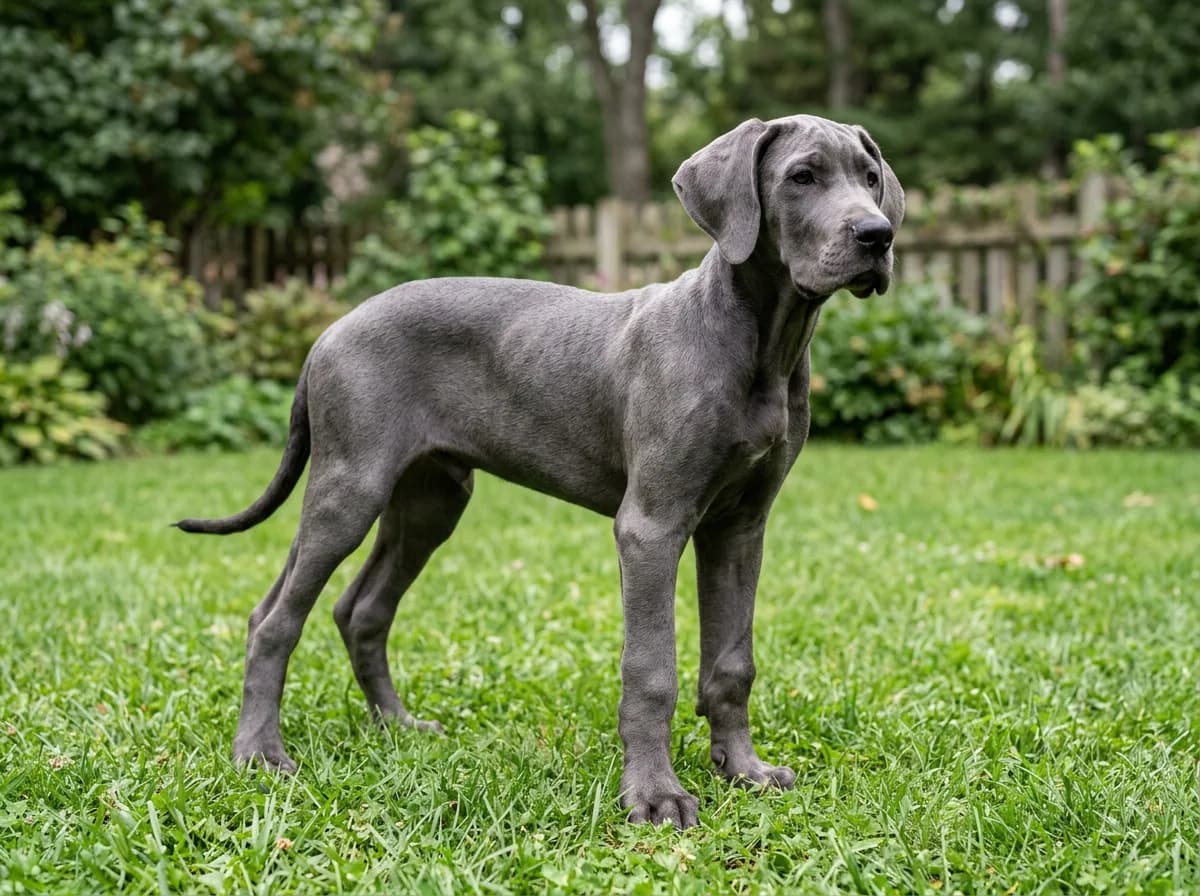
At 4 months, a Great Dane puppy typically weighs 45 to 65 pounds (male) or 40 to 55 pounds (female) and stands 20 to 24 inches at the shoulder, meaning many Danes have roughly tripled their 8-week weight in just two months. The 4-month mark sits right in the middle of the fastest growth window of the dog's entire life, so a big jump here is expected and healthy, not a problem.
This is also the stage where feeding mistakes do the most damage, because the skeleton is laying down bone at top speed. Overfeeding or a calcium-heavy diet at 4 months can push growth *too* fast and set up joint disease later. Keep the pup lean, feed a proper large-breed puppy formula, and resist the urge to "bulk up" what already looks like a small pony. We will cover the feeding rules in detail below.
- Track your puppy's weight on the same scale, at the same time of day (before a meal is ideal), every one to two weeks. Consistency turns a messy set of numbers into a clean growth curve, and a clean curve is what tells you and your vet whether the growth rate is safe.
Great Dane Growth Stages: Puppy to Adult
A Great Dane does not grow at one steady pace. It moves through distinct stages, and each one has its own priorities for feeding, exercise, and joint protection.
| Stage | Age Range | What Is Happening | Feeding and Care Focus |
|---|---|---|---|
| Neonatal and Weaning | 0-8 weeks | Nursing, eyes and ears open, first solid food, very fast early gain | Mother's milk, then a large-breed puppy starter; breeder's job mostly |
| Fast Growth | 2-6 months | The steepest weight and bone gain of the whole life | Large-breed puppy food, measured portions, absolutely no free-feeding |
| Adolescence | 6-12 months | Height nearly finishes, body looks lanky, gangly and all legs | Keep lean, avoid calcium excess, moderate low-impact exercise only |
| Filling Out | 12-24 months | Chest deepens, muscle and bone mature, dog gains its adult frame | Transition to adult large-breed diet around 18-24 months |
The Neonatal and Weaning Stage (0 to 8 Weeks)
Most of this stage happens at the breeder's home. Puppies are born around one to two pounds, nurse constantly, and gain weight daily. By the time you meet your puppy at eight weeks, it has already done its most explosive proportional growth. Your job is simply to keep the momentum smooth and steady from here.

Petful may earn a commission when you click through to Chewy, at no extra cost to you.
The Fast Growth Stage (2 to 6 Months)
This is the window that defines a Dane. From roughly 8 weeks to 6 months, your puppy will gain the fastest of its life, sometimes 15 to 20 pounds in a single month. The skeleton is stretching and thickening at a remarkable rate, and everything you feed is fuel for that build. It is also the most fragile window for the joints. Keep exercise gentle and self-directed (free play in the yard, not forced jogging), protect against slippery floors, and never let a Dane this age repeatedly jump down from heights.
Adolescence (6 to 12 Months)
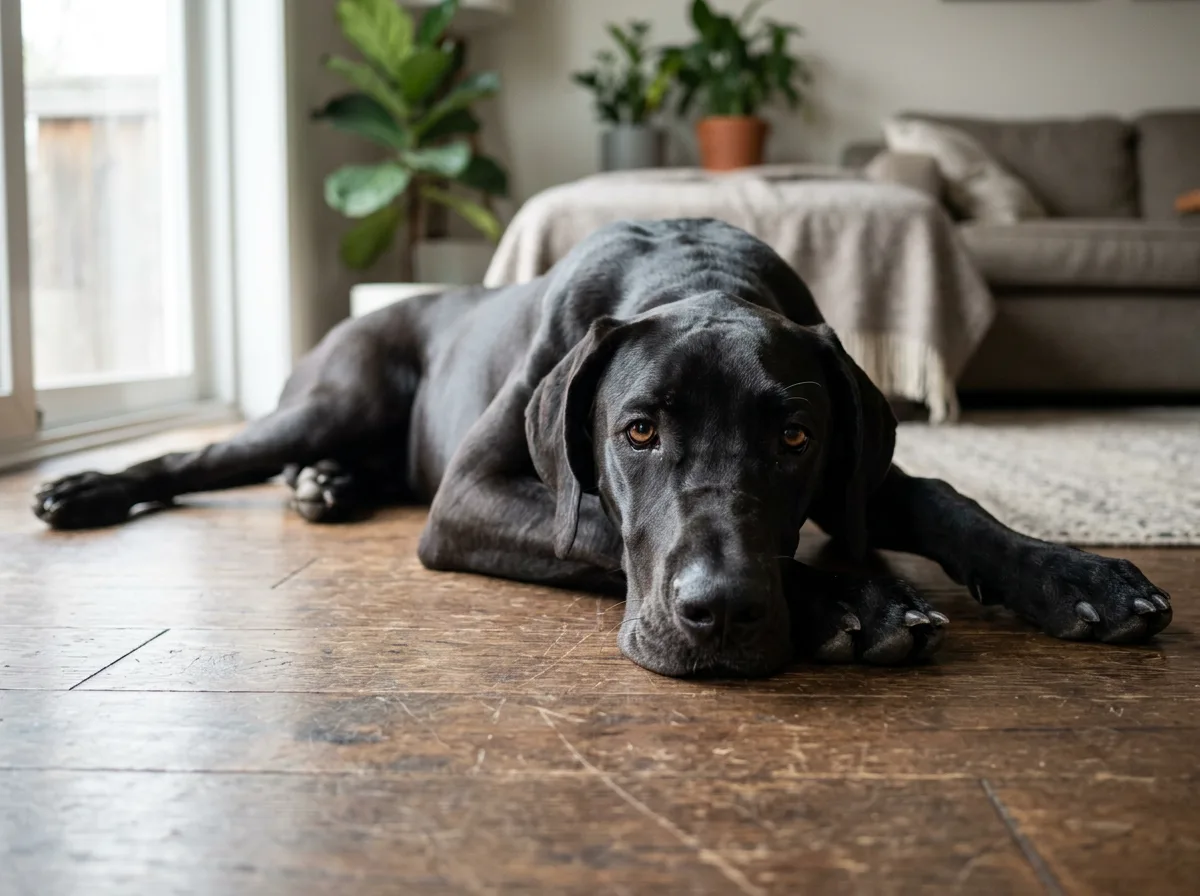
Welcome to the awkward teenager phase. By six months your Dane already looks enormous, but it is tall and narrow, with a deep-but-not-yet-broad chest and legs that seem too long for its body. Height is finishing during this stage while weight and muscle lag behind, which is exactly why the dog looks lanky. Behaviorally, expect testing, selective hearing, and a surge of energy. Physically, keep the dog lean. Carrying extra weight on a still-maturing skeleton is one of the clearest, most avoidable risk factors for orthopedic problems.
Filling Out (12 to 24 Months)
After the first birthday the scale slows dramatically, but the dog is far from finished. Over the second year the chest drops and widens, the head broadens, and muscle fills in over the frame. A Dane that looked gangly at 12 months can look magnificent and substantial at 24. This is when you transition off puppy food and onto an adult large-breed maintenance diet, typically somewhere between 18 and 24 months depending on your vet's guidance.
At What Age Do Great Danes Grow the Most?
Great Danes grow the most between roughly 3 and 6 months of age, the peak of the fast-growth stage, when a puppy can gain 15 to 20 pounds per month and add several inches of height. In raw poundage, no other window comes close. A Dane often more than doubles its weight across that single three-month span.
There is a second, quieter answer worth knowing. The most rapid *proportional* growth actually happens before you ever bring the puppy home, in those first eight weeks when a one-pound newborn becomes a 20-pound puppy. But for owners, the 3-to-6-month stretch is the one you feel, watch, and pay for, and it is the one where your feeding and exercise choices matter most. Because so much bone is being built so quickly, this is precisely the age when overnutrition and excess calcium do lasting orthopedic harm. Veterinary nutrition programs, including the guidance from institutions like the Cornell University College of Veterinary Medicine, stress that giant-breed puppies should grow steadily and stay lean rather than as fast as possible.
- With a giant breed, pushing maximum growth is a mistake, not a goal. Overfeeding, high-calorie adult food, or calcium and vitamin D supplements during the 3-to-6-month peak can accelerate bone growth beyond what the joints can safely support, contributing to conditions like hip dysplasia and other developmental orthopedic disease. Aim for slow and steady, and keep your puppy lean.
How Do You Tell How Big Your Great Dane Will Be?
The most reliable way to tell how big your Great Dane will be is to look at its parents: adult size is largely inherited, so a puppy from two large, well-built Danes will usually finish large, and a good breeder can show you the sire and dam and their grown offspring. Beyond parentage, three practical signals help you estimate the finished dog.
- Paw size. Oversized paws relative to the leg are a classic hint that a puppy still has significant growing to do. When the paws start to look proportional to the legs, the dog is nearing its adult frame.
- Growth-plate age. Danes reach most of their height by about 12 months, so a Dane that is still noticeably gaining height at ten or eleven months has more to give. After 12 to 18 months, height gains are nearly finished and only filling-out remains.
- The growth chart trend. Plot your puppy's weight against the chart above every couple of weeks. If it is tracking near the top of the range at each checkpoint, expect a larger-than-average adult; near the bottom, a smaller one.
There are also weight-estimate formulas floating around online. A common rule of thumb doubles a puppy's weight at a set age and adds a margin, but for a breed with a two-year growth curve these formulas are rough at best. Genetics plus the parents' adult size will always be your best predictor. If you want a data-backed estimate, ask your breeder for the grown weights of previous litters from the same pairing.

The number-one veterinarian-recommended joint supplement brand. Glucosamine, chondroitin, and MSM support cartilage and cushion the joints, easing the stiffness and hind-end weakness that can leave an older or arthritic dog trembling.
Petful may earn a commission when you click through to Chewy, at no extra cost to you.
- 1Parent size is the single best predictor of your Dane's adult size.
- 2Oversized paws and continued height gains past 10 months signal more growth to come.
- 3Online "double the weight" formulas are unreliable for a breed that grows for two full years, so trust the parents and the chart trend instead.
When Do Great Danes Stop Growing?
Great Danes stop *growing taller* at around 12 to 18 months, but they do not stop growing altogether until 18 to 24 months, when they finish filling out in bone and muscle. So the honest answer to "when is my Dane full grown" is close to the two-year mark, not the one-year mark that applies to most medium-sized dogs.
Splitting it into the two things that grow makes it clearer:
- Height finishes first. Most Danes are at or very near their adult shoulder height by 12 months, with a little more possible up to 18 months. This is why a one-year-old Dane can already stand as tall as it ever will while still looking thin.
- Weight, chest depth, and muscle finish last. The frame keeps broadening and the dog keeps gaining mass through the second year. Many Danes do not reach their true adult weight and mature "look" until 18 to 24 months.
That extended timeline has a direct feeding consequence: because the skeleton and body are maturing for so long, a Great Dane needs large-breed puppy nutrition for longer than a smaller dog, and the switch to adult food should wait until your vet agrees the growth has essentially finished, usually somewhere in the 18-to-24-month window.
Large-Breed Feeding: Controlling the Growth Rate
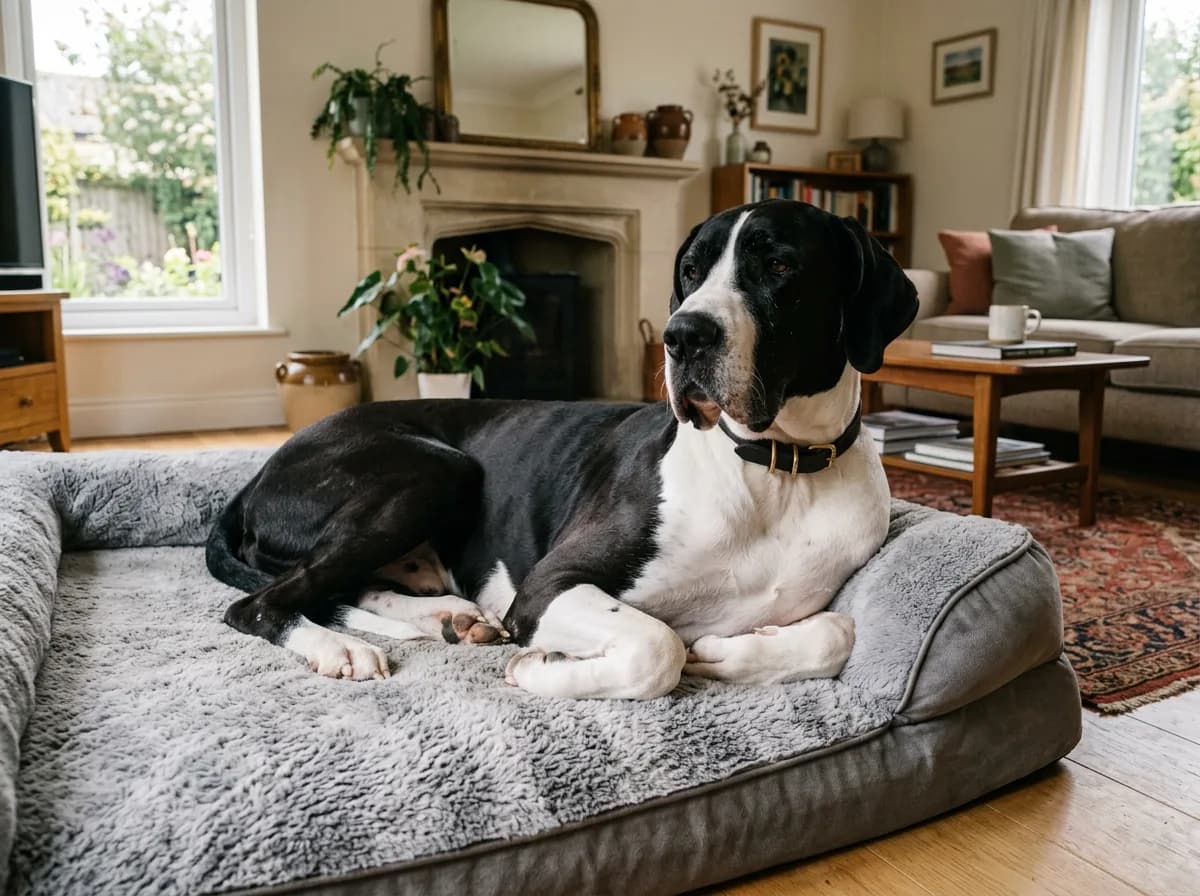
If there is one section of this Great Dane growth chart to read twice, it is this one. With giant breeds, *how* you feed during growth matters as much as how much, because the goal is a slow, controlled growth rate that lets the joints keep pace with the frame.
Use a Large-Breed Puppy Formula
Feed a puppy food specifically formulated for large or giant breeds. These diets are built with controlled calcium and phosphorus levels and a calorie density tuned to prevent the too-fast growth that stresses developing joints. A regular or "all life stages" puppy food can carry more calcium and calories than a giant-breed puppy skeleton should get. Check that the label states the food is complete and balanced for growth of large-size dogs (those with an expected adult weight of 70 pounds or more), a distinction backed by veterinary nutrition guidance and reflected in AAFCO feeding statements.
Do Not Supplement Calcium
This is the single most common and most damaging feeding mistake with Dane puppies. A correctly formulated large-breed puppy food already contains the right amount of calcium. Adding calcium, vitamin D, or "bone builder" supplements on top of it can disrupt normal bone development and contribute to skeletal disease. Veterinary teaching hospitals are consistent on this point: do not add calcium to a balanced giant-breed diet unless a vet specifically directs it.
Keep the Puppy Lean
Run your hands along your puppy's sides. You should be able to feel the ribs easily under a thin layer of fat, and see a visible waist from above. A pudgy Dane puppy is not a healthy Dane puppy. Extra body weight during growth loads a skeleton that is not yet ready for it, raising the risk of developmental joint problems. Feed measured meals two to three times a day rather than leaving food down, and adjust portions to keep the dog at a lean body condition.
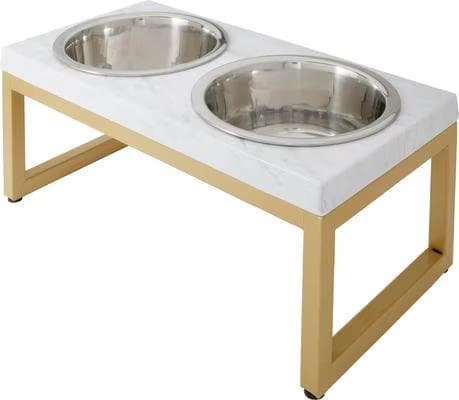
Raised stainless steel double bowl on a marble-look stand. Easier on the neck and joints and a clean, tip-resistant way to keep fresh water available all day.
Petful may earn a commission when you click through to Chewy, at no extra cost to you.
Protect the Joints During Growth
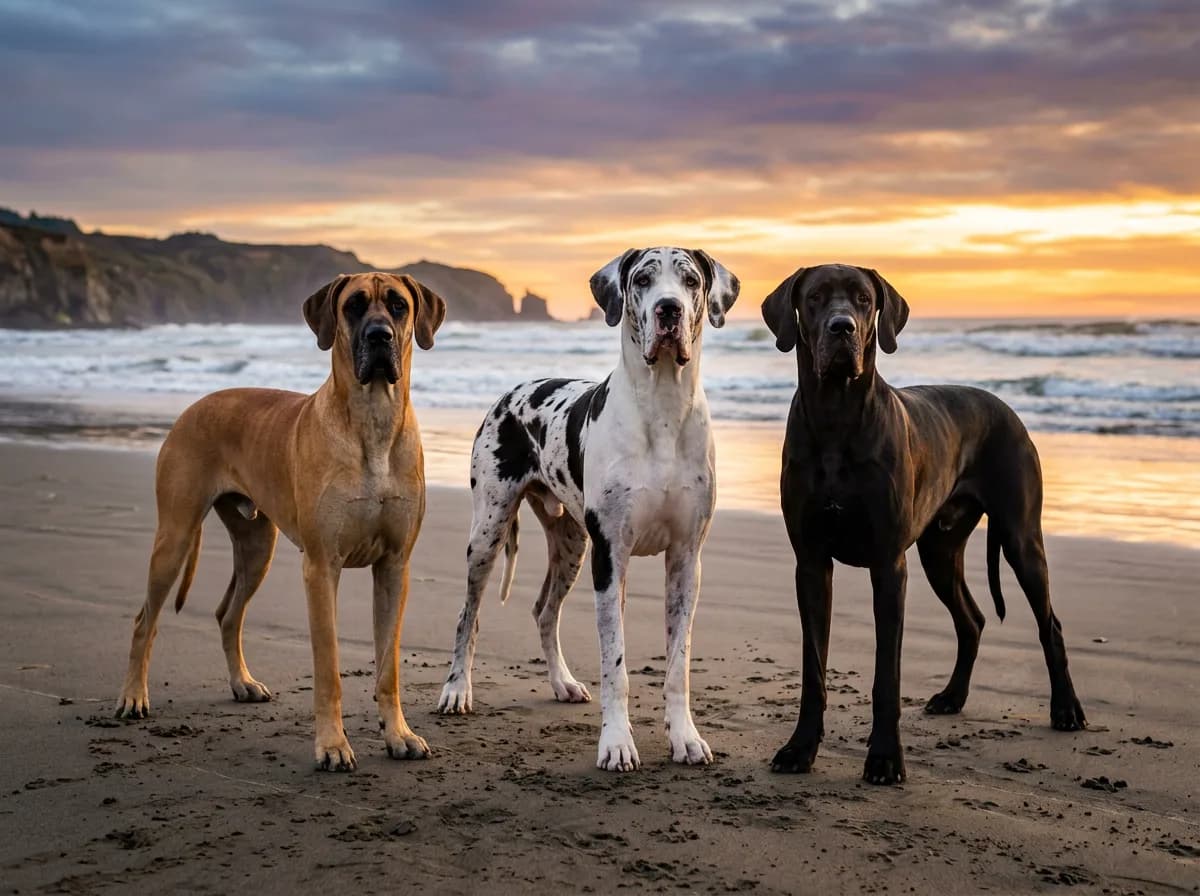
Nutrition and exercise work together here. During the fast-growth and adolescent stages, keep activity low-impact and self-limited: free play, gentle walks, and swimming are great, while forced running, repetitive jumping, and hard play on slick floors are not. Non-slip rugs or runners over hardwood and tile go a long way toward protecting a clumsy, fast-growing giant.
- Great Danes are the poster breed for gastric dilatation-volvulus (bloat), a sudden, life-threatening emergency. Build good habits during the growth phase: feed measured meals rather than one huge daily portion, use a slow-feeder bowl if your dog gulps, and talk to your vet about a preventive stomach-tacking (gastropexy) procedure, which is often done at the time of spay or neuter. Know the signs of bloat before you ever need them.
Male vs Female Great Dane Growth: What to Expect
Sex is one of the biggest single factors in where your Dane lands on the growth chart. Males run consistently taller and heavier than females, and the gap widens as they mature. Here is how the finished adults compare.
| Measure | Male | Female |
|---|---|---|
| Adult weight | 140-175 lbs | 110-140 lbs |
| Adult height at shoulder | 30-34 in (32+ desirable) | 28-32 in (30+ desirable) |
| Growth mostly finished | 18-24 months | 18-24 months |
| Typical mature look | Broader head, deeper chest, heavier bone | Slightly finer, more refined outline |
Males not only finish larger, they often take a little longer to fully broaden through the chest and head, so a young adult male can look rangy well into his second year before the bone and muscle catch up. Females tend to reach their mature outline a touch sooner and carry a more refined frame. Both sexes follow the same overall growth curve on the chart above; the female simply tracks lower in each band.
Spay and neuter timing can also nudge final size, because sex hormones influence when growth plates close. Removing them early can let the long bones grow slightly longer. For a giant breed, the timing of that surgery is a conversation worth having with your vet, weighing orthopedic development against other health considerations rather than defaulting to the earliest possible date.
Growth Red Flags: When to Call the Vet
Most Danes grow without drama, but a few signs during the growth phase warrant a prompt vet visit rather than a wait-and-see:
- A sudden stall or drop in weight over several weeks, especially with low energy or a poor appetite.
- Limping, a stiff gait, or reluctance to bear weight on a limb, which can signal a developmental joint or bone problem in a fast-growing giant.
- Swollen, painful joints or a puppy that yelps when a leg is handled.
- A visibly bloated or distended abdomen with unproductive retching, restlessness, and drooling. This is a bloat emergency. Go to a vet immediately, do not wait.
- Runaway weight gain that pushes the dog well above the top of the growth-chart range, since excess weight during growth is a real orthopedic risk.
Routine puppy checkups matter more with a giant breed than with most dogs, because catching a developmental orthopedic issue early gives you far more options. Your vet can track the growth curve alongside you and flag trouble before it becomes serious. For breed-specific health screening on the parents (hips, heart, thyroid, and eyes), the Orthopedic Foundation for Animals (OFA) maintains the health databases responsible breeders use, and asking to see a puppy's parents' OFA results is one of the smartest questions a Dane buyer can ask.
Great Dane Growth Chart FAQ
Understanding Great Dane Growth Plates
Growth plates are soft zones of cartilage near the ends of the long bones, and they are where new bone is laid down as a puppy grows. In a Great Dane they stay open far longer than in most dogs, because the skeleton keeps building through two full years. In many Danes the plates do not finish closing (hardening into solid bone) until somewhere between 18 and 24 months, well past the 8-to-14-month range typical of small and medium breeds. Until they close, those cartilage zones are the weakest link in the leg and are easily damaged by a hard landing or a twisting fall.
This one fact explains three rules you will hear repeated for giant-breed puppies:
- No repeated jumping down from beds, couches, or a car tailgate until the plates close. Lift the puppy or use a ramp.
- No forced running, long hikes, or jogging alongside a bike during roughly the first 18 months.
- Hold off before scheduling a spay or neuter, because removing sex hormones early can delay plate closure and let the long bones grow slightly longer than they otherwise would.
- If you want to start a running routine or a dog sport like agility, ask your vet to confirm the growth plates have closed first. It is a quick X-ray, and it is the difference between building a sound adult and risking a lasting joint injury.
Safe Exercise for a Growing Great Dane
Because the joints are the vulnerable part of a fast-growing giant, exercise during the first two years is about quality, not distance. A widely used rule of thumb is roughly five minutes of structured exercise per month of age, once or twice a day: about 15 minutes at three months, 30 minutes at six months, and so on. It is a guideline rather than a law, but it keeps owners from over-walking a puppy whose skeleton is not ready for the mileage.
What counts as safe changes with the stage:
| Age | Rough Daily Exercise | Good Activities | What to Avoid |
|---|---|---|---|
| Under 6 months | 15-25 min | Free yard play, short sniff walks | Forced runs, stairs, jumping down |
| 6-12 months | 25-40 min | Longer leash walks, gentle play, swimming | Repetitive fetch, bike jogs, agility jumps |
| 12-24 months | Build up gradually | Longer walks, light hikes, swimming | High-impact sport until plates close |
Swimming deserves a special mention. It builds muscle and cardiovascular fitness with almost no joint impact, which makes it close to ideal for a growing Dane that needs to burn energy without pounding its legs.
How Big Will a Great Dane Mix Get?
Plenty of owners are tracking a Great Dane cross rather than a purebred, and the chart above will only take you so far. For a mix, the adult size usually lands somewhere between the typical adult sizes of the two parent breeds. A Great Dane crossed with a Labrador, for example, will generally finish smaller than a purebred Dane but larger than a purebred Lab, and the more you know about both parents the tighter your estimate becomes.
A few practical pointers for a Dane mix:
- Look up the adult weight range of both breeds and expect your dog to sit between them, leaning toward whichever parent it most resembles in bone and paw size.
- The two-year growth timeline still tends to apply when the Dane side is dominant, so do not switch a large Dane mix off puppy food too early.
- Feed for the size the dog is trending toward. A mix expected to top 70 pounds should still eat a large-breed puppy formula and follow the same lean-and-slow growth rules as a purebred.
How Tall Is a Great Dane in Feet?
A full-grown Great Dane stands about 2.5 to 2.8 feet tall at the shoulder: roughly 30 to 34 inches for males and 28 to 32 inches for females, measured at the withers (the ridge between the shoulder blades). That is where breed height is officially recorded, and it is the number a growth chart tracks. Converted to feet, most adult males finish near 2.7 feet at the shoulder and most females near 2.5 feet.
The figure that surprises people is standing height. When a Great Dane rears up on its hind legs, it commonly reaches 6 to 7 feet, taller than most adults and easily tall enough to reach a kitchen counter or tabletop. The tallest Great Dane on record measured 44 inches at the shoulder, which put him well over 7 feet on his hind legs.
Two quick clarifications:
- Height in feet is measured at the shoulder, not the top of the head, so a Dane's head usually sits several inches higher when it stands normally.
- Hind-leg height is not a breed measurement. It just explains why counter-surfing is a real training problem with this breed.
Great Dane Weight and Height in Metric (Kg and Cm)
For readers who work in kilograms and centimeters, here are the adult figures that match the imperial chart above. A mature male Great Dane typically weighs about 63 to 79 kg and stands 76 to 86 cm at the withers. A mature female typically weighs about 50 to 64 kg and stands 71 to 81 cm. Those ranges line up with the breed standard once you convert from pounds and inches.
To turn any number on the month-by-month chart into metric yourself:
- Pounds to kilograms: multiply by 0.45. So a 150 lb Dane is about 68 kg.
- Inches to centimeters: multiply by 2.54. So a 32-inch shoulder height is about 81 cm.
- Many large-breed medications, dewormers, and anesthesia doses are calculated per kilogram of body weight. Recording your Dane's weight in kg, not only pounds, makes vet visits and at-home dosing faster and less error prone.
Tracking weight in kilograms also makes it easier to compare your puppy against international breed-standard ranges, which are almost always published in kg and cm rather than pounds and inches.
European vs. American Great Dane: Do They Grow Differently?
Yes, and the difference shows up on the scale more than on the tape measure. "European" (or "Euro") Great Danes are bred for heavier bone, a broader chest, and a more mastiff-like head, so adult males from European lines often finish at 170 to 200+ lb (77 to 91+ kg). American-line Danes tend to look leaner and more athletic at a similar shoulder height, with males more commonly in the 140 to 175 lb range. The shoulder height is close between the two; the bulk is the variable.
What this means when you read a growth chart:
- A Euro-line puppy may track above a standard weight chart and still be perfectly healthy, because the chart reflects the leaner American average.
- Heavier lines put more load on developing joints, so the "keep growth steady, do not push weight" rule matters even more.
- If you bought from a breeder, ask which line your puppy comes from before deciding a chart number is "behind" or "ahead."
Either way, do not overfeed to hit a European-line weight. Frame size is genetic, and forcing calories only raises the risk of orthopedic problems as the puppy grows.
The best predictor is the size of the parents, since adult size is largely inherited, so ask the breeder to show you the grown sire and dam. Oversized paws and continued height gains past 10 months signal more growth to come, and plotting your puppy's weight on a growth chart every couple of weeks shows whether it is tracking toward a larger or smaller adult. Online "double the weight" formulas are rough at best for a breed that grows for two full years.
Great Danes grow the most between about 3 and 6 months of age, when a puppy can gain 15 to 20 pounds in a single month and add several inches of height. This is the peak of the fast-growth stage and the most important window to feed a controlled large-breed diet, because overfeeding or excess calcium during this rapid bone growth can cause lasting joint problems.
At 4 months a Great Dane puppy typically weighs about 45 to 65 pounds if male or 40 to 55 pounds if female, and stands roughly 20 to 24 inches at the shoulder. Many Danes have tripled their 8-week weight by this point, which is normal since 4 months sits inside the fastest-growth window. Keep the puppy lean rather than trying to bulk it up.
At 8 weeks, when most puppies go home, a Great Dane weighs roughly 15 to 25 pounds if male or 14 to 22 pounds if female and stands about 13 to 18 inches at the shoulder, already bigger than many adult small-breed dogs. Record this first weight and date so your vet can track the growth curve from here, and protect those open growth plates by avoiding jumping and slick floors.
The Bottom Line on Great Dane Growth
A Great Dane's growth is a two-year project, not a one-year sprint. Expect explosive weight gain from 3 to 6 months, a lanky adolescent phase as height finishes around 12 months, and a slow, satisfying fill-out through the second year until a male settles at 140 to 175 pounds and a female at 110 to 140. Track the numbers against the chart, feed a proper large-breed puppy diet, skip the calcium supplements, keep your giant lean, and protect those growing joints. Do that, and the towering, gentle adult at the end of the chart will be as sound as it is spectacular. For the full picture of the breed beyond the growth years, start with our complete Great Dane breed guide.

Coreen Saito is a pet writer and longtime shelter volunteer with more than a decade in animal rescue. She covers cat behavior, breed care, and the small, ordinary science of sharing a life with companion animals, with a particular focus on honest takes about the products and decisions that actually matter. At home in Arizona, she's outranked by Mac (a dog with the loudest opinion in the house), Rebel (a cat who governs by quiet authority), and Meri (an orange tabby who runs the late shift and the laundry basket). She writes about all three, plus the rescues that keep coming through her life, at LifeWithMinty.com.
Sign up for expert-backed reviews and safety alerts all in one place.