Great Dane Size: How Big Do They Get?
How big do Great Danes get? See adult height and weight ranges for males and females, how tall a Dane stands on its hind legs, and how the breed measures up against other giant dogs.
Petful is reader supported. As an affiliate of platforms like Amazon and Chewy, we may earn a commission when you buy through links on this page. There is no extra cost to you.
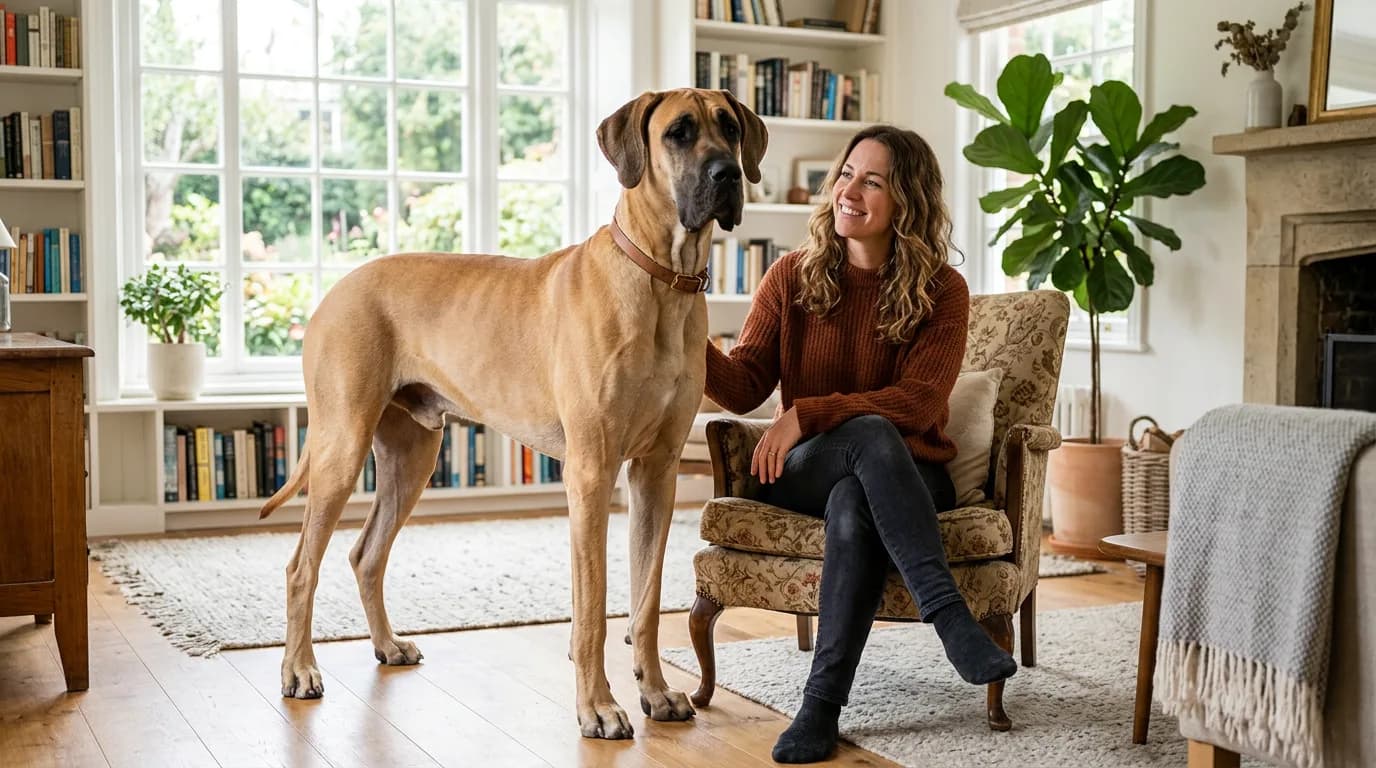
Great Dane size is the first thing people ask about, and for good reason: this is one of the tallest dog breeds on the planet. A full-grown Great Dane stands 28 to 32 inches at the shoulder and weighs anywhere from 110 to 175 pounds, with males noticeably bigger than females. Stand one up on its hind legs and a big male can look you dead in the eye, sometimes topping 7 feet from paw to nose. If you have ever had a Dane lean its whole body weight against your leg, you already know the numbers only tell half the story. Below, we break down the real height and weight ranges by sex, how the breed stacks up against other giants, and just how tall these dogs get when they rise up on two legs.
- 1Adult Great Danes stand 28-32 inches tall at the shoulder and weigh 110-175 pounds, with males on the larger end of both ranges.
- 2On their hind legs, most adult Great Danes reach 6 to 7 feet, and the tallest males exceed 7 feet.
- 3The Great Dane is a giant breed, taller by the standard than the Mastiff or Saint Bernard, though not always heavier.

Sign up for expert-backed reviews and safety alerts all in one place.
How Big Is a Fully Grown Great Dane?
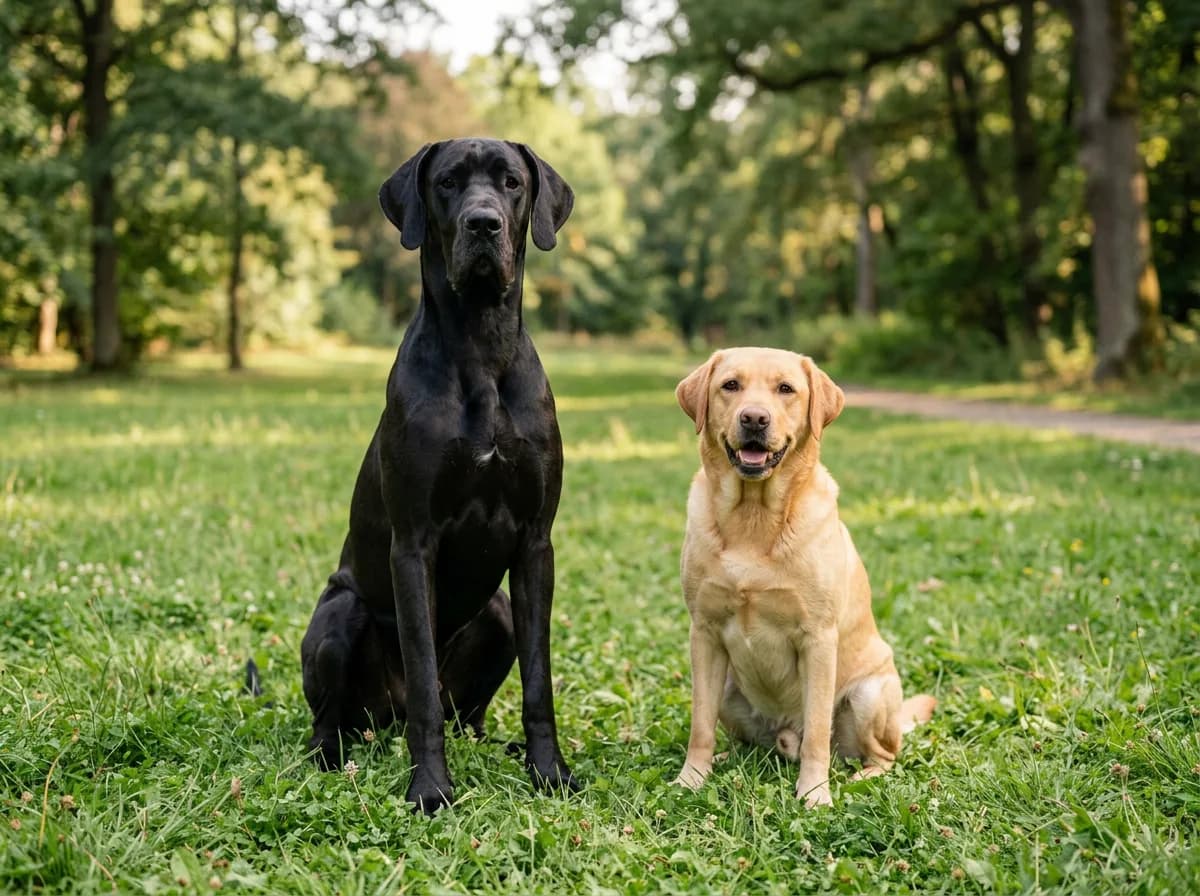
A fully grown Great Dane is a genuinely giant dog. By the American Kennel Club breed standard (akc.org), adult males stand a minimum of 30 inches at the shoulder, with 32 inches or more preferred, and adult females stand a minimum of 28 inches, with 30 inches preferred. Weight tracks with that height: healthy males usually land between 140 and 175 pounds, and females between 110 and 140 pounds.
Those shoulder measurements are taken at the withers, the ridge between the shoulder blades, not the top of the head. It is the standard way vets and breeders measure any dog, and it is why a Dane that "only" measures 32 inches at the shoulder can still tower over a grown adult when it lifts its head.

A grain-free kibble built around named whole-protein sources. Best for active adult dogs; the high fat content is more than many sedentary pets need.
Petful may earn a commission when you click through to Chewy, at no extra cost to you.
Here is how the two sexes compare at maturity.
| Measurement | Male | Female |
|---|---|---|
| Height at shoulder | 30-32 in | 28-30 in |
| Typical adult weight | 140-175 lb | 110-140 lb |
| Age at full height | 18-24 months | 18-24 months |
| Age at full weight | 2-3 years | 3 years |
Male Great Dane size
Males are the giants of the breed. A well-grown male commonly hits 32 inches or more at the shoulder and settles somewhere between 140 and 175 pounds once his frame fills out. He will reach close to his full height by 18 to 24 months, then keep adding muscle and chest depth until roughly age 2 to 3. It is normal for a young male to look tall and lanky for many months before he grows into that big Dane body.
Female Great Dane size
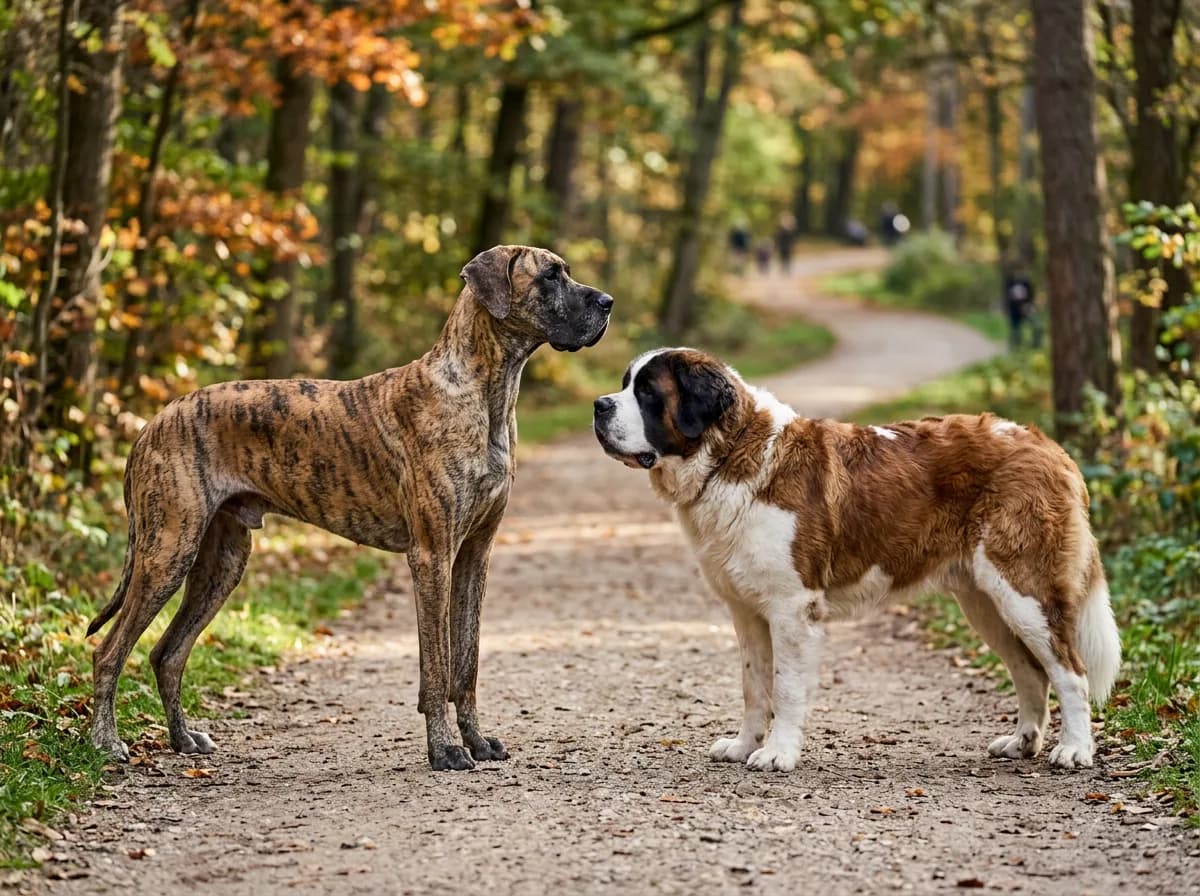
Females run a little smaller and finish a touch sooner, but "smaller" is relative. A typical adult female stands 28 to 30 inches and weighs 110 to 140 pounds, which still makes her taller and heavier than most other breeds she will ever meet at the park. Females tend to have a slightly finer head and a more refined outline than males, though the height difference is what most owners notice first.

Petful may earn a commission when you click through to Chewy, at no extra cost to you.
How Big Is a Great Dane Standing on Hind Legs?
This is where the numbers get dramatic. When a Great Dane rears up on its hind legs, its full standing height roughly matches the length of the dog stretched out nose to tail, so most adults reach somewhere between 6 and 7 feet tall. A large male can plant his front paws on the shoulders of a 6-foot person and look slightly down at them.
The tallest individuals go further. The record-holding Great Dane, a dog named Zeus, measured about 44 inches at the shoulder and stood over 7 feet 4 inches when he reached up. Your dog almost certainly will not be a world-record holder, but a standard 32-inch male comfortably clears 6 and a half feet on his hind legs. It is worth knowing this before you bring one home, because a Dane that greets guests by standing up can knock over a child or an unsteady adult without meaning any harm at all.
- A friendly Great Dane that jumps up is not being aggressive, but at 150-plus pounds it can injure a child, a senior, or itself. Teach and reward a solid sit-to-greet from puppyhood, well before your dog has the height and weight to make jumping a real hazard.
Can a Great Dane Be 200 Pounds?
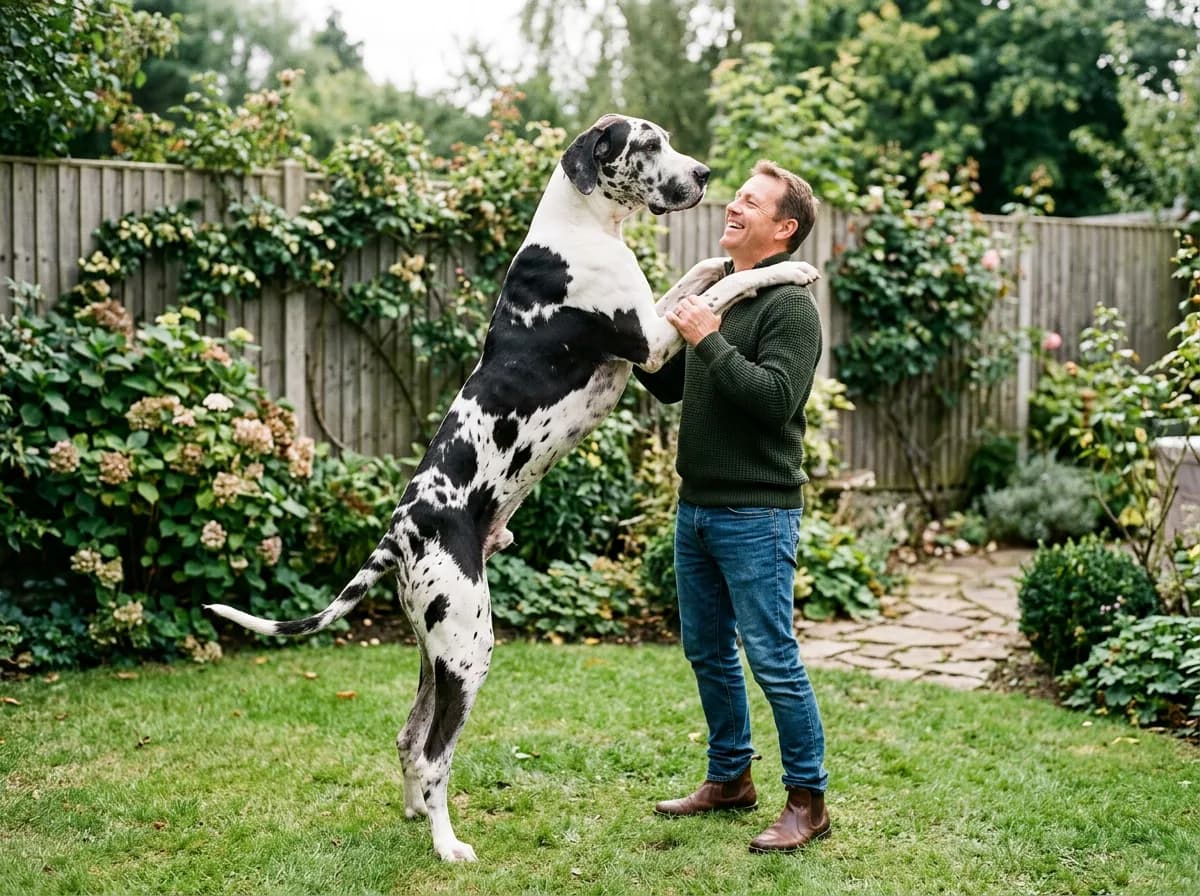
Yes, a Great Dane can reach 200 pounds, but it is above the breed standard and it is not a goal to chase. The AKC standard describes a balanced, athletic giant, not the heaviest possible dog, and healthy males typically top out around 175 pounds. Some exceptionally large or heavily built males do push past 180 or even 200 pounds, and a handful of record-setting dogs have gone higher still.
The catch is that extra weight is hard on a giant-breed body. Great Danes are already prone to orthopedic strain and heart issues, and carrying 200 pounds multiplies the load on hips, elbows, and joints (ofa.org). A Dane should look lean and powerful, with a visible tuck at the waist and ribs you can feel under a light layer of muscle. If your dog is heading toward 200 pounds, that is a conversation to have with your vet about frame size versus body condition, not a milestone to celebrate.

The number-one veterinarian-recommended joint supplement brand. Glucosamine, chondroitin, and MSM support cartilage and cushion the joints, easing the stiffness and hind-end weakness that can leave an older or arthritic dog trembling.
Petful may earn a commission when you click through to Chewy, at no extra cost to you.
- Giant-breed puppies that grow too fast are at higher risk of skeletal problems. Use a large or giant-breed puppy formula with controlled calcium, and let your Dane fill out over two to three years rather than pushing rapid weight gain. Ask your vet to score body condition at every visit.
Is a Great Dane a Large or Giant Breed?
The Great Dane is a giant breed, not merely a large one. "Large" typically covers dogs in the 50-to-90-pound range, such as Labrador Retrievers and German Shepherds. "Giant" is reserved for breeds that routinely exceed roughly 100 pounds and stand well over 28 inches, and the Great Dane sits firmly in that category alongside the Mastiff, the Irish Wolfhound, the Saint Bernard, and the Newfoundland.
For registry purposes the AKC places the Great Dane in the Working Group rather than sorting dogs by size, so you will not see a "giant" label on its papers. But by every practical measure, height, weight, food bill, and the size of the bed it needs, this is a giant dog. That classification matters because giant breeds have their own care rules: controlled-growth nutrition as puppies, joint-conscious exercise, and a sadly shorter average lifespan than smaller dogs.
Great Dane Size vs. Other Giant Breeds
Among the giants, the Great Dane is best known for height rather than sheer mass. It stands taller than a Saint Bernard or a Newfoundland and is often taller than a Mastiff, yet it is usually lighter than all three because its build is elegant and athletic rather than bulky. The Irish Wolfhound is the one common breed whose standard minimum height edges out the Dane, but Great Danes reliably produce the individual record-holders for the tallest dog in the world.
Here is how the Great Dane compares to other popular giant breeds at maturity.
| Breed | Adult Height (in) | Adult Weight (lb) |
|---|---|---|
| Great Dane | 28-32 | 110-175 |
| Mastiff | 27-30 | 160-230 |
| Irish Wolfhound | 30-34 | 105-180 |
| Saint Bernard | 26-30 | 120-180 |
| Newfoundland | 26-28 | 100-150 |
The takeaway: if you want the tallest dog in the room, a Great Dane usually wins. If you want the single heaviest, an English Mastiff often has it beat on pure poundage. Either way you are committing to a dog that eats like a giant, needs giant-sized gear, and takes up an outsized share of the couch.
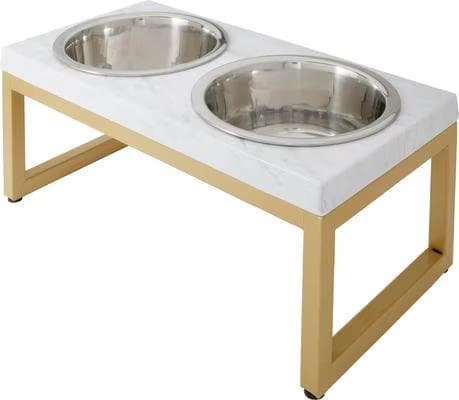
Raised stainless steel double bowl on a marble-look stand. Easier on the neck and joints and a clean, tip-resistant way to keep fresh water available all day.
Petful may earn a commission when you click through to Chewy, at no extra cost to you.
Great Dane Growth: From Puppy to Full Size
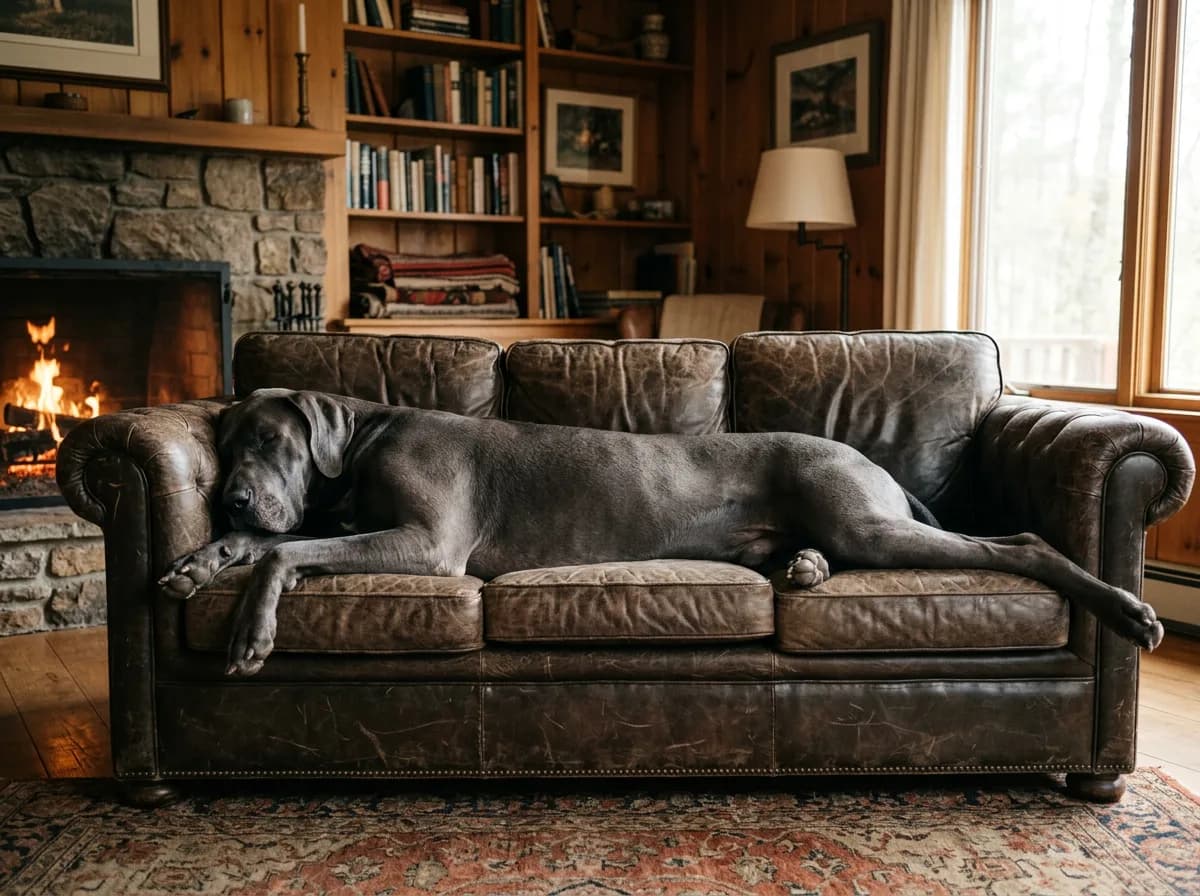
Great Danes do almost all of their growing fast, then spend a long time finishing. A Dane puppy can gain 2 to 3 pounds a week during its biggest growth spurts and often reaches 100 pounds or more by 6 months of age. Most of the height is in place by 18 to 24 months, after which the dog continues to broaden through the chest and add muscle until about age 2 to 3.
That rapid early growth is exactly why giant-breed puppy nutrition is non-negotiable. Feeding a diet that is too rich in calories or calcium can push the skeleton to grow faster than it can safely handle, raising the risk of developmental joint disease (veterinary guidance from institutions such as the Cornell University College of Veterinary Medicine). Slow and steady is the goal. A leaner Dane puppy that grows gradually ends up with healthier joints than a chunky one that shot up overnight.
If you want the month-by-month weight and height milestones, our Great Dane growth chart lays out exactly what to expect at each stage, from 8 weeks through full maturity.
- 1Great Dane puppies grow fastest in the first 6 months, often passing 100 pounds before half a year old.
- 2Height is largely set by 18-24 months; muscle and chest depth fill in until age 2-3.
- 3Controlled-growth, giant-breed puppy food protects the joints from the risks of growing too fast.
What Determines How Big a Great Dane Gets?
No two Danes finish at exactly the same size, and several factors decide where a given dog lands in the 28-to-32-inch range. Genetics is the biggest one. A puppy's adult height and weight are largely inherited, so the single best predictor of how big your Dane will get is the size of its parents. A reputable breeder can show you the sire and dam and tell you what previous litters have matured into, which is far more reliable than any online calculator.
Sex is the next factor. As the ranges above show, males routinely finish taller and heavier than females from the same litter, often by a couple of inches and 30 pounds or more. Beyond that, nutrition during the first year shapes how a Dane's frame develops. Underfeeding can hold a puppy back, while overfeeding pushes growth too fast and stresses the joints, so the target is steady growth on a giant-breed puppy diet rather than the biggest possible dog.
Spay and neuter timing plays a role too. Altering a giant-breed dog very early can slightly delay the closure of the growth plates, which sometimes produces a marginally taller, lankier adult. Many veterinarians now recommend waiting until a giant breed is closer to skeletal maturity before spaying or neutering, partly for this reason and partly for joint health. It is a decision worth making with your own vet based on your individual dog, not a fixed rule.
Finally, general health matters. A Dane that battles parasites, poor nutrition, or chronic illness as a puppy may not reach its full genetic size, while a healthy, well-managed puppy grows into everything its bloodline promised. None of these levers turns a Dane into a different breed, but together they explain why one 2-year-old male is a lean 30 inches and another is a towering 33.
Does a Bigger Great Dane Cost More to Keep?
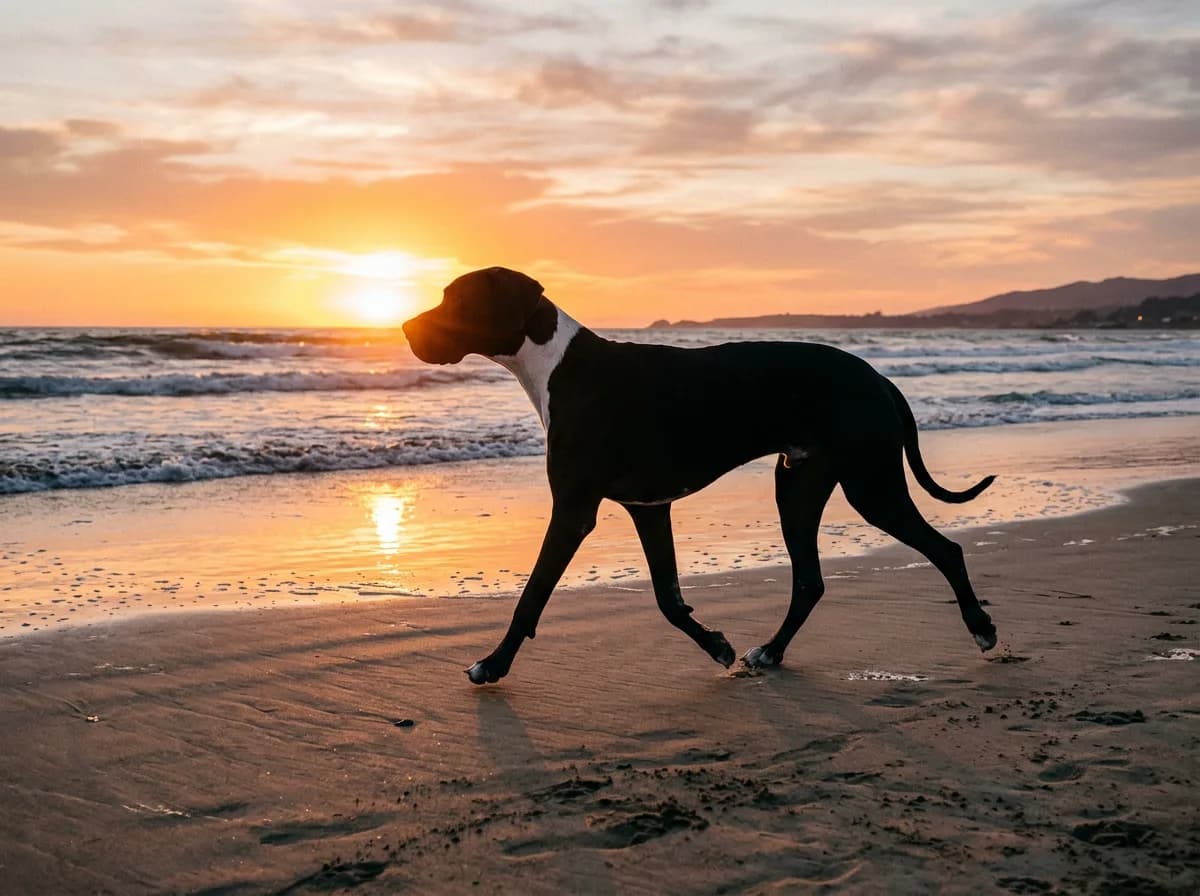
Size drives cost with this breed more than almost any other. A giant dog eats more food, needs a bigger crate and bed, takes larger doses of most medications and preventives, and often runs up higher boarding and vet bills simply because everything is scaled up. Before you fall for those soulful eyes, it helps to picture the everyday footprint of a 150-pound dog: the XL orthopedic bed, the raised feeders, the reinforced leash, and the car that actually fits the dog.
None of this is meant to scare anyone off. Great Dane people will tell you the companionship is worth every dollar. But going in with clear eyes about the size-driven expenses is part of being ready for a giant breed, and it is the difference between a smooth first year and a stressful one.
Do Great Danes Bond Closely With Their Owners?
People searching for the dog that "loves its owner the most" almost always land on the same shortlist, and the Great Dane is on it. There is no scientific ranking that crowns one breed the most loving, because affection depends on the individual dog, its socialization, and the bond you build. What is true is that Great Danes are famous "velcro" dogs, gentle giants that want to be wherever their person is, leaning, following, and trying to fit their enormous body onto any lap that will have them.
That devotion is a big part of the breed's appeal, and it is why so many owners forgive the drool, the shed hair, and the couch they no longer really own. If you want a giant dog that treats you like the center of its world, few breeds deliver like a Dane. Prefer a smaller companion with the same affectionate streak? A gentler-sized alternative like the Cavapoo offers plenty of devotion in a lap-friendly package. And if you want the complete picture on temperament, care, and lifespan, start with our full Great Dane breed guide.
- Well-bred, well-socialized Great Danes are calm, patient, and deeply people-oriented, which is exactly why they are often called the world's biggest lapdogs. Match that temperament with early training and the size becomes a joy rather than a challenge.
Frequently Asked Questions About Great Dane Size
What Size Crate Does a Great Dane Need?
Most adult Great Danes need a 48-inch (XL) crate, and the biggest dogs do best in a 54-inch (XXL) crate, which is the largest size most brands make. The crate should let your Dane stand without ducking, turn around fully, and lie flat on its side.
To size it, measure your dog from nose to base of the tail and add about 4 inches for length, then from the floor to the top of the head while sitting and add 2 to 4 inches for height. A typical 30- to 34-inch-tall Dane clears a 48-inch crate, while a very tall male usually needs the 54-inch.
- 48-inch (XL): fits the average adult Great Dane, roughly 110 to 150 pounds.
- 54-inch (XXL): best for tall or heavy males over about 150 pounds.
- Puppy tip: buy the adult-size crate and use a divider panel so the space stays snug during house-training, rather than buying two crates.
For an outdoor kennel or run, plan on an extra-large enclosure at least 4 feet wide and 8 to 10 feet long so a full-grown Dane can stretch out and pace comfortably.
How Big Was Zeus, the World's Tallest Great Dane?
The record-setting Zeus measured 44 inches (about 1.12 m) at the shoulder, making him the tallest dog ever recorded by Guinness World Records. Zeus, from Otsego, Michigan, earned the title in 2012 and stood roughly 7 feet 4 inches tall on his hind legs, taller than most adult people.
He weighed about 155 pounds and reportedly went through around 30 pounds of food a week. He died in 2014 at age 5. A second Great Dane, also named Zeus and living in Texas, took the "tallest living dog" title in 2022 at about 3 feet 5 inches (roughly 41 inches) at the shoulder.
Both dogs sit at the extreme upper edge of the breed rather than the norm. A typical male Great Dane stands 30 to 34 inches at the shoulder, so even a giant like Zeus was only about 10 inches above standard. Records like these usually trace back to specific genetics and are not a height to feed or breed toward, since pushing a Dane past its natural frame strains the joints and heart.
Great Dane vs. Wolf: How Do They Compare in Size?
A Great Dane is usually taller at the shoulder and heavier than a wild gray wolf, but the wolf is more muscular, denser-boned, and built for endurance. An adult Great Dane stands about 28 to 34 inches at the shoulder and weighs 110 to 175 pounds. A gray wolf typically stands 26 to 33 inches at the shoulder and weighs 60 to 145 pounds, with most males landing around 80 to 110 pounds.
On paper the Dane often wins on both height and raw weight, especially a large male. Where the wolf pulls ahead is build. It carries far more lean muscle, has a longer body, larger paws, a stronger bite, and the stamina to cover dozens of miles in a day.
The Great Dane was bred as a companion and former boar hound, so its size is tall and skeletal rather than predatory. A Dane may loom larger in a doorway, but the two animals were shaped for completely different jobs, and a wolf's frame is far harder and more athletic pound for pound.
How Big Do Great Dane Mixes Get?
A Great Dane mix usually lands somewhere between its two parent breeds, so most fall in the 60- to 150-pound range and stand 24 to 33 inches at the shoulder. The second parent drives the final size, so the same "Great Dane mix" label can cover very different dogs.
Because Danes are so large, crossing one with a medium or smaller breed still tends to produce a big dog, just not always a full giant. Common examples:
- Labradane (Great Dane x Labrador): typically 24 to 30 inches and 100 to 150 pounds.
- Great Danebull (Great Dane x Pit Bull): usually 24 to 28 inches and 60 to 100 pounds, more muscular and often shorter than a purebred Dane.
- Daniff (Great Dane x Mastiff): the largest common cross, often 28 to 33 inches and 90 to 150-plus pounds.
- Border Collie x Great Dane: the most variable, ranging from about 50 to 90 pounds depending on which parent dominates.
Since a puppy's adult size depends on which parent it takes after, the safest plan is to expect a large, fast-growing dog and budget food, crate, and vet costs accordingly.
A fully grown Great Dane stands 28 to 32 inches at the shoulder and weighs 110 to 175 pounds. Males are the larger sex at 30-32 inches and 140-175 pounds, while females measure 28-30 inches and 110-140 pounds. Most reach full height by 18-24 months and finish filling out by age 2 to 3.
Yes, some exceptionally large male Great Danes can reach 200 pounds, but that is above the breed standard, where healthy males typically top out around 175 pounds. Because giant breeds are prone to joint and heart strain, a lean, athletic build is far healthier than maximum weight, so 200 pounds should prompt a body-condition check with your vet rather than be treated as a target.
A Great Dane is a giant breed. Large breeds generally weigh 50 to 90 pounds, while giant breeds routinely exceed 100 pounds and stand well over 28 inches, which describes the Dane exactly. The AKC files it in the Working Group rather than by size, but in every practical sense it is a giant dog.
There is no scientific ranking of the most loving breed, since affection depends on the individual dog and its bond with you. That said, Great Danes are consistently named among the most devoted, owner-focused breeds. They are classic velcro dogs that want to be by their person's side, which is why they are often called the world's biggest lapdogs.

Coreen Saito is a pet writer and longtime shelter volunteer with more than a decade in animal rescue. She covers cat behavior, breed care, and the small, ordinary science of sharing a life with companion animals, with a particular focus on honest takes about the products and decisions that actually matter. At home in Arizona, she's outranked by Mac (a dog with the loudest opinion in the house), Rebel (a cat who governs by quiet authority), and Meri (an orange tabby who runs the late shift and the laundry basket). She writes about all three, plus the rescues that keep coming through her life, at LifeWithMinty.com.
Sign up for expert-backed reviews and safety alerts all in one place.