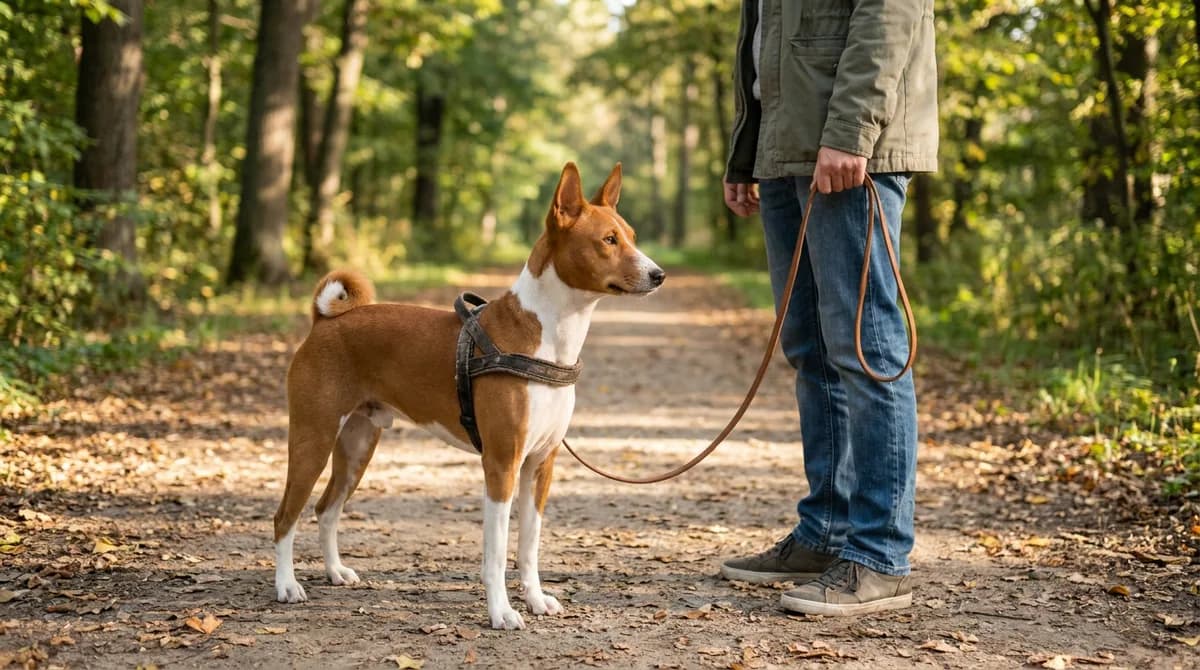
Newfoundland Dog: Temperament, Size, Health, and Care
A practical guide to Newfoundland size, temperament, training, coat and drool care, exercise, water safety, health screening, and the household capacity needed for a giant companion.

Petful is reader supported. As an affiliate of platforms like Amazon and Chewy, we may earn a commission when you buy through links on this page. There is no extra cost to you.
Choosing a Newfoundland dog starts with an honest look at giant size, daily companionship, handling strength, coat and drool care, transport, heat, and veterinary access. The breed's gentle reputation and water-working history are useful context, but the individual dog and the household's ordinary routine determine whether the match works.
Start with adult scale and the ordinary weekday: where a wet giant dog rests, who can hold the leash, how grooming and transport work, and whether the home can support a social companion. Temperament, heritage, training, health, and household fit are treated as connected decisions without promising what one individual dog will be like.
- 1Adult height and weight range.
- 2Sweet patient temperament with individual variation.
- 3Water-rescue and draft-work heritage.
- 4Reward-based training and early manners.
- 5Drool coat care and home-space realities.
- 6Exercise heat and swimming safety.

Sign up for expert-backed reviews and safety alerts all in one place.
Newfoundland dog at a glance
A Newfoundland dog is a giant working breed developed around water and draft work. The American Kennel Club lists average adult height at 28 inches for males and 26 inches for females, with typical weights of 130 to 150 pounds for males and 100 to 120 pounds for females. Those figures describe a breed range, not a target that every dog should reach.
The practical consequence is scale. Doorways, cars, resting areas, veterinary transport, grooming surfaces, and the strength of the person holding the leash all matter. A seven-day giant-breed reality check should include where a wet dog dries, how visitors enter, who handles walks, and whether the household can safely move an injured dog.
What is a Newfoundland dog? It is a giant water-working breed in the American Kennel Club Working Group. Newfoundland dog history centers on hauling, draft work, and water work alongside people. Important Newfoundland dog breed characteristics include substantial size and height, a double coat, strength, and a sweet expression. The Newfoundland Club of America preserves the parent-club standard; Landseer describes the white-and-black color pattern, not a different household temperament.
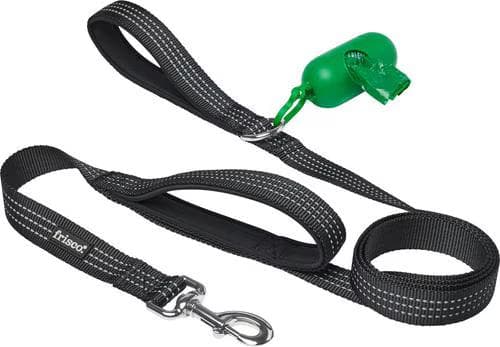
- A dual-handle leash such as Frisco Traffic Leash with Dual Padded Handles can provide a closer handhold during practiced street crossings or visitor routines with a trained adult Newfoundland. A leash is handling equipment, not a substitute for training. Confirm hardware condition and handler comfort.
Newfoundland temperament and family life
Sweetness of temperament is central to the Newfoundland standard, but a breed description never guarantees one dog's behavior. Early experience, health, learning history, age, and context all influence what owners see. Many Newfoundlands are patient companions, yet their size means jumping, leaning, pulling, and excited greetings need calm training before they become difficult to manage.
Petful may earn a commission when you click through to Chewy, at no extra cost to you.
A good household fit provides companionship without crowding the dog. Children and dogs need active adult supervision, visitors need a predictable entry routine, and the Newfoundland needs an undisturbed place to rest. Reward-based training should build loose-leash walking, four paws on the floor, handling consent, recall foundations, and a reliable settle.
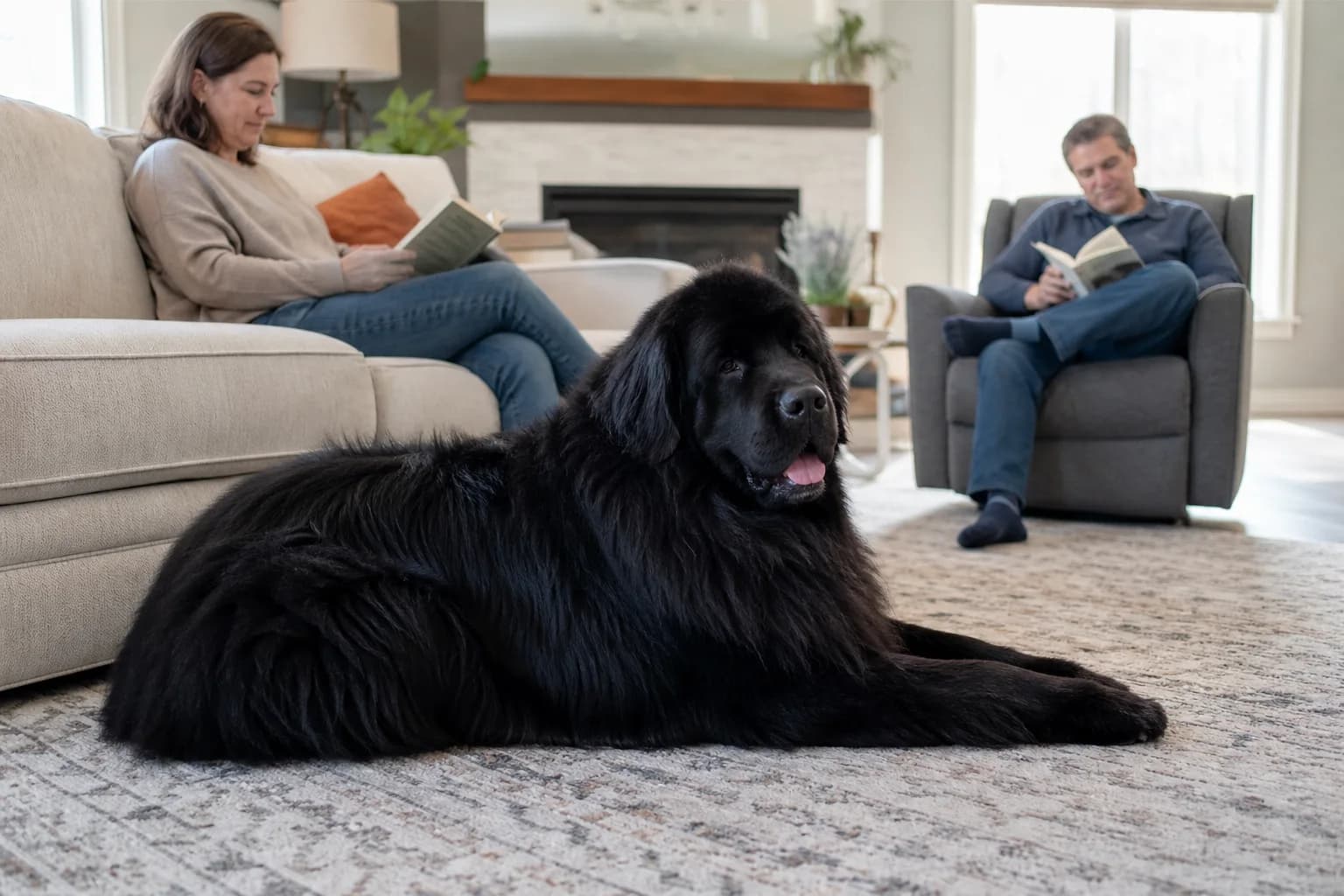
Are Newfoundlands good house dogs? Many can be good household companions when the individual dog can settle, use a quiet retreat, recover from visitors, and move through the home safely. The answer still depends on space, training, supervision, coat and drool tolerance, heat planning, transport, and the family's capacity for a giant dog.
| Household test | Run this trial | Ready evidence |
|---|---|---|
| Space and traffic | Mark a sleeping area and keep the door-to-yard route clear for seven ordinary days | People can pass safely while the dog has an undisturbed retreat |
| Handling and visitors | Assign each walk and rehearse calm entries with a gate or leash | Every regular handler can follow the same safe routine |
| Wet coat and cleanup | Time one complete drying and floor-cleaning routine after a wet walk | The task fits a workday without leaving skin or floors damp |
| Transport and backup care | Measure the cargo opening and name a second capable caregiver | The dog can be transported and cared for when the primary person is unavailable |
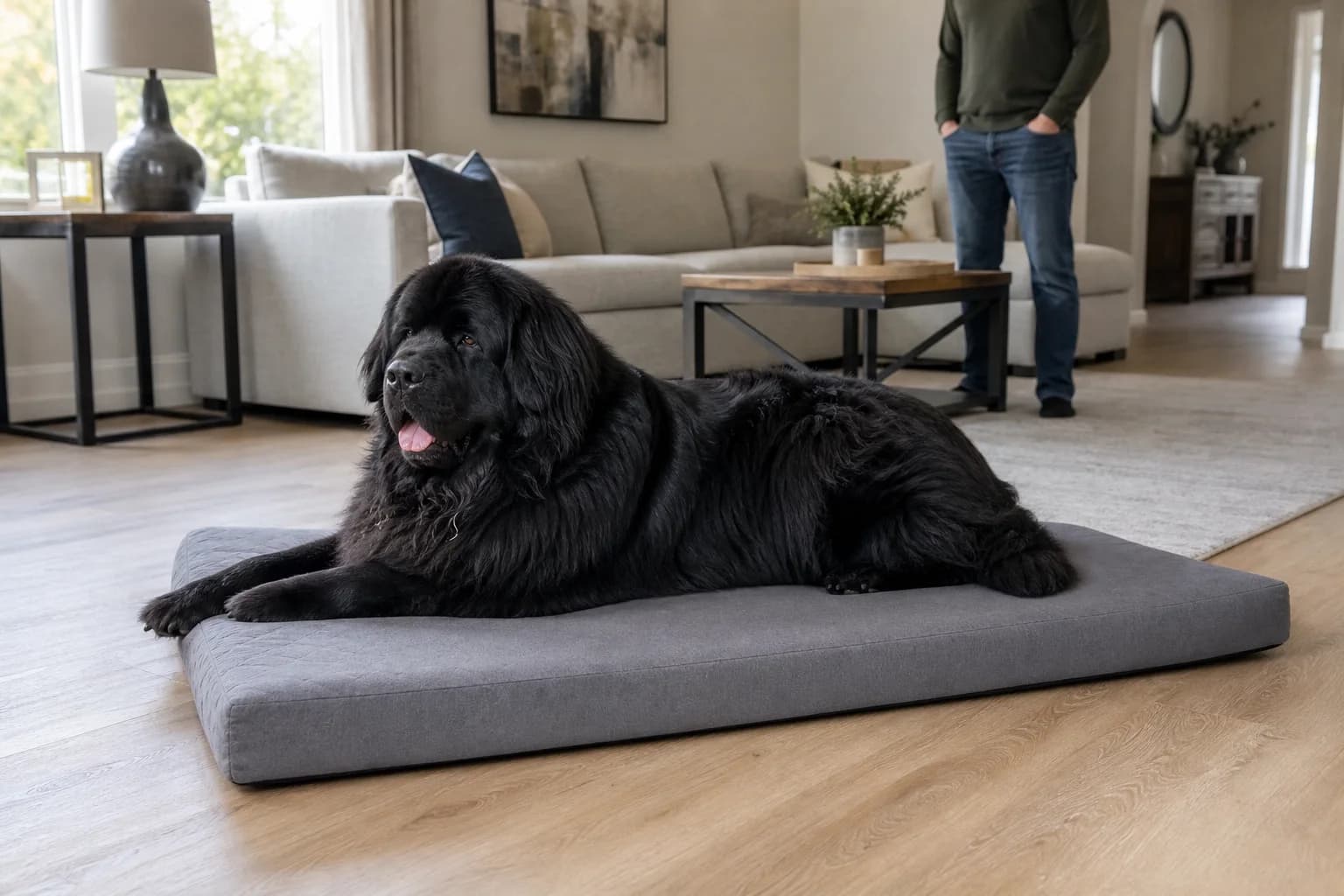
- Measure the dog from nose to rump at full extension before considering a jumbo resting surface such as FurHaven NAP Ultra Plush Orthopedic Deluxe Dog Bed, Jumbo for the quiet retreat. Measure the dog at full extension and treat comfort claims as product features, not medical treatment.
Training, exercise, water work, and daily care
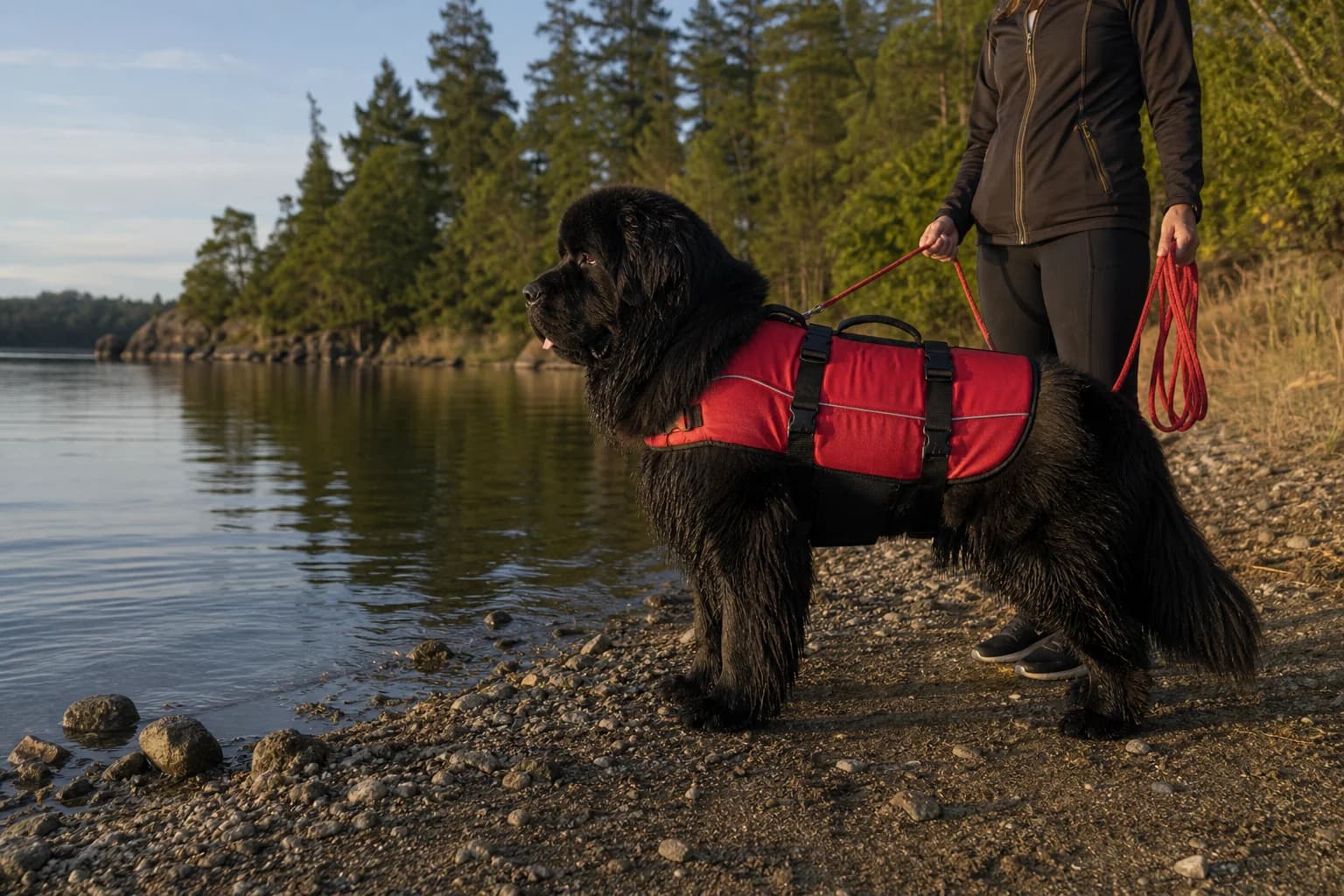
Water heritage explains the breed's powerful build, double coat, and reputation as a swimmer, but not every individual is confident or safe in water. Introduce calm, shallow water gradually, use a well-fitted canine life jacket when conditions warrant it, and keep the dog away from currents, thin ice, algae blooms, hot docks, and unsupervised pools.
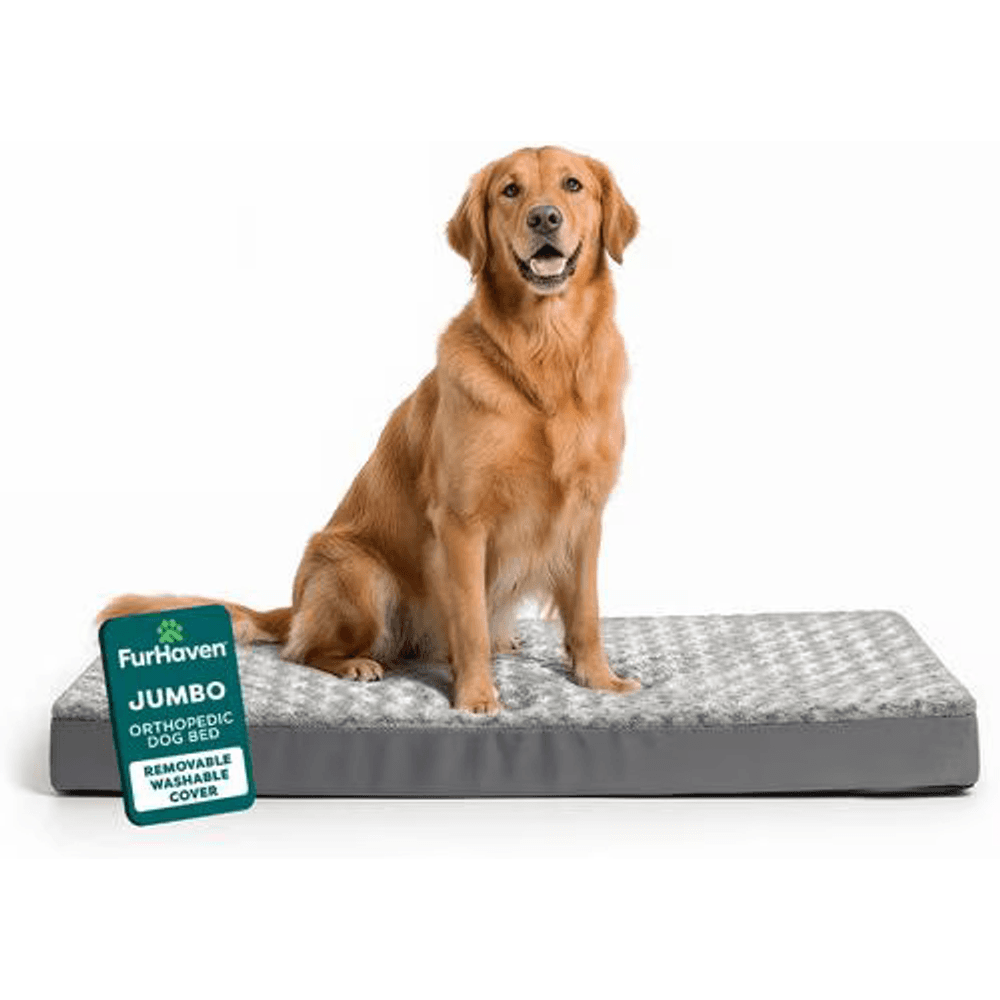
A plush orthopedic foam mattress that cushions aging joints and pressure points, giving a stiff or trembling senior dog warm, supportive rest.
Petful may earn a commission when you click through to Chewy, at no extra cost to you.
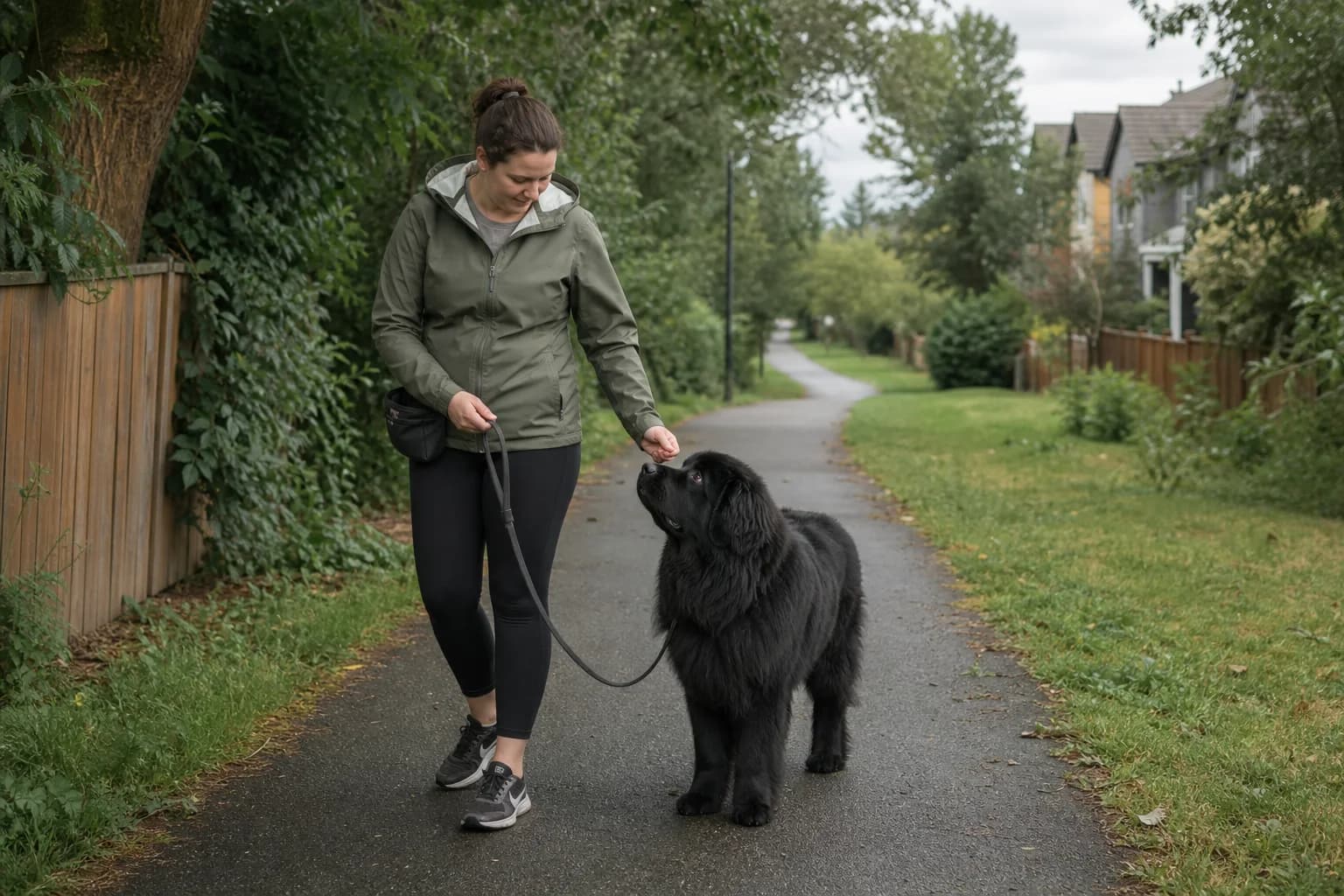
Daily care also includes moderate, age-appropriate activity, heat awareness, brushing, nail care, dental care, and drool management. Exercise should support fitness without forcing a growing puppy or deconditioned adult to keep a human pace. Use the dedicated Newfoundland food guide to review life-stage adequacy and body-condition trends, and the health and lifespan guide for screening and monitoring questions. Sudden exercise intolerance, collapse, labored breathing, or a hard swollen abdomen belongs with a veterinarian, not an online breed checklist.
When owners ask about Newfoundland dog webbed feet, they are noticing the interdigital skin that supports the breed's swimming history; it does not make every dog automatically water-safe. Separate swimming heritage from the assumption that every individual will enjoy water or rescue work. Newfoundland dog slobber is also an ordinary household-care consideration, so plan washable water and drying zones without treating sudden excessive drool with distress as routine. For the coat work itself, the Newfoundland shedding and grooming guide shows line-brushing and drying routines, while the color and markings guide separates true coat color from sun or lighting effects.
Do Newfoundland dogs bark a lot? The breed label alone cannot predict one dog's barking pattern. Record the trigger, setting, duration, body language, and recovery in a simple trigger log, then address unmet needs, learned alerting, fear, frustration, or separation concerns with humane management and qualified help when the behavior creates risk.
- Use breed-level evidence to prepare observations and questions. Base health, behavior, nutrition, insurance, and safety decisions on the individual dog, current records, and the appropriate qualified professional.
Make giant-dog care workable at home
Measure the home at dog level
A Newfoundland can block a narrow hall simply by lying down, and a wagging tail can clear a low table. Walk the normal route from sleeping area to door, car, water station, and yard while imagining a wet 100-plus-pound dog. Space planning should preserve a clear retreat and a safe path for people with limited balance.
Plan for wet-coat logistics
A water-resistant double coat holds moisture and outdoor debris close to a very large body. In practice, choose a washable drying zone, keep absorbent towels nearby, and check the coat down to the skin before the dog settles. Persistent odor, redness, pain, or damp hot spots need veterinary or professional grooming attention.
Petful may earn a commission when you click through to Chewy, at no extra cost to you.
Teach greetings before size peaks
A friendly adolescent can knock over a child or older adult without intending harm. Reward four paws on the floor, use a gate or leash during practice, and release the dog only when the visitor is ready. Management prevents rehearsal, but it does not replace gradual skill building.
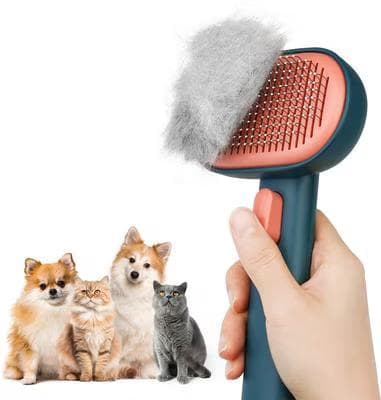
- During section-by-section coat care, aumuca Self Cleaning Slicker Brush can lift loose hair after tangles have been separated and before a metal-comb check. Use light pressure and confirm progress with a metal comb. A slicker alone does not prove the undercoat is mat-free.
Treat drool as a household decision
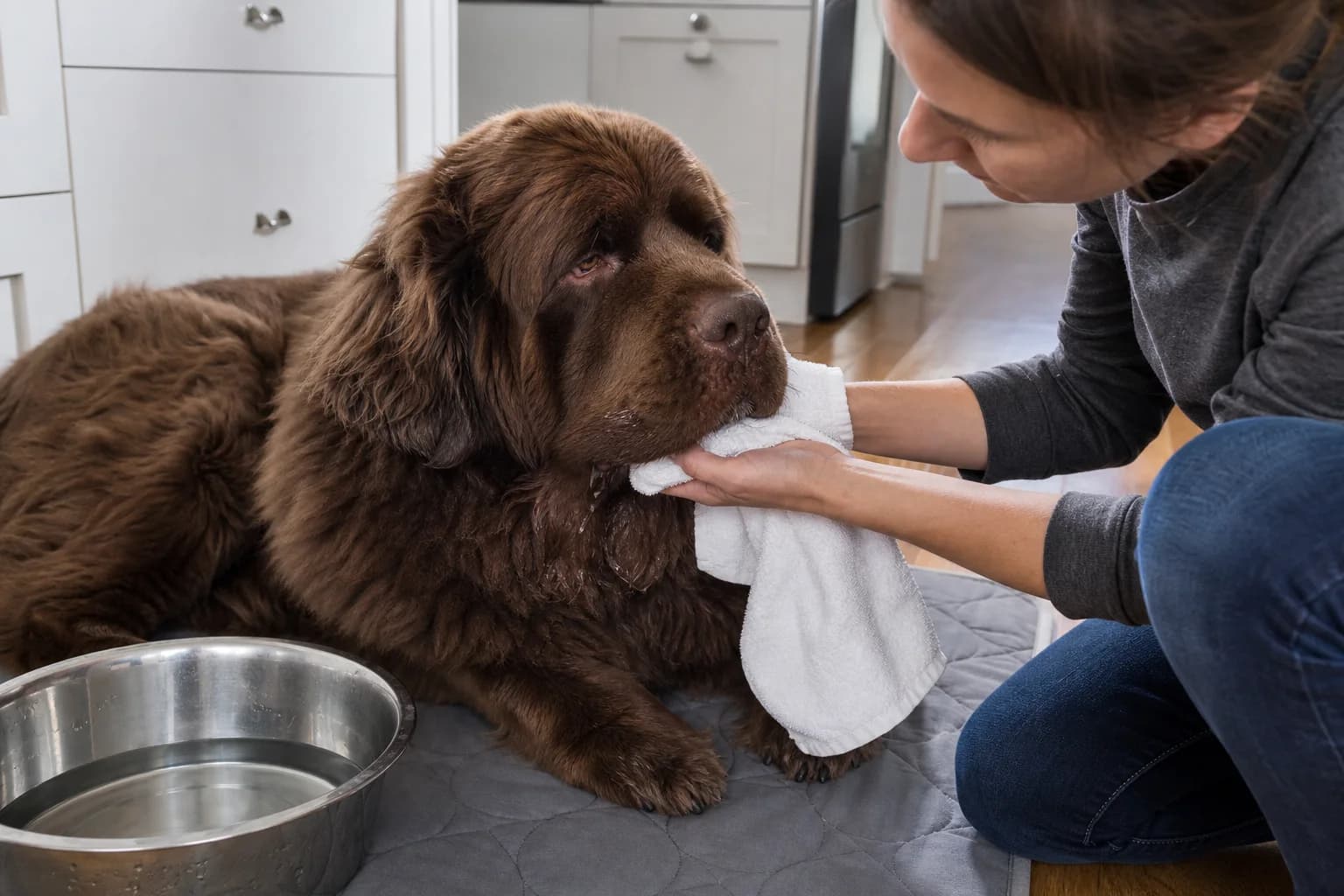
Loose lips and a large water intake can produce strings of saliva and wet walls or furniture. Place washable mats around water, wipe the mouth gently when needed, and include cleanup time in the fit test. Sudden excessive drooling with distress, retching, collapse, or trouble swallowing is not routine breed drool.
Build cooperative handling
Routine care involves paws, ears, mouth, tail, undercoat, and a large body that cannot be forced safely. Practice brief touches paired with food, stop before struggle, and add duration only while the dog remains comfortable. Pain, fear, or escalating resistance should change the plan and may require veterinary or qualified behavior help.
Prepare transport before an emergency
An injured Newfoundland may be too heavy for one person to lift into a vehicle. In practice, identify the nearest emergency clinic, measure the cargo opening, keep a sturdy support sling, and know who can help. Improvised lifting can injure the dog and people, so ask the clinic for instructions during an actual emergency.
Use the household fit scorecard
The best match is based on daily capacity, not admiration for a gentle-giant image. Score space, cleaning, training time, grooming, transportation, veterinary budget, heat management, and backup care honestly. Families comparing acquisition routes can pair that score with the first-year puppy guide and the Newfoundland lifetime-cost worksheet. A low score is useful information and can support choosing a different dog rather than trying to force a match.
Test the match before committing
Adult height and weight range
Measure adult scale against the home rather than treating 100 to 150 pounds as trivia. Check door width, vehicle floor height, turning room, bed length, grooming access, and the route an injured dog would need to travel. The useful answer is whether every regular caregiver can manage the likely adult safely, not whether the dog fits beside the sofa today.
Sweet patient temperament with individual variation
Test temperament through ordinary recovery, not one friendly greeting. Watch how the dog settles after excitement, responds to handling, shares space, disengages from visitors, and uses a retreat. A sweet breed reputation is encouraging context, but the individual dog's behavior around the actual household remains the evidence that matters. If you are considering a cross, use the Newfoundland mixes guide to plan for a range from both parent breeds rather than assuming the Newfoundland side will determine behavior or size.
Petful may earn a commission when you click through to Chewy, at no extra cost to you.
Water-rescue and draft-work heritage
Water rescue and draft history explain structure, coat, and working reputation; they do not require every pet to swim or pull. Introduce either activity gradually, use suitable safety equipment, and stop when footing, temperature, current, fatigue, or confidence makes the session unsafe. Heritage should inform care without becoming a performance demand.
Reward-based training and early manners
Build manners before adult strength arrives. Reward loose leash steps, four paws on the floor, waiting at doors, calm vehicle entry, a mat settle, and release from handling. Gates and leashes can prevent rehearsal while skills develop, but they should support clear humane teaching rather than function as punishment or permanent isolation.
Drool coat care and home-space realities
Run a realistic home trial for wet coat, drool, floor hair, muddy paws, water spills, and resting space. Assign cleanup, grooming, and walking duties for a normal workweek and include a backup caregiver. If the plan works only when everyone has extra time, it is not yet a reliable Newfoundland household plan.
Exercise heat and swimming safety
Choose exercise by age, conditioning, weather, surface, and recovery rather than a fixed mileage target. For water activity, assess entry and exit, current, temperature, algae, supervision, and a fitted life jacket. Heavy panting, weakness, confusion, collapse, or abnormal breathing changes the task from exercise planning to urgent care.
Health screening and lifespan planning
Ask for public hip, elbow, cardiac, and cystinuria records when evaluating a breeder, then keep routine veterinary care focused on the individual dog. Lifespan figures are population estimates, and clearances are point-in-time risk information. Neither should be used to dismiss a new limp, collapse, urinary problem, appetite change, or breathing concern.
Who is and is not a realistic household match
A realistic match has enough room, time, strength, budget, transport, grooming capacity, heat management, and social contact for a giant companion. Write down who handles each need during illness, travel, and busy weeks. Admiring the breed is not the same as being able to support one, and recognizing a mismatch is a responsible outcome.
Run a seven-day giant-breed reality check
Before committing, map one ordinary week hour by hour. Include workdays, visitors, wet-weather walks, grooming, meal preparation, cleaning, training, rest, and the time the dog would spend alone. Mark the narrow hall, hot room, slippery floor, small vehicle opening, or weak backup plan that could become difficult once the dog reaches adult scale.
At the end of the week, score space, handling strength, transport, coat and drool tolerance, budget, heat planning, and backup care as ready, repairable, or incompatible. Repairable means a named change with an owner and date, such as installing traction or practicing a ramp. The scorecard is useful only when a low result is allowed to change the decision.
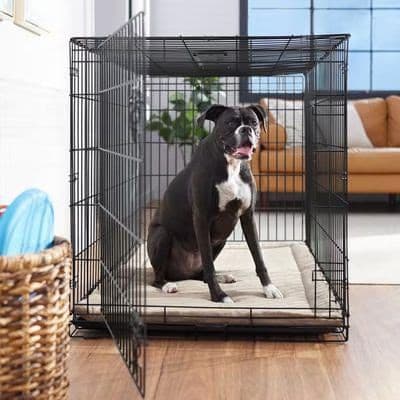
- If a crate is part of the transport or home-management plan, use the published interior measurements for Frisco Heavy Duty Fold & Carry Single Door Collapsible Wire Dog Crate, X-Large to judge whether the dog can stand, turn, and lie comfortably. Verify the interior dimensions against the individual dog. An X-Large label alone does not prove adult Newfoundland fit.
Translate gentle-giant traits into a weekly space, handling, cleaning, and care test that turns observable capacity into a household fit scorecard. It should expose a weak household plan before general breed affection turns into a commitment. Run the test during ordinary work, school, visitor, weather, and backup-care conditions; record who owns each task, how long it takes, what failed, and what named change would make the week workable.
Use the dedicated owner guides already linked throughout this article to route price, puppies, food, health, coat, color, and mix decisions to the page responsible for that narrower choice. The breed guide keeps the whole-household fit decision while those owners carry their specific evidence, checks, and next steps. That separation prevents a broad profile from giving shallow answers to specialist questions and lets readers return to the correct owner when a budget, life stage, diet, medical record, coat feature, or ancestry clue changes.
Newfoundland FAQs
Are Newfoundlands good house dogs? Many can be, because the breed is known for a sweet, patient temperament, but house-dog fit depends on the individual and the household's ability to manage giant size, training, grooming, drool, heat, and supervision. Children and dogs still need active adult supervision. Meet the dog, observe recovery from excitement, and provide a quiet retreat before deciding that a breed reputation guarantees a match.
Do Newfoundland dogs bark a lot? The breed label cannot predict one dog's barking pattern. Keep a simple trigger log with the setting, distance, duration, body language, what happened immediately before the bark, and how quickly the dog recovered. Then address likely needs or learned patterns with humane management and reward-based teaching. Pain, fear, separation distress, or behavior that creates safety risk calls for appropriate veterinary or qualified behavior help.
Sources and evidence boundaries
- Newfoundland Club of America breed standard: Breed temperament, structure, working identity, coat, and recognized-color context.
- American Kennel Club breed page: Registry size, lifespan, breed history, coat, and breeder-screening overview.
- AKC official Newfoundland standard: Exact breed-standard language for size, coat, colors, markings, and temperament.
Prices, product availability, labels, insurance terms, veterinary guidance, and individual needs can change. Check the current source, product information, policy, and appropriate professional guidance before making a decision.

Coreen Saito is a pet writer and longtime shelter volunteer with more than a decade in animal rescue. She covers cat behavior, breed care, and the small, ordinary science of sharing a life with companion animals, with a particular focus on honest takes about the products and decisions that actually matter. At home in Arizona, she's outranked by Mac (a dog with the loudest opinion in the house), Rebel (a cat who governs by quiet authority), and Meri (an orange tabby who runs the late shift and the laundry basket). She writes about all three, plus the rescues that keep coming through her life, at LifeWithMinty.com.
Sign up for expert-backed reviews and safety alerts all in one place.