Do Newfoundlands Shed? Coat and Grooming Guide
Manage Newfoundland shedding with skin-level coat checks, line brushing, suitable tools, careful bathing, thorough rinsing, complete drying, friction-zone checks, and clear veterinary boundaries.
Petful is reader supported. As an affiliate of platforms like Amazon and Chewy, we may earn a commission when you buy through links on this page. There is no extra cost to you.
Do Newfoundlands shed? Yes, their dense double coat normally releases hair year-round and often sheds more heavily during coat changes. The realistic workload includes skin-level checks, line brushing, bathing, a thorough rinse, complete drying, and prompt attention to abnormal hair or skin changes.
A Newfoundland's double coat requires a complete sequence from skin check and line brushing through bathing, thorough rinsing, drying to the skin, and a final comb check. Tool choice, friction zones, seasonal release, shaving boundaries, and abnormal coat changes all affect whether the routine is safe and realistic.
- 1Year-round shedding and seasonal coat changes.
- 2Line brushing and skin-level checks.
- 3Tool roles without one-tool promises.
- 4Bath rinsing and complete drying.
- 5Mat-prone friction areas.
- 6Why shaving is not routine coat care.

Sign up for expert-backed reviews and safety alerts all in one place.
How much Newfoundlands shed
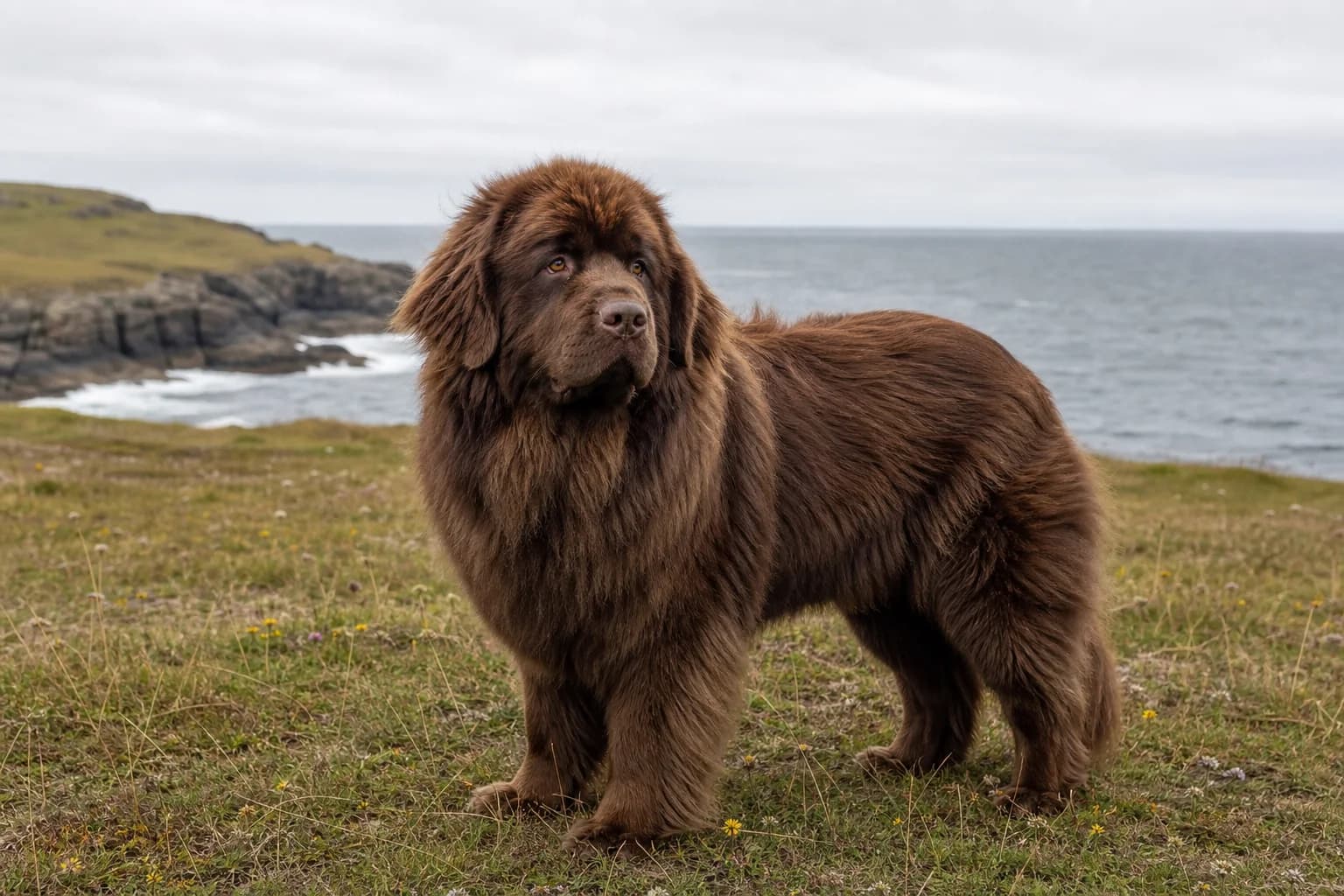
Yes, Newfoundlands shed. The adult breed standard describes a flat, water-resistant double coat with a coarse outer coat and a soft dense undercoat that may be less dense in summer or warmer climates. Owners should expect year-round hair plus periods of heavier coat release rather than a truly low-shedding season.
Indoor climate, daylight, age, health, reproductive status, grooming, and individual coat all affect what lands on the brush and floor. A predictable increase with normal skin can be ordinary. Patchy loss, inflamed skin, strong odor, pain, intense itching, or a sudden major coat change needs veterinary assessment through the monitoring approach in the Newfoundland health guide.
Are Newfoundlands heavy shedders? Yes. They shed throughout the year, and seasonal changes can release a much larger volume of undercoat. The practical test is not a breed ranking but whether the household can maintain skin-level coat checks, short extra brushing sessions, thorough drying, and routine floor and fabric cleanup without turning every coat change into an aggressive deshedding session.
What dog has the worst shedding? There is no objective winner because coat volume, climate, season, indoor conditions, grooming, and the individual all matter. The direct answer to do Newfoundlands shed remains yes: ordinary shedding is expected, while patchy loss, inflamed skin, or a sudden coat change is a different veterinary question. Compare the real workload rather than a worst-breed list.
- After separating tangles, use light pressure with aumuca Self Cleaning Slicker Brush on one small section and follow with a metal comb to check progress near the skin. Use light pressure and confirm progress with a metal comb. A slicker alone does not prove the undercoat is mat-free.
Build a Newfoundland grooming schedule
A practical schedule uses section-by-section line brushing, followed by a comb check at skin level. Work on a nonslip surface and part the coat into manageable areas. A slicker, pin brush, undercoat tool, comb, or curry tool each has a job, but none should scrape skin, cut healthy coat, or be pulled through resistance.
Frequency changes with coat condition. A quick surface pass is not enough when undercoat is releasing, while aggressive daily deshedding can irritate skin and break coat. Let the comb, the skin, and the dog's comfort determine whether a section is finished.
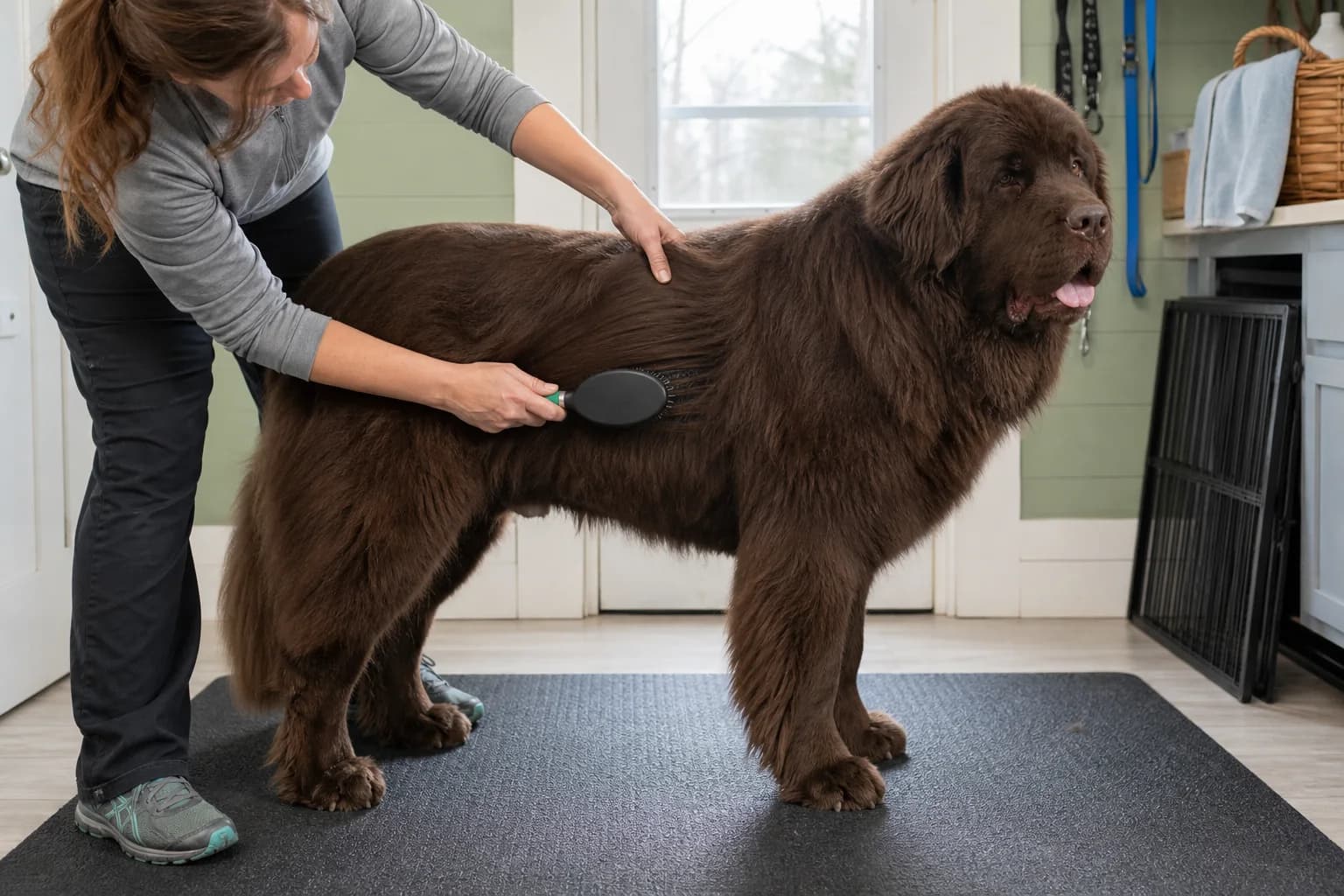
Are Newfoundland dogs high maintenance? Their coat is high maintenance compared with a short single coat because section-by-section brushing, friction-zone checks, bathing, a long rinse, and complete drying all take time. Prepared owners can split the body across short sessions or use a qualified groomer, but shaving a healthy double coat is not the routine shortcut. The main Newfoundland breed guide puts that workload beside the breed's other daily household needs.
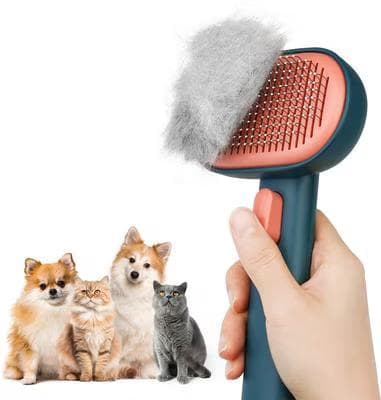
Petful may earn a commission when you click through to Chewy, at no extra cost to you.
A weekly and seasonal schedule replaces a vague high-maintenance label with named jobs. Use a slicker brush or undercoat rake only where its tooth length and action suit the coat, then confirm progress with a comb. Newfoundlands are not hypoallergenic, and removing more undercoat cannot guarantee allergy relief. Skin comfort and a completed section matter more than the volume of hair collected.
| Step | What to do | Ready for the next step when | Stop or hand off when |
|---|---|---|---|
| Skin and friction-zone check | Part the dry coat behind ears, collar, armpits, groin, furnishings, and tail base | Skin is visible and no painful lesion, tight mat, or unexplained swelling blocks access | Pain, discharge, spreading redness, or a skin-level mat needs veterinary or professional grooming help |
| Detangle and line brush | Support hair near the skin and work small rows from the ends toward the base | An appropriate comb passes comfortably through the finished row | Skin moves, the dog reacts, or progress requires force |
| Bathe and rinse | Use a dog-appropriate product as labeled and rinse section by section | Water runs clear and the coat no longer feels slick | Inflamed or infected skin needs veterinary direction before another cosmetic wash |
| Dry to the skin | Use towels and controlled airflow with safe footing, temperature, and breaks | Several parted areas feel dry at the skin, including dense friction zones | Panic, pain, heavy panting, weakness, or unsafe heat ends the session |
| Final comb and cleanup | Recheck every completed zone and note anything unfinished | The comb moves comfortably and tools and damp gear are cleaned and dried | Do not extend the session after tolerance falls; schedule another short session or a qualified groomer |
Bathe, dry, and prevent mats safely
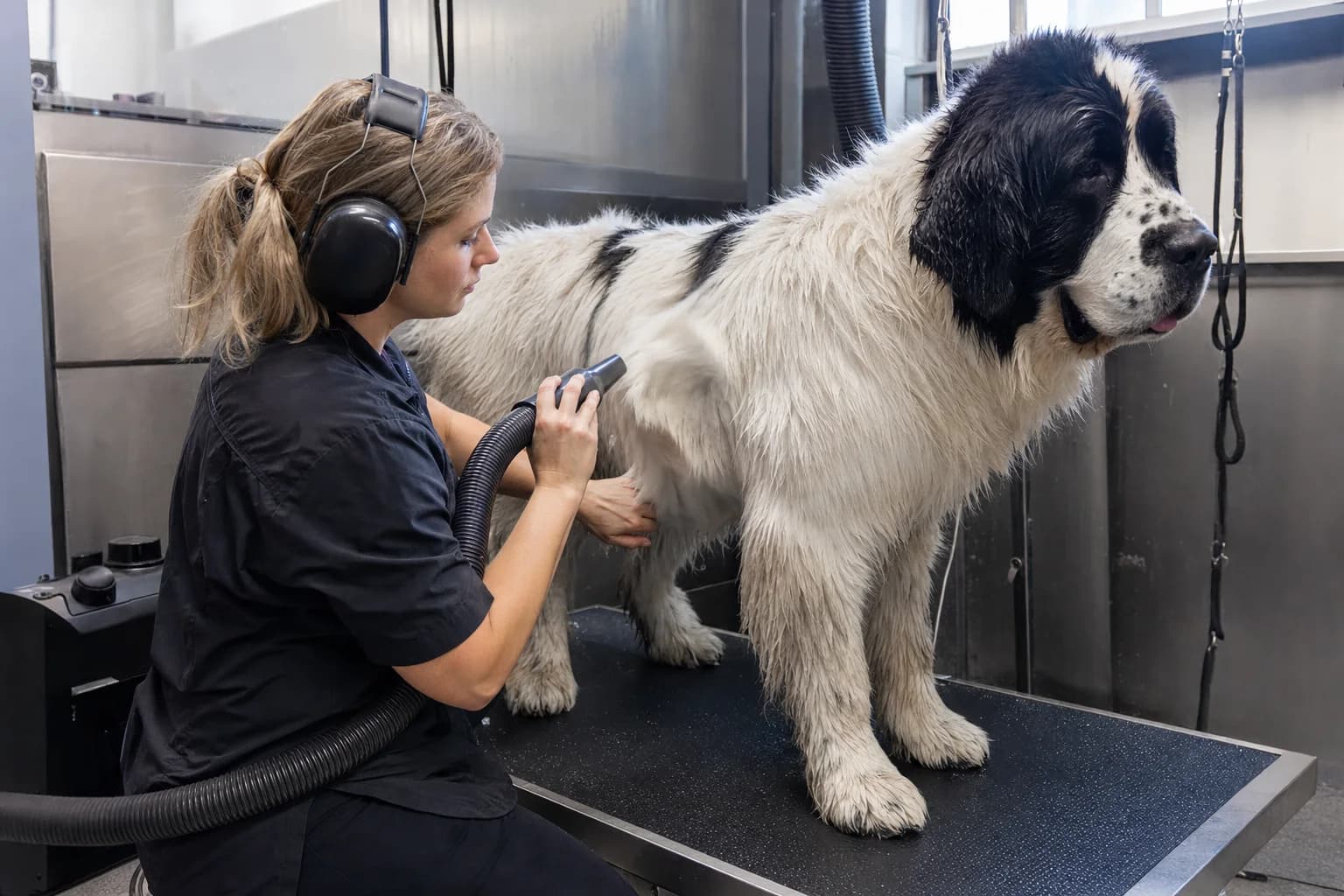
Before bathing, remove loose coat and small tangles that water could tighten. Use a dog-appropriate product, rinse thoroughly, and dry all the way to the skin with a method the dog can tolerate. Dense damp areas around the neck, ears, armpits, groin, rear, and tail base deserve a hands-on check.
Routine shaving is not standard coat care for a healthy Newfoundland. Medical procedures, severe matting, skin treatment, or individual welfare may require clipping under professional guidance. If coat removal is being considered because maintenance has become unmanageable, talk with an experienced groomer and veterinarian about the safest plan.
A shaved Newfoundland dog may have been clipped for severe mats, treatment, or individual welfare; the image alone cannot explain why. A Newfoundland dog with short hair may also be a puppy, a clipped dog, or a misidentified cross. The Newfoundland mixes guide explains why coat inheritance in a cross is variable. Check where mats hide in friction areas and why complete drying matters in a dense coat before treating shaving as an ordinary grooming shortcut.
- During heavy coat release, test Frisco Deshedding Cat & Dog Brush, Medium to Long Hair gently on a small area and watch both skin and guard hairs before adding it to the rotation. Test gently on a small coat area and stop if the tool scratches skin, catches painfully, or breaks healthy coat.
- Use breed-level evidence to prepare observations and questions. Base health, behavior, nutrition, insurance, and safety decisions on the individual dog, current records, and the appropriate qualified professional.
Work through the coat in a safe order
Learn the two coat layers
Longer guard hairs and a dense softer undercoat protect and insulate in different ways. Part the coat and identify which layer a tool is moving before increasing pressure. Removing loose undercoat should not mean scraping skin or stripping healthy guard coat.
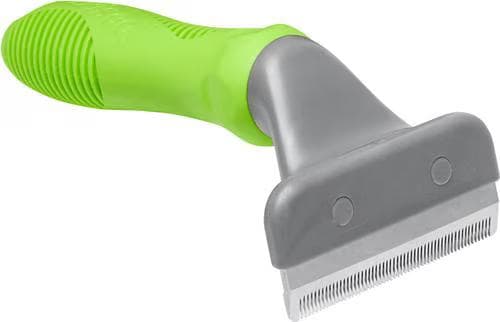
Petful may earn a commission when you click through to Chewy, at no extra cost to you.
Expect seasonal variation
Undercoat density can change with climate and season, and indoor living can blur the timing. Track when combs fill faster and schedule extra short sessions before mats form. Sun, moisture, and lighting can also change how the coat looks, so use the Newfoundland color and markings guide before treating appearance alone as a coat-health conclusion. A seasonal pattern does not explain bald patches, sores, or pain.
Start with a skin check
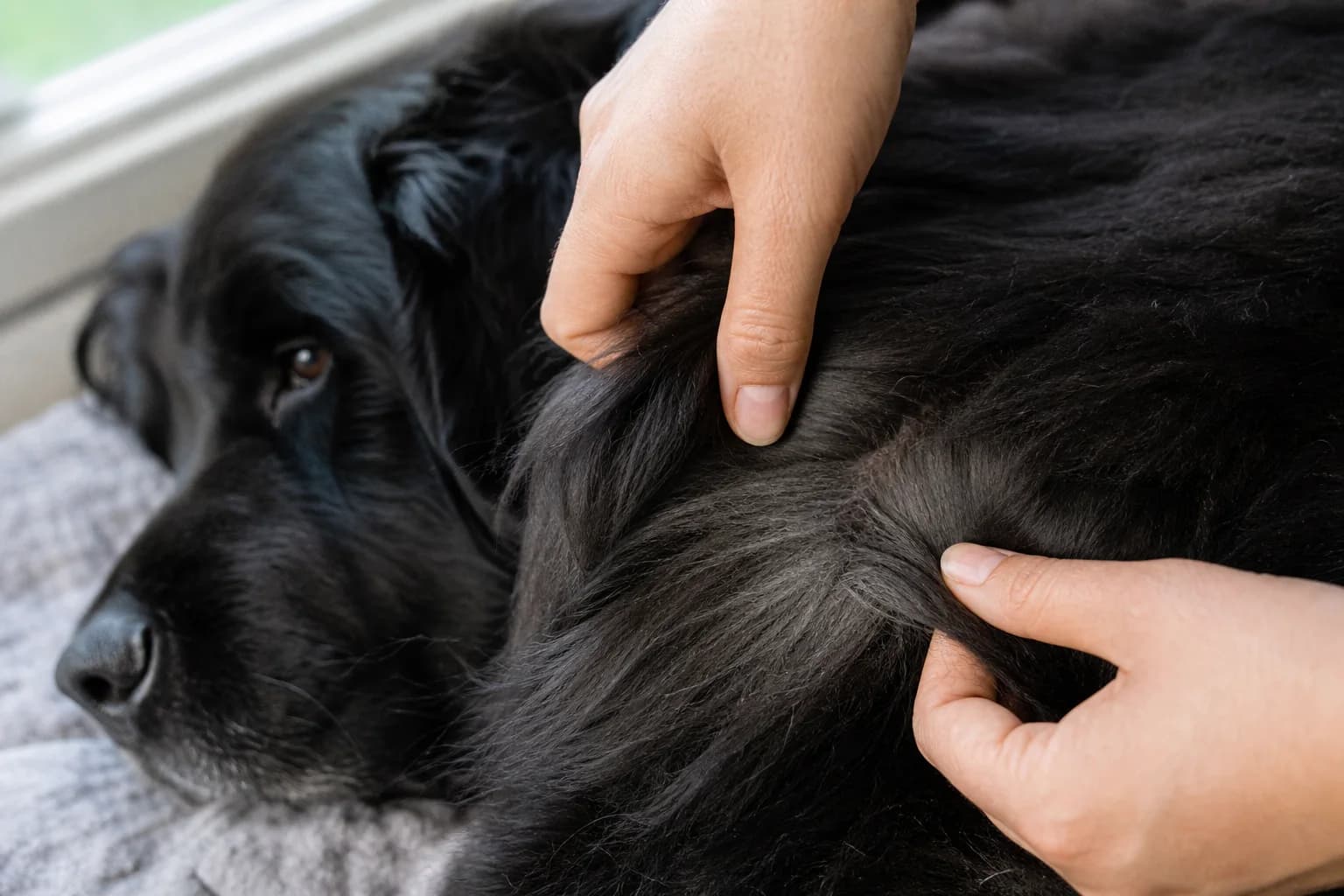
Hands may find moisture, lumps, tenderness, ticks, burrs, or mats hidden from view. Run fingertips over each area before brushing and change the plan around anything sensitive. Do not brush directly over a painful lesion or unexplained swelling.
Use line brushing
Working in narrow rows exposes the coat near the skin instead of polishing only the surface. Lift one line, brush gently from the ends toward the base, and advance when the comb passes. Tugging through a mat can bruise skin and create handling fear.
Finish with a comb
A brush can glide over the top while compacted undercoat remains below. Use a wide-tooth then appropriate finer comb as a check, not as a force tool. Stop when teeth catch and return to a smaller section.
Choose slicker pressure carefully
Fine pins can help separate coat but can also scratch skin when pressed or repeated. In practice, test on your forearm, use short light strokes, and inspect the dog's skin. Redness, flinching, or broken coat means the technique or tool needs to change.
Use undercoat tools selectively
Rakes and deshedding tools vary in tooth length, spacing, and cutting action. Match the tool to coat depth and use it only where loose undercoat releases comfortably. More hair on the tool is not proof of better grooming.
Use a curry tool for the right job
A rubber or glove-style tool can lift loose surface coat and support bathing. Use broad gentle motions on suitable areas and switch tools for deep feathering. It will not replace skin-level detangling in a long dense coat.
Protect friction zones
Behind ears, under collars, armpits, groin, furnishings, and tail base rub and compress easily. Check these zones more often and keep sessions short and positive. Use professional help for tight skin-level mats.
Prepare before the bath
Water can tighten existing tangles and make a huge coat harder to rinse. In practice, brush out loose coat, stage towels and drying equipment, and secure a nonslip surface. Do not bathe a severely matted coat without a safe removal plan.
Dilute only as directed
Some grooming products are concentrates and others are ready to use. Follow the label, avoid eyes and ears, and apply enough water to reach the coat beneath the surface. Home mixtures can irritate skin or change product performance.
- In the bathing or surface-loosening step, Four Paws Magic Coat Wet & Dry Dog Glove and Curry Brush can help work through accessible coat without replacing line brushing and a comb check. Use as one step in coat care, not as a replacement for section-by-section brushing and a skin-level check.
Rinse longer than expected
A large dense coat can retain shampoo where the surface already looks clean. Work in sections until water runs clear and the coat no longer feels slick. Persistent itch or redness after bathing needs more than another wash.
Introduce dryer sound gradually
High airflow and noise can frighten a dog or push air too close to sensitive skin. Pair equipment at a distance with rewards, use safe temperature and airflow, and monitor comfort. Never force a panicking dog to endure a dryer.
Dry to the skin
A dry-looking outer coat can hide damp undercoat that traps heat and moisture. In practice, part the coat in several areas and feel near the skin before ending the session. Odor, heat, pain, or weeping skin needs professional assessment.
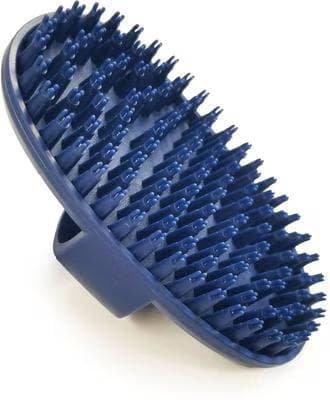
Petful may earn a commission when you click through to Chewy, at no extra cost to you.
Do not use heat to hurry
Hot air close to skin can burn or overheat a dog even when the room feels comfortable. Use controlled airflow, distance, breaks, ventilation, and the dog's behavior as guides. Heavy panting, weakness, confusion, or collapse is an emergency.
Handle coat blow in short rounds
Trying to remove every loose hair in one marathon session can exhaust both dog and person. Split the body across days, track finished sections, and stop before tolerance declines. A groomer may be the safer choice when time, mobility, or equipment is limited.
Make puppy grooming cooperative
A small puppy will soon be too large to restrain safely for coat care. Reward standing on a mat, brief parting of coat, comb touches, paw handling, and breaks. The Newfoundland puppy guide places those grooming skills in the first-year sequence. Progress depends on comfort, not holding the puppy still for a complete session.
Adapt for senior dogs
Arthritis, weakness, skin changes, or reduced stamina can make old positions uncomfortable. In practice, use nonslip support, thicker padding, shorter sessions, and veterinary pain assessment. Sudden intolerance can be a health clue rather than stubbornness.
Keep nails and feet in the schedule
Long nails and packed paw hair can affect traction while wet feet hide debris. Check nails, pads, between toes, and feathering during every full coat cycle. Cuts, swelling, persistent licking, or lameness needs evaluation.
Map the coat into repeatable zones
A giant dog's coat is easy to skim unevenly when the session has no defined start and finish. Divide the body into neck, shoulders, sides, belly, furnishings, rear, tail, and legs, then record which zones passed a skin-level comb check. A completed checklist should reflect comfortable access to the skin, not a target volume of hair removed.
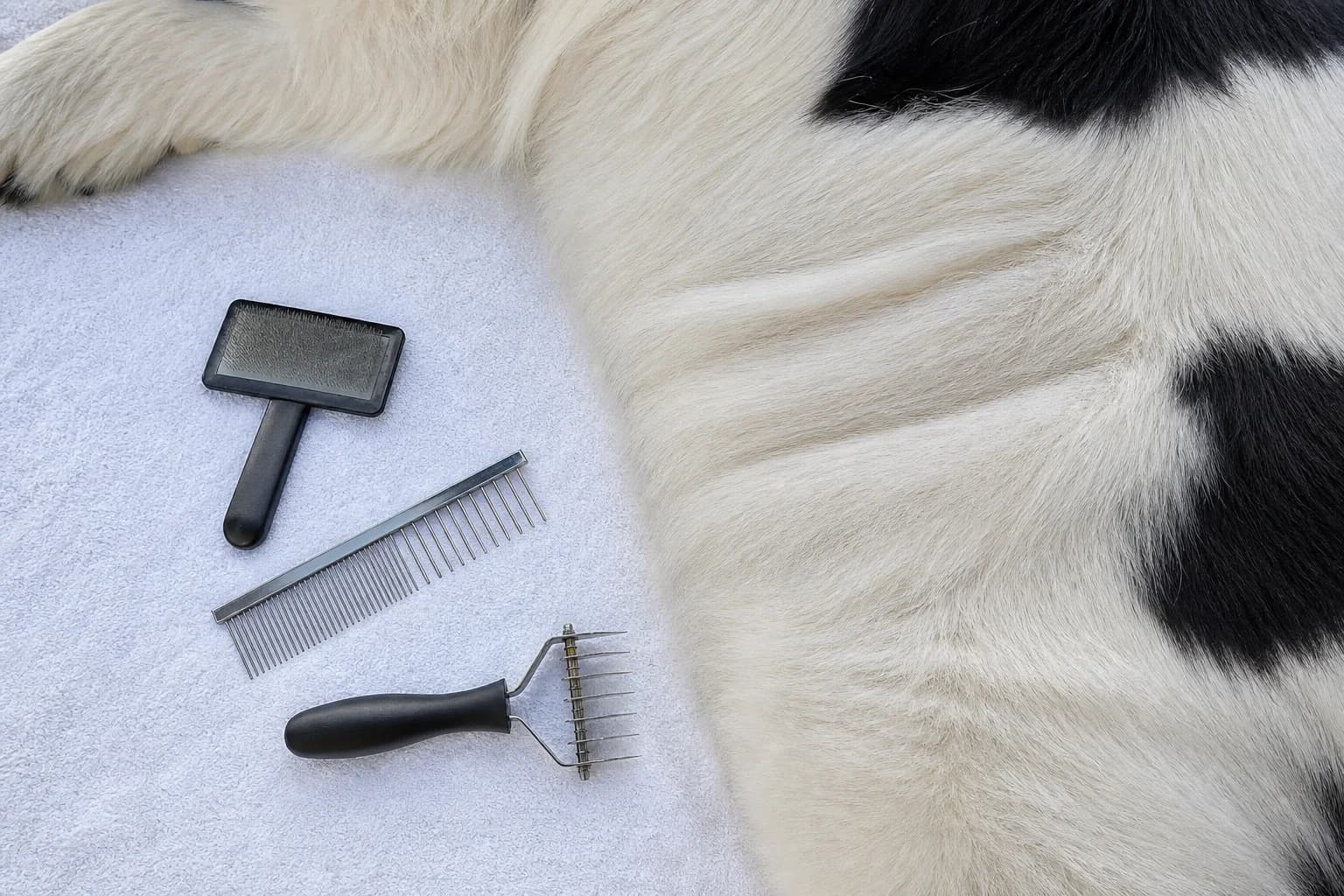
Teach a grooming station
Predictable footing, position cues, brief handling, and release signals make routine coat care safer as a puppy grows into a powerful adult. Reward the dog for approaching a nonslip mat, standing or lying comfortably, accepting one small section, and taking planned breaks. Restraint should not be used to push through fear, pain, overheating, or an unsafe struggle.
Distinguish loose undercoat from a mat
Loose coat generally separates with suitable light technique, while a mat is a compacted tangle that pulls on skin and may hide irritation. In practice, support the hair near the skin, work only on a small comfortable edge, and stop when the skin moves, the dog reacts, or progress requires force. Tight mats, extensive compaction, or mats over sore skin belong with an experienced groomer or veterinary team rather than household scissors.
Keep scissors away from skin-level mats
Newfoundland skin can tent up inside a dense mat, making the true skin boundary difficult to see. Use professional help when a tangle cannot be safely separated with fingers and an appropriate tool under good light. Cutting blindly through a mat can lacerate skin even when the blade appears to be well above the body.
Remove and check wet collars
Water trapped beneath a collar or harness adds friction and can keep a dense area damp after the rest of the dog appears dry. Remove equipment when safe, rinse residue as needed, dry the neck and gear completely, and check the contact areas before reapplying it. Redness, odor, discharge, swelling, or pain should not be covered with equipment and ignored.
Add ear checks after swimming
Moisture, debris, head shaking, odor, and discharge can accompany ear irritation, but routine appearance varies between dogs. Look and smell without inserting tools into the canal, dry the external ear as directed, and ask the veterinarian about an individualized cleaning plan. Cotton swabs, unapproved drops, and repeated home cleaning can worsen pain or delay diagnosis of infection or a foreign body.
Create a safe high-velocity drying setup
Airflow can move loose coat and water efficiently, but noise, unsecured hoses, poor ventilation, excessive force, and a slippery floor create hazards. Introduce the equipment gradually, secure cords and footing, protect eyes and ears, keep airflow moving, and give the dog control through breaks. A household dryer should never be used in a closed crate or in any setup where heat and distress cannot be monitored continuously.
Give the groomer a precise handoff
Coat history, skin concerns, handling tolerance, medical limits, and the owner's requested outcome affect how a professional plans a session. Report recent mats, lesions, medications, mobility trouble, fear triggers, and areas the dog cannot tolerate, then agree on what should prompt a call. Include the likely professional-care line in the Newfoundland cost worksheet. Requesting that every hair be saved can conflict with welfare when severe matting, pain, or skin disease requires a different plan.
Petful may earn a commission when you click through to Chewy, at no extra cost to you.
Use the coat-change log for triage
Shedding amount alone is difficult to compare, while location, symmetry, skin appearance, itch, odor, timing, diet, medication, and behavior create a more useful pattern. Take dated photos in the same light and record whether hair is loose, broken, thinning, or absent before contacting the veterinary team. The Newfoundland food guide keeps diet adequacy separate from diagnosis. The coat log helps describe change but cannot distinguish allergy, infection, parasites, hormonal disease, nutrition problems, stress, or other causes.
Plan household hair control separately
Floor hair and coat health overlap only partly, so more vacuuming does not mean the dog needs more aggressive deshedding. Use washable covers, entry towels, regular surface cleaning, and an air-management plan appropriate to the household while keeping grooming gentle. Environmental cleaning can reduce loose hair and debris but cannot make a Newfoundland nonshedding or eliminate animal allergens.
Clean tools and the work area
Loose hair, damp brushes, and dirty surfaces can carry debris and make the next session less effective. In practice, remove hair from tools, follow cleaning instructions, and dry equipment completely. Do not share tools between animals with suspected contagious skin disease.
Separate shedding from allergy claims
No dog breed is allergen-free, and hair volume does not measure one person's reaction. Spend time with individual dogs and discuss significant allergy concerns with a medical professional. Grooming can reduce loose hair in the home but cannot guarantee symptom control.
Use the wet-to-dry sequence
Order matters: skin check, detangle, bath, thorough rinse, complete dry, comb check, and cleanup. Post the sequence in the grooming area and note sections that need earlier follow-up. The sequence is preventive care, not treatment for infection or unexplained hair loss.
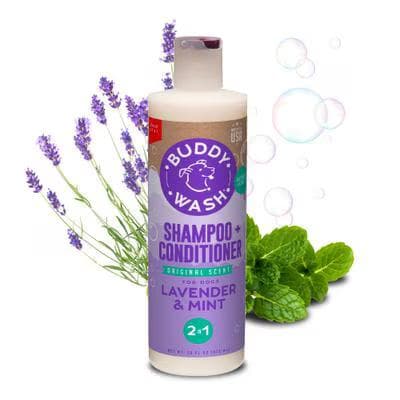
- For a planned bath on healthy skin, dilute and use Buddy Wash Dog Shampoo and Conditioner according to its current label, then rinse dense undercoat until the water runs clear and dry completely. Patch-test as appropriate, rinse completely, and ask a veterinarian about inflamed, infected, or persistently itchy skin.
Decide when home grooming is enough
Year-round shedding and seasonal coat changes
Expect hair throughout the year and heavier undercoat release during some seasonal or environmental changes. Track the dog's normal pattern, skin appearance, comfort, and where loose coat accumulates. More hair is not automatically disease, while sudden thinning, bald patches, sores, odor, or intense itch is not explained by the breed alone.
Line brushing and skin-level checks
Part the coat into narrow rows, support the hair near the skin, and work gently from the ends toward the base. Finish each section with a comb check rather than judging only the smooth surface. Stop when skin moves, the dog reacts, or a tangle requires force; tight mats need a safer plan.
Tool roles without one-tool promises
Assign each tool a limited job. A slicker can separate coat, a pin brush can move longer hair, a comb checks progress, and some rakes lift loose undercoat. Tooth length, spacing, pressure, cutting edges, and coat depth matter. The amount of hair removed is not a valid score for tool safety.
Bath rinsing and complete drying
Remove loose coat and small tangles before bathing, dilute products only as directed, rinse until the coat no longer feels slick, and dry all the way to the skin. Dense outer hair can look dry while the undercoat remains damp, especially around the neck, ears, armpits, groin, rear, and tail base.
Mat-prone friction areas
Check friction zones more often than the easy flat areas. Behind ears, beneath collars, in armpits and groin, around furnishings, and at the tail base, rubbing and moisture can compact coat quickly. Never slide household scissors under a skin-level mat because tented skin can be hidden inside it.
Why shaving is not routine coat care
Routine shaving is not standard care for a healthy Newfoundland double coat. Severe matting, medical treatment, skin disease, heat management for an individual condition, or welfare may require clipping under professional guidance. When maintenance has failed, the safest humane outcome matters more than preserving coat for appearance.
Allergy boundary and abnormal hair-loss veterinary check
No breed is allergen-free, and the volume of visible hair does not predict one person's reaction. Cleaning and grooming can reduce loose hair without guaranteeing symptom control. Patchy loss, broken coat, redness, pain, odor, discharge, or a sudden major change belongs with the veterinary team, not a harsher deshedding session.
Follow a wet-to-dry coat sequence
Start with a skin and coat check, separate small tangles, line brush, confirm with a comb, prepare the nonslip area, bathe with a suitable product, rinse thoroughly, dry to the skin, and perform a final comb check. Record unfinished zones instead of extending the session after the dog becomes tired or worried.
During heavy coat release, divide the body across shorter sessions and inspect friction zones more often. Change tools when the coat or skin says to change, not when a hair-volume target has not been met. Odor, pain, discharge, inflamed skin, tight matting, or unusual hair loss moves the task to a groomer or veterinarian as appropriate. Set the next session from what the coat-zone log shows instead of one breed-wide calendar. Record weather, swimming, drying time, unfinished areas, skin findings, and the dog's comfort, then schedule the hardest zones before they compact. A dog that remains relaxed during short sessions may finish across several days; a dog whose coat or handling needs exceed household capacity needs timely professional support. The record improves the handoff without diagnosing a skin problem or justifying force.
What dog has the worst shedding? There is no objective single worst because coat volume, season, climate, indoor conditions, grooming, and the individual all change what owners experience. Newfoundlands are heavy double-coated shedders, so compare the actual coat workload, access to suitable grooming and drying, household allergy needs, and tolerance for wet undercoat rather than relying on a worst-breed ranking.
Finish with skin-level checks and safe drying
Work in small horizontal layers so the handler can see the skin and the brush does not skim only the outer guard hairs. Commonly missed areas include behind the ears, the collar line, armpits, groin, trousers, tail furnishings, and the feathering around the feet. Support loose skin, keep strokes short, and use the comb as feedback. A section is finished when the comb moves comfortably from skin outward, not when a predetermined pile of hair has been collected.
Plan drying before the coat gets wet. Assemble towels, a nonslip surface, controlled airflow, breaks, and a warm place where the dog can remain supervised until the undercoat is dry. Feel several coat depths rather than judging the surface alone. If the household cannot dry a dense giant coat safely, schedule a qualified groomer. Leaving damp undercoat packed near the skin can create odor and discomfort, while excessive heat or forceful air can frighten or injure the dog.
Newfoundland FAQs
A Newfoundland coat is high maintenance compared with a short, single coat. The work includes section-by-section brushing, a comb check near the skin, friction-zone mat checks, bathing, a long rinse, and complete drying of dense undercoat. Prepared owners can divide the body across short sessions or use a professional groomer, but routine shaving is not the default shortcut for a healthy double coat.
Yes, Newfoundlands are heavy shedders. They normally shed throughout the year and can release substantially more undercoat during seasonal changes. A skin-level brushing routine, comb checks, short extra sessions during heavy release, thorough rinsing, and complete drying help manage the coat. Sudden thinning, bald areas, broken hair, redness, pain, odor, or intense itch is not routine shedding and deserves veterinary assessment.
There is no objective single worst-shedding dog because coat volume, season, climate, indoor conditions, grooming, and the individual all change what owners experience. Newfoundlands are heavy double-coated shedders and are not a low-hair choice. Compare the actual coat workload, grooming access, household allergy needs, and tolerance for wet undercoat rather than relying on a worst-breed ranking.
Sources and evidence boundaries
- Newfoundland Club of America breed standard: Breed temperament, structure, working identity, coat, and recognized-color context.
- American Kennel Club breed page: Registry size, lifespan, breed history, coat, and breeder-screening overview.
- AKC official Newfoundland standard: Exact breed-standard language for size, coat, colors, markings, and temperament.
- Newfoundland Club of America coat-care resources: Breed-club coat-care and grooming context.
Prices, product availability, labels, insurance terms, veterinary guidance, and individual needs can change. Check the current source, product information, policy, and appropriate professional guidance before making a decision.

Coreen Saito is a pet writer and longtime shelter volunteer with more than a decade in animal rescue. She covers cat behavior, breed care, and the small, ordinary science of sharing a life with companion animals, with a particular focus on honest takes about the products and decisions that actually matter. At home in Arizona, she's outranked by Mac (a dog with the loudest opinion in the house), Rebel (a cat who governs by quiet authority), and Meri (an orange tabby who runs the late shift and the laundry basket). She writes about all three, plus the rescues that keep coming through her life, at LifeWithMinty.com.
Sign up for expert-backed reviews and safety alerts all in one place.