Newfoundland Dog Health Problems and Lifespan
Understand Newfoundland lifespan as a population estimate, verify breed-club health screening, track body condition and mobility, plan for senior care, and recognize signs that need urgent veterinary help.

BVMS, MRCVS
Petful is reader supported. As an affiliate of platforms like Amazon and Chewy, we may earn a commission when you buy through links on this page. There is no extra cost to you.
Newfoundland dog health problems are easier to prepare for when screening records, routine trends, and urgent signs are kept in separate lanes. Breed-level risk can guide questions and logistics, while diagnosis and treatment remain individual veterinary decisions.
Breed-level lifespan and risk information is most useful when divided into three actions: verify screening records, track ordinary health and mobility trends, and respond promptly to urgent signs. That structure supports preparation and clearer veterinary conversations without diagnosing an individual dog online.
- 1Life expectancy as a population estimate not an individual promise.
- 2Hips elbows cardiac clearance and cystinuria testing.
- 3Subaortic stenosis orthopedic disease and cystinuria.
- 4Body condition mobility and preventive-care trends.
- 5Senior life-stage planning.
- 6Urgent bloat breathing collapse and urinary-obstruction signs.

Sign up for expert-backed reviews and safety alerts all in one place.
Newfoundland lifespan and healthy aging
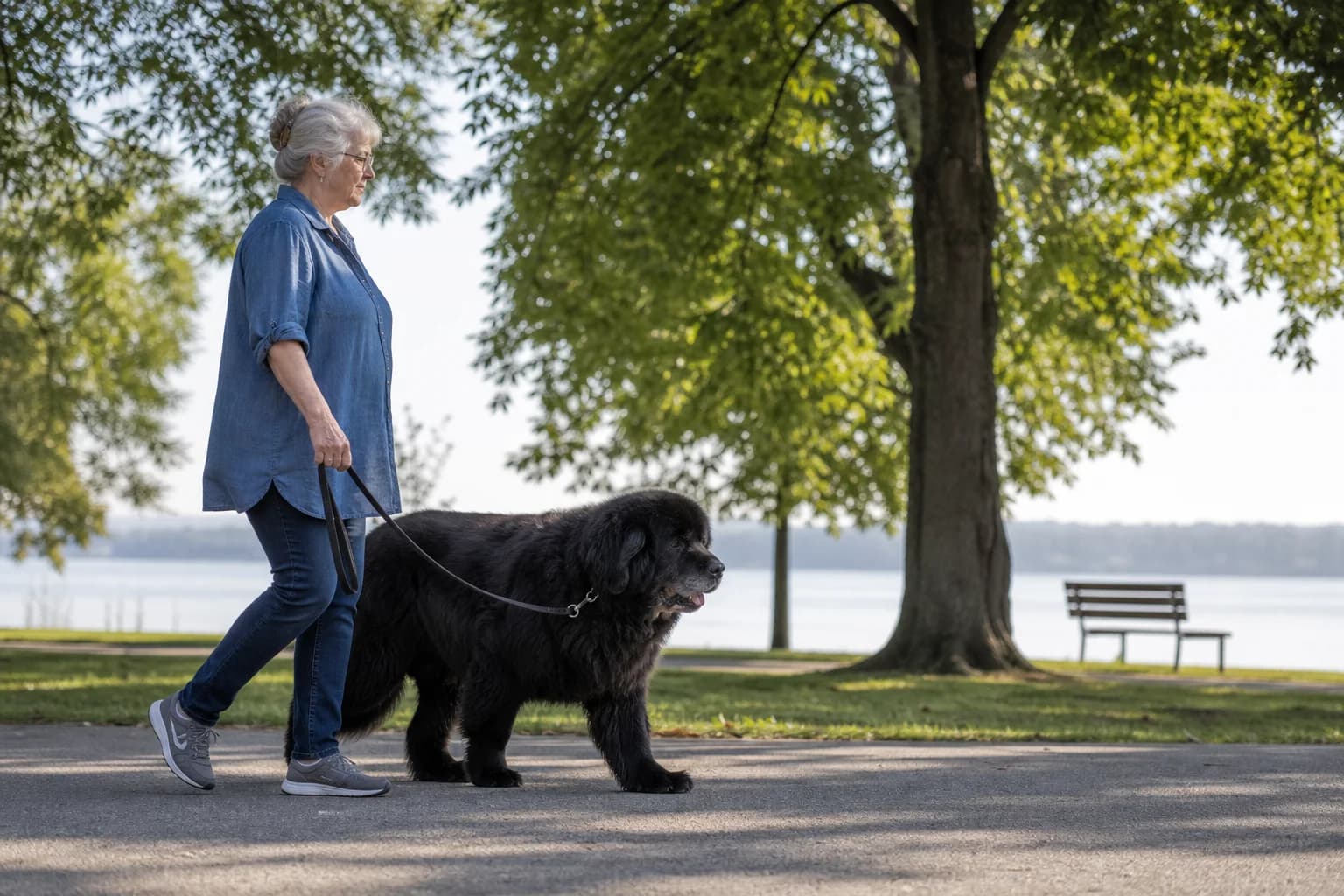
The commonly published Newfoundland dog lifespan is about 9 to 10 years, but that is a population estimate, not a deadline for an individual dog. Genetics, body condition, preventive care, disease, environment, and chance all matter. Healthy aging work starts well before a dog is visibly senior.
Keep a baseline record of weight, body and muscle condition, gait, appetite, water intake, breathing at rest, sleep, elimination, activity, and normal behavior. Trends make a veterinary conversation more useful because owners can describe what changed and when instead of relying on a vague sense that the dog seems older. WebVet's guide to unexplained dog weight loss or gain shows which accompanying details are useful to record.
What is the life expectancy of a Newfoundland dog? A published 9 to 10 year range is a population estimate, not an individual forecast. A Newfoundland cross can fall outside that estimate, so the Newfoundland mixes guide uses parent-range planning instead of a promised midpoint. Use population context to plan preventive care, mobility support, emergency transport, and financial capacity while continuing to base current decisions on the dog's examination, baseline trend, diagnoses, and veterinary assessment.
- If insurance is part of the household budget, obtain a current written quote from Lemonade Pet Insurance and compare exclusions, waiting periods, annual limits, deductibles, reimbursement percentages, and premiums with a dedicated savings plan. Coverage, pricing, and availability vary, so read the current policy and keep the written quote with the household's financial plan. The Newfoundland cost worksheet keeps this risk-funding decision separate from medical guidance.
Health problems and screening to discuss
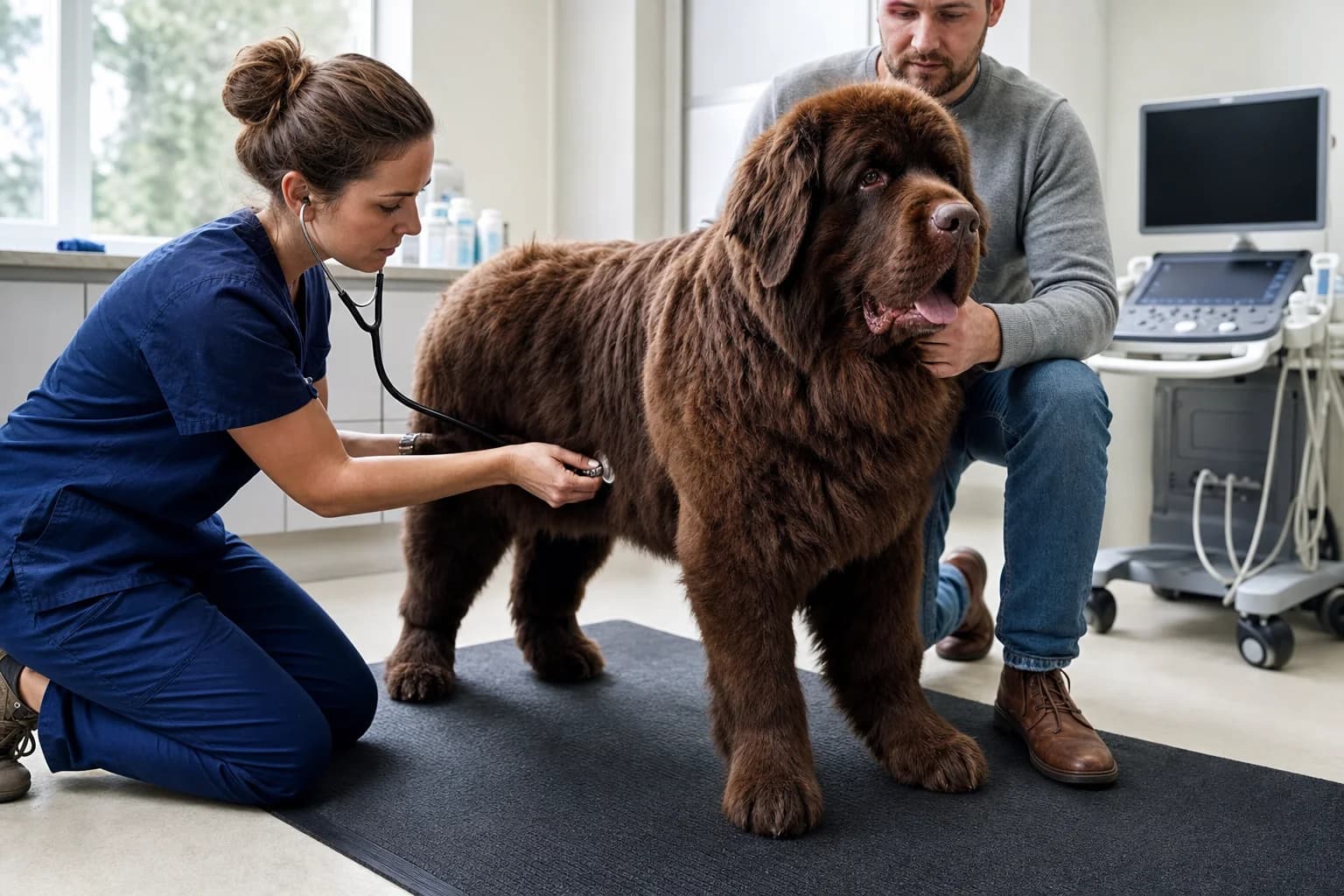
The Newfoundland Club of America calls for hips, elbows, cardiac evaluation by a cardiologist, and cystinuria testing for breeding stock. Public results help buyers verify that recommended screening was completed. A CHIC number shows that required results were submitted and made public, not that every result was normal or that future health is guaranteed. The Newfoundland puppy guide applies these records during source verification.
Important breed discussions include orthopedic disease, subaortic stenosis and other cardiac concerns, and cystinuria. The purpose of knowing the list is to support screening, observation, and timely care. It is not to diagnose a dog from a symptom or assume that every Newfoundland will develop each condition.

Petful may earn a commission when you click through to Lemonade, at no extra cost to you.
Newfoundland dog health problems and health issues should be divided into decisions, not copied as one alarming list. Use OFA records to verify hip dysplasia, elbow dysplasia, cardiac, and other published screening results, then keep screening separate from diagnosis. Public testing reduces uncertainty for breeding decisions; it does not guarantee the individual dog's future or explain a current symptom without examination.
| Lane | What belongs here | Evidence to keep | Action boundary |
|---|---|---|---|
| Screening | Hip, elbow, cardiologist cardiac, and cystinuria results for breeding decisions | Registered identity, test type, examiner, date, and full public result | Screening reduces uncertainty but does not diagnose or guarantee an individual outcome |
| Monitoring | Ordinary weight, body and muscle condition, gait, appetite, breathing, elimination, skin, and behavior trends | Dated baseline, concise change summary, medication list, and representative video when useful | Contact the veterinary team when a trend persists, recurs, or concerns the owner |
| Urgent action | Collapse, labored breathing, pale or blue gums, hard distended abdomen with unproductive retching, severe pain, sudden limb loss, or repeated straining with little urine | Current sign, start time, clinic phone number, safe transport plan, and known diagnoses or medications | Call the nearest emergency service now; do not continue a home test or give unapproved medicine |
 Sponsored
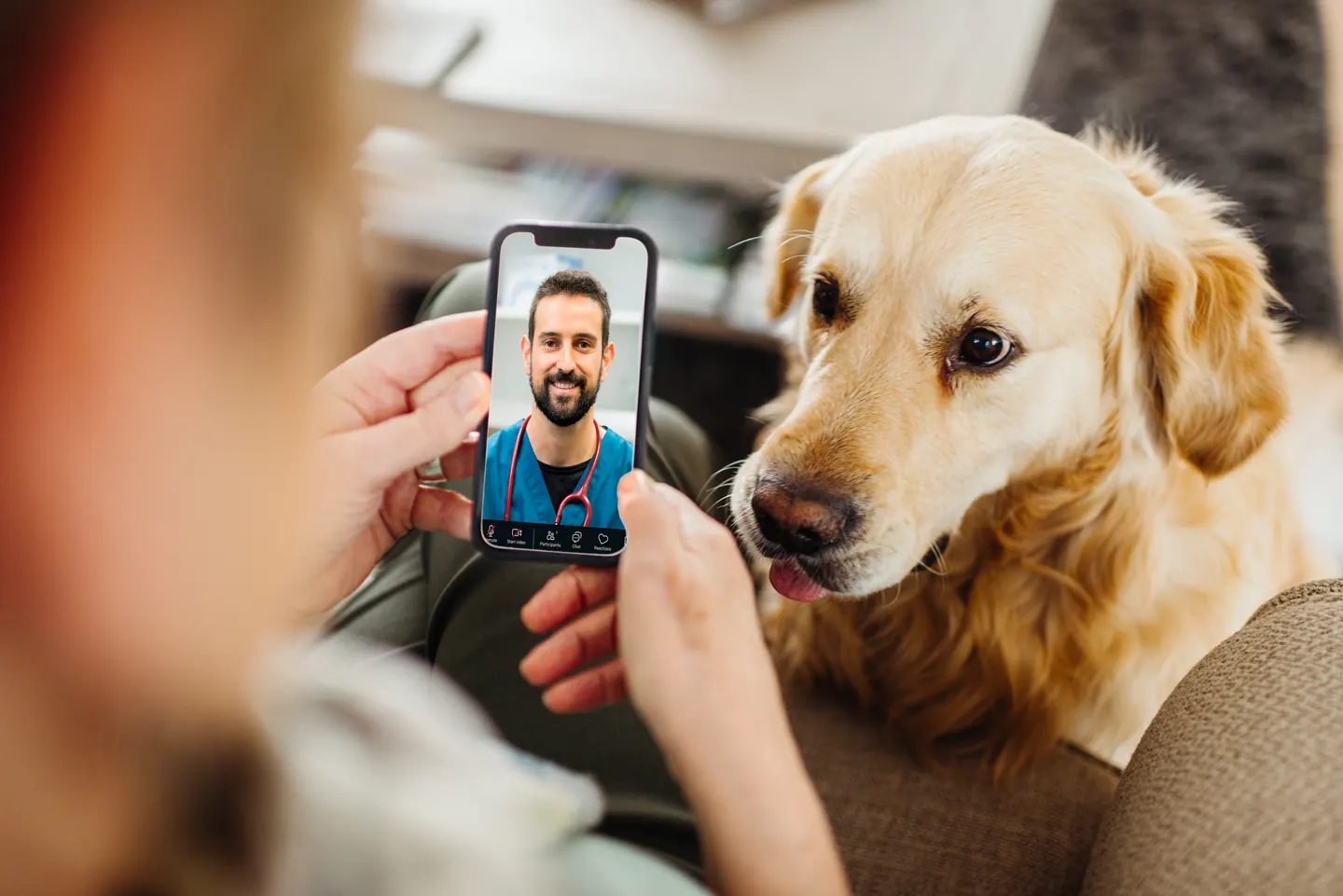
Have a health question about your pet?
Talk to a licensed vet at Dutch over video or message, including nights and weekends.
Use code Pets60
Plans start at $12/month · covers up to 5 pets
- Licensed vets in most states
- Rx for 150+ conditions
- 4.7 on Trustpilot
Know what to monitor and when to seek care
Some signs need urgent action rather than monitoring: collapse, labored breathing, pale or blue gums, a hard distended abdomen with unproductive retching, severe pain, sudden inability to use a limb, or repeated straining with little or no urine. Contact the nearest veterinary emergency service and follow its transport instructions.
Other changes deserve a prompt appointment even when the dog is comfortable, including a persistent limp, reduced exercise tolerance, new cough, unexplained weight change, recurrent skin or ear trouble, altered thirst or urination, and a steady decline in mobility. Early evaluation is more useful than waiting for a breed-specific explanation to appear online.
Trying to help a sick dog feel better starts with triage, not a home remedy. Check for urgent warning signs, call for veterinary direction, and report the timeline, food and water intake, elimination, breathing, mobility, pain, current medications, and any exposure. Do not give human medicine, force food, or repeat exercise to test whether the dog improves.
- Aging record: What are signs of aging in Newfoundland dogs? Gradual changes in stamina, mobility, senses, sleep, and recovery belong in a senior life-stage planning record, but a new symptom still needs assessment. Pair lifespan context with a life-stage monitoring record rather than a single age promise by keeping dated normal appetite, gait, breathing, elimination, body condition, muscle condition, social engagement, and recovery while the dog is well.
- Three-lane triage: A long disease list becomes screening, monitoring, and urgent-action lanes. Screening collects inherited-risk records; monitoring compares ordinary body, mobility, appetite, breathing, and elimination trends; urgent action responds to collapse, breathing trouble, a swollen abdomen, severe pain, or urinary obstruction. The lanes organize the next step without diagnosing an individual Newfoundland from breed risk.
- Use breed-level evidence to prepare observations and questions. Base health, behavior, nutrition, insurance, and safety decisions on the individual dog, current records, and the appropriate qualified professional.
Build records a veterinary team can use
Read screening records at the source
Match registered names and numbers to the litter records, then open the public hip, elbow, cardiologist cardiac, and cystinuria results. Check the test type, examiner, date, identity, and actual result rather than relying on a CHIC number or a screenshot. CHIC participation means breed-specific results were completed and made public; it can include abnormal results and does not cover every disease.
Screening addresses inherited-risk decisions in an apparently healthy breeding dog. Diagnostic testing addresses current signs in an individual patient. Normal parental results should never be used to dismiss a limp, collapse, reduced stamina, or urinary trouble, and a breed risk should never be used to name the cause without an examination.
Establish a useful baseline while the dog is well
Record weight together with body and muscle condition, because a dense coat and a scale number alone can hide change. The Newfoundland food guide explains measured portions and body-condition trends, while the main Newfoundland breed guide keeps ordinary activity, heat, coat, and household planning in their proper lane. Rapid or unexplained weight change still needs veterinary assessment.
Add normal gait, willingness to rise, stair use, recovery after activity, resting breathing, appetite, thirst, urination, sleep, and social behavior. Occasional short gait videos on the same nonslip surface can help describe a change, but they cannot identify whether the cause is orthopedic, neurologic, cardiac, painful, or something else.
- After measuring the dog at full extension, FurHaven NAP Ultra Plush Orthopedic Deluxe Dog Bed, Jumbo can be compared as an ordinary low, roomy resting surface. Measure the dog at full extension and treat comfort claims as product features, not medical treatment or mobility support prescribed for a condition.
Make routine movement notes comparable
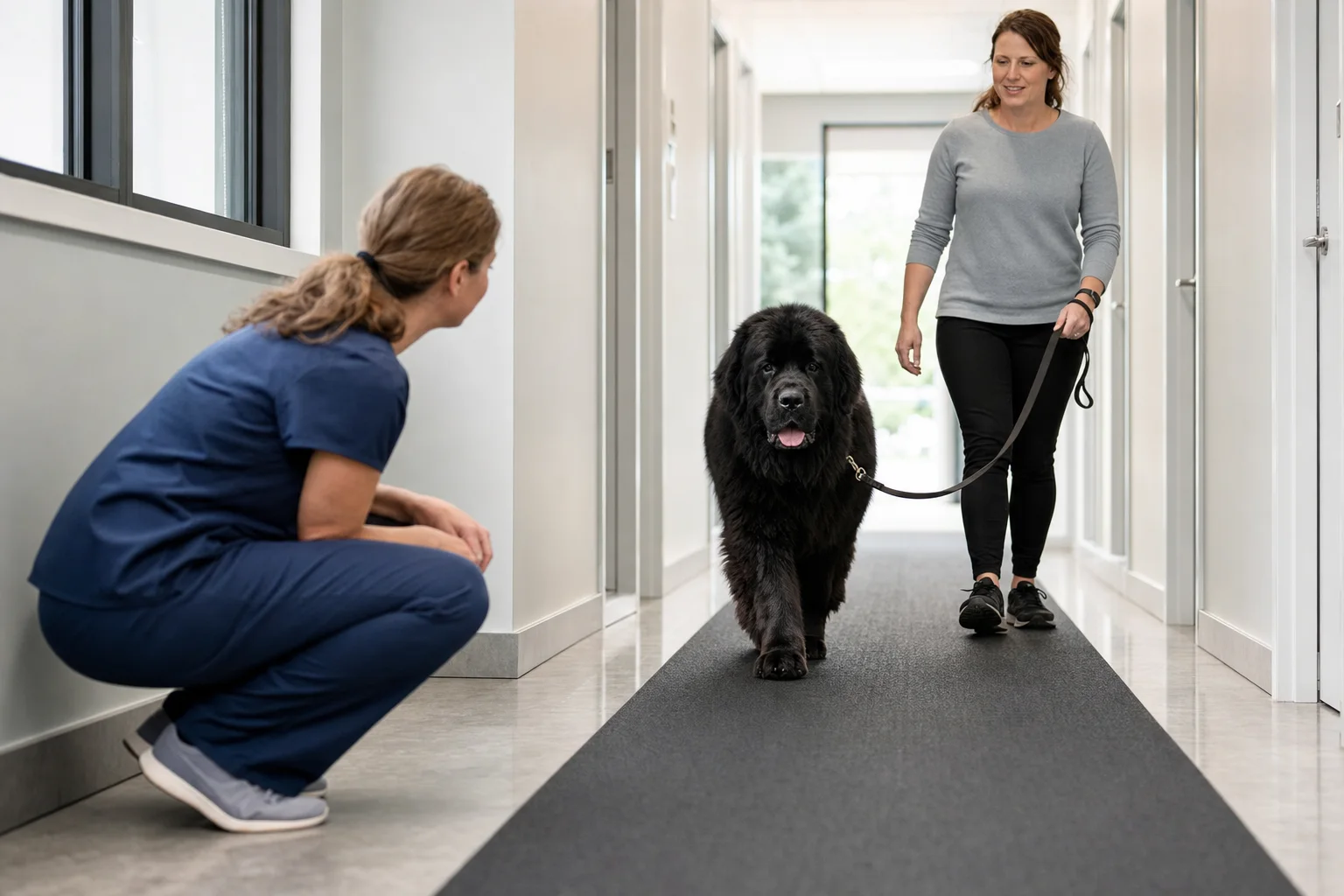
For a change in stamina or mobility, record the surface, weather, distance, side affected, start time, recovery, cough, breathing, stiffness, toe dragging, slipping, and reluctance to rise or use stairs. Do not repeat strenuous exercise or force a painful movement to test the dog. Ask the veterinary team which activity is appropriate for the diagnosis, conditioning, weather, and recovery; swimming is not automatically safe rehabilitation.
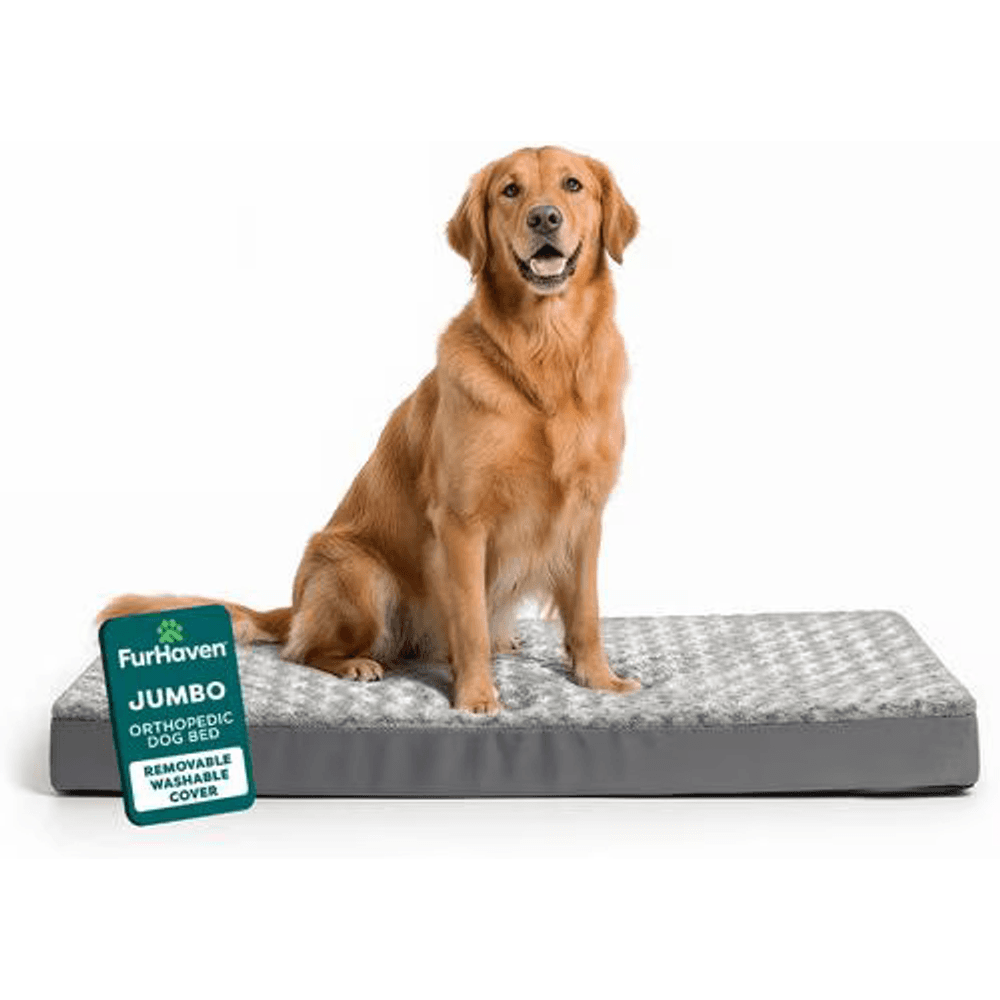
A plush orthopedic foam mattress that cushions aging joints and pressure points, giving a stiff or trembling senior dog warm, supportive rest.
Petful may earn a commission when you click through to Chewy, at no extra cost to you.
Nonslip routes between the resting area, water, door, and vehicle can make ordinary movement more secure. Keep nails and paw hair appropriately maintained, introduce ramps before they are urgently needed, and preserve a clear vehicle path. Environmental changes can support a care plan, but they do not treat pain, weakness, or neurologic disease.
Inspect the coat without turning grooming into treatment
Part the dense coat under the collar, behind the ears, in the armpits and groin, around the tail, and between the toes during calm routine handling. Record persistent licking, head shaking, pain, odor, discharge, wounds, tender mats, or spreading irritation for the veterinary team. The Newfoundland shedding and grooming guide covers drying and skin-level coat checks; the color and markings guide separates normal pigment or lighting variation from a new skin or coat concern.
After water activity, rinse when appropriate and dry to the skin. Recurrent hot spots, infection, painful ears, or spreading irritation needs veterinary diagnosis rather than repeated shampooing, cosmetic wipes, or unapproved home ear remedies.
Keep senior, medication, and transport plans current
Senior planning can include traction, a measured resting area, easier vehicle access, shorter routes, temperature control, dental care, more frequent toilet access, and an activity plan chosen for the individual. New pain, weakness, confusion, sleep disruption, appetite loss, or altered behavior should not be dismissed as normal aging. Ask the veterinary team for a repeatable quality-of-life framework when comfort, mobility, appetite, interaction, sleep, hygiene, or good-day patterns begin to change.
Keep one current medication and supplement list with product name, strength, amount, schedule, reason, prescribing clinic, and start or change date. Never calculate a dose from breed size, use human pain medicine, or change a prescribed product without veterinary direction. Bring the list and original containers when the clinic requests them.
A weak Newfoundland may require multiple people, a ramp, stretcher, or sling. Plan the vehicle, clinic route, phone numbers, and helpers before a crisis, then follow the receiving clinic's instructions during an actual emergency. Financial pathways also need advance review because insurance, savings, credit, and charitable resources have different timing, terms, and exclusions; none guarantees coverage or a medical outcome.
What each health lane can and cannot answer
Life expectancy as a population estimate not an individual promise
Use the commonly published 9 to 10 year figure for planning, never as a countdown. Current health, body and muscle condition, mobility, preventive care, environment, genetics, and chance shape the individual course. New symptoms deserve their own assessment even when a dog is near or beyond a breed average.
Hips elbows cardiac clearance and cystinuria testing
Verify hips, elbows, cardiac evaluation by the appropriate examiner, and cystinuria status at the source. Match dog identity, date, test type, and result. A CHIC number reflects completion and public disclosure of breed-specific requirements, not an all-normal badge or a lifetime health guarantee.
Subaortic stenosis orthopedic disease and cystinuria
Know why subaortic stenosis, orthopedic disease, and cystinuria appear in breed discussions, but keep risk separate from diagnosis. Collapse, reduced stamina, lameness, pain, or urinary straining can have multiple causes. Give the veterinarian the screening history and exact symptom timeline instead of selecting a breed condition online.
Body condition mobility and preventive-care trends
Track weight, body and muscle condition, gait, activity recovery, appetite, thirst, urination, breathing at rest, sleep, and behavior. Consistent observations make a gradual change easier to recognize. The record should trigger a timely conversation, not become a home scoring system that delays examination.
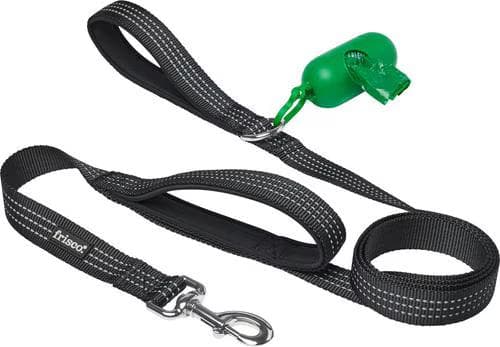
- For ordinary, veterinarian-approved walks, a second padded handle on Frisco Traffic Leash with Dual Padded Handles can give a handler a shorter grip without pulling the dog into position. A leash is handling equipment, not a mobility aid, diagnosis, or substitute for training. Confirm hardware condition and handler comfort.
Petful may earn a commission when you click through to Chewy, at no extra cost to you.
Senior life-stage planning
Senior planning includes traction, bedding, vehicle access, shorter routes, temperature control, dental care, medication review, and more frequent opportunities to eliminate. Change the environment as needs evolve, but investigate new pain, weakness, confusion, sleep disruption, or appetite loss rather than labeling every change normal aging.
Urgent bloat breathing collapse and urinary-obstruction signs
A hard distended abdomen with unproductive retching, labored breathing, blue or pale gums, collapse, severe pain, sudden inability to use a limb, or repeated straining with little urine requires urgent direction. WebVet's symptom guide treats straining to urinate as an emergency and explains the details to report. Call the nearest emergency service and prepare safe giant-dog transport; do not test the sign again at home.
Breed risk does not diagnose an individual dog
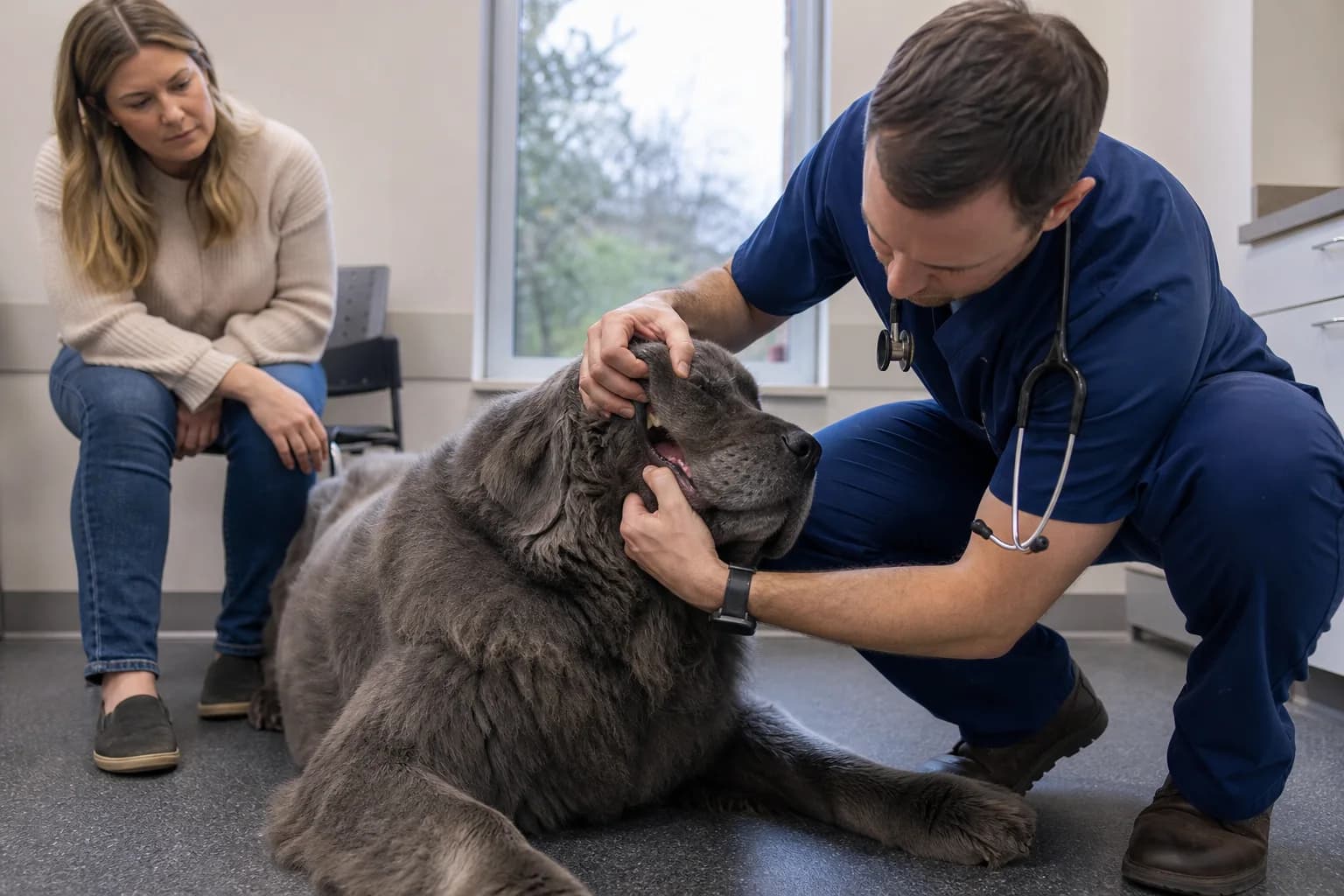
Breed information helps owners prepare records and questions. It cannot determine what is happening inside one dog. Screening, household monitoring, and emergency response belong in separate lanes so a normal parental result is not used to dismiss a symptom and a breed risk is not mistaken for a diagnosis.
Build a three-lane health map
Put breeding and inherited-risk records in the screening lane, ordinary measurements and observations in the monitoring lane, and time-sensitive danger signs in the urgent lane. Each entry needs a source, date, next action, and responsible person. This prevents a public clearance from being confused with an examination and keeps a gradual mobility trend separate from an emergency.
Review screening records before acquisition or breeding decisions, monitoring trends at routine visits or when something changes, and urgent signs immediately. Add emergency clinic numbers, vehicle access, helpers, and safe movement equipment before they are needed. The map organizes communication and action; it never names the diagnosis for an individual dog.
For routine appointments, bring a short trend summary rather than an unfiltered diary. List the date a change began, what reliably triggers it, how long recovery takes, current food, medication and supplement details, recent weight and body condition, and one or two representative videos when movement is involved. This gives the veterinary team usable context while leaving diagnosis and testing decisions with the clinician.
Keep routine records and logistics usable
Rehearse the logistics lane separately. Confirm which vehicle can hold the dog lying down, how a ramp or support aid is introduced before injury, who can help, and which clinic can receive a giant dog after hours. Keep the route and phone numbers available offline. During an actual breathing problem, collapse, severe pain, or abdominal emergency, call first and follow clinic instructions instead of practicing movement equipment.
Use a preventive calendar for dental exams, parasite prevention, vaccines chosen for the individual risk, nutrition review, body and muscle scoring, medication reconciliation, and age-appropriate screening discussions. The calendar should create questions, not automatic tests copied from another dog. Change the interval when the veterinarian recommends it or when a new symptom, diagnosis, medication, or life-stage transition changes the plan.
Keep the current medication and supplement list separate from the symptom log. Include product name, strength, amount, schedule, reason given, prescribing clinic, and the date it started or changed. Bring the original containers when the clinic requests them, and ask before stopping, combining, or changing anything. This is especially important when several people share care, because a clear list helps prevent missed or duplicate doses without asking the owner to interpret a reaction alone.
 Sponsored
Vet care that's always there
Unlimited video calls and messaging with licensed vets for less than a typical vet visit. One membership covers up to five pets.
Use code Pets60
Plans start at $12/month · covers up to 5 pets
- Licensed vets in most states
- Rx for 150+ conditions
- 4.7 on Trustpilot
Keep ordinary home routes predictable
Before the dog has a mobility problem, map a nonslip route among the resting area, water, door, and vehicle. Remove unstable furniture, rehearse calm access to the chosen route, and make sure every caregiver understands the same household boundaries. This is ordinary environment planning, not a response to symptoms or a substitute for veterinary care.
- A secured barrier such as Frisco Steel 8-Panel Configurable Dog Gate and Playpen, 30-in can block ordinary access to slippery stairs or preserve a quiet resting area. Use only for supervised management and confirm height, stability, spacing, and anchoring for the individual dog. Do not use a barrier to confine a distressed dog or delay care.
Separate aging trends from illness triage
Use a baseline trend to distinguish aging questions from urgent changes. Record normal appetite, sleep, social engagement, gait, recovery after activity, breathing at rest, water intake, urination, body condition, and muscle condition while the dog is well. Signs of aging in Newfoundland dogs can include gradual changes in stamina, mobility, senses, sleep, or recovery, but a new symptom still deserves assessment rather than automatic attribution to age.
When the dog seems sick, first look for urgent warning signs: breathing difficulty, collapse, pale or blue gums, severe pain, a hard swollen abdomen, repeated unproductive retching, inability to stand, or repeated straining with little urine. Call for veterinary direction instead of trying to make a sick dog feel better with human medication, forced food, extra exercise, or an unplanned supplement. For non-emergency changes, note timing, triggers, intake, elimination, current products, and a short video when useful.
Make the health map useful over time
Assemble a source-linked screening packet
A screening packet should identify the dog behind every result, not merely display a logo or summary. Save the registered name, registration number, date of birth, parent relationship, testing organization, test date, examiner type, and complete result. A breeder's statement that the parents are cleared is a lead to verify, not the result itself. If a name or number in the litter paperwork does not match the public record, pause the acquisition discussion until the source can explain the discrepancy.

Petful may earn a commission when you click through to Chewy, at no extra cost to you.
Read the four core Newfoundland screening areas separately because they do not answer the same question:
- For hips and elbows, confirm that the imaging result belongs to the named parent and note the date and final evaluation rather than relying on a cropped image.
- For cardiac screening, confirm that the evaluation was performed by the examiner type specified by the Newfoundland Club of America and retain the full point-in-time result.
- For cystinuria, keep the dog's DNA status or acceptable parentage evidence and ask how the pairing was chosen. The record informs inherited-risk planning but does not evaluate a current urinary sign.
- For a CHIC number, open every linked result. Completion and public disclosure are valuable, but the number is not an all-normal badge and does not replace results that are missing from the packet.
Add a short note for questions the packet does not answer. Screening does not measure day-to-day temperament, guarantee longevity, rule out an injury, or diagnose a puppy or adult with current signs. This one boundary prevents both false reassurance and unnecessary alarm. Keep the original report or stable public link rather than only a cropped screenshot, and record who supplied it and when it was checked. If a result uses unfamiliar terminology, bring the complete document to the veterinarian or relevant screening organization instead of translating it into cleared or failed on your own. That provenance makes the packet useful after a website changes and keeps an incomplete summary from being repeated as certainty.
Build a baseline that can show direction, not noise
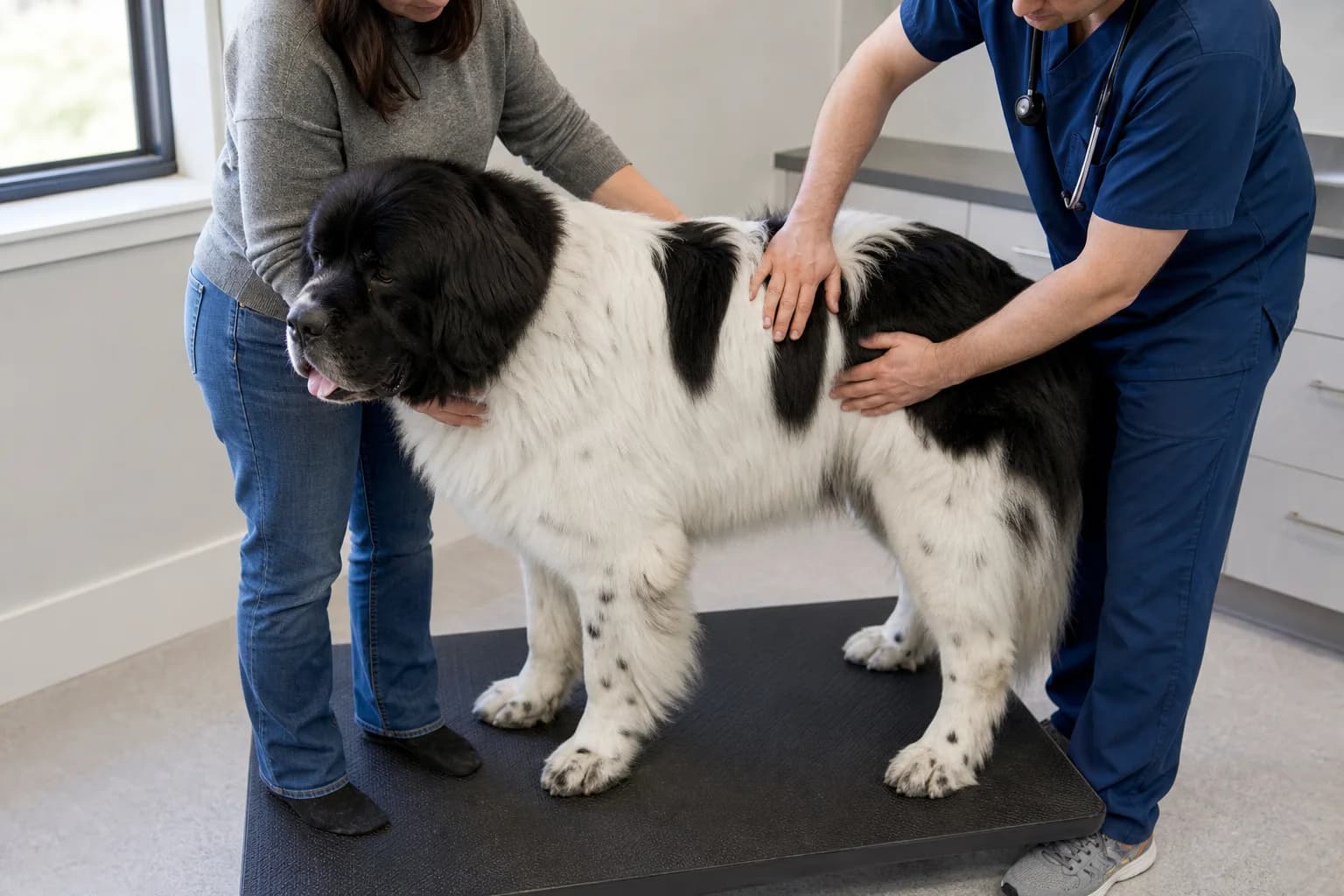
Choose observations that can be repeated under similar conditions. Weight is more useful beside body and muscle condition; a gait video is more useful when the surface, direction, and pace are consistent; recovery is more useful when the weather and activity are described. The objective is not constant surveillance. It is a small set of normal reference points that makes a real change easier to describe.
For each baseline entry, record:
- the date, time, and relevant conditions, including heat, surface, recent activity, and meal timing;
- what the dog did comfortably, such as rising, walking, eating, resting, eliminating, or settling after activity;
- the measured or observable result, such as weight, body-condition score, gait symmetry, appetite, urine output, or resting breathing pattern;
- any medication, supplement, diet, diagnosis, or routine change that could matter to the veterinary history; and
- the threshold the veterinary team has given for calling sooner, when one exists for that individual.
Review the record at a practical interval chosen with the veterinary team and when something changes. More entries are not automatically better. A concise, comparable trend is easier to interpret than dozens of measurements taken under different conditions, and a worrying sign should trigger contact rather than another week of data collection. Use the same scale when practical, identify the person making a body-condition observation, and note medication, diet, weather, surface, or activity changes that could affect comparison. Preserve the unedited date on photos and videos. When caregivers disagree, record both observations and the circumstances instead of averaging them into a false consensus. The goal is a traceable baseline trend, not a perfect-looking chart. Before sharing the record, confirm that weights include units, videos identify the date, side, surface, and pace, and laboratory or screening files retain their complete result and reference information. Do not edit a clip to hide a stumble, cough, pause, or recovery period, and do not select only entries that support a household theory. Give the veterinary team the representative evidence and the conditions under which it was recorded.
Turn the record into a one-page appointment brief
Before a routine or problem-focused appointment, reduce the relevant history to one page. Start with the current concern in one sentence, then give its start date, frequency, triggers, duration, recovery, and whether it is stable, improving, or worsening. Include current food, medications, supplements, recent weight and body-condition information, and the two or three observations that best show the change. Keep the full diary available, but do not make the clinician reconstruct the timeline from unrelated notes.
Movement concerns benefit from one or two short, dated videos that show the whole dog on a safe surface. Skin concerns benefit from location, size, symmetry, itch, odor, discharge, and how the area changed. Appetite or elimination concerns benefit from measured intake, frequency, output, vomiting or stool details, thirst, pain, and relevant product changes. These observations improve the history; they never establish the diagnosis at home.
Finish the brief with prioritized questions:
- Which findings need examination or testing now, and which can be monitored?
- What activity, diet, grooming, or medication instructions apply while results are pending?
- Which changes should prompt a same-day call or emergency visit?
- When should the trend be reviewed, and what evidence would be most useful at that time?
Written instructions matter when several people share care. After the visit, replace household guesses with the clinician's plan, record who is responsible for each task, and keep follow-up dates with the same brief. If primary care, emergency, rehabilitation, nutrition, or specialty teams are involved, identify which clinic owns each current question and where reports should be sent. Reconcile medication names and doses against the latest written instructions rather than combining old lists. A one-page brief should point to the full records, not silently omit a diagnosis, adverse reaction, handling limit, or pending result that another clinician needs.
Prepare an emergency handoff without practicing an emergency
The emergency card should work when the usual caregiver is unavailable or stressed. Store the primary clinic, nearest open emergency service, poison-control route used by the household, vehicle choice, helper contacts, dog weight, known diagnoses, current medications, major handling limits, and the location of records. Keep a printed or offline copy because a phone battery or data connection may fail.
Practice only ordinary logistics while the dog is well: calm approach to the vehicle, comfortable use of a ramp if one is part of the plan, where the dog can lie, how doors are secured, and who can assist. Do not rehearse lifting a painful dog, constraining breathing, or using an improvised sling during a crisis. For collapse, labored breathing, severe pain, a hard distended abdomen, or urinary obstruction signs, call the receiving service and follow its movement instructions.
Update the card after a move, clinic change, new diagnosis, medication change, mobility change, or caregiver change. Senior reviews should also revisit traction, toilet access, sleep, dental comfort, appetite, interaction, hygiene, and good-day patterns. A quality-of-life framework can make those conversations more consistent, but the score and the health map support a shared veterinary and family decision rather than making it automatically. Place one copy where every caregiver can find it, store another with the transport supplies, and confirm that phone numbers and after-hours availability are still current. Note which entrance can accommodate a giant dog and whether a caregiver needs help moving ordinary equipment. These checks prepare communication and access; they never authorize untrained lifting, home treatment, or delay while urgent signs are present.
Newfoundland FAQs
The AKC publishes a Newfoundland life expectancy of about 9 to 10 years, but a mix or individual dog can fall outside a population estimate. Use the dog's current health, body and muscle condition, ancestry, preventive care, and veterinary assessment to guide planning. A new symptom should be evaluated on its own merits rather than dismissed because of the dog's age.
To help a sick dog feel better, start by checking for urgent warning signs such as breathing difficulty, collapse, pale or blue gums, severe pain, a hard swollen abdomen, repeated unproductive retching, inability to stand, or repeated straining with little urine. Call for veterinary direction rather than giving human medicine, forcing food, or testing the dog with exercise. For a stable non-emergency change, record timing, intake, elimination, current products, and a short representative video when useful.
Signs of aging in Newfoundland dogs can include gradual changes in stamina, mobility, senses, sleep, or recovery. Build a baseline trend while the dog is well: appetite, social engagement, gait, breathing at rest, water intake, urination, body condition, and muscle condition. A new symptom should not be dismissed as age. Share the dated change with the veterinary team so the individual dog can be assessed.
Sources and evidence boundaries
- Newfoundland Club of America breed standard: Breed temperament, structure, working identity, coat, and recognized-color context.
- American Kennel Club breed page: Registry size, lifespan, breed history, coat, and breeder-screening overview.
- AKC official Newfoundland standard: Exact breed-standard language for size, coat, colors, markings, and temperament.
- Newfoundland Club of America health position statements: Required hips, elbows, cardiac, and cystinuria breeding-stock clearances.
- Orthopedic Foundation for Animals CHIC program: Meaning and limitations of a CHIC number and public health results.
- NCA Health and Longevity Committee fact sheets: Breed-specific condition education and veterinary-advice boundary.
- AAHA Canine Life Stage Guidelines: Individualized preventive care across puppy, adult, senior, and end-of-life stages.
Prices, product availability, labels, insurance terms, veterinary guidance, and individual needs can change. Check the current source, product information, policy, and appropriate professional guidance before making a decision.
BVMS, MRCVS
Dr. Pippa Elliott, BVMS, MRCVS, is a veterinarian with nearly 30 years of experience in companion animal practice. Dr. Elliott earned her Bachelor of Veterinary Medicine and Surgery from the University of Glasgow. She was also designated a Member of the Royal College of Veterinary Surgeons. Married with 2 grown-up kids, Dr. Elliott has a naughty Puggle named Poggle, 3 cats and a bearded dragon.
Sign up for expert-backed reviews and safety alerts all in one place.