Best Food for Newfoundland Dogs: How to Choose
Use a five-question diet review to compare life-stage adequacy, manufacturer expertise, quality control, calorie density, measured portions, body condition, and individual tolerance for a Newfoundland.

BVMS, MRCVS
Petful is reader supported. As an affiliate of platforms like Amazon and Chewy, we may earn a commission when you buy through links on this page. There is no extra cost to you.
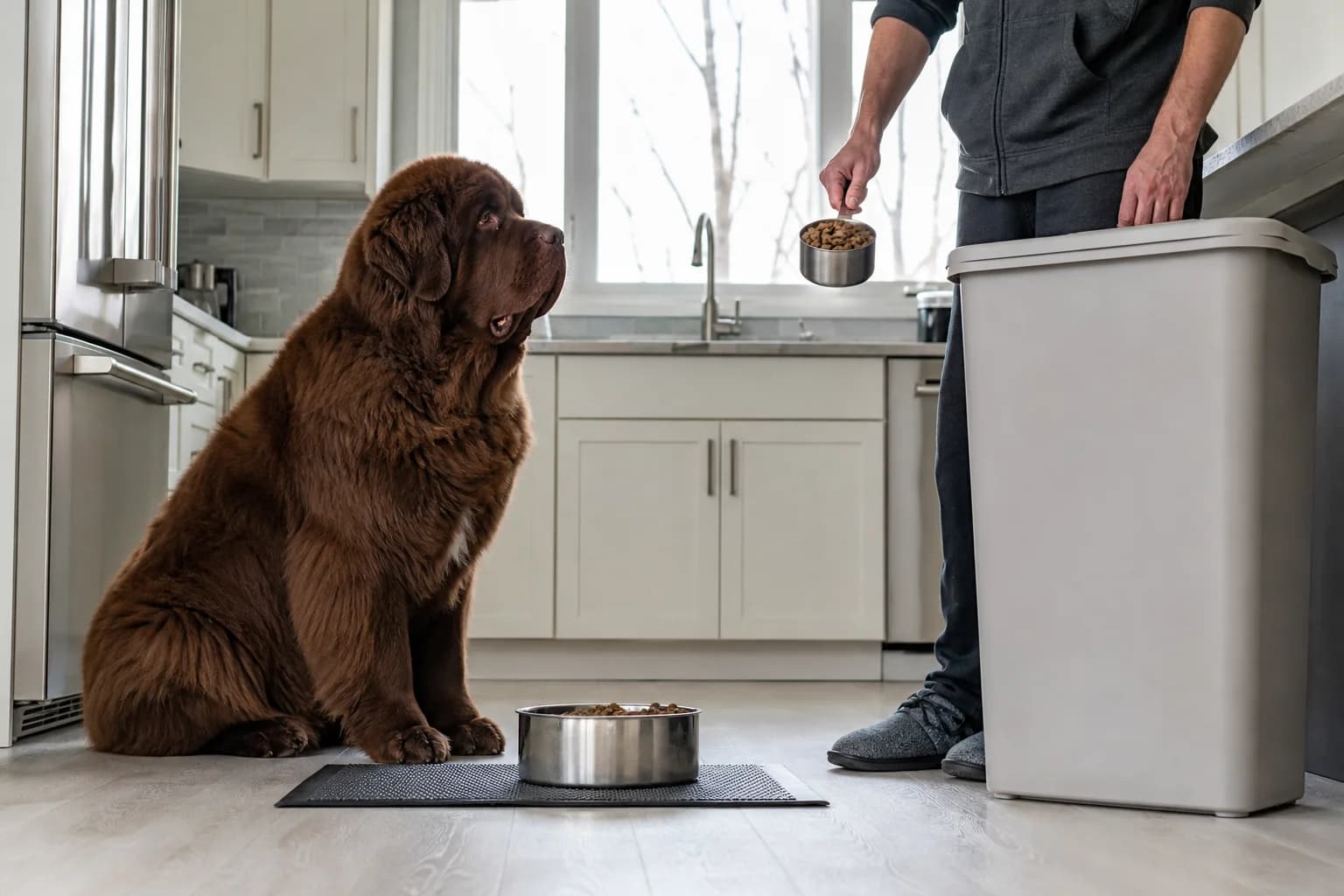
The best food for Newfoundland dogs is not one universal product or ingredient list. A sound choice matches life stage and health needs, comes from a manufacturer able to answer nutrition and quality-control questions, and supports a suitable body-condition trend at a measured portion.
Food choice starts with life-stage adequacy, qualified formulation, quality control, calorie density, measured portions, and the individual dog's body-condition trend. Ingredient impressions and brand popularity stay secondary to evidence, tolerance, and veterinary guidance for growth or medical concerns.
- 1Complete and balanced life-stage suitability.
- 2Manufacturer expertise quality control and contactability.
- 3Large and giant breed puppy growth needs.
- 4Lean body condition and measured portions.
- 5Calorie and treat accounting.
- 6Gradual transitions and tolerance logs.

Sign up for expert-backed reviews and safety alerts all in one place.
Choose a complete diet for your Newfoundland
The best food for Newfoundland dogs is not one universal brand. It is a complete diet appropriate for the individual dog's life stage and health, made by a company that can answer useful nutrition and quality-control questions, fed in an amount that maintains healthy body and muscle condition. The best choice remains the one whose evidence, calories, tolerance, and veterinary fit match the Newfoundland in front of you.
Use the nutritional adequacy statement, calorie information, manufacturer contact details, formulation expertise, quality-control practices, and published research as decision points. WebVet's explanation of complete and balanced dog food can help decode that first label check. Ingredient-list marketing and words such as premium do not show whether a food fits the dog.
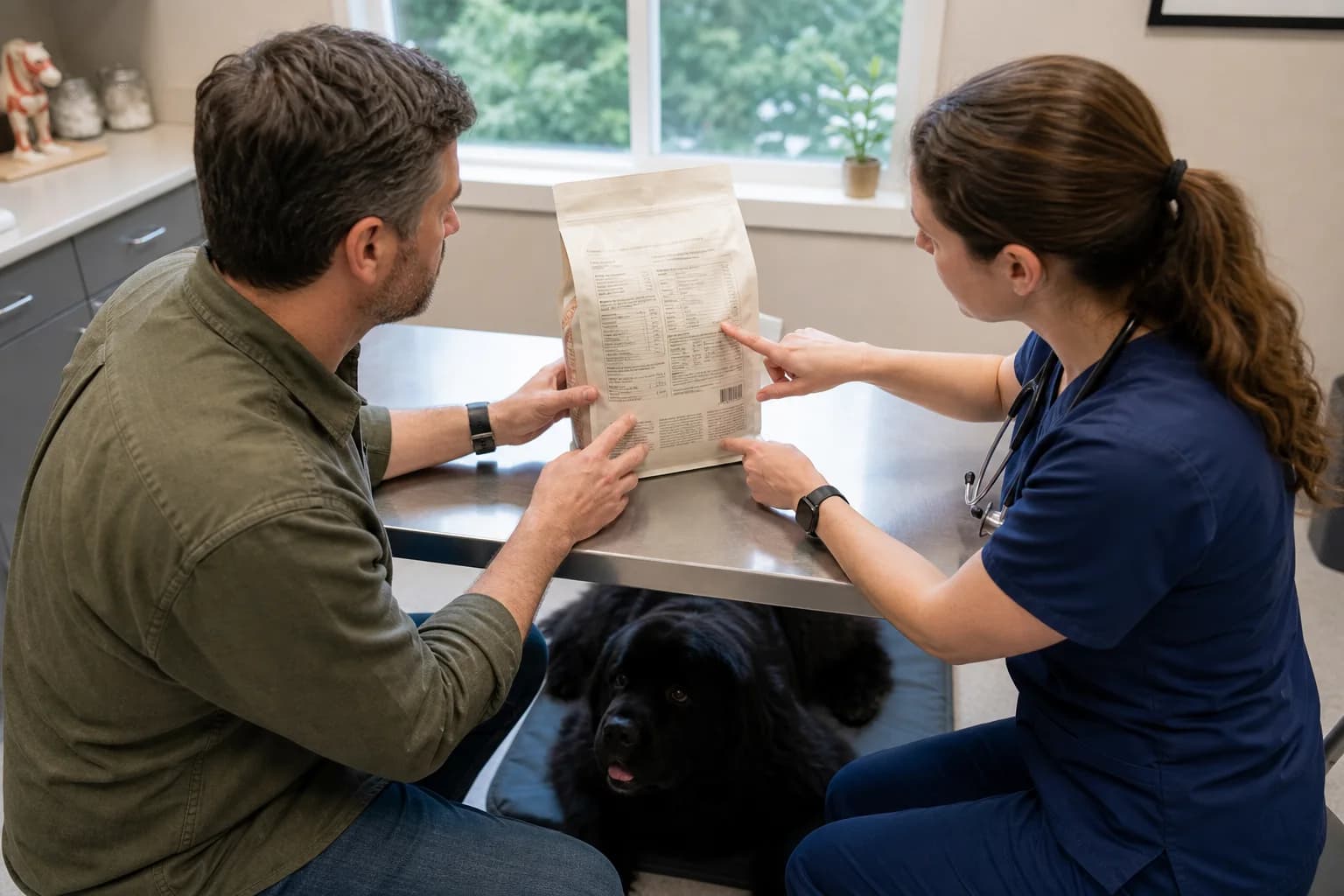
What is the best diet for a Newfoundland dog? Start with the AAFCO nutritional adequacy statement, then use the WSAVA Global Nutrition Committee's manufacturer questions and AAHA nutrition guidelines as discussion tools. Ask who formulates the diet, whether a veterinary nutritionist or other qualified expert is available, how quality control and traceability work, and how calories fit the individual. This repeatable label-and-manufacturer review is more useful than naming one universal best brand. Budget is a separate decision: the Newfoundland lifetime-cost guide shows how to estimate measured use without turning price into nutrition evidence.
- For a dog that eats too quickly, test whether the capacity and ridge spacing of JW Pet Skid Stop Non-Skid Slow Feeder Dog Bowl, 6-cup hold the measured meal without scraping or frustrating the muzzle. Check that the bowl is large enough for the dog's muzzle and meal volume, and stop if the design causes frustration or abrasion.
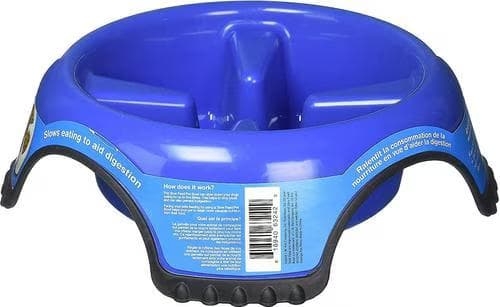
Petful may earn a commission when you click through to Chewy, at no extra cost to you.
Set portions by body condition and trend
Start portions from the food's calorie density and the feeding plan, then adjust with veterinary guidance using weight, body condition, muscle condition, activity, treats, and trend. The number printed on a bag is a starting estimate. Measure consistently, count extras, and review changes over several weeks rather than reacting to one day.
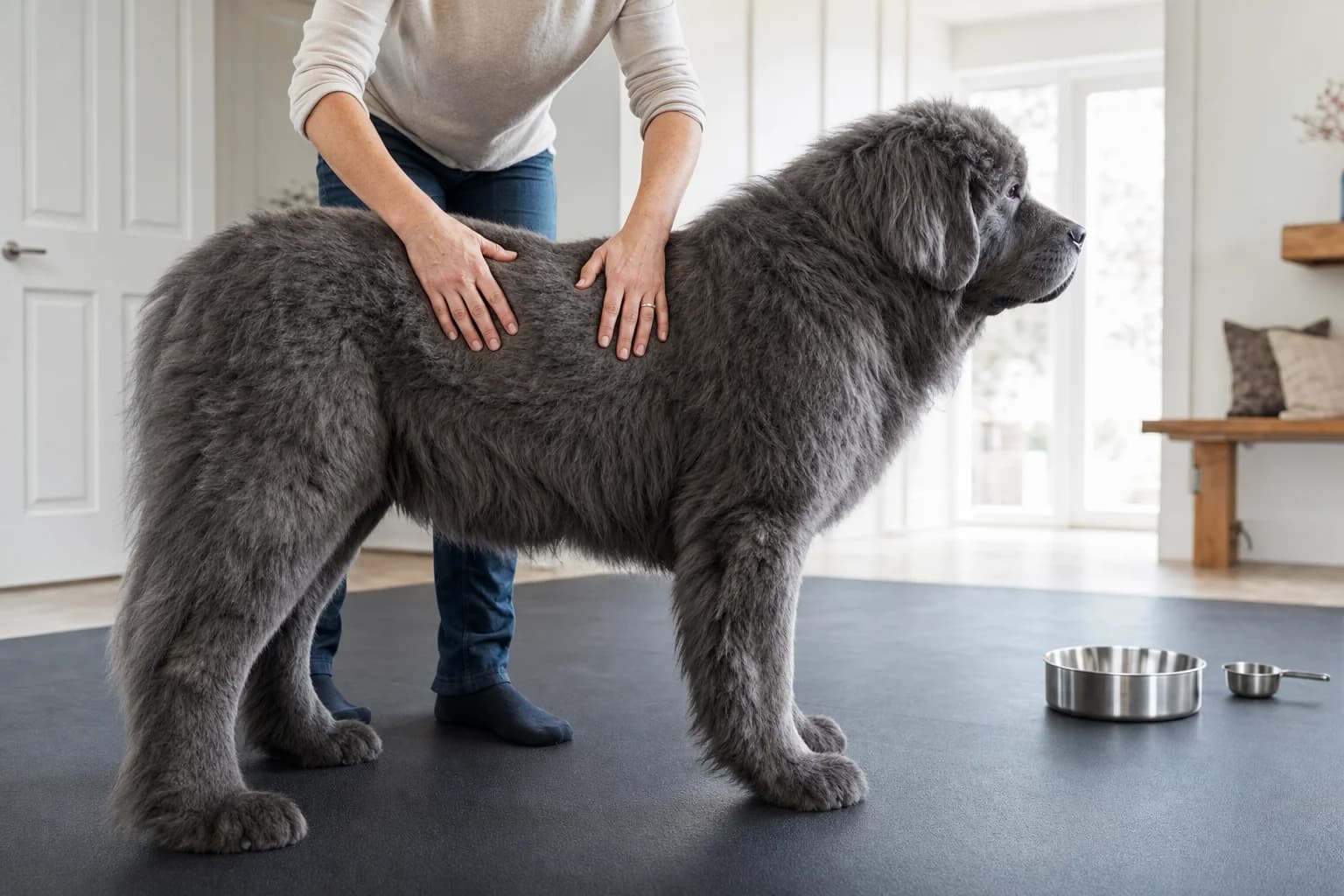
A Newfoundland's thick coat can make body condition harder to see. Ask the veterinary team to demonstrate how to feel the ribs, waist, abdominal tuck, and muscle over the spine and limbs. The Newfoundland shedding guide covers coat-level handling, and the color guide explains why lighting and coat condition can change appearance without changing body condition. Sudden weight change, poor appetite, repeated vomiting, diarrhea, or reduced stamina needs clinical assessment; WebVet's dog weight-change guide explains what to record before the appointment.
Are Newfoundlands allergic to chicken? The breed is not universally allergic, and suspected food allergy needs veterinary assessment rather than an unsupported ingredient ban. A controlled elimination plan may be appropriate. For feeding equipment, the best bowl for a dog in Newfoundlands is simply a stable, washable bowl that fits the muzzle and measured portion; slow-feeder ridges must not scrape or frustrate the dog. Compare shapes using WebVet's practical slow-feeder bowl guide, then observe the individual dog rather than assuming a maze design is automatically better.
| Review question | Evidence to record | Decision rule |
|---|---|---|
| Is it adequate for this life stage? | Exact nutritional adequacy statement and whether the dog is growing, adult, or reproducing | Exclude a diet whose adequacy statement does not match the dog's life stage |
| Who formulates it? | Named nutrition expertise and access to qualified staff for detailed questions | Ask the manufacturer when credentials or responsibilities are unclear |
| How is quality controlled? | Incoming and finished-product testing, traceability, lot code, and contact route | Lower confidence when important quality or traceability questions go unanswered |
| What does the measured ration provide? | Calories per cup or gram, daily amount, treats, chews, and supplements | Recalculate the whole ration when calorie density or extras change |
| How is this dog doing on it? | Appetite, stool, weight, body and muscle condition, activity, and veterinary findings over time | Seek veterinary assessment for persistent symptoms or unexplained change instead of repeatedly switching foods |
- The published capacity and maze shape of Outward Hound Non-Skid Slow Feeder Dog Bowl, 4-cup provide another slow-feeder format to compare with the dog's measured portion, muzzle size, and eating style. Choose a ridge depth that slows the meal without causing frustration or scraping, and keep the same food amount in the daily ration.

Multiple ridges and valleys slow eating, reduce gas and bloating, and turn mealtime into a fun puzzle. Non-skid base, dishwasher safe, 4-cup capacity.
Petful may earn a commission when you click through to Chewy, at no extra cost to you.
Feed a Newfoundland puppy for controlled growth
Newfoundland puppies need a growth diet appropriate for large or giant breed development. AAHA guidance emphasizes lean body condition and avoiding excessive calcium during growth. The Newfoundland puppy guide places feeding alongside growth, movement, and handling milestones. Do not add calcium, mineral powders, or growth supplements unless the puppy's veterinarian or a qualified veterinary nutritionist directs it.
Feed measured meals on a predictable schedule, keep water available, and use calm routines. Slow-feeder bowls may help some fast eaters, but the bowl must fit the muzzle and meal. No bowl can eliminate bloat risk, and a hard swollen abdomen, unproductive retching, restlessness, or collapse is an emergency.
How many times a day should a Newfoundland puppy eat? Meal frequency depends on age, the current food, medical needs, and the veterinarian's plan. Divide the entire daily ration into the recommended meals, reserve measured food for training, and review appetite, stool, growth, weight, and body condition before changing either frequency or amount.
- Transition record: Gradual transitions and tolerance logs make a food change easier to interpret unless the veterinary team directs a different plan. Record the old and new calorie density, measured ratio, entire daily ration, treats, appetite, stool, vomiting, itch, ears, weight, and body condition. A dated log can support assessment, but it should never justify continuing a food when severe or persistent signs need veterinary care.
- Use breed-level evidence to prepare observations and questions. Base health, behavior, nutrition, insurance, and safety decisions on the individual dog, current records, and the appropriate qualified professional.
Make the label review usable at every meal
Read the adequacy statement first
The statement identifies the species and life stage for which the diet is intended and how adequacy was established. Confirm that the claim matches the dog in front of you before comparing flavors or front-label language. Adult maintenance food is not automatically appropriate for a growing giant-breed puppy.
Ask who formulates the diet
WSAVA's selection questions emphasize access to qualified nutrition expertise. In practice, look for a named responsible team and a way to obtain nutrient information beyond the label. A celebrity endorsement or appealing ingredient story is not equivalent evidence.
Check quality-control answers
Useful questions cover incoming ingredients, finished-product analysis, contamination controls, and traceability. Contact the manufacturer when the website does not provide enough detail. Refusal or inability to answer important questions should lower confidence.
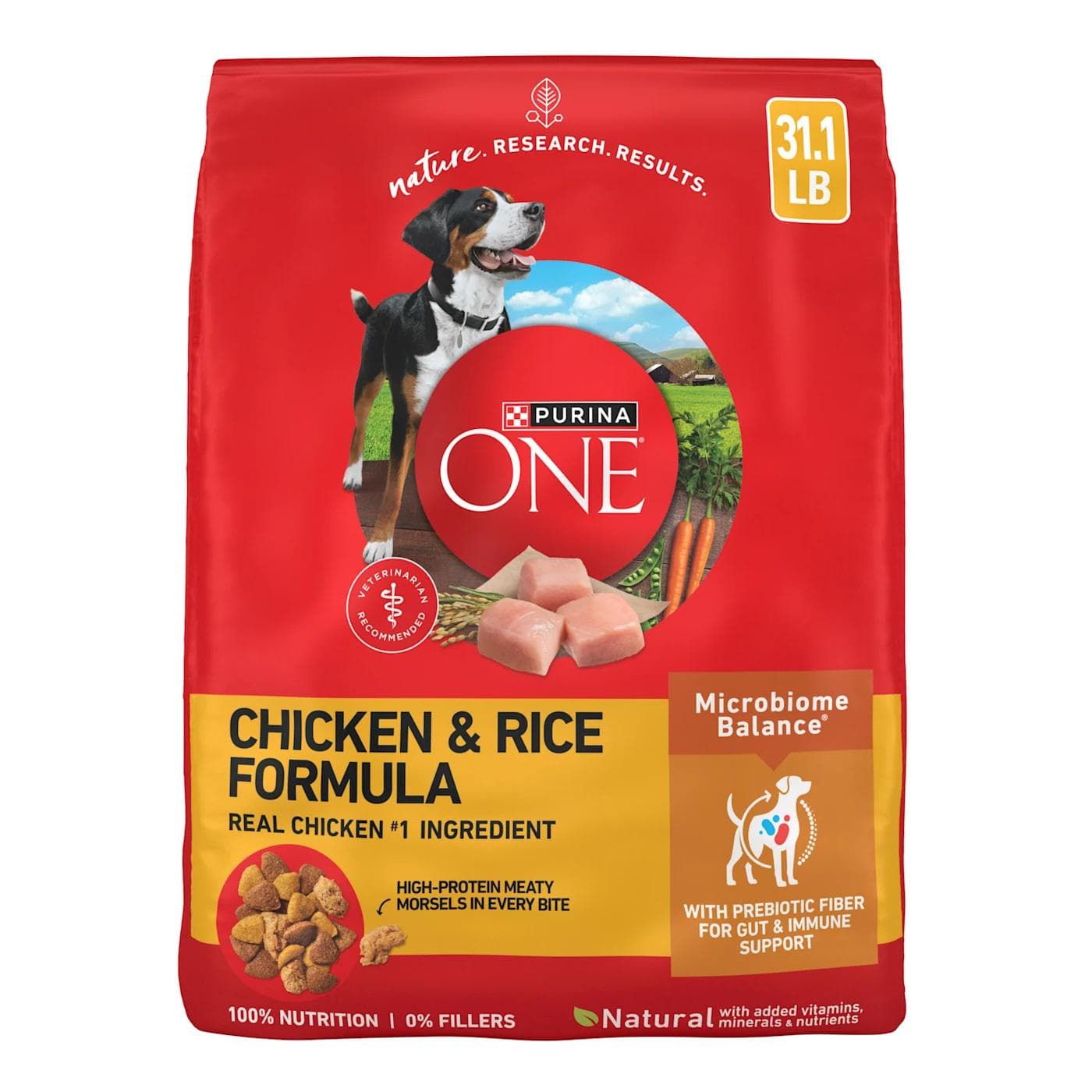
Real chicken first and Purina's feeding-trial science at a budget price. The economical deck is the honest trade-off.
Petful may earn a commission when you click through to Chewy, at no extra cost to you.
Compare calories per cup or gram
Portion volume can change substantially when calorie density changes. Record calories, actual measured amount, treats, and weekly body-condition observations during a transition. Do not copy the old cup amount onto a new food without recalculating.
- Use the adequacy statement, calorie content, nutrient information, feeding directions, and manufacturer contacts for Purina ONE Chicken & Rice Formula Adult Dry Dog Food as one worked adult-food label review. This adult product is a comparison example, not a universal recommendation and not a large-breed puppy diet.
Use a body-condition trend log
A single weight can miss changes in fat or muscle under a dense coat. Log weight, rib feel, waist, activity, appetite, stool, and the veterinarian's body and muscle scores. Seek care for unexplained loss, gain, weakness, or appetite change.
Transition gradually
A sudden switch can make it difficult to tell whether stool or appetite changes reflect the new diet or the transition itself. In practice, unless the veterinarian directs otherwise, blend foods gradually and note tolerance each day. Puppies and medically fragile dogs need individualized instructions rather than a generic schedule.
Treat chicken concerns as a diagnostic question
Itching or digestive signs have many possible causes, and a label impression cannot diagnose food allergy. Bring a complete diet and treat history to the veterinarian and follow a controlled elimination plan if recommended. The Newfoundland health guide keeps broader monitoring and urgent signs separate from a home ingredient theory. Randomly removing ingredients can create confusion and nutritional imbalance.
Count training and chew calories
A large puppy can receive many rewards during handling and leash practice. Reserve part of the measured ration or use small rewards and keep extras within the veterinary plan. Supplements and toppers can also alter nutrient balance and total calories. One product-specific label to compare is Purina ONE Chicken & Rice; verify the current adequacy statement, calories, and fit for the individual dog.
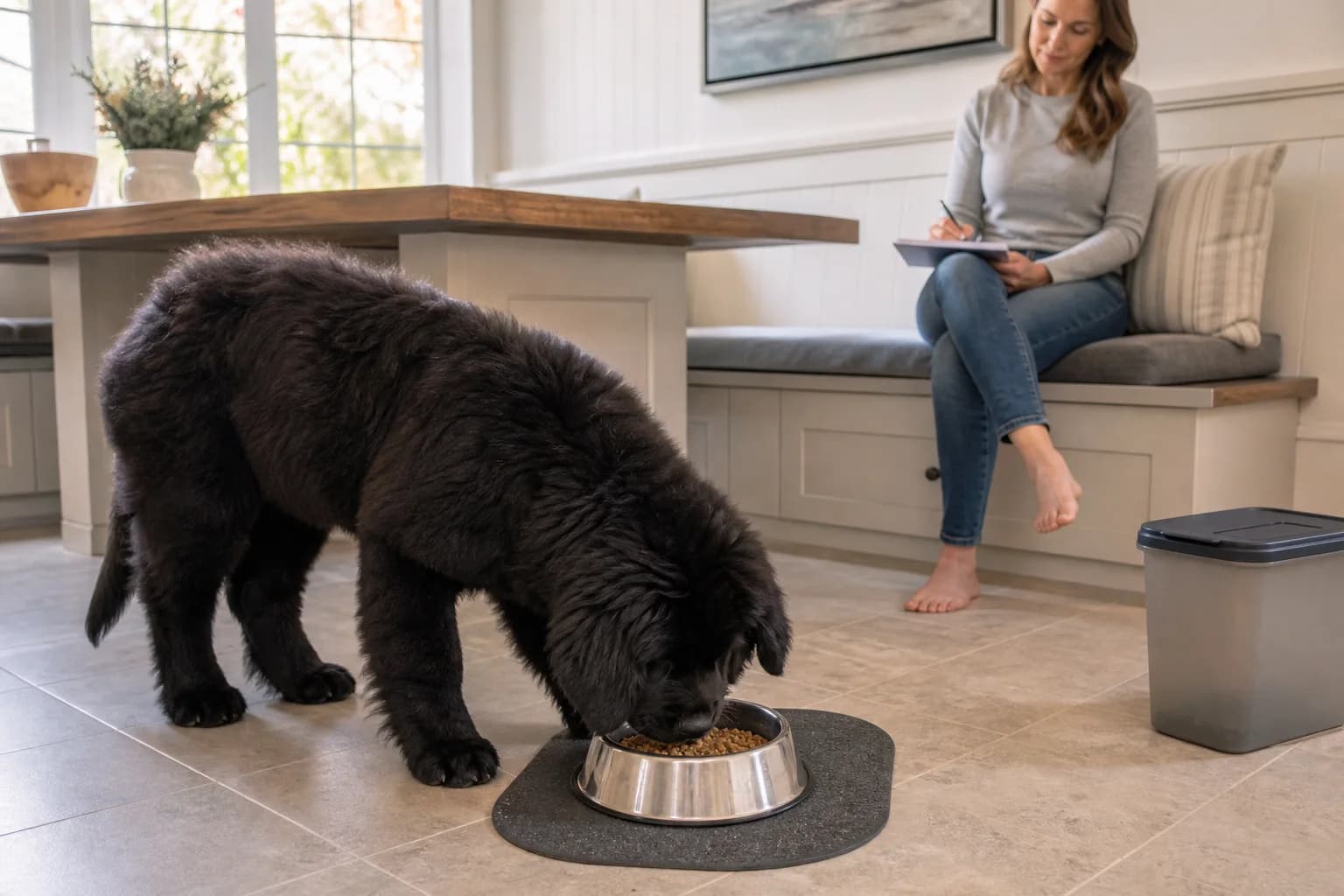
Use the five-question diet review
Life-stage fit, nutrition expertise, quality control, calorie transparency, and individual tolerance cover different failure points. Score each area and write down what evidence supports the score. The framework compares evidence and fit; it does not declare one brand best for every Newfoundland.
Store food for traceability
The original packaging carries the lot code, date, and product identity needed if a concern arises. In practice, keep the bag in a clean sealed container or retain the label and lot panel if using another bin. Discard food that smells abnormal, is contaminated, or has been stored contrary to instructions.
Decisions to make before changing the bowl
Complete and balanced life-stage suitability
Start with the nutritional adequacy statement, because it identifies the species and life stage for which the food is intended and how adequacy was established. Match that statement to the dog in front of you. An adult-maintenance formula is not automatically suitable for a growing giant-breed puppy.
Manufacturer expertise quality control and contactability
Ask who formulates the diet, what nutrition credentials are available, how incoming ingredients and finished food are tested, and whether the company can provide calories and nutrient information. A compelling ingredient story cannot substitute for qualified formulation, quality control, traceability, and responsive customer support.
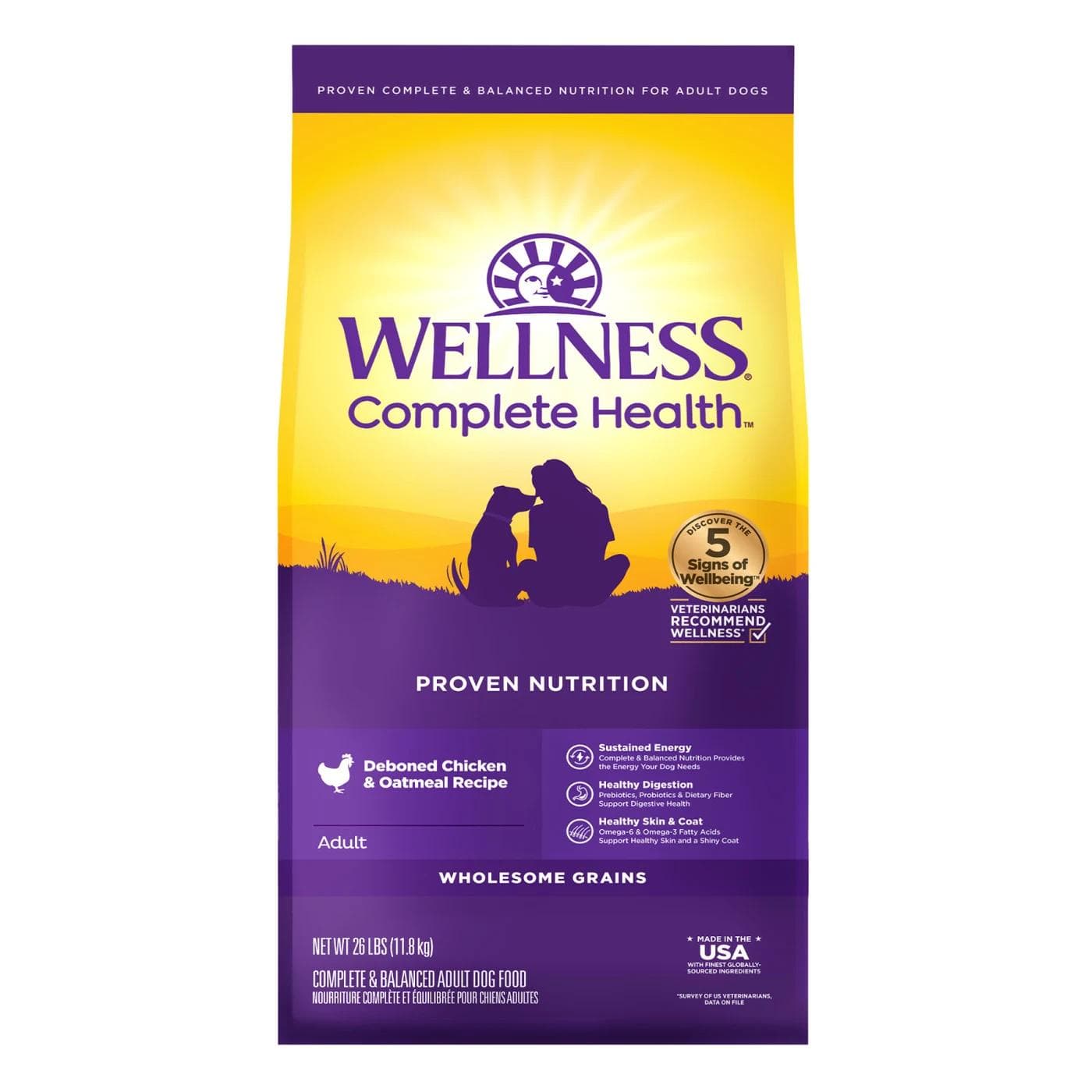
Deboned chicken and whole grains with guaranteed probiotics, taurine, and omegas. The sensible middle of the premium aisle for everyday adult dogs.
Petful may earn a commission when you click through to Chewy, at no extra cost to you.
Large and giant breed puppy growth needs
For a Newfoundland puppy, discuss controlled large or giant breed growth with the veterinary team. Measure food, keep body condition lean, and avoid unplanned mineral or calorie additions. For an adult, use the household and activity context in the main Newfoundland breed guide. For a cross, the Newfoundland mixes guide reinforces why portions must follow the individual rather than an assumed parent-breed size. The goal is appropriate development or maintenance, not reaching the top of a breed weight range or using supplements to build a larger frame.
Lean body condition and measured portions
Pair portion changes with body and muscle condition, not the measuring cup alone. Dense coat can hide a changing waist and ribs, while cup size and calorie density differ between foods. Log the measured amount, weekly trend, appetite, activity, and veterinary scores so an adjustment has evidence behind it.
Calorie and treat accounting
Count treats, chews, training food, toppers, table scraps, and flavored supplements in the daily ration. A large dog can accumulate substantial extras through frequent handling and leash practice. Reserve part of the measured meal for training when practical and review unexplained weight change rather than simply cutting or adding cups. One product-specific label to compare is Wellness Complete Health Chicken & Oatmeal; verify the current adequacy statement, calories, and fit for the individual dog.
Gradual transitions and tolerance logs
Change foods gradually unless the veterinary team directs otherwise. Record each day's old-to-new proportion, appetite, stool, vomiting, itch, and other relevant signs. A tolerance log helps separate a sudden transition problem from a continuing concern, but persistent or severe symptoms still need clinical evaluation.
Bowl feeding and storage practices
Choose a bowl that fits the muzzle and actual meal volume, wash it regularly, and observe whether ridges create frustration or abrasion. Store food with the original lot and date information protected from moisture and pests. Neither an elevated nor slow bowl should be marketed as preventing every emergency.
Medical diets and allergy concerns require veterinary diagnosis
Itching, ear trouble, vomiting, diarrhea, and appetite change have many possible causes. Do not diagnose chicken allergy or build a medical diet from an ingredient list alone. Bring a complete food and treat history to the veterinarian and follow a controlled diagnostic plan when a therapeutic or elimination diet is indicated.
Use a five-question diet review
For each food, record life-stage adequacy, access to qualified nutrition expertise, quality-control and traceability answers, calories per cup or gram, and the individual dog's tolerance and body-condition trend. Keep the actual label and lot information with the record. This compares evidence and fit without pretending an ingredient list can identify one universal winner.
When changing foods, hold the rest of the ration steady where practical and log portions, treats, appetite, stool, skin or ear changes, weight, and veterinary guidance. Contact the manufacturer when an important answer is missing. Contact the veterinarian when the question involves a medical diet, growth, persistent symptoms, unexplained weight change, or suspected allergy.
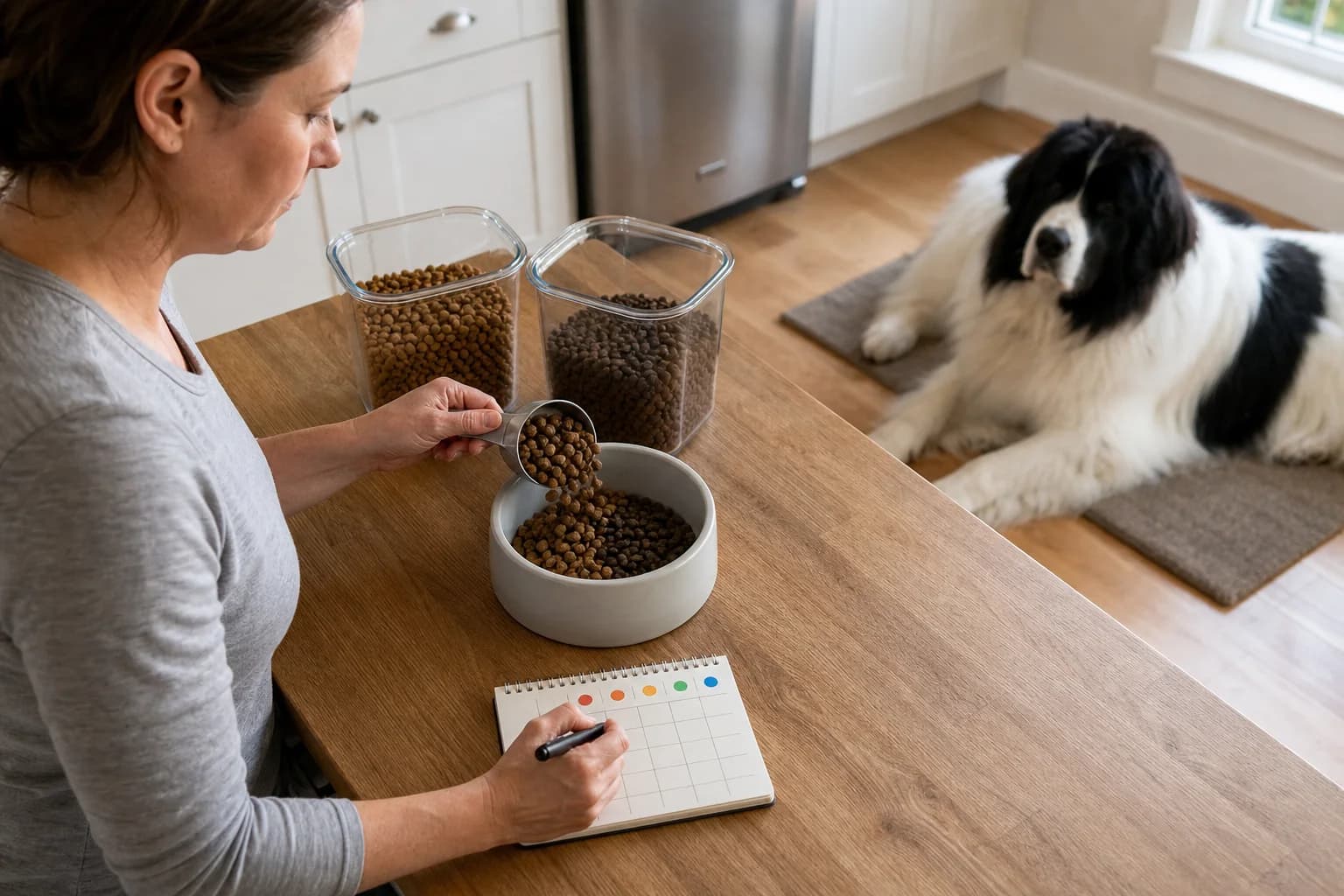
Review the record on a scheduled date rather than changing several variables after one imperfect meal. Note the old and new calorie density, the measured daily ration, training food, chews, transition percentage, appetite, stool, skin, ears, weight, and body condition. That sequence makes a gradual tolerance pattern easier to discuss. It does not turn a home log into a diagnosis or justify continuing a food that the veterinary team says to stop.
If a second adult-food label would make the worksheet more concrete, compare it only after life stage, calorie needs, tolerance, and veterinary fit are defined.
- A second adult-food label such as Wellness Complete Health Adult Chicken & Oatmeal Dry Dog Food lets owners compare calorie density, adequacy, manufacturer answers, measured portion, and the dog's tolerance on the same worksheet. This adult product is a comparison example. Verify nutritional adequacy, calories, tolerance, and veterinary fit.
Newfoundland FAQs
The best diet is a complete option suited to the dog's life stage and individual health, produced by a company that can answer meaningful nutrition and quality-control questions. Feed measured portions and adjust from weight, body and muscle condition, treats, and trend with veterinary guidance. No one brand, ingredient list, or front-label phrase is best for every Newfoundland.
Newfoundlands are not universally allergic to chicken. Itching and digestive signs can have many causes, and food allergy requires veterinary assessment, often with a controlled elimination process. Bring a complete list of foods, treats, chews, supplements, and flavored medications. Random ingredient switching can make the history harder to interpret and may create an unbalanced feeding plan.
How many times a day should a Newfoundland puppy eat? Meal frequency depends on age, current diet, household routine, medical needs, and the veterinarian's plan. Young puppies commonly need meals divided across the day, while schedules change with maturity. Measure the entire daily ration, reserve some for training, and monitor stool, appetite, growth, and body condition. Ask the puppy's veterinarian before changing frequency or amount.
For a Newfoundland dog, the best bowl is a stable bowl with enough capacity for the measured meal and enough open space for the dog's muzzle. A slow-feeder design may help some fast eaters, but ridge depth and shape must not cause frustration or scraping. Wash it regularly. No bowl can guarantee prevention of bloat or replace emergency care for a hard swollen abdomen and unproductive retching.
Sources and evidence boundaries
- Newfoundland Club of America breed standard: Breed temperament, structure, working identity, coat, and recognized-color context.
- American Kennel Club breed page: Registry size, lifespan, breed history, coat, and breeder-screening overview.
- AKC official Newfoundland standard: Exact breed-standard language for size, coat, colors, markings, and temperament.
- WSAVA Global Nutrition Committee: Manufacturer expertise, quality control, nutritional adequacy, research, and contactability.
- AAHA Nutrition and Weight Management Guidelines: Large and giant breed puppy growth, skeletal maturity, lean body condition, and calcium caution.
Prices, product availability, labels, insurance terms, veterinary guidance, and individual needs can change. Check the current source, product information, policy, and appropriate professional guidance before making a decision.
BVMS, MRCVS
Dr. Pippa Elliott, BVMS, MRCVS, is a veterinarian with nearly 30 years of experience in companion animal practice. Dr. Elliott earned her Bachelor of Veterinary Medicine and Surgery from the University of Glasgow. She was also designated a Member of the Royal College of Veterinary Surgeons. Married with 2 grown-up kids, Dr. Elliott has a naughty Puggle named Poggle, 3 cats and a bearded dragon.
Sign up for expert-backed reviews and safety alerts all in one place.