Newfoundland Dog Price and Lifetime Cost
Build a realistic Newfoundland budget across acquisition, adult-size setup, recurring care, and contingency reserves while accounting for local prices, individual needs, and changing costs.
Petful is reader supported. As an affiliate of platforms like Amazon and Chewy, we may earn a commission when you buy through links on this page. There is no extra cost to you.
Newfoundland dog price is only the first line in a much larger budget. Acquisition, adult-size equipment, food, grooming, training, preventive care, transportation, insurance or savings, and emergencies should be estimated separately with current local quotes.
A useful cost estimate separates acquisition, adult-size setup, recurring care, and contingency rather than collapsing everything into one average. Dated local quotes, insurance terms, food use, grooming access, training support, transport, and individual health needs make the range more honest and easier to update.
- 1Price ranges as planning estimates rather than guarantees.
- 2Breeder rescue and adoption routes.
- 3Health-testing value and seller red flags.
- 4Giant-breed equipment replacement and transport.
- 5Food grooming training insurance and preventive care.
- 6Emergency and specialty-care reserves.

Sign up for expert-backed reviews and safety alerts all in one place.
What a Newfoundland dog costs to acquire
Newfoundland dog price varies widely by region, source, age, health work, and what is included. Published online figures commonly span roughly $1,000 to $5,000, which is too broad and volatile to treat as a promise. Use that spread only as a prompt to collect current written quotes from responsible local sources.
A higher price does not prove health, temperament, or ethical breeding. Ask what screening results can be verified, what veterinary care and registration are included, what support is offered, and what the return clause says. Rescue and adoption fees follow a different model and may include care already completed.

How much does a Newfoundland dog cost, and what is the average cost of a Newfoundland dog? Neither question has one durable national answer. A Newfoundland puppy cost is a dated local quote whose value depends on records and support. A responsible breeder should connect the named parents to Newfoundland Club of America recommendations, OFA records, and underlying CHIC results. The Newfoundland puppy guide provides the full buyer-protection sequence, and the Newfoundland mixes guide explains why a cross still needs records from both parent lines. Health screening adds buyer information, but a high Newfoundland dog price is never proof of quality.
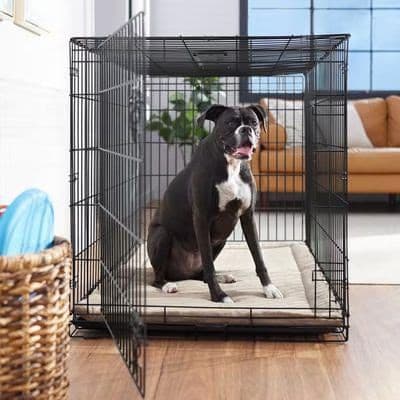
- Record the dimensions and current price of an adult-size option such as Frisco Heavy Duty Fold & Carry Single Door Collapsible Wire Dog Crate, X-Large in the setup budget instead of assuming a puppy crate will last. Verify the interior dimensions against the individual dog. An X-Large label alone does not prove adult Newfoundland fit.
Petful may earn a commission when you click through to Chewy, at no extra cost to you.
Build a realistic first-year budget
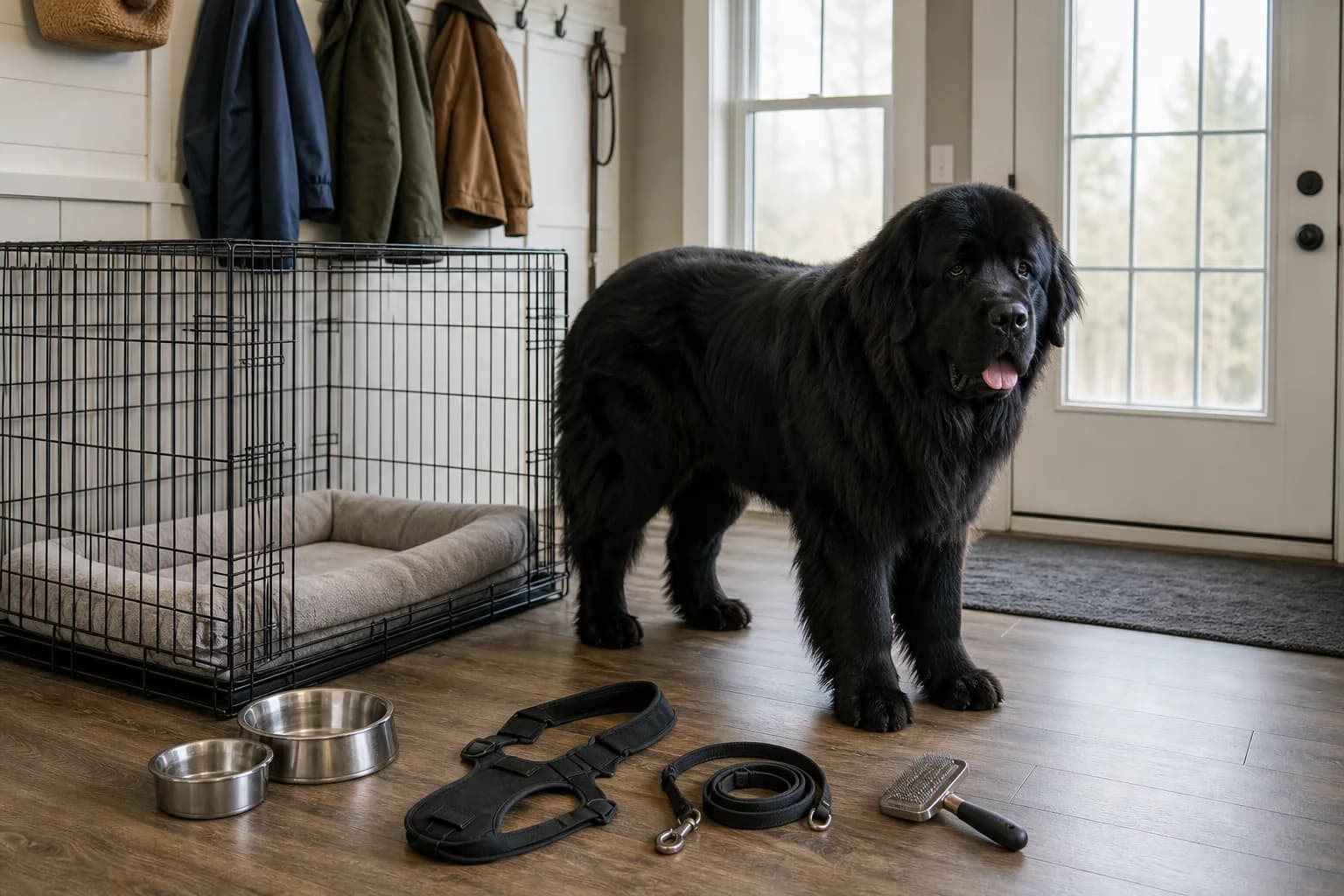
The first-year budget is usually more revealing than the purchase number. Giant-breed crates, barriers, beds, bowls, harnesses, vehicle protection, grooming tools, training, preventive care, food, and replacement equipment can arrive in clusters. Quote the correct adult-size equipment before assuming a starter item will last.
Build the budget with local prices and three scenarios: expected, higher-use, and setback. A puppy may outgrow equipment, a professional grooming appointment may take more time, and training needs may increase. The worksheet should show which costs are one-time, recurring, seasonal, or uncertain.
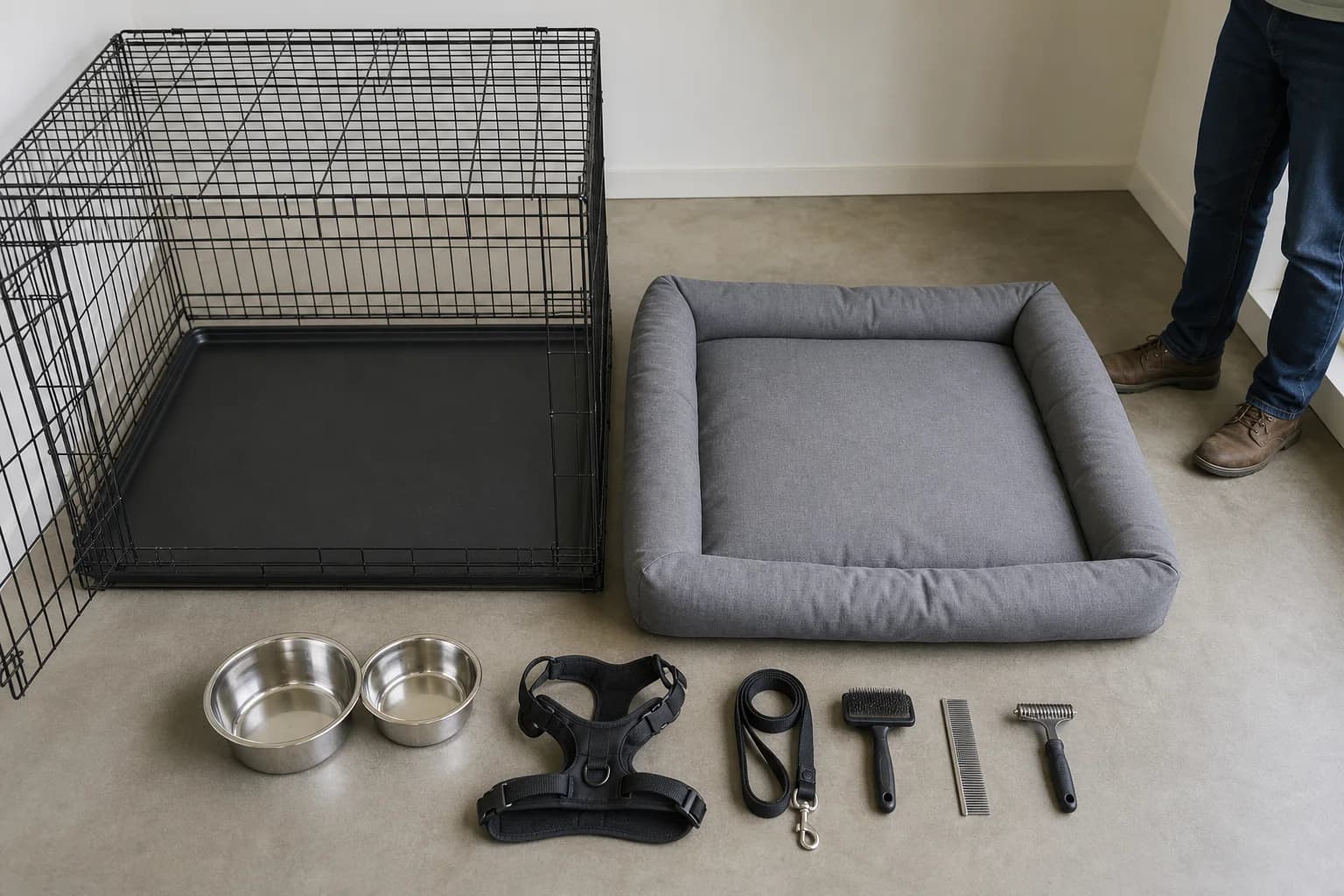
How big will a Newfoundland puppy get? Typical adult dimensions in the main Newfoundland breed guide are useful for pricing space and equipment, but adult size cannot be guaranteed from one puppy weight. Budget for the larger plausible bed, barrier, vehicle opening, grooming surface, and handling need, then remeasure the individual dog and replace equipment before fit becomes unsafe.
Use a scenario budget that readers can replace with local written quotes. Record acquisition, adult-size setup, recurring care, and contingency separately, then stress-test the worksheet with a giant Newfoundland dog or large Newfoundland dog equipment replacement, professional grooming, extra training, and alternate care. This is a planning range, not a claim that every household will pay the same amount.
| Budget line | Example arithmetic only | Replace with your local evidence |
|---|---|---|
| Acquisition | $2,500 once | Current written breeder, rescue, or shelter quote and included care |
| Adult-size setup | $1,400 once | Measured crate, bed, barrier, bowls, grooming tools, and vehicle setup |
| Food | $180 x 12 = $2,160 | Current diet price, calories per unit, and measured daily use |
| Professional grooming | $140 x 6 = $840 | Dated quote from a groomer who accepts Newfoundlands |
| Routine veterinary and preventive care | $900 | Individual veterinary plan and local clinic quote |
| Training support | $600 | Local reward-based class or private-session quote |
| Insurance premium | $85 x 12 = $1,020 | Written dog-specific premium, exclusions, limits, and waiting periods |
| Pet care and transport | $600 | Local boarding, sitter, or transport quote for the expected number of days |
| Emergency reserve deposit | $2,500 | Household-selected accessible reserve target |
| First-year planning total | $12,520 | Sum the replaced local rows; do not copy the example total |
- A jumbo bed such as FurHaven NAP Ultra Plush Orthopedic Deluxe Dog Bed, Jumbo is a useful quote for the replacement-cost line after the owner confirms the dog's full-extension measurements. Measure the dog at full extension and treat comfort claims as product features, not medical treatment.
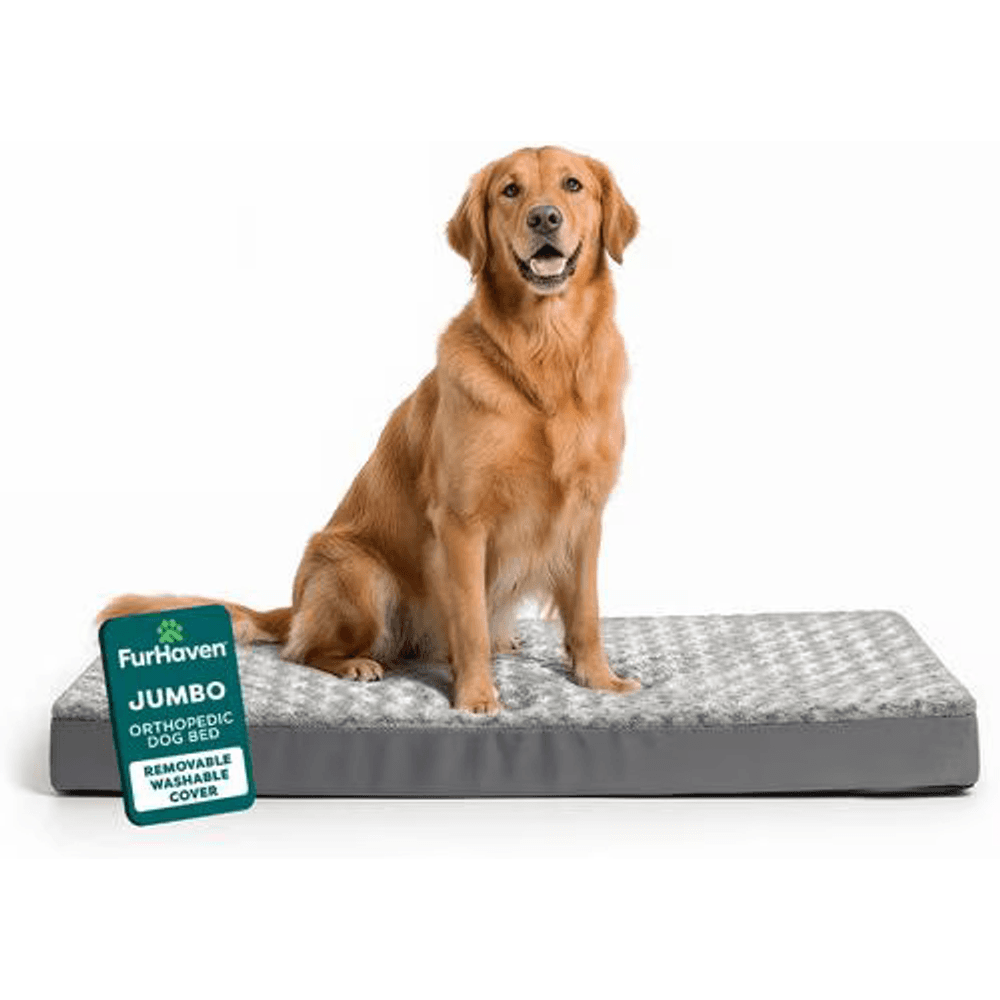
A plush orthopedic foam mattress that cushions aging joints and pressure points, giving a stiff or trembling senior dog warm, supportive rest.
Petful may earn a commission when you click through to Chewy, at no extra cost to you.
Plan for lifetime Newfoundland expenses
Lifetime planning covers food, preventive veterinary care, dental care, grooming, training refreshers, boarding or pet care, insurance or self-funded risk, vehicle needs, mobility support, and emergency treatment. Large size can raise the quantity of food, medication, supplies, and staff time without making every bill predictable.
Keep a contingency reserve separate from routine spending. Compare insurance policies before illness occurs, read exclusions and waiting periods, and obtain current written terms. If self-funding, decide what amount is available today, how it is replenished, and what backup exists if specialty care is recommended.
Pet insurance is one risk-funding route, not a substitute for current written terms or an emergency plan. Compare it with self-funding after routine costs are visible. Breed rescue and rehoming routes may shift the initial fee but not the need for food, grooming, training, preventive care, transport, and specialty capacity over the dog's life. Use the Newfoundland health and lifespan guide to understand screening and monitoring lanes without treating any condition as a predicted bill.
- Use breed-level evidence to prepare observations and questions. Base health, behavior, nutrition, insurance, and safety decisions on the individual dog, current records, and the appropriate qualified professional.
Turn local quotes into a durable budget
Separate the four cost buckets
Acquisition, setup, recurring care, and contingency money behave differently. Place each quote in one bucket and mark its renewal or replacement schedule. Do not hide uncertain costs inside an unrealistically low monthly average.
Price health testing correctly
Screening requires expertise and expense, but it is evidence rather than a luxury label. In practice, verify results for the individual parents and ask what the findings mean. A breeder fee still cannot guarantee a disease-free dog.
Quote adult-size equipment
A puppy crate, bed, collar, and vehicle setup may be temporary. Measure expected space needs and compare divider-compatible or adjustable choices. Brand size labels are inconsistent, so dimensions matter more than the word large.

Petful may earn a commission when you click through to Chewy, at no extra cost to you.
- Include the current price of a coat tool such as Frisco Deshedding Cat & Dog Brush, Medium to Long Hair when comparing a home-grooming kit with professional grooming costs. Test gently on a small coat area and stop if the tool scratches skin, catches painfully, or breaks healthy coat.
Include professional grooming scenarios
A dense giant-breed coat may require more appointment time and handling. Call local groomers, ask whether they accept Newfoundlands, and request the services included in a quote. Use the Newfoundland shedding and grooming guide to distinguish routine home care from work that may need a professional. Coat condition and behavior can change price and appointment feasibility.
Model food with calories, not bag count
Two foods with similar bag sizes can have different calorie density and feeding amounts. Use the current product's calories and the veterinarian's portion plan to estimate monthly use, then use the Newfoundland food guide for the separate diet-choice decision. The cheapest unit price may not be the lowest appropriate daily cost.
Budget for training before a problem
Early group or private instruction can be easier than addressing dangerous pulling later. In practice, price reward-based puppy, adolescent, and handling support in advance. Credentials and methods matter more than a guaranteed-results sales pitch.
Create the local quote checklist
National averages hide regional veterinary, insurance, grooming, and care differences. Date every quote, record what it includes, and set a reminder to refresh volatile numbers. Do not present old quotes as current market facts.
Protect the emergency reserve
Routine spending can slowly consume money intended for urgent care. Keep the reserve in a separate account and define replenishment rules after use. A reserve is financial preparation, not a promise that every treatment choice will be affordable.
Stress-test the assumptions that change the total
Price ranges as planning estimates rather than guarantees
Treat acquisition figures as dated local estimates. Record the source, date, region, what veterinary work or support is included, and whether transport or tax changes the total. One national average cannot price an individual puppy or rescue placement, and an unusually high figure does not certify health, temperament, or responsible sourcing.
Breeder rescue and adoption routes
Compare breeder, breed-rescue, shelter, and private rehoming routes on evidence rather than sticker price alone. Review medical records, behavior information, contracts, return policies, transport, and immediate care needs. A lower adoption fee may still require substantial setup or treatment, while a high breeder price can still accompany weak practices.
Health-testing value and seller red flags
Put public health records and seller behavior beside the quoted price. Verify the parents named in the litter, open each result, and question urgency, unverifiable clearances, extreme-size promises, and color surcharges. The Newfoundland color guide explains recognized-color context without treating color as a health certificate. Testing has value because it reduces uncertainty and supports breeding decisions, not because it makes a puppy guaranteed problem-free.
Petful may earn a commission when you click through to Lemonade, at no extra cost to you.
Giant-breed equipment replacement and transport
Price equipment at adult scale and include replacement. A growing Newfoundland may need a different harness, bed, barrier, crate arrangement, vehicle ramp, and grooming setup as dimensions change. Measure the dog and the home instead of buying from an X-Large label, and include transport support for injury or aging.
Food grooming training insurance and preventive care
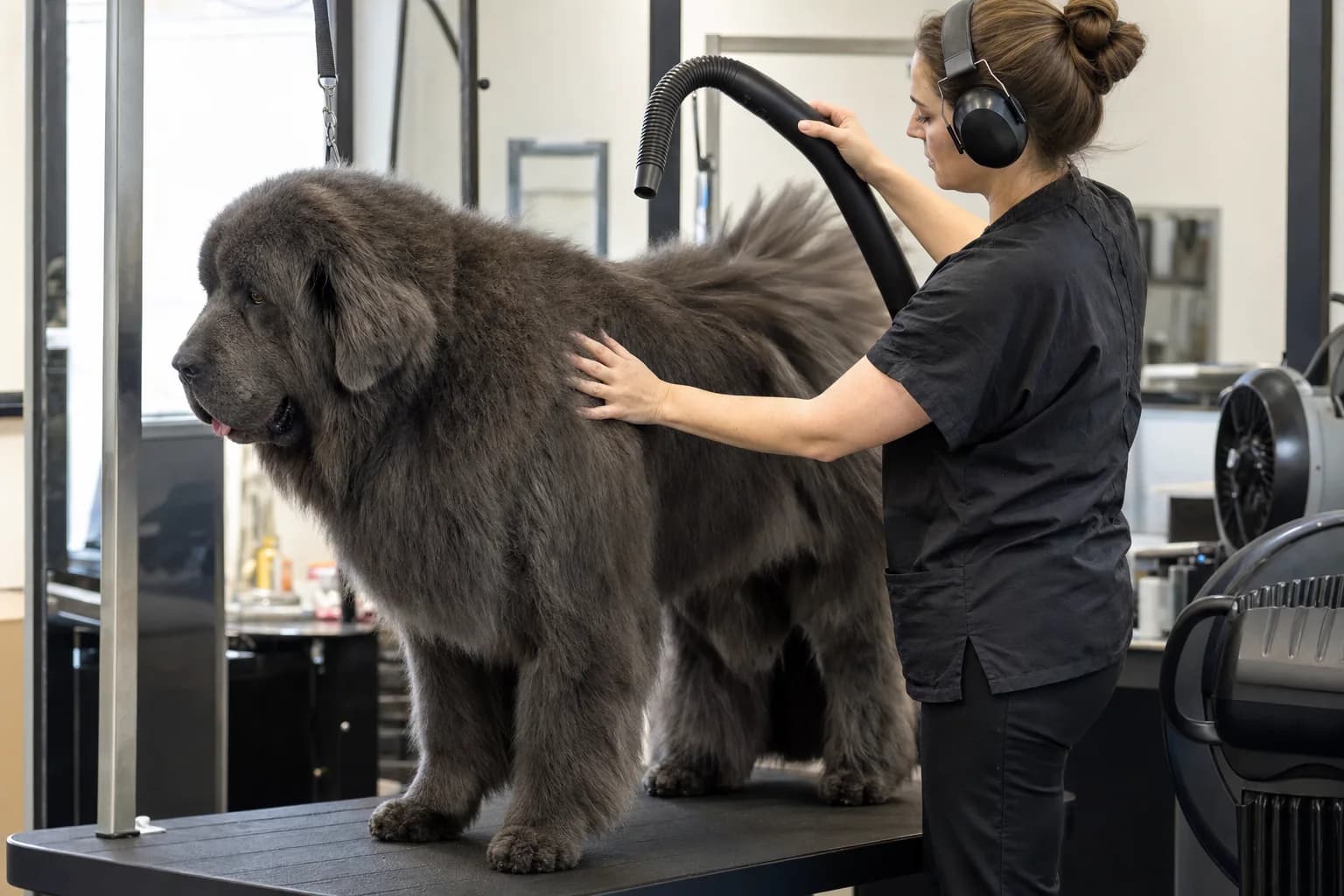
Build monthly estimates from local food calories and prices, grooming frequency, training needs, preventive care, medications, insurance terms, and household choices. Use a low, expected, and high-use column. This makes a budget resilient when a dense coat needs professional help or a young giant needs extra training support. Record the dated service frequency so a later estimate can be compared fairly.
Emergency and specialty-care reserves
Keep routine savings separate from an emergency and specialty-care reserve. Ask local clinics about exam, imaging, overnight, surgical, cardiology, and orthopedic pathways before a crisis, then review insurance exclusions and waiting periods in writing. A reserve is planning capacity, not a forecast that a particular condition will occur.
Regional household and individual variation
Recalculate for region, housing, vehicle access, climate, caregiver capacity, and the individual dog's health. Food, labor, veterinary pricing, and insurance vary substantially, while a dog with mobility or skin needs can change the pattern. The most honest total is a range with dated assumptions and a scheduled review.
Build a four-bucket cost worksheet
Separate the budget into acquisition, initial setup, recurring care, and contingency. Give every number a date and local source, and record whether it is a one-time quote, monthly estimate, annual renewal, or high-use scenario. Include the adult-size version of beds, barriers, grooming, food, transport, and professional support instead of pricing only the puppy stage.
Run expected and stress cases. Change food use, grooming frequency, insurance renewal, training support, and one emergency pathway, then see whether the plan still works without skipping routine care. Revisit the worksheet after growth, a move, a health change, or a major price update. Its purpose is affordability under variation, not one reassuring total.
Extend the first-year numbers across a planning horizon
For a lifetime-cost view, carry only the rows that truly recur. The replaceable formula is first-year total + (annual recurring total x planning years after year one) + scheduled replacements + separate contingency. Using the example above only to demonstrate arithmetic, food, grooming, routine veterinary care, insurance, pet care, and $300 in annual replacements total $5,820 per later year. A 10-year planning horizon would therefore be $12,520 + ($5,820 x 9) = $64,900 before inflation, emergencies, or major household changes. Replace every amount and the planning horizon rather than treating $64,900 as a Newfoundland average.
Keep noncash capacity on the same worksheet. A suitable vehicle, a helper for emergency lifting, time for coat drying, access to a giant-dog groomer, and a backup caregiver can become real costs when they are missing. Write the likely paid substitute beside each weak point so the budget reflects both money and practical support, then confirm that the substitute is actually available in the local area before relying on it.

Attach evidence to the acquisition row. Keep the dated quote, what is included, public screening records, contract terms, transport details, and the source's return policy together. Compare that packet with breed rescue and shelter routes instead of assuming the highest price represents the strongest program. A Newfoundland puppy cost question is only answered responsibly when the reader can see both the initial payment and the evidence behind it.
Reprice the first-year setup at likely adult scale. A Newfoundland puppy can outgrow a bed, barrier, harness, and vehicle arrangement while the household is still paying for training and veterinary care. Measure openings and resting space, price adjustable equipment where it is safe, and list the items likely to be replaced. The stress case should also include one period of professional grooming, extra training help, and alternate pet care so the plan is not built on perfect conditions.
Use the completed worksheet before comparing financial products so a current written quote can be judged against the household's actual reserve and risk plan.
- Request a written, dog-specific quote from Lemonade Pet Insurance when comparing insurance with a self-funded reserve, then record exclusions, waiting periods, limits, and renewal terms. Coverage, exclusions, waiting periods, pricing, and availability vary. Read the current policy and obtain written quotes.
Newfoundland FAQs
How big will a Newfoundland puppy get? The AKC lists typical adult Newfoundlands at about 26 to 28 inches at the shoulder and roughly 100 to 150 pounds across females and males. A puppy's exact adult size cannot be guaranteed. Track growth and body condition with the veterinary team, feed for appropriate large or giant breed growth, and avoid pushing the puppy toward an extreme number.
Sources and evidence boundaries
- Newfoundland Club of America breed standard: Breed temperament, structure, working identity, coat, and recognized-color context.
- American Kennel Club breed page: Registry size, lifespan, breed history, coat, and breeder-screening overview.
- AKC official Newfoundland standard: Exact breed-standard language for size, coat, colors, markings, and temperament.
Prices, product availability, labels, insurance terms, veterinary guidance, and individual needs can change. Check the current source, product information, policy, and appropriate professional guidance before making a decision.

Coreen Saito is a pet writer and longtime shelter volunteer with more than a decade in animal rescue. She covers cat behavior, breed care, and the small, ordinary science of sharing a life with companion animals, with a particular focus on honest takes about the products and decisions that actually matter. At home in Arizona, she's outranked by Mac (a dog with the loudest opinion in the house), Rebel (a cat who governs by quiet authority), and Meri (an orange tabby who runs the late shift and the laundry basket). She writes about all three, plus the rescues that keep coming through her life, at LifeWithMinty.com.
Sign up for expert-backed reviews and safety alerts all in one place.