Beagle Mixes: 15 Crosses, Traits, and Care Needs
Beagle mixes range from lap-sized Cheagles to Beagle Shepherds that can top 70 pounds. Compare 15 crosses by adult size, coat, energy, and parent health screening, and find the best fit for kids, apartments, or long workdays.
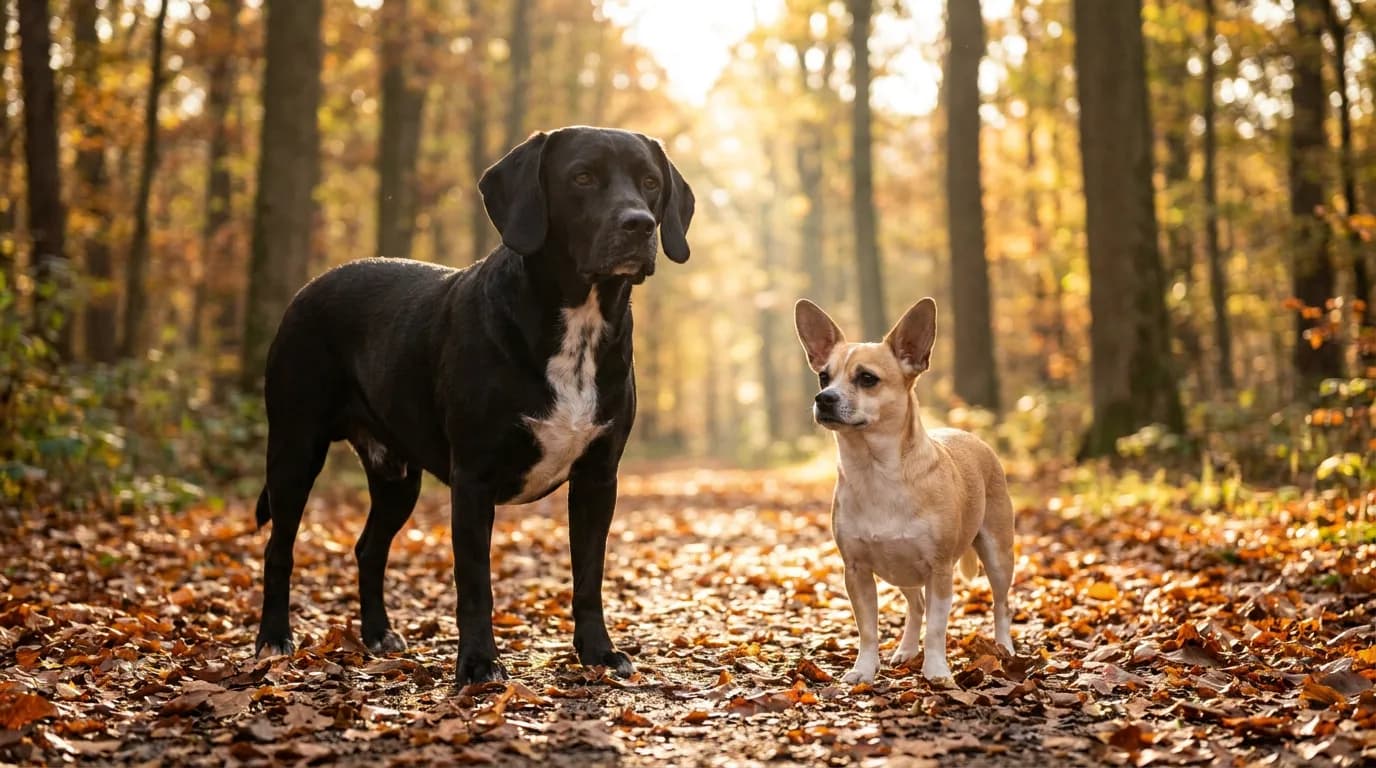
Beagle mixes range from Lab-sized crosses like the Beagador to small crosses like the Cheagle.
Petful is reader supported. As an affiliate of platforms like Amazon and Chewy, we may earn a commission when you buy through links on this page. There is no extra cost to you.
A Beagle mix is a dog with one Beagle parent and one parent of another breed, such as a Labrador Retriever (the Beagador), a Chihuahua (the Cheagle), or a Poodle (the Poogle). Because that other parent can be a 6-pound Chihuahua or a 90-pound German Shepherd, a Beagle mix can grow up lap-sized or large, and puppies in one litter can differ in coat, voice, and energy.
Most crosses share the Beagle's nose, appetite, carrying voice, and sociable streak. Below, we compare 15 popular crosses using adult size ranges set by both parents' breed standards, then match them to homes with young kids, apartments, and long workdays.
- 1Every Beagle mix has one Beagle parent, so plan for scent drive, food motivation, and a voice that carries.
- 2Traits vary even between littermates: the other parent sets the likely size range, and a cross name guarantees nothing.
- 3The Beago and Beagador suit many families with kids; quieter, smaller crosses like the Beaglier suit apartments.
- 4No cross should be alone all day, and every cross deserves health screening results for both parents.

Sign up for expert-backed reviews and safety alerts all in one place.
What is a Beagle mix?
A Beagle mix is any dog with one Beagle parent and one parent of another breed. Among the most searched crosses are the Poogle (Poodle), Beagador (Labrador Retriever), Cheagle (Chihuahua), and Doxle (Dachshund), and each cross name simply describes the other parent breed.
None of these crosses is a breed the American Kennel Club (AKC) recognizes, so a name tells you the parents but not the adult size, coat, or temperament. A dog sold under one of these names is often a first-generation cross (a purebred Beagle bred to a purebred of the other breed), and later generations, such as two Poogles bred together, can be even less predictable.
Beagle mix dogs also turn up in shelters, where the label is often a guess based on a tricolor coat and long ears. If your dog carries that label, a breed DNA test such as the Embark Breed & Health Dog DNA Test Kit estimates ancestry from a cheek swab and screens for a panel of inherited health conditions. It can identify evidence of Beagle ancestry, but it cannot prove a pedigree or predict behavior.
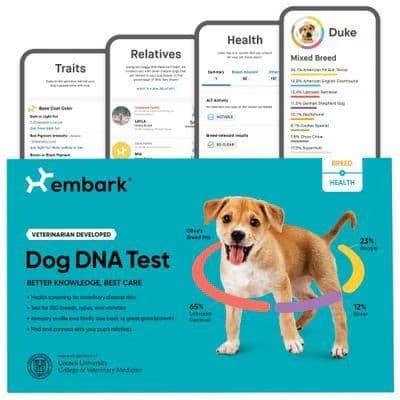
Petful may earn a commission when you click through to Chewy, at no extra cost to you.
The Beagle parent: size varieties and scent-hound traits
The AKC Beagle breed standard recognizes two varieties: Beagles 13 inches and under at the shoulder, which weigh under 20 pounds, and Beagles over 13 but not over 15 inches, which weigh 20 to 30 pounds. Knowing whether the Beagle parent is a 13-inch or 15-inch dog narrows a cross's likely size, especially when the other parent is small. The AKC gives the breed a life expectancy of 10 to 15 years.
Beagles were bred to hunt rabbits in packs, and the AKC describes them as friendly, easygoing, and happiest with company, but also quick to follow their noses. Those traits carry into most crosses:
- Scent drive: the AKC says to walk Beagles on a leash, because a compelling scent overrides recall.
- Voice: the Beagle's bay carries, and the AKC rates the breed 4 on its 1-to-5 barking scale.
- Appetite: treats make training easy to reward, but the AKC warns that too many cause obesity.
- Sociability: the AKC rates Beagles 5 of 5 with young children and with other dogs.
- Health screening: a Beagle parent should have OFA hip and eye results, heart and thyroid evaluations, and a DNA test for Musladin-Lueke syndrome (MLS), the core of the breed's OFA CHIC program.
Our Beagle breed guide covers purebred size, temperament, and training, and our Beagle colors guide covers the tricolor, lemon, and other coats a Beagle parent can pass on.
15 Beagle mixes at a glance
The table sets each cross's other parent and its breed standard beside the likely adult size range, which runs from Beagle size (up to 15 inches and 30 pounds) to the other parent's AKC standard (UKC for the American Pit Bull Terrier). A first-generation cross usually lands between its parents, but any individual can fall anywhere in that span, so the parents' actual sizes are the best guide.
| Cross | Other parent and its standard | Likely adult size range | Coat and shedding | Energy and temperament | Main caution |
|---|---|---|---|---|---|
| 1. Beagador | Labrador Retriever: 21.5 to 24.5 in, 55 to 80 lb | Beagle size up to 24.5 in and 80 lb | Short double coat, heavy shedding | High; social and food-driven | Weight gain and food theft |
| 2. Beagle Shepherd | German Shepherd Dog: 22 to 26 in, 50 to 90 lb | Beagle size up to 26 in and 90 lb | Medium double coat, heavy shedding | High; loyal, can be wary of strangers | Size, hips and elbows, wariness of strangers |
| 3. Beago | Golden Retriever: 21.5 to 24 in, 55 to 75 lb | Beagle size up to 24 in and 75 lb | Feathered double coat, heavy shedding | Moderate to high; gentle and quiet | Shedding; hip, eye, and heart screening |
| 4. Beaski | Siberian Husky: 20 to 23.5 in, 35 to 60 lb | Beagle size up to 23.5 in and 60 lb | Double coat, heavy seasonal shedding | Very high; playful, vocal, roams | Escaping, howling, chasing small animals |
| 5. Beabull | English Bulldog: 14 to 15 in, about 40 to 50 lb | 13 to 15 in, up to about 50 lb | Short coat, moderate shedding, possible skin folds | Moderate; easygoing | Breathing and heat |
| 6. Beagle Pit | American Staffordshire Terrier (17 to 19 in, 40 to 70 lb) or American Pit Bull Terrier (17 to 21 in, 30 to 60 lb) | Beagle size up to 21 in and 70 lb | Short coat, light to moderate shedding | Moderate to high; affectionate with family | Early socialization; lease and insurance rules |
| 7. Bogle | Boxer: 21.5 to 25 in, about 50 to 80 lb | Beagle size up to 25 in and 80 lb | Short coat, light to moderate shedding | High; playful and bouncy | Heat; heart screening |
| 8. Bagle Hound | Basset Hound: up to 15 in, 40 to 65 lb | Up to 15 in, up to 65 lb | Short coat, very long ears | Low to moderate; mellow but loud | Back, ears, weight, loud voice |
| 9. Beagi | Pembroke or Cardigan Welsh Corgi: 10 to 12.5 in, up to 38 lb | About 10 to 15 in, up to 38 lb | Double coat, heavy shedding | High; alert, may herd | Long back; herding nips and barking |
| 10. Cheagle | Chihuahua: 5 to 8 in, 6 lb or less | Chihuahua size up to 15 in and 30 lb | Short or medium coat, light to moderate shedding | Moderate to high; lively, wary of strangers | Fragile around toddlers; barking |
| 11. Jack-A-Bee | Jack Russell-type terrier: 10 to 14 in, 9 to 17 lb | About 10 to 15 in, up to 30 lb | Smooth, broken, or wiry coat, moderate shedding | Very high; bold, digs and chases | Digging, chasing, escaping |
| 12. Poogle | Poodle: toy 10 in or under, miniature 10 to 15 in, standard over 15 in | Toy or miniature crosses up to Beagle size; standard crosses up to about 70 lb | Wavy to curly coat that may shed less but mats | High; smart and vocal | Matting; allergy claims |
| 13. Beaglier | Cavalier King Charles Spaniel: 12 to 13 in, 13 to 18 lb | About 12 to 15 in, 13 to 30 lb | Silky or smooth coat, light to moderate shedding | Moderate; gentle and affectionate | Heart screening; ear care |
| 14. Puggle | Pug: 10 to 13 in, 14 to 18 lb | About 10 to 15 in, 14 to 30 lb | Short coat, heavy shedding | Moderate; affectionate, food-loving | Breathing and heat; weight |
| 15. Doxle | Dachshund: standard 8 to 9 in (16 to 32 lb), miniature 5 to 6 in (11 lb or less) | Miniature Dachshund size up to 15 in and about 32 lb | Smooth, long, or wire coat, light to moderate shedding | Moderate; vocal, can be stubborn | Back injuries; barking |
The health screening worth asking about depends on the other parent, and most crosses fall into one of four types:
- Flat-faced crosses (Beabull, Puggle, and the Frengle) can inherit breathing problems and trouble handling heat.
- Long-bodied crosses (Bagle Hound, Beagi, Doxle) can inherit back problems, so jumping and extra weight matter more.
- Large crosses (Beagador, Beagle Shepherd, Beago, Bogle) make hip and elbow results on the bigger parent worth asking for.
- Toy crosses (the Cheagle and Poogles with a toy Poodle parent) stay small enough to be hurt by a fall or rough handling.
Medium and large Beagle mixes
Crosses 1 to 9 pair the Beagle with a parent of the same size or larger. In the photos, compare adult build, ear set, and muzzle length: a Beagle and Labrador Retriever mix or a Beagle and German Shepherd mix can end up near the big parent's size, while a Beabull or Beagi stays low to the ground.
1. Beagador: Beagle and Labrador Retriever mix
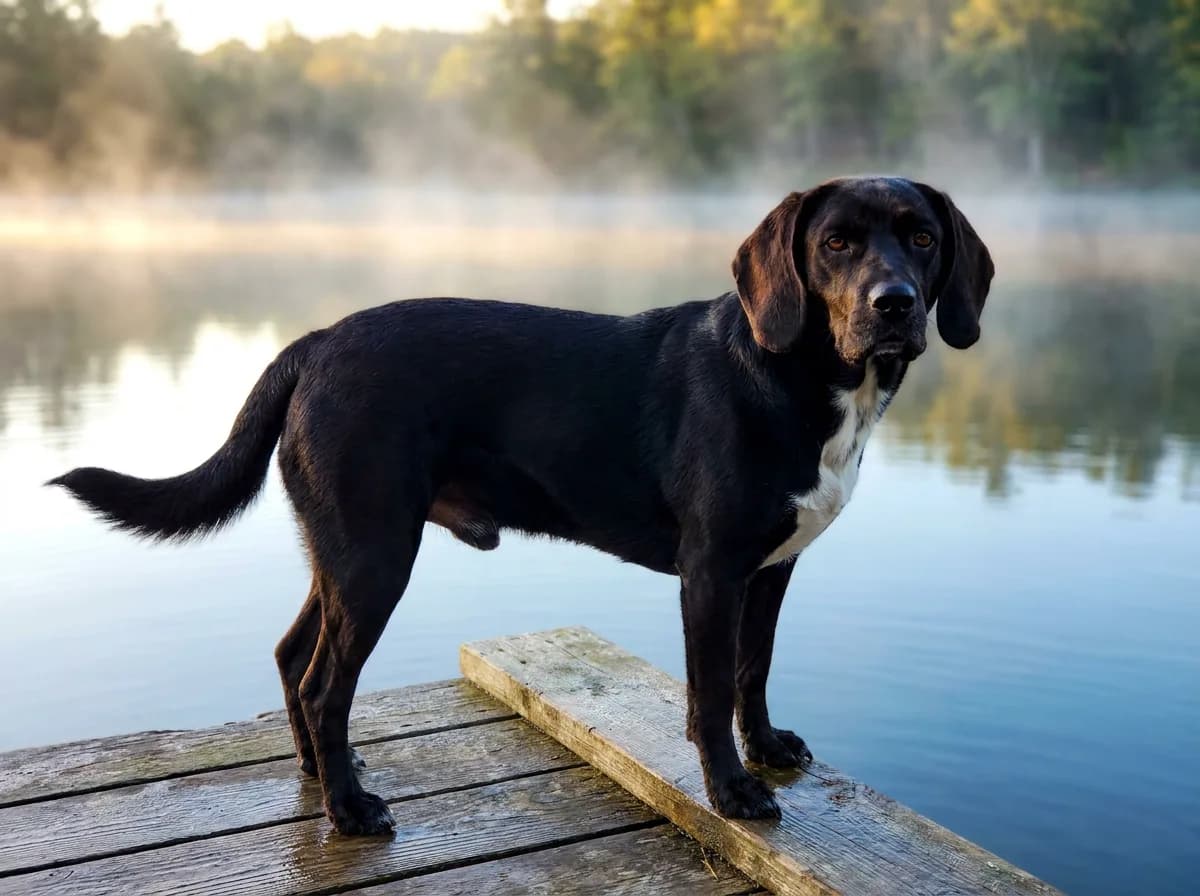
An adult Beagador (a Beagle and Labrador mix) is usually a sturdy, short-coated dog with the Lab's frame and the Beagle's long ears and nose. It suits an active family that can keep food out of reach: the AKC calls the Lab "an enthusiastic athlete," and a 2016 study linked a POMC gene deletion found in many Labradors to greater food motivation and higher body weight.
- Size: Labradors stand 21.5 to 24.5 inches and weigh 55 to 80 pounds (AKC), so a full grown Beagador can land anywhere from Beagle size to Lab size.
- Coat and colors: a short double coat that sheds heavily. Colors follow the Lab (black, yellow, and chocolate, with pale yellows sometimes called white or golden), often with Beagle markings such as a white chest blaze, and brown and white or black and white patterns turn up when the Beagle's markings dominate. Beagador pictures online range from tricolor, Beagle-looking dogs to lean black Lab types with hound ears.
- Temperament: friendly and social; the AKC rates Labs 5 of 5 with young children, other dogs, and strangers, and 5 of 5 for trainability, which can offset some Beagle independence.
- Exercise: high. Labs need plenty of activity, such as the swimming and long games of fetch the AKC suggests, and the Beagle half adds a need for sniffing walks.
- Screening: ask for the Lab parent's OFA hip, elbow, and eye results and a DNA test for exercise-induced collapse (EIC). The Lab's AKC life expectancy is 11 to 13 years.
- Budget note: a 50- to 80-pound dog eats more and needs larger doses of weight-based parasite preventives than a Beagle does.
2. Beagle Shepherd: Beagle and German Shepherd mix
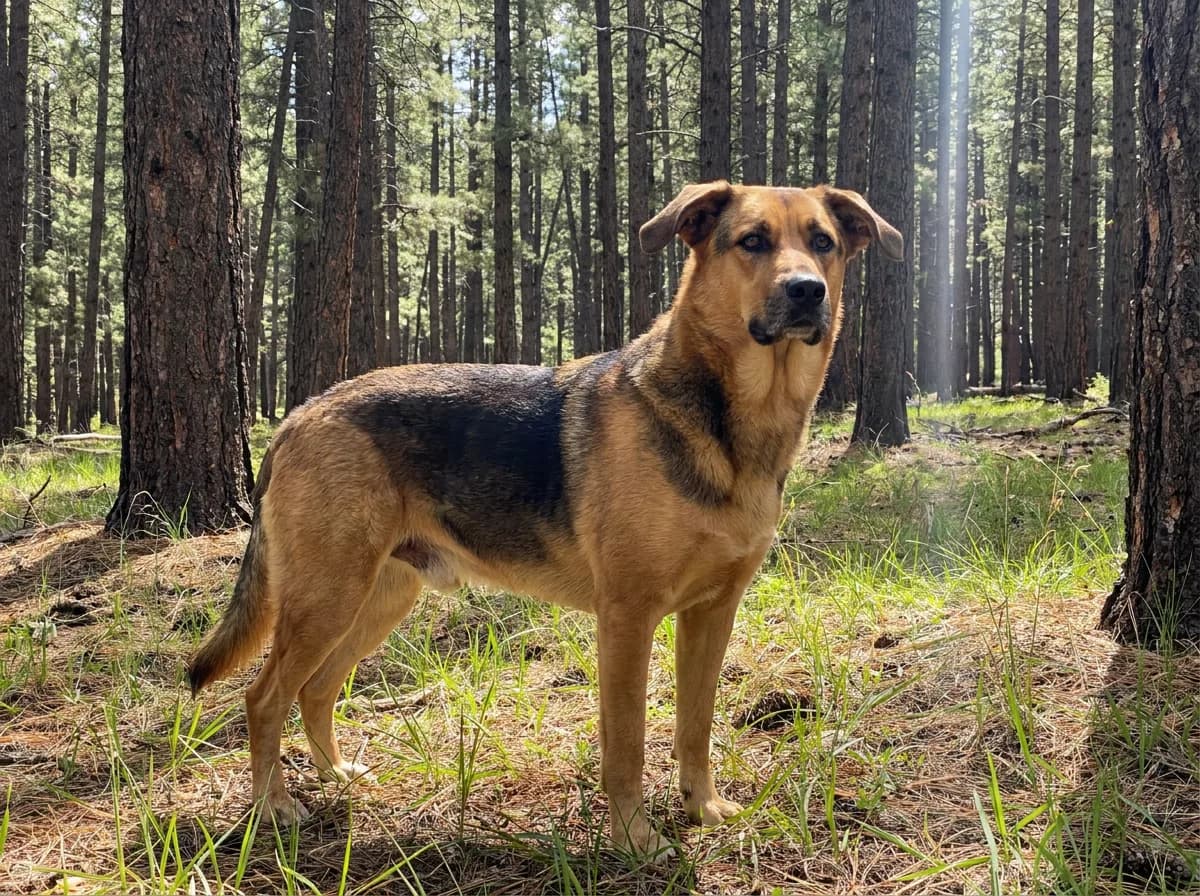
The Beagle Shepherd (a Beagle and German Shepherd mix) has the widest size range on this list and one of the more layered temperaments. The German Shepherd breed standard describes a "certain aloofness" toward strangers, while Beagles greet almost everyone, so a German Shepherd Beagle mix's personality can run from outgoing clown to watchful dog that needs time to warm up. Early socialization with visitors and other dogs matters here.
- Size: German Shepherds stand 22 to 26 inches and weigh 50 to 90 pounds (AKC), so a full grown Beagle Shepherd can be anywhere from Beagle size to a large dog.
- Coat: a medium double coat that sheds heavily (the AKC rates German Shepherd shedding 4 of 5); common looks include the Shepherd's black saddle over tan and ears that stand, fold, or do one of each.
- Temperament: loyal and alert; the AKC rates German Shepherds 3 of 5 with other dogs, below the Beagle's 5, so introductions to new dogs deserve care.
- Exercise: both parents rate 4 or 5 for energy and for mental stimulation needs, so mix long walks with training games and scent work.
- Screening: ask for the Shepherd parent's OFA hip and elbow results; the breed's CHIC program also lists a temperament test. German Shepherds have an AKC life expectancy of 12 to 14 years, and no study has measured German Shepherd Beagle mix lifespan directly.
A heavy, active dog also needs a supportive place to rest. A thick orthopedic bed such as the FurHaven NAP Ultra Plush Orthopedic Deluxe Cat & Dog Bed gives a big Beagle Shepherd room to stretch out; choose the size by your dog's length lying flat. A bed adds comfort but cannot prevent hip dysplasia, which is why parent screening and a lean body weight matter more.
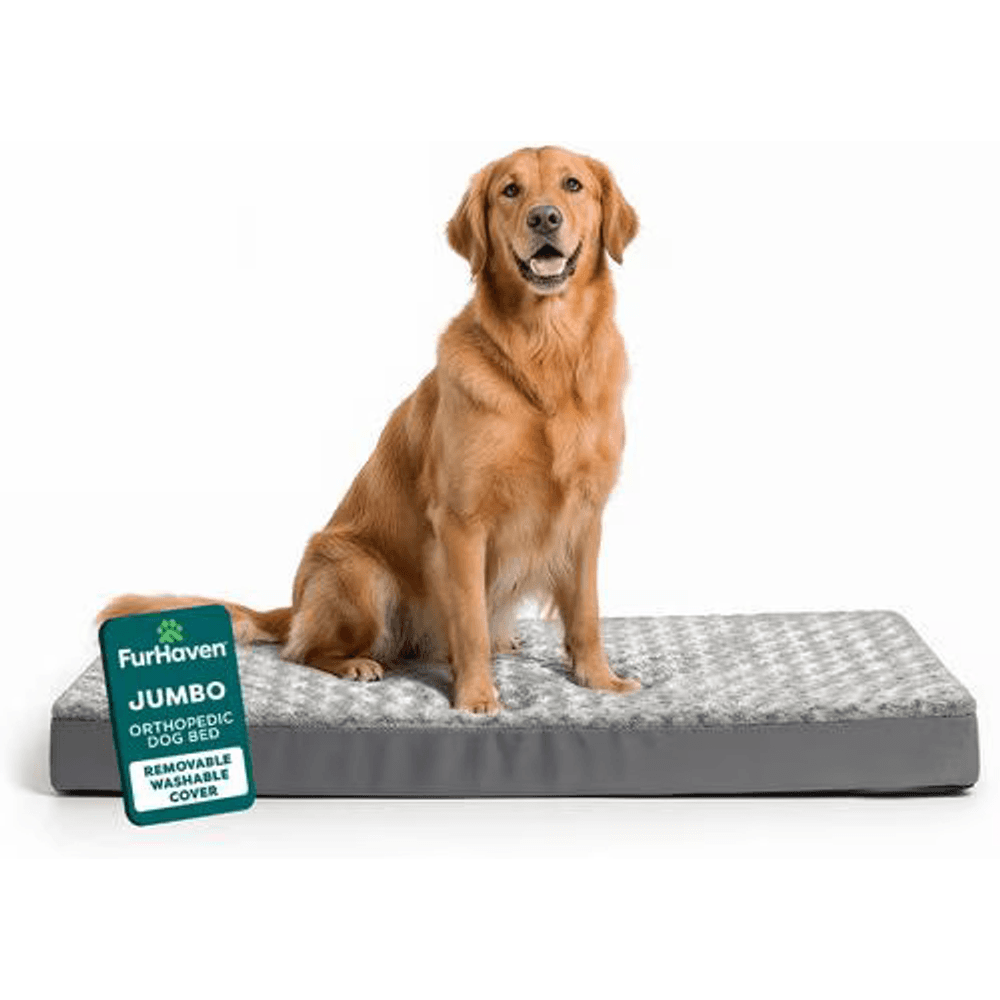
A plush orthopedic foam mattress that cushions aging joints and pressure points, giving a stiff or trembling senior dog warm, supportive rest.
Petful may earn a commission when you click through to Chewy, at no extra cost to you.
3. Beago: Beagle and Golden Retriever mix
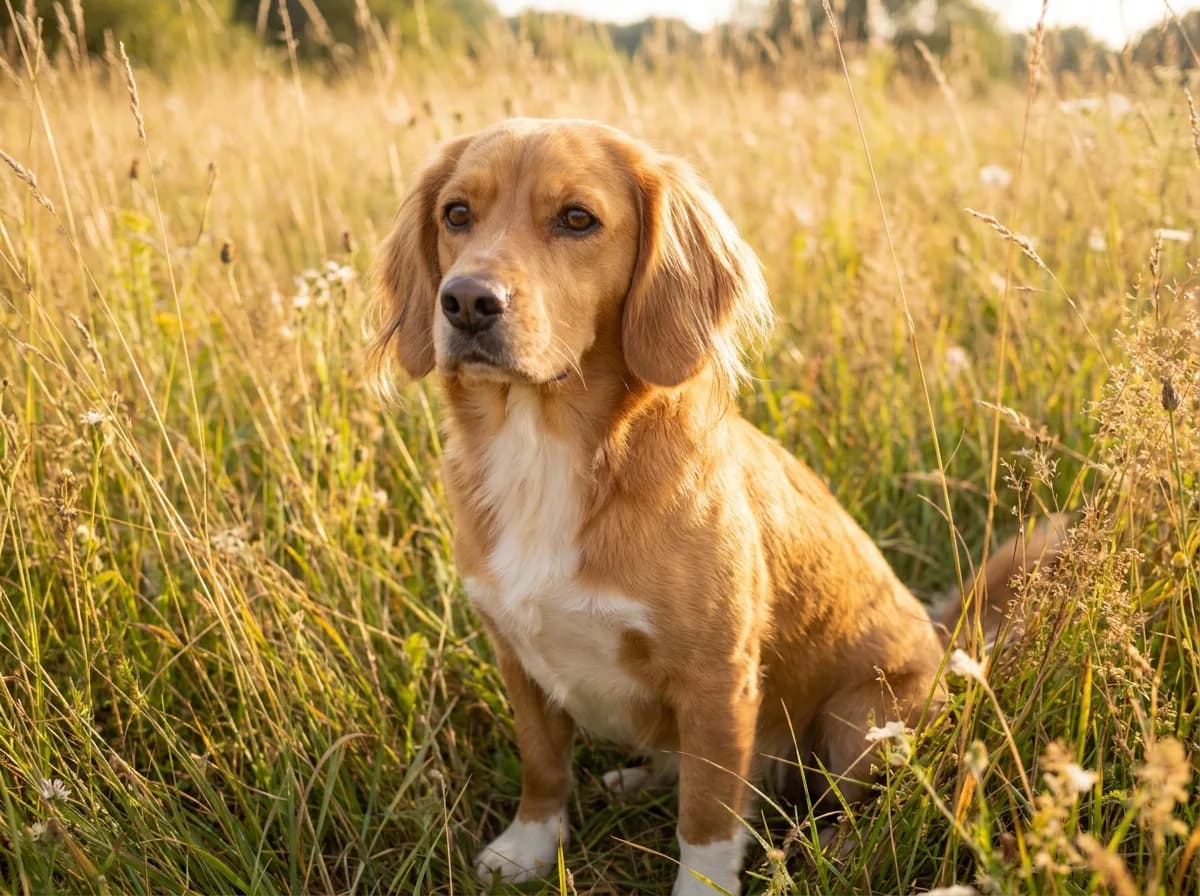
An adult Beago (a Beagle and Golden Retriever mix) tends to be the mellowest of the large crosses: the AKC rates Golden Retrievers 3 of 5 for energy and 1 of 5 for barking, against the Beagle's 4 and 4. Expect a friendly, people-loving dog with either the Golden's feathered coat or the Beagle's short one, and plenty of hair on the floor either way.
- Size: Goldens stand 21.5 to 24 inches and weigh 55 to 75 pounds (AKC), so a Beago falls between Beagle size and that range.
- Coat: a feathered or short double coat; the AKC rates Golden shedding 4 of 5, so expect to brush more than the Beagle's weekly minimum, especially in shedding season.
- Temperament: gentle and social; both parents rate 5 of 5 with young children and with other dogs.
- Exercise: moderate to high. Goldens were built to retrieve, and the AKC notes swimming and fetching come naturally; pair them with sniffing walks for the Beagle nose.
- Screening: ask for the Golden parent's OFA hip and elbow results, yearly eye exams, and a heart exam by a cardiologist. The Golden's AKC life expectancy is 10 to 12 years.
4. Beaski: Beagle and Siberian Husky mix
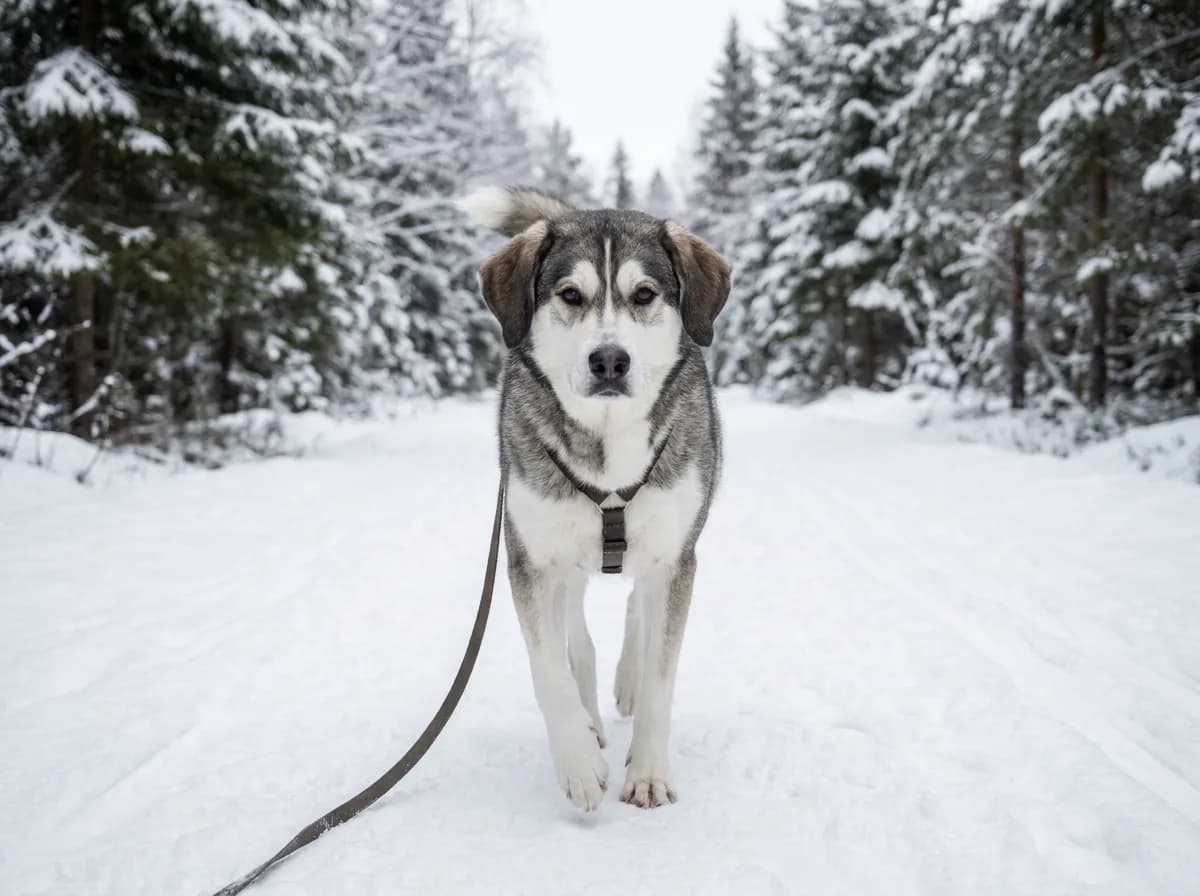
The Beaski (a Beagle and Siberian Husky mix) combines two strong urges to roam: the Beagle follows scent, and the AKC says Siberians "were bred to run and will do so at every opportunity." An adult Beaski needs a secure fence, a leash or long line everywhere else, and more exercise than most first-time owners expect.
- Size: Huskies stand 20 to 23.5 inches and weigh 35 to 60 pounds (AKC), so a full grown Beaski lands between Beagle size and that range.
- Coat: a double coat that sheds heavily when the undercoat comes out, which the AKC says happens twice a year; rake it out with a pin brush and metal comb during those weeks.
- Temperament: friendly and playful, but loud: the AKC rates Husky barking, which includes howling, 5 of 5.
- Exercise: very high (Husky energy 5 of 5), so add running, hiking, or pulling sports on top of daily sniffing walks. In summer, schedule hard exercise for the coolest part of the day.
- Small pets: the AKC notes Huskies "can't resist chasing small animals," so cats and pocket pets need careful management.
- Screening: ask for the Husky parent's eye exams, OFA hip results, and DNA tests for the two inherited nerve conditions in the breed's CHIC program. The Husky's AKC life expectancy is 12 to 14 years.
On walks, a leash with a second handle near the clip, such as the Frisco Traffic Leash with Dual Padded Handles, lets you shorten your grip fast when your dog locks onto a scent or a squirrel.
5. Beabull: Beagle and English Bulldog mix
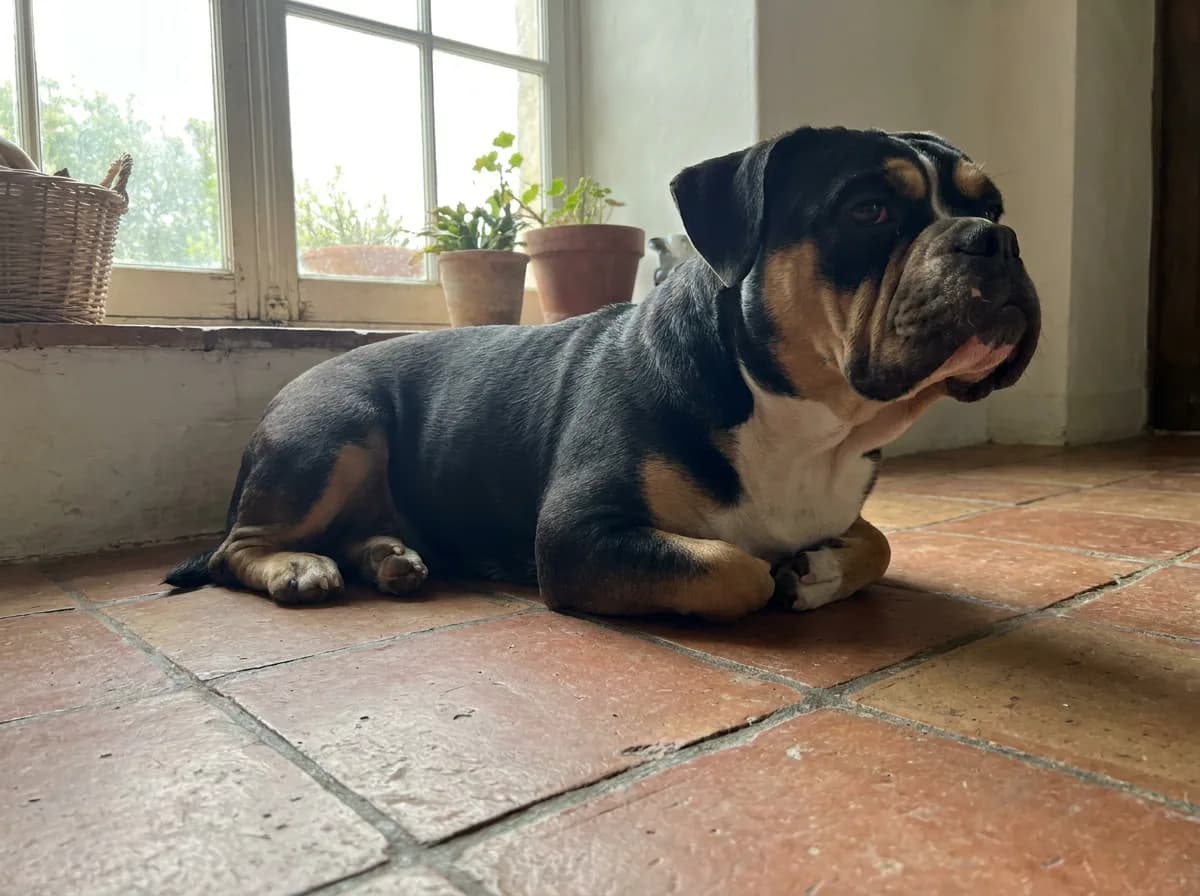
A Beabull (a Beagle and English Bulldog mix) is compact and muscular, about 13 to 15 inches tall, and it is the cross to check most carefully for breathing. The AKC notes that a Bulldog's short snout "can cause labored breathing in hot and humid weather," and the University of Cambridge's BOAS research group links flat faces in Bulldogs, French Bulldogs, and Pugs to brachycephalic obstructive airway syndrome (BOAS). Muzzle length matters: in a 2015 study of 700 dogs, BOAS occurred only in dogs whose muzzles were less than half the length of the cranium (measured from the stop between the eyes to the back of the skull), so a Beabull with a longer, Beagle-type muzzle is at lower risk than one with a Bulldog face. The same study found that thicker necks and obesity raised the risk, which makes keeping a Beabull lean part of protecting its breathing.
- Size: Bulldogs stand 14 to 15 inches and weigh about 40 to 50 pounds (AKC), so a full grown Beabull is Beagle height with extra bulk, up to about 50 pounds.
- Coat: short and smooth; clean and dry any facial skin folds regularly.
- Temperament: easygoing and affectionate; the AKC rates Bulldogs 3 of 5 with young children and 2 of 5 for barking.
- Exercise: moderate. The AKC says Bulldogs need regular moderate exercise and a careful diet to stay trim; walk in the cool of the day.
- Screening: the Bulldog's CHIC program covers knees, heart, and trachea, with an optional Respiratory Function Grading Scheme exam for BOAS, so ask for all of it. The Bulldog's AKC life expectancy is 8 to 10 years.
- Budget note: dogs with severe BOAS may need airway surgery, so plan insurance or savings with that risk in mind.
6. Beagle Pit: Beagle and Pit Bull mix
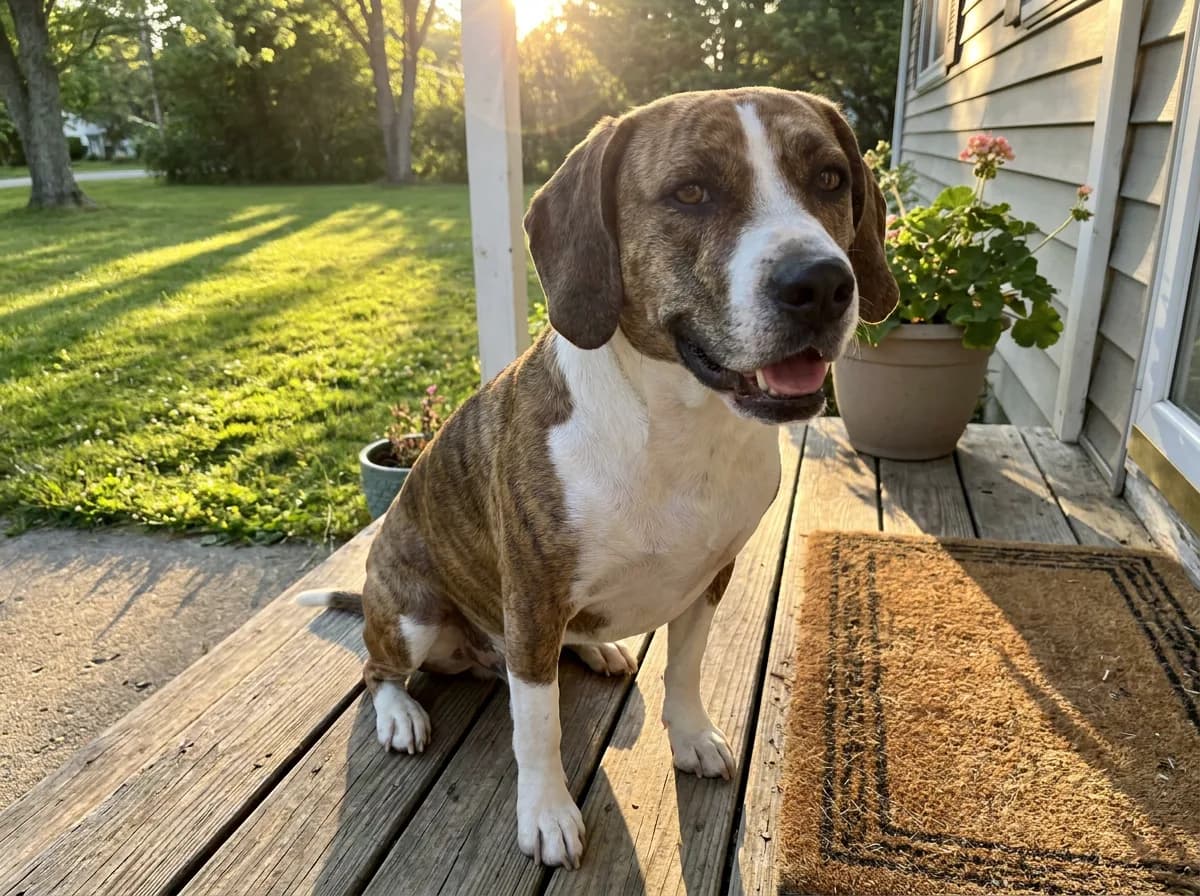
A Beagle Pit, also listed as a Pitbull Beagle mix or Beagle Staffy, pairs a Beagle with a pit bull-type terrier. "Pit bull" is a type label rather than one breed: the AKC registers the American Staffordshire Terrier and the Staffordshire Bull Terrier, and the UKC registers the American Pit Bull Terrier. As with any dog, a Beagle Pit's temperament depends on the individual dog, early socialization, and training much more than on the label; a 2022 study of 18,385 dogs found that breed explains only about 9 percent of the variation in individual behavior.
- Size: American Staffordshire Terriers stand 17 to 19 inches and weigh 40 to 70 pounds (AKC), and the UKC standard for American Pit Bull Terriers is about 17 to 21 inches and 30 to 60 pounds, so a full grown Beagle pitbull mix usually lands between Beagle size and about 70 pounds.
- Appearance and colors: what a Pitbull Beagle mix looks like varies from a broad head and muscular chest to a Beagle's drop ears and longer muzzle. In pictures you will see brindle, black and white, brown and white, and lemon and white coats; "red nose" and "blue nose" describe nose and coat color only, not a separate breed or temperament.
- Temperament: the AKC rates the American Staffordshire Terrier 5 of 5 for affection with family and 3 of 5 with young children and with other dogs, while the Beagle rates 5 for both. Supervise play with other dogs and introduce new dogs gradually.
- Exercise: moderate to high; daily walks, tug and fetch, and scent games, with loose-leash training started early for a strong dog.
- Screening: an American Staffordshire Terrier parent's CHIC program covers hips, a cardiologist heart exam, thyroid, and a DNA test for NCL-A, a form of cerebellar ataxia. The American Pit Bull Terrier has no CHIC program, so ask what testing was done. The AmStaff's AKC life expectancy is 12 to 16 years; Beagle pitbull mix lifespan has not been studied directly.
- Housing rules: some leases, homeowner's insurance policies, and local ordinances restrict pit bull-type dogs, so check yours before adopting.
Early socialization is the practical part. The American Veterinary Society of Animal Behavior calls a puppy's first three months the most important socialization period and says puppy classes can start as early as 7 to 8 weeks, once the puppy has had at least one set of vaccines a week before the first class. The AKC also stresses socializing Stafford puppies with other dogs. In practice, that means:
- Short, positive meetings with calm, vaccinated adult dogs rather than crowded dog parks.
- Gentle handling of paws, ears, and mouth, paired with treats.
- New people, sounds, and places at a pace the puppy can handle, ending each session before it gets overwhelmed.
- For an adult rescue, asking the foster how the dog handles other dogs, children, visitors, and vet visits.
In a 2018 study of shelter dogs, the American Staffordshire Terrier was the most common breed signature in DNA results, and dogs with pit bull-type ancestry waited longer to be adopted than other dogs.
7. Bogle: Beagle and Boxer mix

The Bogle, also called a Beagle Boxer or Boxer Beagle mix, is a muscular, playful dog that often keeps the Boxer's bounce and the Beagle's nose. Boxers have a reputation for patience with children, and the AKC notes they "do best when exposed to a lot of people and other animals in early puppyhood," which applies to a Bogle's upbringing too.
- Size: Boxers stand 21.5 to 25 inches; males weigh 65 to 80 pounds and females about 15 pounds less (AKC). A full grown Bogle falls between Beagle size and that range.
- Coat and colors: short and smooth with light to moderate shedding; fawn or brindle with white markings from the Boxer, Beagle tricolor, or black and white when the Beagle's markings dominate.
- Temperament: energetic and affectionate; the AKC rates Boxers 5 of 5 with young children but 3 of 5 with other dogs. A bouncy adult can knock over a toddler, so supervise.
- Exercise: high (Boxer energy 4 of 5), so plan daily runs or long walks plus play. If your Bogle has the Boxer's shorter muzzle, give hot days the same care you would give any short-faced dog.
- Screening: the Boxer's CHIC program requires an advanced heart exam that includes a Holter monitor, DNA tests for ARVC (an inherited heart muscle disease that disrupts rhythm) and degenerative myelopathy, plus hip and thyroid results. The Boxer's AKC life expectancy is 10 to 12 years; Beagle Boxer mix life expectancy has not been measured directly.
8. Bagle Hound: Beagle and Basset Hound mix
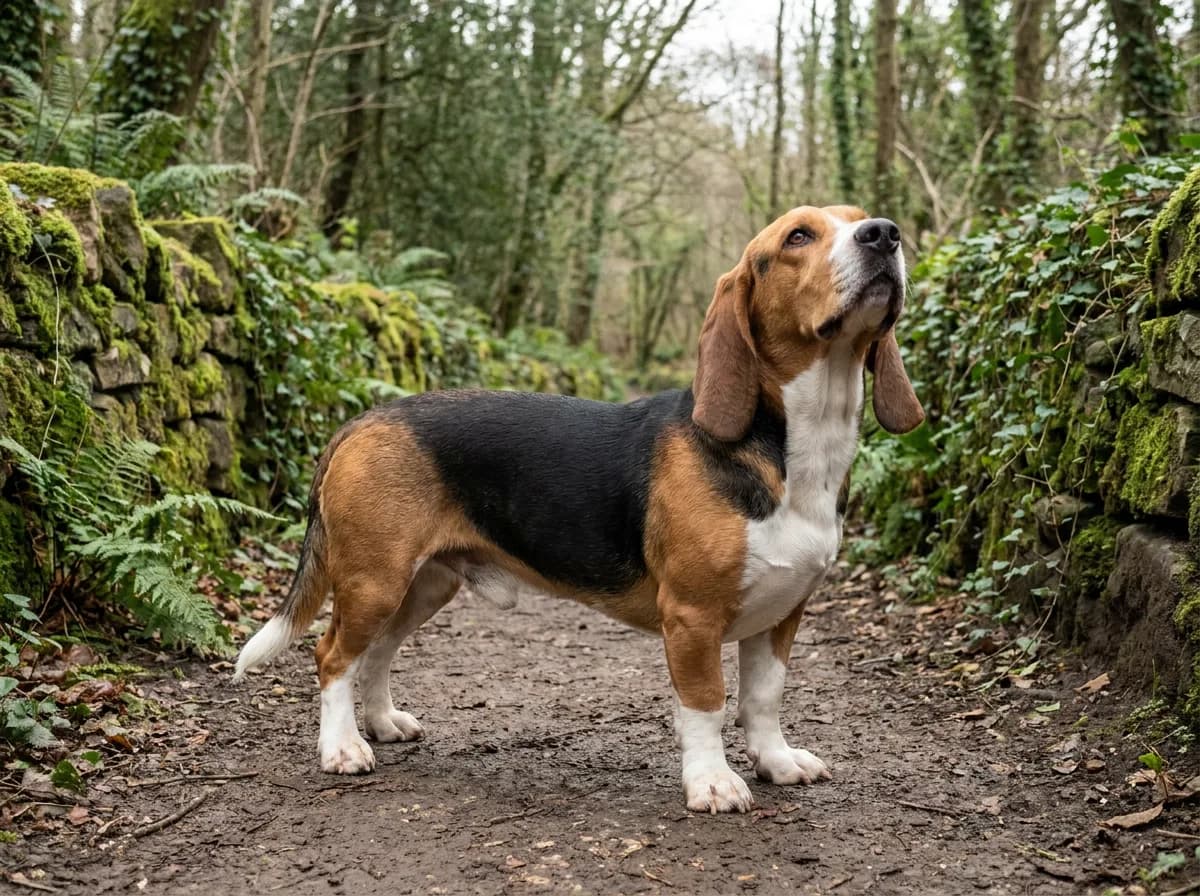
The Bagle Hound doubles down on scent, since both parents are scent hounds: expect a nose-first, food-motivated dog with very long ears and a loud voice (the AKC says the Basset "barks in a loud, ringing voice"). Bassets stand up to 15 inches and weigh 40 to 65 pounds, so a Bagle Hound is usually low and heavy for its height, with a long back that is easier on the spine when the dog stays lean and skips repeated jumps. The Basset's CHIC program lists DNA tests for glaucoma, a bleeding disorder called thrombopathia, and MPS I. Our Basset Hound mixes guide covers the Bagle Hound in more depth, including recall and weight management on a long, low frame.
9. Beagi: Beagle and Corgi mix
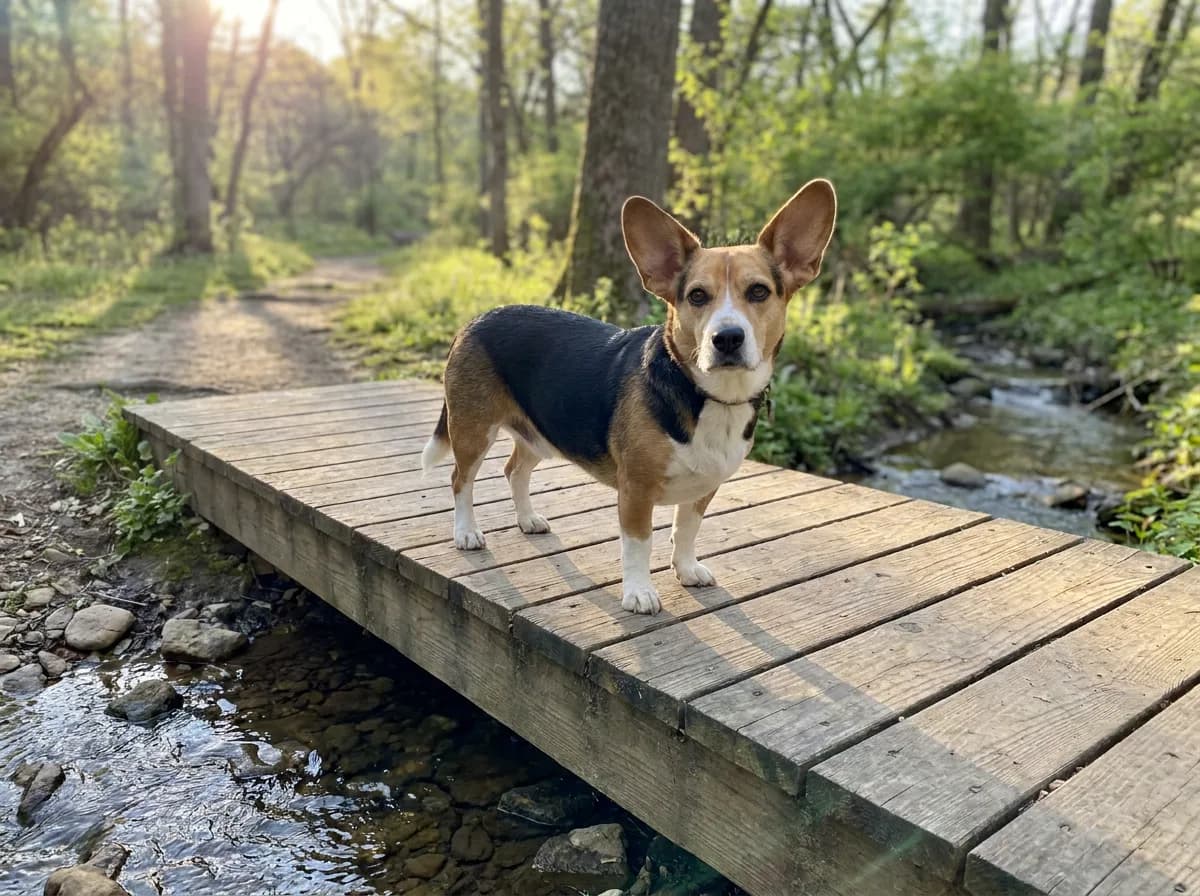
The Beagi pairs the Beagle with a Pembroke or Cardigan Welsh Corgi, producing a short-legged, long-bodied dog with a herder's alertness and a hound's nose. Corgis were bred to move cattle and are "fearless and independent," according to the AKC, so an adult Beagi may try to herd people with nips and barks as well as follow scents; the AKC rates Pembrokes 4 and Cardigans 5 of 5 for barking.
- Size: Corgis stand 10 to 12.5 inches and weigh up to about 38 pounds, with Pembrokes topping out near 30 (AKC), so a full grown Beagle Corgi mix stands roughly 10 to 15 inches, often on the Corgi's short legs.
- Coat: a double coat; the AKC rates Pembroke shedding 4 of 5, so expect a lot of hair.
- Temperament: smart, busy, and vocal; the AKC rates Pembrokes 3 of 5 with young children, so watch for herding nips around toddlers.
- Back care: the American College of Veterinary Surgeons lists the Beagle among the chondrodystrophoid breeds that account for most disc ruptures, and a Corgi's long back on short legs deserves the same caution. Keep your Beagi lean, use ramps or steps for furniture and cars, and discourage jumping.
- Screening: ask for the Corgi parent's OFA hip results and eye exams (Cardigans add a DNA test for progressive retinal atrophy). Corgis have AKC life expectancies of 12 to 13 years for Pembrokes and 12 to 15 years for Cardigans.
Walk a Beagi on a harness rather than a collar, so a lunge toward a scent pulls against the chest instead of the neck. The EliteField Padded Reflective No Pull Dog Harness is one option to compare; measure your dog's chest and neck and check them against the size chart before choosing.
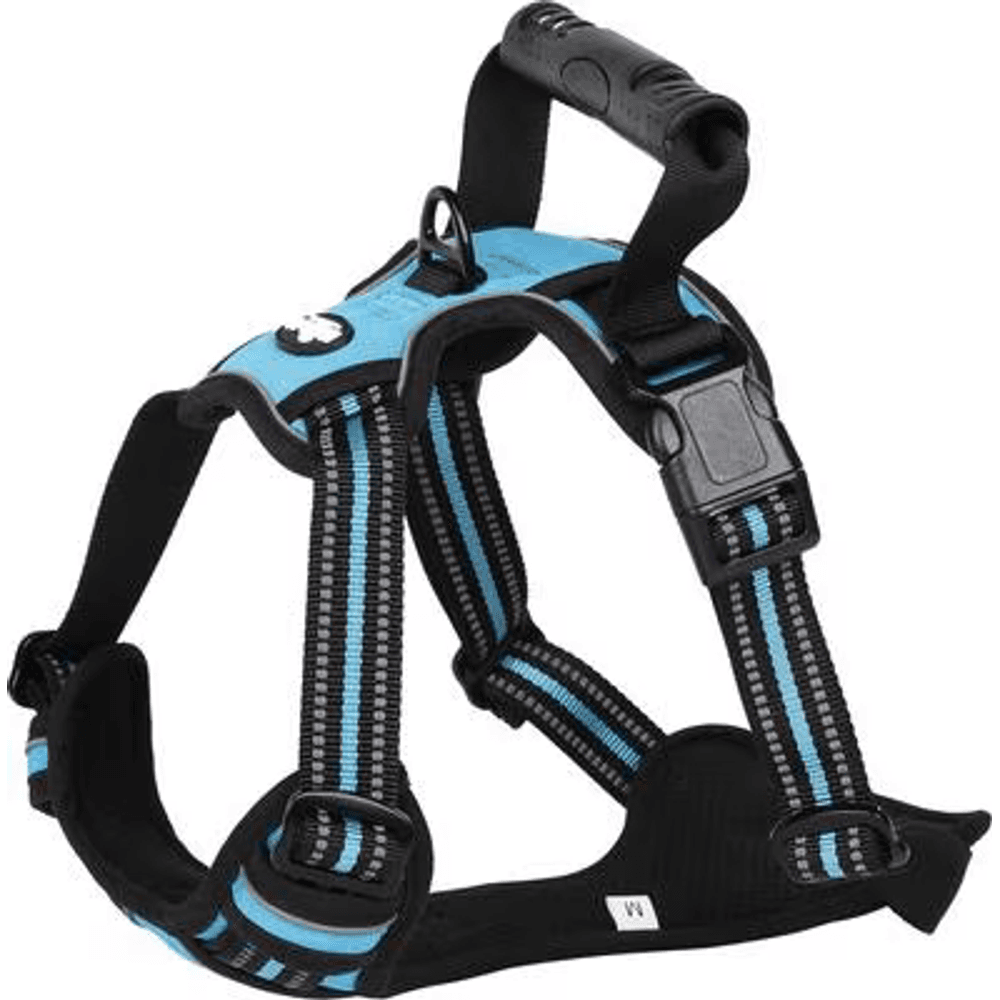
A padded, reflective no-pull harness that spreads leash pressure across the chest instead of the throat, the switch most vets recommend for a dog with a cough, a collapsing trachea, or any airway irritation so the leash never presses on
Petful may earn a commission when you click through to Chewy, at no extra cost to you.
Weighing a Beagi against other Corgi crosses? Our Corgi mixes guide compares 20 of them.
Small Beagle mixes
Crosses 10 to 15 pair the Beagle with a smaller or similar-sized parent (the exception is a Poogle with a Standard Poodle parent, which can reach about 70 pounds), which makes most of them popular with apartment dwellers. Size is only part of the fit, though: the Chihuahua and Dachshund both rate 5 of 5 for barking, the Pug is flat-faced, and the Dachshund is long-backed.
10. Cheagle: Beagle and Chihuahua mix
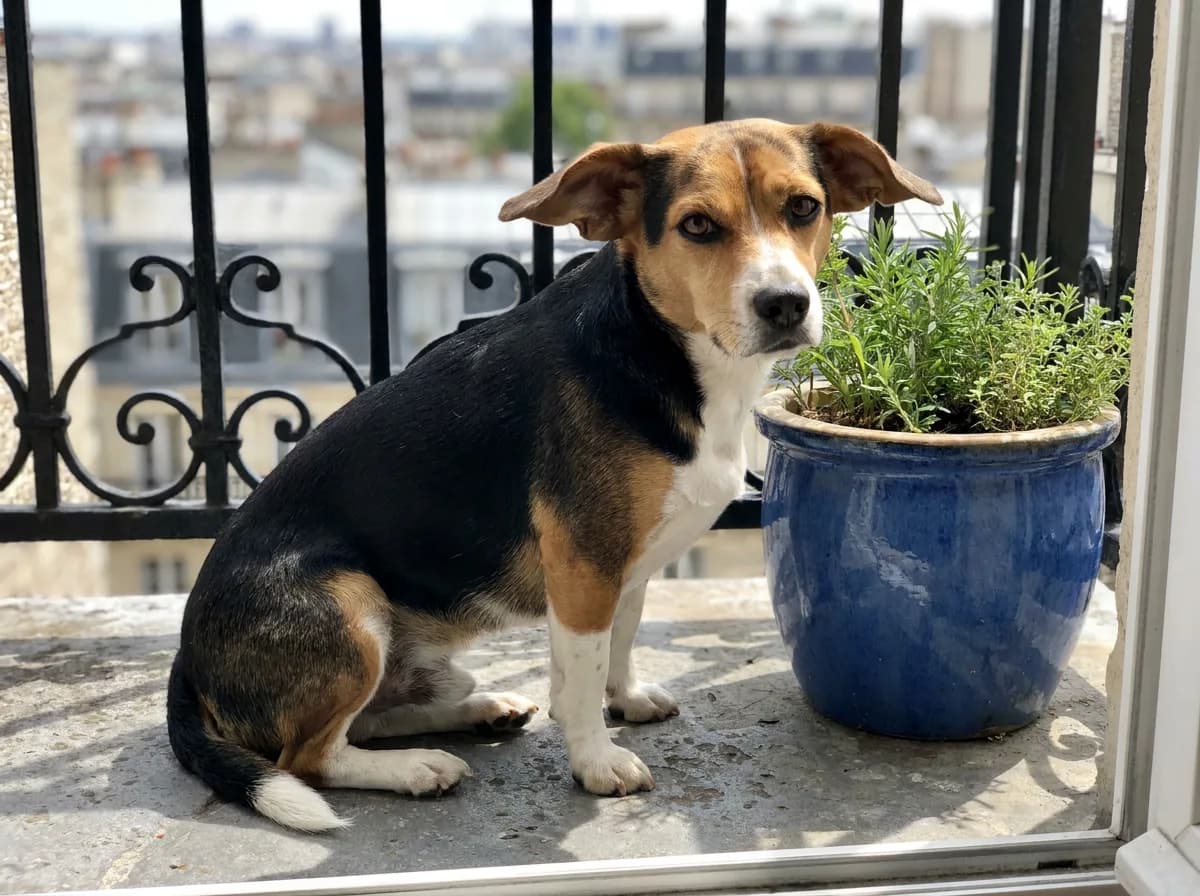
What is a Cheagle? It is a Beagle and Chihuahua mix and the smallest cross on this list: a Cheagle dog can weigh under 10 pounds or close to 30, depending on which parent it takes after. Cheagle temperament tends to be lively, attached to its people, and quick to bark, since the AKC rates the Chihuahua 5 of 5 for barking and 2 of 5 for openness to strangers.
- Size and weight: Chihuahuas stand 5 to 8 inches and weigh no more than 6 pounds (AKC), so how big a Cheagle gets depends on where it lands between Chihuahua size and Beagle size. Ask how big both parents are.
- Coat and colors: short or medium coats in black, white, brown, cream, fawn, or black and white, often with Beagle-style tan points. Cheagle photos show everything from Beagle-shaped dogs with big upright ears to near-Chihuahuas with Beagle markings.
- Kids: the AKC rates the Chihuahua 1 of 5 with young children and calls the breed "too small for roughhousing with kids," so a small adult Cheagle suits older, gentle children better than toddlers.
- Training and barking: both parent breeds rate 3 of 5 for trainability; short, reward-based sessions work better than repetition, and door barking is easier to redirect early.
- Screening and lifespan: ask for the Chihuahua parent's heart exam, eye exam, and knee (patella) evaluation. The Chihuahua's AKC life expectancy is 14 to 16 years, and lighter dogs lived longer on average in a large study of dogs in England, but Cheagle lifespan itself has not been measured.
- Cold weather: the AKC advises special care for Chihuahuas in the cold, so a small Cheagle may need a sweater in winter.
11. Jack-A-Bee: Beagle and Jack Russell Terrier mix
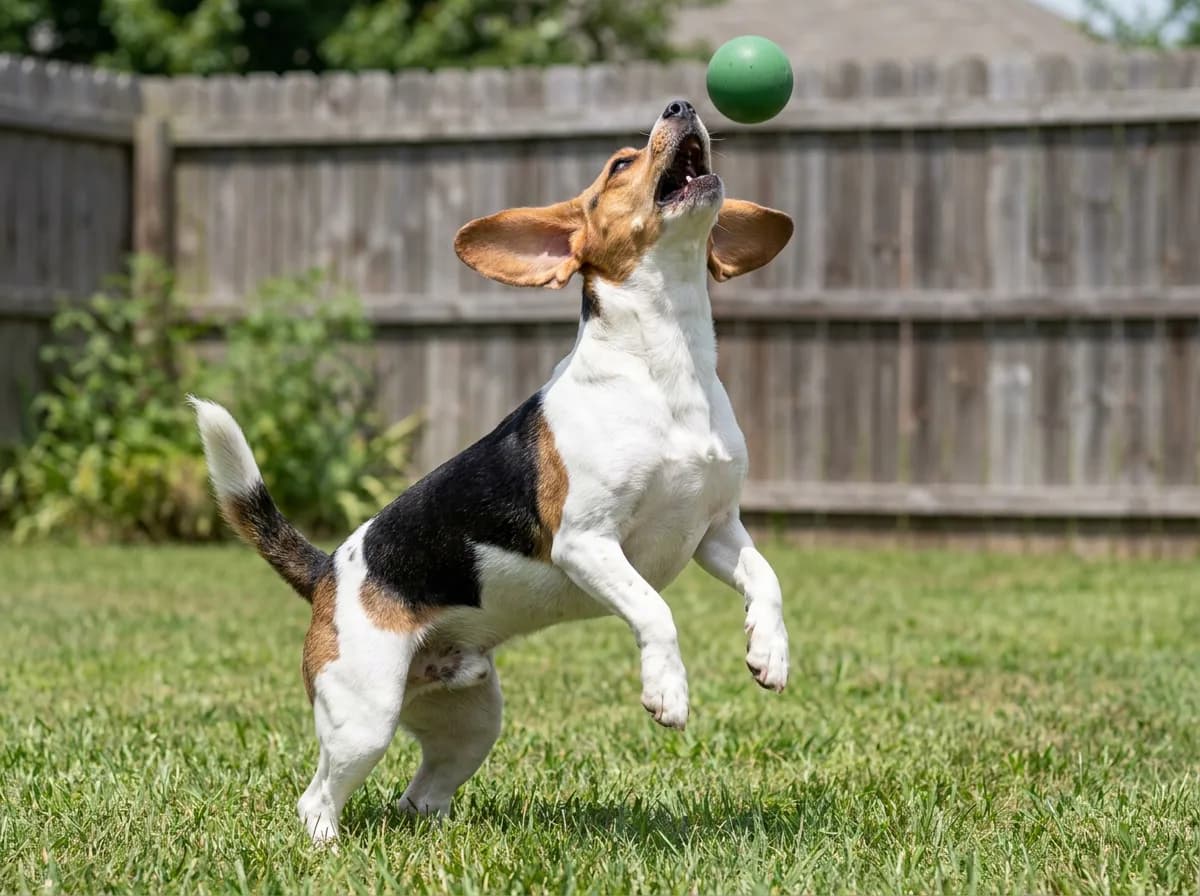
A Jack-A-Bee is a Beagle and Jack Russell Terrier mix: small, fast, and busy from morning to night. A shelter card that reads "Beagle terrier mix" may describe a Jack-A-Bee, but "terrier" covers dozens of breeds, from Rat Terriers to pit bull types, so a DNA test is the only way to know which terrier is in your Beagle terrier mix.
The AKC does not register the Jack Russell under that name; its closest breeds are the Parson Russell Terrier (13 to 14 inches, 13 to 17 pounds) and the Russell Terrier (10 to 12 inches, 9 to 15 pounds).
- Size: a full grown Jack-A-Bee usually stands about 10 to 15 inches and weighs roughly 10 to 30 pounds, bounded by the terrier and Beagle standards.
- Coat: smooth, broken, or rough (wire-haired), usually white with tan or black patches; black and white Jack-A-Bees occur too.
- Temperament: bold and busy; the AKC rates both Russell breeds 5 of 5 for energy, and the Parson was bred to "dig into the ground and flush a fox," so digging and chasing come with the package.
- Exercise: very high, with long daily walks, fetch, and training games. A bored Jack-A-Bee digs, barks, and escapes.
- Screening: the Parson Russell and Russell Terrier CHIC programs list eye exams, a knee evaluation, and a BAER hearing test, so ask whether the terrier parent's hearing was tested; the Jack Russell itself has no CHIC program. Parent life expectancies (AKC) are 13 to 15 years for the Parson Russell and 12 to 14 for the Russell Terrier.
12. Poogle: Beagle and Poodle mix
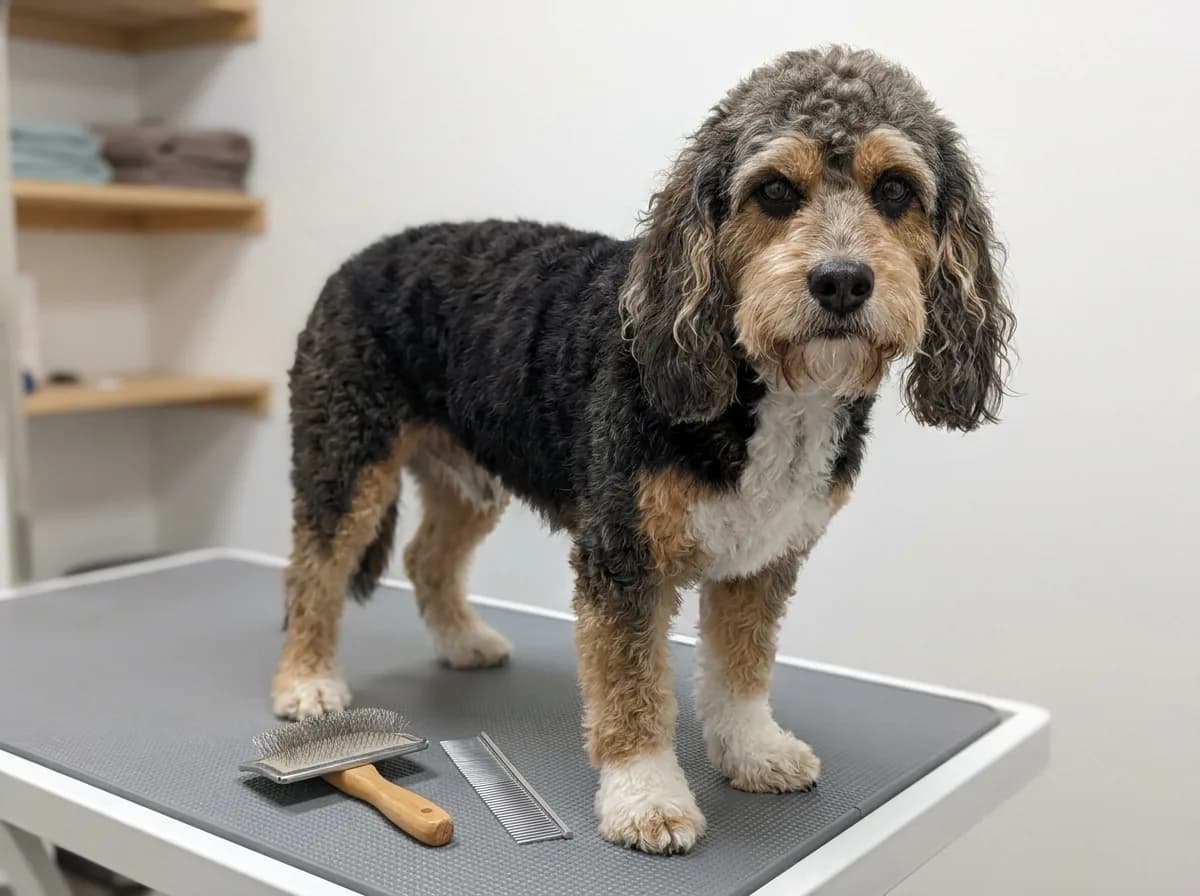
The Poogle is one of the most searched Beagle crosses, and its adult size depends almost entirely on which Poodle is the parent. The AKC recognizes three Poodle sizes: Toy (10 inches and under, 4 to 6 pounds), Miniature (10 to 15 inches, 10 to 15 pounds), and Standard (over 15 inches, 40 to 70 pounds). A toy Poodle Beagle mix or a Beagle mini Poodle mix stays small to medium, while a full grown Beagle Poodle mix with a Standard parent can reach about 70 pounds; our guide to Poodle sizes explains the three varieties.
- Coat: wavy to curly coats may shed less than a Beagle's but mat easily. The AKC says an unclipped Poodle coat needs daily brushing, and many owners book a groomer every four to six weeks, a recurring cost to budget for. A Poogle with a short, Beagle-type coat sheds like a Beagle.
- Allergies: lower shedding does not make a Poogle hypoallergenic; the FAQ below explains what allergen studies found.
- Temperament: smart and eager; the AKC rates Poodles 5 of 5 for trainability but 4 of 5 for barking, the same as the Beagle, so a Poogle is rarely quiet.
- Exercise: moderate to high. Poodles rate 5 of 5 for mental stimulation needs, so puzzle feeders and training games count alongside walks.
- Screening: Toy and Miniature Poodle parents should have a DNA test for progressive retinal atrophy (prcd-PRA), eye exams, and a knee evaluation, with hips added for Miniatures; Standard Poodle parents need hips, eyes, and a thyroid, skin (sebaceous adenitis), or heart evaluation. The Poodle's AKC life expectancy is 10 to 18 years.
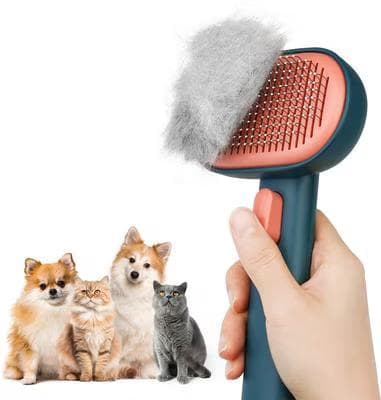
Keep a wavy or curly Poogle coat either clipped short or brushed down to the skin every day, as the AKC advises for full-coated Poodles; otherwise mats form near the roots and may have to be shaved out. A slicker brush such as the aumuca Self Cleaning Slicker Brush works through waves, and a metal comb afterward finds any tangles the brush missed.
Petful may earn a commission when you click through to Chewy, at no extra cost to you.
13. Beaglier: Beagle and Cavalier King Charles Spaniel mix
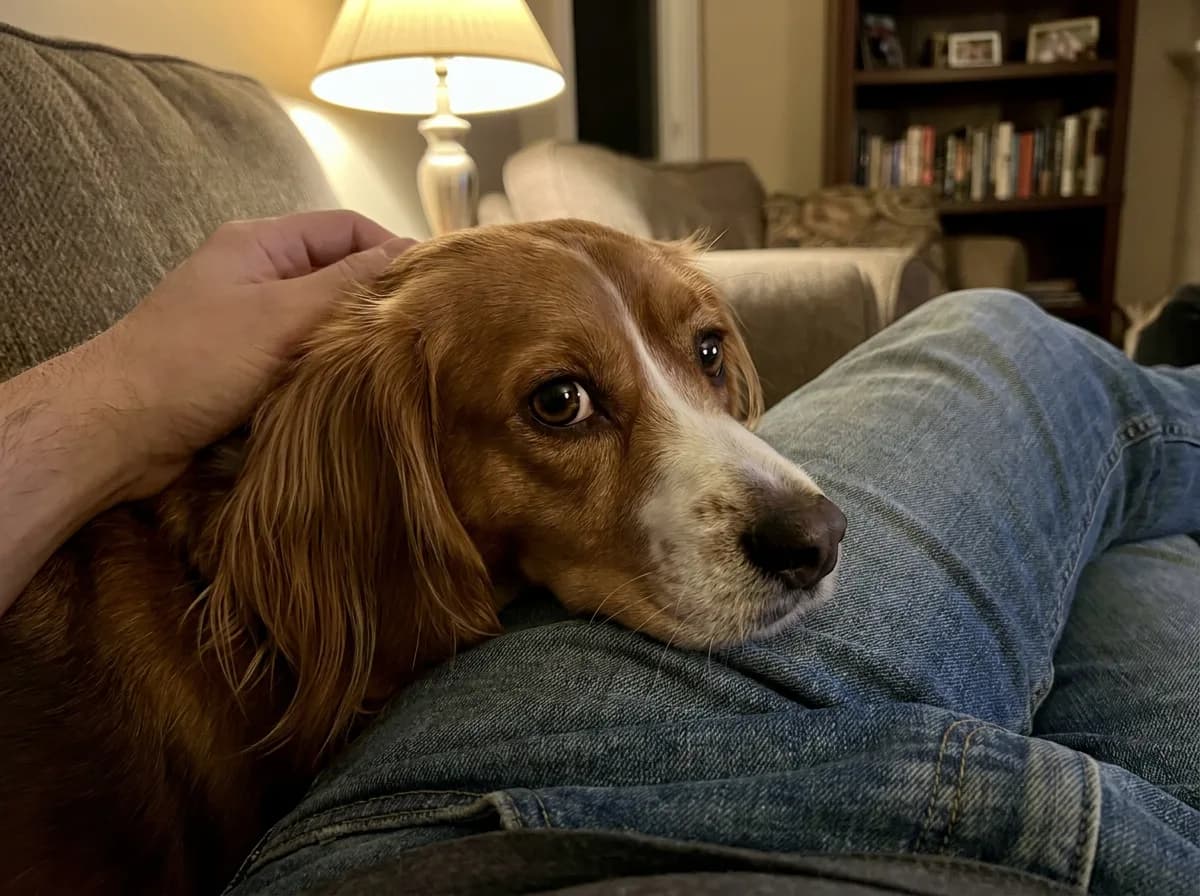
The Beaglier is a Beagle and Cavalier King Charles Spaniel mix and one of the gentler small crosses. The AKC rates Cavaliers 3 of 5 for energy and for barking and 5 of 5 with young children and other dogs, noting they "get along nicely with children and other dogs." Expect an affectionate adult Beaglier with silky, feathered ears and a Beagle's appetite.
- Size: Cavaliers stand 12 to 13 inches and weigh 13 to 18 pounds (AKC), so a Beaglier is usually 12 to 15 inches and 13 to 30 pounds.
- Coat: silky or smooth with light to moderate shedding; brush the ear and leg feathering weekly and keep the long ears clean and dry.
- Heart screening: this is the key question. Mitral valve disease is common in Cavaliers: a Swedish study found heart murmurs in 53 percent of six-year-old Cavaliers, and the breed's CHIC program calls for a heart exam by a board-certified cardiologist, recommended every year. Ask to see the Cavalier parent's latest cardiology result.
- Other screening: Cavalier parents also need OFA hip, eye, and knee results. The Cavalier's AKC life expectancy is 12 to 15 years.
- Spaniel labels: a shelter's "Beagle spaniel mix" may be a Cocker or Springer Spaniel cross rather than a Beaglier; a DNA test tells you which spaniel is in the mix.
14. Puggle: Beagle and Pug mix
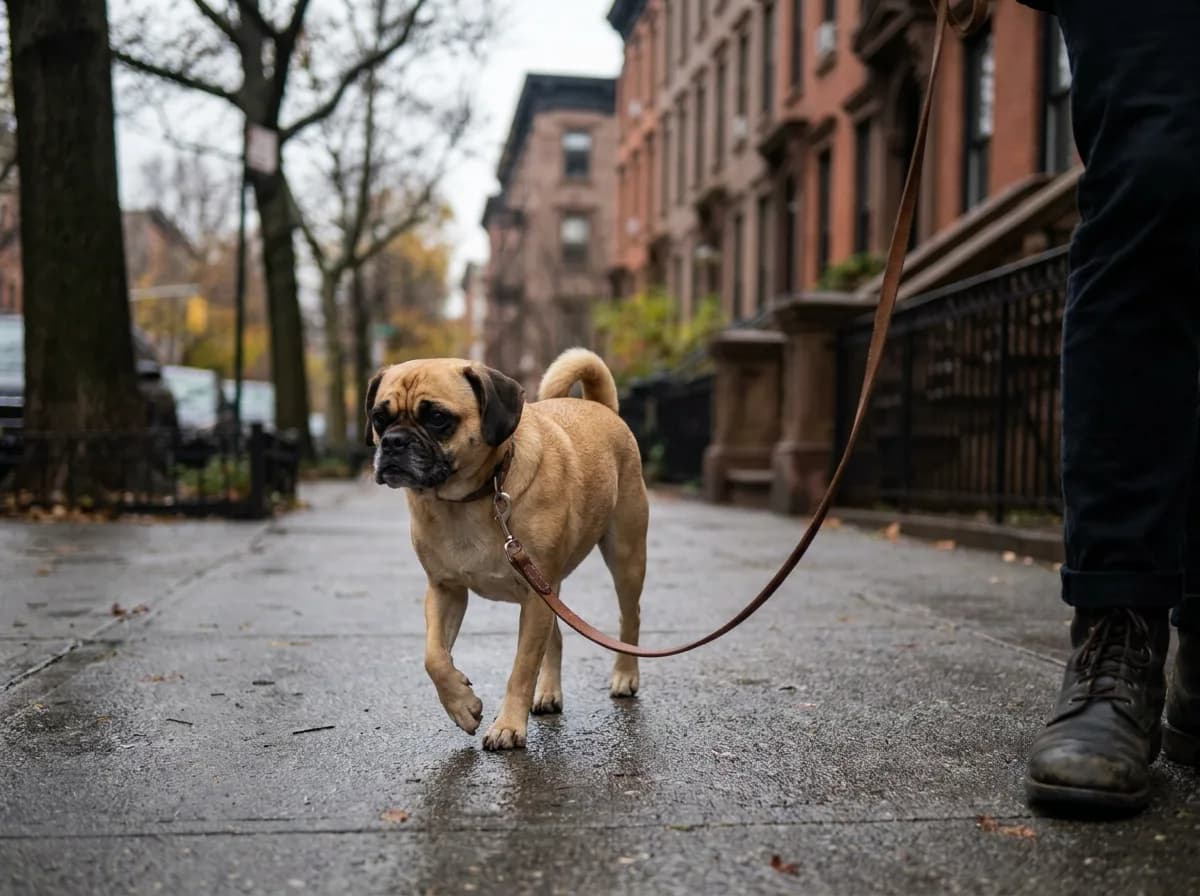
The Puggle is one of the best-known Beagle crosses: usually a compact dog of 10 to 15 inches and about 14 to 30 pounds, with a wrinkled forehead, a moderate muzzle, and a big appetite (the AKC notes Pugs "enjoy their food, and care must be taken to keep them trim"). Pugs are flat-faced, and Cambridge's BOAS research counts them among the breeds prone to airway obstruction, so ask about the Pug parent's breathing and keep a Puggle out of the heat. The Pug's CHIC program also includes a DNA test for Pug dog encephalitis. Our Puggle guide covers Puggle temperament, training, grooming, and family fit in depth.
15. Doxle: Beagle and Dachshund mix
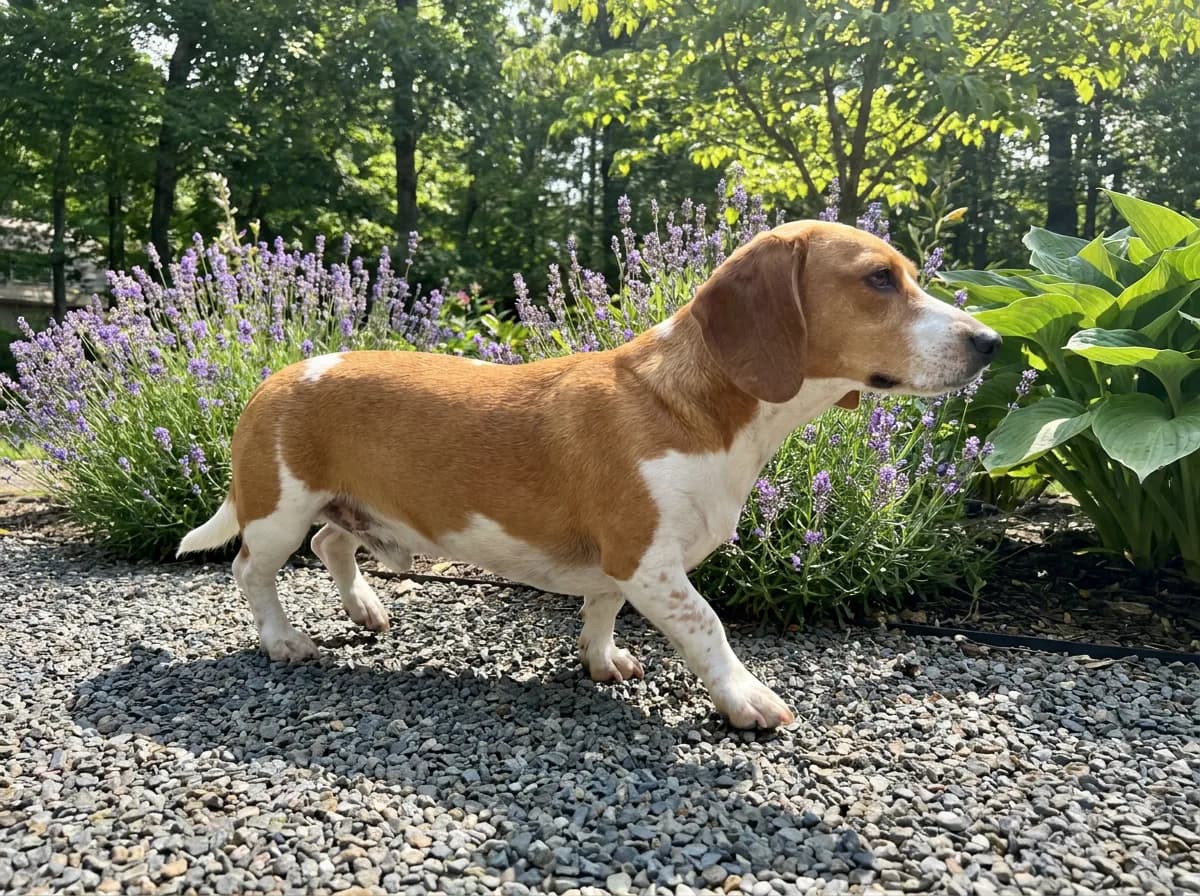
The Doxle, a Beagle and Dachshund mix, is short-legged and long-bodied, so back care comes first. Our Beagle Dachshund mix guide covers Doxle size, coat colors, and back care in detail, including Chihuahua three-breed crosses. The essentials:
- Back risk: the American College of Veterinary Surgeons (ACVS) reports that Dachshunds account for 45 to 70 percent of intervertebral disc ruptures and lists the Beagle among the chondrodystrophoid breeds behind most of the rest, so keep a Doxle lean and give it ramps instead of jumps.
- Warning signs: in these breeds, the ACVS says signs usually start between 3 and 6 years of age, beginning with back or neck pain and progressing to a wobbly, "drunken sailor" walk. It describes disc rupture as generally a surgical emergency, so see a vet the same day.
- Size and voice: standard Dachshunds weigh 16 to 32 pounds and miniatures 11 pounds or less (AKC), so a Doxle can land anywhere from miniature-Dachshund size to about 32 pounds. Both parents are vocal, and the AKC rates the Dachshund 5 of 5 for barking.
Other Beagle crosses
These five crosses fall outside the numbered 15, but they turn up in shelters and online listings. Small crosses are sometimes sold as "mini Beagles," a label with no breed standard behind it; our pocket Beagle guide explains what that label can hide.
Frengle: Beagle and French Bulldog mix
The Frengle (a Beagle and French Bulldog mix) can suit apartment living better than most crosses: French Bulldogs stand 11 to 13 inches, weigh under 28 pounds, rate 1 of 5 for barking, and "do not require a lot of outdoor exercise," according to the AKC. The catch is the Frenchie's flat face. Cambridge's BOAS research group studies breathing problems in French Bulldogs, so ask whether the Frenchie parent has a Respiratory Function Grading Scheme result, an optional part of its CHIC program alongside hips, eyes, knees, and heart.
- Size: about 11 to 15 inches and up to 30 pounds, bounded by both parents.
- Coat: short, often brindle or fawn from the Frenchie side, or Beagle tricolor.
- Voice and nose: a Frenchie Beagle mix that inherits the Beagle's voice and nose will still bay and pull toward scents, so walk it on a harness and keep it out of the heat.
- Lifespan: the French Bulldog's AKC life expectancy is 10 to 12 years.
Bea-Tzu: Beagle and Shih Tzu mix
The Bea-Tzu pairs the Beagle with the Shih Tzu, a 9- to 10.5-inch, 9- to 16-pound breed that the AKC says makes "a great pet if you live in an apartment." The Shih Tzu side can add a long, low-shedding coat with high grooming needs (the AKC rates Shih Tzu grooming 4 of 5), while the Beagle side adds scent drive and a louder voice. Our Shih Tzu mixes guide profiles the Bea-Tzu alongside other Shih Tzu crosses.
Miniature Pinscher and Beagle mix
A Miniature Pinscher Beagle mix is small, quick, and alert. Min Pins stand 10 to 12.5 inches, weigh 8 to 10 pounds, and rate 5 of 5 for both energy and barking (AKC), and both parents bring prey drive, so this cross needs a secure yard, a leash outdoors, and patient recall training. Our Miniature Pinscher profile covers Miniature Pinscher mixes, including crosses with hounds such as the Beagle.
Miniature Schnauzer and Beagle mix
Check which Schnauzer is the parent: a Miniature Schnauzer cross stays small, while a Standard or Giant Schnauzer parent makes a much larger dog. Miniature Schnauzers stand 12 to 14 inches and weigh 11 to 20 pounds (AKC), so a full grown Schnauzer Beagle mix is usually 12 to 15 inches and 11 to 30 pounds.
- Coat: often wiry or mixed; a wiry coat needs regular clipping or hand-stripping, and the AKC rates Miniature Schnauzer grooming needs 4 of 5.
- Temperament: bright and trainable (AKC trainability 5 of 5) and, in the AKC's words, "small enough to adapt to apartment life," but Schnauzers also rate 5 of 5 for barking, so expect an alert watchdog.
- Screening: ask for the Schnauzer parent's eye exam and a heart exam by a cardiologist, the breed's CHIC requirements. The Miniature Schnauzer's AKC life expectancy is 12 to 15 years.
Australian Shepherd and Beagle mix
An Aussie Beagle mix combines herding drive with scent drive, which makes it one of the most demanding crosses to exercise. Australian Shepherds stand 18 to 23 inches, weigh 40 to 65 pounds, rate 5 of 5 for energy and mental stimulation needs, and have "an irresistible impulse to herd, anything: birds, dogs, kids," according to the AKC.
- Mini Aussie crosses: "mini Aussie" is the common name for the breed the AKC recognizes as the Miniature American Shepherd, at 13 to 18 inches and 20 to 40 pounds, so a mini Aussie Beagle mix stays closer to Beagle size.
- Size: a full grown Beagle Aussie mix falls between Beagle size and its Aussie parent's standard.
- Exercise: daily running or herding-style games plus sniffing walks; an under-exercised adult may herd children or chew.
- Screening: ask for the Aussie parent's OFA hip, elbow, and eye results and an MDR1 DNA result (MDR1 is a gene variant that makes some dogs sensitive to certain common medications), which the Miniature American Shepherd's CHIC program requires. The Aussie's AKC life expectancy is 12 to 15 years.
Which Beagle mix is best for your home?
There is no single best Beagle mix for every home, but the Beago comes closest to an all-round pick: its Golden Retriever parent rates 5 of 5 with young children, with other dogs, and for trainability, and just 1 of 5 for barking, so its main costs are shedding and size. Beyond that, the best Beagle mix depends on your household type:
- Families with young kids: the Beago or Beagador, since both parents rate 5 of 5 with young children, though either can knock over a toddler.
- Apartments: the Beaglier, whose Cavalier parent barks less than a Beagle.
- Long workdays: a calm adult Bagle Hound or Beaglier, but only with a midday walk.
Household fit comes down to three pressures: young kids, shared apartment walls, and long workdays that leave a dog alone. The table matches crosses to each situation using the parents' AKC ratings for size, energy, barking, and patience with children.
| Household | Crosses to consider | Why they fit | Watch for |
|---|---|---|---|
| Households with young kids | Beago, Beagador, Beaglier | Both parents rate 5 of 5 with young children, and these crosses are sturdy or gentle | Big crosses can knock over toddlers; supervise every interaction |
| Apartment living | Beaglier, Bea-Tzu, Frengle, Puggle | Smaller size and a quieter other parent (barking rated 1 to 3 of 5) | Frengles and Puggles need heat and breathing care; all still need daily walks |
| Away all day | Bagle Hound, Beago, Beaglier | Lower-energy other parent (energy rated 2 to 3 of 5) | No cross should spend a full workday alone without a midday break |
| First-time owners | Beaglier, Beago | Social, trainable other parent | Beagle scent drive still makes recall hard |
| Active, outdoorsy owners | Beagle Shepherd, Beaski, Jack-A-Bee, Aussie Beagle mix | High-energy other parent (energy rated 5 of 5) | Escaping and boredom; secure fencing and a long line are essential |
Best Beagle mixes for families with young kids
The Beago and Beagador are the steadiest picks for young families: they are sturdy enough to shrug off a bump, and both of their parents rate 5 of 5 on the AKC's young-children scale. The Beaglier is a gentler, smaller option for calm households. Tiny crosses are the riskier choice around toddlers, which is why the Cheagle and Poogles with a toy Poodle parent suit families with older children better.
- Supervise every interaction between the dog and young kids.
- Teach children to leave the dog alone while it eats or sleeps.
- Give the dog a retreat, such as a crate or a gated room, that children stay out of.
Best Beagle mixes for apartments
For apartment living, voice matters as much as size. The AKC rates the Beagle 4 of 5 for barking, and a bay carries through shared walls. The better bets have a quieter other parent:
- Beaglier: Cavalier barking rated 3 of 5.
- Bea-Tzu: Shih Tzu barking rated 3 of 5.
- Frengle: French Bulldog barking rated 1 of 5, with the airway caution above.
- Puggle: Pug barking rated 1 of 5, with the same airway caution.
A Cheagle, Doxle, or Schnauzer cross is a harder fit for shared walls, because those other parents all rate 5 of 5 for barking. Small still needs exercise: plan at least two walks a day with time to sniff, plus a puzzle feeder at mealtime.
Best Beagle mixes if you work all day
If you work all day, the best Beagle mix is an adult, lower-energy cross such as the Bagle Hound, Beago, or Beaglier, and even then no dog should be alone for the whole shift. Beagles were bred to work in packs and, per the AKC, are happiest when they have company, so owners who are away all day should plan for the middle of the day:
- A midday walk from a dog walker, neighbor, or family member.
- Doggy daycare a few days a week for social crosses.
- A safe, dog-proofed room with water, a chew, and nothing to raid.
- A gradual start: build alone time in short steps and watch for howling or destruction, which signal the dog is not coping.
Care needs most Beagle mixes share
Whatever the other parent, the Beagle half brings a few predictable jobs: managing the nose, the appetite, and the coat and ears, and planning for the size and lifespan that come with the cross.
Scent drive, recall, and secure fencing
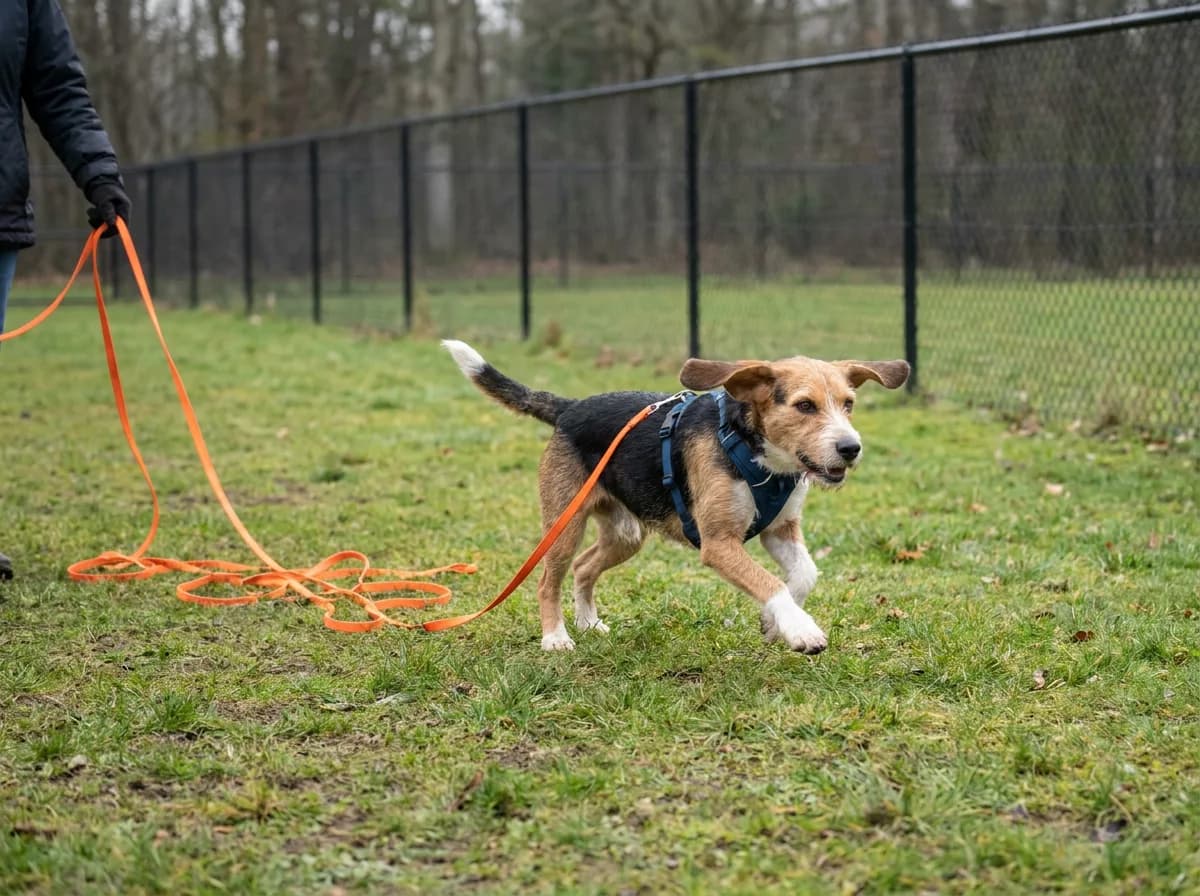
The AKC says a Beagle "will not be able to resist the urge to run off in pursuit of a compelling scent," which is why it advises leashed walks, and most crosses inherit at least some of that scent drive. The UK veterinary charity PDSA adds that Beagles are good escape artists that climb and dig. A recall that works in the living room often fails outdoors once the nose takes over, and Husky, terrier, and herding parents add their own reasons to bolt.
- Walk on a leash or long line anywhere that is not securely fenced.
- Walk the fence line monthly for gaps, loose boards, and dig spots; wire mesh buried along the base or pavers laid against it make digging out harder.
- Match the fence to the cross: a Beaski or Jack-A-Bee can climb or jump fencing that easily holds a low, heavy Bagle Hound.
- Keep gates latched and self-closing if possible, and never leave the dog alone in the yard while you are away.
- Keep an ID tag on the collar and the microchip registration current.
- Give the nose a job every day: sniffing walks, scent games, and hidden treats.
- Practice recall on a long line of 15 to 30 feet inside a fenced area first, and trust it only once your dog comes away from food and fresh scents every time. Confirm the fence is secure, with no gaps, loose boards, or dig spots, before the long line comes off.
Food motivation and weight
Most Beagle crosses are food motivated, which makes training easy to reward and weight easy to gain. The AKC warns that too many treats can make Beagles obese, and Labrador, Pug, and Bulldog parents bring the same tendency. Weight management works best as a routine:
- Ask your vet for a target weight and daily calories, since a cross's ideal weight depends on its build, not a breed chart.
- Measure every meal with a cup or kitchen scale instead of free feeding.
- Count treats in the daily total; the American Animal Hospital Association advises keeping treats to no more than 10 percent of daily calories.
- Check body condition monthly: you should feel the ribs easily and see a waist from above.
- Store food, trash, and treat bags behind closed doors.
A slow feeder such as the Outward Hound Fun Feeder Interactive Dog Bowl or a snuffle mat such as the Pet Parents Forager Snuffle Mat & Slow Feeder Dog Bowl stretches a meal out and gives the nose something to do.
Grooming, shedding, and ear care
Most Beagle crosses need weekly brushing and weekly ear checks, and the coat they inherit decides the rest. The AKC recommends weekly brushing for the Beagle's short double coat with a medium-bristle brush, a rubber grooming mitt, or a hound glove, and notes that Beagles shed moderately year-round. Ear redness, a bad smell, or frequent head shaking calls for a veterinarian rather than more cleaning.
- Short coats (Beagador, Beagle Pit, Bogle, Puggle): weekly brushing with a rubber mitt such as the Four Paws Magic Coat Professional Series All-In-One Wet & Dry Dog Glove & Curry Brush.
- Double coats (Beagle Shepherd, Beago, Beaski, Beagi): extra brushing in shedding season; Huskies shed their undercoat twice a year.
- Poodle, Shih Tzu, and Schnauzer coats (Poogle, Bea-Tzu, Schnauzer crosses): frequent brushing, daily for a long Poodle-type coat, plus a professional groom every four to six weeks if the coat grows long, the schedule the AKC describes for Poodles.
- Drop ears: long ears need a weekly check and ear cleaning when you see wax or debris, using a vet-recommended cleaner such as the Virbac Epi-Otic Advanced Ear Cleaner.
Beagle mix size and lifespan
There is no single average weight for a Beagle mix: the range runs from a Cheagle under 10 pounds to a Beagle Shepherd of 70 pounds or more, because every cross is bounded by both parents. The best predictor is the actual size of both parents; the next best is their breed standards, as in the comparison table above.
Lifespan follows the same logic. The AKC puts the Beagle's life expectancy at 10 to 15 years, and a study of more than 100,000 dogs in England found that crossbreds lived about 1.2 years longer than purebreds on average and that heavier dogs lived shorter lives (the median for all dogs was 12 years). So a small cross tends to outlive a large one, but no parent's number is a promise. Our Beagle lifespan guide covers how long Beagle mixes live, the conditions that most often shorten a Beagle's life, and senior care.
Do Beagle mixes make good pets?
Yes, Beagle mixes make good pets for people who want a sociable, food-driven companion and can manage its nose and voice. The Beagle side is friendly with people and other dogs (the AKC calls Beagles "easy-going and friendly"), so most crosses are affectionate family dogs; the other parent shifts the balance, from the Golden's calm to the Husky's urge to run or the Chihuahua's wariness of strangers.
- Friendly with people
- Usually good with other dogs
- Eager for food rewards
- Available in almost any size
- Scent drive and escape risk
- A bay or bark that carries
- Easy weight gain
- An adult size and temperament you cannot fully predict in a puppy
Questions people ask about purebred Beagles have mix-level answers too:
- Barking: most crosses keep some of the Beagle's voice. Golden, Pug, and French Bulldog crosses (other parent rated 1 of 5) tend to be quieter, and Chihuahua, Dachshund, Min Pin, and Schnauzer crosses (5 of 5) louder.
- Cuddling: yes, most Beagles like to be cuddled by their own people, on their own terms: leaning against you on the sofa is usually welcome, while a tight hug or being held down often is not. Cavalier, Pug, Golden, and Labrador parents rate 5 of 5 for affection with family, above the Beagle's 3, so those crosses often lean cuddly.
- Boy or girl: neither sex makes a better Beagle, and in a mix, the individual dog's size, energy, and temperament matter more than sex. The differences show up mainly in intact dogs: an unspayed female comes into heat once or twice a year, and an unneutered male is more likely to roam and mark.
- House dog: yes, a Beagle is a good house dog, and it should live indoors with its family rather than in the yard, since the AKC warns that a Beagle left alone inside or outside for long periods tends to become destructive. Most crosses settle well indoors with a daily outlet for the nose and a secured trash can.
Our Beagle breed guide answers these questions for purebred Beagles, including the breed's downsides and whether boys or girls make better pets.
Beagle hound mixes, shelter labels, and DNA tests
"Beagle hound mix" is often a shelter label rather than a verified cross: staff see a tricolor coat and long drop ears and record the breeds a dog resembles. Because "hound" covers breeds from the Beagle to the much larger coonhounds and foxhounds, a full grown Beagle hound mix can be Beagle-sized or a large dog, and the label alone cannot tell you which.
Those guesses are often wrong. In a 2018 study of 919 shelter dogs in Arizona and California, DNA testing found 125 breeds, and only 4.9 percent of the dogs were purebred. Staff at one shelter matched at least one DNA-confirmed breed in 67.7 percent of dogs, but only 10.4 percent when they named more than one breed. An earlier study of 20 adopted dogs found that DNA did not detect all of the adoption agency's named breeds in 87.5 percent of the dogs given specific breed labels.
What a DNA breed test can and cannot tell you:
- It can estimate ancestry against the company's breed database, which helps you anticipate adult size and choose which health screening to ask about.
- It can flag inherited health markers if you buy a kit with a health panel.
- It cannot predict behavior: as the Beagle Pit section notes, breed explains only a small share of how an individual dog behaves.
- Companies use different reference databases, so results can differ; the Wisdom Panel Essential Breed Identification DNA Test for Dogs is another widely used option alongside the Embark kit.
- Shelter breed labels are usually based on looks, and studies comparing them with DNA results show they often miss or misname a dog's breeds. Meet the individual dog, ask what staff have observed, and use a DNA breed test if ancestry matters for size, health screening, or housing rules.
Adopting a Beagle mix: what to check first
Most Beagle mix adoption decisions come down to the individual dog in front of you, so ask the shelter or foster these adoption questions before you commit:
- How does the dog behave on a leash around smells, other dogs, and cats?
- Has it ever escaped a yard, and does it dig or climb?
- How does it cope when left alone: any howling, barking, or chewing?
- How does it react to children, visitors, and handling of its paws and ears?
- What does it weigh now, what does it eat, and is it at a healthy body condition?
- Which veterinary records, vaccinations, and microchip details come with it?
Buying a designer cross from a breeder calls for different checks. Ask for OFA health screening results for both parents and compare them with each breed's recommended tests on the OFA CHIC site; meet at least the mother, see where the puppies are raised, and get a written contract.
Cost depends on the route. Best Friends Animal Society says adoption fees range from nothing at all to a couple hundred dollars, while buying from a breeder, pet store, or online seller can cost many hundreds or thousands of dollars. No credible survey tracks typical prices for individual Beagle crosses, so judge a breeder by the screening they can prove rather than the name on the listing. Ongoing costs matter more over a lifetime: Best Friends estimates $150 to $200 or more a year for heartworm and flea and tick prevention and $50 to $100 for an adult dog's checkup and vaccines, and bigger crosses cost more to feed and dose. For the Beagle side of a lifetime budget, see our Beagle price guide.
- Ask to see OFA health screening results for both parents and check them against each breed's full CHIC list on the OFA site. For the Beagle, that means hips, eyes, a heart exam, a thyroid evaluation, and an MLS DNA test. Other headline tests: hips and elbows for a Labrador, Golden Retriever, or German Shepherd (each breed adds its own tests, such as EIC for Labs); a cardiologist heart exam plus hips, eyes, and knees for a Cavalier; and knee, heart, and trachea checks for a Bulldog or hips, eyes, knees, and heart for a French Bulldog, with respiratory function grading an optional extra worth asking for in both breeds. If a seller cannot show results for both parents, you have no evidence the screening was done.
Beagle mix FAQs
Start from the Beagle baseline: the UK veterinary charity PDSA recommends at least an hour and a half of daily exercise for a Beagle. Crosses with Labrador, Husky, Russell terrier, or Australian Shepherd parents (AKC energy 5 of 5) often need more, while Basset, Cavalier, and Pug crosses may need less. Include sniffing walks, because following scents tires a Beagle mix's brain as well as its legs.
No. Researchers who measured the major dog allergen, Can f 1, found higher levels in the coats of so-called hypoallergenic breeds, including Poodles, and no difference in airborne allergen levels in their homes, concluding there is no evidence that any dog breed is hypoallergenic (Vredegoor and colleagues, 2012). A low-shedding Poogle or Bea-Tzu may leave less hair around, but hypoallergenic claims for any cross are marketing, not evidence, so spend time with the individual dog before committing if someone at home has allergies.
Not usually, despite claims that Beagle mixes are easy to train. The AKC rates Beagles 3 of 5 for trainability, and scent distraction is the main obstacle: a dog that knows a cue indoors may ignore it once it finds a smell outside. Reward-based training works best, and the American Veterinary Society of Animal Behavior recommends reward-based methods only. Keep sessions short, use food rewards, and practice around gradually stronger distractions.
Many live peacefully with cats, but prey drive varies. Beagles hunted rabbits, and the riskiest pairings add a chaser on the other side: the AKC notes Huskies can't resist chasing small animals, and Russell terriers were bred to go after foxes. That makes prey drive around cats worth testing before adoption, so ask whether the dog has already lived calmly with a cat. At home, use supervised introductions: keep the dog leashed or behind a gate for the first meetings, reward it for looking at the cat and then away, give the cat high perches and a dog-free room, and do not leave them alone together until the dog ignores the cat for weeks.
Usually. Beagles were bred as pack hounds, and the AKC rates them 5 of 5 with other dogs, so many crosses enjoy canine company. The other parent breed can lower that: the AKC rates German Shepherds, Boxers, American Staffordshire Terriers, Poodles, and Australian Shepherds 3 of 5 with other dogs. Meet a potential housemate on neutral ground and watch play closely for the first few weeks.

Coreen Saito is a pet writer and longtime shelter volunteer with more than a decade in animal rescue. She covers cat behavior, breed care, and the small, ordinary science of sharing a life with companion animals, with a particular focus on honest takes about the products and decisions that actually matter. At home in Arizona, she's outranked by Mac (a dog with the loudest opinion in the house), Rebel (a cat who governs by quiet authority), and Meri (an orange tabby who runs the late shift and the laundry basket). She writes about all three, plus the rescues that keep coming through her life, at LifeWithMinty.com.
Sign up for expert-backed reviews and safety alerts all in one place.