Pocket Beagle: Size, Cost, and Health Realities
A pocket beagle is a small beagle sold under a size label, not a separate breed. Here is how big pocket and mini beagles really get, what they cost, the disc-disease risk of breeding small, and what to check before you buy.

A sound pocket beagle is built like any well-bred beagle, with straight legs, a level back, and long drop ears, only smaller.
Petful is reader supported. As an affiliate of platforms like Amazon and Chewy, we may earn a commission when you buy through links on this page. There is no extra cost to you.
A pocket beagle is a beagle bred to stay unusually small, and sellers usually advertise an adult at 7 to 12 inches tall and 7 to 15 pounds. It isn't a separate breed, nobody can guarantee its adult size, and advertised prices overlap what standard beagles cost. Breeding a beagle smaller also doesn't remove the breed's health risks, starting with disc disease, and some of the methods used to shrink it add new ones.
If you want a small beagle, the most reliable routes are a well-bred 13-inch beagle from measured, health-screened parents or an adult small beagle from a rescue, whose size is already known. Most of the decisions below come back to one test: can the seller show you both parents' measured heights and their health screening results?
- 1A pocket beagle is not a separate breed: it's a small beagle, or sometimes a beagle cross, sold under a size label.
- 2The smallest size in the AKC standard is the 13-inch variety, and it has no minimum height; pocket beagle ads promise 7 to 12 inches.
- 3UC Davis testing finds the CDDY disc-disease variant at about 95 percent frequency in beagles, so breeding smaller doesn't breed out back risk.
- 4Judge a puppy by both parents' measured height and National Beagle Club screening results, never by a size guarantee.

Sign up for expert-backed reviews and safety alerts all in one place.
What is a pocket beagle?
A pocket beagle is a small beagle sold under a label, not a separate breed or a recognized variety. The American Kennel Club recognizes one Beagle breed in two sizes: the 13-inch variety, for hounds up to 13 inches at the shoulder, and the 15-inch variety, for hounds over 13 and up to 15 inches. That 13-inch variety is the real small beagle in the AKC breed standard. The pocket name borrows from the tiny hounds of Elizabeth I's time, which stood about nine inches tall.
Because pocket beagles aren't recognized by the AKC as a breed or a variety, there's no standard a breeder has to meet to use the name. Most dogs sold as pocket beagles are bred small in one of three ways:
- Selecting the smallest beagles: pairing the smallest dogs from 13-inch lines, sometimes runt to runt, and keeping related dogs together to hold the size.
- Crossing with a smaller breed: a Chihuahua, Cavalier King Charles Spaniel, Jack Russell Terrier, or miniature Dachshund parent makes smaller puppies that are sold under a beagle name.
- Breeding for dwarfism: short, bowed legs make a dog look smaller, although the AKC standard lists crooked or Dachshund-like forelegs as a defect.
If you already share your home with a pocket beagle and wonder what it is, a breed DNA test such as the Embark Breed & Health Dog DNA Test Kit can estimate the dog's Beagle ancestry and identify evidence of other breeds, and it adds genetic health results and a predicted adult weight. That weight is a genetic estimate, not a guarantee that a small-bred puppy will stay small.
Petful may earn a commission when you click through to Chewy, at no extra cost to you.
Do pocket beagles still exist?
Not as a traceable line. According to the American Kennel Club's history of the breed, Elizabeth I kept pocket beagles that stood about nine inches tall, also called singing beagles or glove beagles, which were said to stand easily on an outstretched hand. That account describes the Elizabethan hounds but doesn't connect any living dogs to them, and neither the AKC nor the Royal Kennel Club recognizes a pocket variety today.
So are pocket beagles extinct, or real? There is such a thing as a very small beagle, and there are dogs sold as Olde English pocket beagles or Queen Elizabeth pocket beagles, but they're modern dogs bred small from standard beagles, sometimes with other breeds mixed in. Claims that they descend from the Queen's hounds can't be verified.
If an ad for Olde English pocket beagle puppies for sale cites a pocket beagle registry, ask who runs it and what it checks. Registry papers based on a breeder's own report are not a measured adult height, a health screening, or kennel club recognition; a full-grown dog or measured parents tell you more.
Pocket, mini, teacup, and toy beagles: what the labels mean
There is no miniature beagle breed, and no kennel club recognizes a pocket, mini, teacup, or toy beagle. The labels describe how small a seller says a dog will be, and they overlap: the same small beagle can be sold as a pocket, mini, or miniature beagle, while a teacup or toy beagle is usually pitched as smaller still.
The breed standards are narrower than the ads. The AKC standard, in effect since July 30, 2024, disqualifies any beagle over 15 inches but sets no minimum height, so a healthy purebred under 13 inches is simply a small 13-inch beagle. The UK's Royal Kennel Club standard goes the other way, with a desirable minimum of 13 inches (33 cm) and a desirable maximum of 16 inches (40 cm).
The smallest beagle breed, then, is the beagle itself at its 13-inch size. A "world's smallest beagle" is an individual dog, not a type that breeds true, and beagles that stay small do so because of their parents, not a label. Here's what each label claims compared with what a seller can actually prove:
| Label | Size claims in ads | Kennel club status | Proof a seller can show |
|---|---|---|---|
| Pocket beagle | 7 to 12 inches, 7 to 15 pounds | Not a breed or variety | Both parents measured at the withers |
| Mini or miniature beagle | Usually the same as pocket | Not a breed or variety | Parents' heights plus a DNA breed test |
| Teacup beagle | Smaller than pocket, with no standard definition | Not a breed or variety | Nothing can prove it; treat it as a red flag |
| Toy beagle | Varies by seller | Not a toy breed; beagles are hounds | Parents' heights and screening results |
| Olde English pocket beagle | Same range as pocket | Not recognized by the AKC or Royal Kennel Club | Private registry papers, if any; ask what they verify |
| AKC 13-inch variety | 13 inches and under, under 20 pounds | Recognized variety with no minimum height | AKC papers and parents' screening results |
| AKC 15-inch variety | Over 13 up to 15 inches, 20 to 30 pounds | Recognized variety | AKC papers and parents' screening results |
How big does a pocket beagle get?
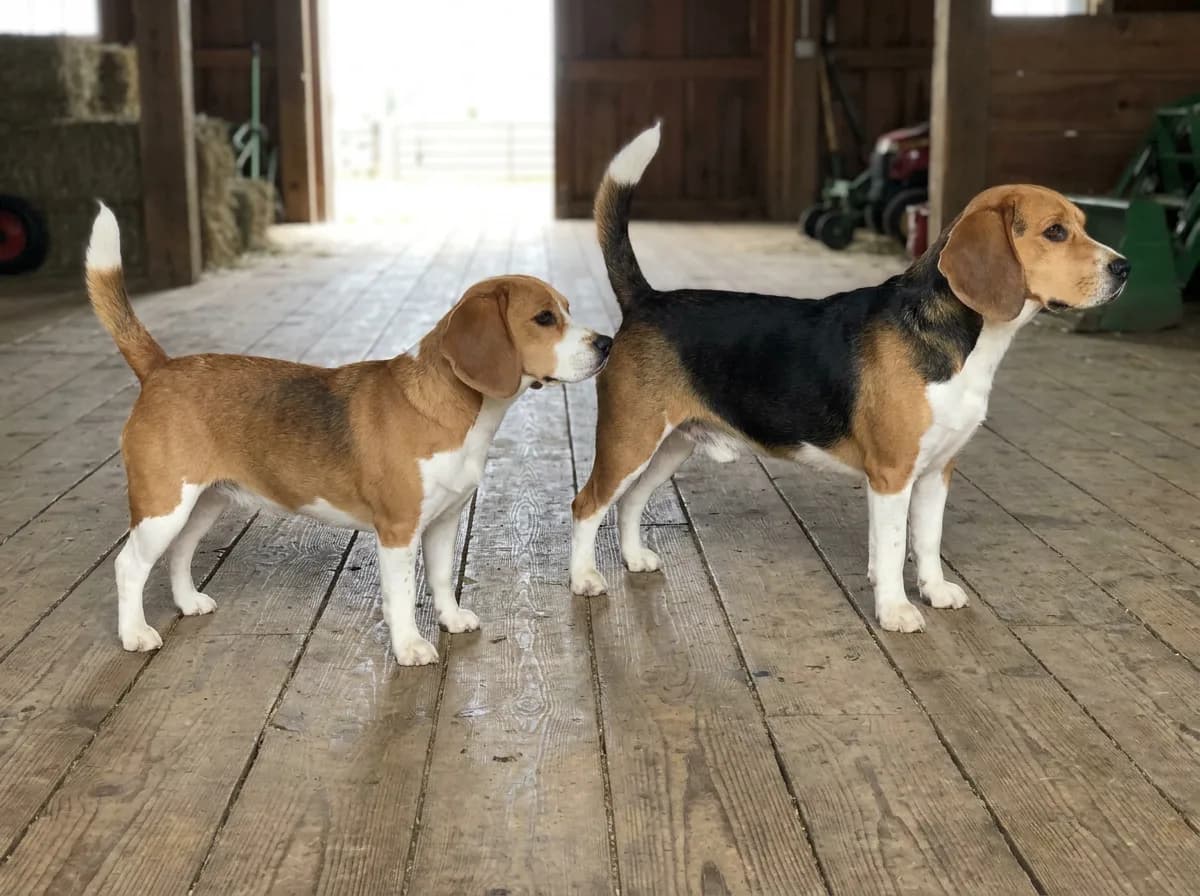
Most pocket beagles are sold with an advertised adult height of 7 to 12 inches at the shoulder and a weight of 7 to 15 pounds, so the promise is a dog that stays at or under 15 pounds. Those figures are breeder claims repeated by guides such as DogTime and Dog Breed Info, not a standard, and a puppy sold as pocket-sized can still grow into an ordinary 13-inch beagle.
The best predictor of a pocket beagle's full-grown size is its parents: ask for both parents' measured height at the withers (the top of the shoulder blades) and their adult weights. There's no reliable pocket beagle growth chart or weight chart, because the label has no standard to chart, so treat a seller's chart as a sales tool unless it's built from the parents' measurements.
| Size group | Height at the withers | Adult weight | Source |
|---|---|---|---|
| Pocket beagle (advertised) | 7 to 12 inches | 7 to 15 pounds | Breeder figures cited by DogTime and Dog Breed Info |
| Elizabeth I's pocket beagles | About 9 inches | Not recorded | AKC breed history |
| AKC 13-inch variety | 13 inches and under | Under 20 pounds | AKC breed standard and profile |
| AKC 15-inch variety | Over 13 up to 15 inches | 20 to 30 pounds | AKC breed standard and profile |
| Royal Kennel Club beagle | 13 to 16 inches desirable | Not specified | Royal Kennel Club breed standard |
Size decides gear, too, so buy for the adult you expect rather than the puppy you bring home. A carrier kennel rated for pets up to 15 pounds, like the Petmate Two Door Top Load Dog & Cat Kennel in its 24-inch size, suits a dog that stays in the advertised pocket range for vet visits and car trips; a beagle that grows into the 13-inch variety, at up to 20 pounds, needs the next size up. Check that your dog can stand and turn around inside.
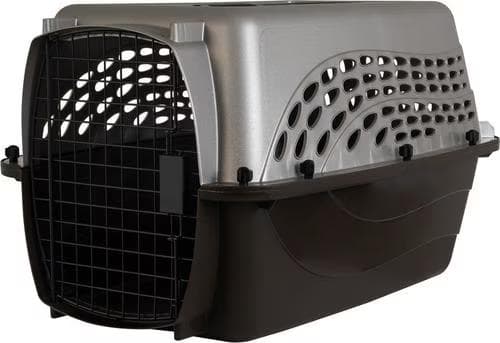
Petful may earn a commission when you click through to Chewy, at no extra cost to you.
How the AKC sizes standard beagles
Standard beagles come in two AKC varieties measured at the shoulder: 13 inches and under, usually under 20 pounds, and over 13 up to 15 inches, usually 20 to 30 pounds. Whether a beagle counts as a small dog or a medium one depends on that variety, and our beagle breed guide covers standard size, growth, and choosing between a 13-inch and a 15-inch beagle.
How big will a mini beagle get?
A mini beagle usually reaches the same adult size as a pocket beagle, because the two labels are sold for the same dogs: most ads promise a full-grown dog about 12 inches tall or less, at a weight of 7 to 15 pounds. If a mini beagle's parents are ordinary 13-inch beagles, plan for an adult near their size.
Teacup and toy labels push the promise lower without defining it. LoveToKnow's miniature beagle guide says some pups grow to about 5 to 7 pounds and others to around 12 pounds at maturity. A full-grown teacup beagle at 5 to 7 pounds would be tiny even by pocket standards, and the ways such small dogs are produced are the same ones that add health risks.
What does a pocket beagle look like?
If you want a dog that looks like a beagle but smaller, a sound pocket beagle is exactly that: a scaled-down standard beagle with the same proportions. Look for straight front legs set well under the body, a level back, a square muzzle, and long drop ears that reach nearly to the tip of the nose when drawn forward, which is the AKC standard's own ear test.

Pictures of pocket beagle puppies can fool anyone, because every beagle puppy looks tiny, so judge photos of adult dogs, ideally the parents. These signs point to dwarfism or a cross, and the AKC standard faults each one:
- Crooked forelegs that bow out or turn in, which the standard calls crooked or Dachshund-like.
- A very long back on short legs.
- A heavily domed head or bulging eyes, an "excess of dome" and "prominent and protruding" eyes in the standard's words.
When you compare miniature beagle pictures, toy beagle listings, or teacup beagle photos online, ask for a photo of the adult dog beside a common object, or a video of it being measured; a close-up of a young puppy says nothing about adult size.
Pocket beagle colors
Pocket beagles come in the same colors as any beagle, because that's what they are. The AKC's list of standard beagle colors includes:
- Tricolor (black, tan, and white), the classic beagle coat.
- Lemon and white, red and white, and tan and white.
- Black and tan, and brown and white.
- Blue, tan, and white, and a black, tan, and bluetick pattern.

A few colors in pocket beagle ads deserve a closer look:
- Merle or brindle: both patterns are disqualified under the AKC standard, so treat a merle mini beagle or a brindle pocket beagle for sale as a possible cross until a DNA test says otherwise.
- Silver or harlequin: neither is an AKC beagle color. Ask whether "silver" means a blue coat, which the AKC does list, or a marbled pattern that suggests merle.
- Chocolate: brown beagles are real and are registered as brown and white or brown, white, and tan.
- Blue tick: ticking is a standard AKC marking, so a blue tick pocket beagle can be purebred.
Paying more for a "rare" lemon or silver pocket beagle buys a color, not a smaller or healthier dog. Our beagle colors guide covers every accepted color and marking, from lemon puppies to mottled coats.
Is a mini beagle sometimes a mix?
Sometimes, yes. Because "mini beagle" has no standard, some small beagle-looking puppies come from crossing a beagle with a smaller breed and selling the result as a mini or pocket beagle. A mix can be a wonderful dog, but it should be described, priced, and health-screened as a mix. Besides the merle and brindle patterns above, clues that a small beagle has another breed in it include:
- An apple-domed head, bulging eyes, or a very short muzzle, which suggest a Chihuahua cross.
- A wiry, long, or soft coat instead of the beagle's close, hard coat.
- Legs far shorter than the body is long, which points to a Dachshund or Corgi in the family, or to dwarfism.
Looks can mislead in both directions. If you have a small dog of uncertain background, or a shelter lists a small beagle mix for adoption, a breed DNA test such as the Embark Breed & Health Dog DNA Test Kit estimates breed ancestry without proving a pedigree, and its predicted adult weight is an estimate that Embark says can come out too high or too low.
Their nose is also the main safety job. Beagles of any size follow a scent through open gates and past recall cues, and a small beagle can slip through fence gaps a larger dog can't. Walk yours on a leash outside secure fencing and use a snug harness sized by chest girth; a small padded model such as the EliteField Padded Reflective No Pull Dog Harness is harder for a small dog to back out of than a loose collar.
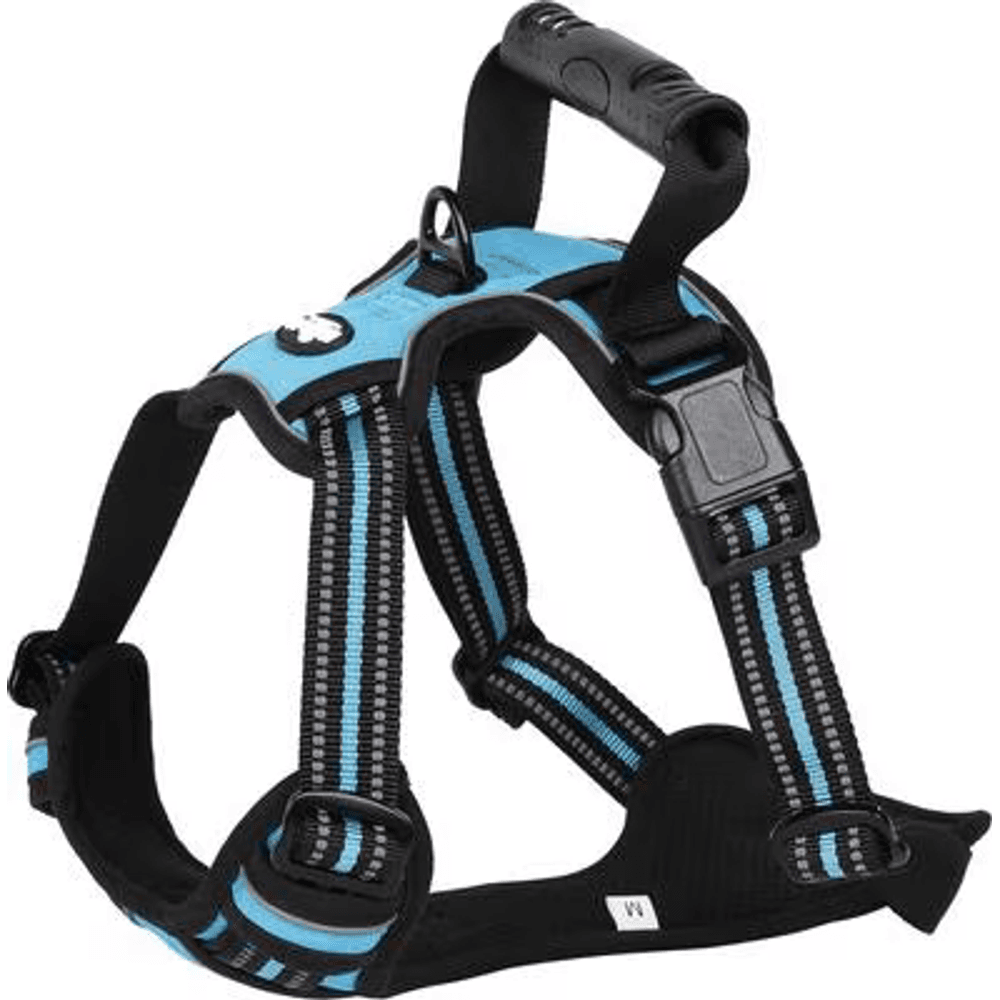
A padded, reflective no-pull harness that spreads leash pressure across the chest instead of the throat, the switch most vets recommend for a dog with a cough, a collapsing trachea, or any airway irritation so the leash never presses on
Petful may earn a commission when you click through to Chewy, at no extra cost to you.
Crosses that get sold as mini beagles
Crosses that are sometimes marketed by size include the Poogle (beagle and Poodle, often a toy or miniature Poodle), the Cheagle (beagle and Chihuahua), the Beaglier (beagle and Cavalier King Charles Spaniel), and the Jack-A-Bee (beagle and Jack Russell Terrier). Each beagle mix blends both parents, so adult size, coat, and health can vary within a single litter. Our beagle mixes guide covers size, temperament, and care for each cross.
Mini dachshund and beagle crosses
A beagle crossed with a miniature Dachshund, often called a Doxle, is short-legged by design, and that matters for its back. UC Davis lists CDDY disc-disease allele frequencies of about 95 percent in beagles and 92 percent in Dachshunds, and Dachshunds also carry a second short-leg variant, CDPA. Our beagle dachshund mix guide covers Doxle size, back care, and price.
Living with a pocket beagle
A pocket beagle has a beagle's temperament in a smaller body: friendly, curious, food-driven, and led by its nose. The Royal Kennel Club's standard describes the breed as bold, "with great activity, stamina and determination," and shrinking the dog doesn't shrink that drive; beagles were bred to hunt rabbits in packs, and a pocket beagle still wants to follow a scent. Daily care looks like this:
- Exercise: daily walks with time to sniff, plus play or scent games, since a small beagle still has a hound's stamina.
- Barking and howling: pocket beagles bay and howl like any beagle, so noise matters more than floor space in an apartment. Our guide to dogs that bark too much covers training for it.
- Training: food makes beagles easy to motivate, but a strong nose makes them less easy to train, so keep sessions short and rewards frequent.
- Shedding: the short, dense coat sheds, so pocket beagles aren't hypoallergenic; weekly brushing helps.
- Company: pack hounds enjoy company, so long days alone are hard on them.
Do pocket beagles make good pets? For a household that's home a lot, enjoys daily walks, and can live with baying, yes. A pocket beagle can take to apartment life if its exercise and company needs are met, but it's a poor fit for long workdays alone or for anyone expecting a quiet lap dog.
Pocket beagle pros and cons
The pros and cons of a pocket beagle come down to one trade: a smaller, lighter dog with the full personality and health risks of a scent hound.
- Easier to lift, carry, and travel with than a 15-inch beagle, and cheaper to feed.
- The same friendly, social beagle personality, in a size that suits a smaller home.
- A small body with a scent hound's drive to roam, dig, bay, and slip through gaps.
- More easily hurt by falls, jumps from furniture, or being stepped on, especially as a puppy.
- No guaranteed size, and a price that may include a premium for the label.
- Breed-wide risks remain, including disc disease, plus extra risks from the ways some small beagles are bred.
For downsides every beagle shares, such as shedding, food obsession, and escape attempts, see the honest pros and cons in our beagle breed guide.
Pocket beagle vs. regular beagle
A pocket beagle and a regular beagle are the same breed; the differences are a few inches, how predictable the size is, and often the breeding behind the dog. If you want a small beagle, a well-bred 13-inch beagle from screened parents already gives you one: 13 inches or less and under 20 pounds, with no label needed.
| Factor | Pocket-labeled beagle | 13-inch variety (regular beagle) | 15-inch variety (regular beagle) |
|---|---|---|---|
| Height at the shoulder | 7 to 12 inches, advertised | 13 inches and under | Over 13 up to 15 inches |
| Weight | 7 to 15 pounds, advertised | Under 20 pounds | 20 to 30 pounds |
| Kennel club status | Not a recognized variety | AKC variety | AKC variety |
| Size predictability | Low, with no standard to breed toward | Best predicted by the parents' measured height | Best predicted by the parents' measured height |
| Health screening | Same breed risks; ask for results | Same National Beagle Club list | Same National Beagle Club list |
| Exercise and noise | Full hound drive and baying | Full hound drive and baying | Full hound drive and baying |
| Food and gear | Smallest portions and sizes | Small sizes | Small to medium sizes |
A mini beagle vs. beagle comparison lands in the same place. Choose a 13-inch beagle if you want small with predictability, a 15-inch beagle if you want a sturdier walking or field companion, and a pocket-labeled puppy only if the seller can prove both parents' size and health.
Weight is the other daily job. A 2025 VetCompass study of 3,729 beagles under UK veterinary care recorded obesity in 24.27 percent of them over a year, against a 7.1 percent annual prevalence reported across UK dogs overall. There's no single best dog food for small beagles: feed a complete and balanced diet for the dog's life stage, measure every meal, and count treats. Turning part of a meal into a sniffing game with a mat like the Pet Parents Forager Snuffle Mat & Slow Feeder Dog Bowl slows eating and puts a scent hound's nose to work; count that food in the day's ration.
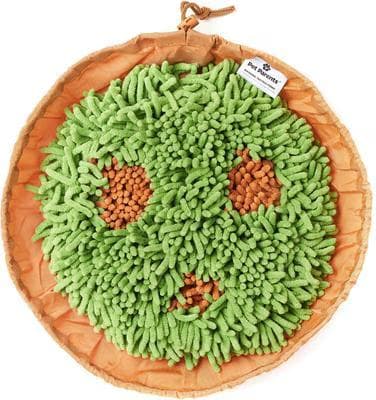
Petful may earn a commission when you click through to Chewy, at no extra cost to you.
Do mini beagles have health problems?
Yes. A mini beagle carries every health risk of a standard beagle, and the methods used to shrink beagles can add more. No study has compared dogs sold as mini or pocket beagles with standard beagles, so the risks below come from how small beagles are produced, not from a measured pocket beagle disease rate.
- Runt-to-runt breeding and inbreeding: pairing the smallest dogs, often close relatives, concentrates whatever else they carry, and the Royal Kennel Club warns that high levels of inbreeding can affect puppies' health. A runt can also be small because it grew or nursed poorly, not because of its genes.
- Dwarfism: selecting dogs with short, bowed legs (chondrodysplasia) makes a beagle look smaller, but crooked forelegs are a structural defect under the AKC standard, and short legs can come with the disc risk described next.
- Tiny puppies: a very small puppy has little energy in reserve and can develop dangerously low blood sugar (hypoglycemia) if it skips meals.
- Toy-breed crosses: a cross brings the other breed's health risks along with its size.
The disc problem that size can't fix starts with a gene variant called CDDY, short for chondrodystrophy. Researchers at UC Davis found that it shortens the legs and makes spinal discs degenerate early, which predisposes dogs to disc herniation, or intervertebral disc disease (IVDD). The UC Davis Veterinary Genetics Laboratory reports the CDDY variant at about 95 percent allele frequency in the beagles it has tested, so nearly every beagle carries it:
- Frequency: 0.9482 (95 percent confidence interval 0.918 to 0.968) in beagles tested at UC Davis, in a table updated September 16, 2024.
- Disc risk: CDDY is dominant for disc degeneration, so one copy is enough to raise the risk.
- Height: CDDY is semi-dominant for height, so dogs with two copies are shorter than dogs with one.
That last point is why breeding smaller can't breed disc risk away. There are no published CDDY figures for dogs sold as pocket beagles, but if two copies make a dog shorter, choosing the shortest beagles as parents is more likely to keep the variant than remove it. Crossing with a short-legged breed can add the separate CDPA variant as well, and UC Davis notes that dogs with both show a more drastic reduction in leg length.
- Call your veterinarian the same day if a beagle of any size cries when picked up, hunches its back, won't turn its head, wobbles, drags a paw, or suddenly seems weak in the back legs; these can be signs of disc disease. For a very small puppy, weakness, trembling, or refusing food also needs a vet the same day.
Breed-wide conditions still apply. The National Beagle Club lists screening for hip dysplasia, Musladin-Lueke syndrome (MLS, a genetic disorder with a DNA test), thyroid disease, heart disease, and eye disease, plus elbow and patellar luxation (kneecap) evaluations. The buying checklist below shows how to confirm a breeder did them, and our beagle lifespan and health guide explains each condition.
How long do pocket beagles live?
A healthy purebred pocket beagle should have about a general beagle life expectancy, which the AKC puts at 10 to 15 years. There's no pocket-specific lifespan study, though: every published figure comes from standard beagles, so claims that pocket beagles live longer or shorter are guesses.
A large 2025 VetCompass study of 3,729 beagles under UK veterinary care found a median longevity of 11.28 years; the most common recorded cause of death was neoplasia (cancer and other tumors), at 19.26 percent of deaths. Small size on its own isn't the worry. The breeding methods behind some very small beagles, and extra weight, are the factors that can cut a life short, and our beagle lifespan guide covers what beagles die from and how to extend their years.
What is the lifespan of a miniature beagle?
The same range applies: a miniature beagle that is a purebred beagle should live about as long as other beagles, roughly 10 to 15 years, and no study tracks miniature beagles separately. If "miniature" means a cross, lifespan also depends on the other parent breed. Either way, the factors you control are the same:
- Keep the dog lean, since obesity was recorded in about a quarter of the VetCompass beagles.
- Choose parents screened under the National Beagle Club's list, or adopt an adult whose health history is known.
- Limit jumps from high furniture, because beagles carry disc-disease risk.
How much does a pocket beagle cost?
Advertised pocket beagle prices mostly fall between $500 and $2,000 from a breeder. Dog Academy's pocket beagle guide, updated May 2026, puts breeder prices in that $500 to $2,000 range, and Innovet Pet's pocket beagle guide, updated February 2025, lists $800 to $1,200 for mini beagles. Neither is a survey, and no one tracks pocket beagle sales, so treat any single figure as one seller's ask.
Those ranges overlap what standard beagles sell for, so there's no measured label premium.
Adoption fees are lower and usually include vet care. Seattle Beagle Rescue charges $200 to $500 depending on the dog's age, and SOS Beagle Rescue charges $220; both fees cover spay or neuter surgery, vaccines, a heartworm test, and a microchip. Budget beyond the price tag, too:
- Disc surgery: a veterinarian-written PetMD estimate puts spinal surgery at $3,000 to $8,000, plus $1,000 to $3,000 for imaging.
- Insurance: get quotes, such as a Lemonade pet insurance quote, before any back or joint sign appears, since base policies typically exclude pre-existing conditions.
- Ongoing costs: for a standard beagle's purchase price, monthly costs, and lifetime budget, see our guide to what a beagle costs.
Mini beagle prices: what the premium pays for
Mini beagles cost about the same as pocket beagles, because they're usually the same dogs under a different label, so expect advertised breeder prices in the same $500 to $2,000 range. Teacup beagle and toy beagle listings use the same pitch, and paying more for a smaller promise buys more risk, not a better dog. Here's what a higher price should and shouldn't get you:
- Should pay for: the parent records in the checklist below, a veterinary exam, and a written contract with a return policy.
- Can't pay for: a guaranteed adult size, a recognized pocket or miniature variety, or a beagle free of the breed's disc-disease risk.
If two sellers ask the same price and only one shows records, the choice is easy. If the cheaper seller has the records, the premium was for the word "mini."
Before you buy a pocket beagle puppy
Pocket beagle puppies for sale are easy to find; proof of what you're buying is not. Whether the ad says pocket, mini, teacup, or toy, ask for the same parent screening records and measurements, and walk away from a seller who offers promises instead:
- Both parents' measured height at the withers: taken with a measuring stick at the top of the shoulder blades while each dog stands square, plus their adult weights. See the parents in person or on a live video.
- National Beagle Club screening tests for both parents: hips (OFA or PennHIP), an MLS DNA test, and thyroid, cardiac, and eye exams, the five tests the National Beagle Club lists as mandatory for a Canine Health Information Center (CHIC) number.
- Public results: look up each parent by registered name in the Orthopedic Foundation for Animals' OFA CHIC database; OFA notes that a CHIC number means the tests were done and published, not that every result was normal.
- Paperwork: AKC registration for both parents, which records Beagle parentage but not size, plus a veterinary exam, vaccination records, and a written contract with a return policy.

Be skeptical of any size guarantee. A puppy's adult size depends mostly on both parents' adult size, plus nutrition and chance, so a guarantee is only as good as its refund terms: get it in writing and know exactly what happens if the dog outgrows it.
- Walk away if you see any of these: a size guarantee offered instead of the parents' measured height; parents you can't see; teacup, rare, or fluffy labels priced higher; merle or brindle puppies sold as purebred beagles; no screening results for either parent; or pressure to pay a deposit before you've seen the puppy and its mother.
Size labels are an easy selling point for puppy mills and backyard breeders, and our guide to what a puppy mill is shows how to spot one. Neither a male nor a female beagle is better, whatever its size, so pick the puppy whose energy and confidence suit your home. Adult size depends mostly on both parents, and temperament depends on the individual dog, its socialization, and whether it's spayed or neutered. Unspayed females come into heat about twice a year, and unneutered males are more likely to urine-mark and roam, which is risky in an escape-prone breed. Our beagle breed guide covers the differences between boy and girl beagles.
Pocket beagle rescue and adoption
Adopting an adult small beagle is the surest way to know a pocket beagle's size before you commit: the dog is already full grown, and a foster home can tell you how it walks, barks, and handles time alone. Rescues rarely list dogs as pocket beagles, so search for small adult beagles and beagle mixes by size and age instead of by label.
Petful's adoptable pet search can find beagles near you; ask the rescue for the dog's measured height and weight and any back, dental, or weight history. Adoption fees usually include spay or neuter surgery, vaccines, and a microchip.
Mini beagle puppies for adoption turn up less often, and a puppy's adult size is a guess even at a rescue, so an adult dog gives you the most certainty. If a shelter lists a small beagle mix, ask whether the size estimate comes from the dog's actual measurements.
Pocket beagle FAQ
Yes, if both parents are AKC-registered Beagles, the puppy can be registered as a Beagle like any other. Registration records parentage, not size or health, and because the AKC standard sets no minimum height, a small beagle isn't barred for being small. The papers will never say pocket.
There's no size guarantee. A puppy's adult size depends mostly on both parents' adult size, so a puppy from 12-inch parents has a better chance of staying small than one from larger parents, but littermates can still differ. Ask for the parents' measured heights, and be ready to buy gear in the next size up if your puppy grows past the promise.
No. The runt of the litter is just the smallest puppy, not a separate type, and it may be small because it grew or nursed poorly rather than because of its genes. Some runts catch up once they're eating well, and breeding runt to runt to make pocket beagles concentrates health risks without guaranteeing small puppies.
They can be, with supervision. Pocket beagles are usually friendly, but a small, light dog is easier to hurt if it's dropped or stepped on, and a hurt dog may snap. Supervise young children, teach them to pet the dog while it stands on the floor rather than carrying it, and give the dog a quiet place to retreat.

Coreen Saito is a pet writer and longtime shelter volunteer with more than a decade in animal rescue. She covers cat behavior, breed care, and the small, ordinary science of sharing a life with companion animals, with a particular focus on honest takes about the products and decisions that actually matter. At home in Arizona, she's outranked by Mac (a dog with the loudest opinion in the house), Rebel (a cat who governs by quiet authority), and Meri (an orange tabby who runs the late shift and the laundry basket). She writes about all three, plus the rescues that keep coming through her life, at LifeWithMinty.com.
Sign up for expert-backed reviews and safety alerts all in one place.