Beagle Colors: Every Coat, Pattern, and the Rarest Shades
Beagles come in 25 AKC registration colors, from classic tricolor and lemon and white to bluetick and rare blue. See each color family in photos, what the 2024 standard disqualifies, and how puppy colors change.
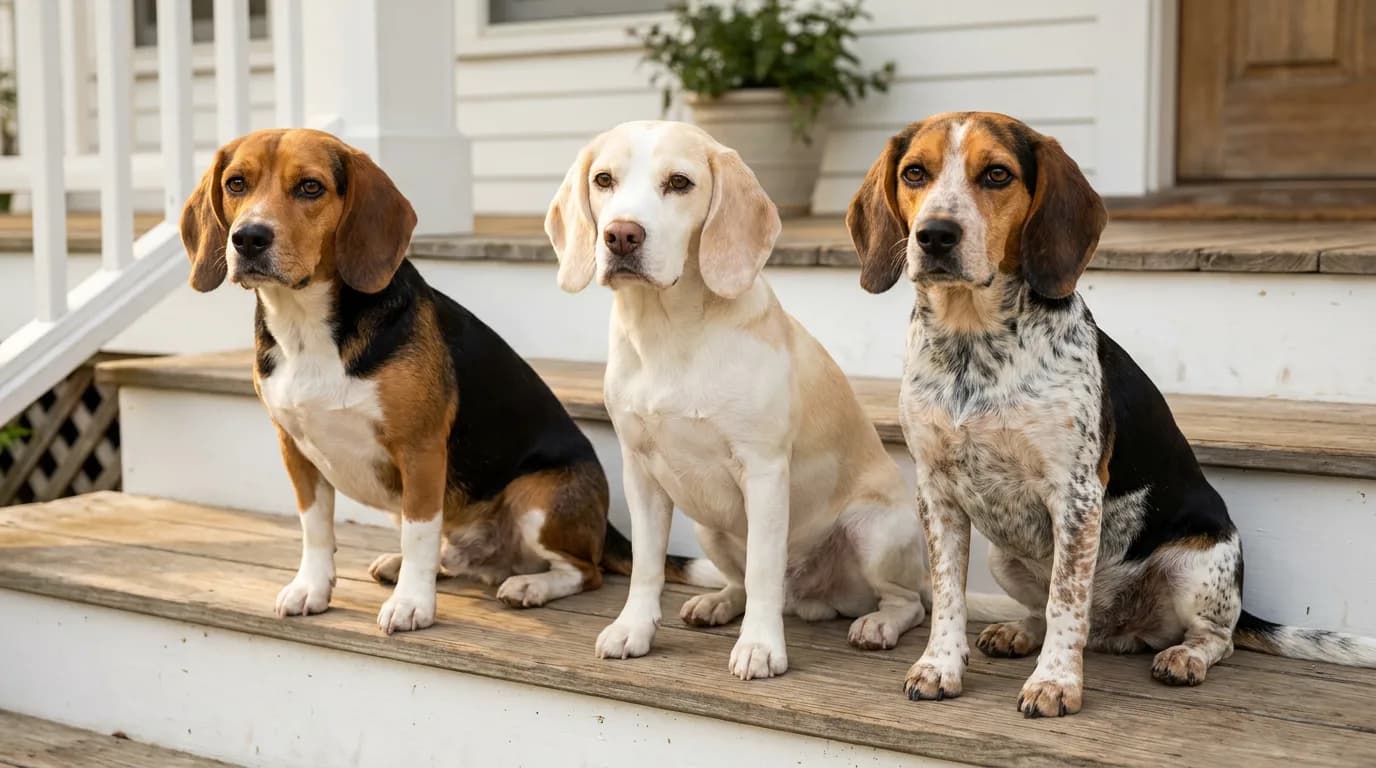
Three common Beagle colors side by side: a classic tricolor, a lemon and white, and a bluetick.
Petful is reader supported. As an affiliate of platforms like Amazon and Chewy, we may earn a commission when you buy through links on this page. There is no extra cost to you.
Beagle colors go well beyond the classic black, tan, and white hound. The American Kennel Club (AKC) registers 25 Beagle colors, including tricolor, lemon and white, red and white, and bluetick, and its 2024 breed standard disqualifies only two patterns: merle and brindle.
Use the chart below to find the color name and code on your dog's papers, match your Beagle's coat to the photo of each color family, and read the purebred section before you believe any "rare color" sales pitch.

Sign up for expert-backed reviews and safety alerts all in one place.
Beagle Colors Chart: All 25 AKC Colors
Of the AKC's 25 Beagle registration colors, 11 are standard colors and 14 are alternate colors. Black, tan, and white tricolor is the classic look. Lemon and white, red and white, and black, tan, and bluetick are also standard, while merle and brindle patterns are disqualified under the 2024 standard.
- 1All 25 AKC Beagle colors, 11 standard and 14 alternate colors, can be registered, and no alternate Beagle color is a disqualification.
- 2Tricolor (black, tan, and white) is the most common coat; lemon, red, and tan bicolors and bluetick are standard colors too.
- 3Dilutes such as lilac and blue, plus chocolate, are the rarest shades, and rarity adds no health or registration value.
- 4Merle and brindle patterns are disqualified under the 2024 AKC standard, so a merle or brindle Beagle points to a mix.
Each breed's parent club designates its standard and, in some breeds, alternate registration colors, and an owner must pick one of them to register a dog. The AKC says the two groups are classified for show purposes and marks any alternate that would disqualify a dog with an asterisk. None of the 14 Beagle alternates carries one, and the Beagle standard asks only for "any allowed hound color," so an alternate-color Beagle registers the same way and only merle and brindle disqualify a Beagle.
Many people searching for a "types of Beagles chart" are really looking for this list, because the breed has only two size varieties but dozens of color and coat pattern combinations. Each AKC registration color has a three-digit registration code, and six marking codes, such as Ticked (013), can be added for ticking or extra markings. To find the closest match for your dog, start with the colors you can see:
- Black, tan, and white hair: a tricolor name, such as Black White & Tan (034) or Black Tan & White (030), or Black & Tan (018) if there is little or no white
- No black hair at all: a two-color name, such as Lemon & White (115), Red & White (146), or Tan & White (197)
- Black freckles on the white: Black Tan & Bluetick (029), or a tricolor name plus the Ticked marking (013)
- Slate gray where a tricolor would be black: Blue Tan & White (291), Blue (037), or Blue & White (045)
- Mostly white with small patches: White Black & Tan (219) or White (199)
- Nearly all black: Black (007), or Black & Tan (018) if tan points show
Where two names fit, choose the one that best describes the dog, since the AKC does not publish definitions for the names. The chart below reproduces the color and marking list on the AKC's Beagle breed page as of September 2026, and the photos in the sections below show what each color family looks like.
| AKC registration color or marking | AKC status | Code |
|---|---|---|
| Black & Tan | Standard | 018 |
| Black Red & White | Standard | 027 |
| Black Tan & Bluetick | Standard | 029 |
| Black Tan & White | Standard | 030 |
| Black White & Tan | Standard | 034 |
| Blue Tan & White | Standard | 291 |
| Brown & White | Standard | 063 |
| Brown White & Tan | Standard | 066 |
| Lemon & White | Standard | 115 |
| Red & White | Standard | 146 |
| Tan & White | Standard | 197 |
| Black | Alternate | 007 |
| Black & White | Alternate | 019 |
| Black Fawn & White | Alternate | 023 |
| Black Tan & Redtick | Alternate | 292 |
| Blue | Alternate | 037 |
| Blue & White | Alternate | 045 |
| Brown | Alternate | 061 |
| Lemon | Alternate | 114 |
| Red | Alternate | 140 |
| Red & Black | Alternate | 141 |
| Red Black & White | Alternate | 147 |
| Tan | Alternate | 195 |
| White | Alternate | 199 |
| White Black & Tan | Alternate | 219 |
| Ticked (marking) | Standard marking | 013 |
| Black Markings | Alternate marking | 002 |
| Tan Markings | Alternate marking | 012 |
| White Markings | Alternate marking | 014 |
| Spotted (marking) | Alternate marking | 021 |
| Brown Markings | Alternate marking | 022 |
The same colors appear in both AKC size varieties, the 13-inch and the 15-inch Beagle, so color tells you nothing about which variety a dog belongs to; our Beagle breed guide explains the two sizes. Pocket Beagles, bred to be smaller than typical 13-inch Beagles, come in these same colors, and our pocket Beagle guide covers their size and health realities.
The registered color is simply the name the breeder chose, so an adult coat does not always match the papers. To learn the genes behind a coat, a DNA kit such as the Embark Breed & Health Dog DNA Test Kit reports coat color genes, including the recessive red, brown, and dilution genes explained below, along with breed ancestry and genetic health screening.
Petful may earn a commission when you click through to Chewy, at no extra cost to you.
Tricolor Beagles: Black, Tan, and White
A tricolor Beagle has three solid colors: black in a saddle across the back, tan on the head and thighs, and white on the chest, legs, and tail tip. This tricolor saddle pattern is the coat most people picture. The Beagle Club in the UK notes that tricolours have always been the most numerous group, which is why some people wrongly assume it is the only correct Beagle color.
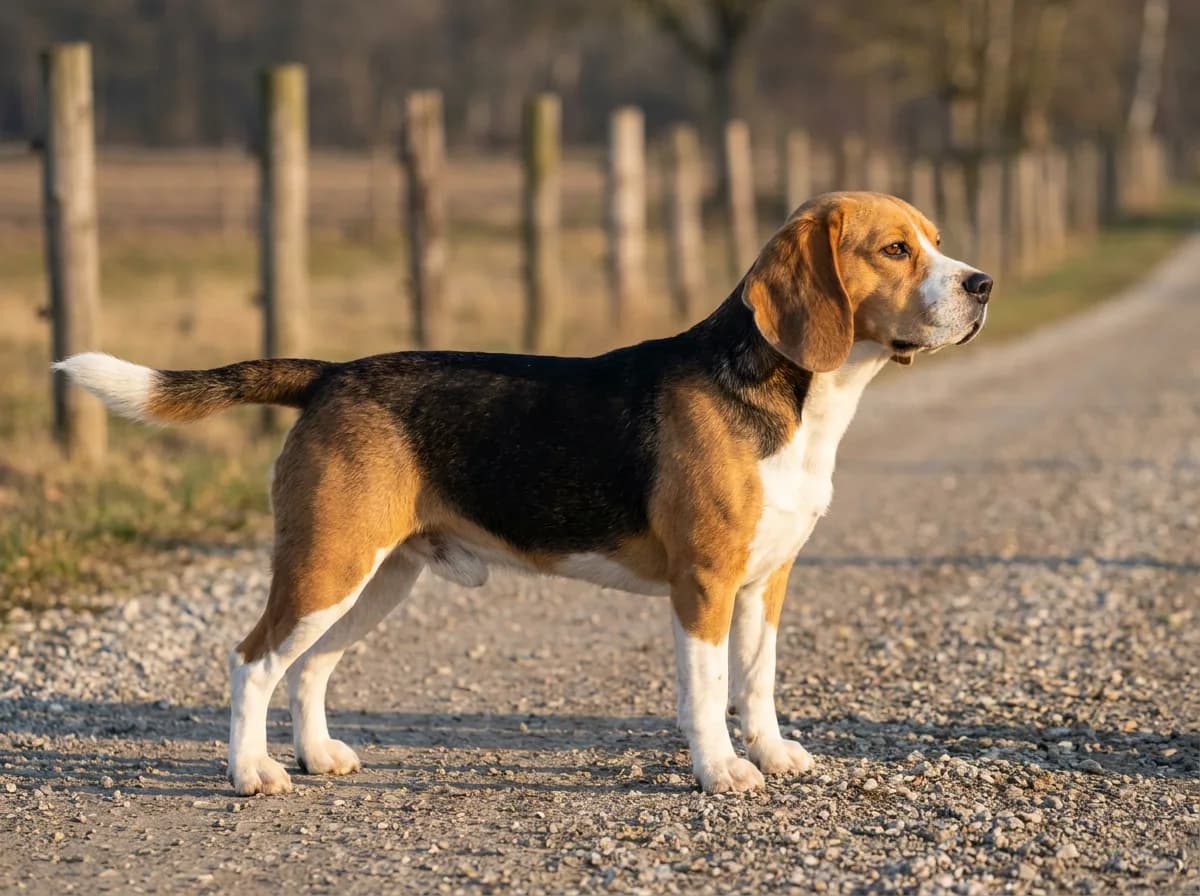
Tricolors differ mainly in how much black they carry. A saddle-marked dog has a black patch sitting on its back like a saddle, leaving tan on the shoulders and hips. A black-blanketed Beagle, as British breeders call it, has black covering most of the body, tan points on the head and legs, and only minimal white on the chest and toes. Tricolors with large white areas are described as brightly or flashily marked.
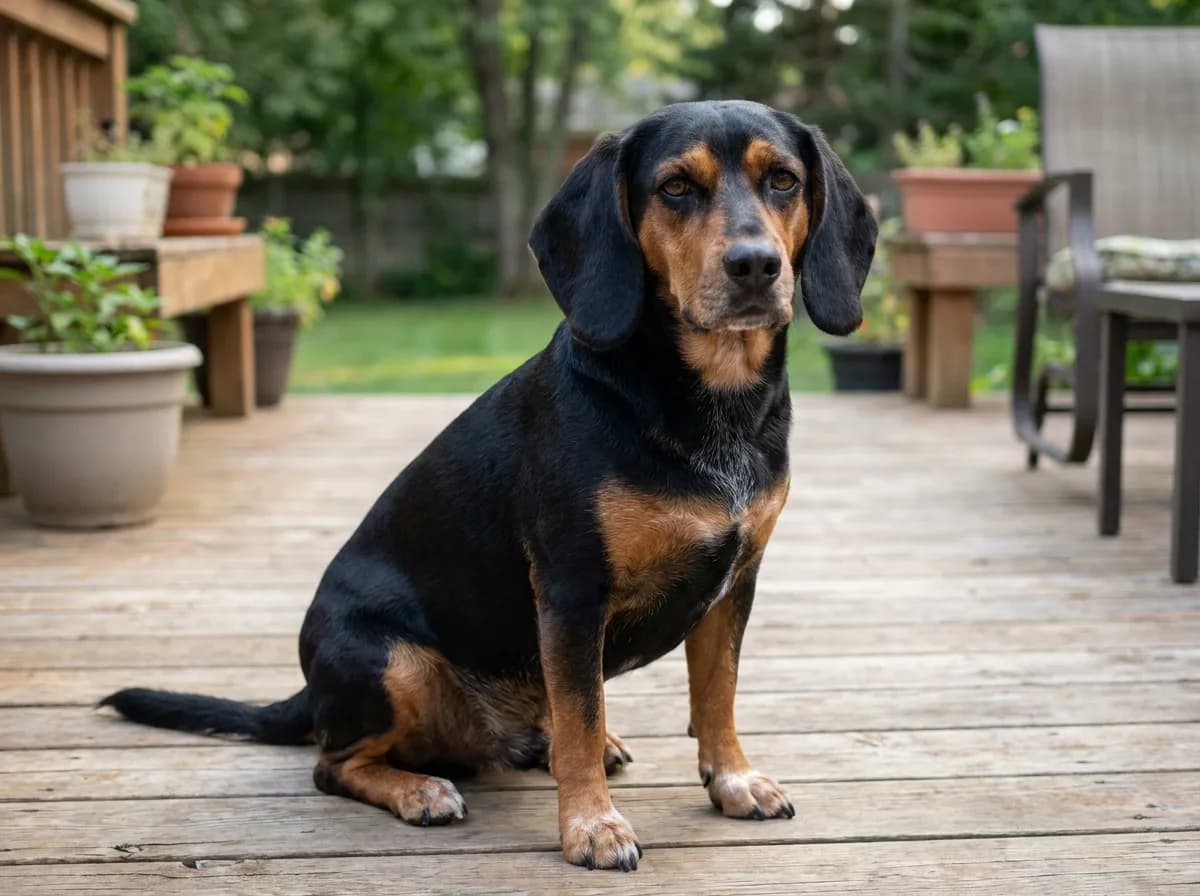
On AKC papers, a tricolor can appear under several standard colors:
- Black White & Tan (034) or Black Tan & White (030), the everyday tri-color Beagle
- Black & Tan (018), for a dark dog with little or no white
- Black Red & White (027), when the tan is a deep red
- White Black & Tan (219), an alternate color, for a mostly white tricolor
Many owners call the tan "brown," so a "black and brown Beagle" or a brown, white, and tan dog is usually an ordinary tricolor rather than a chocolate one. Faded tricolors, whose saddles hold more tan than black hairs, are just as correct: the National Beagle Club of America describes tricolors as either richly colored or faded. Tri-color Beagle puppies look mostly black and white at birth, and their tan comes in over the first weeks.
Lemon Beagles
A lemon Beagle is a white dog with very pale yellow or cream patches and no black hair anywhere in its coat. Lemon & White is a standard AKC color (code 115), and a solid Lemon (114) is an alternate. Lemon dogs often have lighter, brownish, or pink-tinged noses, which the FCI standard permits in lighter-colored hounds.
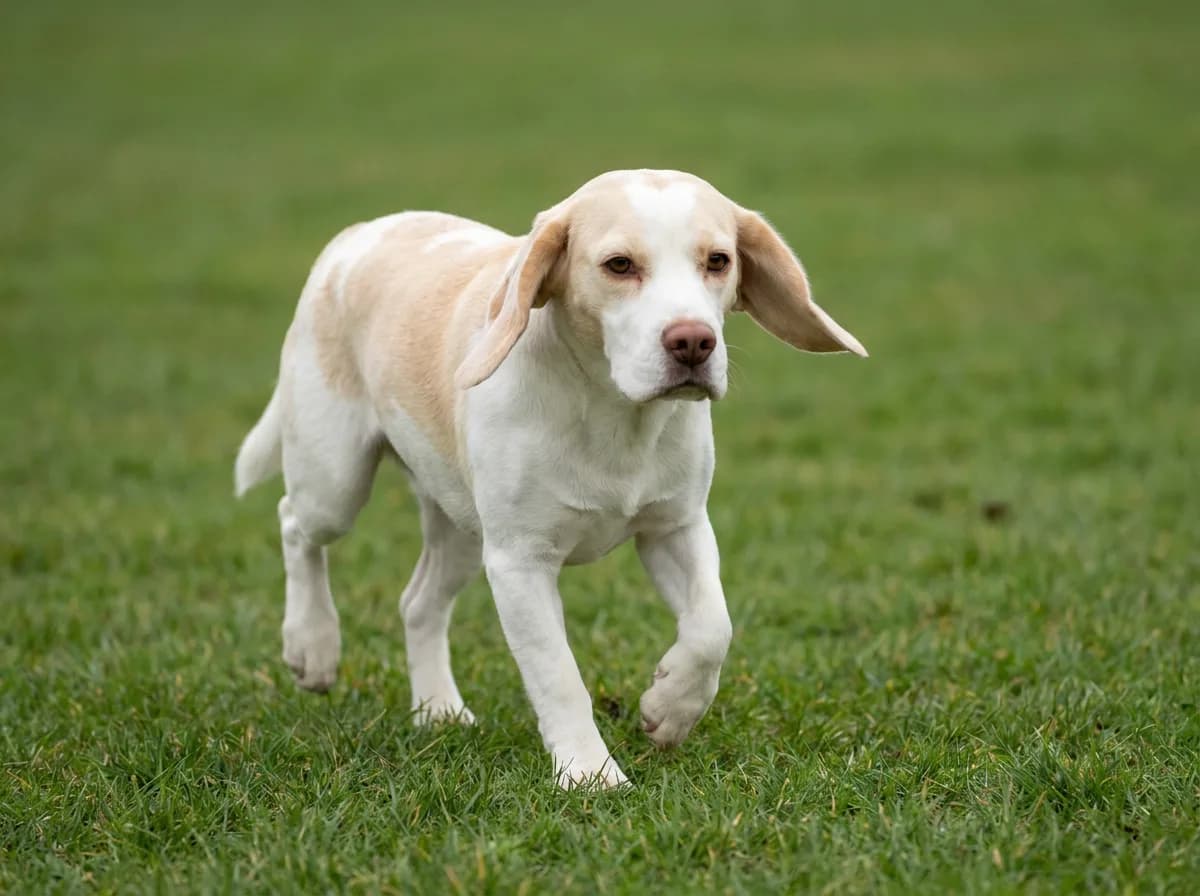
Lemon and white is easiest to confuse with red and white, and the two are related. Both come from the same recessive red gene, which blocks black hair, and the difference is the intensity of the red pigment. The Beagle Club describes a range that runs from pale lemon through tan to red with an orange tinge. To tell which one you have:
- Lemon and white: pale lemon patches that look cream or straw-colored in daylight, often with a lighter nose
- Tan and white: a mid golden-brown between the two
- Red and white: deep red patches with an orange cast, usually strongest on the ears
- Still unsure: judge the coat outdoors, since warm indoor light can make a pale coat look more golden, and check the colors registered for both parents
Lemon puppies are born nearly white. Breeders commonly describe newborn lemon puppies as almost white with faint cream on the ears, and the patches deepen over the following weeks and months, so a lemon puppy photo can look very different from the adult dog.

Are lemon Beagles rare? They are less common than tricolors, but not rare: lemon and white is one of the 11 standard colors, and a litter can include lemon puppies whenever both parents carry recessive red. Treat a "rare lemon" price the way you would any other color surcharge, as explained in the rare colors section below.
Red, Tan, and Brown Two-Color Beagles
Red and white, tan and white, and brown and white Beagles are two-color, or bicolor, dogs: white with patches of one warm shade and no black saddle. All three are standard AKC colors (Red & White 146, Tan & White 197, and Brown & White 063), and Red, Tan, and Brown also exist as alternate single colors.
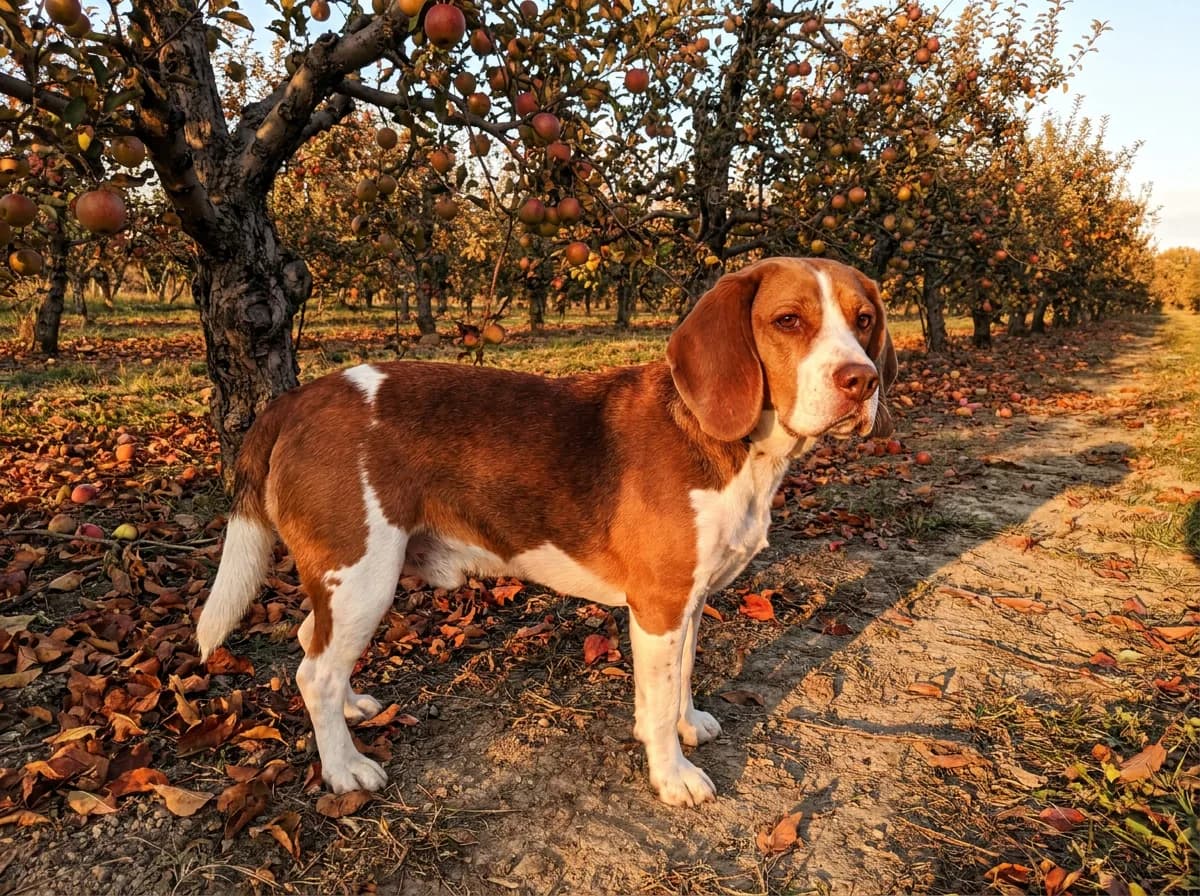
These shades form one spectrum from pale lemon to rich chestnut, and owners use many names for the same coats:
- Yellow or light-colored: usually a lemon or pale tan dog
- Orange or red: a red and white Beagle, whose tan has a reddish or orange tinge
- Fawn or light brown: a mid tan; the AKC also lists Black Fawn & White as an alternate color
- Chestnut or dark brown: the richest tan, which The Beagle Club places at the far end of the range
Brown on AKC papers describes the look the breeder chose, and the AKC does not define its color names. A Brown & White registration therefore does not mean a dog carries the chocolate gene. The telltale sign of a true chocolate (liver) Beagle is a brown nose and brown pigment where a tricolor would be black. Bicolor puppies, including light brown and red and white puppies, can also darken noticeably as they mature. Color names also cannot establish ancestry; a Wisdom Panel Essential breed test compares a dog's DNA with reference breeds, while pedigree records establish registered ancestry.
Petful may earn a commission when you click through to Chewy, at no extra cost to you.
Black and White Beagles and the Snoopy Look
Yes, there are black and white Beagles, but they are uncommon. Black & White is an alternate AKC color (code 019), and The Beagle Club calls black and white permissible but rarely found. A true black and white Beagle has black patches on a white body and no tan markings at all. Many dogs described as black and white turn out to have small tan points on the cheeks or above the eyes, which makes them tricolors.
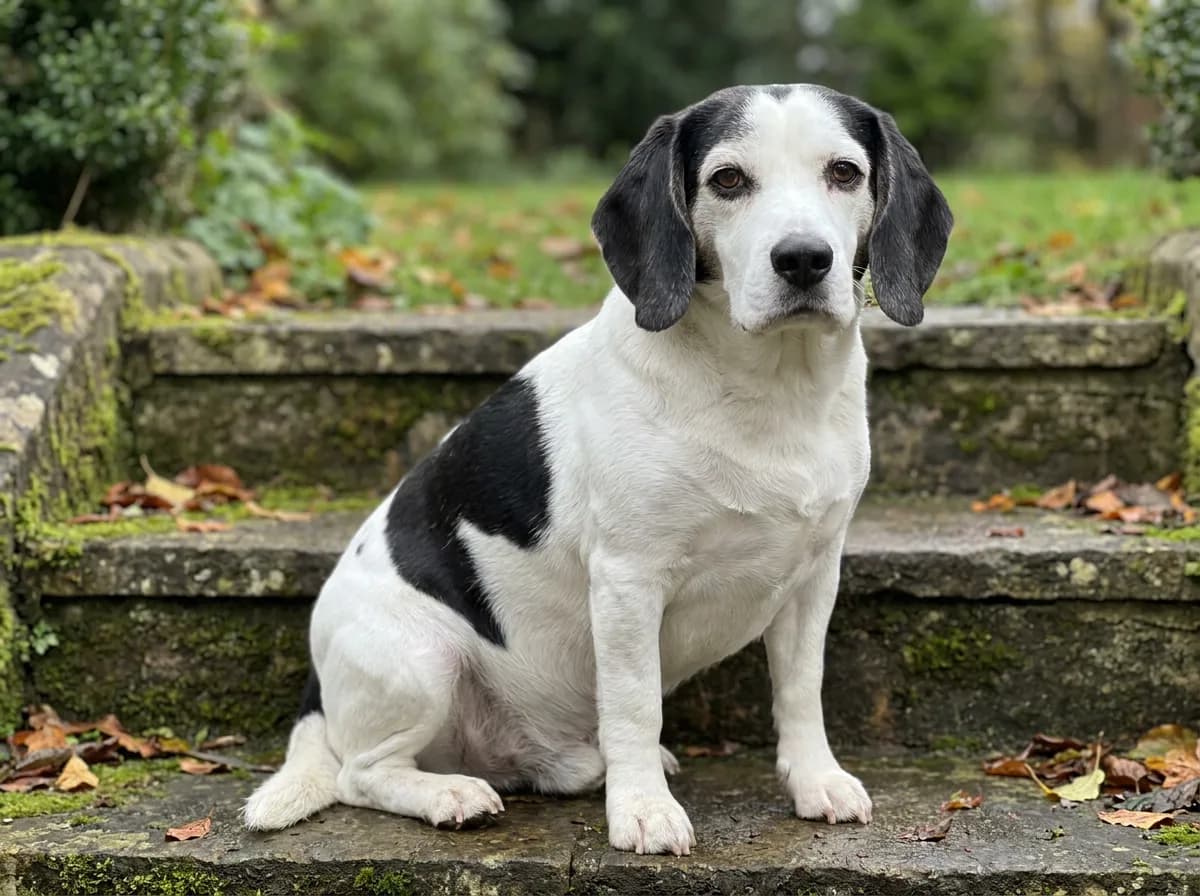
Snoopy is behind many of these searches. Charles Schulz drew Charlie Brown's Beagle as a mostly white dog with black ears, a round cartoon head, and none of a hound's proportions, which is why Snoopy doesn't look like a real Beagle. The closest real-life match is a mostly white Beagle with black ears, which could be registered as Black & White if it has no tan or as White Black & Tan if it does.
Because true black and white Beagles are uncommon, a black and white dog labeled "Beagle" in a shelter is worth a closer look at its ears, size, and coat texture. Some are crosses, and our Beagle mixes guide shows the common ones. A black and white puppy from registered parents, on the other hand, is simply an alternate-color Beagle.
Bluetick, Redtick, and Mottled Beagles
A bluetick Beagle is not blue. The name describes black ticking, small black flecks that grow in the white parts of the coat and make them look blue-gray from a distance, usually on a tricolor. Black Tan & Bluetick (029) is a standard AKC color and Ticked (013) is the only standard Beagle marking, so a blue tick Beagle is a standard-colored Beagle rather than a special variety, and it should not carry a rare-color price. Bluetick puppies usually start with clean white areas, and the ticking fills in as they grow.
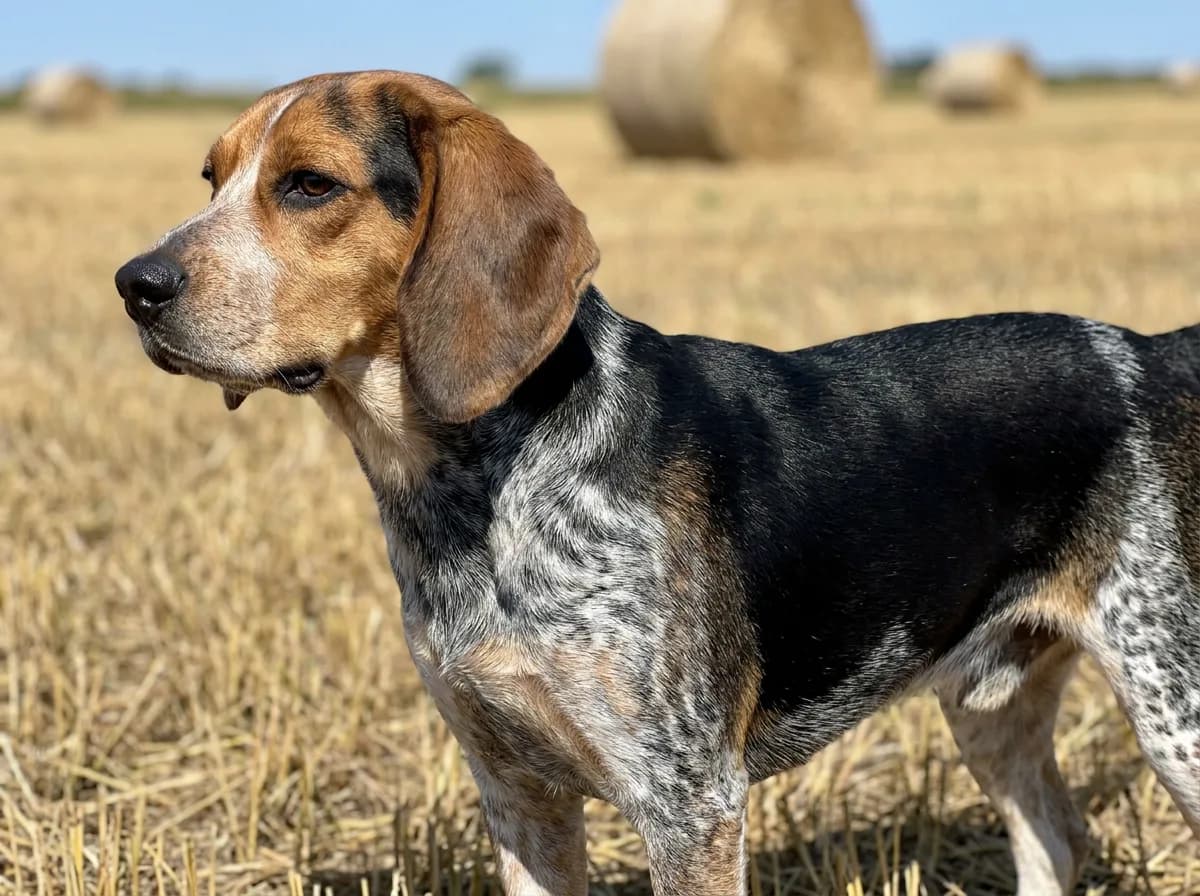
Redtick Beagles have red or tan ticking instead, so a red tick hound looks freckled with ginger. Black Tan & Redtick (292) is an alternate AKC color. The FCI standard allows every permitted color except all white to appear as mottle, and The Beagle Club recognizes mottled tricolors, lemons, tans, and reds, as well as blue mottles.
The terms overlap, so here is how they are usually used:
- Ticked or ticking: fine flecks scattered through the white areas of the coat
- Mottled or mottles: the British and FCI word for the same flecks on white
- Spotted: an alternate AKC marking (021), used for dogs with distinct spots, such as a white Beagle with black spots
- Belly spots: flat dark spots on the pink skin of the belly, common in ticked dogs and usually harmless pigment, although a spot that is raised or changing deserves a vet check
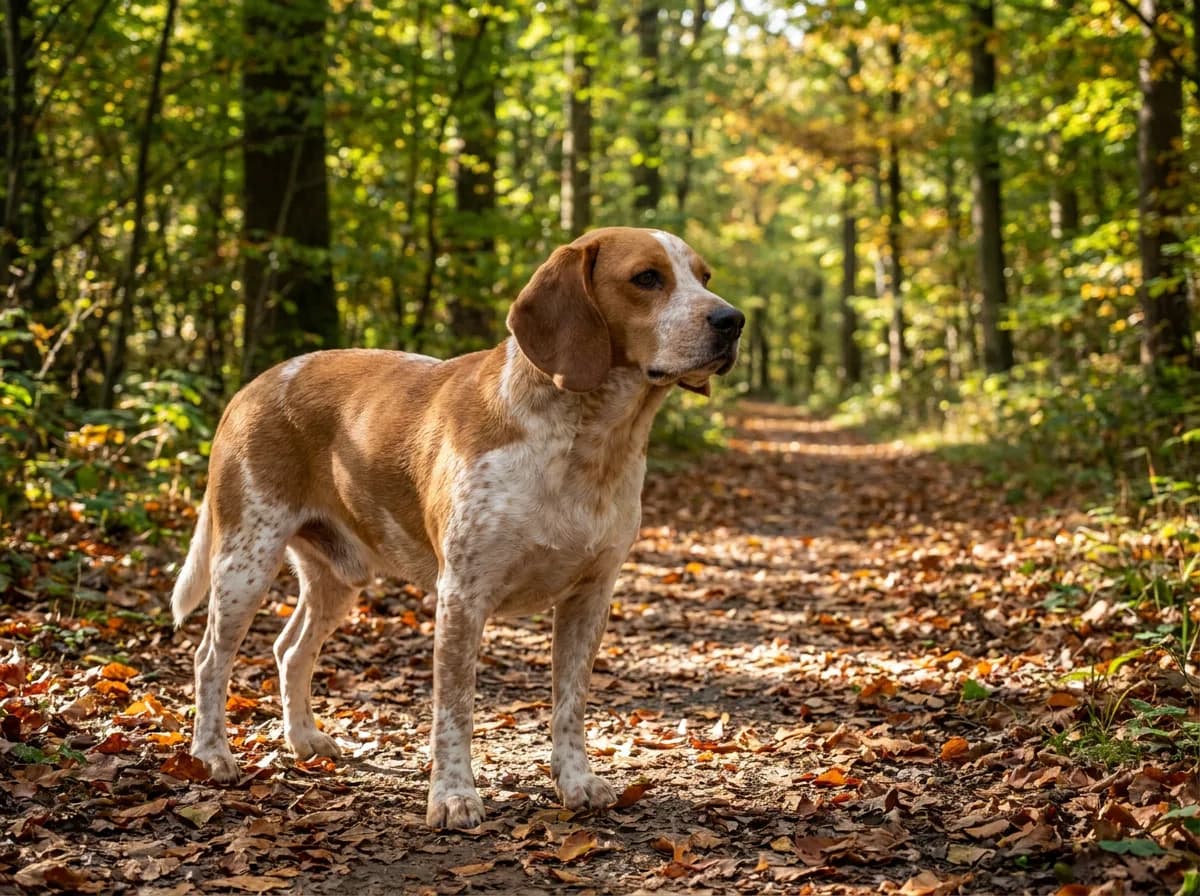
Is a blue tick Beagle purebred? The ticking itself is no warning sign, and the national breed club calls ticking equally acceptable. The confusion comes from the Bluetick Coonhound, a much larger separate breed with the same freckled coat, and from coonhound crosses sold as bluetick Beagles. A ticked hound standing well over 15 inches is unlikely to be a purebred Beagle. If you adopted one and want to know its background, a breed test such as the Wisdom Panel Essential Breed Identification DNA Test for Dogs compares its DNA with hundreds of breeds.
Pied and All-White Beagles
Pied Beagles have no solid saddle. Instead, colored hairs intermingle over the back and head, giving a grizzled, hare-like look, while the white areas stay clear. The Beagle Club describes three types, all listed in the FCI standard:
- Lemon pied: mostly lemon or cream hairs mixed with black and white
- Hare pied: more tan than black, like a hare's coat
- Badger pied: a majority of black hairs
The club notes that pieds turn up less often than the other color groups, and coat color researchers link the pattern to a domino variant of the gene that also controls recessive red. Pied is not the same as piebald. Piebald is the white-spotting gene that gives most Beagles their white legs, chest, and tail tip, and the breed shows it at the low end, which is why most Beagles keep large colored patches.
All-white Beagles are rare. White is an alternate AKC color (code 199), and the FCI and The Beagle Club accept all white, though the club says it is rarely found and that several examples have had small patches of very pale tan barely visible at a distance. A "pure white" Beagle is often an extremely pale lemon whose faint ear patches show only in daylight.
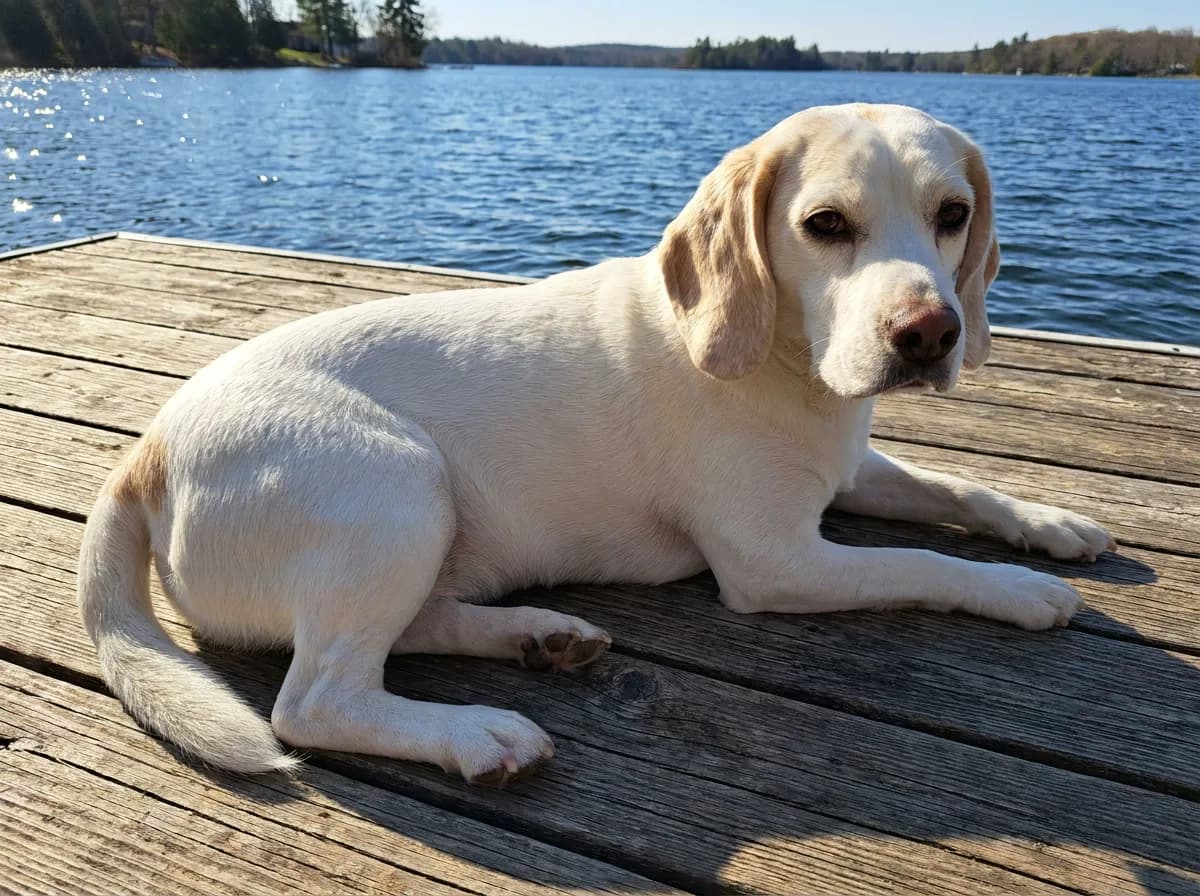
White legs and bellies show mud, grass stains, and reddish tear or saliva staining more than darker coats. The AKC notes that Beagles don't need frequent baths unless they get into something messy, so spot-cleaning between baths is usually enough, and unscented wipes such as Earth Rated Thick Hypoallergenic 3-in-1 Dog Grooming Wipes handle muddy legs after a walk.

Petful may earn a commission when you click through to Chewy, at no extra cost to you.
Rare Beagle Colors: Blue, Chocolate, Lilac, and Silver
The rarest Beagle color is lilac, a diluted chocolate, because a puppy needs two copies of both the brown gene and the dilution gene to show it. Blue and chocolate tricolors come next, followed by true solid colors, black and white without tan, and all white. No kennel club publishes color counts for Beagles, so any rarity ranking, including this one, is an estimate based on genetics and breed club descriptions.
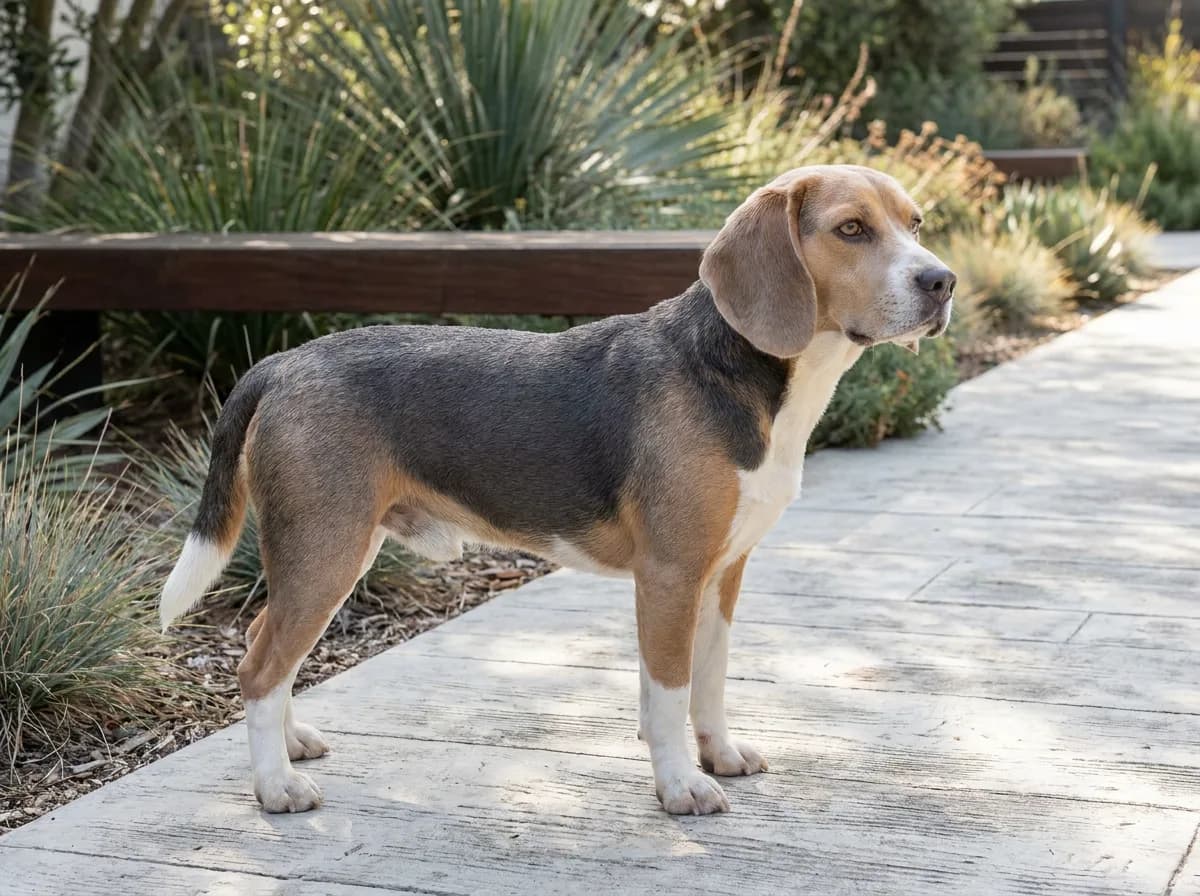
Dilute colors are softened versions of black and brown pigment:
- Blue: two copies of the dilution gene lighten black to slate gray and turn the nose gray. Blue Tan & White (291) is a standard AKC color, and Blue (037) and Blue & White (045) are alternates.
- Chocolate or liver: two copies of the brown gene, often called the chocolate gene, turn black to brown and give a liver-colored nose. The AKC list has no chocolate entry, the national breed club calls chocolate acceptable, and the Royal Kennel Club's UK standard excludes liver.
- Lilac or lavender: chocolate plus dilution, a pale brownish gray with a light nose.
- Silver, gray, and blue fawn: sales terms rather than registry colors, usually describing a pale blue dilute whose tan has also softened.
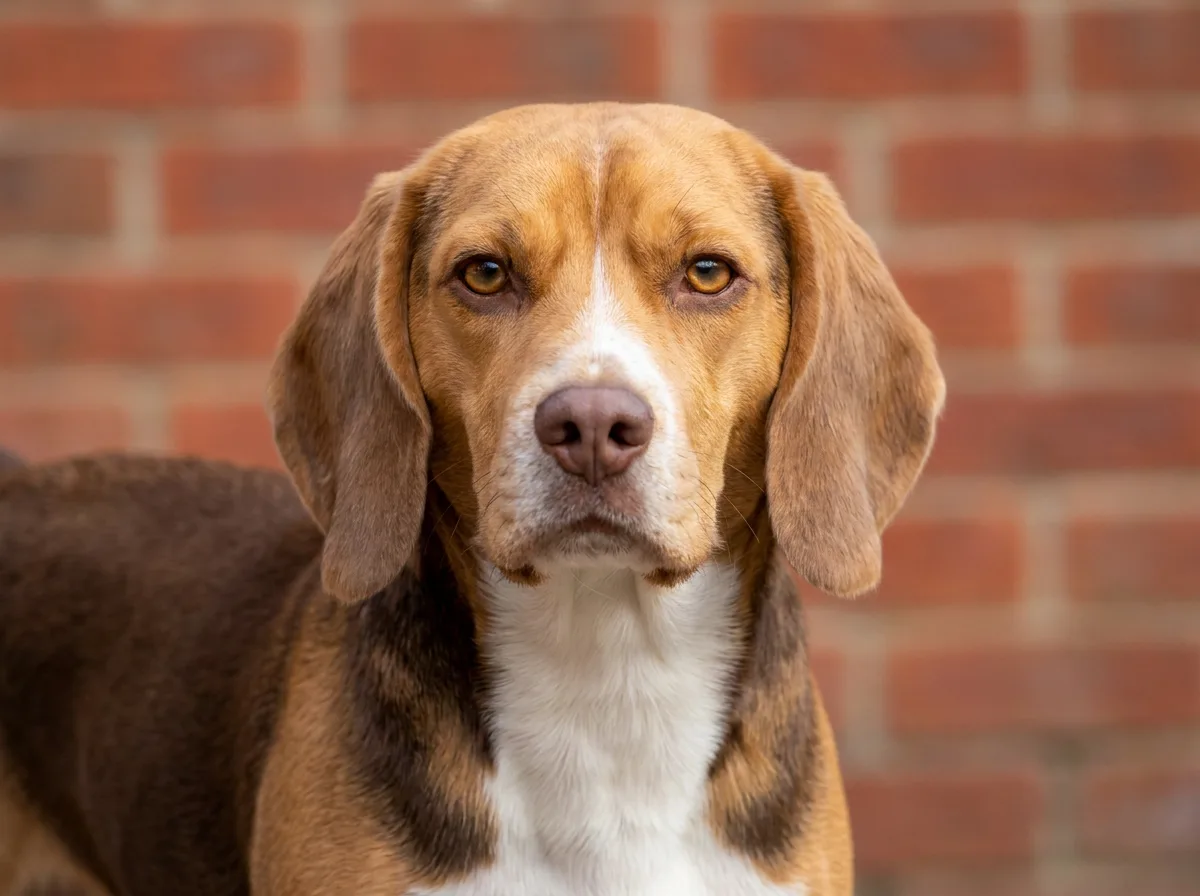
- A rare color adds no health, temperament, or registration value. Treat a price premium for a rare color as a red flag for buyers, especially when the seller cannot show both parents' registration papers or DNA coat color results.
Be especially careful with silver or gray puppies that have light eyes: The Beagle Club regards the pale slate-gray shade as a degenerate black rather than a recognized hound color. Blue and chocolate tricolors from registered parents are legitimate Beagles in the US, and they simply should not cost more. Before paying for any rare color, ask for the parents' DNA results or test the puppy with a kit such as the Embark Breed & Health Dog DNA Test Kit, and compare the asking price with our guide to what a Beagle costs.
Solid Black and Other Single-Color Beagles
An all black Beagle is rare. Black (007) is an alternate AKC color, but most dogs described as black Beagles are heavily blanketed tricolors or black and tans: black over nearly the whole body, with small tan points above the eyes and on the muzzle and a little white on the chest or toes.
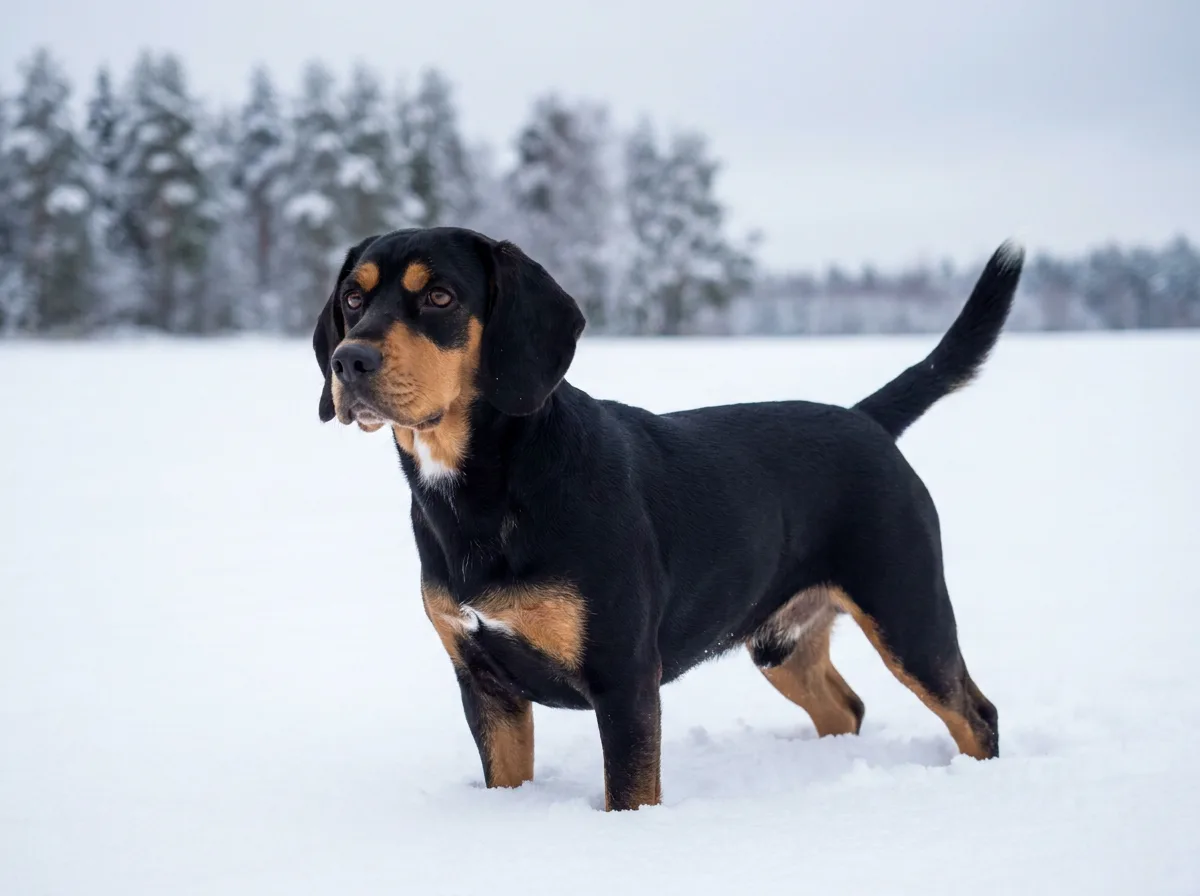
The AKC also registers single-color Beagles in blue, brown, lemon, red, tan, and white, so an all brown or all tan Beagle can have papers. The FCI and UK standards permit only one single color, all white, and both require a white tail tip that a truly solid dog cannot have.
A Beagle with no tan and no white anywhere is unusual enough to check before you buy. Ask for registration papers, and if a solid black or all brown puppy is sold as a rare purebred, treat it like any other rare-color claim.
Beagle Colors Not Accepted: Merle, Brindle, and Sable
Merle and brindle are the only color patterns that disqualify a Beagle under AKC rules. The 2024 revision of the AKC standard, approved May 10, 2024, and effective July 30, 2024, replaced the old wording "any true hound color" with "any allowed hound color" and added that merle and brindle patterns "shall be disqualified." Other registries are stricter, and the AKC and FCI color rules differ in several ways:
| Rule | AKC (US) | FCI standard | Royal Kennel Club (UK) |
|---|---|---|---|
| Colors allowed | Any allowed hound color | Ten listed colors, no others permitted | Any recognized hound color except liver |
| Merle and brindle | Disqualified | Not listed, so not permitted | Not among the recognized colors |
| Liver or chocolate | Acceptable to the national breed club | Not listed | Excluded |
| Blue | Blue Tan & White is a standard color | Blue, white, and tan permitted | Blue, tan, and white recognized |
| All white | Alternate color | Permitted, never as mottle | The only single color permitted |
| Ticking or mottle | Ticked is the standard marking | Permitted in every color but all white | Mottles recognized |
| White tail tip | Not required | Required | Required |
Sable does not appear on the AKC's Beagle registration list or among the FCI's permitted colors, but it is not one of the two patterns the AKC disqualifies either, so treat a "sable Beagle" as a seller's description to question rather than a registered color. Harlequin, including the "silver harlequin" label, is a merle-based pattern best known in Great Danes, so it falls under the merle disqualification.
- The merle pattern and brindle striping are not part of the Beagle's traditional hound colors, which is why the AKC disqualifies them. A merle or brindle puppy sold as a purebred Beagle most likely has mixed ancestry, so ask for both parents' registration papers before you trust the label.
If you already share your home with a merle or brindle Beagle-type dog, nothing is wrong with the dog; it simply cannot be shown as a Beagle. Our Beagle mixes guide covers the popular crosses and what they look like.
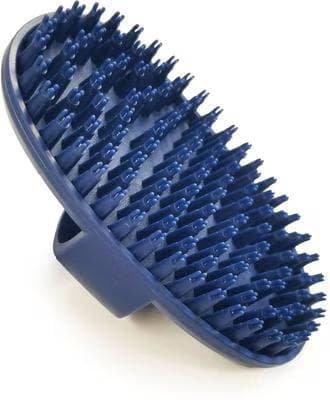
That short, hard coat is easy to keep in every color. The AKC recommends weekly brushing with a medium-bristle brush, a rubber grooming mitt, or a hound glove, and a glove such as the Four Paws Magic Coat Professional Series All-In-One Wet & Dry Dog Glove & Curry Brush lifts loose hair and dirt from the coat.
Petful may earn a commission when you click through to Chewy, at no extra cost to you.
The Genetics Behind Beagle Colors
Beagle color genetics come down to a handful of genes, and most surprises, such as a lemon puppy from two tricolor parents, come from recessive genes a dog can carry without showing. Labs such as the UC Davis Veterinary Genetics Laboratory test the main coat color genes.
| Color or pattern | Gene behind it | What the parents must carry |
|---|---|---|
| Tricolor (saddle) | Saddle form of the tan-point pattern plus normal black pigment | At least one parent that is not a lemon, tan, or red bicolor |
| Lemon, tan, or red and white | Two copies of recessive red, which blocks black hair | Recessive red from both parents |
| Chocolate (liver) tricolor | Two copies of the brown gene, which turns black pigment brown | The brown gene from both parents |
| Blue tricolor | Two copies of the dilution gene, which lightens black to gray | The dilution gene from both parents |
| Lilac | Two copies each of the brown gene and the dilution gene | Both genes from both parents |
| Bluetick or redtick | A ticking gene that shows only on white areas | Usually at least one ticked parent |
| Pied | A domino variant of the same gene as recessive red | Still being studied |
| Merle or brindle | Merle and brindle genes, which are not part of the traditional breed | Almost always a non-Beagle ancestor |
Two rules explain most color surprises:
- A recessive color can hide for generations, because a tricolor can carry one copy of recessive red, brown, or dilution without showing it.
- Two dogs that both show the same recessive color can pass on only that color, so two lemon and white Beagles will not have a tricolor puppy, and two blue tricolors will not have a black-nosed one.
How Beagle Puppy Colors Change With Age
Yes, Beagles change color, mostly in their first few months. A newborn tricolor puppy often looks black and white: The Beagle Club notes that the head, ears, and shoulders of tricolor puppies are often black at birth and gradually turn tan over the next few weeks. Lemon puppies start out nearly white, and ticking appears in the white areas as a puppy grows.
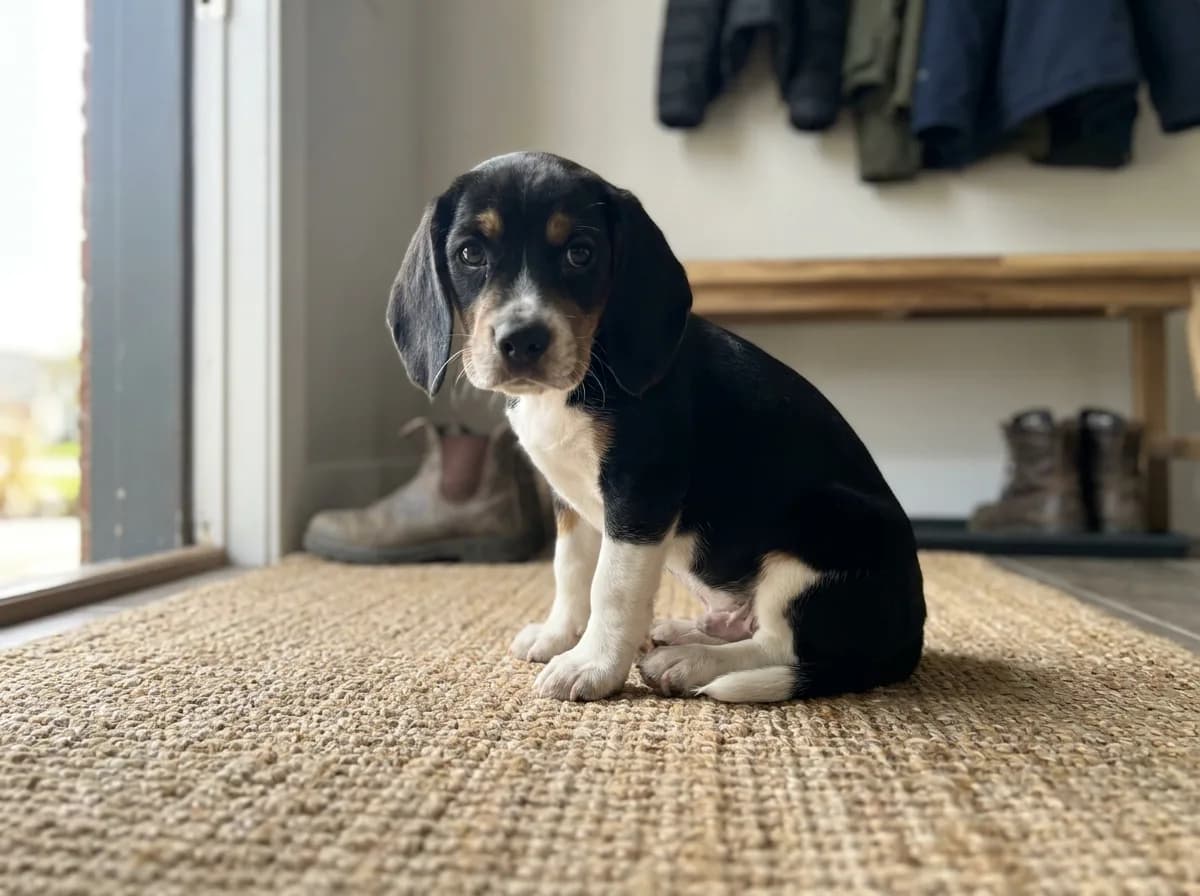
This puppy color change timeline shows what to expect:
- At birth: tricolors look mostly black on the head and back with white legs, and lemons look almost white.
- First few weeks: tan spreads over the head, ears, and shoulders of tricolors, and gray, cream, or brown shading on the back usually fades.
- By about 12 weeks: the tiny white flecks some puppies show over their black and tan have usually gone, according to The Beagle Club.
- First months: lemon and red patches deepen, and ticking darkens on the white areas.
- Adulthood: the black saddle on many tricolors shrinks or fades as tan hairs mix in.
- Senior years: muzzles gray, and The Beagle Club notes that hounds without a strong, deep black can lose much of it in old age and look almost white.
Because of these changes, judge a puppy's adult color by its parents as well as its baby photos. An adult coat that no longer matches the color on the registration papers is normal and is not, by itself, a sign of mixed breeding.
Beagle Eye Color, Nose Color, and Coat Type
Eye and Nose Color
Beagles should have brown or hazel eyes: the AKC standard calls for a brown or hazel color, and the FCI standard for dark brown or hazel. Blue eyes fall outside both standards. Hill's notes that heterochromia, such as one blue eye and one brown, is more common in dogs with merle or white coloring around the head, so in a Beagle with one blue eye or two, look for heavy white on the face or a merle cross in the background. Lemon Beagles and other pale dogs should still have brown or hazel eyes, although every puppy's eyes look blue-gray for the first weeks.
Nose color follows the coat's pigment genes:
- Black: the norm for tricolors, black and whites, and bluetick Beagles
- Liver or reddish-brown: a sign of the chocolate gene, so a "red nose Beagle" is often a chocolate dog, although lemon and red dogs can have brownish noses too
- Gray: a sign of the dilution gene in blue dogs
- Pale, brownish, or pinkish: common in lemon and red bicolors, and the FCI standard allows less pigment in lighter-colored hounds
- Pink spots: pink patches on a white-muzzled puppy's nose often fill in as the puppy grows
The Beagle Club adds one caution: liver is considered objectionable in the UK because it frequently comes with very light eyes, even green eyes with pink rims.
Coat Type: Short, Hard, and Wire-Haired Coats
The Beagle has one coat type: short and hard. The AKC standard asks for a close, hard hound coat of medium length and faults a short, thin, or soft coat, and the FCI describes it as short, dense, and weatherproof. No major standard recognizes a long-haired, rough-coated, or wire-haired Beagle.
Wire-haired Beagles did exist centuries ago: the FCI's breed history records wirehaired Beagles in the reigns of Henry VIII and Elizabeth I. Today, a wiry or rough-coated Beagle-type dog is most likely a cross with a terrier or another wire-coated breed, which our Beagle mixes guide covers. A rare long-coat gene also turns up occasionally, and our Beagle breed guide covers long coats, shedding, and grooming.
How to Tell a Purebred Beagle by Its Coat and Markings
To identify a pure Beagle, check the coat and markings first, then confirm with paperwork. A purebred Beagle has a short, hard coat in an allowed hound color, never merle or brindle, plus brown or hazel eyes, long low-set ears, and a tail carried gaily with a brush of hair, usually white-tipped. Coat color can only rule a dog out, not prove it in: registration papers document pedigree, while a breed-ancestry DNA test provides an estimate rather than proof of purebred status.
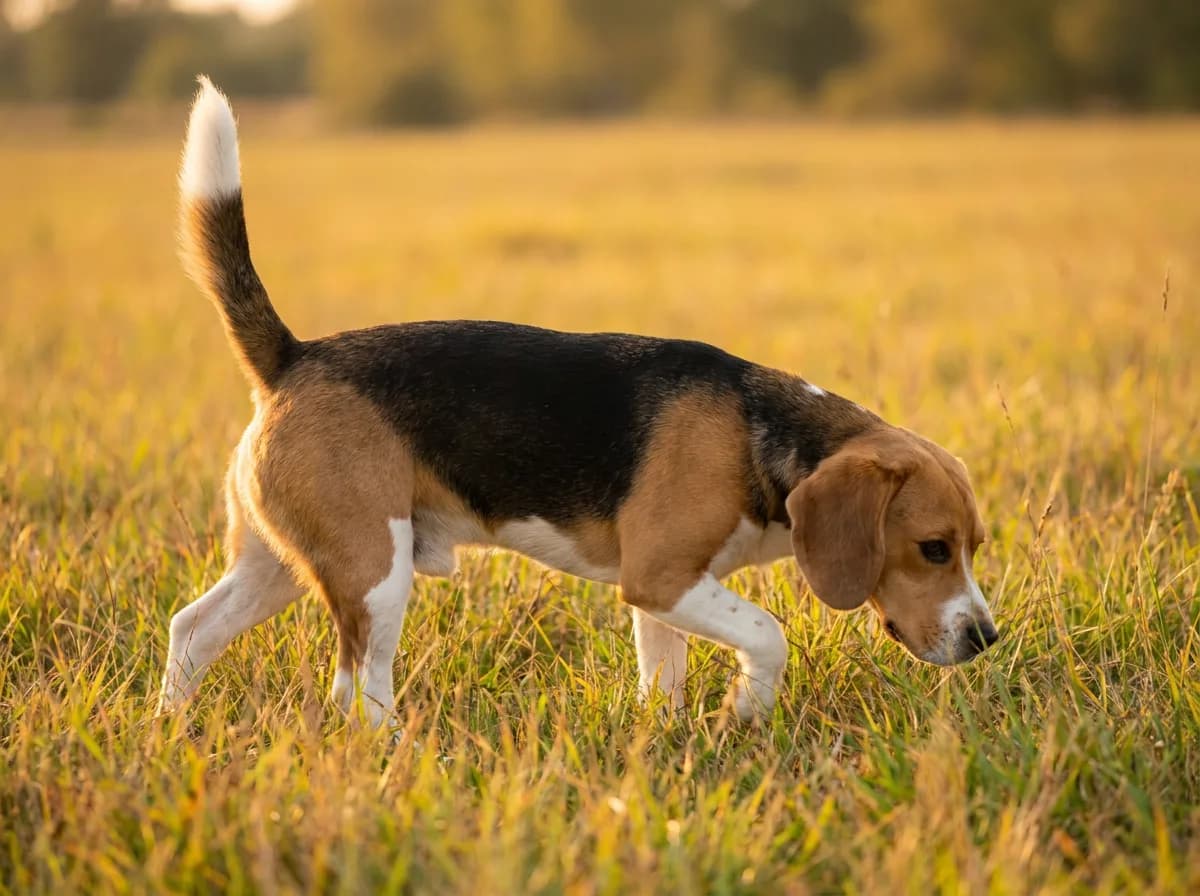
Use these visible cues as a first check:
- Color: black, tan, white, lemon, red, blue, or brown in hound patterns, with no merle marbling or brindle stripes
- Coat: short, close, and hard, not long, soft, curly, or wiry
- Tail: set moderately high and carried gaily, with a brush of hair underneath. Many Beagles have a white-tipped tail, which the AKC says was bred in so hunters could spot the dogs with their noses down on a scent; the FCI and UK standards require the white tip, but the AKC standard does not, so not all Beagles have one
- Face and markings: white on the face is common but optional, and The Beagle Club says the size, symmetry, and distribution of color do not matter, apart from the white tail tip
- Size: 13 inches or under, or 13 to 15 inches, for the AKC's two varieties, and a hound over 15 inches is disqualified
- Eyes: brown or hazel, not blue
- Registration papers show that a dog is recorded as a Beagle with a documented pedigree, and a DNA test can confirm parentage or estimate breed ancestry. Coat color and markings are only clues, and a perfect tricolor can still be a mix.
The AKC is explicit that its own DNA profile is for genetic identity and parentage verification only: it does not determine breed or coat color, and breed purity is determined by pedigree. Our guide to AKC registration papers explains what the certificate shows. For a rescue without papers, a breed ancestry kit such as the Embark Breed Identification Dog DNA Test Kit estimates how much Beagle is really there. It cannot make a dog registrable, but it answers the question most adopters are asking.
Breeds That Look Like Beagles
The dogs most often mistaken for Beagles are other scent hounds in the same black, tan, and white coats, and the AKC standard even calls the Beagle a miniature Foxhound. Size is the quickest way to sort them out: a Beagle stands 15 inches or less, so a Beagle-type dog that stands well over 15 inches is almost certainly one of the taller breeds below or a cross.
| Breed | Height | Colors | How to tell it from a Beagle |
|---|---|---|---|
| Beagle | 13 inches and under, or 13 to 15 inches | Any allowed hound color | Compact body, with ears reaching nearly to the nose tip |
| Harrier | 19 to 21 inches | Any color | Built like a small English Foxhound, far taller than a Beagle |
| American Foxhound | 21 to 28 inches | Any color | Longer legs and a leaner, rangier frame |
| English Foxhound | About 24 inches | Hound colors, including pies | Heavier bone; working hounds often have trimmed, rounded ear tips |
| Treeing Walker Coonhound | 20 to 27 inches | Tricolor preferred | Taller, with a saber-like tail and little brush |
| Basset Hound | 14 inches and under | Any recognized hound color | Very short legs and ears that fold past the nose |
Our American Foxhound profile covers the closest look-alike in detail, and our Basset Hound vs. Beagle comparison sorts out the two short hounds. Basset Hounds come in the same range of hound colors, shown in our Basset Hound colors guide.
Crosses are the other common source of look-alikes. A Puggle, the Pug and Beagle mix, often has a Beagle's ears and coloring with a shorter, Pug-like muzzle and a stockier build.
Does Color Change a Beagle's Size, Temperament, or Health?
No. Coat color has no known effect on a Beagle's size or temperament. A lemon Beagle, a blue tick Beagle, and a tricolor all fall into the same two AKC size varieties, 13 inches and under or 13 to 15 inches, so knowing a dog is lemon or bluetick tells you nothing about its size. Breed clubs treat color as a matter of taste: the national breed club says the quality of the hound, not the arrangement of color, is the important matter, and The Beagle Club says color prejudice has no place in judging.
Personality depends on the individual dog, its upbringing, and its training, not its coat, so the usual temperament questions have the same answers for a Beagle of any color:
- Boy or girl: neither is better, so pick the individual dog whose energy fits your home. The main practical differences are that intact females come into heat about twice a year and intact males are more likely to mark and roam.
- Cuddling: yes, most Beagles like to be cuddled by their own people, but on their terms, leaning against you on the sofa or burrowing under a blanket rather than being held in a tight hug.
- What they love most: food, a good scent trail, and company, which is why treats and sniffing time make the best rewards.
- Calming down: let the nose work first, with a sniff walk, a chew, or a food puzzle, then give your Beagle a quiet, predictable place to rest.
- Biggest downside: the nose, whose scent drive leads to escaping, selective hearing, and food theft. Close behind are baying, barking, and howling, plus a dislike of being left alone.
Our Beagle breed guide covers each of these in more depth.
Color and health overlap most clearly in one condition. VCA Animal Hospitals describes color dilution alopecia as an inherited condition that can cause patchy hair thinning or loss and flaky skin in dogs with dilute blue or fawn coats, usually starting at six months of age or older, and the Merck Veterinary Manual lists tricolor hounds among the dilute-colored dogs in which it is seen. If you are considering a blue Beagle, ask the breeder about thinning coats in related dogs. There is no evidence that coat color changes a Beagle's life expectancy, and our Beagle lifespan and health guide covers the conditions that do.
Beagle Color FAQs
Yes, if both parents carry one hidden copy of the recessive red gene that makes lemon, tan, and red bicolors. When both tricolor parents carry it, about one puppy in four is expected to be a bicolor, on average. Which parents can produce lemon puppies? Any pair where both parents carry the gene: two carrier tricolors, a carrier tricolor and a bicolor, or two bicolors, which produce only bicolor puppies.
Partly. A coat color panel, offered by labs such as the UC Davis Veterinary Genetics Laboratory and included in consumer DNA kits, reads genes like recessive red, brown, and dilution, so it can confirm whether a blue or chocolate puppy really carries those genes. A breed ancestry test compares a dog's DNA with reference breeds and estimates how much Beagle it has. Neither replaces registration: the AKC's own DNA profile verifies parentage only and does not determine breed or coat color.
When a Beagle is registered, the owner picks a color from the AKC's list, and each color has a three-digit registration color code, such as 115 for Lemon & White or 029 for Black Tan & Bluetick. In the AKC's color list, the S or A beside a color is the AKC's show classification, and an asterisk would mark a disqualifying color; no Beagle alternate has one, so an alternate color, such as 019 for Black & White, registers the same way as a standard one. Marking codes, such as 013 for Ticked, describe extras like ticking.
Yes. Puppies start to open their eyes at around 10 days, and the eyes look blue-gray at first. Margret Casal, a veterinary geneticist at the University of Pennsylvania, has told PetMD that a puppy's true eye color shows at around 10 weeks. Puppy eye color in a Beagle usually settles to brown or hazel, the colors the AKC standard calls for, and eyes that stay clearly blue are unusual in the breed.

Coreen Saito is a pet writer and longtime shelter volunteer with more than a decade in animal rescue. She covers cat behavior, breed care, and the small, ordinary science of sharing a life with companion animals, with a particular focus on honest takes about the products and decisions that actually matter. At home in Arizona, she's outranked by Mac (a dog with the loudest opinion in the house), Rebel (a cat who governs by quiet authority), and Meri (an orange tabby who runs the late shift and the laundry basket). She writes about all three, plus the rescues that keep coming through her life, at LifeWithMinty.com.
Sign up for expert-backed reviews and safety alerts all in one place.