Basset Hound vs Beagle: Size, Temperament and Care
Compare Basset Hound and Beagle size, weight, energy, training, shedding, noise and apartment fit before choosing for your household.
Petful is reader supported. As an affiliate of platforms like Amazon and Chewy, we may earn a commission when you buy through links on this page. There is no extra cost to you.
Basset Hound vs Beagle is a choice between two scent hounds, not between a lazy dog and an energetic one. Both can be affectionate, food-motivated, vocal and absorbed by smells. Their height, build, pace and household impact differ enough that the better fit becomes clearer when daily routines replace stereotypes.
The comparison below covers physical size, temperament, exercise, training, noise, grooming, health and practical ownership. Individual dogs still vary, so use breed tendencies to form questions rather than to guarantee behavior.

Sign up for expert-backed reviews and safety alerts all in one place.
Basset Hound vs Beagle at a glance
- 1Both breeds are scent-driven and potentially vocal
- 2The Basset is lower and heavier while the Beagle is generally more agile
- 3Choose from daily pace, cleanup and the evidence from the individual dog
| Factor | Basset Hound | Beagle |
|---|---|---|
| Published adult scale | Up to 15 inches; 40-65 pounds | Two height varieties up to 15 inches; under 20 or 20-30 pounds |
| Key build difference | Similar maximum shoulder height but much heavier, longer and lower | Compact, higher-legged and generally more agile |
| Cleanup | Short hair, long-ear care and more drool | Short hair and ear care, usually less drool |
| Shared need | Secure boundaries and reward-based training | Secure boundaries and reward-based training |
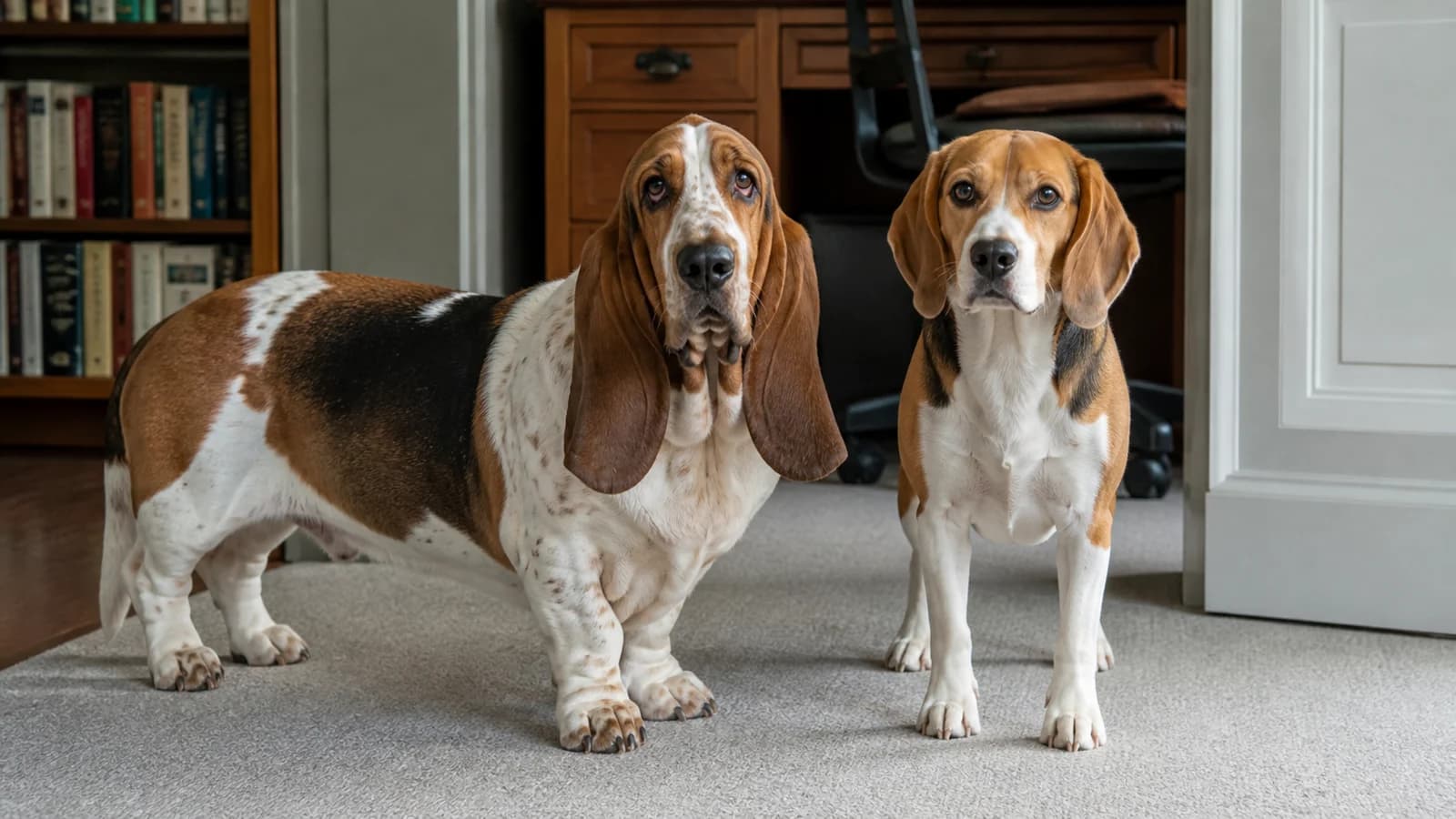
For the Basset, the AKC breed page gives a 40-to-65-pound range and a height ceiling of 15 inches. The Beagle standard recognizes two varieties: one under 13 inches and 20 pounds, and another from 13 to 15 inches and 20 to 30 pounds. The breeds can therefore reach a similar maximum shoulder height, but the Basset is much heavier, longer and lower while the Beagle is compact and higher on the leg.
The practical split is often pace and scale. Beagles commonly bring brisker movement and more athletic household activity. Bassets may travel more deliberately but still need purposeful walks and sniffing. A prospective owner should meet adult examples, not decide from puppy photographs or a single calm dog at an adoption event.
- Both breeds need secure outdoor management.
- Neither breed is reliably silent.
- Bassets usually create more drool and low-body cleanup.
- Beagles often suit owners wanting a quicker walking pace.
A fitted harness can distribute routine leash pressure while leaving the neck free, provided it does not restrict shoulder movement.
Measure the individual dog and recheck the fit after weight or coat changes.

Petful may earn a commission when you click through to Chewy, at no extra cost to you.
Size and physical build
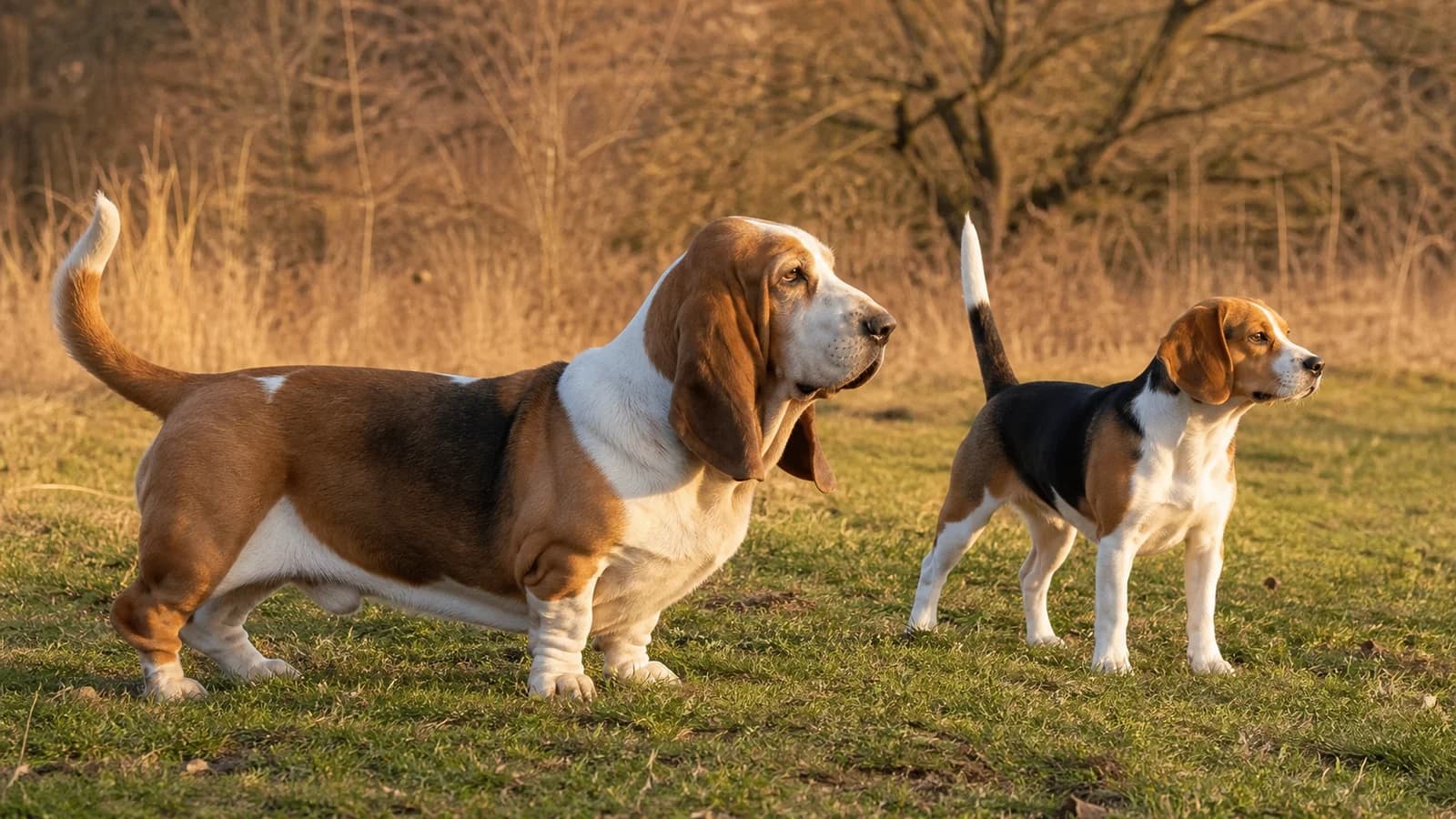
Basset Hound vs Beagle size cannot be captured by height alone. The Basset's 40-to-65-pound adult range sits on a frame capped at 15 inches, roughly twice the body weight of a 20-to-30-pound Beagle in the larger height variety; the smaller Beagle stays under 13 inches and 20 pounds. This is the key physical difference: the Basset is low, long, deep-bodied and heavy-boned, while the Beagle is lighter, compact and generally more agile. Either dog may still be too heavy to carry safely in an emergency, so owners should practice vehicle access and cooperative handling before they are necessary.
Home layout exposes the difference. A Basset may need more protection from repeated stair use, slick flooring and high jumps. A Beagle may clear a low barrier or reach a counter more easily. Crates, beds and gates should be selected from current measurements and behavior rather than from a breed label printed on packaging.
- Compare chest girth as well as body weight.
- Measure doorways, vehicle openings and resting spaces.
- Use non-slip paths for a low, heavy dog.
- Assume an agile scent hound can test a short gate.
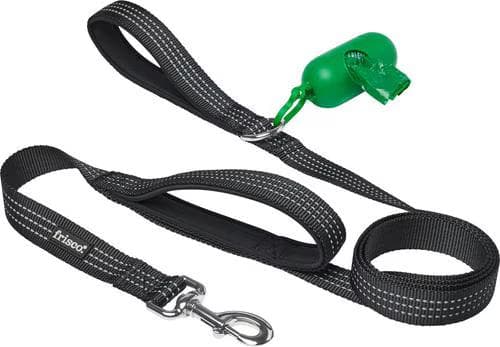
A sturdy traffic leash gives either dog a predictable close-range connection around parking lots and veterinary entrances.
It does not make an unfenced area safe for off-leash scent work.
Temperament and family life
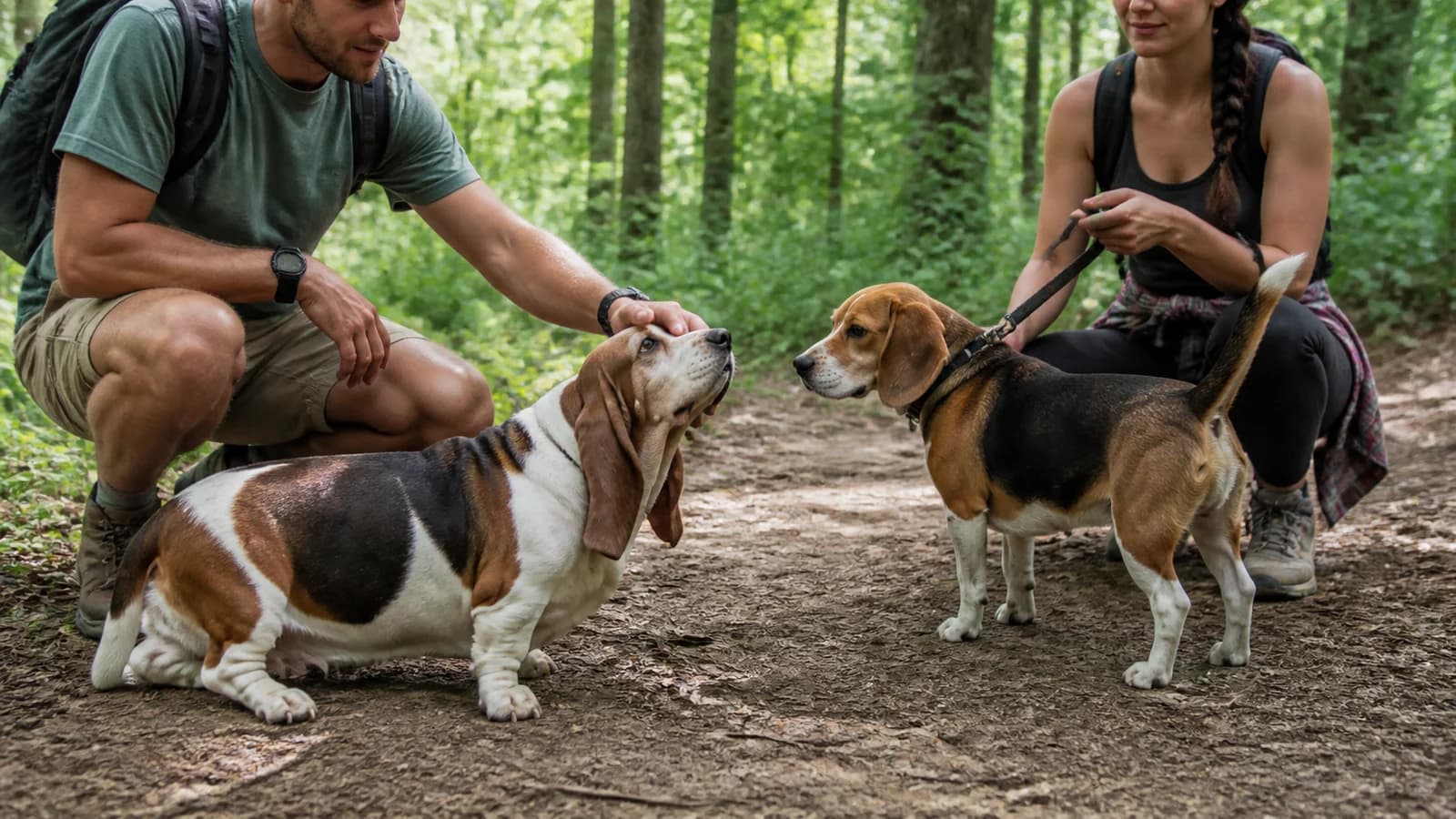
Basset Hound vs Beagle temperament cannot be reduced to which breed is friendlier. A Basset may seek a soft resting place and slower contact; a Beagle may insert itself into more of the day’s movement. Age, pain, prior learning and the individual dog’s sociability carry more weight than a broad breed description in a specific home.
For families with children, adults should protect food, sleep and retreat spaces and teach gentle contact. Resident pets need staged introductions and separated resources. Ask a breeder, foster or shelter for repeated observations: recovery after excitement, response to handling, comfort when alone and behavior around dogs of different sizes provide more value than a claim that the breed loves everyone.
- Give the dog a child-free resting zone.
- Supervise all early interactions with resident animals.
- Separate meals and high-value chews.
- Treat avoidance or stiff posture as useful communication.
A programmable feeder can support measured dry-food portions in a compatible home, which is useful when more than one person shares feeding duties.
Guarding, rapid eating and multi-pet access still require active supervision and a tailored setup.
Petful may earn a commission when you click through to Chewy, at no extra cost to you.
Exercise, scent drive and training
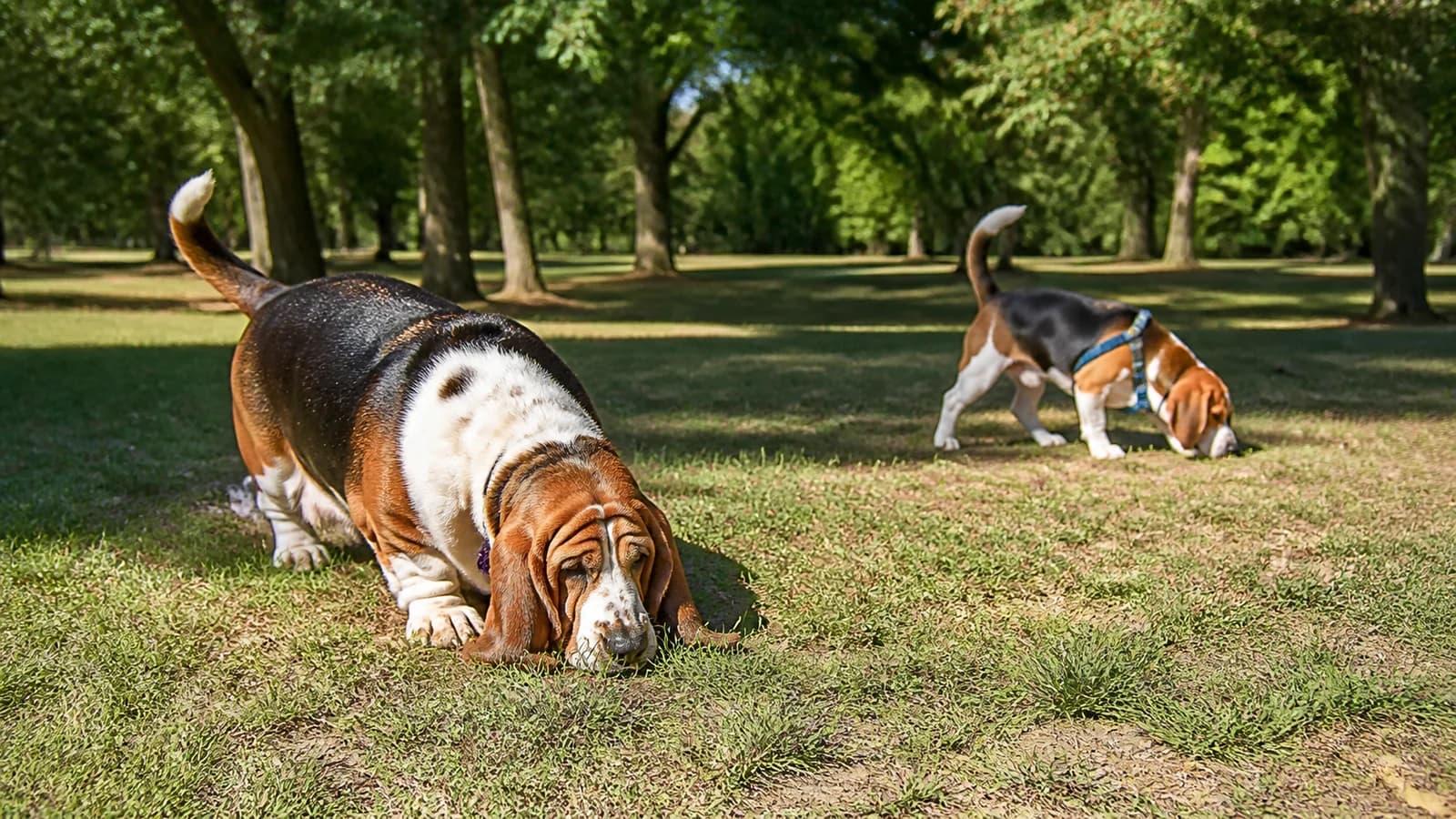
Beagle vs Basset Hound exercise is usually a question of intensity rather than whether exercise is needed. A Beagle may prefer longer or faster outings and active games. A Basset often benefits from steady walks with time to investigate smells. Fitness, weather, body condition and orthopedic health should shape the plan for either dog.
Training works best when the reward can compete with scent. Practice attention and recall first in low-distraction spaces, then add difficulty gradually while the dog remains on secure equipment. Repeating a cue after the nose has taken over teaches little. Short search games can make scent an earned activity instead of treating the dog’s strongest motivation as misconduct.
- Start recall practice indoors.
- Reward voluntary check-ins on walks.
- Increase distance and distractions separately.
- Avoid strenuous exercise in heat or with an unfit dog.
A low-entry orthopedic bed offers a defined place to recover after activity, especially for a Basset that does not comfortably step over a high bolster.
Resting equipment should complement, not replace, an assessment of limping or post-exercise stiffness.
- A deliberate Basset and an athletic Beagle both need exercise, scent outlets, training and a plan for vocal behavior. Compare the household routine rather than one adjective.
Noise, alone time and household management
Basset Hound vs Beagle barking is not a quiet-versus-noisy contest. Both may bark, bay or howl when excited, frustrated, following scent or left alone. Frequency and triggers vary. Apartment suitability therefore depends on the individual, the building, predictable enrichment and whether the owner can respond before vocal behavior becomes an established pattern.
Observe what happens around departures instead of labeling every sound stubbornness. Pacing, destruction, drooling, elimination or inability to eat can accompany separation distress. Gradual training and professional guidance are more appropriate than punishment. Gates and closed doors can protect food or visitors, but containment should never be used to isolate a distressed dog for long stretches.
- Record a short departure to identify the trigger.
- Meet exercise and toileting needs before alone time.
- Use sound management that does not frighten the dog.
- Ask for help when distress appears or escalates.
A well-fitted harness helps preserve control during busy transitions such as leaving an apartment hallway or crossing a shared lobby.
Check that the dog cannot reverse out of it when startled by a door, voice or scent.
Breed shorthand should not replace observation; WebVet’s dog body language guide can help a family compare how each individual recovers, seeks space and responds to handling.

Petful may earn a commission when you click through to Chewy, at no extra cost to you.
Grooming, shedding and drool
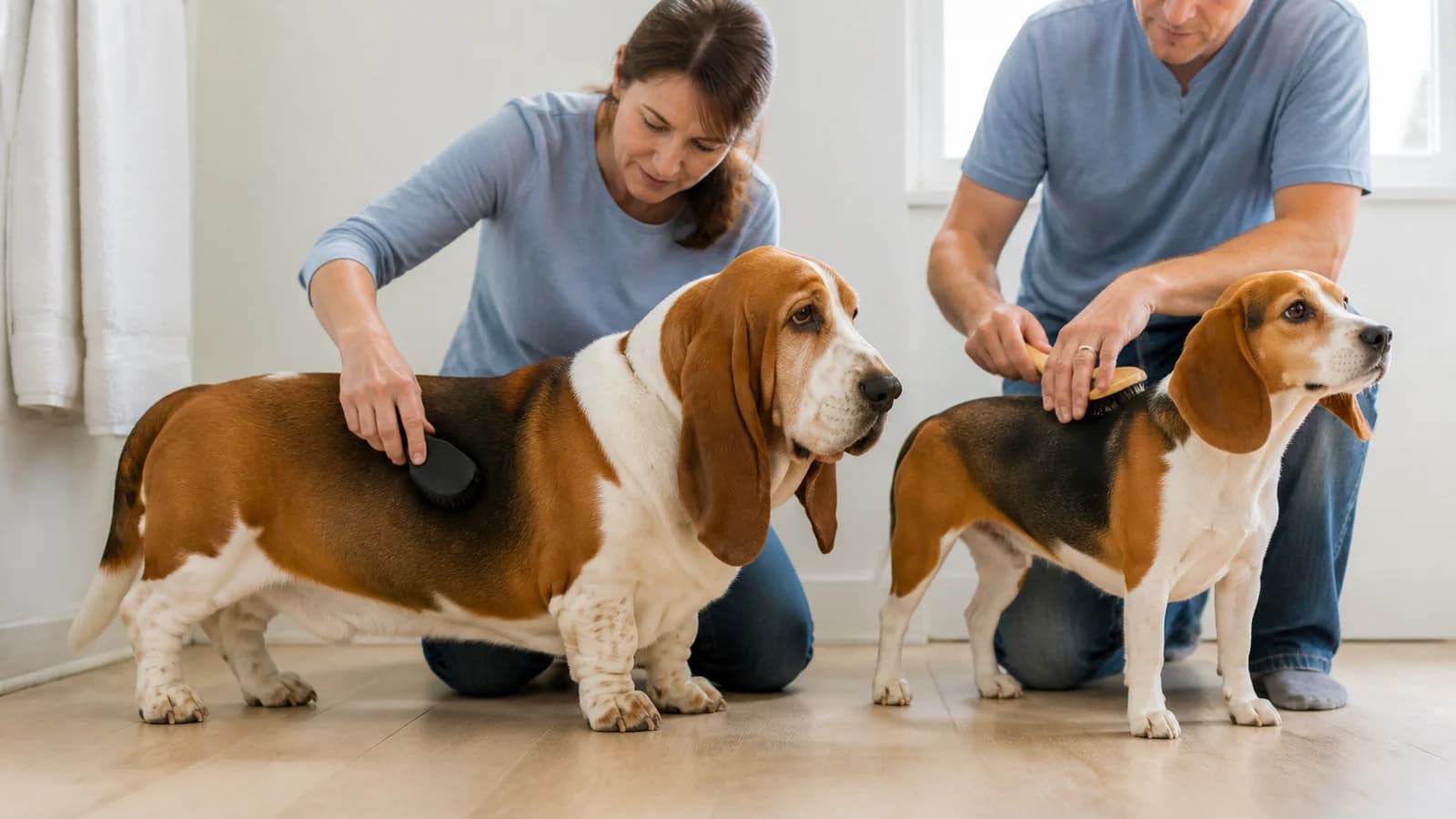
Basset Hound vs Beagle shedding is not a low-shed contest because both breeds release short hair and benefit from routine brushing. The Basset’s longer ears, loose lips, low belly and skin surfaces add cleanup that many Beagle homes experience to a lesser degree. Ear checks are important for both, particularly after water exposure or when odor, discharge, redness or head shaking appears.
Bathing should respond to dirt and medical advice rather than masking a persistent smell. Dry the dog thoroughly, trim nails on an appropriate schedule and inspect paws after rough terrain. A sudden coat change, severe itch or focal odor belongs in a veterinary conversation; switching products repeatedly can delay diagnosis and further irritate the skin.
- Brush both breeds on an easy-clean surface.
- Keep soft cloths available in a drool-prone home.
- Compare both ears during every inspection.
- Book care for painful skin, discharge or hair loss.
A durable leash with a comfortable hand loop is useful when a grooming appointment requires moving a scent-focused dog through a crowded entrance.
Inspect stitching and hardware regularly, especially if the leash is dragged or mouthed.
Health and lifetime care
Basset Hound vs Beagle health comparisons should not be reduced to a single lifespan number. Breed-linked tendencies, body structure and family history differ, while weight, preventive care and early response to symptoms influence the individual. A responsible breeder can show identity-linked screening for both parents and explain what each result can and cannot predict.
For any source, request veterinary records and a return policy, then establish care soon after arrival. Owners of low-built Bassets should plan around mobility and skin or ear monitoring; Beagle owners still need to watch joints, ears, weight and any inherited risks discussed by their veterinarian. Emergency reserves and insurance decisions are household choices, not evidence that one breed is inherently healthy.
- Review parent results against breed-club guidance.
- Keep the dog lean with measured food.
- Schedule routine dental and preventive care.
- Seek prompt help for pain, bloating or neurologic change.
A scheduled feeder can make portion timing visible in a shared household, reducing accidental duplicate meals.
Measure the ration separately and confirm every day that the unit dispensed normally and remained clean.
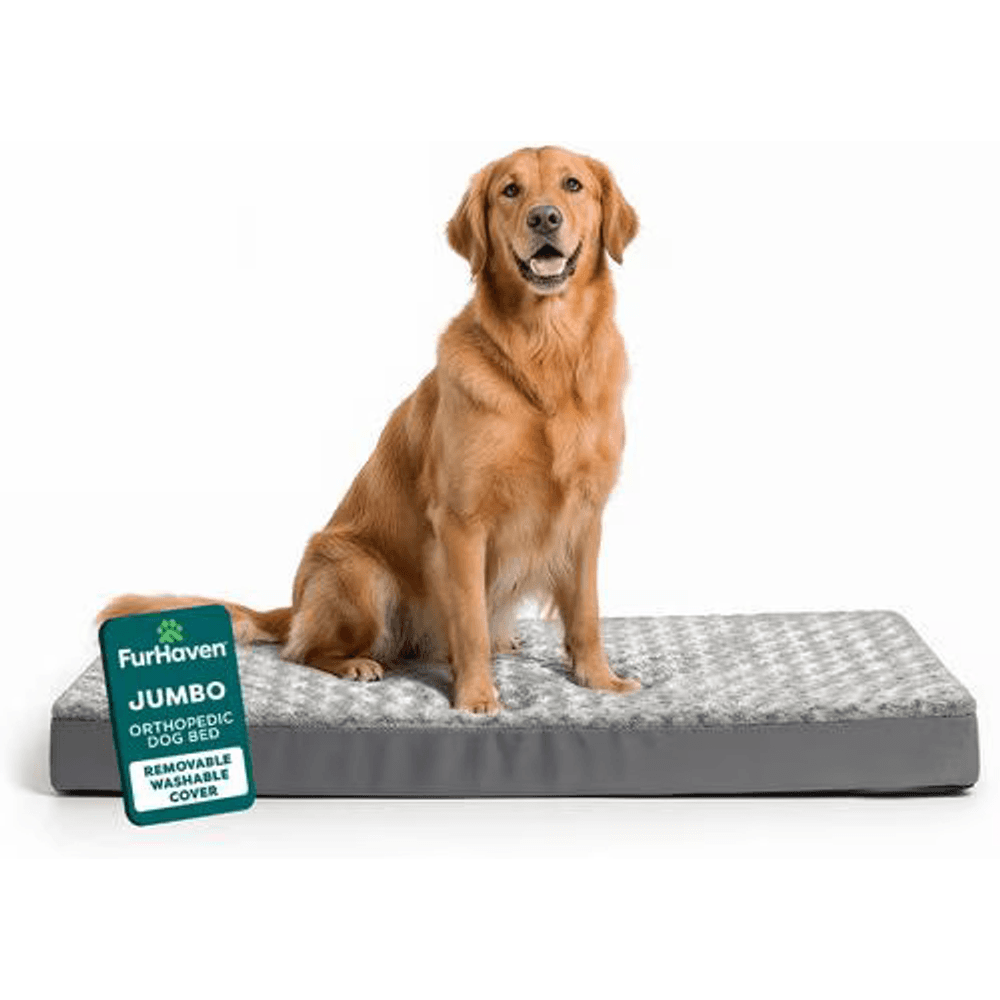
A plush orthopedic foam mattress that cushions aging joints and pressure points, giving a stiff or trembling senior dog warm, supportive rest.
Petful may earn a commission when you click through to Chewy, at no extra cost to you.
Which breed fits your household?
Choose a Basset Hound when the household accepts a substantial low body, slower travel, drool, ear care and patient scent-hound training. Consider a Beagle when a more athletic, compact hound and a quicker daily pace fit better. Both choices require secure containment, tolerance for vocal behavior and realistic plans for alone time.
Then test the conclusion against a real dog. Spend time beyond the first greeting, ask for unpolished behavior notes and include every adult who will provide care. If neither profile fits the housing, schedule or budget, waiting is a responsible answer. Breed choice should reduce foreseeable friction rather than ask a dog to suppress its basic needs.
- Write down the household’s normal weekday.
- Price food, veterinary care, training and boarding.
- Meet adults as well as puppies.
- Select the individual only after records and behavior review.
A roomy supportive bed is valuable for either breed when its dimensions match the dog’s preferred sleeping position.
Place it away from household traffic so rest does not depend on people stepping around the dog.
Continue the Basset Hound cluster
- complete Basset Hound breed profile
- Basset Hound colors and markings guide
- Basset Hound and Bloodhound comparison
Evidence sources
- American Kennel Club Basset Hound overview
- Basset Hound Club of America
- AVSAB behavior and training position statements
- American Veterinary Medical Association pet-care guidance
- American Kennel Club Beagle overview
- A side-by-side routine exposes meaningful fit differences.
- Both breeds can enjoy reward-based scent activities.
- Adult examples make size and pace easier to judge.
- Both can be vocal and difficult to recall around odor.
- Short coats still shed.
- Breed labels cannot predict one dog’s family compatibility.
Basset Hound and Beagle FAQs
Which is better, a Beagle or a Basset Hound? Neither is universally better. A Basset brings a lower, heavier body, more drool and a typically slower pace; a Beagle is often more agile and active. Compare housing, walking routine, cleanup tolerance, vocal behavior and the observed individual before choosing. Meet mature dogs whenever that is possible.
Basset Hounds are related to Beagles through their shared scent-hound function, but they are distinct breeds with different standards and physical proportions. Similar purpose does not make them interchangeable. Review known pedigree or adoption records instead of inferring an exact relationship from long ears or color alone. The individual record should settle identity questions.
Basset Hounds are not automatically more stubborn than Beagles. That label often describes a mismatch between the task, reward and environmental scent. Compare actual learning history and recovery, then train either breed in controlled increments instead of assigning an intelligence score from reputation. Adjust the environment before judging learning ability.
Many Bassets move more deliberately and many Beagles seek a quicker pace, but calmness includes settling, arousal and recovery, not speed alone. Age, health and prior learning can reverse the stereotype. Meet adult dogs in more than one setting before using calm as the deciding factor.
Both smooth coats shed. The visible amount changes with individual coat, season and household surfaces, so neither breed offers a guaranteed low-hair home. Bassets often add more drool and low-body cleanup. A weekly brushing trial with an adult dog is more informative than a broad ranking.
Both can learn through rewards, and both can find scent more compelling than repetition. Beagles may move faster through an exercise; Bassets may require more patience around transitions. Training ease depends on reinforcement, setting and the individual, while secure boundaries remain necessary for either.
Either can live in an apartment if outdoor access, exercise, toilet breaks, vocal behavior and alone-time comfort are managed. A Basset may face more stair and lifting constraints; a Beagle may need a brisker activity plan. Evaluate the building and the real dog, not floor area alone.

Coreen Saito is a pet writer and longtime shelter volunteer with more than a decade in animal rescue. She covers cat behavior, breed care, and the small, ordinary science of sharing a life with companion animals, with a particular focus on honest takes about the products and decisions that actually matter. At home in Arizona, she's outranked by Mac (a dog with the loudest opinion in the house), Rebel (a cat who governs by quiet authority), and Meri (an orange tabby who runs the late shift and the laundry basket). She writes about all three, plus the rescues that keep coming through her life, at LifeWithMinty.com.
Sign up for expert-backed reviews and safety alerts all in one place.