AKC Papers: What They Are and How to Register a Dog
AKC papers register your dog as purebred but are not a health or quality guarantee. Here is how registration works, what it costs, how to look up or replace lost papers, and what to do when a breeder cannot provide them.
Petful is reader supported. As an affiliate of platforms like Amazon and Chewy, we may earn a commission when you buy through links on this page. There is no extra cost to you.
If you just brought home a purebred puppy, AKC papers are probably in the stack of documents your breeder handed over, or the paperwork you are still waiting to receive. AKC papers register your dog with the American Kennel Club and record its place in a documented purebred bloodline. They are useful and often expected, but they are also widely misunderstood. AKC papers are not a health certificate, not a quality rating, and not proof that your dog was responsibly bred. This guide explains exactly what AKC papers are, how registration works for a litter or a single dog, what it costs, how to look up or replace a lost certificate, and what to do when a breeder cannot provide them.

Sign up for expert-backed reviews and safety alerts all in one place.
What Are AKC Papers, and What Are They For?

AKC papers are the documents that record your dog in the American Kennel Club registry. In everyday use, "papers" usually means one or both of two things:
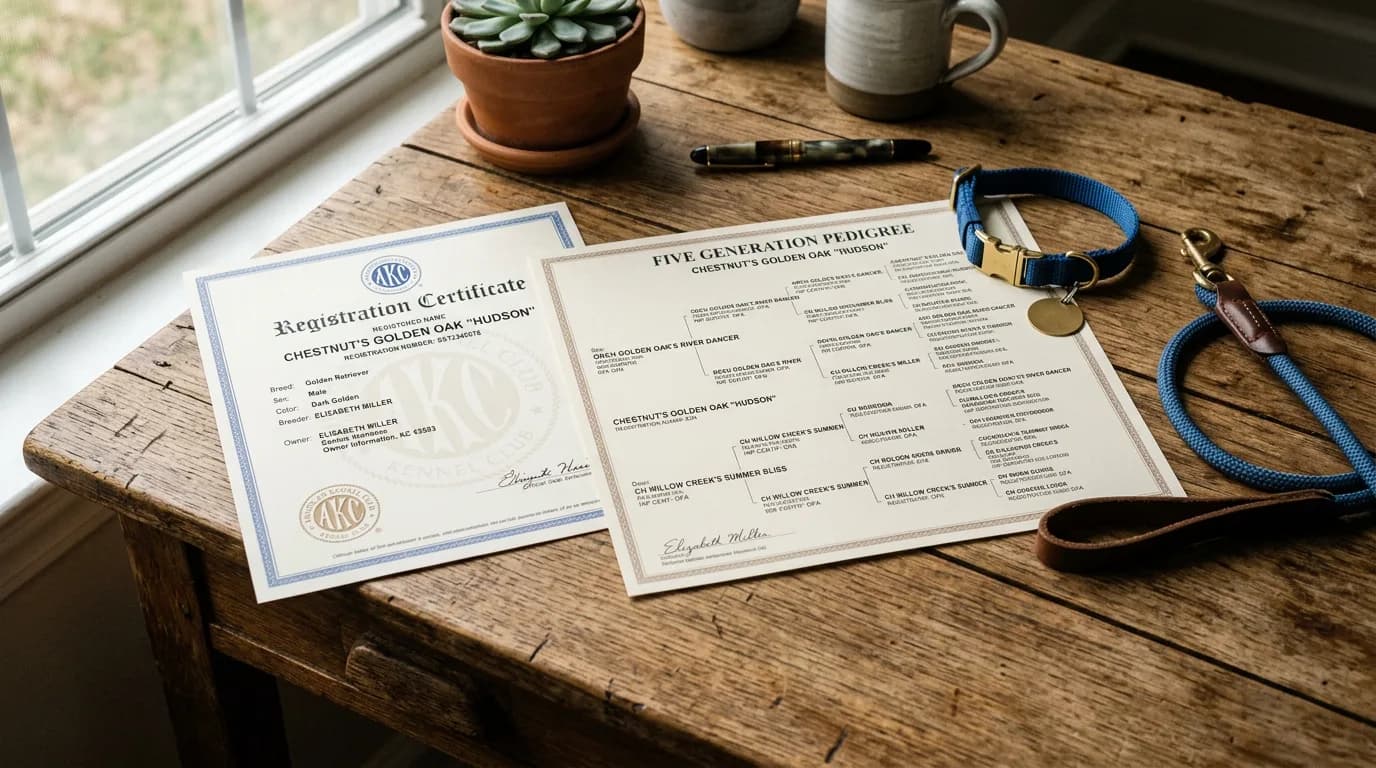
- The registration certificate. This is the single-page document confirming your dog is registered with the AKC. It lists the dog's registered name, registration number, breed, sex, date of birth, breeder, and owner.
- The pedigree. This is a separate document that traces your dog's ancestry back several generations, listing sires and dams (and often their titles) on each branch of the family tree.
What are they actually for? Registration does three practical things. It formally records that your dog descends from a line of dogs the AKC recognizes as purebred, based on parentage reported by the breeder. It gives your dog an official registered name and number. And it makes your dog eligible to enter AKC events such as conformation shows, agility, obedience, rally, and other sports.
That is the honest scope of AKC papers. They are a lineage record and an entry ticket to the AKC world. They are not a promise about your individual dog.
Petful may earn a commission when you click through to Chewy, at no extra cost to you.
- 1AKC papers register your dog as purebred and unlock AKC events, but they do not certify health, temperament, or breeding quality
- 2Registration comes in two forms: litter registration done by the breeder, and single-dog registration done by the new owner
- 3A dog with no papers can still live a full life, and unpapered purebreds can compete through the AKC's Purebred Alternative Listing
It pays to start your dog’s paperwork trail on day one. A digital pet ID like MyPetID stores registration documents, vaccination records, the microchip number, and any ESA or service-dog paperwork in one place, so nothing is lost when you actually need to show it.
AKC Papers Are Not a Health or Quality Guarantee
This is the most important thing to understand, and the point most sellers gloss over. The AKC itself is clear that registration is a record of a dog's lineage, not a rating of its quality or health. A registration certificate tells you the parents were registered as the same breed. It does not tell you the puppy was screened for hip dysplasia, tested for genetic disease, raised in clean conditions, or bred by someone who cares.
A few things AKC papers do NOT mean:
- Not a health screening. No vet exam, no genetic panel, and no soundness check is required to register a dog.
- Not a quality or show grade. "AKC registered" and "AKC show quality" are different claims. Registration alone says nothing about conformation or temperament.
- Not a legal credential. Papers are not a license, not a service-dog certificate, and not an emotional-support-animal document. If you are looking into working dogs, note that no paid registry or certificate is legally required for a service dog under US law. You can read more in our guide to the different types of service dogs, and the honest bottom line is that AKC papers play no role in service-dog status at all.
- Ask the breeder for proof of parent health screenings such as OFA hip and elbow evaluations, eye exams, and breed-specific genetic tests. A registration certificate on its own tells you nothing about your puppy's health, so treat it as a lineage record and evaluate the breeder separately.
The real signals of a good breeder live outside the registration paperwork: documented health testing on the parents, a clean and social raising environment, a health guarantee in the sales contract, and a willingness to answer hard questions. Use the papers for what they are, and judge quality on its own evidence.
How to Register a Litter or a Single Dog
AKC registration happens in two stages, and knowing which stage you are in prevents most of the confusion.
Registering a litter (the breeder's job)
Litter registration is done by the breeder, not the buyer. To register a litter, both the sire and the dam must already be individually AKC registered, and the breeder submits a litter application (online or on paper) reporting the mating date, whelping date, and the number of puppies born. Once the AKC processes it, the breeder receives registration application forms, one for each puppy in the litter.
Those individual application forms are what should travel home with each puppy. In older paperwork this was sometimes called the "blue slip." If a breeder tells you the litter is registered, the next question is simple: where is my puppy's individual registration application?

Petful may earn a commission when you click through to Chewy, at no extra cost to you.
Registering a single dog (your job)
When you buy a registrable puppy, the breeder gives you the completed dog registration application for that specific puppy. To finish registration, you:
- Fill in your details as the new owner and the name you want on the certificate.
- Choose a registration package and pay the fee.
- Submit it to the AKC online or by mail.
A few weeks later, the AKC issues the registration certificate in your name. That certificate, plus any pedigree you ordered, is your dog's complete set of AKC papers. You cannot self-register a dog that never had a registration application from an AKC-registered litter, which is exactly why the paperwork question matters so much at purchase.
How Much Do AKC Papers Cost?
Cost is one of the most searched questions, and the answer depends on what you are registering and which package you choose. The AKC updates its fee schedule periodically, so treat the figures below as typical ranges and confirm the current numbers on akc.org before you pay.
| Task | What It Covers | Typical Cost |
|---|---|---|
| Litter registration (breeder) | Registers the whole litter and generates per-puppy applications | A base fee plus a per-puppy fee |
| Single-dog registration (owner) | Registers one puppy in the new owner's name | Around $35 for a basic package |
| Premium registration package | Adds a pedigree, frameable certificate, and extras | Roughly $45 to $80 |
| Duplicate or replacement certificate | Reorders lost or damaged papers | Around $35 |
| Certified pedigree document | Multi-generation ancestry record | Around $30 and up |
The short version: getting a single dog "papered" typically runs about $35 for the no-frills registration, and more if you add a pedigree or a premium package. Litter registration is the breeder's expense, not yours. If a seller wants to charge you a large extra fee "for papers" on top of the purchase price, ask what specifically that fee covers, because standard single-dog registration is inexpensive and the application should come with the puppy.
- The AKC charges the least when you register within a set window after the litter is recorded, and the fee rises the longer you wait. If your puppy came with a registration application, submit it soon rather than letting it sit in a drawer for a year.
How Do I Look Up My Dog's AKC Registration?
There is no free public database where you can type in any dog's name and pull its full record, so be wary of sites that claim to offer one. Here is how to actually find your dog's information:

An orthopedic sofa bed with three bolstered sides for dogs who like to rest their head and joints against a cushion. The supportive foam base cradles hips and elbows, a comforting spot for an older or shaky dog to settle.
Petful may earn a commission when you click through to Chewy, at no extra cost to you.
- Read the certificate. Your dog's registration number is printed on the registration certificate itself. That number is the key to every other record.
- Use your online AKC account. When you register a dog, it is tied to your AKC account, where you can view the certificate, order a pedigree, and update ownership.
- Contact the AKC directly. If you have lost the number, you can reach the AKC with your dog's registered name, breed, breeder, and date of birth, and they can help locate the record.
If you are trying to verify a puppy before you buy, ask the seller for the registration number and the registered names of both parents, then confirm the breed and litter details line up with what you have been told. Legitimate breeders provide this without hesitation.
How to Replace Lost or Missing AKC Papers

Losing the certificate does not erase your dog's registration. The record still exists in the AKC registry, and you can order a duplicate.
To replace lost AKC papers, request a duplicate registration certificate from the AKC. You will generally need the registration number, or enough identifying detail (registered name, breed, date of birth, breeder) for the AKC to find the record. There is a modest fee, typically in the same range as a basic registration, and a replacement certificate is issued.
A few common situations:
- You have the number but not the paper. This is the easy case. Order a duplicate with the registration number.
- You have neither. Contact the AKC with every detail you know about the dog and its litter, and they can often locate the registration.
- The dog changed hands informally. If you acquired an already-registered dog, you may also need to complete a transfer of ownership so the record reflects you.
What to Do If a Breeder Cannot Provide Papers
Sometimes the papers never show up. Maybe the breeder is "still waiting on the AKC," or says papers cost extra, or simply goes quiet. How you handle it depends on why.
If the breeder is stalling or wants more money. First, put the request in writing and ask specifically for the dog registration application (the per-puppy form from the litter registration). A legitimate AKC breeder of a registrable litter already has these. If the breeder refuses or keeps making excuses, that is a meaningful warning sign about the breeder, even if the puppy is healthy and lovely.

Petful may earn a commission when you click through to Chewy, at no extra cost to you.
If the parents were never AKC registered. In that case there is no path to standard AKC registration for the puppy, because registration requires an AKC-registered litter. No amount of paying the AKC later will manufacture a pedigree that was never documented.
If you have a purebred with no papers anyway. You still have good options, covered in the next two sections. A dog without papers is not a lesser dog. It just cannot enter the specific AKC events that require registration, unless you use one of the AKC's alternative programs.
- Before money changes hands, confirm in the sales contract whether the puppy comes with a registration application, when you will receive it, and at whose expense. This single sentence in a contract prevents the most common papers dispute new owners run into.
Can I get AKC papers for a dog that has none?
For full registration, no, not without an AKC-registered litter behind the dog. But if your purebred simply lost its link to registration (a rehomed dog, a rescue, a breeder who dropped the ball), the AKC's Purebred Alternative Listing (PAL) lets you enroll the dog so it can compete in most AKC companion and performance events. PAL is not the same as full registration and it does not produce a pedigree, but it opens the door to agility, obedience, rally, and similar sports.
Can I register a dog without papers with the AKC?
Yes, through the right program. A dog of any background, including mixed breeds and dogs with no known lineage, can enroll in the AKC Canine Partners program and compete in a wide range of AKC sports. So while you cannot conjure a pedigree, you can absolutely give an unpapered dog an official AKC number for events. The distinction is between a lineage record (which requires documented purebred parents) and event eligibility (which almost any dog can earn).
How Can I Prove My Dog Is Purebred Without Papers?
Honestly, you cannot definitively "prove" purebred status without a documented pedigree, and it is worth being clear-eyed about that. What you can do is gather supporting evidence:
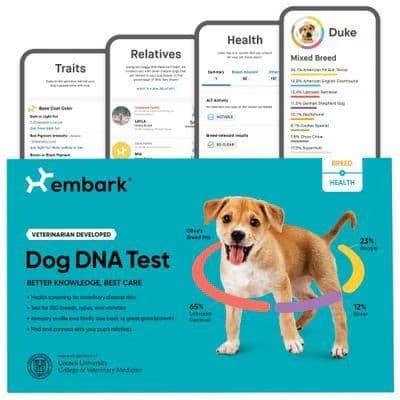
- A canine DNA breed test. At-home tests from companies like Embark or Wisdom Panel estimate a dog's breed ancestry. They are useful and often accurate for breed makeup, but they are not an AKC pedigree and the AKC does not accept them as proof of registration or lineage.
- Photos and a breed-standard comparison. A knowledgeable breeder, breed club, or veterinarian can tell you whether a dog broadly matches a breed's appearance, but that is an opinion, not certification.
- PAL enrollment. If your dog looks purebred and you want to compete, PAL is the practical route. AKC staff review photos to confirm the dog appears to be an eligible purebred, and then the dog can participate in events.
So the truthful answer is that a DNA test tells you the likely genetics, a pedigree proves documented lineage, and only an AKC-registered litter produces that pedigree. If competition is your goal rather than proof for its own sake, PAL gets you there without a paper trail.
What Is the Most Popular AKC-Registered Dog Breed?
People often phrase this as the "number one selling dog," but the AKC tracks popularity by registrations rather than sales. In the AKC's most recent registration rankings, the French Bulldog holds the top spot, having overtaken the Labrador Retriever, which had led the list for decades. Labrador Retrievers, Golden Retrievers, German Shepherds, and Poodles round out the usual top tier.
Popularity is worth a note of caution: a breed climbing the charts tends to attract high-volume, low-care breeding. The more in-demand a breed becomes, the more important it is to separate the registration paperwork from the breeder's actual practices, and to insist on parent health testing regardless of how fashionable the breed is.
Where AKC Papers Fit in Your New-Puppy Paperwork
Registration papers are only one folder in a new puppy's file. The documents that affect your dog's day-to-day health matter just as much, and often more:
- A vaccination record showing which shots your puppy has had and when the next are due. Your puppy should already be started on core protection like the DHPP or DHLPP vaccine, which guards against distemper and other serious diseases, with a rabies vaccine to follow on schedule. Our full pet vaccination guide walks through the timeline.
- A health record from the breeder's or shelter's veterinarian, including any deworming and a first exam.
- The sales contract and health guarantee, if you bought from a breeder.
If you are still gathering everything a new puppy needs, our new puppy checklist covers the supplies, appointments, and documents to line up in the first weeks. File the AKC papers alongside the health records, and remember which document does what: the registration certificate proves lineage, and the vaccination record protects your dog's life.
How Do You Register a Dog With the AKC Without Papers?
If your dog did not come from an AKC-registered litter, you cannot get a standard AKC registration certificate for it, and no fee or DNA test can create one. What the AKC does offer are two enrollment routes that give an unpapered dog real access to AKC activities.
The first is the Purebred Alternative Listing (PAL, formerly ILP). It is for dogs that are clearly a purebred of an AKC-recognized breed but have no registration, which is common with rescues, rehomed dogs, and puppies whose paperwork was never completed. You submit photos and have the dog spayed or neutered. Once approved, the dog can compete in AKC Companion and Performance events such as agility, obedience, rally, and scent work.
The second route is AKC Canine Partners, which enrolls any dog, including mixed breeds and purebreds of unknown background. It opens the same Companion and Performance events, and you can usually start either program online through the AKC website.
- PAL is only for dogs that are clearly a recognized purebred, while AKC Canine Partners accepts any dog, including mixed breeds. Both unlock Companion and Performance events, but neither makes a dog a registered purebred, grants dog show (conformation) eligibility, or lets you register future litters.
What Do Real AKC Papers Look Like, and How Do You Spot Fakes?
Genuine AKC papers are an official AKC Dog Registration Certificate, not a bill of sale or a certificate from an unfamiliar "registry." A real certificate lists the dog's registered name and unique AKC registration number, breed, sex, color and markings, date of birth, the breeder, the current owner, and both parents with their own AKC registration numbers. It carries AKC branding and a registration number you can confirm directly with the AKC.
To verify authenticity, match the registration number and the dog's details against AKC records, or contact the AKC before you buy. The AKC also runs a DNA program, used mainly to confirm parentage, that reputable breeders of frequently bred sires rely on.
Watch for red flags: papers from a registry that is not the American Kennel Club, a "certificate" that is really just a receipt, missing sire and dam registration numbers, no AKC logo, or a seller who pressures you and cannot produce the litter registration. When something looks off, treat the paperwork as unverified until the AKC confirms it.
If you register online, you usually get immediate confirmation of your dog's registration, and the printed certificate arrives by mail, generally within a few weeks. Mailing in a paper application takes longer. Processing times change, so check AKC.org for the current turnaround before you count on a date, especially if you need the certificate for an event entry.
No. An AKC DNA test confirms a dog's parentage and identity, but it does not create a registration on its own. DNA is used to verify the lineage of dogs already inside AKC-registered breeding, not to register a dog that never came from an AKC-registered litter. For an unpapered purebred, the PAL program is the route to AKC participation, not a DNA kit.
AKC papers register your dog with the American Kennel Club as a documented purebred and make it eligible for AKC events. They record lineage, not health or quality.
A basic single-dog registration is typically around $35, with premium packages that add a pedigree running roughly $45 to $80. Litter registration is a separate cost paid by the breeder. Confirm current fees on akc.org.
For one dog, expect about $35 for basic registration if the puppy already came with a registration application. There is no path to standard registration if the parents were never AKC registered.
Your dog's registration number is printed on its certificate and tied to your online AKC account. There is no free public search of all dogs, so if you have lost the number, contact the AKC with the dog's details.
Not full registration, because that requires an AKC-registered litter. But an unpapered purebred can enroll in the Purebred Alternative Listing (PAL) to compete, and any dog can join the Canine Partners program for events.
Yes, for events. The Canine Partners program enrolls dogs of any background, and PAL covers purebreds without registration. Neither produces a pedigree, but both grant an official AKC number for sports.
You cannot definitively prove it without a documented pedigree. A DNA breed test estimates ancestry but is not accepted as AKC proof, and PAL enrollment lets a purebred-looking dog compete after a photo review.
By AKC registrations, the French Bulldog is currently the most popular breed, ahead of the Labrador Retriever, Golden Retriever, German Shepherd, and Poodle.

Coreen Saito is a pet writer and longtime shelter volunteer with more than a decade in animal rescue. She covers cat behavior, breed care, and the small, ordinary science of sharing a life with companion animals, with a particular focus on honest takes about the products and decisions that actually matter. At home in Arizona, she's outranked by Mac (a dog with the loudest opinion in the house), Rebel (a cat who governs by quiet authority), and Meri (an orange tabby who runs the late shift and the laundry basket). She writes about all three, plus the rescues that keep coming through her life, at LifeWithMinty.com.
Sign up for expert-backed reviews and safety alerts all in one place.