Beagle Lifespan: How Long Do Beagles Live?
Beagles live a median of 11.28 years in UK veterinary records, and females outlive males. See what each lifespan study measured, the leading causes of death, senior care and how weight adds years.

BVMS, MRCVS

In the largest veterinary study of UK Beagles, the median Beagle lived to 11.28 years and a quarter lived past 13.
Petful is reader supported. As an affiliate of platforms like Amazon and Chewy, we may earn a commission when you buy through links on this page. There is no extra cost to you.
The American Kennel Club lists a Beagle lifespan of 10 to 15 years, and veterinary records put the typical Beagle in the lower half of that range. In the largest veterinary study of UK Beagles, the median Beagle died at 11.28 years, a quarter lived past 13, and the oldest reached 19.5 years.
Sex, genes and chance all play a part, but the factor owners control most is body weight. In US clinic records of neutered Beagles, those kept lean through middle age outlived overweight ones by about two years.

Sign up for expert-backed reviews and safety alerts all in one place.
How long do Beagles live?

How long Beagles live depends on which dogs are counted, but the best current answer is a median of just over 11 years. A 2025 VetCompass study from the Royal Veterinary College covered 19,906 Beagles under UK veterinary care in 2019 and reviewed the full clinic records of a random sample of 3,729 of them. Among the 322 dogs in that sample whose deaths were recorded, the median age at death was 11.28 years, so half died younger and half older. The middle half of those deaths fell between 9.32 and 13.08 years.
In plain terms, the average Beagle lives about 11 years, a little less than the 12.0-year median the same research group reported for dogs overall in England. The authors still judged the breed's overall health reasonable, noting that Beagles have no extreme body shape, and they singled out weight control and dental care as the priorities for owners.
- 1Median age at death in UK veterinary records: 11.28 years, with a quarter of Beagles living past 13.
- 2Females lived longer than males: a median of 11.70 years versus 10.75.
- 3Weight is the lever you control: lean, neutered US Beagles lived about two years longer than overweight ones.
- 4A 20th birthday is exceptional: the oldest Beagle in the UK records died at 19.51 years.
What the Beagle lifespan studies actually measured
Published Beagle lifespan figures differ between studies because each one measured something different, in a different group of dogs. A median age at death describes the middle dog among those that have already died. A life expectancy at birth is a life-table estimate that averages every death, including puppies and young adults, so early losses pull it down. A breed club survey depends on the owners who chose to reply, and a study that starts counting in middle age leaves out every dog that died young, so its figures run higher.
| Source | Beagles counted | What it measured | Beagle figure |
|---|---|---|---|
| VetCompass, Royal Veterinary College, 2025 | 322 deaths in a random sample of 3,729 of the 19,906 Beagles in UK clinics | Median age at death | 11.28 years: females 11.70, males 10.75 |
| UK life tables, Teng and colleagues, 2022 | 172 Beagle deaths in UK clinic records, 2016 to 2020 | Life expectancy at birth, the mean age at death | 9.85 years, against 11.23 for all dogs |
| Kennel Club breed club survey, 2004 data | 241 Beagle deaths reported by UK breed club members | Median age at death, owner-reported | 12.67 years |
| Banfield hospitals, Salt and colleagues, 2019 | 3,665 neutered US Beagles assessed at 5.5 to 9.5 years | Median lifespan by body condition | 15.2 to 15.3 years if lean, 13.2 to 13.3 if overweight |
| American Kennel Club breed profile | Not a study | Published breed range | 10 to 15 years |
Read these as a family of estimates rather than one truth. The 9.85-year life-table figure came from only 172 Beagles, a small sample with a 95 percent confidence interval of 9.17 to 10.24 years, and early deaths pull it down, so a Beagle that is healthy at 5 or 6 can expect more. The 15-year medians apply only to neutered Beagles that were alive and weighed in middle age. The Kennel Club survey relied on owners reporting deaths from the previous 10 years, with a 24 percent response rate across breeds.
The AKC's 10 to 15 years appears on its breed profile without a cited study, so treat it as a general guide. For planning, the VetCompass median, drawn from clinic records, is the strongest current evidence for Beagle life expectancy.
A consumer DNA kit can add information for a Beagle you already own, including a rescue with no paperwork. Embark's published Beagle panel covers 12 breed-relevant conditions, among them MLS, Factor VII deficiency, the Beagle form of primary open-angle glaucoma, and pyruvate kinase deficiency. The Embark Breed & Health Dog DNA Test Kit works from a cheek swab. Treat an at-risk result as a reason to talk with your veterinarian rather than a diagnosis, and remember that no DNA kit replaces the hip, heart, eye and thyroid exams in the health-screening section below.

Petful may earn a commission when you click through to Chewy, at no extra cost to you.
Do male or female Beagles live longer?
Female Beagles lived longer than males in UK veterinary records, by almost a year. The VetCompass study found a median age at death of 11.70 years for females and 10.75 years for males, a statistically significant difference. The oldest Beagle in that study, at 19.51 years, was female, while no male lived past 16.89 years.
The same pattern appears across dogs in general. In the UK life tables, female dogs had a life expectancy at birth of 11.41 years against 11.07 for males, and a separate study of 584,734 UK dogs found medians of 12.7 and 12.4 years. None of these studies established why females live longer, so treat the gap as a population pattern rather than a forecast for your own dog.
Sex made far less difference than weight in the US body-condition data. Lean males and lean females had almost identical medians of 15.2 and 15.3 years, while overweight males and females both fell to about 13.2 and 13.3 years.
Can Beagles live 20 years?
A Beagle can live to 20, but it is exceptional. The oldest recorded Beagle in the VetCompass study, which covered 322 Beagle deaths, died at 19.51 years. A healthy 16-year-old or 18-year-old Beagle is already among the oldest of its breed.
Online lists name individual Beagles said to have lived into their late 20s, but those ages are not documented in veterinary studies, and extreme ages are hard to verify. Even Guinness World Records withdrew its recognition of Bobi, a Portuguese dog credited with 31 years, after a 2024 review found that the microchip records used as evidence could not prove his birth date. That is a useful benchmark for any oldest-Beagle claim: without birth and veterinary records, it cannot be checked.
What the verified evidence does support is less dramatic: in the studies above, being female and, above all, staying lean were the factors linked with a longer life.
What do Beagles usually die from?
Cancer is the most common cause of death in Beagles. In the VetCompass records, neoplasia was the most common recorded cause of death, and deaths from a mass, which the authors note may often have been unconfirmed cancer, came second. The leading recorded causes were:
- Neoplasia (confirmed cancer): 19.26 percent of deaths
- Mass (a lump or growth without a confirmed diagnosis): 13.18 percent
- Poor quality of life: 12.84 percent
- Brain disorder: 6.76 percent
- Kidney disorder: 6.76 percent
- Liver disorder: 5.41 percent
- Heart disorder: 4.39 percent
An owner survey of UK breed club members reached a similar conclusion, with cancer behind 32.8 percent of Beagle deaths compared with 27.0 percent across all pedigree breeds. Reviews of breed predispositions list mammary, urinary tract, prostate and thyroid tumors among the cancers with evidence of a Beagle predisposition, and Beagles have also been reported at higher risk of mast cell tumors. Purdue University's comparative oncology research center lists Beagles among the breeds 3 to 5 times more likely than other dogs to develop transitional cell carcinoma, a bladder cancer whose common signs are blood in the urine, straining and frequent attempts to urinate. Lymphoma can occur in Beagles as in any breed, but it is not on the Beagle list in these reviews.
Poor quality of life, the third category, is a reminder that most Beagle lives end with a euthanasia decision, covered in the end-of-life section below. Kidney and liver disease can progress quietly for a long time, which is why senior blood and urine tests matter. The age at which Beagles die clusters in the senior years, as the ranges above show.
Health tests that protect a Beagle's lifespan
Some of the most serious inherited Beagle problems can be screened for before a puppy is ever bred. The National Beagle Club of America sets the tests a breeding Beagle needs for a Canine Health Information Center (CHIC) number: breed-club screening for hips, MLS, thyroid, heart and eyes, with Factor VII deficiency testing optional. A CHIC number shows that the tests were done and the results made public, not that every result was normal, so a buyer looking for a healthy Beagle puppy should ask to see the actual results for both parents on the OFA website.
| Screening or DNA test | What it detects | Why it matters for a long life |
|---|---|---|
| Hip evaluation, OFA or PennHIP (CHIC) | Hip dysplasia | Can progress to arthritis, pain and debilitation |
| MLS DNA test (CHIC) | Musladin-Lueke syndrome, ADAMTSL2 variant | Affected dogs have stiff skin and joints, and arthritis often follows |
| OFA thyroid evaluation (CHIC) | Autoimmune thyroiditis | The most common cause of hypothyroidism in dogs |
| OFA cardiac exam (CHIC) | Heart and great-vessel malformations present from birth | Lets breeders avoid passing heart defects to puppies |
| Eye exam (CHIC) | Inherited eye disorders | Some inherited eye diseases lead to vision loss |
| Factor VII deficiency DNA test (optional for CHIC) | A mild inherited clotting disorder | Affected dogs can look healthy but bleed more after surgery or injury |
| Pyruvate kinase deficiency DNA test (club-listed) | An inherited anemia | Causes lifelong anemia, with low energy and poor exercise tolerance |
| Primary open-angle glaucoma DNA test | ADAMTS10 glaucoma variant found in Beagles | Raised eye pressure can damage the optic nerve and cause blindness |
Among Beagles tested by Embark, 26.8 percent carried one copy of the Factor VII variant and 4.3 percent carried two, which is why that result is worth knowing before any surgery. Lafora disease, an inherited late-onset epilepsy, is not on Embark's Beagle list, so ask a breeder separately for the NHLRC1 test result. The UK Kennel Club required both MLS and Lafora testing of breeding Beagles in its Assured Breeders Scheme until the scheme closed in 2024, a sign of how seriously these inherited diseases are taken in the breed. The panel also includes Imerslund-Gräsbeck syndrome, an inherited vitamin B12 malabsorption disorder managed with lifelong B12 supplementation. Share an at-risk result with your veterinarian; screening does not replace an examination or establish a diagnosis.
When is a Beagle a senior?
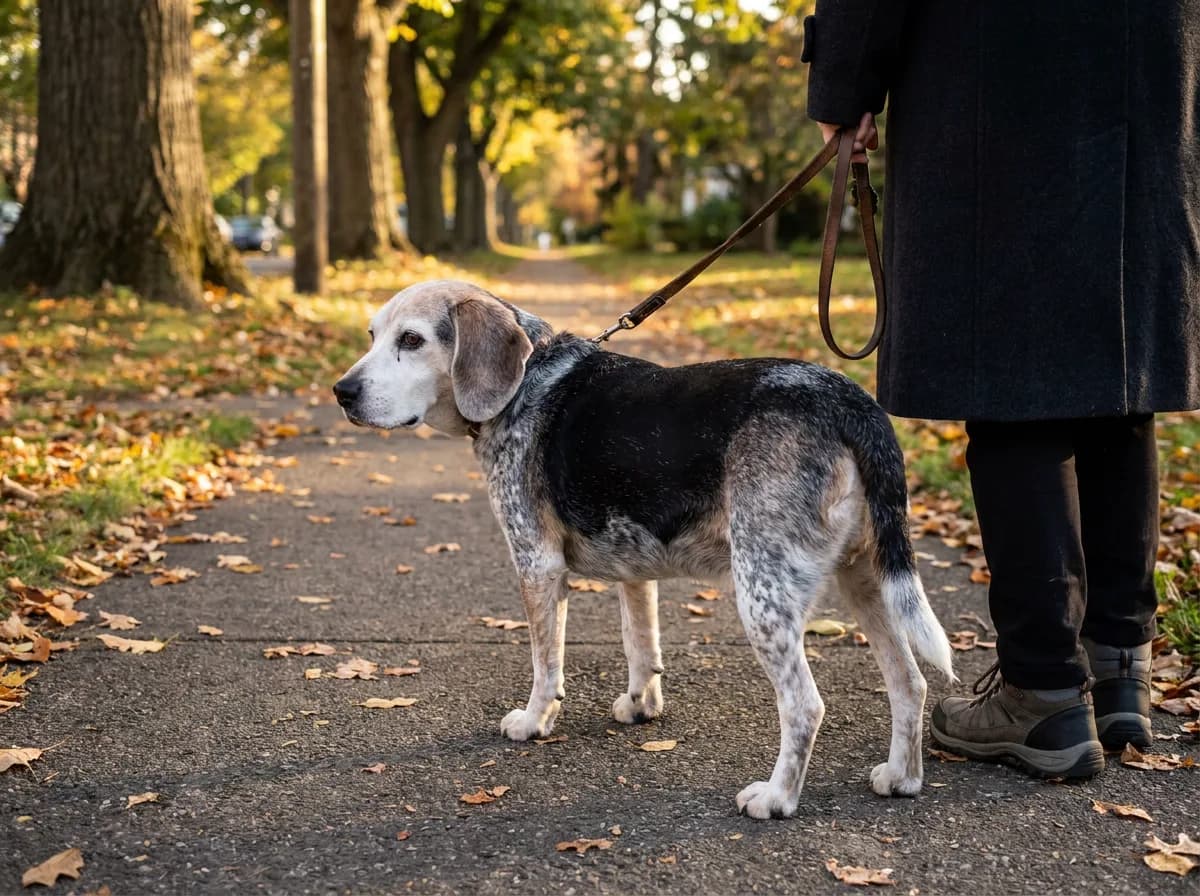
A Beagle is usually considered a senior from about 8.5 to 9.5 years old. The American Animal Hospital Association (AAHA) defines the senior stage as the last 25 percent of a dog's estimated lifespan, rather than a fixed birthday. Using the 11.28-year VetCompass median, that point falls at about 8.5 years, and using the 12.67-year breed-club median, at about 9.5.
Some veterinary age charts, such as the IDEXX Pet Health Network chart, treat 7 as the start of the senior years, so a 7-year-old or 8-year-old Beagle is already approaching the stage. What changes is the pace of care rather than a label. AAHA recommends at least twice-yearly exams for senior dogs, with blood and urine tests every 6 to 12 months, because regular screening allows earlier treatment in dogs that still look healthy. WebVet's senior dog health guide provides a broader checklist for those visits.
A 6-year-old Beagle is a mature adult by AAHA's definitions, and a 10-year-old Beagle is firmly senior. A very old Beagle, in its mid-teens, needs the closer monitoring described in the senior care section below.
Making the home comfortable for a senior Beagle
At home, small changes protect an older Beagle's joints and spine. A ramp or steps for the sofa or car cut out the jumping that strains the back, and rugs or yoga mats give grip on slippery floors, both measures the AAHA senior guidelines suggest. A thick, supportive bed helps too. The FurHaven Velvet Waves Perfect Comfort Orthopedic Sofa Bed has a foam base and bolstered sides for a stiff dog to lean against; check its listed dimensions against your Beagle's stretched-out length.
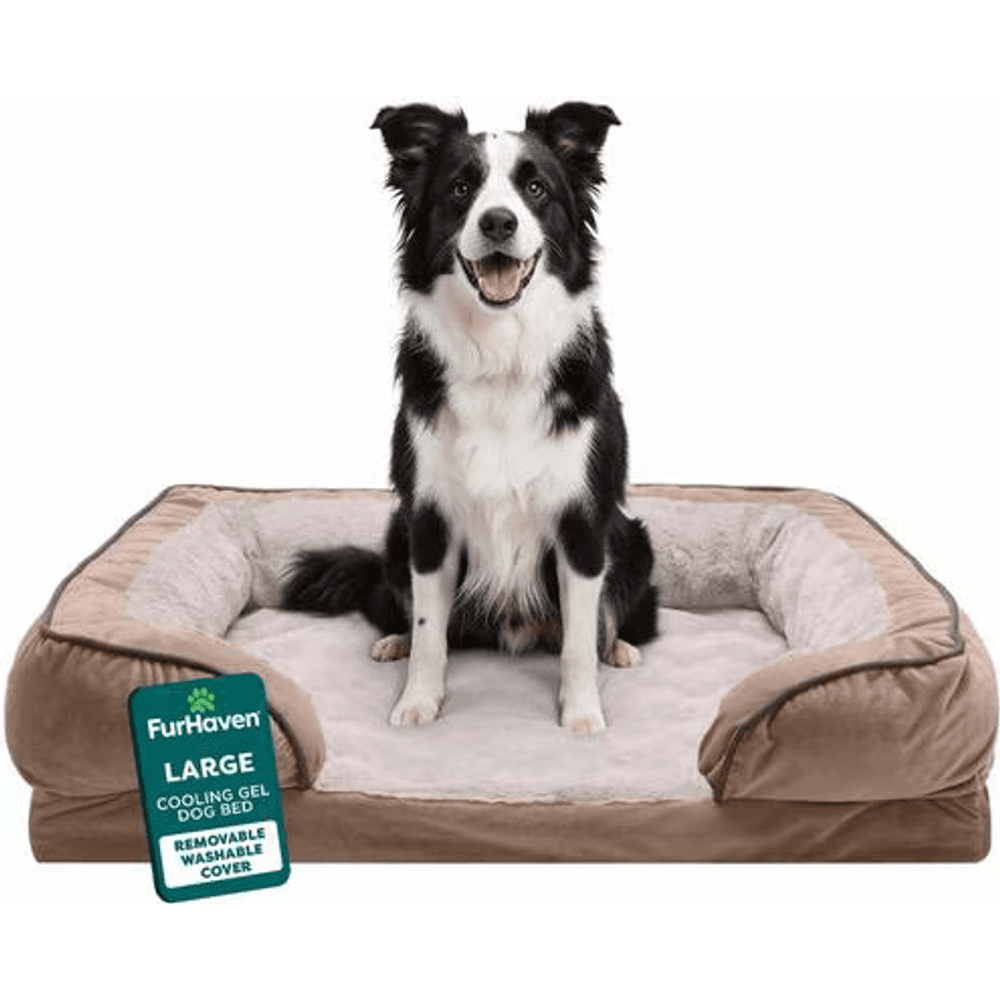
An orthopedic sofa bed with three bolstered sides for dogs who like to rest their head and joints against a cushion. The supportive foam base cradles hips and elbows, a comforting spot for an older or shaky dog to settle.
Petful may earn a commission when you click through to Chewy, at no extra cost to you.
What age do Beagles slow down?
Beagles usually slow down in two stages: once when they finish maturing, and again, more gently, in the senior years. AAHA notes that the stretch from about 6 months to 3 years is often the most challenging for owners, and that most dogs complete physical and social maturation by 3 to 4 years. Some settling as a Beagle reaches maturity is expected; slowing later in life is a different matter.
Slowing down after middle age deserves a veterinary check rather than an "it's just age" explanation. The AAHA senior care guidelines stress that old age is not a disease, and several common Beagle problems look like simple slowing:
- Stiffness, reluctance to jump or a hunched back: arthritis, or disc disease in the spine
- Tiring quickly, weight gain on the same food, or seeking warm spots: hypothyroidism
- Restless nights, confusion, or house-training lapses: pain or canine cognitive dysfunction
- Less interest in food or walks: dental pain or an internal illness
Is 13 old for a Beagle?
Yes, 13 is old for a Beagle. A 13-year-old Beagle is well into the senior stage and has already outlived the 11.28-year median age at death in the UK records, where only about a quarter of Beagles lived past 13. On the IDEXX Pet Health Network age chart, a 13-year-old dog of 20 to 50 pounds is about 74 in human years, and one under 20 pounds is about 68.
The AKC lists Beagles 13 inches and under at under 20 pounds and 13- to 15-inch Beagles at 20 to 30 pounds, so most Beagles fall in one of those two columns. Dog-year charts are approximations that are not specific to Beagles, so use them to picture life stage rather than to predict how long your dog has left. Our guide on how to calculate dog years compares conversion methods, including why the simple times-seven rule falls short. For a rescue of unknown age, a veterinary exam can give only a rough estimate of how old your Beagle is.
Caring for a senior Beagle
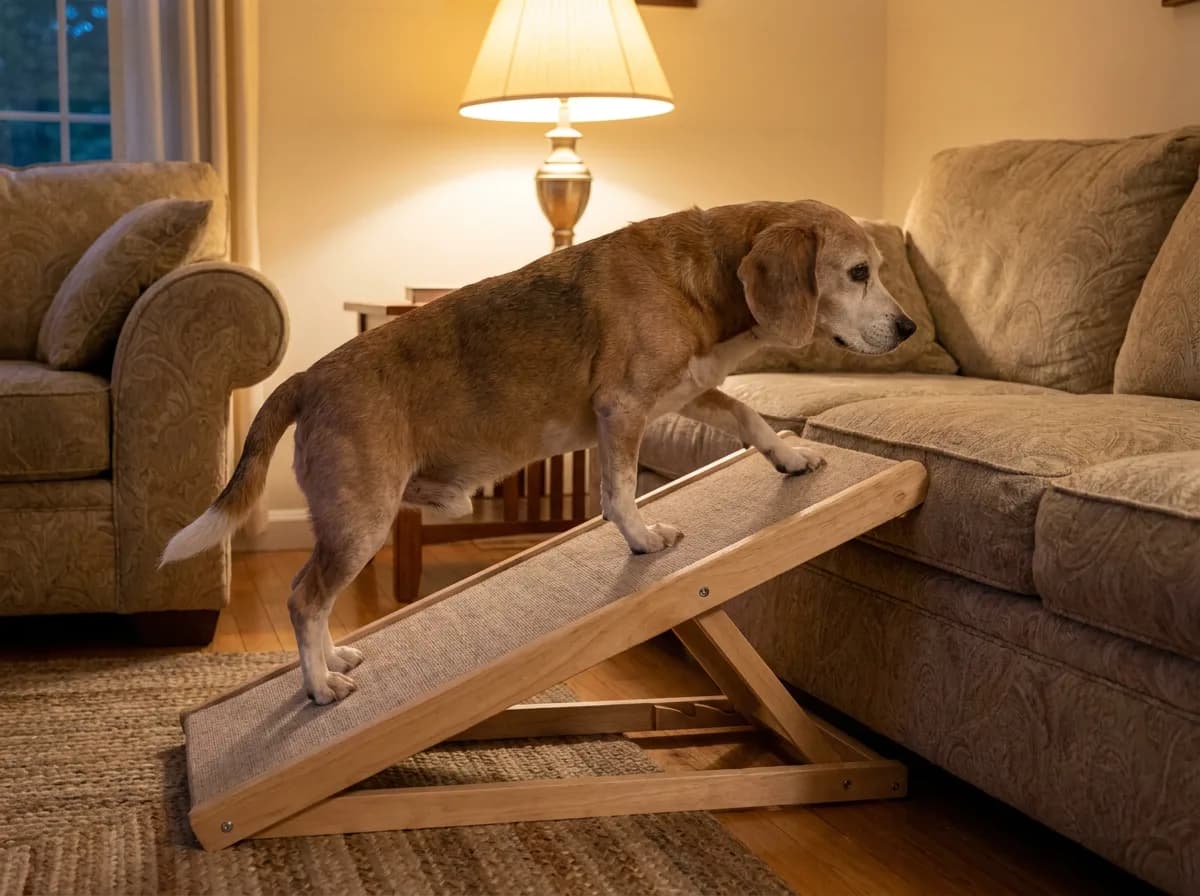
Senior care for a Beagle should follow the problems the breed is known for: weight, teeth, ears, lumps, thyroid, eyes and back. The schedule below turns that list into routine checks you can share with your veterinary team and adjust to your dog's history.
| What to check | Where and how often | Change that needs a prompt visit |
|---|---|---|
| Weight and body condition score | At home monthly and at every checkup | Weight gain or loss you did not plan, or ribs you can no longer feel |
| Teeth and gums | Brush daily, look weekly, dental exam at checkups | Bad breath, red gums, dropping food or chewing on one side |
| Ears | Look and sniff weekly | Redness, discharge, odor, head shaking or scratching |
| Lumps and bumps | Monthly hands-on check with a lump map | Any new lump, or one that grows or changes |
| Thyroid (T4) and blood pressure | Yearly blood test and pressure reading | Lethargy, weight gain, hair loss or seeking warmth |
| Blood and urine tests | Every 6 to 12 months | Drinking or urinating more, or accidents in the house |
| Eye pressure check | At checkups, as your veterinarian advises | A red, cloudy or enlarged eye, squinting or a dilated pupil |
| Back, gait and mobility | On daily walks | Back pain, wobbling or weak back legs: same day |
| Sleep, behavior and awareness | Ongoing | Confusion, night waking, new anxiety or barking at night |
There is no single best food for a senior Beagle. Nutritional needs change with age and health, so choose a complete and balanced diet with your veterinarian and portion it to your dog's body condition rather than the bag's feeding chart. A senior Beagle that is losing weight or muscle needs a checkup before any diet change, and a 14-year-old Beagle that is not eating, or that also vomits or seems weak, should be seen promptly.
An older Beagle urinating in the house may have a urinary tract problem, kidney disease, a bladder tumor or cognitive decline, so a urine test comes before any retraining. If your old Beagle starts shadowing one person, pacing or barking at night, keep routines predictable and mention it at the next visit, because changes in social interaction and sleep are among the signs of canine cognitive dysfunction. Many Beagles do pick a favorite person, often whoever feeds, walks or plays with them, while others spread their affection around the household. That makes a long-standing favorite normal and a new attachment in old age the change worth mentioning. Our Beagle breed guide covers Beagle temperament in more detail.
Adopting an older Beagle can be a rewarding choice. Ask the rescue for past veterinary records, and book a baseline exam with bloodwork in the first weeks so you know where your new dog starts. Our guides to adopting a senior dog and senior dog health cover the broader aging care that applies to any breed.
Common Beagle health problems
The health problems Beagles most often see a veterinarian for are everyday ones rather than rare syndromes. In a year of UK clinic records for a random sample of 3,729 Beagles, the most common diagnoses were:
- Obesity: 24.27 percent
- Periodontal (gum) disease: 17.78 percent
- Overgrown nails: 11.61 percent
- Otitis externa (outer ear infection): 11.18 percent
- Anal sac impaction: 10.59 percent
- Lipoma, a fatty lump: 5.50 percent
- Heart murmur: 3.27 percent
- Seizure disorder: 2.04 percent
The study's authors cite strong evidence that Beagles are predisposed to periodontal disease, obesity and otitis externa, and they recommend special emphasis on weight control, covered in the section on helping your Beagle live longer, and on dental hygiene. Professional cleanings under anesthesia remove hardened tartar, and our dog dental care guide covers what they involve and cost.
At home, brushing is the dental habit with evidence behind it, but the AAHA dental guidelines note that it helps only when done daily and that it removes plaque, not tartar. A kit such as the Petsmile Professional Rotisserie Chicken Toothpaste + Toothbrush pairs a toothpaste that carries the Veterinary Oral Health Council seal for plaque with a dual-ended brush; start with a few teeth at a time.

VOHC-accepted 4.2-ounce pet toothpaste paired with a dual-ended toothbrush.
Petful may earn a commission when you click through to Chewy, at no extra cost to you.
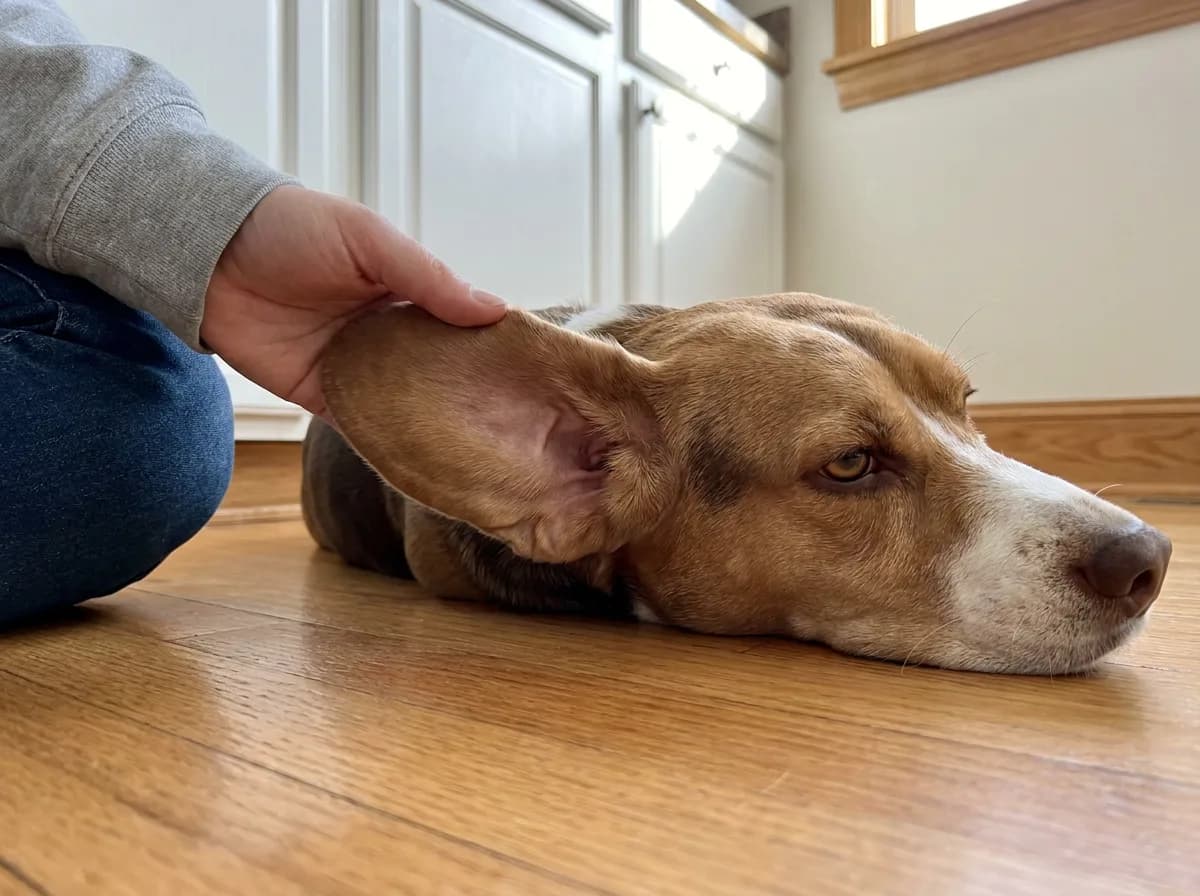
Check a Beagle's ears weekly, as the AKC advises: lift each ear flap, look for redness, discharge or a strong smell, and watch for head shaking or scratching at the ears. Beagle bumps on the back or sides are often fatty lipomas, but only a sample can tell a harmless lump from cancer, so have any new bump checked. Older Beagle health issues such as kidney, liver and thyroid changes are the reason for the senior tests described above.
Limber tail syndrome, a sudden limp or drooping tail after hard exercise, is reported mainly in hunting and working dogs such as pointers, Labrador Retrievers, setters and foxhounds. The Merck Veterinary Manual lists strenuous exercise after little conditioning, long crate transport and cold weather as triggers, and most dogs recover within several days. A working or field-trial Beagle can meet the same triggers, and a vet check rules out a tail injury or spinal problem.
Seizures and epilepsy in Beagles
Beagles are prone to epilepsy, although most never have a seizure. The International Veterinary Epilepsy Task Force cites epidemiological and genetic studies that support an increased risk of idiopathic epilepsy in Beagles, and 2.04 percent of UK Beagles had a seizure disorder recorded in 2019. Idiopathic epilepsy means repeated seizures with no cause found on testing, and it usually begins between 6 months and 6 years of age.
During a generalized seizure, a Beagle usually loses consciousness, falls and convulses, and it may drool, urinate or pass stool. If your Beagle collapses, stiffens or paddles, or has its eyes rolling back or fixed during an episode of lost awareness, note the time and film it if you can do so safely. The Task Force describes an owner's account supported by video as the most important diagnostic evidence in pets.
- A seizure lasting more than 5 minutes, or two seizures without full recovery between them, is an emergency (status epilepticus).
- Two or more seizures within 24 hours (cluster seizures) need urgent veterinary advice.
- A first seizure at any age needs a veterinary exam to look for other causes.
Older Beagles can also develop Lafora disease, an inherited progressive myoclonic epilepsy that the Task Force classes as a neurodegenerative disorder rather than idiopathic epilepsy. In a 2024 study of 166 genotyped Beagles, signs began between 6 and 13 years of age and included sudden head jerks set off by flickering light or sound, generalized seizures, failing vision and hearing, and forgetting learned behaviors. It is caused by a recessive repeat expansion in the NHLRC1 gene, and DNA testing identifies affected and carrier dogs. Our guides to epileptic seizures in dogs and what to do if your dog has a seizure cover diagnosis, treatment and first aid.
Back problems and IVDD
Beagles do have back problems more often than many dogs because they are a chondrodystrophic breed, meaning their spinal discs can age early. The American College of Veterinary Surgeons names the Beagle among the chondrodystrophic breeds that account for the vast majority of disc ruptures, with signs of intervertebral disc disease usually starting between 3 and 6 years of age. Among Beagles tested by Embark, about 98 percent carried at least one copy of the CDDY variant linked to chondrodystrophy and Type I disc disease, which raises risk rather than guaranteeing a disc problem.
Signs range from back or neck pain, a hunched back and reluctance to move, to a wobbly walk, back legs shaking or not working, and a Beagle dragging paralyzed back legs or losing bladder control. A Beagle limping on a back leg can also have a knee, hip or paw problem, which is another reason for an exam rather than waiting.
- Sudden back pain, a hunched stance, or hind-leg weakness, wobbling or dragging needs same-day veterinary care. The American College of Veterinary Surgeons describes a ruptured disc as a true surgical emergency. Keep your Beagle confined and still, and carry it with the back supported on the way to the clinic.
The ACVS lists weight loss, a body harness instead of a neck lead, and less jumping off furniture among the lifestyle changes after disc surgery, and the same habits are sensible for any Beagle's back. Beagles usually like to be carried only for short, predictable trips, such as into the car, and many would rather keep four feet on the ground. A Beagle that suddenly resists being picked up may be in pain and needs a veterinary check. Our Beagle breed guide covers handling in more detail. For back health, what matters is how you lift: support the chest and the hindquarters together so the spine stays level, and never lift by the front legs alone.
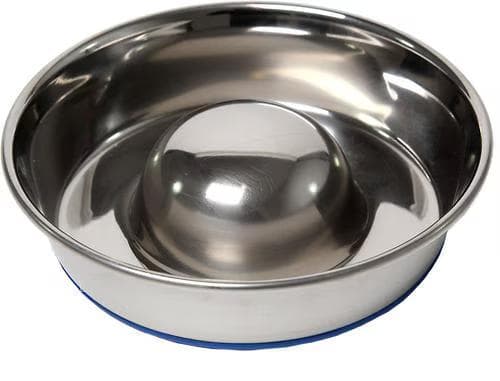
A slow feeder will not cut calories on its own, but it makes a measured meal last longer and gives a scent hound something to work at. The OurPets Durapet Premium Stainless Steel Slow-Feed Dog Bowl holds up to 3 cups, which suits a Beagle's portion, and stainless steel is easy to clean. The best diet for an overweight Beagle is still the measured one: the bowl changes how fast your dog eats, not how much.
Petful may earn a commission when you click through to Chewy, at no extra cost to you.
Cherry eye and glaucoma
Cherry eye is a prolapse of the tear gland of the third eyelid, which appears as a red, fleshy swelling in the inner corner of the eye. It usually shows up young: in a UK study of 905,543 dogs, the median age at first diagnosis was about 7.5 months, so cherry eye in a Beagle puppy is the typical picture. Beagles are often listed as a prone breed, but that study found no significant Beagle predisposition once other factors were accounted for, with 19 of 8,070 Beagles affected in a year. Your veterinarian will usually discuss surgery to put the gland back in place, and our cherry eye guide explains the treatment options.
Glaucoma is the more serious eye problem. An inherited form of primary open-angle glaucoma, caused by an ADAMTS10 gene variant, has been identified in Beagles. The raised pressure inside the eye can damage the optic nerve and cause blindness. According to the Merck Veterinary Manual, chronic glaucoma starts subtly with slightly dilated pupils and gradual enlargement of the eye, while a sudden rise in pressure is an emergency. Our glaucoma in dogs guide covers treatment.
Common Beagle eye problems share a short list of warning signs. Book a prompt exam for:
- Red or bloodshot eyes, in an adult Beagle or a Beagle puppy
- Squinting or holding an eye shut
- Watery eyes, or a thick eye discharge or gunk
- A swollen eye or eyelids, or an eye swollen shut
- A bulging, enlarged or cloudy eye
- The third eyelid showing, or a red lump in the inner corner
- Bumping into things or hesitating in dim light, a sign of failing eyesight in old Beagles
- A dilated pupil with a red eye and a cloudy cornea: possible acute glaucoma, so go the same day
For everyday cleaning, wipe from the inner corner outward with a soft pad moistened with clean, lukewarm water, using a fresh pad for each eye, and put nothing into the eye that your veterinarian has not recommended.
Hypothyroidism
Hypothyroidism is more common in Beagles than in crossbred dogs. In a UK study of 905,553 dogs, Beagles had about three times the odds of a hypothyroidism diagnosis compared with crossbreds, although only 0.38 percent of Beagles had a hypothyroidism diagnosis on record in a given year. The usual cause is autoimmune thyroiditis, which is why the National Beagle Club asks breeders for an OFA thyroid evaluation.
The typical signs are weight gain, lethargy, hair loss and intolerance to cold. An older Beagle losing hair, gaining weight on the same food, or always seeking warmth because it seems cold is worth a blood test. Hair loss has other causes too, including allergies and parasites, so a skin check and thyroid testing together sort out what is going on. Hypothyroidism is managed with daily thyroid hormone replacement, and our guide to thyroid issues in dogs covers testing and treatment in detail.
Musladin-Lueke syndrome (Chinese Beagle syndrome)
Musladin-Lueke syndrome (MLS) is an inherited connective-tissue disorder of Beagles. It was first called Chinese Beagle syndrome and later renamed after two Beagle breeders. Research that identified its cause describes affected dogs as small, with thick, taut skin, stiff joints, a broad skull, wide-set slanted eyes, creased ears and a hopping, tip-toe gait, along with notably pleasant temperaments.
Because of their distinctive faces, dogs with MLS are sometimes described online as Beagles with Down syndrome, but MLS is a different condition. It is caused by a single recessive variant (c.660C>T) in the ADAMTSL2 gene. MLS is not fatal, and signs tend to stabilize by about a year of age, although arthritis commonly follows. The genetic research describes the condition but gives no lifespan figure for affected dogs.
The Musladin-Lueke syndrome DNA test works from a cheek swab or blood sample. It is offered by laboratories such as the UC Davis Veterinary Genetics Laboratory and included in consumer panels such as Embark's, and it sorts dogs into three results:
- Clear: no copies of the variant, so the dog cannot pass it on.
- Carrier: one copy; the dog is healthy but can pass the variant to its puppies.
- Affected: two copies, the only result that causes MLS.
Breeding two carriers gives each puppy a 1-in-4 chance of being affected, while pairing a carrier with a clear dog produces no affected puppies. Because the MLS test is part of CHIC screening, you can check both parents' results in the OFA database before choosing a Beagle puppy.
Beagle pain syndrome (SRMA)
Beagle pain syndrome is the old name for steroid-responsive meningitis-arteritis (SRMA), an immune-mediated inflammation of the membranes and blood vessels around the brain and spinal cord. According to MSPCA-Angell, it is most common between 6 and 18 months of age, though cases are reported from 12 weeks to over 6 years, and Beagles are one of the most commonly affected breeds, along with Boxers, Bernese Mountain Dogs and Weimaraners. Steroid-responsive meningitis-arteritis in young Beagles typically causes severe neck pain with a guarded neck and hunched posture, a stiff gait, lethargy, poor appetite and fever.
- A young Beagle that holds its neck stiffly, walks with a hunched back, stops eating or runs a fever needs prompt veterinary treatment. These are the classic signs of steroid-responsive meningitis-arteritis, and 80 to 100 percent of dogs respond to initial steroid treatment.
Diagnosis is usually confirmed by analyzing spinal fluid, and treatment is a course of immunosuppressive corticosteroids, typically continued for at least 6 months and often for 9 to 12 months. Relapses occur in 20 to 32 percent of dogs, so dose reductions should be supervised, and home or natural remedies are not a substitute for that treatment. MSPCA-Angell describes the overall prognosis as fair to good. Our guide to meningitis in dogs explains how SRMA differs from infectious meningitis.
How to help your Beagle live longer
The measured effect of body weight on Beagle lifespan is the clearest lever owners have. In Banfield clinic records of 3,665 neutered Beagles, those kept at a normal body condition through middle age had median lifespans of 15.2 years for males and 15.3 for females, against 13.2 and 13.3 years for overweight Beagles. In other words, overweight Beagles lived about two years less than lean Beagles, and their risk of death at any given time was 2.4 times higher.
Weight gain is common in the breed. Nearly a quarter of UK Beagles had obesity recorded in a single year, more than three times the 7.1 percent previously reported across all UK dogs. The median adult weight in those records was 18.19 kg, about 40 pounds, well above the AKC's 20 to 30 pounds for Beagles up to 15 inches, although UK Beagles can stand up to 16 inches. Obesity has also been linked to arthritis, diabetes and some cancers.

Beagles are known for their appetite, and that food drive is the breed's main health downside: Beagles are even used as a laboratory model in obesity research because of their predisposition. In a small study of nine Beagles, weight regained after a diet came back faster, and on fewer calories, than the first time, so the maintenance phase matters as much as the diet itself. What Beagles love most is food, a good scent trail and company, so sniff walks, scent games and time with you are rewards that add no calories. For the breed's other downsides, see our Beagle breed guide.
A healthy Beagle shape is easy to check. According to the WSAVA body condition score chart, at an ideal score of 4 or 5 out of 9 you can feel the ribs easily under a thin layer of fat, see a waist behind the ribs from above, and see the belly tuck up from the side. Fat pads over the lower back and the base of the tail mean a Beagle is heavier than ideal.
- Weigh your Beagle and check its body condition every month.
- Measure every meal, and count treats and chews as part of the day's food.
- Put a Beagle on a diet only with a calorie target from your veterinarian, and see our obese dogs guide for a full plan.
- Brush the teeth daily, as described in the health problems section above.
- Keep up twice-yearly checkups and senior blood tests once your Beagle reaches about 8.
- Walk on a harness rather than a collar to protect the neck and back.
As for how long indoor Beagles live, the lifespans in this article already describe them: the studies followed companion Beagles living with owners, and none of them separated indoor from outdoor dogs. An indoor Beagle still needs daily walks and sniffing time to stay lean.
Quality of life and end-of-life decisions
For most Beagle owners, the end of life involves a decision. In the UK records, 92.65 percent of the deaths with a recorded method were euthanasia, and only 7.35 percent were unassisted. Quality of life decisions are easier to make with your veterinarian as a partner: AAHA and the International Association for Animal Hospice and Palliative Care define quality of life as the physical, social and emotional wellbeing of the individual animal.
- Colorado State University's veterinary team suggests listing your Beagle's favorite activities and happy behaviors, then marking each day on a calendar as good or bad. Note eating, drinking, toileting, moving, interacting and sleeping, and bring the calendar to a quality-of-life discussion with your veterinarian, especially if bad days are becoming more common.
Palliative care relieves pain and other symptoms alongside treatment, while hospice care focuses on comfort once an illness is terminal; our guide to pet hospice explains both. When euthanasia is chosen, veterinarians use methods approved by the American Veterinary Medical Association (AVMA) that cause minimal pain, discomfort and anxiety. Planning ahead, as described in our guide to planned pet euthanasia, lets you choose the setting and who is present.
Some owners worry that an old dog will run away to die. A declining Beagle may hide or wander. Treat those changes as a reason to check for pain, illness or the disorientation of canine cognitive dysfunction, and supervise more closely.
If your Beagle has died, grief is normal. The AAHA end-of-life guidelines note that memorializing a pet can help, whether by writing a letter, making a photo album or planting a tree. If the death was sudden, ask your veterinarian whether a post-mortem examination could explain what happened.
Do pocket Beagles live as long?
No study has measured how long pocket Beagles live. "Pocket" and "miniature" are sales labels for Beagles bred smaller than the AKC's 13-inch variety rather than a separately recognized variety, so no registry or veterinary dataset tracks their lifespan. Small size alone does not guarantee a longer life, and the health of the parents matters more than the label. Our pocket Beagle guide covers what pocket Beagle life expectancy claims are based on and the health questions to ask a seller.
How long do Beagle mixes live?
A Beagle mix's lifespan depends mostly on the other parent: its size, its own breed health problems, and the health of the individual dog. Mixed ancestry is not a guarantee of a longer life. In the largest UK longevity study, covering 584,734 dogs, crossbred dogs did not outlive purebreds: crossbreds had a median of 12.0 years, against 12.7 years for purebred dogs overall. A separate UK life-table study put crossbreds' life expectancy at birth at 11.82 years, slightly above the 11.23 for all dogs, so the answer depends on which dogs are counted.
Size shows a clearer pattern. In the large UK study, small breeds had a median of 12.7 years, medium breeds 12.5 and large breeds 11.9. That means the average lifespan of a Beagle terrier mix, such as the Jack-A-Bee (a Jack Russell Terrier cross), is likely to sit near the Beagle range, while a cross with a large breed may follow the shorter large-dog pattern. Shelter dogs labeled "Beagle hound mix" often have uncertain ancestry, so their adult size is a better clue than the label.
A mix can also inherit problems from both sides. In the UK cherry eye study, Puggles had 9.53 times the odds of cherry eye, even though Beagles showed no predisposition and Pugs showed a lower risk. For individual crosses, see our Beagle mixes guide, and for the most common Beagle cross, our Puggle lifespan guide.
Beagle lifespan FAQs
No published study has linked coat color to Beagle lifespan. The large lifespan studies record breed rather than coat, so there is no evidence that lemon and white, red and white, tricolor or blue tick (bluetick) Beagles live longer or shorter lives. A lemon Beagle's life expectancy, like any Beagle's, depends on weight, inherited health and care, so health screening results tell you far more than coat color. For identifying shades and patterns, see our Beagle colors guide.
Lifespan studies record breed rather than size variety, so there is no published comparison of the two. The AKC recognizes two size varieties: 13 inches and under, usually under 20 pounds, and over 13 up to 15 inches, usually 20 to 30 pounds. Across all breeds, small dogs tend to live slightly longer than medium ones, with medians of 12.7 and 12.5 years in the largest UK study, but no one has shown that an inch or two of height changes how long small Beagles live. Choose on health records rather than size.
Not according to UK veterinary data. The median Beagle in the VetCompass records died at 11.28 years, against 12.0 years for dogs overall in England, and UK life tables gave Beagles a life expectancy at birth of 9.85 years against 11.23 for all UK dogs. The owner-reported breed club survey found the reverse, 12.67 years for Beagles against 11.25 overall. In the same studies, Beagle longevity sits between the extremes: life-table estimates ranged from 4.53 years for French Bulldogs to 12.72 for Jack Russell Terriers.
Possibly, but the evidence is indirect. In records of more than 40,000 dogs at North American veterinary teaching hospitals, sterilized dogs lived longer, with a mean age at death of 9.4 years against 7.9 for intact dogs, but they died more often of cancer and immune-mediated disease and less often of infection and trauma, and the study could not prove cause and effect. For Beagles specifically, a UC Davis study of 256 Beagles found no rise in the cancers studied after neutering, and a possible rise in joint disorders in males neutered at 6 to 11 months, so its authors suggest waiting until after a year for males. About two thirds of UK Beagles are neutered. Discuss the timing of neutering with your veterinarian.
BVMS, MRCVS
Dr. Pippa Elliott, BVMS, MRCVS, is a veterinarian with nearly 30 years of experience in companion animal practice. Dr. Elliott earned her Bachelor of Veterinary Medicine and Surgery from the University of Glasgow. She was also designated a Member of the Royal College of Veterinary Surgeons. Married with 2 grown-up kids, Dr. Elliott has a naughty Puggle named Poggle, 3 cats and a bearded dragon.
Sign up for expert-backed reviews and safety alerts all in one place.