Puggle Lifespan: Health Risks and Lifelong Care
A Puggle lifespan estimate cannot predict one dog’s future. Learn how to interpret the evidence and plan preventive care, daily observation and senior comfort.

BVMS, MRCVS
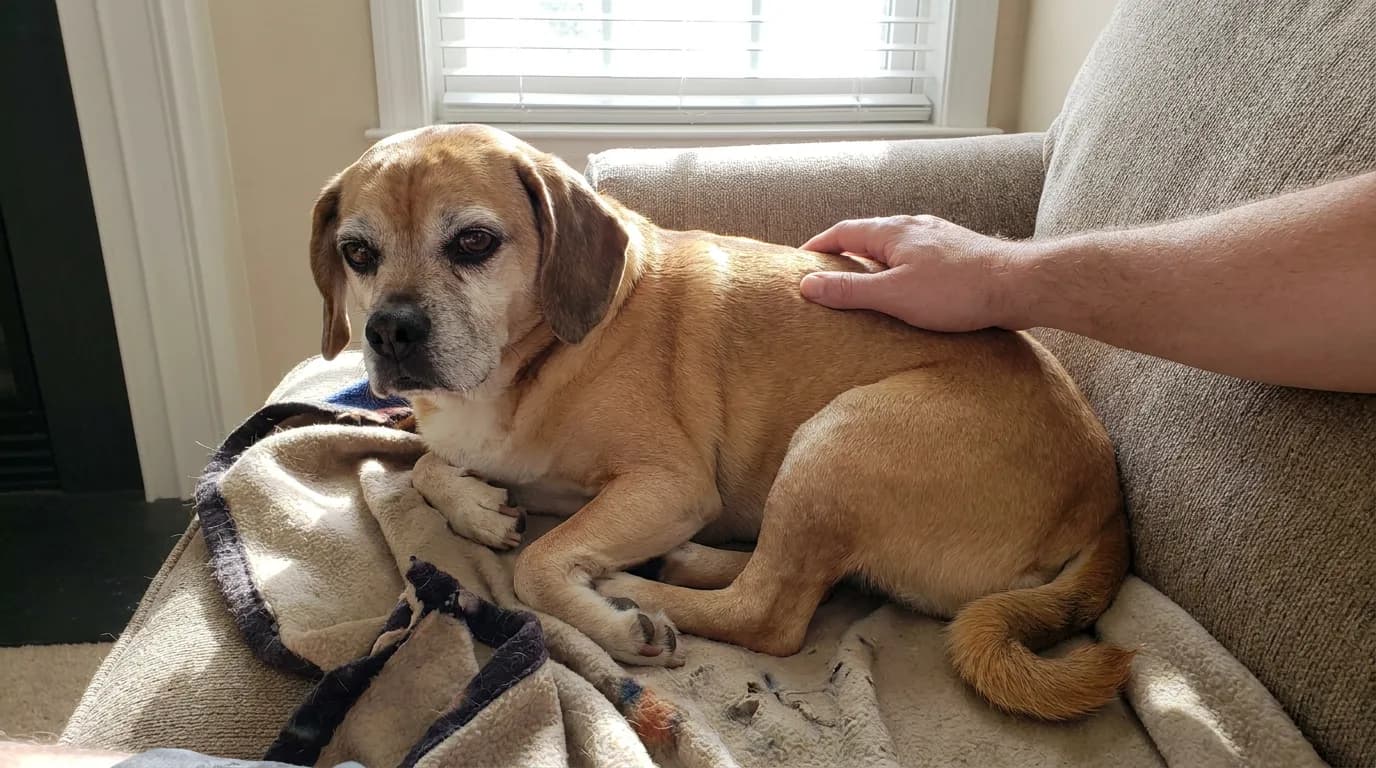
Gray-muzzled Puggle resting on a cushioned chair.
Petful is reader supported. As an affiliate of platforms like Amazon and Chewy, we may earn a commission when you buy through links on this page. There is no extra cost to you.
Puggle lifespan is commonly described as roughly 10–15 years, including in PetMD’s breed profile. That is a broad expectation for a Pug–Beagle mix, not a validated prediction for your dog. Genetics, body structure, existing disease and individual circumstances all influence the years ahead.
The most useful response to a lifespan estimate is a care plan: understand what is known, watch for meaningful changes and work with your veterinary team. No food, bed, supplement or routine can promise extra years, but practical care can support comfort and help you respond when your dog needs attention.

Sign up for expert-backed reviews and safety alerts all in one place.
How long do Puggles live?
Claims about the oldest Puggle, longest-living Puggle or oldest Puggle alive require dated identity and age records. This guide has not verified a record-holder, so it does not give an unverified maximum as an achievable lifespan. The record question is examined separately below.
- 1The commonly quoted 10–15-year range is planning context, not a guarantee.
- 2Risks described in Pugs or Beagles cannot automatically be assigned the same prevalence in Puggles.
- 3Breathing, appetite, weight and mobility changes deserve individual attention rather than being dismissed as normal aging.
PetMD estimates a Puggle lifespan of 10–15 years using its parent-breed context. It does not present that estimate as a Puggle-only survival study. Some dogs live beyond a profile range and others develop serious illness earlier; a range cannot tell you what will happen to one puppy or adopted adult.
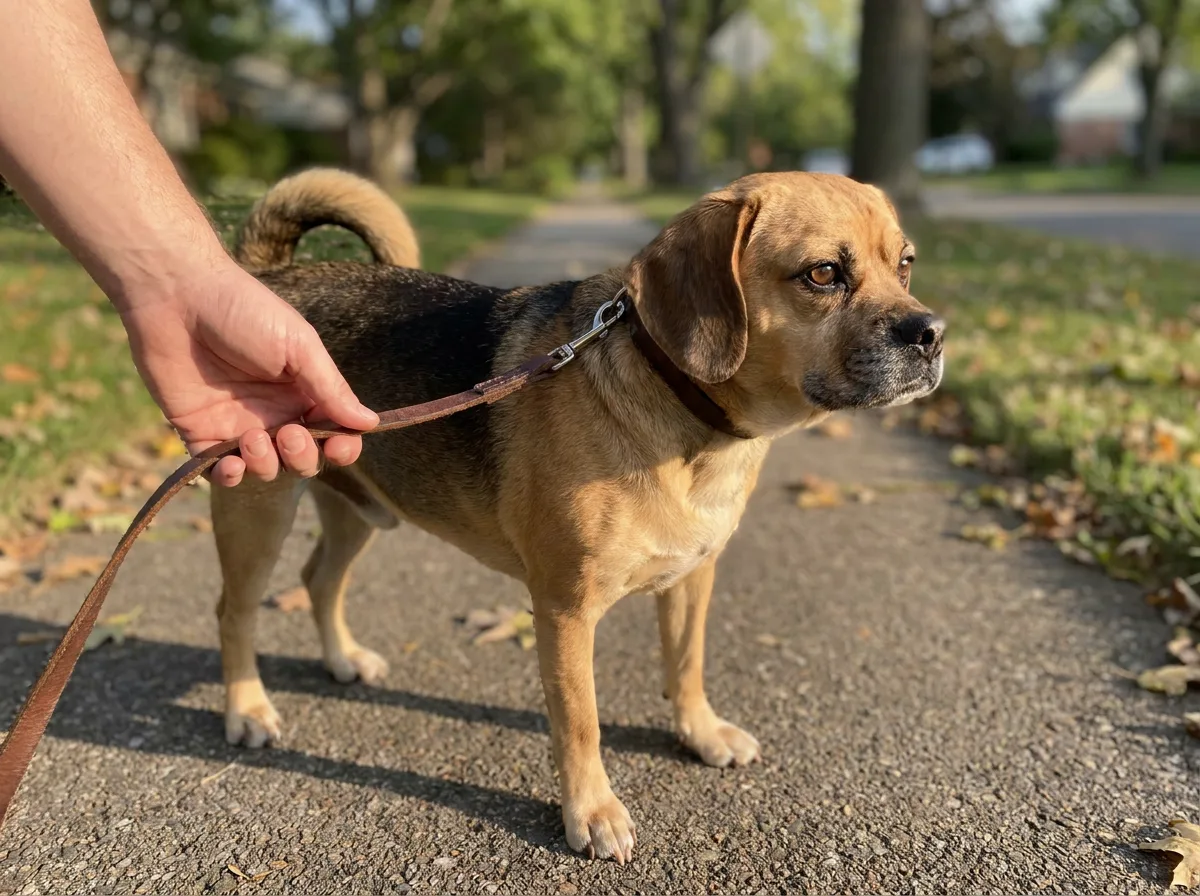
For a newly adopted dog, begin with available medical records, the best-supported age estimate and a veterinary examination. An uncertain birth date should stay uncertain rather than being converted into an exact age. The dog’s current comfort, activity and health needs are more actionable than calculating how much of an expected lifespan remains.
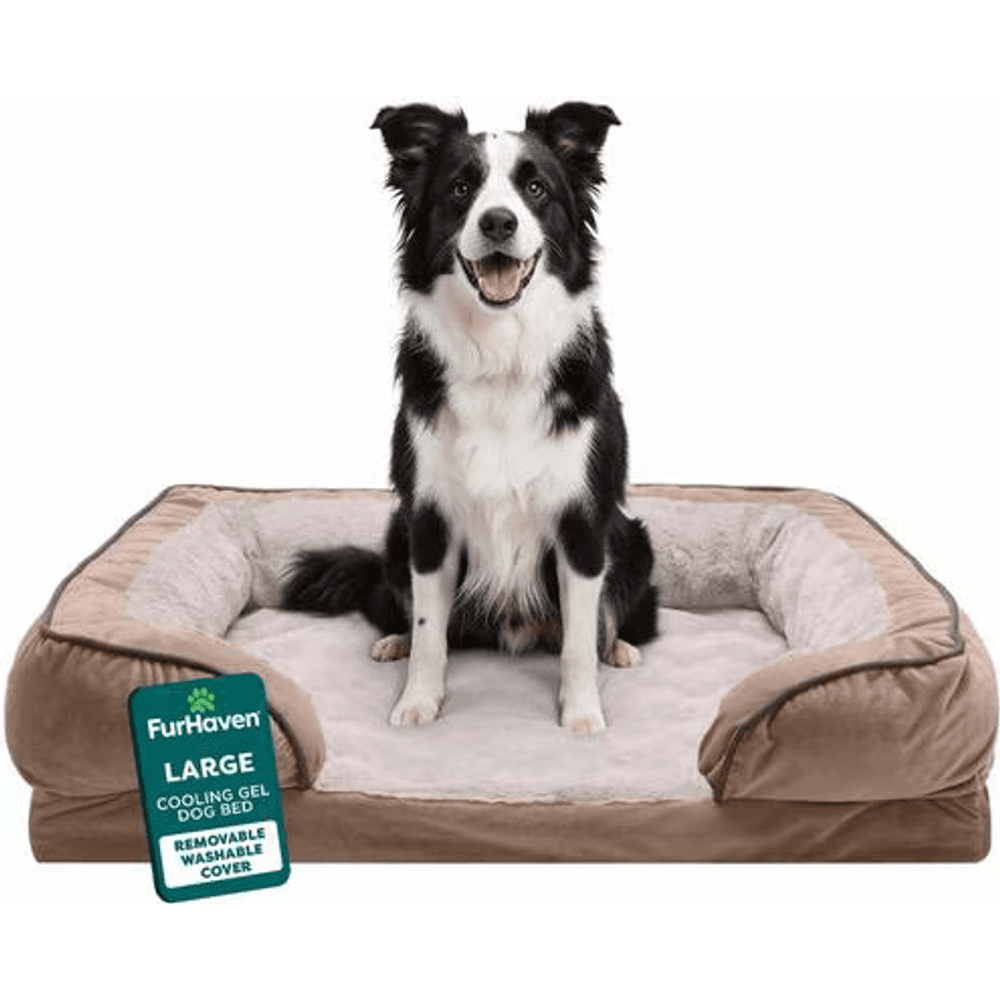
An orthopedic sofa bed with three bolstered sides for dogs who like to rest their head and joints against a cushion. The supportive foam base cradles hips and elbows, a comforting spot for an older or shaky dog to settle.
Petful may earn a commission when you click through to Chewy, at no extra cost to you.
A comfortable resting area is useful at any age. The FurHaven Velvet Waves orthopedic sofa bed is one option to assess for sleeping space, entry height and cleanability. It may provide a suitable place to rest, but it does not treat the cause of pain or establish that a dog who struggles to settle only needs a new bed.
The cited Puggle profiles do not establish a reliable male-versus-female lifespan comparison. There is no supported sex-specific number to add to the estimate here. For an individual dog, age, medical history, body condition and breathing comfort are more useful discussion points than assigning a different life expectancy solely because the dog is male or female.
 Sponsored
Have a health question about your dog?
Talk to a licensed vet at Dutch over video or message, including nights and weekends.
Use code Pets60
Plans start at $12/month · covers up to 5 pets
- Licensed vets in most states
- Rx for 150+ conditions
- 4.7 on Trustpilot
What is the oldest Puggle on record?
No authoritative record was verified for the oldest Puggle to ever live. Owner stories can be meaningful, but a social post or repeated list entry does not establish documented age and identity. Without those records, naming a dog as the world record-holder would be misleading.
An unusually old dog also cannot establish the normal lifespan of the mix or prove that one diet or supplement caused its longevity. Use such stories as individual experiences, not a care prescription. For your own dog, keep reliable records and focus on day-to-day quality of life alongside preventive care.
What health problems can affect Puggles?
Puggles can experience health problems seen in either parent breed as well as conditions that affect dogs generally. Their mixed ancestry does not guarantee protection from inherited disease. At the same time, a parent-breed risk should not be presented as a measured Puggle risk without Puggle-specific evidence.
Breathing and heat tolerance
A shorter muzzle can make airway assessment especially important. The University of Cambridge’s BOAS guidance explains that affected short-nosed dogs can have noisy breathing, difficulty with exercise and impaired ability to cope with heat. Those signs should not simply be accepted as a cute or inevitable breed feature.
Ask your veterinarian about your individual dog’s breathing and appropriate activity. A Puggle’s longer-looking muzzle does not independently prove that its airway is normal. If the dog struggles during a familiar activity, stop and seek advice rather than pushing it to meet a generic exercise target.
For walks, a Frisco padded small-dog harness is an option to assess for fit and comfortable movement. It cannot correct an airway disorder. Check the exact sizing instructions, buckles and lead attachment, and use a secure area to confirm fit before walking outdoors.
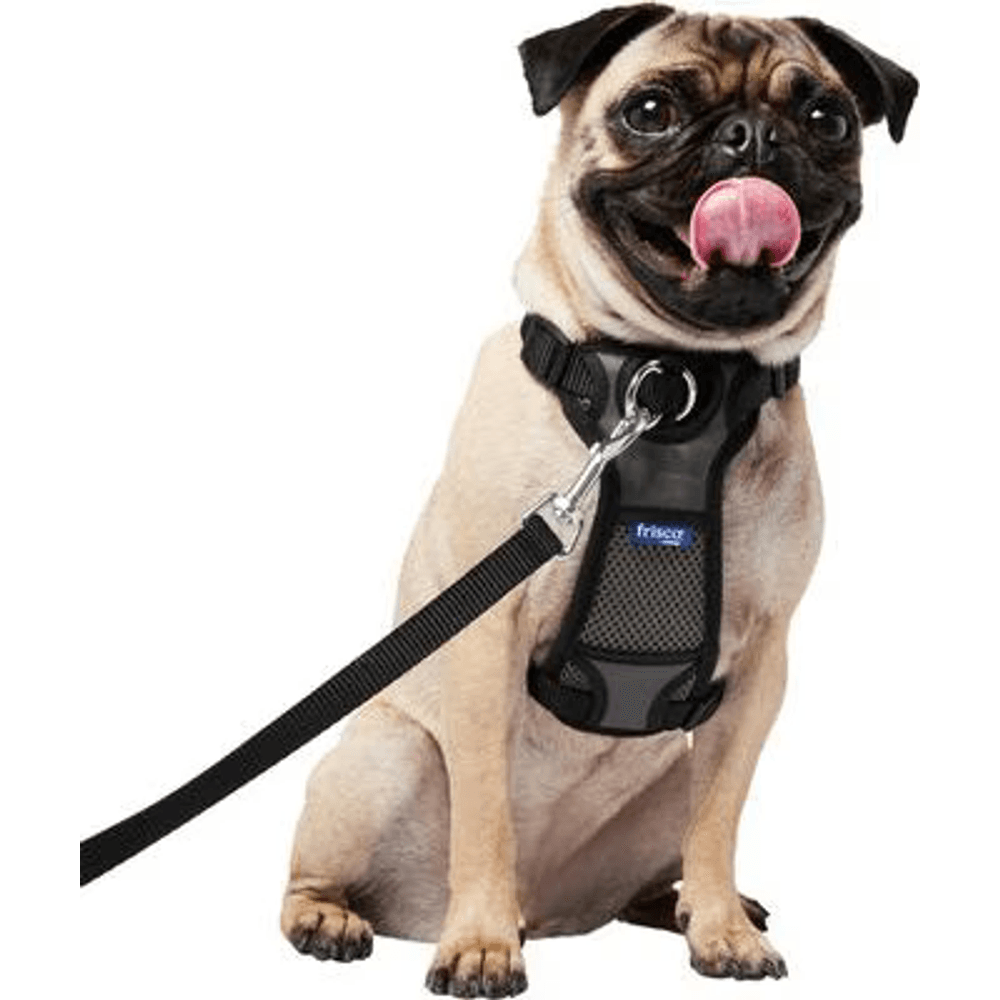
A budget-friendly padded no-pull harness that keeps leash pressure off a coughing dog's neck and windpipe by distributing it across the chest. A simple, affordable way to protect an irritated airway or a collapsing trachea on every walk.
Petful may earn a commission when you click through to Chewy, at no extra cost to you.
Eyes, skin, movement and other concerns
PetMD’s Puggle care profile discusses hip dysplasia and patellar luxation among relevant inherited concerns. Hip dysplasia involves abnormal hip development; patellar luxation means the kneecap moves out of its normal position. These conditions merit questions about parent screening and an examination if movement changes, but the profile does not supply Puggle-specific prevalence figures. Do not assume that every limp has the same cause or try to diagnose it from a breed list.
Discuss eye irritation, uncomfortable skin folds, changes in movement and recurring ear or skin problems with the veterinary team. These are observations to investigate, not proof of a particular diagnosis. The relevance of parent-breed conditions depends on the individual’s structure, history and examination.
What parent-breed studies can tell you
RVC’s research comparing Pugs with non-Pugs documents important Pug health concerns. It is evidence about the studied Pug population, not a table of Puggle prevalence. Bring parent and screening records to your veterinarian so the discussion can be more specific than a general mixed-breed list.
Our black Pug health and care discussion also explains why coat color is a poor basis for judging health. Use the Puggle's actual examination and records to decide its care, rather than assuming that a particular color or longer-looking muzzle removes inherited concerns.
Can Pug mortality figures predict a Puggle’s lifespan?
This also limits the answer to what Puggles usually die from: the sources used here do not establish a reliable Puggle-specific ranking of causes of death. An overweight Puggle’s life expectancy cannot be calculated from a photograph or one weight reading. Discuss body condition and existing disease with the veterinarian instead of subtracting an invented number of years.
No. A cause-of-death figure for Pugs describes a particular population, time period and method of recording deaths. It cannot automatically be transferred to Puggles or used to predict what will happen to one dog. A list of common diagnoses is also different from a study of mortality.
If a source claims that one condition is the leading cause of death for every Pug or Puggle, check the underlying study and which dogs it actually included. Without that context, a confident ranking can create a false sense of precision. Your dog’s medical history and current assessment remain the basis for individual care decisions.
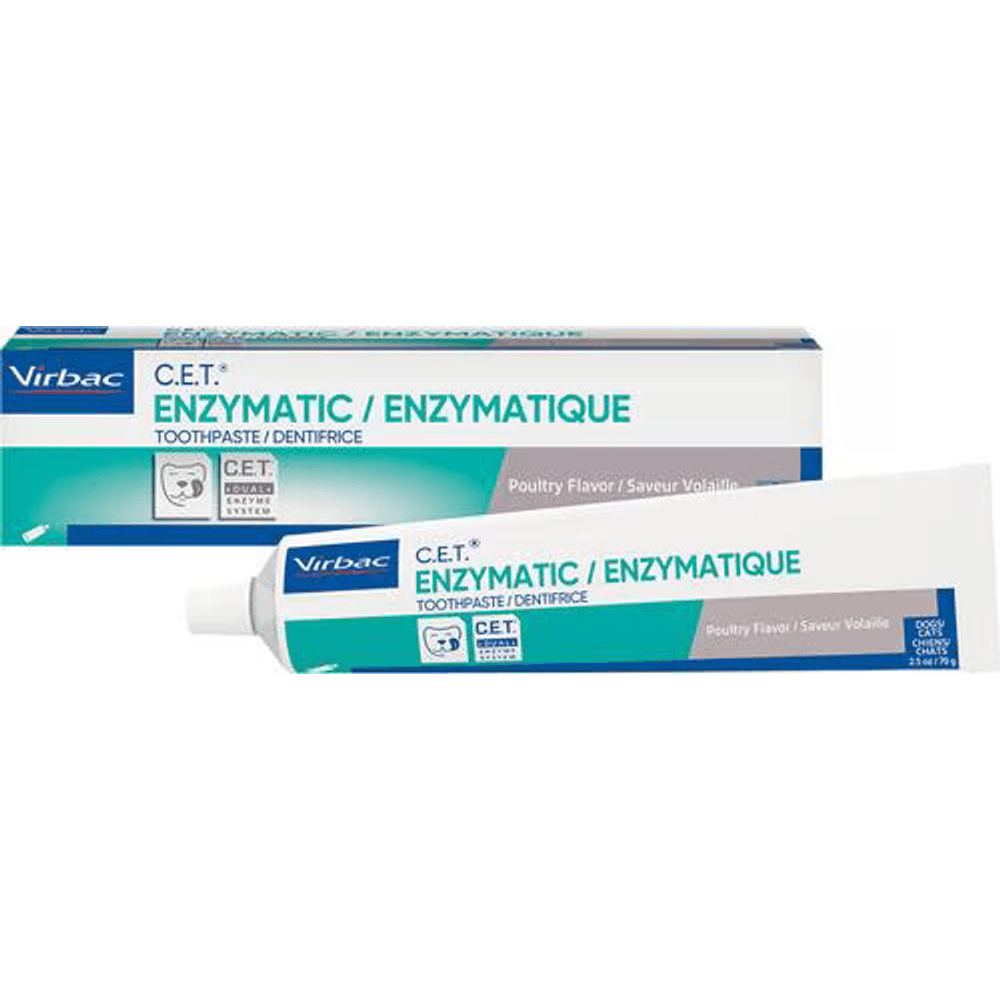
The vet-favorite enzymatic toothpaste. Its dual-enzyme system keeps working between brushings to control plaque and freshen breath, and the poultry flavor makes daily brushing easy.
Petful may earn a commission when you click through to Chewy, at no extra cost to you.
Weight, movement and body condition
Keeping track of weight is useful, but the number needs interpretation alongside body condition and muscle. Our full-grown Puggle size guide separates adult dimensions from excess weight and explains equipment measurements. Do not treat the top of a breed weight range as a feeding goal.

Ask your veterinary team to demonstrate how they assess your dog’s body condition. Record measured feeding amounts, treats and relevant changes in activity. If weight changes unexpectedly, investigate the cause rather than assuming the dog only needs a different bag of food.
Movement should remain comfortable and appropriate to the individual. Notice changes in willingness to walk, turn, rise or use familiar steps. A short video of an ordinary movement can help you describe the problem to the practice, provided making the video does not delay care or require the dog to repeat a painful action.
A practical preventive-care plan
Bring three useful records to appointments:
- Previous examinations, screening results and medication details.
- Measured food amounts, weight trends and changes in appetite.
- Notes about breathing, movement and comfortable daily activity.
Agree on examinations, parasite prevention, vaccination, dental care and any screening with your veterinary practice. The appropriate schedule depends on age, history, location and individual risk. Keep a single record of what has been done and what is due so that a move or change of practice does not scatter important information.
| Observation | What to record | What to discuss |
|---|---|---|
| Appetite and drinking | A meaningful change from the usual pattern | When it began and other accompanying signs |
| Weight and condition | Consistent measurements and feeding amounts | Whether the trend is appropriate |
| Mobility | Difficulty with a familiar movement | Comfort, assessment and suitable activity |
| Breathing | New noise, effort or reduced tolerance | Prompt assessment and the dog’s activity plan |
| Rest and behavior | Difficulty settling or altered interaction | Possible discomfort or other causes |
Dental home care is one part of that plan. If brushing is appropriate for your dog, Virbac C.E.T. enzymatic dog and cat toothpaste is a pet-formulated option to discuss with the practice. Follow the product instructions and introduce handling gradually; do not force brushing into a painful mouth or assume toothpaste replaces necessary dental assessment.
A Virbac C.E.T. dual-ended pet toothbrush offers different brush-head sizes to compare with your dog’s mouth. Ask for a demonstration and keep initial sessions manageable. Comfortable technique and consistency matter more than buying a particular brand, and a dog who suddenly resists mouth handling may need assessment.
 Sponsored
Vet care that's always there
Unlimited video calls and messaging with licensed vets for less than a typical vet visit. One membership covers up to five pets.
Use code Pets60
Plans start at $12/month · covers up to 5 pets
- Licensed vets in most states
- Rx for 150+ conditions
- 4.7 on Trustpilot
Turn the care plan into questions for the next visit
Ask the practice to identify what is due, what is being monitored and what would change the plan. For example, a record may contain a vaccination date, a weight trend to recheck and a new concern about getting up from rest. Those are different tasks. Bring the original documents and medicine labels so the discussion is based on the right dog and current treatment.
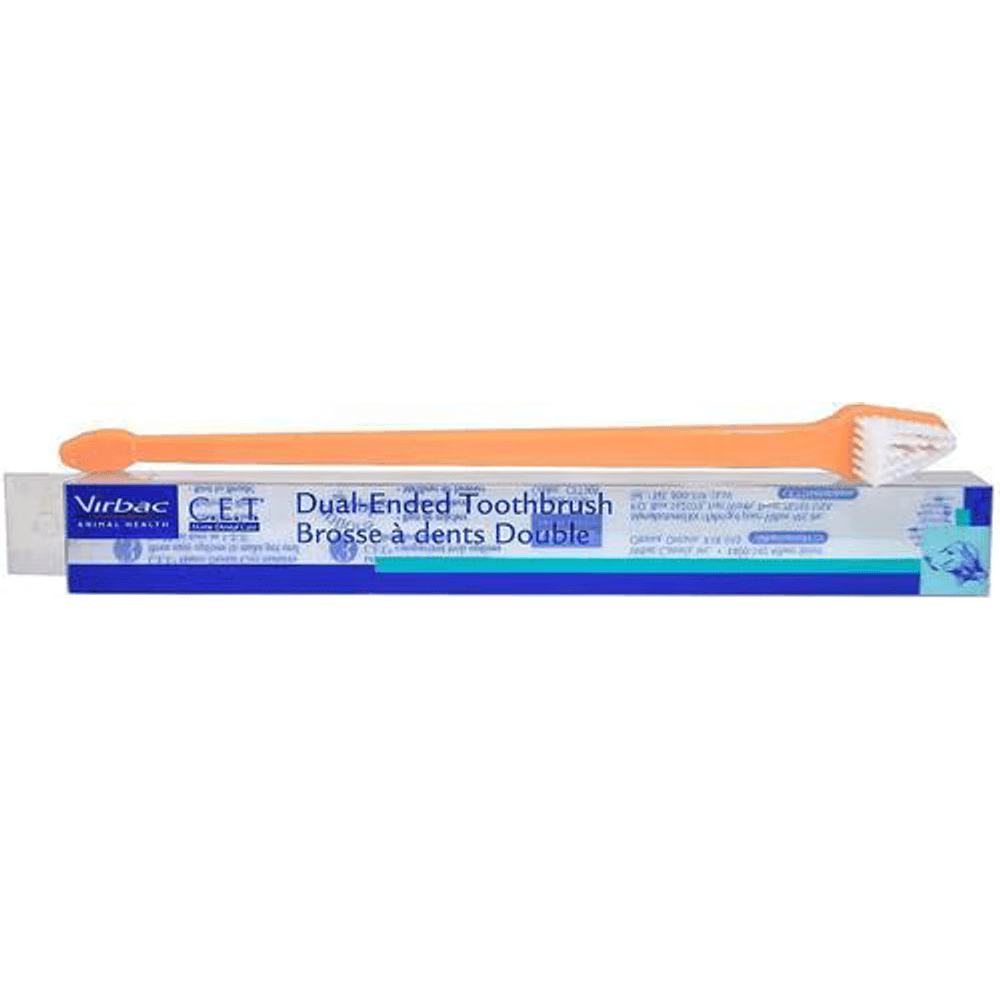
A dual-ended toothbrush with a large and a small head to fit different mouth sizes and reach the back molars where plaque hides. Soft bristles angled for the gumline.
Petful may earn a commission when you click through to Chewy, at no extra cost to you.
- Which examination or screening is due next, and why is it appropriate for this dog?
- Is the current body and muscle condition suitable?
- Does the breathing pattern need further assessment?
- What dental care is appropriate at home, and is professional treatment needed?
- Which changes should prompt an earlier call rather than waiting for the next routine visit?
Keep preventive care tailored to location and lifestyle. A dog who travels or encounters different parasite risks may need a different plan from a dog with another routine. Do not copy another owner's medication schedule or assume that an old prescription remains suitable after a change in weight, health or other treatment.
Ask about family screening before choosing a puppy
For prospective owners, screening records belong in the decision before a deposit. The OFA CHIC program provides a way to understand breed-specific health screening. Ask for results attached to each parent's identity and discuss the relevant Pug and Beagle assessments with your veterinarian. A general 'vet checked' statement about the litter does not describe all inherited-disease screening.
Screening can inform a choice but cannot promise a particular lifespan. If adopting an adult without parent records, focus on the available examination findings, treatment history, comfort and planned follow-up. A lack of pedigree history is an uncertainty to manage, not a reason to invent a prognosis.
Caring for an aging Puggle
Adapt the home as the individual’s needs change. Place comfortable resting options where the dog can reach them easily, improve traction on slippery routes and keep essential resources accessible. Watch the dog use the arrangement rather than assuming a product labeled “senior” automatically solves the difficulty.
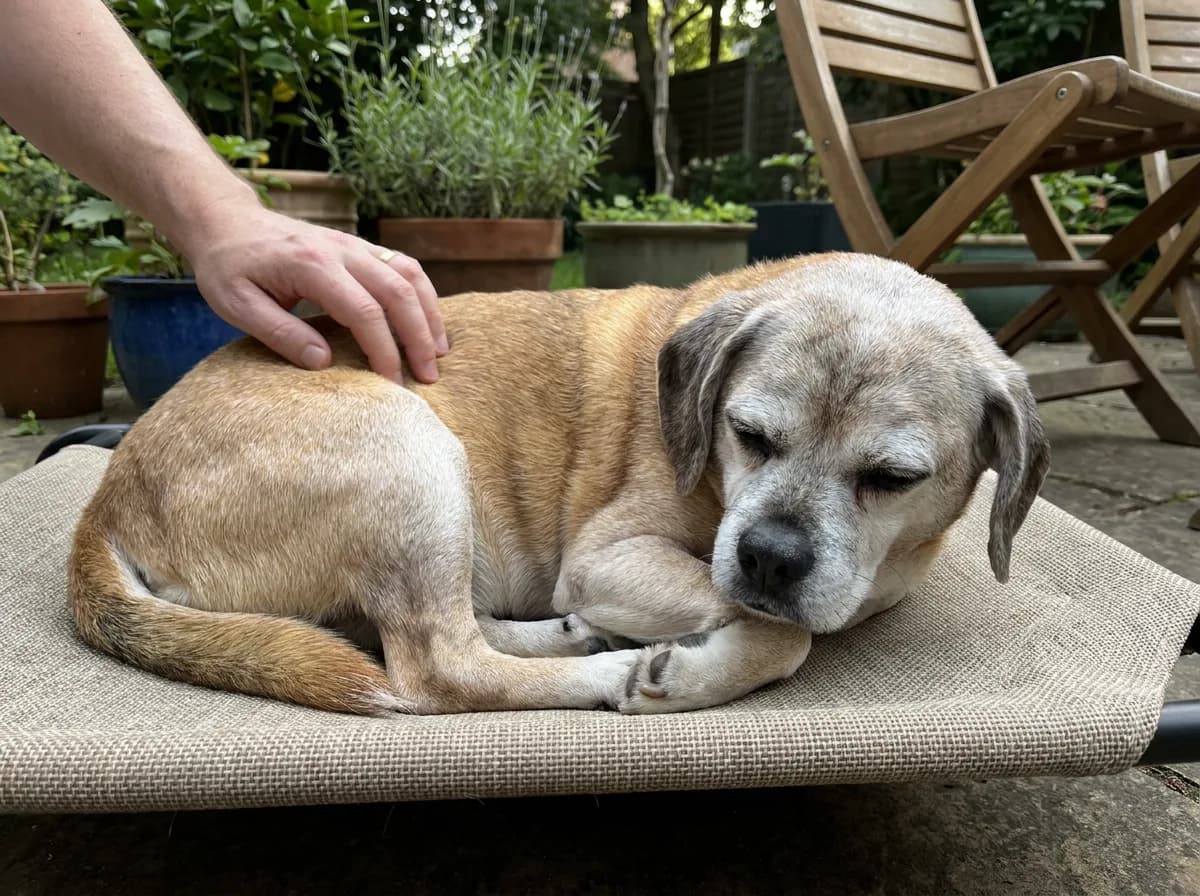
AAHA’s senior quality-of-life guidance highlights appetite, mobility, behavior and comfort as useful areas to observe. Keep notes about good and difficult days and discuss trends with the veterinary team. A single enjoyable moment or a single difficult hour may not describe the whole pattern.
WebVet’s senior-dog health guide offers further context for routine changes and care discussions. The aim is to preserve comfortable activities the dog enjoys while addressing problems that interfere with them. Reduced mobility or social withdrawal should not automatically be dismissed as inevitable age.
Plan senior appointments before a crisis
The AAHA recommends six-monthly examinations for senior pets. Ask your practice when that cadence is appropriate for your Puggle and whether an existing condition needs closer follow-up. More frequent visits allow a trend to be discussed before an obvious crisis; they do not mean every dog needs the same tests or treatment.
Prepare a short list of changes since the previous visit. Include sleep, toileting, appetite, play, walking and interaction, and note when each change began. If the dog takes medication, list the current product, dose prescribed by the veterinarian and how it is actually given. Do not change treatment simply because the dog has reached a senior birthday.
Preserve favorite activities in a manageable form
Think about what the dog enjoys, then adjust the setting or difficulty. A familiar sniffing route may still be enjoyable at a gentler pace; a food-search game may need an easier layout; a resting place may need to be closer to the household. Observe whether the adapted activity is comfortable rather than aiming to recreate the dog's younger routine.
Choose home changes around the actual difficulty. Nonslip footing may help on a slick route, accessible water can reduce unnecessary trips and a low-entry supportive bed may be easier to reach. These changes support daily life while the veterinary team addresses the cause of pain or reduced function.
Record quality of life without reducing it to age
Choose a few activities that matter to this dog, such as greeting the family, enjoying food or resting comfortably. Note whether each remains enjoyable and whether difficult periods are becoming more frequent. A dated record is useful because people living with a dog every day can gradually adapt to changes without noticing the overall trend.
Bring that record to a quality-of-life conversation. Ask what can be treated, what support is realistic and which signs mean the current plan is no longer working. A lifespan estimate cannot make those decisions. They depend on the dog's comfort and experience together with individual veterinary advice.
When a change needs veterinary attention
Severe breathing difficulty, collapse or blue-tinged gums require urgent veterinary attention. Contact an emergency veterinary service immediately; do not delay to test equipment or try to complete a home checklist. Cambridge’s BOAS guidance describes how airway problems can become serious, especially when heat or stress adds to the difficulty.
Less dramatic but persistent changes also deserve a call: altered appetite or drinking, new exercise intolerance, difficulty rising, repeated vomiting or a noticeable behavior change. Describe the signs and timing so the practice can advise on urgency. Do not give human pain medicines or another animal’s prescription without veterinary direction.
Puggle daily life and family fit
Longevity planning belongs alongside ordinary companionship. Our Puggle breed guide covers household fit, training and daily care. Keep enjoyable sniffing, play and social contact in the routine at a level suitable for your dog rather than turning every day into a health test.
Revisit the plan as circumstances change. A new diagnosis, move or change in mobility may call for different activities or equipment. Your veterinary team can help make those adjustments while you provide the observations that only someone living with the dog can collect.
Puggle lifespan questions
Ten is a sensible time to discuss senior care, but the individual’s health and needs matter more than a single birthday. Ask about examinations, comfort, body condition and any useful screening. Do not assume that a change in appetite, breathing or movement is normal just because the dog is older.
There is no guarantee that a supplement will extend an individual Puggle’s life. Discuss a specific product and reason for using it with your veterinarian, especially if your dog has a condition or takes medication. A supported use for one problem is different from a general longevity promise.
No. A published 10–15-year range is broad planning context, not a biological limit or a deadline for an individual. Some dogs live beyond profile ranges and others develop serious illness earlier. Use the dog’s current health and comfort to plan care instead of subtracting its age from an expected total.
No single age label establishes the right diet. Ask the veterinary team to assess body condition, muscle, appetite, medical needs and the current food. Bring the label and actual feeding amounts. A change may be useful for an individual reason, but a senior birthday alone does not identify the appropriate formula.
Bring treatment and examination records, current medication details, the food and treat amounts, and dated observations about appetite, sleep, walking and toileting. List changes in order of importance. Videos can help explain an ordinary movement if recording them is comfortable and does not delay needed care.
BVMS, MRCVS
Dr. Pippa Elliott, BVMS, MRCVS, is a veterinarian with nearly 30 years of experience in companion animal practice. Dr. Elliott earned her Bachelor of Veterinary Medicine and Surgery from the University of Glasgow. She was also designated a Member of the Royal College of Veterinary Surgeons. Married with 2 grown-up kids, Dr. Elliott has a naughty Puggle named Poggle, 3 cats and a bearded dragon.
Sign up for expert-backed reviews and safety alerts all in one place.