English Bulldog Colors, Patterns and Markings
English Bulldog colors make more sense when base color, pattern, markings and pigment stay separate. Use a daylight checklist and put health evidence ahead of rarity or price.
Petful is reader supported. As an affiliate of platforms like Amazon and Chewy, we may earn a commission when you buy through links on this page. There is no extra cost to you.
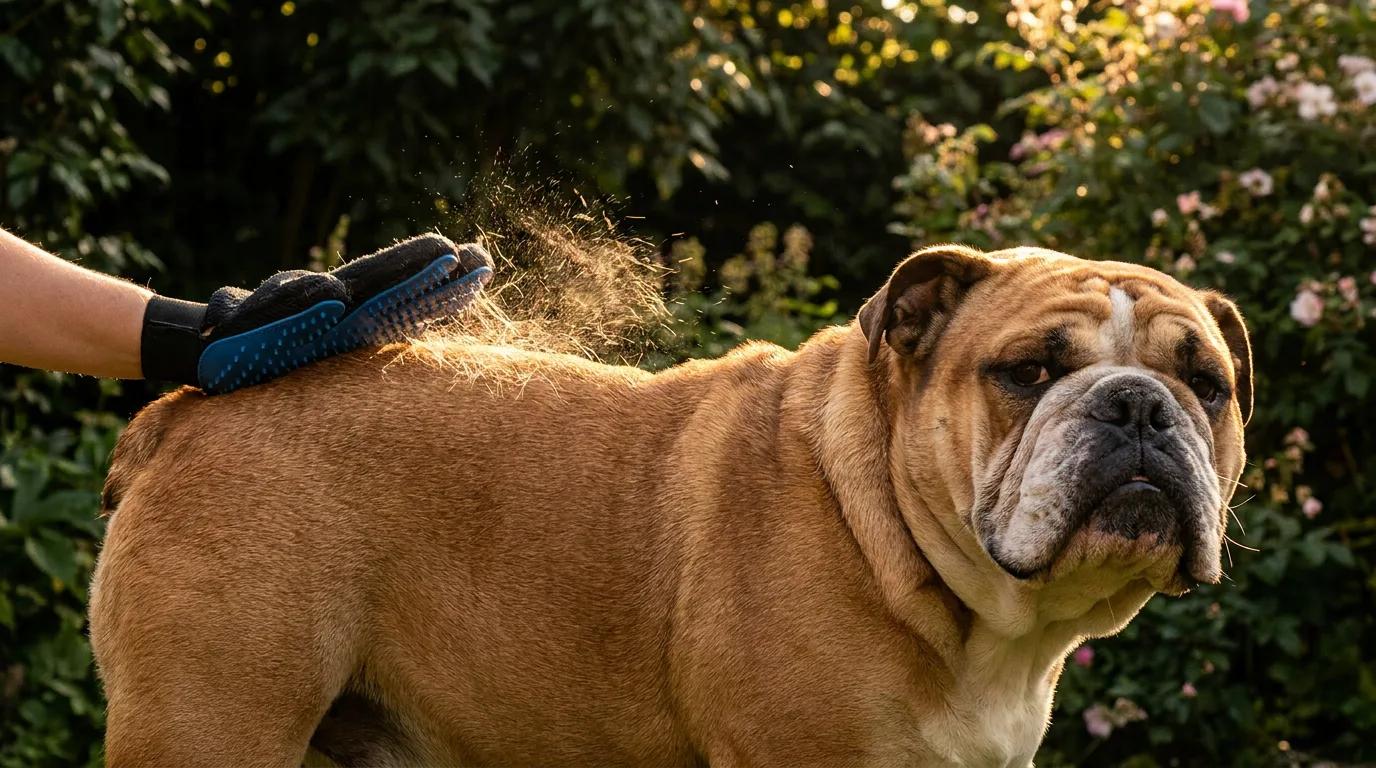
English Bulldog colors are easiest to understand when four separate things stay separate: base color, pattern, localized markings and pigment. A dog can be red with a white piebald pattern, fawn with a black mask, or brindle with white markings. Combining every visible feature into one marketing label makes identification harder than it needs to be. Brushing with a soft rubber grooming glove before you photograph the coat lifts loose hair so the true color shows.
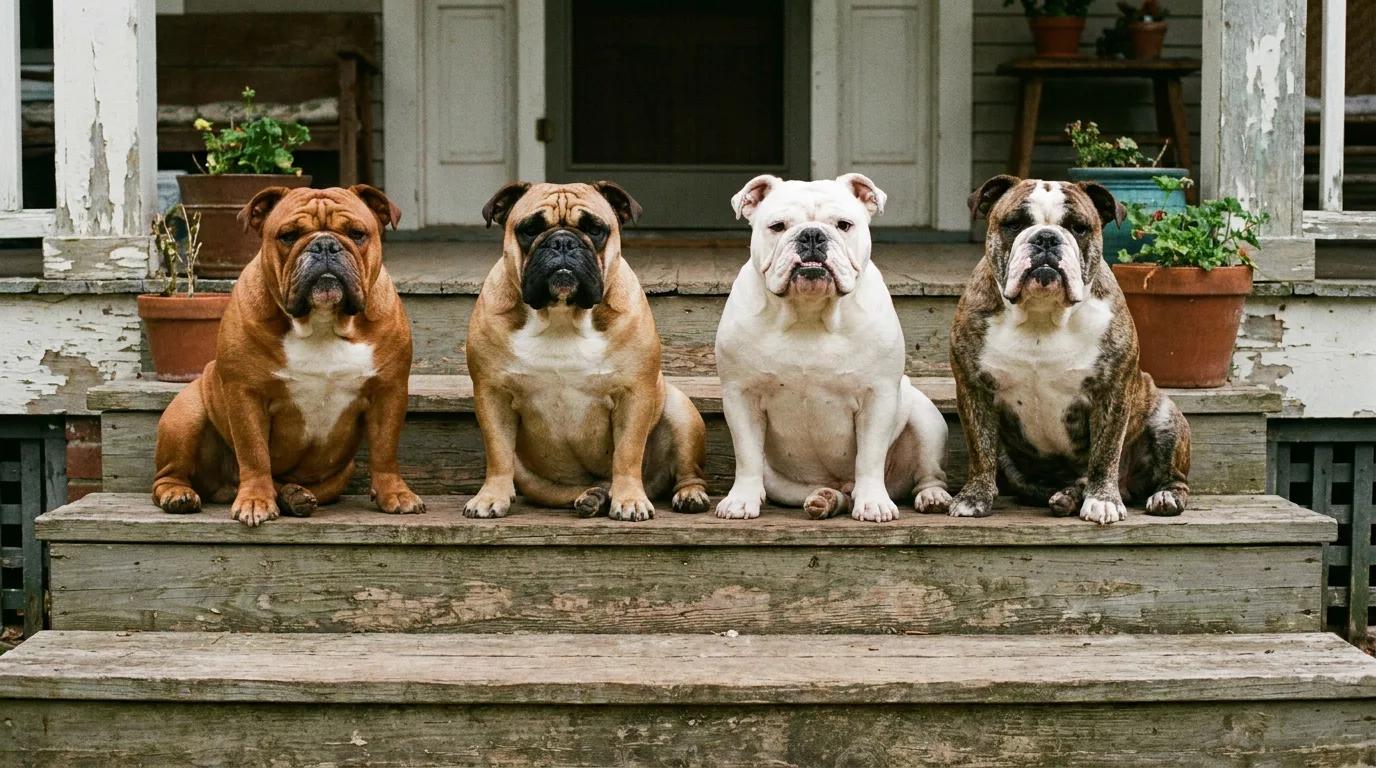
The AKC Bulldog standard, approved in 2016, recognizes red, white, fawn, fallow or any combination of those colors. Patterns and markings may include brindle, piebald, ticking, black masks, black tipping and a minimal amount of solid black in piebalds. Every other color or marking is a disqualification in the show ring, and the standard names merle specifically. Sellers may use many other labels, but rarity and price do not prove breed identity, health or quality.
| Color or marking | AKC status | What to look for |
|---|---|---|
| Red | Standard color | Warm orange-red to deep red hair |
| White | Standard color | White coat, sometimes with ticking or small colored areas |
| Fawn | Standard color | Warm tan, from pale sand to deeper tan |
| Fallow | Standard color | Pale, yellowish tan that is easy to confuse with fawn |
| Red and white, fawn and white | Standard color | Red or fawn areas combined with white |
| Red brindle, fawn and brindle | Standard color | Dark stripes over a red or fawn ground |
| Red brindle and white, fawn brindle and white | Standard color | Brindled areas combined with white |
| Brindle and white | Alternate color: registrable, not standard | Brindling with white, without a named red or fawn ground |
| Black mask, black tips, ticked | Standard marking | Dark muzzle, dark-tipped hairs or small flecks in white |
| Brindle, piebald, white markings | Standard marking | Striping, colored patches on a white field or white trim |
| Blue, lilac, chocolate, black, tri | Not listed, so a show disqualification | Diluted gray, brown or predominantly black hair |
| Merle | Named as a disqualification | Mottled patches within colored hair |

Sign up for expert-backed reviews and safety alerts all in one place.
English Bulldog colors at a glance
- 1Identify base color, pattern, markings and pigment separately.
- 2Use the current breed standard for official terminology.
- 3Treat blue, lilac, chocolate, merle and other rare labels as marketing or nonstandard terms, not quality grades.
- 4Use pedigree and registration records, not coat color, to evaluate documented ancestry.
- 5Put breathing, movement, skin and health evidence ahead of appearance.
The official Bulldog colors are red, white, fawn, fallow and any combination of those colors, according to the Bulldog Club of America standard-colors guidance. Brindle and piebald describe patterns rather than separate base colors. Ticking, a black mask and black tipping are markings or effects layered onto the overall picture.
What are rare colors for English Bulldogs? In breeder advertising, rare commonly refers to colors outside the traditional standard, including labels such as blue, lilac, chocolate, black, merle and some tri combinations. The exact vocabulary varies by seller. Rare is not a medical or registry finding, and it should never outrank health screening or functional anatomy.
Color cannot tell you whether an English Bulldog is purebred. Documented pedigree, permanent identification and registration records provide ancestry evidence. A recognized coat can occur without a documented pedigree, while a nonstandard coat does not by itself reveal every ancestor. DNA color tests address selected variants, not the dog’s full breed identity, temperament or health.
Keep history separate from coat language
Breed history, including what Bulldogs were originally bred for, is covered in the breed profile rather than here. Color terms do not create separate breeds or prove that one dog is closer to that history.
The four-part identification method
- Name the broad base color visible across most colored hair.
- Describe the pattern that distributes color and white across the body.
- Add localized markings such as a mask, ticking or limited black tipping.
- Record nose, lip, eye-rim and pad pigment separately from the hair.
This method keeps a brindle English Bulldog from being mislabeled simply because it also has white. It also prevents a photograph's shadow or camera filter from becoming a new color name. When identification matters for registration, use the rules and codes of the applicable registry rather than an informal social-media chart.
What the breed standard recognizes
What are the colors of English Bulldogs? The traditional standard palette includes:
- Red, white, fawn and fallow.
- Combinations of those colors.
Brindle and piebald describe patterns, while a black mask, black tipping or ticking describes markings or effects rather than separate base colors.
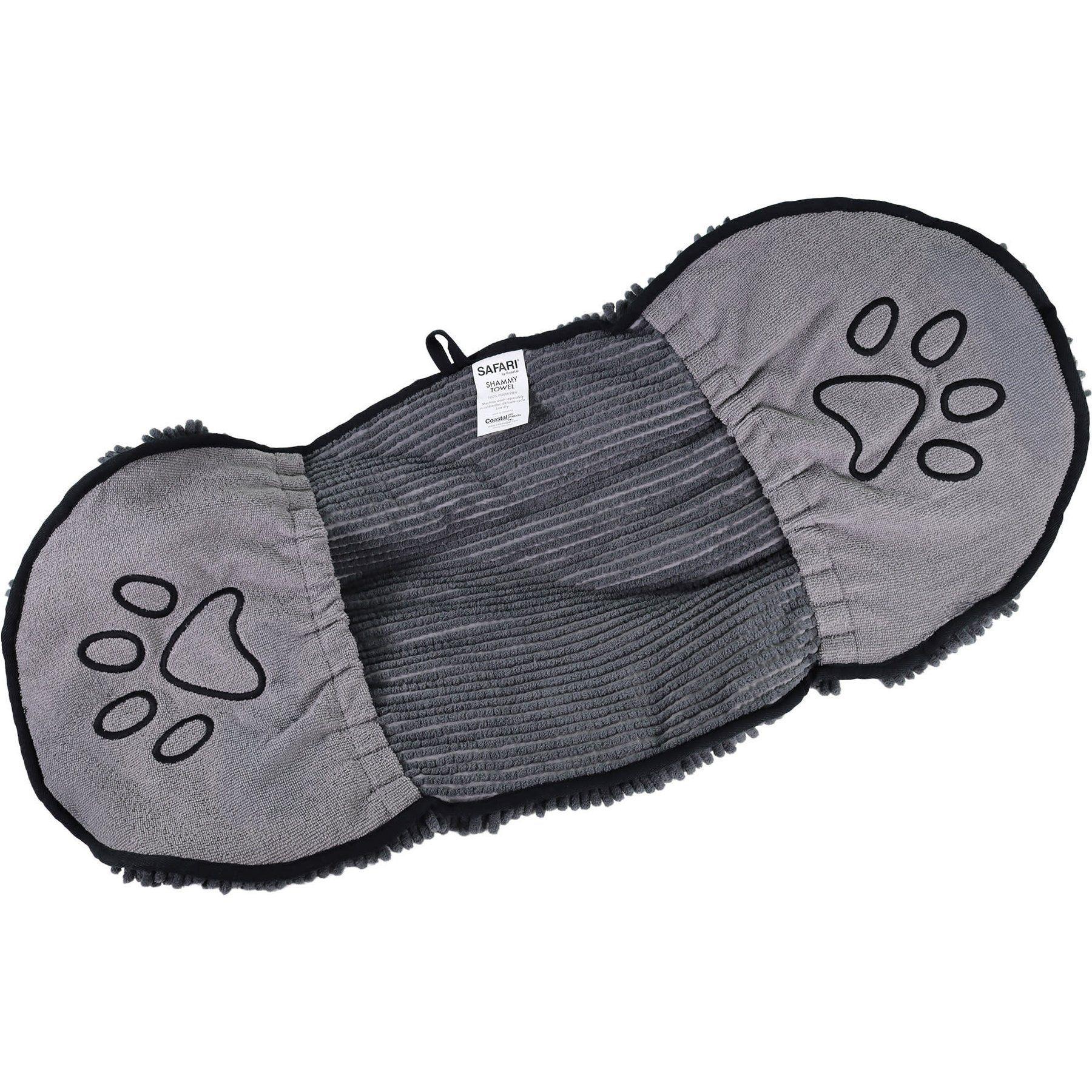
Safari Shammy Dog Towel, Grey
Petful may earn a commission when you click through to Chewy, at no extra cost to you.
Registry language can change, so use the current standard that applies to the dog instead of a seller’s marketing label. Blue, lilac, chocolate, merle and proprietary shade names should never be treated as proof of quality, ancestry, health or higher value.
Read the standard as a vocabulary guide
A breed standard is a judging and breeding reference, not a shopping catalog. It defines preferred traits and terminology for that registry or parent club. It does not guarantee the health, behavior or breeding ethics of an individual dog.
The Bulldog Club of America describes the colors as red, white, fawn, fallow or any combination of those colors. The American Kennel Club's Bulldog breed information lists registered color combinations and markings associated with the standard. Always consult the current version when completing paperwork because registry codes and presentation rules can change.
The current AKC standard is stricter than many buyers expect: it names merle as a disqualification and treats any color or marking it does not list as a disqualification for conformation showing. A disqualified color can still belong to a perfectly good pet, but traditional Bulldog color vocabulary is much narrower than the sales vocabulary found online.
Red
Red ranges from warm orange-red to a deeper rich red. Light, camera white balance and surrounding white areas can make the same dog look different across photographs. Evaluate the coat in indirect daylight and compare several body areas rather than naming color from one close-up.
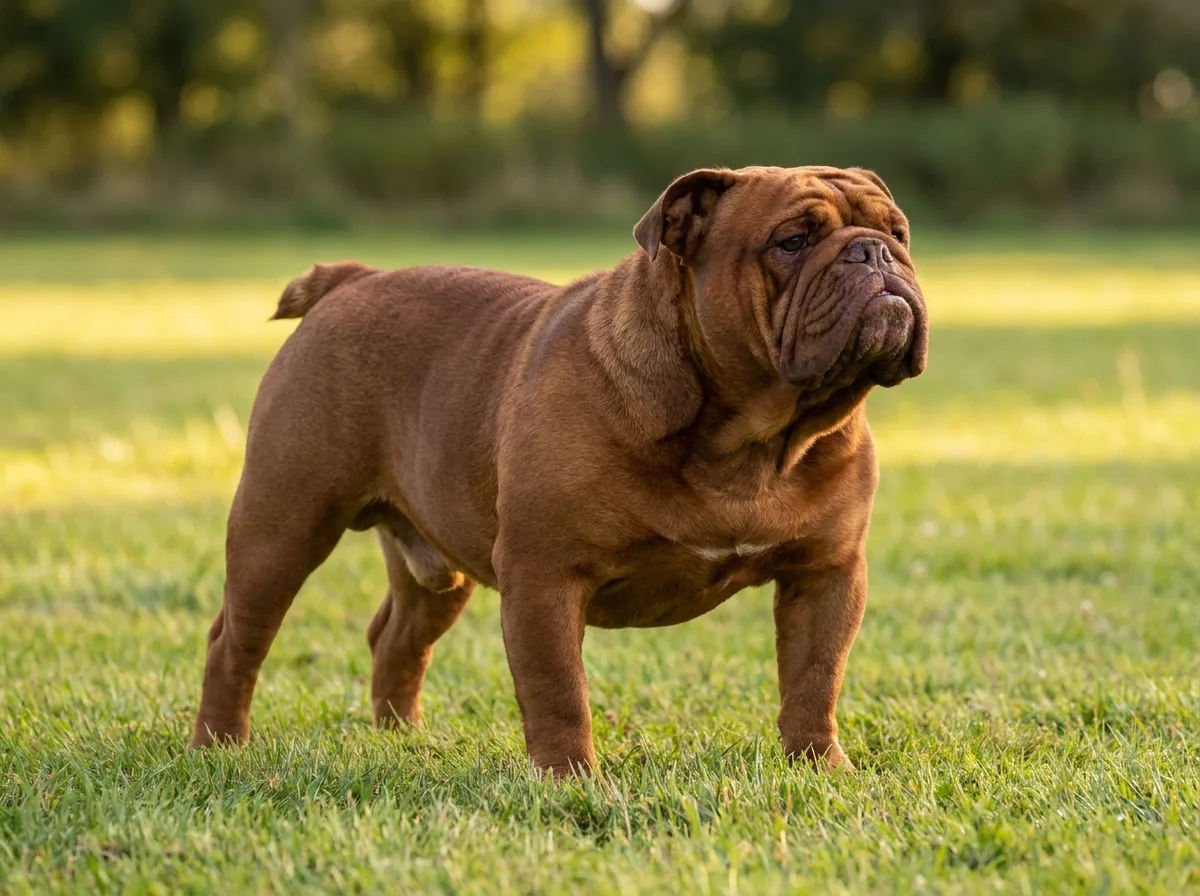
Red may appear as a solid-colored area, in combination with white, or as the lighter background of some brindle coats. The word red describes hair color. It does not describe nose pigment, pattern, pedigree or health.
White
White may cover the entire visible coat or combine with another recognized color. A predominantly white Bulldog can have small colored areas, ticking or pigment that becomes easier to see with age. Clean white hair also reflects surrounding colors, so indoor walls and grass can create false casts in photographs.
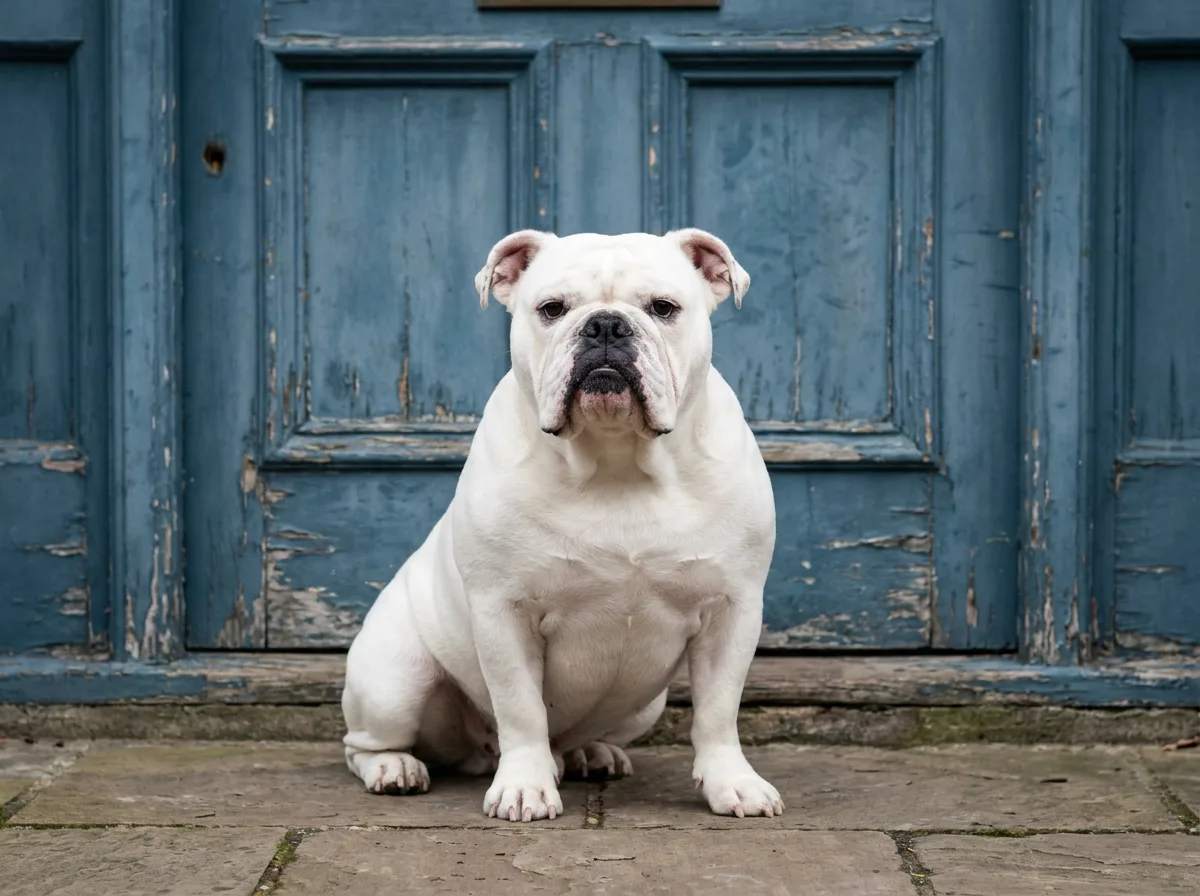
White hair is not the same as albinism. Albinism involves pigment biology, not merely a white coat. Do not diagnose it from appearance. If pigment, vision, hearing or skin sensitivity raises a concern, ask a veterinarian for an individual assessment.
Fawn
Fawn is a warm tan color that can range in depth. Some dogs look pale sand or cream in one setting and warmer tan in another. Registry terminology matters more than inventing a precise shade name from a phone screen.
Fawn can occur with white, brindling, a black mask or limited tipping. Those additions should be recorded as pattern or markings instead of replacing the base-color description.
Fallow
Fallow is another traditional standard term and can overlap visually with pale or yellowish tan descriptions. The line between fawn and fallow may be difficult for a casual observer, especially in filtered photographs or a changing puppy coat.
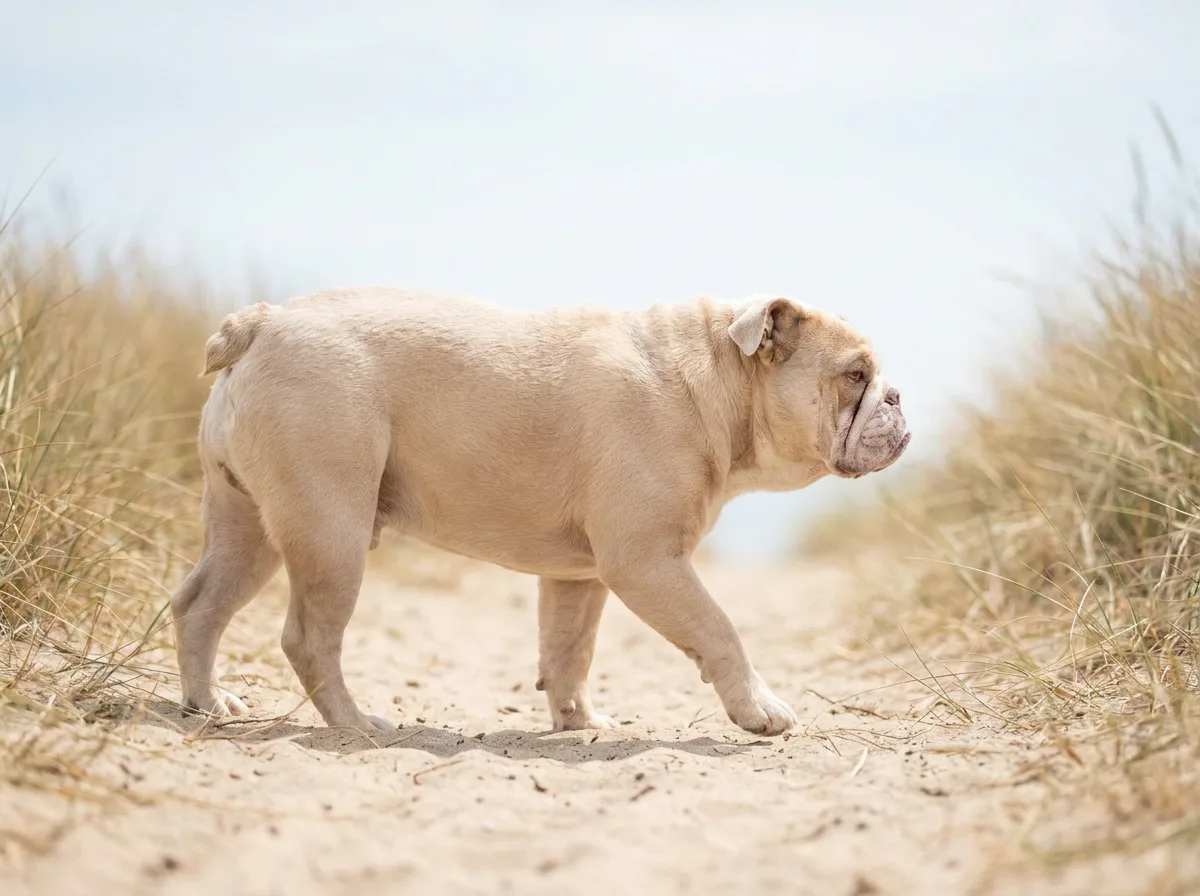
When official registration is involved, ask the registry or an experienced breed-club resource how the current standard applies. For ordinary care, an exact shade distinction has little practical value compared with monitoring skin, hair loss, sun sensitivity or sudden coat change.
Combinations of recognized colors
Red and white, fawn and white, brindle and white, and other standard combinations describe both color and distribution. A combination is not automatically piebald. Piebald refers to a specific pattern of colored areas on a white background, while a general two-color description may be less precise.
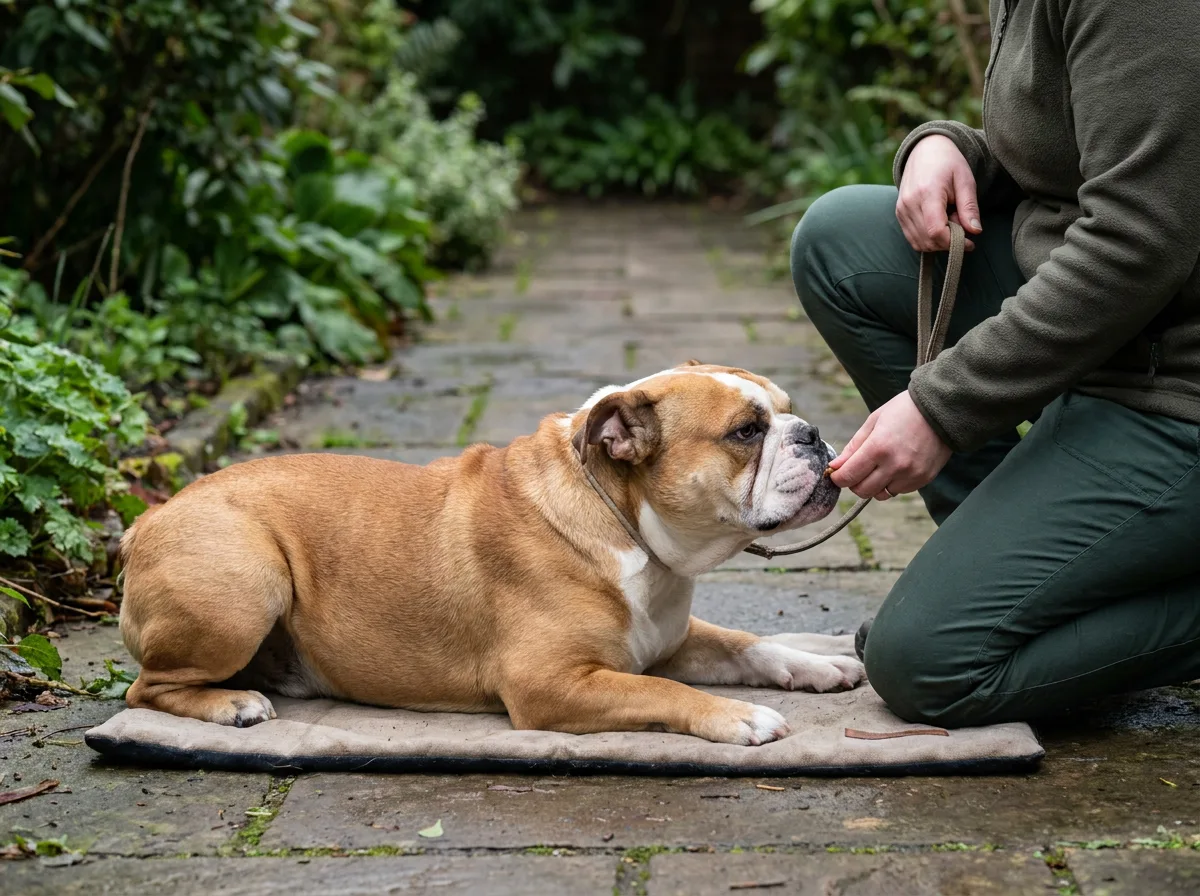
Use a full-body view to identify combinations. A head photograph can hide a colored saddle, flank patch or mostly white body. Record the side, back and rear in the same light. A few small training treats help keep the dog standing still while each side is photographed.
How markings change the picture
Markings are localized features laid over a base color or pattern. They help describe the dog, but they should not be allowed to swallow the base-color name. Saying “black mask” does not mean the entire coat is black, and saying “ticked” does not mean the dog is merle.
The standard-versus-marketing label table below works as a translation tool. The purpose is not to police casual descriptions. It is to prevent a sales label from being mistaken for a registry status, health certificate or proof of rarity.

Petful may earn a commission when you click through to Chewy, at no extra cost to you.
| Visible feature | Standard-style description | Question to ask about a sales label |
|---|---|---|
| Warm red or tan hair with white | Red and white, fawn and white, or fallow and white | Is the extra shade name recognized by the applicable registry? |
| Dark stripes over a lighter ground | Brindle, with any white areas described separately | Does the seller show the coat in unfiltered daylight? |
| Colored patches on a white field | Piebald or a recognized color-and-white combination | Is piebald being confused with merle? |
| Dark muzzle area | Black mask on the underlying color | Is mask being sold as a separate rare color? |
| Small colored flecks in white hair | Ticking | Is normal ticking being relabeled to raise price? |
Black mask
A black mask is darker pigment concentrated over the muzzle and sometimes around the face. It is recorded as a marking on the underlying color. The rest of the coat might be fawn, red or another recognized combination.

Mask depth can look different as facial hair, wrinkles and lighting change. Photograph the face straight on and from the side, and do not use the mask alone to label the whole dog. Wiping the facial wrinkles with unscented grooming wipes before the photo removes debris that can make the mask look darker.
Black tipping
Black-tipped hairs can create a shaded or sable-like effect over a lighter coat. The amount and distribution matter. A few dark hair tips do not turn the dog into a solid black Bulldog or prove a particular genetic result.
Tipping may change in visibility as the puppy coat is replaced. Keep dated photographs if the distinction matters for records. Avoid promising a buyer that a subtle effect will remain unchanged.
Ticking
Ticking appears as small colored flecks within white areas. It may become more visible as the coat matures. Ticking should be distinguished from dirt, staining, freckles in the skin and isolated larger patches.
Part the hair gently in good light to see whether color is in the hair or skin. If a new dark area comes with irritation, hair loss, crusting or pain, treat it as a skin concern rather than a color-identification puzzle.
Facial and head markings
A white blaze, colored ears, eye patches or an uneven face can strongly change first impression. These are distribution features. They do not alter the dog's breathing, movement or pedigree, and symmetry is not a health test.
Photograph both sides because one eye patch or ear may be colored while the other is white. Keep the camera level and avoid portrait modes that blur edges or alter contrast.
Body patches
Patches may sit over the shoulders, back, flanks or rear. Their borders can be crisp or irregular. A mostly white dog can have a small area of recognized color that is invisible in a front-facing photograph.
For identification records, include a standing side photograph from each side and an overhead view when safe. Microchip identity remains more reliable than appearance because coats and photographs can change.
Brindle, fawn, red and white coats
Brindle, fawn, red and white make up much of the familiar English Bulldog color range. The same dog can fit more than one word because brindle is a pattern, white may be combined with another color and a mask can sit over the face.
A useful description moves from broad to specific. Start with the main color, then add distribution and markings. “Red brindle and white with a black mask” is clearer than a long proprietary shade name. English Bulldog brindle descriptions should always preserve that pattern-versus-color distinction.
Rare English Bulldog colors are usually seller labels for nonstandard pigment or pattern terms, not a separate quality tier. Compare any rare claim with the current standard, the dog’s documented identity and health-first evidence before considering appearance or price.
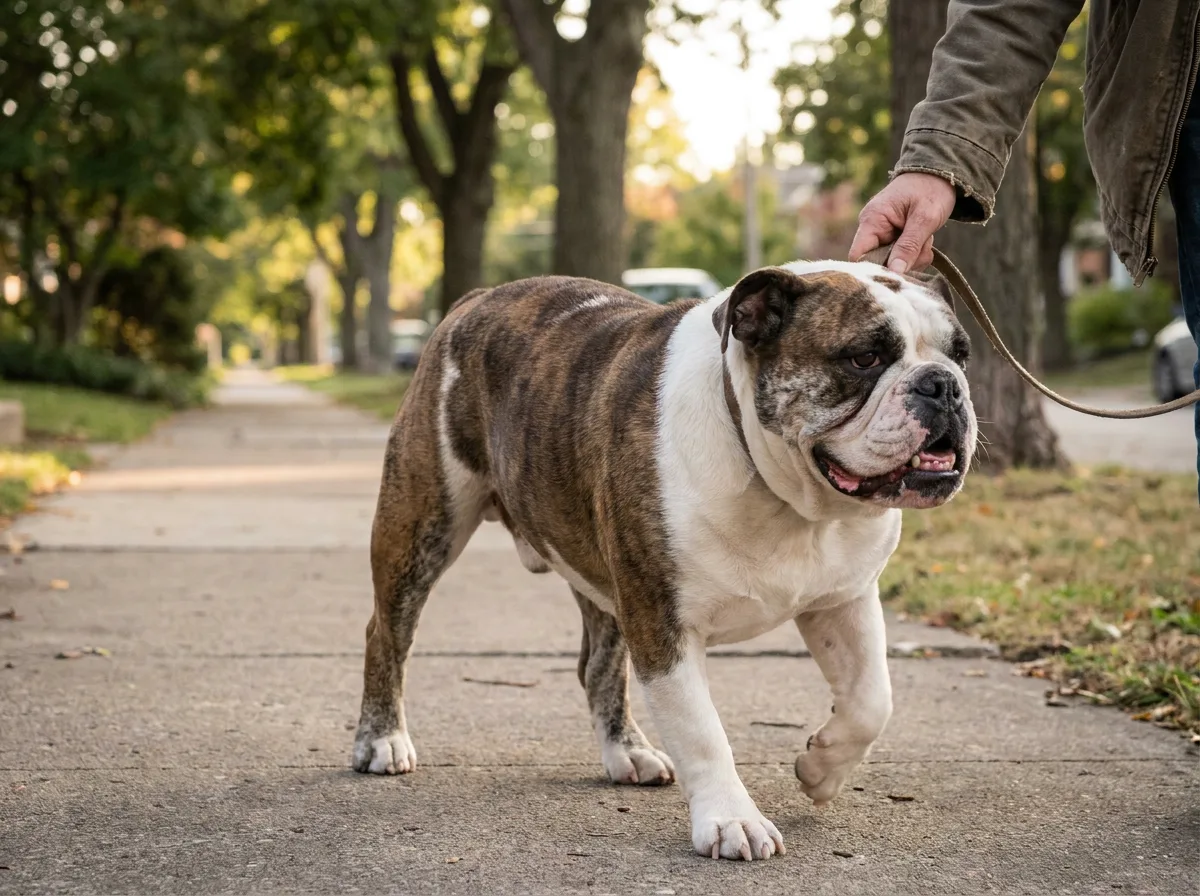
What brindle looks like
Brindle is a striped pattern of darker hairs over a lighter background. Stripe width, density and contrast vary. Some coats show bold tiger-like striping, while heavily brindled coats may appear nearly dark until viewed closely in daylight.
The underlying background can be red or fawn-toned, and white may appear on the chest, face, legs or body. This is why brindle should be described alongside the rest of the coat rather than treated as a single flat color.
Red brindle
Red brindle has dark striping over a red-toned ground. The red can look warmer or deeper depending on light and coat condition. A flash can exaggerate contrast, while shade can hide fine stripes. A few strokes with a bristle dog brush beforehand lay the short coat flat, so shine is less likely to read as a lighter shade.
Photograph a broad body area rather than only the face. The flank or shoulder often shows the pattern more clearly. Do not infer health or temperament from stripe density.
Other brindles
Brindling can be described with different background shades and amounts of white. Some informal labels reflect very fine distinctions. When a formal record is needed, select the current registry term that best matches the dog rather than copying a seller's phrase.
A brindle English Bulldog is not inherently more or less healthy than another dog because of the visible stripe pattern alone. Health decisions still depend on anatomy, screening, veterinary findings and care.
Fawn and white
Fawn and white Bulldogs show warm tan areas combined with white. The distribution can range from a mostly fawn body with white trim to a mostly white body with fawn patches.
Look at ear color, flank patches and the base of the tail when the front view is mostly white. A black mask or tipping may be present and should be recorded separately.
Red and white
Red and white follows the same identification logic, with warm red areas combined with white. Deep red can photograph as brown in warm indoor light, while bright sunlight may wash it toward orange.
Use a neutral background and include a white reference object outside the dog's reach if color accuracy matters. Do not edit saturation to make the coat appear richer.
Solid-appearing white
A white Bulldog may look solid at first glance, yet ticking or a small patch can appear on closer inspection. Pigment around the nose and eyes should be recorded separately from hair color.
White hair can show saliva, tear or environmental staining more readily. Staining is not a new inherited coat color. Persistent moisture, odor, redness or discharge needs a care assessment.
Fawn versus fallow
Casual observers often find fawn and fallow difficult to separate. The distinction can depend on registry language and how the shade appears in neutral light. It is better to acknowledge uncertainty than invent a confident label from one image.
Compare the whole coat, pigment and official examples. For registration, ask the appropriate registry. For a pet, keep attention on comfortable skin and routine care.
Pied and combination patterns
Pied or piebald dogs have colored areas distributed over a white field. The amount, location and edge of those patches vary. Piebald is a pattern description, not a statement about whether the dog is purebred or healthy.
Combination coats may be described with two recognized colors even when the pattern is not labeled piebald. Context matters. A registry form, veterinary record, microchip profile and casual caption may each need a different level of precision.
- Use coat language to describe the dog. Use health records, airway function, movement, skin condition and veterinary findings to evaluate welfare. A dramatic pattern or rare label cannot substitute for those measures.
Piebald versus patched
People often use patched as a visual description and piebald as a pattern term. The words may overlap in casual conversation. For official identification, follow the applicable registry rather than assuming every colored patch creates the same classification.
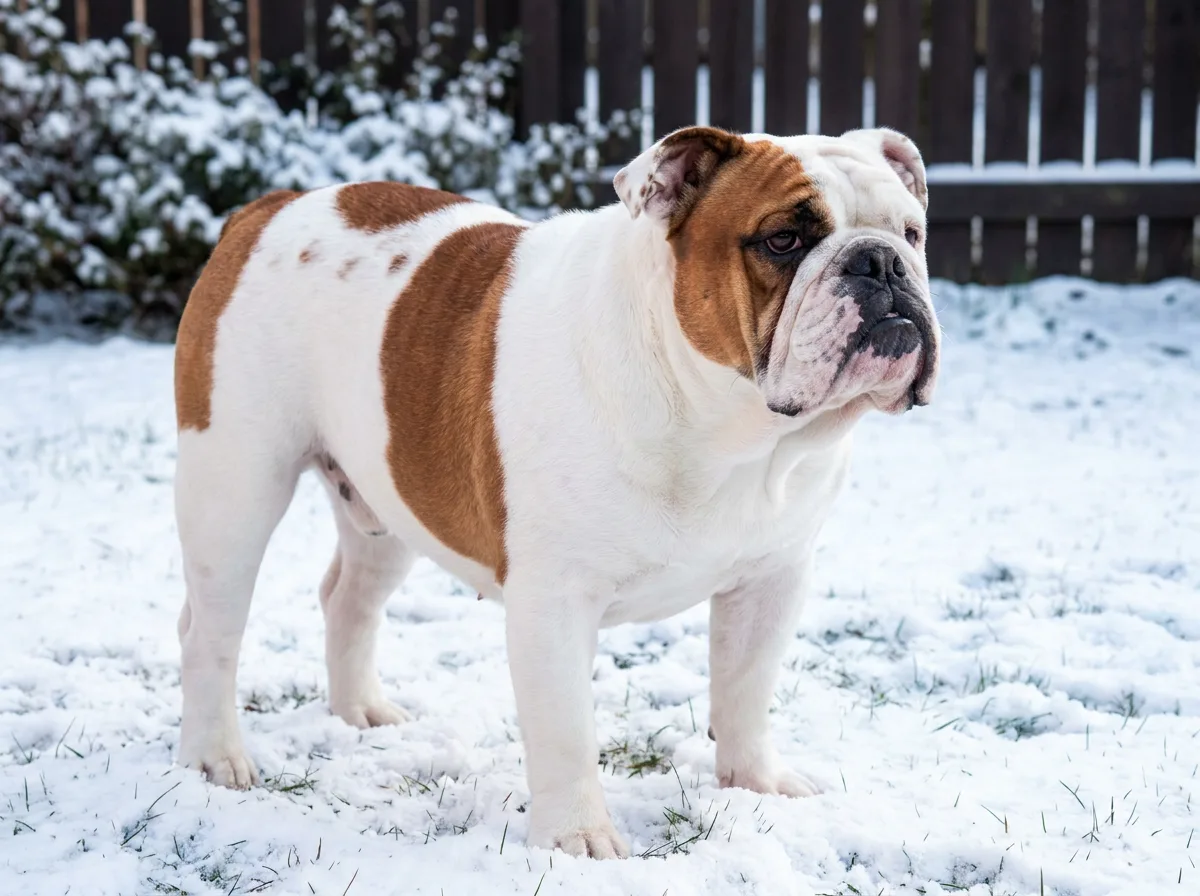
Photograph the entire dog. A close portrait cannot show whether white or color dominates the body, and it may hide a distinctive identification patch. A treat pouch on your belt keeps rewards in reach while a helper takes the side and rear views.
Piebald versus merle
Piebald creates relatively solid-colored areas on white. Merle creates a mottled or marbled effect within colored regions. They are not interchangeable, although one dog can have more than one pattern in its genetic background.
A low-quality photo can make speckling, glare or uneven hair direction resemble mottling. Ask for unfiltered daylight images and genetic documentation when a seller bases a major claim or price on merle.
White markings on brindle
A brindle Bulldog may have white on the face, neck, chest, feet or body. The white does not remove the brindle pattern from the colored areas. Describe both.
When brindle stripes are fine, inspect the shoulder and flank. Facial wrinkles can break up the pattern and make a head-only photo misleading.
Asymmetrical markings
One side of the face or body may have more color than the other. Asymmetry can be useful for visual identification. It is not a temperament signal and should not be marketed as evidence of special quality.
Keep both-side photographs with microchip and veterinary records. If the coat is clipped for a procedure or affected by a skin problem, appearance may temporarily change.
Ticking in white areas
Ticking can increase in visibility as a puppy matures. It may be more obvious after bathing or in close daylight. Record it as a marking, not as evidence that the dog became a different base color.
Do not scrub or bleach harmless pigmentation. If the spots are on the skin rather than hair and are changing, raised, inflamed or painful, ask the veterinarian to examine them.
Nonstandard color labels
Nonstandard does not automatically mean a dog is mixed, unhealthy or unworthy of a home. It means the color or pattern is outside the standard terminology or acceptance used by the referenced registry. The concern is not the dog's value as a companion. The concern is marketing that uses color to distract from health, ancestry or welfare evidence.
An English Bulldog blue label usually describes diluted dark pigment that appears gray or slate. Chocolate usually refers to brown eumelanin and brown pigment. Lilac commonly refers to a combination of brown and dilution variants. Merle describes a mottled pattern. Black and tri labels describe other visible color arrangements outside traditional Bulldog color priorities.
- A standard versus marketing label table keeps visible coat language separate from registry acceptance, genetic claims, health evidence and price. Ask what the seller means and verify each claim independently.
Blue English Bulldog
A blue English Bulldog is generally described as having gray or slate hair where black pigment would otherwise appear, often with diluted nose or eye-rim pigment. Lighting can make gray hair look silver, charcoal or blue. The word blue is a convention, not a literal bright-blue coat. Dilute coats can come with dry, flaky skin, so a mild oatmeal dog shampoo and less frequent bathing usually suit them better than heavy washing.
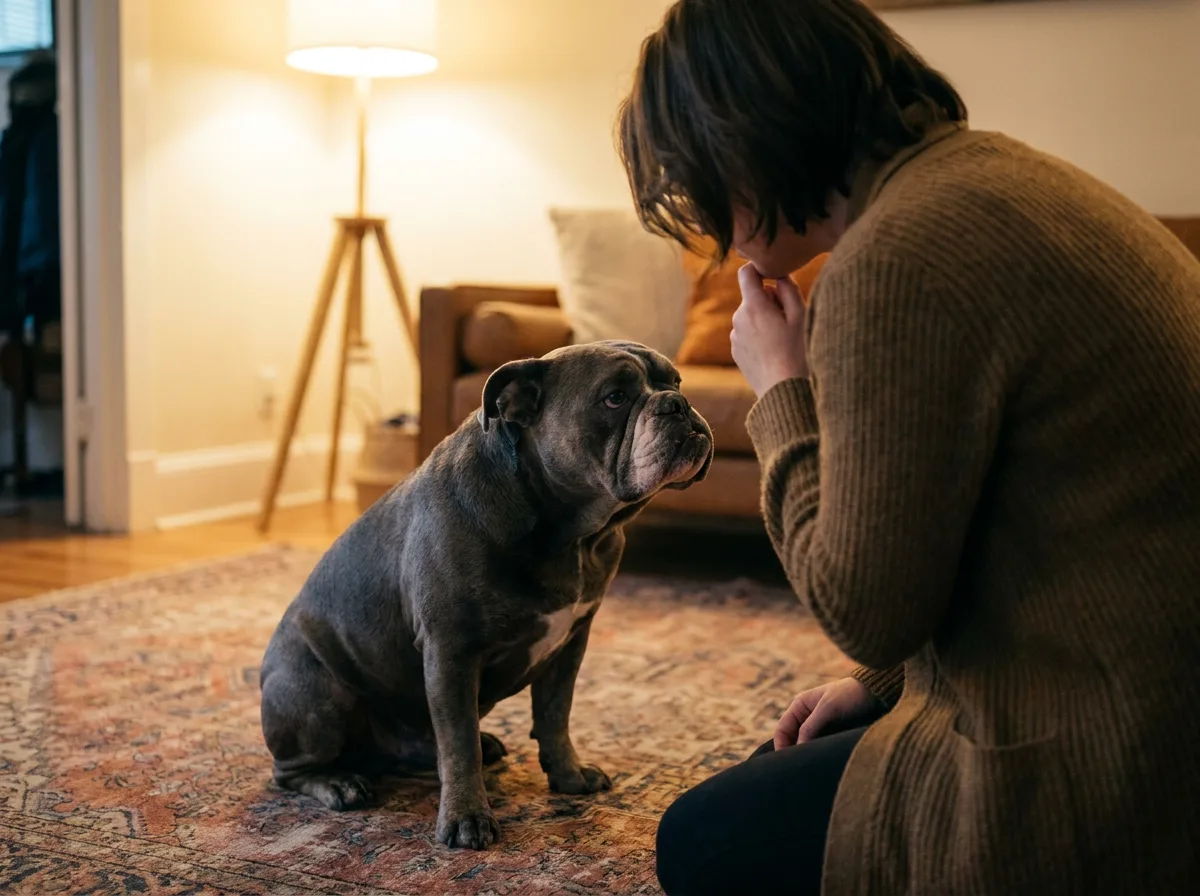
The label alone does not diagnose a color-linked skin condition. It also does not prove the absence of one. Ask about family skin history, current coat quality, veterinary findings and any actual genetic tests rather than accepting a promise based on appearance.
English Bulldog blue marketing
English Bulldog blue advertising may add terms such as blue tri, blue sable or blue fawn. Break the phrase apart. Identify the apparent base, pattern, markings and pigment, then ask which registry recognizes the term and which test supports any genetic claim.
Do not pay more because the seller says the shade is hard to produce. Deliberate rarity is a breeding goal, not a welfare result. The breeder should still explain health screening, airway function, movement and genetic diversity.
Chocolate
Chocolate commonly describes brown hair and brown pigment where black would otherwise be expected. Sellers may use liver, chocolate or cocoa vocabulary inconsistently. A photograph can also turn warm red into brown.
Ask for daylight images of the coat and nose. If genetic identity matters, request the actual laboratory report and verify whose sample was tested. A color report cannot establish every aspect of health or pedigree.
Lilac
Lilac is commonly used for a lighter, muted combination associated with brown and dilution variants. It may appear taupe, pale gray-brown or lavender-toned in marketing photos. Color balance and editing can strongly affect the impression.

Petful may earn a commission when you click through to Chewy, at no extra cost to you.
Treat lilac as a descriptive or genetic claim that needs documentation, not a quality tier. Evaluate the dog with the same functional-conformation checklist used for every other color.
Black
Predominantly black coats fall outside the AKC standard, which allows only a minimal amount of solid black in piebald dogs. Very heavy brindling can look black at a distance, so examine the coat in bright indirect daylight before deciding that no stripes are present.
Solid black marketing sometimes emphasizes contrast with tan or white points. That visual distinction does not answer ancestry or health questions. Use records, not color, for those decisions.
Tri-color labels
Tri generally describes three colors arranged in a particular pattern, often with tan points plus white and a darker base. The darker base may be labeled black, blue, chocolate or lilac in color-focused advertising.
Tri vocabulary is not a single universal Bulldog registry standard. Ask the seller to translate the term into visible features and documented genetics. Do not let the complexity of the name become a substitute for evidence.
Merle
English Bulldog merle describes a mottled pattern that can alter areas of dark pigment. The AKC standard names merle as a disqualification, so a merle Bulldog cannot compete in AKC conformation. The pattern should prompt precise questions about parent colors, genetic results and pairing decisions, but it does not establish the dog’s entire ancestry or health by itself.
Merle creates irregular mottled areas within colored coat. It is visually different from brindle striping and piebald patches. Sellers may combine merle with blue, chocolate, lilac or tri labels.
- Merle breeding requires careful genetic knowledge because dogs with two copies of certain merle variants can have increased risk of serious hearing and eye abnormalities. A seller offering merle should be able to show appropriate genetic records, parent identities and health planning without minimizing risk. A pet owner should discuss individual hearing, vision, skin and eye findings with a veterinarian.
Sable and shaded terms
Sable commonly refers to darker-tipped hairs over a lighter background. Shaded, smut and similar words may describe the amount or distribution of darker hairs. Informal usage varies.
These terms are most useful when paired with clear daylight photographs. If the dog is a pet, precise shade naming should never delay care for hair loss, itching, redness or other skin change.
Platinum, champagne and proprietary names
Platinum, champagne, ghost, exotic and other promotional names may describe very pale or specific combinations, but they often function as branding. Ask what visible and genetic features the name represents, and whether it maps to the registry's current terminology.
A proprietary name can make ordinary variation sound scarce. Translate it back into base color, pattern, markings and pigment before comparing dogs or prices.
How puppy coats change
Puppy coats can change in shade, contrast and visible markings as adult hair develops. Brindle may become easier or harder to see. Ticking can become more obvious in white areas. Facial shading may lighten, and sun exposure or normal coat turnover can change the photograph.
The puppy is not changing breed because the coat changes. Documented ancestry stays in records. A seller should avoid guaranteeing an exact adult shade, eye color or marking intensity from a very young puppy.
Changes that may be normal
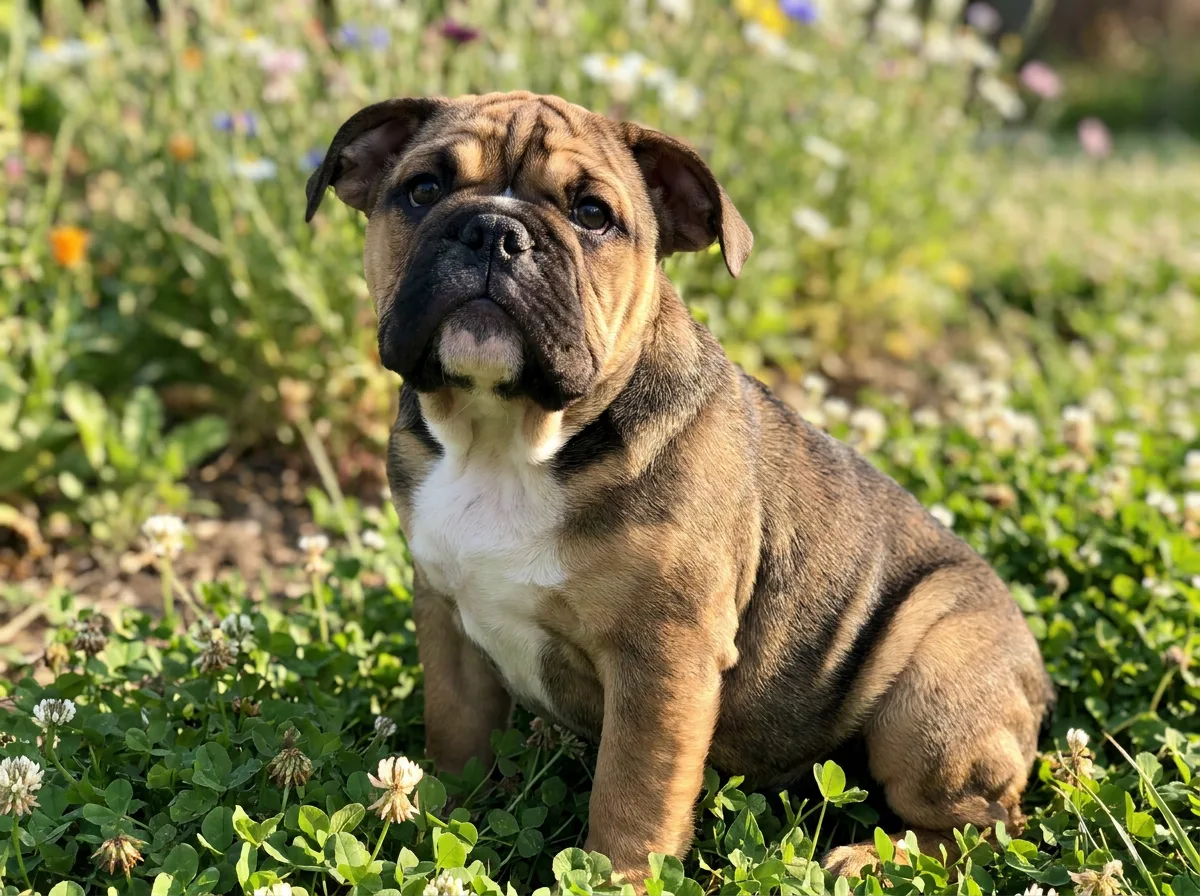
- Puppy fuzz gives way to a smoother adult coat.
- Brindle stripes become more visible across a larger body.
- Ticking appears more clearly in white hair.
- A mask or dark tipping lightens or changes contrast.
- Seasonal shedding temporarily changes coat density and shine.
- Sun exposure creates mild fading in exposed hair.
Normal variation should still occur over comfortable skin. Hair loss, intense itching, odor, crusting, sores, swelling or pain are not merely color development. Photograph the change and ask a veterinarian to examine the dog.
Dated-photo method
Take a standing photograph from each side every few months during growth. Use the same area, indirect daylight and unedited camera settings. Include a front view for facial markings and an overhead view when it can be done safely.
Record the date, age and any recent bath, clipping or skin treatment. This creates a useful history without pretending that a phone camera is a colorimeter.
Eye color and pigment changes
Puppy eye color can change as the dog matures, and photographs can exaggerate light eyes. Nose and eye-rim pigment may also appear different across growth and lighting. Do not use a predicted adult eye color as a reason to pay more. A paw and nose balm keeps a dry, cracked nose comfortable, but it does not change the nose pigment.
Sudden cloudiness, squinting, redness, discharge or eye pain is a medical concern. It is not a normal color transition.
Coat changes after illness or treatment
Clipping, inflammation, medication, nutrition problems and hormonal disease can affect hair growth or color. Regrowth may look different at first. Ask the veterinarian whether a change fits the known condition and treatment.
Do not cover altered hair with dye or harsh products. Preserving skin comfort is more important than making the coat match an old photograph. If the area needs washing, a gentle oatmeal shampoo is kinder to regrowing hair than a whitening or color-enhancing formula.
Rare-color marketing red flags
Color-first marketing becomes risky when it creates urgency, inflates price or displaces welfare evidence. A responsible source can describe a nonstandard coat honestly. They should still lead with health, function, temperament, ancestry and care.
The English Bulldog price guide explains why an asking price is not proof of quality. The English Bulldog puppies guide gives a source-verification decision tree that applies to every coat.
Red flag: the color is the whole value proposition
If the listing discusses shade, eye color and exclusivity at length but says little about breathing, movement, parent testing or early care, the evidence is upside down. Ask the same health questions you would ask for a red, fawn, fallow, white or brindle puppy.
Color expertise does not substitute for responsible breeding. A seller may understand color genetics while neglecting other important traits.
Red flag: “rare” means immediate payment
A limited color does not justify skipping the contract or records. Refuse pressure to send a nonrefundable deposit before verifying identity, health evidence and terms.
Scarcity language is a sales tactic. There will be other dogs, and waiting is safer than committing under a countdown.
Red flag: health guarantees based on color
No visible color guarantees that a Bulldog will avoid airway, eye, skin, orthopedic or other disease. Claims that one color line is entirely healthy need the same scrutiny as any absolute promise.
Ask for named screening results and current veterinary records. The Bulldog Club of America health-testing guidance and OFA CHIC program provide record-based starting points.
Red flag: DNA color testing is presented as complete genetic health testing
A color panel identifies selected coat-related variants. A health panel addresses selected disease variants. Neither replaces physical examinations, breed-relevant screening, pedigree review or functional observation.

Petful may earn a commission when you click through to Chewy, at no extra cost to you.
Read the laboratory report. Confirm the dog's identity, tests performed and results. Do not accept a screenshot that omits the tested animal or panel.
Red flag: health concerns are dismissed as jealousy
Questions about merle pairings, pigment, skin, hearing or eye health deserve factual answers. A responsible breeder can explain testing and limitations without attacking the buyer or another breeder.
Deflection is not evidence. Keep the question open until a qualified source or veterinarian provides a clear answer.
Red flag: extreme anatomy is part of the rare package
A dramatic color does not make an extremely short muzzle, narrow nostrils or poor movement acceptable. Observe quiet breathing, open nostrils, recovery and free gait.
The English Bulldog breed profile explains moderate conformation and household fit. Appearance should not be purchased at the expense of function.
Health-first color decision rules
Color can be part of preference after the nonnegotiable welfare questions are answered. These health-first color decision rules use the same sequence for every dog, whether the coat is traditional, nonstandard, common or heavily marketed.
- Identify the dog before the color. Confirm registered names, microchip information and pedigree documents. Match laboratory reports and health records to the correct dog. A color photograph cannot establish identity by itself.
- Evaluate function before appearance. Watch the dog breathe at rest, walk on level ground and recover after mild activity. Observe eyes and skin. Ask about anesthesia, airway, orthopedic and dermatologic history when appropriate.
- Verify screening. Compare the named parents’ results with current parent-club guidance. Understand what each test covers and does not cover. A CHIC number reflects completion and publication of required testing, not a guarantee that every result was normal.
- Translate the color label. Ask the seller to separate base color, pattern, markings and pigment. Request unfiltered daylight photographs and the actual genetic report for any genetic claim.
- Remove color from the price comparison. Compare two puppies on health evidence, function, temperament, raising environment, contract and support. Then note color preference. This prevents rarity from silently becoming the quality score.
- Keep uncertainty visible. A puppy coat can change, a photograph can mislead and a genetic panel covers only the variants tested. Honest uncertainty is better than a guarantee that cannot be kept.
How to photograph and identify coat color
The daylight identification checklist creates a repeatable record. It is useful for owners, registries, shelters and veterinary teams, and it reduces arguments caused by edited sales photographs.
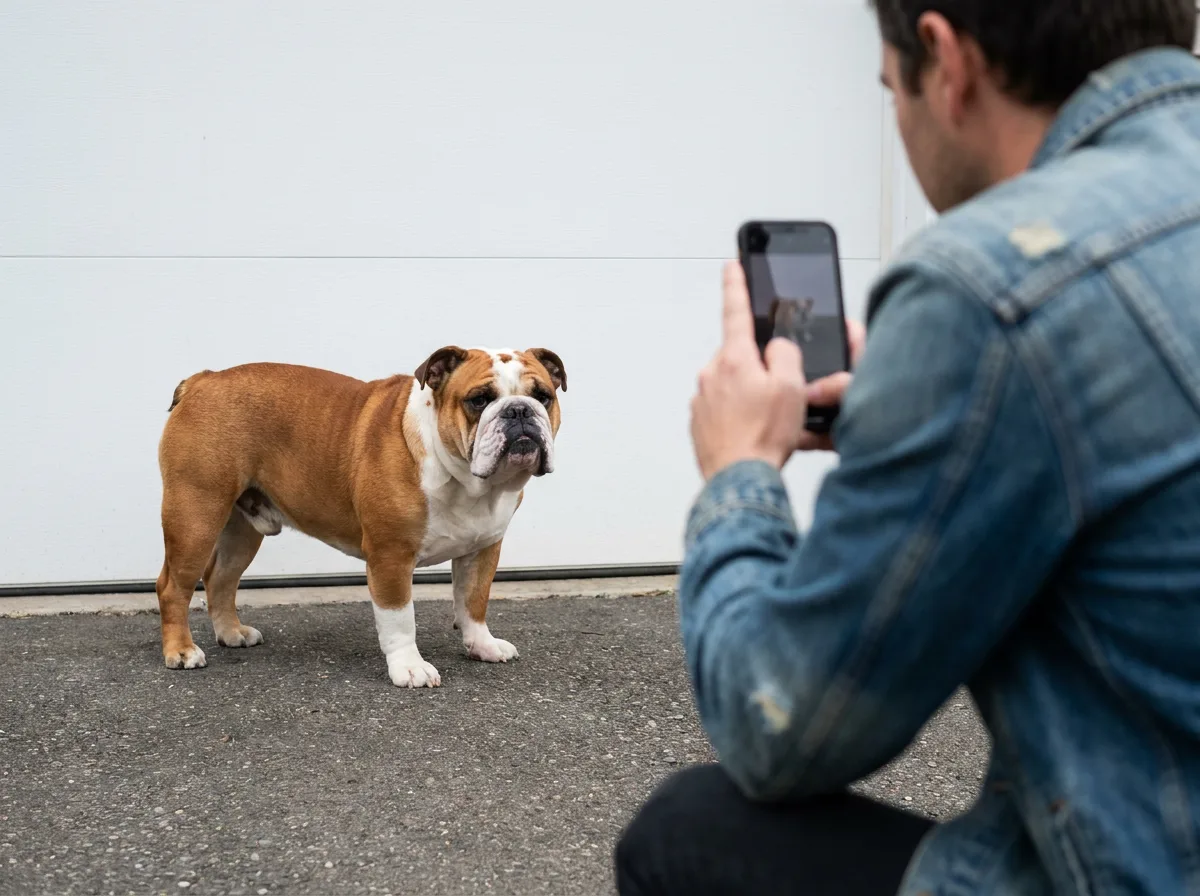
Use bright indirect daylight, such as open shade. Avoid golden-hour light, colored indoor bulbs, direct flash and deep shade. Those conditions can turn red toward brown, fawn toward cream or dark brindle toward black.
Photograph a neutral gray, white or beige object nearby but safely out of reach. The reference helps viewers recognize a color cast without becoming a formal calibration tool.
Use a neutral background that contrasts with the coat. Green grass can reflect into white hair, red floors can warm the coat and blue walls can make gray tones appear stronger.
Keep the surface non-slip and comfortable. The dog should stand naturally rather than be stretched into a show pose solely for identification.
Take left side, right side, front and rear views. Add an overhead view if safe. Keep the camera level with the center of the body and far enough away to avoid wide-angle distortion.
Then take detail photographs of the face, nose, eye rims and any distinctive patch or ticking. Details supplement the full-body record, not replace it.
Do not change saturation, warmth, contrast or local color. Turn off beauty filters and modes that recolor fur. Cropping and exposure correction should be minimal and disclosed when the photograph is used for a formal decision.
Keep the original file with metadata. Social-media apps often compress or recolor images.
Write the date, age, camera, light, recent bathing or clipping and whether the hair was wet. A wet brindle coat can look much darker, and freshly clipped regrowth may not match the mature surrounding coat.
Context allows future photographs to be compared fairly. It also helps distinguish normal coat change from a sudden skin or hair problem.
A short unfiltered video in consistent daylight can reveal brindle striping, tipping and color shifts that one photograph misses. Move around the dog rather than moving the dog repeatedly.
Video still cannot prove pedigree or genetic status. It is a visual record, not a certificate.
For registration, contact the applicable registry or breed club. For genetic interpretation, use the testing laboratory’s documentation and qualified veterinary or genetic guidance. For skin or pigment concerns, ask a veterinarian.
Avoid crowdsourcing a medical conclusion from a photograph. Online viewers cannot palpate skin, examine eyes or verify the sample identity behind a test.
Coat care that protects skin
Color looks best when skin and coat are comfortable, but grooming should never be used to manufacture a richer shade. A short English Bulldog coat needs gentle brushing, bathing when appropriate, thorough drying and regular inspection of folds, feet, ears and the tail area.
If a red coat develops blackened skin, if a white area becomes stained, or if brindle hair thins, ask what changed medically or environmentally instead of renaming the color.
Gentle brushing
Use a tool that lifts loose hair without scraping the skin. A Four Paws Magic Coat wet-and-dry glove and curry brush is one possible option after testing a small area gently. Stop for redness, discomfort or increased flaking.
A rubber curry brush such as the Frisco Bone Dog Curry Brush is another gentle option for a short, smooth coat. Tool fit is individual. Use light pressure and fewer passes rather than trying to remove every loose hair in one session.
Bathing and drying
Choose a dog-appropriate product and bathing frequency with the veterinarian or groomer, especially when skin disease is present. A fragrance-free shampoo such as Earthbath Oatmeal and Aloe is one gentle option, not a treatment for infection, allergy or hair loss.
Rinse thoroughly, then dry folds, feet and other moisture-trapping areas carefully with an absorbent dog towel. Persistent odor, redness, discharge or pain deserves veterinary assessment.
Flea and debris checks
A fine comb can help inspect localized debris, but a Safari double-row flea comb does not replace veterinarian-guided parasite prevention. Comb gently and avoid pulling through irritated skin.
Black specks, crusts or pigment changes need context. Do not assume every dark fleck is harmless ticking or every stain is a coat-color issue.
White-coat staining
Tears, saliva, food, moisture and environmental contact can discolor white hair. Cleaning the surface repeatedly will not solve an eye, dental, skin or fold problem.
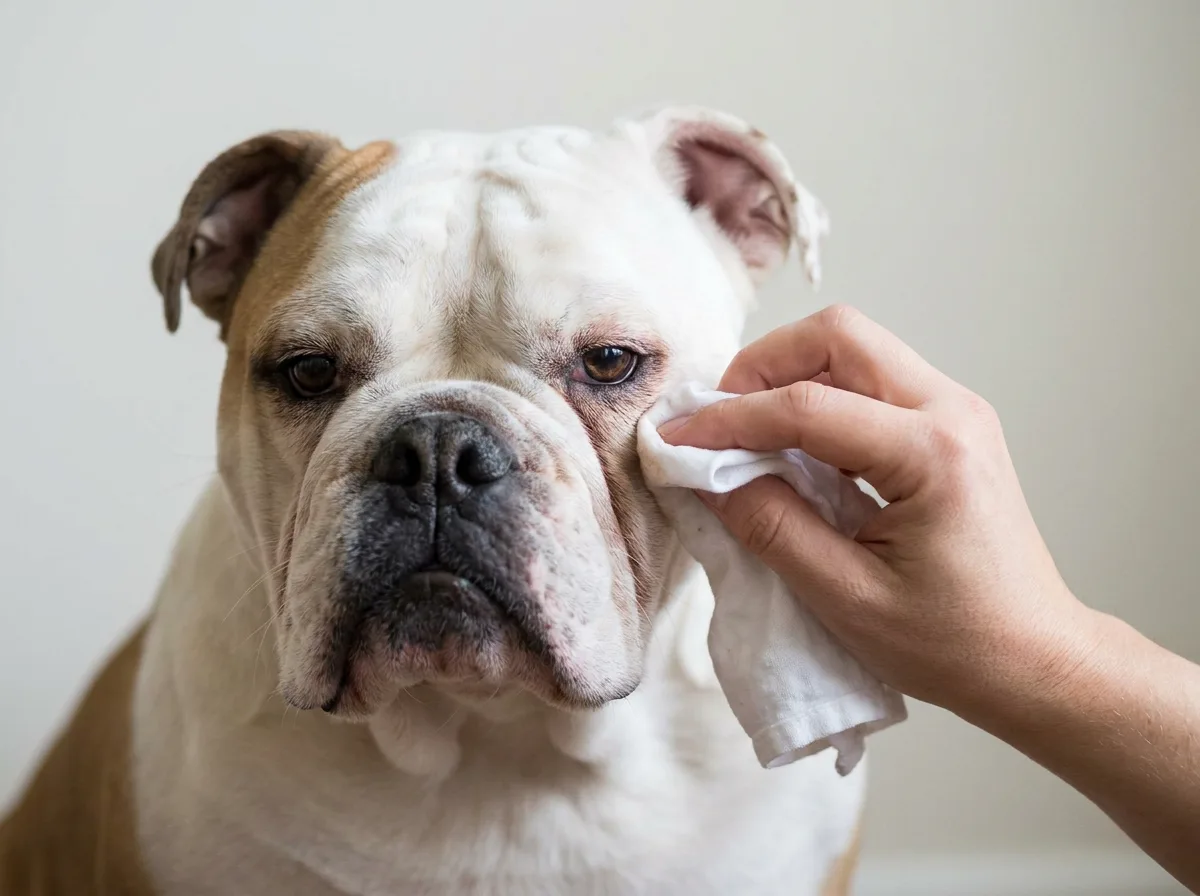
Identify the source first. For daily wiping around the face and white areas, use products made for dogs, such as unscented dog grooming wipes, and keep them out of eyes. Avoid bleach, dyes and harsh home mixtures.
Sun and heat
Light coats and exposed skin may show sun effects more readily, but every Bulldog needs heat protection because brachycephalic anatomy can reduce cooling efficiency. Choose shade and cooler activity times, and provide indoor recovery. A raised mesh dog cot in the shade lets air reach the belly during outdoor rest.
Sun protection products must be safe for dogs and appropriate for the individual. Ask the veterinarian rather than using a human product that the dog can lick.
When coat change is a health sign
Contact the veterinarian for new hair loss, intense itching, sores, odor, swelling, crusting, pain, widespread discoloration or a change accompanied by low energy or appetite. These signs belong to a health evaluation, not an online color debate.
The English Bulldog health and lifespan guide provides a broader life-stage monitoring plan. The English Bulldog shedding guide covers normal loose hair, grooming rhythm and skin warning signs.
Color and breed identity
Purebred status is a documentation question. A visual match can support a description, but it cannot reconstruct ancestry. A red-and-white Bulldog without papers is not proven purebred by color, and a blue English Bulldog is not proven mixed by color alone.
Pedigree records
A pedigree lists recorded ancestors. Verify that the document matches the dog through registered name, litter information and permanent identification. A pedigree can contain mistakes or incomplete information, so use the issuing registry's verification process.
The pedigree does not certify that every ancestor was healthy or that the current dog is suitable for breeding. Those decisions require separate evidence.
Registration papers
Registration records show that an organization accepted the dog under its rules. Different organizations use different standards and color codes. Ask which registry issued the document and what the record actually means.
Do not treat any registration as a general welfare seal. Confirm health screening, current function and responsible care independently.
Breed DNA tests
Consumer breed-composition tests estimate ancestry from reference data and proprietary methods. They can add information, especially for a rescue, but results may differ across companies and cannot replace verified pedigree for formal registration.
Color genetics tests are narrower. They identify selected variants affecting pigment and pattern. They do not by themselves prove that the dog is an English Bulldog.
Shelter and rescue labels
A shelter may label a dog English Bulldog or Bulldog mix based on appearance, history or transfer records. Ask which evidence supports the label. The dog's current health, behavior and care needs matter regardless of certainty.
The English Bulldog mixes guide explains why appearance does not reliably predict adult traits or ancestry proportions.
Color and responsible sourcing
A responsible breeder can have a color preference, but the breeding plan should protect health, temperament and function. Buyers should hear about airway, movement, eyes, skin, screening and puppy raising before being asked to admire rare color.
Ask about the whole pairing
Request the registered identities, ages, health results and reason for pairing both parents. Ask how genetic diversity and functional anatomy were considered. A color match is only one part of a breeding decision.
Observe the parents or adult relatives when possible. Quiet breathing at rest, free movement and recovery after gentle activity provide direct information that a color swatch cannot.
Ask about genetic testing precisely
Which laboratory ran the test? Which dog supplied the sample? Which variants were included? What were the exact results? How did the result affect the breeding plan?
Do not accept “DNA clear” as a complete answer. Clear for one tested variant says nothing about untested conditions or anatomy.
Ask about merle pairing
If merle is involved, request both parents' relevant genetic results and a clear explanation of the pairing. Ask how hearing and eye health are evaluated. A vague statement that the breeder has never had a problem is not a risk assessment.
Ask how the puppy is priced
Request one total price and a written list of inclusions. If color creates a premium, decide whether that premium takes money away from veterinary reserves or other essential care.
The dog's ongoing needs continue after the seller receives payment. A lower color premium and stronger emergency fund may be the more welfare-forward use of the budget.
Common color-identification mistakes
Most mistakes come from mixing categories or trusting one altered image. The four-part method corrects them without requiring a genetics lesson for every pet owner.
Heavy brindling may look black from across a room. Search for fine stripes over the shoulder and flank in indirect daylight. Record white areas and mask separately.
Ticking creates small flecks in white hair. Merle creates mottling within colored areas. Dirt, staining and digital noise can also mimic spots.
A white coat is a hair-color description. Albinism is a pigment condition. Only a qualified evaluation can address a medical or genetic concern.
Nose and eye-rim pigment can support a color description, but they are not the whole coat. Record pigment separately.
Shade, brindle contrast, tipping and ticking can change with growth. Use dated photos and keep predictions modest.
A high price does not verify a rare genetic claim. Ask for the laboratory report and translate the label into visible features.
No coat label guarantees a calm, friendly or trainable dog. Behavior reflects genetics beyond color, health, experience, learning and environment.
A daylight identification checklist
Use this daylight identification checklist when comparing photos, completing a record or asking a registry for help. It keeps lighting, whole-dog context and pigment details visible.
- Capture unfiltered views of both sides, the front, rear and key pigment details. Record the date, age and lighting, then compare the visible coat with the current standard rather than relying on one edited seller image.
Prepare
- Choose indirect daylight and a neutral background.
- Brush away loose surface debris without bathing solely for the photo.
- Turn off filters, portrait effects and color editing.
- Keep the floor safe and the session brief.
Photograph
- Left side and right side
- Front view with face and chest visible
- Rear view with hindquarter markings visible
- Overhead view when safe
- Close-up of nose, eye rims and distinctive markings
Record
- Date and age
- Whether the coat is wet, clipped or recently bathed
- Broad base color
- Pattern and white distribution
- Local markings and pigment
- Areas that remain uncertain
Verify
- Compare with the current applicable breed standard.
- Ask the registry about official codes when needed.
- Read the original laboratory report for genetic claims.
- Use pedigree or registration records for documented ancestry.
- Ask a veterinarian about skin, eye, hearing or pigment concerns.
The checklist produces a defensible description without turning coat color into a quality score. It also makes future change easier to interpret.
Grooming tools in this guide
These grooming options address different coat-care jobs, but none is universally necessary. Select by skin condition, coat response and the veterinarian or groomer's guidance.
- Four Paws Magic Coat wet-and-dry glove and curry brush for gentle loose-hair pickup when tolerated
- Frisco Bone Dog Curry Brush for a firmer rubber pass on a short, smooth coat
- Safari double-row flea comb for localized inspection without replacing parasite prevention
- Earthbath Oatmeal and Aloe fragrance-free shampoo as one bathing option, not a treatment for skin disease
- Safari Shammy Dog Towel for drying folds, feet and the tail area after a bath
- CHI double-sided pin and bristle brush, bristle side only, for a final shine pass on a short coat
Related English Bulldog guides
- English Bulldog breed profile
- English Bulldog puppies
- English Bulldog price
- English Bulldog health and lifespan
- English Bulldog mixes
- English Bulldog size and growth
- English Bulldog temperament and training
- Do English Bulldogs shed?
Sources
- American Kennel Club Bulldog breed information
- American Kennel Club Bulldog breed standard, approved July 12, 2016, effective August 31, 2016
- Bulldog Club of America standard colors
- Bulldog Club of America health testing
- Royal Veterinary College VetCompass English Bulldog research summary
- OFA CHIC program
Questions readers ask
In advertising, rare usually means a color outside the AKC Bulldog standard: blue, lilac, chocolate, black, merle or tri combinations. The standard accepts only red, white, fawn, fallow and their combinations, and it disqualifies all other colors and the merle pattern from the show ring. Rare is a sales term, not a registry finding, so it says nothing about health and should never justify a higher price on its own.
Coat color cannot prove it. Ask for the registered names of both parents, verify the pedigree with the issuing registry, and match the microchip and litter records to the dog in front of you. A breed-composition DNA test can add information, especially for a rescue, but a color panel only reports pigment and pattern variants. A standard color without papers proves nothing, and neither does a rare one.
Under the AKC Bulldog standard approved in 2016, the official colors are red, white, fawn and fallow, plus any combination of them. Recognized patterns and markings are brindle, piebald, ticking, a black mask, black tipping and a minimal amount of solid black in piebalds. The AKC registration list adds named combinations such as red brindle and white or fawn and white.
English Bulldogs most often come in red, fawn, fallow, white and brindle, alone or combined with white, and many have a black mask. Brindle and piebald are patterns layered on those colors rather than separate colors. Blue, lilac, chocolate, black and merle dogs exist, but they sit outside the AKC standard, and those labels describe appearance, not health or quality.
No registry publishes counts by color, so nobody can measure how rare black English Bulldogs are. What is certain is that a predominantly black coat sits outside the AKC standard, which accepts red, white, fawn and fallow and allows only a minimal amount of solid black in piebald dogs. Very heavy brindling can also look black from across a room. A black coat says nothing about health or ancestry, so verify records instead.
No authoritative price data by color exists. Sellers often charge more for colors they market as rare, such as blue, lilac, chocolate or merle, yet all of these sit outside the AKC standard, and merle is disqualified by name. Color does not raise the cost of responsible breeding or health screening, so a color premium buys appearance, not a healthier dog. Compare puppies on parent records and function instead.

Coreen Saito is a pet writer and longtime shelter volunteer with more than a decade in animal rescue. She covers cat behavior, breed care, and the small, ordinary science of sharing a life with companion animals, with a particular focus on honest takes about the products and decisions that actually matter. At home in Arizona, she's outranked by Mac (a dog with the loudest opinion in the house), Rebel (a cat who governs by quiet authority), and Meri (an orange tabby who runs the late shift and the laundry basket). She writes about all three, plus the rescues that keep coming through her life, at LifeWithMinty.com.
Sign up for expert-backed reviews and safety alerts all in one place.