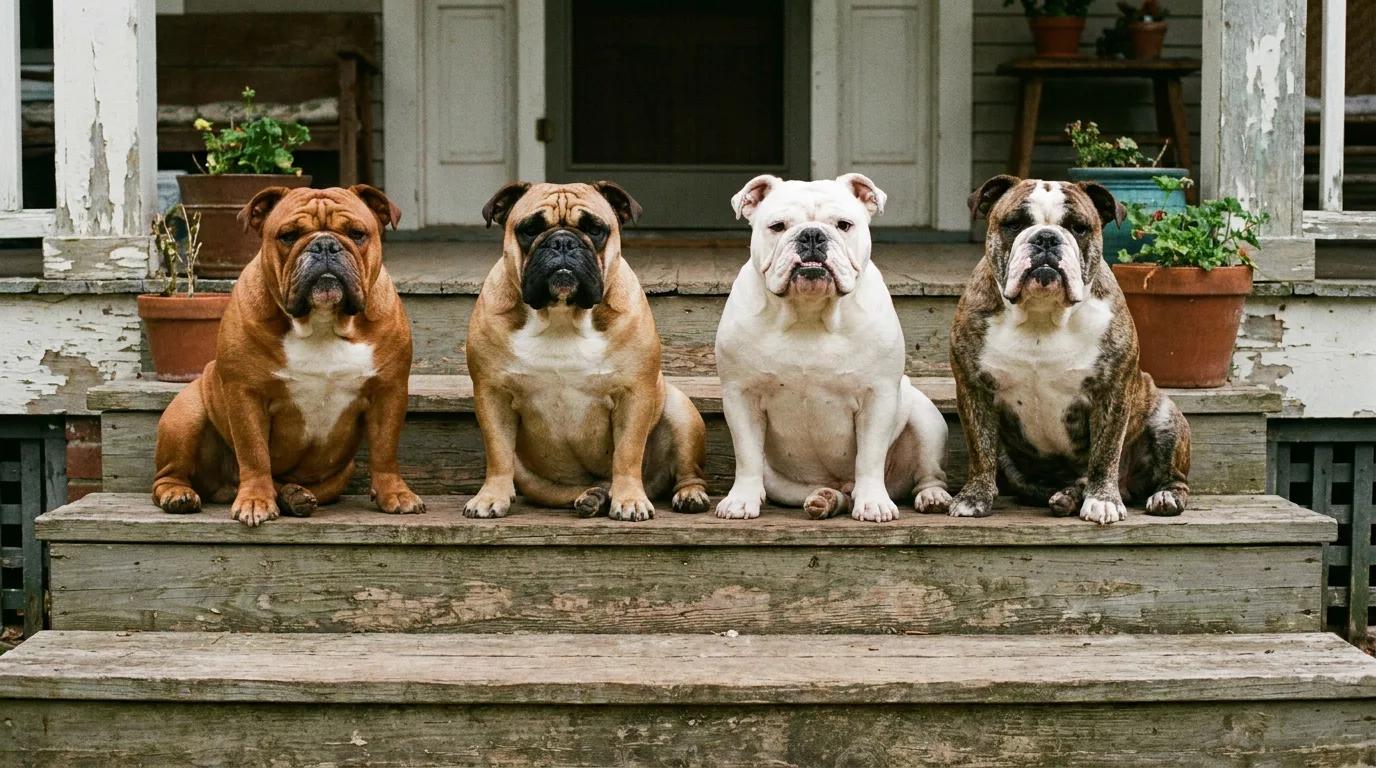
English Bulldog Puppies: Care, Training, Growth and Sourcing
English Bulldog puppies need a first year built around function, health and calm learning. Start with a responsible source, verifiable family records and a realistic calendar for veterinary care, training and grooming.

Petful is reader supported. As an affiliate of platforms like Amazon and Chewy, we may earn a commission when you buy through links on this page. There is no extra cost to you.
English Bulldog puppies need a first year built around function, health and calm learning. Their compact bodies and short muzzles make breathing, heat, skin, joints and body condition especially important, while their social nature makes early routines and gradual alone-time practice valuable.
The right puppy is not the one with the most extreme head, the rarest color or the highest price. Start with a responsible source, verifiable family health records and a functional-conformation checklist. Then use a first-year care calendar so veterinary care, socialization, training and grooming happen before a problem forces the issue. Set up the essentials before pickup day, starting with a correctly sized crate the puppy can stand and turn in.

Sign up for expert-backed reviews and safety alerts all in one place.
English Bulldog puppies at a glance
- 1Verify the source and parent health records before choosing a puppy.
- 2Favor comfortable breathing and free movement over exaggerated features.
- 3Prepare a cool, low-slip first-week setup.
- 4Track growth with body condition, not weight alone.
- 5Put veterinary, socialization, training and grooming milestones on a first-year care calendar.
An English Bulldog puppy can become an affectionate companion, but the first-year workload is substantial. Puppies need frequent toilet trips, careful socialization, multiple short training sessions, sleep, appropriate feeding and close observation of breathing and skin. A buyer also needs the financial capacity for routine and unexpected veterinary care.
Broad breed questions belong in the English Bulldog breed profile, which covers adult household fit and breed history. This puppy guide stays focused on sourcing and the first year.
English Bulldog puppies are sometimes advertised with promises about temperament, adult size or health. Those claims should be treated as predictions, not guarantees. Observe the puppy, meet the mother when possible, review records and ask how the litter was raised. A photograph or pedigree name cannot show airway function, pain or future behavior.
Confirm which Bulldog breed a listing means
An English Bulldog puppy is not the same breed as an American Bulldog, French Bulldog or Olde English Bulldogge puppy. Confirm the registered breed, parent identities and veterinary records before comparing health, adult size or care needs. Apply the same evidence standard to every seller and individual puppy.

Petful may earn a commission when you click through to Chewy, at no extra cost to you.
Before you reserve a puppy
- Confirm that the household can provide reliable cooling and supervised outdoor access.
- Identify a veterinarian and emergency clinic before pickup day.
- Decide who handles overnight toilet trips, training and appointments.
- Price insurance or create an accessible veterinary reserve.
- Check housing, travel and pet-care restrictions in writing.
Choosing a responsible source
A responsible source makes verification easy. A breeder should identify the sire and dam, share registered names and public health-screening results, explain why the pairing was chosen and use a written contract with a return provision. They should ask about the buyer's home instead of treating a deposit as the only qualification.
An English Bulldog breeder should be evaluated by the same evidence standard whether the program is large or small. Compare English Bulldog breeders by parent identities, applicable screening, functional anatomy, puppy-raising practices, contract terms and lifelong return support, not by color labels or deposit pressure.
Verify before comparing programs
The source-verification decision tree starts with identity. If parent identities or records cannot be verified, stop. If records exist, compare them with the testing guidance from the Bulldog Club of America and public databases such as the OFA CHIC program. A statement that the parents were “vet checked” is not the same as named screening results.
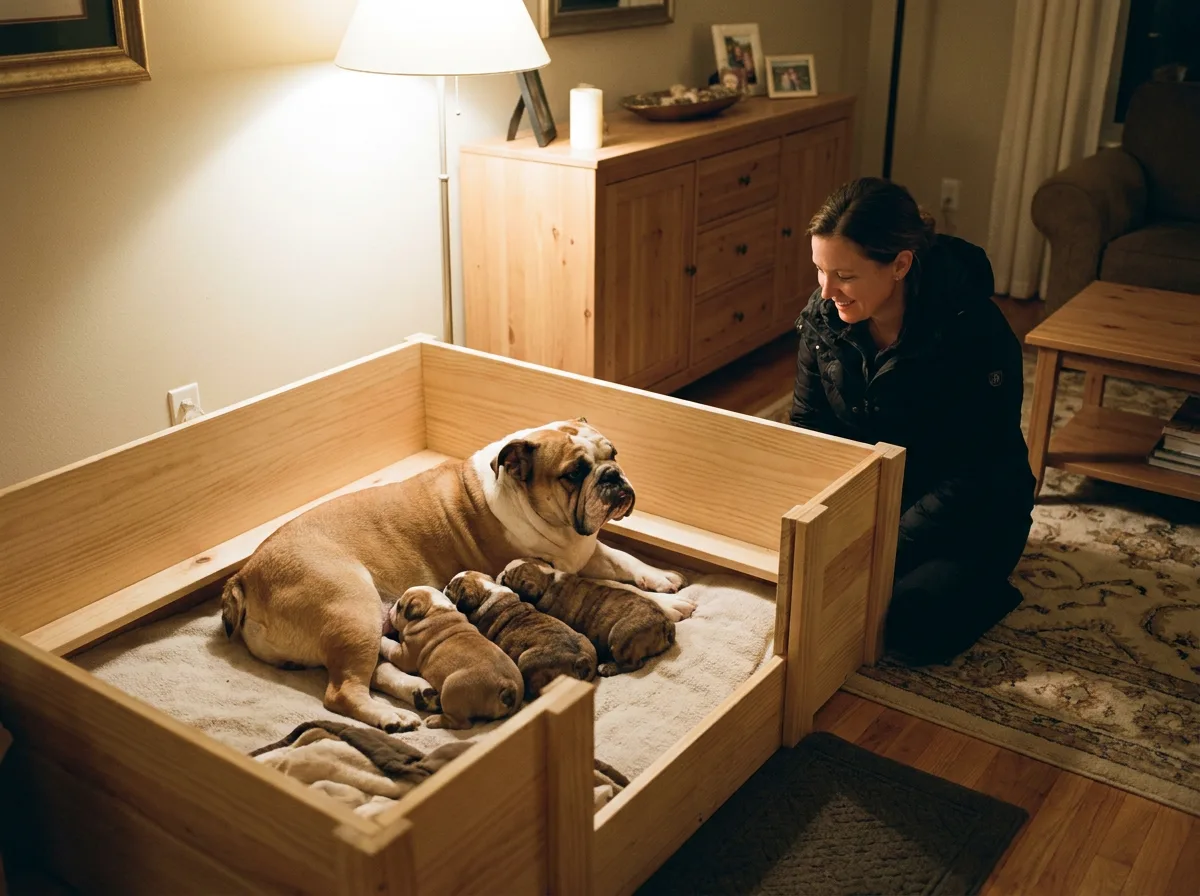
Next, assess how the dogs live. Puppies should be raised in a clean, socially appropriate environment with opportunities for safe handling and ordinary household experiences. The mother should appear comfortable with the setting. A breeder may have sensible biosecurity boundaries, but those boundaries should not become a reason to hide the dogs, records or living conditions.
Source-verification decision tree
- Get the registered names and permanent identification details for both parents.
- Open the actual health records and compare tests with parent-club guidance.
- Ask how breathing, movement, eyes, skin and temperament were considered in the pairing.
- Review the sales contract, health terms and lifelong return policy before paying.
- Walk away from pressure, missing records, extreme anatomy or guarantees no breeder can make.
Online listings can be polished while providing little evidence. Reverse urgency by keeping a written checklist and refusing to send money during the first conversation. Video calls can add context, but they do not replace record verification, a realistic pickup plan or an independent veterinary examination.
Rescue puppies and young Bulldogs also deserve careful questions. Ask what is documented versus estimated, what the puppy has experienced, and whether breathing, eyes, skin, mobility and stool have been assessed. A rescue may not know the parents, which makes current veterinary findings and transparent uncertainty especially important.
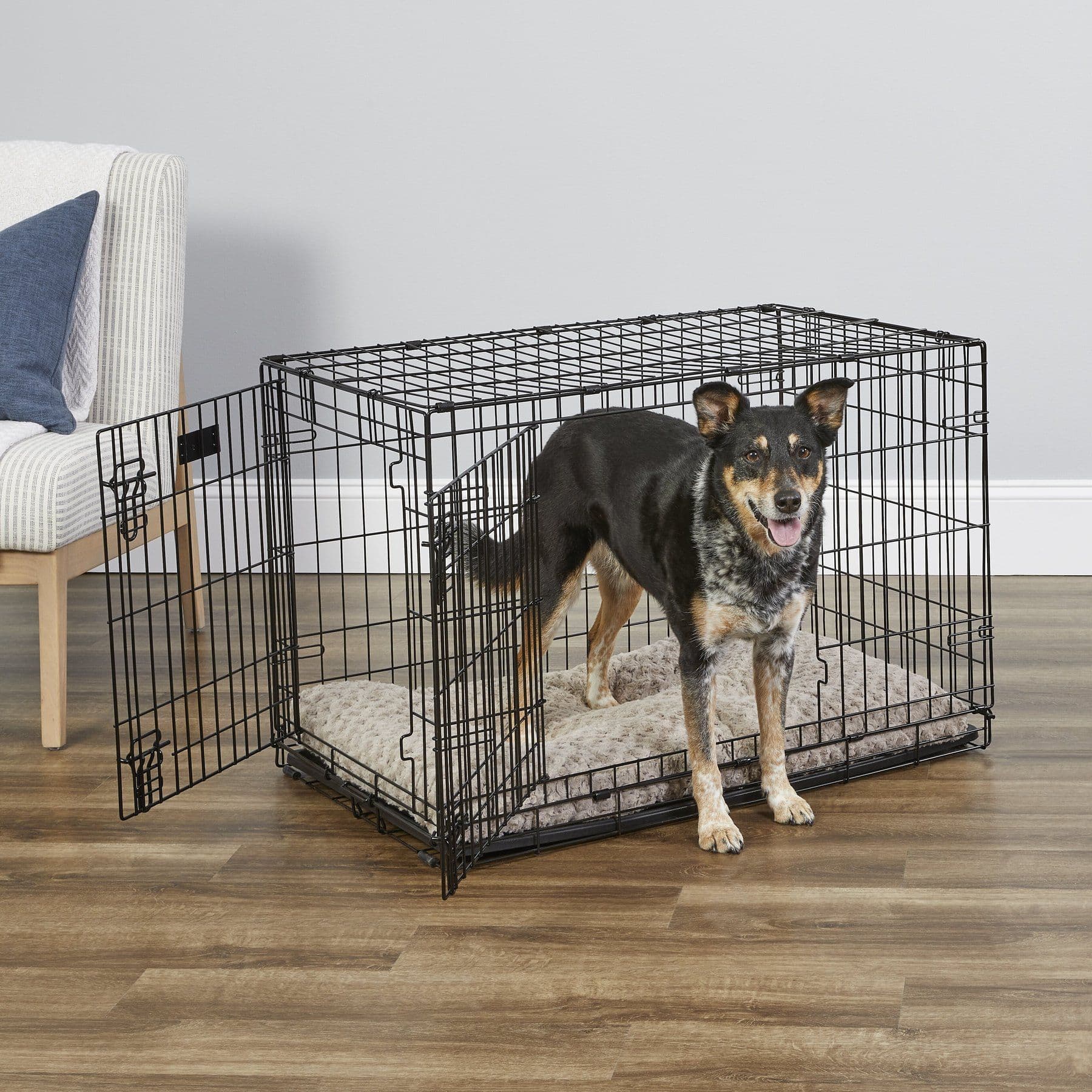
A folding double-door wire crate with a divider and removable tray. Measure your dog and the intended floor space before selecting the 36-inch size.
Petful may earn a commission when you click through to Chewy, at no extra cost to you.
Health records and puppy conformation
Health evidence exists at several levels. Parent screening addresses inherited risk in a breeding decision. The puppy's veterinary record documents care and findings so far. Direct observation shows how the puppy functions today. None of those levels can guarantee a problem-free future, but together they support a more informed choice.
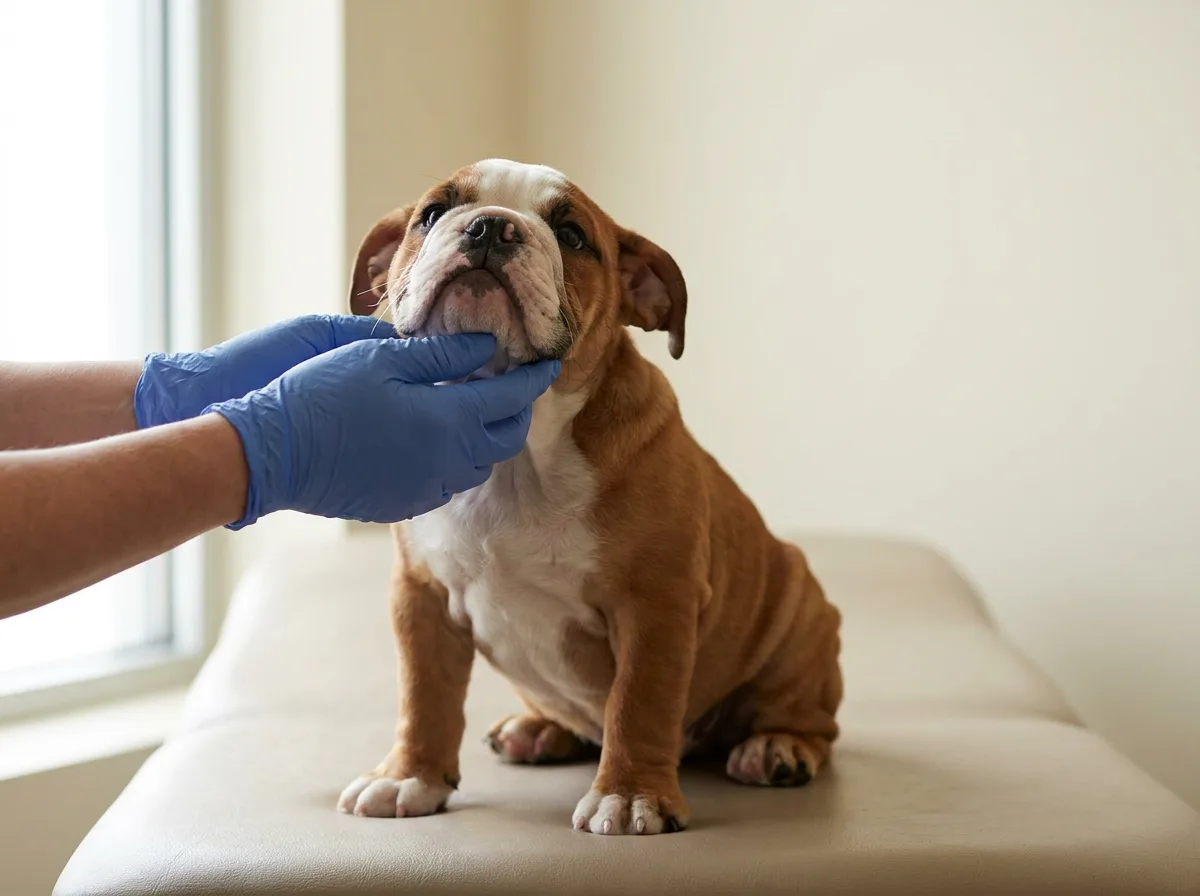
Use a functional-conformation checklist while the puppy is awake and moving naturally. Look for open nostrils, a muzzle with some length, quiet breathing at rest, clear eyes and free movement. Ask to see the puppy walk and recover after gentle play. Heavy effort, repeated gagging, blue or gray gums, collapse or prolonged distress requires veterinary attention, not reassurance from a seller.
| Stage | Primary decisions | Evidence to keep |
|---|---|---|
| Before pickup | Source, parent records, contract, transport and veterinarian | Copies of screening, health record and signed agreement |
| First week | Sleep, toilet routine, feeding, safe handling and veterinary review | Daily notes on appetite, stool, breathing and adjustment |
| First months | Vaccines, parasite plan, socialization, grooming and foundation skills | Clinic record and short training log |
| Adolescence | Body condition, exercise, manners and household fit | Monthly measurements and behavior notes |
Ask for the puppy's date of birth, veterinary record, vaccine and deworming history, microchip information if applicable, and feeding schedule. Dates and product names matter because the new veterinarian needs to know what was actually given. A handwritten card without clinic information should be clarified before pickup. Check the age, too: the American Kennel Club notes that most veterinarians and breeders favor 8 to 10 weeks for going home, and some states require at least 8 weeks before a puppy can be sold.
Red flags that justify pausing
- The seller will not identify both parents or show records.
- Puppies are advertised primarily through rare color or extreme appearance.
- Breathing noise and poor recovery are dismissed as normal for the breed.
- The puppy cannot move freely or appears painful, weak or unusually lethargic.
- Pickup is proposed unusually early or through an untraceable transport arrangement.
- The contract offers replacement language but no meaningful health transparency or return support.
Coat color can change as a puppy matures, and listing terms are not always standardized. The English Bulldog colors guide explains patterns, markings and why color marketing should never outrank function and records.
The first week at home
The first-week setup should be small, cool and easy to supervise. Use a secure sleep area, non-slip paths, gates around stairs, washable bedding and quick access to the toilet area. Keep the schedule quiet enough for the puppy to sleep, because overtired puppies often bite, vocalize and struggle to learn.
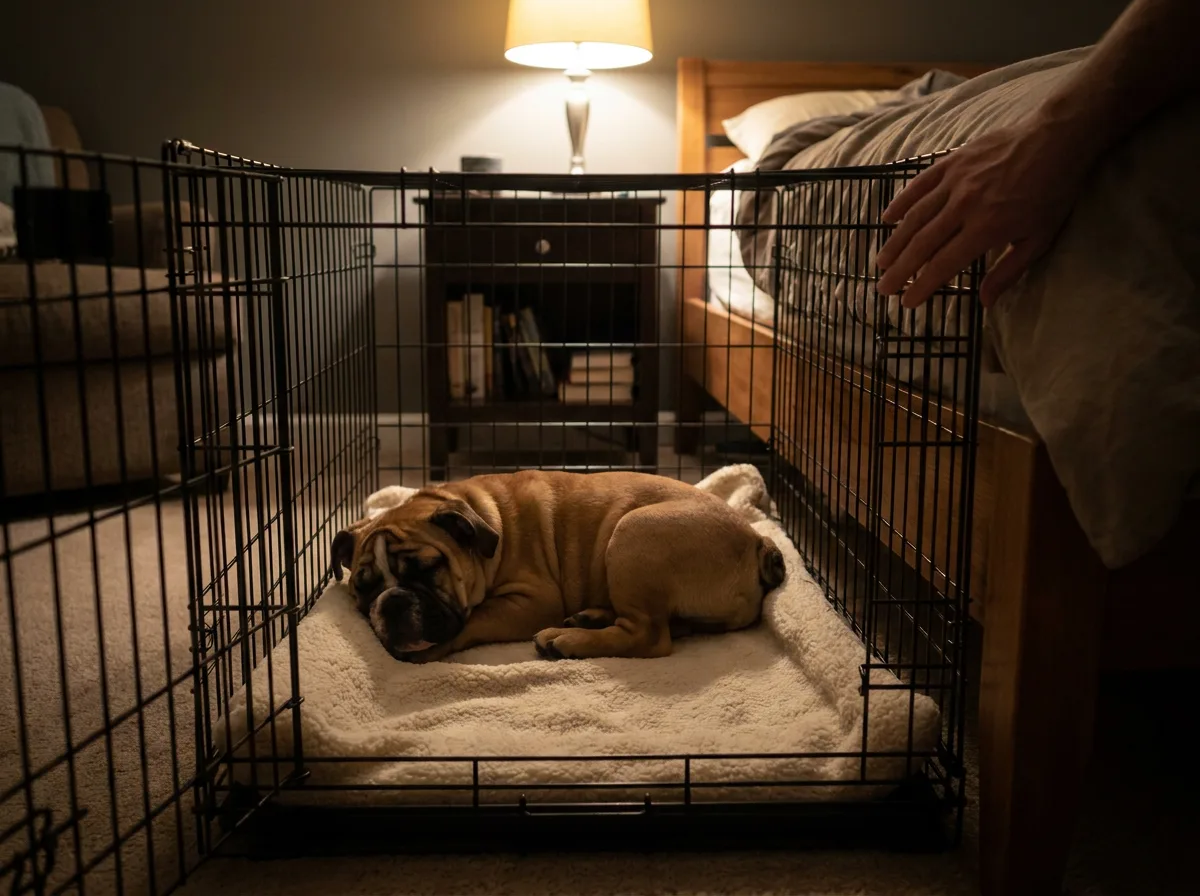
Transport safely in an appropriately sized secured crate or restraint with climate control. Avoid scheduling a long shopping trip or a parade of visitors after pickup. Offer the familiar food and routine supplied by the source unless the veterinarian gives another plan, then make any transition gradually.
For a crate, plan for the expected adult size of about 40 to 50 pounds set by the AKC breed standard rather than buying by a generic breed label, and block off extra space while the puppy is small so the sleeping area stays snug. The crate must allow the puppy to stand, turn and lie comfortably, and it should never become a place where breathing distress or overheating goes unnoticed.
A simple first-week rhythm
- Take the puppy out after waking, eating, drinking, play and before sleep.
- Offer several brief training moments rather than one long lesson.
- Schedule protected naps in a quiet, comfortably cool area.
- Introduce one manageable novelty at a time and allow retreat.
- Record appetite, water intake, stool, urine, breathing and sleep.
Arrange a veterinary visit promptly after arrival according to the contract and clinic advice. Bring every record and a list of questions. The visit is an opportunity to establish a baseline for breathing, eyes, skin, heart, joints, body condition and parasite prevention, not merely to receive the next vaccine.
Puppy growth and body condition
English Bulldog puppy growth is not a race toward the heaviest number. Healthy development is tracked through trend, body condition, muscle, movement and veterinary assessment. Growth charts can provide context, but the puppy's frame and condition determine whether a number is appropriate.
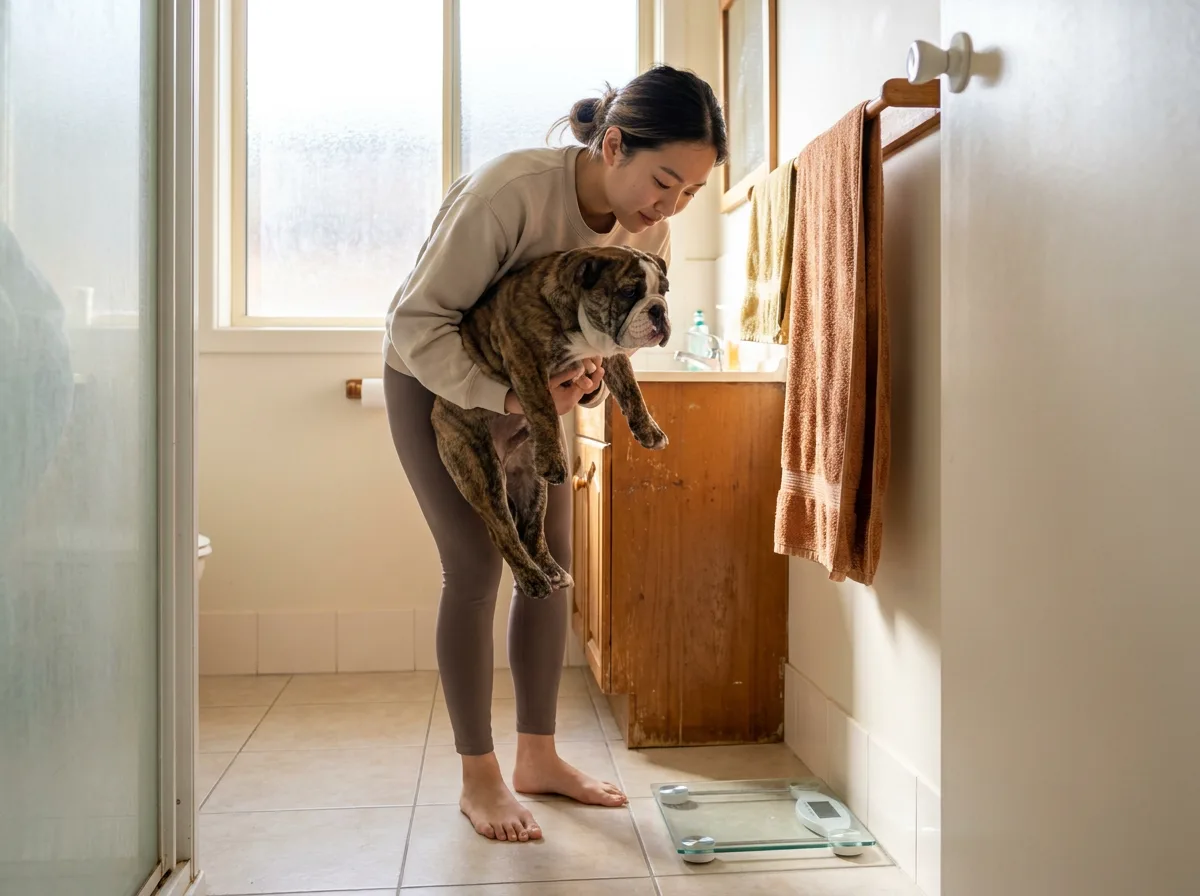
Weigh the puppy on the same reliable scale when possible and record the date. Take a standing side photograph on level ground and note appetite, stool, activity and any illness. The English Bulldog size and growth guide explains how to interpret these measures without forcing an individual onto an internet average.
- A rapidly rising scale number is not proof of healthy development. Track weight with body condition, movement, breathing and veterinary findings, then adjust food or activity with the veterinarian rather than chasing a projected adult size.
Body condition is checked by touch as well as sight. Ask the veterinarian to demonstrate how to feel ribs and evaluate the waist on this puppy. A compact body and loose skin can make visual guesses difficult, so repeatable hands-on assessment is more useful than comparing photographs online.
What to log each month
- Weight, scale and time of day
- Body-condition assessment discussed with the veterinarian
- Breathing at rest and recovery after gentle activity
- Gait, willingness to move and any stiffness
- Food amount, treats and appetite changes
- New skin, eye, ear or digestive concerns
A sudden plateau, loss of weight, reduced appetite or altered movement needs context. Teething, illness, diet, stress and pain can all affect the trend. Contact the veterinarian rather than increasing food automatically.
Feeding and hydration
Feed a complete and balanced diet appropriate for growth, in an amount adjusted to the puppy's condition and veterinary guidance. Measure meals instead of filling the bowl by eye. Treats count toward intake, and frequent training rewards can be taken from the daily ration when the food works as reinforcement.
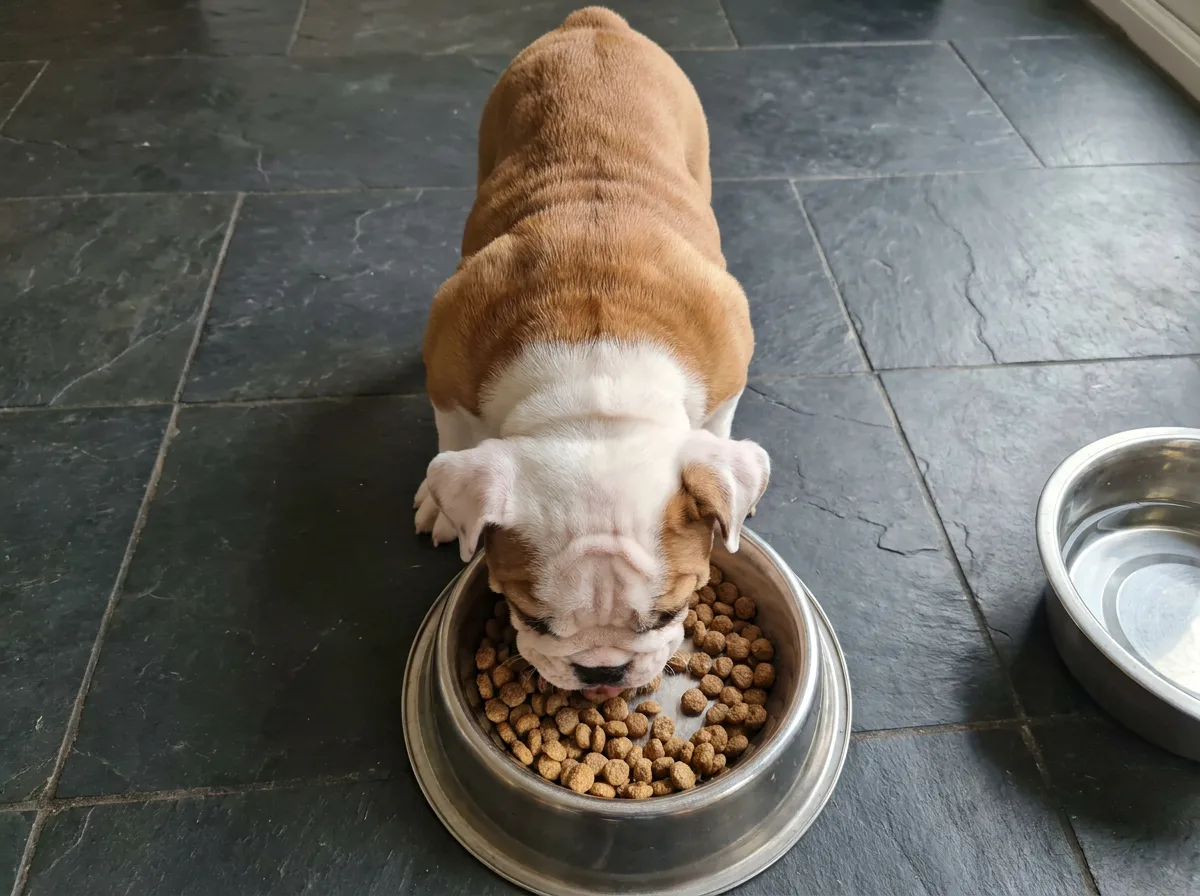
Divide food into age-appropriate meals and keep water available unless a veterinarian gives a specific medical instruction. Slow, calm feeding may help a puppy that gulps, but a special bowl does not diagnose or fix regurgitation, swallowing difficulty or airway disease.
Pawtect Large includes a waterproof barrier; manufacturer size guidance identifies Large for couches.
Petful may earn a commission when you click through to Chewy, at no extra cost to you.
Report repeated vomiting, regurgitation, abdominal swelling, unproductive retching, diarrhea with weakness, or inability to keep water down promptly. Do not assume digestive signs are a normal Bulldog trait, and do not start supplements or restrictive diets without a reasoned plan.
Feeding records worth keeping
- Exact food name and formulation
- Measured amount offered and eaten
- Treats, chews and table-food exposure
- Stool consistency and frequency
- Vomiting, regurgitation or coughing around meals
- Weight and body-condition trend
Safe exercise and heat limits
Puppies need movement for learning and development, but English Bulldogs are not candidates for forced endurance exercise. Use short exploratory walks, sniffing, play on safe footing and basic training. Let the puppy pause and avoid repetitive jumping, long stair sessions or activity in hot and humid conditions. A lightweight nylon leash keeps a puppy close on short sniffing walks without adding weight at the neck.
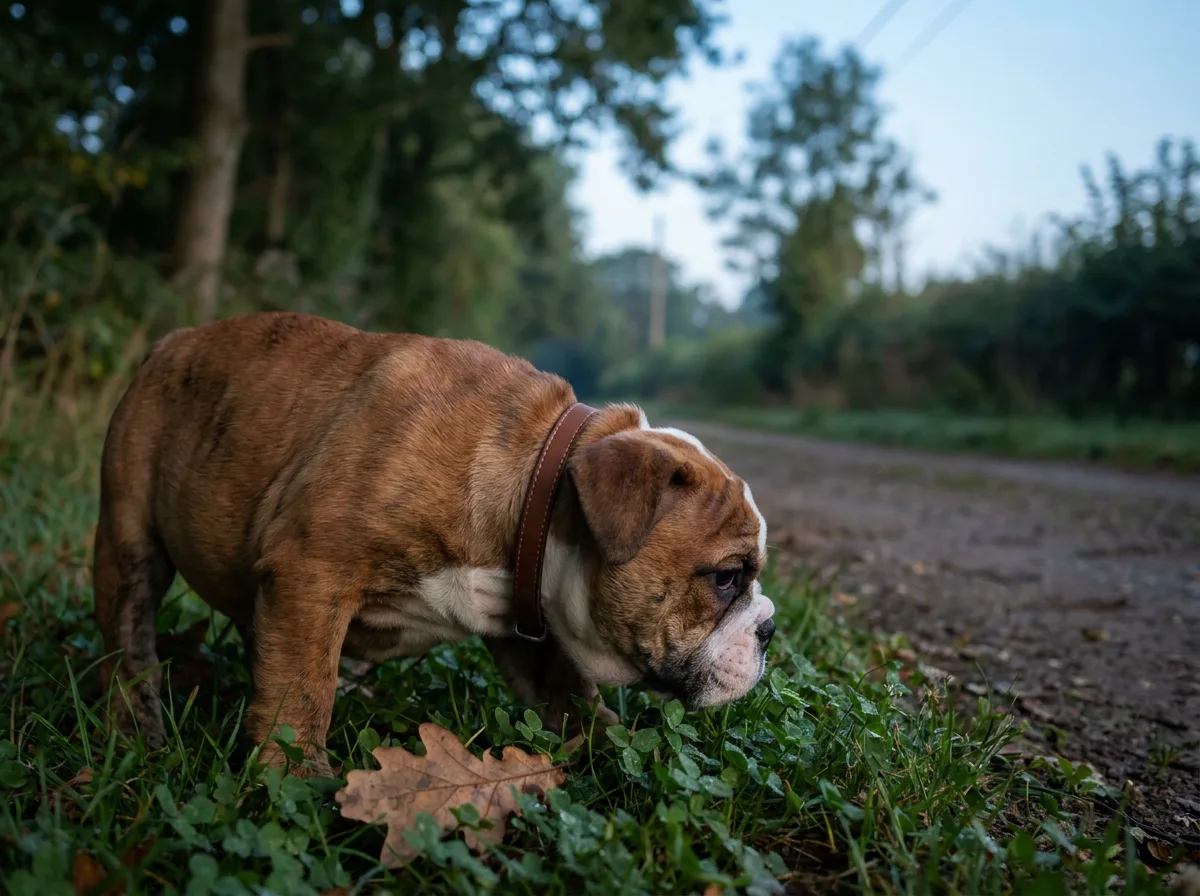
Because a short muzzle can reduce cooling efficiency, brachycephalic heat safety requires changing the environment before the puppy struggles. Choose cooler times, stay near shade and air conditioning, and use the puppy's breathing and recovery as limits. A preset distance is never more important than the dog in front of you.
- Stop activity for marked breathing effort, lagging, distress, weakness, vomiting, confusion or collapse. Move to a cooler place and contact a veterinarian for guidance. Blue or gray gums, collapse or breathing difficulty is an emergency.
Heat-safe outing checklist
- Check temperature, humidity, shade and pavement before leaving.
- Carry a dog water bottle and keep the route short enough for an easy return.
- Avoid parked vehicles, even for a quick errand.
- Build in quiet indoor recovery rather than continuing through panting.
- Know the route to an emergency clinic when traveling.
Socialization and handling
Socialization means helping a puppy feel safe around the sights, sounds, people, animals, surfaces and handling that will be part of life. It does not mean maximizing greetings. Quality matters more than quantity, and the puppy should be able to observe at a comfortable distance and choose to disengage.
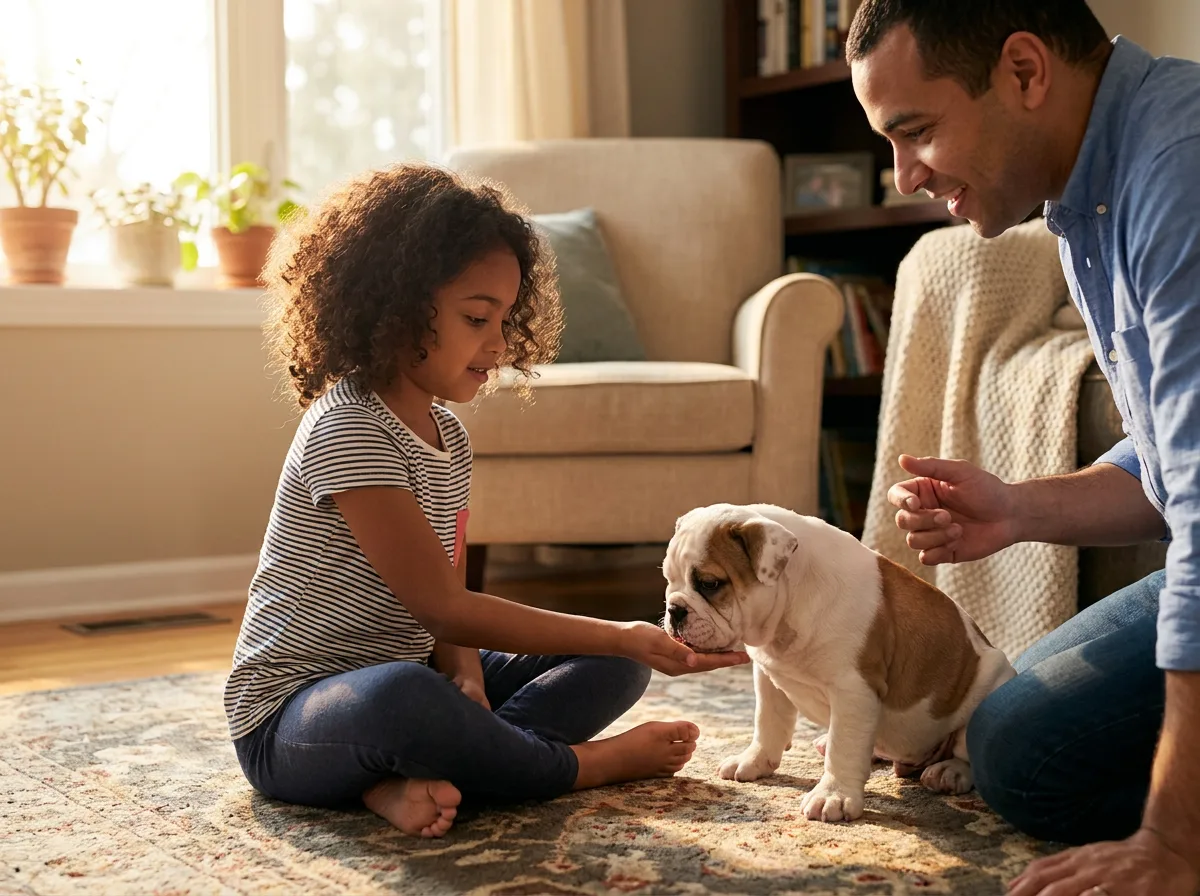
Coordinate safe exposure with the veterinarian's guidance about local disease risk. A stroller, carried observation, clean private yard, known healthy dogs and well-run puppy class may provide different options. Avoid chaotic dog parks and situations where the puppy is trapped in unwanted contact.
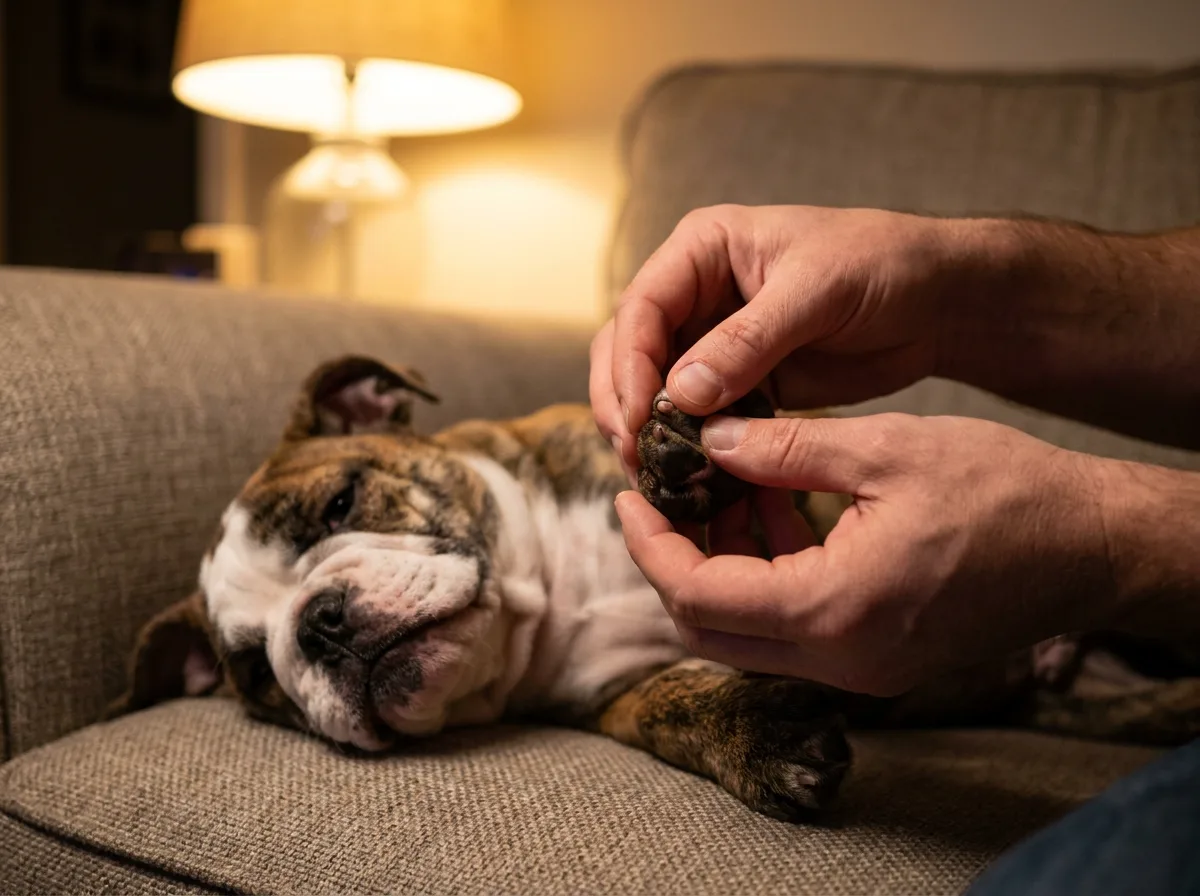
Pair gentle handling with food and release. Practice touching ears, paws, lips, folds and the tail area for a second, then stop before the puppy struggles. Cooperative care is built through many easy repetitions, not by holding the puppy down until it gives up. A lick mat spread with a thin layer of the puppy’s usual food gives it something pleasant to do during brief handling practice.
Experiences to introduce thoughtfully
- Adults with different appearances and movement patterns
- Calm, dog-savvy children with active supervision
- Household sounds at manageable volume
- Car travel with safe restraint and climate control
- Veterinary-style surfaces and brief physical handling
- Friendly, appropriate dogs selected for behavior and health
House training and alone-time skills
English Bulldog puppy training works best in brief, predictable sessions. When training English Bulldog puppies, protect sleep, use rewards the puppy can take comfortably and stop before heat, fatigue or frustration interferes with learning. A treat pouch worn at the waist keeps those rewards ready so each session stays short.
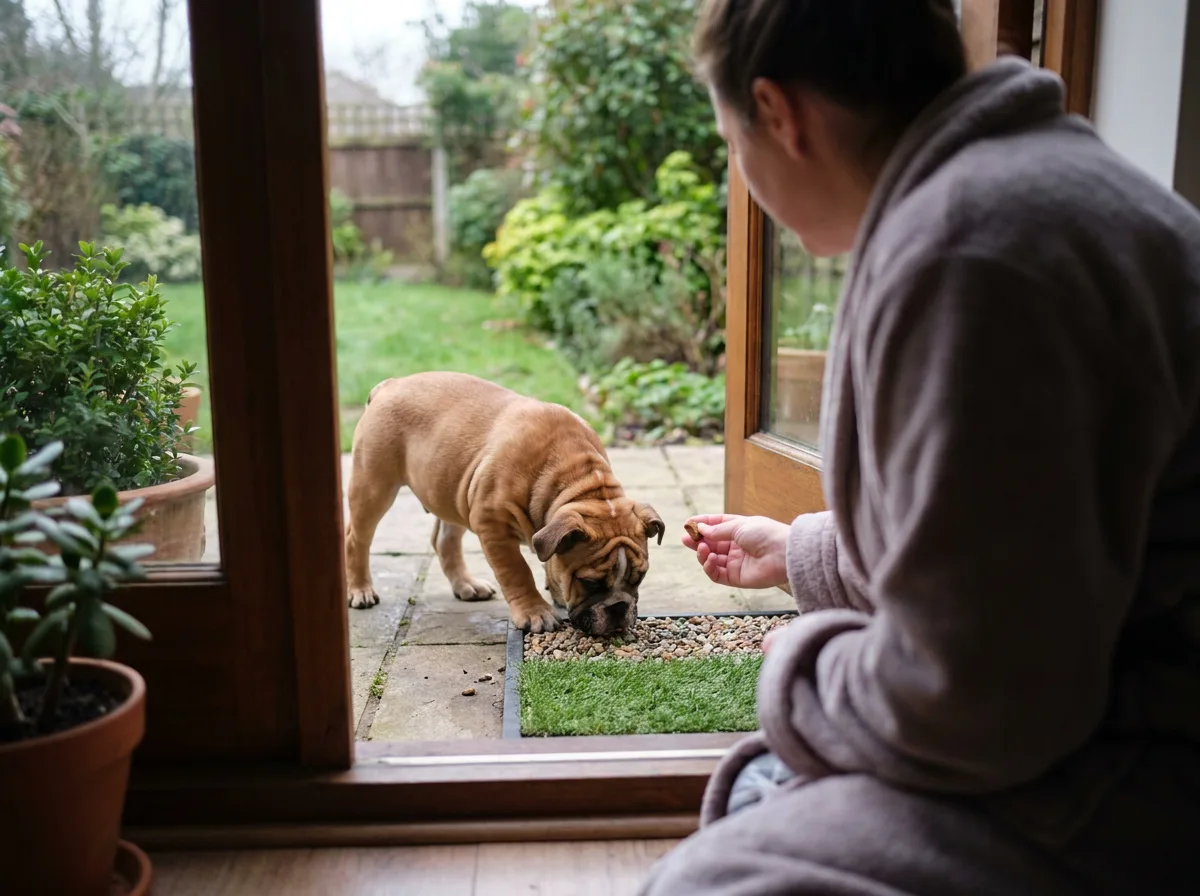
Prevent accidents before adding duration
House training improves when the schedule prevents accidents. Our crate training schedule by age lays out a routine for each stage. Clean any indoor accident with an enzymatic cleaner so lingering odor does not draw the puppy back to the same spot.
- Take the puppy to the same appropriate toilet area often.
- Wait quietly, then reward immediately after elimination.
- Supervise closely indoors, and use a gated area when no one can watch.
- Skip punishment after an accident: it does not teach the right location and can make a puppy hide when toileting.
Keep a log of meals, water, sleep, play and elimination for several days. Patterns reveal when trips are needed and whether stool or urination has changed. Frequent straining, pain, blood, unusual thirst or a sudden loss of control deserves veterinary attention.

A durable rubber dog toy that can be stuffed with treats and selected by the manufacturer's size guide; supervise use and retire it when damaged.
Petful may earn a commission when you click through to Chewy, at no extra cost to you.
Alone-time practice starts in seconds or minutes while the puppy is calm. Use a safe area, provide a suitable activity, return before distress escalates and increase duration gradually. A KONG Classic dog toy can be one supervised enrichment option when its size and use are appropriate, but it does not treat separation distress.
Foundation skills for the first months
- Responding to the puppy's name
- Following a food lure without grabbing
- Settling on a mat
- Coming a few steps when called indoors
- Walking with a loose leash in quiet settings
- Trading objects instead of guarding or chasing
A PetSafe Easy Walk harness may suit some puppies after careful fitting, but equipment should not restrict shoulders or sit against sensitive skin. Pair any harness with reward-based leash teaching and check the fit often during growth.
Coat, folds, nails and dental habits
Do you have to wipe an English Bulldog after pooping? Sometimes, but base the decision on the puppy’s anatomy and cleanliness rather than using an automatic harsh wiping routine.
Check the rear after bowel movements, especially when a short tail, skin folds, loose stool or limited reach allows residue to remain.
If cleaning is needed:
- Use a soft damp cloth or a veterinarian-approved pet wipe.
- Clean gently, then dry the area.
Repeated soiling, odor, redness, pain, scooting, diarrhea or difficulty passing stool deserves veterinary attention. The goal is clean, dry, comfortable skin without rubbing or trapped moisture.
Build the rest of the grooming routine
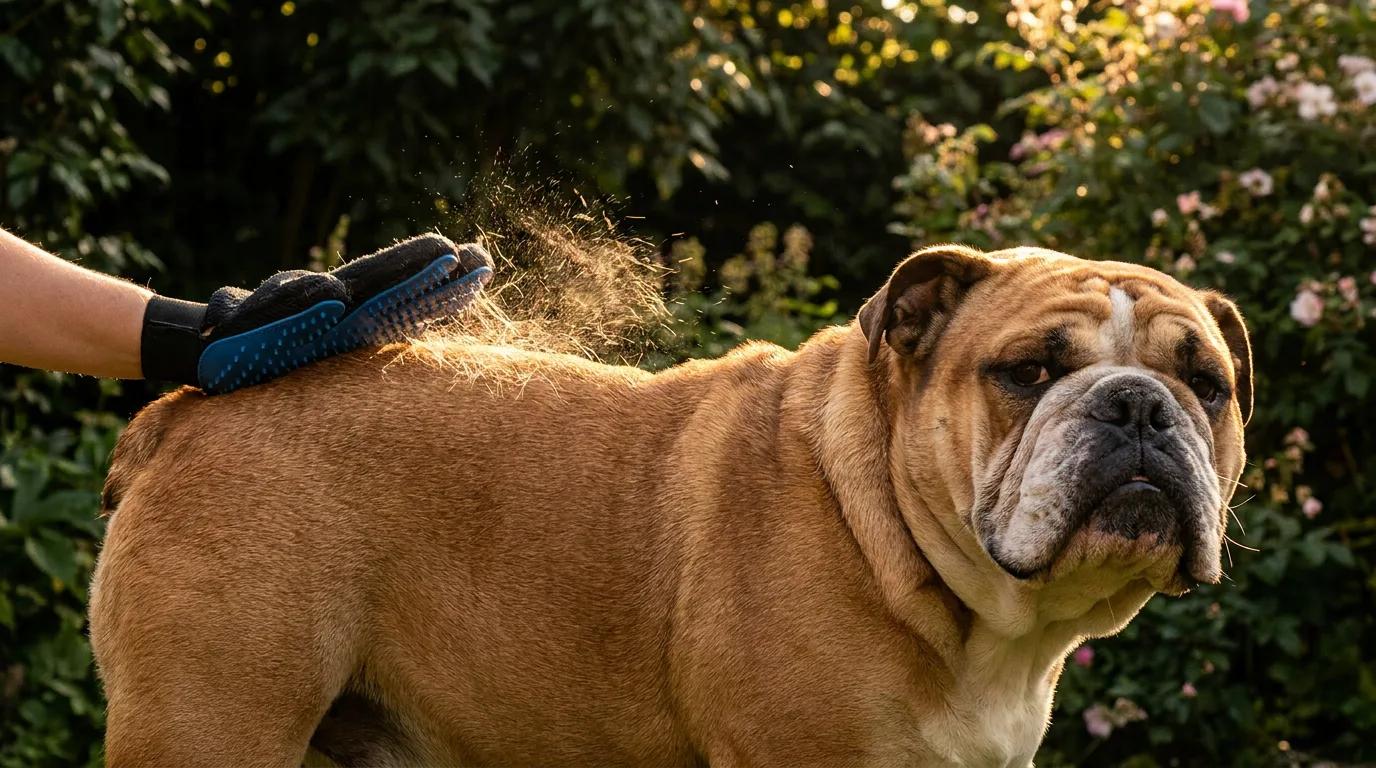
English Bulldog puppies have short coats, yet they still shed and require skin care. Use a soft grooming tool and stop if the skin becomes red. The English Bulldog shedding and grooming guide covers brushing, bathing, drying and warning signs in detail.
Fold care should follow the individual dog's anatomy and veterinary advice. Inspect for moisture, odor, discharge, redness, pain and rubbing. Use only suitable products, dry carefully and avoid creating irritation through excessive friction.
Introduce nail trims in tiny steps: handling one paw, touching one nail with a nail clipper, then trimming a small amount when the puppy is relaxed. Begin toothbrushing practice with dog-safe products and short positive sessions. Never use human toothpaste.
Grooming habits to teach early
- Standing briefly on a non-slip surface
- Accepting gentle inspection of folds, ears and the tail area
- Offering a paw without pulling away
- Allowing lips to be lifted for a dental check
- Resting calmly on a washable blanket for brushing
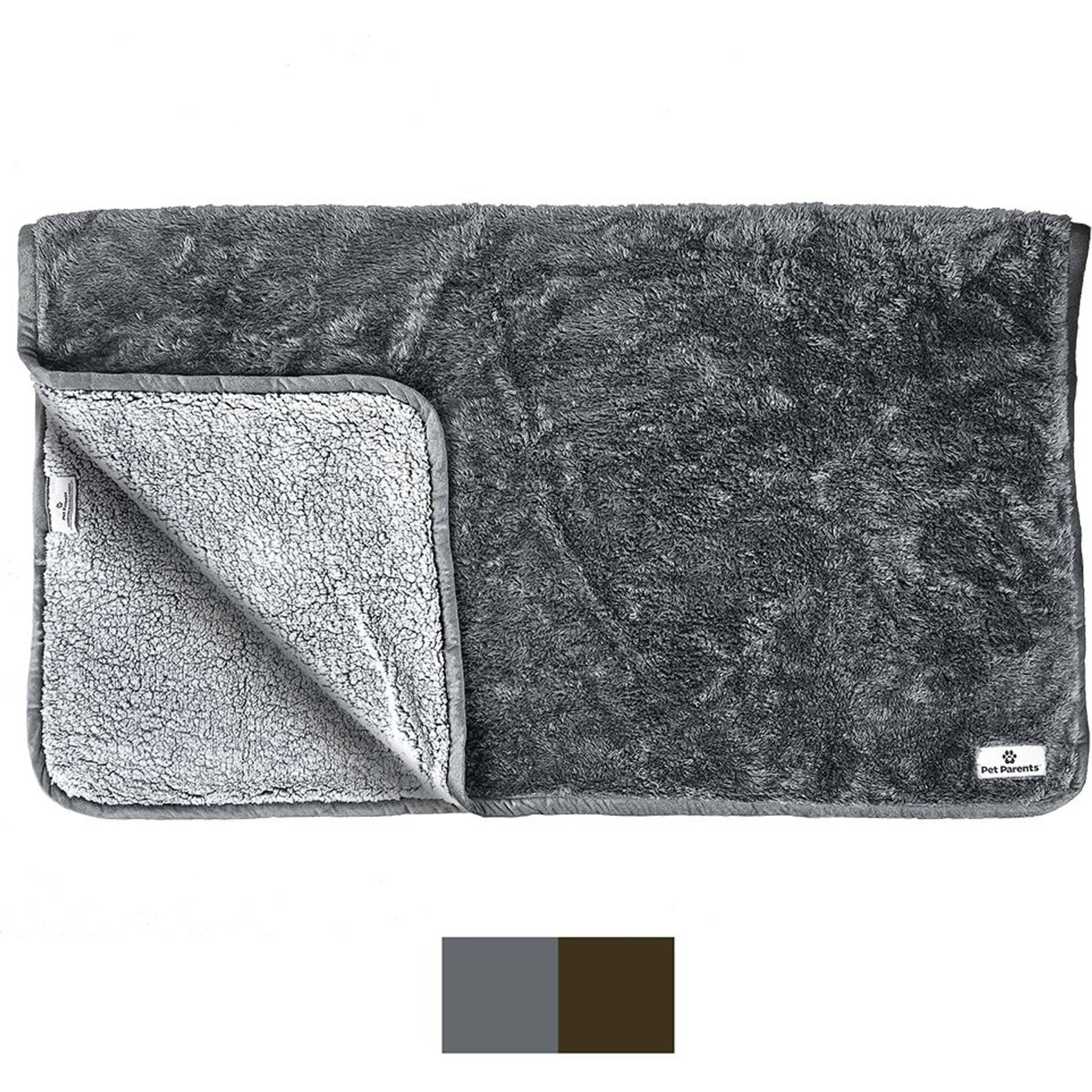
A washable Pet Parents Pawtect waterproof blanket is one possible surface for supervised rest and grooming practice. Check dimensions, wash instructions and the puppy's chewing behavior before use.
Veterinary milestones and warning signs
The veterinarian should create an individualized plan for vaccination, parasite control, nutrition, growth, dental care and reproductive decisions. Timing depends on age, records, health, exposure and local risk. Bring the first-year care calendar to each visit and update it from the clinic record.
English Bulldogs warrant careful attention to breathing, eyes, skin, spine, joints and body condition. The English Bulldog health and lifespan guide explains population risks and health-planning questions without predicting one puppy's future.
Seek prompt care for sudden or severe changes. Breathing difficulty, blue or gray gums, collapse, obvious eye pain, repeated unproductive retching, severe weakness, uncontrolled bleeding or suspected poisoning can require emergency help. For a possible toxin exposure, contact a veterinarian or animal poison-control service rather than waiting for symptoms or using a home remedy.
Bring these observations to the clinic
- A short video of unusual breathing or movement when safe to record
- Dates and times for vomiting, stool, appetite or behavior changes
- All medications, supplements and possible exposures
- Growth log and measured food intake
- Questions about heat, travel, exercise and anesthesia risk
A realistic first-year plan
The care calendar table earlier in this guide turns good intentions into scheduled actions. Bring it to each veterinary visit and update it from the clinic record.
Adolescence tests routines that seemed easy in a small puppy. Recheck harness and crate fit, reinforce recall and settling, and update exercise for the dog's current condition. The first-year plan should change when direct evidence changes, not because an online chart says every Bulldog reaches the same milestone on the same day.
Budget is part of welfare. The English Bulldog price guide separates acquisition cost, setup, recurring care and a risk reserve. It also explains why a high puppy price does not prove that health screening or responsible raising occurred.
Pickup-day transport plan
Use climate control and secure restraint, and avoid planning a long sequence of errands with a newly separated puppy.
Bring the records, contract, familiar food, water, cleanup supplies and the source's contact information. Schedule breaks around the puppy's age and veterinary guidance without exposing the puppy unnecessarily to high-traffic dog areas. Never leave the puppy in a parked vehicle.
If a transport service is involved, get the itinerary and responsibility chain in writing. Ask how temperature, delays, feeding, water and veterinary emergencies are handled. A lower acquisition price does not justify a travel plan that creates avoidable breathing or heat risk.
Records and caregiver handoffs
Keep the first-year information in one physical or digital record that can travel to appointments. Include source documents, parent screening, the puppy’s clinic notes, vaccine and parasite-control dates, microchip details, diet, medications, growth measurements and insurance information.
Add short behavior notes rather than global labels. “Settled after three minutes behind a gate” is more useful than “good alone,” and “panted for ten minutes after a five-minute walk in mild weather” gives the veterinarian more context than “gets tired.”
Update emergency contacts and the current medication list whenever something changes. Give a backup caregiver access before they need it. The record should help another adult make a safe decision when the usual caregiver is unavailable.
The veterinary baseline and first weeks at home may reveal information that was not apparent at pickup. Compare the dog’s records, identity and observed function with what the source represented. Save communications and follow the contract’s notice requirements if a concern appears.
A responsible source should want accurate information, even when the answer is uncertain. The puppy’s immediate care comes first. Do not delay veterinary evaluation while debating who may eventually be responsible for a cost.
Every adult who may supervise the puppy should know the toilet routine, feeding amount, training cues, heat limits and emergency contacts. Conflicting rules make learning harder, while missing health information can delay care. Write a one-page handoff that a sitter can follow without guessing.
Practice the handoff for a short period while the primary caregiver remains reachable. Confirm that the backup person can fit the restraint, recognize the dog’s normal breathing and use the cool recovery area. A helper who loves dogs may still need specific Bulldog handling and heat-safety instructions.
Update the handoff after veterinary visits, medication changes and growth. Include what the puppy must not eat, but direct suspected poisoning to a veterinarian or animal poison-control service rather than a homemade treatment. Include the clinic, emergency clinic and insurance or payment information.
Define first-year success realistically
First-year success is not a perfectly obedient adolescent or a puppy that never has an accident. It is a dog with an established veterinary record, functional routines, safe social experiences, cooperative-care foundations and people who notice changes early.
Measure progress through small observations: the puppy settles sooner after activity, accepts a paw check, recovers comfortably after an appropriate walk and can spend a short planned period alone without escalating distress. These outcomes support lifelong care more than a checklist of tricks completed by a fixed age.
Related English Bulldog guides
Sources
- American Kennel Club Bulldog breed information
- Bulldog Club of America health testing
- Royal Veterinary College VetCompass English Bulldog research summary
- OFA CHIC program
Questions readers ask
Sometimes. Check the rear after bowel movements, especially when a short tail, skin folds or loose stool let residue stay behind. If cleaning is needed, use a soft damp cloth or a veterinarian-approved pet wipe, then dry the area gently. Repeated soiling, redness, scooting or pain needs a veterinary visit.
As of November 2026, Lemonade’s English Bulldog breed guide puts a puppy from a reputable breeder at about $1,500 to $4,000 and a rescue or shelter adoption at $50 to $300. Add roughly $650 to $1,300 for first-year vet care, supplies and training classes. A high price does not prove the parents were health screened, so verify records before paying a deposit.
Most finish near the AKC standard of about 50 pounds for males and 40 pounds for females, standing 14 to 15 inches at the shoulder. A large study of US puppies found bigger breeds can take up to 24 months to reach adult weight, so a Bulldog may keep filling out after its first birthday. Judge growth by body condition, not by the scale alone.
Call for new breathing effort, poor recovery, eye pain, persistent vomiting or diarrhea, loss of appetite, painful movement, skin infection signs or any concerning change from the puppy’s baseline. Breathing difficulty, blue or gray gums, collapse, repeated unproductive retching, severe weakness or suspected poisoning can require emergency help.
Most veterinarians and breeders consider 8 to 10 weeks the best age for a puppy to go home, according to the American Kennel Club, and some states bar the sale of puppies younger than 8 weeks. Taking a puppy at 6 weeks is generally discouraged because it is still building social skills with its litter. For an English Bulldog, also confirm before pickup that the puppy eats well on its own, has a dated veterinary record and breathes quietly at rest.
The first year is demanding: frequent toilet trips, several short training sessions a day, careful socialization and close watching of breathing, skin and body condition. Before reserving, confirm reliable air conditioning, a veterinarian and an emergency clinic, and an insurance plan or cash reserve. Then verify both parents’ identities and health-screening records, and walk away from sellers who lead with rare colors, extreme features or pressure for a fast deposit.

Coreen Saito is a pet writer and longtime shelter volunteer with more than a decade in animal rescue. She covers cat behavior, breed care, and the small, ordinary science of sharing a life with companion animals, with a particular focus on honest takes about the products and decisions that actually matter. At home in Arizona, she's outranked by Mac (a dog with the loudest opinion in the house), Rebel (a cat who governs by quiet authority), and Meri (an orange tabby who runs the late shift and the laundry basket). She writes about all three, plus the rescues that keep coming through her life, at LifeWithMinty.com.
Sign up for expert-backed reviews and safety alerts all in one place.