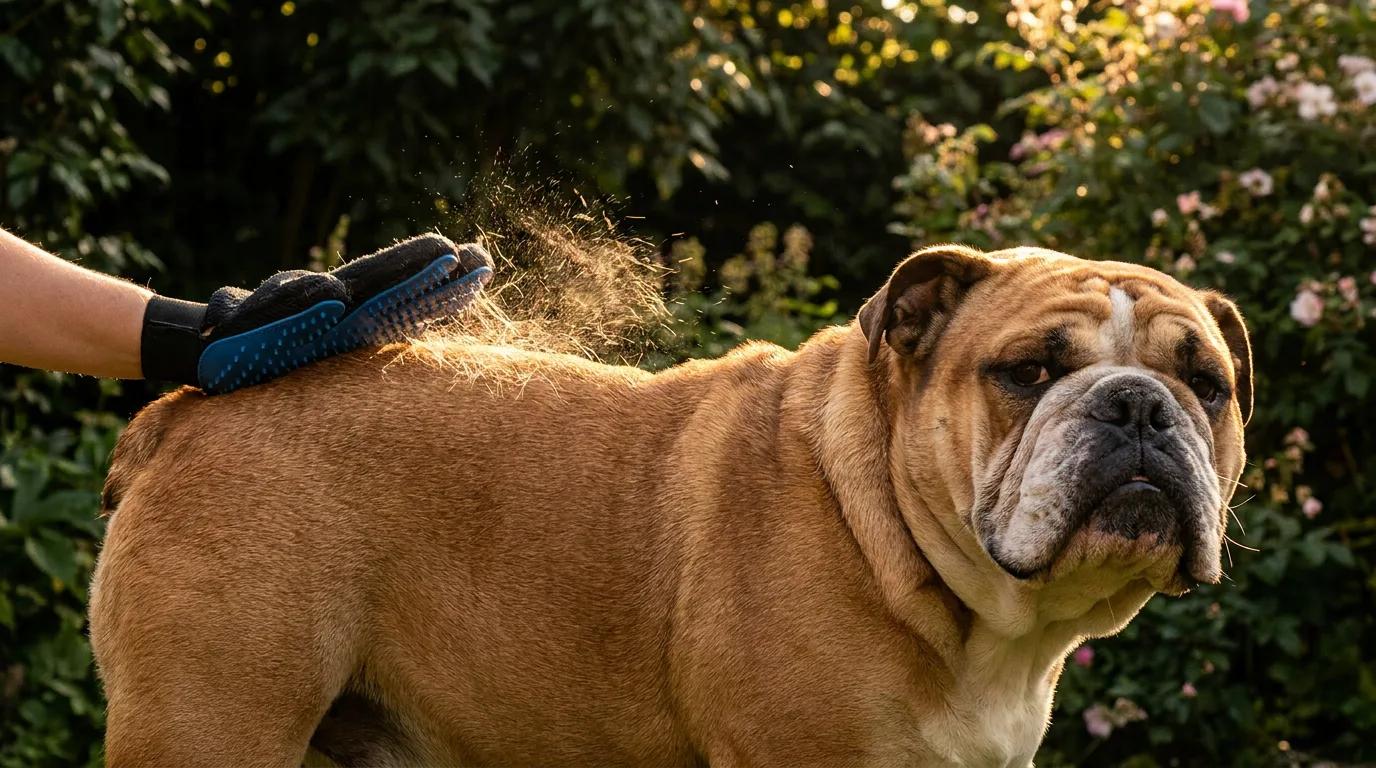
English Bulldog Size and Growth: Height, Weight and Puppy Stages
English Bulldog size is more than a scale number. Learn adult height and weight context, how to track puppy growth and body condition, and when a change deserves veterinary advice.

Petful is reader supported. As an affiliate of platforms like Amazon and Chewy, we may earn a commission when you buy through links on this page. There is no extra cost to you.
English Bulldog size is best understood through a combination of height, weight, body condition and trend. A broad outline can make extra fat easy to miss, while a chart can make a healthy individual look wrong simply because the dog sits outside a generic average.
This guide explains how to measure consistently, follow puppy growth, assess functional adult build and recognize changes that deserve veterinary advice. Equipment follows the same rule: an adjustable harness fitted to the current chest is easier to keep right through growth.

Sign up for expert-backed reviews and safety alerts all in one place.
English Bulldog size and weight at a glance
A full-grown English Bulldog stands about 14 to 15 inches at the shoulder and weighs about 50 pounds for males and 40 pounds for females, according to the American Kennel Club. That makes the breed a medium dog by height but a heavy one for its frame. Treat those figures as a reference range rather than a target: compare your dog with its own trend and body condition instead of pushing it toward an average.
An adult English Bulldog is short, compact and heavy for the height. The AKC breed standard (2016) sets the size for mature males at about 50 pounds and mature females at about 40 pounds. Pet Bulldogs often run heavier: in a Royal Veterinary College VetCompass study of 2,662 English Bulldogs under UK veterinary care in 2016, the median recorded bodyweight was 25.55 kg (about 56 pounds), close to double the 13.54 kg median for other dogs in the same study. Frame, sex, muscle and body condition decide what a healthy weight is for one dog.

Petful may earn a commission when you click through to Chewy, at no extra cost to you.
| Measure | Figure | Source |
|---|---|---|
| Adult height at the withers | About 14 to 15 inches | AKC Bulldog breed page |
| Mature male weight | About 50 pounds | AKC Bulldog standard, 2016 |
| Mature female weight | About 40 pounds | AKC Bulldog standard, 2016 |
| Median recorded bodyweight, UK veterinary sample | 25.55 kg (about 56 pounds) | RVC VetCompass study, 2022 (2016 records) |
| Median bodyweight of other dogs in that sample | 13.54 kg (about 30 pounds) | RVC VetCompass study, 2022 |
| Age at adult body weight | Up to 24 months for larger breeds; 8 to 12 months for very small breeds | Salt and colleagues, PLoS ONE, 2017 |
- 1Adults stand about 14 to 15 inches at the shoulder (AKC).
- 2The breed standard weight is about 50 pounds for males and 40 pounds for females.
- 3Many pet Bulldogs weigh more than the standard, so judge rib cover and waist, not the scale alone.
- 4Larger dogs can take up to 24 months to reach adult body weight.
- 5Ask a veterinarian about rapid, stalled or unexplained weight change.
Four measures answer different questions
A dense, broad dog may look heavier than expected without the number explaining function. Watch height at the withers, scale weight, body-condition score and the direction of change over time because no single measure can distinguish healthy frame from excess fat or lost muscle.
In daily care, collect all four measures under similar conditions. Use the veterinarian’s body-condition demonstration as the reference.
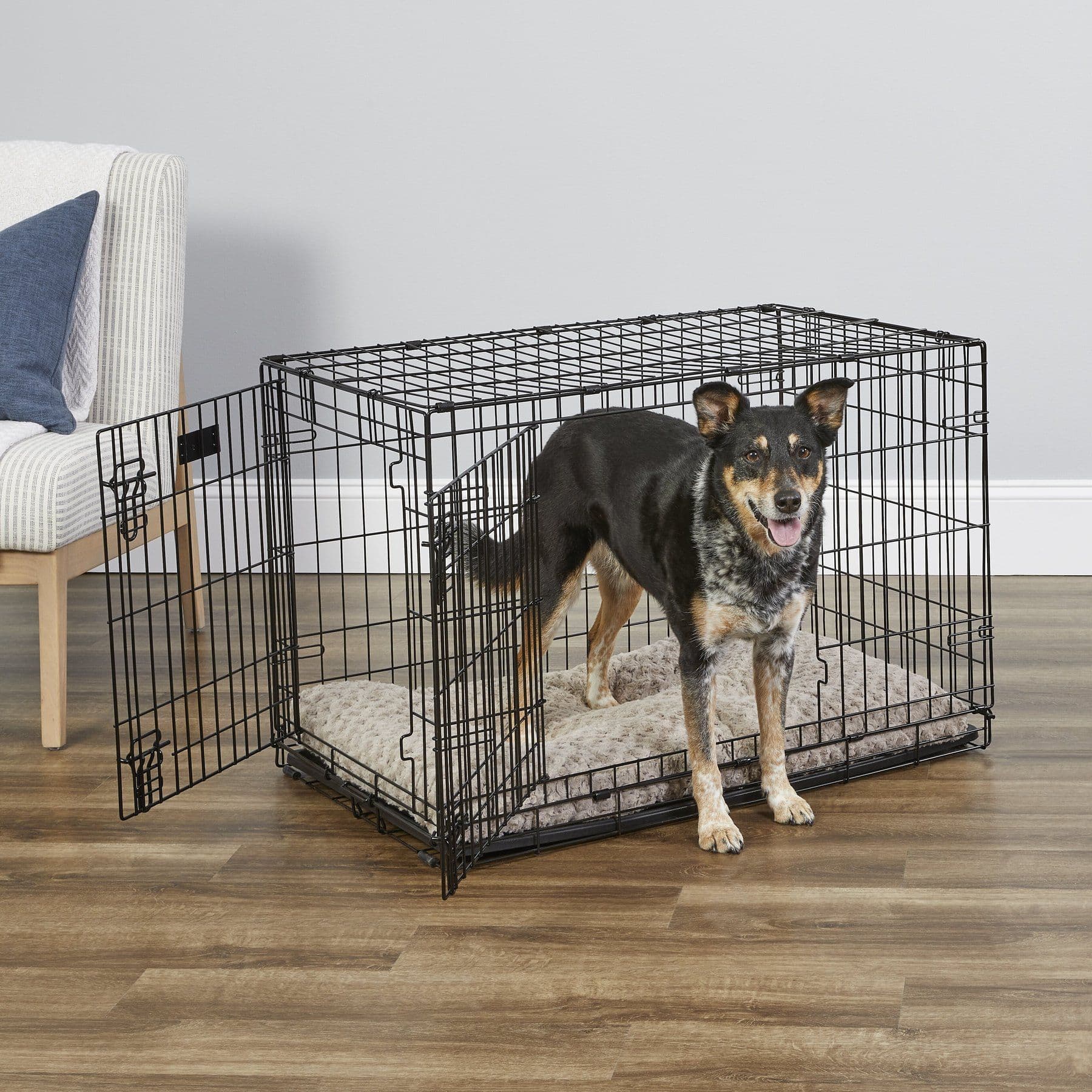
A folding double-door wire crate with a divider and removable tray. Measure your dog and the intended floor space before selecting the 36-inch size.
Petful may earn a commission when you click through to Chewy, at no extra cost to you.
Adult height and weight
Is an English Bulldog a medium or large dog? It is a medium dog by height, but its dense build puts its weight in the range of some larger breeds. A full-grown English Bulldog should not be judged by scale weight alone. Compare rib cover, waist, abdominal tuck, muscle, breathing and free movement, then discuss the complete picture with the veterinarian. How big is a toy English Bulldog full grown? A "toy" English Bulldog is a seller label, not a separate recognized size that guarantees a particular adult measurement or health outcome. Ask for parental size, age and actual measurements, but leave room for individual variation.
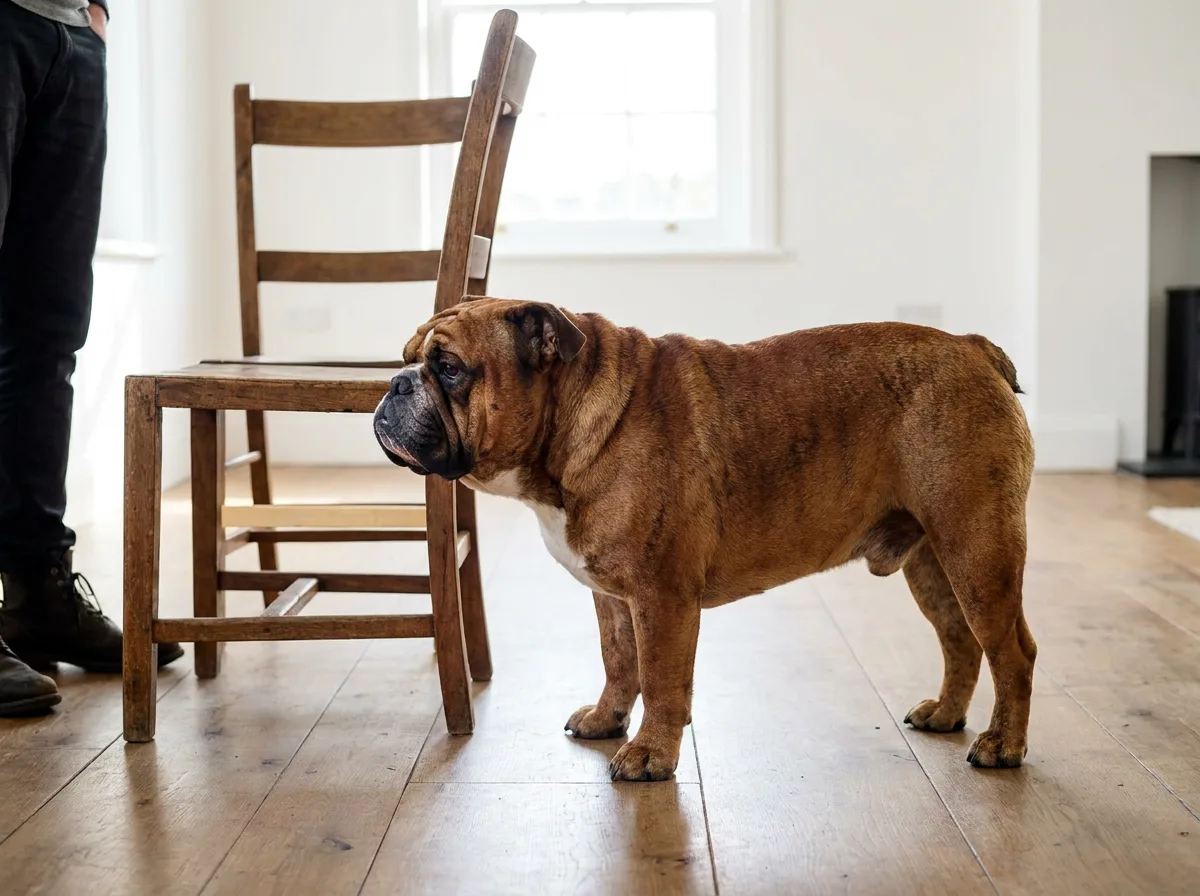
Height is measured from level ground to the top of the shoulder blades, called the withers. It is not measured to the head. Weight should be taken on a scale appropriate to the dog, ideally at a similar time and without large changes in equipment. Small differences between scales are normal; a repeated trend on the same scale is more useful.
Interpret adult numbers in context
Start with whether ribs are palpable, a waist and tuck are present, movement is comfortable and the weight is stable. Muscle loss can also hide behind stable scale weight if fat increases. This matters because a Bulldog can be overconditioned while still sitting near a familiar breed number. Measured meals of a complete adult dog food make the trend easier to read, because portion drift is a common reason the scale climbs.
Ask for a hands-on body-condition and muscle-condition assessment. Compare current measurements with the dog’s own healthy baseline.
A practical puppy growth timeline
English Bulldog puppies grow at individual rates, so a chart should prompt questions rather than prescribe one path. Recheck the fit of a dog harness as your Bulldog grows.
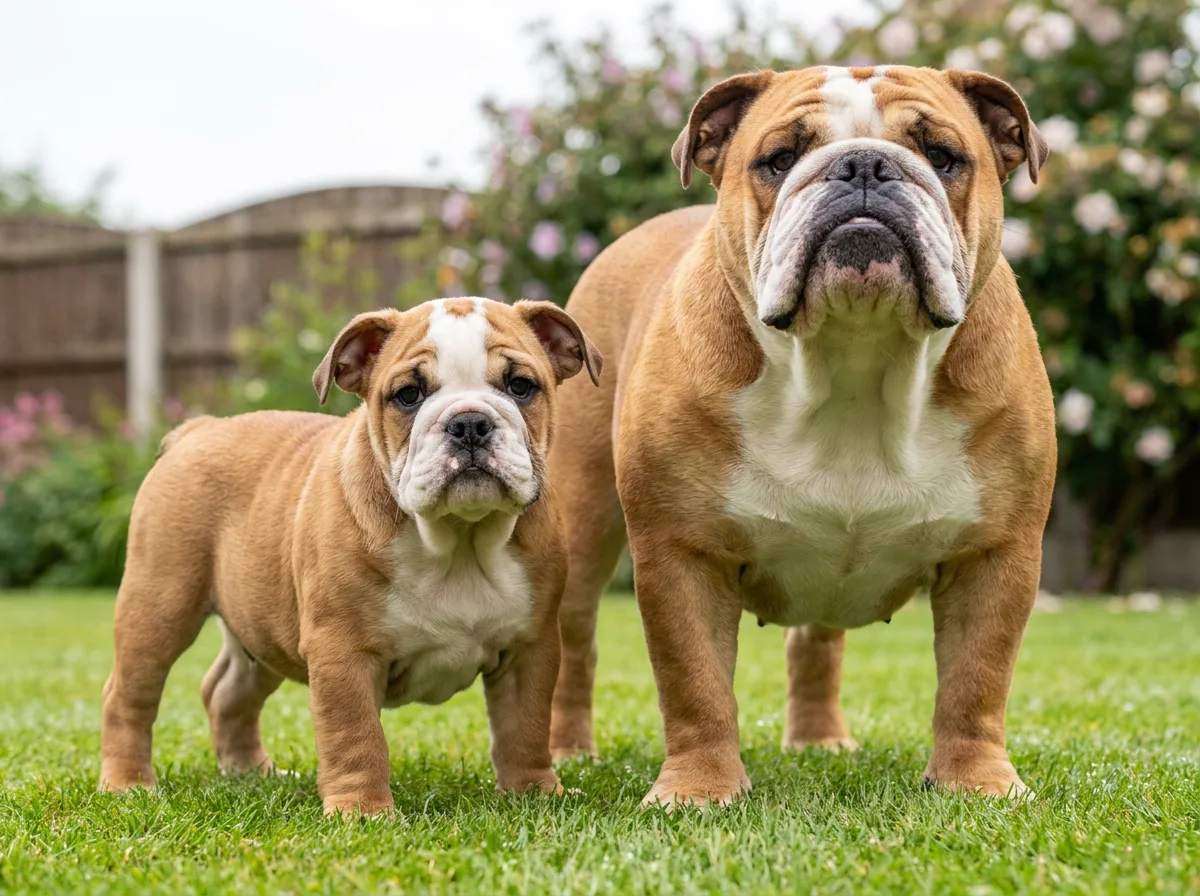
Track each weigh-in with:
- Body condition, appetite and stool.
- Energy, breathing and movement.
Keep the record for veterinary visits. Steady development is more informative than one dramatic gain, while a stalled trend, rapid unexplained change, weakness, swelling, persistent digestive signs or painful movement belongs on the clinic agenda. A digital pet scale covers most of the puppy months at home; the Brecknell MS15 reads up to 44 pounds, so an adult usually needs a clinic or platform scale.
Puppies grow in spurts, and littermates do not follow identical curves. A large veterinary growth study (Salt and colleagues, PLoS ONE, 2017, built on records from more than 6 million US dogs) notes that very small breeds reach maturity at 8 to 12 months while larger breeds can need up to 24 months to reach adult body weight, and it found English Bulldog growth curves clustered with the heavier medium-size breeds. Height gain usually slows first, then the chest and muscle fill out. No breed club or veterinary source publishes a month-by-month weight chart for English Bulldogs, so the puppy’s own curve is the useful reference. Soft puppy training treats count toward daily calories, so log them alongside meals during growth spurts.
| Stage | What to measure | What to assess |
|---|---|---|
| Young puppy | Frequent clinic or home weight using one method | Appetite, stool, energy and steady gain |
| Later puppyhood | Weight plus occasional height | Body condition, limb comfort and proportion |
| Adolescence | Trend at wider intervals | Muscle, gait and whether gain is slowing naturally |
| Adult | Stable interval chosen with veterinarian | Body and muscle condition, breathing and mobility |
Let the curve trigger questions
Meals, hydration and scale variation can shift a single reading, so look for a pattern instead: a sustained plateau, a sudden jump, weight loss, poor appetite, digestive signs or reduced energy. Growth data is a screening signal, not a diagnosis. WebVet’s guide to how much to feed a puppy explains how portions change with age.
Repeat an unexpected reading on the same scale, then contact the clinic if the pattern or the puppy’s condition is concerning. Bring a complete diet and treat list and the dated weights, with notes on any illness or diet change. Avoid sharp increases or cuts in food without veterinary guidance.
How to measure height and weight
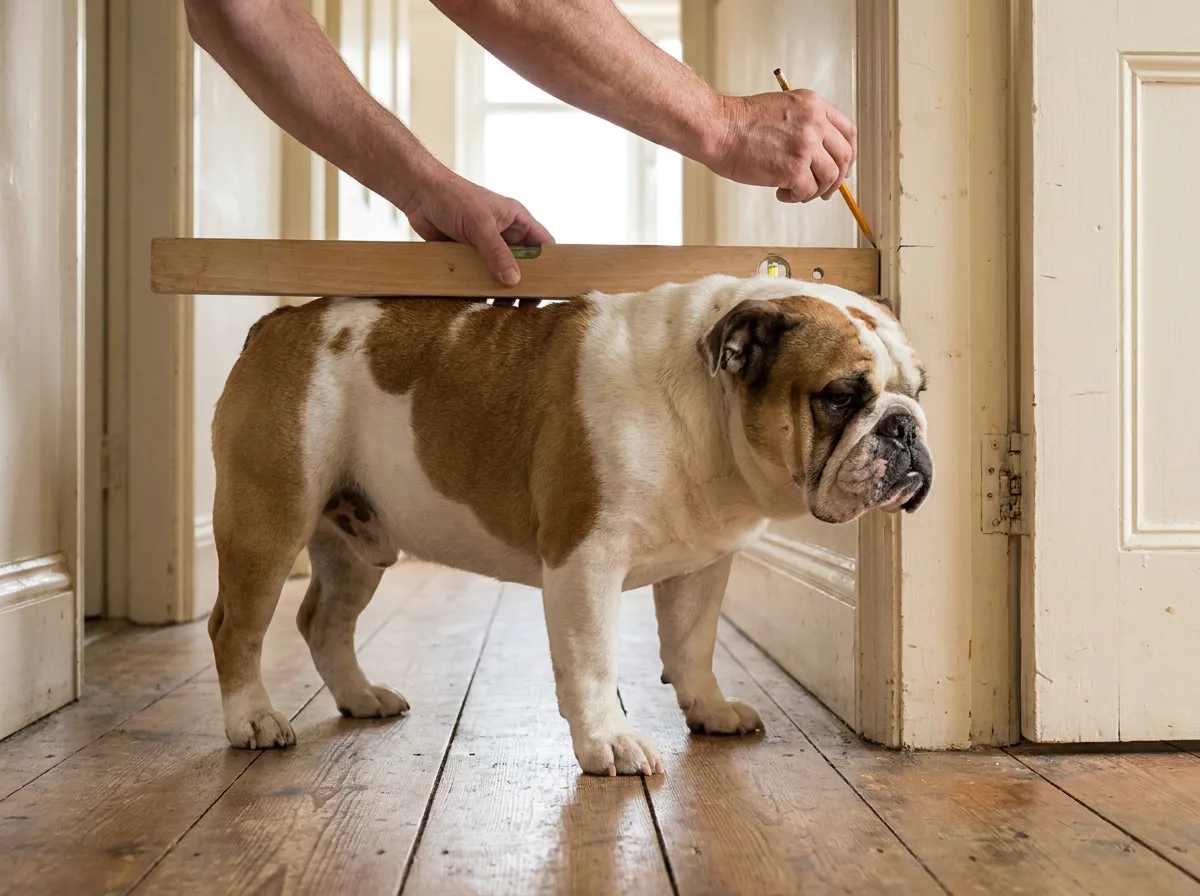
- Place the dog squarely on a flat, non-slip surface.
- For height, keep the head neutral and measure vertically from the floor to the withers, not along the curve of the body.
- For weight, use a platform scale or a veterinary scale that safely holds the dog.
- Never wrestle a frightened dog onto equipment; end the session and try again later.
Teach measurement as a cooperative skill
Check whether the dog can step onto the scale, stand briefly and accept the measuring guide without leaning away. Short sessions with excellent rewards work best, because stress makes handling unsafe and readings inconsistent.
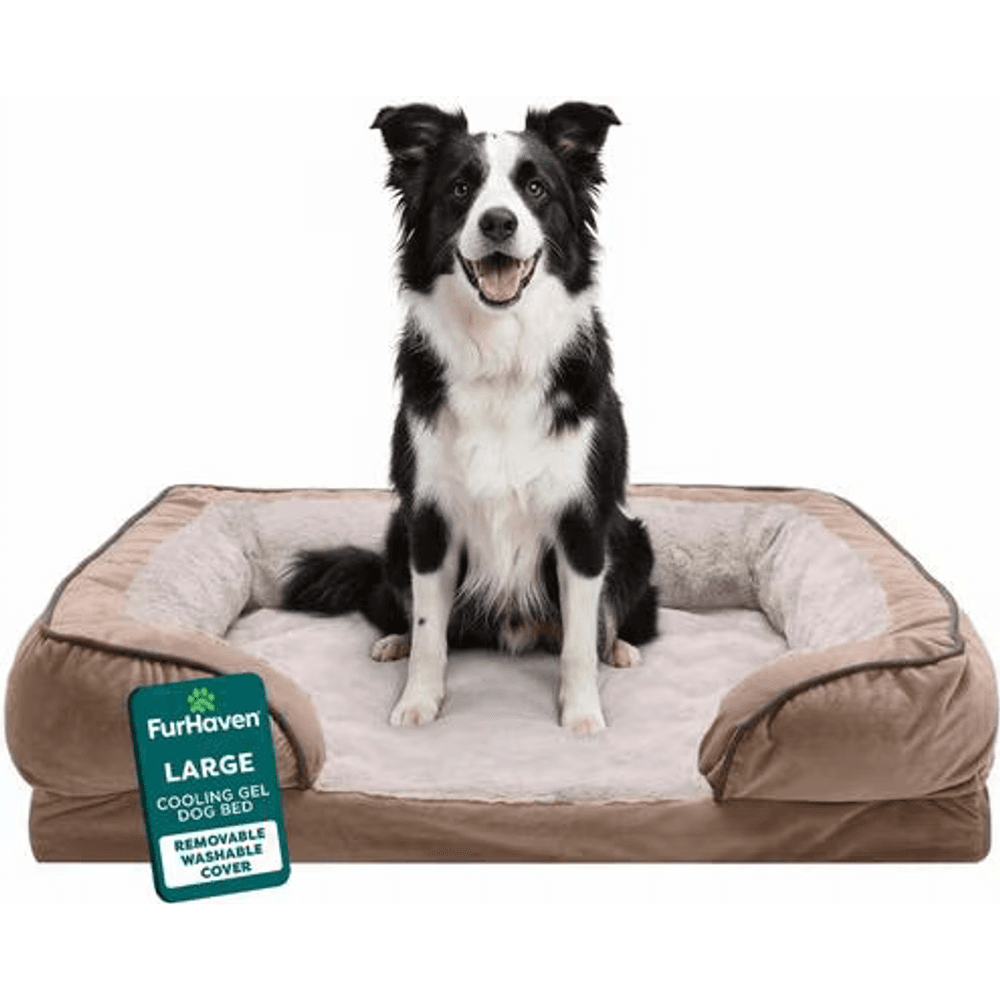
An orthopedic sofa bed with three bolstered sides for dogs who like to rest their head and joints against a cushion. The supportive foam base cradles hips and elbows, a comforting spot for an older or shaky dog to settle.
Petful may earn a commission when you click through to Chewy, at no extra cost to you.
Reward approaching the scale, one paw, all paws and a brief stand as separate stages, and let the dog leave calmly. Stop if restraint causes panic, coughing or a fall risk, and use the same position and surface next time. A treat pouch on the belt keeps rewards ready for each stage of the scale routine.
Body condition versus scale weight
Body-condition scoring estimates fat cover by looking and feeling. The ribs should be easy to feel under a light covering, with a waist visible from above and an abdominal tuck from the side. Bulldog shape can make the visual clues less obvious, so hands-on assessment matters. Muscle condition is a separate question, especially in seniors.
- Rapid loss, sudden gain, reduced appetite, weakness, swelling or a change that persists despite a stable feeding plan needs veterinary assessment. Do not assume every change is a calorie problem.
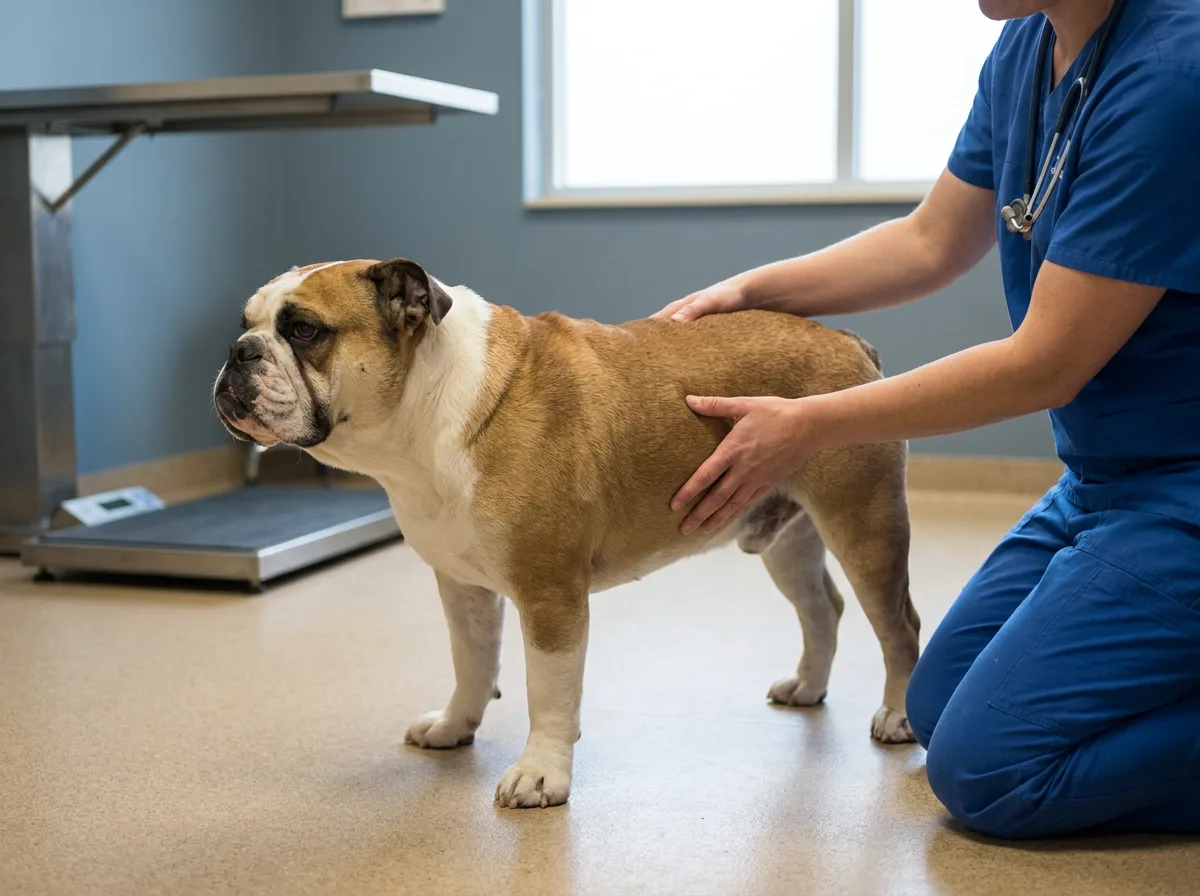
Use the dog’s body, not a silhouette poster alone
A veterinarian can teach the owner what each landmark feels like on this dog. Watch rib cover, waist, tuck, spine, hips and muscle over the shoulders and thighs because breed shape and pose can distort a visual comparison.
In daily care, score with both touch and sight at regular intervals. Photograph the standing dog from above and from the side in a neutral posture, and store the score and photos with the scale weight so small changes are caught early. A gradual gain of rib cover is the usual sign that portions need review. Measured meals in a slow feeder bowl also help a fast eater stay on plan.
Sex and individual variation
Males are often heavier than females in the breed standard, but sex does not set a precise adult size. Parents, lineage, age at neutering, nutrition, health and natural frame contribute. A healthy female may outweigh a smaller male, and two dogs of the same weight may have different body conditions.
Use parental information carefully
Start with the mature size and body condition of both parents and, when available, adult siblings from earlier litters. Photographs without scale or health context can mislead, and family information narrows expectations without guaranteeing an outcome.
Ask for measured adult weights and functional observations, and save each number with its source. Pair family data with the puppy’s own curve, and be wary if one parent’s size is promised as the puppy’s exact endpoint.
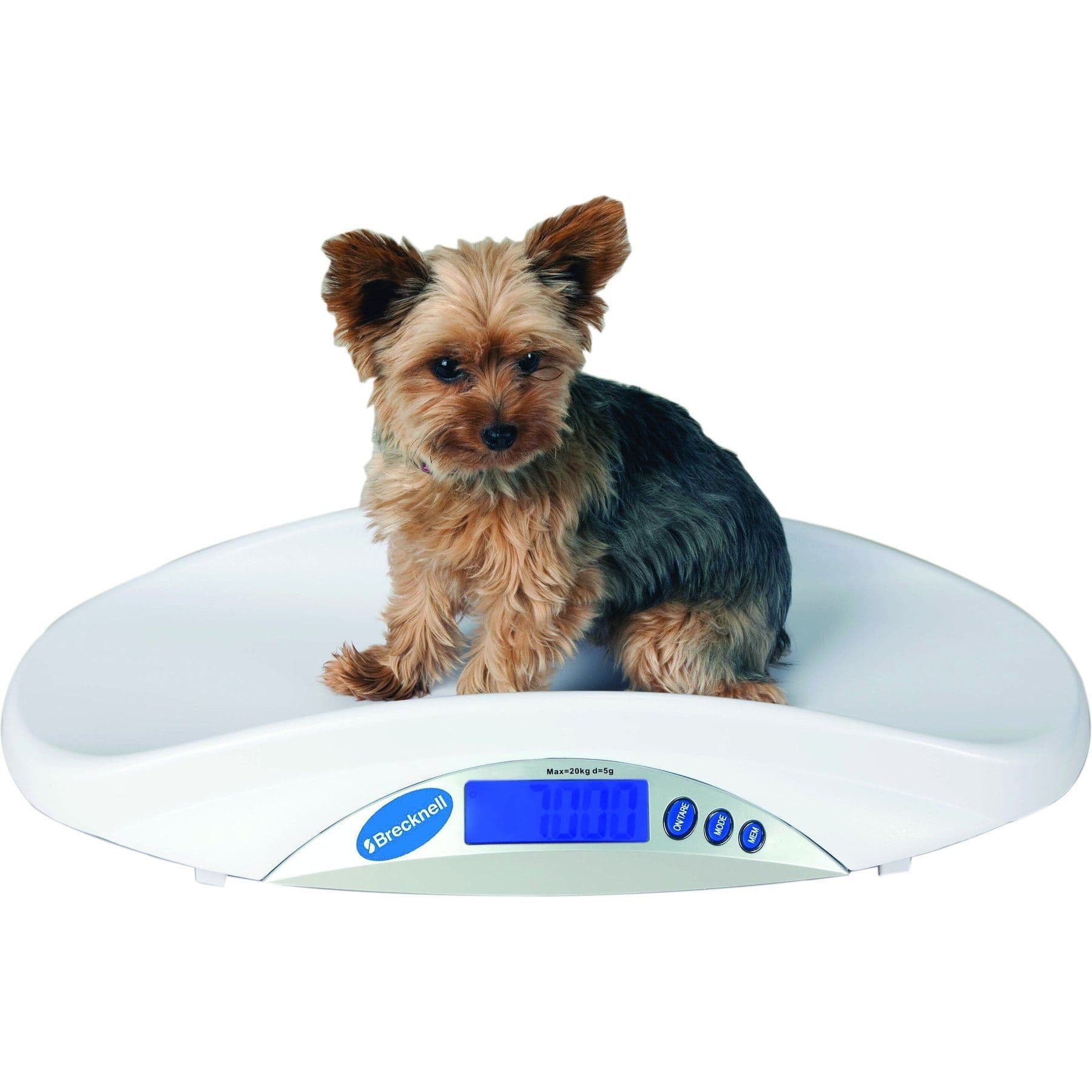
A small-animal scale for consistent home weight records when your dog can stand safely on the tray. Veterinary-practice weighing remains an alternative.
Petful may earn a commission when you click through to Chewy, at no extra cost to you.
Moderate build versus exaggerated bulk
A moderate Bulldog should be able to stand, walk, turn, rest and recover without the body shape getting in the way. More bone, a broader head or a heavier chest is not automatically healthier or more authentic. Function is the welfare test. Open nostrils, balanced proportions and free movement matter more than an extreme outline. WebVet’s overview of hip dysplasia in dogs explains why stiff or uneven movement deserves a closer look.
Watch ordinary movement
The assessment should not require running or heat exposure. Look for a relaxed walk, easy transitions, stable footing, comfortable turning and a return to quiet breathing after mild activity, because posed photographs conceal movement and recovery. Between outings, an elevated cot-style dog bed lets air move under a heat-sensitive Bulldog while it rests.
Observe on a cool day and a level surface, and record short clips only when safe. Waddling, weakness or obvious breathing effort deserves investigation rather than praise. The English Bulldog breed profile provides a broader functional-fit checklist.
When growth or weight needs veterinary advice
Weight-change warning signs include:
- Rapid loss, sudden gain or a stalled puppy trend.
- Appetite change, weakness, swelling or persistent digestive signs.
- A body-condition shift despite a stable plan.
Bring the measurement method, dates, food and treat amounts, medications and relevant symptoms to the veterinarian. The same scale and similar timing improve comparison, but a number is evidence for assessment, not a diagnosis.
Prompt advice is appropriate when a puppy stops gaining as expected, loses weight, has persistent diarrhea or vomiting, drinks or urinates unusually, becomes weak or painful, or develops a distended abdomen. Adults also need review for rapid, unexplained or sustained change. Breathing difficulty, collapse or profound weakness is urgent.
Bring usable evidence to the appointment
Bring dates, measured values, appetite, the complete diet, treat amounts, stool, activity, medication and any other symptoms. A food label estimate does not show what the dog actually eats, and weight change has many possible causes.
Measure meals and list every calorie source for several typical days before the visit. Avoid abrupt diet or exercise changes before assessment unless directed, then update the log with the agreed plan and recheck date.
Home, travel and handling implications
The measure-trend-assess checklist turns size into a practical plan. First use a repeatable measurement method for weight, height and the spaces or equipment that must fit. Next review the trend instead of one reading. Then apply a body-condition decision guide that considers rib cover, waist, muscle, breathing and movement. A functional-build comparison asks whether the dog can stand, turn, lie down, walk and recover comfortably rather than rewarding exaggerated bulk. Recheck these measures before buying a crate, harness, ramp or travel setup and after any meaningful change.
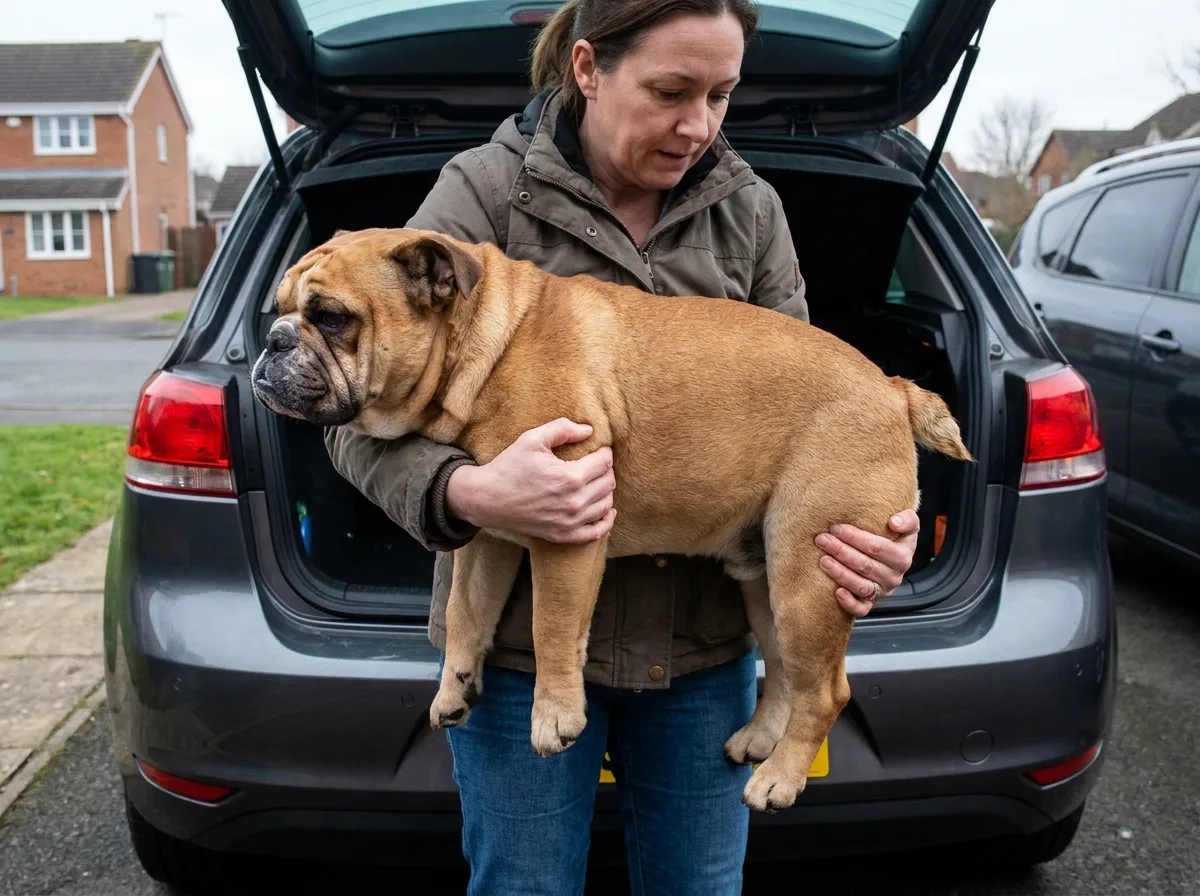
Size planning extends beyond a number. A dense adult may need a larger turning radius, lower vehicle entry, strong floor traction and an evacuation plan. Crate fit should allow standing, turning and comfortable rest without encouraging overheating. The household should be able to move the dog safely if injury or illness prevents walking.
Size for function and temperature
A MidWest iCrate Double Door crate in the 36-inch size, which the maker rates for dogs of 41 to 70 pounds, suits most adult Bulldogs. Confirm the fit on the actual dog: standing height, nose-to-rump length, shoulder width, turning space and preferred sleeping posture. Keep the crate in a cool, ventilated spot.
Measure the actual dog and plan vehicle placement before buying. A FurHaven Velvet Waves orthopedic sofa bed can support rest when its dimensions, firmness and heat retention suit the dog, and a travel water bottle keeps water on hand during appropriate trips. Recheck every piece of equipment after growth or weight change.
Related English Bulldog guides
For the surrounding decisions, read the English Bulldog health and lifespan guide, English Bulldog breed profile, English Bulldog puppy guide and English Bulldog price guide.
Sources
- American Kennel Club Bulldog breed page: breed-standard height and weight context
- Royal Veterinary College VetCompass Bulldog health summary: population health and body-condition context
- Bulldog Club of America health testing: parent health-screening context
- OFA CHIC programs: public screening records and program definitions
- American Kennel Club Bulldog breed standard (approved 2016): mature size of about 50 pounds for males and 40 pounds for females
- O’Neill and colleagues, Canine Medicine and Genetics, 2022: English Bulldog bodyweight in UK primary veterinary care
- Salt and colleagues, PLoS ONE, 2017: growth standard charts for dogs of different sizes
Questions readers ask
An English Bulldog is a medium dog. Adults stand only about 14 to 15 inches at the shoulder, but they are dense, so the standard weight of about 50 pounds for males and 40 pounds for females overlaps some larger breeds. Equipment sizing often lands in the medium to large range because of chest width and weight rather than height.
Most adults reach about 14 to 15 inches at the shoulder, and the AKC standard describes mature males at about 50 pounds and females at about 40 pounds. Pet Bulldogs are often heavier: a UK veterinary records study found a median bodyweight of about 56 pounds. A healthy individual is judged by rib cover, waist and easy movement as well as the number.
Height gain usually slows well before the body finishes filling out. Veterinary growth research notes that larger breeds can need up to 24 months to reach adult body weight, and Bulldog growth curves cluster with the heavier medium breeds, so expect the chest and muscle to keep developing into the second year. Track the puppy’s own curve rather than a fixed birthday.
Quite a lot. Sex, parental size, frame, nutrition, health and growth rate all shape the result, and a healthy female can outweigh a smaller male. Two dogs at the same weight can also carry very different amounts of fat and muscle, which is why body condition and the trend over time matter more than one reading.
Call when weight changes quickly, a puppy’s growth stalls, appetite changes, the dog becomes weak, the belly looks persistently swollen, movement becomes painful or body condition shifts despite a steady feeding plan. Breathing difficulty or collapse is urgent and should not wait for the next weigh-in.
A healthy weight is the one at which you can easily feel the ribs under a light fat covering, see a waist from above and an abdominal tuck from the side. For reference, the AKC standard describes about 50 pounds for males and 40 pounds for females, but frame and muscle vary, and a UK veterinary study found a median of about 56 pounds in pet Bulldogs. Ask your veterinarian to score body condition.

Coreen Saito is a pet writer and longtime shelter volunteer with more than a decade in animal rescue. She covers cat behavior, breed care, and the small, ordinary science of sharing a life with companion animals, with a particular focus on honest takes about the products and decisions that actually matter. At home in Arizona, she's outranked by Mac (a dog with the loudest opinion in the house), Rebel (a cat who governs by quiet authority), and Meri (an orange tabby who runs the late shift and the laundry basket). She writes about all three, plus the rescues that keep coming through her life, at LifeWithMinty.com.
Sign up for expert-backed reviews and safety alerts all in one place.